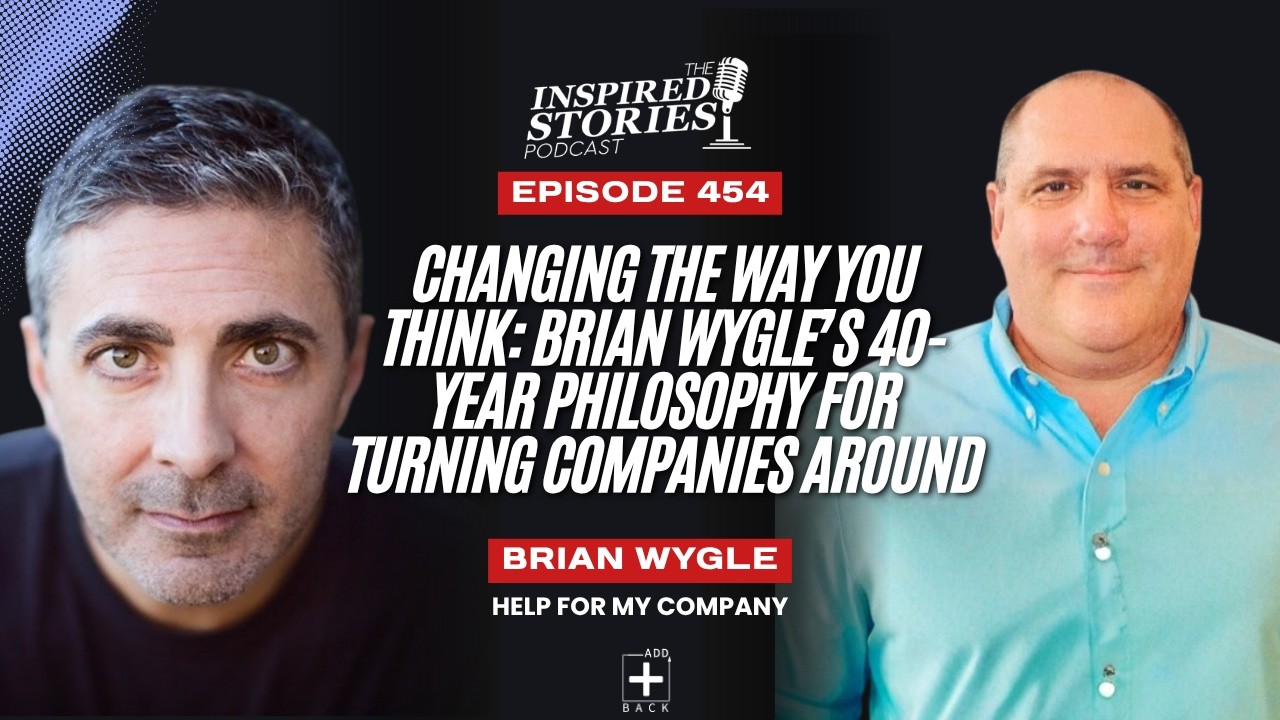
🎙️ Buying Broken Businesses and Fixing Broken Thinking: Brian Wygle’s 40-Year Career as a Corporate Fixer
Brian Wygle, owner of Help for My Company, has spent four decades walking into distressed businesses — buying them, restructuring them, and getting owners to think differently about why things went wrong. From buying an oil company for $300 and turning it into a five-year cash machine, to stepping in as interim CEO for companies from $10M to $150M in revenue, his philosophy has always been the same: you cannot fix a problem using the same thinking you used to create it.
✨ Key Insights You’ll Learn:
Why money is almost never the real solution to a struggling business
The lender’s-eye view that launched a 40-year consulting career
How Brian bought Max Oil for $300 and used a tax loss carry forward to build five years of income
Five stages of a company’s life cycle and when owners actually call for help
What people vs. why people — and why most managers never make the conversion
PAIR framework: Participate, Anticipate, Instigate, Reciprocate
ACME communication model: Authority, Clarity, Manage Expectations
The E’s of leadership: Envision, Empower, Equip, Encourage
Ethical leadership lecture at USC — and why ethics starts with knowing yourself
Transitioning to virtual consulting to serve more clients and spend more time with family
🌟 Brian’s Key Mentors:
Restaurant Manager (Glendale, CA): Threw his apron on the table and showed Brian his first turnaround was possible
His Finance Boss (Banking): Brought Brian into lending and showed him the gap between what borrowers and lenders saw
His Son (Professional Athlete): Taught Brian about caretaker dedication and the cost of running down your reserves
His Wife of 41 Years: The sharp-tongued, steady presence who kept the family together through the hardest decade
His Clients: Every engagement a new case study in how changed thinking drives changed outcomes
👉 Don’t miss this conversation about the real reasons businesses fail, what servant leadership actually costs, and why after 40 years Brian still believes changing the way people think is the hardest — and most important — thing he does.
Listen to the full episode here
Transcript
Anthony Codispoti (00:00)
Welcome to another edition of the inspired stories podcast where leaders share their experiences so we can learn from their successes and be inspired by how they've overcome adversity. As you listen today, let one idea shape what you do next.
My name is Anthony Codaspodi and today's guest is Andrea Belfanti, Chief Executive Officer of the International Society of Hospitality Consultants, better known as ISHC. They are a global nonprofit network of more than 200 senior hospitality consultants spread across six continents. They advance the industry through trusted advice, research, and professional development. Members use the society to share knowledge,
mentor peers, and help hotel owners solve complex problems. Under Andrea's leadership, the society has expanded into new regions, and she also oversees the ISHC annual conference, several regional forums, and the group's awards programs that celebrates innovation in hotel design. Andrea has worked in hospitality for more than 25 years. Before becoming CEO in 2022, she served as ISHC's executive director
for more than a decade. She is a regular speaker at events like ALIS and HiCAP and sits on the advisory board for the University of South Carolina's Hotel, Restaurant and Tourism Management School. Now, before we get into all that good stuff, today's episode is brought to you by my company, Advac Benefits Agency. Listen, if you run a business, you're likely stuck in the cycle of rising insurance premiums. You're paying more, but your team is getting less, and many people can't afford coverage at all.
We do things differently. We provide your hospitality employees with unlimited access to doctors, therapists, and prescriptions that's always free for them to use. But here's where you really need to pay attention. Unlike every other employee benefit out there, our program puts more money into your company's bank account. As an example, we recently helped a client increase net profits by $900 per employee per year. Gains like that can change how a business is valued.
Results vary, but the consultation is free. See if you qualify today at addbackbenefits.com. All right, back to our guest today, the CEO of ISHC, Andrea Belfanti. Thanks for making the time to share your story today.
Andrea Belfanti (02:24)
Thanks, Anthony. That was a great introduction. feel like I should hire you to kind of talk about the society. I love it.
Anthony Codispoti (02:30)
We're gonna pump you up today. So
25 years, long time to stay committed to one industry. Most people drift into different career avenues. Was there a moment early on for you where you thought, no, this is where I belong?
Andrea Belfanti (02:46)
Yeah, you know, honestly, there's the humorous one where I was in college at the University of South Carolina. I didn't have a major and my older brother's girlfriend was a hospitality major and she talked about a wine and spirits class and I was like, well, that sounds great. So I took the intro class. I loved it. I loved the idea of doing fun things, working in bars and restaurants and hotels. So that's kind of how I.
first really learned of the industry. And then I, when I started doing internships, that's when I was like, okay, I got this. This is, this is what I love. So that's when I really understood what it was. And that's, that's it.
Anthony Codispoti (03:30)
So it was the class where you could get credits for drinking that kind of was the first hook. And then you got your foot in the door and you're like, now that I see what this is actually about, I still love it.
Andrea Belfanti (03:36)
Yeah, I mean, yeah.
Sure, I'm 18 and I hear about like you can actually take a class where you drink. That sounds like heaven, right? That's magic. I'm like, I don't know. My other friends are taking economics. Turns out I had to take economics too and accounting and all of those things. But I thought, well, let's at least take the intro class. You know, let's see what this is all about.
Anthony Codispoti (04:03)
So as an 18 year old, you were allowed to drink in the class? Okay.
Andrea Belfanti (04:06)
No, no, I couldn't take
that class. No, I took the intro class. And what's funny is I never ended up taking that class because it didn't fit in with all the serious classes that I really needed to take. Like I never ended up taking the wine and spirits class. Feel good. Yeah. Yeah. Yeah. I'm surprised not every 18 year old is in that class, right?
Anthony Codispoti (04:20)
It was just the allure, the idea of this class that first sort of sparked your interest. Okay.
Yeah, I would think that there's
something in the way of that today, but ⁓ Yeah, so let's pick one of your formidable stops in Hospitality that really kind of helped to shape you as a leader. Tell us about that
Andrea Belfanti (04:32)
Yeah, I would think so. Yeah.
Mm-hmm.
You know, I would say there were quite a few of my first couple jobs out of school, I had nightmare bosses. Like from the movies, the stereotypical just nightmare bosses. You know, I'd go home most days crying. Like what have I done? And in the hospitality, especially at that age and in that time in the world, I was working 60, 70 hours a week and just...
Anthony Codispoti (04:54)
Okay.
Andrea Belfanti (05:13)
Like one, for example, I had a boss who was getting his MBA and I was probably 22 at the time. And we had our regular one-on-one meeting and I said, so you're getting your MBA. Do you think that's something I should look into one day? Is that something you think is valuable? And he said, yeah, yeah, yeah, of course. But you know, if you get your MBA, you'd probably meet your husband and then you'd have kids. And I don't really think you need to spend time and money on education as a woman.
Like that's for real came out of this man's mouth. Yeah, exactly. Yeah, yeah, yeah, exactly. Yeah, this would have been like 1998. No, no, actually it wouldn't have been 2002. I gotta do my math different. So it would been 2002. And so, you know, it was just that kind of my other favorite story, same boss, my aunt was critically ill. And I said, I really want to go to Florida and see her. need to go with my mom.
Anthony Codispoti (05:42)
And this was like 1930. Like, what was the time period for this? Okay.
my goodness, okay.
Andrea Belfanti (06:10)
you know, this is a thing I'm going to be gone. I'm going to take two extra days off from my six day work week, right? Like I'm going to take three days off. And he said, I understand that spine. Are you going to need to take more time off for the funeral though? And basically it was like, you got to pick you go now or you go later kind of thing. So, you know, there were, um, moments like that, that I think I am such a better,
boss. I'm a better person now because of all that. try, I'm not 100 % successful, but I try really hard if I screw up to admit it immediately. I actually this morning was on a call with my employee and another person and I said something I probably just shouldn't have said and it wasn't, it was just a little dismissive and as soon as the other person hung up, I said, I'm so sorry, I never should have said that. And she was like, I didn't even notice it. I didn't even clock it.
And I was like, no, I'm really sorry that could have been taken the wrong way. And so I work really hard, I think as leaders and as bosses, what we say can have more weight and we don't even realize it. Like we don't, you you can't be as flippant as you would be with your friends because people take it to heart. So I think I've a lot of lessons.
Anthony Codispoti (07:30)
Is there a part of you, sorry, Andrew, is there a part of
you that's almost grateful for having had those horrible boss experiences because it gave you a framework of exactly what not to do?
Andrea Belfanti (07:42)
Yeah, I think you can learn a lot from great bosses and bad bosses. I would say I would rather have learned from the good bosses. You know, I have also had really amazing bosses in leadership. I would rather those lessons, but I don't know if they're as impactful. They don't, they're not as scarring. They don't like sear into you as much. So yeah, I've, I looking back, I am grateful now at the time. It's, it's really, it's brutal. It's brutal.
Anthony Codispoti (08:09)
It's brutal to go through. Yeah.
I mean, you're talking about you're, you know, you're getting up for you're going home from work and you're crying like you're so upset that I mean, that that's not the kind of job somebody wants to have.
Andrea Belfanti (08:12)
Yeah.
Yeah. Yeah. It's
no, and you know, and really in, in hospitality, it's not as bad now. In some cases you work a lot. You know, there are certain industries where you just work. hospitals are open 24 hours a day, right? When other people are having fun, that is when we are working. And so you're, you're already giving and sacrificing a lot. And then to then be mistreated it's.
It's a double whammy. Yeah.
Anthony Codispoti (08:49)
So tell
us about a good boss or mentor experience that you've had along the way.
Andrea Belfanti (08:54)
⁓ So my favorite boss in the whole world is a woman named Lori Raleigh and she is the one that hired me to work at ISHC. And so I was looking for a job and I called her, I was leaving one job really, and I called her not for a job. She was the only employee at ISHC at the time and I just said, here's what's going on. I...
genuinely hope we can stay in touch. I think I might have even said, we be friends? That's just how much I enjoyed working with her and how much I liked her. And then I ended up, she was looking to hire someone. And so then I got to work with her for the next four years, which was the lessons learned. She is a woman that is so smart. She was an asset manager. She is her financial brain is unbelievable.
and super kind. think, you know, there, that stereotype, especially from 20 plus years ago of successful women, you know, having tight buns, slicked back hair, being a little cold. You remember all the moody's from the eighties? Like if you were a successful woman, you had to be a little cold, distant mean. There was some truth to that in the work world because I think women have to, had to especially be a little cold, a little
Strict because if you showed me emotion you were hysterical, know women had different career paths and different ways to go to the top so she to be able to work with her and she Smartest woman I know Also the kind one of the kindest people period not just that I've worked with kindest people period and the way she took care of she would walk into a conference and say like at a reception and be like No one's talking with that woman over there. Let's go meet her
She would make friends in the elevator. She was not ⁓ super gregarious or outgoing. Like it made her nervous to talk about herself. She would hate listening to this right now, but she used her strength and her power of kindness to network, to make friends, to make business connections. ⁓ So working with her was just amazing. Yeah. Yeah.
Anthony Codispoti (11:13)
sounds like an incredible role model.
You know, and you bring up an interesting point that I've talked about with several other powerful women on this show. And it's this idea of it's hard to be a woman in a place of leadership in business, even today, we're recording this in 2026, where you think we're more involved. And, you know, I would like to hear you kind of give voice to your experience on all of this and sort of the
How do you balance between, yes, I'm a woman in a place of leadership and I'm also a woman and I want to be feminine and I want to be treated as such, but how do you kind of balance all of this?
Andrea Belfanti (11:56)
Yeah, that's a great question. think it's, ⁓ it is hard. It gets easier as you get older because I think your, my need to impress and make sure everyone is okay and happy for about things I can't control has gone down, which is a really amazing thing about age, right? I don't necessarily love my gray hair.
I don't love these wrinkles, but I love the idea that I'm like, no, I got this. I'm not going to, don't need to pay attention to you anymore kind of thing. But I think, um, you know, when I started, when Lori retired and I took over as executive director of ISHC, I remember my very first board meeting. We had the dinner after the meeting and I, one of the things I love about hospitality is taking care of people. That is, I love the idea of being there for special occasions and making.
taking care of people. am like a consummate host. That's what I want to do. So we're at this dinner and I'm making sure everyone has a seat and everyone has what they want to drink and I'm just taking care of people. And one of our older board members was like, Andrea, you're the boss now. You have to sit down. That's not what you do. And I was like, oh, oh, okay. Because he saw taking care of people and making sure everyone sat as a weakness. That's not what the boss does.
the boss sits in charge and people bring them drinks and make sure they're taken care of, right? That was his idea of leadership. And I remember being like, ⁓ okay, all right, okay. And then I thought about it and thought about it and really over years, different ⁓ waves of recognition have kind of hit where I'm like, no, actually that's the kind of leader I want to be. And just because that's not what he sees,
as powerful, strong leadership. That's not my business. Whatever he sees as a leader is fine. The type of leader I want to be takes care of people. And I still, you know, I don't let people walk all over me. It's a fine line, right? But, ⁓ which is hard, but I still, I can be the host. can be hospitable. I can take care of people and be nurturing. I can be feminine and still be a boss.
Anthony Codispoti (14:15)
kind of fits into this category of servant leadership, it sounds like. Yeah. So there's different styles of leadership for different types of personalities. And this gentleman was trying to impose his personality, his approach to leadership upon you. And because he's in a position of seniority leadership that probably carried some weight with you at the time and took a little bit for you to unlearn.
Andrea Belfanti (14:19)
100%. Yeah. Yeah.
⁓ 100%. Yeah.
Absolutely. Yeah. I mean, I really did think through it for board meetings to come. was like, should I do this? Should I do that? what should now I'm like, again, the, the benefit of age. I'm like, no, this is exactly who I am. I got here because of who I am. So I'm going to keep doing what I know I need to do.
Anthony Codispoti (15:02)
Okay, so let's talk about the services that you provide at ISHC. Why is somebody a member? What are they getting?
Andrea Belfanti (15:07)
Yeah.
Yeah. So we actually survey our members every few years and they consistently say networking and idea exchange. So we spend a lot of time focusing on creating opportunities for members to spend time together. We work really hard to make sure it's not transactional that I jokingly say it's more like a round of golf than speed networking. And I hate speed with networking and I don't play golf, but I think that kind of illustrates, ⁓
what we do. we don't talk about how many referrals you're going to get, how many leads you're going to get. We don't talk about any of that. We say here are opportunities for you to learn from your fellow members or other people in the industry or people outside the industry and here are opportunities for you to genuinely and authentically spend time together. ⁓ So what that does is create a environment where people bring their spouses to our conferences. People want to come. have
have people that say like their lifetime friends are from ISHC. They travel together outside of work. So it's a really special, it's a very unique group.
Anthony Codispoti (16:18)
So for those who are unaware, they're outside sort of your sphere of the universe, what is a hospitality consultant?
Andrea Belfanti (16:23)
Mm-hmm.
Yeah. So it's, you know, if you think of, so I like to use this analogy. If you won the lottery tomorrow and you were like, I'm going to buy a hotel. This is what I want to do with my money. I want to own a hotel. So you would hire a lawyer to help you buy a piece of land. You would hire a consultant to help you figure out if you wanted it to be a brand or unbranded. You'd hire a
consultant to help you do a feasibility study to figure out how many rooms and what type of hotel it would be. Then you'd hire a designer and an architect, maybe a food and beverage consultant, a spa consultant, a revenue management consultant. We have a water park consultant, maybe a spa consultant. So all the people that you hire that have very specific areas of expertise to help make sure that your hotel is profitable. So then we also outside of hotels, we have tourism consultants, destination consultants.
restaurant consultants, but I think that if you think of the life cycle of a hotel, for example, then you're going to want a consultant to help you sell it. You're going to want a consultant if you have to have a lawyer, if you have an issue with a guest or with the brand. Do you need a lawyer to help you with that? So all of those folks along the way.
Anthony Codispoti (17:40)
So these are lots of different niches within the hospitality world. roughly how many members do you have?
Andrea Belfanti (17:43)
Very much so. Very much so.
270.
Anthony Codispoti (17:50)
270 and so these
are not 270 people that are doing approximately the same thing. There are clusters of folks that I would guess are doing similar things.
Andrea Belfanti (17:55)
No, sure.
Yep. No, it's, they're really, and they're also all over the world. So even if you have someone that is a lawyer doing transactions in the U S very different than a lawyer that's doing transactions in Asia, the markets are super different. ⁓ they're different challenges, different banking systems, different, all that kind of stuff. But common thread to be a member, you have to be an owner partner in your firm.
and you have to have been consulting for at least three years with 10 years in the industry. And then we have a pretty rigorous process to become a member with the idea that we want really good quality people. Not all consultants are created equal. know, some people lose their job and they're a consultant until they get another real job. And those aren't our folks. So it's, they are very diverse in a lot of ways, but there is a common thread going through it.
Anthony Codispoti (18:52)
Talk to me about the international aspect of all of this. I would think on the surface that, I'm in the US, there's a culture here, there's rules, there's a way of doing things in the US. It's probably better for me to network with folks in my own country, but I'm probably missing some.
Andrea Belfanti (18:56)
Yeah.
Yeah, for sure. mean, so first of all, a lot of our consultants in the U.S. are doing work all over the world and vice versa. There's also an interesting, there's a lot of interesting learning. So if you're doing feasibility studies in Tennessee, for example, that's what you do. don't do feasibility studies in New York, you do them in Tennessee. So what is the value of you networking with people outside the U.S.? Well, wouldn't it be interesting to talk to someone that's doing feasibility studies in Asia?
Europe or wherever and there's a lot of trends you know some things the US is ahead of other regions and some other regions are ahead of the US so are you seeing this how are you handling this I've got clients that are asking about this they've never asked about that before have you seen that and how did you handle it so there's a lot of knowledge sharing even if you think about somebody outside of your specific area of expertise if you're
Say you're a food and beverage consultant and do you talk to the consultants who are design consultants who are designing those restaurants and you say, why do you guys always design a restaurant with this? Why is the bar never this? Tell me why, because this is always an issue and I can't figure out what's happening on the front end that I haven't seen. Why is this the case? Can we change it to help me understand? So there's real value.
and talking to people all over the world in different parts of the life cycle and learning from them.
Anthony Codispoti (20:41)
Tell me about any events that you put on throughout the year.
Andrea Belfanti (20:45)
Yeah, we do a lot of events. So our biggest event is our annual conference. That changes locations. So last year we were in New Orleans, this year we're in Rome, year before last we were in Dubai. So we get to move all over the world for that conference. That's our biggest event. Relatively in the event world, it's very small. You know, it's under 200 people. And then we do regional events. kind of ⁓ receptions, happy hours, that type of thing. We do usually 10 or so of those all over the world. ⁓
Last year we did LA, London, Singapore, Dubai, DC, Boston, that might be it, Berlin. Yeah. I am, yeah. Yep.
Anthony Codispoti (21:26)
So you're doing a lot of traveling. ⁓
And in between these events are for the folks who just, their time, their schedules don't permit them to make the trip. What are the benefits that they're getting? How are they able to interact and access the other members?
Andrea Belfanti (21:43)
Yeah. So a couple of different ways we do a whole series and top of the in-person events, we do a whole series of virtual events. ⁓ and we do those for a couple of different reasons and in a couple of different ways. So if you are, like I mentioned, say you're based in the U S but you're doing a ton of work in Europe, or you're just interested in that market because you've heard about this trend or that trend. So we do, ⁓ a series of events.
We call them community cafes and they're based by region and you can join whichever region you'd like. So those are virtual events where we say, sometimes we have a topic, what's a trend you're worried about? What's something you're excited about? Or if there's a hot topic in the news, how are you handling this? Are you guys seeing that? And then everybody just kind of talks, networks, brainstorms. Are you handling this? Are you seeing this? Have your clients asked about this? That kind of thing.
We do some member matching, so every quarter we'll pair a member with another member just so they can meet people that they may not meet on a daily basis. ⁓ We do state of the society, we do new member orientations, we do all kinds of things where if you never get on a plane and you're in a part of the world where we don't do something regularly, you can still connect with members. It's also very fraternal, ⁓ not in a keg stand hazing kind of fraternal.
But in a, you can call and say, hey, I see you're doing this. We've never met, but I'm also a member. Do you have a few minutes? And 99 % of the time people will answer the phone and chat and share.
Anthony Codispoti (23:19)
Is there like a private Facebook group or like a Slack channel for folks to interact as well?
Andrea Belfanti (23:23)
Yeah.
Yeah. So we have, ⁓ we do have the private Facebook group, but nobody really uses that anymore. ⁓ we do what we do. We have an email listserv so you can email people. can email all members or you can email members in your region. I also get a lot of like, Hey, I'm traveling to in the next six months, I'm going to be in LA, London, and Singapore. Who should I meet while I'm there? I know I'm going to have time for some dinners kind of thing. So you can connect that way or.
I'm really struggling with this issue. Do you know anyone else that just started their consulting practice and might have advice on payroll systems or whatever? So we have members that say over our, because we've been around 38 years, that ISHC taught them how to use the internet and a fax machine. so if you think about that and kind of translate that into today, 10 years ago, which is unbelievable, we were talking about Bitcoin and blockchain and how that
how that might affect hospitality. So what are the current internet and fax machines that our members should know about cutting edge?
Anthony Codispoti (24:31)
⁓ And I'm curious, those crypto conversations that were taking place several years ago, what was being shared at the time and what have you found has actually come to fruition?
Andrea Belfanti (24:35)
Mm-hmm.
Wow, that's a really good question. So one of the things we did, how was it 10 years ago? Maybe it was eight years ago. We brought in a blockchain expert and we spent the first 20 minutes just talking about what blockchain was. So like really intro to blockchain. Here are the basics, like blockchain for kindergartners. Although kindergartners might have an easier time getting it than some of us. ⁓ So they...
just basically talked about what it was and then talked about potential implications, how someday it may help with HR and confirming resumes and blah, blah. ⁓ When you think about purchasing and selling hotels, ⁓ that there could be some ways that blockchain and kind of more certifying information rather than actual cryptocurrency, but the actual technical use of blockchain. I have not seen any of that to come to fruition.
I don't know of any companies that are using blockchain to verify resumes ⁓ or land deeds or anything like that. ⁓ But I think there's also, there are some hotels that are using cryptocurrency and Bitcoin to take payments. They're few and far between. They're a little gimmicky, which is fine. If that works for them, everybody's got to have a niche. But I don't know that it's certainly not as widespread as we thought it would be.
Anthony Codispoti (25:53)
really?
Yeah, it was one of those things where I tried really hard to wrap my head around how to use it in day to day business. ⁓ And I, it was just one of those things where I'm like, I think I'm just not smart enough to see what's going on here. And who knows there's, you know, the future hasn't been fully written. So ⁓ we'll see if this sort of comes back around, but the present day equivalent, and I think is already having a much bigger impact. You know, the two letters that are about to come out of my mouth.
Andrea Belfanti (26:23)
That's right.
Yeah. Yep.
Anthony Codispoti (26:34)
AI. What
Andrea Belfanti (26:34)
Yep. Yeah.
Anthony Codispoti (26:35)
are you guys teaching? What are people talking about? What do you see?
Andrea Belfanti (26:38)
Yeah, great question. So ⁓ we have two members that really specialize in AI right now, and they are some of our most popular members right now, especially when it comes time to conference. ⁓ So, you know, it's interesting with regards to hotels specifically, what I am hearing and I am not, you know, I run an association, that is my job. I am not in hotel transactions, I am not in hotel operations.
But what I'm hearing is that AI is going to either help efficiencies, right? It's going to help either bring more money in or save you money. There's not a ton, so it's going to help you with revenue management, yield management, that type of thing, or it's going to help cut down your labor costs. ⁓ I think when it comes to hotel operations, that's probably right. When it comes to how consultants are running their practices, that's very different.
So what we've tried to do, cause a lot of the industry conferences are talking about how to use AI to maybe get more guests or that revenue management piece. What we're trying to do is talk about it from a different perspective. How can you use AI in your practice? How is it going to change what you do? So if you think, I mentioned feasibility studies earlier, there are some people that say you can just put some random date, not random, you can put some specific data into.
your AI tool of choice and it will spit out your feasibility study. So our consultants really needed anymore. But what we're seeing is that yes, it may help with some of that basic report writing, but like, like everyone's talking about, one of those numbers is wrong and your bank may not give you financing or your project may not actually be viable the way it says. ⁓ So I think we're trying to talk to our consultants about how to use it to enhance your business.
that we don't think it's gonna take over consulting roles, but you can use it in some ways to make it more efficient, to help with the start, like the way we should all be using it, right? To help not replace.
Anthony Codispoti (28:42)
You know, I talk with a number of hotel owners and operators, and I hear similar things from them. ⁓ You know, one of the things that they really highlight, and again, this is hotels and not the hotel consultants, is they see it as a way to allow their staff to spend more time interacting with each other. And more importantly, guests, they don't see it as, ⁓
Andrea Belfanti (28:49)
Mm-hmm.
Anthony Codispoti (29:12)
you know, I've got 20 employees now, maybe this will get me down to 18. It's how do I let those 20 employees spend more time making their guests experience wonderful?
Andrea Belfanti (29:22)
Yeah, absolutely. Yeah, that's exactly what it should be, right? That's how we should all be using it. AI is not going to write my emails, do my calendar, but can I use it to make me a little more efficient so I can spend more time talking to members rather than doing these things? Absolutely.
Anthony Codispoti (29:39)
And I think, you know, from a consultant's perspective, the thing to be worried about, and I think you were kind of talking around this, Andrea, pardon me, is being able to trust the data, right? There's still the hallucination problem. Just, you know, this week I was asked a legal question about something. said, well, let me do a little research and digging on that. And with one AI model came up with a great, very structured, very believable answer. I said, let me put that
Andrea Belfanti (29:49)
Yeah. Yeah.
Yeah.
You have a mom.
Anthony Codispoti (30:06)
⁓ into another AI model and double check the accuracy. And it came back with all of these things that were supposedly wrong. Now, which one of these is actually right? I don't know. And that's where the consultant is still very much needed. Like the tool can help them get to an output faster, but you still need that human expertise of being in the industry for years and knowing what the ins and outs are to be able to deliver a reliable
Andrea Belfanti (30:14)
Yeah.
Yeah, absolutely.
Mm-hmm.
Anthony Codispoti (30:35)
product to their client.
Andrea Belfanti (30:36)
That's right. Yeah, that's absolutely
right. I completely agree. Yeah. It does look so believable though, right? When it tells you with such authority, you're like, well, how can this be wrong? This must be right.
Anthony Codispoti (30:42)
So believable.
Right. ⁓
So with this being an international member base, are there ever ⁓ issues of culture? You know, we're talking six continents, dozens of languages, different business norms. Have you ever run into any friction there?
Andrea Belfanti (30:59)
Yeah.
Yeah,
yeah, yeah, absolutely. ⁓ I think especially, you know, as an American, we tend to think we are the center of the universe. That's, you know, how a lot of us, right? Yes, we're the center of the universe. And so I think in the early days, when we were really working to expand outside the US, we were like, here's our, here's our materials, here's our website, here's our standard email, here's everything we
Anthony Codispoti (31:18)
Guilty is charged, yep.
Andrea Belfanti (31:33)
and we just have to change that to, you know, send it to somebody in the UK or send it to somebody in Asia and all will be well. And I think what we learned when we started talking to our members in other parts of the world is they were like, that doesn't really resonate with us. Those member benefits described that way, you'll note that they're not valuable to us.
So I think because as you mentioned, there are different business structures and things work in different ways. We had to really think through and talk to our members and say, what's attractive to you? What's valuable to you? How do you want to be talked to? When I send you a brochure, what's gonna be impactful? And to really think through how other people want to be spoken to and what's valuable to them. And I think...
It's really interesting and we've tried to take that to not just the membership process outside the US, but really to all of our members. So now we work really hard to ask a of questions. How do you want to be communicated with? Is this valuable to you or is this a waste of time? Do you want to hear about this or do you not? Are there more benefits that we're not thinking of that would be attractive to you? ⁓
There's also some cultural, it's really interesting in the US and in Europe and ⁓ more advanced hospitality ⁓ regions. I mentioned there's a consultant for very specific things. In other parts of the world where maybe hospitality or consulting isn't as advanced, there's generalists. So here we have one consultant that does purchasing primarily for this type of property.
real niche. Whereas in another part of the world, you have somebody that can do ⁓ headhunting consulting, purchasing consulting, interim management consulting, you know, and your revenue management. And it's the same, it's the same dude. And he's like, I do everything. And if we had somebody like that here, we'd be like, well, you can't be a master of all of that. You know, you got to, so to kind of think through how it's different in different regions and not change our ⁓
not change our criteria, but make sure that we're not eliminating really qualified consultants because it doesn't look like how it does in the U.S.
Anthony Codispoti (33:57)
⁓
Okay, I want to go back to what you started with in that answer, the communication of some of the member benefits and how it wasn't landing the same way. Is it that they weren't finding value in the benefits themselves or the way in which it was communicated was not resonating with
Andrea Belfanti (34:03)
Mm-hmm.
Mm-hmm.
Mm-hmm.
I think there's a little bit of both. I think there's a little bit of both. So it's really interesting. So for example, we are very well known in the U S this is where we were founded. This is where ⁓ almost 70 % of our members are in North America. touting that you are a member of ISHC in the U S is very valuable because people understand what that means. They understand it's a select group, but if you're in a region of the world where nobody's ever heard of ISHC,
that you are a member means nothing. But what does mean something is opportunities to publish in different trade publications, opportunities to attend different conferences where you're gonna learn and network. So it's a little bit of both in how we were communicating and some of our materials were like, I'm not gonna open that, I'm not gonna read that, that's not, no. So ⁓ I think there's a little bit of both there. Yeah.
Anthony Codispoti (35:13)
Interesting.
I understand that you partner with a lot of big investment conferences. Can you talk about who they are and what that partnership looks like, why there's a value add for both of you?
Andrea Belfanti (35:24)
Yeah.
Yeah. So, the Alice conference that you mentioned, which is the America's lodging investment summit. It's, usually one of the largest, if not the largest hotel investment conference in the world. ⁓ it's in Los Angeles. We do the international hotel investment forum, which is in Berlin. ⁓ we do a conference for the Caribbean and Latin America. We do one in Asia Pacific. ⁓ it's.
For us, for me personally, it's very valuable because like I said, don't do hotel transactions every day. I run a society. So I get a lot of value out of being on the planning committees and attending the conferences and learning what the trends are. So what are people struggling with? What's coming up? That helps me help our members more. It helps me to be a better resource for them to maybe...
steer our programming towards things that will help them or what's coming up or challenges. It helps me connect better with our sponsors and our candidates and ⁓ I can better identify kind of what their struggles might be so we can make sure our sponsorship packages are more valuable for them, that type of thing. ⁓ And it gives us great brand recognition. So for us, you know, that's what we get out of it. And then I think the conferences, because our members are best of the best and leaders in the industry,
I can say, we have this great member who would be a great speaker for that. Or we send out information to our members to say, you know, here's a discount for this conference you should attend, that kind of thing. So we help the conferences hopefully get great quality attendees and then it helps us in all the ways I mentioned.
Anthony Codispoti (37:11)
You know, a lot of your members credit the networking and the professional development for helping to accelerate their careers. I was going to ask this question in terms of how it's helped your career, but I think I want to change the angle here and ask if you can relate a specific story of how you saw it really helped to evolve somebody else's career, one of the members.
Andrea Belfanti (37:28)
Okay.
that's a good one. ⁓ You know, I will say this, the pandemic was a really obviously challenging time, right? Hospitality consulting. ⁓ And what we, I'm really proud of how we responded. ⁓ Most of our members, a majority of them, their businesses dried up in a day, right? You don't need a food and beverage consultant. ⁓
And the few members that were really busy were members that were dealing with bankruptcy, know, lawyers that help with that. Some of our asset managers were swamped in the early days because hotels were trying to figure out whether or not to close or stay open. And we spent, I joked with my husband that I was like part grief counselor, part career counselor. And we spent a lot of time connecting members and saying, okay, this is
It hit Asia first. This is how Asia is dealing with it. Let's get a call with some of our Asian members who are a couple months ahead of us and learn from them. And so the Asian members were like, we couldn't close hotels. We did this. This is what happened here. This is how we dealt with the bank and our financing. ⁓ And then some members we said, you can pivot your business this way. Talk to this member.
and see because they're doing business right now. So how can you support what they're doing and try to keep your doors open kind of thing. we did, again, I'm really proud of what we did connecting people, educating people and helping people. I think emotionally, there was something, I don't know if you think back to those early days, if you can do it without getting sweaty, there was so little information. So we worked really hard to help with that and then help people.
with their jobs and find business.
Anthony Codispoti (39:29)
What did you see people pivoting into at that time?
Andrea Belfanti (39:33)
You know, it was other niches of hospitality. you know, it was obviously you don't need a food and beverage consultant. That's really tough. But maybe if you've got an owner with some time and some capital, maybe you can help them with their strategic planning for when we do open. Maybe you can help them with their cap expense. So we had some, ⁓
you know, the owners, hotel owners that were well capitalized were like, let's do this. Let's do this renovation right now. Let's spend some time and money. Let's get in. Let's order our supplies so that when we open back up, and if you remember, nobody had any idea when that would be. Was it a month? Was it a year? So we had a lot of people that were helping with future planning, that were pivoting and advising their owners in different ways, that type of thing.
Anthony Codispoti (40:19)
Yeah. What's been the most successful form of member growth for you?
Andrea Belfanti (40:27)
I would say the most successful tactic that we've had is in person. Like there's just, you know, we talked about expanding into different parts of the world. We were like, well, how do you do that? You know, how are we going to do this? Are we going to hire somebody over there? Are we going ⁓ to have our members, the couple members that we have in those regions be this, you know, and what we decided on is that I needed to go. And there really is no substitute.
for looking someone in the eye and shaking their hand and getting to know them. so, but then we discovered that I can't just go once. It's not like I can go to Asia once and be like, all right, we're good. I don't need to go back. ⁓ You you have to go year after year and you have to develop those relationships and you really have to put in the time and the money and the energy. And that's what, and it takes years to pay off too. That's the thing is, you know, I may talk to a candidate
And it's three years before they decide they want to apply. You know, it's a long process. It's not like you talk to someone and you get a contract signed, you know, before you leave lunch kind of thing. it's going to those conferences and spending time in the regions has been our best way to get members and expand.
Anthony Codispoti (41:44)
What does that nurturing process look like? You meet somebody today, they sign the agreement in three years. What are you doing in between to stay in touch?
Andrea Belfanti (41:48)
Yeah.
Yeah.
So we're inviting them to our events. hopefully we get some face-to-face time with them. They get to meet our other members. know, I feel like I can talk about the benefits and I can sell it like nobody else, but there's really no substitute for meeting other members and saying, ⁓ she's a member. That's really great. I love her. She's so smart. Let me go talk to her, that kind of thing. So.
It's inviting them to our events, it's communicating with them, it's being a resource. One of the things I love and I say, like, I love being a resource in the industry, whether you are a member, media sponsor, a candidate, you know, I get a lot of phone calls, like, hey, who do know that's doing this? Can you blah, blah, blah? So I love connecting people and being a resource. So I really try to do that. are not a sales heavy organization. I am never gonna put the pressure on. I'm gonna say,
I'm here if you need anything and I'd love to stay in touch whether you're a member or not. Because it's mostly really great people and I genuinely mean that. It's a rare occasion that I'm like, ⁓ good, I hope he doesn't call kind of thing. ⁓ Yeah, so that's what we do.
Anthony Codispoti (43:01)
Do
you have a filter? Like somebody comes to apply, they show an interest and you see this red flag or yellow flag and you're like, yeah, I don't think so.
Andrea Belfanti (43:05)
Mm-hmm.
Yeah,
we do. I mean, I could show you a slide of our entire process, but I won't do that. Nobody wants me to open up the PowerPoint, but we have a lengthy process. So it starts with a call with myself and I try to make sure the basic criteria is that you are a consultant, you're not selling a product, you've been doing it the right number of years, that kind of thing.
And then it goes, then they fill out an application. They have to be sponsored by a current member. Then it goes to our membership review committee. They check references. They talk to the candidate. They call common clients. They look at social media. ⁓ They do all of that. It is, yeah. And then it goes to our membership co-chairs. They also interview the candidates. Then they get invited to our annual conference. Then the board votes, then the full membership votes. So it is a lengthy process with really the goal, like I said, of having
Anthony Codispoti (43:43)
This is pretty intense.
Andrea Belfanti (44:00)
good quality people. Yeah, it is a lengthy process.
Anthony Codispoti (44:01)
Wow, that's a lot of filters in place. If you make
it through that you are, I think you've got to feel sort of good about yourself. Wow, I was accepted into this very prestige organization. wasn't just somebody who would take anybody's check. Yeah. Okay.
Andrea Belfanti (44:11)
That's what we hope.
That's our hope.
That's right. Yeah. I
have often made the joke that if we made it, if we put it on like the website where you could just put in your credit card information and be a member, we'd have two great years. We would have all kinds of money. We could have great events. I'd take a little bonus and then we would shut down because the value of the society and really like what makes us special would be gone. Yeah.
Anthony Codispoti (44:38)
Hmm, interesting.
besides what we've already talked about, what is the future of ISHC look like? You guys want to grow more members, more geographies? What haven't we talked about?
Andrea Belfanti (44:47)
Yeah.
So I think it is all those things. We want to, we don't have membership requirements or goals. Like never in my compensation package is it you must have X number of members because we never want to compromise on quality. We never want to like look at a candidate and be like, ⁓ this guy's mediocre, but if I get one more, I'll reach my goal.
So, but our goals are to expand our diversity in all ways. So when we talk about geography, areas of expertise, racial diversity, more women, more young people. So in all ways, we want to be as diverse as possible. I think a little side tangent, if you don't mind, I think the industry as a whole struggles with diversity in a lot of different ways. And my hope.
My kind of idealistic hope is that as the industry focuses on that and gets more diverse, that then our membership will also get more diverse and we're doing everything we can to help with that in small and big ways.
Anthony Codispoti (45:56)
Growth, personal growth, often comes through overcoming big challenges. Andrea, what's a big challenge that you had to overcome and what did you learn getting through that?
Andrea Belfanti (46:08)
Yeah.
So, you know, I mentioned earlier when I called Lori and said I'm leaving this job and ⁓ I'd love to stay friends. So I actually was laid off in 2008 during the great financial crisis. I worked for a major hotel company and I did big expensive events all over the world. I don't know if you remember the early 2000s, but big expensive parties were very on trend.
And I got to travel all over the world doing them, which was, know, I was in my late twenties. I was like, this is a dream. Um, so I got laid off, which was. Devastating. And I realized then and have realized multiple times since then it's a lesson I have to continue to learn that I had put too much of my identity and self-worth and value into my job.
I was, you know, people were like, what are your hobbies and what do you like to do? I would be like, I work. What do you do? Like, you know, I would back in the day, like wake up in the middle of the night and check my Blackberry to see if someone from Asia had emailed me kind of thing. Um, and it was a very, I, I joke that it was like a really bad breakup. I had put everything into that relationship. had alienated everything else, put it all in that relationship. And then I, and then they dumped me and it was.
I mean, it was hard and it was also a recession and I was an event planner. So it was, you know, there was the feeling like I had done something wrong, you know, crushing my self worth and, and then also like, ⁓ shit, what am I going to do? Like I shouldn't cut, But you know, was like, what am I going to do? I'm an event planner in a recession, expensive, big events are really inappropriate. ⁓
Yeah, so it was really hard and I had to learn the lesson over and over again. It's almost like a mantra that I say to myself, especially when I'm super stressed out, I'm not saving lives. I'm not saving lives. Calm down, take a deep breath. I can't believe you're losing sleep over a party in Rome. know, like this is not worth losing sleep over. Get some perspective. ⁓ But it was, say, top three hardest things I've ever been through.
Anthony Codispoti (48:28)
You know, I'm really glad that you gave voice to this, Andrea, because I think it's something that so many people have been through and either don't feel comfortable talking about or don't have the language to express it in the way that you did. You know, whether you are an entrepreneur and you've started a business and that you exit that business or the business fails or you're somebody who is, you know, a type, you are driven, you enjoy your job. It's very much part of your identity.
When that gets taken away from you, I think people underestimate the hole that it leaves inside. And you have used it as an opportunity to try to remind yourself going forward, I am not what I do, right? I am more than that. But it's one thing to sort of say that to yourself, and it's one thing to say that out loud so you and other people can hear it. It's another thing for your central nervous system to actually wrap onto that and believe it.
Andrea Belfanti (49:16)
Yeah. Yeah.
100%. Yeah, I think it is because it's a double whammy. Like I said, it's you all of sudden what you felt secure in, where you made your money, where you spent your time, what you did with your day, right? Like when people ask you, what are you doing this week? You're like, I'm going to work. I'm going, you know, like I'm working. This is what I'm doing. And then it also is your emotional, like it's, and it is, it's one of those things that happens all the time.
I mean, we all know dozens of people that over their career have been laid off. So there is that like, it's fine. It's not a big deal. Everybody loses a job. I can find another one. can whatever. But that's not true in that, in how your body and your heart and your brain react.
Anthony Codispoti (50:10)
If you were to go through another career shift now, whether of your own choosing or not, do you have any sense of how you might process that internally?
Andrea Belfanti (50:13)
⁓ Yeah.
⁓ if it were not of my choosing, Anthony, I would be devastated. I would, I'll tell you, I can't say that I would be any less devastated, especially now because I've been in this role for so long and I love these people in this organization so much. So if I didn't choose it, I would still be crushed. What would be different is that I know I could get through it. There is something, you know, that whole like,
What doesn't kill you makes you stronger. think it's a bunch of crap. Like what doesn't kill you sometimes you wish it did. But I think that I think there is value in having gone through something. And I, so I think now if I lost my job, you know, if they called me tomorrow and said, you're out, we're done with you, it would, I would be devastated. It would hurt. But I also would be like, that's okay. I'm going to make it. of the two, you know, that there's two chunks, right? The financial security piece.
I know I would be okay. I know I would find another job. I know I would recover. I know eventually I'll be able to get out of the fetal position. It's not that I wouldn't get in the fetal position, it's that I know I will eventually get out of it.
Anthony Codispoti (51:28)
Yeah. I appreciate you being honest on that. ⁓ Because I think the answer everybody wants to give is, I've learned from before, I'm stronger, it would be totally different. And ⁓ if it were me, I would have the same answer as you is, I got to be honest, this would be crushing.
Andrea Belfanti (51:30)
Yeah.
Yeah.
Yeah.
Yeah, yeah.
Yeah, it's, you know, when it happened the first time, I didn't know if I would get out of the fetal position, right? Because I was like, how it's me, I, you know, I, don't know that you're going to get through it. So I would at least know that I would get through it, but it doesn't mean it wouldn't crush me. Yeah. Well, I was going to say if it wasn't my choice, then I would be nervous.
Anthony Codispoti (52:06)
What's your super? Sorry, you got something else you want to say there, boo.
Andrea Belfanti (52:12)
I would, you my stomach would hurt, I would be anxious, but I would be excited. If I were choosing it, I would be excited about it, but nervous at the same time.
Anthony Codispoti (52:18)
Yeah.
Yeah, because it's like a death, right? And I don't mean that to trivialize actual death, which is irreversible and, a pain that has no, but it feels like it internally, doesn't it? Yeah.
Andrea Belfanti (52:22)
Yeah.
No. Yeah.
Yep, it really
does. Yeah.
Anthony Codispoti (52:36)
Okay, shifting on to more positive things, Andrea, what is your superpower?
Andrea Belfanti (52:38)
Mm hmm.
This is a really hard question. Can you see like how red I'm turning talking about myself is like, this is not what I, this is a stretch. Yeah. Yeah. Yeah. I, I like asking the questions, answering them as hard. So superpower, ⁓ you know, a lot of people, I think, especially women, but a lot of people, it's hard to talk about yourself. ⁓ but I would say I'm really good at.
Anthony Codispoti (52:46)
This is a stretch for you. This is an uncomfortable place for you, which is where growth happens. So I applaud that.
Andrea Belfanti (53:08)
building consensus. So I am good at like with the organization taking ideas and this group of members maybe wants us to do this and spend money and time here and this group is here and the reality of it is this is how much money we actually have and then the board is deciding. So I am good at talking to the different groups, kind of helping share the message, helping explain why we're going to do what we're going to do.
And ideally kind of bringing everyone on the same page moving forward.
Anthony Codispoti (53:42)
Andrea, if you had to give one piece of career or life advice to someone that's entering this fast evolving industry, what would that be?
Andrea Belfanti (53:52)
Well, I'm not super great at following directions apparently because I have two. ⁓ One is, you know, I mentioned I had those bad bosses early on in my career. One of the things I didn't do was my research and my homework. And I think the same way that ⁓ companies will check your references and interview you and make sure that you align with their values and what they expect of you. think people entering the industry need to do the same thing.
for the companies that they're looking to go work at. You, especially now with everyone being so connected, you can call somebody and say, have you ever worked for Joe Smith? Any idea what kind of boss he is? Do you know anything about this company? You've blah, blah, blah. I think people need to do their research because like we said, you can learn from a bad boss, but it's a lot more fun to learn from a good boss. And I think aligning with companies that share your values and your ethics is really important.
And then the second piece of advice that I ⁓ offer students is I think, it doesn't seem like career advice, but it really is. think to keep your finances in order is a very powerful career tool. I think I didn't do well at that. I was in a lot of debt when I was younger. And you tend to make career decisions based on fear and only money. So even if you know,
maybe the boss isn't going to be great or the company isn't aligned. That's probably why they're going to pay you more money. You take those jobs because of that. And I think if you are living financially responsible and don't have as much debt, you can maybe change career paths if you want to and take a little step back on your money. That type of thing. think it's really important ⁓ to be able to make career decisions, not just on money.
and you can't do that if you're broke.
Anthony Codispoti (55:48)
that.
Yeah, good point. Andrea, I've just got one more question for you today. But before I ask it, I want to do three quick things for the audience. First of all, anybody that wants to get in touch with Andrea, we've got two ways. Her email address is a Belfanti BELFANTI at is ish.com. Let's try that again, folks. A BELFANTI at ish.com. We'll have it in the show notes.
Andrea Belfanti (56:10)
Yep.
Anthony Codispoti (56:18)
And also her LinkedIn profile, AndreaBelfantiISHC. You can look for her, you'll find her, but we'll have a link in the show notes to that. And if you're enjoying the show today, please take a moment to subscribe wherever you're listening. It sends a signal that also helps others discover our podcast. So thank you for taking a quick moment to do that right now. And as a reminder, you can get your hospitality employees access to therapists, doctors, and prescription meds that...
As paradoxical as it seems, actually increases your company's net profits. Real gains that can change how a business is valued. Contact us today at addbackbenefits.com. So last question for you, Andrea, a year from now, what is one very specific thing that you hope to be selling?
Andrea Belfanti (57:02)
You know, I don't, I am very happy to say that I am in a good place personally and professionally. So there's not one huge big thing. I would say for me, I would hope to be celebrating a great vacation where I've been somewhere I haven't been and, you know, had a great time with my husband. I would hope that I am celebrating another great year with my senior dog who probably only has a few years left and then I've.
spent great time with friends and family and kind of celebrating the small little things. ⁓ I don't need anything huge right now. I don't need the one big thing. I need lots of little things. Yeah.
Anthony Codispoti (57:40)
I love that. Okay, how
about a couple of the spots that are on your travel bucket list?
Andrea Belfanti (57:45)
Ooh, okay. So I've changed planes in Japan, but I've not been to Japan. This is gonna sound, I know how this sounds. It sounds a little pretentious and ridiculous, but I'm gonna say it anyway. I hope to go to all seven continents. I have two left, Antarctica and Australia. I have a birthday with a zero coming up in a couple years, so my husband and I are planning to go to Antarctica then.
And then we'll do Australia either before or after that. Cause at that point I can't, I can't have just one left. ⁓ yeah. And I also just, yeah, the beach. just love the beach.
Anthony Codispoti (58:22)
Yeah.
anyone that you haven't been to that you're looking forward to.
Andrea Belfanti (58:31)
Never been to the Maldives, I've never been to the Seychelles. ⁓ Those sound pretty great to me. Yeah.
Anthony Codispoti (58:37)
All right, fun stuff.
Andrea Belfanti from ISHC. I wanna be the first to thank you for sharing both your time and your story with us today. I really appreciate you being here.
Andrea Belfanti (58:48)
Thank you, Anthony. This was a real pleasure. I appreciate it.
Anthony Codispoti (58:51)
Folks, that's a wrap on another episode of the Inspired Stories podcast. Thanks for learning with us. And if one thing stood out, put that into action today.
🔗 Connect with Brian Wygle:
Website: helpformycompany.com
Email: brian@helpformycompany.com