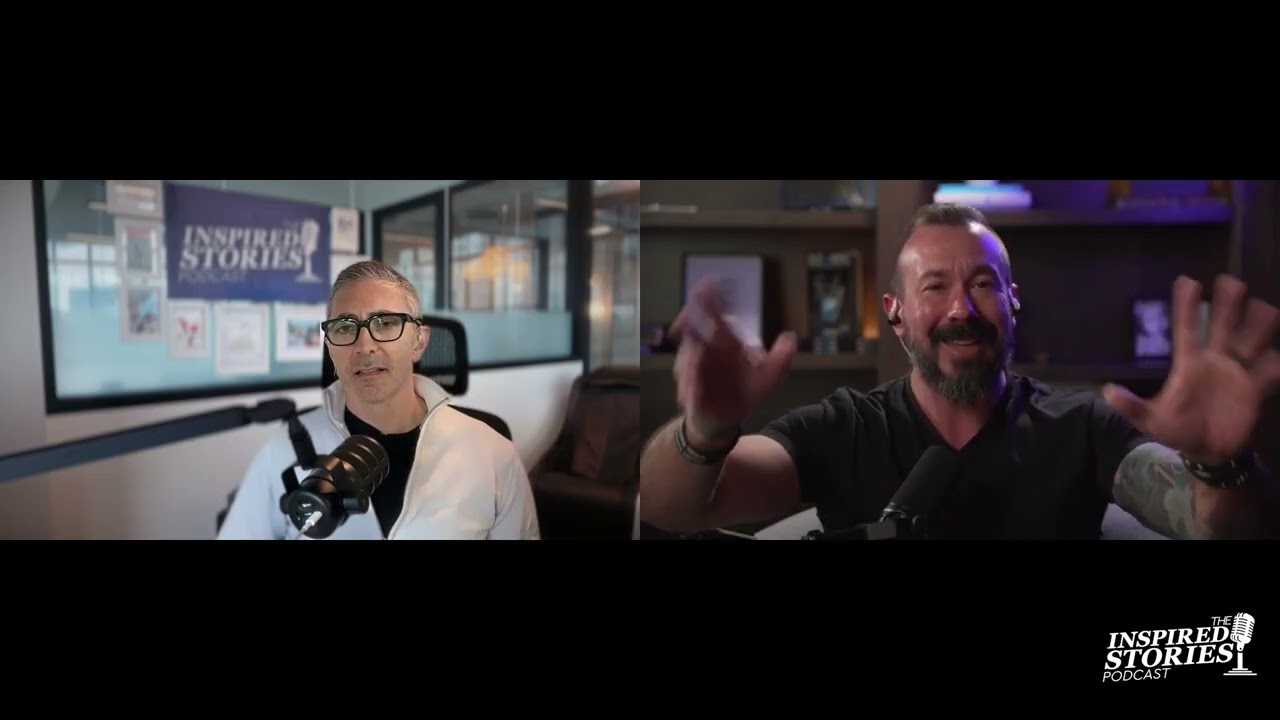
Josh Zolin is the CEO of Windy City Equipment, a commercial equipment service company operating across Arizona and Texas with 50 to 60 employees and between $10 and $12 million in annual revenue. He joined his father's one-man repair operation at 21 with no degree and no plan, after spending his early life in a stunt family and nearly 16 years doing stunt work across film and television. Along the way he co-founded Blue Is the New White, an academy teaching soft skills and practical leadership to blue collar professionals, and hosts the Everything They Don't Tell You podcast.
✨ Key Insights You'll Learn:
Born into a stunt family in Chatsworth, California, with his grandfather, mother, father, and three uncles all working in the industry
First stunt appearance at age six in Matinee with John Goodman, rolling out of the way of an oncoming car
Teaching at the family stunt school from age 14, training people from around the world in falling, fighting, and fire work
Moving to Los Angeles and breaking onto film sets at all hours, knocking on stunt coordinators' trailers to find work
The studio apartment mirror moment in 2008 during the writer's strike that sent him toward his father's business in Phoenix
Joining Windy City Equipment at 21, spending ten years in the field learning the trade before stepping into the CEO role
Expanding from kitchen equipment into HVAC and refrigeration, which drove revenue from $1M to $6-7M in four to five years
Achieving Inc. 5000 recognition three times and expanding from Phoenix to Tucson to Houston
Launching Blue Is the New White in 2019 as a book and advocacy platform, then building the academy eighteen months ago
Sister-in-law's sudden death on January 1, 2015 as the mindset shift that ended procrastination and anchored his daily urgency
🌟 Josh's Key Mentors:
His Grandfather: First memory of the stunt world, jumping from 50 feet into a pool, and the origin of everything that followed
His Mother and Father: Both stunt professionals who trained Josh from childhood, ran the stunt school, and modeled the work ethic he brought into business
His Father (Windy City Founder): The mechanic who built the original business and made the call to get out of stunts to never miss a weekend with his son, setting Josh's path in motion
James and Terry (HVAC and Refrigeration): Master technicians who helped Josh launch the division that became Windy City's growth engine
His Wife: The steady presence through his sister's death and the person who helped him learn that sometimes being there is all that's needed
👉 Don't miss Josh's account of staring down a 60-foot drop onto a bag the size of a pen cap, the studio apartment mirror moment that ended his stunt career, and why his sister-in-law's death at 26 became the most clarifying day of his life.
Listen to the full episode here
Transcript
Anthony Codispoti (00:01)
Welcome to another edition of the inspired stories podcast where leaders share their experiences so we can learn from their successes and be inspired by how they've overcome adversity. As you listen today, let one idea shape what you do next. My name is Anthony Codaspodi and today's guests spent nearly 16 years getting paid to fall off buildings, crash cars and take hits on camera.
Before he ever ran a company, he was a working member of the Screen Actors Guild, earning a living through controlled danger and split second judgment. That background shaped how he thinks about risk, pressure, and what being ready actually means. When a family business needed someone to step up, he walked in at 21 with no degree and no roadmap. What followed was an 18-year run that turned a one-man repair operation
into a multi-state eight-figure company and a three-time Inc. 5000 honoree. His name is Josh Zola. He is the CEO of Windy City Equipment, a commercial equipment service company keeping restaurants and food operations running across multiple states. He also founded Blue is the New White, an academy built to give blue collar professionals the leadership, communication, and financial skills
Most of them were never taught. He hosts the podcast, Everything They Don't Tell You, and sits on the board of, help me with the pronunciation there again, Josh, Safesa, C-F-E-S-A. But hey, folks, before we get into all that good stuff, today's episode is brought to you by my company, Ad Back Benefits Agency. And you'll want to hear this because it's hurting almost every business you know. Health insurance costs go up every single year.
Josh Zolin (01:36)
Sofessa.
Anthony Codispoti (01:55)
and companies are furious about it. They're paying more, claims are getting denied, employees are opting out because they can't afford it, and it hurts turnover and morale. It's one of the most maddening problems in running a business and everyone just accepts it. But you don't have to anymore. Now there's a program that gives employees unlimited access to doctors, therapists, and prescriptions with no co-pays or deductibles to meet. Here's the part that surprises everybody though.
Unlike every other employee benefit out there, our program increases your net profits. We recently helped a client add $900 per employee per year to their bottom line. Results vary, but gains like that can change how a business is valued. Get your free consultation today at addbackbenefits.com.
Now back to our guest today, the CEO, author, keynote speaker, blue collar business coach, host of everything they don't tell you podcast, Josh Solon. Thanks for making the time to share your story today.
Josh Zolin (02:57)
Anthony, thank you so much for having me on the show. I'm wildly excited to have this conversation.
Anthony Codispoti (03:02)
All right, let's roll up our sleeves. So before we get into more current day things, and there's a lot to talk about there, you were a stuntman for a long time since you were a little kid. Tell me how you got started and all that.
Josh Zolin (03:19)
So Anthony, one of the earliest memories that I have was probably when I was about four years old. And that being said, I don't know if it's one of those memories where I saw it in a picture and filled in all the dots, or if I truly remember this. But I walked into my grandfather's backyard in Chatsworth, California, and I saw a man up on a platform about 50 feet in the air.
And before I knew what I was looking at, that man jumped.
I was looking right at him. jumped right off the platform, fell, fell, fell, fell, fell, into the pool below. And that was my introduction into the family business. Right. That was the first memory that I have of what my family did for a living. I'm talking my grandfather, my mom, eventually my dad. That's how he and my mom met all of my uncles on my maternal side. was three uncles, all of them.
controlled chaos in the stunt industry. So that was my natural path moving forward. That was the original family business.
Anthony Codispoti (04:30)
So you grew up around this. And tell me about your first gig as a stunt person.
Josh Zolin (04:32)
I
Yeah, my first gig as a stunt person, I was six. It was a movie called Matinee with John Goodman, by believe 1992. It was shot in 1992, released in 1993. And believe it or not, it was a, what we call a near miss, right? So I was a young child. I was standing at the end of an alley. The scene was that,
There was somebody who abducted somebody else, threw them in a car. The car was in an alley and the car sped off. And me and then another stunt individual had to run out of the way before the car hit us. That was at six years old.
Anthony Codispoti (05:18)
Now, I want to understand the relationship between a stunt actor. Is that the right term? Stunt person? What do you say? What's the right verbiage? Stunt person. The relationship between the stunt person and the main actor. you in that situation, are you standing in for another roughly six year old actor who was the character in the story?
Josh Zolin (05:28)
stunt person.
In that situation, no. In that situation, that was just a scene that needed some pizzazz, if you will. That was, you know, just to kind of generate an emotion. Somebody, we don't know who it is, almost got hit by a car.
Anthony Codispoti (05:56)
You're kind of an extra on the set, so to speak.
Josh Zolin (05:58)
Sort of, yes,
it's a version of an extra that's just skilled in not getting hurt, but looking like they're hurt.
Anthony Codispoti (06:06)
And where does
that skill come from as a six-year-old?
Josh Zolin (06:10)
Well, I mean that I was training for it ever since I could walk, right? And I have pictures of me jumping off of stairs and falling off of ladders, you know, but not in the way that most, you know, five, six year olds do it, which is an accident, right? But actually with my parents guiding me and showing me where to land and how to fall, you know, eventually Anthony that graduated throughout my life to where
I rolled my first car before I could drive. I set myself on fire for an English project and eventually made my way back out to Hollywood because that's where I originated, but that's not where I grew up and started to pursue it as a career.
Anthony Codispoti (06:54)
So what kinds of tips are your parents giving you as a five or six year old in terms of how to land and not get hurt?
Josh Zolin (07:00)
Yeah, thanks for getting so detailed on this. I haven't talked about the actual tactics in a long time. So, you know, there's a few things. Number one, land on your back. Always on your back. Don't land on your stomach. We jump into what are called airbags. Okay, so there are these big pillows basically full of air. You've probably seen them in behind the scenes stuff or whatever. But what people don't know is when you hit the bag, each side collapses in on itself, right? So it kind of
kind of folds in. You land on your stomach, you don't fold that way as a human being. You land on your back and your butt, right? You can fold and you don't get hurt. So that's number one. Number two is, you know, being able to actually expel air, you know, when you land. I'm sure you've had the wind knocked out of you. You feel, you know what that feels like, can't breathe. That happens because you don't let the air out when you feel the impact. So when you feel the impact, you have to release that air. Otherwise,
You're going to get the wind knocked out of you every time you fall. And then there's distances. So like fight choreography, right? And camera angles and things like that. You know, a lot of people wonder how it's done. Probably less so now because there's been so many behind the scenes stuff, but you can be two, three feet away when you're throwing punches and kicks and, depending on where the camera is, it will look like you got hit. You're too close. You actually get hit. And I have done that.
before, actually, when I moved back out to California and I was in the business. But, you know, those are the low level fundamental tactics, you know, that I was taught at a real young age.
Anthony Codispoti (08:39)
And so you grew up around it. You had some appearances. You had some work when you were very young. Sounds like you moved away, grew up somewhere else, and then came back to California to pursue that.
Josh Zolin (08:54)
That's right.
Anthony Codispoti (08:56)
And where did you move to? And you came back specifically just to follow this work?
Josh Zolin (09:01)
Yeah, so I was born in California, spent the early years of my life there because both my parents were stunt people. My grandfather ended up getting sick. So we moved back to the Midwest. I grew up in Kenosha, Wisconsin, and continued to pursue the stunt business there and just more traveling involved, right? We weren't in California. So both my parents being in the business had to travel from Wisconsin to wherever the job or the work was. But
they had opened up a stunt school. So to teach people how to break into this line of work. And we would have people come over from all over the world to learn how to fall and fight and get lit on fire and roll cars. And, you know, it was all done on property. I began teaching that school when I was 14 years old.
Anthony Codispoti (09:50)
You began teaching it. Okay. So you were an advanced student for your age. Yeah. I wonder, as you look back at that time, what of those skills that you picked up were transferable into some of the work that you're doing now?
Josh Zolin (09:51)
That's right.
I like to think so.
Yeah, that's really good because I've actually challenged myself with this several times and look back and, and try to understand how some of what I'm doing today came natural or easy to me. And a lot of it does link back to this line of work. So I'll start with the, I'll start with the hustle and the grind. Okay. So when you're in the stump business, yes, I had the family name, but you still have to go out and find the work.
So when I moved back out to LA and Hollywood and I was trying to break back into the business because I'd been teaching the school for so long. Now I'm trying to be in movies and commercials and TV shows and actually, you know, make a steady living doing this kind of stuff. I had to essentially break on to movie sets wherever they were. I would get a list of where these films or shows were being shot.
I would go down there. It didn't matter what time of day it could be 12 noon, could be three o'clock in the morning, all over the state of California, find the stunt coordinators trailer, knock on the door, introduce myself. If they weren't there, let myself in, put my head shot on the, on the desk and leave. And you know, this was, as you can imagine for a young adult, I mean, it was pretty scary, right? Pretty intimidating. So that really eliminated.
you know, the the fear of picking up the phone and asking somebody if they wanted me to fix their fryer or or or their walk-in cooler or their AC unit, right? That seemed a whole lot easier after I'm breaking breaking into sets in Hollywood at three o'clock in the morning, you know, pretending to be somebody else. mean, there was one time I forget what movie it was, but there was a courier you had to check into the set at one location.
And then they put you in like a limo or a transport car to bring you up to where it was being filmed. I think it was Eagle Eye. And so I had to lie to the attendant and I had to say that I was late for my scene. I needed to get up there as soon as possible. You know, could you help me? And they were like, well, you need to check in. I just don't have time. their courier car was sitting right there. I was like, let me just get in. It was like, all right, just go, just go, just go. So, you know, so these types of things.
really made it to where in this day and age and in this industry, it was a lot easier to make those phone calls or knock on those doors or things like that. That's number one. I do have a second one, but I want to let you interject and respond to that if you'd like.
Anthony Codispoti (12:53)
Yeah, I appreciate that. I think that's just fascinating. You're breaking on into these sets. Maybe, you know, sometimes it's sort of like sweet talking your way in like you did there. Maybe it's like finding a gap in the fence or like hopping a barricade. Yep. You're nodding your head. Yes. I'm curious, any idea roughly what your success percentage was? So if you got in and you know, you found your way to wherever you were going, what percentage of the time would that actually lead to?
Josh Zolin (13:07)
Yeah.
Mm-hmm.
Anthony Codispoti (13:23)
you get in work.
Josh Zolin (13:24)
That's a good question. I, looking back, I'm to do this math real quick right now. Cause I haven't, I haven't done this in 20 years. I'd say probably 60%. It is really high. And here's what my, here's what my parents taught me because they were of the old school, you know, what are stunts kind of era, right? When stunts were just being formed and they taught me this gorilla style.
Anthony Codispoti (13:38)
That's really high.
Josh Zolin (13:54)
marketing in this this guerrilla style, like breaking onto sets. As the generations move on, that became less and less people would rely more on their agents, or they would try to make phone calls or reach out on social media, you know, and things like that. So I think what I had brought even at that time wasn't being done as often as I was doing it. And the people I was doing it in front of were the generations that my parents were, and even my grandparents, like these were the people that were going to hire me.
So not only did they see it, they recognized it and they respected it.
Anthony Codispoti (14:29)
they appreciated the fact that you were so gung-ho to put yourself out there and they're like, this is the kind of guy we want to work with. OK. All right. So what was that second one you were going to get to, the transferable skill?
Josh Zolin (14:36)
That's right.
Yeah, I think that's the relationship with risk. Right? The as an entrepreneur, and all of your entrepreneur listeners will resonate with this. We deal with risk every day. Right? And and it's a different kind of risk than in the stunt business, right? We're thinking about, you know, what, what do we have to do today? What conversation do we have to have? What sale do we have to make? What deal do we have to close? This is all risk, because if we don't do it,
something will happen, there will be a fallout of some kind, right? I won't make the revenue, I won't get the profit, maybe I'll shut my business down. I don't know, there's a lot of risk involved. When I'm up on a tower, 50, 60 feet in the air, right? And I can see birds below me flying. And I'm looking at a bag, we talked about an airbag. So these airbags are big, right? These airbags are, you know,
20 feet by 10 feet sometimes depending on how high you're jumping. But I'm to tell you right now, Anthony, when you're up there and you're looking down, that bag is no bigger than the cap of a pen. And you have to hit the X right in the middle of it. And by the way, once you let your feet off that platform, what control do you have to when you land or where you land?
So it's all that calculation before you jump. And then once you take that leap, that is pretty much hope. And one inch to the left or the right. And I mean, you're talking life or death.
Anthony Codispoti (16:22)
So you're staring down the possibility of severe injury or even death on a regular basis at work, going and knocking on somebody's door that you don't know, picking up the phone and cold calling somebody that doesn't even register on the fear factor scale for you.
Josh Zolin (16:39)
My nervous system had gone through so much training at that point that everything else just seemed easy.
Anthony Codispoti (16:47)
So how did the Windy City equipment opportunity come about?
Josh Zolin (16:54)
Yeah. So I'll, try to put some, pieces together here. So when I was younger, when I was probably eight or so, my parents got divorced. And so my, mom and my dad split and my mom continued to do stunts, but because I only saw my dad for a limited time, it was every other weekend when I was growing up, he made a very difficult decision to get out of the stump business.
so he could make sure that he never missed a weekend with me. And which was great. And I've always appreciated it. Didn't know the impact at that age, obviously, but hindsight, I can see it. So he got into restaurant equipment repair. was actually bakery equipment repair. He hung up his hat for the stump business and started fixing bakery ovens and he basically a foreman.
And he was doing that and working for a company in Chicago for a long time and just got tired of the cold and thought he could do it better himself. And so he had moved out to Phoenix, Arizona. And this was when I was about 16 or 17 years old. All right. So right before I, so before I moved back out to LA, which I was, I believe 18 when I did that. And so.
And we can talk about this more in depth at another spot in the show if you'd like, you tell me. But there was a point that I reached Anthony in the stump business where I knew that's not what I wanted to do the rest of my life. And that was a very pivotal moment for me. Once I hit that moment, I didn't know what the hell to do.
I didn't go to college. I was very vocal in high school about, I don't need college. I'm going to go jump off this building and get paid for it. Like, what do I need to go college for? And, you know, and I knew nothing else. So when I made the decision to get out of the stump business, I called up my dad and I said, dad, I have no idea what you do for a living. I know you turn wrenches.
But I couldn't, like I have no idea what that translates to, but I also know there's opportunity in it. I don't know where, I don't know how, but it's just you and I don't wanna see you on your hands and your knees the rest of your life and I need out of this dumb business, can I come work with you? I wanna come and I wanna help you grow the business. He said, sure, as long as you deal with the people.
Anthony Codispoti (19:37)
So I appreciate you sort of leaving that open. But it does feel like there's more to explore at this point. And let's go into that. What was behind the big pivot? Why was it so important to you to get out of the stump business at that?
Josh Zolin (19:54)
So I'm going to describe a moment to you in hopes that it might relate to somebody out there. So there was a time.
I was living in Reseda, California in a studio apartment. It's all I could afford. was 2008, writer's strike was happening, right? So work in Hollywood had been farmed out and moved mostly to Canada. Wasn't a whole lot going on at the time. Any work that, that did come about was not union, didn't pay very well. I was struggling and I felt it. And I remember
going into my bathroom at the time, which was basically also the kitchen and the living room and looking in the mirror and I was skinny. couldn't afford to eat. I was hosting at a seafood restaurant at the time just so I could kind of eat some of the scraps that other people left behind.
And I'll be honest in the the film industry, there is a big emphasis on who you know, not what you know, and more so who you need to be. And what I mean by that is that you have to pretend to know things that you might not know, you have to pretend to be able to do things you might not be able to do. And you might have to lie.
to get to where you want to be. I'm a pretty honest guy. And so when I looked myself in the mirror, you know, I, was almost like it was at the point where somebody else was looking back, right? It wasn't me. At least that's what I felt in that moment. Completely lost myself. And I can, I can pinpoint, like I could, I can smell.
Anthony Codispoti (21:49)
You felt like you'd lost yourself.
Josh Zolin (21:57)
the smell that was coming over like the barbecue that was burning on the balcony next to me, right? I was on the third floor of this apartment. I could hear the wind and the chicken wire that was banging against my window, right? And I could just, I got chills because I knew in that moment that was not the rest of my life. I, you know, no success is built in the struggle, but I didn't want the kind of success that came with
that struggle.
Anthony Codispoti (22:29)
The part of that struggle that you really disidentified with was not being able to be who you were and having to lie, having to pretend to be somebody else. It seems like this really hollowed you out.
Josh Zolin (22:37)
That's right. That's right.
It did. It did. It was, it felt like a hollow existence. It felt like I was built for more. You mentioned Anthony, the types of stump people. And I gave you that example of, well, it was kind of like a, an extra, you know, that, has another skill. The other side of that is the double, right? You're doubling the actor. Think about this for a second. I want your audience to as well. You are there. Your sole purpose of being there is so the
that they're paying more and deeming more important than you does not get hurt. If you get hurt, it's kind of like, oh well, that's why the stunt guy's there. Next man up.
Anthony Codispoti (23:25)
almost like a replaceable mannequin.
Josh Zolin (23:27)
That's exactly right. It was a crash dummy. I felt like a crash dummy. And that at the end of the day is I think what really hit me.
Anthony Codispoti (23:40)
Interesting. I'd never thought about it in those terms where right the whole point when you're a body double is you're there. So the main guy doesn't have to risk getting hurt. If you do, that's OK. Nobody knows who Josh Zolan is. They know who not that you doubled for him. They know who Tom Cruise is. That's that's the person who's really valuable to us. So on top of all the other things like you feel like you're this
person of secondary importance because of how this industry is set up.
Josh Zolin (24:13)
That's right. And in that moment, I've always had a pull to be something more. And I just think I realized that I would never be anything more in that position.
Anthony Codispoti (24:25)
So you reach out to your dad, you guys have this conversation, and he says, okay, come on out, you deal with the people. Because your dad didn't enjoy that part of it, he got really good with the wrench, or did he see something in you where he knew that that would be a better fit for your personality?
Josh Zolin (24:44)
No, no, it was more like, hey, I don't want to deal with it. So you deal with it. He didn't want the headache. He didn't he didn't want to have he didn't want the responsibility. He'll be the first to tell you that since he got out of the stump business, he's a mechanic. He's not a businessman. And although he is very good with people, which is kind of the irony of all of it, right? He is incredibly good with people. But, but yeah, that was him saying
Josh, if you want to grow this business, here's going to be probably the biggest pain point. And mind you, it was just him at the time. He didn't have any employees. I think at that point he had tried to bring on two or three, one at a time over time and they never worked out, which is probably where that statement came from.
Anthony Codispoti (25:30)
Okay, so tell us more specifically, what does Windy City Equipment do and who do you do it for? And then I want to get into how you grew it.
Josh Zolin (25:40)
Yeah. So Windy City Equipment is a full-fledged commercial facilities solution focusing on HVAC, refrigeration and kitchen equipment repair, maintenance and installation. And our main demographic is chain restaurants, but we'll also do large scale facilities, healthcare, senior living, things like that.
Anthony Codispoti (26:08)
Okay, and so you come in at the ripe old age of 21. And what was your plan? How were you going to grow the business?
Josh Zolin (26:11)
Mm-hmm.
Plan's a strong word, I don't want to lie and say that I had any kind of plan. My plan was to get as far away from Hollywood as possible. That was my only plan. So that's exactly what I did. Well, I shouldn't say that. mean, Phoenix is only a six hour drive. So I got a little further away from LA. But really, my goal and my intent was to just learn.
just understand what it was I was getting into and if I could succeed in it and if there was a future in it and if there was as much opportunity as I assumed there could be. And so I spent the next 10 years in the field, turning wrenches, learning how to fix equipment, shaking hands with customers out there, you know, and really just understanding how to be a technician in the field.
before I could wrap my mind or my hands around anything else in the business.
Anthony Codispoti (27:17)
And so once you got comfortable with all of that, then where did the, you know, besides going from your father to now the two of you, where did the first ideas come from for growth?
Josh Zolin (27:29)
Yeah, so once I, this is kind of how I operate. And I would venture to say how a lot of people operate out there. Once you master something or you become comfortable enough with something, then you're looking on, how can I improve it? What's next? How can I add on to it? You know, especially if you're growth minded, like I am, you know, so I've got an aversion to risk, right, and, and a high motor, a high drive and an incredibly high ambition. And so at that point, I was like, okay, I can fix equipment.
We're both doing it. I mean, we're pushing each one of us probably $300,000 a year through our trucks. So we were doing the two of us together, maybe five, $600,000 a year. When I got to the business, I think my dad was doing about 250 himself just through his truck. And that's cause he was one guy who was limited. And so once, once I reached that threshold where I felt like I understood it all, then I started to ask myself questions like, what could we be doing better?
or what's missing. mean, hell, Anthony, when I got, when I came on board, we weren't even accepting credit cards. It was cash or check only carbon copy invoices. Like there was really nowhere to go but up. You know what I'm saying? And so, you know, we slowly transitioned to things that came natural to me. This was my starting point because I don't have a college education. You couldn't pay me to read a book in high school. Way different now. But
I started to say, okay, well, how can we do this electronically? How can we get paid faster, right? Getting credit cards? How can we get more done? No, let's bring on an employee. Let's see what that looks like. Well, you tried this a few times. Let's let's do it differently. Let's bring on somebody we can train versus somebody who's got bad habits. You know, so I asked myself all these questions. And that started to snowball one idea after another idea after another idea. And so it was
very, very organic, very bootstrapped, very just incremental.
Anthony Codispoti (29:32)
incremental.
No, just moving along one little idea at a time. It wasn't sort of like, let's franchise this. Let's, you know, move into 100 cities. It was just turning the dials as you went.
Josh Zolin (29:47)
That's it, little by little.
Anthony Codispoti (29:48)
And how far into it were you before you really started to see the numbers grow quickly?
Josh Zolin (29:56)
Yeah, that was so we hit our we hit our ceilings and I think every business does this right is is you know, you kind of there's your capacity. And and so there were stages of that in the business. The biggest leap is what I'll focus on. Otherwise, I could go way down rabbit holes. But the biggest leap was when I think I was about 27 years old, 20.
almost 30, 29, I'll tell you this whole thing's a blur at this point. I stepped into the CEO role. Now, when I say I stepped into the CEO role, I was still turning wrenches in the field. So I was a owner operator type of person, but I didn't own the business. I was just the CEO of the business. But that's kind of when I saw what was possible. Okay, so now if I'm...
half in the field, half not in the field, I have more time to focus on these ideas. And the next idea I had was, okay, well, up until that point, we had only fixed kitchen equipment, things that got hot, heat lamps, fryers, ovens, stoves. That was my expertise, that was my background, that was my dad's expertise, his background, that was our niche, that we carved out. So one of the first things I did when I sat in that seat was,
Ask myself, well, what else can we fix? And so once we landed on HVAC and refrigeration, because that was just a natural progression, we had customers asking when we were going to do that. If we were going to do that, I didn't have the skillset for it. My dad didn't have the skillset for it. So I brought on an individual named James and, Terry and basically said, okay.
you guys are master technicians in HVAC and refrigeration, tell me how to launch this division. And we all work together and once that division launched, that was the launch pad for the exponential growth. went, think, mean, you know, in the matter of four years, five years, we went from 1 million to six or 7 million, something like that.
Anthony Codispoti (32:16)
And so not only did this open up new, well, your doors were already open. You were already into these clients. They'd been asking you, you provide the same service? Was it then easier for you to go into new doors because you could be more of a one-stop shop for them? Is that why you really saw that exponential growth, you think?
Josh Zolin (32:37)
There was that definitely easier to get into new doors. We became more sticky in the doors that we were already in. Right. So, so less churn, less customer churn in that aspect and margins and pricing are much higher in, in refrigeration and HVAC than they are in kitchen equipment. So all three of those things combined definitely played a part.
Anthony Codispoti (33:02)
good positive perfect storm there. So tell us the current state of Windy City.
Josh Zolin (33:04)
That's right.
So current state of Windy City, are operating in three branches, two here in Arizona, Phoenix and Tucson, one in Houston, Texas. Our employee count is between 50 and 60, depending what day you ask me. And revenue fluctuates right now between 10 and 12 million.
Anthony Codispoti (33:32)
That's phenomenal. That's a really impressive growth. Why Houston? That's a little bit outside the Arizona market.
Josh Zolin (33:40)
I get that question a lot. And the answer is that once you develop an incredible relationship with customers, especially the kind of customers that have locations in other parts of the country, you can definitely leverage those relationships to bring you into new markets. And that's exactly what we did.
Anthony Codispoti (34:00)
You had a customer that was in the Phoenix or Tucson area. They say, hey, we love working with you guys. We've got a bunch of stuff in Houston. We'd love to work with you there. Great opportunity for you guys to expand into a new market because you've already got a customer there.
Josh Zolin (34:14)
Yeah, three or four relationships. So was pretty much a no brainer for us at that point.
Anthony Codispoti (34:19)
Where do you see Windy City Equipment going from here? Do you feel good about the size and the state? Do you think there are opportunities to move into more geographies? Or I don't know, are there additional services that you guys want to put under your umbrella?
Josh Zolin (34:35)
Yeah, that's a good question. And I'll be honest, the last two years have been rebuilding years for us. There's been equity transfers in the business. basically, at this point, I have two hands on the wheel and my foot on the gas. All right. And my dad is largely stepping down, you know, and so the visions have changed in the industry. Again, I'm to go back and I'm going to tell you that statement that my dad made that he's
a mechanic, not a businessman. And I'll get a little transparent here. And I'll tell you that through the growth of the business, all the accolades and the new markets and the addition of people and leadership teams and meetings, the business got a little and is a little intimidating to my dad, who is just used to being a technician in the field.
because of that and the respect that I have for my dad, this has been a steady progression so far. You know, it was kind of, don't want to bite off more than we can chew. We don't want to do more than we can handle, which is fine. And that is a great mindset to have when you're starting and launching a business. It's safe, it's secure. But now I still have my relationship with risk that I developed in the stump business. And I'm young enough to pursue something that
I believe that I can achieve. And so with the equity transfers, with me stepping in, not only as CEO, but now president of the organization, tomorrow's Windy City looks a whole lot different than today's Windy City. And so we have aspirations, 10 year aspirations to be a hundred million dollar business, taking steps, tangible steps toward that today to ramp up and fuel our growth through the next 10 years.
Anthony Codispoti (36:32)
Do you care to give voice to what you think some of those incremental steps look like to get there?
Josh Zolin (36:37)
Yeah, so we have an entire, I call it the WC operating system, right? And if your listeners are familiar with EOS or scaling up or four disciplines of execution or any of these frameworks that have been built. So essentially I alluded to now I'm a huge reader, right? Couldn't pay me in high school. Now you can't pay me to put the book down. And so I've read all these books and I've always asked myself, okay, man, if I could just...
take a little bit of this and a little bit of this and a little bit of this, then I could implement an operating system in my own organization that I feel like could really take us to the moon. And so as I moved up in leadership and my duties became less, hey, review this work order or sign this receipt or do this, do that. And more into coaching my team to be the leaders that they are. I found more time to focus on these visions, create this operating system, and then create a roadmap.
for the next 10 years in two to three year increments of which markets we're going to be in and how much revenue is possible in each market and what leadership needs to look like and what the hierarchy and the org chart needs to look like in each year. I won't walk down exactly and get into detail with what each of those phases looks like in a granular sense, but that's the overall hierarchy, the overall framework of how we're going to get there.
is it's reverse engineered.
Anthony Codispoti (38:08)
Okay. I want to give voice to the real estate investment company that you were running for over a decade at the same time that you were working at Windy City. Tell us about this effort, what was going on and how you were juggling all these different things at the same time.
Josh Zolin (38:27)
Yeah. So like many people out there, I read the book, Rich Dad Poor Dad a long time ago, and I was wildly intrigued with passive income and, you know, real estate assets and how that all worked. in the downturn, during the downturn was at 2008, 2009, it was a prime opportunity, especially in the Phoenix market, housing prices completely crashed. And I know that hurt a lot of people.
but I was not a homeowner yet at that time. I was still renting, had some reserves and we were able to get into flipping some houses. And it was fun. I mean, it was a demand of my time, but it was a catalyst for a lot of what happened in and out of Windy City equipment. So we would buy distressed homes, we would fix them up and then we would put them back on the market and sell them for a profit.
We did three or four of those. Then we got into some buy-in holds and then, and here's where it started to cross paths with Windy City is that real estate venture is called Sky High Partners was able to then purchase commercial real estate. that commercial real estate became the headquarters for Windy City. And so that was also a slow grow over the years and this equity transfer that I just spoke about.
It's actually my dad and I were 50 50 partners in that business. And one of the exchanges was I sold him my 50 % share in that for more equity stake in Windy City. And it's just
win-win-win situation all the way down, which is what we try to transact every time we do business of any kind, even with family.
Anthony Codispoti (40:18)
Now, I understand, Josh, that at some point you started noticing a pattern in the people around you. I presume this is the folks who are working with it, Windy City. What were you seeing in your technicians and field workers that made you realize that technical skill alone wasn't?
Josh Zolin (40:37)
Hmm. That was actually, I'm going to point back to my dad again. My dad's had a lot of influence in my life. He would say, man, this technician is fantastic. If you could only teach character, right? And what he was speaking to was sometimes as many people out there know, you'll bring on a high performer in your organization and they will have a terrible personality.
right? They could be calm, a cancer in your organization. We've heard all the words cancers, you know, they're toxic, terrible, you know, for culture and all this kind of stuff. And it's true. It's, it's, it's, it's very true. But when you start to look beneath the surface a little bit, you understand that, you know, many of these people, they've developed over time, almost like this identity that they're only the only reason they're in this profession to begin with is because they weren't smart enough to go to college or
You know, they they heard this narrative that you can't you can't be smart. So get in the trades and build something with your hands. Right. And they've carried this. Right. So that's why, you know, when when this perception of a blue collar people comes into play, you know, it's it's candid. It's rough around the edges. It's, you know, maybe a little sharp with their words or lack of respect because they've never been taught, man. I mean, I'm just going to be transparent like
they've never been taught, they've been living with this identity for their entire lives. And so what I noticed was they were getting in their own way. Anthony, they could fix anything in the world, but they were a jerk to the guy next to them. And not all of them, of course, but sometimes it seems like the highest performers are the ones with the biggest ego. And so we developed the
the Blue is the New White Academy to help train those soft skills into what I call practical leadership. And so answering the question, are leaders born or are they made? I'm of the impression that they're made. They need to be given the skills in a way that they can internalize them and then practice them.
Anthony Codispoti (42:50)
So tell us more about Blue is the New White in this academy. What does it actually teach? Who is it designed for? Who's your clientele?
Josh Zolin (43:00)
Yeah, good question. it's based on my book, Blue is the New White, which was published in 2019 as a resource for people to understand the benefits and opportunities that exist in the blue collar world, essentially.
Anthony Codispoti (43:14)
So blue is the new
white is blue collar, white collar. That's the reference.
Josh Zolin (43:17)
That's correct.
Yes, that's absolutely right. you know, comparatively, right, there's this narrative where success means getting good grades, going to college, getting a good job, and then boom, there you go. There's your picture of success. Maybe throw in a house, so, you know, spouse two kids and a white picket fence. And that's this box of success that everyone's pushed into. So the book kind of...
broke through that a little bit and helped people understand that they're in control of whatever the definition of success is that they have and how they can achieve it. And so the Academy kind of plays into what are the characteristics necessary to achieve that type of success, right? It's sold to blue collar business owners as an employee development tool for their frontline. So a blue collar business owner will buy it from me, deploy it to their team.
and it will teach their team the soft skills needed to become successful. We're talking about communication, initiative, conflict resolution, the ability to teach, emotional intelligence, along with financial acumen. Now know this can be a slippery slope. it's financial acumen to a point, right? We need some discretion there, but it really answers the question, how do my actions as a frontline employee impact
the bottom line of the organization on a day-to-day basis and then ties it back to why should I care? Well, because if you impact the bottom line of the organization in a positive way, your income is gonna be impacted in a positive way. That's how you create value, right? The soft skills and the understanding of finances.
Anthony Codispoti (45:04)
So the book came out in 2019. Here we are recording in middle of 2026. What's how long has the Academy been around? What's the state of it today?
Josh Zolin (45:16)
Yeah, the Academy is relatively new only been around probably about 18 months at this point, but it's been incredibly valuable, really fun. We've implemented it in obviously in my own business to use as a not only a recruiting tool, but an onboarding tool as well. And an ongoing development tool. You know, lot of the things that we teach in there are benchmarks that we that I learned that we hold our people to anyway. So now it's just a tangible path to be able to
not only assess these skills, but then reward or discipline against it.
Anthony Codispoti (45:53)
So 18 months, you've done it in your own organization, starting to do it in other organizations. Maybe it's still too early to have metrics, like numbers you could share, like before and after. In the absence of that, do you have some specific anecdotes that you could share about results that you've seen?
Josh Zolin (46:11)
Yeah, so we actually do have one case study and it was a smaller organization, I believe 10, 15, 10, between 10 and 15 technicians. And since implementing the Academy, they didn't add a single technician, but they were able to add $30,000 to their bottom line. And so we dug into this because causation or correlation, right? Like, was this really because of the Academy? If it was cool, I'll take the credit for that. But if it wasn't, I don't want to take the credit for that.
But what we found was the biggest lever was the communication tool, right? In the soft skill course and this communication tool, what it did was it brought front and center how important it was for these frontline technicians to communicate properly and entirely with the customer. Because usually when callbacks happen, you you have to go back on a call because he didn't fix it right the first time or
a customer requests that a different technician come next time, all of this can be tied back to communication. So once they started to connect those dots and talk to the customers in a way the customers could not only understand, but also relate, then these callbacks stopped happening. And it was rampant in the organization callbacks and I don't want that tech here anymore. And it was usually because not because they were being rude, but because they
were perceived to not be able to fix something when really maybe a part was on order, they didn't tell anybody, or the issue was intermittent, they couldn't get it to replicate while they were there, so they couldn't diagnose it. But they weren't communicating any of this stuff. So there was that case study that was about $30,000 that we found different since they implemented that academy.
Anthony Codispoti (48:00)
Tell us about the everything they don't tell you podcast
Josh Zolin (48:05)
Yeah. So that's my passion project. This is deeply meaningful to me. And it's an evolution. I actually launched a podcast next to the book in 2019 with the same name called Blue is the New White, where I talked to successful tradespeople all over the world about why they love what they do. Advocacy podcast for about six years. And then more aligning it to my passions. saw that we were getting a lot of blue collar business owners listening to the show.
resonating with the show, which was great. And business is something that I do every day. There was a point in my life though, that I realized that if I wanted to achieve the type of success that I knew I could, I had to become the person capable of doing it. Right? And it was like this realization where I'm building business, but I'm also building myself. And that's what the show is about.
Right. So we, we build, we, we bring on notable people from all over the place. Some that you'll recognize, some that you won't, some real operators, you know, some that have just dedicated their lives to helping people become better version of versions of themselves or better operators or better CEOs or leaders. And so we have these conversations that are just all around how
we need to continue to improve as people if we want to continue to improve our businesses.
Anthony Codispoti (49:39)
I understand that at least part of the core message, whether it's through the podcast or maybe the book in the academy is kind of pushing back on this idea that the four year degree is the default path to life. When you start talking about that, what's the resistance that you typically meet with that?
Josh Zolin (49:58)
depends on who I'm talking to. But usually the resistance is well, a college degree will open doors for you. A college degree will help you land a stable income. And every once in while, it's just a college degree is just what you do. It's just what you just what you do. Listen, when colleges came onto the scene, they really started doing their marketing, they did really, really well.
And there was a time that a college degree was coveted. But now, mean, look at it, Anthony, it's overly saturated. You get a college degree anywhere. And here we are where you can learn the same thing on YouTube that you can in college a lot of the time. Here's where I think college wins is networking. You develop relationships, you meet people.
You know, you go on, you live your lives and you you develop a network of people that you can rely on or that you eventually do business with or that you just have a relationship with at some point. So I think it wins there. But the college degree itself, especially when you talk about the blue collar skilled trades, I have never looked at. I have never required anyone to have a college degree coming into my business. And I'll tell you right now, I have.
Well, 14 people making over six figures in my company today.
Anthony Codispoti (51:30)
Right. Well, there's a good data set right there. You know, something I'm starting to kind of connect a thread here. Couldn't pay you to read a book in high school. Can't pay to put one down now. All of the the lessons of the wisdom that you're spousing, you know, it suggests that you are a big personal development junkie for yourself.
you know, as well as how can I take this wisdom and pass it on to other people? Was there a slow transition for you going from the high school kid who wouldn't read a book to to where you are today? Or were there one or two pivotal moments along the way where like a big switch got flipped?
Josh Zolin (52:24)
There's a combination of both. There's definitely been switches. Anthony, I can speak those. I can speak to those. It started slow, but there were definitely moments in my life where I looked myself in the mirror again. Right. And maybe I liked who I was, but I knew I could be more. And that's kind of where this this stuff came from. And then. You know, there's there's
sometimes catastrophic things that happen in life that that unfortunately until it happens You're averse to changing your perspective so I can give you an example of that in 2015 so My wife and her sister are Irish twins, right? They're 11 months apart. And so they're best friends I've known her for a long time. I knew my wife in high school. So I knew her sister in high school
And January 1, 2015, we got a call. It was her sister. She was going to the hospital. She thought she had the flu. She was coughing, just didn't feel well. She worked at the hospital. So she just wanted to go in, get some fluids, you know, and make sure that she was being cared for. Well, in a matter of 12 hours, her health declined. Nobody knew what was going on. Her organs started shutting down.
We got calls from her parents in the middle of the night saying, you guys got to get back here, you know, and we don't know what's going on. Ultimately, her sister passed. She was 26 years old. At the time in 2015.
I was, geez, I don't even know, doing math right now is probably, I was probably, well, if your sister was 26, I was 28 or 29, 28 or 29, probably 29. And up until that point, I could procrastinate a lot, you know, due to my own fears or insecurities or just.
maybe feeling like certain things weren't important, you know, I'll get to it tomorrow. It's okay. That moment made me realize how little time we had.
not because life is short, because we just don't know when our expiration date is. And so...
That was one of the biggest mindset shifts that I had in my life, especially with bettering myself because as a highly driven individual.
I can lose sight. I can lose sight very easily of the present moment of of who I am in that moment and truly what needs to be done in that moment. I can live so far into the future that I forget about today. That moment made me.
That moment showed me how important it is to tie today to tomorrow. And I've been living my life that way ever since.
Anthony Codispoti (55:41)
tie today to tomorrow in terms of don't put off till tomorrow, which you can do today because you may not be guaranteed that day. Is that the mindset?
Josh Zolin (55:43)
Yes.
That's part of it. The other part is tomorrow is only dictated by what we do today.
What we do today is a catalyst for what happens tomorrow. And so if you're moving towards that big thing or you have that big dream or that big goal, like what do you have to do right now, Anthony, right now? Maybe you don't have to achieve that goal right now. Maybe you can't achieve that goal right now, but what do you have to do right now to make that possible? Is that something in your business? Is that something in yourself?
Is it a hard conversation that you need to have that you've been putting off because you're just too scared? You you don't want to hear what the other person has to say. it a big research project that, you know, you don't know what's going on, but you know it's important, you know, but you don't want to spend the three hours necessary to go through all the paperwork. And there's a lot of stuff, but it has to start today. There's no other option.
Anthony Codispoti (56:54)
I love that. Josh, do you want to say more or anything at all about how you and your wife got through that really difficult time of her sister passing?
Josh Zolin (57:08)
Yeah, that was hard.
seeing somebody that you love so much lose somebody so close to them.
You feel helpless. And I'm a driver. I'm type A, I build businesses, I've done all the disc assessments, high D, you know, I mean, I like to be able to control the narrative.
Couldn't control that. It's not something that you can control. It's not something that you want to try to control. All I could do was sit there and be with her. And that was not comfortable for me at the time, you know, and that was a big...
thing that I learned through that as well is that sometimes people don't need you to say the right thing. Sometimes people don't need you to fix it. Sometimes people just need you to be there.
you know, and that was a long process. And I'll tell you, I mean, here we are 11 years later and that day every year is reserved.
Anthony Codispoti (58:36)
What do you do on that day?
Josh Zolin (58:36)
Yeah, it's it's tough.
So usually that's what we call in this house a sad day. That's a sad day. But that's day for reflection, remembrance.
being with family, right?
remembering the present. So I talked about.
Remember what you have to do today to accomplish tomorrow. The other side of the same coin is just forgetting about tomorrow.
and being present with the people that you love, people that you care about. Because that's what's right. So on that day, Anthony, we as a family, my wife, my kids, we just hang out with each other. Maybe we'll go get something to eat. Maybe we'll watch a movie. Everybody understands what it is. That happened. My wife was pregnant at the time with with my my oldest daughter.
So none of my daughters have met their aunt. And so, you know, we'll tell stories, we'll show them pictures, we'll make sure that her presence is still felt.
Anthony Codispoti (59:59)
What day is that?
Josh Zolin (1:00:02)
January 1st.
Anthony Codispoti (1:00:04)
Thank you for sharing that with us. I appreciate it, Josh. As you think about the work that you do now, what is it that you most want to be remembered for?
Josh Zolin (1:00:26)
I have a mantra that I read to myself every day. It's essentially my definition of success.
But it says.
Live fully, love deeply, and lead with purpose while creating freedom for myself and others.
And I think that's the answer I want to give for how I want to be remembered.
Anthony Codispoti (1:00:55)
that. I've just got one more question for you today, Josh. But before I do it, I want to do three quick things for the audience. First of all, anybody that wants to get in touch with Josh for any of the reasons that we mentioned, and I just realized we left one out repairs. We forgot to talk about repairs, modern service and warranty management platform. Quickly before I get to my last question, tell me tell me about this group. What's going on here?
Josh Zolin (1:01:22)
yeah, that's okay. I'm an investor and an advisor for this company, Rupair. It's just a specialized software solution specifically for commercial equipment repair, using modern technology, connecting manufacturers to service agents and providing essentially an operational system for service agents to perform what they do. So scheduling, estimating,
price books, parts management, all of that kind of stuff. But it's an up and comer, man. Keep an eye on it.
Anthony Codispoti (1:01:58)
Okay, repairs are double O pa IRS. So like repairs, but double O instead of the repairs. Okay. And, you know, if you want to learn anything more about Josh and all the things that he's doing, everything can be found on one website under one roof, Josh zolan.com Josh z o l i n.com Josh zolan.com. We'll have it in the show notes if you missed it, but it's Josh zolan.
Josh Zolin (1:02:06)
That's right.
Anthony Codispoti (1:02:25)
And if you're enjoying the show today, please take a moment to subscribe wherever you're listening. It sends a signal that helps others discover our podcast as well. So thank you for taking a quick moment to do that right now. And as a reminder, you can finally get your employees access to therapists, doctors, and prescription meds that counterintuitively actually increases your company's net profits. No copays, no deductibles.
and net profit increases that change how your business is valued. If you want happier employees and a stronger bottom line, contact us today at addbackbenefits.com. So last question for you, Josh, what is one very specific thing that you hope to be celebrating a year from now?
Josh Zolin (1:03:12)
Hmm.
a year from now.
I've got a goal. I'm gonna tie this one. I've got so many goals. I'll give you one. It's it's tied to my passion project, right? The Everything They Don't Tell You podcast. We're top 5 % right now, looking to get into the top 1 % by the end of the year. And so I hope that in years time, I'll give myself a little grace because it's it's May now, right? So so 12 months from today, I would hope to be celebrating
that podcast being in the top 1 % of podcasts.
Anthony Codispoti (1:03:59)
That's phenomenal. I can't wait to hear when you hit that mark. Josh Zollin, I want to be the first to thank you for sharing both your time and your story with us today. Really appreciate you being here.
Josh Zolin (1:04:09)
Thank you, Anthony. I had a lot of fun and I really appreciate the time,
Anthony Codispoti (1:04:13)
Folks, that's a wrap on another episode of the Inspired Stories podcast. Thanks for learning with us. And if one thing stood out, put that into action today.
Connect with Josh Zolin:
Website: joshzolin.com