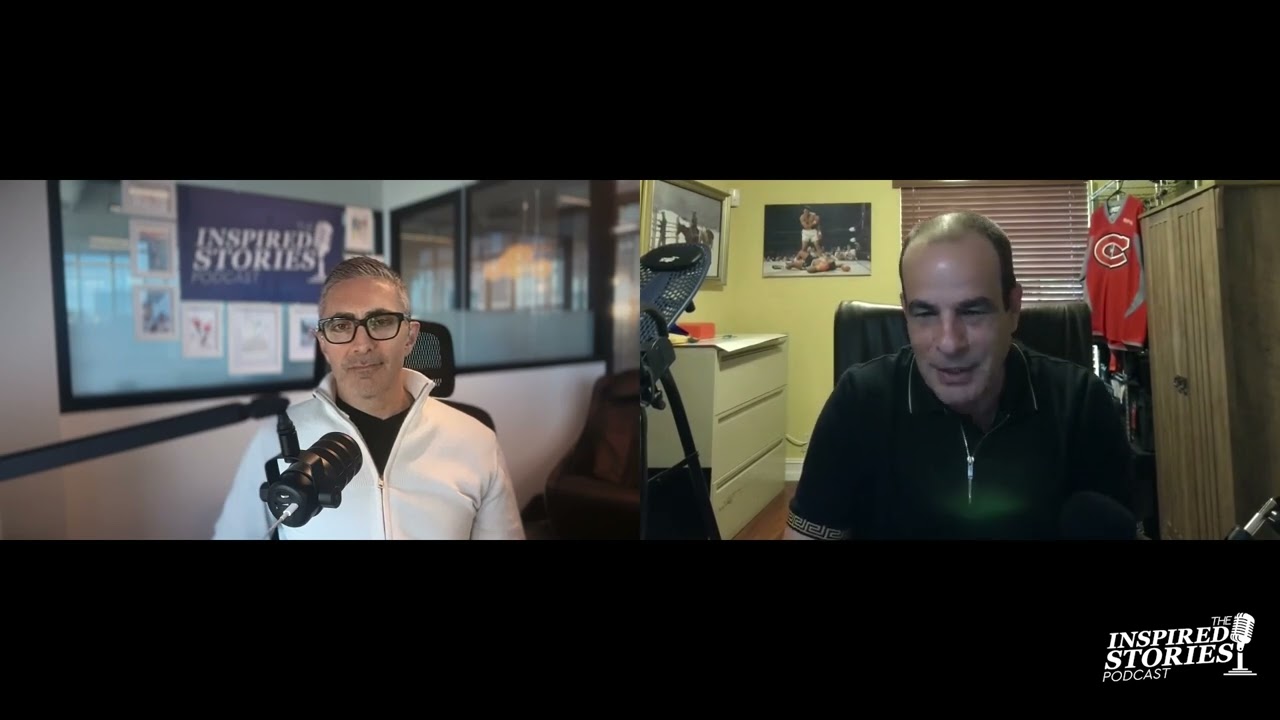
🎤 Richard Parker Bought 13 Businesses Before He Started Helping Others Sell Theirs
Richard Parker, founder of Roy Street Advisors and author of How to Buy a Good Business at a Great Price, has personally bought and sold 13 businesses — not as a banker advising from the sidelines, but as the one signing the checks and losing sleep over payroll. That experience became the foundation for a boutique M&A firm that closes over 90% of its deals, and a program that has helped over 100,000 buyers across 80 countries navigate a process that most people get badly wrong.
✨ Key Insights You’ll Learn:
Why blowing $60,000 in the stock market at age 29 launched a career in business ownership
The case for buying a business over starting one — and the math that makes it work
How $100,000 down can get you into a million-dollar business with a real salary on day one
Why 94% of people who search for businesses to buy never close a deal
The three questions Richard asks every client before taking them to market
Why spotless books and records are the single highest-leverage pre-sale move
How second-tier management transforms sellability and business value simultaneously
Why a 90% close rate starts with refusing listings that aren’t ready to sell
Ego as the thing that held Richard back longest — and what finally changed it
The $197 program with unlimited email access to Richard that marketers keep trying to upsell
🌟 Richard’s Key Mentors:
His first employees who outperformed him: revealed that getting it right matters more than being right, and that empowering better people changes everything
Andy Cagnena (Trans World Business Brokers): the conversation about $60,000 average broker earnings that told Richard exactly what was broken — and exactly how to fix it
The clients who took six months of vacation: living proof that a business built on systems and second-tier management is worth far more than one that can’t run without its owner
His own failures: the botched acquisition he walked away from became the case study that drove him to write the course, and the stock market loss that forced him into entrepreneurship in the first place
👉 Don’t miss this conversation about why most deals die before they start, what separates a sellable business from a lifestyle job with helpers, and how a guy from the suburbs of Montreal built one of the most trusted names in lower middle market M&A.
Listen to the full episode here
Transcript
Anthony Codispoti (00:00)
Welcome to another edition of the Inspired Stories Podcast, where leaders share their experiences so we can learn from their successes and be inspired by how they've overcome adversity. As you listen today, let one idea shape what you do next. My name is Anthony Cotus Bodi, and today's guest has personally bought and sold 13 businesses, not as a banker advising from the sidelines, but as the one signing the checks and losing sleepover payroll.
That journey from entrepreneur to advisor wasn't a straight line. It included hard lessons about what buyers actually care about, what kills deals before they start, and why most business owners leave serious money on the table when it's time to sell. His name is Richard Parker, and he's the founder of Roy Street Advisors, a boutique MA firm in Boca Ratone that represents business owners selling companies in the $20 million to $100 million range.
His firm closes over 90% of the deals it takes on. And he's also the author of How to Buy a Good Business at a Great Price, a guide that's reached tens of thousands of buyers worldwide. And he's been involved in more than a thousand transactions over three decades. This is a conversation about what it really takes to build something worth selling from someone who's done it over a dozen times. But before we get into all that good stuff, today's episode is brought to you by my company.
Add back benefits agency. And you'll want to hear this because it's hurting almost every business owner you know. Health insurance costs go up every single year, and businesses are furious about it. They're paying more, claims are getting denied, employees are opting out because they can't afford it, and it hurts turnover and morale. It's one of the most maddening problems in running a business, and everyone just accepts it. But you don't have to anymore.
Now there's a program that gives your employees unlimited access to doctors, therapists, and prescriptions with no co-pays or deductibles to meet. And here's the part that really shocks most people. Unlike every other employee benefit out there, our program increases your net profits. We recently helped a client add $900 per employee per year to their bottom line. Results vary, but gains like that change how a business is valued.
Be the hero advisor that introduces this to your clients today at backbenefits.com. All right, back to our guest today, managing partner of Roy Street Advisors, Richard Parker. Thanks for making the time to share your story today.
Richard Parker (02:29)
My pleasure. Good to be with you. I enjoyed your intro, especially two points when you mentioned, you know, losing sleep about entrepreneurs losing sleep over payroll. You know, it's always a a bumper sticker, if you will, when I tell people, say, like you're a real entrepreneur if you could sleep well on Tuesday night knowing you have no money in the bank to make payroll on Friday. And and and I'm sure your your your ad bat ad back benefits program seems very intriguing 'cause I see it all the time with business owners tearing their hairs out. with
you know, with the medical benefits, it's just killing a lot of businesses and and and and and really hurting employee employee relationships. So I'm sure it's a great service.
Anthony Codispoti (03:09)
We'll talk more about that offline, but I appreciate that little mention there. Yeah. And and yeah, as somebody who's been an entrepreneur since I graduated college back in the mid nineties, yeah, that payroll thing is something that in unless you've been in that seat, you know, it's one thing to worry about your own finances. It's another thing when you realize that the livelihood of all the people around you are depending on you to come through.
Richard Parker (03:10)
Yeah, sure.
Yeah, I mean the you know the when you have employees, employees get paid first. That's that that's just the the the the rules of engagement as business ownership. And you know, it there's times there's very few businesses that have not gone through that, but it's also a really good litmus test, as mentioned earlier, that being able to have the fortitude and feel bulletproof at times to be able to
deal with those situations because, you know, business ownership is not all pixie dust and unicorns. I mean it's there's a lot of heartburn and you know I and I think that imp if any employees who make the move to employer suddenly develop a whole different level of empathy for business owners and look back and realize, you know, sometimes some of the things that they've done or said should have been taken back relative to the owner or, you know, he
He or she's getting rich on my hard work, et cetera. Well, there's a lot back of that, where they're they're doing a lot of sweating. A lot of sweating.
Anthony Codispoti (04:41)
Sa say more about that. So let's first speak to those folks who are in the employees seat and maybe they have some of those feelings. What what would you say to them?
Richard Parker (04:51)
You know, there's it's it's a two sided equation. Of course, you want to work in an environment where, you know, you're you're empowered, you feel good about your work, you're respected, you're trusted. It's you have an opportunity for growth. And assuming you have most or all of those things and you're relatively happy in your job, you can't ever begrudge the owner of the business. I mean, they you're never going to make as much money as them if the business is profitable. And no matter how important you are.
And you are important, no matter how important your job is. A, sadly, from your perspective, you are replaceable, number one. And number two, they're they take all the risk. And so they are entitled to the rewards, to the spoils when times are good. And as long as you are getting, you know, a commensurate amount relative to your job and contribution as bonuses or increases or whatever.
That's what you can expect as the upside. And you can't begrudge a business owner, you know, when you're driving in with a Toyota Camry and they're driving a Ferrari because there were times that they couldn't afford to put gas in the car and they were still made good on your paycheck. And so, you know, don't put your hand in their pocket, and I'm not trying to be negative towards employees because employees are critical, but don't put your hand in their pocket. Understand that they absorb all the risk.
related to the business and your salary and your benefits. And so when times are good, they deserve the the rewards of building the business. Yes, on your back, but also on their back and their stress and and their sleepless nights.
Anthony Codispoti (06:33)
So how about for the employer now? What advice would you give for them in navigating those murky waters of the you know, those times where they've got that stress, they can't make the payroll? What what are some things that helped you get through some of those rough spots in the past?
Richard Parker (06:49)
The overarching theme is you have to you have to embrace uncertainty. That's really what it is. You can't get for me anyways, I've I've I've always been someone that's been very good at compartmentalizing and being able to really deflect big stuff. I mean, it's taken me a lot of years to not get crazy with the like, you know, small stuff that's really unimportant, but big stuff, it's just you have to take it in stride. I mean, these are things that happen with business ownership. The better you plan, the more
The more you can institutionalize your business, in other words, no matter how small your business is, even if it's a side hustle, the more you can think like a big business. And there's all kinds of technology that helps with that today. but you have to have the mindset of embracing uncertainty because you look at it this way. If you can't compartmentalize, so you have these problems that come across your desk in a business every single day, right? You you run business every day, there's a problem. There's hopefully more good things than bad things, but you're always dealing with stuff every day.
You have to learn to understand the uncertainty and it when I say embrace it, when there's a an issue, you have the first thing that I find which is really important is to understand how long you have to deal with the problem. And I go through this repeatedly with my my kids and have tried to teach them that 'cause you you have problems in life or situations in life, you know, if your house is on fire.
And you're the only one with water, you you only have a nanosecond to go in and react. That's entirely different than a client telling you they're thinking about making a change and not using your services at the end of the current contract when it ends in a year. You don't have that's you don't have to be a fireman. So the point being is the when when unsu when there's a situation, people people don't like uncertainty and they generally will make rash decisions in order to eliminate the uncertainty. And I say, screw that.
you you gotta embrace the uncertainty and look at that and say, Okay, how long do I have to deal with this problem? And then be able to the ones that you don't have to compartmentalize or, you know, but again, navigate well and not and don't panic.
Anthony Codispoti (08:54)
So there's a third question I want to ask, but I think we're gonna get into it and you know as we get further into the interview, which is somebody who's in the employee seat and is thinking about moving into that employer seat, going into that business owner role. But let's tell a little bit of your story first. And I think maybe the message that you have for those folks will kind of naturally come out. So go back to the beginning. How did you first get involved in the world of business brokerage?
Richard Parker (08:56)
Yeah.
I had been buying I'd been and we'll touch upon it later maybe I but buying a number of businesses. and I sold one of my companies in Canada. I I grew up in Montreal, I was living in Montreal. I think we mentioned earlier you're you're going to visit Toronto. I lived in Toronto for a year, but I grew up in Canada. I'm I've been an American citizen since January twenty third, two thousand and seven, and happily very great decision that I made.
But I when I sold one of my business to Canada in 1996, I was going to relocate. And w I was in Montreal, always has these political issues going with language problems there, and it's just getting tired of my kids were very young. And said, you know what, the chances of them growing up in Canada in in Quebec or staying in Quebec, being English speaking, although I'm perfectly bilingual, was probably pretty slim. So I was thinking of relocating. And at that point I was thinking, well, maybe I'll move to Toronto because that's where the financial hub was, or maybe I'll move to
I was thinking about Burlington, Vermont, because I like a small town. It's near Montreal and Big Fisherman. That was good. And then I said, you know what, the heck with it? Once I'm gonna move, I'm gonna move somewhere more. And tired of shoveling snow. Even though I raised the winter, I'm big hockey fan. But so I moved down to Florida and prior to me moving, I was you know younger at the time, so I
And I'd bought a number of businesses. So I'd always done some like freebie consulting with friends, family, and others, just sort of started getting a bit of a reputation of buying these businesses. So I I was doing it like I was I was doing consulting work and really not charging people because it's just trying to help others do the same thing that I had done. But I moved down to Florida, I was looking at an acquisition. I was involved in another venture, then I was looking at an acquisition, and it turned into an absolute but as I dug into the due diligence, it was it was absolutely a a mess, like a complete sp plate of spaghetti.
it's only because I had bought a number of businesses that I was able to extract myself from the deal. I'm not that smart, I've just been doing it a long time. And so I recognized there's a lot of problems that I I left the deal. And then I started thinking about like what does the average person do who's looking to buy a business? do in these situations? And I recognized that there's just no support for them. There's no, you know, business brokers have represent the sellers. They don't care if you buy the right business, just care if you buy a business. And
Anthony Codispoti (11:34)
They get their commission
just when you close. Yep.
Richard Parker (11:37)
They don't care.
It's it's it's you know, it's it's it's over. And and I understand that and I respect that. They have a job to do. it but it's very similar to other commission situ jobs. And then I went to speak with the head Andy Cagnena, who's the head of Trans World Business Brokers. They're now probably the largest business brokerage in the world, and this is many years ago. And I was sitting down with them, I was trying to think I I was trying to figure out how much business brokers make. Because in my world, when I was in product business and I had some products that I used to sell for like a dollar a piece.
on commission when my in some prior businesses and those businesses, you know, made a nice six figure income at at a dollar a piece. So my thinking was, hey, you have these businesses selling a few hundred low end Main Street businesses selling a few hundred thousand dollars apiece. I they get to ten, twelve percent commission. So I'm thinking that the better business brokers are making like a million dollars a year. That's in my mind before I go meet with Andy. And I think it was about like twenty something years ago. But that's the number I had fixed in my mind. That was the map. Sat down with him and I
Anthony Codispoti (12:34)
You thought
you could go from six figures to seven figures pretty easily.
Richard Parker (12:38)
Yeah, well I think that like and I I know this world, so I figured maybe I'll just get more involved in that, the advisory side of things. And and that's the number I've stuck in my mind. I sat down with him and I asked him, I said, How much does the average business broker make? And he says, sixty thousand dollars. I said, I'm I'm getting I'm going into this business tomorrow.
Anthony Codispoti (12:59)
But you were making six figures selling these, you know, little one dollar
Richard Parker (13:01)
Yeah, well look, you it's one yeah, it
was a it was another business that I previously sold, you know, so I was looking for another business at that point.
Anthony Codispoti (13:07)
okay.
What about that sixty thousand dollars a year attracted you?
Richard Parker (13:12)
Well, I looked at this and saying, if you have a product and the averaging, and this was Main Street, so I knew how to d deal with larger businesses, but I you know, even if I started out dealing in Main Street, the average business at that point was selling for about three hundred thousand dollars and said and they're getting ten percent commission. And I said, Okay, so that's thirty thousand dollars. So these guys are selling like two businesses a year. How how could I not sell five or ten of these? Right? Like that ridiculous. And so he said, What do you mean you're gonna go into? I said, I'm going to this business. I said, the if you if if that's
The math, like here's the price of the product, three hundred thousand. They're getting ten percent commission. You got millions of people looking to buy businesses, you got hundreds of thousands of businesses for sale. The what business brokers are making doesn't conjugate. They're either one of two things. either they're not getting good either you don't have good listings or they're just horrible, horrible intermediaries.
Anthony Codispoti (14:05)
And so let's kind of skip over something here. What what did you actually find out is the problem? Why were people only making sixty thousand dollars a year back then? Is it because they weren't good, they were lazy, what you what what was missing?
Richard Parker (14:12)
Great question.
Lazy wasn't it?
No, it wasn't lazy. It was number one, they it's it's a listing centric industry. By that I mean business brokers are taught, no matter what, go get the listing. Because if you have the listing and if the business sells, then you will get a commission. So there's almost no work done related to investigating the business whether or not this is going to sell. It's an inventory business, they say to people, carry a big inventory of listings, and some of them will sell and
you'll make some commission. But that made no sense to me whatsoever. Like, why do I want to spend all my time carrying an inventory of products that don't sell? I mean, if you have a business that you have physical inventory and it's not selling, you're in trouble. You got like a problem balance sheet, right? So how does it that doesn't even work in this world. It never does. So the first thing was, well, I'm never going to take on listings that I don't believe are going to sell, number one.
Number two, I will never ever just take a listing for the sake of taking a listing. Because I looked at these guys and they they said, look, when you go to your first appointment with a business seller, your whole objective is to get the listing. No matter what it is good. And I'm thinking, like, what are you nuts? Like, I don't know who this is. I don't know if I like him. I don't know if I trust him. I don't know if the financial of of the business. I don't know their, you know, any any historical information, the valuation, all these things, these complete unknowns in
at a first time meeting, why would I want to agree to do business with this person? Or why would they want to agree to do business with me? They don't even know me. They don't know. Yeah, like they don't know me. Like they like it makes no sense. They said and and that was the objective. That was the thing. Like go get the listing. And I said, like I I I did that for like two months. And I said, this is ridiculous. The other thing was they used to hand out these postcards, used to do these drop cards with
Anthony Codispoti (15:44)
You took a you took a totally different approach. Yeah.
Richard Parker (16:03)
I have someone who's interested in buying it. They would send out thousands of posts, or tens of thousands of it. I have people, someone who's interested in buying your business, I'd like to talk to you. And that would trigger hopefully a call with a business owner. And they used to put these leaflets out in industrial parks, strip plazas, office buildings, whatever. So they gave me five, ten thousand five or ten thousand of them to start with. And I had them in the trunk of my car. And the first few weekends I went out and I started handing them out like crazy. And then like after like 30 days, I didn't even get a phone call. So I just drove through one industrial park. I opened up my trunk. I took the whole box and I
Chucked it into the garbage and said, This shit doesn't work. I mean, are you out of your mind? Like, there's no way I'm doing this. So, and the closing rate was terrible. So the and the closing, by the way, the closing rate is terrible. Like 25% of all the businesses listed for sale that you see on these websites ever sell. So I said, you know what? I'm going at this the complete opposite way. Okay. So whatever they're telling me to do, I'm trying to do the opposite. So the first thing was I
Anthony Codispoti (16:39)
So so what was the process you came up with, Richard?
Richard Parker (16:59)
When I had a meeting, I would never take a listing agreement. So I didn't even have an engagement contract. No, I didn't even have it in my briefcase. And I said, I am going to spend multiple meetings with an owner to make sure I like them, I trust them, I like their business, and and it's reciprocal. And I'm not gonna ever put on any pressure.
Anthony Codispoti (17:06)
You didn't take the contract with you.
Richard Parker (17:28)
I want to really make sure that I like this person and their business is right. And I set some rules up for myself. A few things that number one, like and trust is critically important. Number two, I have to believe there's a 90% chance that the business is going to sell. And number three, that I would be willing to sell this business to a close friend or family member if they wanted to buy it. And and the last part was, and and the last part, which was part of that whole equation, tucked into number two and three is.
Anthony Codispoti (17:49)
Okay, those are good check boxes.
Richard Parker (17:57)
I'm gonna do all the due diligence on the business like a buyer would or more, so that I have all the questions answered and can dig into the business so I could sell the business with confidence to someone. And that's the way I went about it. And in my second year I made seven
Anthony Codispoti (18:12)
So you're spending
more time on each deal than a traditional broker would, but you've got a much higher level of confidence that this business is sellable because you've gotten your fingernails dirty in that due diligence yourself.
Richard Parker (18:25)
Yeah.
And my second year made seven hundred and fifty four thousand dollars.
Anthony Codispoti (18:29)
How many deals was that?
Richard Parker (18:31)
I think it was about six. Six or seven. Larger deals. Yeah. I think it was six. Yeah.
Anthony Codispoti (18:34)
Okay.
So your your methodology proved out pretty quickly.
Richard Parker (18:42)
Yeah. Yeah. And it and you know, and I'm not I I'm not a genius by any means. Like it this to me was just so obvious. It was like I still call it I just had actually a l LinkedIn exchange today with someone who's a bro and I told him I said, I call it business brokenage. I don't call it business brokerage because it is so broken though. There's there's like nothing efficient in this whole process. Nothing.
Anthony Codispoti (18:43)
So
So we skipped over the part where you acquired your own experience from buying and selling businesses. How did you first get started with that? And and I don't know, sort of give us the arc of how you got started and then how this evolved into something that you wanted to do over and over again.
Richard Parker (19:21)
I got I got involved in buying businesses because I was an idiot. That's that's really the that's really the case. I I was working for a company, I was doing very well. I s I was it was in nineteen ninety-six, I was my first child was on the way and due to my brilliance I managed to blow sixty thousand dollars in the stock market and I had a net worth at that point at twenty-nine years old of like ninety. So I I pissed away like three quarters of my money and the
And just because I was an idiot, I didn't didn't inform myself. I bought stock on margin. Someone told me it was like, you know, you buy half the stock, you can make twice the money as when the stock goes up. And I there was only one question I forgot to ask was what happens if it goes down? Right. And I was naive, but it w it it ultimately proved to be a fantastic lesson. So but I was at a juncture. My left, my first kid was on the way. I was working at a company, I was I was doing very well, but I was I was young and I was pro and I was overpaid. I mean, that was the
was just we had a growing company. I could never go to another company and make more money. And so I started thinking I got to put myself in a position where I I've got to recover this money. I got to put myself in a position where I don't have an ups where I don't have a limit to my upside. And my opponent my chances were I can take the 30,000, go put it on 17 black in Las Vegas and hope for seven thirty-five to one odds. Okay, but I'm not a gambler. I I take risks, but I'm not a gambler. buy lotto tickets, which I don't do, or start my own business.
And because and and that's I realized number three was the best way to go. and I ultimately took my last 30 grand. I I took a a a product that I was selling for this company, and with their knowledge, I carved it out and went became like the the distributor representative for a certain territory for it. and then very, very shortly after, like ninety, ninety, a hundred and twenty days after, saying, like, if I want to really grow this thing, like
I should probably buy this other guy who was in this business or something similar or go talk to him. Maybe we could join forces or something. And I ended up buying their company and realized that hey, I you know, organic growth is really, really sexy, but growth through acquisitions is a much more viable plan. And so I that like and again, I'm I'm I you know, I never went to university. I'm not that bright a guy. but the the math just made a lot of sense to me. And then I started buying other ones and lo and behold, bought a few several of them. Then I ended up coming
The Eastern Canadian distributor for Sega video products, just at the time when Sega went crazy. Not nothing to do with me. I just happened to be in the right place at the right time. and that that's how it happened. So the journey started because I was an idiot and blew all this money. And and but I guess the, you know, the good lesson there was like you know, what I've learned is when you don't have a any options, it's very easy to make decisions, right? Like
If you have too many choices, it's very hard to make decisions. In my case, I didn't have any choice. I didn't have any options. Like I had my first child's on the way since I have four kids and two grandchildren. hopefully more to come. But like I had no choice.
Anthony Codispoti (22:24)
But here's the thing, Richard, you did have a choice. And most people would have chosen the conservative path of I'm just gonna keep working my job, get the steady paycheck, get the benefits. There was something inside of you that, like you said, you're not a gambler, but you're a risk taker.
Richard Parker (22:40)
Yeah, I mean, I know as a kid I always worked. I always had paper outs. I had a huge paper out that I had other kids working for me. I had like a thousand papers or something, a bunch of kids working for me when I was twelve. I was always on I guess entrepreneurial. But also at that point in time, like and I s I don't pat myself on the back by any means. It was just like I just feel that I didn't have a choice. Yeah, I could have gone to I could have stayed in my job. I was getting paid seventy-two thousand dollars a year. How was I going to save sixty grand up again?
And even if I did, I just got back to baseline. I my my my then wife, I married a second time, have another child with my current wife, and we've been married twenty-five years actually this month. but like at a kid on the way, expenses like I looked at it and said, like, it's not even an option. I appreciate what you're saying, but like the way I looked at it is like there's there's no way that makes sense. Like I would I figured like I might have to spend 10 years getting back to ground like to be again to to the baseline. Well, I'm gonna buy a house.
Like I'm gonna put money away for kids' calls, like all these things. Like there was j there's just like no way I could do it at this job.
Anthony Codispoti (23:41)
So why buy a business as opposed to starting?
Richard Parker (23:45)
My first one I started, but then bought one very quickly. And what I've learned after doing this for my god, thirty-six years, so right now, is you know, you you cut out the learning curve. Startups are wonderful, they sound very romantic, it's all exciting, but it's all blue sky. Like, I mean, you start a business, you don't have paper clips, and everything sounds great on paper, and then it's learn learned that you know, like revenues come in half as fast as you anticipate, and expenses are usually double what you project. and there's no guarantee.
But yet when you buy an existing business, yeah, there's n there's no perfect business. I mean, it'll has it have its wards. But you open up the door. I mean, if you do this properly, you you you buy the you get the keys on Monday, you can take a paycheck on Friday. It's got employees, it's got an office, it's got customers, it's got inventory in some businesses, it's got a track record, you've got historical financials to be able to to view, assuming all things your main status quo and you're the right person to run that business. Like, you know, what happened in the last year, you the the
The immediate past should be reflective of the near future. So you you've you've got sustainability and you've got you've got something of which to build. You're not like with a startup, you have nothing. Like you have absolutely nothing in place. And I've done a few of them, they're great. I don't have the stomach to do them anymore, but you can't even compare the two because you eliminate the entire learning curve. And again, the most important thing is especially for individuals, you could take money out of business like paycheck first week.
Anthony Codispoti (25:12)
But you've got to pay somebody for that business, right? You're taking a whole lot of money out of pocket. You're taking on debt or a bank loan. Like walk walk somebody through that thought process where they're like, I I don't have a million dollars to spend on a business. I'm gonna okay, talk us through this.
Richard Parker (25:15)
Of course.
You don't need a million. So the f the
so the first thing, let's go back a little bit. The first thing is people should understand there's nothing wrong with starting small. That's the first thing. Like if you want a life of entrepreneurship, there's no shame. And as a matter of fact, there's a lot of recognition that should be given to people that are gonna start small. Because if you don't have a million dollars.
Maybe you start as a side hustle, maybe you start as a smaller business, maybe you buy a piece of a business and you learn the business, et cetera. So there's nothing wrong with starting small. I do also want to dispel these myths that people who spend time online looking and buy all these, you know, these these sort of self-anointed gurus who are telling people you go buy these businesses for no money down. That doesn't work either. Okay. but you don't need a ton of money because in small businesses probably got
numbers probably 60, 70% include seller financing. There's SBA financing. There's a lot of good leverage. With that said, again, nothing wrong with starting small because it should be learning. And you could always build it up, learn and s and sell it and move into something else. The other thing is once you own a business, it's very easy to generate leverage to buy a second business. Because once you have a relationship with a bank and you're making a little bit of profit, your bank wants to retain the relationship, you can go and look and build your business through acquisition and buy a second one. So it is it
You don't you you you don't need a ton of money, you do need some money. And starting small, there's nothing wrong with it. the process of buying, because of the way these deals are structured, they typically are a combination of money from the buyer and seller financing. Because that's the only way deals get done.
Anthony Codispoti (27:03)
So somebody's listening, they're like, maybe, maybe I could be a business owner. I need a little bit of money. Obviously the size of the deal is gonna dictate how much, but give people a ballpark. How much do they need liquid to be able to put down and invest in that down payment?
Richard Parker (27:20)
If you have a hundred thousand dollars, you buy a million dollar business, a business for a million dollars. The multiples, and I'm getting some people might have thirty grand. I started with thirty, which isn't like in today's business. Today's numbers I calculated not long as about $75,000. But let's let's work some of the numbers so people understand like what they're gonna get. Okay. Because as you said earlier, you do have debt. you know, you do have to run a business. And so the goal is you have to be able to figure out
How much is the business going to be able to deliver based on looking at the financials so that you can service the debt, pay yourself, and have enough to grow the business? That those are the three things that you need to understand when you look at the numbers to make sure that that's what number do I have going forward on day one to do those three things? Because you gotta get paid, right? I mean, this idea of a startup where you're gonna work for a year and not take any money, I mean, is insanity.
Anthony Codispoti (28:13)
So so
this is yeah, this is great, Richard. Walk us through some sample numbers. Let's say it's a a business that's selling for a million dollars. I need a hundred thousand dollars that I'm putting down. Walk me through the the other factors here in the calculations. What what does it need to look like?
Richard Parker (28:30)
Okay, so a business that's selling for about a million dollars should be throwing off at a the multiple should be around three times. So it should be throwing off about three hundred thousand dollars. And if three hundred thousand dollars is and I don't want to get too granular, what they call seller's discretionary earnings or owner's benefit, but it's the number that you will have, assuming all things remain equal, to do those three things like how much money the business is going to have to pay the debt, pay you a salary.
And grow the business. So let's say that's a $300,000 number. A million-dollar purchase price. It's going to cost you, if you put down $100,000, it's going to cost you about $140,000 a year in debt. Like the rough number based on today's interest rates is about $160,000 a year in interest.
Principal interest payments on a bank loan, an SBA loan to service a million dollars in debt. It's more attractive if you do seller financing, but I want to give people the worst case scenario so that they could really see that this makes sense. So out of the $300,000, you have $140,000 left, right? Because you got it's about a hundred and forty, so you have $160,000 to deal with to pay yourself and grow the business.
Let's say you say, I've got a million-dollar business. I'm going to throw $60,000 a year into marketing or more into marketing, which is pretty significant. You know, business making $300,000 and you're going to take 20% more and put into marketing. And you're going to take yourself a salary of $100,000. Now, they also there's the benefit, and I'm talking straight salary. There's also the benefit of certain personal expenses you could potentially put through the business that are legitimate. You don't want to be a pig, but
You know, certainly like your car and your cell phone, and you know, if they're if if there's trips that are related to business, you can put those through. So there are some, you know, the advantages of ownership. But those are really the numbers. So if you buy a if you have $100,000, you buy a business for a million dollars, and you go straight SBA financing, which still you know, which is pretty pretty prominent right now as long as you and the business pass. Well, the you'll have that'll cost you $140,000 a year. You have $160,000 left, use $60,000 to keep.
putting into the business you take yourself a salary. So that's the math. I mean, it's astounding really. I mean it's
Anthony Codispoti (30:49)
Okay. Yeah.
So if I'm somebody sitting there and I'm like, Okay, those numbers sound interesting, perhaps doable for me in my lifestyle, but I don't know what kind of business I would buy. Like, w how does somebody begin to wrap their head around that?
Richard Parker (31:04)
Well, I'll tell you, Anthony, go to the front of the class because that's the most important question of all of them that you've asked so far. And you've asked some great questions. But that is that's everything. Everything. So when I say that's everything, the single most important thing that a prospective business buyer needs to do is they need to marry their greatest skill set to a business that needs that to drive the revenue and profits of the business.
And I'll tell you the mantra that I've said. If I had, I used to say if I had a dollar for every time I said this, I could retire, but it's probably now at about 50 cents, I could retire. It's whatever it is that you do best has to be the single most important driving factor of the revenue and profits of any business you consider purchasing. There's 23 steps in the process of buying a business, from your initial considerations, some of which we've talked about, straight through to post-closing priorities, right?
Twenty three steps.
Matching getting the right business for the individual is the most important of the 23. If you do a flawless job of that and an average job of everything else, meaning you do an average job of negotiating the price, the due diligence, the financing, investigating the competition, you do an average, by and large, you're gonna be okay because you've nailed the right business for the individual. If you reverse that and you do a flawless job on all 22 steps, but you don't buy the right business for you.
I will go to Vegas right now and bet you're going out of business within a year. Nothing is more important. Nothing. Everything, everything is below the line after that. And so the key, the obvious question to that is well, what is it my greatest? I don't know what my best skill said. I've working for this company. I don't know, you know, I've been in the medical, I've been in the healthcare field, so I need something that wrong. Where people go off the reservation is they confuse experience with expertise.
So just because you've been in a certain sector doesn't mean you need to buy a business in that sector. Because you could always learn a business much quicker than you could learn a skill. And so it is what did you do in your previous jobs? What's your shining star? What's your greatest attribute? Whether it's sales, marketing, manufacturing, logistics, putting a plan together, dealing with employees, whatever it may be, what is the single best skill set that you have? And then you match that to a business.
Anthony Codispoti (33:30)
Do you have any suggestions or exercises for folks to go through to help them flesh out what that might be?
Richard Parker (33:36)
Yeah, the first thing is of course you think about it yourself. We tend it we we tend to
think that we're good at certain things we we may because of the job that we're doing with may not be our expertise. So I think your first thing is you have to take a real good look at yourself. I encourage people to speak with you know, coworkers, clients, former bosses, et cetera, as to what they would identify if they're struggling with it. and you could narrow it down pretty quickly. Most people will give you some general idea of what they think they're people tend to be better at stuff they like, right? I mean that's the first thing. Like
You know, they're not they're not as good as things they don't like to do. So if you're in a job and you're in in in in in sales, it's not just saying, you know, I'm you know, I'm good with people, 'cause that's like that's fuzzy. Like I'm good with people. Yeah, a lot of people are good with people. So like that you know, that and seven dollars you can buy a caramel latte, right, at Starbucks. It's no, it's you you gotta be more specific, meaning I'm you know, my skill set is in dealing or presenting products to
companies versus consumers or of dealing one-on-one, selling products and organizing and finding out solving client problems in in a way, in the following way, by digging into their business or by going out and sourcing a product or service that's good for them. So to really the first thing is you think about it yourself and then you speak to others. Okay. And others meaning all the people that are going to tell you the truth. Okay. Whether it be spouse, partner, colleagues, bosses, former bosses,
former customers, again, coworkers. You could you know, I I and then you wanna be able to form your golden rules of what you like and what's what you're best at. Like I am my background, you know, my greatest strengths are sales and marketing. So I'll never buy a business that's not sales and marketing driven. Cause I get immersed in them, right? Like it's you know, I'm not an absentee owner and so it drilling down. Sorry, go ahead. Yeah.
Anthony Codispoti (35:41)
Yeah,
so Richard, you you were making a good living, kind of going back a little bit here. You were making a good living, $700,000 in what your second year is a broker. You continue to provide this service, but at some point, it sounds like you made a decision that you want to take the knowledge, the experience that you have, and bring it to a much broader audience. And I think that was the impetus behind the program how to buy a good business at a great price. It includes unlimited personal coaching, it's helped.
Tens of thousands of individuals across 80 countries. Why that pivot? Was it just what I described? I just wanna bring this idea, the the the knowledge that I have to more people, or or was there something else at play?
Richard Parker (36:24)
There was a there's a couple things at play. You know, outside of family you know relationships and all the really important stuff in life, that program is what I'm most proud of. I've done really well, bought a lot of businesses. I've done very, very well for a poor bum from a suburb of Montreal. but that is clearly what I'm most proud of because it's helped.
ridiculous amount of people we've sold over a hundred thousand copies. I mean we have we don't even have room on our website for all the testimonials of lives we changed. So it's and I never went into it make money. Here's here's here's how it happened. I by the way when I look at the screen and I'm sure people are telling you like we're having this conversation you're on the screen and sort of you know for people don't know in podcasts you get like these two images me and you and you got to keep looking straight because if not it looks like I'm
being distracted looking off the side, but every time I glance back at you, I think I'm looking at George Clooney. I hope your wife tells you the same thing. You got the same it's this so I I'm sure you get that all the time, but it's it's I I hope your I hope your your significant other tells you the same thing. Now we'll get back.
Anthony Codispoti (37:36)
Thank you, Richard. It
it doesn't get old, but yeah, let's go back to your story now. I appreciate ya.
Richard Parker (37:40)
It doesn't get all right. Yeah.
So I had was looking at an a at I was similar in time when I was looking to put when potentially got into business brokerage. I was looking to the when I had that deal that I backed out of it, which was real it really a disaster. And it started thinking how does the average person buy a business? I was looking about the resources that are available. There are there aren't, there weren't any, and there still aren't. There's just there's a lot more information out there, but it's it's it's misinformation. There's the the market so
When I started thinking about this, I said, like, what does the average person do? Because the average person would have bought that business. And that business at that point was a it was a little over a million dollars. I was putting down, I think, two hundred and sixty-five thousand dollars on that business, and the seller was financing the rest. But I said that that business was gonna and sure enough, the business was gone like a year and a half later. So I said, you know, I've looked at hundreds and hundreds and hundreds of deals, and I've got great notes, and I've always kept incredible notes. If I did this, what they did, what happened to
What happened? What was the outcome of doing this? In this situation, I did that. I always kept great notes, almost to a point of being neurotic. And I at Stax and looked at tons of deals and I said, you know what? Like, if I get hit by a by a Pepsi truck tomorrow, like I could leave a decent legacy of I'll put this all, I'm gonna memorialize all this stuff because it's going to be helpful for someone. And I said, I'm gonna write this course and not and really in a way of I'm gonna I wanna be able to tell people here's what you need to know, here's what you have to do, and here's how to do it. That was like the the the concept, right? So not just
dropping information on people saying like this is I'm gonna hold you by the hand and tell you exactly what you need to do. And so I started writing this up based on here's the process, here's the 23 steps in the process, here's what happened. If you this happen you need to know this, you need to do this and here's how you have to do it. And I put it all into a course. I mean at that point in time was used to be printed by Kinkos. I had made book put one big binder together. It was like like four inches. And I said and the internet was just getting really strong and I said I you know I'm gonna I'm gonna
Put this thing online. And my I remember my wife asked me the night before I hit go on the on the website, how many think you're gonna sell? I said, You know what? If I sell one and I help one person buy the right business or avoid buying the wrong one, that'll be perfect. I never thought this was gonna be a business. Never, never, never. Like I like I still can't believe it. And
Anthony Codispoti (39:56)
So when you
put it online you were just selling like a digital copy of the book or was it a course at that point? It was a printed copy. okay. So you still had to you still had to mail this to them. Okay.
Richard Parker (40:00)
A printed copy. Printed copy. Three ring binder. There was no such thing as downloads. No downloads didn't even exist. I mean mailed
them, it weighed eight pounds.
Anthony Codispoti (40:11)
Were they sending you a check or could they pay online? I wanna see how far back we go.
Richard Parker (40:14)
They could stay online,
but checks were most common. So we gave them the ability, if you would like to pay by check, click here.
Anthony Codispoti (40:19)
Yeah, okay.
I had an early SaaS business in the late nineties and we were taking checks as a form of payment. So I get it. Yeah.
Richard Parker (40:28)
Exactly. Yeah. So you get it, right? Like an and
and I'll tell this to my grandchildren and there's a like a check. Like they don't even know what I'm talking about. Like my my kids don't I mean my kids now, I they're don't they don't write
Anthony Codispoti (40:36)
Yeah. Okay,
so you put it up online, you're like, Hey, maybe I'll sell one, I'll help somebody.
Richard Parker (40:41)
Here's
what happens, right? So I hired his company locally. They did a website. We put it up online. And there was a overture was the they had you could buy ads online. Google didn't Google didn't even have ads. Yeah. Ask overture and ask Jeeves, right? Goo Google didn't even have ads. It was strictly a pure search engine. And he this guy, John, who did my website, he says
Anthony Codispoti (40:55)
I remember overture. Yeah, this is going way back.
Richard Parker (41:09)
Said, yeah, we went we we went live. I said, okay, fine. And just like before I went to bed and I checking my email, and I see something come in and I see the subject line order receipt. And I go, I didn't order anything. Right? And I look and I go, Are you kidding me? Like this is like two hours after we launch online. And I find out we paid $2.50 for the for the each ad, like each click through, and course was sold like
Anthony Codispoti (41:24)
It started.
Richard Parker (41:39)
Hard copied a thing was like 179 bucks or something. I said, Well, it was someone in Miami, like down the street from me who bought it. and that's how it started out. And you know, and then the internet changed, we changed, went to a download, you know, all different things. And you know, one of the big components of it. I said, if I'm gonna make this available to anybody, I know the biggest thing that I had is I never had a mentor. And I never had anybody could ask questions. I made all these crazy expensive mistakes. So I said, you know what, I'm gonna let people email me.
with any of their questions, I'll answer and never charge And like I've always and I've had companies over the years come to me, you should be charging X, you should be charging Like I never went into this to make money. I still don't care.
Anthony Codispoti (42:19)
Why'd you get into it? Just to help people. So what's the present day version of this look like? Lots of iterations. Here we are, you know, thirty years later, something like that. What's it look like today?
Richard Parker (42:21)
Yeah.
You know, Anthony, if you if if
Anthony, if God forbid if if you decided to go on Elon Musk's Mars expedition and left this planet and came back in twenty years, I will tell you that ninety percent of buying a business is going to be the exact same thing as it was fifty years ago. So that matter terminology may change. There's sometimes a difference in interest rate or you know, some deal flow or whatever. But buying a business is the process of buying business is is remained the same for the last for half a century.
And so the information gets updated, some a lot more anecdotal and stories and and and examples, but process by and large has remained the same. Sometimes there's new forms of financing or to or tools that people can use. But the ch but the the questions you need to ask and the way you need to go about it has remained the same. But now it's all done digitally. We do everything by it, by someone orders it, they they get a download. It's like I think 600 pages with tons of resources. We developed a a
a valuation spreadsheet, which is unbelievable. Like we used a thousand and four transactions to develop this. So you plug in all your numbers of the business and answer about a hundred fundamental questions related to the business and pops out a valuation for you. So that was been a big change in the program. But it's yeah, it's had a lot of different versions, but it's all by download now and we're sitting here having this wonderful call and we're getting orders.
Anthony Codispoti (43:49)
And the price looks like it's the same as it was twenty some years ago. It's a hundred and ninety-seven dollars. Buy now. It's at RichardPar.com for folks that are interested.
Richard Parker (43:53)
Pretty much.
Yeah. I'll I'll admit, you
know, we don't have cost of goods sold because it's a digital version, but I I I've never wanted to be a ten thousand dollar program guy. I never wanted this to be something where we sell them a program and then we try to hit up for consulting and mastermind groups and master classes and and and and all this you know, insider secrets and it and upsells. I just want, you know, I I the money's not important to me. So I just said I just want to sell it to make sure we
Make a little bit make a little bit and cover all our expenses 'cause it's not my main source of income by any
Anthony Codispoti (44:31)
And so as people go through this program, it it it's still much in the original format, right? Where it's like they're reading, they're going through these checklists, they're going through yeah.
Richard Parker (44:38)
You're reading. Yeah,
because you the first thing is you have to educate yourself. And you can't educate yourself watching a a forty-five second TikTok video. You may be like it just doesn't happen. I mean, this is there's a reason why there's universities, right? I mean, and if you want to study and want to get your master's degree and you want to become an economist or you want to become a doctor or you wanna become learn to do medical billing, you have to learn. Okay. You gotta learn before you can earn. I mean, there's there and you gotta pay your dues, and there's no escaping that.
And so you need to sit down and you you need to understand, you know, what are the key questions that I need to ask a seller? And what are the answers to look for? And if the answer this, what should be my next answer? And how do I go about due due diligence? And what if I want to go get an investor? How do I present to them? what business is right for me? How do I go through that exercise of thinking about this business? So the steps in the process have not changed, they will not change, they're never going to change.
And the education piece of fundamentals that you need to know you can't be successful if you don't have the knowledge. I mean it's very s you know what's a crazy stat? Ninety four percent of the people begin to search to buy a business never complete a transaction.
You gotta pay your dues.
Anthony Codispoti (45:49)
Here's my
here's my question for today, though. You know, I I buy this program. I've got questions. I I no longer have access to you, right? This is too big of a scale to be able to to content. Get out of town. For $197, they get this whole program and they they get email access to you.
Richard Parker (45:59)
I answer a hundred emails a day from people. Yeah, serious. Yeah.
Yeah.
I just I love what I do.
Anthony Codispoti (46:11)
I'm gonna I'm gonna join that list of people that tell you that you're crazy. I mean, y you're right, there are people who charge thousands of dollars for a course like this and then an ongoing monthly access fee to have that. That's incredible. Yeah.
Richard Parker (46:14)
Come on. You don't scare me. Yeah.
I get this all the time from marketers, right? Who tell me,
you know, we you you need if you're selling it for a hundred and ninety-seven, just give them some of the stuff, and then you should have one for two thousand, and then you should have one for twenty-five thousand. I had a company approach me on a joint venture. They wanted to take all the educational materials and they wanted to implement it as that the educational piece of their advisory program, right? And package it like it w it wasn't ex
It was our 100% exact content, but they wanted to put this into like a gr a a larger program that would do some business searching for them, et cetera. And they had their first program started at $25,000. They had one that had $150,000. I said, look, this is I I'm not doing it for that reason. Like I could, yeah, of course, I could take this and I could make the case that it should be, you know, $1,500 or or or or $99.97, really.
But it's not you know f so I know some target I probably don't sell some people don't believe it, right? But believe it.
Anthony Codispoti (47:30)
All right. So you're also the founder and managing partner of Roy Street Advisors. Tell us about this firm. What do you do? Who do you do it for?
Richard Parker (47:35)
Yes.
Very simple. It's it's called investment banking, which is a fancy word for business brokerage. I mean, you only call a business an investment banker when you're doing larger deals. I represent business owners. I help them prep I I help them prepare their business for an eventual sale and then eventually take it to market and represent them in the sale of their business. Pretty straightforward stuff. I do a few deals, I you know, handle probably handle about five transactions at any one time.
And they get a lot of concierge, white glove service. Because the the the biggest thing why business owners and the
Not getting what they should from their business is usually it's the it's the mirror image of a buyer. They they just don't prepare, right? And there's certain things you need to be doing in your business to make your business more valuable to a larger group of people. And most business owners don't do it because they're busy, they're in busyness. They're not, you know, they're not in business, they're in busyness. And you know what that's like, right?
Anthony Codispoti (48:36)
So
I do. I've been there many times. I think I'm being productive 'cause I I've got a very busy day. And then I look back and it was like, What did I get done? How in what way did I move the needle?
Richard Parker (48:47)
Yeah, like I didn't do anything. Right. Yeah. I did a lot of nothing. Right.
Anthony Codispoti (48:49)
Yeah. And I it
and it sounds like you're deliberately limiting the number of engagements that you take on at Roy Street Advisors. Why is that?
Richard Parker (48:57)
Yes.
Cause you can't give people the right amount of service to really dedicate, you know, to to really do the right job for someone to really to understand the business. The the role of a broker, I mean, if you do this the right way, you you have to be able to answer ninety percent of the questions that buyers ask. Because you gotta let your clients run their business. Like if they're spending all their time
Answering prospective buyer questions and and digging up documents and providing information, they're going to take their eye off the ball running their own business, and the business will ultimately decline, and then it's not going to be worth as much, or they won't be able to sell it. And the reality is all not all businesses sell. And so you have to during the process of trying to sell your business, you have to run it like it's not going to sell. And so for me, that means letting them keep doing what they're doing, and I have to become
the second most knowledgeable person on the planet related to their business so that I can answer all their questions and also package it up properly. You know, and my my work with clients, when I meet someone for the first time, if we ultimately decide to do work together, like it takes me three to eighteen months to get their business ready for sale.
Anthony Codispoti (50:03)
And what are you doing during that time?
Richard Parker (50:07)
I I have three really high level points that there's there's drop downs to them that we've got to answer, which is the first thing is what keeps you up at night about the business as a business owner. And whatever that is, we need to address it and solve for it. Because for example, if I were to say to you, Anthony, what keeps you up at night about the your business? And you said rec recruiting new people or re recruiting new people or might have a customer concentrate. One of my clients is 40% of my business.
Well, understand someone looking at your business doesn't have the same guts of the business that you have. What's a problem to you is going to be like magnified times 10 in the eyes of a buyer. Because they don't have your knowledge of the business. So we we address the first things that keep you up at night about the business. The second thing is asking people anything, you know, what happens if you get hit by a Pepsi truck? Like what happens to the business? Will the business run? Like, are there processes, procedures, and systems in place?
That someone can come in and learn and take over and run the business, because they don't have your innate knowledge. So, you know what, if you if you disappear tomorrow, what would happen to this business? And if the answer is we will go out of business, your business is not even close to being ready for sale, may never be ready for sale, we need to get those process procedures and systems in place. And the third thing I asked was how much vacation they take?
Because if you don't take a lot of vacation, that means you don't, and if you you know someone tells me, I don't take any vacation, I might take the odd long weekend. Means either one of two things. Either you don't have the right people or you don't trust the people that you have, or your micromanager. And understand in small business act in smaller business, I do larger ones now, but really in the even in the deals that I do, they're typically bought by financial investors. The owner's gonna remain on board. Okay.
And if you don't have second tier management, which a lot of s lar you know, companies, lower middle market company don't have, it's not attractive to a wide swath of prospective buyers. So you need to get that second tier of management in place. You know, I've I have one two clients over the last couple of years, one of them, you know, and when I think about a third, one who's taken like no vacation, another one who's taken takes a hundred and twenty days a year vacation. He had one at one point he went he went si six and a half months without even calling the office.
That's a good business. And I have another client, they they spend a a ton of time boating and months at a time and they that they built the right.
Anthony Codispoti (52:28)
Yeah.
So when you're having
that, when you're having that conversation, Richard, with a client and you're trying to convince them they need to put that second layer of management in so that that, you know, a a new buyer can step in and this business can run without the owner. I'm going to guess the pushback is, yeah, but that's going to cost a lot of money. I, you know, I mean, those are brand new salaries I've got to introduce. How how do you navigate that dialogue?
Richard Parker (53:02)
Keep in mind you're typically, you know, the the owner is either going to stay in smaller business, either owner is going to stay or someone might come in to manage that business. But when you look at it and say, the reality is if I'm going to buy, let's take a min a typical business that I would sell, making, you know, with the earnings of about let's let's call four million bucks. Okay. And that business is going to sell for five, six, seven times earnings or whatever. But a business can sell for, let's call it 25, 30 million dollars.
On the upside, because it the same story applies lower. But if you're in an institutional buyer, right? And private equity firm, family office, or whatever, you're asking the same questions that I asked earlier, which is what happens if something happens to you? If I'm an institutional buyer and I'm a financial buyer and I'm not an operator, then I'm taking all my chips and I'm betting on I'm betting on the jockey. I'm not even betting on the horse. And so if you're not going to be around, what happens?
And so if you don't have second tier management, ultimately most people ac sell part or whatever to an instant because they ultimately want to retire. Who's who's coming up next? So the the sales pitch, if you will, or to pitch to to a business owner saying, Look, if we don't have this in place, the chances this is business selling are reduced like drastically.
This business becomes not only becomes infinitely more sellable, but you're building a better business. So even if it doesn't sell, if you hire the right people below you, they should be able to help drive the business. Yes, at the beginning they're on the wrong side of the ledger. But that's short term because they should help drive it.
Anthony Codispoti (54:48)
You're saying in
the near the near to midterm they should start driving so much additional value that they're more than paying for those increased salaries. So that in the event that you don't end up selling the business, you've got a better business that's making more money.
Richard Parker (54:58)
You got a much better b
you got a much better business making much more money.
Anthony Codispoti (55:03)
So Richard, your closing rate, I think we mentioned this before, it's a about the ninety percent rate, which is way higher than the industry average. What's the single biggest reason most deals fall apart that you've figured out how to prevent?
Richard Parker (55:19)
They're not good businesses.
I mean, I've seen plenty where the buyers are expectations are crazy on both sides, but the business isn't going to transition. Whether it be to an individual or to an institutional buyer, a private equity firm, a family office, if the business is not going to transition well to new ownership. And that could be for a whole host of reasons. Even if you're only selling part of it to a private equity firm and you're running the business, but you culturally you're not going to get along, it's it's just, you know, it's not a good business as
To transition.
Anthony Codispoti (55:55)
I think I know the answer to this one, but I still want to hear what you have to say, Richard. For a founder who's listening right now, thinking I might want to sell in the next few years. What's the one thing that they should start doing tomorrow that's going to have the biggest impact on how much they ultimately walk away with?
Richard Parker (56:12)
Spotless books and records. What were you gonna answer?
Anthony Codispoti (56:15)
Okay, that's not what I w thought you were
gonna say. get that management team in place. So let's hear more about your answer.
Richard Parker (56:20)
Yeah, no. Yeah,
yeah, yeah. So who and and because some places do have the management team in place, but it but across the board, having spotless books and records, you know, you get you deal with some of these financial buyers, they get neurotic with the data and the information, what have you. And a lot of companies simply don't evolve over time to have terrific books and records. If there's anything that you can't explain, if there's you want to have
rec so you'll be able to provide data to people. The more data you have, the b the the better. It's a d data driven, you know, ec economy right now. So to be able to tell them and be able to be up to predictive what your margins are, understand if there's any change in them, you know, data as far as where you're getting your business from, what things look like. but spotless books and records that your financials, your your your your profit and loss statement is lined up properly, your your balance sheet is nice and clean and and and s and self-explanatory.
Because the first thing that people are going to look at, you know, it's sort of crazy because I tell individual buyers, they get crazy related to the numbers when they look at the numbers are the easiest part of the whole equation, because numbers are numbers. Like numbers don't lie, people lie. So, but get those spot because that's the first thing people are going to look at, regardless of the size of the business, to make their it's it's like your date, first impression.
You're a good looking guy. You look like George Clooney. So you go on a date, everyone's gonna their first impression gonna be terrific versus me. I don't, you know, losing my hair at at the speed of light. But that version, the date, the the business version of the first date is the financials. They look at the numbers. So make sure your numbers are spotless.
Anthony Codispoti (57:59)
Richard, what's the hardest thing you've ever had to overcome personally and what did it teach you?
Richard Parker (58:03)
My ego. Yeah. Yeah, no doubt. When I was a couple of things come to mind. So when I was I was a young business owner and twenty nine, we talked about that. I was probably because I I don't necessarily feel it like I was intimidated, but I let my ego get in the way and probably I when I finally made the
When the light finally went on of hiring people that were bigger, better, faster than me, and recognize that it's getting it right was much more important than being right. And I'm not it, you know, really changed my outlook as far as getting good people, recognizing that if I get the right people, hire them well, pay them well, empower them well, then everybody's gonna do really well.
But it took me till like thirty-five, thirty-six to to recognize that. It was like six years of business ownership. So it was like and I I don't think I was a hard ass, but it was definitely ego driven. And when I finally checked ego at the door and and focused on getting it right and getting the right people, that was a big that was a big game changer for me. And then I
Anthony Codispoti (59:28)
What
led to that? What led to that switch, that change, checking the ego at the door? Was there a a trigger moment?
Richard Parker (59:34)
I started yeah.
Yeah, it's a it's a great question. I started meeting some people that were just way, way they were obviously way, way, way beyond me in in my industry, in the toy business, consumer products business. And I hired one or one lower level employee to take over.
Trying to remember there was the because there was there was some basic admin work that they were doing, and then they were taking over, handling some. We had one of the businesses involved in pretty large staff, and they were taking over the management. It was constantly a causing me a constant headache, and they took it over, and it was like overnight they were dealing with it much more efficiently. And not only that, it was like off my plate. And so, and they were dealing with the day-to-day incoming calls from these the staff across the country with the problems and
And recognize, you what, like I I A, I need help. I probably still do mental health, but need help. and hiring better people, I started looking at some of these accomplished people that I they weren't entrepreneurial, they were employees, but they were very, very capable of what they're doing. And once you start getting good people into place, it really changes everything. So I think that was a big, big game changer for me. And the second thing would
probably be when I went through a divorce. And that was having some marital problems and my just being entrepreneurial in nature. You're you're you're a problem solver, right? And so when there's problems in a marriage, the first the the first inclination is to, well, here's the solution. Right. But that's not at that point in time was not the right answer versus saying, well, the other, you know, my my then ex-wife, it was, it should have been more a case of like,
hear what I'm saying and then let's try to figure this out versus you know like punch counter punch and here's the solution. So it was it was just getting much more practical as far as coming up with solutions and being just being hearing better, right? And being able to process better. and those, you know, I was lucky enough because those things happened to me 35 between, you know
thirty-five, thirty-seven, thirty-eight. And so really able to apply both of those to the business. I mean, those those I would say were definitely the game changers. And even on the second one, like the ego was still part of it, right? So when I started that was out the door. And interestingly enough, as years went on,
you know, meeting and and having the opportunity to work with some ridiculously successful people, like they pretty much all of them had this real good ability to, you know, empower employees, let people do their things. Some of them had massive egos, but they never they wanted to get it right versus doing right v versus being right.
Anthony Codispoti (1:02:35)
Sounds like there was a lot of growth going on for you in a stretch of several years. Yeah.
Richard Parker (1:02:39)
Yeah. Yeah, correct. We were all still
growing, but yes, that was a really good trajectory of growth.
Anthony Codispoti (1:02:45)
Yeah. Just one more question for you today, Richard. But before I ask it, I want to do three quick things for the audience. First of all, anybody that wants to get in touch with Richard, we've got a couple of really good options here. So we talked about his education, you know, the the course. You can find that at Richard Parker dot com. It's a hundred and ninety-seven dollars. Like it feels like a no-brainer. You get email access to the brilliant man we've been talking to here today. So check out Richard Parker dot com if there's any inclination of you wanting to buy a business.
also Roystreet.com. This is his investment banking firm, fancy term for the business brokerage, where he helps companies prepare their businesses for sale and take them to market. So RichardPar.com, Roystreet.com. It'll be in the show notes if you missed it. But one more time RichardPer.com, Roystreet.com. And if you're enjoying the show today, please take a moment to subscribe wherever you're listening. It also sends a signal that helps others discover our podcast. So
Thanks for taking a quick moment to do that right now. And as a reminder to all business advisors out there, your clients are bleeding money on health insurance. Do them a favor so big they'll tell their friends about it. Show them how to give their employees access to therapists, doctors, and prescription medications that counterintuitively actually increases the company's net profits. Real gains that can change how a business is valued. Contact us today at adbackbenefits.com. So, Richard, last question for you.
In this role, in the work that you're doing now, what is it that you most want to be remembered for?
Richard Parker (1:04:18)
Always willing to help, probably.
Anthony Codispoti (1:04:22)
Good one.
Richard Parker (1:04:24)
Yep, thank you.
Anthony Codispoti (1:04:27)
All right, Richard Parker, I want to be the first to thank you for sharing both your time and your story with us today. I really appreciate you being here.
Richard Parker (1:04:33)
Thank you, I appreciate your time. Great questions. It was very enjoyable and I hope your listeners find some value in
Anthony Codispoti (1:04:40)
Folks, that's a wrap on another episode of the Inspired Stories Podcast. Thanks for learning with us. And if one thing stood out, put that into action today.
Connect with Richard Parker:
Website: RichardParker.com and RoyStreet.com
Social Media: https://www.youtube.com/@richardparkerdiomo
https://www.facebook.com/RichardParkerDiomo
https://www.instagram.com/richardparkerdiomo/
https://www.linkedin.com/in/richardparkerdiomo/