Pat Voltapetti is the co-founder and managing partner of Pinnacle One Capital, a private equity and advisory firm focused on multifamily and commercial real estate in high-growth markets across the Southeast and Sun Belt. A third-generation investor who spent nearly four years managing investor relations at Cardone Capital, Pat left to build something built entirely on his own terms, grounded in transparency, operator alignment, and the philosophical foundation his Italian grandfather laid when Pat was still a teenager.
✨ Key Insights You'll Learn:
Three generations of real estate: from grandfather Gino's Italian restaurant and flea markets to Pat's private equity firm
Grandfather's innovation: using a broker's license to source off-market deals, then holding paper on sales
Accounting and public auditing background: understanding how businesses are valued and where numbers are hidden
Finding Grant Cardone through YouTube cold-calling content, joining as an early team member
Cardone Capital's crowdfunding evolution: from friends-and-family funds to managing thousands of investors
Hitting the corporate ceiling and leaving to build Pinnacle One Capital from scratch
Targeting distressed commercial deals where debt is coming due and basis has reset
Operator alignment: bringing developers in as partners so incentives match across the deal
Advisory model: helping operators on bigger deals find valuation errors before signing
Stoicism, metaphysics, and teaching children to notice the limits of the five senses
🌟 Pat's Key Mentors:
Grandfather Gino: Introduced Pat to accounting, self-improvement books, stoicism, and Eastern and Western philosophy starting at age 14
Grant Cardone: Showed Pat how to build investor infrastructure, crowdfunding systems, and scale a real estate brand at speed
His Father: Modeled the brokerage side of real estate and reinforced the value of staying close to the transaction
Long-term Operators in His Network: Taught Pat what 15-plus years of successful asset management actually looks like from the inside
His Children: Drive his continued exploration of purpose, legacy, and how to pass real knowledge forward across generations
👉 Don't miss Pat's account of leaving a recognized brand to start over, the philosophy his grandfather handed him at 14, and why he still believes in finding partners even after being burned.
Listen to the full episode here
Transcript
Anthony Codispoti (00:00)
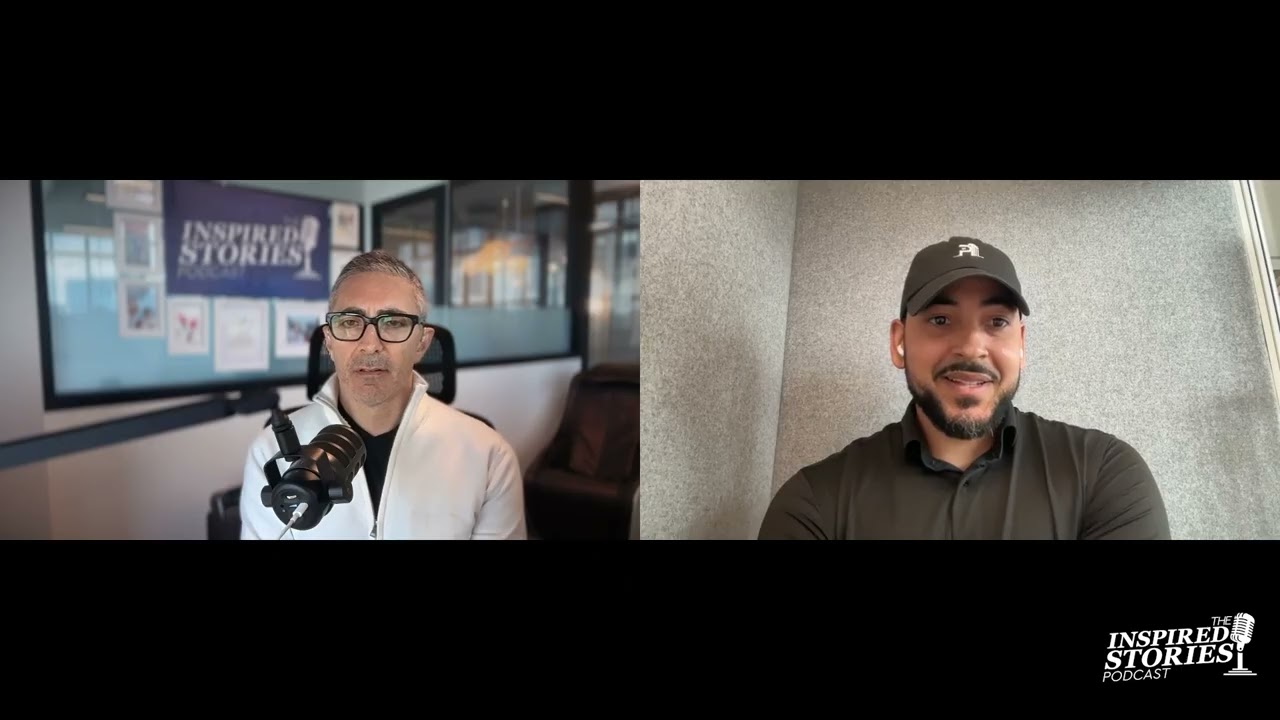
Welcome to another edition of the inspired stories podcast where leaders share their experiences so we can learn from their successes and be inspired by how they've overcome adversity. As you listen today, let one idea shape what you do next. My name is Anthony Cotaspodi and today's guest grew up watching real estate deals get made at the dinner table, but inheriting a family playbook wasn't enough.
He spent nearly four years inside of one of the most recognized real estate investment platforms in the country, managing investor relationships at scale, before deciding the only way to build something he truly believed in was to start over. That decision meant walking away from brand recognition and infrastructure at Cardone Capital to build from the ground up. Pat Valdepetti is the co-founder of Pinnacle One Capital.
a real estate investment and advisory firm focused on high quality, multifamily and single family communities in high growth markets. A third generation investor with an MBA in accounting and finance from Florida Atlantic University, he has been involved in more than $3 billion in transactions across acquisitions, capital markets and advisory work. For anyone wrestling with the question of whether to build within someone else's structure,
or go out and create their own, this episode offers a lot to think about. But before we get into all that good stuff, today's episode is brought to you by my company, Ad Back Benefits Agency. And you'll want to hear this because it is hurting almost every business owner you know. Health insurance costs go up every single year and businesses are furious about it. They're paying more, claims are getting denied, employees are opting out because they can't afford it.
and it hurts turnover and morale. It's one of the most maddening problems in running a business and everyone just accepts it. But you don't have to anymore. Now there's a program that gives your employees unlimited access to doctors, therapists, and prescriptions with no co-pays or deductibles to meet. And here's the part that really shocks most people. Unlike with every other benefit on the planet, your net profits will actually increase. We recently helped a client
add $900 per employee per year to their bottom line. Results vary, but gains like that can change how a business is valued. Be the hero advisor that introduces this to your clients today. Addbackbenefits.com. All right, back to our guest today, the managing partner of Pinnacle One Capital, Pat Fodipetti. Thanks for making the time to share your story today.
Pat Voltapetti (02:40)
Anthony, thank you for having me man. Appreciate it.
Anthony Codispoti (02:43)
So Pat, your family's been in real estate for three generations, is that right? ⁓ Yeah, before we get into your own career, just set the stage for us. Like what were they doing in real estate?
Pat Voltapetti (02:47)
That's correct. That's correct. Go ahead. ⁓
So I want to go back to my grandfather Gino. So he comes over from Italy. Well, he goes from Italy to Argentina and then from Argentina to America. ⁓ Comes here ⁓ in New York City. Finds out very quickly it's really cold up here. Decides he wants to move down south. And he gets into the restaurant space.
So he started an Italian restaurant here in Miami. It was pretty well known, I want to say back in like the mid to late 60s, Mary's Italian restaurant on 7th Avenue. So he owned that for a number of years, I want to say over 10 years. I started buying flea markets, retail spaces, farmland, single family homes. He lucked out on a nice property in Golden Beach.
which now is a beautiful town, a lot of homes on the beach there. I think very early on how that helped me out is I saw not only what real estate did for the current generation that's buying it,
But I was able to see what it did for my father and then what it did for me. And I got two kids of my own today. So it's nice to see that real estate can be that vehicle for people to really pass things forward. So.
Anthony Codispoti (04:29)
And so what did it look like going into the second generation with your father? How did he carry the real estate torch?
Pat Voltapetti (04:37)
More more on the brokerage side. So he he still was buying stuff. So he he went more into like the duplex ⁓ quads Triplexes things like this
But he was more on the brokerage side. So my grandfather, when he retired, he started Golden Sands Realty, which was a brokerage that he had down here in South Florida. My father kind of followed suit when he was done playing football. He ended up kind of managing the flea market and moving into the brokerage side. And that was always a big influence for me, you know, as I was going through my teenage years and kind of getting into adulthood of like what I wanted to do.
They were always like, well, get your real estate license. It's been something that's been very lucrative, very good for our family. It's treated us well. So I ended up going to school for accounting and finance. ⁓ Actually from my grandfather, he was a big influence for me. He was just like,
understand this, understand the numbers at a very high level because regardless of what business you get into, there's going to be revenue drivers, there's going to be expense items. know, those things will change, but the basics of business will, for the most part, stay the same. ⁓ So that helped me, you know, getting into like the public auditing space, understanding businesses, how they're valued, where people hide things, things of that nature. It really, it really helped me for
what I'm doing today, actually. Actually, a lot of it came full circle. ⁓
Anthony Codispoti (06:13)
So when you came
out of school, didn't get right into real estate. You did some accounting work first. Accounting, tax intern. ⁓ And then, actually, before we go forward with that, I want to hear a little bit more about the family background, because it feels like this has been a really important foundation for you. As you think back to what you got to witness growing up, I'm not sure how close you were to
Pat Voltapetti (06:20)
That's correct. Yeah.
Anthony Codispoti (06:42)
the deals that were getting done, but do you remember any of those deals and maybe one in particular that stood out in terms of like, it really implanted on you, like this is the way that you operate, this is the way you carry yourself in business.
Pat Voltapetti (06:59)
Well, I think witnessing my grandfather when he would buy deals, how he would, the way he would negotiate, the way he would speak, ⁓ it reminded me a lot of my time when I was with Grant at Cardone Capital, the way he would speak about business, about money. It was kind of reminiscent. I want to say something.
that probably set my grandfather apart at this time where he was kind of ahead of ahead of the curb was he used his broker's license to find really good deals. So he would go, he would find people that are looking to sell their properties and then he would he would come to them with an offer. He would basically say like, hey, you know, I can buy it, but listen, I can't buy it at the price that you want just because there's going to be no meat on the bone for me. So it just
If you're really, really motivated to sell it, I can buy it, right? And can take it off your hands or, you know, obviously I can list it and we can, you know, go through the ring of a roll of, you know, maybe finding somebody, you know, at that listing price.
Anthony Codispoti (08:09)
So then he becomes,
either he finds a good deal or he finds a client that he can list the property for.
Pat Voltapetti (08:15)
Correct. So he started doing that. Something else he was doing is when he would sell his properties, he would put, ⁓ he would hold paper, so to say. he would hold paper, he would carry the loan and then if the person didn't pay, then he basically got paid to, you know, to wait to get his property back, which, you know, at the time, I don't think it was something that everybody was doing, you know, so he was kind of...
Anthony Codispoti (08:25)
He carried the loan.
Is that more common
today?
Pat Voltapetti (08:44)
That's much more common today, especially in the commercial space. We'll kind of get more into that. But there's some big opportunities in the commercial space where people are willing to put paper, ⁓ hold paper, if you will, ⁓ on these properties.
Anthony Codispoti (09:02)
⁓ Tell us how you got connected with Grant Cardone and for people who don't know, who is Grant?
Pat Voltapetti (09:09)
⁓ so Grant is a, ⁓ incredible marketer. He's an incredible marketer. ⁓ he's sales guru. He's a real estate, mogul. He, you know, he's, he's been able to take his success in the sales space and the attention that he's able to get online and, ⁓ you know, really blow up the crowdfunding, you know, kind of model. And, ⁓ you know, I think it.
It was a great experience for me to be there at the time that I was there. Just because when I got there, I want to say he had a little over a thousand units. We were a lean and mean team. He had just started the crowdfunding. It wasn't, it wasn't what it is today. It was, you know, he was doing friends and family funds. I want to say his wife and the vice president there.
kind of convinced him of like, hey, you should open this up to the public. Like you're doing really neat stuff in the real estate space, you should open that up. And he did. But obviously with doing that, there's some friction points, right? With like managing thousands of investors and you know, how you're going to go about that and putting processes together. So, you know, by being there at such an early stage and kind of seeing it, seeing it develop and seeing us add.
deals to the portfolio and seeing the, ⁓ you know, seeing the operations kind of morph over time and seeing the hub of ideas that go into that, you know, as you're hitting these friction points, people getting into a room and really thinking through, okay, what's the journey, you know, that we want to bring people on? What are we looking, you know, what's the overall goal in our minds? Like, what does it look like perfected?
How do we get there? What's the gap? You know, and kind of living inside of that gap long enough to get some good ideas flowing, to attempt things, to see what would work and what doesn't work and, you know, kind of going through that. It's business at the end of the day, just like any other business. But to see it done at, you know, at that level, it's definitely very inspiring. I can see why people get inspired by Grant.
Anthony Codispoti (11:27)
What was it that Grant was doing before the crowdfunding part of it that was so interesting? Why were the other internal folks there saying, you really need to make this bigger and open it up to the public?
Pat Voltapetti (11:43)
⁓ I think, I think it was just people asking, like, how do we do deals with you? You know, it's like, if you get enough people, it's like what I was telling you about the advisory side of our business is like, if you get enough people that are like coming to you, like, Hey, can you look at this for me? Am I looking at this the right way? And then you look at it, you look at the numbers and you're going, Hey man, I think you're buying this a little too much. You know, I
You know, I think the real price is probably about half a million dollars less. And then, and then when you're, they're able to present that to the broker and then they're, they're able to chip off 300, you know, 300, 400 grand off the contract price. You're like, okay. And then more people start doing it and you're like, okay, this could be viable. This could be something. This could be a business that was here that we just didn't know about, or just weren't even thinking about it. And I think that's how Cardone Capital happened. As it was just.
A lot of his network was just like, ⁓ I see you're buying real estate. I want to get into real estate. How do I do that? And so he had to create some type of ⁓ system where it could be equitable for both parties.
Anthony Codispoti (12:52)
And so when he opens up to crowdfunding, what does that mean? Like somebody can, I've got a thousand dollars, I want like a little piece of a deal.
Pat Voltapetti (13:01)
Well, crowdfunding, so for instance, if I'm buying, I'm going to use $10 million as just a round number, right? If I'm buying a $10 million piece of real estate and let's say I a loan ready to go for 6.5, and let's say with closing costs and the down payment, I need about $4 million to buy this property, right? That $4 million, you know,
what operators are doing now, what syndicates are doing now is they'll create a fund and then they'll raise the amount of capital that they need to buy that deal and also operate that deal, you know, over a three, five, seven, 10 year period, right? Just depends on the operator. But they'll get ownership in the deal based on their, you know, pro rata, right? Like if what we're raising is four million bucks and you come to the table with two million dollars,
then you have 50 % ownership in the LLC that's owning the.
Anthony Codispoti (14:03)
And I'm curious, Pat, was there a reason why you went to work with Grant rather than just getting into the family business?
Pat Voltapetti (14:13)
you know, honestly, I, when I was in the, ⁓ accounting space, I saw a lot of the, and I know I'm jumping over, jumping around a bit here, but let me land the plane. It'll, it'll make sense. ⁓ when I was in the accounting space, I noticed that all the partners were very client facing and you know, while
While I've always been good with numbers and understanding numbers and where things can potentially be hidden, I wanted to be client facing. I wanted to, you know, have that type of lifestyle and that type of career. And I very quickly understood that like the reason they were becoming partners is because
they brought in so much business to the company that the company would rather make them a partner than potentially lose them and lose a chunk of their business with this person going out the door. Right? And that's when I realized I was like, got to get into, you know, communication, sales, and kind of go down that route as opposed to, you know, being in the Excel spreadsheets and stuff. So, ⁓
I found Grant through YouTube just like probably many others. When you put in like cold calling and you know how to speak to people, things of that nature. He was one of the people that would pop up. And I ended up running into one of his directors now a couple of times and you know that's the power of branding right? He would wear the 10X gear and I said man I...
I love that guy, I see him on YouTube all the time. He's got a lot of great energy. ⁓ And I didn't even remember the name, it was just 10X. I remembered the visual of 10X and ⁓ yeah, he told me I work for him. And I was like, it's a nice gig. What do you do? And he was explaining to me what they're doing at Cardinal Capital. They're looking for people, they have a very small team right now. ⁓
I was interested, it just kind of fit, you know, I'm a huge advocate in real estate. Like I told you, Anthony, I saw what it did, you know, not just for my grandfather's generation, but what it continues to do for us. you know, so being an advocate of real estate, being in, you know, kind of the finance space, it just kind of fit, you know. And when I came through the doors there,
I loved the message. It felt like I was right at home. My grandfather was a he was a big believer in self-improvement. He gave me a lot of good books, right around 14, 15, 16 years old where I was able to sharpen my blade against his.
You know, him being upwards of 90 years old and, you know, me being, you know, a young man at that point, you know, and being able to go over, you know, lot of these topics of, you know, purpose, metaphysics, things like this, it really shaped me and, you know, the way I thought about life.
the way I thought about how we should be using our time. And that's what I noticed about Grant's place that really aligned with me is how sacred time is and how serious they put themselves towards self improvement. So.
Anthony Codispoti (17:49)
So it sounds like this was ⁓ like an amazing synergistic combination of events that came together. You were in the accounting space, you know, still thinking about real estate because you knew what this has done for your family and you recognize, hey, I got to get better at things like sales and cold calling. And so you're seeking out, you're continuing the self-improvement, the path that your grandfather started you on with these books and you're seeking out other ways to grow yourself. And you come across grants content online and then
Pat Voltapetti (18:17)
Mm-hmm.
Anthony Codispoti (18:19)
paths cross and you end up working there where you get to learn more about real estate, learn more about the sales process, about how to run this all from the inside out. And then what about four years in you had this idea, you're like, you know what, think I'm ready to go out on my own. How did that thought process evolve?
Pat Voltapetti (18:39)
Well, you hit a corporate ceiling. I just want to say like you do hit a corporate ceiling. You hit a point where, you know, you're kind of looking at executives that are, you know, basically going to be there for the full time that Cardone Capital is going to be going on, you know? ⁓ And I think one of the things that stuck out to me was when you think about life and the type of life you want to lead,
and the impact that you want to have, if it doesn't coincide with what you're doing today, you know, got to make some moves. And for me, if I'm not 100 % all into it, you know, I feel like the legacy that I want to leave behind is when people know I'm there and I'm in the building, that I'm giving everything I got. And so...
I want to say just internally, kind of got to a point where I was like, okay, there's really no upward movement for me here. Nobody's ever performed, you know, at the level I'm performing at. So there's really, I'm the one that's...
creating my own negotiation of like what I should be paid and what bonus structures look like. Like I was the one that was like kind of creating those things because I was outperforming people so drastically. So I would be able to have those conversations with the vice president there and even Grant at times, you know, just be like, hey, this is what the average person's doing and this is what I'm doing. Shouldn't there be some type of
you know, something there to retain this talent long term. And so they did for a time it worked, but then you get to a point where people are asking you to do more and more and more more and more from a management and leadership level. But if there's no structures in place at that point, you know, maybe there are now, but sometimes that's what it takes is for people to leave. And then upper management goes, ⁓ okay.
Let's like not have this happen in the future. Let's kind of let's go to the drawing board. Let's think about, you know, how we can make this a stickier situation for people that come through the door and outperform. And hopefully they grew from that. I certainly grew, you know, a ton, you know, being there. I pay a lot of respects, you know, to Grant and his team. So.
Anthony Codispoti (20:48)
Yeah.
Why do you
think you were so successful there?
Why were you outperforming the others?
Pat Voltapetti (21:12)
I think because prior to me coming through the door, I understood stoicism. didn't, it wasn't a foreign topic. ⁓ wasn't something that, and that's what I had told the executives there. I said, I feel like I'm home here because you're speaking the same language that my grandfather spoke to me. When I was kind of going through my conscious journey of like, who are we? Why are we here? What's the purpose?
Are we supposed to spend this time? And, you know, a lot ⁓ of that whole thought process kind of led me to the same type of books and the same understanding that they were kind of bringing to the people that were in their building. But the difference was the people coming into their building, they're like, this is grant and sales and this is great. And this is more of like a foreign topic of stoicism and improvement and finding out whatever
the purpose is, you know, for the next 50, 60, 80 years, however long you're supposed to be here and how you fit into the web of creation. Right. It wasn't something new for me. It was more like, OK, I already I already know this stuff. So all the stuff that you guys are talking about, I'm already like this is my belief on life already. So you don't need to really hit on this stuff with me. You can kind of leave.
Anthony Codispoti (22:37)
They didn't have to
convert you. You felt like you were already amongst your peers, your people, if you will. Yeah. So boil it down for us. What does Pinnacle One Capital do and who do you do it for?
Pat Voltapetti (22:44)
Correct.
So Pinnacle One Capital, we're private equity firm and we work with investors, accredited investors to allocate funds to very high quality commercial opportunities throughout the country. So we effectively, we allocate to operators that we've already tested, right? Like we've invested our own personal capital with.
to see if they have the aptitude, they have the ability to carry out the business plan on these properties. Because it's one thing to find a good deal, right? It's another thing to have a team in place that can carry it out. And so what we do effectively today is we have operators in some of the best locations in the country, Texas, Georgia, Florida, the Carolinas, Tennessee, and ⁓
because they have a history there and you know because they've been operating there for so long they get great deal flow and a big part of this business is deal flow because great opportunities are happening right it's just a lot of the times investors don't know about them they're happening very quickly deals are changing hands very quickly and you know that's kind of where we've kind of found our value point
is being able to connect the dots and bring people to some great deals.
Anthony Codispoti (24:21)
And so the deals that you guys are focusing on are is this all residential rentals? Are you doing commercial? Kind of paint the picture for us.
Pat Voltapetti (24:30)
Multifamily, we're doing like multifamily self-storage things of this nature Really what? Really what we're going after today is you know opportunistic kind of real estate that Just to make it easy for the you know the listener you had a lot of people I Want to say if we went back to like 2014 for instance
interest rates were on a steady decline, pretty much. kept getting, know, rates kept going down, down, down, down, down. And so the model for people that were buying commercial, you know, because the value of the property is dictated off of what it can actually generate. So it's very similar to a business, right? So what was happening is people would buy these properties and then they would say, OK, naturally inflation, right? We have inflationary pressure that's going to push rents up. ⁓
If I'm in a location that is, you know, desirable and people are moving there, naturally that's also going to push rents up. So if I can push rents up, keep my expenses somewhat the same, right, the overall income of the property would go up, you know, therefore giving me a higher valuation. Debt's getting cheaper, which means they can lend out more money. And so what people were doing is every
want to say three to five years, they were basically refinancing these properties and pulling out, you know, big chunks of cash and still owning the property. Right.
Anthony Codispoti (26:08)
But they're highly leveraged
at this point. if those interest rates don't keep going down, that cycle of being able to refinance every three to five years, something breaks.
Pat Voltapetti (26:19)
Correct, correct. So then what happens is in 20, I want to say 2021, obviously everybody's still kind of riding that wave of we're going to buy these deals, interest rates are going to continue to go down. There's no way they can go up. It is kind of like the sentiments that were in the space, right? Because we're printing money. We're continuing to print money. The supply is going up, which we can get into a whole other rabbit hole.
of how crypto kind of plays into that. Because I believe crypto can affect the money supply pretty drastically. Because it can kind of be a black hole, if you will, if a lot of dollars go there. fast forward to 2021, rates start to climb very drastically. that old model goes out the window very quickly. So a lot of the people that were
being highly speculative on ⁓ rents going up, kind of found themselves in a tough spot where maybe they made some improvements to the units to justify increasing rents at a time where rents were now going to be flat. Cash is going to be harder to get. The lending market is going to get tighter. Right. So now what's happening is people made improvements but aren't getting the value out that they thought they were going to get.
Right? Cap rates adjusted upwards. So now they're not getting the same value that they thought they were going to get. And there's been a lot of ⁓ people that have been able to kind of weather the storm and, you know, get some new debt to kind of buy some more time, hoping that rates would come down. And what we've seen here in 2026, it ⁓ doesn't look like rates are going to come down as fast as they went up. It looks like it's going to be more of one of these kind of things.
right, where it's going to be over time, it may go down. Slow decline is probably what you're going to see. And so in that, there's been a bit of a basis reset, you know, in the commercial space that we've really been attacking or we're going after, you know, properties that, you know, maybe need to sell, right. Maybe the debt is coming due pretty soon and
Anthony Codispoti (28:18)
Very slow decline, yeah.
Pat Voltapetti (28:46)
you know, they need to get out of it. But again, there's a bit of a basis reset. So what are you to do? Right. So there there has to be some type of negotiation there. And the way that people go through that, it's a it's a delicate kind of conversation, right, where you can either get a great deal or you can kind of burn a bridge. And, know, we that's what we've been seeing in the marketplace. And that's really what we're targeting and, you know, kind of bringing to the table.
Anthony Codispoti (29:12)
You guys are targeting these deals
where the debt is coming due, people are in a compressed situation. And so for you, potentially there's an opportunity to get a better valuation.
Pat Voltapetti (29:24)
Correct. There's a nice opportunity, you where we can step into the deal with some equity, which is nice. It's always a good feeling to have.
Anthony Codispoti (29:33)
Yeah. You mentioned before this idea, you know, that your grandfather had used years ago of holding paper, holding the debt on a deal. ⁓ Tell me how that's playing out right now. Why this is so much more popular than it used to be.
Pat Voltapetti (29:42)
Mm-hmm.
Well, because put it like this, if I'm trying to sell a property, let's say I'm the person that bought it in 2021 for, say, eight million dollars and my projections on this property, I needed to sell it for 10 million. But now the marketplace doesn't give me the economics that I need to justify 10 million. Right, because anybody that's going to buy my property.
at 10 million, they're going to find out very quickly that the lending environment isn't going to give them enough money on that deal. So they're going to be like, wow, why do I have to bring so much to the table? And if they don't know what they're doing, they'll just be like, ⁓ it's just the debt market. It just is what it is. As opposed to, okay, the reason the lender is giving me 50 % loan to value is because price points a little off. Now, they're not going to come out and say price points a little off because
Why? At the end of the day, they get paid off of getting the transaction to go through. So they want the transaction to go through, right? But you can tell based on that loan to value that my price point's probably a little off here, you know? And so...
Anthony Codispoti (31:03)
Say more about that, explain
that loan to value ratio and what the different ratios explain to you.
Pat Voltapetti (31:11)
I mean, when you understand the baseline of what agency debt looks like in the marketplace right now, when it's at 60, 65%, sometimes 70%, and you get a loan to value of 50 % and you get it from multiple lenders, it can speak to something. It doesn't always mean something. What's the term I'm looking for? It's not...
It kind of correlates to it. I'm not saying that there's like a causation, but there is room to be like, okay, they're only giving me 50 % loan to value. Typically, I'd be looking at about 65 % loan to value. The reason there's this spread here could potentially be because I'm looking at this property the wrong way.
Anthony Codispoti (32:05)
And this is a big part of where you guys come in with your, you know, being such great advisors is that you can help maybe the less sophisticated or less experienced advisor understand that kind of thing and say, Hey, I think that the math here is a little bit off. You touched on this before. Maybe you should be paying a few hundred thousand less. Let's go back to the negotiating table.
Pat Voltapetti (32:28)
Yeah, exactly. Exactly. So and I always think it's when you understand the baseline of the industry and what things are trading at, it gives you an idea to be able to spot irregularities. All right. So when you see those kind of red flags or yellow flags kind of pop up, you can either ask more questions or you can kind of go back to the drawing board and kind of look at your numbers and say, OK, am I looking at this? Am I being too speculative? Am I, you know, and I think that's
really where we're focused on right now in the deals that we buy is that they're not, it's not focused on rents increasing. It's more focused on getting a good deal on the front end, right? Getting a good basis that we lock in on. And then a lot of the value coming from operations, right? Getting a property from 80 % to 90 % occupancy.
maybe we can operate the deal better than the previous owner. We've seen that on some deals where some of the operators that we work with in various markets are able to pick up a deal. And just because of the system that they have in place and how they operate the deal and the quotes that they have, they're able to pick up another $400,000, $500,000 on the NOI that the previous seller wasn't going to be able to pick up.
just because the economics are different. Net operating income, sorry about that. And I hate using jargon. I'm sorry about that.
Anthony Codispoti (33:55)
What is NOI?
So they're basically able to, yeah,
in everybody's industry, happens, right? It's just common language. It's like English to you. And so you forget that some people aren't in that little circle, it's fine. ⁓ But what you're talking about is experienced operators, they've got these marketing systems, they've got these operational expertise, so they're able to come into a new property.
And they can get it from 80 % occupancy to 90 % occupancy pretty quickly just because they've done it over and over and over again. And that's what boosts that NOI, that net operating it.
Pat Voltapetti (34:39)
Correct. Correct.
Anthony Codispoti (34:40)
Okay. Tell me how you approach investor relations. Like you work with the same group of folks over and over. Have you sort of used a grant condone system where you're, you know, sort of doing this, this crowdfunding sort of a thing. What's your approach?
Pat Voltapetti (34:57)
⁓ My approach is being highly authentic. I think transparency goes a long way. ⁓ I think a lot of what we do is, when we find somebody that's looking to invest in the space, they'll have questions in regards to real estate, the type of deals we're buying.
What does due diligence look like? And we're able to kind of open up the hood and show people what we see and why we're putting our own dollars into it as well. So, hey, why do you like this deal? And us having the ability to say, hey, this is why we like it. These are some of the differences ⁓ that this deal presents than this other deal that we were looking at that we said no to.
and kind of going through those exercises with investors helps them to understand what we're looking for. And then they can kind of make the decision from there if they agree with the thesis, if they agree with the philosophy that we're kind of attacking the marketplace with, and then we're happy to have partnerships. But that would be like kind of the skinny on.
how I look at investor relations is it's a relationship of educating. It's also a relationship of authenticity. It's also a relationship of trust, transparency, showing people what's going on. So.
Anthony Codispoti (36:26)
In your experience, Pat, what's the hardest part of real estate investing?
Pat Voltapetti (36:33)
The hardest part of real estate investing is if you don't have a lot of experience with an operator and just not knowing how they're going to perform. Because it's coordination at the end of the day. You're coordinating between people. And they all have, everybody's got their supposed skill set that they're going to lean into that's going to make the sum greater than the individual parts.
And that's what I would say is probably ⁓ your biggest deterrent, right? But it can also be your biggest source of winning and success in the space as well, as if you have a good team.
Anthony Codispoti (37:18)
So
when you say the operators, basically you're talking about a property management company that you're bringing in to say, hey, you guys, you run the day to day of this new property that we've.
Pat Voltapetti (37:30)
Well, everybody from asset managers to the people that are going to be making the improvements on the property, you know, it comes with trust, you know, around the board because there's, you know, when you're dealing with people that are going to be making improvements to the property, right? Do you have the structures in place where they're incentivized to do the job?
in the way that it needs to be done so that your economics in the first place, which you presented to investors, is maintained. Right? Because you have the developer that could come in and just be like, hey, I'm just trying to make as much money as possible. So they're going to give you certain change orders and this has to change in a way. I needed a more expensive one and it's going to take a little bit longer. And so your projections start to change based on now somebody else's expertise.
Right? So that's why people kind of lean away from development. You know, and we actually like when we're speaking to people that want to get into the commercial space, we say, listen, go after something that, you know, it's in a highly desirable location, right? Maybe you can make some small improvements and bring the rents to market. Right. But.
You don't want to get into anything, at least initially where it's just all development, where you have to lean so heavily on somebody else's expertise, unless you know that space, you know, very thoroughly. You know, that that's why you would kind of lean against that. But.
Anthony Codispoti (39:03)
When you say lean
against it, you mean not looking for a property that needs a lot of
Pat Voltapetti (39:09)
Correct. Correct.
Anthony Codispoti (39:11)
And if you do need to, you if you do end up with a deal that there's gonna be some work involved, how do you deal with, how do you guard against, you know, those change order, those cost increases that can come about? Is there a way to get you and the developer aligned ⁓ so that everybody's winning or is that just sort of a tug of war game?
Pat Voltapetti (39:37)
I mean, the way we've thought to do it in the past and what we've seen with operators that have been successful at doing it for 15 plus years is you bring them in as an actual partner on the deal. So you have some fees where they're able to eat, but you overall have made it a equitable situation for them where they're gonna make most of their money as
as we all make our money. And it's not something that's just like they're operating in a silo and they're making their economics separate of the entire group. That's what we've seen that works is by bringing them in ⁓ as a partner on the transaction. And when you're dealing with syndications, you have two sides of the transaction, right? You have your limited partners, the people investing.
And then you have the general partners. have the people that are actually carrying out the business plan, if you will.
Anthony Codispoti (40:40)
Now, how long do you guys like to hold properties before you turn around and sell them?
Pat Voltapetti (40:46)
Three to five years. Yeah.
Anthony Codispoti (40:48)
pretty typical now.
Okay, so tell me about volt notes. What is this?
Pat Voltapetti (40:55)
So VoltNotes is a... So as I was starting, know, as I got out of Cardone Capital, one of the things that I really got jacked up about, you know, while I was there was education. And something that I thought was really cool that the Grant Cardone Foundation was doing was bringing in...
children from the inner cities to give them like financial literacy and things of that nature. So ⁓ that was something that I was really I was really jacked up about and it kind of connected with my purpose. You know, when when children would come into the building and I would have the opportunity to speak to them, you know, about Cardone Capital, about what we do, about my role, things like this. And ⁓ I've always been ⁓
I want to say really passionate, really enthusiastic about education. I think that's one of the skills that I have is to take what would normally be looked at as complex ⁓ information and kind of synthesize it and make it palatable and make it so that somebody could take the information and actively use it. And I think that's what makes somebody a good instructor.
I I've got that skill. So VoltNotes was basically that. Yeah. VoltNotes was me taking sales and even kind of the beginning, beginner steps to understanding commercial real estate and kind of just putting it into a course when I, when I first left Cardone Capital.
Anthony Codispoti (42:24)
And so voltnotes was basically a plop.
Gotcha. ⁓ Yeah, there's a recurring theme here, like being an educator, being an advisor, ⁓ taking these complex things, breaking them down into, you know, easily digestible chunks of information, you know, and I, as I'm sort of, you know, pulling all the pieces of the puzzle together here, Pat, it strikes me that you guys have, you know, at at Pinnacle One, you guys have really built this like done for you kind of service. That's the term that I'm looking for.
Pat Voltapetti (43:14)
Correct. And I think it's needed, especially today, you have AI, right? You're not just competing against ⁓ your fellow man. You're also competing against ⁓ AI, a robot that can do things very, very quickly. So ⁓ I think the kind of old model of giving people theory and ⁓ courses and things of that nature, I think you're going to see a lot of that go. ⁓
go away and people are going to be more locked into getting things done as opposed to learning about it. I think it'll move towards like, hey, this is something I need to get done for my business. This is something I want to get done. Is that what you're delivering? And so, you know, I think being at the stage that we're in, we have that ability to be, to say, okay, ⁓
we can really sink our teeth in here and this is something that, you know, we can actually add some value to people. And we have, we've done some really, some really neat stuff.
Anthony Codispoti (44:17)
So maybe what you're saying is kind of up to this point, there's been a lot of expert courses available, things that you can take online, text, video, audio format, way to consume it, because people wanted to learn. They wanted to learn how to build a website or how to be an internet marketer or how to invest in real estate. And what you're saying is AI is so good now that that's starting to maybe eat at the lunch of some of those people who have been providing those expert courses.
Pat Voltapetti (44:45)
yeah.
Anthony Codispoti (44:46)
And what people need more now, what's becoming more valuable to them since AI is giving them access to that information is they just want it done. And that's what you guys do at Pinnacle One. You just get it done. Like you've got all the infrastructure in place. You've got all the expertise. So somebody who's got their busy day job, but they want to get involved in real estate, you're a great connector, a resource for them.
Pat Voltapetti (45:14)
Yeah, yeah, we definitely
can be. ⁓ But again, like on the advisory side, we're working with like, operators, like people that are already buying deals, but now they're just trying to buy bigger deals. And so they're saying, okay, if I make a mistake, it's an even bigger mistake. Now, now it goes from being, you know, maybe a $80,000 mistake to now it's a half a million, a million dollar mistake. So now they're saying like, okay, what don't I know?
Anthony Codispoti (45:26)
Hmm.
Pat Voltapetti (45:41)
It might be worth it for me to get some additional eyes on this thing. And I think really where we shine is in the high leverage moments, the actual communication, right? The actual communication with the broker, the actual communication with the seller, you know, going through the due diligence and making sense of it and coming up with our argument, if you will, arguments, a negative kind of connotation for it, but.
Anthony Codispoti (46:06)
your position on why it should be valued differently.
Pat Voltapetti (46:09)
Our position,
yeah, on why the valuation should be different, you know, and being there for the client while they're going through that, I think is ⁓ something that, you know, can be highly, highly valuable, you know, for the right operator.
Anthony Codispoti (46:28)
Gotcha. I'm gonna shift gears on you now, Pat. What is the hardest thing that you've ever had to overcome personally? And what did it teach you?
Pat Voltapetti (46:42)
hardest thing I've had to overcome personally. ⁓
That's deep. ⁓ Okay, I'd say the hardest thing personally that I've had to overcome. ⁓
just having people that you think are always gonna have your back, having them leave, and maybe having them be envious, not be happy for your success. I think that's probably the hardest thing is when you go from feeling like people have your back and...
they're going to be there for you. And pretty much finding out that...
you've got to use discernment and you know, not everybody's going to respond the way you think they're going to respond. And I think that kind of ties into what we were talking about with real estate is that like having a good team, it's tough to find the right people. It just is. It takes time, but it's worth it. It's worth it to actually go out there.
For all the people that say, I'll never have partners, I'll never open myself up, I'll never be vulnerable to be in that situation again, I don't know if that's the right answer either, because there are good people out there.
Anthony Codispoti (48:12)
So when you're talking about
people leaving you people you thought had your back, are you talking about folks that you've worked with or these friends that you were close with and they became jealous of your success? What's the dynamic?
Pat Voltapetti (48:23)
friends,
⁓ friends, I've had it happen with family. You know, I've had people, you know, kind of, you know, react in ways that you just didn't think they would react or, know, if the, if I was standing in their shoes, I just wouldn't have done certain things the way they did them. And, you know, I think that's probably the most.
been the most difficult thing personally, like as a personal kind of thing to kind of swallow to understand that like, okay, it's kind of true. You know what? I think it was Plato that said it. He said he who has many friends has none at all. That the connection between kindred spirits is not something that happens all the time.
But that's why it's worth it to look for it.
Anthony Codispoti (49:21)
And
you think that maybe the trigger for these events, these people that you're no longer close with, jealousy? Is it really what it comes down to?
Pat Voltapetti (49:35)
I mean, that would be like a quick way of doing it, of just saying like they're jealous, but I think what it comes down to is...
people have certain things inside of them that they're, you know, maybe...
that they're not confident on, right? And so like, if they see other people that are maybe confident where they're not confident, you know, and see differences in other people that maybe they don't have. For some, that can be beautiful, you know, to see the variations of people. That can be beautiful. But for some, can be almost like threatening, you know, because it challenges the way that they choose to look at life.
And I think I've run into that quite a bit. It's like I choose to live my life in a certain type of way. ⁓ I don't have many vices. I live a simple life. I live a simple life. And I choose to keep not a lot of people around me, but a small core that I highly trust, highly respect.
Anthony Codispoti (50:51)
So maybe these were some folks that you came up with and you guys were kind of at the same level as you're working your way through life. then Pat starts to find some success and some money and maybe other some material things and other folks. They're like, hey, what happened to me? And maybe they just feel bad about themselves being around you. Is this kind of what we're talking about? OK.
Pat Voltapetti (51:15)
Maybe, maybe I
think so. think so. The thing is, don't know. I don't know exactly. just I just kind of go off of, ⁓ know, the the energy, the actual action. Yeah, like what happens and.
Anthony Codispoti (51:21)
Got it.
the dynamic changed.
Pat Voltapetti (51:30)
You know, I kind of think like, and that's okay. That's okay. I think we're, we're here for a window of time and we're supposed to, all on our own individual journey. So I don't, I don't put too much stock into it, but you know, from a, from a personal standpoint, yeah, that's been, that was a tough thing to swallow when you can say like, man, I'm going to be with these people for the journey. Like, you know, you start to think about what the future is going to look like and how their future is probably going to, you know, look like. And those are the images.
Anthony Codispoti (51:46)
hard. Yeah.
Pat Voltapetti (52:00)
in your mind that at least for me they drive me right because I'm pushing towards something in the future something I'm going for a feeling ⁓ an impact right and so when I notice that okay these people aren't gonna be here for that journey yeah it hurts it sucks
Anthony Codispoti (52:17)
Yeah. Well,
and I think the the interesting thing, though, is, you know, as much as that's hurt and as much pain as that's caused, you made the comment that I don't know that, you know, closing yourself off and not allowing yourself to connect with or be vulnerable with other people is the answer. Right. It's like, hey, I got hurt. And that that really, you know, is not a great feeling. But I still have really good people in my life. And, you know, I wrote down some of the
the words that you were kind of throwing out earlier in our conversation here, know, stoicism, the conscious journey that we're on, metaphysics, how do people, how do I fit into this web of creation? And so I see that there's kind of this this worldview for Pat Volta Petty that is, I don't know, to me, it's very interesting. And I kind of be curious to hear more about how you think about the big picture and how you came to have that viewpoint.
Pat Voltapetti (53:18)
man, ⁓
Well, my grandfather kind of helped with a lot of it, man. He asked me questions that were very thought provoking and got me to think about my own programming and got me to try and think outside of that programming. know, like there was a... He had me journey into Western and Eastern philosophy.
You know, and that was a journey. That was an actual journey mentally to kind of look at some of the concepts and think about them and really say like, okay, wow. One of the first exercises he gave me was like, what if you were just given consciousness and you had nobody to tell you what was right, what was wrong? You know, who would you be?
Like what would be the thing that would separate you from everybody else?
It's one of those things where you just don't know. You don't know how much of who you are is the social dynamic and the programming of like just society and how we all work together and how much of you is being buried because of the pressure to conform to everything. And so there's...
What I've noticed over time, you know, my grandfather's no longer with us but what I've noticed over time is a lot of those questions and a lot of you know, my development as a you know, going from a young man to a man now today a father ⁓ is a lot of it is me having the awareness to catch a lot of my own programming and a lot of stuff that I can I can actually go back to and say like ⁓
that's somebody put that there. That's not that's not me. So to say somebody put this understanding there. And so going back and challenging some of these understandings has brought me to some of, you know, the very ⁓ question that you asked of like, how do I have a certain worldview? And, you know, I think going back to ask myself certain questions of
you know, how I view what we are, why we're here. It really changed the way I look at ⁓ life. And I think at this point, I believe we all are part of the same thing. I think regardless of where you come from. ⁓
you know, what part of the planet you're from. I think we all come from, you know, the same entity, the same thing that, you know, provides energy for the air to be around us, gravity, you know, the heart beating in your chest. I think that spark, that energy, I think we're all connected to it. I don't think it ends with death, so I don't lead a life that...
You know, I almost feel like most people are scared to die. They feel like they're running out of time and they feel like they need to do certain things. ⁓ And out of that fear, because fear is a very low vibration in my opinion, they'll do very, you know, corrupted kind of things to other human beings, you know, in the pursuit of these things because they feel like time is, you know, they're running out of time.
Anthony Codispoti (57:03)
And you're a father now. How many kids?
Pat Voltapetti (57:03)
Yeah. Yeah, I am.
I got a 13 year old and an 11 year old.
Anthony Codispoti (57:11)
And so how do you approach trying to teach them similar things, maybe in the same manner that your grandfather made these ideas available to you?
Pat Voltapetti (57:23)
Oh man. So I tried to do it earlier. know, a lot of the stuff, a lot of my conscious journey started when I was about 15. I started to think about these things. I noticed that my children were able to pick it up. My son right around 10. And I want to say my daughter right around nine-ish, she was able to pick it up. But I would always test them with certain things.
So you have five senses, right? And ⁓ that's how you're able to detect things from the external world, right? It makes sense of the data that's hitting you. But you can also use those five senses internally. So I try to get my children to understand that that was probably the first step.
of getting them to kind of consciously lock in and understand that there's more than what you're actually just experiencing because you're limited.
Anthony Codispoti (58:25)
How do
you do that for a kid?
Pat Voltapetti (58:29)
So I basically tell them like, hey, if I told you to see a pink elephant, could you?
And then like, I would do that when they were even younger, right? Five years old, six years old. Cause it's like they're having downloads, especially when you're a kid. Are you a father, Anthony? Okay. So like, especially there you go. So it's like you've, you've seen them go through, you know, moments of just like conscious leaps where like they'll
Anthony Codispoti (58:48)
I am. That's part of reason I'm asking. We've got two boys who are 11 and nine.
Pat Voltapetti (59:01)
they'll wake up one day and you're like, something happened last night. Like you got a little download last night because they understand it a little bit more. They know a little bit more than they knew yesterday. And so I would test with those types of exercises. I would say like, Hey, let me ask you guys something. We have five senses. What are they? And then they would go through them, right? The different senses. And I would say,
You can also use those inside as well. I'm gonna show you a trick. And I would be like, if I asked you to see a pink elephant, could you? And then they'll kind of think about it and then be like, yeah, I can see one. I'm like, cool. Could you hear it? If I asked you to kind of hear the elephant, could you hear it? And then you can see the wheels start to turn and they're like, yeah, I can hear it. I'm like, okay. You and I both know there's no elephant in this room. So you heard something, right?
Or you could do the, or what my grandfather did was the ⁓ old test of like, know thyself, but say it without your mouth moving. So he would count down, he would say, we're going to say know thyself on three. And then we go.
And you could hear the, and he would be like, who spoke? And so you would ask me questions like that. Like, did it make a sound? Right? Of course it made a sound cause you heard it, but it's not, it didn't make a sound for your or anybody else's senses to pick up. Right? It just, just, all it did for me and all I'm, I think it did for my children is get them to understand how limited we are. That you can't be so locked into this thing.
because we're just extremely limited in our understanding.
Anthony Codispoti (1:00:46)
Pat, we may have to have you back and continue this really deep conversation because I find it fascinating. But in the interest of time here, I've got one more question that I want to ask. And before I get there, I want to do three quick things for the audience. First of all, if you want to get in touch with Pat Valdepetti, we're going to have his LinkedIn profile and the show notes, but you can also go to his website, PinnacleOneCapital.com. Pinnacle One spelled out O-N-E, Capital.com. PinnacleOneCapital.com.
Pat Voltapetti (1:00:50)
So.
Anthony Codispoti (1:01:16)
And if you're enjoying the show, please take a moment to subscribe wherever you're listening. It sends a signal that also helps others discover our podcast. So thank you for taking a quick moment to do that right now. And as a reminder to all business advisors out there, your clients are bleeding money on their health insurance. Do them a favor so big they'll tell their friends about it. Show them how to give their employees access to therapists, doctors,
and prescription medications that counter intuitively increases their company's net profits. Real gains that can change how a business is valued. Contact us today at addbackbenefits.com. So Pat, last question for you. A year from today, what is one very specific thing that you hope to be celebrated?
Pat Voltapetti (1:02:07)
from today.
That's good question.
Anthony Codispoti (1:02:23)
If it needs to be nine months or 18 months, that's okay. Don't get locked into the time period.
Pat Voltapetti (1:02:28)
Yeah,
yeah. No, no, no, I get it. I get it. I think a year from today, some of the stuff I'd like to be celebrating is some of the additional exits that we have in the portfolio that are supposed to go full cycle. Say just returning money. I think that's always...
That's always a means to celebrate. We venture out, we acquire something, we do what we said we were going to do, we return the money back. ⁓ That's always a nice ⁓ place to catch up with people and maybe make a trip out of it and ⁓ go see some good friends. So I'd say that.
Anthony Codispoti (1:03:12)
Love it. Pat Valdepetti
from Pinnacle One Capital. want to be the first to thank you for sharing both your time and your story with us today. I really appreciate you being here.
Pat Voltapetti (1:03:22)
Anthony, thank you for the invite, man. This was great. It was a lot of fun for me.
Anthony Codispoti (1:03:26)
Folks, that's a wrap on another episode of the Inspired Stories podcast. Thanks for learning with us. And if one thing stood out, put that into action today.
Connect with Pat Voltapetti:
Website: PinnacleOneCapital.com
LinkedIn: Pat Voltapetti