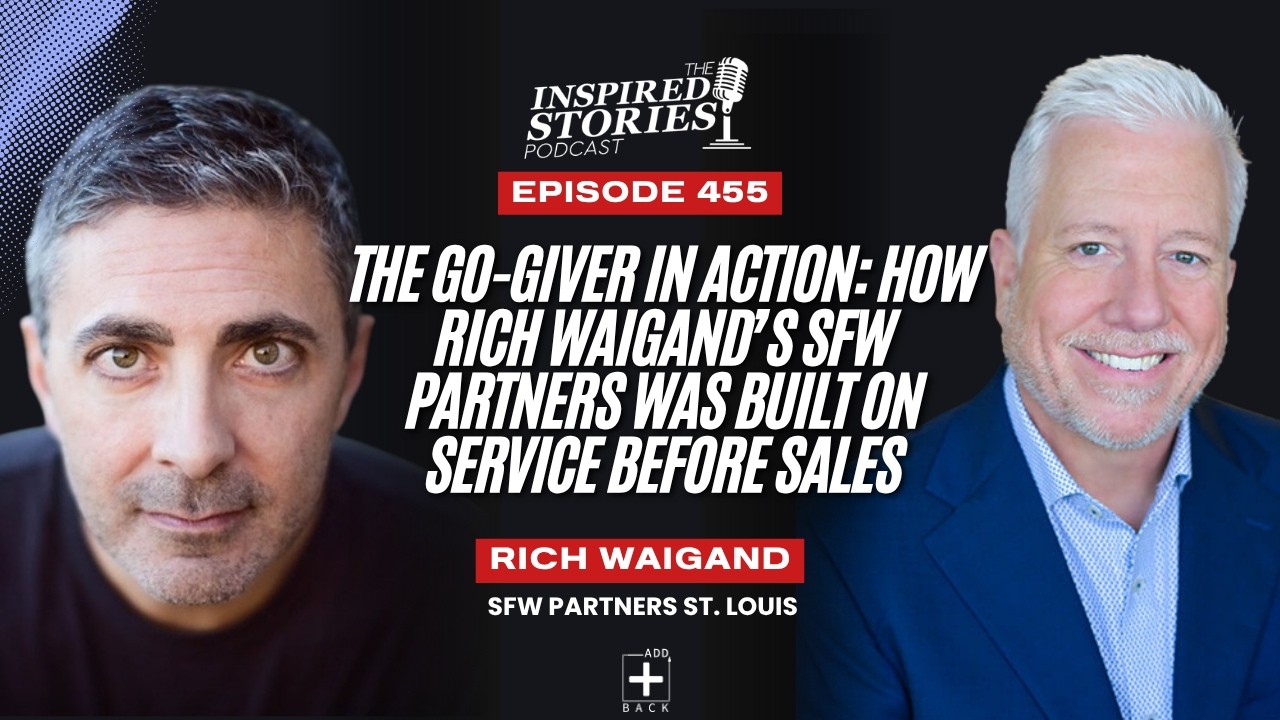
🎙️ From Staff Accountant to Managing Partner: Rich Waigand’s 30-Year Bet on Relationships at SFW Partners
Rich Waigand, managing partner of SFW Partners in St. Louis, spent 11 years at his first firm, made partner, and walked away when it became clear they were heading toward an outside sale. He joined SFW as its fifth partner when the firm had 12 people. Twenty years later it has 74. In January 2025, his partners elected him managing partner. The transition from client-first to firm-first has been the hardest thing he’s done professionally. Outside of work, he and his wife co-founded Wagon Wheels — a nonprofit delivery and skills training organization for people with developmental disabilities — while their nonverbal son Lance was recovering from life-threatening complications after back surgery.
✨ Key Insights You’ll Learn:
Why Rich left a partnership he’d worked 11 years to earn — and what he saw in his first partner meeting that made the decision clear
The summer of 2005: onboarding so many clients at a new firm that it became one of the busiest of his career
Why the managing partner role required him to stop serving clients and start serving the firm — and why he resisted it
How Nancy Wotley Blaine transformed SFW’s internal culture and then became an advisor to other firms
The M&A advisory work that gets Rich in early — and how he helps owners capture value that traditional accountants miss
Why private equity acquisitions are driving high-quality clients away from larger firms and toward SFW
The Go-Giver philosophy that has shaped Rich’s entire approach to networking and client relationships
Wagon Wheels: how a nonprofit delivery organization for people with developmental disabilities was born in a hospital room
The Hot Wheels Racing fundraiser that went from $25K in year one to $120K in year two
Why Lance comes to the SFW office every day — and what Rich finds in his desk drawer every time
🌟 Rich’s Key Mentors:
His Father (Yugoslav Immigrant & Small Business Owner): Showed Rich what resourcefulness looks like — and why business owners deserve real support, not just compliance work
His Mother (Kitchen Table Bookkeeper): The original trusted advisor — and the reason Rich understood from childhood what it means to help a business owner survive
Lance Weiss (SFW Partner Who Made the Introduction): Invited Rich into the partnership conversation that changed the trajectory of his career
Nancy Wotley Blaine (SFW People & Culture Leader): Transformed the firm’s internal development and gave language to what Rich had always done intuitively
Bob Burg & John David Mann (The Go-Giver Authors): Wrote the book that articulated Rich’s entire worldview back to him — the one he now gives to every new hire
👉 Don’t miss this conversation about what it really looks like to build a career on service, why the best M&A outcomes are planned years in advance, and how one family turned the worst week of their lives into something that now serves 70 people a week.
Listen to the full episode here
Transcript
Anthony Codispoti (00:01)
Welcome to another edition of the inspired stories podcast where leaders share their experiences.
so we can learn from their successes and be inspired by how they've overcome adversity. As you listen today, let one idea shape what you do next. My name is Anthony Cotaspodi and today's guest co-founded a volunteer delivery service staffed entirely by people with developmental disabilities, built it from the ground up over seven years and runs it alongside a demanding career as a CPA. That detail alone tells you something about how this person thinks about service.
He spent over a decade earning his way to partner at his first firm, then walked away from that security to start over at a smaller shop with a bigger vision. 20 years later, he's running the whole thing. His name is Rich Wigand, and he is the managing partner at SFW Partners, a St. Louis accounting firm founded in 1967 with an eight-partner ownership structure and a seat in the AGN International Global Network.
Rich has over 30 years of experience advising closely held businesses across construction, real estate, hospitality, and nonprofit sectors. In 2022, he was named a St. Louis Titan 100, and in 2025, SFW was recognized on the Inside Public Accounting Top 500 list. The people who know Rich best describe his ethics as something that has never wavered.
This episode is about what it looks like to build a career on that foundation. But before we get into all that good stuff, today's episode is brought to you by my company, Ad Back Benefits Agency. Listen, if you run a business, you are likely stuck in the cycle of rising insurance premiums. You're paying more, but your team is getting less, and many people can't afford coverage at all. So we do things differently.
we offer a solution that provides your employees with unlimited access to doctors, therapists, and prescriptions that's always free for them to use. Here's the part that surprises most people though. Unlike every other employee benefit out there, our program puts more money into your company's bank account. As an example, we recently helped a client increase net profits by $900 per employee per year. Results vary, but gains like that can change how a business is valued.
And the consultation is free. Imagine being the advisor that becomes a hero by introducing this to your clients. See if they qualify today at addbackbenefits.com. All right, back to our guest today, managing partner at SFW Partners. Rich, thanks for making the time to share your story today.
Rich Waigand (02:43)
Absolutely. Thanks for having me.
Anthony Codispoti (02:45)
And I want to make sure I got the pronunciation of your last name correct. Wigan. All right. W-A-I-G-A-N-D for those folks who can't wait need to go find him on LinkedIn right now. All right. So Rich, you started at Humes and Barrington as a staff accountant back in the December of 93. You were there over 11 years and had made partner just before you left. like a really great Ascension story. But walk me back to the moment you decided to leave. What was going on for you?
Rich Waigand (02:48)
Bye, guys. Yep.
Yeah, you know, it was a really tough decision. It was back in 2005. ⁓ You know, the firm was, you know, a growing firm. I had just become partner. So I came into the inner circle of partner meetings and now starting to see like how things worked ⁓ that I was not really privy to before that. And it became evident that that firm, that the founders were not planning on really
creating an internal succession within that firm that they were going to look for an outward sale. And, you know, to me, I chose that firm because it allowed me to develop a career path that was pleasing to me. I got to work with who I wanted to work with. It wasn't like you're in this niche, this is all you're going to work on. And, you know, I had a chance to work at larger firms and I just chose Matthew. I wanted to stay in a local firm and
When it became evident that that firm was going to sell, I decided, you know, maybe I'm going to start my own firm. And as I went down that path, the kind of look at it, like, what was it going to take to start my own firm? ⁓ I ran into some people that kind of guided me and made some introductions. And at the time, ⁓ they introduced me to Lance Weiss. and we started talking, Lance was a partner at the firm here and.
Hey, why don't you come meet some of my other partners? And we just did it casually. And, you know, what I felt was this is going to be a great place for me to, a true partnership where my voice mattered, where you're able to, you know, really kind of focus in on, you know, building a practice that was built on the foundation of building strong relationships. ⁓ so, you know,
That was kind of the impetus of why I looked to leave. About a year and a half after I left, they did sell. And now they're part of the CLA brand and all that. ⁓
Anthony Codispoti (05:23)
So you got
out at the right time, right? He did the right thing for you. You explored the option of going off, hanging up your own shingle, but you found a group that seemed well aligned, personalities seemed to mesh. And as I understand it, they brought you in as a partner right from the beginning.
Rich Waigand (05:31)
Mm-hmm.
Yeah,
they did. ⁓ I think that was, you know, there's a leap of faith on their part, but, ⁓ you know, as we kind of spent a few months getting to know each other, ⁓ they looked at kind of what I had done at my old firm and, you know, said, well, let's just do this. And, you know, brought me in as a partner. And, ⁓ I think that was, you know, a bit of, you know, it was a trust factor.
⁓ But they knew it was important to me that I kind of had that seat, you where I could be at a partner meeting and have my input into the decisions of the firm. So at the time we were 12 people, so it was very small.
Anthony Codispoti (06:26)
And how big are you now?
Rich Waigand (06:27)
We're 74.
Anthony Codispoti (06:29)
boy. Okay. And how many partners overall?
Rich Waigand (06:33)
There's eight of us. And the two founders actually, there was four when we started. I was the fourth partner. ⁓ Sorry, sorry, there was four. I was the fifth partner.
Anthony Codispoti (06:35)
How many were there when you started?
Okay, so you're coming into this firm, SFW, as a partner from the beginning. Obviously a very different experience than when you started as a staff accountant many years before at Hims and Barrington. What did that feel like? Talk me through that difference in those first days being there. You're still in a new firm, but now you're in a different kind of seat.
Rich Waigand (07:08)
Yeah, because it was such a small firm, for me, it was, I don't know, I felt like I was the burden of, you know, trying to come in as a partner, there's people already there that had been there for quite some time before I showed up, you know, 12, 15 years, in some cases. And so me coming in as a partner, I just felt like that obligation to
maybe prove myself or to, you know, justify why they brought me in as a partner. ⁓ so, but, you know, it was a new system. was transitioning. I brought in a lot of clients right on day one. And, so getting them in a new system, learning kind of how they do their stuff. those are all big challenges for me. So even though I came in and in May of 2020 or 20,
2005, was a, that summer was probably one of my busiest summers I've ever had because of just onboarding so many clients and really kind of learning the process and everything.
Anthony Codispoti (08:24)
So I think the fact that so many clients came with you says a lot about the type of service that you have been providing them over the years. Tell me about the relationship that you had typically with a client at that
Rich Waigand (08:39)
Yeah, it was, you know, it was just really built on the, the concept of how can I help them? Right. It was always about what can I do to help them in their business? ⁓ and almost all my clients were business owners. there was a few, I had a couple of nonprofit clients, ⁓ at that time that has since grown a little bit bigger, but, at the time it was all business clients. And so I was just.
I was the most curious person probably that anybody ever had come into their business because I was always asking of how they did this and learning about their business. And I think that curiosity ⁓ had like a contagiousness to it and they love the fact that I wanted to know about their business. so ultimately I think behind the...
I don't know, like without thinking about it or being intentional about it, anytime I heard they had a problem of any kind, it was like, ⁓ do we solve that problem? Like it was like I jumped into their shoes of wanting to help them solve those problems.
Anthony Codispoti (09:49)
even if it was something
outside of accounting related.
Rich Waigand (09:51)
Yeah.
I thought I closed all my apps, but there's one. So, ⁓ so yeah. So what happened with that is, know, when somebody needed a new bank loan, I'm like, Hmm, I don't make bank loans, but how do we help them find a bank loan and. You know, kind of finding that pathway towards, ⁓ I got to build more relationships.
Anthony Codispoti (10:00)
We're all good. Yeah.
Rich Waigand (10:20)
that have nothing to do with accounting. I have to build relationships in banking and finding good attorneys and finding great insurance people. And then, you know, bringing those relationships to my clients to help them have a great experience. ⁓
Anthony Codispoti (10:38)
Why were you so
driven to do that? I mean, you're trying to support your book of business. You're really busy anyway, especially peak tax season and all of that. Like, why volunteer to take on this extra work?
Rich Waigand (10:55)
⁓ boy, that's like a psychological question, I think. But I think, you know, my dad immigrated to this country. ⁓ He came from Yugoslavia. was in the war, you know, not in the, he was a young man during World War II. Was actually shot ⁓ and survived that and immigrated here. And then found his way and started his own business. And, and I saw, you know,
My mom did the books for my dad's business on the kitchen table and these big, huge ledger sheets. And so I saw the, you know, what they went through and kind of the resourcefulness that my mom had to help my dad be successful in his business. and so, you know, it was just one of those things where I'm like, I want to help people, you know, business owners be more successful. And I think that's where it started from or where that drive came from.
And then the appreciation for that advisory side of what we do is so much greater than here's your tax return or here's your audit or here's this. And so when you can really make a bigger impact and help people that appreciation is there. And so, I don't know, some people maybe call it a codependency of like, I want that acceptance or that appreciation, but I kind of.
thought about it a long time ago. And I said, when I end my career, what do I want people to say? And I hope that they say, Rich helped me in my business and guided me and made a big difference. so that's kind of why.
Anthony Codispoti (12:35)
I think that's really cool.
And I don't think there's any reason to smack a negative label of codependency on it. think that's just somebody you saw, like what small business owners, you saw your dad, what he was going through to put food on the table. And you're like, hey, if I can help out, I want to do that. It just shows you've got a good heart.
Rich Waigand (12:50)
Yeah.
Well, I great
parents so that they, yeah, it helped.
Anthony Codispoti (13:03)
Yeah. Apple doesn't fall far from the tree, So a lot's happened in the 20 years since you've been with SFW. Very recently, just a little over a year ago, in January of 25, you became managing partner. That's a specific kind of transition, going from peer to leader inside the same firm. What did that change for you in your day-to-day duties?
Rich Waigand (13:07)
Thanks.
Well, it was a big change. ⁓ My whole career has been focused on clients and client service and helping clients. ⁓ switching to managing partner, ⁓ my focus had to switch to my biggest and most important client is the firm. And I don't know that I was ready for it. ⁓ I actually asked the old managing partner to stay on for one more year.
because it's a two year elected cycle. And he's like, I think it's time, you know? ⁓ so, you know, it went through an election and my partners, you know, elected me as that managing partner. But ⁓ I think it was like, I don't know that I was really ready for it, right? And, but this past year, it's been a lot of growing, not just for myself, but the...
The growth has come in, you know, trusting and empowering others to do the things that I was doing, ⁓ taking care of clients and, you know, and then really being candid and having open feedback when things weren't going as I wanted them to go in that transition. ⁓ So I'm still involved with my clients at the higher, you know, more strategic.
⁓ advisory level, but not so much on tax returns and audits and different things, aspects of it. So ⁓ that was, was a big change and I'm still adjusting to it. I mean, it's, there's still growth.
Anthony Codispoti (15:13)
Why did you think
you weren't ready for it? Why was that a story you were telling yourself?
Rich Waigand (15:19)
You know it
I don't know. think it was that I was so ingrained in so many aspects of my clients lives that stepping away seemed really scary. like I, there just wasn't going to be enough hours in the day to manage the firm well and still take care of my clients at the level that I was involved with them. And I think that's where I had to really embed others into the relationships and
And I just wasn't good at it. just wasn't like maybe prepared for it in the beginning. But.
Anthony Codispoti (15:58)
You didn't want to pull away from your clients. You had such
a good relationship with them. You've been working with them for so many years, supporting them in so many ways. There's a connection there. I get it. Yeah.
Rich Waigand (16:04)
Yeah.
Yeah. Yeah.
So, but now, you know, as I, what's helped me mentally get over that hump a little bit is that I know I can't be here forever anyway. Right. And, you know, life's short. There's only so many years we have left on this planet. And so really my focus was how can I really build a sustainable model so that our clients, when I do go away, uh, that
our clients are still taken care of. And so it was really a mental shift for me that I have to help empower others in the firm to grow into and kind of be that same advisor that I was and coach them and get to the point where clients, even though it'll hurt me a little bit, the clients love them just as much as they love me.
Anthony Codispoti (16:59)
So have you tried and if you've tried, have you been able to instill in the folks that you're delegating your work to now to carry that same kind of philosophy of how else can I help you outside of the accounting realm? you need a banking relationship. I've got somebody for you, et cetera.
Rich Waigand (17:21)
Yeah, yeah, we so yes to that ⁓ and and that as everybody that again, I mean, almost every single client I know, I know who their banker is and who their attorney is. Most cases, who their insurance person is, sometimes their financial advisor, probably most of them in financial advisor. So we really do operate as a team. So when I do bring another of our team members in,
I am introducing them to all those people and telling them these are important relationships. You have to build those relationships with those people just as much as you do with the client. ⁓ Something that we are kicking off here after busy season is ⁓ we are having ⁓ several, we've already scheduled out like four different mixers with banks and law firms and
one insurance company that are coming to our office, we're having basically introduce the emerging leaders and their firms to the emerging leaders on our firm. And to build those relationships and say, like, I can't force a relationship on you, but somewhere in this pool of people, you're going to find somebody to connect with. Hold on to that. You don't have to have 10 different relationships. You need to have a
one or two solid relationships and then help them first. Go out. If you've ever read the book, The Go Giver is one of my favorite books. I give it to everybody in the firm when they start. It's, ⁓ you know, you don't worry about what's in it for you. Be open to receiving. But when you really focus on helping somebody else be more successful, you give them something more valued that you take in payment.
and you don't keep score, that it just works. Like somehow all those things, when they know that you're a giver, you're always going to be a giver by heart and people want to do work with you. that is ⁓ one of the, it's a crazy book. I, somebody said, Hey, I think you would like this book, you know, like after meeting me and ⁓ I think you'd like this book. said, well, why? Like, I don't know. You kind of.
I think you do a lot of these things and I think you'd like it. so I read it. I'm like, my God, I love this story. It is totally how I see life and how I always try to live. And they wrote a book about it. And so.
Anthony Codispoti (20:00)
It's like somebody wrote that book for you.
Rich Waigand (20:02)
It did. I was like,
this is a, I could never have expressed all those things, uh, like the way they did, but cause I just never took the time to slow down and say what, why, why am I, why have I had these successes? You know, how have I overcome these things? It's just, I don't know. It's just how, you know,
Anthony Codispoti (20:25)
It's just how you move through the world.
Rich Waigand (20:27)
Yeah.
Anthony Codispoti (20:32)
So tell us more specifically, what does SFW offer today?
Rich Waigand (20:37)
So we're a full service firm. Well, I shouldn't even say full service anymore because it's such a wide definition that various people. But we do the traditional accounting and advisory work. So we do the tax returns. We do for businesses, individuals, trust, nonprofits. We do audits, all the test services. We do business valuations. We.
What we try to do though is spend time in an advisory capacity. We've helped people exit their businesses, getting prepared to, from, I don't know if and when I want to sell or I don't want to transition to a family member. We work in that capacity as well. A few years ago, we brought on an amazing person in our firm called, her name is Nancy Wotley Blaine. She,
really impact. We brought her in selfishly. Like we need help. Like we're growing. We have turnover. We're spending time on client stuff. We're not spending enough time on people internally. And so we really stole her from another ⁓ professional service firm and it was not using all her talents the way she wanted them. And we gave her a seat at the table.
And I told her, like, literally I got introduced to her, drove home, talked to her on the ride home, got to my home office, sat down. talked to her for another hour and a half. And I said, you should come in and meet with my partners. then so she, she, she tells the story. She's like, yeah, you had me like five minutes into the conversation. And, uh, but it's been amazing because what, what we were, you know, I was kind of one of those people where I just, I'll watch what
at successful persons doing and I'll just do what they do, right? And I just kind of looked at what people did that was successful and I try to emulate their successes. ⁓
We never, you know, we weren't building that foundation of how do you develop people and give them a strong foundation of their own personal development. so Nancy was, and I told her, said, Nancy, you know, we need help internally. want to reduce our turnover. We want to hire better. We want to really define who we are so that we attract the right people. You know, I love Simon Sinek and start with why and
People don't buy what you do, they buy why you do it. And I truly believe that in the way of alignment with your people. If you can be clear about why you're doing what you're doing, you're going to find the right people to come into the firm and join the firm. ⁓ So a number of years ago, we came back to say, ⁓ why are we doing this? And as I alluded, I have the job satisfaction of knowing that I've helped people.
And, you know, kind of going into this kind of meeting, I was like, well, if it's anything, but we help people, I think we're on the wrong track. Right. And, but, but we kind of came up with a better term. It's the serve and support people achieving more together. Right. That we're not just there to, you know, we're supporting them, but with a goal of really helping them get to where they want to go in their careers and their lives and their business. And that's where the true.
satisfaction comes from. But going back to Nancy, did tell her, hey, get us, get us, you know, going great. Cause she wasn't sure if it was even a full-time job. She's like, it might be fractional. I'm like, I don't want a fractional. want all of you. Cause I can know how sometimes fractional goes. And, and my fear was if you're not here all the time, the things you tell us to do, we're not going to do. Everyone get busy with other stuff. And so I said, but look,
I know you don't want to give up your consulting and your advisory. Get us going in the right direction. Get us systems and processes. And then we'll, be a shining star of what can happen of where we were to where we are today. And we could take this to the world. We'll, we'll help others do this. And so we're doing exactly that. Now Nancy has become an advisor. We, it's a, it's a segment of our firm. And so she does.
everything from ⁓ competencies at every level. So what does this position on the firm need from a competency level? really defining, if you want to get promoted to this next position, what is it going to take from a self-development standpoint to reach that and to be really clear about it? those have, that's been a game changer for us, but for the clients that she serves has been amazing. And
because there's never been clarity about what does it mean to be, you know, a VP of this or, you know, senior VP of that. And so she's helped go into their companies, understand their culture, define that and really bring a foundation. And it's kind of built on the principles of...
I'm forgetting the book name, if you don't know what's expected out of you, you really can't thrive in your position if you really have no clear expectations.
Anthony Codispoti (26:19)
So let me wrap my head around this because it occurs to me, that you've gone from taking care of clients to taking care of the firm and the people that work there. And Nancy has been instrumental in this. a big part, if I get this correct, a big part of what she's been able to help you guys do is to establish and identify that culture, really, you know, formulate it, put it into, you know, a concrete form. And
then set up ⁓ training for employees. And so they can understand, OK, I'm coming in as a staff accountant, but I want to advance my career. I want to grow, and I want to learn. And she gives them the path to do that. And it's worked so well at your company and helped you guys attract the right kinds of people and then retain them as well that now within
SFW, you guys are offering this as a service to other clients.
Rich Waigand (27:18)
Yes. And we offer it to other CPA firms within our AGN network, which is an association that we're engaged in. So she goes there and does ⁓ big conferences and seminars and talks about what that's like. The line at her ⁓ desk afterwards is a huge line of people wanting to talk to her, ⁓ largely because, again, we have a real life example of what
could be and when you're in AGN, you're kind of broken into groups of size, like how big is your firm? So you're kind of grouped in those sizes. And so we've kind of moved up a few groups since we've, you know, over the last five to 10 years and people are like, what are you guys doing? It's, know, allowing you to grow and do this. So, you know, we kind of share some of the stories.
Anthony Codispoti (28:12)
So the people side is a big part of what's been able to support that growth. But where have the new clients come from?
Rich Waigand (28:22)
Well, I think they've come from everywhere, to be honest. I mean, we've we've we see clients coming from. They're growing, they're outgrowing an existing CPA relationship that maybe was just really focused on the compliance aspect of that relationship. ⁓ So we've seen that ⁓ the referrals come from everywhere, from existing clients, from bankers, you know, they're seeing the pain, you know, from their clients. Hey, how come you're not?
Like, you know, they're seeing the growing pains and saying, you might need somebody more than what you're getting right now. So it comes from that. It also has come. The biggest impact in the last two, three years has come from much larger firms ⁓ that have either sold or are now part of a private equity group or something that has really changed the culture. I've heard this story.
numerous times. I love the guy that works on my account. It's just he's not available anymore. His firm has changed. Everything has changed about it. ⁓ So they're leaving the firm, not the person. And more than once I've said, hey, tell that guy to come over and join us. ⁓ So I think that's it too. It's sometimes those mergers and acquisitions don't go.
exactly as people are hoping they go and they lose their identity. And so yeah, so we've seen it from both sides.
Anthony Codispoti (29:59)
Speaking of mergers and acquisitions, you mentioned before this is advisory services is one of the things that you guys provide. And you're highly regarded in the St. Louis area for the &A advisory services that you provide. When a business owner comes to you thinking about an exit, what are they traditionally getting wrong about what the process involves?
Rich Waigand (30:22)
Well, I think a couple of things. mean, think one is a lot of them come with, I have no idea. I've never sold the business. I don't know where to start. I don't know anything about it. So it's not necessarily wrong. It's just, they don't know where to go and what the process looks like. So I spend time upfront kind of walking through the processes that I've seen, you know, and they're, I haven't seen them all obviously, but,
Really, I've kind of explained to them how it typically goes, what to look out for. Give them all the pitfalls. Before they even agree or want to say, yeah, we want to work with you, I just give them a lot of coaching and advice and say, you know.
You know, some of this, you know, your attorney might want to take the lead, you know, so I leave it open and almost every time they want me involved after having those conversations because the confidence that they gain out of those conversations and, ⁓ you know, even the people that get unsolicited offers, they weren't even in the market to sell, but now they have somebody that says, Hey, we want to buy your business. ⁓ you know, how much you give me for it. And then they get a big price and then.
like, okay, let's do that. then, then like, maybe I need a somebody to help guide me through this process. I've been in those more than more than once. And we've turned out, you know, again, if I can get in early enough, they turned out significantly better than, than when it's kind of late and in the game, and now we're just dealing with what we have. So
Anthony Codispoti (32:02)
because you can guide them through, here are things that you want to make sure that are part of the agreement. Here are things that traditionally come up in the negotiation process. We can kind of help avoid the pitfalls that you don't know that are traditionally there.
Rich Waigand (32:16)
Yeah. And how to really position your business with this true value drivers. Right. I mean, sometimes people like, I see this is what your EBITDA is. What does that mean? Okay. You know, we'll give you a multiple of this. Well, what if they haven't spent the time to really say, and I'm not talking about the ad backs, most people get those simple ad backs back like the, ⁓ yeah, my wife's on payroll or something silly that.
She doesn't really do it on for the business. know, those types of things, ⁓ you know, we don't have clients that have boats and fun things in their business, but, you know, but, but, you know, those kind of add backs, they generally capture what they don't sometimes capture is, Hey, you tried this, you know, last year you tried this, ⁓ new expansion plan. It just didn't work out. It didn't add any value to the bottom line.
but you've invested significantly in that growth of the business that isn't really going to reflect into the future. So we should really carve that out. That was like an experiment that you spent inside the business. And that's not really truly representative of what they're buying. so, you know, and so that has been a huge game changer and being able to go in and look at what does a stabilized business look like and what were the things
And I have one guy, his entrepreneur, I'm like, Brett, you have to stop, like, form other entities to start new businesses because you're, he does it inside his business.
Anthony Codispoti (33:55)
He was forming
new business ideas under the same umbrella. And that's making his P &L look worse because there's a lot of these, as you called them, experiments that take place that they don't all pan out.
Rich Waigand (33:58)
Yeah.
Yes.
Yeah. So yeah. And so yeah, he's like, well, so no, it's been, those are the things that we do to help capture the value, the true value of the business and to present it the right way. And, ⁓ and then obviously it's all about getting competition in that environment. So that not just one person wants to buy you, but six people do, you know, and, ⁓ that, that helps, you know, create a better outcome because it's not always about the best sales price anyway. It is about.
You know, everybody wants to know that the business that they built is going to have take care of the people that they're leaving behind. That it's going to, you know, have, you know, it's not going to change everything about the business that. And I said, why would people want to do that anyway? Like I, some of these companies, do that. And I'm like, why are you buying the business in the first place? If you're not buying what they built, you know, you can make, you know, incremental.
changes over time, but why wholesale change things to say, well, I know how to do it better. Just why wouldn't they have just started their own business and done it better if they was that easy? yeah, so that's kind of the going out and getting options and choices. I think helps people make way better decisions on exiting their business. And, and again, sometimes it's, I have a family member that I want to take over this business and how do we help groom them?
Anthony Codispoti (35:26)
Makes a lot of sense. Yeah.
Rich Waigand (35:34)
And that's where we say Nancy can help do. Nancy can really kind of come up. know, Nancy said to me one day, she's like, we have to get what's in your head down in a manual and in a pamphlet so that there's a blueprint for what helps people be successful. And I'm like, you don't want to go there. But yeah, so that's a truism, I think.
Anthony Codispoti (35:55)
Hahaha.
Rich Waigand (36:01)
and people coming in and buying businesses, because I've helped people buy businesses as well. And there's always an underestimation of that personal goodwill, that intellectual knowledge that goes away when the owner and founder goes away. And because nothing's purely and completely documented in the way of processes and relationships and what don't I know. So that's a...
That's an important thing to, again, if we have the time, the three to five years, those are the things that we do to help people really get ready to exit. And again, one of the things so many people now are looking at, can we do an ESOP? What does an ESOP look like? And I wish the regulatory aspects of ESOPs were not as great as they are because I think they're a great vehicle, but it's just hard for a smaller business to achieve.
a successful outcome in ESOP because. Yeah. Yeah, so.
Anthony Codispoti (37:01)
Just because of the costs that are involved and structuring it correctly? I'm curious,
you're talking about getting the business kind of ready for sale. have three to five years. How do you not take the owner out of it, but make them less critical to the day-to-day operations? Systematize and add processes for as many things as you can, knowing that you're not going to get 100 % there.
But thinking about the owners making a transition out of their baby, the business that they've built with blood, sweat, and tears over the years, what are some of the most surprising things you see for them in trying to make that transition?
Rich Waigand (37:43)
Yeah, it's, I mean, there's a lot of fear, ⁓ you know, again, if they're not there every day, what happens to the business? so if they were one, and again, I'm guilty of this myself inside my business, but if, if they were the one involved in everything, like they can't imagine stepping away. So that's why sometimes people like, I just want to check and walk away and never look back because their fear is.
that it won't survive without them. So when we have that runway and we can help build that next here, I said, look, it's nothing bad can come of this. If you build this next team of leaders in your business, they might be the buyers. Like you might have just created your own succession plan without having to go to market. And now you have internal people that can do it. so
It's a win-win from the standpoint of not only are you helping people potentially become entrepreneurs themselves or business owners themselves, but you're establishing and creating a higher value for your own business that you can walk away from it. A buyer would look at it and say, yeah, these guys are solid. Don't need to worry about the owner leaving because there's a whole team of people doing this stuff.
So that's been the coaching aspect of it. Now again, sometimes things happen a lot quicker than that and there's not that time to prepare, but.
Anthony Codispoti (39:23)
When you've got it, it's better. You like to have it. Yeah. Let's transition into something else that you've built. Wagon wheels. What is this?
Rich Waigand (39:25)
That's right.
Yeah.
⁓ so wagon wheels is, you know, I guess I got to almost start at the beginning because it's hard to understand without that foundation. But, ⁓ so I have a son, ⁓ Lance, who is, ⁓ now 26 will be 27 real soon. And, ⁓ he's nonverbal. He was born with something called trisomy four Q and, you know, it's been.
you one of those things where it never expected it to happen. Like, you know, you don't plan for these types of things. but when they're, when they happen and you're like, okay, you got a couple of choices here. And, and so you either adapt and grow with it or, you know, lot of people divorce and they go a separate way. It's, and so my wife had one of the things she's like, came to me and she said when he was born, Hey,
divorce rate for people with special needs children is so high. Like it's higher than that. It's like, we're not going to get divorce. I'm like, we're not going to get a divorce. Like, we're happy. We're good. But I understand those challenges and I see that does happen. And I think it, we use it as a growth to come together. Right. So, Lance was not going to have a traditional job when he got out of school. He's nonverbal today. ⁓ He needs support around the clock, you know, so we have
great family. have a team of people that help support them. But one of the things that we saw as people were getting growing up, ⁓ is that a lot of times they weren't just at home with a family member and they weren't out engaged in the community. And there's a high level of depression in the population because they aren't doing anything meaningful. They're sitting in front of a TV.
You know, eight, nine hours a day, or they're just not engaged. And, and we didn't want that for our son. So we wanted something more. What really triggered it and why we started it when we started it was because Lance, he was having a back surgery. had scoliosis really bad. And, ⁓ the doctors are like, okay, he's at that age, his growth plates are closed. We should probably do this now. Cause it'll just get worse. It's not going to get better on its own. So we put two rods in his back.
And, surgery went great. Doctors came in afterwards and said, it was a great surgery. He's going to be great. He's going to be two inches taller and all these things. And, and we're like, okay, great. And then as he kind of came through recovery, things weren't so great. ⁓ he had a lot of complications. ⁓ he ended up developing a huge amount of fluid on his lungs. ⁓ their x-rays were terrible. We didn't even know how bad it was, you know,
I think the doctors knew how bad it was. We were like, okay, what do we do next? know, we're trying to figure it out. uh, and, you know, they had to put tubes in on and drain it. They're just filling up, you know, big, huge things of fluid off his lungs. And it was terrible. And, you know, it was, it did get scary. had, you know, the priest come in and get him.
give him his last rights and stuff, but we didn't want to.
We knew this, was not going to be the end. And so we, focused on, sorry. Uh, man, it said that story in a while. Um, but we, focused on what was going to happen when we got out of this hospital. And we kind of always joked about it. We knew Lance's favorite thing to do in the world is go for car rides. He could be in a car eight hours a day. It's not enough for him. I don't want to get back in. We've taken vacations. Everybody's like.
exhausted, we got to get out of the car. Lance is like, let's get back in, let's do some more driving. So we're like, you know, wouldn't it be great if he could be like a ride along person with a UPS driver or something along those lines? He would be a happy kid. And we didn't think that that was possible. So we say, well, why don't we just start our own delivery business? Why don't we create something that he loves to do and let's just make deliveries. Prior to surgery, he was working at the farmer's market.
in Kirkwood. It's an awesome little thing. It was kind of a funny story because my daughter had worked there first and they loved her. So we went up and approached the owners and said, Hey, can Lance just have a volunteer job up here? He doesn't, pay them. They were like, well, you know, what's he going to do? Like he doesn't, you know, like, no, we'll bring staff up with them. He'll be supported. You don't, you know, it's just, want him out and engaged in the community. So after a few.
weeks of convincing, they said yes. And so what I did, I didn't want them to ever regret that decision. So the week before he started up there, I was going to be on a Saturday, we emailed everybody we knew. And we said, hey, go visit Lance at the farmers market. He's up there working today. Just say hi. That day there was hundreds of people coming into the farmers market.
and ⁓ asking for Lance and the owners of the farmers market were like, what is going on here? And so it was one of those things where it became an amazing relationship between the owners of that ⁓ farmers market and wagon wheels. So when we knew we were in the hospital and we just had to focus on what are we going to do when we come out of this, we said, we're going to start wagon wheels. We're just going to do it now. And we didn't have a blueprint.
We didn't know what we were doing. We just kind of like building the plane as you're flying it, right? It was we'll just figure it out as we go When we went back to Chris and Danny who we love and they're awesome They gave us the opportunity there the first time we said hey, want to be your delivery business they're like, my gosh, that's that's that's more than just volunteering right and and we said no, want to do it we'll do it great in the end customers will love it and ⁓
And we're going to figure it out. It's something that's meaningful to us. And so, you know, and I love them to this day. They said no. And they said no multiple times. And just like they said no the first time when we asked them to volunteer up there. But, uh, so we said, we had already said we're doing this. We told people we're doing this and then kept saying no. I told my wife, she said, how'd the meeting go with Chris and me? Cause she didn't leave the hospital the whole, the six weeks that Lance was in there. She never left.
So she's like, hey, what did Chris and Danny say? And I said, oh yeah, they said, we're in, we're gonna do it. And so, lie. I couldn't not let her think that this was gonna happen. so, when we kind of got down to it and then we said about how are gonna start this and Chris is like, coming up with all these reservations still and my wife Teresa is looking at me saying, I thought you had this worked out. I think they're gonna say yes.
Anthony Codispoti (46:26)
You were telling her a lie.
Rich Waigand (46:47)
And so what we ultimately did, we had already told so many friends about what we were going to do. They're like, Hey, when's Lance starting? And I'm like, well, it's not working exactly the way we wanted it to. But they said, well, can he just run up and get us a few things? And we're like, yeah, he can do that. So we went up and we just started shopping for people and we weren't their delivery business. We were just helping people. were stuck. We shot. We brought it back to them.
Anthony Codispoti (47:13)
shopped at the farmers market.
Rich Waigand (47:15)
shopped at the farmer's market, picked up the fresh produce and brought it to their home. And we did that over and over again. And eventually by word of mouth, this grew into five days a week, five deliveries a day. We're making deliveries, we're shopping all these 25 to $35 orders that we're buying from the farmer's market at retail. and Danny like, what are you guys doing?
buy you up here every day of the week shopping and you're not eating all this food. I'm like, oh no, just some neighbors needed some help and we were just going to pick it up for them. And they're like, okay. And so then they made it official and we became part of their, we became their delivery business. We wore them down again and yeah. it became, and then so the first year it was just lanes and it was just.
Anthony Codispoti (48:00)
Or I'm down again. Or charmed them again, I should say.
Rich Waigand (48:11)
One of those things, we formed a little LLC to do this. And then we had so many other families with children with disabilities said, Hey, can my kid do this? And we said, well, I don't know. Like, it's just a little business that we're doing. and the, the, the outpouring was huge. And it was like, you know, 15, 20 people saying my kid would love to do this. And so.
We had a couple of meetings over the winter and said, are you guys serious? Like, are you really in? Because it's not just, you can't just drop your kid off with us. Like we don't have the horsepower. You got to be part of it and you're going have to bring resources to it. And we had enough of a commitment to say, let's do it. And so we changed, we formed a nonprofit corporation and basically started it over with a, as a nonprofit. then, yeah. And now today, the first year we have like.
20 people participating in the programs. And today we're up to like 70 people and it's way more than delivery. And we're not actually doing the farmers market anymore. We now have grown into partnering with a whole bunch of mission driven businesses ⁓ that we partner with. So, ⁓ and it's not only about delivery anymore. We are growing tower gardens, ⁓ hydroponic plants, where Wagoneers come and plant seeds and do everything.
Anthony Codispoti (49:40)
So the bigger mission is you've got folks with special needs that traditionally are not getting out and active in the community, like you said, sitting on a couch in front of a TV, high rates of depression. So how can we get them engaged in meaningful activities outside the home? ⁓ What a great origin story. And there's so much to unpack there. We'll try to come back to. But what it is in its current form is not necessarily about
deliveries, it's again, like partnering with these different groups that say, hey, you know, we've got capacity, we've got, you know, a way to get them involved, get them something meaningful to do. give us examples of some of these partners.
Rich Waigand (50:21)
That's great.
So. ⁓
my gosh, bread. So well, I'll start with pioneer pioneer cafe. ⁓ Great organization inside Kirkwood, Missouri, and they partnered with ⁓ another organization called Lafayette Industries, which had its foundations and roots in the shelter workshop world. ⁓ But they recognize that there's this gap in transit, you know, people that maybe could be in competitive employment, but just don't have the
the job skills training that will get them there, that independence and everything else. So, so I actually was on the board. Well, I still am on the board there. I'm a retired president of that board, but you know, we started a program called a step up and we were looking for a partner company to have our real world experience and their stores and their shops. And so Pioneer stepped up and said, I want to be that partner. And so.
That's a great story and there's a lot of media on that. But ultimately coming out of COVID, they did this. And so there's a partnership. So Step Up program brings their people into the Pioneer Cafe. They're learning front of the house ⁓ service to customers. They're working in the back of the house, getting training on how to make parts of the meals and everything and getting everything ready. ⁓
A lot of our graduates now have, you know, close to full-time, if not full-time jobs, working in different hospitality areas. ⁓ So it's, it's a great story. So what we do is we created a box lunch program. ⁓ And so we go to businesses all around St. Louis and we set up what we call the community cart. So we'll set up in the lobby of the business and say, Hey, no, we're going be delivering lunches throughout the week.
You know, this week, anybody want to take orders? And so we have our Wagoneers, they're helping take orders on iPads, you know, and, you know, serve some refreshments. and then, then throughout the week, they're making the deliveries back to those businesses with these box lunch programs. And then a lot of times businesses will just say, Hey, we have a meeting. Can you bring in 20 box lunches? We do that. So, and then.
Anthony Codispoti (52:49)
And so for each of the
people that are participating, do they require support? Are they bringing their own support team or support members with them?
Rich Waigand (52:55)
Mm-hmm, everybody does.
Both. In some cases, we have a support team that will be supporting the person there. So the parent is dropping off and they're not staying. And then they're doing programs with us. But in most cases, the people that are coming are coming with a support person. Now that might be a four to one relationship, you know, depending on the.
amount of support the person needs. It really depends on the individual. But one of the things that we did, we didn't want it to be a ⁓ daycare or babysitting or anything like that. We wanted it to be something that people can grow from. we created a whole ⁓ similar to what we've done in the firm.
We set goals of like, where's your baseline today? What are you doing independently or not independently today? Where can we get you over the next six to 12 months and having more independence in your life? And, ⁓ this is one of the, mean, luckily they love doing what we're doing. And so it's such a motivator that they come to wagon wheels with the excitement about.
that they get to do this, that they work really hard and they know what their goals are. They're checking them off. So I skipped this part of it, but my daughter now runs it. I, so like we, it was too much for my wife and I, it grew too much. So I like I got a full-time job. You know, so my daughter stepped in and she's like, I want to run this. I want to be, I love it. And so, so she has taken it to the next level, but,
I want to mess this part up and I feel terrible about it, but they they've written on these index cards. am, I will.
I ⁓ can't remember, but all of them have their own goals in there. Like I am somebody and I will do something and that's their goals. They have them all pinned up. It's very, like I gotta do this in my office. It's such a thing that tells you who you are and what you're really wanting to do.
And, so she tracks it. She has a, bought a really expensive software to help monitor those. So every time somebody comes and does a program, either wagon wheel staff or one of the volunteers will log, you know, here's what they've done in tracking those matrix. And that was important for us to say, is what we're doing meaningful? Like, is there. Noticeful or measurable outcomes in what we're doing and.
So far, this started back in August, September timeframe that we started tracking. And so far we're seeing really positive outcomes. So we love it.
Anthony Codispoti (56:10)
That's so cool.
And where does the funding come from, Rich?
Rich Waigand (56:14)
So some of it is from, you we are businesses that are, we're, you know, bringing them meals to, ⁓ they're funding some of this. So, some of it is real revenue, ⁓ but we do a big fundraiser every year called Speedway Spectacular. You know, again, I'm blessed with amazing clients and amazing networks of bankers and attorneys that they have all stepped up to be sponsors of this event. It's, it's not only going to be a big fundraiser, but it's going to be like a,
a business networking event. There's going to be so many bankers and attorneys there. ⁓ But it is cool. ⁓ What we did is the Speedway is because we're so involved in cars and delivery, we wanted to have a unique ⁓ fundraiser. we did matchbox, or sorry, Hot Wheels Racing. So we have race tracks that everybody gets a car and they race their cars.
And so instead of mouse races or trivia or something like that, we do hot wheel races and it's, it's tons of fun. mean, people would just totally get into it. And we didn't know this is our third year we're coming up in April, ⁓ will be your third year doing this event. And the first year we're like, like it. I told my daughter, Hey, just having an event is success. If, and if it breaks even the fact of going through the process of having an event, you're going to learn. Immense amounts of.
So just having it will be good. Don't worry about it. She's like, what's my goal? I'm like, don't worry. Your goal is to have the event. So she did it. She pulled off the first event and it was great. And then raised like 25,000. And, ⁓ and so, you know, last year was our second year and, know, again, incremental changes, different things that we can do to make it better, make it go on smoother. ⁓ year two, it raised 120,000. So.
We don't know what's in store for year three, but the sponsorships and everything have been good. So I think we're going to surpass that.
Anthony Codispoti (58:17)
How is Lance today?
Rich Waigand (58:19)
Lance is great. He is living his best life. He really is. uh, part of, I said, like wagon wheels is not doing a whole bunch of things. One of the things that they do is we have found businesses, uh, SFW included where Wagoneers will come and deliver mail. Uh, so we are a delivery business. So delivering mail throughout the office is a big thing. And so he comes to my office every day. I get to see him. He looks through my drawers, see if I have snacks in there.
But it is awesome that I get to spend some of those minutes with him. It's not a huge amount of time, but throughout the day. I just see how he's doing at that point in time. And it's awesome.
Anthony Codispoti (59:03)
I mean, wow, what a story. We should have led with this, but it's a great, it's an absolutely just heartwarming way to, you know, as we kind of get to the end of this interview, it's just, and to think that you're, you're working on this idea as Lance is in the hospital. There's a period where you're having the, priest read last rights and you're still pushing forward with this.
Rich Waigand (59:08)
Perfect.
Anthony Codispoti (59:33)
I don't know where that mindset or that strength comes from.
Rich Waigand (59:39)
We couldn't focus on the negative. We couldn't focus on that he was not going to be with us. ⁓ It was taking us too dark of a place to think about life without him. We just said, not going to happen. We had faith that God had something big for him.
Anthony Codispoti (1:00:02)
⁓ Wigandwheels.com folks. So it's Rich's last name, kind of a play on wagon, right? But it's spelled W-A-I-G-A-N-D. W-A-I-G-A-N-D wheels. Wigandwheels.com. And there's a donate button in the upper right corner. ⁓ So what a great cause to give to. ⁓ Wow. I think I've just got one more question for you today, Rich. But. ⁓
Rich Waigand (1:00:10)
Mm-hmm.
Sure. All right.
Anthony Codispoti (1:00:30)
But before I ask I want to do three quick things for the audience here. First of all, to get in touch with Rich, the corporate website SFW we've been talking about, sfw.cpa. So a little bit of a different domain. Should be even easier to remember. SFW.cpa. And of course, don't forget about WiganWheels.com. Another great one. And if you're enjoying the show today, ⁓ please take a moment and subscribe wherever you're listening.
It also sends a signal that helps others discover the show. So thanks for taking a quick moment to do that right now. And as a reminder, you can be the hero advisor that helps clients give their employees access to therapists, doctors, and prescription meds that counterintuitively actually increases their net profits, real gains that can change how a business is valued. So contact us today at adbackbenefits.com.
All right, so last question for you, Rich. A year from now, what is one very specific thing that you hope to be celebrating?
Rich Waigand (1:01:32)
Hmm. One thing. ⁓
You know, I think if this sounds weird, but I think.
It is a measurable outcome. If I could be taken off every Friday outside after April 15th through December 31st, if I could do that, I think I would know that I've done my job in helping others that next year of leadership in this firm step up into the roles that they need to be at and that we, the firm needs them at and that I'm building.
something that the culture and the firm that is doing it. And my assistant, Shannon, who is awesome, and she holds me accountable to things that I say I'm going to do. And she's like, hey, are you, like, you're not taking this Friday off. Like, why are you scheduling a meeting? And so, you know, I think that would be the big goal that I could celebrate is that maybe not 100 % of the Fridays, but like 70 % of them in that timeframe.
Because again, think one, I've put a lot into my career and I don't think my family today says, yeah, dad was never around. I mean, I was around, I found ways to be there with my family, but I wanna spend more time with my family. And I want the firm to be not dependent upon the managing partner to be functioning.
running every day. It needs to be a culture thing in the firm. that meant like I don't know how to measure it otherwise, but to say I'm going to do something that's measurable, right. But that takes a lot of work in preparing people and other things. So
Anthony Codispoti (1:03:35)
By next tax season, 70 % of Fridays are taken off. All right. Well, we're going to check with Shannon a year from now see if you're holding up to that. Rich Wigeland from SFW Partners. want to be the first to thank you for sharing both your time and your story with us today. I really appreciate you being here.
Rich Waigand (1:03:39)
That's right.
Yeah.
Thank you for having
me on. This is amazing.
Anthony Codispoti (1:03:55)
Folks, that's a wrap on another episode of the Inspired Stories podcast. Thanks for learning with us. And if one thing stood out, put that into action today.
🔗 Connect with Rich Waigand:
Website: sfw.cpa
Wagon Wheels: waigandwheels.com