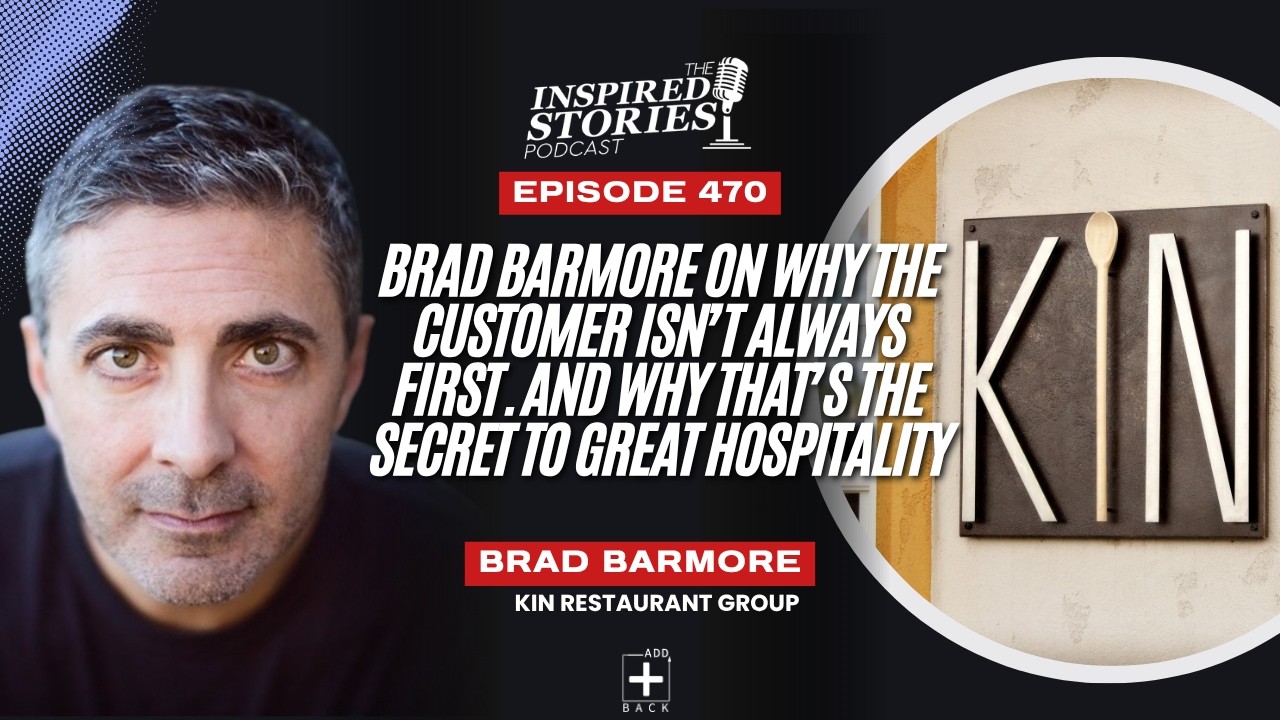
🎙️ From $120K and a Pizza Oven to Three Sonoma County Restaurants: Brad Barmore’s Story at Kin Restaurant Group
Brad Barmore, co-founder of Kin Restaurant Group, started with $120,000 scraped from friends, a personal loan, and two silent partners, signed a lease April 1st, and opened Kin Windsor by June 22nd of 2011. Fourteen years later, he runs three concepts across Sonoma County and owns two of the properties under them. In between: wildfires, evacuations, a global pandemic, a face plant with a fourth concept, barbecue competitions, a malfunctioning smoker on opening day, and a lesson about family he learned while his father was dying of cancer in Las Vegas. The kin brand — the idea that guests don’t visit your restaurant, they just show up at their place — turned out to be both a philosophy and a competitive advantage.
✨ Key Insights You’ll Learn:
What the early days at Johnny Garlic’s and Tex Wasabi’s taught Brad about creative possibility in a restaurant kitchen
How New York stripped away everything except the conviction that relationships are what hold a kitchen together
The $120,000 bootstrap story — signed a lease before the concept was finished, opened 12 weeks later
Why getting a full spirits license two years in changed everything — even for guests who only drink wine
How Kinsmoke went from a backyard competition to a San Francisco Chronicle front page
The opening day smoker collapse and 76-straight-day stretch that almost broke him
What COVID taught him about the loyalty of a community — and why taking care of staff first built business during lockdown
Why the customer should not come first, and what Danny Meyer’s hospitality philosophy actually means in practice
The face plant at 1910 — their best creative work, the wrong location, and a father dying in Vegas
Why owning the buildings under two of their three restaurants is the real retirement plan
🌟 Brad’s Key Mentors:
Guy Fieri & Steve Rubbers (Johnny Garlic’s / Tex Wasabi’s): Taught Brad what it looks like to empower managers like owners — and what gets lost when a company scales past that
Carl Ruiz (Food Network Personality & Kitchen Operator): The ‘assassin’ who showed Brad what surgical operational efficiency looks like and invited him to New York
Danny Meyer (Setting the Table, Union Square Hospitality Group): The philosophy that flipped Brad’s entire approach — staff first, vendors second, guests third — and it’s been the backbone of Kin ever since
JC (Business Partner): Held the restaurants together while Brad sat with his dying father — the kind of partnership that makes the word kin mean something
Logan (Chef, Kin Windsor since 2013): A prep cook from Tex Wasabi’s who has been with Brad through every opening, every close, and every hard stretch
👉 Don’t miss this conversation about what it actually takes to survive in the restaurant business in one of California’s most disaster-prone counties, why the hospitality philosophy that makes guests feel at home starts with the dishwasher, and how a face plant at a fourth restaurant became the best lesson Brad ever learned.
Listen to the full episode here
Transcript
Anthony Codispoti (00:01)
Welcome to another edition of the inspired stories podcast where leaders share their experiences so we can learn from their successes and be inspired by how they've overcome adversity.
As you listen today, let one idea shape what you do next. My name is Anthony Cotaspodi and today's guest opened his first restaurant on $120,000 scraped together from friends, a personal loan and two silent partners in a space where the biggest splurge was a $28,000 pizza oven. Most people said that number wasn't enough. 14 years later, he runs three concepts across Sonoma County.
He spent years creating recipes, cocktail programs, and systems that became someone else's name on the door. That tension eventually had to break, and the way it broke led to something he never fully planned for, including a face plant he's ready to talk about. Brad Barmore is the co-founder of Kin Restaurant Group in Northern California, home to Kin Windsor, Kin Smoke in Healdsburg, and The Publican.
He opened his first location in 2011 and has since built the group into a fixture in Sonoma County dining, landing on the region's best of lists multiple years running. But before we get into that good stuff, today's episode is brought to you by my company, Ad Back Benefits Agency. Listen, if you run a business, you're likely stuck in the cycle of rising insurance premiums. You're paying more, but your team is getting less. And many people can't afford coverage at all.
We do things differently. We provide your restaurant employees with unlimited access to doctors, therapists, and prescriptions that's always free for them to use. Here's the part that surprises most people though. Unlike every other employee benefit out there, our program puts more money into your company's bank account. As an example, we recently helped a client increase net profits by $900 per employee per year. Results vary.
But gains like that can change how a business is valued. And the consultation is free. See if you qualify today at addbackbenefits.com. All right, back to our guest today, owner, operator, pit master of Kin Restaurant Group, Brad Barmore. Thanks for making the time to share your story today.
Brad Barmore (02:21)
Thanks very much for having me on. I'm excited.
Anthony Codispoti (02:24)
So Brad, you started working in a San Jose pizzeria as a dishwasher and prep cook at the age of 15. You know, a lot of kids that age, myself included, were thinking more about the weekend. What were you actually paying attention to back in the kitchen?
Brad Barmore (02:41)
weekend. Yeah, no, you know, one of the things that my, that my parents were adamant about was that, you know, certain privileges were gonna have to get earned. And so, ⁓ you know, if I wasn't, you know, if I wasn't, you know, fully locked in with school or sports, at the time, then I was gonna need to get a job and, you know, cars and insurance and gas and everything else. You know, we can talk about how cheap it was back then, but
Anthony Codispoti (02:42)
⁓ Okay, you're wired like the rest of us.
Brad Barmore (03:09)
it still costs money. you it was important. I worked a couple days a week. I kind of lied about my experience at first to try and get on the line right away, making pizzas, which is not a difficult job. Like you can get the hang of it pretty quick, but also chefs and kitchen managers have a funny way of sniffing out whether or not you can do something like immediately. And so I was sort of immediately relegated back to sort of washing dishes and, you know, like just helping.
you know, with just like basic refilling and, you know, slicing this and chopping this and, you know, kind of learn some very rudimentary knife skills before, you know, it didn't take long. Like I said, it's pizza restaurant. didn't take long before I was on the line and, you know, expo and run a lot of that stuff and, you know, sending pizzas through. you know, like I said, a lot of those times I might have still been thinking about the weekend, but pizza is a good, pizza is a good place to start in the kitchen for sure.
Anthony Codispoti (04:00)
Fair enough. Were you hooked right away on the restaurant business or was it just kind of like a means to an end at that point? And maybe you found the passion for it later.
Brad Barmore (04:09)
You know, there is something very intoxicating and addicting about seeing like, you know, just like perfect dish after perfect dish after perfect dish come out or the, you know, the satisfaction of fixing something that maybe isn't right and getting it out looking exactly right. And when you pull the last ticket off the line,
and you just sort of, you you can either stab it like a professional or you can do what a lot of us do and spike it like somebody scored a touchdown at the end of game, you know, the kitchen floor, ⁓ you know, and after just, you know, just sort of taming the chaos, there is something that's kind of addicting to that. But at that point, I had no like...
real aspirations to stay in it. It was just a means to make some money and something that I did during the school year before I took the sort of the more glamorous lifeguard and swim coach and swim lessons teacher and that kind of stuff before I did that in the summertime to make sure I could get a tan. And so yeah, so at that time it really wasn't something that I like had on my, in my sights for a career.
Anthony Codispoti (05:05)
What pulled you back to it?
Brad Barmore (05:07)
I moved from San Jose up here to Sonoma County to go to Sonoma State with the goal of pursuing a political science degree. Excuse me. That was a great idea. And it wasn't for me. I loved my experience at University at Sonoma State. My friends there are still my lifelong friends. In fact, you actually had one of my close friends on your show, Marshall Hawks.
Anthony Codispoti (05:31)
⁓
Brad Barmore (05:34)
And so I had to go to work. And so was like, well, I've been in the restaurant business. So I went and got a serving job at a chain restaurant in Rohnert Park. At the time, that's all there were, were chain restaurants. ⁓ And I kind of liked the money. And so there would be times where it's like, Hey, I could really use you to pick up a shift. And it's like, well, I really kind of have this.
you know, I kind of have this class I got to be at and, you know, but the class isn't going to pay me. So it just became this sort of, I don't even want to say slow because I don't want anybody to make fun of me for lying. It was a pretty quick, like decision to be like, you know, after like a semester, semester and a half, I was like, I don't the school thing. I'm not on my performance isn't there. You know, it's not worth the investment really. ⁓ And much to my parents chagrin, I kind of I kind of started pursuing the restaurant business rather than staying in school.
Anthony Codispoti (06:31)
You dropped out of school. I'm into restaurants. I'm into getting paid rather than having to pay for this expensive tuition. And then at some point you were pulled out to New York. You spent about eight years at Guy ⁓ Fieri's restaurant group. ⁓ Tell me about that. What pulled you out there? What was that work like?
Brad Barmore (06:33)
Yeah.
So I had worked my way up from, you know, bus and tables. Like I had sort of stepped back down. were like Guy Fitti's group, you know, at that time they were Johnny Garlic's was the name of the company and he and his partner, Steve, they were like a premier restaurant group in Sonoma County. had, they had.
three locations at the time. They were in Santa Rosa, Windsor and Petaluma. I started at the restaurant at Petaluma and they were a big deal. They were not going to just take some server from this chain and run a park and make them a server right away. I, I mean, I didn't spend long, a couple of weeks maybe on bus and tables and then became a server and eventually became a bartender there. And then, ⁓ you know, work my way up and spent time in the kitchen there. That restaurant, that restaurant ended up closing. The market was pretty tough at that time.
⁓ and they hadn't at that time, they hadn't scaled themselves in a way that could support more than two, two to three concepts. And they had a fourth one on the, on the way. So, that restaurant struggled a little bit. And so I spent a lot of time on the line, ⁓ learning how to execute, you know, at a higher volume, you know, or I shouldn't say higher volume, but like more difficult stations, right? Sauté, grill.
making salads, and I had already done the pizza thing. So there was a fairly simple transition. And then that restaurant closed and I moved to another concept that they had in Santa Rosa, which was, it was called Tex Wasabi's. And it was this half Southern barbecue, half Japanese sushi restaurant. And it was just this party restaurant. Everything was designed to eat and drink as a group. We made these big 64 ounce cocktails to share at the table. And there was a lot of that kind of stuff.
I kind of learned there that ⁓ you don't have to, to borrow a NASCAR term, you don't have to drive with the restrictor plate on. It really unlocked what your creativity could be. It's like, who does this? Who is putting these two things together? And so that was really where I fell in love with the business initially. It's like, we could do whatever we want here.
And, you know, that concept thrived and I moved up to management with them. And, ⁓ at that time guy was getting big on TV and he had somebody that he had met when he was on his original show, the food network star.
He had met somebody, his name was Carl Ruiz, and Carl came back to California from New York ⁓ with Guy and started with us because they closed Petaluma, but Texas Sabies was thriving. They were looking to expand out into the Sacramento market. They wanted somebody who was like a real assassin, which Carl was awesome. And he was known affectionately.
Anthony Codispoti (09:35)
Assassin.
What do mean by that term when it comes to restaurant biz?
Brad Barmore (09:39)
just come in, just come in and just make his way through every station and just pick off the things that were just dead weight. Like just that plate doesn't work. This guy's not carrying his weight. ⁓ This ingredient is too expensive or this ingredient sucks or whatever it is. Just could come in super efficient. And so we worked together a lot. We just became good friends and he said,
Anthony Codispoti (09:56)
Super efficient operator, Okay.
Brad Barmore (10:07)
You know, he had an opportunity in New York. He left the company. ⁓ he had an opportunity in New York. He's like, you know, in his very distinct voice and people who know Cuban from food network and everywhere else. Cause he eventually got on TV as well. Well, no, he's got a very distinct delivery. He was like, bro, I got something in California. I need you to, I got something in New York. I need you to come out from California. So I was like, okay, man, like, like I love this. I would love to do my own thing at some point, you know, at this point I'm still 23. yeah, ⁓ 23.
And
No, I take that back. was 25. So I'm still young. I want to do something myself. And I'm like, OK, well, ⁓ let's go. So I get out there. And it turns out the thing that he had working in New York was still pretty much in the abstract stages. ⁓
And so I was like, okay, well, now what? So he helped me get a job at a Pan-Asian restaurant on the, you know, upper west side of New York. And I spent, you know, a few months there, ⁓ as a, you know, as a front of the house manager, sort of assistant general manager type position. ⁓ and I, I wanted to see like, Hey, if I can make this work in New York and I could thrive in New York, like what market can I not do this? You know, it makes it will make me know, like just it makes it, testing my limits here, you know, and at the end of the day, that's all you, you have to do that.
⁓ and so I went out there and, ⁓ you know, just cut my teeth and I learned a lot about, you know, how cutthroat it can be. And I also learned a lot about why it doesn't have to be like that. You know, it doesn't have to be this, you know, every man for themselves. Like, you know, if you're not pulling your weight, get out type situations doesn't have to be like that.
Anthony Codispoti (11:45)
And so you had been finding that in the restaurant spaces that you worked in, where it's like, if you're even just a little subpar, you're out of here. Right.
Brad Barmore (11:55)
Well,
it's, it's, I don't even know if it's that because you're so like, it's so, flaky, like the people, the restaurant business is this, like, you know, it is the land of immediate gratification, right? From the guest all the way through to the dishwasher. And what I mean by that is, you know, what other industry do you come into where you
You know, you choose your product, you order your product, your product is, you know, manufactured, it's distributed and delivered and consumed and paid for all in one transaction. What, I mean, there aren't a lot of industries that are like that. So everybody that's in there is, you know, it's about immediate gratification. Well, unfortunately that comes with immediate gratification choices outside of the professional world as well. So guys, it's a pirate ship in a lot of ways. So, you know, it's like, you're so reliant on dudes that show up or I say dudes, like,
on employees that show up every day that sometimes even if they're not, you know, they're not pulling their weight, like they're there and that's availability is a great ability. But what happens is, is they like the machismo of restaurant kitchens or, you know, just the ⁓ emotions of front of the house staff. Like it just becomes really difficult on people that aren't at the in the top tier. It's it's brutal. People if you've ever read Anthony Bourdain's book Kitchen Confidential, that is by 100 percent.
like accurate description of what restaurant kitchens were life back then for sure.
Anthony Codispoti (13:25)
you got a taste that it didn't have to be that.
Brad Barmore (13:27)
Well, not necessarily that I got a taste of it, but like my experience was like, well, hold on, why is he doing that? And why is she acting like that? And we could have just handled this if we had done this. And we could have just done this if we had done this.
Anthony Codispoti (13:39)
So you didn't have a
better role model, you were just thinking to yourself, like, it doesn't have to be this way.
Brad Barmore (13:45)
Right, and I...
I love my time in New York, man. like I the energy of that city. It's addicting. Like it is sensory overload, man. It smells different. It sounds different. It, you know, it obviously looks different. It feels different. You know, we have dry heat here in California. They have humid heat and, and freezing rain. A thing I didn't know existed. You know, the coldest I've ever been is walking, you know, the, you know, getting off at 77th and Lexington and walking the four blocks to my apartment, you know, like that's the coldest I've ever been in my life at two in the morning in Manhattan.
But, you know, my experience was that, you know, like as difficult as it was and as tough as it was to, you know, to exist in this high volume environment, you know, at the core of it all, like, hey, man, let's just nurture strong relationships here. And let's just make sure that we have each other's backs and, you know, lift each other up here. And then that will trickle.
I mean, not even trickle down, then that will present itself to guests in a way that, you know, takes a lot of pressure off of us because the tension and the fear of screwing it up is diminished. And, you know, that's one of the things that I took away from New York and also this, you know, this idea that like, yeah, like I thought we were being creative, Texas Obbies, like these guys are doing crazy stuff and.
Anthony Codispoti (15:08)
What do
mean? Give us an example.
Brad Barmore (15:10)
Well, just like, you know, California, things are kind of easy. Like we have fresh produce within 20 minutes any day of the year, you know, in New York, like it's January. What am I supposed to do with the rutabaga? You know, like, and so just like what these guys are able to accomplish with what's available to them. ⁓ And I think... ⁓
I think what we did at Tex Wasabi's was revolutionary in that it opened people's minds specifically to the sushi concept. It opened people's mind to what sushi or what that kind of cuisine could be. And it forced people to step away from what they believed traditionally it had to be. ⁓ And then I saw ⁓ what you could do to open people's minds when you were technically immaculate. You know what mean? so just, I'm trying to think of a good example, but like,
You know, we used to do these, ⁓ like this duck dish that had these like really thin pancakes on them. And these things, like you wrapped them and they held up and they never like fell apart, but it was like eating like air. were like, like, you know, just texturally, they were perfect. And then with this crispy fatty duck, was like, when you like are technically sound at every level, this is perfect. This is perfect. You know, and you kind of started to see what that could be about.
Um, and again, like at this stage, you know, I'm 43, you know, I know a lot about food, but I like being in places that remind me that like a lot means nothing. know nothing about food. You know, I like being reminded that there's a huge, huge world out there and New York really made me appreciate the idea that like for all of the things that I know, it's really not that much.
Anthony Codispoti (16:43)
And so then at some point you come back to California.
Brad Barmore (16:47)
Yeah. You know, New York is funny, man. It's, it's, ⁓ it's really is the city that never sleeps. And if you really want to experience it, you play hard as, as hard as you play as hard as you work. Now, you know, I, the restaurant business, like I said, it's a pirate ship. So you see a lot of people that are already sort of deep in the throes of addiction and I never fell into that at all. ⁓ but I still didn't want to miss out on anything. So I try to keep up with those guys and you know, it's like you're
you're out and you're having some drinks and then it's you know now you're at somebody's apartment and they're getting a little squirrely and it's four in the morning and now I got to go home and it's like you know so I'm leaving I'm getting out of there ⁓ and eventually the lack of sleep just catches up with you and just just from a health standpoint and a mental standpoint and also funnily enough at that time I was engaged to my we're still married ⁓ and our goal was hey let's let me go get this job in New York I'll come back we'll get married in August ⁓
or I'll come back and get married next August. And then we'll move back out there and we'll just make it go over to big city for a while. And then we'll come home and we'll do the white picket fence thing and the 2.4 kids and the dog and the whole thing. Well, she came, the first time she came out, it was like, you know, the weekend after Thanksgiving.
and you know, rock center's lit up and the snow is white and you know, the Cartier building is glimmering and everyone's happy and it's the gifts and the whole thing. And she was like, yeah, this is great. And then she comes back out in like early March and the snow is brown and there's no lights and rock center is not it and no one's happy and there's no gifts. So she's like, she's like, you know, I don't know if this is for me. I don't know if I can figure out the transit system. It just feels like a lot. And I'm like, what are you talking about? It's like, you know, numbers go up and letters go across. Like it's really simple. She's like, I don't think you understand. And I was like, got it. And so I got.
to put in my notice. was like, you know, like I my promise is I've seen too many people ruin too many relationships. My promise is I'm never going to let this affect my family. So that was it. So we came home and that's ultimately what sold it for for getting out of New York. And I'm so appreciative of my time there and everybody that I work with. You know, it was it was awesome. I would not be who I am or where I am today without that time in that city for sure.
Anthony Codispoti (18:46)
So you've had the opportunity to work a lot of different places at this point, right? But there has to be a tension that builds when you're good at your job, but that credit is flowing somewhere else. At what point did that tension become something you could no longer work around?
Brad Barmore (19:03)
⁓ I think it was, I think it, like I was comfortable with the idea that, ⁓ you know, this thing that this idea or this concept or the system that I was putting out, ⁓ I was comfortable with that idea being a part of this company because the working for the company specifically, ⁓ you know, the Johnny garlics company, the Texas Sabies and all those guys, the guy Fieri and Steve Rubber's place. ⁓
working for them, they had this element when they were smaller of like really trying to empower their managers to be owners. ⁓ And that made you feel like you had a little bit of your own blood in the building. And so you were proud to show off some of these things. And that was a really, I felt like that was a really admirable trait. Well, that gets more and more difficult the bigger you get. Cause your time with...
management, you know, your management group, your, you know, the sort of corporate level guys becomes less and less. So they're not there to be, you know, face to face with you to see what you're accomplishing. It becomes much more about what they're seeing on paper, which doesn't always translate. Right. And then I even moved up and was helping design systems for the bars, for the whole company and doing purchasing programs and training bartenders and things like that. ⁓ And when I got into the quote unquote boardroom,
which was just this, at that time, it was just this attic space in one of the original restaurants that they had converted. ⁓ But we thought it was cool to call it the boardroom. You know, when I got in there and I started to realize like, ⁓ their interest is not, is moving away from the empowerment piece. And that's when I started to sort of move away from it. And that was the part that became difficult for me because we put these ideas in and I'm all for a collaborative work environment where you put an idea out and then everyone's going to question it because they got to make sure the idea is watertight. That's not the part that.
That's not the part that bothers me. ⁓ Like I'm totally comfortable with that.
What was bothering me was we had these ideas. It's watertight. We walked away from the table and not everybody was always supporting it. was always this sort of like, well, it's not really translating to the bottom line, but rather than come back to the table, I'm just going to go in and I'm going to just kind of make an adjustment in this restaurant for this, or I'm going to do this thing. And it just wasn't as cohesive. And as guy got bigger and wasn't able to be in the restaurants, that became a big challenge as well. You know, they really try to capitalize on his name and it just became, it was not what I had
originally started with. And that's really when personally it became untenable. And to be clear, that's just what happens when restaurant groups scale up. It's okay, right? It wasn't personal. You're just trying to make the business thrive. You're trying to make sure this living, breathing beast gets fed. So it's like, it's okay. It's not personal. It just wasn't for me anymore. You know, that's it. Yeah.
Anthony Codispoti (21:43)
This is the cycle. now,
but now it's time for you to spread your own wings. And so how does this come about? You pulled together $120,000, friends, family.
Brad Barmore (21:47)
Right, right. And that's.
Yeah,
my business partner, my now business partner, we had worked together. He had been with the Johnny garlics group as well for longer than I had even. I, he and I had always just kind of said we'd go to these P and L meetings and like at that time in the company, I was going to different restaurants and, going in and being like fixing their profitability issues and fixing some of their service issues. ⁓
And JC, my business partner, and he was running the Johnny Garlicks at Windsor and he was always the most profitable guy. And I would always get the restaurants that I was going into to number two or number three. And so the joke at the time was like, you know, I was LeBron and I couldn't get over the hump against the Celtics or the Heat or any of these guys. I was like, well, maybe I'll just go join this guy and maybe now we can do our thing. So I took him, you know.
⁓ I was actually sitting in Vegas on a family reunion on a little bit of a heater in more ways than one at a blackjack table. And he called me and I was like, this is a strange thing. So I got up and I was like, Hey man, what's going on? He's like, Hey, were you joking about trying to do our own thing together? And I go, no, man, of course not. And he's like, cause I think I might've found us something. I go, so I fly home from Vegas the next day as planned. And he picks me up from the airport and we drive to this location in Windsor. And I was like, this is a great spot.
And it's at a place where the energy is building up. was kind of a quote, it was a downtown space that had been developed like 10 years earlier that was coming back up. And he said, you know, I think we could do something here. And I said, okay. And two weeks later we were signing a lease and we were still building a concept, which is not the way you're supposed to do it.
Anthony Codispoti (23:33)
So you did things out of order. ⁓ So Ken Windsor is still here today, kenwindsor.com. Is it still at the same location or have you guys moved?
Brad Barmore (23:35)
A little bit, yeah.
Nope, it is at the same location. When we opened, we were...
We were one space that was technically two plots in this downtown live work area. Um, and we've since expanded to a restaurant or to a space that had opened up next to us. We expanded out into that to get sort of a private dining room. Um, and it's the same place, man. I mean, it's, know, the same bar, that same $28,000 pizza oven that you referenced, you know, in the open, like it's still all that same stuff. Just cranking, cranking out.
Anthony Codispoti (24:14)
So what is the concept? What's the customer experience like?
Brad Barmore (24:17)
So we call it an American bistro, which is very vague because it allows us to make whatever we want, really. So we have burgers, we have chops, have ⁓ pizzas, salads, this whole thing. Windsor is a very, ⁓ it's a town that is really centered on younger families. The high school, like the high school is a big deal in town. It's a small town. And frankly, if San Jose,
slash New York me knew that I'd moved into a small town as a 30 something year old, like 18 year old or like 25 year old New York me would probably be pretty upset. But it's a great place to raise our kids and the businesses thrive there. But we wanted a place at that time when we opened, my oldest son was, you know, he was one, you know, and my daughter was on the way. And, you know, my business partner, his daughter was eight, I think. And, you know, we wanted a place where people could go out.
and eat without feeling with their kids without feeling like they went out with their kids. And so, you know,
So we put together this menu that made us part of every conversation. You know, could really go for a burger. know, Ken makes great burgers, you know, Hey, how about we go out and we split a pizza that Ken's got great pizza, you know, ⁓ you know, lunch like, let's go get some salads. Like it's a great place for lunch. It's all these things. And then our kids menu, you know, I forgot, I meant to bring one to do this, but our kids menu is actually, I don't know you remember as a kid making those cootie catchers where you fold them all up and you kind of do the thing. Yeah. That's the kids menu there.
Anthony Codispoti (25:43)
yeah.
Brad Barmore (25:45)
So kids can kind of do the number thing and it's like really kind of built to be comfortable for that. and you can, even now, 15 years later, you can set your watch to the demographic that's sitting in the dining room, you know, three to five o'clock in the bar area. It's the happy hour crowd.
You know, like four to six, it's sort of a almost retirement crowd, a little bit older. Six to seven 30. It's a lot of families, younger kids all the way up to high school kids. Seven 30 to nine. It's date night. You know, it's a lot of sort of younger people out on date night, you know, nine to 11. It's a hodgepodge of, you know, everyone kind of that sticking around, having a nightcap coming in after a softball game or, you know, baseball game or whatever. ⁓ and you really can, you can set your watch and that we're very fortunate to have that support, ⁓ in Windsor, but we.
feel like, you know, we built this restaurant concept that like we really jumped on, you know, on at the right time, in the right location, in a town that was growing in the right direction for us in terms of what we wanted it to be. And, you know, and we're still doing that because at the end of the day, people want, when you go out to eat, you want to know what you're getting.
We used to say that when we were younger, when we were in our 20s, in the restaurant business, it was dinner and a movie. That's people went out on a date. was like, hey, let's go get dinner and go to a show. Right? Well, when the...
I don't know how, can't remember how many financial crises we've had since then, but like when the, you know, when the, housing and the mortgage bubble kind of burst and everything kind of crashed, well, people still wanted to go out to eat, but they couldn't afford to do both. So it put pressure on restaurants to be dinner and the show, right? Like it had to be this whole experience. And now as time has gone on, you know, it's still the experience, but the experience people want is they want to be comfortable. They want to be welcomed. And one of the greatest things that's ever been said for us is when we were trying to, you know, the clock was ticking for us to get open before our
Anthony Codispoti (27:24)
you
Brad Barmore (27:40)
free rent kicked in or before our free rent ended, you know, we're trying to figure it out. We're sitting down, having brainstorming sessions about what do we want to call it? And what, know, we knew what we wanted it to be at its core and, know, developing a menu. say that's the easy part. I don't really mean it's easy, but we could do that.
because we knew what we wanted it to be there, but trying to figure out what the brand was, my business partner said, hey, when people walk in, we want them to feel like family, like that's our kin. Like this is their place. We just run it. And the guys, were kind of working with consultants to kind of help us, you know, to help us get open. They were like, oh, that's a pretty good, let's write that down. And so then we kind of came up with this logo and the whole thing and it worked. This kin, this family brand, you know, this is 2011.
Anthony Codispoti (28:22)
And what's the year?
Brad Barmore (28:24)
So we, we signed the lease April 1st of 2011, our free rent. got free rent for a couple of months. Our landlord was awesome. Cause he knew we were, he knew us from the old restaurants and he knew we were kind of young. This part is a few years older than I am, but he knew we were young and we were hungry and he was willing to help us out. And, uh, a few months free rent to get the place open. uh, yeah, we signed the lease April 1st and we opened on June 22nd. Yeah, that's fast.
Anthony Codispoti (28:51)
That's fast.
And so when you guys are open, was it immediate success? People just, you know, pouring in lines around the corner?
Brad Barmore (29:03)
No, because that downtown area was on the upswing, but there was still a lot of empty storefronts because it had opened to all this fanfare and then it was difficult. And so a lot of places were closing. There's a lot of empty storefronts and there were a few more opening, we weren't like there weren't a lot yet. So people weren't aware that there was a lot going on down there yet. So, you know, we gained traction kind of slowly. And one of the things that we
And so we slowly, after like a year, we were just beer and wine to open. And after a year, we started to see some traction and then we got a full spirits license. And that
really opened up the doors, both from a profitability standpoint and also it was amazing to us. learned that there are people who even if they're only going to have a glass of wine with dinner, they won't go to a place that's just beer and wine. There's just, don't, I don't, I don't know how to explain it. I don't know. I, it just, and some of it is, well, we're going out as a group.
⁓ And so-and-so won't wants to have a cocktail. So now we're not going right and some people just want the option like they just look and they go well, they have some great bourbons or that's a nice little vodka list or whatever ⁓ But their wine list is better. So I'm gonna have a glass of wine, but they want the option I think is ultimately what it comes down to
Anthony Codispoti (30:40)
So you open in June of 2011. How long was it before you felt a little bit secure? Like, okay, we got this.
Brad Barmore (30:49)
Probably.
Where like we really felt sort of financially secure. I would say we were like two to two and a half years in Where we felt? Yeah, where we felt good ⁓ Where we both felt good I should say and we had expand at that point I'm pretty sure that at that point we'd expand into the banquet room area ⁓ and we felt good about what we had accomplished and the energy was good and you know ⁓
Anthony Codispoti (30:58)
Okay, it still took a while.
Brad Barmore (31:15)
The energy downtown had grown and now we saw a lot of familiar faces. think that Thanksgiving Eve, I tell the story a lot, that Thanksgiving Eve, ⁓ that's always a really busy night because no one's cooking. We looked around, we saw a lot of familiar faces sitting at tables with faces we didn't recognize. And what that told us was, ⁓ these people are bringing family, friends who are in from out of town to their place and their place is the place that we're running.
And that felt very fulfilling. so I was like, okay, we're winning this relationship game. Like we're making people feel good. We have, we are accomplishing what we set out to accomplish, you know.
Anthony Codispoti (31:52)
So at what point did you feel confident enough to think about a second and then a third concept?
Brad Barmore (31:59)
Well, my young and dumb self after a year was ready to do something else. Like my creativity at that level, because we opened, we had a kitchen manager. was a great guy. It didn't work out. So I took over in the kitchen. My business partner ran the front of the house specifically. And I took over in the kitchen and was developing menus and everything else. ⁓
We, I was my, I was feeling my creativity at that point. And barbecue has been something that I've done for a long time. And I knew from our experience running restaurants and my experience with Texas Sabies, all the things like running a restaurant is one thing being able to barbecue really well as something else. You can be good at both, but maybe not be good at them together. It's just a challenge because of the art of how to make sure that stuff stays fresh and hot and cook it all the time.
you overdo it, it's not as good the second day. So you got to really be on top of parse. But at that point, my creativity, I was like, we can do this. Let's take this kin brand and apply it to an even more family centric type of cuisine, which is barbecue. You think big platters, long tables, it comes from a really humble place in America where it's like you eat all that you had available to you. ⁓ And so that it was like the most intimate thing. Like this is what we got.
And so to me, the Kinbrand fit perfectly in this. And so I was feeling it like right away. My business partner was like, dude, like, let's just, let's just get consistent paychecks and let's, let's start there. That's like, all right. Yeah, you're probably, yeah, you're probably right.
Anthony Codispoti (33:27)
Slow down. Slow
down, Brad.
Brad Barmore (33:30)
Yeah, so but at two, two and a half years, we hit that Thanksgiving Eve and that's when I was like, all right, we got to capture this. We've hit a certain level, we're on a good trajectory. Let's try and jump and try and ride this momentum as best we can. That's when we started working on the next concept.
Anthony Codispoti (33:48)
Okay. And so how long did it take Kinspoke to open up?
Brad Barmore (33:53)
We opened in October of 2015. And I think we took over the business on the Healdsburg Square there in October of 2014. So we were three years in total. And we took over this business. We operated it for a little while while we worked on the permitting and everything else. And it's in this 100 year old building.
We got started and started peeling stuff back in a hundred year old building and you realize like, oh yeah, this budget is not going to work. You know, and we, cause we kind of set a budget for like a half a million and we spent considerably more than that. Um, and, uh, yeah, so we, we, we were a year. had had them. No. Yeah. We were able to make that happen. I mean, you we took on some loans, some SBA loans, uh, but, uh,
Anthony Codispoti (34:39)
And were you taking in investors for this concept too? this was just you, okay?
Brad Barmore (34:51)
we were kind of making a go of it without taking on more hands in the cookie jar per se.
yeah, we were a year when we got open in October of 2014, the menu was set. Like I went to my business partner and said, here's what I think. And like, I think we could do this and barbecue like was really starting to get out to California in the way that it was in the South. ⁓ and people were starting to kind of be aware of like, this is what brisket can be. And this is what ribs can be. And this is what it can be like this. And like my wife and I kind of started traveling around the country and tasting sort of regionally what the barbecue is about. And so I, ⁓
made
this pitch to my business partner and I said, all right dude, I think we can do this. And he's like, okay. And then I brought the food out and I was like, here's the brisket that we're gonna serve. And here's how the ribs are. And he was like, okay, man, this is pretty good. then we showed up and then I like independently, I showed up at some barbecue competitions locally, some small stuff and then like an actual KCBS event. And we have a little hardware from there. And when we started bringing hardware in from those, JC was like, okay, it's time, let's go. Let's go.
Anthony Codispoti (35:53)
Alright.
Brad Barmore (35:58)
And, uh, yeah, so we, we opened what we consider to be a sort of a, uh, uh, counter served environment. We're a little bit different. You'd order at the counter place, everything. And then we had servers come around, stay on top of your tables, make sure you get refills. We opened with beer and wine there as well. It sort of a Texas roadhouse, like real roadside Texas barbecue place concepts, um, or riff on it anyway. And we opened up and we had lines out that one. We had lines out the door for awhile. Um, but we had.
Anthony Codispoti (36:26)
And was
it because you guys were already known in the community? So it's like, ⁓ Brad and his partner, they're opening up another place. It's got the kin name on it. And so people like, we got to check it out.
Brad Barmore (36:35)
I think 70 % of it was that the other 30 % of it was people were dying for like real like great barbecue, you know, and so they there was this thirst for it and it was like, we want this and these guys are doing it great. We're in we're in, ⁓ you know, and the week we opened, we didn't catch it at the time on the barbecue when we got it delivered and we did like our first couple of practice cooks, but there was
there was some kind of defect in the way it's this big carousel. There was some kind of defect in the way that one of the shells was hanging. And the first morning we're scheduled to open the racks or it collapses. And this thing is designed to cook like 1500 pounds of barbecue at a time. the torque and the power of this rotor.
It's heavy and it just mangles these shelves and all the meat in it and everything else. it's this like total disaster. And when I tell you that like what you've seen in the movies, people like ugly cry or like they just have this emotional breakdown. I call my business partner dude and I'm like ready to retch. Like I just I'm looking at this and I'm like dude, we're like a million bucks into this. We're supposed to open today. We don't have any money left. We're like beyond behind schedule, which every restaurant opening is.
And now this, so we went into crisis mode. got a friend of ours who's a welder to kind of get this stuff straightened up, got new parts ordered. And we just opened the best we could ⁓ with what we had. And we were open for lunch for the first, I think two weeks. And then we started going from there. That was the hardest stretch in restaurants I've ever had. Like, I think it, you know, I think it.
one point, I I was like 76 out of 77 days or something like that, where I was in the restaurant with no day off and I was seeing my kids. You know, like I would, cause I got up at three in the morning to go run the barbecue pit and I'd get home at 10 PM some nights. So I would go three, four days for, I'd see my kids and that's at an age where like, you're noticeably bigger, dude, like you are noticeably bigger than when I saw you the last time, which is no way to live as a father, as I'm sure you can imagine. And there's a picture that.
⁓ is floating around social media somewhere of me just covered in barbecue grease and my son and I hugging in the middle of the dining room on like the second or third day we were open and like, still think about it and I like get emotional because I'm like, I was doing it for them in many ways, but I was also doing it at their expense because I wasn't seeing them. And it was just this moment of like, this is my dad. And I'm like, this is my kid and the dining room is full behind us. So it's a cool picture. It's just one of those things. I look back on that and go, that's.
the hardest. I even looked at my wife at one point said, dude, I don't want to do this anymore. Like this is brutal.
Anthony Codispoti (39:17)
So
how did you switch? What was the inflection point? What changed?
Brad Barmore (39:22)
we started to get rhythm better in the kitchen. Some of the people we hired in the beginning didn't work out. Some of the people that were there were good, but they weren't as comfortable with...
the amount of prep it takes to make 10 gallons of baked beans at a time and five gallons of barbecue sauce. And, you know, our prep cook, our main like sort of sous chef at the time, his name was Adam. He was a great guy. Every morning I'd come in at, I'd be there at three. He would come in at five and he would just look at the prepless and he would just say, good, another day with the picnic from hell. Awesome. Cause it's potato salad and coleslaw and beans and you know, like all these things. And I think.
We opened in October, I think we got to about February.
where we started to kind of hit like a certain rhythm and also the newness of it had kind of worn off and it's Healdsburg is a very tourist centric town. So I think the seasonality of the town was starting to like the rhythm of that town was starting to sort of wane a little bit. And so we started to slow down. We were able to focus way more on tightening the systems rather than survival. And also like we had never operated a restaurant that was doing a 350 to $400,000 a month pace, which is what we were on.
on the first few weeks. It didn't stay there, but that, and we were at that point, we were like only open for lunch. It was bananas. I've met, like, we just didn't know it could be that. And so, you know, once we sort of worked through that, everything sort of slowed down. That's when I started to, you know, get into a spot. Yeah, exactly. Exactly.
Anthony Codispoti (41:02)
You could breathe again. Yeah.
You use the term you were just surviving, right? And I think there's ⁓ there's a pattern of, know, in the restaurant industry, especially over the past 10 or 15 years, and especially the geography that you guys are of having to overcome hardships to not only survive, but at times, like you're doing now thriving, walk us through what I'm describing there.
Brad Barmore (41:32)
I mean, it really even started with day one with the barbecue thing, but from a geographical standpoint, you know, in 2017, you know, we all were awakened by a bunch of Nixle alerts and, you know, phone calls from family members like, Hey man, like Santa Rosa is on fire. You know, it's, you know, in the middle of the night, we're like, what are we talking about? So, you know, like even in Windsor, you could look to the Southeast and see just the sky is bright orange.
You know, like it's one of the most up until the following year here in California with paradise. was the most destructive fire California had ever seen just burned through. Even my business partner at the time, ⁓ he lost his family home, you know? and so nobody knew what to do. And.
people were evacuated and Windsor was on evacuation watch and we just, didn't know we were, and then they had cut off gas and power because it all had to run through there. So the restaurants had to close and I'm trying to remember, I think we were closed maybe for three days.
And, you know, we opened back up and everybody just wanted something that they felt to be normal. And so the restaurants were packed at that point. And at that point we owned the pub already. So we had the pub, we had Kinsmoke, we had Kin. The restaurants were packed the first day we could open back up. I mean, it was.
You know, ⁓ it was like we had just opened Kinsmoke again. mean, was that all the restaurants were at that level for a couple of days. Yeah, everybody missed normal. You know, we like to think it was us, but we know what it was. Like everybody missed comfort and normal. And people were like, we don't have a normal now. Like we have to find a place to live. This is a place where we feel at home. Let's just go see that.
Anthony Codispoti (42:55)
Everybody missed you.
Brad Barmore (43:12)
You know, and then the next year was paradise. Paradise fire didn't affect us directly, but the air quality was terrible and people weren't going out as much. And then the next year we had the Kincade fire, which we had all this dry lightning, which doesn't happen in our, in Sonoma County or the Bay area that often. All these fires on the East and the West Windsor gets fully evacuated. ⁓ you know, like the closest burn scars are less than a mile from my family home, you know? And so we went through all of that and.
You know, and it's like, we just keep coming back and keep coming back and we just start to get momentum back. Everybody's, you know, feeling good and life feels normal again, coming out of that particular fire season. And then, you know, then my Niners lose the Superbowl to the Chiefs the first time and then everything gets shut down. What feels like immediately after like that, it felt like just four months of horrible tragedy. ⁓ you know, we felt the most blessed.
during despite all of those things we felt the most blessed during COVID because people came out of the woodwork that we'd known forever because at that point we're open for nine years.
They said, we have to keep our community thriving as best we can. And so people came out and ate and supported us and made sure they were coming in. And even if it was just to get beers to go and sit out on the town green across the street from us, right? Just whatever they could do to just put some money into the restaurant to make sure that we could thrive. And that meant so much to us. This business will humble you no matter what, whether you're not good at it or you fail.
or you're really good at it and you realize that you feel on some level not worthy of all this support.
We took advantage of the government loans like so many people did and we did what it was designed for. We kept everybody on staff. We did the very best we could to provide even in a to go or limited dining environment. We did everything we could to keep the experience the best we can and a lot of restaurants didn't do that. They just said, well, I can't operate without this many servers and this many bussers. And so we're just going to claim to be short staffed and just hope to survive. And my business partner and I really tried to keep things
You know, the best possible experience we could, and what ended up happening was because that was the case, actually built business.
proportionally speaking, because we can only see half the restaurant for a while and all that stuff. We actually built business because people knew now that of all the places, we were the ones that were willing to put in work to keep the experience the best we could. And so we, I we weren't doing non COVID sales, but we were doing peak to elite COVID sales. And when we came out of it, we were as flush with cash as we'd ever been because we were able to use that government loan to pay these people, which then turned around into the sales, which we
And also some of it got forgiven. I don't want to make us into like saints. Like we were the only ones that paid the PPP back. You know, that wasn't it, but we came out of it.
Anthony Codispoti (46:13)
I don't hear that very
often though. I don't hear many people who paid the loans back.
Brad Barmore (46:16)
No, no. But so I don't want to sit here and like perpetuate some lie that we were the ones, we didn't do it either. lot of, mean, that was what it was for. It was supposed to be forgiven to make sure that the economy could survive on some level, right? Yeah, yeah.
Anthony Codispoti (46:26)
Yeah, that was that was the intent. ⁓
And talk to me about the importance of your team, your staff, your employees and taking care of them.
Brad Barmore (46:36)
They're the ones that make it go. ⁓ You're familiar with the Shake Shack concept. So Shake Shack is like a wildly successful birder chain, high-end birch, like counter service chain that started in New York. think it was in... ⁓
Anthony Codispoti (46:45)
Tell us.
Brad Barmore (46:59)
can't remember what park it was in, but it was opened by a restaurant group run by guy named Danny Meyer. And Danny Meyer like has Gramercy Tavern and Union Square Hospital, or Union Square Cafe. And he runs something called Union Square Hospitality Group. And his book, Setting the Table, shapes a lot of what I believe about the restaurant business in that it's not a service industry, it's a hospitality industry. And that hospitality is predicated on relationships at every level.
My relationship with whether it's a hotel, whether it's, you know, senior care, whether it's, you know, our, you know, like the restaurant industry. mean, it could be anything really. You can even do it in like a tire shop, right? You know, we want to make sure that our relationship with you, that you get the full extent of your money's worth. And that comes with a certain amount of confidence or a certain amount of comfort. And so you can't do that unless you make your team feel that first. And so I read it in the book first, and I really try and preach it.
Your team is the first group of people you take care of. Guest service, customer's always right, this, that, or the other thing, the customer first no matter what, you know what that does? That just makes people work hard enough to just not get in trouble because a guest had a concern. That's all it is. If you take care of your staff first, and this is a Danny Meyer concept that I truly believe, take care of your staff first, take care of your vendors and salesmen next.
The guests get taken care of by example or by default. That's it. Because the team feels bought in. The team is proud of what they're accomplishing. The team knows that we have their back no matter what. The team takes care of the vendors. We take care of the vendors. We get the best pricing we can find. We get the best, know, or first refusal on the best, you know, ingredients, the best product we can find.
You know, they then go into other restaurants and they talk about what kind of company it seems like we must be. We attract top tier talent. Top tier talent will always take care of your guests. You know, we've been very fortunate. We have had even, I mean, we've had turnover. We're 14 years old, but we haven't had a lot by restaurant standards. We really haven't. And our chef at Kin,
His name is Logan. He and I, he was a prep cook at Tex Wasabi's with me. Year, all those years ago. And he has been the kitchen manager at kin since like 2013. And he helped open kin smoke with me. helped open our fourth concept rest in peace. ⁓ you know, he helped us do all of that. Like take care of the team first. It's the most important thing.
your systems are right, then that will not get in the way of your ability to operate at a profitable level. Right? So the responsibility is on you to make sure you can do that and not cost yourself a bunch of money in doing so.
Anthony Codispoti (49:46)
What's your viewpoint on the high minimum wage in California?
Brad Barmore (49:51)
I mean, the studies are there that say that that money goes back into the economy. ⁓ Everyone deserves a living wage and California is expensive and restaurant margins are thin and.
You know, you have to be somewhat, this is a super controversial thing amongst restaurant owners. realize it. You have to be somewhat comfortable that if, unless you're going to try and scale out to be this enormous monstrosity or this big, you know, Death Star company, you have to be comfortable with the fact that sometimes you're kind of just owning a business so that you have a job, right? That you have a job that fulfills you. Sometimes you have to be comfortable with that. And if you're comfortable with that, then you're comfortable paying people a wage that makes sense that
is that makes sense for them that they can live comfortably so that their work life balance they don't feel desperate to have to come to work because they can't afford these things because they're bringing stress into the building that has nothing to do with their actual work and that affects their ability to be you know efficient and it's just a basic human thing like we run a business that's predicated on relationships at every single level why would i not want to do everything i possibly can to fulfill
and empower the people that work for us. And if I can do that financially, of course I'm going to do that. The restaurant business during COVID got what was coming to it. Like restaurants failed because they had just treated team members and employees and family members like garbage. know.
You this you're getting minimum wage and that's all you're getting but I'm gonna ask you to do $5,000 in sales off this grill at a steakhouse But yeah, enjoy your 895 an hour for that, know And that's just what it was and then the expectation was that you would work your way up And if you didn't like it, you do your own thing. Well, why does it have to be like that? Why does it have to be this thing of like? You know screw you figure it out. You know, this is my place screw you figure it out. No, it's not like that Pay people what they're worth
Yes, California is very expensive. get it. ⁓ Yes, the taxes are high. I get it. Yes, there's all these things that go along with it. Yes, it puts pressure on us. It makes it harder for us to, you know, to be, to get rich, so to say, so to speak. But at the end of the day, the businesses, it's hospitality, it's predicated on relationships. Be hospitable to your team.
and then let the job fulfill you. Let your cup of life overflow if your bank account will not. Right? So, you know, that's kind of the way that we, that I look at it.
Anthony Codispoti (52:20)
Tell us about what happened with the fourth concept.
Brad Barmore (52:24)
So we were rolling right along. I got hit up by a contact in San Jose where I grew up to do something down there, which would have been a huge leap for us. That would have expanded our footprint. I mean, it would have been a challenge. We ended up not doing that. But...
it sort of reinvigorated this idea of expansion in my mind. Like, hey, let's really try and grow this kin brand. And we got asked about doing a kin smoke concept down there that somebody wanted us to bring it down there. The kin smoke concept is more of the niche menu, obviously. That's the one that put us, you know, we had a full front page in the food, you know, the food section of the San Francisco Chronicle. you know, been on locally, you sort of.
local television quite a few times. ⁓ That's the one that's gotten us sort of the most quote unquote fanfare from like a press standpoint. And so people wanted us to bring it down there to San Jose. Well, know, JC and I kind of figured out, well, that might be more than our scale can handle right now, but we do want to expand. And at one point in that conversation,
beer might've been involved, but we were like, well, let's do both. You know, let's bring in this operations manager that we know, let's bring in this culinary person that we know, let's do this. And then we kind of went a couple of days and we're like, that actually probably is a terrible idea. But we did bring in a new ops manager ⁓ who at one point was like a server for us. She's absolute, she just an absolute killer. She was so great. And she helped us sort of build all these systems. And we said, well, let's flex some creative muscle.
and we looked for sort of a more urban, trendy, ⁓ hip environment. And we wanted to do more of a cocktail bar and...
like small bites became this sort of ubiquitous borderline corny thing, but we wanted to do a thing where people would come in and kind of share food. Like we wanted it to be this, like not everything was very traditional meat, starch, potatoes, or sandwich and fries. Like we wanted to try and deviate from that a little bit. And we put our best work together for that menu. that is, that is the.
Kinsmoke is the menu that really speaks to my soul the most. ⁓ Just the nature of that type of cuisine. But from a creativity standpoint, the restaurant was called 1910, because that was the year that that building had opened as a hotel. That 1910 menu, as the kids say, ⁓ we were in our bag with that one. We pulled out every bag of tricks that we know. We did some cool stuff, and that people still ask us about. The cocktail bar, we did some fun, fun things there.
My business partner did an incredible job of designing the space to feel very hip and very funky. And like just did that. We, it was our best work by a mile and a half from a, a setup standpoint.
Anthony Codispoti (55:24)
So what
didn't work?
Brad Barmore (55:28)
The location was not the high volume space that we thought it was going to be as part of it. ⁓ Where we are in Windsor and where we are in Healdsburg, there's sort of these bustling downtown areas there. The concepts are set up to be quick in and out lunch type things. And we're close enough to professional service buildings and, ⁓ you know, business parks and things like that where people could get over in 10 minutes have
know, a 30 minute lunch and get back to work in 10 to 15 minutes and be good with the hour. You know, this area in Santa Rosa, it has that near it, but the parking is more of an issue. And sort of on the outskirts of the, you know, like four or five blocks of the thing at the time, the transient issue was kind of a big deal. And so asking people to park and walk ended up kind of being a bigger challenge than we anticipated.
It got better as time went on and ⁓ our happy hour and our late night crowd was great. But lunches were empty. Regular dinners were were fine. We were half full, but that's not enough to sustain you. And we had great reviews there. The press was great. ⁓ And we just didn't have the...
We just didn't have the volume there. And then there was some other factors as well. mean, this really is the place where we had our first real sort of face plant. ⁓ And there were some other factors that involved there that, like I said earlier, I never wanted this to get in the way of my family and a decision had to get made.
at that time. And so my presence during the first, the last six months of us getting open in the first six months of us being open, I was not around as much as I need, probably needed to be. And we thought we had scaled enough to have management in place that could do it. And sometimes you just find that for all of your hard work to empower people and they want to do it they're doing the best they can, they just don't have, they just don't have it in them to do the things that owners will do to make something survive. Does that make sense?
Anthony Codispoti (57:28)
It completely makes sense. So you guys go through this face plant, you've got to close down this great concept because there are a few things that just aren't aligned that aren't quite working. And today you've got three successful locations. What does the future look like? You happy with the three? Are there more growth plans in mind?
Brad Barmore (57:46)
You know, right now we're happy with the three. ⁓ You know, we have been able to buy two of the properties that our businesses are in. We own the property where the pub is. We own the property where, you know, ⁓ you know, where kin is and.
You know, that is always we, our joke is always, you know, the retirement is in the properties, the retirement's not in the pizzas, you know, uh, and our joke is always, man, if somebody comes along and offers us the right price for the business, like, yeah, we'll sell it. You know, I got, know, JC's kids are at a college now or his daughter is at a college now, but I got three kids at eight year old, like, yeah, I'll gladly give, you know, get rid of some of this off my plate so I could spend even more time with them. Of course. Uh, you know, and that was the 1910 thing was.
that my father was fighting cancer at that time. And so he lived in Vegas. I spent a lot of time down there taking care of him in the last, you know, however many months. And, know, my father and I, got very close. I mean, we were close always, but we are very close at the end. And I just realized like, Hey man, like this is the greatest thing you can do. Greatest gift you can give back to your parents is to take care of them at the end, whether they want you to or not, right? Cause there's, it's a hard transition for people to make.
And I made the decision I was going to do that. And that was the, ultimately kept me out of 1910 in the initial openings and my business partner, JC is awesome. We've been friends longer than we've been business partners. He had everything that he could to make sure that that place was running and that he had my back and just did a number of just very supportive and just brotherly things that I will be forever grateful for. But that really strengthened,
sort of galvanize my belief that like this can never come at this business can never come at the expense of my family because you know, do you know what I would have like, you know, like, don't know why I terrified to think what I would have felt like at this stage if I had chosen that restaurant opening over being there with my dad as much as I could possibly be. I don't even know how many times I that drive down to Vegas, you know.
So I don't even want to consider what I would, the guilt I'd be carrying about that right now. It was absolutely the right decision. But at the same time, you then deal with this other guilt of like, man, if I had been around, maybe this wouldn't have happened, not because JC or management was incapable, but maybe it just needed all of Voltron to have formed, you know, to make sure that we were there. And so you carry that guilt also. That's really the challenge now. And so, but what it did do is it made me...
always choose family first, but be really diligent about how you split your time up so that both things are being fulfilled. ⁓ And so that really, now all of our decisions are for me personally, this is what I bring to the table when we come to our collaborative environment with our financial officer and then my business partner and I.
this is the angle that I bring to the table is yes, we should do this. We should consolidate this. We should maybe try and look at buying another property. We should try and do this. What can we manage here? And I have to look at it and say, I'm unwilling to put that work in at the expense of my family because there's no way for me to get back out of that. As far as sort of a...
exit plan is the wrong term, but we implement this thing, whether it's a new concept or we close down, renovate and put a new menu together for a concept. There may not be a way for me to look at it and say, I can't get out of that in a timely fashion without having to train somebody new, which is going to require us to hire somebody new, which who knows how long that's going to take. I consider that now more than I ever have. Whereas before it was like, yeah, let's go. Let's just put the pedal to the metal. We'll figure it out.
I'm just way more aware of how fleeting it all is. Yeah.
Anthony Codispoti (1:01:46)
Powerful lessons. Yeah, it's
a tough balancing act for anybody, ⁓ entrepreneur and their family. And how do you find time for both? you clearly made the right decision in being there with your dad towards the end. ⁓ But I get it. Like there's still a part of you. There's that emotional tug of war. Like, ⁓ man, if I had given, if I had had that time to give to the restaurant here, maybe things would have been different.
But you know, as we think about that, Brad, I've just got one more question for you today. And before I ask it, I want to do three quick things for the audience. First of all, anybody that wants to learn more about Brad's restaurants, we've got three websites here and we'll have them in the show notes. But we've got kin Windsor dot com, kin smoke dot com and the publican Windsor dot com. And again, we'll have all of those in the show notes. But if you're in the Sonoma County area, you're looking for a cool place to eat. ⁓ Three great places to try.
If you're enjoying our show today, please take a moment to subscribe wherever you're listening. It sends a signal that helps others discover our podcast as well. So thank you for taking a quick moment to do that right now. And as a reminder, you can get your restaurant employees access to therapists, doctors, and prescription meds that counterintuitively actually increases your company's net profits. Real gains that can change how a business is valued. So contact us today at addbackbenefits.com.
Brad, last question for you today. A year from now, what is one very specific thing that you hope to be celebrated?
Brad Barmore (1:03:19)
year from now, what is something that I am hoping to be celebrating? ⁓ I mean, I'm hoping to be hoping to be celebrating, you know, the most profitable year that we've had, you know, in a long time because closing a restaurant comes with a whole bunch of burden after the fact, you know, we were able to sell because we had the least were able to sell 1910, but not for anything close to what we spent for it.
And it comes with all of these, you know, debt burdens and vendor burdens and everything else. And it puts so much pressure on the existing restaurants that, you know, about a year from now, we should be free and clear of all of that if we stay the course. So at least that's what that's what we forecast anyway. So a year from now, I'm hoping to look at, you know, our profit margin being as strong as it's ever been and our relationships staying the way that they are in our staff and our team being as strong as they are.
And because, you know, it's set up so that when money gets made, everybody makes money. You know, that's the way we set it up. We want these guys to be financially fulfilled as much as we can do that. So at this time next year, you know, the spring of next year, I'm hoping that we're celebrating our getting back to our ability to do that and feel great about it.
Anthony Codispoti (1:04:38)
Love it. Love it. Brad Barmahor, Ken Restaurant Crew. I want to be the first to thank you for sharing both your time and your story with us today. I really appreciate you being here.
Brad Barmore (1:04:48)
Yeah, Anthony, thanks for having me on, man. This was fun.
Anthony Codispoti (1:04:51)
Folks, that's a wrap on another episode of the inspired stories podcast. Thanks for learning with us. And if one thing stood out, put that into action today.
Connect with Brad Barmore:
Website: kinwindsor.com
Website: kinsmoke.com
Website: thepublicanwindsor.com