Listen to the full episode here
Transcript
Anthony Codispoti (00:00)
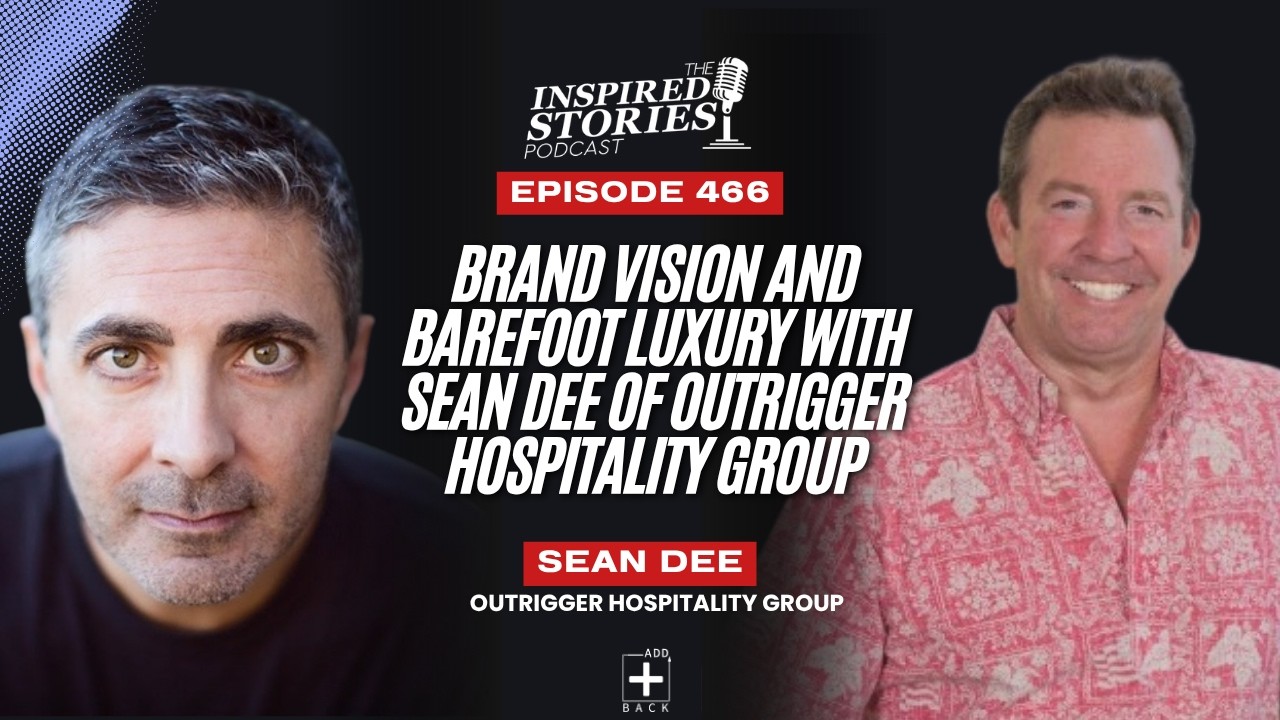
Welcome to another edition of the inspired stories podcast where leaders share their experiences so we can learn from their successes and be inspired by how they've overcome adversity. As you listen today, let one idea shape what you do next. My name is Anthony Cotaspodi and today's guest is Sean D, executive vice president and chief commercial officer at Outrigger resorts and hotels.
Founded in 1947 in Honolulu, Hawaii, Outrigger has grown from a single beachfront hotel into a global portfolio of more than 30 premier beachfront resorts, hotels, and condominiums across Hawaii, the Asia Pacific, and Indian Ocean. At the heart of that growth is the Outrigger Way, a values-driven philosophy centered on caring for guests, host, and place.
which is expressed through heartfelt hospitality, respect for local culture, environmental stewardship, and authentic community connection. Sean leads the global marketing sales distribution and revenue strategy, strengthening Outrigger's brand positioning while ensuring every touch point reflects both commercial excellence and cultural authenticity. Before joining Outrigger, he served as the chief marketing officer at AEG Worldwide and Hard Rock International.
He also helped pioneer digital campaigns for Levi Strauss. He currently chairs the Hawaii Visitors and Convention Bureau and was named one of HSMAI's top 25 extraordinary minds in hospitality. Sean brings a powerful blend of brand vision, commercial discipline, and cultural stewardship. But before we get into all that good stuff, today's episode is brought to you by my company, Ad Back Benefits Agency.
Listen, if you run a business, you are likely stuck in the cycle of rising insurance premiums. You're paying more, but your team, they're getting less. And many people can't afford coverage at all. We do things differently. We provide your hospitality employees with unlimited access to doctors, therapists, and prescriptions that's always free for them to access. But here's where you really need to pay attention. Unlike every other employee benefit out there, our program puts more money into your company's bank account.
As an example, we recently helped a client increase net profits by $900 per employee per year. Gains like that can change how a business is valued. Results vary, but the consultation is free. See if you qualify today at addbackbenefits.com. All right, back to our guest today, the executive VP and chief commercial officer of Outrigger Hospitality Group, D. Thanks for making the time today.
Sean Dee (02:41)
Happy to be here, Anthony.
Anthony Codispoti (02:44)
So you graduated from Stanford with a degree in polysci, but somehow found your way into marketing. How'd that progression take place?
Sean Dee (02:53)
Well, you're taking me back. So I get a little revisionist history with it. But yeah, I was blessed to attend Stanford. Awesome, awesome experience there as a political science major, which is pretty much a ticket to law school. Undergrad Stanford doesn't offer business programs, right? So it's liberal, liberal art school, pre-med, et cetera. But I went down the poly side path, I quite enjoyed.
My father was an attorney. I had two uncles that were attorneys and it sort of dawned on me that there's a lot of attorneys in the world. So I was not geared up for law school necessarily coming out. But interestingly, before and during my time at Stanford, I worked in the television industry in Los Angeles. So my uncle, Ernie Chambers, who's still with us, going strong at 97 years old. So if Ernie happens to listen to the podcast, I've got plug for my uncle Ernie.
He was Merv Griffin's partner for many years. And so they worked on tons of shows together and I interned on a few of his shows over the years when I lived in Los Angeles. So I was super intrigued with the broadcast space, but I loved the Bay Area. So unfortunately, back when I graduated from Stanford, there just weren't very many broadcast opportunities. And so I spent a summer.
At Stanford, after I graduated in what's called the Mass Media Institute, it's kind of a little unknown program that's under the quad at Stanford. So they have a full production studio there. They train people on production careers, even though you can't get a degree in it. And so kind of further reinforced how much I enjoyed that side of the business. Kind of a mix, as you know, from what you do of the creative side of life as well as the business side. Right. But again, just the pickings were slim in the Bay Area.
There's a couple of production companies at the time, ⁓ a lot of local broadcasts, but just nothing of significance. And ironically, I hadn't thought of this until now, I reached out to my uncle Ernie and said, you know, I'd love to stick with the broadcast. I really enjoyed working with you. I love the business. It's not working out here geographically for me to stay. And he said, hey, have you ever considered working in advertising? I said, not really. I said, I don't really know that industry very well. And it turns out he had started as a writer.
in New York early in his career. wrote for a show for the Smothers Brothers. He wrote for a bunch of the early broadcast variety shows, which ended up taking him to Los Angeles, which ended up taking him through his career. And so I always enjoyed spending time with my uncle Ernie. And so I applied to probably five or six of the biggest agencies that I could find without basically a total cold call. didn't know these people at all. No experience in it at all other than, you know, a degree from Stanford and political science and a certificate.
Anthony Codispoti (05:33)
and no experience in marketing.
Sean Dee (05:40)
for the Mass Media Institute and I got two responses of the five or six back and one of them said, well, we have nothing in our production department. So most ad agencies back in the day were very TV driven, right? So broadcast TV production was a big part of how they made money. Their margins were really tied to big TV spots and the production associated with it. And then now we got nothing really, production jobs are slim, but we do have a media department, which I didn't know much about.
And the media department always had openings, high churn. It's basically the entry level way into agencies at the time. And so lo and behold, I accepted a position at Foot, Conan, Belding, San Francisco, which was the largest agency in San Francisco at an entry level assistant media planner, making a whopping $17,500 a year at the time to join the ranks of FCB. 1989, March of 89.
Anthony Codispoti (06:34)
What year was this?
Sean Dee (06:39)
Now, ironically, I had worked my way through college as a chef. And so another uncle of mine had started a bunch of restaurants in Southern California. And I kind of, for lack of a better term, apprentice under him. And I love cooking and it was just something fun to do. And then at Stanford at nights, I'd love to work at this restaurant, Pearl's Oyster Bar, which is no longer with us, but it was a super neat, fun, kind of funky boutique restaurant. And... ⁓
an oyster bar, can kind get a sense of what it's all about. Two person kitchen, open air kitchen back when open air kitchens weren't even, didn't even have a term called, it was just the way our kitchen was set up, right? In big glass kitchen, et cetera, fresh seafood every day and super popular place. I made more money working at that restaurant than I did my first two years in advertising. And so I continued working at the restaurant. So I had two jobs basically, but my career started in advertising. And again, the desire, it's a lesson I tell people.
As you think about your career, know, think about the bullseye. Like what's the perfect place for you? Where do you want to be? Location, type of job, type of industry, type of company, all that, right? But it's very rare that you're going to get that coming out of the gate. You may never get that. But as you build a series of concentric circles out, what are you willing to sacrifice? Is it location? Is it comp, right? Compensation? Is it the type of industry, right? Et cetera. And those open the doors.
Right. And so that's effectively what happened to me. You know, I wanted to get a broadcast production job in L.A. I ended up in advertising and media in San Francisco. Right. Location trumped everything else at the time. Right. And so it's kind of the rest is history. So a proud advertising background. mean, that industry has been decimated and obviously consolidated over the years. But back in 1989, it was was it was a good start to my career.
Anthony Codispoti (08:26)
And as you're moving along through your career, it's not like you're settling at these different stages. It's, oh, I'm exploring something new. Am I understanding your mindset right?
Sean Dee (08:36)
I think so. I, ask me a lot about, wow, you've had such success over the years, you know, and I'm proud of that. I'm proud of the places I've been and the accomplishments that have transpired kind of along the ride. And I think the consistent ⁓ formula for me has been do your job great, right? Nail the job description they expect you to do, and then take on additional assignments.
And not always within the company, they can be in the community, they can be in government, they can be in foundations and volunteer work that you do. But nail the core role that you're focused on that they're paying you for, but see if you can find other things of interest to you that you can also commit time and effort to. And so early in my career, I was always just intrigued because I had a broadcast production background. I just would bug the heck out of the producers. So my job would end at whatever five, six, seven o'clock at night.
and I'd go upstairs and typically the creative department, I was on the third floor, was on the fourth floor and these people would work till two in the morning. A lot of them didn't come to work till noon. did the creative department kind of had its own cadence as you would imagine. But I just like to see what they're doing, how they're doing it, who they were working with. Because to me that was the energy, if you will, of an ad agency. The creativity, the art directors, the copywriters, the producers, they're effectively creating new content for brands.
every day, the IP, that ultimately my role was to place that, right? To find whether it was on outdoor billboards, radio, print, broadcasts, obviously played a big role. So my department put that out into the ether. I put it out into distribution, but the content, sort of the magic, the brand meeting, the storytelling was being produced on the fourth floor. And so I always had an interest of what's happening on the fourth floor. And you'd be amazed how many people let you into your office.
that's in the meetings, even if you're technically not in their department. They're like, all right, the guy's good. He's going to keep bugging us. We might as well let him in.
Anthony Codispoti (10:36)
So this wasn't about like, I'm going to earn some overtime here and get some extra pay. This was more about how do I get more exposure to more things, broaden the experience and the skill sets that I have and meet more people that could help me sort of evolve my career.
Sean Dee (10:53)
Yeah, no, there's definitely was no incremental compensation associated with it. But I can tell you from that early days, I mean, this is going back 30 years. I still have friends from those impromptu meetings on the fourth floor of the creative department of Footcone, more so probably than I do from the media department that I actually started it. Right. And so those became friendships and relationships. And in fact, I'm heading down to Southern California in about a week and a half to spend some time with two of those people. both now
own agencies. own advertising agencies, one in San Francisco, the other just north of San Francisco. And so we've stayed connected all these years later through those through those relationships.
Anthony Codispoti (11:33)
So before we get to what you're doing current day at Outrigger, let's pick maybe one or two of the really cool stops that you've had along the way. Tell us about some of the work that you were doing at Levi Strauss. Maybe pick one particularly interesting project.
Sean Dee (11:48)
So great question. It's interesting because despite my desire to get into the production space, I never ended up being a producer. So after a number of years in the media department, think about two, two and a half.
The next transition, if you're not going to get into production, which is tough to break into, is the account management side. So the account management side for your listeners who may or may not know about it really is kind of the business side of the agency, right? So you're connected to the client. The client, you know, at the time is the one making the decisions on marketing allocations, making decisions on creative processes, media buys, whatever it may be. You're making recommendations as the agency partner, but the account side
plays that key role and think of the account person as sort of the the conductor of the agency. You're working with the creative team, the production team, the media department, the research departments, whatever it may be and so your job is to synthesize all that back to the client in a simple like one-hour meeting say here's all the stuff we've been doing for you.
Here's the outcome, here are the next steps, here's how it's going to move the needle for your business. And so I moved from media to account management. I did that for about four years, three to four years. And it's a true story and people don't believe me, but as AI now is kind of taking over, I'm trying to learn from some of my lessons taught back in the mid-90s or so. So in the early to mid-90s, email was brand new.
I mean, it's hard to believe that we worked without email for period of time in our careers, but we did. So you get an email address back in the early 90s so you can communicate with the department upstairs, which seems like, why just walk upstairs? Why do you need email? No one saw the power of the efficiency, the real-time communication advantages that you would have. And so the client at the time...
So was account management from media account management and I was blessed to be placed on the Levi Strauss core account. Levi Strauss was not the biggest, but was one of the biggest accounts that FCB had. It's probably the one that made them the most famous. They'd had the account for the entire history of Levi Strauss. I mean, that's how long that relationship had gone on. And the engine at the time was TV spots, right? Levi's produced award winning TV spots that moved the needle consistently. And at the time, Levi Strauss had over 50 % market share in the U.S.
Anthony Codispoti (13:58)
Wow.
Sean Dee (14:12)
Literally, one out of two people owned a pair of Levi's. So that's pretty powerful. It's a big, big brand. And globally was growing and expanding and was a massive brand. So the production world for Levi's was incredibly lucrative from an agency perspective. That's where we generate the most amount of our profits when you're running and building million, $2 million TV spots and then campaigns. At the time, we'd be investing $15, $20, $30 million in a six month.
TV campaign. But again, it moved the needle for a company that again ran 50 % market share.
our talent budgets were in the hundreds and hundreds of thousands of dollars. We worked with some of the most expensive but most impactful talent. These are celebrities at the time. It's the Brad Pitt's of the world. You go look at the history of the actors and actresses that launched their careers. Many of them started actually by starring in Levi's commercials. And that's not just here in the US, but also in the UK. the client at the time, ⁓ rest in peace, unfortunately, gentleman that's passed away, he came to me
He said, hey Sean, we misbudgeted and we have some savings, right? And we have to use the money in the calendar year. This is 1993, 94 time period. And he said, you know, I'm interested in email and the internet. Like, could we use email as a marketing channel? It's a great question. I said, well, we use it internally. I said, I hadn't thought about using it externally. And so we literally created a email address for Levi's and we ran it in a
single ad. It was for Levi's Silver Tab jeans, which at the time was kind of the innovative youth-focused jean product that we were rolling out and expanding. 1993, plus or minus, yeah, 93. And it's summer of 93, and it's in a magazine, I don't even know if it exists anymore, called Details Magazine. So, Details was sort of a men's-focused fashion magazine. And we ran a single ad.
Anthony Codispoti (15:53)
And this was 93 or 94? 93, okay.
Sean Dee (16:10)
for silver tab jeans campaign was stopped by black and white photographer Albert Watson prolific photographer and he was mad he's like you don't I don't want you to mar my beautiful ad I did for you guys with this little I said well we already put the 800 number so you can call Levi's using the 800 number I said what's the difference Albert he's like I don't even know what this internet thing is like what's email I said trust me it's not gonna be a bad thing so we ran the single ad
And we had something like 2,500, over 2,000 emails we got off the single app back in 1993. And so the client and I said, that's interesting. Like that's way more than we expected. About a month later, we convened a meeting within Levi Strauss of the head of consumer affairs. So this is the person that oversaw all the 800 numbers. Brett LeDove, if he's out there somewhere, Brett, I'm giving you a nod. So he joined the team. A customer service person joined the team. Their IT lead.
Her business card, I can't make this up. This is how awesome Levi's was. Her business card, I'll always remember was global. Her title was global keeper of knowledge. So she was the head of IT, myself on the agency, this client, and their goal was not about connecting with consumers per se, but they were managing over 25,000 phone calls a month. So people would call Levi's 800 number to try to figure out where to buy the Levi's.
Anthony Codispoti (17:15)
Okay.
Sean Dee (17:33)
if they look for specific gene type or to get it, you can I return my genes like the 501 guarantee all the crazy things people would call like who calls.
Levi Strauss for that stuff, but 25,000 people a month did. So we had to staff operators, right? So his thing was, how do I reduce the churn that we've got within the call center? And so the email solution was his solution. Our side of it was like, wait a minute, we may have found a way to connect with consumers here before our competitors were doing it and started to think about what are the other things we could do. And ironically, the production offices at Footke on the agency I was with had, and very early,
an Avid system. You may remember that name, but Avid systems were basically where you would create television spots in an analog environment before you spent all the money to go into a production studio to build the spot to air. Levi's, or Footcutting Building was the first agency in the country to have an Avid system. And so late at night, I'd be talking to the guy in the Avid system saying, what are you building? And he's like, well, we're building this stuff. I said, well, how do you share back with the creative directors? He said, oh yeah, we use the internet.
It's called, they call it the blog internally, but they would send the raw, unfinished 30 second or 60 second commercials back to the creative team in house. And that group then would, and they had the bandwidth to do it. Yeah, because it was there. And so it became very interesting. And I'm bringing this kind of full circle, a little bit of serendipity from my time at Stanford. My two roommates at the time, there's five of us living on a flat.
Anthony Codispoti (18:50)
and they had the bandwidth to actually send those files of those size.
Sean Dee (19:06)
on Petrero Hill in San Francisco. If you have any San Francisco listeners, they'll know what I'm talking about. And my two roommates, one was a photographer, the other a computer science major. His father was the head of computer science for Yale. And unbeknownst to us, all the universities had been using the internet for years. And it's basically how they share research results with each other real time between the different computer science departments, right? So the internet was a real thing for academics, for schools. It just wasn't a consumer.
Facing type of application yet. And so they were using Interestingly, they were using the internet to communicate with their dad back at Yale who was working on the original Adobe software for Photoshop And so they would at night sit pixel by pixel literally pixel by pixel to build the programming software that would become Adobe so again a series of circumstances interest in production a client that wanted to take it take a risk and about a year later we launched
Levi.com. We were the first consumer branch to go live on the internet and it came out of a savings from a talent budget from a production department. It was an internal department doing something else but sort of connecting the dots. It was relationships with people in the computer science community, the IT community, right? And then a desire by a consumer affairs person at Levi's not to have to answer 25,000 phone calls. That led to the launch of Levi.com.
Anthony Codispoti (20:09)
That was early days.
That
Sean, this is what I call a Forrest Gump story where you are somehow serendipitously like at all of the intersections of these big life world changing events.
Sean Dee (20:42)
It's world changing for sure. mean, none of us could have predicted what transpired. And it's interesting, I've been in a lot of AI meetings recently and I try to explain to my team the parallels from the early, early days of the internet, right? When we had literally, even pre 14.4 modems, like the dial up sound that we had, like the concept of downloading video back then.
Unheard there's no such thing you didn't have the bandwidth to do it didn't make any sense so and I tell that to you and all it's funny when I try to give these parallels to my Awesome talented team of people all that really does is reinforce how old I am But my point is back then Netscape ruled the world right no one knows that now right that was the browser So which AI tools are gonna win? We don't know right you're gonna have to make some bets right some have some advantages versus others obviously Google's got some advantages with Gemini
You've got the darling of the day, Chet GBT. But back then, everybody was rushing to be the browser of choice for the world. so what we're going through now is, I think, a different phase of the work that we did when the internet became a consumer-facing tool. And then as obviously bandwidth increased, ⁓ everything changed. And the speed now of the technology adoption is just incredible. But back then, went through a lot of the same challenges.
Anthony Codispoti (22:00)
So this is an interesting point to sort of diverge for a second because yeah, with the experience that you had being such early days of the internet, right? You're having conversations. People didn't know what email was. didn't know what Netscape or a browser was. Today, you know, if you're half our age, nobody knows what Netscape is today. But what do you see? Where do you see AI going? Where are you like, oh, here are the parallels. Here's what I think we're going to see in the next six, 12, 18 months.
Sean Dee (22:30)
Well, again, I I'd be remiss not to say I'm trying to channel, right, trying to go back to my experiences, even though it's been many, many years and trying to lay those parallels forward so you don't make the same mistakes twice. It's so funny that you asked that question because I had a meeting this morning and I made the comment, which is, look, everybody makes mistakes, right? And I make them. I make them all the time. I don't like to make the same mistake twice. Right. That's that's an issue.
Something's something's wrong, right? I've not learned I've not accepted I'm too stubborn, right? But do don't want to make the same mistake twice. You're gonna make mistakes. That's just a guarantee So I remember when we launched Levi dot-com 1994 and the VP of marketing so I still on the agency side the VP of marketing who Great great leader for Levi's did a lot of work for dockers. He basically created the dockers brand people forget that that's Levi's
product. That's a whole interesting story in and of itself because he created the concept of Casual Fridays. That's the truth. That's a true story. Levi Strauss created Casual Fridays so people would wear denim and dockers to work instead of the suit. then, everyone wore a suit Monday through Friday, right? And they created this concept. They did it through a third party so that people didn't know that it was coming from Levi's. But he created the concept of Casual Fridays, which now, when we look at us, right? It's casual every day. But back then, that is a monumental
Anthony Codispoti (23:47)
Brilliant.
Sean Dee (23:55)
shift a seismic shift in what people were to work right but huge benefit to a company like Levi's that's a casual clothing giant but he came up to me after we launched Levi.com he's like you know this is pretty cool stuff you're doing and we we had awesome partners organic out of the US out of San Francisco that I think is still around a company called lateral ⁓ which became obsolete that's the name of the company the owner chose to pick that name so when they became the next company so
very creative, interesting people that we worked with. John Baines was his name. John, if you're out there, you know, just amazing talent. So we worked with all these talented people and we created a very compelling, very early day interface, very slow, right? But you could see as technology would increase how, you know, you'd be able to integrate video. You'd be able to integrate moving graphics. You'd be able to integrate, you know, anything that you wanted in now a 24 seven real time medium that had never existed before, right? Everything back then was built on
You tune in at 8 o'clock to TV and that's how brands got their messages out. We got a minute, 30 seconds, right in the pod, in the break, right? That's it. So hopefully people tune in at that time. But the concept of we can deliver messages to a consumer about a brand in real time, anytime, was completely revolutionary at the time. Completely pioneering. And it changed how we had to think about what we were doing, right? Because consumers live 24-7, 365.
Brands typically work like business, Monday through Friday, eight to five. Well, if a consumer reached out to us on the internet at nine o'clock on a Saturday, they don't want to wait till Monday to hear back, right? And we weren't staffed to, Levi's wasn't staffed respond to those people. So we'd get early negative feedback on, well, wait a minute, you sent me a message, I sent you message, why did it take you two days to get back to us, right? So, coming full circle, trying to learn from those lessons in the early days. I'll never forget the VP of marketing after we launched the website saying,
Great, Sean, you've launched the project, you're done. When can you move on to something else? I said, we're not done. We just started. We've created a whole new business that we've got to fund and resource. And he looked at me like, well, we paid for this out of savings. We don't have anything budgeted for next year. I'm like, well, we're going to have to figure this out. I said, this is going to be a game changer. And in fairness to Levi's as a company, very innovative, lot of firsts that they did across the board. And they recognize.
Anthony Codispoti (25:59)
We just scratched the surface.
Sean Dee (26:20)
They didn't know exactly what would come out of this, but a direct-to-consumer type of communication from a brand was powerful. And so those loyalty, it's for a brand, it's the holy grail. And so in terms of what I think about AI, I don't know. I'll be totally honest. I've studied it for years. It's not new. It's been around in many instances. We use it for everything from our call center.
We handle probably 50 % of our call center calls now go through some sort of an AI tool, right? Try to get smarter and faster so you don't have to sit there and wait to talk to a human to answer a simple question that our AI tool may have for you. So we use a tool we call Coral, right? We're an ocean front facing brand. Almost all of our resorts are on beaches. Coral reefs play a big part of it. So we nicknamed our AI bot Coral, right? So you're going to basically interact with Coral more now than ever before. So for us,
Anthony Codispoti (27:16)
And I do
this through your website.
Sean Dee (27:17)
Correct, well, no, through our call center. Well, actually at both, but chat through the, it's called Coral also, but chat through our website, but through the call center where we get thousands and thousands of calls a week, if not million over the course of a year, about half of those calls now are handled by Coral, and it's only gonna grow, and that's only gonna get smarter and better.
Anthony Codispoti (27:36)
So I call into an outrigger number now. There's a one in two chance that I'm gonna be speaking with an AI agent. Do I know this is AI? Is that identified to me or does this seem seamless?
Sean Dee (27:49)
It's well, it's a great question. The goals is for it to be seamless, right? And so we have to train that through facts, FAQs, obviously, ongoing training that we're doing. It started with the intent to move anybody that's coming, I'll call it for a service call, right? So you think about how call centers is structured, right? You have on-call operators, typically, ours is based in Denver, but you know, they're all over the world now. And so, but the...
highest and best use of that call is conversion. It's converting a potential lead, somebody that's looking to book a trip, a room, an activity, whatever it may be. But fully 50 to 60 % of the calls that you get, ironically back to my old Levi's days, have nothing to do with the conversion. People just want information. What time is the restaurant open? What time does it close? What's your street address? What's the phone number of so and so?
that runs the spa. mean, the questions are endless. It's funny, we get questions when not to not to go off tangent, but you'll see how the power of AI here in a second is when Southwest Airlines came to the market. So they only have been flying here since about 2019. Right before COVID, they launched into Hawaii. They're now 20 % market share. But talk about a powerful brand when they go in, they go big. That's the CEO talks about all the time. Like, we don't go in to try to be the number five player, we go in to try to be the number one.
And they do it through secondary markets and again, a lot of efficiency with the same planes and what they've been doing for a long time. So I was curious when they entered the market, and this is pre-AI, but you could go on Google and actually see the rank of the questions. I was curious, what questions were the Southwest Airlines customers who are new to the market? What are they asking? what, you could go on the Southwest site and it would rank the questions. You know what the number one question that the Southwest consumer asked about traveling to Hawaii?
Anthony Codispoti (29:43)
Tell me.
Sean Dee (29:44)
Do I need a passport?
Anthony Codispoti (29:46)
You
Sean Dee (29:48)
And that's 2019.
Anthony Codispoti (29:51)
I need
a passport to travel within my own country.
Sean Dee (29:54)
in my own country, right? But
I mean, that's an ongoing education we have. One of the challenges we have in Hawaii is a lot of people do is the US currency to take the US currency, right? Do people, do they speak English? Do you need a passport? mean, stuff that some of us take for granted, but you know, a huge percent of the population doesn't have a passport, doesn't travel, right? And so to them, Hawaii, especially coming out of a typically a Southwest gateway is somebody that's not traveled overseas generally, because Southwest didn't have the capability to do it.
Anthony Codispoti (29:58)
Yeah.
wow.
Okay.
Sean Dee (30:24)
Not until they went to Mexico and then eventually Hawaii, could they be certified to even fly over water, right? So that Southwest traveler was traveling within the continental United States for the most part. it's a Hawaii's a far destination. My point on AI is back then we didn't have AI, but I could just manually go through. Now we do. Like I can get into a lot of depth with customers and guests. Our goal with our service calls is to move all those service calls into an AI environment. Because why would you waste an expensive person on our side?
just trying to give you the time that the restaurant opens when the simple voice query that comes from you to our AI tool can get you that answer instantly. So your question is about half the calls would go through AI, but the intent, the strategic intent is 100 % of the service calls go through AI, which frees up our people to do the work to explain to people why you saved this property versus that property, what's the difference, what's the room types, what's the view types, what's the best time to come.
Et cetera, et cetera.
Anthony Codispoti (31:25)
Sean, tell us about the outrigger properties. What is the customer experience like?
Sean Dee (31:31)
So I think in the intro, you identify, we have about 32 properties that are branded Outrigger that we own and or operate. So we operate everything and we own about half, right? So we, in the hotel business, most people assume that some of the big brands own everything. Most of the big brands don't own much of anything. There are management companies, they call it asset light is the term that you use in the business, right? So they pay management fees by owners of these assets. And then the brand...
is on the side of the building, again, whether that's a Hilton, Marriott, a Four Seasons, whatever, and that owner pays management fees, brand fees, sales fees, whatever it may be. We're a little bit unique. mean, it's not that we're ⁓ Luddites. We're not like that. We're ⁓ not sophisticated, but we actually like the real estate. Right. And so we own the real estate in addition to the asset, in addition to the brand. So it's a it's a different type of model for us. It makes sense. Right. Because
the investment we make in branding and marketing, operating, you we operate at very high service levels, some of the highest in the business. All of that increases the value of the real estate, the physical asset, right? So, and that's for many years we were owned by the Kelly family for over 75 years of our existence. And so for the Kelly family, that was their source of wealth was real estate, right? And so that's the history of the company going back to 1947. Today, here we are in 2026 and we have a little bit of a hybrid. We manage some, so we're asset like in some cases.
but still the bulk of value of the company is in the real estate assets that we have in Hawaii, where it's a challenge to own real estate. we're distributed across all four islands down here. So we're in Oahu, we're on Hawaii Island, nicknamed the Big Island, Maui, which obviously everybody knows, and then Kauai Island. And so we operate and own Outrigger Resorts, they're branded Outrigger Resorts. So Outrigger's our flagship, Outrigger Resorts is our flagship brand, and then we have craft hotels, Outrigger Craft Hotels, which are our off-beach properties.
here in Waikiki. And then we also operate Outrigger Resorts in Fiji, Thailand, Mauritius, and the Maldives. And so years ago, we decided to double down and own some white space. And it's just something that I was taught at a very, very early age from a branding and marketing perspective is what can you own? What is something that is unique to you, authentic to you as a brand, just like a person, right? Brands are just like people.
that differentiates you from everything else legitimately, right? That's something that you can claim is your space and you can keep people out of, right? And that's not easy. It's a tough exercise to do that. But what we decided is, you know, no hotel company, no hospitality company operates solely in beach resorts. Right? There's no expert in beach resorts. And so that's what we said we wanted to do. We wanted to own that space. Yeah. But you start thinking about, mean,
Anthony Codispoti (34:15)
Really? That's surprising.
Sean Dee (34:20)
know, Club Med is dabbled in that space, Atlantis has got a couple properties, but they're also in Dubai. If you really think about where we were born, our first outrigger being right on the beach in Waikiki, arguably the most famous beach in the world, the history with Duke Hanamoku and the birthplace of surfing, we had a legitimate claim to say we were the first to do this, right? And while we started in 47, that's actually the company started, but the brand started in 1967. The brand started...
at the site of the Outrigger Canoe Club where Duke Kanamoku, legendary duke, conducted surf lessons and surfed every day. And Roy Kelly got the opportunity to buy that property and then build the first outrigger. It was the site, ironically, of the Outrigger Canoe Club, which is a very famous club here in Hawaii. Some of your listeners may know the Outrigger Canoe Club, but it was located between the two original properties in Waikiki, the Royal Hawaiian, the Pink Lady, and the Moana Surf Rider. So those two anchor properties, we were slotted right in the middle.
where the canoe club was. The canoe club was moved about a mile down the beach, which it still stands there today. And the original Outrigger ⁓ was erected in 1967. So we're about 60 years old as a brand, 80 plus years old as a company, if you will. So that's how we got our start. And so the exercise we went through from a branding perspective is those are our roots. That's primarily where we've been successful. We've expanded over the years. Let's just double down.
Focus on that and being the best at the beach experience being the best and having the best if you're gonna have you're gonna own the beach Which is a term we use internally and be the best that we call barefoot luxury, right? That's a kind of a unique space. Then what are the amenities that you're gonna offer? Well, you should have the best beach bar, right? If you're gonna if you're gonna own the beach, what do people expect right a great restaurant experience? We call it having the best beach bar and we're blessed to have Dukes with our partners at TS restaurant. So Dukes anchors
our original Outrigger property here in Waikiki Beach Resort. We've got Monkey Pod over at another property, my brewing company. So you're seeing consistency here. We work with great local third parties, right, and have the best beach bars. Another big part of a beach experience to us is live music. So one of our brand pillars is live music every day. So every one of our properties around the world has live music every day throughout the properties. And part of that's also
Anthony Codispoti (36:23)
Another guest to the show.
Sean Dee (36:43)
For me, tied back to culture. I've been blessed to work in the live music space for many years. Levi's been very active. It's ironic. You even see Levi's in the Super Bowl. The Super Bowl ad for Levi's, I take a little bit of legacy credit for, was actually all driven by music and culture. And that's a big part of how Levi's has been successful and I think stood the test of time. So we take that through our resorts. And then we have signature experiences at the property. Generally tied to beach. We do ball renewals on the beach.
We do surf lessons on the beach, right? The things that you would think you need to do, we take very seriously. We work with the best of the best. Our surf lessons aren't like a maybe once in a while thing. It's every day from the time you wake up until the end of the day, you can get surf lessons here at Waikiki with Faith Surf Schools. The Monies family, the world famous Monies family, so Tammy and Tony, arguably two of the most decorated surfers. Their surf school is run by their kids and by some other great surfers. They have three professional, I think it's three,
professional surfers in their families still to this day, right? So we work with the best of the best. It's not just, you know, a theme we put on it. It's like we feel like we really need to deliver and have the most. The word authentic is overused, but that's that's what we're going for. Right. And so we've been able to achieve that, think, pretty consistently. The other thing we do is we don't take the beach experience from Hawaii to Fiji, as an example. They have their own beach experience. Right. And so we call they call it the Bula spirit.
B-U-L-A, Bula is their word for hello. And so we try to celebrate the Fijian culture in Fiji, not take Hawaii to Fiji. Same in Thailand, same in the Maldives, same in Mauritius, we've done it in Guam. So the premise of our brand, again, is own the beach, right? We want to be the premier beach resort company in the world. That's our high mission. And then the anchor, our way is this idea of celebrating the place and the culture and the guests, obviously, of each of the places that we operate in.
Anthony Codispoti (38:39)
What's the future of Outrigger look like? You guys have growth plans? Are you kind of holding steady for the time being?
Sean Dee (38:44)
Right, what's the old, you grow or die? Right side, the old expression. And I sort of laugh, but we were acquired by a private equity company in late 16, early 17. They're very growth oriented. The Kelly family was awesome to work for. I'm still friends with many of the Kellys that still live in Waikiki in Hawaii. But access to private equity capital gives you more growth opportunities, frankly, than we probably had with a private family. And so...
That's the growth is clear the mission that we're on. We're probably growing 2X what we would have previously, but great news for us. They bought into the mission. They bought into the Outrigger way. A new CEO, Jeff Wagoner joined us in 2018 and he's challenged us to do things at a much more elevated manner than we've been doing it before, which has been great for us. So he set the bar super high on not only growth, but elevation of the brand, elevation of the experiences.
Yeah, you can own the beach, but are you doing it in a contemporary, know, consumer facing way that helps us elevate the properties and the brand. so that's the mission that we're on. So yes, growth, but I'll also say brand elevation, quality of the experiences. I many people come to our properties with literally their life savings. They have saved up their entire lives for a vacation with us, with their family. It is expensive to come to Hawaii or to go to Fiji, but we think we deliver.
the trip of a lifetime for people. we're very focused on leisure. We're not a business hotel, a city hotel. We don't have big groups for the most part. So we're very focused on families, multi-generational travel, honeymoon, first-time visitors to the place, and then trying to create lifetime loyal guests. And it's worked for us and it continues to work. And then again, in this business, you have to constantly reinvent yourself. have to constantly renovate. Acquisition's a big part. So in the last five years, we've acquired eight new Ourager resorts.
both here in Hawaii and also in Asia. And then we have renovations ongoing, but we'll have finished, I think, about half a billion dollars worth of renovations in the past four years in Hawaii and in Thailand by the end of this calendar year. So we have two more renovations that we're working through here in Waikiki and two more on our neighbor island, as we call them. But by the end of 2026, we'll have renovated effectively the entire Outrider Resort portfolio.
Anthony Codispoti (41:05)
Wow. So I hear Hawaii, I hear Asia, I hear other Pacific locations, anywhere else in the world that you have your site set on mainland USA, Mexico, I don't know, European beaches.
Sean Dee (41:18)
Yeah, it's a great question. mean, for the folks who know a little bit about development, you know, it's not just throw the dart at the wall and, you know, hope for the best. Right. So we have a very rigorous development criteria that we go through, especially if you haven't got a private equity owner, they want to know where their money's going. Right. Why did you pick that location? Why is that a target? Right. And so I'd say probably for every hundred opportunities that we've identified, maybe one, we get to the finish line on. So it's very difficult. It's time consuming because we have this criteria. One has to be on the beach.
Well, that limits your choices, right? Second, it can't be a cold beach, right? It's got to be a warm weather year round beach. So you're in the tropics, right? Generally our deal flow is in the tropics on beaches, right? So that's kind of the first set of filters. Then generally we like to look at places either where we have operational experience, like Hawaii for obvious reasons, Thailand for obvious reasons, Fiji for obvious reasons, or ideally an overlap with source markets, right? So for instance,
Australians tend to travel to three or four places when they go. They go to Hawaii, they go to Fiji, they go to their own country, right? The Gold Coast is a big destination. All places that Outrigger has operated and has operated successfully. So our brand awareness in Australia, even though we're a small regional company that a lot of people in New York have never heard of Outrigger, but everybody in Australia has heard of Outrigger. They know us, they like us, and we don't have an operating asset in Australia. So Australia is an obvious target for us.
We've had good success in Thailand. We're opening a new property in a place called PP Island, ⁓ famous for the beach, the DiCaprio movie. That's PP Island, just beautiful, spectacular water. It's about a 40 minute boat ride from Phuket where we've operated for over a decade. So we have experience in that market. We understand it. There's a lot of places in Thailand that we can take advantage of. So PP Island, we will be opening here in May. It'll be our fourth asset that we've got. Fiji, we've had experience in. We'd love to.
to be back in Fiji. We are there now, but we think we can expand and do more in Fiji here over time. And then for obvious reasons, our biggest source market is the US, and specifically the West Coast. We probably index to the one, the West Coast to the East Coast. East Coast, you can go to the Caribbean, you go to Mexico. Most of the US leisure travelers from the West Coast will go either to Hawaii or to Mexico, right? So we over-index there.
Mexico, Los Cabos specifically, would be a place of interest. Now there's risk there, obviously which just transpired, there's sensitivity about that part of the world, and then our parent company has other assets in the market that are run by other companies. And so a balancing act, but Mexico would probably make a lot of sense for us, Australia. Then interestingly, our second largest source market in the world is Japan. And probably many of your listeners don't know, Japan actually has some phenomenal beaches. It's got a couple domestic islands.
Okinawa, which many people would probably know more from its military. But there's a lot of great brands, a lot of great beaches in Okinawa. Ishikawa. It's tropical most of the year. Yeah, not not the entire year, but probably for 70 % of the year. ⁓ It's it's it's tropical. So Japan's a place we've got our eye on. We've operated in Guam before Marshall Islands, Palau. We've been in those places. Those are typically smaller, isolated opportunities, but we'll keep our eyes open in the South Pacific.
Anthony Codispoti (44:20)
Is that tropical? It is.
Sean Dee (44:41)
And then Indian Ocean is interesting. So the Indian Ocean could probably unlock some more opportunities over time. We're currently operating in Mauritius, which is near the South African Madagascar border. And then in the Maldives, the Maldives has about a thousand atolls, right? Each of those atolls has islands within it. And we operate in what's called the South Ari atoll, which is in a plain zone. There's probably room for more than one outrigger in the Maldives. having great success there. It fits our brand profile. We're very family friendly.
for that part of the world. So I think the Indian Ocean and then have places like the Seychelles, even India, Goa. There's a lot of beaches in that band, a lot of beach opportunities in the band, but we try to go where we know how to operate and places that our brand is known and places where our source markets have overlapped.
Anthony Codispoti (45:30)
So we've gotten to touch on a number of really cool, fun, exciting successes here. We've skipped over the time at Hard Rock and AEG Live just for time. ⁓ But behind every success story is typically a chapter that almost broke someone. And I'd be curious to explore a time in your life that you had to overcome a really big challenge,
Sean Dee (45:53)
Well, there's plenty. I'm not a kid. But I have two kids, right? So I'll give you two answers. One's professional, one's personal. I guess the professional one's also personal. But I have two young children, two daughters, blessed to have two daughters. But my wife and I had children pretty late in our lives, right? So I've got a 15-year-old and an 11-year-old daughter. That is incredibly challenging at my old age.
And with the responsibilities I have to the company from a leadership standpoint and also frankly to the to the visitor industry. So I I chair the visitor convention bureau here, which one of the goals is to stimulate business to Hawaii during a tough period right now. Right. It's challenging. We've had our challenges with covid. Then obviously Lahaina burned down a few years ago. So we have the biggest wildfire in the history of Hawaii. One of the biggest wildfires in the history of United States, actually just two years ago. Right. So we've had some some pushback.
from a tourism perspective. And so we're trying to stimulate that. That's a lot of work, right? And so, I feel like the balance of that and then my fantastic wife who really manages the household, how do you balance our needs as a family with the workload that we've got? So that's just an ongoing challenge and trying to make it work kind of every day and week. I travel quite a bit as you would have guessed from the properties that we have, the source markets that we have and a mainland trip from Hawaii is not short. It's five, six hours.
Japan, seven hours. If I want to get to Dubai or other places that we have business partners, you're looking at 18 to 20 hour trips. So these are long trips away from my family, away from supporting my kids' education and their growth and development. that's not going to change. That's just going to be, I think, the world that we live in. my wife jokingly calls it first rule problems. She's like, don't complain. Just get home.
Anthony Codispoti (47:46)
But it's still tough, right? It's still hard being away from your kids. And it's harder on
your wife too, sure.
Sean Dee (47:51)
It's hard on
the family, hard on the wife, hard on the relationships. Like I said, I'm just blessed. We just celebrated our 20 year anniversary. I'd be remiss not to give Brooke a big shout out because she's put up with me for all these years and the travel and it's just always been the case. That's been my career going back to my early Levi's days. And so that's on the personal side, trying to balance work and family as well as all the other things you do to try to you a whole. So that's an ongoing kind of...
time management thing more than probably anything. It's interesting, I think on the business side, and many people that know me know this story, so it's a fascinating story, but, so I had huge success early in my career. I think the youngest VP, I'm not bragging, it's just what it was. At Footcone and Belding, I was blessed to have this opportunity that kind of fell in my lap. We took advantage of it, we launched the website, which was a huge coup for Footcone, basically being the agency that launched the first consumer website.
was a huge cue to them, right? So I got promoted to VP of a department that never even existed. I didn't have any competition because no one else wanted the job. They didn't even know what the digital media job was, right? So I'm a VP of digital media at like 20, whatever, six, 27. You know, so looks good on the resume. Went to Levi's and sort of a lot of the success continued. It's ironic because the first Super Bowl spot that Levi Strauss ever ran,
I placed that media by, when I say I, I was the client. A huge team worked on that campaign. And it's, it's, if you go back and check the director was Spike Jones. So everybody knows now super famous director, actor, awesome talent. He and his brother actually produced this spot kind of on spec for us. And he had an idea. It was like a digital graphics idea set to a Mexican hip hop song back in, this would have been right around 2000.
I exactly the date. Let's say 2001, 2000, something like that. And the clever move that we made to launch that spot, it was the first spot that Levi's had ever bought in a Super Bowl. And it was not a positive move. I pushed hard to get this. To me, I viewed the Super Bowl back then as I think kind of how people do now, which is it's the only game in town. Everyone's gonna watch it and they're gonna watch the commercials.
Back then, that was not necessarily the case. It was starting to become the case, but the Super Bowl buy was just evaluated against anything else you could purchase, right? Prime time television, the Cosby show, you name it. Like, you could get the same eyeballs, somebody would argue, and we did argue, by just buying a bunch of other stuff over the course of the day or night or week versus spending a huge premium. That was the perception on a Super Bowl spot. But I was blessed to have a good partner.
at Levi's Strauss and said, believe, he was the head of merchandising. He's like, I'm fully behind you, Sean. Nick Coe was his name. I'm fully behind you. We need to do this. We need to elevate the Levi's brand. We need to be where people are watching. Like we were in the Video Music Awards, we're in the Grammys, but we'd never been in the Super Bowl. So we rolled the dice and then there was a huge debate. Once we made the media buy, well, what spot are we going to run? What's the best spot? Right. And that's highly subjective, as you can imagine. Right.
My perspective was it was we're buying a platform, which now the Super Bowl has become. But back then there was no real social media, right? The Internet was still relatively young. so leveraging a buy beyond just the TRPs, the rating points, the eyeballs that see it into all these other things, that was pretty early. Right. And so I remember going to the CEO directly and I'll just leave it at that for the audience. I didn't report to the CEO, but I went to the CEO.
and said here's how we pick the commercial because internally we could not make a decision. said why don't we let the consumer vote? He said what do mean? I said well let's put it on Levi.com. We'll put all the spots we got and they get to pick.
And it's like, that's a pretty good idea. Now bear in mind, we maybe had two months before the spot's gonna air, right? So there wasn't a lot of time to stand it up. There wasn't a lot of time to build the voting.
Anthony Codispoti (52:04)
So you put
clips of the actual commercials there and ask people.
Sean Dee (52:06)
We put the actual
commercials on. We put four commercials on.
Anthony Codispoti (52:10)
And then you told people, we could do right before the coin toss, we could do, is that what you're talking about?
Sean Dee (52:15)
Well, no, we would. So the idea was the consumer get to pick which ad we're going to run, which was a first, right? Now, a lot of brands do pick the flavor of the chip or whatever. but back then, again, you remember this is 25 years ago. And so is the technology even going to work? Downloading video back then was not quick and easy. It was five years after basically the internet came online. And would anybody care? Who's going to go online and vote for Levi's commercial?
Anthony Codispoti (52:17)
or just picking which of the ads to run. Got it.
Sean Dee (52:45)
Everything we were doing was counterintuitive to kind of how the traditional media and ⁓ world of branding and marketing worked, right? But, and again, people can go check my facts, use AI if you want, but I'm telling you, the Levi Strauss vote for the commercial was the first internet poll that was ever picked up. And we got over quarter million votes, right? So, not only did it work, it worked really, really well. And,
Anthony Codispoti (53:04)
How many votes did you get?
Sean Dee (53:14)
we ended up picking the spot I hoped we would pick, which was this crazy spot shot by Spike Jones on the streets of Mexico City. And that spot was the first spot that Levi's ever ran in the Super Bowl. So fast forward to the Super Bowl in New Orleans, right? Went to that Super Bowl. Next day, front page of the New Orleans paper, that spot was the top spot for the Super Bowl, at least as their readers voted. And USA Today had it like two or three. I mean, was so, it was highly ranked. It still makes.
the clips, it's called Crazy Legs. It still makes the greatest spots of the last 20 years periodically. So it's a blast to see that because it was shot with a very low production budget and it was shot by Spike Jones and my team worked on it. And a lot of people work on these things. I I was the guy taking the bullets that if it didn't work, you're done, right? But we believed in it, my team believed in it, the head of merchandising believed in it, a lot of people believed in it. We had some new people coming on board from the European team that
We're not huge fans. They just didn't get it. They just didn't see how that could possibly. Why would anybody vote for that? That's not a beautiful, pretty denim shot, right? No, it's gritty streets of Mexico City with a Latin, think of Bad Bunny. We ran a Latin hip hop, a Mexican hip hop song in 2002, right? I mean, that just didn't happen, right? And so, but feedback from the consumer was super, super great. I got to be careful here because I don't want to get in trouble with anybody, but so.
huge success on so many levels, internet votes, right? The top commercial or top five, it's all subjective as you know, right? I left Levi's Strauss within a few months.
I left Levi's Trails after a few months. So what I consider the-
Anthony Codispoti (54:59)
This is the
first time in the entire interview where you paused. ⁓
Sean Dee (55:07)
Wasn't my choice. Wasn't my choice. So coming off what I consider to be one of the great successes of my careers, others didn't see it the same way.
Anthony Codispoti (55:08)
Okay, all right.
Interesting. Okay, so looking forward. Now let's just like be a little introspective. I'd be curious to hear what you think your superpower is,
Sean Dee (55:28)
I don't have a superpower. I hope I've used the word I probably more than I usually do because it's a wee bit. It's a wee business that we're in and I can't tell you how blessed I've been to hire great people.
create great teams, get the hell out of the way as much as I can, and then watch them succeed and try to be part of that success. And whether it was the launch of Levi's, that Super Bowl program I just talked about, my time at Hard Rock kind of under Hamish Dodds, the CEO leadership, turning what was frankly a dying brand into now a massive global hotel and entertainment company, and then helping launch LA Live and the whole LA Live district and downtown LA with AEG. I've just been blessed to have
and surround myself with great teams. And so.
Anthony Codispoti (56:17)
How do you do it?
How do you identify that talent? How do you hold on to them when you get them?
Sean Dee (56:22)
You know, it's a great, mean, it's funny you say superpower because I like to think that I'm pretty curious and a good listener and observe ⁓ who has passion for what they're doing. So I'll take the passion.
and commitment over the technical skills kind of all day. Figure that people are smart and they'll figure out what they need to do. But if they're not committed and passionate about what they're doing, they're not they're not wanting to take things to the next level. And I made that comment, I think earlier in the podcast, the advice I always give people is do what you're doing really, really well, but do something over and above, right? Do other things for other people. Meet other people. Expand your network. Expand your value to your company or to the community or what you're doing. And you'll you'll never. And so I
look for that in other people. It's funny when I look at a resume, I almost never care. I care about how many how many how much people bounce around to me that's almost always ⁓ a negative hit. Right when I see a CV or resume and somebody's had eight jobs in 10 years, like you know, there's something there that just doesn't for me the way I think about it, I'd rather have some continuity.
see people promoted from within, right, promoted to it from an agency to a client as an example, see that the person's made the commitment, it's been recognized, and that's hard, but it's been recognized and they move on. The other thing I'm looking for on the resume is what do they do outside the job?
And so, you know, the community section, the hobbies that people have in organizations that they're involved in, the places that they go to help people raise money, the foundations that they're a part of, that carries almost equal weight to me as the technical jobs that they've had, the successes, the things, the places that they've worked, the brands that they've worked with, right? And so I guess that's, it's a long answer to, I'm looking for the other things, the other factors of what people do, right, outside of the actual nine to five,
to four whatever environment that they work in.
Anthony Codispoti (58:17)
Sean, I've just got one more question for you today. But before I ask it, I want to do three quick things for the audience. If you want to get in touch with Sean D, we've got a few options. First of all, the Outrigger brand. Got to check out Outrigger.com. That link will be in the show notes, but there's no reason you can't remember that one by heart, folks. It's a single word, easy to spell, Outrigger.com. His LinkedIn profile, if you search for Sean D, D-E-E, you'll find him, Sean D at Outrigger. And then his email address, super easy, Sean.D at Outrigger.com.
all those links in the show notes. And if you're enjoying the show today, please take a moment to subscribe wherever you're listening. It sends a signal that helps others discover our podcast. So thank you for taking a quick moment to do that right now. And as a reminder, you can get your hospitality employees access to doctors, therapists, and prescription meds that, as paradoxical as it sounds, actually increases your company's net profits, real gains that can change how a business is valued. So contact us today at addbackbenefits.com.
Last question for you, Sean, a year from now, what is one very specific thing that you hope to be celebrating?
Sean Dee (59:24)
That's a great question. I'm going to add that to my interview repertoire. I always like to pick something up from these sessions. So one thing I want to be celebrating.
Anthony Codispoti (59:34)
Yep, one thing you want to be celebrating a year from today.
Sean Dee (59:39)
February 27th.
There's a lot that I'm trying to distill it to a single. Well, I mentioned earlier ⁓ on the professional side, the original Alroy and Waikiki is just coming on its 60th birthday. So next year will be the 60th birthday. And so we're working on a hundred million dollar renovation, the biggest renovation in our company history right now at that property. And that's where we got our start.
Anthony Codispoti (59:47)
Well, terms a couple.
Sean Dee (1:00:11)
It's the birth of the company from a naming standpoint, the birth of the brand for sure. I have a lot of great memories from my 13 years here at Outrigger at that property. Met a lot of great friends. so, and we posted, and that's the business we're in, we're in the hosting business. We've hosted literally millions of people over the years of that property. And so in a year from now, I touch wood, whatever the expression is, we're targeted to finish that property.
this year. So February of next year, giving us a couple months of buffer because things take longer here in Hawaii and many places, but Hawaii for sure to build on time on budget that we're celebrating the 60th anniversary of the Outrigger Waikiki. That's probably from a professional standpoint, kind of the top of the mark. And then like I said, I can't do this by myself. So
I have to laugh because my daughter is 15. next year, I'm hoping to celebrate my first ride with her in the car that she's the driver. And hopefully a safe ride with my oldest daughter. And hopefully my wife is joining us for the ride and we have a lovely dinner together, four of us, and enjoy the start to 2027.
Anthony Codispoti (1:01:14)
A safe ride.
and then you've got a designated driver for a while.
Sean Dee (1:01:30)
Yes, I'm looking forward to that.
Anthony Codispoti (1:01:33)
Well, Sean D from Outrigger Hospitality, I want to be the first to thank you for sharing both your time and your story with us today. I really appreciate you being here.
Sean Dee (1:01:41)
Thanks, Anthony. Appreciate it. Good to spend time. Aloha.
Anthony Codispoti (1:01:44)
Folks, that's a wrap on another episode
of the Inspired Stories podcast. Aloha, and thanks for learning with us. And if one thing stirred out, put that into action today.
Connect with Sean Dee:
Website: OUTRIGGER.com
LinkedIn: Sean Dee
Email: sean.d@OUTRIGGER.com