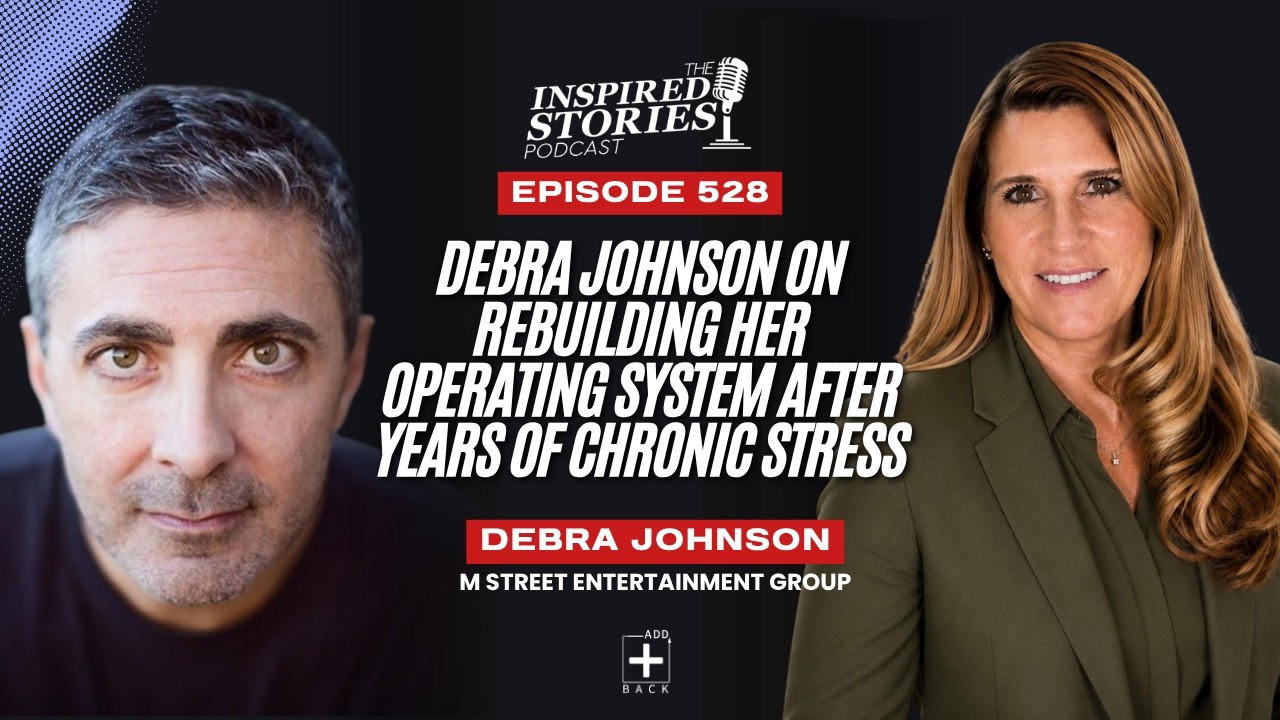
🎙️ From HR Manager to COO Three Weeks Before COVID: Debra Johnson
In this episode, Debra Johnson, COO and Chief People Officer of M Street Entertainment Group and founder of The Integrated Edge, traces her path from Jefferson County Public Schools to Zappos, Nasty Gal, Teespring, and M Street. She opens up about being promoted to COO weeks before COVID, losing two siblings four days apart, and the moment at her son's wedding when she realized chronic stress had taken away her ability to feel joy.
✨ Key Insights You'll Learn:
HR manager overseeing 3,500 employees at Jefferson County Public Schools
Left a role after refusing a legally questionable directive
Helped Zappos hire 1,200 people in a single week
Built HR infrastructure from scratch at Nasty Gal and Teespring
Promoted to COO three weeks before COVID began
Lost her brother and sister four days apart in January
Worked the Cain Prime expo line during a 600-cover Friday night
Felt no joy at her son's wedding despite the celebration
Discovered the neuroscience behind chronic stress and decision-making
Founded The Integrated Edge, a leadership capacity framework
🌟 Debra's Key Mentors:
Susan Walker: Zappos director who guided her through 1,200 hires in a week
Leslie Higgins: Executive coach at Teespring who introduced her to the Enneagram
Chris Heineman: M Street CEO who first trusted her vision for the company
Chef Bob: Cain Prime executive chef who showed her the intensity of restaurant operations
Dr. Amy Arnsten (Yale): Neuroscientist whose research on stress and the brain shaped her framework
👉 A candid look at what chronic stress costs a high performer, and what it takes to rebuild from the inside out.
Listen to the full episode here
Transcript
Anthony Codispoti (00:00)
Welcome to another edition of the Inspired Stories Podcast.
Where leaders share their experiences so we can learn from their successes and be inspired by how they've overcome adversity. As you listen today, let one idea shape what you do next. My name is Anthony Codispoti, and today's guest put herself through undergraduate and graduate school while working full-time and raising a family. She built her career on being the person everyone called when the answer wasn't clear.
She crossed industries from the culture labs of Zappos and the fast-scaling chaos of NastyCal to the dining rooms of one of Nashville's most celebrated restaurant groups and stepped into the COO role in February of 2020, weeks before the world closed. What came after that moment and what she eventually discovered about the internal cost of sustained high performance led her somewhere unexpected.
She is Deborah Johnson, COO and Chief People Officer of Street Entertainment Group, the Nashville Hospitality Company behind six award-winning restaurant concepts, including now help me with the pronunciations here. Tell me if I get right. Cane Prime, Virago, and Saint Aniejo. All right.
Debra Johnson (01:18)
Correct. Well done.
Anthony Codispoti (01:20)
She
is also the founder of the Integrated Edge, a leadership capacity framework she built in 2026 after two and a half decades of proven leadership. But before we get into all that good stuff, today's episode is brought to you by my company, AddBack Benefits Agency. And you'll want to hear this because it's hurting almost every business you know. See, health insurance costs go up every single year, and restaurants are furious about it.
They're paying more, claims are getting denied, employees are opting out because they can't afford it, and it hurts turnover and morale. It's one of the most maddening problems in running a business, and everyone just accepts it. But you don't have to anymore. Now there's a program that gives employees unlimited access to doctors, therapists, and prescriptions with no copies or deductibles to meet. You don't change your broker, and it works really well for part-timers too.
Here's the part that actually surprises most people. Our product actually increases your net profits. We recently helped a client add $900 per employee per year to their bottom line. Results vary, but gains like that can change how a business is valued. Get your free consultation today at adbackbenefits.com. All right, back to our guest today, the COO of Street Entertainment Group, Deborah Johnson. Thanks for making the time to share your story today.
Debra Johnson (02:45)
Anthony, thanks so much for having me. I'm excited to be here.
Anthony Codispoti (02:48)
So let's get into a little bit of your background before we get to present day. Back
Debra Johnson (02:52)
Sure.
Anthony Codispoti (02:53)
in 2007, 2010, you were HR manager at Jefferson County Public Schools. Huge school district, right? 3,500 hourly workers, 110 locations. You were managing recruitment and employee relations at the time. Tell us generally about that work that you were doing.
Debra Johnson (03:14)
It's huge school district, 16th largest school district in the country at the time I worked there. so it it was it was a massive operation. my
responsibilities were to recruit and support the the support function. So the cafeteria workers, the teacher assistants, the bus drivers, the maintenance team that kept all the facilities up right. I I loved working with that group of people because I often felt like they were the unsung heroes of the school district. And you know, teachers get the the, they're the main character as they should be. They're amazing and and their sacrifice and patience is just just phenomenal.
And working there with that group was really rewarding. I tried to really give them a voice and probably positions that they didn't normally get to talk through. So huge job, great team. Had a team of seven people. Hiring during the summer was just
Anthony Codispoti (04:21)
Non stop.
Debra Johnson (04:21)
It's a
yeah, yeah, yeah.
Anthony Codispoti (04:25)
So a lot of times some of our biggest lessons come from either mentors or from going through challenging experiences. Thinking about the time there at the school district, was there a particularly powerful mentor that you learned from, or maybe a really challenging experience that would be worth exploring?
Debra Johnson (04:45)
a a challenging experience for sure. there was a a time beginning of the summer bus drivers were in, you know, really short on bus drivers. so we were trying to be creative about ways to recruit and my leader gave me a direction that really conflicted with my personal values as well as really started to cross the boundaries of employment law.
So I was pretty steadfast about not doing that. I explained the reasons why, and that wasn't received well. So I ended up actually, that's the that's the reason I left the school district is I gave my notice a couple and left a couple weeks later.
Anthony Codispoti (05:36)
and I'm gonna guess because you're sort of excuse me, talking around it, we don't wanna say a whole lot more about what the specifics were there,
Debra Johnson (05:44)
Right.
Anthony Codispoti (05:44)
except to say that it was unethical and perhaps even illegal. So you've got a strong
Debra Johnson (05:49)
Yes, absolutely.
Anthony Codispoti (05:51)
moral foundation and that was not the place that you wanted to be. And so you left and you moved into the private sector. And I think you went next to Zappos, right? This e-commerce company that
Famous for building culture into its operat I mean, there have been books written, right? That people know Tony Shea. and you were brought in specifically during the peak season to help onboard. Tell me if I get this number right, over three thousand new hires between October and December alone.
Debra Johnson (06:21)
That's correct. It was I I was hired and I just happened to be hired at the time of peak season. So you know, it was the beginning of the summer. I leaved ACPS. at you know, that was a really scary decision.
You know, we were a two income family, we had small kids. It was it was it was scary to make that decision. And I often look back on that and think of what came out of that challenge, right? And it led me, I literally went to work at Zappos in August. so we're gearing up for peak season. And working at Zappos, I often use the analogy of the wizard of Oz. before Zappos, I was Dorothy in Kansas, you know, everything was black.
And white, and it was fixed and it was limited. there wasn't a lot of you know new ideas or things happening, right? And then I go to work at Zappos, and I'm Dorothy when she's opening up the door when she first comes to Oz, and everything's vivid, and there's things she's never seen before, and there's just limitless opportunities to build and innovate and create, and that's what Zappos really brought out in me. It really brought out the build.
And the problem solver because that group of people that I was so fortunate to get to work with, we were all in it together. Like doing that, many humans through a process is just insane. It was Cyber Monday, and it was one of the first or Cyber Mondays. I mean, this was you know back in 2010, it was before it was really a thing, so we didn't really know what to expect, and I can remember our director of operations.
Walking up, and he's like, we have to hire 1200 people this week. I said,
Anthony Codispoti (08:12)
This week.
Debra Johnson (08:13)
This week, and he said, Yes. and you know what? We did, we hired 1200 people in that week. I had an amazing director, Susan Walker, who just guided us along, and it was fun and crazy and exhausting and wildly fulfilling.
Anthony Codispoti (08:35)
Wow. and these twelve hundred people, how many locations is this spread across? Or is this in one geographic spot?
Debra Johnson (08:42)
One geographic spot, so right outside of Louisville, Kentucky, Louisville has a huge UPS hub. So a lot of Amazon warehouses, Zappos right there, a lot of warehouses there for shipping reasons, obviously. so we had two, three really large warehouses. One was almost a million square feet, one was 800,000 square feet, and the third one was about 300,000 square feet, and they were all vertical, right? So lots of lots of product to move.
Anthony Codispoti (09:12)
So I wanna understand better why you were seeing everything in Technicolor now. Like I wonder if there's a specific example you can give us. Hey, y previously if something came up, this is how we dealt with it. But now in this new world full of color.
Paint us the picture.
Debra Johnson (09:32)
Yeah. Well, one example, you know, you you brought it up culture, right? That Zappos kind of f claim to fame, right? Is delivering happiness, the book Tony wrote. what Zappos did that I think
Really, they were kind of the first pioneers of this is they really embedded the culture into the architecture of their operating system, right? It wasn't kind of bolted on at the end. It was more about, you know, in the hiring process, right? And having the ability to exit someone who really wasn't a culture fit without having to go through, you know, progressive discipline of HR, right? That was that was one example. But the hiring process itself and the onboarding.
Process. It wasn't just here, let's go through these intervert view questions. Yes, this person can technically do the job. Here's your benefits package. Go on, right? at Zappos, it was so thoughtful about the questions that they asked and the scenarios that they would place the candidate in to really evoke the answer that they were looking for to truly determine if that person would be a good fit for that organization at that time, right? And
That's the
Embedding the culture into the architecture of the operating system, I learned that all at Zappos, but you know, they were so great about training. And it wasn't, it was just the whole, you know, employee cycle life cycle, right? From the time you interviewed till the time you were hired and onboarded in your training and your ongoing education and the community and team building, that's what Zappos did so brilliantly that just has been really difficult for.
other companies to reproduce.
Anthony Codispoti (11:24)
Since you left Zappos and you were there a couple of years, and you've you know k remained in the HR field at a number of other companies, have you seen this become more commonplace?
Debra Johnson (11:39)
Seeing the culture being embedded throughout.
Anthony Codispoti (11:40)
the the culture piece
be so ingrained in what they do and how they do it. Because I
Debra Johnson (11:47)
Thank you
Anthony Codispoti (11:48)
and this is me from the outside of the HR world looking in. I've read Tony's book. there was a lot of talk about, you know, Zappos as it was coming up and becoming a company. It was like this case study that people put on stage. And so it's fun and interesting that you got to be there.
you know, during these early days and soak it up and learn from the inside. I'm just wondering if you have seen that become a more common approach to HR in business s since you were there in what, 2010?
Debra Johnson (12:23)
Yes, I absolutely. I think there's so much data on it now, right? And I think there's a a lot of really great people trying to do that, right? Embed the culture into the operating system. The challenge of it is that the it's an operating system. You have to have people to operate the system, right? They're actually a part of the system. So if the leaders are working under constant pressure or stress, they don't
have the capacity to maintain the operating architecture, right? Because in you know this will probably come up later on, but it's the pressure that they feel
Often can lead to lowering of standards unintentionally, right? Like something like in the interview process, maybe you wouldn't have hired that person if you, you know, wanted weren't under such pressure as a leader to hire 1200 people in a week, right? Took an insane amount of discipline, not just hire who walked whoever walked in the door, just needing the sheer volume of people that we needed, right? So you had you have to be really disciplined about maintaining that operating architecture and not.
letting good enough become the new standard.
Anthony Codispoti (13:41)
So after a couple of years at Zappos, you went to NastyGal, a fast fashion brand that was growing really aggressively at the time. And you were brought in to build that HR infrastructure for an entirely new location in Kentucky. Given the work that you had just done at Zappos, did you feel like you were well prepared for this? And were you able to inject a lot of that same
culture first thinking into the work that you were doing.
Debra Johnson (14:15)
Yes, so I left Zappos, Amazon acquired Zappos. I was on the
team that was going to really change over operations from Zappos to Amazon. and decided, you know, I worked through the transition, but then I decided Amazon wasn't a fit for me. So I my he was the director of operations at Zappos. He went to work for Nasty Gal and he asked me to come. So I went to help him build that infrastructure in the Kentucky office or the Kentucky location. And it was building a brand new warehouse, right? It was all from the ground
round up. What I what I learned at Zappos and having the director of operations who had been there too, right? I had operation buy-in. So that was like the biggest challenge is, you know, operations and people really aligning on how we're gonna go forward.
And so we we knew what we had to do and we could build the infrastructure, right? We could build that architecture, but it goes back to the leaders. And again, in that pressure, day-to-day pressure of really holding on to the system that is underneath that culture. It's a system.
If the system isn't maintained, the culture is gone. So having leaders have the capacity to be able to operate in that pressure environment, right? And still hold on to, you know, making those decisions day after day that maintain the culture and hopefully grow it.
Anthony Codispoti (15:56)
Can you give us an example of what it means to maintain the system?
Debra Johnson (16:01)
Maintaining the system, so at Nasty Gal or Zappos, for example, it was about the training, we can use that, right? So oftentimes in my experience I've seen, especially in the you know, kind of high turnover environments that I've worked in, what I've seen is that training, you know, obviously if you're hiring twelve hundred people or
servers, right?
if you have a leader who's, you know, under a lot of pressure to get a number of people through training because they have productivity markers they have to meet, right? they could maybe skip some of the training or not go through it as thoroughly, or maybe pass someone on an assessment that, you know, like again, is good enough. But if you don't hold the system, if you don't hold that training, even when it's really hard, that's what requires the
discipline, then your your culture is it's it's it's not gonna it's if you even can establish it appropriately to begin with, it will erode.
Anthony Codispoti (17:11)
Makes a lot of sense. Okay, so then you move into Teespring. You go from Nasty Gal to Teespring, which is an e-commerce platform for custom merchandise. And eventually you would lead all of people operations there. Tell us about the work that you were doing there and what you were learning about what it takes to keep that culture intact.
Debra Johnson (17:37)
Teespring, again, I knew someone, someone I'd worked at asked me to come join. Well,
Anthony Codispoti (17:42)
There's a theme here. People must like working with you, Deborah.
Debra Johnson (17:47)
or I'm a glutton for punishment, I don't know. I'm just kidding. Every, every experience was amazing. Teespring was the the founders were 26 years old.
Really brilliant young men. And like most entrepreneurs in a startup, right? They were trying to solve a problem. they were trying to save a bar. They went to Brown University and their favorite bar was going to close. And this is really when Facebook was first, you know, you were used, you could monetize, right? You could sell things. So Teespring was one of those first people or first companies where you'd start to see those ads pop up with, you know, make your t-shirt, customize your product.
What happened with Teespring is, you know, they got a series funding from Andreessen Horowitz, big time firm, right? And so with that comes a lot of eyes. A lot of people offering recommendations or people that we should hire. so the outside influences of investors really impacted the culture, and then also as you're scaling so
quickly, you know, you have to bring in higher level leaders because you know these were 26-year-old guys who were hiring all their friends to come in and run IT or you know all of that, but they didn't have the experience level yet to really know how to scale the organization. So, you know, they did what was recommended and what people would would advise them to do. And so they brought in more experienced leaders over finance, marketing, operations, all those things, right?
well what happens is those leaders come in with their own ideas and how things should happen, especially at that level. And so if leaders are coming in and they're you know under pressure or their capacity is already limited, it's harder for everyone to align to move into the it to move into the same direction toward the common goal. So you you have to really
again be thoughtful and really mindful about who you bring into the organization regardless of their talent level or experience they really have to believe and want to work towards that vision or it it it's not gonna it's not gonna work.
Anthony Codispoti (20:13)
So did you come in pre or post investment from?
Debra Johnson (20:17)
right after investment.
Anthony Codispoti (20:18)
Got it. So this was the time where they were really getting coached to put the big boy pants on and start doing things more officially, more formally.
Debra Johnson (20:25)
Yeah,
like really build an infrastructure of the company. Yeah.
Anthony Codispoti (20:27)
Yeah. And you were
well positioned to do that with all the different ic stops that you'd had along the way now. Okay. And then at some point you make a deliberate move out of tech, out of consumer brands, and into hospitality. What was going on during that time? What was the thought process here? How did the door open up at Street?
Debra Johnson (20:51)
I didn't choose the industry. I chose the CEO and his vision. I think,
Anthony Codispoti (20:58)
Okay. Say more about that.
Debra Johnson (21:01)
yeah, so
Teespring, I had built, I'd been there for four years. We had built the infrastructure and they were they were really looking at you know exit strategy and things like that. so my work had had kind of been done, so I decided to really take a break because I'd been working at breakneck speed for years in startup world. So I decided I was gonna take a break in one random day. I was on LinkedIn and I saw job postings.
in Nashville and I'm from Louisville, which is just you know 160 miles up the road. So it was really close. and really didn't really didn't take it seriously to be honest. I just thought that looks interesting. I'll apply and see what happens. I hadn't applied for a job in a long time. And I actually had another well and I yes
Anthony Codispoti (21:54)
'Cause you kept getting recruited by the people that you'd been working with.
Debra Johnson (21:57)
and I actually already had another opportunity in Chicago.
Because an investor wanted me to come help with another startup, which is doing insanely well, by the way. so congratulations to them.
And lo and behold, someone called me and set up a conversation with the COO at the time, Jamie Eifert. And I remember getting off the phone and I told my husband with her, and I told my husband, I said, if I don't get to work with her, I'm gonna be really disappointed.
Anthony Codispoti (22:27)
wow.
Debra Johnson (22:27)
Because I really just thought I could learn things from her. And I just enjoyed, there's such alignment in the conversation and what they were trying to accomplish.
So I, after about four interviews, it was a very interesting interview process. They'd had really not great luck with HR, so they were really trying to do everything everything they could to find the right person. and so I finally get to the interview with the CEO, Chris Heineman, and he's 20 minutes late.
And I'm sitting there thinking, you know what? I don't I don't have to do this. I've got other options, right? If this is kind of the way they're gonna treat someone, you know, here for an interview, maybe this isn't the place for me. So he comes buzzing in and you know, he just at that time didn't have a lot, like a lot of operators, didn't have a lot of
appreciation for what HR could bring to the table. They thought it was, you know, the principal's office and handcuff you and not be able to do the things you want to do on the operation side, right? And I remember I said something to him and, you know, before I said this, he was kind of looking out of the window, not really even looking at me. And when I said this, he kind of turned around and then we really had a conversation. And I said to him, I said, I'm
a typical kind of HR leader. you know, it's your company. You have built this company from nothing. Like he started it in 2000. He was twenty six years old at the time when he started it. I don't need to tell you how to run your company.
I'm gonna lay out the risks for you. I'm gonna lay out the rewards for you. I'm gonna walk you through the benefits of doing one versus you know what could happen if we do the other. But the choice is yours. I said, you know, it's your company. I'm here to support you and to help you build it the way you want to. And then he really started opening up about his vision, why he started Street and you know what the purpose of Street is. And just listening to him, it was it was.
All about people. It was all about the guests. It was about the people that worked here. And the vision he had was huge. it was it was a very lofty vision. He did not have anyone within the organization who felt like it was possible to build to build the infrastructure. Because in hospitality, what I found is the infrastructure.
Isn't as solid and isn't as long term as say in you know a banking industry or healthcare or I think it's because
Anthony Codispoti (25:11)
Just because of the turnover, the employee turnover?
Debra Johnson (25:16)
yeah, I've thought about this so much. I think it's because
The infrastructure and the business side of it is secondary to the to the guest experience and the and the operations within the restaurants. So as long as you're delivering a great guest experience and cash is coming in, then at least in the case of Street,
No one was there wasn't a big burning problem, right? So, you know, didn't wasn't a problem need to be addressed. And I think that's how it is in hospitality in general, is that, you know, as long as the guest is happy, that's the goal. And sometimes I don't think there's a there's as much
exposure to systems building right there's just not a lot of that in hospitality that's not their expertise that's not their it's not what they see so not having most of the people that end up in C suites are operators from the restaurants right so they're not learning about culture and how to build interview guides and training and all the things that the system underneath the operations so
Anthony Codispoti (26:32)
Gotcha.
Debra Johnson (26:32)
Yeah.
Anthony Codispoti (26:33)
So
it sounds like at this point in the conversation where you're kind of like, hey, I'm not like most HR people. Like here's my approach. Like this was a bit of a an inflection point. Like that, I don't know, signaled something to him that like this is this is somebody I can open up to. I can speak freely. And so he starts sharing this big vision. and and where did the conversation go from there?
Debra Johnson (26:59)
well, I got the job. No,
Anthony Codispoti (27:01)
He offered you on the spot.
Debra Johnson (27:02)
no, no, no. he he told me later that he was still he was still very leery of the HR world, but that he really enjoyed talking to me. and that it was the first time someone had really shown him a path to make his vision a reality.
Anthony Codispoti (27:23)
and what was that vision or what
does it look like today?
Debra Johnson (27:27)
Why is it it's different, right? So one of the things at Street that is, you know, change management, right? is that we do operate differently than other hotel groups for our size, right? We're an independent group. and we centralize a lot of the functions that are typically, you know, done inside of the restaurants. I'm going like this because our restaurants are literally right around our building.
So I think the, you know, when you when you work at Zappos, right, or you work at the school system.
There's a central scheduling hub, right? There's not every school system, every school's not doing their own schedules. There's one centralized schedule system, right? And that wasn't, that's not a place in the hospitality industry. Centralized purchasing function, not centralized. I mean, that's function not centralized in hospitality. Taking reservations happens in the individual stores. HR was happening in the individual stores. That was very scary.
I'm just kidding. accounting. I mean everything, every every store was operating as its own little business.
And that that in theory sounds really great, but that requires the general manager to be an expert at accounting, an expert at HR, an expert at productivity, an expert at analyzing cost. and that's not that's just not possible for any human. So they're spending these tons of hours trying to figure these out and work through these things. And yeah, after you do all that.
Would you go out on the floor and be really great to people? I mean, they're already depleted at that point. They don't have
Anthony Codispoti (29:16)
Yeah.
Debra Johnson (29:16)
the capacity to go out there and deliver the experience. So his thought was if I could take all of that off their plate and all they are focusing on is our guest experience and our team member experience. And I thought, well, yeah, we can do that. Like we can set up this and do that. And yeah, yeah, we could do that. And we have. I will say the change though.
It has been really tough because as someone who's coming in from outside of the hospitality industry, right? It's like, what does she know? my gosh, like she's not been a server, which is true. I haven't. but I have built systems to support the scalability and the sustainability of the growth of the company. And my CEO really recognized that. And you know, I I think that's kind of a a
Anthony Codispoti (30:12)
Was there an inflection point after you're in there and doing the work where people recognized you had street cred, even though you didn't have it in their world that you knew what you were doing? And did it make the pathway easier for you? Okay.
Debra Johnson (30:27)
No,
not for a while. it it really has been
really been personally challenging because you know I've been invited to come work in the other companies that I worked at because of my knowledge, right? So I had credibility the moment I walked in the door. There wasn't a constant need to prove myself. I mean at this point in my career, I've I've proven myself, I felt like, you know, so it was a little
it was humbling, which was a good lesson to learn, right? That I needed to
build that trust with this team and it was gonna be harder. So I focused on what I knew. and I also dove in and learned everything about the restaurant operations that I could. I went and worked on an expo line at Kane Prime on a Friday night when there were 600 covers coming through and it was terrifying. great executive chef chef Bob there and you know he's a he's a big guy, moving voice. And I thought, okay, I've I've been in, I mean
I've worked on production floors and you know big warehouses with lots of equipment. Like I can do this scariest thing I've ever done at work in my life. It was it was just controlled chaos, but he commanded the kitchen and everybody knew what was going on, but it was a lot, it was overwhelming from every perspective, right? Every sense is just exploding. And what I realized from that is there.
They're activated the entire time. Their body is activated from the time that first ticket pops up until that last plate goes out. You know, that's five to six hours of just continuous activation of your nervous system, trying to make decisions quickly. So that gave me some real perspective on how to build some things for them.
Anthony Codispoti (32:32)
Give us an example of what you learned and how you were able to tailor some systems for them based on that experience.
Debra Johnson (32:39)
Well, we we put in place the leadership development program.
Which is near and dear to my heart, right? so you know, three things we focus on at Street is innovation, world-class training, and leadership development. even outside of hospitality, I think a lot of organizations really talk about leadership development and they, you know, have the classes and those kinds of things, but I still think there's such an opportunity to go deeper. So
At Street, you know, I taught different types of things over the years. You know, I'm an a certified Enneagram practitioner, so that's always a favorite one of mine to teach. But one thing you know, I'm a big Jim Collins fan, so I love to teach good to great. but one thing that I had not really
understood until I really got into kind of my personal crisis is what I'll call it. is that
Your nervous system, and now there's so much data coming out about it, but for me it wasn't about wellness. It was about the physiological effect on my brain and what that was doing to my decision making. Because my, you know, your nervous system is so activated all the time, just continuously. It really erodes the function, the neurolog neurological function of your prefrontal cortex. And that's where all your executive function lives, right? You're just you're
Strategic thinking, your presence, your ability to make decisions. And so really recognizing that and starting to understand it, I was able to build that into the leadership development practices that they use. And, you know, when they get into a position where they feel like they're being activated, they now have some simple tools that they can use to kind of bring that down. So they can go from operating in their amygdala to operating in their prefrontal cortex again and make those.
Sound decisions that have to be consistent to maintain the excellence of the operation and the culture.
Anthony Codispoti (34:56)
Yeah, Deborah, I really want to explore a little bit about the Street Entertainment brands, the different restaurants, but maybe we'll come back to that if we've got time towards the end, because I think this is a good time to head into what you were just calling your personal crisis. So I think this is really key to the work that you're starting to do now. Can you walk
Debra Johnson (35:16)
Yes.
Anthony Codispoti (35:17)
us through what happened there?
Debra Johnson (35:20)
Yeah, so
as you said in the intro, my whole life, I mean, this was my value that I got, you know, my addical roles as a little girl was
Being able to be the person that was strong, the one that didn't like break down, the one that maintained composure in really emotional situations. So that really drove me, right? And led through all the things in my career that we've talked about up till now. I always just took such pride in being the person that could figure all the things out, who wasn't afraid to look at things and call them like she saw them, right?
Right.
But I got to, you know, with COVID, being promoted to COO literally three weeks before COVID. I'd not been a COO before. the amount of
Chronic stress and pressure that COVID started, right? you know, every day you didn't know what was gonna happen. And literally a decision I could make could cost someone their life. Like I I I still get really emotional about it because, you know, if you remember back to when it first started, you know, shutdowns were happening, you could have this many people in restaurants. you can't have that many today. And, you know, you had so many people who were just so anxious and
And upset and you know, didn't know what was happening. And some people would come and say, I need to work because I need the money. And other people would be like, I can't believe you're asking me to come to work and risk my life. You know, so it was really a lot of that. Well, that really started the period of this constant humming underneath of the the cress rate and just the for
Anthony Codispoti (37:17)
For you, for you personally, yeah.
Debra Johnson (37:19)
me personally. you know, not sleeping at night.
For nights on end. It was such a difficult time. And then, of course, you have the financial impact on the restaurants and things. So, you know, and then I had some really big personal tragedies along at the same time. It was really a lot, even for someone that takes a lot of pride in being able the one to carry and shoulder those burdens. So our son got married and he married
Our beautiful daughter-in-law Taylor, her son's name is Levi. And Levi and Taylor have known each other since they were little children. Their parents are our best friends, and her father had tragically passed away in 2018. So this wasn't just our son getting married. This was like just a joyous occasion of these two people who we had just so rooted for, and we were all missing her dad. And it was a huge, beautiful wedding.
Chill Downs Museum. It was just everything I could never have imagined as a child growing up without a lot of money that we would able would we would be able to provide for one of our children. It was just, it should have been magical. Sorry, I might get emotional.
Anthony Codispoti (38:42)
It should have been magical.
Debra Johnson (38:44)
It should have been magical. you know, and I can remember leading up to the wedding, I told everybody here at work, I'm not answering my phone, I will not respond to a text. I owe this to myself and my son to be fully present. And I so desperately wanted to. And I realized we were at the reception, wedding was beautiful, my son was so happy.
Our daughter was out on the dance floor with her girlfriend and they were just so happy. And I just sat there and I was I could feel the joy of seeing my children happy. I could not feel the joy of the event. I could not be present with the people I was around.
Because I was so depleted. I didn't have anything left to give them. And I remember sitting there and I thought, I can't live like this. I can't live like this. So the next day.
I was like, I gotta figure this out. I have to figure this out. There's not a possible scenario where I don't figure this out because they I was thinking to myself, I'm not going out like this. I've worked too hard for too long to not be able to enjoy my life or enjoy my work anymore. I didn't even enjoy coming in and you know, I I didn't feel like I was making the right decisions as quickly as I used to. I felt like
I was more reactive. I just didn't feel like myself. There was an incongruency between who I.
wanted to be or who I was and how I was showing up. Right. So I just dove in. I just dove into every tool that I knew. I I have a lot of tools in my toolbox. Like I said, if I couldn't figure this out, my gosh, what in the world? Right. And I didn't have any intention of figuring out for anybody else. I just wanted to feel better. I wanted to be yes.
Anthony Codispoti (41:00)
You went to work on yourself. I gotta fix Deborah.
Debra Johnson (41:03)
Yeah. And that's exactly right.
Right. Because I knew it wasn't outside of me. I knew it was an internal pressure that I've always carried. Right. And and that drove my my.
Drive for excellence, how I go about my job, how I go about relationships. And it had really, for lack of a better word, it started to betray me. And so that's why I couldn't I couldn't feel it until it reached this, right? So from the inside, it just feels incremental, right? It's just this project, right? It's just opening this restaurant, it's just like this next acquisition, whatever your industry.
industry
is right it's just the next thing I'll get that done and then I can kind of take a break and relax and even when those breaks came my baseline was now I had started here now my baseline's up here so it keeps
Anthony Codispoti (42:00)
It just keeps moving up with each one of these stressful
incidents.
Debra Johnson (42:03)
Exactly. And so you don't really know it's like the toad in the boiling pot, right? You don't really understand it until you're there, and then you're like, my gosh, I'm in trouble. So I just had to really start diving into the tools I had and then discovering the one tool that I didn't have, and it was the neuroscience behind the physiology of what happens to your brain when you carry a constant load of stress. It diminishes your capacity.
to do anything across disciplines in your life, right? It is part of your relations, it's your relationships, it's part of your behaviors and how you think and act and at work and your presence and your operating models. Like it's it's everywhere.
Anthony Codispoti (42:51)
And so what's going on from a scientific point of view? And I know science isn't the your area of expertise, but obviously you did
Debra Johnson (42:57)
No, no I
Anthony Codispoti (42:57)
a a deep dive here.
Debra Johnson (43:00)
So I'm glad you brought that up because I it's really important that this is not framed as wellness because this is based in science. I'm data driven, HR data driven. Like I know that's also not super common, but I'm all about I need I need evidence. Like that's how I operate. And so what I found in the neuroscience is there
Is a there's several great doctors working on research right now. and one of them is Dr. Amy Artison, she's at Yale, and what she found is that the constant stress on your body actually impacts the neurological wiring of your brain. So you start thinking differently, and how you get to decisions takes more effort.
Effort, right? So the good news I found is that I could rewire it another way. So that's what
I set out to do.
Anthony Codispoti (44:06)
Y you figured out a way to rewire yourself.
Debra Johnson (44:09)
Yeah, I didn't figure it out. I just followed her science. I did not not Yeah. Well I learned
Anthony Codispoti (44:12)
Okay. I'm on the edge of my seat now. What did you learn? What were you able to do for yourself?
Debra Johnson (44:19)
I learned that
It isn't the one thing, right? It's not one thing in it, it's a sequence, right? It's how you manage the sequence. And the sequence starts with the physiological, right? Because you cannot hold the operating models, you cannot hold the identity work, you cannot hold any of that until you are baseline, right? So getting yourself to baseline, there's so much out there now about the techniques and things you can do to bring your nervous system back down into regulation. For me, I had to create a routine.
Right. So, you know, a lot of people have morning routines, you know, before they get up. I had to develop that, right? And so it it was trial and error of what worked for me, right? It's like, you know, making sure I hydrate before I do anything else in the morning, not looking at my phone as soon as my eyes open and giving my brain time.
to you know set itself for the day and not just start reacting to everything that pops up on my phone. It's it's making sure I move for twenty minutes and not moving with the objective that, you know, I want to be fit or furt fit into a certain size of clothes, but that I'm actually doing that to prime my operating system to work optimally that day. So when I think about it that way, it's not wellness. This is actual science of how I'm
These things I'm these tools I'm using to make sure my brain's op working at optimal capacity.
Anthony Codispoti (45:46)
And so, how long after you started down this path did you start to notice the differences?
Debra Johnson (45:53)
pretty quickly.
Anthony Codispoti (45:55)
Days, weeks, months.
Debra Johnson (45:57)
maybe five weeks. and like I said, it it was desperation. It was just like I I just had to find. you know, I I went through a a couple of health issues and I knew it was all related. I knew it was all related. So really focusing on how I could
Calm my nervous system and keep it calm, right? throughout the day, which I had done naturally for decades. And so that's why it was so foreign to me, is like why I was reacting. That's why I felt incongruent. But once I figured out how to get my routine where I felt really grounded, I call it my calm, ground.
study state where I show up that way, right? So once I figured that out and you know put that into practice, it was really about four or five weeks that I started to really notice. And then it just so happened at the same time
I was teaching the Enneagram to a group of leaders here. And so I thought, I'm gonna coach myself through this. So I did my full analysis just like I was working on it for another person. No, but I
Anthony Codispoti (47:12)
Had you done one for yourself before, I'm assuming? really?
Debra Johnson (47:16)
No, but I had an amazing executive coach when I worked at Teespring, Leslie Higgins, who introduced me to the Enneagram. And it was so insightful into how I made decisions and why I did. And what I love about the Enneagram is that it's it's not therapy.
And also it helps you dive into why you behave certain ways, like what are those poor drivers in that personality type. So for me, what I discovered is that my identity had really started to fuse with my sense of worth.
because of years of producing, right? And getting the accomplishments and getting the calls, hey, come work with me. that all felt really great, right? So
Anthony Codispoti (48:11)
But now here you are
in the midst of COVID and everything's just falling apart. You're not getting those pats on the back. You're just trying to hold things together with duct tape.
Debra Johnson (48:17)
No.
I'm just trying to exactly duct tape and sheer will. and if someone said, Deborah would rather die than fail. and that's that's kind of true.
I just could not, it w I was obsessed. Like I could not let this go, especially once I started to figure it out. Then I was like, okay. So then I figured out the worth part, right? And how I could untangle it for myself. And, you know, that work through the Enneagram was really it was factual, it was data driven, you know, I'm not sharing, you know, my childhood memories or anything like that.
Just working through, like from a from a really logical perspective, why I make decisions. And that was that that was a really good way to frame it for me to reflect. So then once I was doing that, what I realized is that everyone in the office was different.
And so I started to notice that people were bringing me problems in a different way. They were bringing me solutions with them. They were more open with ideas in meetings. There was a more positive energy. And so what I realized is that even though I would be saying the right words, my
presence told them something else. They could feel my stress, they could feel my pressure, and they absorbed it. Even though I was not saying the words, they absorbed all of it. So when I started to notice they were
their behavior was changing, I started tracking. so when I come in in the morning, my energy sets up the entire day. So if I walk in, which many mornings I did and I'm like focused and I'm like, okay, I've got this, this, this, and you know, and I walk through, hey, hey, hey, hey.
Then you know, they're like this all day. They're just heads down working. So I I started tracking when I came into the office, and I was more myself. I was grounded, I was regulated, I was present. I was able to speak to each one of them. And then their day was completely different. The energy was different. So I started tracking and I wouldn't, I wouldn't go really low.
because I didn't want to them to be like that all day and them not have a good day. But I would track if I came in what kind of energy I had and how it transferred to my team. And it always did.
Anthony Codispoti (51:00)
Wow. There's there's that data
you're collecting. Yeah.
Debra Johnson (51:03)
Exactly,
exactly, because it always affected them. So that's when I realized that I really needed to have a conversation with them. So I scheduled time with them and in my Brene Brown fashion, my Brene Brown best, I explained to them what I had been going through and you know shared with them what I was learning and I still had a lot more to learn.
And I gave them permission to talk to me about how my dregulated nervous state had impacted them.
Anthony Codispoti (51:42)
That must not have been an easy conversation to initiate.
Debra Johnson (51:46)
It was definitely hard because you know you don't want to hear that you didn't have a good influence on people, especially when you want to so badly. but I knew
I needed to understand it and I was really thinking about it from a data collection perspective. So it kind of took the sting away a little bit. but I also know they needed to be heard. I also know knew they needed to let that out for them to grow and continue to move forward too. So it ended up being an amazing conversation and it completely, completely changed the environment of of our office and how we work together. It it was it was incredible. So then I
Had to figure out how do I operationalize this, right? Because I don't want to go back to you know being the hero and running into my cape and being the only person that could solve all the problems, right? Because that was the part I had to figure out of my identity work is I don't have to be that person all the time. I can allow other people to do that.
Or teach other people how to do that, right? So then I had to figure out how to oper operationalize it. And that's when I turned back to my really tried and truths, my Cotter change management model.
Jim Collins good to great model, my flywheel model, all those things, right? That I just love so much. I really had to pull those out and dust them off and put those back together. So the integrated edge is really the integration of all of those things. It's not one thing, you can't do it with just one. They all have to be integrated. And I think that's the difference. And in and you know, coming through this on the other side, you know, I'm sitting there with my brother.
in January and you know I had a laptop because he was he was you know sick and I just you know got into one of those flow states and all of this just started pouring out of my brain and I thought when I got finished I was like I have to tell people about this. I have to tell people about this because it was so profound for me and I know I'm not the only person that struggles with this. So I just knew so I started like you know set up my website.
started put publishing some content just to start getting people to think about it.
Anthony Codispoti (54:11)
So the integrated edge today is what exactly? It's a leadership capacity training
Debra Johnson (54:19)
Framework.
Anthony Codispoti (54:19)
framework.
Debra Johnson (54:20)
Yeah, so it really combines those, it it really takes those disciplines, those interdisciplines and integrates them, right? So from your physiological state to your identity development, the courage it takes to be vulnerable, right? you know, the fourth edge is about what burnout and executive presence actually is, because executive presence has always been so elusive, right? You can't really define it where other people can emulate it. But what I found it is for me,
Is that you show up in your most authentic, grounded, and steady state, that you can have the best decisions, you can provide the best mentorship, right? And then you've got your operating models, and that's how you sustain it. I call it legacy.
Anthony Codispoti (55:05)
So the integrated edge for you, Deborah, is a relatively new venture, but this comes from decades of your own experiences, the crisis that you went through during COVID and the learning process that you went through putting yourself back together, kind of rebuilding your operating system.
Debra Johnson (55:25)
That's exactly right. You stated it beautifully. I had
Anthony Codispoti (55:28)
And so
Debra Johnson (55:28)
to rebuild my operating system for the capacity that I was carrying now, for
Anthony Codispoti (55:33)
Yeah.
Debra Johnson (55:33)
the load I was carrying now.
Anthony Codispoti (55:35)
So who is this intended for? Like who does it make the most sense to have work with you?
Debra Johnson (55:41)
For I I think it's the I think it's the senior leader, right? It's someone who's been at this for a long time and, you know, by all accounts is still performing well. You know, I was still doing all the things well at work. but what it was costing me internally, that, you know, led to that culmination of my son's wedding, I n it's built for those people. I think it could help a lot of people.
But I think I built it specifically for the people that you know, have been carrying a really heavy heavy load for a long time. And that's typically the people who are in senior leadership positions or C level executives, right? Where that pressure, you know, it stops up there. So there's a lot of pressure there.
Anthony Codispoti (56:28)
Yeah, what you're describing there at your son's wedding was almost like there was this invisible veil around
Debra Johnson (56:33)
Yes.
Anthony Codispoti (56:34)
you. You could see all the joy happening right there, but you could not reach out and connect to it. And
Debra Johnson (56:42)
That's right.
Anthony Codispoti (56:42)
that was a light bulb moment for you. Do you think people need to be in that state of desperation for them to get value in the work that you're providing now?
Debra Johnson (56:55)
Absolutely not. I'm really glad you asked that. Because I think teaching this right gives them the tools to prevent it. that's that's exactly what I hope, you know, happens. So when you say, you know, who's this meant for, I think in in hopefully not in crisis to me, I mean i I was in severe crisis. I don't want anyone to ever feel like that, ever.
But hopefully before they get there, right? Maybe they've started to realize that something's off, but they can't really name it.
You know, they just feel like maybe, you know, when they, you know, come home from work, you know, they used to just bounce in the house and start participating in whatever was happening inside the home. And now they have to kind of take a break and deep breath before they walk in so they can try to be present to hear about homework or a baseball game or whatever that is, right? And not just be going through the motions.
Anthony Codispoti (57:51)
Hmm. Can you give us a rough idea, sort of the short reader's digest version of what does an engagement with you look like at Integrated Edge?
Debra Johnson (58:01)
So it's it's it's a long, it's a long period for I think for some people. it it's a year. I recommend a year. because you know it takes some time each week to go through these are some really heavy topics, right? not in not in an emotional way, but in a diagnostic way, right? Like you really have to understand where you're at.
And and build that to where you want to be and then move on to the next edge. And they and they build off of each other. So you can't go, you can't go from your physiological edge to your courage edge to your legacy edge. Like they have to go in sequence. That's the beauty of the integrated edge. so you know, working through those Enneagram is you know, usually eight or 10 weeks. So, you know, it's a it's a weekly session, and I have a lot of experience.
Experience in coaching, but this is not coaching. I want to make sure that's really clear. This is not leadership coaching. This is helping you build your operating system to capacity.
Anthony Codispoti (59:06)
How are those fundamentally different?
Debra Johnson (59:09)
Because leadership development only only addresses one of the disciplines, right? It's just it's addressing your behavior. it's not taking into account everything that you need to operate successfully.
Anthony Codispoti (59:22)
So let's fast forward two, three, five years down the road. You've been doing this for a while, you've had the chance to help a number of people. What do you want to have those folks look back and say? What do you want to be remembered for in that work that you've done?
Debra Johnson (59:38)
Yeah, it's such a great question. I've thought about this a lot. I really want to be remembered as someone that really had a positive impact on other people's lives. I mean the true quality of their life. and for me, the quality of my life incl includes my work because it's it's a passion of mine, it's part of who I am.
So being able to really integrate integrate all parts of someone's life where they're truly present and fulfilled, that that would be that would be a phenomenal legacy.
Anthony Codispoti (1:00:15)
I love that. Deborah, I've just got one more question for you today, but before I ask it, I want to do a few quick things for the audience. First of all, if you want to learn more about what Deborah's doing, I've got two different websites for you. First, there's mstreetnashville.com, all the great restaurant concepts they have in the Nashville area. the letter Mstreet Nashville.com. That link will be in the show notes. And then
We've just spent a lot of time talking about the great new work she's doing with the Integrated Edge. And that's exactly the website, theintegratededge.com. It will also be in the show notes. But if you're clamoring and you can't wait to check it out, just go right now. Check it out, theintegratededge.com. And if you're enjoying our show today, please take a moment to subscribe wherever you're listening. It also sends a signal that helps others discover our show.
So thanks for taking a quick moment to do that right now. And as a reminder, you can finally get your restaurant employees access to therapists, doctors, and prescription medications that counterintuitively actually increases your company's net profits. See, there's no copays, there's no deductibles to meet. don't get rid of your broker. And it works for part-timers too. You'll find that there are net profit increases that change how the business is run. And
You know, happier employees and a stronger bottom line. Who doesn't want that? addbackbenefits.com. So last question for you today, Deborah. a year from now, what is one very specific thing that you hope to be celebrating?
Debra Johnson (1:01:51)
two very specific things that I will be celebrating next year. Our daughter is getting married in May of next year, and our son and his beautiful wife Taylor are expecting their first child. So we will be first time grandparents and our daughter is getting married. So I and you know to have you know our son get married right and feel that way and to do this work like
I get emotional. Thinking about it.
And to know what experience I'm gonna have at our daughter's wedding, that I'm going to be there, that I'm going to be present, that I'm going to be a part of that joy. And then also the presence that I will have with with our grandson, and then also the presence that I get to have with the people that I work with and I love here, right? That I get to enjoy all of that now. And that's really, really special. So I'm super excited.
Anthony Codispoti (1:02:50)
The invisible veil is gone. Yeah. What is Yeah. Yeah,
Debra Johnson (1:02:52)
The invisible bale is gone. I love that analogy, by the way. I might use that.
Anthony Codispoti (1:02:58)
please do. what is Taylor's due date?
Debra Johnson (1:03:01)
She is actually due on September 18th, which is my dear, dear, adored my grandmother. that's her birthday. So I'm very excited about this. We're the last
Anthony Codispoti (1:03:13)
That's very special.
Debra Johnson (1:03:14)
ones in our friend group to not have grandchildren. Yeah, we get to be in the fun club now.
Anthony Codispoti (1:03:17)
I'll get to join a fun club then. Nice.
Deborah Johnson from Street Entertainment and the Integrated Edge. I want to be the first to thank you for sharing both your time and your story with us today. I really appreciate you being here.
Debra Johnson (1:03:31)
Thank you so much. I enjoyed the conversation, Anthony.
Anthony Codispoti (1:03:34)
Folks, that's a wrap on another episode of the Inspired Stories Podcast. Thanks for learning with us. And if one thing stood out, put that into action today.
Connect with Debra Johnson:
Website: mstreetnashville.com
Website: theintegratededge.com