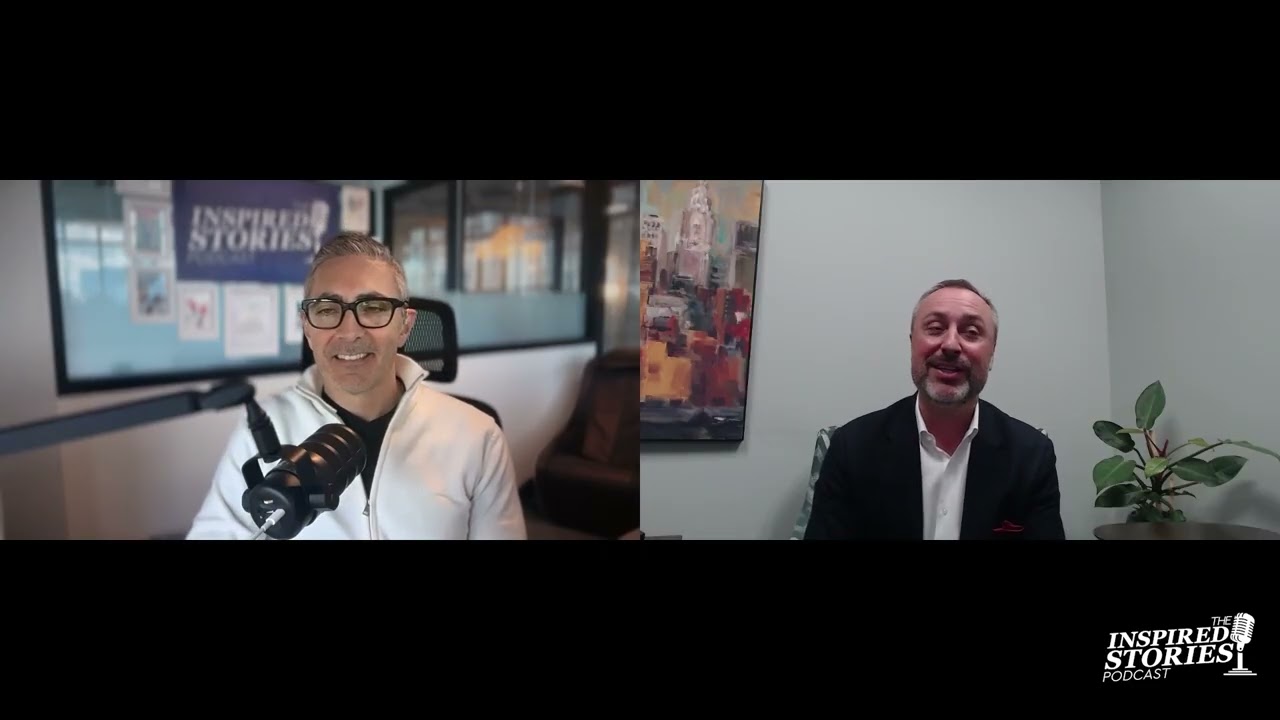
Christian Hertl is a CFP and partner at Antolino Wealth Advisors, a Columbus-based fiduciary wealth management firm now in its third generation, with offices in Columbus, Gallipolis, Estero, and Naples. The firm was founded in 1960 by Ralph Antolino Sr., a schoolteacher whose part-time life insurance work outpaced his salary, and has been built on a philosophy of thinking and caring rather than product sales. Christian joined in 2004 after a stint at Wells Fargo Financial, earned his CFP designation in 2010, became a partner in 2013, and now leads client relationships focused primarily on business owners navigating the intersection of their companies and their personal wealth.
✨ Key Insights You'll Learn:
Antolino Wealth Advisors founded in 1960 by Ralph Antolino Sr., a former schoolteacher and son of Italian immigrants who couldn't read or write
Firm philosophy of thinking and caring: the value is in understanding what clients want, not in specific products or strategies
Christian's early lesson at Wells Fargo: people make financial decisions based on motivation toward goals, not math
Joining Antolino in 2004 through a college network connection, arriving at exactly the right moment when two spots had opened
The Ultra Vision System: a proprietary discovery process to get clients ultra-clear on what they want and build a path to get there
Three-tier client model with paired resources for each level, from business owners with complex needs to their families and employees
Advanced strategies including specialty retirement plans that allow business owners to shelter up to $1-2 million annually in tax-deductible contributions
Employee Stock Ownership Plans (ESOPs) as a tool to sell a business, avoid capital gains, and transfer wealth to employees
Succession planning as a core differentiator: acquiring four to five smaller advisory firms whose owners had no plan for transition
Growing from roughly 15 employees three years ago to 25 today, with three more graduates coming from Ohio State
🌟 Christian's Key Mentors:
Ralph Antolino Sr. (Founder): The most thoughtful and caring person Christian ever worked with, whose Optimist Creed and mission of thinking and caring still define the firm's culture
Ralph Antolino Jr.: Built on his father's foundation, modeled the owner-operator mentality and brought Christian into the firm through a shared network connection
Maureen Armstrong (Partner): Made partner at the same time as Christian, brings deep employee benefits expertise, and helped build the firm's team-based advisory model
His Father: A church employee who gave Christian a strong sense of purpose and belief that shaped how he processes his sister's illness and finds meaning in suffering
👉 Don't miss Christian's account of how his sister's terminal cancer diagnosis at 34 forced him to rethink everything he believed about purpose and suffering, and what he found on the other side of that reckoning.
Listen to the full episode here
Transcript
Anthony Codispoti (00:00)
Welcome to another edition of the inspired stories podcast where leaders share their experiences so we can learn from their successes and be inspired by how they've overcome adversity. As you listen today, let one idea shape what you do next. My name is Anthony Cotaspodi and today's guest works inside a firm that was built by a man who quit a teaching job paying $2,000 a year because a part-time gig and life insurance outpaced his salary.
That was 1960. The business is still running today, now in its third generation. He joined the firm in 2004 as a young advisor, fresh from the Ohio State University and Wells Fargo Financial. Over the next two decades, he earned his certified financial planner designation, made partner, and built a practice centered almost entirely on business owners navigating the intersection of their companies and their personal wealth.
His name is Christian Hurdle, CFP partner at Antolino Wealth Advisors, a fiduciary wealth management firm with offices in Columbus, Gallipolis, Estero and Naples, serving over 2000 client relationships. The firm integrates investment strategy, tax planning, estate transfer and a proprietary process called the Ultra Vision System to help business owners get clear on what they actually want and build a path to get there.
But before we get into all that good stuff, today's episode is brought to you by my company, Ad Back Benefits Agency. And you'll want to hear this because it's hurting almost every business owner you know. Health insurance costs go up every single year and businesses are furious about it. They're paying more, claims are getting denied, employees are opting out because they can't afford it, and it hurts turnover and morale. It's one of the most maddening problems in running a business and everyone just accepts it.
But you don't have to anymore. Now there's a program that gives your employees unlimited access to doctors, therapists, and prescriptions with no co-pays or deductibles to meet. But here's the part that really shocks most people. Unlike every other employee benefit out there, our program increases your net profits. We recently helped a client add $900 per employee per year to their bottom line. Results vary, but gains like that can change how a business is valued.
Be the hero advisor that introduces this to your clients today, addbackbenefits.com. All right, back to our guest today, partner at Antalino Wealth Advisors, Christian Hurdle. Thanks for making the time to share your story today.
Christian Hertl (02:41)
Hello, excited to be here.
Anthony Codispoti (02:43)
So Christian, you studied finance at my alma mater, Ohio State's Fisher College of Business, and took your first job at Wells Fargo Financial, where you worked on lending and savings relationships. What did you learn in that early role about how people are actually driven to make financial decisions?
Christian Hertl (03:02)
Yeah, I can think of a couple things. The first is that your finances are incredibly interconnected. It's not just one piece that makes the difference. At Wells Fargo, we really only had one solution we were offering. And I was surprised at how often it didn't fit because of some other component of your life that just had to be rearranged first. And so it's that interconnectedness that really drives
a lot of improvement. There's no silver bullet. And then think the second thing is, is that people don't make decisions based on math. You know, I would go in there and have a spreadsheet that would do some calculation and would say this is better or whatnot, even incrementally improvement. But it wasn't until they understood, you know, why what they were doing wasn't sufficient to accomplish what they actually wanted.
that it produced enough motivation to actually do something. And so some of that is learning sales just as a big picture. And I always think of sales more as empowerment than persuasion. It's if I can help someone get what they want, they're a lot more likely to do it. And so it's not just that, here's money value to you. That wasn't enough to drive, you know, thinking about the paperwork you're doing getting a loan. It's horrible. And so there's got to be a real benefit to it.
And that benefit's not gonna be a dollar amount. It's gonna be the achievement of some other thing that you want in your life. And so that's really informed how I behave today.
Anthony Codispoti (04:36)
And so to use that loan example, somebody might come in and get a loan to buy a house. And so you're saying the big drivers in the decision to choose Wells Fargo at the time for that loan wasn't so much about the numbers, it was what the loan would allow them to do. And in this example, buying the house.
Christian Hertl (04:55)
Certainly when they're choosing between options, that seems to be the way it would go. The other thing I learned, and maybe this is important to do, is that if you're selling a commodity, price is the only factor that is considered, right? So if there's no difference, right, I need a mortgage, and I don't care about my mortgage provider, there's no value to the lending relationship. I mean, I think that's a common place for people where they buy in a car.
The loan is whatever the loan is. In those cases, it is 100 % price. And so it's a race to the bottom. And in our business, I think we look at the example of there's three primary components that a customer can choose across, price, quality, and service. You get to pick two. You can't get
great price and expect quality service quality projects with a good service. You know, if you do that probably cost more. If you want the highest quality at a discount, well then you're probably not getting great customer service along with it, you know, and and a lot of places look at giving you trying to give you all three. That's a lie. They can't so.
Anthony Codispoti (06:11)
So my
example of the home mortgage is probably a bad one. Give me a better one.
Christian Hertl (06:16)
Yeah, well, think it's you could use the same analogy. It's getting into maybe refinancing a mortgage or how do you compare two different streams of cash flow? If I pay this amount for 25 years or this amount for 30 years, like what's the difference and
That was probably a lesson in the first component, which is if I'm just discussing one thing, a mortgage, then as a commodity, you're just picking a product and anyone can shop product. And today it's so easy with the internet to just search what's the best mortgage rate, what's the best a CD product, what's the best annuity, what's the best mutual, you you can just sort of Google that stuff and it gives you an answer. So there's no value in knowing that answer.
You you can't, shouldn't really be able to get paid that much to, to tell someone what's easy to find out. And so it's really, and then layering in those connections to move from, okay, here's a product that solves a question to basically understanding and moving backwards into what are we actually trying to do? And I think that's something that I didn't ever ask at the mortgage job because there's no point. They're coming for a mortgage. I have a mortgage. It's good or bad. I can give it to you to do it or not.
What I didn't like about that is that you're almost powerless. Your persuasion is either manipulative or an information deficit or, you know, or you're actually the best. Cause if you not like this was, blew my mind. people would call the bank and we would give them our quote and I would know it's not competitive and they would still do it because they didn't even bother. Like, well, just call fifth third, call hunt, call anyone else.
Get two quotes, come on. And so they weren't making that decision in a good way. And a lot of it's because they don't know, it's a pain in the butt. They didn't want the hassle or the challenge or the time to go call two places. They got referred to us and so they ask about it. But what I recognize is that I'm not even really helping because I'm delivering the solution that was asked for.
but it may or may not be getting anyone closer to where they want to go. And especially the more challenging their situation was, the less like I felt they were getting a good result. And so that's really what kind of drove me to leave and look for something else. Cause it was like, this isn't, this isn't really doing anything for someone. It's just moving this product along and, and man, I wish I could choose. Totally. Right.
Anthony Codispoti (08:54)
You're getting a commission, you're sort of checking the box on your side, but you're like, man,
I don't feel like I'm delivering the best value, the best service to the client.
Christian Hertl (09:01)
Yeah, for sure. And
it's all transactions, right? I mean, it's basically you buy the thing and that's it. I never talk to you again. And it's like, well, now that I know you, I'm not going to help at all. That just seems so silly.
Anthony Codispoti (09:13)
So you start looking for other things. You find Antolino & Associates in 2004. What specifically drew you in there? How did you know this place was going to be different?
Christian Hertl (09:16)
Yeah.
So
yeah, a couple of things. When I went through the first round of job searches after school, I really went to big corporations. Columbus has a lot of wonderful headquarters for wonderful companies, and then a lot of different offices for banks and institutions, distributions, logistics, a lot of options. Columbus is really a wonderful place. so I went to all those big interviews, meet 10 people.
round after round after round, but I felt like you were just emailing your resume to like some inbox. When I looked for it in the second time when I was going to leave Wells, I realized like, I don't want to be in some box doing the same job every day forever with no input. You know, I'm just doing the thing, which is very much what that job at the bank was. And so I wanted to find two things. I wanted to find a place where the person I'm talking to,
could decide to hire me or not. This whole going to the HR department, 20 rounds, it just seemed dumb. that, they're not getting the best person. They're just getting like the person who happens to survive all the personalities that you meet. And then I wanted a job where we had autonomy about, you know, what we did and how we did it. And maybe not at first, I understood that if I was gonna change industries or go into positions, I'd be the youngest person and I wouldn't know anything.
But as we learned, we'd be able to do what was best for someone, as opposed to what the company said we're offering right now. And so that was a big thing. that independence and flexibility, I think, were really what I was looking for. And so I reached out to a bunch of connections I had from college, from my fraternity, from Ohio State, from work experience, people who I knew owned their own businesses.
and Ralph happened to be on the list, reached out to him, Ralph Antolino, yes, and he checked a couple of people who knew me through our school. They gave him a thumbs up, which was nice. And it turns out, this was kind of a funny coincidence, one of my previous college roommates, know, really a friend of a friend, was working there. And so when he opened the mail one day, he gets my resume and transcript.
Anthony Codispoti (11:22)
Ralph Antolino.
Christian Hertl (11:47)
runs over to Ralph says, my God, we should talk to this guy. I know him. And it just so happened that they had just let somebody leave who wanted more of a box to work in. He went to work at Nationwide. And Maureen Armstrong, one of our partners, was about to have a baby. So they're about to go from five workers to three.
Anthony Codispoti (12:06)
timing worked out, huh?
Christian Hertl (12:07)
It couldn't have been better, right? I I laugh at how many things in your life are wonderful and they're like just coincidence or timing or some, you know, I happened to get it to the place that happened to have a guy that happened to need a person at the, mean, like, you know, they're not hiring all the time. They just happened to, it all worked out. So, totally.
Anthony Codispoti (12:29)
And you knew people that were in the firm and
knew people that knew Ralph, you know, the head guy.
Christian Hertl (12:35)
Yeah, it was 100 %
who you know, not what you know, and then lucky timing, which is really just about, as I find now, more about persistence. I think I got lucky on this one that I mailed one letter to him and that was the right time. But you never know when the right time is for someone. And so it's really just a matter of just kind of stick around until, and if it works, it works, if it doesn't, no big deal, but you can't force something now most of the time.
Anthony Codispoti (13:04)
So speaking of timing, so when you got to the firm, they were already over 40 years old. They've got this real family legacy behind it, right? The firm was founded in 1960 by Ralph Senior, a former, we talked about this in the intro, former school teacher whose parents were Italian immigrants that couldn't read or write. And the origin of the company here, I understand, is still woven into the way the firm.
Christian Hertl (13:09)
Yes.
Yes, sir.
Yeah. Yes. No.
Anthony Codispoti (13:31)
talks about its work. Say more about how that founding story shows up in the way that you approach your job.
Christian Hertl (13:32)
No.
For sure. think they, again, maybe I just think in lists, but I can think of two things kind of really quick. The first is this motto of thinking and caring. It's not about knowledge or experience. Those are all certainly wonderful things to have, but it's a verb. It's the act of thinking and the act of caring. If you care about people, you put energy and effort into understanding what they want and what happens to them.
You want to make sure they get a good result. Ralph senior was probably the most thoughtful, most caring, most openhearted person. There, there wasn't a single thing that I've ever saw him do that wasn't kind, which is unbelievable to say. And it's true. I he was just an absolute gem and the way he helped people. He really sought out, disadvantaged groups.
which is not a great business strategy, but as a person, it's a wonderful way to learn how to help. These weren't the richest people in the world. He wasn't selling estate planning or complex things. It was really nuts and bolts. Make sure you save some money, make sure you had insurance to help your kids, make sure that, you know, so and so could afford the house and things were transferred easily, but he really went out of his way to help. And so,
you had to play the game and he helped by caring first and then using his brain and the experiences he had to help these people make better decisions in a way that they never would. You know, it's like, everyone has their job, right? And so you create these specializations, these understandings, these expertises that are usually pretty narrow. It's what you're good at. And yet we expect you to go navigate the whole world.
that you need all these other expertises to handle. Like, how am supposed to fix my car? I don't know anything about it. So I take it to a place and I hope they don't screw me over. know, like, do you ever question the oil change guy? Like, what do you even know to challenge that? You're just like skeptical. And so he found that he could help people by thinking through their financial decisions with them. And when his son started working with them,
He took the exact same mentality. Ralph Jr. started when he was 18. He was selling insurance when he was in college, you know. Who needs insurance like a college kid, right? But he was doing this stuff. And what he recognized was that if you work really hard and you care about people and you think for them, think for them, you are doing it. They're literally hiring you to do this thing. You can find solutions for all sorts of problems that people have that they didn't know.
or that the solution is easy and you know it because of experience, but they don't know it because they've never had to go through it. We get to kind of replay lives over and over and over again, as opposed to just discover what happens to us every day like everybody else.
Anthony Codispoti (16:42)
So tell us about what Antolino Wealth Advisor is doing today and who you do it for.
Christian Hertl (16:50)
Yeah, for sure. And so, you if I went to go big picture, I would say that we are an investment and financial planning firm. And I think the distinction there is really on the financial planning side. We have a process we call the ultra vision system. That's been a bunch of different things, but we've created it. It's been a work in progress for 30 years.
It really focuses on getting ultra vision, super clear about what you want, where you're trying to go, and then how you're going to get there. so we use a, a very extended sort of discovery process that I'm pretty sure is relatively unique to the industry in order to understand more and more about what you want and how you think. And what's the funnest part of that is, is that you often get to do this for a husband and wife.
or a family, or even as a team of executives, they don't have any idea. You know, I want to retire. Okay, well that's an idea. When? What does retirement even mean? How much money do you need to do that? What will be happening in your life? And try to build out these goals until they sound more smart, right? S-M-A-R-T. You have to put those acronyms in place to get the details.
to turn it into something that you can do. And then we tried to build a math model that connects what you want to what you have to get so that you can actually have some confidence that yes, these ideas are feasible. This is how they work. And that's education. You have to believe. you're not on board, you won't act. And so the Ultravision system is really about creating confidence that you can take
action. You can make decisions in your financial life that get you closer to your goals. Again, the big picture we always say this whole time, it's help dreams happen. Clients accomplish all sorts of things. My favorite example, a guy, a buddy of mine just built the coolest pool I've ever seen in his backyard. And it sounds kind of trite, it's a pool, but him and his wife, they have a young son, they get to basically live on vacation.
which is what their goal was. They can't travel as much, you move a lot for work. So like they get to live at the resort. And it's just, that took time and consideration to put together in the best way. And it did. And so that's a little thing, but helping people make progress all the time, that's really what we do.
Anthony Codispoti (19:28)
So what's the typical client profile look like? Are they sort of the average Joe school teacher, know, blue collar? Are these business owners? Do you guys, you know, cover the wide range of things?
Christian Hertl (19:35)
Yeah.
We're trying to cover, I think, a wider range of things than we have. Our ideal client is a successful, closely held business owner or executive, operating executive, where they have some control over what they're doing. A lot of the stuff that we do, I don't want to call it complex. That sends the wrong message, but it's advanced. We're not just trying to do the basics. Now.
That's our target. And that's probably where we've spent most of our time and energy because that's what requires the most time and energy. But what we've spent a lot of time doing over the last few years, and this has been a key driver of our growth, is using those creative solutions that a complex client would be willing to pay for and how to build a system that can then scale those solutions down to smaller and smaller requirements.
We have three tiers of client that we keep a pay attention to. We have advisors and planners, which are sort of helpers to the advisor team at each level so that we can accommodate any relationship that we're excited about working with. think, you know, the bare minimum, we have to like you. If we don't like you, no amount of money is enough. And so we try to base our stuff very much in that relationship.
We wanna make sure that we have the resources in place to serve the entire thing. Because if say we focused on just our most advanced group, they have kids, they have parents, they have friends, they have employees. Well, none of those people are gonna want the exact same thing that this person did. But they are still meaningful, we can still help them. It's still a good relationship, there's still opportunity for us. And so we try to make sure that we can pair the resources they need.
with the service team that can deliver it at a price that's reasonable for them to pay. Because if it's expensive, it's tough to compete on that front.
Anthony Codispoti (21:47)
So please don't take this the wrong way. But when I think about the wealth advisory space, I'm like, how do you tell the difference? You're talking about if it's commodity, people are just choosing price. Clearly, that's not the case. You made the point of saying, hey, we're not doing basic stuff. Some of our strategies are really advanced. But if I'm somebody who's listening and I'm trying to think about how do I choose a firm, what advice do you have?
Christian Hertl (21:49)
No, I'm fine.
Yeah.
I think the best thing you can look at, mean, certainly you can Google that question, chat GPT or Claude, they do a great job of helping giving you the pointers. But the point that makes the biggest difference to me is the word fiduciary. And unfortunately, there's been some muddying of that water. The government created rules called the fiduciary rule. It wasn't a fiduciary rule. There's a distinction between suitability and the fiduciary relationship where it's basically the difference between
doing you wrong and doing you right. A suitability level means I can't do something that's absolutely inappropriate. So every salesman, a car salesman is this, if they commit fraud, if they lie, they get in trouble. All right. That's a pretty low bar. The fiduciary bar says that I will do what is in your best interest all the time. And so there's a designation called a certified financial planner.
Attorneys often have this same designation. And there's a couple other things AIF and whatnot that kind of verify that I'm a fiduciary all the time. And I think what's important about that is that it's not necessarily how you pay this person, because there's lots of good advisors that are on every spectrum of how you have compensation. There are people that are paid by products. There are people paid by flat fees. There are people paid on AUM combinations.
I mean, the industry has been around for a long time and our firm has had to go through kind of each version of this. And what we learned is that if we hire a selfish jerk, they're going to be a selfish jerk, whether you pay them a commission or a fee. And it's really much more about the personality. Do they care about you? And do they think now, unfortunately, this is what I find is challenging. How do you know that someone cares about you? And so
The CFP is a nice way to mark that certified financial planning designation. That's a good credential. It's as close as our industry has to the CPA or a JD. it's like, okay, you've actually studied how to do this as opposed to I passed two relatively easy licensing exams. No, it's like your driver's license doesn't give you permission to be an F one driver. It just says that you're legally allowed in a car.
So those securities licenses say.
Anthony Codispoti (24:38)
And you got
the CFP designation yourself back in 2010. So you have that credential.
Christian Hertl (24:42)
for sure. For sure. Pretty much
every advisor in our firm has a fiduciary level credential, whether you're an attorney or a CFP. And we think of that as sort of the baseline limiter. And then the second thing I would ask is, do they have a process, if you're trying to choose an advisor, do they have the right credential? And then do they have a process for understanding what you're actually trying to do? Or are they just implementers?
And I would say that the vast majority of financial people in our industry are either selling you a product. So like when I worked at the bank, we're selling mortgages. That's what we want to do. That's how we got paid. That's what the bank wants. That's what we talk about. There was no discovery process other than do you qualify for the mortgage? If I'm only an insurance agent, no matter how fiduciary I am, you know, if everything's, if all you have is a hammer, everything's a nail kind of,
If their practice is isolated into delivering one solution, that's probably a red flag. And then what do they want you to do first? If the first thing they want you to do is open accounts and move money, that's okay. If that's all you're looking for them to do, but you don't even know. I love this question. What should I, how should my portfolio be? And I don't know. I don't know anything about you. Right. Exactly. Exactly. And so.
Anthony Codispoti (26:06)
I don't know yet, because I haven't asked those questions.
Christian Hertl (26:11)
until we understand where we're trying to go, the advice is generic. And I would encourage you, if you're looking for generic advice, Google does that pretty good. You know, you should be at a 60-40 portfolio or something like that. There's no way that relates back to what you should actually be doing.
Anthony Codispoti (26:29)
So here's something else kind of along the same lines that I want to understand a bit more because I understand the firm's been around for over 60 years. You have some clients that have been with you for 60 years. You know, the average person career does not last 60 years. So there's some handoff that takes place as somebody moves on, as somebody retires. And so. To have.
Christian Hertl (26:40)
Yeah.
Anthony Codispoti (26:57)
customers that stay with you that long, I think says something about the handoff process or the continuity of service that takes place. How do you guys think about
Christian Hertl (27:07)
It's a huge component of our business and, you know, it's probably the key distinction that makes our practice more successful than others. We've been able to, over the last 10 years, acquire probably four or five other advisors firms. So we pick up their staff and help manage their clients. Because they didn't do the one thing that they needed to, which was have a succession plan.
And if you think about this, if we're in the planning business, if our job is to help your dreams happen, to make you from where you are to where you wanna go, that occurs over time. And usually pretty long windows of time, even a regular working relationship is gonna be 25 years, just from your mid 40s to retirement. That's a long time. And so how can we make sure
that the plans we design are actually accomplished. I don't just forget to retire at 65, be like, all right, good luck. I hope that you figure it out. But so many people in our industry do that because it's hard to hire people. It's hard to train people. It's expensive to retain them. I look at our payroll costs and it's crazy from what we used to be. But everyone
has a very specific job and some people's job is really just learn. We have people who are here to help, that are here to get experience, that are here to start understanding how we do things so that they can be available in five, 10, 20 years to take over. Because I hate to say it, but I'm getting older every year, which at least is the plan. Keep going. And I need to make sure that somebody is there.
to take over for me or else I'm gonna be leaving people in the lurch. And when I look at our industry and I see people that, I see single man shops, which is a very common, our industry is old white standalone dude. It's very the same. mean, it's very difficult to bring other things into this group, but those guys are all in their mid sixties and they have no plan for seven years away, for four years away.
If they get sick, if they get tired, if they get successful, what do they do if they're rich and they want to quit? There's nowhere to go. So you sell to these big acquisition firms and that's okay. But that for the most part, that is a complete separation. Like we've worked really hard. We acquire a firm. We promise to continue their strategies for them. The alternative is we sell everything that they've done and redo it for us. That'd be horrible for the client.
It'd be bad for the relationship. would be expensive.
Anthony Codispoti (30:00)
It's easy
for you, you get to standardize everything, but that's not the bar. That's not the metric.
Christian Hertl (30:03)
That's No,
exactly right. And so it's actually very, very difficult for us. We're operating, I think at the moment, you know, at least four different kind of client relationship setups. And, you know, we're not stupid. We're trying to merge them to be more similar, but it's, it's in frankly, out of respect to the people that we were working with and who agreed to join us, that we give them what they asked for. The client hired.
this person to do this thing. And then when they come to us, we're just there to persist and then expand. Because we're going to ask more questions. We're going to dig in a little bit to understand what you're really trying to do, as opposed to just manage an account, which is nice, but on its own not hugely valuable.
Anthony Codispoti (30:51)
You mentioned earlier that some of the strategies that you're using, are not basic. They're much more advanced. Can you give us an example of one of those advanced strategies that we could wrap our heads around?
Christian Hertl (31:01)
sure.
if you wrap your ends around it. the coolest thing that we probably do is in, I would call it in the retirement plan space. So say you're a business owner and you're having great success. And one of the fun things about our industry is that we tend to attract people that are having great success. When you have more financial success or more wealth or more assets or whatever, you have to do something with them.
And so we're someone who helps with that. And so we tend to have people that are just, you you're experiencing these great things and then how do you survive through the lows, but you're having this great success. And so what do you do with it? Most people don't love paying taxes. They understand that they have to, they're usually comfortable paying their fair share, but their fair share is defined by them. And when their income goes way up, their fair share goes way up too. And if they're trying to save the money, you can create a...
kind of specialty retirement plans. So if you think about your regular 401k or a SEP or something kind of a normal employee employer plan, an individual might be able to save 25 or $30,000 a year and maybe the company, you know, kicks some money into and that's what the average person can get. If you're willing to pay attention to your labor force, organize your payroll,
a little bit and then submit to some actuaries who will control you little because they're not easy. You can probably put together retirement where you're saving maybe a million or $2 a year in tax deductible, black letter law. This is ERISA. This is everything qualified and safe and normal. It's just sort of the best version of that rule.
And I think we do that in a lot of places because we're independent. I'm looking for partners that specialize in a solution, whether it's borrowing money, whether it's saving money, whether it's taxes, whether it's law, we get to shop around. If we have a client that has a great lawyer, that has a particular strategy that's really helpful for people in Tennessee, I can refer my clients in Tennessee to talk to them.
And if we find somebody that's not doing a good job, we can move people from them to somewhere else. And it's really trying to help people get the best result by paying attention to all these things that again, our experience tells us. you know, complex retirement plans and then escalating that all the way up to probably the highest end would be helping an owner sell their business. The one of the coolest things we do there is in the employee stock ownership program. So we're called ESOP.
It's been around forever. In the 80s, it probably got a bad reputation because it was abused pretty severe. This is what I find is fascinating. Almost every provision of the tax code has been abused by someone at some point, which is why the tax code is a book about this thick, because they went to court and they solved the problem in some fashion. So there's all these rules you have to follow, but you can sell your business, avoid all the capital gains.
end up owning a collection of very nice things instead of your business. And the beneficiaries are your employees. You reduce your taxes. You basically trade all your income taxes for the sale proceeds. And you get the chance to get the people that help make your business accumulate more wealth than they ever would on their own. And that kind of stuff is really cool. And it probably hits into something. We talked a little bit about our target client or ideal client.
And we talked about taking a wide range of people, but kind of focusing on complexity. I think a big component of this, most of our clients are really busy and not necessarily all with work, but with life. They have families, they have kids, they have jobs, they have friends, they have fun, they're doing things and that this isn't one of the things that they really enjoy doing. Financial planning, investments, money. Most of our clients do not like money.
Anthony Codispoti (35:15)
This being what their work their company? Okay.
Christian Hertl (35:21)
I mean, that's an interesting thing to think about.
Anthony Codispoti (35:24)
Wait, say
that again. Most of your clients don't like, I think they like having money. They don't like dealing with it. Yes. Okay. I important clarification. All right, go ahead, Christian. Yep.
Christian Hertl (35:27)
They don't like dealing with it. They like having it. Yes, for sure. For sure.
For sure. But they don't like talking about it or their wife doesn't like talking about it or there's some dynamic in there that creates stress. So it's frustrating to deal with or it's just too cumbersome. You know, I think as you get successful, stuff gets all over the place and it just gets hard to pay attention to. And so they're usually very busy.
we can be leveraged for a busy person once we understand what you're trying to get done. And I think an important component of whether that's fun for you or not is if you're trying to improve, you know, do you have the attitude that you want to get better or are you okay with good enough? If you're okay with good enough, you might not respond to our nudges for take this step, take this step, take this step. And so we're wasting our time.
our clients tend to want a better result. Whatever they're getting, can we make it better? So we can fine tune things. And it's not necessarily nitpicking, but it's looking for the places where you have an opportunity to gain an advantage, go get the biggest advantages you can get, and then make sure the whole thing works. So it's a lot of fun because we get to be really creative and find solutions that maybe somebody else hasn't done or heard of before.
Anthony Codispoti (36:50)
want to talk a little bit more about your personal track, Christian, because you started at Antolino's in 2004. In 2013, you became a partner. Talk to me about what you were doing in those first nine years that unlocked that opportunity for you.
Christian Hertl (36:52)
Yeah.
Mm-hmm.
for sure.
Well, the first thing is learning a lot. I had a finance degree from Ohio State. I was a very good student. was an academic scholar. I'm a good, smart learner. I didn't know anything about this really. Even everything they teach you in finance is really kind of corporate finance. So I knew some of the jargon, but I didn't know how it worked. And I certainly didn't understand people in the way that I needed to.
Our business is, I think the old saying is, it's 98%, knowing the people and 2 % knowing the product, but you have to know all of the 2%. So you really have to learn that one bit in detail. So it was a lot of that, but the thing that made a difference between just being an employee and then getting to the partnership level was I think taking ownership of client outcomes.
Okay, it's making sure that whatever had to be done to get somewhere was done. It's not like, yeah, I called the guy and he didn't call me back. Or I sent him the form, job done. No, it's not. Your job just started. The job is done when the clients accomplish what they're trying to accomplish.
You know, our industry has changed a lot. So whether it's a product you're doing or an investment allocation or an estate plan or whatever, mean, that stuff changes all the time.
but it's still about getting a client from A to B. And when you start recognizing that it's me that helps make that happen, it's my responsibility. I can't delegate that to anybody else. I can delegate the tasks, but I'm still responsible for what they do. And when you behave like that, I think that's sort of this idea of behaving like an owner. Then we were invited to be owners. And I think that was the idea of myself and Maureen Armstrong at the exact same time.
And I look at what we're doing today and we are basically intentionalizing all of the habits that we did in those older times where that was sort of like, there were only four or five of us. So it was sort of essential. We were going to grow. Someone had to do all this stuff. now we're explaining and building teams intentionally to be survived over a period of people and.
What do they have to learn to get from there to there? That's by far the biggest change, but it's a huge step and every employee doesn't do it. It's really interesting. You watch people who like to be in at eight and out at five, you know, and that's okay. Happy to work with them. And there are smart people who are looking for a different balance. But when you want to control what actually happens to a client, when you want to do everything you can,
to make it work, that's the difference.
Anthony Codispoti (40:08)
Hmm. So where do you see Antolino's going in the next few years? Actually, before we go there, give me an idea of the size you are now in terms of headcount and offices. Okay.
Christian Hertl (40:18)
Yeah. So, yeah, so we're about about 25 people.
We're 25 right now. We actually just hired, we do a lot of interns from Ohio State. Love to have those kids in the office and we're hiring three of them. So we're going to have three new full-time people, which is a lot to add at any one time in about a month or so. They just finished, they're all just graduating and they usually have a
Anthony Codispoti (40:35)
Okay.
That's
yeah, that is a lot of growth for you know, in terms of percentage of headcount that you're adding in a very short period of time. Is there something that's happened recently? That's like, you guys are just spiking your growth?
Christian Hertl (40:49)
for sure. mean...
Yeah, think it's two things. Maybe it's a couple of three things. One, we've acquired and continue. We're getting better at finding other firms to merge with. Okay. And so that produces in big lumps, lots of relationships that need to be rolled in. And it's not always better. Like at some point, Christian can't just go meet a hundred new people and expect to know anything about them, let alone the people that I'm already talking to.
You you pulled a number out about our number of clients and it's that's true across lots and lots and lots of people and 60 years of experience. You know, it's no individual person. think the saying is somewhere between, you know, 75 and 150 people that you can even know, like forget about serve that like you could just think of their names. And so we want to know people a little bit better than that. have technology that helps us.
But it's really, so 25 people go into 28, we were probably 15 three years ago. And it's a lot of it is, so as we've had these acquisitions and then building specialization within the firm, our investment department is bigger, our compliance department is bigger, our marketing people are official full time. We have real leaders, sort of managers in the company because the advisor can't
You know, when you're small, we just did everything. You know, if someone needed lunch, I went and picked up lunch, put it on a plate and brought it into the conference room. That's not on my resume, but you have to do that stuff if you're as only a couple of you. As we have more people, we're allowing them to build sort of better niches in the industry and then work as a team to provide solutions. The advisor just becomes sort of the relationship point.
You know, and it's not so much that, I know all this stuff. I'm irreplaceable. It's our team is irreplaceable. Your systems are irreplaceable. Our relationships are irreplaceable, but the individual advisor is just, you know, a person who's helping coordinate it.
Anthony Codispoti (43:11)
They're the conduit, the quarterback, what would be a better word?
Christian Hertl (43:14)
Yeah, quarterback is
often a term we use because it's there's a team. mean, especially at the highest end of our client relationships. It's seven people that might be working on somebody, let alone just within our office lawyers and accountants and people who are outside. It's these are these are complicated things that have a lot of money on them and people want to make sure they work right. So it gets it can be a lot.
Anthony Codispoti (43:41)
Yeah. And Christian, in 2010, you helped to bring a community fundraising concept called Feast to Columbus. This was an event model that was born in Brooklyn, New York, designed to raise money for public art and service. What made you want to transplant that idea here to Columbus and how was that received?
Christian Hertl (43:48)
Yeah.
Yes, for sure.
A total whim. I can't remember how I got alerted to it. Maybe a friend of mine was in New York or something like that and we heard about it. I inquired. I'm like, what a cool idea. I've always liked the idea of kind of a public table. You go to a restaurant and you just sit with strangers, right? I think that's such an alluring, I don't see it anywhere. There used to be a place, Cafe de Mundo, that would kind of have a
a meeting, a dinner once a month or so that you'd sort of go in there and you'd sit down. So they did this thing and it was a very grassroots, very, not quite a potluck, but it was pretty close. And I just reached out to the owners and said, this is a super cool idea. Columbus has a great arts community. We have lots of young people that want to get involved, but no one here has a million dollars to throw around or to, so how could we do this?
So the owners there gave me a couple of ideas and I reached out to a guy named Adam, I think it's Brulette, Brulette, I'm not sure if you probably pronounce it that exactly, but he's a pretty popular local artist here in Columbus. He's done a lot with the old Wonder Bread, the Wonder, what are they called? The Wonder Factor, whatever it was over there. And he has his own art studio. think it's like Taco Cat. He's super cool, very interesting guy. And I knew him through, you know, something else just like this, where it was like, wait a second, he's doing local stuff. And then we talked about some
Anthony Codispoti (45:03)
Yeah, I know Adam.
Christian Hertl (45:26)
So I go, look, you guys should probably talk because I don't know anything about dinner. I don't know anything about hosting an event. I don't really know anything about art, but this is a cool thing. Can we do it here? So we did. We went to a Haiku, I believe, was willing to host us. And for, you know, a hundred bucks, you had a nice meal. And then they had a broadcast go out for, you know, a couple of different organizations to say, to pitch their project.
And if I remember correctly, this is 15 years ago, we ended up donating all the money, because then the people would vote over what project got the money that they raised. And I think the winner was like a mobile school supply van that would go to different elementary schools to make sure that kids had crayons, paper, glue, scissors, markers, stuff, so that they could draw and have that level of creativity.
Something that's just a lot of fun. And I don't know, kind of, it's emblematic of what I do a lot. Maybe I'm nosy or I'm curious and I'm action oriented. So like, I don't wanna just talk about it. I can't stand doing that. I wanna do something and that's really fun. Cause our lives are meant to be lived, I think. And action is where all the fun is.
So, you know.
Anthony Codispoti (46:57)
So the
idea behind Feast was everybody gets together, they have a nice dinner, you get to have some fun together. It's also a fundraiser and people come with different ideas for projects, you vote on them, and then the money goes to the winner. Is this an idea that has survived or was that kind of a one and done thing?
Christian Hertl (47:01)
Yeah.
Yes.
You
know, it survived both in Brooklyn and here for a little while, but it, you know, once the original one was launched, I said, okay, Adam, you're in charge. I have a regular job over here. You go do the art stuff. And he did a couple of different things. You know, what I've noticed about Columbus versus New York, it's easy to find 500 people who want to do something in New York. It's harder in Columbus. We don't have quite.
as many folks, it's a smaller pool. And so they ended up folding a couple of those ideas into other projects they were working on as opposed to making it a standalone. But it was a lot of fun.
Anthony Codispoti (47:46)
It's a smaller population here.
Yeah. Christian, I'm going to totally shift gears on you now. What is the hardest thing you've ever had to overcome personally and what did that teach you?
Christian Hertl (47:59)
Great.
Man, that's a tough question. It's tough on two fronts. The first is I really prioritize positivity. That's a lesson from Ralph Senior. He was a member of what's called the Optimists Club. And he literally has this, I was saying it's on my computer right over there. It's 10 bullets. And it's just this sort of the creed, the Optimist creed. And it's things like,
being so busy complimenting others, that you don't have time to criticize yourself, right? It's really wonderful. I mean, it's really just in my brain. And if I think about the hardest thing that is connected to that, we've been really unlucky. I have seven, maybe I'll start with, I've been really lucky. I have two wonderful parents and there's seven children in my family. I'm one of seven kids. And so,
We're all real gregarious, loud, you know, that's what you have to be if there's one, if you're one of seven. If you want to eat, you got to grab the food, right? So I've got four sisters, one of which has, there's a particular gene, I think they call it like BRCA1 that makes you incredibly likely to have some very dangerous forms of cancer. I have another sister who at 32 years old is
was diagnosed with colon cancer and she's probably gonna be okay. They can treat it. Then I have a third sister who at 34, 35 years old thought she had a gallstone. They find it's pancreatic cancer. Thankfully she was able to treat it. was actually, mean, the good news is every statistic you ever heard for pancreatic cancer, their primary patient is a 65 year old overweight male. So.
My young, healthy female sister had the opposite facts that she was able to survive and remove the cancer. But cancer doesn't just go away, it just moves. And so now it's in both of her lungs and sort of all the different places. She's on a bunch of different treatments, some experimental things, and she's in a very good place.
I think the announcement that my sister was like, it's not like she's sick. It's that she's going to die. Like, it's not a question of if this kills her. It's a question of how long can her life be nice and not horrible. She has three young children, twins and another. And it's like, for a close family, it really challenged.
You know, what are we doing here and why does any of this matter? You know, and it really challenged, my dad worked for a church which doesn't pay well for seven kids, but it does give you a pretty strong sort of mooring as what you believe. And this sort of behavior, it made no sense to me. Like there's no benefit.
to her getting this disease. There's nothing that her family gets. Her young children won't be better off because of this, even if they have to build some grit. I I couldn't find a positive. There was nothing about it that said, this is what we should do. And so it really forced me to challenge my assumptions or beliefs about sort of religion, spirituality.
the universe in general, which I'm a thinking person. I love to read, I love to study. And so it pushed me into kind of re-exploring a lot. And I've really come to peace probably in the last six months to a year with this idea of acceptance.
and maybe forgiveness as the two combined pieces, primarily of yourself, but certainly of everyone else around you. The world is what it is. And it's happening, I believe, for a very specific reason, that you're given the challenges that you're given almost like a class that you've been ascribed to. You're a participant in this life. It's so random.
that it's either meaningless or intentional. I and I really don't see much middle ground between the two. If it's meaningless, then who cares? We can do whatever we want. I don't like that philosophy. It sounds like chaos. So I go to the other side, which is almost absolute intentionality. And I don't know who's controlling it or how or why. wish I could have those answers, but I don't. But it helped me see a way in which
this disease that's gonna kill my sister is there for a reason. And the only reason is for her to deal with it because for whatever reason, that's what she needs to do. And that's gonna force her to face fears about life and death. It's gonna force her to deal with how do you prepare a child for a life without you? How do you comfort a husband who's gonna be a widower?
How about a mother who's gonna outlive her child? Like it's really, and this is what I think maybe I believe. It's 100 % a perspective. It is nothing to do with what actually is. I don't know what actually is or how this really works. Am I full of beans? know, is that maybe.
But I can choose a perspective that fits with how I see a lot of the world. And I love the connection of like physics back to reality. You the science has to work. I'm a math person, so it has to add up. You can't have a conclusion that doesn't work in any environment. You can do a lot of that in the way, you know, I kind of see things, but it's really just my perspective. I can't force it on you. You know, I can't...
Anthony Codispoti (54:41)
And so your perspective,
you found comfort in this idea that there is some intentionality, there is some purpose in what your sister's going through. Even though.
Christian Hertl (54:50)
Yeah, yeah, there's a value
to her experience. It's not just about the misery that it causes, but misery is probably part of the process. You I think if you look back at most of the things that you've accomplished in your life that are valuable, they were accompanied by some big challenge. It's seldom the easiest thing that you got that makes you so proud. It's usually the hard things.
I look at my family and I can see that very easily that it was things that were difficult that made us better or happier or whatever. And so that suffering is like a necessary component of development. don't, this is similar from people. You don't change unless you have to, okay? Very seldom is it, oh, I'd like to lose weight and you lose weight. That's not a good enough reason. You have to really find a big why. It's a Tony Robbins thing. Find a big enough why.
And you can find any motivation that you want.
Anthony Codispoti (55:50)
I'm curious,
Christian, does your sister share your perspective?
Christian Hertl (55:55)
You know, differently, her husband and I are actually pretty close on some things. It's like everything. First person versus third person observation of what's going on. She has to deal with not death in the abstract, but in the specific. for a couple of years, this has been years now, at the beginning,
it was very hard for her to see anything other than the tragedy of it. And I think the best thing that's happened for her is recognizing A, a decent amount of intelligent financial choices that empower her safe lifestyle right now. Like one of the weirdest things in the world, for example, if you have a family, you should probably have life insurance, okay? If you have a job, if you perform a role,
you are providing value to your family. I can't help your family if you die from the loss of the loved one. Okay, I can't, there's nothing I can do about that. That person will be gone. But you can make sure that there are other issues aren't exaggerated. You know, we think about like preserving dignity. They can stay in their house, they can go to school. Well, one of the weirdest features of life insurance, this came about in the 80s during the AIDS epidemic, you're allowed to advance roughly half of your death benefit.
to now if you're considered terminally ill. So her diagnosis was definitely terminal. So her family was able to distribute a chunk of her life insurance benefits, which, you just a term policy. She was paying a hundred bucks a year or something for it, it's tiny. But it's produced hundreds of thousands of dollars that make all of this stuff a little easier to deal with. Does it make the cancer go away? No, but it adds an extra vacation.
You know, it gives them a couple thousand bucks to make this other thing work that didn't work before. Because what I've noticed is that bad things happen at bad times. And it's not that hard to be prepared, but most people aren't. And these challenges are gonna show up. And if we just do a little bit.
we can be ahead of the game and maybe a lot better off when the tough things actually occur. know, it's an ounce of prevention is worth a pound of cure. Once the bad news has occurred, I can't do anything. You know, it's already out of the bag. Beforehand is a lot you can do. And so it's, she's battling through it. I think her kids and their ability to kind of take a breath, her work has been very, very flexible with her. So that sort of stuff, but.
It's really hard. so she does mind listening to me, but I don't know that she shares it. Again, it's one thing to see stuff and then to have it happening right to you. Tough to take that with a grain of salt.
Anthony Codispoti (58:57)
It's yeah.
Well, for listeners, if you're the praying kind, say prayers for the hurdle family. Yeah. I've I've just got one more question for you today, Christian. But before I ask it, I want to do three quick things for the audience. First, anybody who wants to get in touch with Christian Antolino's their website. Great place to start. Antolino.com A N T O L I N O. We'll have it in the show notes, but it's Antolino.com.
Christian Hertl (59:03)
Thank you. Thank you so much.
please.
Okay.
Anthony Codispoti (59:26)
And if you're enjoying the show today, please take a moment to subscribe wherever you're listening. It sends a signal that also helps others discover our podcast. So thank you for taking a quick moment to do that right now. And as a reminder to all business advisors out there, your clients are bleeding money on health insurance. Do them a favor so big they'll tell their friends about it. Show them how to give their employees access to therapists, doctors and prescription meds that counter intuitively
Christian Hertl (59:35)
Thank you.
Anthony Codispoti (59:56)
increases the company's net profits, real gains that can change how a business is valued. Contact us today, addbackbenefits.com. So Christian, last question for you today, a year from now, what is one very specific thing that you hope to be celebrating?
Christian Hertl (1:00:13)
The one thing my first son should be graduating from high school in just about 12 months. And to say that he has been the most interesting, most challenging, most, and I don't want to make no priority between kids, but he's our first one. And it's an unbelievable change that goes from even being married to having a child.
You can't turn off that you're thinking about them. Their wins and losses are yours. And it's just living life through another person and trying your best to help them while they fight you tooth and nail is just an unbelievable process. so finishing high school and then in a year he'll be no worries going to college and maybe a little bit more about what he wants to do with his life. And watching him grow up has just been so much.
It's not always fun, but it's so much satisfaction. And so I'm really excited that he'll be a nice little milestone and on to the next thing to where he's going. I mean, again, we all work so we can have our lives and our life is a lot about our family. I'm excited to see where he goes.
Anthony Codispoti (1:01:32)
Love it. Christian Hurdle from Antolino Wealth Advisors. want to be the first to thank you for sharing both your time and your story with us today. Folks, that's a wrap on another episode of the Inspired Stories podcast. Thanks for learning with us. And if one thing stood out, put that into action today.
Christian Hertl (1:01:38)
My pleasure, I really appreciate the opportunity. It's been a lot of fun.
Connect with Christian Hertl:
Website: antolino.com