
SHOW NOTES
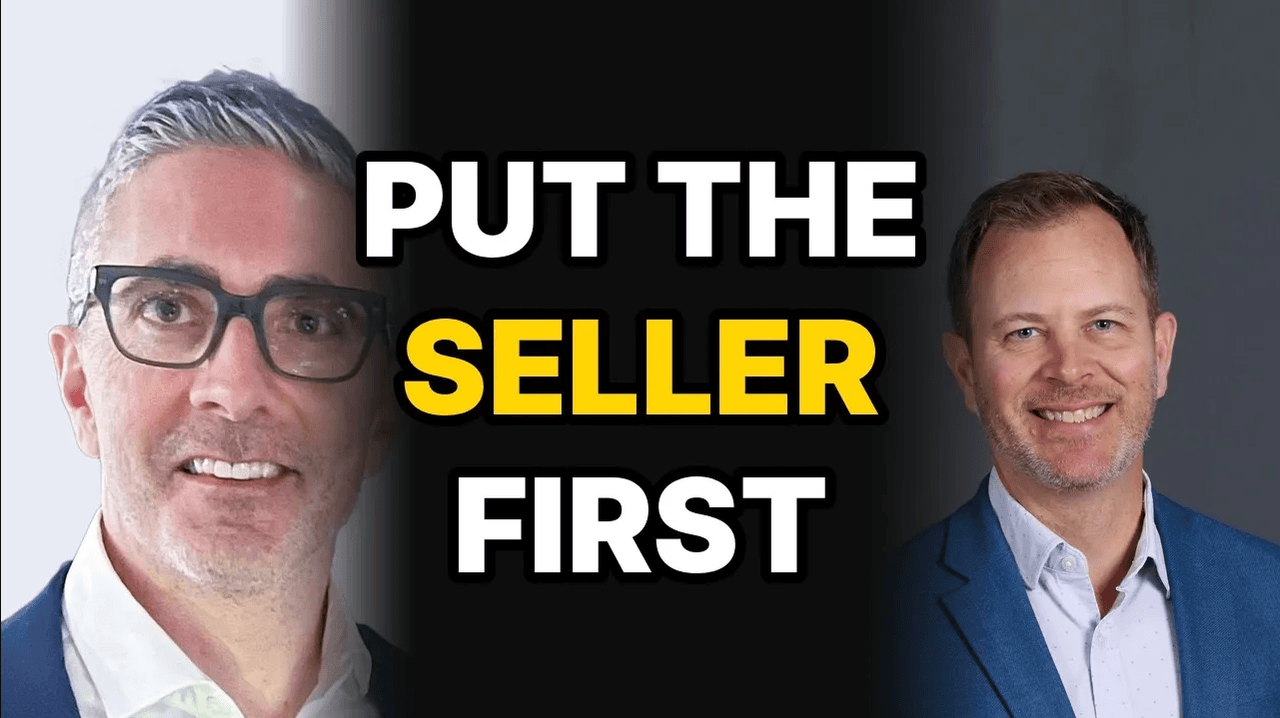
🎙️ Finding a Buyer Is the Easy Part. Mike Keen Explains How to Get Your Sale Closed
Mike Keen spent two months trying to reach a business broker about a medical transport company that was for sale. Within a few days of finally talking with him, that broker's Sunbelt brokerage belonged to Mike. He was still a Virginia State trooper at the time, near the end of a 28-year career, and had already owned a spray-on truck bedliner franchise, a group of FedEx routes and a beer and wine store on the side.
Today Mike is owner and managing broker of Sunbelt Business Brokers of Roanoke and Lynchburg in Salem, Virginia, a business broker that helps owners sell privately held companies with $1 million to $20 million in annual revenue. He and his wife Jeannie work deals together, and the office reports a 95% close rate since it opened. Mike explains why being picky about listings drives that number, how a $100,000 pool hidden in cost of goods can hurt a sale, and why every deal goes off track three times before it closes.
✨ Key Insights You'll Learn:
Why Mike's office closes 95% of its listings, when the industry used to say only about 28 to 30% of listed businesses ever closed: it takes sellers with good books, records and processes.
How personal spending run through cost of goods, like a $100,000 backyard pool, can make a profitable business show a loss, and why buyers look back at least three years.
Why paying yourself above-market rent through a separate real estate LLC saves a little in taxes but can cost you far more in sale price.
Why a family member on payroll who doesn't work in the business, like a son paid $78,000 a year, gets added back to show the true profit.
The five D's, including death, divorce and declining sales, that can force an owner into a fire sale.
Why getting a business ready to sell can take six to twelve months, starting with what you need in retirement.
Why every deal goes off track about three times, and why sellers must keep their foot on the gas after the letter of intent is signed.
When to tell your employees: Mike advises waiting until you are near closing. One seller told his key people about 30 days before.
Why SBA loans can be hard to get on Main Street deals of $250,000 and below, and when a seller note helps.
How AI cut the time to draft a confidential information memorandum from three to five hours to 20 or 30 minutes.
👉 Listen to hear how a state trooper turned a neglected brokerage into an office that closes 95% of the businesses it lists.
Listen to the full episode here
Transcript
From State Trooper to Business Owner
Anthony Codispoti (00:00)
Welcome to another edition of the Inspired Stories Podcast, where leaders share their experiences so we can learn from their successes and be inspired by how they've overcome adversity. As you listen today, let one idea shape what you do next. My name is Anthony Codispoti, and today's guest owned a spray-on truck bedliner shop, a group of FedEx delivery routes, and a beer and wine store.
All while working full-time as a Virginia State trooper. He spent 28 years with the Virginia State Police and finished his career investigating financial crimes with the U.S. Attorney's Office and the Virginia Attorney General's office. As retirement neared, he spent two months trying to reach a business broker about a medical transport company that was for sale. Within a few days of finally talking with the broker, that brokerage belonged to him.
Today, Mike Keene is the owner and managing broker of Sunbelt Business Brokers of Roanoke and Lynchburg in Salem, Virginia. He and his wife Jeannie, who trained as a therapist, sell privately held companies with $1 million to $20 million in annual revenue. The office reports a 95% close rate since it opened. Mike is a certified fraud examiner and the treasurer of the Carolinas Virginia Business Brokers Association. But before we get into all that good stuff,
Today's episode is brought to you by my company, AddBack Benefits Agency. And if you advise business owners heading toward an exit, this is a lever most of your clients don't know they have. See, here's the problem: your business owner clients are overspending on health insurance every year. That's money leaking out of the business, and a prospective buyer will see it in the numbers. Now there's a program from Bain Capital Insurance you can put in front of them to change that.
It doesn't replace their group health plan. It fills in the first dollar gaps, and it can even cover part-timers. Employees get unlimited access to doctors, therapists, and prescriptions with no copays or deductibles to meet. And here's why it matters for your practice. This program actually increases your client's net profits. See, we recently helped a client add, let's add $900 per employee per year to their bottom line.
Results vary, but gains like that increase the value of a business and raise the price a buyer will pay. Your client gets stronger and more valuable. You become the advisor who found the money and the one they tell their friends about. Learn more at AddBackBenefits.com. All right, back to our guest today, the owner, managing broker of Sunbelt Business Brokers of Roanoke and Lynchburg, Mike Keen. Thanks for making the time to share your story today.
Mike Keen (02:41)
Thanks, Anthony. I appreciate you having me.
Anthony Codispoti (02:44)
So Mike, you joined the Virginia State Police in nineteen eighty eight, and along the way, you and your wife Jeannie bought your first business with your own savings, no loan at all. Walk me through how that first purchase came together.
Mike Keen (03:00)
Well, you know, Anthony, I've always had the want to to own a business of some kind. I just wasn't sure what it was. you know, we had an opportunity to jump in the middle of a spree on um bedliner franchise. Didn't really know for sure what I was getting into, but the opportunity was there. And we literally took our savings and bought into the business.
Jeannie had no idea anything at all about truck accessories and all that kind of stuff. But we bought the franchise and had a partner in there for a short period of time, and that kind of kind of fell apart. And we wound up buying him out in uh in, I guess, 2009, 2008, 2009 timeframe, you know, the economy had dropped off, the real estate market crashed, and you know, it became a want.
versus a necessity. And we we had done some work locally for a family that um had a baseball stadium and the son really loved the product. He liked what we were doing. And of course the Sunbelt franchise that we own now, uh the guy that owned that actually had our business listed. We decided we would sell that and see how it goes kind of thing.
And we had the son of the family from the baseball stadium reach out to us and he wanted to buy the business and th th the history r kind of repeated itself, you know, years down the road with that. I wound up actually listing and selling the franchise for him a few years ago.
Anthony Codispoti (04:48)
Okay, wild. So 2008, 2009, truck accessories. It's it's a a luxury item, right? People don't need this and times are tight, so they're they're pulling back. But you're like, hey, maybe this is an opportunity. We're going to list the the business for sale. You ended up listing it with Sunbelt. You found a buyer, um, and then you guys move on and you end up buying other businesses. Was this right away or did you take a pause?
Mike Keen (05:15)
Uh it was a short period of time thereafter. You know, you you you kind of miss been a business owner once you've had a taste of it. And I wasn't really sure what I wanted to do. I really didn't. And we uh wound up buying some um FedEx routes, which I bought four four routes. Um course, you know, a lot of people don't know that you can own FedEx routes, but you actually can. they're independent contractors. And I bought four
And within a period of probably two and a half, three years, I had grew it into 14. Um, you know, the money was really good. Uh it was long days, long nights, long weekends sometimes. And after we had that growth, we decided, you know, maybe it might be time to sell those. So we found a buyer for those and well ended up uh selling those. And, you know, we sat back for a little while after that. Not
really knowing what we were going to do, how we were going to do it. And um, you know, my career with the state police taught me a lot, uh, as an investigator. And I literally was kind of nosing around on the websites just looking to see what was out there for sale business wise, wanted to, you know, buy something else that maybe I could look at retirement from the state. And um I wound up in in
A medical transport lookout kind of thing where I was like, Medical transport, that all falls under state regulations. I know the background of the Medicaid and Medicare side of things. And I literally had called the broker multiple times. And it was the exact same broker that had sold our business. We knew him. I didn't get a call back. I sent a couple of emails, didn't get a call back.
A few weeks went by and I I decided we're going to give this one more shot to see what happens. And if it's not meant to be, it's not meant to be. I did get in touch with him and he told me at that time he listed a business he fell in love with. He ended up buying that business and he'd kinda let the sunbelt thing kind of fall to the wayside.
Finding the Medical Transport Opportunity
Anthony Codispoti (07:35)
So he had become distracted. And so this opens the door for you. But before we kind of walk through that door and see how this this next transition happened, I want to better understand how you're juggling a full-time job with the Virginia State Police and owning and operating, you know, several businesses in succession. How are you juggling these responsibilities?
Mike Keen (07:57)
Well, thank goodness I have a wife that's very understanding because it's a lot of time. Um, my days off were, you know, spent working in the business, trying to keep things moving. We had a group of great employees that did the day-to-day work for us. Our job was essentially keeping the bills paid, making sure they got paid, got supplies ordered when they needed to be. And, you know, at one point
Um Jeannie decided that, you know, hey, maybe this could become a part-time thing for me. We had a young child at the time and she went into the business and kind of learned the ropes and the spray on bedliner business and the truck accessory side. She had a pharmaceutical um sales background, which played well with that because she was able to go out and do some sales calls and bring on some dealerships and that kind of thing.
Anthony Codispoti (08:52)
Okay, very nice. Okay, so you're trying to buy this uh business from some belt and you had a hard time getting a hold of the broker. When you finally did, you discovered that he had bought one of the businesses that he had listed and that's where his attention was. And so how does the conversation progress from there?
Buying the Sunbelt Brokerage
Mike Keen (09:12)
Well, you know, I I actually picked his brain a little bit about the medical transport business and found out that he wasn't even sure if the guy still wanted to sell the business, whether the business was still available, if it was still running. So, you know, I'm I'm thinking through this whole process and a little red light goes off in the back of my mind. And I'm thinking, hmm, this is not
literally anything crazy, but maybe he might want to sell this some belt franchise. I know financials just because of my experience being a fraud investigator. And we met for lunch a couple of days after that. Uh found out that just from talking through the scenario with the listings he currently had, he had three listings on the books.
Two of he hadn't had any conversations with the sellers on in a while, wasn't sure if they were still for sale, didn't know what was going on. We wound up just kind of talking through that. And I said, Look, it it sounds to me like maybe you want to sell this Sunbelt franchise. And that story turned into a little red light went off for him. We talked through that, and we ended up just a few short weeks later.
getting approved by the franchise or and here we are now it's been 11 years I guess almost 12 something along that line and we have you know our our passion for this business is to help business owners understand that at the end of the day they're going to they're going to exit their business some way, shape or form, whether they want to or whether they don't want to. And it's either on their terms
Or somebody else's terms. So what we would really enjoy doing is coaching business owners, helping them prepare to exit their business on their terms before a catastrophic incident happens. You know, there's all kinds of things that can happen. We have a whole list of the five D's that we talk about, you know, death, divorce, declining sales, all kinds of things can happen that can force an owner out the door.
quickly and then it becomes a firehouse sale. They don't get what they need for retirement out of the business or, you know, they have to sell it today because of a health issue popping up. There's there's crazy things that go on that we see all the time. We work with business owners that come to us and they say, hey, I need to sell my business tomorrow.
Anthony Codispoti (11:59)
Ha ha ha.
Mike Keen (11:57)
And it it don't happen that fast. You
you you know, in today's world you just don't sell a business car. Exactly. This is not a
Anthony Codispoti (12:02)
This isn't a used car. This takes a little bit of work to get ready.
Mike Keen (12:05)
used car. So, you know, there sometimes there's situations where we can't do anything. I mean, we just don't have enough time. Sometimes we can work with business owners to help consult with them to build the business to maximize what the value of the business truly is.
Anthony Codispoti (12:22)
And so how much time ideally do you like to have before you take a business to market?
Mike Keen (12:28)
If the business is not fully ready to go to market today, you know, let's talk through that. What can we do to help prepare that business? You know, how much do you need, talking with a financial advisor? What do you need in retirement that is going to make you happy and help support you at the end of the day?
And if that number is not there, then we got to look at the financials and see where all the expenses are and the things that we can do to cut those expenses to help put that number back on the bottom line. Sometimes that can take six months, sometimes it can take twelve months. You never know what that situation's going to look like. Every scenario is totally different with every owner.
Anthony Codispoti (13:14)
What are some of the common scenarios that you see though? What are some of the common levers, I like to say, that you can pull to help improve that bottom line number?
Mike Keen (13:26)
You know, one of the biggest things in every business, and I don't care whose business it is, we all know payroll is our largest expense. Uh it it just is what it is. And in most cases, you're not going to cut payroll. So you have to start looking at what the cost of goods are. You know, are you overpaying for cost of goods? Health insurance. You mentioned that earlier when we first started, you know, during your intro. Healthcare costs really and truly just hurt.
Business owners because it's so expensive. So you have to shop that. You have to find ways to bring that number down. You don't want to not provide benefits for your employees because that's what keeps good employees in the business. But there's other cost savings measures out there. rent. Rent is another big number that we see, but we see a lot of owners where they own their own real estate, they may have a separate LLC set up.
And they're overpaying themselves on the rent side above and beyond what the market value truly is.
Anthony Codispoti (14:33)
Which feels nice at the time, right? It's this extra revenue source, but it's ultimately hurting the valuation of the business.
Mike Keen (14:40)
Correct. You know, a lot of and not to knock accountants, but a lot of accountants will say, hey, you know, you can pay yourself more rent here. This is a tax savings for you. And it is, at the end of the day, it doesn't go back on the bottom line fully. So you have to adjust that back to the fair market value. If you're doing it and the tax returns are clean and you're paying yourself full market value, then you get credit for that back on the bottom line.
You're going to pay taxes on it, but at the end of the day, is it worthy to pay a few dollars in taxes versus cutting yourself out of a hundred thousand dollars more that you could've gotten out of your business?
Anthony Codispoti (15:22)
But it's taxed the same whether it came as income through the company or r rental income to the landlord in this case, correct?
Mike Keen (15:31)
Correct.
Rebuilding the Brokerage From Ignored Inquiries
Anthony Codispoti (15:32)
Um I I want to back up a little bit because um you buy the Sunbelt uh business brokerage, but there really wasn't a whole lot of attention being paid to it. Doesn't sound like there was a sales funnel, doesn't sound like there was much infrastructure in place. So what were you actually buying at the time?
Mike Keen (15:53)
Pretty much a a name and some a phone number that had been around for a pretty good while. Um I I I was uns I was totally unsure of myself. I I was not sure that, you know, this was a good idea, but you know, having that gut feeling that, hey, maybe it's going to be right, we jumped in. Um, you know
When I bought the franchise, there was emails after emails after emails that had gone to this broker. People reaching out and saying, Hey, give me a call. I want to sell my business. Give me this. We we started literally making a list of all these emails and started writing down names and phone numbers. I pick up the phone. Hey, I'm Mike. I'm the new owner at Sunbelt. I saw where you sent an email in about selling your business.
Yep, I'm very interested. Can you please come and meet with me? And we started making appointments. I just started kind of banging them out.
Anthony Codispoti (16:55)
You just went through this old this old list of emails that had been ignored. Okay, and people are uh some anyways were receptive.
Mike Keen (17:03)
Correct. Yeah, there was I mean, there was a few that we never made contact with. They had either just closed the doors or whatever the case may be, but there was several there that was still interested, and we called up the the three that was there and I kinda apologized to them because nobody had reached out to over a period of time, kinda told the story, told that I had bought the business and that w
You know, Jeannie and I were very interested in in working with them. We got some refreshed financials, reworked some numbers on and all of those stayed on board with us. And we sold two of those pretty shortly after we had s kind of kicked things off. Um, that was
Anthony Codispoti (17:47)
How quickly did those sales close?
Mike Keen (17:50)
um one of those we so we we closed on the franchise, I think it was in late December.
two thousand and fifteen. And of course, you know, you got the holidays in there and we were just putting a game plan together. Uh by April ish of twenty sixteen, one of those was under contract heading toward the closing table. And the next one was about June of that year. So in the first three or four months, we had two of those under contract. We were bringing in new listings, um, had some of those uh
That we we were working financials on, doing evaluation, trying to figure out, you know, exactly where we were going with those sellers. We ultimately ended up with a probably somewhere in the twenty-five to thirty range of new listings coming on board. And the rest has been history since that. We just continue to do that.
Anthony Codispoti (18:48)
So I understand that you went through this old list of ignored emails to kind of kick things off. You've followed up with those folks, you found some folks that were interested, but then what does it look like going forward to fill that sales funnel? What does the marketing uh funnel look like today?
Mike Keen (19:07)
We have a marketing firm that we work with now that does a lot of advertising. we advertise on all the big major businesses for sale websites. Social media is big now. Facebook, Instagram, you know, you
Anthony Codispoti (19:22)
And you advertise
on these business for sale websites to attract folks into your brokerage to sell their business?
Mike Keen (19:28)
Well, so for most part, um, those websites are used primarily to sell businesses to attract buyers. Our marketing firm does a lot of postcards, a lot of drip marketing campaign by email, cold calling, that is huge. you've got to make those contacts. I'm not the only broker out there. Everybody in the industry is doing these things. So you have to you have to talk.
To those owners, and sometimes it's tough. It's tough to get by the gatekeepers to get to the owner themselves. But there's a lot of people out there who don't know what brokers do. They don't know that we even exist. Um I I hear it all the time. You know, we'll go to conferences and I'll hear brokers say, Yeah, I met with a guy that didn't have a clue what I was doing. But we're there. We're out there just like real estate agents are above.
Anthony Codispoti (20:24)
So folks have lots of choices when they go to sell their business. Like you said, there are a lot of brokers out there. The groups that end up working with you, Mike, why do they do that? Why do they choose you?
Mike Keen (20:36)
You know, there's a lot of different reasons. Maybe it's personality conflicts that, you know, a seller has with a particular broker. Maybe they don't like the marketing, maybe they don't like the experience that the broker has. We have we nourish sellers as much as we possibly can. They may not be ready to list the day, and that's okay.
But they might list in three years or five years. And those are the ones that we try to stay in contact with. We try to, you know, answer questions. If you've got something that comes up in the business and you want to call me, call me. I'll spend the time on the phone to talk you through a situation. And I think people feel comfortable with that instead of someone being a pushy sales guy, so to speak. I I'm not a pushy sales guy. I want to help people and I try to help them understand that we're here to help them, not to hurt them.
So I I think that plays a big role. You know, there's an office of five of us and we have folks that have different jobs within in the office. Jeannie, you know, she does very well talking to potential sellers, and then they get to me and I walk them through the numbers and that's kind of how the story ends. You know, they they're either ready today or they're ready a year from now. And we hear that often. Some some sellers will call us up and say, you know what?
I was thinking I'd get a little bit more from my business. Maybe I'm going to wait a year, put me on your list, call me back in twelve months kind of thing. We follow up with them. We'll send them an email periodically and say, hey, how's things going? Do you need anything from us? Is there anything we can do to help you?
Main Street and Lower Middle Market Businesses
Anthony Codispoti (22:21)
I like that. Being very helpful, proactive, staying in touch with folks. And your clients, they typically fall into what the industry calls Main Street and the lower middle market. So describe for us who is a good fit for you.
Mike Keen (22:36)
So you know, on the on the Main Street side, you're talking businesses that list maybe in the two fifty, six fifty, seven hundred thousand range, the lower middle markets, you know, you're getting into listings over a million dollars up to the five million dollar range. Um, some of the Main Street deals are a little difficult sometimes because maybe they're smaller listings and then they're harder to finance.
Sellers need to understand that if you've got a $300,000 listing, you know, the the SBA i i it's a tough fit sometimes on an SBA loan. Um a lot of the banks don't want to, you know, do SBA loans for you know the the 250 range and below. So then you got
Anthony Codispoti (23:26)
And s sorry,
these numbers that you're throwing out, Mike, these are the value of the sale or these are annual revenues? Okay. Yep. Sale value. Mm-hmm.
Mike Keen (23:31)
Correct. No, that that'd be the value of the sale.
So if you've got a listing that's in the two fifty range, the cash flow on that's probably sixty, seventy-five thousand somewhere in there. You gotta be able to service the debt and service the debt and the owner taking a salary out of there. So the banks kind of look at those a little bit different.
Sometimes you can get a traditional, what we call a conventional loan on those with a local bank. Sometimes the seller has to do a seller note on them. And that's okay. You know, I I I know a lot of sellers, they kind of cringe sometimes when we mention seller note to them. However, if you want to sell the business and the banks won't finance it, you may want to do a seller note just so you.
Build trust with the buyer, they feel comfortable coming in the door as well. On the you know, the lower metal market side of it, those are usually deals that can be financed fairly easy um as long as the buyer has good credit and they've got their their down payment and all the above. You don't hear a whole lot these days with a seller note involved in those.
years ago we did, but that's kinda gone to the wayside. I mean sometimes you'll have a seller note in if if the buyer's not strong enough to have a full ten percent.
Anthony Codispoti (25:00)
So what's your sweet spot?
Mike Keen (25:02)
I like anything between that million to five million range. You're going to you're going to have good revenue coming in, good cash flow. They're they're fairly simple to to finance, and the books and records are very clean on them.
Anthony Codispoti (25:18)
So when you're going through due diligence and a buyer is looking at a company's team, what kinds of things might make them nervous?
Mike Keen (25:26)
Not having good processes in place, not having, as I say, the right people in the right seats on the bus. Um, you know, as a buyer, most buyers want to own the business and do work on the business, not in the business. They're buying the business to make sure that the business is cash flowing and they're going to continue to do that with the current people that are involved. We see a lot of times where
Owners have really good businesses and they're doing three or four million a year in revenue. And the cash flow on them are four or five hundred thousand dollars a year. Those are great businesses. But if that owner is the one that has all the knowledge in his head, not on paper in a book somewhere, it makes it tough for a buyer to walk in day one and say, Hey, how am I going to get all this information out of your head to where I learned?
to run the business to continue to bring in the revenue that you're currently bringing in.
Close Rates and Clean Financials
Anthony Codispoti (26:31)
What is the average close rate in the industry for business that you put on the market to try to sell it? What percentage of those businesses typically sell?
Mike Keen (26:40)
You know, there's there's numbers all over the board out there. Years ago they used to say that about twenty eight to thirty percent of the businesses that got listed only closed, the rest of never ever closed. There's there's some new numbers out now that that number has gone up a little bit, but I think a lot of that comes from educating the sellers. you list a business that you
Just like what we were talking about earlier. There's no process in place. There's not good books and records. And, you know, a buyer looks at the financials and sees that an owner has paid $100,000 to put a swimming pool in their backyard and they put it in the cost of goods on there. It's kind of hard to pull that back out of there and convince a buyer that, hey, this is what happened with that hundred grand, but you could put it back on there.
That's not how it works and that's not how the banks are going to see it either if we're getting a loan for it. So keep your financials clean. I tell everybody, clean up the financials. Only run things through the business that need to be ran through the business that is a legitimate expense.
Spotting Questionable Expenses
Anthony Codispoti (27:53)
So let's talk a little bit about this because you're a certified fraud examiner, right? Trained to f find fraud hidden in financial records. And so maybe you can tell us a story about a particular client situation that you looked at where you found something that I mean, you you mentioned the swimming pool, which kind of sounds like a joke. Maybe that was a real example, but no, it was a real example. Okay, great. Give us another one of those because that's fantastic.
Mike Keen (28:19)
So you you will see things like this a lot. Um this particular one, I I'll I'll I'll add to that there there was more to that story than than what we're seeing. So when I look at the business and the business is doing five million a year in revenue, and the cost of goods is four million a year, for example, and then you have rent, utilities, payroll, and all the above on there.
And you look at the bottom line on the tax returns and it's showing a negative three or four hundred thousand dollars, the little red light goes in off in the back of my mind that says something's not right here. Payroll is legit from the looks of what I see. The owner themselves only taken 75 or 80,000 a year on a W two for payroll out for themselves.
Utilities are not expensive. I mean, all this is in the tax return. So you can look at this and then you start thinking, okay, in this particular business, why is the cost of goods so high? And that's where it usually gets hidden in the financials is under the cost of goods. So I question about that, and then I find out, yeah, I I put a swimming pool in my backyard. It cost $100,000. And by the way, I have a really, really nice.
pickup truck that I fell in love with, that I've had all this fancy schmancy stereo system put in and I've had the lift kits put on and all the big tires and all that stuff. All that was paid for through the company put into the cost of goods. If you'd taken that out at the end of the day when it was all said and done,
There would probably been somewhere in a neighborhood of about $450 on the bottom line as a cash flow, just right off the tax return before we ever touch the adbacks and the things that we could put back in there. So these are the kinds of things that I try to educate sellers on. You can't just do that for one year and then put your business on the market because there's going to be at least a three-year look back on the financial. So you at that point.
You're going to need three really good years.
Anthony Codispoti (30:37)
It calls into question so many other things that okay, if you guys were doing this and you admitted to this, what other kind of hidden wrinkles are there? And I'm curious, you know, with the work that I do, it you ever a deal where employee costs or benefits came up as you're sort of scouring through the books? Anything sort of untowards that you found there?
Mike Keen (30:58)
No, I mean a lot of times you will see, you know, like I said, payroll is a big expense. Maybe uh an employee there's making, you know, a hundred thousand a year when in reality maybe that's a sixty thousand dollar a year job. I see a lot of lot of owners double paying themselves and they're paying their wife or their son or their daughter.
A paycheck. I got one right now that they are paying a son $78,000 a year, W-2 paycheck out of the company. And he doesn't even go into the, he doesn't do anything for the company whatsoever. But that's money going to the son at the age of 24 or 25. And he's not even working there. He has nothing at all to do with the business. So you see that every once in a while. So you cut that out.
and you put that back on the bottom line, it helps bring the value of the business.
Anthony Codispoti (32:01)
Do buyers look at that as suspicious or they're like, okay, I get it. Like owner's kid, like, yeah, we've seen that before.
Mike Keen (32:12)
Buyers are very savvy today, especially if it's a strategic buyer that's trying to do an add-on to another company they have, they try to find ways to say, hey, if I buy this bill business, add it on, how am I going to make everything more profitable for me? They do look at that, but most are understanding that, hey, okay, I can add that back to the bottom line to build the net profit of the business back up.
Anthony Codispoti (32:40)
So I to go back to the uh industry average close rates, 30% ish, right? You guys are at 95% close rate since you took over the the brokerage. What are you guys doing differently? I mean, that's not just like a 10, 15%, you know, increase over the industry average. This is huge.
Mike Keen (33:01)
We're picky. When I say we're picky, we look at businesses that are good books and records, very, very savvy sellers that have processes in place. Um when I first started in this industry, I just needed listings. I wanted listings, and I think every broker out there has been been down this road. You're going to take things that may not be polished so well.
With the hopes that you're going to be able to sell them, you know, quickly. And over the years I have learned that those businesses cost me more time and effort than a five million dollar listing that I work with with that is clean, that is clear, everybody got good financials, we got good processes in place. So that's what where we have gotten today is
Over the period of the last six, six, seven years, I don't want to waste my time on something that I gotta spend all day on the phone with potential buyers saying, Hey, yeah, I know that this doesn't look good, but here's what you can do. You've got to prove this stuff. You've got to be able to prove to a bank, you've got to be able to prove it to a buyer. You know, everybody in this industry will say this: finding a buyer is the easy part. It really is. uh
There's buyers out there. There's more buyers out there today than there are sellers. Finding that buyer is very easy. It's getting through the process once you get an offer on the table and you get an LOI in hand and you start through the process of getting the loan approved, getting this the buyer over the finish line. I've seen deals fall apart right at closing, just for the mere fact of these types of things coming up.
Keeping Deals on Track
Anthony Codispoti (34:52)
Y your wife Jeannie, she's trained as a therapist. She works deals alongside of you. And you know, and I think we're we're starting to touching on this, like this human side of the transaction and the emotional element that
Mike Keen (35:08)
Right.
Anthony Codispoti (35:08)
kind of unfolds the closer you get to closing. Tell me about uh a couple of stories there that you've seen where things have fallen apart and you guys have had to try to patch it back together.
Mike Keen (35:18)
You know, we jokingly say, but it's honestly the truth, every deal gets off track three times before it ever hits the closing table. Something's going to come up. Somebody emotionally is going to fall apart and we have to talk them through that. Or a a buyer will second guess themselves.
Am I really making the right decision? Is you know, I've looked at the financials a second time and I see this in there and I hear what you're saying about, you know, the swimming pool or whatever the case may be. But now the lender is telling me, well, you know, we can't calculate for that, so you have to trust what the seller's telling you or what what you're you're getting from the financials. All deals are going to fall apart at least once or twice for some reason or another. And it may be something as simple as
You know, a bank is asking for an a year-to-date profit and loss statement or a monthly profit and loss statement. And it may be an off month. You know, some businesses are seasonal. Um, you may be in December and you have a landscaping company that also mows and and all the above, they may have an off month because of the weather. You know, grass doesn't grow in the wintertime.
So they their sales may go down. That always triggers somebody saying, wait a minute, why are we having an off month? Did the seller take their foot off the gas? Or are they no longer interested in wanting to keep the business afloat? So you have to that's where we come in, coaching the sellers. Keep your foot on the gas. Let us do the heavy lifting for you. We just want you to keep the business running as normal. Most LOIs is going to say that.
The seller is going to have to continue to keep business moving as usual. I've seen them where we've had buyers come back to us and say, look, just for this reason, we can't pay that price tag. So we're going to we're going to revamp the LOI and it's going to be $150,000 less than what we initially offered. Well, now by that point, the seller is all worked up thinking they're going to get a million dollars. Now they're only going to get $850 for the business.
You know, it causes the deal to fall apart. I've seen sellers walk because of something along those lines and and it wasn't wasn't the buyer's fault. You know, the seller may have taken their foot off the gas and sales may have dropped because they went on a month long vacation thinking, Okay, it's sold. A lot of sellers think once the LOI is signed, it's a done deal. And it's just starting.
Anthony Codispoti (38:02)
it's just starting.
Yeah. So before a business goes to market, you have a question you like to ask every owner. You like to ask them, What are you going to do the day after they exit? What are the answers you usually hear?
Mike Keen (38:21)
I've heard everything. I'm going to go eat hot dogs and play golf in Myrtle Beach. I'm going to go spend time with my grandkids. I'm going to go out and and just stay on my boat and fish the rest of my life. And then I've heard some say I'm not real sure because it the reality has hit and now I don't get to go to work every day like I have for the last thirty-five years.
Anthony Codispoti (38:45)
Do you stay in touch with many of the buyers after the exit? Cause I'm curious, those ones who think that they're going to go fish or golf or eat hot dogs, or like how happy are they in that new space?
Mike Keen (38:58)
You know, I have one right now that we sold their business. Um it was in November, I guess. It's been almost a year ago now. It was November of last year. Um, he he was a retired military guy and bought a business after he retired from the military, worked in the business for, you know, the last, I don't know, fifteen, sixteen years, decided it was totally time for he and his wife to retire. They had family in Texas.
And day one, I'm like, what are you going to do when you close on the deal and you get the transition period over and done with? He said, We are going to buy a piece of land in Texas and I'm going to buy a lot of it, build a house, and that's where I'm going to finish out the rest of my life. I just talked to him this week. The house is done, they're loving life, they're both retired now, and they they're living happily ever after.
That's a good good scenario. I've actually talked to one that's like I I need a job. I'm going to have to go find a job. I need to do something to get out of the house. This is not for me kind of thing. So you get both sides of of the coin. You really do.
Anthony Codispoti (40:14)
Do you have like are you able to predict who's going to end up in which camp? Like you've been doing this long enough, you've seen a lot of folks okay okay, so tell me what
Mike Keen (40:21)
yeah. Absolutely. And I can do it with the buyers as well. I see
a buyer coming in the door. I I always want every buyer that buys a business to be successful. But every now and again my gut just tells me this guy's a would make a great employee, but not a great business owner.
Anthony Codispoti (40:40)
Okay, let's so let's do one at a time. Let's do first on the seller side. What are the common threads between those folks who end up being happy after the exit and those who are not? How how how are you able to predict who's going to be in which camp?
Mike Keen (40:55)
Y you can tell the day they sign up and list, they they're unsure if the timing is right for them to list the business. Um the ones that walk in the door with all their stuff ready to go, that get me all the things I need in a timely fashion, those are the guys that's going to be happy. They're going to be playing golf and fishing. The ones that we see dragging their feet bringing stuff to the table that's unsure of themselves.
Those are the ones that's not ready to sell today.
Anthony Codispoti (41:27)
Okay. So it's less about, I don't know, personality traits. It's more about the actions that they're demonstr that they're sort of presenting that tell you this one's ready, this one isn't. And the ones who are dragging
Mike Keen (41:40)
Correct.
Anthony Codispoti (41:41)
their feet, they're not ready. So they're ultimately going to regret that decision. Okay. So let's look at it now from the buyer side. What are the common threads you see between those folks who are going to be successful in owning this business and those folks who are not?
Mike Keen (41:57)
I don't think you always know that on the front end. Um we have a situation right now that a buyer bought a one and a half million dollar listing we had, talked a very good game up front, seemed to be very savvy. The sellers were extremely happy. He talked the right game to them. I'm going to take care of all your employees.
We're going to continue to do all the things that you have done and then we're just going to build on it, grow the business, and do all the stuff that you would think a new owner would do coming into a business. It's not that way. The employees are leaving one by one. Business is falling off, the business has gone from making somewhere in a neighborhood of about four and a half million a year down to about a million and a half.
So it's a huge drop and it's all because the buyer is not involved. He doesn't show his face to the employees very often. They have no direction. They don't know what they're doing. It just i it's a sad story to see a really good business with a really, really good group of employees in there all become very
unmotivated, they don't want to be there because the owner's not there. The owner's made all these promises that have not come to fruition and now they're looking for new jobs.
When to Tell Employees About a Sale
Anthony Codispoti (43:31)
Hmm. Let me ask a slightly different question. During the sale process, did you ever see the seller lose a key person during that due diligence process? And talk to us about how it impacted the sale.
Mike Keen (43:51)
You know, I have not had one that a key person has walked out the door on. In most cases, and I say in most cases, our advice is don't go in and set your employees down today. You've listed the business, let's find the buyer, let's get through due diligence, let's get to the closing table, then have conversations.
If you have those conversations early, there is a huge chance that a key employee will walk out the door on you because they're uncertain. They don't know that they've got a job with the new buyers coming in or whatever the case may be. And ninety-nine percent of the sales buyers want those employees there. Those buyer those employees have been the one that has
Kept the business going, they know the ins and outs, they know the customers, they know the vendors. So do it as a buyer, do what you need to do to keep those folks happy so that way they do want to stay and make them feel assured that they're going to still have a job. You're not coming in to fire them. It would be like me buying a a manufacturing facility. I'm not a manufacturer, I have no education in in manufacturing.
So if I bought a facility, I want those employees to continue to be there because they're the ones with the knowledge. They're the ones that know how to run all the equipment and the machines. They're probably some of them have had all the contacts with the vendors on where to buy supplies from that is getting a good deal on them. I wouldn't know that day one going in. So my advice is don't have these conversations early with your employees because all you're doing is is
Getting everybody worked up and then at the end of the day, everybody's unsure of what's going to happen at closing.
Anthony Codispoti (45:48)
So what's the right time to talk to them about it?
Mike Keen (45:51)
You know, we just closed a manufacturing facility that uh it was four point nine million dollar sale on this particular one. The owner of that was had been there for thirty-two years. He started the business, he was seventy-five or six years old. He had three very, very close friends. He considered them close friends that were employees that were key people in the business.
He sat down with them about a month into the closing. We we we were probably about 30 days away from from actually meeting the attorney and doing the closing on this one. And he sat them down and said, Look, retirement is here. It's time for me to step back, let somebody new come in that can continue the business. You guys are going to love it. It it's going to be great for everybody involved.
Everybody was totally understanding about it. They get that it was time for him to retire. He wanted to retire. It wasn't like he was trying to hang on, but he also wanted to find the right buyer that he knew felt comfortable with that would keep those employees and take care of Now that business was it was just announced here locally. Well, I say locally in the state of Virginia. The governor just had a big announcement here in Virginia on this particular one.
And they're going from like nineteen employees to like seventy some employees. They're growing the business. They're doing all the things. And and this is what happens with when you match up good buyers and good sellers. These are the kinds of outcomes I love to see happen.
Anthony Codispoti (47:36)
Do you have a set of buyers that you've sold multiple business to or is everyone a new buyer?
Mike Keen (47:44)
For the most part, everyone's a new buyer, unless it's a private equity group that, you know, we know they're in a certain industry, we know that they want particular like for instance, there there there's private equity groups that do nothing but manufacturing or HBAC or, you know, landscaping. Those buyers are out there and they will buy multiples, but for the most part, probably ninety-nine percent, ninety-eight percent of the buyers we deal with.
Most of have never owned a business before. Yeah.
Anthony Codispoti (48:16)
Okay, first time owners, right.
So you're also treasurer of the Carolina Vid uh Carolinas Plural, Virginia Business Brokers Association, and you're moving into the vice president role very soon. You really like to mentor and help younger business brokers. When a younger broker, less experienced, calls you for help, what is it that they're usually stuck?
Mike Keen (48:45)
For the most part, they are looking for advice on how to price a particular industry. Um, you know, there's rules of thumbs out there, there's there's several places we can go to find what businesses in the same industry, same revenue, cash flow has sold for over the years. And sometimes these guys don't know where to find that information or they don't know how to do an
add back on a particular segment of doing evaluation. I mean, you know, fair market rent is always a biggie. A lot of the guys don't know, you know, they don't know where to find the information to do that. Um I d I enjoy helping other people where I don't consider any other brokers being competitors. I consider them being my friend. And I would hope they feel the same about me if I needed to call one and say, hey, have you ever sold a funeral home?
Could you help me with that? Have you ever sold an accounting firm? Could you help me? And I would do the same if they called me. I mean, I I have guys call me, and they're they're like, you used to own FedEx routes, you know that industry, you've sold a lot of those. How do I value those? How do I go through that process? Is the same holds true in any industry out there? There's brokers out there that specialize in a particular industry.
Um, H B A C roofing, I mean there's there's tons of guys out there. I if you're not familiar with contracting and how contractors license work throughout the state that you're selling the business in, touch base with a broker that knows that. We've sold restaurants, we've sold convenience stores, they've all had ABC license to sell alcohol within it. You gotta know those rules.
And if you don't find somebody that does, they will help you in this industry. It it's just one of those things that I enjoy doing.
Anthony Codispoti (50:51)
And you think having the perspective of a business broker on those questions is more valuable than the perspective of the business owner themselves?
Mike Keen (51:01)
You know, a lot of business owners. Let's talk about the ABC license for a minute. Restaurant owners, they know they have to have the license. Um most know that they have to have a certain food to beverage ratio in sales, but they really don't know how to tell somebody to go get their license switched over. So you you know, my time in law enforcement.
gave me a lot of knowledge about that. And I know a lot of the guys that do that currently, that I can pick the phone up and say, hey, what do I need to do here to get this guy licensed? You know, we want to be able to have a license day one going in because we don't want to lose revenue because of it. So those are the kinds of things you have to do. Um knowing how uh a convenience store with a with gas, you know, that's a biggie. You got to know how those gas leases work with the gas companies. And if you
never done one, you don't even sometimes know they exist or know who to call with, you know, DEQ, the Department of Quality folks that do underground tank testing. You have to have a clearance on that before the bank's going to finance it. So these are the things that we have been doing, we have done, and I try to educate some of the younger guys on. If they have questions, they'll call and I'll be glad to do that.
Using AI in the Brokerage
Anthony Codispoti (52:23)
Hm. Are you using AI in your work at all, Mike?
Mike Keen (52:27)
We are using AI some. Um, yes. We we use uh anybody that's not using AI is probably wasting a lot of their time. Uh you know, w we use AI for several things in our office that helps us speed up the process a little bit.
Anthony Codispoti (52:42)
Give me an example of one thing that you guys are doing.
Mike Keen (52:45)
Um, our confidential information memorandums, we we use it for that for a reason. Uh of course we proofread everything that is done and we add to it in most cases. But you know, our our sims were taking sometimes three and four or five hours for us to manually sit there and type up and do. Now we're getting them done in twenty or thirty minutes. It it makes a huge difference.
Anthony Codispoti (53:09)
Yeah. Any fun AI projects on the horizon for you? Like, here's something we're working on or we intend to do that hasn't quite come to fruition yet?
Mike Keen (53:18)
You know, right now I kinda sit back and we we have two other people in our office that does all this fun stuff. So I don't get involved much and I let Jeannie kinda manage that. So honestly I I don't even know what they're working on right now. I should, but I don't. I don't have time.
Anthony Codispoti (53:37)
Yep, you you've got your energies focused elsewhere. So let's shift gears then, Mike. I you know, be curious to explore with you one of the hardest things that you've gone through and what going through that taught you. I think this is really helpful for other folks to hear.
Mike Keen (53:52)
You know, I grew up in in a rural Southwest Virginia. Had never really I'd never traveled a whole lot as a kid growing up and wasn't sure what I was going to do. I mean, at that time I did had a high school diploma, but I wasn't really sure what I was going to do. And that's what kinda led me to the state police. Um, you know, I was told my whole life you need to get a government job, if you get a government job.
Whether it's state or federal, you know, you'll always have a paycheck, you'll always have good benefits. Nobody ever told me how hard that was going to be. As a young 22-year-old kid getting hired with the state police and getting thrown into the academy with 45 other guys that I had to live with for 28 weeks in a big city that I'd never been to before, it was tough.
You learn to overcome that. You learn to adapt to other people. You you make friends and those friends you learn to lean on each other through that process.
Going through a law enforcement academy is not the easiest thing you will ever do to start with. But that has taught me to build friendships, learn to rely on other people when when things get bad, because at the end of the day, there there's situations pop up as a law enforcement officer out there that you've never encountered, and every situation's different. So you gotta learn to trust.
And you got to learn to not be in control all the time. And once you do that and you learn, it helps you on through life, which has brought me where I am today. I I feel like, you know, all the things that I was taught as a young police officer has given me the ability to t learn how to talk to people. Like we said earlier, buyers and sellers, everybody's different. Everybody has their own way of thinking.
And you have to learn to adapt to that and be able to talk through situations in a calm way to help people understand. Not everybody understands this process. So you want to be able to be calm about it and provide the knowledge that you need to provide to help them get to the end result.
Anthony Codispoti (56:19)
As you look back at that career path, is there anything that you would have done differently?
Mike Keen (56:23)
You know what, I would not. I I say that I've made some of the best friends that I ever made in my entire life. I still have contact with those guys today. We still go to dinner together. We still talk on the phone. I I've got one right now, it's a very, very close friend that I would have never ever met this guy had it not been for my career. That is looking at retirement. Now he's asking all the questions. What am I going to do? What am I going to do? So, you know
I look back at it and I think, yeah, I've owned a few businesses. Jeannie and I have been very fortunate to to be able to experience the things we've experienced owning business owners, buying a business, growing a business, selling a business. So that that plays a big role with us helping people today.
I wouldn't do anything any different than I'm doing right now with the exception of I look back now and think, Wow, I could have done this a whole lot earlier. But that's okay. That's okay.
Anthony Codispoti (57:23)
You were laying the foundation for what was to come.
So as you think about the work that you're doing now, Mike, what is it that you most want to be remembered for?
Mike Keen (57:34)
been the guy that was very helpful and was able to help another buyer live their dream of a business owner and help a seller live the dream of being in retirement.
Anthony Codispoti (57:45)
Any things you like to do outside of work? Favorite hobbies?
Mike Keen (57:49)
I love to fish. Yeah.
Anthony Codispoti (57:51)
What do you like to fish for?
Mike Keen (57:53)
Um, well, uh I fish largemouth bass, uh striped bass. Uh we do that here locally and we travel some. My son and I. I have our son's eighteen and he he's into it as well. golf is okay. I'll go play golf. I'm not great at it, but I do enjoy being outdoors and that kind of thing. Uh just got back from Alaska fishing with my son and
That was a trip of a lifetime that we both enjoyed that we're hoping to go on again real soon. Uh, so yeah.
Anthony Codispoti (58:23)
Love it. Mike, I've just got one more question for you today. And before I ask it, I'm going to do three quick things for the audience. First of all, anybody who wants to get in touch with Mike Keane from Sunbelt Business Brokers, we're going to put his LinkedIn profile in the show notes. But you can also go and search for him right now. Mike Keane, Sunbelt Business Brokers. Again, link to his LinkedIn profile will be in the show notes. And if you're enjoying the show, please take a moment to subscribe wherever you're listening. You can pause and do that right now.
It sends a signal that helps others discover our podcast. So thank you for taking a quick moment to do that right now. And if you advise business owners that are heading toward an exit, whether it's next year or five years out, here's a lever most of your clients don't know they have a program that counterintuitively turns their healthcare plan into higher net profits, increasing the value of a business and raising the price a buyer will pay. It's backed by Bain Capital Insurance.
So you can recommend it with confidence. Bring your clients that kind of win and they will pass your name along. AddBackBenefits.com. So, Mike, last question for you. A year from now, what is one very specific thing that you hope to be celebrating?
Mike Keen (59:40)
Wow, a whole year. You know, I'm not close to retirement yet. I'm enjoying what I'm doing. Um I really and truly hope that I can look back 12 months from now and say, okay, I remember doing that deal or I remember doing that deal and be able to say that was successful. I helped somebody exit their business. I helped someone buy a business that truly.
wanted to exit on their terms and a buyer by the business that they were happy that they bought. And they this is a process. It truly is a process. Some people buy businesses because they rush into it. Some people buy businesses because they want to be in.
Anthony Codispoti (1:00:30)
Love it. Mike Keen from Sunbelt Business Brokers. I want to be the first to thank you for sharing both your time and your story with us today. I really appreciate you being here.
Mike Keen (1:00:39)
Thank you. Thanks for having me.
Anthony Codispoti (1:00:41)
Hey folks, that's a wrap on another episode of the Inspired Stories podcast. Thanks for learning with us. And if one thing stood out, put that into action today.
Connect with Mike Keen:
LinkedIn: Mike Keen, Sunbelt Business Brokers