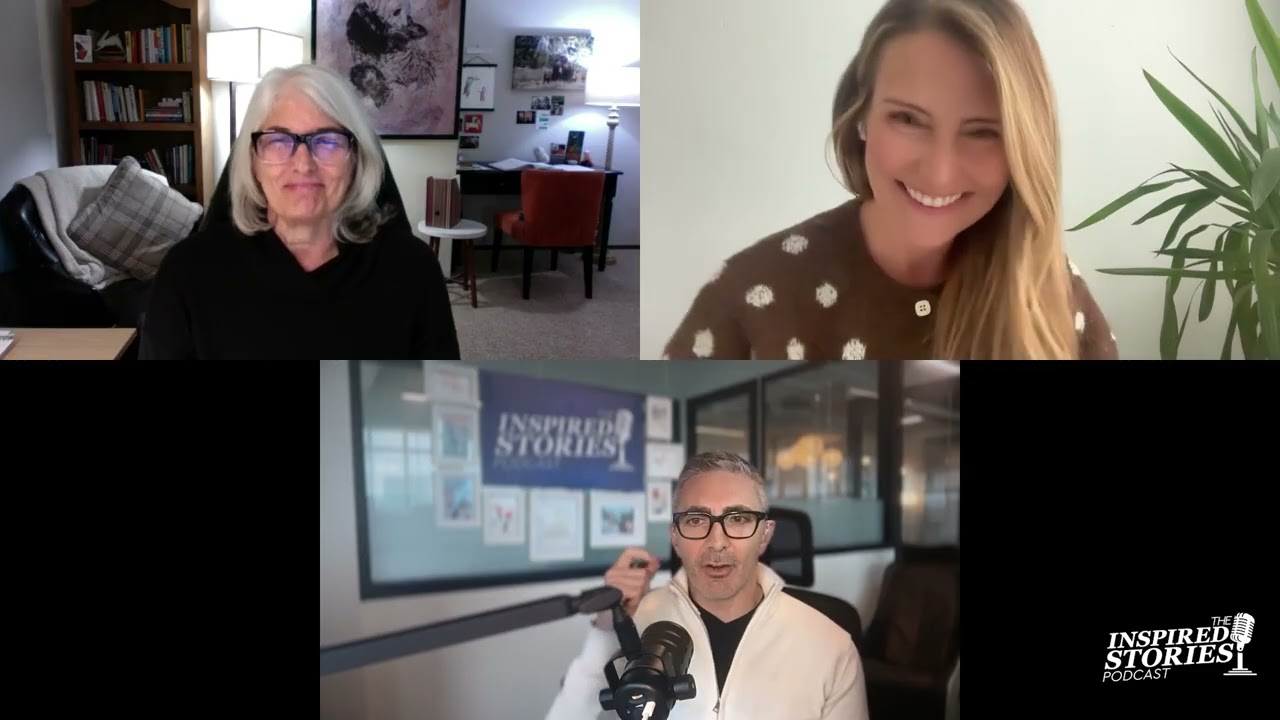
C-Suite Thinking for Small Business: Brie Bolopue and Rochelle Lierz on Building Good Apple
Brie Bolopue and Rochelle Lierz, co-founders of Good Apple Business Managers, built a fractional leadership firm around a simple conviction: small businesses deserve the same quality of strategic thinking as large ones. With specialties in reputation and reach and money and metrics respectively, they serve as embedded operating partners for small businesses navigating growth, complexity, and exit. Together, they share why they walked away from corporate and what they found on the other side.
Key Insights You'll Learn:
Why most small business owners carry a shame cloud around their finances and how to dissolve it
Cash flow mapping as a tool to help intimidated owners see their numbers without fear
The business blueprint: a five-session framework covering mission, vision, values, offering, and financial modeling
Fractional C-suite leadership as a plug-and-play model for businesses that need expertise without full-time overhead
Why exit planning started three or more years out is the difference between a strategic sale and a fire sale
The silver tsunami: millions of boomer business owners ready to retire with no succession plan
Helping owners through the egoic death of selling a business they built their identity around
The three D's: death, divorce, and disability as the forces that push unprepared owners toward the exit
Why transferability, not just revenue, determines what a business is actually worth to a buyer
Good Apple's target client: open, willing to receive help, and feeling the pain of going it alone
Brie and Rochelle's Key Mentors:
Rochelle's Family of Accountants: Gave Rochelle the financial language and empathy to translate money concepts without shame
Rochelle's First Exit Client: Proved the model by walking through partial retirement; still a client three years later
Brie's Stepdad (Small Business Owner): Showed her firsthand that building your own business can create a beautiful, flexible life
Corporate Executive Brie Supported: Gave Brie a front-row view of how executive presence and communications work at scale, and what she wanted to do differently
Ram Dass (Author): The quote "We're all just walking each other home" became the philosophical foundation of Good Apple
Don't miss this conversation about what it really takes to support a small business owner through growth, transition, and the exit they have been quietly dreading.
Listen to the full episode here
Transcript
Anthony Codispoti (00:00)
Welcome to another edition of the inspired stories podcast where leaders share their experiences so we can learn from their successes and be inspired by how they've overcome adversity.
As you listen today, let one idea shape what you do next. Today's guest decided that most small businesses aren't failing because the owners lack talent or drive. They're failing because no one ever gave them the executive infrastructure to succeed. That conviction became a business. They built Good Apple on a simple but pointed idea that a founder running a $5 million company deserves the same quality of strategic thinking.
as one running a $50 million company. The path to get there wasn't a straight line, and the firm they built together looks nothing like the traditional consulting model they could have copied. Brie Bollipule is a founding and managing partner at Good Apple Business Managers, leading Reputation and Reach. Rochelle Lears is her co-founder and managing partner of Money and Metrics. Together, they built a full-service fractional leadership firm out of Boise, Idaho.
that serves as an embedded operating partner for small businesses navigating growth, complexity, and transition. Since launching in 2023, they've developed a smart business framework, taken on clients across multiple industries, and were recently selected as operating partner for the Vervain Collective. But before we get into all that good stuff, today's episode is brought to you by my company, Adback Benefits Agency.
Listen, if you run a business, you are likely stuck in the cycle of rising insurance premiums. You're paying more, but your team is getting less, and many people can't afford coverage at all. We do things differently. We offer a solution that provides your employees with unlimited access to doctors, therapists, and prescriptions that's always free for them to use. And here's the part that surprises most people.
Unlike every other employee benefit out there, our program puts more money into your company's bank account. As an example, we recently helped a client increase net profits by $900 per employee per year. Results vary, but gains like that can change how a business is valued. And the consultation is free. Imagine being the advisor that delivers incredible value by introducing this to your clients. See if they qualify today at addbackbenefits.com.
All right, back to our guest today, the managing partners of Good Apple, business managers, Brie and Rochelle. Thanks for making the time to share your stories today.
Brie Bolopue (02:40)
Happy to be here.
Rochelle Lierz (02:40)
Yeah, great to be here, Anthony.
Anthony Codispoti (02:43)
So, Rochelle, let's start with you. Your domain is money and metrics. What do you find that most business owners get wrong when it comes to their finances?
Rochelle Lierz (02:54)
Well, what's interesting about that question, Anthony, is I don't see it as doing anything wrong. So my background, I'm very knowledgeable in money and metrics because I was raised by a pride of accountants is what I call it, like a pride of lions. I know the language. I know how to translate it. And I believe that everybody has a way with money. when I, I caught the shame cloud. When I walk in, typically an owner,
has this shame cloud over their head. don't know my numbers. I don't know what I'm doing. I don't know how to run payroll. I don't know how much tax I pay and almost a turtle on their back. And so the worst thing I can do is point out what they're wrong, doing wrong. So I say, well, how do you do it? And what are you getting right? And let's just put a new system in place. So it's inch by inch helping them find the rhythm for them to do it right. Because in the money and metrics world, what I find is very binary.
And that brings a lot of shame and guilt. And so I approach it from a diverse way of thinking and say, everybody gets there a different way. You either like it or you don't. If you don't, let's find the things and the partners that can help you get it right.
Anthony Codispoti (04:05)
So a big part of what you're doing is trying to help them move that shame cloud along. Most of the folks coming to you, they know that they're not doing it correctly. They just don't know what they should be doing differently.
Rochelle Lierz (04:08)
⁓ yeah.
No. And they
don't even recognize what they're doing right. Like most entrepreneurs have a very good instinct on where that revenue is going to come from, how to solve the delta between income and expense. They know how to do it. And if I just show them, hey, you only need this much to go get, I move all of the craziness out of the way of the spreadsheet and the margins and the things that baffle them. Then they go, oh, I know how to do this. Yeah.
You do.
Anthony Codispoti (04:46)
So what does that look like from a practical standpoint? You come in, maybe they're doing, I don't know, I'm just gonna make something up. They're doing payroll on the back of a napkin and like trying to calculate it themselves. And you're like, hey, there's third party services that would make this a lot easier.
Rochelle Lierz (04:55)
Right. Yep. Right. Let's, yeah, let's
pick, let's pick one. Yeah. Right. One of the tools I've used for years is I, it's, it's a really simple concept. say cash is king. call cash is queen. Cash is, you know, cash is, what we need to follow. But most people, most entrepreneurs do not know how to use a sheet of Google, Excel, whatever. They're very intimidated by that.
So because they're intimidated by this one skill, they've like erased themselves from seeing it and looking at it. And they'll open their bank account and they'll go, well, I think we'll make it. And so I show them how to map it on a sheet and just look at the numbers because the numbers intimidate. And if they can get used to seeing the numbers, then what they do naturally, which is why they own a business, is figure out how to go get the revenue to feed them those expenses.
Anthony Codispoti (05:50)
So
Rochelle Lierz (05:50)
Practically
Anthony Codispoti (05:50)
then our.
Rochelle Lierz (05:51)
we look at it and I say you got to get five thousand by this number you got to get by this date We need to have ten thousand in the bank. So we're swirling this away. It's okay. There's no emergencies I say that all the time. There's nothing on fire here. Everybody's fine. You're breathing. Everybody's breathing. We're all okay We just have to pay some bills. No big deal. So I'm doing that a lot So practically it's walking them through the numbers literally
Anthony Codispoti (06:16)
Are most of them using some kind of bookkeeping or accounting software?
Rochelle Lierz (06:19)
They are on different levels. Most people use QuickBooks because it's the de facto standard. they know, like we had an entrepreneur start a year ago and he's young and I was like, he doesn't know what a chart of accounts is. He doesn't know what an expense is. And I wasn't going to like rain on his, he was starting a business. So now during tax cleanup, he's learning a lot of those lessons and it's okay for him.
to stumble in those first nine months and then have the bookkeeper clean it up and then he can learn it and go, I didn't know. Yep, we knew you didn't know and it's okay. You ran a great business.
Anthony Codispoti (06:54)
I'm actually really glad that you explained what you just did there because I talked, I've got a lot of friends, know, associates who will come to me, they're thinking about starting a business. They're like, I got to meet with the lawyer, I got to meet with the accountant. And, you know, I think for most of these folks, it'd be interesting to get both of your perceptions on this viewpoint is that why don't you go out and see if somebody is actually going to give you a dollar for what it is that you want to offer.
Brie Bolopue (07:18)
Hehehehe
Rochelle Lierz (07:20)
Exactly.
Anthony Codispoti (07:21)
Like we think that, you know, once we, you know, incorporate, you know, these are all important things to do. But in my mind, it's like, go see if there's a business to build around first. Go see if, you know, there's a market for what you're doing. What are your thoughts?
Rochelle Lierz (07:35)
Yeah. 100%. 100%.
Brie Bolopue (07:38)
Yeah, absolutely.
That's a I mean, for the product that we have, we call business blueprint ⁓ for startups or for businesses that have started down the path and maybe they need to reset for any reason. And ⁓ we built that product, I think, actually, we did never intend to work with startups. We thought we wanted to be kind of in that messy middle place where where people have started down the path and they, kind of
I was describing earlier, ⁓ they understand that maybe they don't have all the pieces in place and they felt that pain a little bit. So that was where we thought we wanted to be. ⁓ And then over time, as we walked down the path and saw it, it's like, why not start with all your ducks in a row? Why not start on a solid foundation? These same principles we're using to reset a business that's feeling that pain and tightness and challenge.
is the exact same methodology or thinking that we could walk a startup through and help them begin without maybe some of those pain points or avoid some of that challenge. So the outcome is that business model, right? It's a very light business model, but it's cash in, cash out. What is the product you're selling and who is going to buy it? How much of it can you reasonably anticipate selling in your first 90 days, 180 days?
And so we're asking them to ⁓ back the dream up with a little bit of reality. And hopefully it's that reality check that helps them build a very solid business plan and go to investors or to a bank and try to get funding. So we're helping them build ⁓ a real plan instead of just chase that pie in the sky idea or ⁓ that goal of not working for anyone else for the rest of their life or whatever the driving factor is.
and we kind of help them get their feet grounded. it can get very complex, but we're trying to keep it super simple for either the serial entrepreneur who has a new thought or wants to course correct from the way they've done it in the past, or someone who maybe has been in corporate and they're looking to make that transition, have a side hustle, see how it goes. That's a really safe spot.
I would say we have a passion for, okay, but can that make money? How are you going to sell that? How much is it going to cost? Those are fun conversations to have. ⁓ And maybe ⁓ ideally people would have been thinking about that, but ⁓ typically not as deeply as they may need to consider it for the business model to actually be sound.
Anthony Codispoti (10:10)
Mm-mm.
So at what stage is it a good idea for folks to engage with you? Is it, I've got this inkling of an idea? Is it, I've got some revenue?
Is it something else?
Rochelle Lierz (10:40)
Different,
different starting points. ⁓ I'm just thinking about our month. ⁓ we had a young kid that has an idea. It's almost built. It's ready to go. He wants the blueprint really, really bad and he doesn't have the revenue yet. He's like, can we do a payment plan? You know, so he's like, he knows he feels that this is his second business. He knows he needs the blueprint. He can feel it in his bones. It was like he was jumping through this.
Brie Bolopue (11:02)
Yeah, that's a good point. He started
a business before and and felt a little bit of the pain point has a little bit of an accounts receivable issue, ⁓ sees where he can go off course. And so this time he's asking for help. And ⁓ that was really exciting for us. But I mentioned, you know, we we can meet people where they are because the thinking.
behind managing a small business intelligently and this framework that we ended up building because we just didn't like what was in the market really for a small business. ⁓ The thinking is the same, whether a business is trying to exit or planning for exit or they're thinking about starting a business. It's the same basic principles. ⁓ I think both of us in our own way have a little bit of that kind of ADHD mind that needs novelty. So it's like, let's go have this
this business fundamentals conversation with any business, wherever they are, any vertical, oftentimes an entrepreneur or an inventor or a solo business owner, they're the expert in the craft that they're bringing to market. We are bringing that broad thinking to make it sound and make it last and sustainable.
Anthony Codispoti (12:22)
So I've heard you mention the blueprint a couple of times and I want to come back to that. But ⁓ first, I want to sidebar, Bri, on your specialty, reputation and reach. If I understand this correctly, it's marketing, right? What are some of the biggest levers that you're able to help clients grow from a marketing growth perspective?
Brie Bolopue (12:34)
Yeah, yeah, you nailed it.
So my reputation and reach chops were grown and ⁓ honed, I guess, in corporate. So I have had to decide which of those things apply. ⁓ A really fun one, for example, is executive visibility. These executives who I prepared for ⁓ speaking engagements to thousands of people and,
board earnings conversations and selling to the Fortune 500, I can actually take and distill down. So I really love the idea of prepping. We had one owner who was launching and he was pursuing investors and really wanted to be targeting private investors who could also take part in this model that he was building.
And so we prepped him and helped him put materials together and practice pitching those people. So that was super fun. ⁓ More direct relationship management, relationship building, but also with a really glossy, beautiful presentation that he's rehearsed that ⁓ looks and feels the way that it would look and feel to stay on his property. So translating that vision into marketing materials and into a pitch deck and a leave behind is a really fun thing that
I was able to take those years that I served corporate executives. was kind of my world was communications management and executive communications management. So a little bit of marketing, a little bit of long form and kind of program management in the marketing world, but always with that executive communications bent.
⁓ And then we're doing kind of all the obvious stuff, but looking at how to make it localized and specific to small business. So social media strategy, ⁓ comprehensive communication strategy. If you have a newsletter, what if it said the same thing that you're promoting in social media? Those things are really simple to a person who has been in corporate communications and has, you know, a quarterly monthly cadence that they're always following. Not at all.
⁓ intuitive to a lot of small business owners. So just that cohesion and that thinking around every communication channel that you have, let's say the same thing. Let's make the push consistent. Let's communicate with your employees in a way that feels consistent before we launch a big new initiative or a change to the structure of the business. So ⁓ that kind of strategic communications thinking I'm also bringing and then things like paid social.
Anthony Codispoti (15:03)
Hmm.
Brie Bolopue (15:29)
and paid ads and kind of the other, yes, all of that. we could, if they have a marketing team or they have a person who's specialized in social media, we might work with that person to ⁓ create more of a campaign-based approach or more of an approach that maybe drives business or drives feet, feet through the door ⁓ or brings awareness.
Anthony Codispoti (15:32)
and these are services that you provide or you just sort of teach them that this is a possibility.
Brie Bolopue (15:58)
We're looking at all of those tools in the toolkit and then customizing them for that business. Do they have maybe a seasonality that we need to support where they've got a low season, but they just had some peak revenue. So they have some dollars to pour in this time. So ⁓ the goal is to bring the comprehensive toolkit to the table and then be able to customize it for every business. ⁓
Anthony Codispoti (16:24)
So some of these things that you're talking about are clearly part of this blueprint that you've mentioned. What else goes into this?
Brie Bolopue (16:33)
The blueprint. So the blueprint is kind of a, it's more internal, more for that small business owner and Rachelle Taggin here, for that owner or would be owner, you know, ⁓ to understand why they want to be in business. So it's a, it's a values based kind of the standard mission, vision, values. And we have a few ways of going through that process, depending on the person also.
Rochelle Lierz (17:01)
The
way I think of, sorry to interrupt, the blueprint is I imagine a house being built and I come from the construction industry, my family of origin. So I imagine like their studs are up and you can see through it. It's not fully built. And so they're standing there with the plans, the blueprint, they're standing there going, I'm building this. We don't even have the bathrooms. Nope. You got to go somewhere else to go to the bathroom. We got to build that. We got to get the kitchen. We can't boil water. Like you're, they're looking at it going, how are we going to boil water?
The blueprint teaches them how to build this business, brick by brick, stud by stud, get the sheetrock up, get the paint on, you know, and some rooms are going to be painted and everything, the light fixtures are in, you know, and, and, we forgot that one. And that's what you're doing with the blueprint. So they're going back to the architect going, this isn't quite right every year. Something's kind of off. Okay. Let's do a new blueprint.
2.0, okay, now we got the new one. Okay, next year, something's still off. We didn't quite get it right, because that's what people, I don't think, see that you iterate on this. In the first two years, you're iterating it. Every quarter, you're going, we didn't get that right when we talked, when we first launched. So let's talk about that again. Do we have a gap? Yeah, we got two weeks right here. We can really sink in and think about this. And then you re-pivot and you... And so the blueprint is just this working model that you're holding in your hands as you build.
Brie Bolopue (18:24)
Yeah, specifically it is mission, vision values. So it's, it's five sessions with us, ⁓ over whatever timeframe it could be a weekend kind of scrum war, war room situation, if they really want and need it fast, or it could be five weeks. I think the ideal would be five weeks. You have a little bit of time for things to steep and simmer. And then you come out feeling like, maybe that word in my value set isn't quite right. I'm not feeling that one. It's, it's something close to that, but let's keep working on it.
⁓ So mission vision values is kind of the first, it's the ⁓ proverbial why. Why are you here? What matters to you? And that's kind of the North Star homing device, right? Come back to this thing, run everything through that filter. Does it serve your mission, your long-term vision, and does it align with your values? It's really important. And sometimes that's the aha moment for those businesses that are. ⁓
have started but are maybe seeing some bumps in the road. Did we understand where we were going to start with and have we deviated from that in some way or do we need to reset it? And then we do offering, so the lightest possible offering identification. We would expect that most business owners who know that they want to engage in the blueprint process know what they would like to offer, but those sessions of what actually is it?
And how much does it cost to what we were saying before offering identification? If you had to package this, how would you describe it to a person? What's the elevator pitch? and then that's one session in and of itself. So we're just talking about offering development, maybe asking some refining questions, letting them sit with it for a couple of days and come back and refine it. so those are, like I said, they're about five sessions and about 90 minutes each, but pretty flexible.
⁓ And then the financial modeling piece is, ⁓ if you have that offering, where are you? What costs do you have against being able to deliver that? And then how did those two things play together in the first maybe year of business? ⁓ So like Rachelle said, it's iterative.
Anthony Codispoti (20:35)
What
you're describing sounds like a very comprehensive analysis, a very detailed plan for the business owner. This sounds like the kind of thing that it must be a decent sized company with significant revenue that you're targeting to be able to afford the delivery of these kinds of services.
Brie Bolopue (20:59)
you would think. So yeah, we, Rachelle and ⁓ I, in the earliest days of our ⁓ accidental partnerships, so we were just friends and former colleagues and I was leaving my corporate job and Rachelle was kind of walking me through the exit door and we were just talking about our shared values and ⁓ some of the
Rochelle Lierz (21:00)
You
Anthony Codispoti (21:02)
Not the case.
Rochelle Lierz (21:12)
I look forward to it.
Brie Bolopue (21:27)
the heartache that I had about my corporate role was that there were 35 people in a room, you know, sometimes on hold or toiling over ⁓ making one executive.
successful, I was going to say powerful, but not necessarily that. In my role, I saw that executive and her presence in the world or his presence in the world as a channel, a marketing channel for the business. So I understood the reason I was there and I loved my job. But it didn't feel right that 35 other human beings were making this one human being more successful and more able to show up and do their job.
And so we really started talking about small business. If we could make small businesses incrementally more successful, wouldn't that be exciting? And Rachelle's the opposite side. She's a serial entrepreneur, but my parents were small business owners. And so I understood the value of small business and how successful and flexible it can make your life. And I had, ⁓ you know, a life that was really beautiful and
family days at the lake because my stepdad bought and built his own business. ⁓ that's where kind of the co-mingling of our value system was ⁓ always in service of the small business community. So, you know, that really we have tailored, especially the blueprint process to be incredibly affordable ⁓ for entrepreneurs, startups, people building this thing in their basement who probably don't have a ton of funding.
⁓ And as I mentioned, think earlier, there's a group-based learning ⁓ facet to that, that, you know, kind of an office hours where people can come in and learn other people's ⁓ stories and learn from one another and their experiences. So ⁓ that makes it maybe a little bit more of a light lift for us, but it's a tried and true system that we've developed and it's just our time walking people through it now, which we...
Rochelle Lierz (23:40)
I know it sounds really big and comprehensive, Anthony, and one of our values is simple. And, and Bri and I are not simple. We don't think simply, we don't live simply, but we know that it's not easy, but it's simple. And so what I see in the way kind of going back to the finance conversation, it comes back to agency. Like an owner says, I don't know how to do that. We just need to tell the accountant to, figure that out. I'm like, no, this is your business.
Brie Bolopue (23:41)
Really enjoy doing.
Rochelle Lierz (24:07)
We're going to walk through it so you understand why you exist, why you're offering that thing. Okay, so you saw that shop in that town and you wanted to make it in your town. But do you know what underpins that business model? And you're smart enough to, you're a doctor, you can figure this out. This is not neurosurgery. This is business. It's one of the most, we've complicated business so much.
that what Bri and I are doing is going, how can we really come down to the nut of what it actually is? So they're not shooting for perfectionism and they're not shooting for their neighbor's business or that one they see on TV. This is their business and their life and their agency. And that's where we come from with that offering. So anytime we can take the mystery out of it, we're like, no, this is just how it's not that mysterious. It's not. This is what.
Anthony Codispoti (25:01)
What are the things that people feel are mysterious that aren't in reality? What are they getting wrong there?
Rochelle Lierz (25:08)
Every
almost every I mean, it's like this fantasy. They have this idea and they see, you know, Warren Buffett and they're like, I want to be like him. I'm like, okay, well, all right, let's bring you back to you. What do you know? So everything that they don't know is mysterious. If they're a doctor, if they're a plumber, if they're a painter, if they're a fill in the blank, I have a relative right now who's an accountant, but he's starting an AI kind of operations kind of
Brie Bolopue (25:26)
The unknown, yeah.
Rochelle Lierz (25:38)
lift and I'm sure marketing is mysterious to him. He doesn't really know how to do it beyond, you know, so he knows his craft. Anything else outside of that is mysterious and sounds huge.
Anthony Codispoti (25:50)
Yeah.
I think the phrase that you use is C-suite insight without C-suite salaries. So how are you able to pull that off? Are you just, I don't know, undervaluing yourself or do you guys just have these like really great systems that allow you to push out so much value without sort of tying up too much of your time, your labor?
Brie Bolopue (26:16)
Yeah, we're fractional. that's kind of the, it's a big push right now in the, maybe consulting space, right? As fractional C-suite leadership. we like that. We aim to be, ⁓ we, we avoid the word consulting. So, we like fractional leadership and the reality is most small businesses don't need a full-time person. ⁓ you kind of see in the startup world, maybe.
the startup founder is selecting which C-suite seats they can fill. ⁓ And can they give that person a little bit of a salary and maybe mostly equity and they've got this long-term ⁓ path that will convert, right? And that will be worth the squeeze that they're putting in today down the road. And in a somewhat short turnaround time,
We, the thinking for me, I love the &A world. love, I felt like I went through several mergers and acquisitions in my small to medium business world before we were acquired by the corporate business where I worked for eight years. So ⁓ I fell in love with the process ⁓ and deeply felt the pain of the process during that time. ⁓ So my thinking is kind of rooted in the, if you didn't have to choose? What if you got a team and you had
some of that people lead person or that HR partner person when you need him or her. And then you could go over here and for, ⁓ you know, a quarter, you could talk about where the business is going and maybe developing a new offering. And so the vision that we've had is sort of that plug and play with a focus on comprehensive business health. The belief and what we really do see come to pass is that
there is a balance to be found there. So we have four core partners right now and then Contractor Bench that helps us scale and deliver those kind of embedded relationships particularly where we are doing social media support or ⁓ social strategy or something like that in my world that takes a lot of time and effort. ⁓ So the idea is a little bit.
Rochelle Lierz (28:37)
Okay.
Brie Bolopue (28:43)
of exactly what you need when you need it across a lot of businesses who are also drawing from this core team. And that our framework, our emphasis on comprehensive business health ensures that if we spent six months over here focused on people, we've definitely left something languishing over here that we couldn't get to. We have got to pivot to those other pillars of the business and make sure things are good there. So it's kind of that shared.
Love Shared Resources Model?
Rochelle Lierz (29:14)
Yeah, I think one of the intersections of Brie and I that's interesting is she was, you know, essentially working for one of the biggest corporations in the world. And I've always had just a very small, tidy little business. So when we started to talk about operations and we were dreaming big, how can we bring the shine of the good stuff from corporate that's shiny, that's awesome, that's very sequential, that works every time to a constrained small business owner who has money constraint, constraint and time.
and space. those, I actually value their time above the money conversation because they are so in their craft. They are so swamped with running their family, their business, their employees, the marketing, being the dreamer that they don't have time to think about all the things that we think about when you have the bandwidth. Right. So it's literally like a pinch of this and, and, and, and benching things and go, you don't have time to even think about that right now. Don't think about it.
and allowing them the freedom to turn their back on things for a minute. it's, brings this sequential thinking that is so powerful that because I'm a small business owner, so I'm popping around like popcorn. She's like, hold, hold, hold, wait, no, we're here, do this. Right, right, right. Because I learned those habits as a business owner that you're doing 12 things. And so we're teaching the business owner to chill out basically in certain areas and get focused.
Anthony Codispoti (30:42)
You're like a part-time therapist. ⁓
Brie Bolopue (30:42)
Sometimes we're trying real hard. Yeah. I call,
Rochelle Lierz (30:44)
We do a lot of that.
Brie Bolopue (30:47)
I call
Rochelle the incubator of human potential. And that's what I wanted to say in this like money and metrics, very, you know, linear world. What she actually does is help people sit and look at the hard stuff. So oftentimes there's a dollar sign attached to the hard stuff because that's, that's business, right? We wouldn't, if
if there weren't the dollar signs attached, we wouldn't want to probably engage with those activities. So it's also scary for that reason. And she's really brilliant and gifted at creating that safe space. So really, like you said, part-time counselor, ⁓ she emboldens those individuals who otherwise are maybe having that crisis point or that moment that's...
that seems really hard, but as soon as you look at it, it's like, you know what, we can pick this apart. We can do this. And Rochelle's really good at being that kind of ⁓ support human to sit there. We talk about body doubling a lot. Let's just do it together. Let's open a bank account and look at it together. Let's open the taxes. How bad could it be? People deal with this all the time. We've got this.
Rochelle Lierz (31:56)
So yeah, we kind
of deal with it in a business. deal with, we don't push away the emotions. What I learned a long time ago, we've built cultures for years as people would say, well, that's emotional or that's personal. We don't need to talk about it. like, it's still on the table. It's still here. So let's bring it to the room. we were, you know, we had a session with a client this week and I knew it was going to be a tough session. She had to say some hard things, face some hard things. And I knew the emotions were going to bubble up and they did.
Brie Bolopue (32:11)
It's in the room.
Rochelle Lierz (32:26)
They were right there in the session and then we moved past it and I'm like, doing great. Keep going.
Anthony Codispoti (32:32)
So you're basically taking their hand and
saying, let's walk into this scary dark room together, and I'm going to help you find the light switch.
Rochelle Lierz (32:40)
Exactly.
Brie Bolopue (32:41)
Yeah, the footer on our website
is the Ram Dass quote. We're all just walking each other home and it's very soft and, you know, Buddhist for wanting to play and be taken seriously in the business community. That's what we're doing. We're all kind of just here supporting each other. And I needed more of that sense of we're kind of all in it together than I was getting from corporate.
We'll leave that there as long as it keeps resonating with us and our clients.
Anthony Codispoti (33:15)
So you mentioned having fallen in love with the &A process, which I don't think I've ever heard anybody say. Yeah. And I know that exit planning is a part of what your firm offers. And I've talked with a lot of folks. Most people assume that, exit planning is something I do immediately before I am going to sell my business.
Brie Bolopue (33:20)
All right.
Rochelle Lierz (33:21)
she's, she's fully in love, Anthony,
fully in love.
Anthony Codispoti (33:41)
⁓ which clearly is not the right time, but explain why and when you think the best time to start thinking about exit planning is.
Brie Bolopue (33:51)
Yeah, if you do it right before you sell the business, that's called a yard sale or a fire sale. It doesn't go great. I don't know if you... It takes time and preparation to think about the intricacies of the business for, I mean, just visualize any small business owner you know. And are they taking phone calls at 4 p.m. because there's a leak in the roof or 3 a.m. because there's a leak in the roof? ⁓
Anthony Codispoti (33:59)
because...
Brie Bolopue (34:21)
this concept of centralization and most small business owners are the nucleus of their business and they have, ⁓ you know, IP in their heads. They have the ways of working. ⁓ Even if they have good systems in place, maybe good technology support, they are very central to the way that the business is running. So in order for that business owner to exit and step out and execute a succession plan, whether it's a family business and there's
generational ownership inheritance or they're selling to a new buyer, they need to find a way to make that business transferable. So that's a key part of why the kind of long-term planning is important, is just preparing that business. so Rachelle and I saw exit planning. We knew one person, I think in our direct community who is doing it. And because I did fall in love with M &A, was like,
love to do that. I can't wait to do that. And I mentioned that I saw the pain and experienced the pain firsthand. My business acquired ⁓ business on the East Coast. were ⁓ Midwest to West Coast business. And in order for us to grow and be acquired ourselves, we were also held by private equity at the time. I had been kind of close with the
board of directors and ⁓ did all of our, you know, our board planning and communications. So I understood the inner workings and I understood why it was important for us to grow and to be sold and for them to move on. And so we acquired a business and felt the pain points of things as simple and small as you use the Microsoft suite. We like Google and why can't you just use Google business suite?
that would make our lives so much easier. it's simply, we have a deeply embedded technology team. We also have Microsoft as a client, as an example. So we just can't do that. ⁓ Those business realities cause a lot of pain and everyday struggle for the team transitioning, which is, in that case, 65 people whose daily lives are going to change. ⁓ thinking about those things is real. And especially,
The corporate world, every deeply unhappy middle manager I know is, and this is in my real life right now, is unhappy because they have recently gone through an acquisition and are attempting to integrate into a broader corporate environment that is incredibly painful, ⁓ where their upper level managers are being threatened or feel threatened, are behaving badly, feel deeply constrained, ⁓ and those are real human lives.
who are truly suffering. So I see the opportunity for those processes to go much more smoothly. ⁓ And on the small business side, Rochelle and I believe small business is so critical to our communities, to our economy, and we want to find that next generation owner. ⁓ So long-term planning, to answer your original question, long-term planning is important because you need to prepare the business to
be transferable, and you need time to find that right owner to step into your shoes. And then typically there's a transition time. start planning three years, the ideal, three years before you want to transition. There are other pieces like cleaning up your books, changing the way maybe that you do accounting to reflect your profit in a true way versus a tax advantaged way. So.
There are other pieces that really just benefit from a longer runway. ⁓
Rochelle Lierz (38:20)
of the things I want to mention here is that most, I mean, we know about the silver tsunami, if you haven't heard of that, that, know, the millions of boom. So millions and millions of business owners are at a point where they're like, I want to retire and I have no idea how. So their value and their portfolio is tied up in their business and they don't know how to get to the other side of that mountain. That's why exit planning right now is exploding. There's not enough exit planners in the world to meet the need. ⁓ And that's real.
Anthony Codispoti (38:27)
Explain that for folks who haven't heard the silver tsunami.
Rochelle Lierz (38:50)
⁓ So there's many, many people who are 65 going, I don't know how to do this and I want to do it tomorrow. And if that breaks.
Brie Bolopue (38:57)
And Silver Tsunami
is gray hair, boomer generation, business owners, all wanting to retire at the same time.
Rochelle Lierz (39:00)
Right. Yeah. At the same time.
And if we don't, I mean, we feel a real purpose and a why, if we don't step in and help these folks figure out how to scale this mountain and get to the other side, we're going to have a lot of grocery stores empty and a lot of like core community things going away. Now the market, I do believe in the market, it'll fill in, but that's going to create, to me, unnecessary craziness in our world.
where you've got a 30 year old that doesn't feel equipped and doesn't feel know that they can own that grocery store. And how can we get them there? And that's where we come in. So the reason I'm bringing this up is one of the things we found early on, like part of the origin story of our, of our conversations is we spent a lot of time in Bree's lovely town home while she was exiting her corporate job. And, and I said, well, I have this friend who wants to exit and she's confused. She's a solo owner and she's got a good
business and we just sort of accidentally conversation after conversation landed on this. And we said, well, maybe we could help people exit. And what we found, cause she was our first client as we moved is the first thing she needed was what I consider partial retirement. And that gave her breathing room. Cause when we met her, she almost couldn't breathe through the conversations that she was just so like, how am going to solve this? She was just really bound up. And we, for the first year just allowed her to release one part at a time.
And by the end of that year, she was feeling so much better and she actually had breath and she could see the future. Now we're almost three years in, we're not going to hit her target, but what she's found is this kind of, okay, I can breathe. The urgency, yeah, so we've released the urgency and now she can breathe and she can see the future and we can actually have amygdala's gone. The brain is now working. We kind of are, we have to.
Brie Bolopue (40:42)
Yeah, the urgency decreased. Yeah.
Anthony Codispoti (40:52)
You really are therapists. You're business
therapists.
Rochelle Lierz (40:56)
We have to sink into that or
else we can't get them to the other side.
Anthony Codispoti (41:00)
I it's I think it's good to recognize it, right? The emotional aspect of running a business is very real, right? You want to try to take emotion out of making business decisions. But like you said, if your amygdala is online, your central nervous system is super fired up. You're not thinking clearly. You're not making the best decisions. You're not being creative and growing your business.
Rochelle Lierz (41:07)
Very real.
Brie Bolopue (41:07)
Yeah.
Rochelle Lierz (41:17)
No.
So
if somebody's 65 and they're like, really want to retire by the summer and I can't, and oh my gosh, I'm just going to have to walk away and shut the doors. Okay, well, let's do a year of partial retirement and see where we get from there. And that can bring breath and the three years we need to get the position to transfer.
Anthony Codispoti (41:40)
So succinctly describe the ideal customer for Good Apple.
Rochelle Lierz (41:41)
you
You want this one, Bre?
Brie Bolopue (41:51)
⁓ actually it's I, I smiled because we, our four partners have been doing kind of a visioning exercise and we've all been imagining it for ourselves, but we actually haven't come back together and discussed that person. And I'm in the middle of persona building for marketing. So we're all doing this in our own way. ⁓ I think for us without, without putting a dollar sign to it, because it's, ⁓
the revenue of the business doesn't really say anything necessarily about whether the business can afford our services. So we kind of have a flexible model, but also if you make $10 million, that doesn't necessarily mean that you have a hundred thousand discretionary to spend on team building or whatever the thing is. ⁓ without assigning dollars to it, I think the mindset, which actually is a thing ⁓
our original, I just went back the other day to our original kind of client qualifier and they were mostly mindset kind of attributes. So I think that person who understands that they need help and is open to help is the primary factor for us. Just that openness and willingness to receive and to hear. I think that's the thing that's required.
⁓ It's the differentiator between if people hear about our business model and say, ⁓ you could help someone like me, which happens all the time. And then you get a lot of glossy eyed. What? Why? And that's the difference is that people maybe don't think they need help or they don't feel the pain of it until, you know, kind of our exit planning community talks about the three D's death, divorce, disability. And until you feel.
that constraint of your personal nuclear involvement with your business being compromised, you might not understand that you need help. You might not be open to it. ⁓ that person for me is our target because they immediately understand our value and are open to working with us. we could fight that battle all day. So if that box isn't checked, why bother? ⁓
Rochelle Lierz (44:12)
Yeah.
Anthony Codispoti (44:17)
One at a time, Rochelle first, what's one of the hardest things you've had to overcome personally and what did it teach you?
Rochelle Lierz (44:23)
⁓ so like Bree said earlier, I'm a serial entrepreneur and I come to that begrudgingly cause I didn't see myself that way. And so what I would say the hardest thing is every time I closed the door and moved to the next thing, every time it was like a, it was an egoic death and my gosh, my baby, I have to give it away. I built a great thing and I'm moving to the next thing and I've got to start dreaming. And, and as I did it, sometimes they overlap.
This last one, there was a three year gap between the last one and the, cause I was, I mean, this was several when I look back like, yeah, I am a serial entrepreneur. That's a pattern. And that's the hardest thing every time. Like I know the day that I leave Good Apple, it's going to be rough. And that's, that's just the thing. You build this thing. It's just like launching a child.
Anthony Codispoti (45:01)
That's a pattern. Yeah.
I think that's a good way to put it. And I think for folks who haven't been through that process of starting a business and selling it or winding it down, whatever that process is, it does. There's a morning that takes place that's hard to describe. ⁓ It's and I think that was the phrase. It's like an egoic death. Right. There's a part of you that dies with that company because your identity was locked into it. I am the person who gets up every day and I do this thing and I provide this
Rochelle Lierz (45:18)
Yeah.
It's hard to just...
Yeah.
Anthony Codispoti (45:42)
product or service to this group of people and that's how I fit into this world around me. When that's taken away, it's sort of like, where am I? Who am I? Yeah, how do I fit into all this?
Rochelle Lierz (45:49)
Yeah. Right.
And that translates
directly to the work we do, which is, every time I'm talking to a business owner that wants to sell, they're talking about the other side of the mountain going, I don't know what I'm going to do with myself. And they don't want to face that death. They don't want to. And, and so my primary job here is to get them to accept that that death is going to happen, just like a human being. And it's going to happen, whether you want it to or not, it might be one of the three D's or you get to choose, which do you want to be forced into it?
Brie Bolopue (46:21)
Exactly.
Anthony Codispoti (46:22)
Yeah.
Rochelle Lierz (46:23)
or do you want to choose the path?
Anthony Codispoti (46:25)
And it's great that you've had that experience of going through it yourself, you know firsthand, you know the path that they're gonna walk, right? You can kind of help guide them through it.
Rochelle Lierz (46:33)
Yeah. Right.
And the other thing I'll mention, and I don't mention this because I, it's just my husband died 10 years ago. So not only have I done that with businesses, my husband, the father of my children died. So I now feel the death thing like real. I can't. And so I have particular experiences that I can help someone hold themselves through a mourning period and, and walk them through what that grief looks like on a real basis. So.
Brie Bolopue (46:50)
Mm-hmm.
Anthony Codispoti (47:03)
Meaning that you're able to help clients who are dealing with the actual death of a loved one. Yes, or being.
Rochelle Lierz (47:09)
Well, I mean, because often they're
helping like we have a client whose parents are at the end of life. So, so we're holding death a lot of between their parents or, or maybe their spouse died and that's why they have to sell or so there's like, it's just feels like lots of grief and bereavement and we that's just real and we face it and look at it and talk about it. So.
Anthony Codispoti (47:16)
Mmm. Yeah. Yeah.
Brie Bolopue (47:17)
The sandwich generation, yeah.
Anthony Codispoti (47:31)
Yeah.
That's great. Brie, what's one of the hardest things you've had to overcome personally? What did it teach you?
Brie Bolopue (47:43)
⁓ I will say my own ego death for sure. And I, I wanted to say, laughed when Rachelle said that, and then you, you ran it back. So if someone tells you you're going through an ego death, it really sucks. There's not an ego death that comes without, ⁓ excruciating pain. So I, we, acknowledged that together, Rachelle and I, so Rachelle and I have been, hiking buddies and we, we collaborated. Rachelle was a, was a, ⁓ partner from
for the SMB that I worked for before. So we had known each other for a very long time and had been friends through a lot of things. And that's what she was helping. She was helping walk me through my departure from corporate. So ⁓ I didn't intend to be in corporate. I didn't actually intend to be a marketer either. ⁓ And I think I fancied myself maybe
I was in my original company and operations and communications sort of a little bit of a generalist, do whatever comes my way. I had a very interesting, very dynamic job. And so I settled into this corporate world where I had to deeply specialize ⁓ a little bit grudgingly, but I had always been the person I think in
my family. had a lot of pride around having a stable job. So I had been with that company for almost 10 years when we sold. I am a true single parent. So I raised my oldest son by myself and I had a lot of pride, but also a lot of security tied up in ⁓ having a predictable career, maybe a little bit of a bonus here and there. Health care paid time off.
which was life-changing for me as the parent of a one-year-old. And I had a lot of success in my career that was unplanned, unexpected, ⁓ a surprise to me, but then slowly crept in as an ego thing and an identity of, yeah, I'm a single parent. Yes, I've had these challenges and these struggles.
but I've got this great job and I consistently perform and I consistently get promoted. And I was working for this executive and now this one and it wasn't lost on me how that appeared to other people. And I enjoyed that. And
So in some ways, I feel like I slinked off into the night and I didn't want to talk to people about what happened. I wanted to leave corporate with every ounce of my being. I needed to get out. I couldn't do it anymore. And so I had that sort of ego death experience also where, yes, I did. ⁓
Anthony Codispoti (50:39)
So you wanted to leave, but there
was still this sense of loss because you had tied so much of your identity, understandably, to this career path that you had been on.
Brie Bolopue (50:52)
Yeah, that it was so interesting because that was accidental. You know, I didn't plan for it. didn't. Had I planned for it, it couldn't have gone any better than it did also. So ⁓ it was this accidental success. But in all of the personal challenges, I'd always been able to anchor to I can go to work tomorrow and know who I am and get on a meeting and nobody knows what's going on in my personal life.
This part of me kept me buoyed through a lot of hard times and ⁓ also setting aside. So one of my big things is the security of the golden handcuffs, which for me were more like maybe a bronze handcuff of middle management, but it's real healthcare, annual bonus, dependable raises. I needed that stability and believed
in my inner being that I needed it maybe more than I did. ⁓ setting it aside was terrifying. And ⁓ I had a little bit of a nest egg, but not the ideal that you would have to go kind of build a new thing and take on a new adventure. So ⁓ a lot of change in my orientation and my outlook and literally actual therapy and just a day by day.
I can always go, I can always go get a different, a corporate job if I need it. You know, that I can fall back, it's going to be fine, but leaving the well-trotted path was incredibly scary for me. And ⁓ definitely rebuilding something where I don't have ⁓ a title or an association with an executive to sort of ⁓ carry weight.
and behind my requests are having to stand on my own in this world and say, I'm building this thing and I'm proud of it. And her name is Good Apple. And I'm so excited to talk, you know, isn't that a little bit soft? Isn't it a little, ⁓ we're doing something really different. So it's taken a lot of bravery and a lot of ⁓ carefully paced moments of walking in.
Anthony Codispoti (53:01)
Yeah.
Brie Bolopue (53:11)
belief in what we're building and walking alongside fear of what I was leaving behind.
Anthony Codispoti (53:17)
I love that. Just one more question for each of you today. But before I ask it, I want to do three quick things for the audience. First of all, to get in touch with Rochelle and Brie, we are good apple.com. We are good apple.com. It'll be in the show notes, but why not go and visit it right now? We are good apple.com. And if you're enjoying the show today, please take a moment to subscribe wherever you're listening.
Brie Bolopue (53:36)
Yeah.
Anthony Codispoti (53:43)
It also sends a signal that helps others to discover our podcasts. So thank you for taking a quick moment to do that. And as a reminder, you can be the advisor that delivers a huge value add by showing your clients how to give their employees access to therapists, doctors, and prescription medications that counterintuitively increases their net profits. Real gains that can change how a business is valued. So contact us today at addbackbenefits.com.
So last question for you, first you, Brie. What is something very specific that you hope to be celebrating a year from today?
Brie Bolopue (54:19)
Ooh, that's exciting.
⁓ Let's see.
I might need to take a pass. No, I think, I can always brainstorm while she's talking, but no, I think we're in a place right now where we're managing scale in our business ⁓ really carefully and really wisely. And each unique person we have brought onto the team has grown us and grown our capabilities and our capacity. So,
Anthony Codispoti (54:31)
Should we have started with Rochelle first?
Rochelle Lierz (54:32)
you
Brie Bolopue (54:54)
As much time as we spend imagining that exact customer, we are imagining the perfect team. And we have a few roles that we want to hire for in the next year. a ⁓ few very well-defined ones that we'd like to hire for in the next six months. I think celebrating a growing team and those individuals and what they bring to the team will be a really exciting.
place like an annual trip where we're all around the table and we look at, we planned for you. We knew you were coming and you are so much better than we expected or could have dreamed you would be. So I'm really excited about growing our team.
Anthony Codispoti (55:36)
How about you, Ruscha? What is something very specific you hope to be celebrating a year from today?
Rochelle Lierz (55:41)
think what I would like to be celebrating is that... ⁓
What came up for me immediately was that we have scaled the mountain. We're on the mountain with a few more exit clients that are brave enough to allow us to do them through this process. And so we're celebrating that we have a round table of owners. have this dream of having a round table of owners that support each other while they walk, kind of like they're ⁓ Mount Everest and they're on the.
the they're in the snow they're all packed up they've got their where their Sherpas where their doulas were you know whatever
Brie Bolopue (56:22)
I'm like Mount
Everest, but make it a tropical beach. For the celebration at least. Yeah.
Rochelle Lierz (56:25)
So that's my celebration is that we have this roundtable
of owners that are supporting one another so that they have each other.
Anthony Codispoti (56:35)
Love it. Brie and Rachelle from Good Apple Business Managers, I want to be the first to thank you for sharing both your time and your story with us today. I really appreciate you, both of you being here today. Thank you.
Rochelle Lierz (56:46)
It was awesome to be here, Anthony. Thank you for making the space.
Brie Bolopue (56:47)
Thank you, it's been a blast.
Anthony Codispoti (56:52)
Folks, that is a wrap on another episode of the Inspired Stories podcast. Thanks for learning with us. And if one thing stood out, put that into action today.
Connect with Brie and Rochelle:
Website: wearegoodapple.com
Instagram rochellelierz hucklebrie
Good Apple Facebook
Good Apple https://www.linkedin.com/company/we-are-good-apple/
Brie's Linkedin https://www.linkedin.com/in/briebolopue/
Rochelle's Linkedin https://www.linkedin.com/in/rochellelierz/