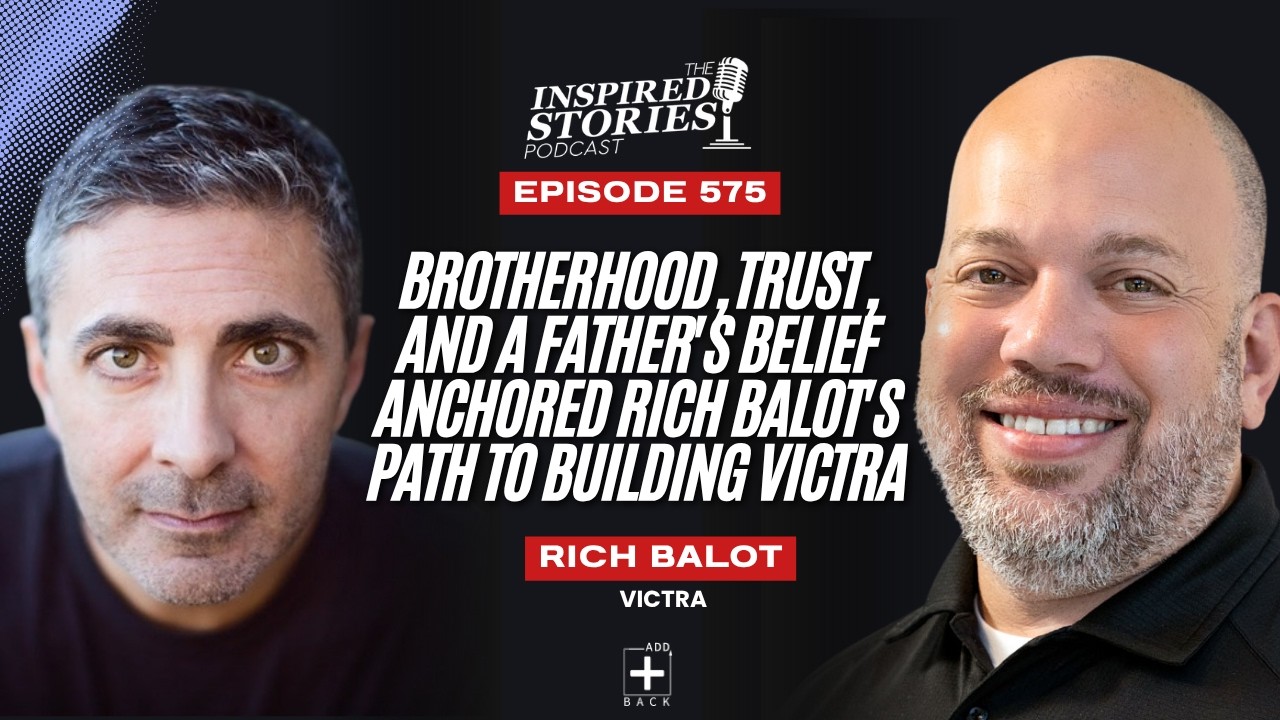
🎙️ Started with a Three Thousand Dollar Loan on the Family Car: Rich Balot's Journey Building Victra
In this episode, Rich Balot, founder and CEO of Victra, shares how a mobile DJ business in high school and a $3,000 loan against the family car led to building the largest exclusive Verizon authorized retailer in the country. Rich opens up about the sudden death of his COO that pulled him back from retirement, buying his own company back from private equity within weeks of raising the capital, and how he rebuilt a broken culture across 1,800 stores nationwide.
✨ Key Insights You'll Learn:
Started a mobile DJ business in high school that grew to seven employees and six-figure profit by age 16
Opened his first cell phone store in 1996 in Wilson, North Carolina, at age 18
Brought his brother on as a business partner specifically to help outvote their father
Grew the company from a single storefront to roughly 250 stores before retiring in 2015
Returned as CEO in 2019 after his successor left and company culture had deteriorated
Fired three of four area vice presidents and nine of sixteen regional directors within 60 days of returning
Learned his COO had died in a car accident weeks after selling the business in 2015
Raised the capital to buy Victra back from private equity in just 24 hours in 2021
Now oversees roughly 1,800 stores across all 50 states generating nearly $3 billion in revenue
Serves as president of a Catholic high school that grew from 32 to nearly 300 students
🌟 Rich's Key Mentors:
His Father: Risked the family car to fund his first business loan and gave him early confidence and trust
His Brother, Dave: Longtime silent business partner who helped balance family dynamics and later co-led the company buyback
His Wife: Founder of Haven at Blue Creek, whose own recovery journey shaped his approach to giving back
The Bishop of Raleigh: Entrusted him with leading a Catholic high school despite his own Jewish faith
👉 Hear how a teenage DJ business and a risked family car became the largest exclusive Verizon retailer in the country, and what it took to rebuild it after tragedy and a broken culture.
Listen to the full episode here
Transcript
Anthony Codispoti (00:00)
Welcome to another edition of the Inspired Stories Podcast, where leaders share their experiences so we can learn from their successes and be inspired by how they've overcome adversity. As you listen today, let one idea shape what you do next. My name is Anthony Cotuspodi, and today's guest opened his first cell phone store as a student at North Carolina State University in 1996.
Was in a small town in eastern North Carolina with his brother. He was 18 years old. He later transferred to East Carolina University after two years. But what started as a single storefront called ABC Phones of North Carolina grew into a national retail operation. Along the way, there was a retirement, a return, a complete cultural reset, and one of the largest acquisitions in the authorized wireless retail space. His name is Rich Ballett.
And he is the founder and CEO of Victra, the largest exclusive Verizon authorized retailer in the United States. Victra now operates over 1,800 stores across all 50 states, employs thousands of people, and generates nearly $3 billion in annual revenue. In 2024, Rich was named Ernst Young's Entrepreneur of the Year for the Southeast region. But before we get into all that good stuff, today's episode is brought to you by my company.
Add
back benefits agency. And you'll want to hear this because it's hurting almost every business you know. See, health insurance costs go up every single year, and retailers are furious about it. They're paying more, claims are getting denied, employees are opting out because they can't afford it, and it hurts turnover and morale. It's one of the most maddening problems in running a business, and everyone just seems to accept it. But you don't have to anymore.
Now there's a program from Bain Capital Insurance that gives employees unlimited access to doctors, therapists, and prescriptions with no co-pays or deductibles to meet. It works for your part-timers and you don't change your broker. But here's the part that really shocks most people. Our product actually increases your net profits. We recently helped a client add, add $900 per employee per year to their bottom line.
Results vary, but imagine what could be done with the extra cash flow. Get your free consultation today at adbackbenefits.com. All right, back to our guest, the founder and CEO of Victra, Rich Ballot. Thanks for making the time to share your story today.
Rich Balot (02:32)
Thanks for having me.
Anthony Codispoti (02:34)
So I guess going back to the beginning of your entrepreneurial career, you were you had a mobile DJ business back in high school. Tell
Rich Balot (02:42)
I did.
Anthony Codispoti (02:42)
us about that business, how the idea came up.
Rich Balot (02:45)
Yeah, look, so started because I used to call into the radio stations and make requests and the DJ said, Man, you've got a great voice. You should be in radio And when I got off the football team in high school and decided to get a job, I called around every DJ in the phone book and said, I need to be a DJ and every they laughed at me and said, No thanks and then I called back around and said, Hey, I'm six foot two, two hundred and fifty pounds, I can carry your speakers and I suddenly got hired.
Anthony Codispoti (03:08)
huh.
Rich Balot (03:09)
and then six months later I was
getting requested more than the DJ was to DJ parties. And six months after that I went off on my own and started having DJs work for me. So when I was sixteen, I had seven DJs working for me full time. We were averaging thirteen parties a week and I made over a hundred thousand dollars in profit when I was sixteen years old living at home with parents. Yeah.
Anthony Codispoti (03:31)
Wow. Now, did
you have a role model in the house or nearby you that was like, hey, this is how you do it, this is how you run a business?
Rich Balot (03:41)
So, you know, my grandparents both were retailers. You know, my grandmother owned a bridal shop, my grandfather owned men's clothing store, so kind of a match made in heaven there, right? but the and so my parents were in the clothing business. Unfortunately, my dad was not great as a an entrepreneur. he was more of a salesperson. And so my father was my role model. He trusted me, he believed in me. Probably the biggest thing he did is provide confidence. because when I s started my DJ business, we had to take a three thousand dollar loan.
From a title loan company at twenty nine and a half percent interest, where my dad said to me, Rich, I'm gonna risk the comp the family car for you to start your business just to make sure you understand if you don't pay this back, we lose the car. I can't get a job. so don't screw up. I believe in you. And so he was always my rock and my support along with my mother and believed in me and I was able to start the business and go from there.
Anthony Codispoti (04:31)
Did you feel confidence in yourself going forward with that, or were you nervous?
Rich Balot (04:35)
Always have and always did. Yes. My parents confidence has never been something I've been short on.
Anthony Codispoti (04:40)
You think you were born with it, or were you weak in the confidence
Rich Balot (04:43)
Mm-hmm.
Anthony Codispoti (04:43)
area and your parents did certain things that helped to bring you along?
Rich Balot (04:47)
A little bit of both. I probably had some confidence, but my parents definitely built me up as, you know, by trusting in me the way they did. and it's it's quite amazing to see what I've been able to do with it.
Anthony Codispoti (04:57)
Okay, I'm a parent, I wanna I wanna better understand that. How can I give my kids more confidence?
Rich Balot (05:03)
I mean, just simple words saying I trust you was really a lot of what it took, right? I'm willing to take this big bet on you and I believe in you and I trust you. And that's all it really took. I mean, and obviously, you know, I was successful with other things growing up, whether it was math competitions or sports. but my parents were always like behind me saying, Look, I believe in you and I trust in you and we had a really strong relationship on trust and I think that is what helped build that confidence.
Anthony Codispoti (05:27)
And what eventually happened to that mobile DJ business? Did you just wind it down? Did you sell it?
Rich Balot (05:32)
Yeah.
I sold it off to one of my DJs because my cell phone business had started started to really grow because I w had both businesses for the same time, at the same time from when I was eighteen until probably in the mid twenties. but then it got to where I was working too much because I was working, you know, seven days a week in the retail business and then Friday night, Saturday night, Sunday afternoon DJing parties and I was just exhausted. And I was like, Okay, what's the point in making all this money if I can't enjoy it?
Anthony Codispoti (05:55)
And you were still going to school at the time, right?
Rich Balot (05:57)
I was
still a student as well. Yeah, I never stopped going to school. I got my degree in business, started off electrical engineering, switched over to business. I was great at both. It wasn't a challenging issue. It was just that I wanted to be closer to myself on business that started to grow, which is why I transferred to ECU.
Anthony Codispoti (06:11)
And where did the idea come from to get into the cell phone business? Because this is ninety-six. This
Rich Balot (06:16)
Six.
Anthony Codispoti (06:16)
is before everybody had a cell phone. I mean, this was right on the cusp of becoming a lot more accessible to folks, but it wasn't totally mainstream.
Rich Balot (06:25)
Correct. Yes. So what happened was as a DJ in eastern North Carolina, I would DJ these parties out in the middle of nowhere and this is pre navigation system. So th you would pull out a map and you but you you get directions from people. But in eastern Carolina it was like, go down to the big oak tree and turn right and then when you see the red barn on your left, turn right there again. So I was constantly getting lost because I wasn't very good at spotting oak trees, I guess. And
So I bought a cell phone. Back then I remember my first phone was drilled into the car, installed antenna and everything, and it was $39.99 a month for 30 minutes. Like you ever needed to talk 30 minutes a month. That was just way too many minutes back then. but I was like, wow, these things are really, really handy. I think this is gonna grow much faster than people realize. And a friend of mine was in the industry, and you had to have a business to start a cell phone business. So they were looking for like video stores, car stereo shops, et cetera.
And I submitted my DJ business and they approved it and that's how I got into the cell phone business.
Anthony Codispoti (07:23)
Who approved it? Were you going right 'cause ver was Verizon a thing yet? Yeah.
Rich Balot (07:25)
y Verizon didn't even exist back then,
so this was with US Cellular at the time, who just got bought recently by T Mobile. but US Cellular back in the day is who I started with back in nineteen nineteen ninety six, October first, nineteen ninety six.
Anthony Codispoti (07:37)
And so what was the first month of being open like? Did you have any idea what you were doing? Were customers coming in? Were you making any money?
Rich Balot (07:45)
So the reason I started the company was to get my dad a job. He'd been unemployed for a while, a fat fifty-year-old Yankee. Nobody wanted to hire him in the South, but I knew he knew how to sell. and so I hired him as my first employee, brought my brother in as a partner. not that I needed the money from him. I actually lent him money to start the business, but it was more so because I needed him to outvote my father, even though dad worked for us, he was still my dad. So two of us had a chance of beating him. but so we started the business to get my dad a job.
The first three days he didn't see a single customer in the store and he called me up and told me I wasted all my money and it was stupid. then after three days it started picking up and then we made a profit our very first month in business and never looked back.
Anthony Codispoti (08:23)
And how were people finding you? First two days is crickets, then it starts to
Rich Balot (08:27)
Yeah.
Anthony Codispoti (08:27)
gain some were you marketing or people just walking by and popped in?
Rich Balot (08:31)
Yeah, great question. So the store we went into used to be a US cellular store that they closed and moved to a newer part of town. And a week after they shut down, after having signs up for three months saying they were moving and shutting down, I reopened for US cellular in the same spot. And so once people said, wait a second, the store didn't close down, they started coming back in because it was still closer to their home, you know, further from the new part of town that was moving towards, but and that store was in Wilson, North Carolina, and we had it there for ten years. In fact, I'm excited.
I just opened a store ten days ago in Wilson, North Carolina. We're the only Verizon store in Wilson, North Carolina again. So thirty years later I'm back in Wilson again. yeah.
Anthony Codispoti (09:04)
Back to your roots. Okay.
okay, so your brother comes in as a partner. talk to me about the dynamic with your brother and your dad again. You sort of alluded to that a little bit.
Rich Balot (09:13)
Yes. So basically,
you know, our thought was my father, you know, because he's our father, if if I got into a disagreement with him, even though he worked for me, he was still my dad. But if I had my brother as my partner there and both of us agreed and dad disagreed, we had a chance of outvoting him because he's still our dad, right? You gotta respect your father. but with two of us, we had a chance. And so that was the main reason I brought my brother in. We've been partners now for thirty years. Never had a single fight in thirty years.
and we're best friends. don't get me wrong, eighteen years prior to that we had a lot of fights until I became bigger than him and then the fight stopped. so he's my older brother. and but yeah, so we had a great time and we've been partners now thirty years and it's been a fantastic relationship. We're still best friends and we do a lot of investing and things together. Everything we own, we share.
Anthony Codispoti (10:00)
wow. And is your dad still part of the mix?
Rich Balot (10:03)
Unfortunately, he passed away a little over fifteen years ago or a little under fifteen years ago, but he wouldn't know what to think. Because when we first started, our first store was doing well. And I went to my dad and I said, Dad, I signed a I'm gonna open a second location. He says, What are you stupid? You've already got one great location. What do you think? And I Well, I already signed the lease. And so and then I went to my dad, I said, Dad, I want to open a third location. He goes, What are you dumb? You got two great locations, why are you risking? And I said, Well, I already signed the lease. And when I went to my dad for my seventh store,
I said, Dad, I'm opening the seventh store. He said, I think that's a great idea. I said, Really? He goes, no, but knowing you, you already signed the F and lease. So so we had a great relationship, but but we, you know, he he was he was always challenging us to make sure we didn't grow too fast and unfortunately, like I said, passed away at the right old age of 69.
Anthony Codispoti (10:47)
Hm. Okay. Had did he work with you pretty much right up until then?
Rich Balot (10:51)
Yeah, I mean there was a few years prior he got sick and had to stop. But but yeah, he was my dad was the most amazing salesperson ever, and so he taught sales skills to our teams as we kept growing. culturally he wouldn't have fit into this world today. He was the king of dirty jokes. but back then he could get away with it a little bit more and it's amazing we didn't have a lawsuit back in the beginning with him around, but it was all in good spirits. So but he he definitely helped us grow and and get that culture of of a loving family kind of an atmosphere with heavy sales emphasis.
Anthony Codispoti (11:21)
So
how far were you into that first store before you realize this is really working? I feel good enough to go and open that second location.
Rich Balot (11:32)
So I want to say it was probably two years in before we did that. And that's kind of when I moved back to Eastern Carolina from NC State, is when I realized the business was going to start growing. And so actually I'm sorry, it was a year in, and then I moved back two years in was when it was starting to really take off because I had three stores when I started to move back to Eastern Carolina.
Anthony Codispoti (11:52)
And I'm trying to remember just from my personal experience, it feels like it was the late nineties where like all of a sudden everybody was getting a cell phone.
Rich Balot (12:02)
Yeah, I mean this is when you went from install phones to handheld the to bag phones and then to handheld phones, right? So that's when you started coming out with your first the brick phones and then the Zach Morris kind of phones and then the the flip phones and then, you know, finally you got to your really small flip phones and the razors and startacks and things like that. And that all was in the late nineties, early two thousands.
Anthony Codispoti (12:23)
What was the point where you realized, okay, so you went from two to three to seven, and by seven, your dad's like, Hey, great idea. Like you've you've sort of
Rich Balot (12:31)
Yeah.
Anthony Codispoti (12:31)
proven that this is a good model. It but what was the point where you sort of had this understanding or this vision that this could be much bigger than a collection of regional stores?
Rich Balot (12:43)
You know, it wasn't one of those things I thought about at the time, right? I wasn't very big into strategic planning. It was just tactical and just keep going, you know, one day at a time and whatever the next challenge is and figure out how to keep growing. You know, we switched from US cellular to Altel back then because US Cellular was only Eastern Carolina and Altel was regional, so we could go to more stores, more states, and then Altel got bought by Verizon and we became, you partner of Verizon and then I grew to be the largest partner with stores in all fifty states like we are today. And I I can tell you,
I didn't start doing strategic planning until I hired a CEO coach. and prior to that it was just, you know, what's next? And it wasn't really thought of like we never even had a chance to look back and go, Wow, look what we built. We were too busy running it. We didn't care. We didn't you know, we we were just having fun.
Anthony Codispoti (13:26)
Yeah. And so the Verizon model now, you're a franchisee? Is that is it a franchise or relationship or is it a license?
Rich Balot (13:34)
Yeah, legally we're an agent for Verizon. So it's more similar to like Allstate where you have somebody who sells their policy. So we're selling Verizon service. Verizon does all the billing and they pay us a commission for assisting their customers. but we're similar to a franchise, but legally we're an agent.
Anthony Codispoti (13:49)
Any thoughts to ever work with another cell phone provider? Like why have you remained exclusive to Verizon?
Rich Balot (13:56)
Yeah, so we at one point we were non exclusive many years ago. and then the carriers kind of decided for us that exclusive was the math the model they were gonna go towards, other than your Best Buy Walmart kind of concept. the national retailers, they're exclusive. And so and we love our exclusive partnership with Verizon. it's been wonderful for us.
Anthony Codispoti (14:16)
So I want to better understand I don't know what makes up Rich Ballot because I'm thinking like the the growth that you've experienced is incredible. And we're gonna talk more about that. But I'm also thinking back to the beginning when you're going to school, you're a student who goes and gets his degree, you've got two businesses, not one. and I I held a part time job when I was in college. You know, I worked maybe 20 hours a week and like I my schedule was pretty full.
So
you're running your DJ business, you're opening up a a brand new business that you didn't have any experience in and having to learn that. Were you a guy who just didn't sleep? Were you really good at delegating? Like what's the makeup of Rich Ballot that allowed for all of this to happen?
Rich Balot (15:00)
Yeah. So actually believe or not, I've always slept great my whole life. I always went to bed at nine o'clock, nine thirty the latest, and still to this day I'm in bed usually by ten o'clock. but the as far as, you know, to me it's all about hiring the right people and I learned that at an early age. I was really talented in identifying other people's talents. And so hiring great people and empowering them to do their jobs is what allowed me to grow my business quickly and, you know, fairly inexpensively over time.
And so that was the that was the secret sauce. By the as far as school goes, you'll love this. I would take all the department secretaries to lunch the first Tuesday of every month at college. And that was to make sure I had the perfect schedule. because anybody who knows business knows if you get the secretaries on your side, magic happens, right? So, so I would in in college, I would take all the ECU department secretaries in the school of business to lunch first Tuesday of every month. Just so when my schedule time came out, I had the perfect schedule. So I would only go to lunch for school. Like literally, school was a two hour lunch break every day.
Anthony Codispoti (15:58)
What do you mean? Like they they set the class schedule around like when you wanted to be there?
Rich Balot (16:05)
Well, you you know, you could pick your certain classes and but they made sure my classes that I needed always happen to occur in the time period that I needed them because they're the ones who do all the work behind the scenes. And then you had to get in the classes, you know, they start at seniors and go to juniors and whatever, and magically my schedule always is exactly the schedule I needed.
Anthony Codispoti (16:20)
Gotcha. So the the sk the the class options were laid out in advance, but you needed to make sure you got into this one and not that one because you couldn't come back at five o'clock 'cause you're doing something else. Okay.
Rich Balot (16:31)
Nah, I was busy selling. Yeah.
Anthony Codispoti (16:33)
So you took them all out to lunch and you could afford this. You had these successful
Rich Balot (16:37)
Yeah.
Anthony Codispoti (16:37)
businesses going, you know, especially for a college kid, you had quite a bit of money in your pocket. That's that's pretty
Okay,
so Victor, you're exclusive
Rich Balot (16:48)
Uh-huh.
Anthony Codispoti (16:48)
to Verizon. is the experience in your store any different from another authorized Verizon retailer or I don't know if Verizon does any corporate owned stores too.
Rich Balot (16:59)
Yeah. Yeah,
they still got about a thousand corporate stores. so we've got more stores than Verizon Corporate has themselves now. there's about sixty five hundred stores total in the Verizon fleet between myself, my peers, and Verizon corporate stores. The experience is very similar, probably ninety, ninety-five percent the same, right? We can do just about the same things at every store, technically. the difference is gonna be the people and the training, right? So hopefully our people are gonna take a little bit better care of folks than some of the others out there. I'm sure some of them would tell you the same thing.
And but overall I'd say it's a pretty consistent experience that Verizon wants to have across their whole fleet. They've really drilled that into us more and more in the recent years about the customer experience and making sure we're similar.
Anthony Codispoti (17:38)
And what is the customer experience? What happens for somebody who hasn't been in a Verizon store? What happens when they walk in the door?
Rich Balot (17:46)
Look, hopefully they're greeted upon arrival by a welcome face and smile. And then, you know, we're gonna analyze their needs, fulfill those needs with a recommendation, and then make sure they walk out working with their phones completely set up and their Bluetooth connected to their car and all kinds of things like that. to make it just a real worrisome, worry free experience, excuse me. to make sure that they're not walking out of there stressed about, you know, they don't know how to set up their phone or transfer whatever they need to from one phone to the other, their phone book, et cetera, pictures.
So we're gonna help them make sure that they they have a premium service that when they leave Verizon's when they leave that day, their Verizon phone is activated, working, and good to go.
Anthony Codispoti (18:22)
And is this also a place where if I'm having trouble with my phone I bring it in?
Rich Balot (18:26)
Yeah, about eighty percent of our s walk in traffic is service appointments or service time I should say. so whether that's a billing issue or a tech issue or you cracked your screen, you lost your phone, ran over with a car, dropped in the pool, all those kinds of issues, insurance claims, we help everybody with full service. So anything you can think related to Verizon, we can take care of
Anthony Codispoti (18:47)
Okay.
So before we get to the point where you stepped away for the first time from your CEO role in twenty fifteen, I wanna better understand the trajectory of the growth. What w in twenty fifteen when you stepped away, how many stores were you at that point?
Rich Balot (19:02)
right around two hundred and fifty. And then we just merged with a company that had three hundred and fifty stores. So we were right around six hundred stores the moment I kind of stepped away. six hundred, six fifty. yeah.
Anthony Codispoti (19:16)
And so when you say merged, like a true merging, one party acquired the other.
Rich Balot (19:22)
Yeah, I mean look, it was it was private equity backed, so so it I would probably say we at that time I maintained only twenty percent ownership, so we were probably acquired from a technical perspective, but we kept our name and our operating company, so it was like a reverse acquisition. So we were the main company that was the operating platform, but the other company was the one that continued majority ownership.
Anthony Codispoti (19:47)
And was this just an opportunity to take some chips off the table and maybe
Rich Balot (19:51)
Yeah.
Anthony Codispoti (19:51)
fuel some additional growth? Is that kind of the thought process?
Rich Balot (19:54)
It wasn't for fueling growth. it was my brother, who'd been my partner forever, who had never worked in the business. He always stayed in the medical field, was ready to retire. And so he said, Rich, do you think we could cash some out and retire? And I said, Sure. So we we did. We put the business up for sale. We weren't sure whether we were buying the other company or they were buying us up until a week before we closed. it was back and forth. And then we said, All right, we're we're willing to step aside.
Anthony Codispoti (20:17)
so interesting. Your brother was never actually actively involved in the company.
Rich Balot (20:21)
No, we talked business strategy and and topics daily now, but back then, you know, we talk about problems and that was about it. and he was running a similar sized medical practice that he was growing for another doctor where he was the number two guy.
Anthony Codispoti (20:34)
And so how were you fueling and funding that growth that was happening when you got up to the two hundred and fifty stores? Was this just saving the profits from this store, banking it for the next one and so on? Is there any outside
Rich Balot (20:44)
You got it. All self
Anthony Codispoti (20:46)
capital up to that point?
Rich Balot (20:48)
all self funded until we started acquiring companies and then we did get some bank debt. and then once we started with the private equity space, we used private equity and then we did some you know, some Wall Street debt.
Anthony Codispoti (20:58)
Okay. Wall Street debt, meaning you went
Rich Balot (21:02)
meaning term B loans and bonds.
Anthony Codispoti (21:05)
Okay.
Rich Balot (21:07)
Ca the the I'm sorry,
the the right word is capital markets. I shouldn't say Wall Street debt, capital markets.
Anthony Codispoti (21:12)
Okay. And who walked you through that?
Rich Balot (21:15)
Private equity taught it to me when we were partnered with them, and then since then I've learned it, but we still have experts and advisors that we utilize to help us with that.
Anthony Codispoti (21:22)
Private equity still involved today? So you bought it back at some point?
Rich Balot (21:28)
I did. Twenty twenty one, we bought the company back from private equity.
Anthony Codispoti (21:31)
Okay, what happened there?
Rich Balot (21:34)
Well, we're skipping around a little bit, but
Anthony Codispoti (21:35)
Yeah, okay.
Let you know what we are. So let I and I prefer to go in chronological order too. So so let let's put a pin in that.
Rich Balot (21:43)
You got it.
Anthony Codispoti (21:43)
okay, so you stepped away twenty fifteen, retired.
Rich Balot (21:48)
Mm-hmm.
Anthony Codispoti (21:48)
what were you doing in between there and when you came back in twenty nineteen?
Rich Balot (21:52)
Besides driving my wife crazy, I was trying to go fishing every day. I was, you know, starting a lot of small businesses, a bagel shop, a lending company, a car rental, I mean a golf cart rental business, all kinds of little businesses. Cause I was bored out of my mind. And my wife literally kicked me out of the house, not like a mean way. She said I had to leave like eight in the morning, come back at five. so I went and got an office a mile away that I would go to every day and just stare at a computer screen, bored out of my mind. 'cause you can only go fishing with eighty year old guys when you're in
In your thirties, so many times hearing about prostates, wherefore you're like, okay, this is not for me. But the problem is my friends had to work during the week, right? They couldn't just take off.
Anthony Codispoti (22:30)
Okay, so for four years you're just staring at this blank computer screen driving yourself crazy?
Rich Balot (22:34)
Yeah,
you got it. And opening businesses.
Anthony Codispoti (22:38)
Okay, what kinds of businesses were you opening? okay.
Rich Balot (22:40)
Well, like I a bagel shop, a le
a a lending company, a golf cart rental business. So we were opening a lot of different stuff. We were doing investing as well, but it was boring compared to having a large, you know, enterprise.
Anthony Codispoti (22:50)
Yeah. Okay. So what prompted you to come back in two thousand nineteen?
Rich Balot (22:54)
So I still maintained chairman of the board role and had twenty percent of the cell phone business the whole time that private equity owned us. and the board asked me to lean in a little further because the company wasn't doing as well. And when I did, the CEO decided to leave and go join GameStop as their CEO. He was the CEO of GameStop during the meme stock, by the way. luckiest guy ever, made a fortune just out of luck, which I'd rather be lucky than smart any day.
and so yeah, I came back April first, twenty nineteen as CEO of Victor.
Anthony Codispoti (23:26)
And were you excited about this or was it more out of necessity?
Rich Balot (23:29)
so it started off a necessity because the board was like we need somebody to help stabilize it so we can do a proper CEO search. And I started having a blast. My team hadn't received a bonus in four years, which they'd always had in a bonus under me prior to that, you know, the short term annual bonus structure. And, you know, when I came back in April of twenty nineteen, the CEO at the time told me the budget for that year was a hundred and eighteen million dollars of EBITDA. And he said, Rich, you'll be lucky if you can hit ninety nine. And this was April first. And that year we did
119 million of EBITDA, hit the budget, exceeded the budget for the first time, got everybody 100% payout, turned the culture around. I had to reorder the entire company, had to fire three out of four area vice presidents, nine out of sixteen regional directors, and so on. And I could tell you all the reasons for all those changes that I had to go in and make hard decisions because in four years you can really screw up a business. and so got it turned back around, and then private equity came to me and said, Hey Rich, we kind of like what you're doing. Would you be willing to stay? And so I said, sure.
I'm having a blast because the main reason I came back was to help the employees. It was just killing me to see how bad the culture had gone and how the employees were not having fun. And I thought if we continued it would have just shut down.
Anthony Codispoti (24:36)
So
what had really changed was it in the time that you were gone? Was it just the culture? Like it had become toxic or walk us through it.
Rich Balot (24:44)
Yeah, so two different CEOs. The first one you know, came in, we merged those two companies together. I had a much higher pay structure, the other company had much lower pay structure. So he said, we'll just meet in the middle, which was a horrible decision because all the top paying reps from my company got pissed off and quit. And all the crappy, I shouldn't say crappy, lower paying reps from his company got a static and stayed, even though they didn't know how to sell. And so that was an immediate mistake. And then he started cutting costs, like cutting the training team.
And he said, you know, DMs can train managers, managers can train sales reps. We don't need a training team. And that worked great for a year because I built such a a bench up that he looked like a genius for a year. He saved you know millions of dollars in training. but then after that, it started to fall apart. So private equity got rid of him, brought in the next guy, and the next guy was a cost-cutting CEO. And there's growth CEOs, there's cost-cutting CEOs. Look, in business, there's only two ways to make money: increase revenue or decrease expenses. That's it. Everything else is a form of one of those two things. And unfortunately, the second CEO.
Was a cost cutter. he was not a growth guy. And so he just continued to cut costs and cut costs. And that works for a little while again, but it gets old real fast. And then you eventually you have to grow revenue. And so when I came back, I had to fix the culture, was the first thing. First, I had to get the right people in the right spots because imagine being told, hey, the DM before you, he sucked. So we fired him. Don't do what he did. Here's your keys, here's your laptop, good luck. And that was your whole onboarding. And it didn't work.
And so we had to go in and hire the right people back in those roles, rebuild the training team to start building the bench again and fix the culture. And once we did that and then fix the comp structure as well, we had to pay more to get the right people who could grow sales and make us money. And once we did that, things turned around and really started going well.
Anthony Codispoti (26:27)
Okay. And how quickly before you started to see the improvements in the bottom line? I mean, you talked about you came in in April and by the end of the year you surpassed the number. So it happened pretty quickly in that eight month span.
Rich Balot (26:38)
Yeah.
Within sixty days, we made massive changes. I mean, we I knew the business, so I wasn't afraid to make hard decisions and I wasn't afraid to to do it quickly.
Anthony Codispoti (26:49)
Okay, so I'm gonna push back a little bit on that. Were you really not afraid? I mean, those are a lot of really hard conversations to have. You you threw out some numbers of you know, the the number of the the top people that you had to let go in a very short period of time. Any discomfort, any hesitation?
Rich Balot (27:06)
No,
I mean look, yeah, I never like firing anybody, right? That's not what I like to do. Nobody if if you ever like to fire somebody, then there's something wrong with you mentally. But I knew what I had to do. And it I I wasn't scared at all. I really wasn't. Well, first of all, let's be honest. I had a really good safety net. I was already financially secure. So if I failed, I could just go home and retire again. It wasn't like I was gonna have to go look for a job. So that never hurts. but second to that, I knew the business and I knew what I was doing was the right thing. and I just believed it in my core and that self confidence I talked about earlier.
you know, sometimes can blind you, but for the most part for me it's really not and it's allowed me to make tough decisions and move forward feeling really good about it. And by the way, I think most CEOs need to get comfortable making decisions with incomplete information. And so and taking a risk, an educated guest, if you will, and and and going with your gut. And that's what I've been really good at my whole career.
Anthony Codispoti (27:56)
So talk to me about the idea of V nation. What is this?
Rich Balot (28:00)
Yeah, so look, one of the challenges when I came back was we were called Victra. And I they the prior CEO changed the name because we were A Wireless was the name of the company I'd started. ABC Phones then became A Wireless, and then A Wireless became Victra. And when we merged together multiple other companies, because when I was gone, we bought two or three other businesses, 4G, Diamond Wireless, and then eventually Go Wireless. but when we bought these other companies, the CEO didn't know how to merge the cultures together properly.
And so we were really operating like four businesses. And so he his the second CEO while I was gone the way to fixing it was to change the name from A Wireless to Victra. This way everybody would give up their old name instead of saying, I'm, you know, yeah, I work for Victra, but I'm from A Wireless, I work for Victor, I'm from Diamond Wireless, I work for Victor, I'm from Z Wireless. They all just say I'm I'm Victra. That was his concept. And I I told him at the time, I said, Look, the name change isn't gonna fix it. because that's just a a byproduct. The real issue is the culture. You never merge the cultures. So when I came back,
First thing I did was merge the cultures by firing, unfortunately, so many people who were leading a separate entity and making forcing them to have one set of leaders for one business and forcing it to run as one combined company. So if that makes sense. so out of that,
Anthony Codispoti (29:12)
Was it?
Rich Balot (29:13)
out of that, though, sorry, I didn't answer your question, we V Nation was, you know, kind of I never liked the Victor name, and so we pivoted to V Nation as our kind of internal brand, to say, hey, team, you're not part of the V Nation. You know, there were one team, one nation, one brand.
And obviously the V ties back to Verizon as well.
Anthony Codispoti (29:31)
So were you convinced that some of these top leaders needed to go? Like were they given a chance to like get on the boat and row with us? Or it was just like you just needed to clean house?
Rich Balot (29:41)
they they
were so over their skis. I mean the great people, but they were so above. They got way overpromoted. And one of the worst things you can do to somebody is overpromote because once they're overpromoted, most people can't step back down. It's really hard. So you have to exit them and hopefully figure out a way to do it softly and and respectfully and bring in the right people. But no, I mean, unfortunately, the particularly the regional directors and the vice presidents at the time of sales
were just way over promoted. So most of them just had to go. So we assessed them carefully and then made the hard decisions and brought in people from outside, which I h
Anthony Codispoti (30:16)
You know.
Rich Balot (30:16)
hate hiring from outside. I always prefer internal promotion.
Anthony Codispoti (30:19)
Mm-hmm. But this was sort of a crisis situation. You needed new leadership.
Rich Balot (30:22)
Had to move quickly.
Anthony Codispoti (30:23)
Yeah. You know, and I think for a lot of people, this idea of culture feels like vague and amorphous. And it's like, what what is culture? Is it a sign on the door? Is it we give out jelly beans for birthdays? Like and and I hear part of what you're saying about no, for us it was like bringing back the training. Like that was a big part of it, making sure that people were set up for success. But talk to us about the other
practical steps that you took to put back in the culture that you knew would be successful.
Rich Balot (30:55)
Yeah, so you you hit it nail on the head there. You can't prescribe culture, right? I can't hand you a piece of paper and say, This is our culture, go do it. because they're gonna look at you and go, Okay, whatever, you know, another sign on the wall. But it's how you pay people, it's how you train people, it's the benefits you provide, it's the comp structure, it's the PTO, you know, time off policies, it's how you treat your people when you visit the stores. Are you a jerk? Are you nice to them? Do you actually know their problems? Do you care? We did one of the first things we did were digital town hall sessions where we allowed
All of our employees to ask any question on the spot. And I would either answer the question live or I'd say, that's a great question. I don't know the answer. Let me get back to you. And every single question that was asked that I didn't answer, we would type out the question and the answer and get it out within a week. And then we would take action based on the feedback we got. So I would literally say, Tell me what's wrong, tell me what's broken, tell me what doesn't make sense. And when you give people a voice in how the business is run and learn from them, you can fix things really quickly.
And and it builds a strong culture of people caring. And look, our core values, performance, innovation, integrity, celebration, and collaboration. At the time when I got back were just on the wall. But we brought them back. We started doing core value awards for people who who demonstrated these core values. We started talking about them more. And again, that's how you bring culture together, right? My job as a CEO, one of the five jobs of a CEO is kind of point the direction. Here's where we're going, follow me. some people call it mission or vision or, you know, tactical terms like that. But it's really this is where we're going.
and so I had to clearly define that for people and then the way we're gonna get there is through our core values. And when you start doing that, it's kinda like the bumpers at a bowling alley when you pull the bumpers out. I just gotta keep them in the lane and as long as I see, okay, training's going good, we'll keep doing that. you know, pay is a problem, we need to fix that. that bounces it back to the middle and you just kinda keep doing that down until hopefully you hit a bunch of pins in the end and make some money.
Anthony Codispoti (32:43)
So you give people a voice, you allow them to say, hey, here's what's wrong. You listen and you take action quickly. So that it's it's leading by example, not just by the words. Like you said, you can't just prescribe the culture, put words down on paper and say, go do this. You have to be the living embodiment, the living example.
Rich Balot (33:02)
You got it.
Anthony Codispoti (33:05)
you know, you guys are what, eighteen hundred stores, fifty states, all fifty states. That's unusual for any kind of retail
Rich Balot (33:09)
Mm-hmm. yeah.
Anthony Codispoti (33:12)
operation. labor market's challenging in most places, hard to hire, hard to retain. What are some things that you've tried and found success with when it comes to that hiring retention?
Rich Balot (33:25)
Look, we're in retail and retail's a hard business. We're only closed three days a year. So people don't like working retail typically. We're like one step up from fast food for most people, right? but we do a lot of entry level jobs and we can really teach people how to sell and how to make a lot of money. So if you want to get into a sales career particularly, we're a great place to start because probably ninety percent of our team are sales or sales leadership, right? Then you have five to ten percent. That's the corporate team's, you know, HR training, things like that. And a lot of people move from one to the other.
so we don't have a big problem hiring people. Retention's always a challenge for us because of the hours we work. You know, we have stores that are open from eight in the morning to ten at night, seven days or six days a week, and then you know, noon to six on Sundays. I mean, it's hard. so turnover is always always a challenge and we could definitely still improve there. and it's staying competitive in the labor market. I mean, there's certain markets that are really hard for whatever reason. We struggle to hire people in the the far northeast, like Boston, Massachusetts area is tough. Anchorage, Alaska, I think there's more jobs than there are people.
you know, Hawaii, extremely expensive cost of living, difficult, right? and and a lot of demand for high hiring out there. So there's certain pockets, particularly retail, excuse me, resort communities, Jackson Hole, places like that that are really tough, expensive places for entry level jobs to live. Those are challenging for us, but the rest of the countries, we do a really good job and we've got a great base of employees and and I'm very proud of the team.
Anthony Codispoti (34:49)
Okay,
so you called me out correctly before for kind of jumping around a little bit. So let's now get back to two thousand twenty one and what was taking place there when you are bought this is the time when you were buying the business back from private equity, right?
Rich Balot (35:02)
Yeah, you got it. So private equity was still the majority owner in twenty nineteen when I came back. I turned the business around. We nearly doubled EBITDA in the next two years. And so private equity does what private equity does. They put us up for sale. And unfortunately, because private equity does a good job at looking back, they were selling other private equity firms who looked back and said, Well, what happened in April of twenty nineteen? All of a sudden the business went from a downward trajectory to an upward trajectory and and the answer was, well, Rich came back as CEO. So
All the PE firms who wanted to buy us, which were some names that if I said them, you would say, I've heard of those guys, all wanted me to stay for at least a five year contract. And so I was talking to my brother and I said, Dave, this sucks. I'm gonna be stuck for another five years working for somebody. I said, if you know, if we're gonna be back for five years, we might as well buy the damn thing. And my brother said, Well, that's not a bad idea, can we? And I said, Well, let me think of the math. Yeah, we'd have to raise, you know, X amount of capital, but yeah, we could, we could do that. He said, Okay, let's do it.
And so because the the contracts that these PE firms put ahead of me were just awful. I mean, Rich, you gotta roll over, you know, a huge dollar amount and if you leave within five years, you lose all that money. Rich, you gotta roll over a huge amount, and if we sell the business in five to ten years and we don't make a profit, you lose all your money before we lose any of ours. I'm just awful contracts. They were w totally one sided, ridiculous. I'm going, Why would I do this? And if I have to leave a bunch of money in it and I have to stay, then I might as well get all the upside too. I already have the plan marked out.
who to buy, how to grow the business and all that. And so we raised some capital with some friends. It took me twenty four hours to raise the money that we needed. we we were
Anthony Codispoti (36:39)
Twenty four hours.
Rich Balot (36:41)
double subscribed in twenty four hours, yeah. So and and I'd never raised money before so I didn't know how it was gonna go. I like, I think we can do it. so I had to tell a lot of close friends. I only called like sixteen people and I had to tell twelve of no thank you. after they said yes. 'Cause I was like, sorry, you know, I gotta go with the bigger guys. It's just yeah.
Anthony Codispoti (37:00)
You you had a track record by this point. I'm gonna guess that's all it was. Rich, Ballot from Victra. Yeah, we're in. Okay.
Rich Balot (37:04)
That's it. Yeah. Mm-hmm. Pretty much.
Yeah. And and so yeah, we bought the company back you know for over a billion dollars.
Anthony Codispoti (37:14)
And so and you did that t remind me again the the financing vehicles that you used. Some private money.
Rich Balot (37:20)
So we we had some bond
we had some bonds that were transportable that we kept and that was quite a bit of the money. Then we took a term B loan as well and then we had equity.
Anthony Codispoti (37:32)
Okay. what's the future look like? More growth, more acquisitions?
Rich Balot (37:38)
I mean great question. We we continue to optimize the fleet, so closing low producing stores, bringing on new stores that are better. I think we're kind of at a size now where there's not a ton of of growth as far as opening up new stores. It's more recycling the fleet. I think the improvements are just taking lower producing stores and making you know replacing them with better producing stores, so kind of optimizing the fleet that we have. and then we're looking for new categories to grow with Verizon. So for instance
we fully expect to grow, you know, we just opened up a multi-dwelling unit group with Verizon, which is like apartment buildings and things like that. So we help them do sales in those kinds of complexes. We we have a a very strong business team that does a lot of small medium business. I think there's way more opportunity to grow that. we also got into prepaid wireless with Verizon, a brand called Total Wireless. So that's about three to four hundred of our stores in there. There's plenty of growth on the prepaid side where we can continue as a master agent.
opening more stores. If you want to open a store with us, please visit us later. We can talk about where. but we're opening prepaid stores all across the country with Total Wireless. That's the next growth curve. so yeah, lots of opportunity to still grow in auxiliary businesses, kinda add ons to the core, but the core I think is kind of at a mature stage now where it's just optimizing.
Anthony Codispoti (38:54)
When you talk about optimizing, taking these poor performing stores and lifting them up, is that like a a facelift in the store or is that new training, new managers
Rich Balot (39:02)
Yeah.
Anthony Codispoti (39:03)
there?
Rich Balot (39:04)
look, the first thing we're going to start off with is wiping the staff and starting over. facelifts actually don't improve the business at all. so we can remodel the store and the sales will be just about the same before as they are after. Now, if you let a store get in disrepair, that'll hurt the store, of course. But as far as going from an older fixture package that's clean to a newer fixture package that's clean, it doesn't make a difference. but we will move locations. So we'll look for okay, the the the town is moved. We're no longer in the good part of town, so we'll move to a newer part of town.
And oftentimes that'll be an increase in sales. so a lot of times it's relocation, but it doesn't necessarily have to be the same city. It could be closing town A and moving to town B just because there's better opportunity. So we're gonna always look at the bottom kind of five, ten percent of our fleet every year. We're gonna say, is it a staff issue? Is it location issue? And then we'll make a determination from there and try and fix it and then you know, either move it or re-re re-staff
Anthony Codispoti (39:53)
And the prepaid wireless, the new opportunity that you're really excited about. This is the same set of phones that are available otherwise?
Rich Balot (40:02)
Yeah, I
mean so it's some of the all the phones are available, yes, for the price, but a lot of the prepaid phones are gonna be more cost effective or cost economical phones. and so the lower end Android phones are gonna be very common or maybe a year or two older iPhone. but your service is gonna be, you know, prepaid and typically gonna be cheaper. maybe you don't get all the bells and whistles that Verizon provides as far as, you know, high speed data or things like that, depending on which plan you pick, or roaming internationally and things like that. but
prepay's really there's a segment of the market that likes that kind of business and Verizon's growing into it really well. Total Wireless is an amazing brand.
Anthony Codispoti (40:39)
Rich,
what's the hardest thing that you've had to go through and what did going through that teach you?
Rich Balot (40:45)
yeah, the hardest thing ever. so about a month after we sold the business in 2015, I got a call from a friend of mine and he said, Rich, does Scott Levinson still work for you? And I said, Yes. And he said, I don't know how to tell you this, but I'm pretty sure he just died in a car accident. And I was like, Well, what do you mean? He said he asked me about his car and I confirmed the car model, and he said,
And so then he said goodbye. And then a few minutes later the phone rang and it was the highway patrol informing me that my COO had passed away in a car accident. And I had to, you know, one, step back on the business. This is right after I sold and he was supposed to be running the business for us. So I had to step back in the business, and that wasn't number one actually. Number one was I had to tell his wife. The highway patrol asked for her address and she was at a state visiting family. And I couldn't I didn't know the address where she was. I just knew she was at her sister's house.
And it started getting on social media, so finally I told the Highway Patrol that I would call her myself and tell her that her husband had passed away. And I'm a prankster and a jokester, so she immediately thought I was joking, fortunately. Or unfortunately I wasn't. And so then I called a friend and we sent a jet out to pick her up to bring her home to be with her kids. 'cause one of her kids had already come home, to get ready for school. The other kid was still on spring break, I think, at the time. We were on spring break. And I chartered a jet myself to fly back to North Carolina where I then had to then
tell the staff the next day that the guy they worked with, Dana and Dad, who ran the whole operation, had passed away. So that was that was a really, really hard thing. And I learned the value of secession planning. you know, the old what if somebody gets hit by a bus? Well he didn't get hit by a bus, but he did die in a car accident and it was an awful thing. He was a great guy. I miss him every day. And one of the hardest days of my life was telling his wife
Anthony Codispoti (42:35)
Mean there's no training for that. There's no playbook. There's what
Rich Balot (42:39)
No. It
was hard. I I still tear up a little bit every time I talk.
Anthony Codispoti (42:47)
For people listening, they're like, Boy, I hope I never have to be in that position. But if I were, I would want to hear Rich's words of advice having gone through it.
Rich Balot (42:59)
I mean, look, first thing unfortunately is the best thing you can do is secession planning ahead of time, where you sit down in a room and put on paper the most important people in your business and say, well, what happens if this person let's take the positive and say they hit the lottery and they quit tomorrow? so that that's the first thing I would do. And the second thing, if it does happen, you just have to be transparent with people, let them mourn together and set a way to remember. So we did a scholarship in his name at the local university. We put a bench outside the office that was engraved, you know, in his honor.
and so we did several memorial kind of events. I helped his wife plan his celebration of life. I was there for Nikki and the kids as much as I could be in the beginning, and made sure, you know, that they were taken care of as well. And so and then the company needs time to mourn while they're still running the business. And so it was a it was a really hard time. And so guiding thing people through that is just doing the best you can and a lot of crying, just to be blunt, a lot of crying.
Anthony Codispoti (43:57)
That's
good for the soul. Tell me about your wife's charity, Haven at Blue Creek. What is this?
Rich Balot (44:03)
Yeah.
so Haven of Blue Creek is a facility that helps women with drug and alcohol addiction get better. so it's an inpatient rehab facility that they go to for a ninety day stay completely free. And we fund a majority of it from our family and then we do some fundraising as well, to make it so these women have a chance of getting their lives back. And she's got amazing results, way higher than the industry average, and getting women, you know.
drug and alcohol free so they can get back to their families in a in a safe haven basically. So Haven at Blue Creek dot com is their website. If anybody needs help, you can go on there and apply and it's women only and completely free.
Anthony Codispoti (44:43)
Why this particular cause?
Rich Balot (44:46)
Yeah. so my wife is an addict. She's in recovery. She's been sober I think going on eight years, next week actually. and she said, Rich, you know, we can afford to send me to treatment. there's nothing around here to help people out and I wanna help others. So she said, Let's do it. And I said, Let's go. So she runs it, she gets all the credit. I just help her on behind the scenes and coach her and she's she saved in my opinion saved over a hundred women's lives in the last few years.
that are doing fantastic and it's a hard job by the way. She puts up with some really crazy things and and I shouldn't say puts up, but she's experiencing crazy things and s a lot of these women have been through some really tragic things in their life. you think of the worst things that you can imagine and they've been through them and she's helping these people navigate these issues and get off of drugs and off of alcohol and off the streets sometimes and and get their life back. And so yeah, it's pretty cool.
Anthony Codispoti (45:42)
That's incredible.
What is it do you think that they're doing there that allows them to have such incredible results, much better than the industry average?
Rich Balot (45:52)
I think it's a combination of several things. One, the people there are there for ninety days minimum is the suggested stay. And a lot of places start out at just twenty eight days and I don't think that's long enough. I think the longer you go to rehab, the better, period. if you can go for a year, go for a year. I think you'll have a higher success rate. And two, I think my wife meets them where they are and and just loves on them and teaches them what worked for her. You know, she's been in their shoes. she was an addict and she's done great. And so so I think that, you know
Okay, you've done it, I can do it too, makes a difference. Right. So just like I'm hopefully helping other entrepreneurs figure out how to grow their business and do things like that. She's helping other people who are, you know, in addiction get out of addiction and and find community.
Anthony Codispoti (46:34)
I
love that. Rich, you're Jewish, am I right? And so what's that? And your wife
Rich Balot (46:39)
I am. And my wife's Catholic. And my wife is Catholic.
Anthony Codispoti (46:43)
is Catholic. So is that yeah, walk me through how a Jewish guy ends up being president of the Catholic school. Is this also your wife's influence then?
Rich Balot (46:51)
It is. So yes, I am president of John Paul the two Catholic High School. it's another charity that my wife and I have kind of adopted in Greenville, North Carolina, where we live. And when I got involved, the school only had like thirty-two students. This year I think we're up to two hundred and eighty-seven, which is about six or seven years after I got involved. My wife fell in love with the kids in the school there. When she heard something bad, she went up to give the principal an earful and fell love with the kids and said this facilities are disgusting. We need to fix it.
And Rich, can you come in? Can we remodel it first? And then can you grow it? Because obviously with 30 kids are going to go out of business. And so I said, sure, then we can write a business plan and then figure it out. And then we financially supported it. And then the bishop actually asked me to take it over, you know, about six years ago, five years ago, and I became the president of the high school. And yes, I'm the Jewish president of a Catholic high school that's thriving and doing great. And over time I'll fade away. We put an independent board in place, and the board is doing a great job taking over the leadership from me. And over time, my
Anthony Codispoti (47:50)
And so the bishop didn't wanna see your confirmation papers or anything like that?
Rich Balot (47:54)
So it funny story,
you know, the bishop, I said, Bishop, are you sure you want me to take over the school? You do remember I'm Jewish. And he looks at me, he says, Rich, last time I checked, the Jewish guy runs the whole church. And I said, Of course. And I
Anthony Codispoti (48:05)
Which of course he means Jesus, right? Yeah.
Rich Balot (48:08)
said, Wait a second, are you comparing me? He said, Stop right there. Don't even say it. No, I'm not comparing you to Jesus. And so we get along great, bishops or bishops are all in Raleigh, North Carolina is a fantastic, fantastic bishop. cares about his people, cares about his students, and
trusted me to help continue growing the school. Obviously there's some rules in order to be in a Catholic school that have to follow. But but the business side of it I'm very good at and the education side. We've partnered with an an amazing principal, Katie Stanley, who's done a great job.
Anthony Codispoti (48:35)
And so how did you end up bringing a lot more students in, from thirty some to over two hundred?
Rich Balot (48:40)
Yeah, just about three hundred. So ten X growth over the last six years, I think. you know, it's it's not that hard. It's like anything else. You gotta identify the problem and fix it. So they didn't have a sports complex, so we built a score sports complex. they didn't have A P classes, so we hired AP teachers. It's a chicken and the egg situation. What comes first, the AP student or the A P teacher? Well, the answer is the A P teacher has to be there first. So once we hired AP st teachers, then we could get AP students and you know, so then we had to build a new building because we were outgrowing the facilities and we did that, and you know.
And so we were able to build a lot of amazing things and the culture that the teachers and the principal have built out there is just amazing, which has allowed this sustainable growth that we've had. It's been really cool. Yeah. I do. We've
Anthony Codispoti (49:17)
That's a lot of fun. And you have kids of your own, your parents?
Rich Balot (49:21)
got four kids all adopted, twenty one, nineteen, eighteen, and sixteen.
Anthony Codispoti (49:29)
all adopted. okay. And
Rich Balot (49:30)
All adopted, two boys, two girls. Adopted at birth.
Anthony Codispoti (49:34)
say it say it again, adopted at birth.
Rich Balot (49:35)
I
yep, got all at birth. So they were all babies when we got
Anthony Codispoti (49:39)
Hier in the States, other places.
Rich Balot (49:41)
Domestic. My first was born in Detroit, number two in Phoenix, number three in Flagstaff, and number four in Bradington, Florida.
Anthony Codispoti (49:49)
And how did you pick these places? How did they pick you?
How did this all unfold?
Rich Balot (49:54)
yeah, I don't think it's that I picked these places. You know, we had to go through the process with an adoption agency. We got matched and, you know, met these wonderful birth mothers across the country in different places. We did have two failures early on, prior to that, one in Vegas and and one in Indianapolis. but we were blessed. We had a very short period of time. Our first adoption start to finish was six months, which is amazing. Most people are years. and that's our son Joey. And then from there it got even
Easier if there's such a thing. Phoenix start to finish with six weeks. Judy, the birth parents from Phoenix called us and said, We're pregnant again. Would you like to adopt Phoenix's little sister? And then Phoebe was more traditional with like a six-month timeline. But yeah, my wife and I, you know, we're not able to have children of our own. We figured that out pretty early and we pivoted to adopting. and it's been a blessing for us. We love our kids and they love us, and we're just so blessed to have them.
Anthony Codispoti (50:49)
And so each of these situations was this you were getting connected with the birth mother before birth.
Rich Balot (50:55)
Yeah, so typical of domestic adoption is usually you're gonna be connected with a a woman who's pregnant. There are some cases where somebody doesn't know they're pregnant and goes to the hospital, has a baby and puts it up for adoption, like you hear about on TV. but that's more rare. Most of the time it's someone who's gets pregnant, realizes they don't believe in abortion, but they're not in a position to raise the child themselves and they want something better for the kid. They love their child so much they can give them a better life and make the ultimate hard decision there of of giving their child up to someone else.
And so we were blessed to be able to have some amazing birth mothers that have made that difference in our lives.
Anthony Codispoti (51:30)
You mentioned there were a couple of failures, as failures just mean that the parents changed their mind and they didn't want to give the children up.
Rich Balot (51:36)
Yeah,
so the first one was in Vegas when we went out and met with the birth mother. My wife noticed that she seemed like she might be doing drugs, so we asked if she'd had a drug test. And they the answer was supposed to be yes, and they realized they missed the drug test. And when they asked her about that, she freaked out on them and said she didn't want to match with us anymore, but then finally admitted that she was addicted to methamphetamines and then disappeared because the state was gonna get involved at that point. the second one was completely fraud. She wasn't pregnant, she forged the medical records just to make money.
'cause you do pay living expenses for the birth mothers while they're pregnant and in the process, all court administered and court monitored, but it was total fraud. She wasn't even pregnant and she was just milking us for money for a few months. Yeah.
Anthony Codispoti (52:17)
That's wild.
what a fun experience. for s and there two boys, two girls, you said?
Rich Balot (52:24)
Two boys, two girls and it's the best thing that ever happened in my
Anthony Codispoti (52:27)
That's so cool. Three in college, one in high school, right? Yeah.
Rich Balot (52:29)
You got it.
Anthony Codispoti (52:31)
and speaking of college, you now serve on the Board of Trustees at East Carolina University,
the same school where this this all started.
Rich Balot (52:36)
Yeah, my alma mater. Yeah.
Yep. it's been an amazing experience. I got on the board last year appointed by the North Carolina legislature and having a blast there making a difference, hopefully.
Anthony Codispoti (52:48)
so I I try to talk a little bit about AI with each of my guests and I understand that you guys at Victra are investing in AI right now for customer engagement. What does that actually look like? Is this like a website interface that they go to? Is it a phone interface? What are you guys building?
Rich Balot (53:03)
Gosh, we have
so many different areas of AI engagement in the company. and so look, you know, I could talk about AI for hours, so you tell me and guide me. But the the first thing we've done on AI that I love is video overlay. So first we're using AI to monitor traffic, look at staffing patterns, make sure our staff is where they're supposed to be, make sure staff is safe, make sure our customers are safe, things like that. So it's a video overlay. not using any biometric data, just using video on the cameras to make sure things are going the
Are we opening on time? Are we closing on time? Things like that. we are building a chat bot for customer engagement. We've launched one before it didn't I didn't like it, so we shut it down. But we're launching a newer chat bot soon, hopefully, for customer engagement on our website. We have AI tools for assisting us and hiring people where they can go through an AI interview process. We have Verizon's launching tons of AI support for helping us on the customer side to make sure we get the best plans for the customer and customer service itself.
For Verizon has answered a lot with AI tools answering the phones and you know, kind of making it self service. I mean there's we use AI for our software development teams now, so we're doing AI assisted development, vibe coding. I mean, I I'm a firm believer in AI and I am all in on
Anthony Codispoti (54:18)
so you had an AI customer service chat bot, didn't like it, pulled it down, you're building a new one. Was the problem with the first one is that the quality of the answers just wasn't good, wasn't reliable?
Rich Balot (54:30)
The issue primarily was on the data side as we dug into it. So we worked so hard on the chat bot itself, but we fed it old data. And so it was giving incorrect answers. So that's why we turned it off. And so we're going back through now and cleaning up the data because garbage in, garbage out, right? and then we also had another concept. We were gonna answer our phones at Victra with AI. And the when we saw the demo, it was fantastic. But when we launched it sc at scale across the whole fleet, it slowed down to you'd ask it a question and it would pause for like 10 seconds before it would answer.
And so we didn't have the right hardware configured now. And so we had to take that down as well.
Anthony Codispoti (55:03)
Is it fixed yet?
Rich Balot (55:06)
Nope, that one has has been tabled. I just decided I I didn't think we were there yet, so I I just tabled it for.
Anthony Codispoti (55:13)
Do you foresee a future where AI could reduce the need for there to be so many stores? Could people get what they need through a chat bot, through a phone service and
Rich Balot (55:24)
There's no question in my mind down the road that we will optimize the fleet but to a across Verizon and there will not be as many stores. I think there's still a need for retail because if you drop your phone in the water, you need a place to get it quickly. if you leave your house and you forget your wallet, you may or may not go back. If you forget your cell phone, you're turning around. and so people need phones, same day service. So I think we still have a long wa way to go on keeping stores. but I do think AI and technology in general, apps, websites, things like that will over time
transition the customers to where there's more self-service functionality.
Anthony Codispoti (55:58)
Rich,
as you think about the work that you're doing now, what is it that you most want to be remembered for?
Rich Balot (56:04)
Gosh, that's simple. you know, first I want to be remembered as a great family person, you know, whether it's husband or or dad. And then second, I want to be remembered as somebody who is a a a great contributor to society, whether that's through the charities I do or the education that I share, I speak to students at least once a month. I'm on the board of trustees, like I said, you know, the president of JP Two, all the different charitable stuff that I do. I wanna be able to give back and contribute to the world.
Anthony Codispoti (56:30)
Mm-hmm. I love that. three quick things I'm going to do for the audience before I ask my last question, Rich. first of all, to get in touch with what you're doing, Victra, V-I-C-T-R-A.com. you mentioned that there are opportunities to get involved with the prepaid stores. What what can you tell us
Rich Balot (56:48)
Yep.
Anthony Codispoti (56:48)
about that?
Rich Balot (56:49)
Yeah, look, we're looking for people who want to open up prepaid wireless stores. so you know, opening up a store in a small town is a great thing or a large city for customers who want to get prepaid service. And so that's through total wireless, but you can go to victor.com and navigate to the to that and it'll show you more information on on that program and how it works. But it's a great opportunity for people who want to open up their own business in in almost like a franchise esque area. So it's not a franchise, but it's you know, we have a structure around it, we can help people get started.
Anthony Codispoti (57:16)
Right.
Rich Balot (57:16)
It's
gotta have some capital to be clear. You gotta have some money to do it. It's not it's not we're not giving loans. We're we're teaching people how to implement their money and make a game.
Anthony Codispoti (57:23)
much capital.
Rich Balot (57:25)
I think it's probably around a hundred thousand dollars to open a store.
Anthony Codispoti (57:28)
Okay. So they need to be a hundred thousand dollar liquid that they can bring, not like an SBA loan that would help to cover part of
Rich Balot (57:31)
Yep. Correct.
Anthony Codispoti (57:34)
that. Okay. Great. Just helps to understand the the guardrails there. And and for folks listening today, if you're enjoying the show, take a moment, subscribe wherever you're listening. It sends a signal that helps others discover our podcast. So thanks for taking a quick moment to do that right now. And Rich, I did I cut you off? Was there something else you wanted to say there about the the w the prepaid opportunity?
Rich Balot (57:54)
You you're
good. Of course they can always buy post paid phones from too, right? You can visit a Victor store near you and get Verizon Wireless service and we'll beat your bill for AT and T or T Mobile all day long. Bring in your bill, we'll beat it.
Anthony Codispoti (58:03)
I like that.
Rich Balot (58:04)
Bring in your bill, we'll beat it.
Anthony Codispoti (58:06)
That's a promise.
Rich Balot (58:08)
That's a promise.
Anthony Codispoti (58:08)
Okay, fun stuff. Also, as a reminder, you can finally get your retail employees access to therapists, doctors, and prescription meds that counterintuitively actually increases your company's net profit starting in the very first month. There's no co-pays, no deductibles, a lot of part-timers qualify, and you keep your broker. Learn more about how to have happier employees and a stronger bottom line with this Bain Capital Insurance product.
at adbackbenefits.com. So last question for you. A year from now, what is one very specific thing that you hope to be celebrating, Rich?
Rich Balot (58:48)
Year from now, what do hope to be celebrating? Well, it should be close to 25 years of marriage. So I look forward to celebrating that with my wife. and I'm celebrating also one year left for my last cad kid at home until I'm an empty nester. My wife will be crying about it, but I'll be celebrating, getting closer to that. and look, the business side will be continuing to do well. I'm not worried about that. My team is man is fantastic, so I know we'll continue to achieve great results there, but I'm gonna celebrate more on the family side than business, and that's kind of where I'm at.
Anthony Codispoti (59:17)
What do you think will change when you're an empty nester?
Rich Balot (59:21)
Way more travel. Way more travel. Yeah. 'Cause you don't have the kids at home so you have a lot more freedom to travel. 'Cause I can do my job anywhere in the country or anywhere in the world as long as I have internet.
Anthony Codispoti (59:31)
And are your bucket list items mostly domestic or international?
Rich Balot (59:36)
look, I've done a ton of international travel. When I was retired for a few years there, we did travel the world with the kids. so we went to South Africa, Australia, New Zealand, Europe, you know, all that. We still gotta hit Asia, so we're gonna start doing that hopefully next year. and we did tour around the US with an R V, kinda, you know, hit a a bunch of different memorials and monuments, things like that, and had a blast there, checked out tons of places I'd never been. Our country's amazing, by the way. We don't spend enough time exploring the United States.
but my bucket list is is more about visiting friends and family a around the world than it is about places and to see. I like I like people, I like relationships.
Anthony Codispoti (1:00:12)
I love it. Rich Ballett from Victra, I want to be the first to thank you for sharing both your time and your story with us today. Thanks for being here.
Rich Balot (1:00:19)
My pleasure, Anthony. Thanks for having me.
Anthony Codispoti (1:00:21)
Hey folks, that's a wrap on another episode of the Inspired Stories Podcast. Thanks for learning with us. And if one thing stood out, put that into action today.
Connect with Rich Balot:
Website: victra.com