🎤 Three Generations, One Brand: Eric Simsolo’s Path to President of Next Level Apparel
Eric Simsolo, President of Next Level Apparel, grew up watching his father and grandfather build a wholesale apparel empire from a single embroidery machine in Los Angeles. He chose to start as an intern anyway, worked through every corner of the business, and stepped into the president’s role during one of the company’s most demanding turnarounds. What he found wasn’t just a cleanup project — it was a masterclass in what it looks like to build something that outlasts you.
✨ Key Insights You’ll Learn:
Three generations of apparel entrepreneurship beginning in Israel in the late 1970s
How sublimation printing innovation unlocked photorealistic design at mass-market scale
Warehouse move as an MBA-caliber project management experience in summer 2014
Post-COVID inventory crisis and the eight-figure write-off that preceded the rebuild
Stop the bleeding — the four-stage turnaround framework borrowed from battlefield medicine
The dynamics of reporting directly to your father as president and CEO
Acquisition of Stedman Europe expanding Next Level from two to fourteen distributors
First-ever impact report measuring carbon footprint, cotton sourcing, and supply chain responsibility
US Cotton Trust Protocol and recycled polyester as tangible sustainability commitments
Altana AI platform for vetting vendor relationships and preventing supply chain blind spots
🌟 Eric’s Key Mentors:
His grandfather: engineering visionary who retooled industrial printing presses for sublimation, turning a ceiling into a floor for the next generation
His father: market-research-driven entrepreneur who identified every new business category before competitors saw it, and modeled the courage to start over twice
Next Level’s leadership team: COO, VP of HR, and department heads who carried institutional knowledge through multiple transitions
The Stedman Europe team: gave Eric his first model of what a properly staffed international subsidiary could look like
👉 Don’t miss this conversation about what it actually feels like to step into your father’s company during a crisis, why sustainability is a revenue strategy and not just a values statement, and what it means to build something designed to outgrow the person who built it.
Listen to the full episode here
Transcript
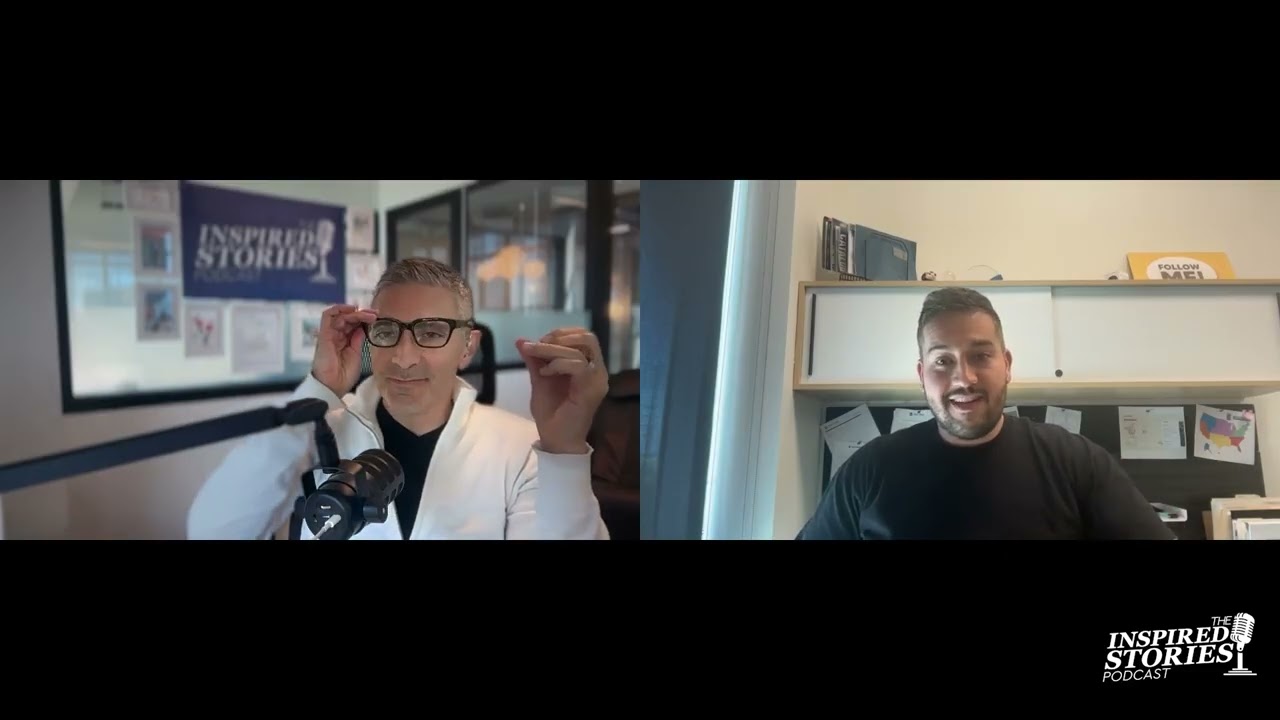
Anthony Codispoti: Welcome to another edition of the Inspired Stories Podcast, where leaders share their experiences so we can learn from their successes and be inspired by how they've overcome adversity. As you listen today, let one idea shape what you do next. My name is Anthony Codispoti, and today's guest grew up inside a company his father built from nothing, watched it grow into one of the top wholesale apparel suppliers in the country, and still chose to start at the bottom as an intern. He filed paperwork, he moved the inventory, he figured out how things worked without anyone handing him anything. His father came to the US from Israel in 1980, launched a denim brand, built a sublimation printing facility, and eventually founded Next Level Apparel in 2003 after customers kept asking for a better t-shirt. Years later, with the company facing a significant revenue decline and a leadership transition underway, Eric stepped into the president's chair alongside his father as CEO to lead a turnaround. Eric Simsolo is the president of Next Level Apparel, a premium blank apparel company headquartered in the LA area that ranks among the top 10 wholesale suppliers in the industry. He joined the company as an intern in 2011, worked through operations, sales, and business development, and was named president in 2024. Next Level's products are worn by people around the world. And used as the canvas for countless brands, designers, and decorators. But before we get into all that good stuff, today's episode is brought to you by my company, AddBack Benefits Agency. And you'll want to hear this because it's hurting almost every business you know. Health insurance costs go up every single year, and retailers are furious about it. They're paying more, claims are getting denied, employees are opting out because they can't afford it, and it hurts turnover and morale. It's one of the most maddening problems in running a business, and everyone just accepts it. But you don't have to anymore. Now there's a program that gives employees unlimited access to doctors, therapists, and prescriptions with no co-pays or deductibles to meet. And here's the part that really shocks most people: our product actually increases your net profits. We recently helped a client add over $900 per employee per year to their bottom line. Results vary, but gains like that change how a business is valued. Get your free consultation today at addbackbenefits.com. All right, back to our guest today, the president of Next Level Apparel, Eric Simpsolo. Thanks for making the time to share your story today.
Eric Simsolo: Yeah, thank you for having me.
Anthony Codispoti: Okay, so Eric, tell us a little bit about your father's journey, how he made his way to the US from Israel, and then how he got started in the clothing industry once he was here.
Eric Simsolo: So in a way, the his start in the clothing industry started before he even came to the States. so my my grandfather, so we're actually at at the very least three generations into this world of apparel and clothing, he was an engineer by trade. He worked on machinery. And in that experience and knowledge, they used to manage and manufacture a couple different factories for bedsheets and for hotels and hospitals, and then as well as youth, you know, kids, baby apparel, you know, Israel in its earlier days, you know, wasn't doing much trade with its neighbors. So everything was either domestic or imported from Europe or even further overseas. So there was actually a pretty strong domestic manufacturing need. And so my grand my father, much like myself, you know, kind of grew up in that In that world. But where his experience differs from mine is he grew up overseeing factories, you know, seeing the actual manufacturing domestically close to home. And so when it came to, you know, coming out of the military and just looking into like, hey, I'm a young adult. What does my future look like? What are the opportunities? quite recently, his father and mother had moved to New York, had that same conversation of, you know. rediscovering themselves or redefining themselves. And they were managing a factory for someone else's time in Long Island, back when Long Island had a whole bunch of, you know, manufacturing. And this is late 70s. I want to say 1978 was when my grandfather and grandmother moved over from Israel to Long Island. And they were living in Queens, the manufacturing facility. I don't remember where exactly Long Island, but it was I think it was still
Anthony Codispoti: What timeline are we talking about there, Eric? What you Okay.
Eric Simsolo: close to the five boroughs, but still technically out of New York. And basically the same company my grandfather worked for, they were opening another factory and they need another manager. My grandfather put in a good word for his son and basically said, like, hey, my son has this experience. He grew up around it. I can mentor him. And this can be a part of our, you know, expansion opportunity. So basically called my dad and said, you know, here's a ticket. You got a job, like we got an opportunity. but I'm not gonna be next to you doing it. So like I'll see you at the end of the day. And that's what he did. So he landed in New York. it was really technically December 31st, 1979. it was nighttime. He landed, dropped off his bags at his cousin's apartment, changed, and went straight to Studio 54 for New Year's Eve. So pretty much the opening sequence to any like made in America or coming to America type of movie. Like, like as as much as you
Anthony Codispoti: He hit the ground running.
Eric Simsolo: Yeah, he hit the ground running, did everything you you know, you heard stories of it, wanted to do, you know, within his first twelve hours on American soil. And that's how you got stuck.
Anthony Codispoti: And so this factory that he was going to work at, what were they manufacturing?
Eric Simsolo: So they were manufacturing outerwear. So think like puffer jackets, ski jackets, things of that nature. A lot of things are filled with down. it was a cut and sew facility and they did the fill filling there. The the the fabrics and the raw materials came from elsewhere. I'm not entirely sure where. so that was just, you know, a very strong, you know, opportunity and a stable job and something that like he had some background and wheelhouse on. And also gave him his ticket and reason to, you know, redefine himself and come to the States and, you know, you know, explore that American dream. So that
Anthony Codispoti: Come to the space. Yeah. And so how where did he at what point so he's here he's worked in the States, he's got a job. At what point does he see an opportunity to go off on his own and do something?
Eric Simsolo: So really next step is, you know, less than two years later, my father wanted to my father and grandfather want to go back to what they're used to doing, which is, you know, running their own business, exploring entrepreneurship and you know, growing from there. So they moved over, they saved some money, they have a better understanding of the industry out on the states and you know who the right suppliers and customers are. And it kind of came at the same time as my dad did. Bit of a boys' trip, drove some Harleys down from New York to Los Angeles, ended up at the, you know, at the beach by the PCH, and said, you know, it's freezing cold over there in New York in the winter. I'm not used to that. I'm from the Middle East. And I see, you know, people in their bathing suits, playing beach volleyball. It's sunny out here. And there's a lot of people here. So there's big opportunity here. I don't want to go back. So again, kinda had his second coming to America, but you know, like a moment, twice in two years. It's probably twice more than most people have in their whole life. And, you know, had a discussion with his parents, you know, like, let's explore this. There's a lot of garment manufacturing in California. It's, you know, closer to the Asian market, the growing population on the West Coast. you know, just I mean, to this day, lost
Anthony Codispoti: And so what was the idea at that time?
Eric Simsolo: So they came over and they started with embroidery, embroidery services. So, you know, you need the little emblem on Apollo or on jeans, things like that. You had a lot of that manufacturing for retail brands, especially during the early days of like the denim boom, the original denim brands like Jordan Ash and Sassoon, and even those before that, a lot of that manufacturing was here in Los Angeles. this is before a lot of those brands started going overseas. So because of that, that was like a service to those greater brands of manufacturing or supply chains. So they started with that. Within six weeks of landing in LA, they had an office, they had machinery, and they had their first customers. And by chance, the machinery company for the embroidery machines was business partners of who was their vendor for Israel. It was a guy that was sitting in Europe. I think it was either East Germany or Poland, and they were business partners. So like they based off reputation, they had that good credit. Even though they had been in the States for less than two years, they had that reputational credit. And that really helped them get going. And and it's a small world. So that that's how they started. After that, they had their own denim line themselves that were saying selling wholesale in the Garmouth District of Los Angeles. From there they explored other things, mainly in manufacturing, so for other people's brands, dresses,
Anthony Codispoti: Small world.
Eric Simsolo: swimwear, what have you. And like naturally these things kept evolving. So really there wasn't anything that they didn't try. they were always open to trying new things and exploring. And I mean just between 1980 and, you know, the mid nine the mid nineties in that time period, you already had maybe five different business ventures that one necessarily didn't like stop to get the other going, but exploring where the market was going, where we were going to succeed with it. That was a conversation that my grandfather and father had together. So really their success story aligns one another together for those first, you know, twenty plus years in the States.
Anthony Codispoti: And so for those first twenty plus years, where were they finding their groove? What was actually clicking? What was working?
Eric Simsolo: So my father was really good at like market research and understanding like what are the needs, what the gaps. And so he was a little bit more the visionary. And my grandfather, that engineering background, he knew, okay, this is how I can make the machinery work better. This is how I'm gonna tell the machine manufacturer to retool what was a printing press for magazines and new print newspapers to do these offset sublimation printing, you know. papers. just like all these little things where his visionary or it was understanding what is capable that maybe even the manufacturers of the machines themselves don't know yet. And my father, it was the application of, you know, that technology or efficiency and how can we apply that to the consumer. So they're they're engineer they were both engineers in their own right, just in different fields. and it that's a deadly combination. You have the front of house and the back of house working well together. Family business, I'm sure there was, you know, they butted heads a lot, but like, you know, that being family, that animosity is easy to like push aside and keep moving forward.
Anthony Codispoti: It was there one thing, one niche in particular that was defining the business in those first twenty years, or is the thing that defined the business that it just continued to evolve from one service, one product line to a next?
Eric Simsolo: I I'd say that it kept evolving and growing. So each business, you know, a based off the capital that they had and the positioning and understanding that they had at the time helped them prime helped prime them towards whatever the next step was going to be. So the embroidery exposed them to kind of denim streetwear, more retail world where there's kind of the casualization of America and the Western world. So that allow them to then look into like creating their own denim brand and who are the markets for that and selling it that way. Again, manufacturing themselves. So they could be a low-cost manufacturer for that. that exposed them to the relationships with like the big department stores, a lot of which don't even exist today, and like understanding, okay, what's like the breadth of like my opportunity here? What are the categories that we think A, I can do well at be where the where's the good money at, you know, and what is their needs. And that's how like dresses and swimwear and all those other things came to be. And then from there, that exposed them to what is the market not doing? I mean, brands, we can come up and draw a lot of beautiful things, but like I feel like not everything is available. And really looking at a lot of the kind of like multi-color photorealistic prints that you know Versace had done with those silk shirts. But also even photorealism that used to be like a 14 or 18-step screen printing process with supplementation. How do I, you know, tweak this process or use this technology, but maybe in a different machine, to do like photorealistic multicolor designs that no one else can achieve. And I'm gonna like make that so efficient. And that's the next step, or really the last step before next level, was, you know. You're almost unhappy with your vendor or your customer. So you you replicate and and like be better than them at what you don't like about them. So there's all these adjustments of like the here's a gap. This isn't being done well. And that's really how that last step with, you know, the dresses and swimwear, they're like, Hey, w we need to be able to get more and like the designs are, you know, there's no cap to what your your creativity can come up with, but there's a cap or a roof of what's technologically capable, or at least within Price points we need to be. So, how do we combat that? And sublimation printing and doing trips to Austria and Italy and wherever you know the machine manufacturers were for my grandfather and understanding what could be changed or tweaked, that unlocked that next of you know what used to be the roof is now you know three floors higher. Let's explore that empty space right now.
Anthony Codispoti: So before we get to next level apparel, it were you got obviously we're manufacturers. So were you wholesaling? Were you retailing at all? What was the full scope of this?
Eric Simsolo: No, everything was wholesale. my father and grandfather, for whether it was lack of experience, belief, or just understanding where their strengths were, never did like a direct to consumer play. everything was wholesale. Yeah, it's hard to be all things. And I think that was like one of the biggest lessons of like what you can can't. I mean, you can do everything's an option, but what is option you should take. or
Anthony Codispoti: It's hard to be all things. They're different business models.
Eric Simsolo: You know, may maybe it's multiple, but not everything. So it was always in that like wholesale relationship, especially this is pre internet. This is, you know, pre that like large scale scalability. there's a lot of markets that just didn't open up in that way where it made sense to like go after that. So their their understanding was, you know, market opportunities and then, you know, like low cost, efficient manufacturing's, you know, you know, powered by my grandfather's engineering background. So They they play with to their strengths, but there's always explored where else can they play w to their strengths, so to speak.
Anthony Codispoti: So you mentioned making trips to Italy, Austria, talking to the companies that were making the machines that could do the production. you talked about the three floors above and growing into that, expanding to talk more about what was going on at that time.
Eric Simsolo: So at that time no one was really doing sublimation printing and sublimation means just kind of for the the crowd, the audience, typically speaking when you decorate a garment, a fabric, you it's like putting paint on a canvas. You're putting something on top of it, but it adheres. So here's a design. For sublimation, what you're doing, you're taking a blank t shirt or blank fabric, let's call it just a white, and you're dyeing the design into the fabric. So The design itself becomes a DNA of the car. So imagine instead of painting a car, the color of the metal itself is the design that you put into the car. And like that's what you're doing essentially for whether it be t-shirts or tank tops or dresses, or it it was historically most popular in cycling jerseys and the soccer jerseys, but these are small-scale, sometimes custom designs, one of ones. It hadn't really been applied. in large scale manufacture. So
Anthony Codispoti: And the advantage of using it in a large scale manufacturing would be what?
Eric Simsolo: So really the the advantage is if you're able to achieve large scale manufacturing, you can then apply that technology and the I guess the higher, I mean the lesser limitations on what you can do design wise to more traditional like retail design, streetwear, you know, contemporary, like, you know, clothing. So it it just was
Anthony Codispoti: And it's just a higher quality product because it's impregnated into the fabric rather than sitting on the surface, which can scratch off over time, am I understanding that?
Eric Simsolo: Yeah, it it doesn't wear out. It becomes an integral part of the DNA of the fabric. And also you can achieve much more intricate designs with harder, sharper lines and also brighter colors and a wider assortment of colors without a 50-step printing operation. It's a one-step, all the work is done on the paper getting that design. And imagine you have a photo and it can perfectly transfer onto a fabric in real time. So by kind of tweaking the machines that were available out there for printing presses. my grandfather was able to achieve large scale manufacturing capabilities for this technology that was previously reserved for smaller scale operations. So now things that would have been a button down sold at Versace and Rodeo Drive back then for I don't know what prices were in the in the early 90s, but let's call it a thousand dollars can be sold out of Dillard's for $120 retail. mimicking that same look and feel.
Anthony Codispoti: Can you say more about what it was that your grandfather figured out that other people hadn't up to that?
Eric Simsolo: So it it there's two machines that needed some level of tweaking. And the first of which is a f figure it's essentially a printing press that would be used for magazines, posters, or newspapers. It's the paper that would capture that design needed a special ink that would be able to transfer over during a heat operation. So tweaking that machine to like receive a different type of ink, the ink that wouldn't be used for paper. rather for a garment or fabric at a later period. That was tweak one. Tweak two was, and we're talking about machines that are, you know, over a hundred feet long. They like you're not putting in an office, you're putting that in a warehouse, a real manufacturing facility. So with that one, they put in these huge squares of paper or in some cases fabric, and they print it with this special design. And it's you know, you have these big zinc plates that for each of like the CMYK colors, and it's a whole process. So that's step one. That was probably the hardest. Step two is a large, for lack of a better term, iron-on machine. So on a conveyor belt, you're putting the you know, the fabric, usually the the garment on top of the paper that needs to transfer its design over. And then some kind of almost like a parchment paper on big rollers. And it goes through a machine and it heats it up. And during that process, it presses and heats the paper so that the paper essentially releases as a gas the the ink into the garment right above it. But it's done in a way that's it's not the gas goes everywhere, and then you just have like a big collage of colors looking like a Jackson Pollock, it's still photoreal the same way the paper was. And getting that. right and tweaking it so it works within the confines of a different type of ink on the printing press, different sizes of papers. And then during the like the heating period that it's a controlled environment, you know, you're you're you're dealing with a flexible paper that's at least it doesn't stretch, but then also a garment that does stretch, does fold, does wrinkle, it needs to be laid right. to have that controlled environment. You know, it's about temperatures, about the right solidity and acidity of the inks and all these different things that it's one big chemical equation essentially, that gets you there.
Anthony Codispoti: That's incredible. There's a a lot to factor in. So it's not just a t-shirt. Yeah. It seems so simple. I just, you know, what do I know about t shirts? I buy one, I put it on. But there's a lot, there's a lot of science that goes into making them. so I want to get to present day in just a moment, but so you did an internship with the company in 2011. you left for a little while, you came back and
Eric Simsolo: Yeah, it's not just a tee shirt then, right?
Anthony Codispoti: Two thousand thirteen. and I understand they they threw you into a a pretty sizable project pretty quickly. You were responsible for moving a a hundred thousand square foot warehouse. Walk us through what that project was.
Eric Simsolo: Correct. So it I always knew I wanted to work, you know, in the family business at next level, you know, with my father. I just didn't know like when and where and w in what capacity. So when I went away, I I was still in the industry and then I was working at a music licensing agency. Then then when I came back, it was one summer. It's like okay, I've done a little bit more background on some of the financial stuff, but more rudimentary. I didn't get any formal licenses. It was more kind of spot auditing. a little bit of operational background and some customer service. I actually started that week sales training. I thought I was gonna be doing the trade show circuit, listening to the sales team, like kind of shadowing, learning the product and like figuring it out from there. but we had just hired a brand new COO that same week. And my father and the then president had just signed a lease for the warehouse move. Cause we were We went from half a warehouse to the full building and the building next door. And Liddy the forklift was taking things in between the the the alley between them and that was a whole chaos. So we had, you know, knock on wood outgrown that facility. So they're like, hey, we need a like a project manager for this. We have the moving company. We've already spec'd out what we want the racks to look like. And so like what we want things to look like is decided. The tougher part is, you know. making it all happen, someone needs to manage this project. So it's not, you're not a specialty of one thing or the other, but just like put everything on schedule, coordinate with the p the responsible people, with the movers, with our trucking company, with our warehouse folks. and the, you know, Monday through Friday morning, I was in the showroom learning Prada, creating flashcards, Friday afternoon going into the weekend, all of a sudden, you know, a complete pivot. And you know, the takeaway there was there's I got a lot of opportunities to interview every department on what their needs were, what's the space that they need. is there any different furniture that we need to like consider for them in their new space? Cause similar to the warehouse, you're growing your square footage, but it's not just a replication of the same. Maybe the w setup is different. So secretly I had an opportunity to really do what I should have done probably a couple of years prior and to spend a lot of time with each department head, understand their needs, understand what they do. And then what it really did was it gave me, hey, I have this summer to work on this project. I'm going back to school in the fall. I can work part-time after that, but need something that's gonna take my time now, but I can wean off of so it kind of worked perfectly for my schedule. And It was fun. It was very busy. It was 14 plus hour days and weekends and and all that. But really what it taught me was logistics and it not logistics from duties and dealing with shipping companies and all that, but like there is a kind of a song and dance to the timing of everything and where you put and when. you know, you can put something on the side, but you might need that ro space before those boxes need to go to their actual location, so it's really Schedule creation. It felt like a wedding planning or or event planning. Like you have this date that you need to complete everything by and everything is ready to be presented. But there's a lot of pieces to get you there. Some of them intertwine with each other, some of them conflict with each other. The manpower committed to the project is gonna weigh up and down till the date of you know the big move. And I think it was just like more time and project management. I learned from that, more than about warehousing. I mean, there was much smarter people on the team that were dealing with the racking systems and all that. and also we had a great IT team. I helped a little bit there, but really just as manpower. But really the the lesson there and the training that, you know, usually you wait until you get to your MBA on some this level of project management. I got that experience hands-on.
Anthony Codispoti: You got your MBA on the job.
Eric Simsolo: Summer twenty fourteen. Yeah, that was that was my project management, you know, certificate.
Anthony Codispoti: So you moved from ops to business development, sales, you eventually became the VP of business development before you stepped into the president role, which I understand took place in twenty twenty three as the company's going through a significant leadership change. Your father came back as interim CEO following the departure of the previous CEO. Tell us what was going on at that time and the dynamics that were at play.
Eric Simsolo: Yeah, I mean the company had been going through like a bit of a tough time. you know, you kinda had the slingshot effect post COVID where all of a sudden if you had inventory you could sell it. But as things were opening up, people weren't just sitting at home buying whatever. And also everyone kind of over forecasted thinking that the gravy train is gonna last forever. But if you didn't innovate, that isn't the case. At some point there's gonna be some kind of a market correction. And coming into second half of 2023, the company was still strong and still a formidable brand in the industry, but we owned a lot of inventory, had a lot of bad inventory. We kind of overgrew with a lot of new and a lot of the wrong vendors overseas, people that we needed goods, so we kind of didn't qualify them correctly, or our quality control team could not travel the same way that they used to. during those like four 2020, 21 and bits of 2022. So, like, you know, we we grew past what should have been our like responsible capacity in a short amount of time, but without any of the usual guardrails or with less guardrails to make sure that we get there in a healthy way. So all of a sudden you have a a company that, you know, demand is still strong, but not what it should be, or what not what you forecasted, and a lot of, you know, financial baggage that you need to clean up. And the tough decision was made by my father and the board to essentially unretire and to come in and and diagnose this patient for lack of a better term. And in doing so, you know, there's gonna be some tough decisions made. So do we have the right team? Do we have the right leaders? what's our overall strategic direction? And before we even get there, like what's the cleanup process look like? So I had been with the company working, I'd I did not retire yet. so I'd always been, you know, a source of, you know, information, knowledge and kind of like market intel from my father during that time. And I'd worked on the business development. So I I was there to kind of understand and see where the skeletons were buried. And in talking with my father, he felt at some point, Hey, you're gonna be at my side during this process. I need you to take a larger role than what we've asked you to do in the past. And right around that same time we decided to you know, part ways with my predecessor who was the head of sales and president at the time. And I'd always kind of been there. So I knew what was going on. I worked within that team. So for me it was a less expl or exploration or trying to get up to date. But it was very clear for my father, and this was the discussion and probably the first slide on every board meeting and every like team meeting for I'd say the first six months to a year. And it's like, stop the bleeding. That's that's step one. You know, you have and this comes from my father's experience as a medic in the army. It's like you have an emergency, it's it's trauma, like like w what do you do? You gotta stop the bleeding, diagnose what's going wrong wrong, you know, recover the patient, and then from there you build a foundation to grow from there. So that's your step one, two, three, and four. So step one for the longest time was you know, we were ruthless.
Anthony Codispoti: How do you stop that bleeding?
Eric Simsolo: So yeah, I mean you look at what your cost centers are before you can talk about how much, you know, how profitable you are, like and like how much money you're making, like if it's all going out the back end of the funnel, it's not gonna hold. So it's looking at cost centers, looking at fabric, looking at quality control, all that and more. Do we have the right leases? are we manufacturing in the right places? Were some things done because they were easy rather than they were right? And you're just gonna have to work hard to make sure it's done the best way. So in a weird way, you know, my father, who most of his career, at least before next level, was like front of house, his grandf his father was back of house. I think even before myself, my father was kind of took his grandfather's role a little bit more back of house, and someone else, you know, a partner or president, whatever, you know, being the commercial leader. I felt like I was now hit in his seat that he had 30 years prior. And it was I mean, it wasn't the first time we had done it. It was the first time that we were really like side by side and I was directly reporting to him. I'd always worked within the company, but we decided I shouldn't start there for many reasons. a, I wasn't the right person, but B just also for our own health of the household. so it w it was really interesting.
Anthony Codispoti: What was that feeling like?
Eric Simsolo: because now all of a sudden, like he didn't like this. But I'd you know, if we argued about something and it's something that I knew he would come he complained about many years prior, said, my father didn't listen to me when I said X, Y, and Z, like I'd I'd sometimes pull that card, not to say that was a Trump card or anything, but more so just to like as a callback, it's like, okay, let's talk about this. Let's like, let's not repeat history here. but we were, you know. Carpooling together again, the first time in almost two years, to and from work. If I was awake, I was on the clock. I drop off my dog at my parents' house Monday through Friday every day to this day. So I'd drop off my dog, say hi, make my coffee on their machine because it was better than mine at the time. And and then and then we drive together and end of the day, same thing. And honestly, if I didn't have plans after work, I'd probably sit down for dinner with my parents and talk more about work. Or the family. So I mean, aga I mean, but that's just family business. That's how it is. It's it's you know, it's one of the strongest overlapping common denominator variables in your life. How are you not gonna talk about, you know, work and all these great ideas that come up to you with your father when you guys are next each other all day, twelve plus hours a day? So
Anthony Codispoti: Yeah. It's a dynamic that can be amazing and is fraught with peril as well. And it sounds like you guys did your best to navigate it.
Eric Simsolo: Yeah, I mean I it's what's that old saying? It's a blessing and a curse. When it's the best, it's the best thing possible. When it's the worst, it hurts because you care and you care about each other. And also like you never if if someone you don't if a stranger wrongs you, it's not a big deal. If someone you love wrongs you, i it the wound is deep. So like that that's the dynamic. It's like when we were fighting, it it it made, you know, Friday night dinner awkward. Like but but like it it was I think at that point, and I'm really happy it happened when it did not earlier. I had done my own thing within the company long enough and had those conversations and kind of paved my way, you know, to some part where there was a little bit more respect for each other's word. Then so like while I'm his son and I'm definitely his junior, it both at in experience and the family and all these other things, like there was a standing of like. w we know our two fields, we know what our strengths are, and w we're gonna overlap and sometimes, you know, disagree on that overlap. But for the most part, like there there was an understanding of, you know, we might like this is your specialty, that's my specialty, but and we can talk from those places.
Anthony Codispoti: So Eric, tell us who is next level apparel today? What do you do and who do you do it for?
Eric Simsolo: What do you do and who do you do it for? That I don't know if you remember there's a that's a quote from like a two chains rap song. Don't remember it. I'm not gonna sing it, but next level, what do we do? So we are a wholesale blanks manufacturer, which is like the summary of it. But what it really means is we design, manufacture, and stock and sell premium blank t-shirts, hoodies, tank tops, and other clothing and apparel. And who do we do it for is pretty much anyone who can wear a t-shirt, who can buy a t-shirt. But really what like we end up doing it for and the people that we deal with on a daily basis is there's like a whole couple different categories of customers, whether it's promotional products, giveaways, the t-shirt that you sign up for, that you get when you sign up for a gym, when you go to a cool like hotel or cafe and they're selling their own merchandise. you go to a a concert, a sporting event, whatever it may be, or buy a t-shirt online that has a cool design. Most of those folks don't make them themselves. They they find someone to yeah. Yeah. Most people don't. they get it from someone. And that someone, more often than not, is a kind of like a decorator, a screen printer. Someone's gonna put the design on it. So we, in a way, provide the blank t-shirt that is the canvas for someone to put their own design on.
Anthony Codispoti: They don't make the physical t shirt, yeah.
Eric Simsolo: Can put their own label on it and put all the you know other bells and whistles on. And we do that, you know, there's people that do that stuff overseas and they're able to forecast and design things themselves and work with factories overseas. But for a lot of the people that want to be scalable, they're not so sure of their volume, or they need things quick and they need like what are where can I get it, you know, domestically today or tomorrow within the next week, that's where we come into play. We support that. So Next level we we go through that whole process. We think about what's fashionable but is gonna be at scale, like it's not, you know, here today, gone tomorrow. And we have that available for everyone in the US, in Europe, growing in Latin America and a couple of other regions, and just available.
Anthony Codispoti: So so who's your customer? Am I buying from you because I want two or three t shirts, or is this the company that I'm probably buying a printed t shirt from?
Eric Simsolo: So there's anywhere between one and four levels of separation between myself and the person who buys a t-shirt. so again, you go to a cafe, they have cool merchandise, maybe you like their design, maybe it has a nice little funny writing, maybe you're on vacation, you want something to memorialize that that beautiful event. They most likely got that t-shirt. From a screen printer and that or the person who puts the design on things. And that screen printer either got that t-shirt from me or one of my distributors. We have distributors kind of like a most people don't buy Coca-Cola from Coca-Cola. They buy it from their local, you know, Kroger, Ralph's, what have you. We have a lot of relationships with different distributors around the world that they stock our product and a lot of other people's products closer to the destination of where the consumer is. And that same supply chain or delivery chain applies to a t-shirt you can buy online that has a cool design. sometimes those t-shirts with the design don't even exist until after you've ordered it. So after you get an order, they take yeah, they print it on demand. And I'm gonna try to not say anyone's names or competition just to be a little bit respectful and not pick favorites. but you have an idea of who those people would be.
Anthony Codispoti: Prints on demand.
Eric Simsolo: Same thing with a retail brand. So there's retail brands that they manufacture their own stuff, but also have some things that they're testing out, or they really like our style of something. It works with their costing. They're gonna look at what next level has to offer. Say, that's the t-shirt I want to wear. We're gonna put our design on it. I'm gonna put my own label in it. I'm gonna put in my own packaging, all the bells and whistles, and they make it their own. You can buy it from the store. And it goes into so many different layers. In some cases, you know, right now to NBA finals are among us or on its way. I'm not telling you who I'm rooting for in that bunch. I am a Lakers fan, so my team's already out, but you know, you don't know who's gonna be in any like playoff finals until that round is complete, on to the next round. So right now it looks like it's Knicks versus either the Spurs or the Thunder. Now, if the Thunder win and it's NYX versus Thunder, there's going to be a lot of demand for royal t-shirts and their unique bright blue and orange t-shirts. Most people aren't going to be able to get that by the close of game one, like manufactured overseed and then like shipped over. So what they do is who has that stock? Who has, you know, a bunch of blue and orange t-shirts ready to go, ready at the printer that we can put the design and say, like, hey, go thunder or go next. And There's kind of that like we're reacting to something that's growing, it's immediate right now. And if you want to like serve that moment before the moment's gone, there's a handful of people that can really do that. And next level, we're one of the larger and more formidable brands in the industry that kind of have that level of product and that level of scale. And so we live in all the things you can plan for and a lot of the things you can't.
Anthony Codispoti: So why the customers that you have, whoever they are, you just described sort of different use cases there, they have other choices. When they choose next level apparel, why do they do that? What sets you guys apart?
Eric Simsolo: What sets us apart is Next Levels historically has been a kind of like LA California centric brand. We have really good fits. We're not too tight with our fits, but we're not trying to be too fashionable either with all these crazy stuff. We we find a real good in-between of it's quality, it's premium, it's soft. You know, the fits are just right. And then probably the other thing that maybe we don't even mention enough is we know that all of our shirts, regardless of whether shirt you like, it it needs to be printed and designed by someone. Like someone needs it, you know, the quality of the goods, we're not the last, we're an input into the last product. and like we really focus a lot on the printability of our t shirts, that they're gonna survive that process. And we find that we have a very high level of like a high reliability score. From those printers. So they know that they're gonna, their work is gonna show off well on our work, on our product. And because of that, they like working with our product.
Anthony Codispoti: How have you guys fared coming out of those challenges of twenty twenty three and right sizing from
Eric Simsolo: we've done pretty good, but it's been a long process. So 2023, we had a lot of cleanup. We wrote off let's just put it as a eight figure number of inventory, whether it was you know t shirts or fabric, and we went through a couple of different reshuffling of the team and restructuring. Right now, you know, our focus is and always has been, but our our main focus right now on the back end of house is quality. on service and on the front of house is kind of like that demand. POS are, you know, under making the customer understand like what is the value of next level, knowing that like we're not trying to race to the bottom. We're not trying to be the fast fashion like product of the world. We're selling our premium. Everything that we do is high end. It's soft. I don't want to, you know, race to the bottom and and cut corners to get there. I want to sh like make sure that my value proposition, my promise to our customers is the same as as it was in 20, you know, 2003 when we started. Like it's always been like fashion, understanding like what's next for the industry, but still being true to that as the brand. So we can evolve our our t shirts or tanks and whatever other products we sell might evolve and not might, it will, but the way that we get there will always be the same. We're gonna out quality and out service people. And it's gonna be super soft, it's gonna be super comfortable, and it's gonna be a t shirt that you love to wear. And if you keep doing that, that's gonna be the focus. So there's a lot of things we could have done to maybe inflate our numbers and get there faster, but it wouldn't have been true to next level. It wouldn't have been true to our brand and and what our customers know us for. So we knew it was gonna be a long but steady cleanup process. And so yeah, that's where we are today. We're We're growing, we're focusing on international, we're focusing on new customer types, we're constantly adding new styles, but not a bunch of stuff just to, you know, give you a bunch of things that you can't digest at all, but rather, hey, we know that the next year, these are like three, four things are gonna be really impactful that everyone wants to have in their closet. Let's bring out the best version of that.
Anthony Codispoti: What are some recent wins for next level apparel, Eric?
Eric Simsolo: Recent wins. I think You know, we the last couple of years we've spent a lot of time expanding our footprint. we have a lot of customers, especially in the to circle it back to music merchandise, you know, music merch customers, they have a global need. They their customer, their you know, artists go on tour all over the world. So what their offering is in the US might not always be the same as Europe or e anywhere else on the globe. So How do we kind of follow them and be able to service them everywhere? So the same customer experience no matter where you go. So if you look at like hotel brands, if if you're staying at a let's pick up one of the nicer ones, like a four seasons. If you've ever stayed at a four seasons, there's certain minimum level of service, quality, and product that you're gonna get no matter which continent you're on. There needs to be that same level of product and quality and service across the board for next level. So Couple years back we bought a kind of a competing brand in Europe, because we had been in Europe but we weren't servicing it well. Stedman and they many, you know, they they handle and manage our commercial relationships there, our warehousing, customer service. We've got a whole front office that, you know, it used to be just me and a customer service person in Los Angeles that was managing the European relationships. now we have a fully fledged, you know, you know, team that's its own subsidiary. And because of that, we've been able to grow our business there. We've been able to grow our relationships. We went from two distributors carrying next level to 14 in a matter of two years after that acquisition. So that's a big one. But I I think outside of that, maybe even higher level, in the last couple of years, as we look to the future, what else is needed? It's not just about having cool stuff. And anyone can design cool stuff, especially with AI and also with Instagram. I mean, you know what people are talking about. it's pretty easy to source things, to be honest. Maybe not consistently, maybe not the best quality, maybe not, you know, the same pricing you need. But within, you know, couple bucks of the way I t sell a t-shirt, you can get one yourself if you just needed a couple from some factory overseas. So, like what what else do you need? So bigger partners need Bigger responsibilities. We're doing more and more on the professionalization of next level. You know, we're family, you know, partially family owned and family operated business. You know, my father is still on the board. I'm still here on a day to day basis, you know, looking over and, you know, managing the brand. But there's a lot of other things that we haven't done beforehand. We're so focused on product, service, quality, marketing, but there's a lot of things, especially in the corporate world, that you need. what's your ESG? What's your sustainability story? what kind of transparency do you have with your factory relationships to make sure you're doing everything right there? So over the last couple of years we spent a lot of focus in hiring a director of social res corporate social corporate social responsibilities apologies, making sure that we're having responsible business practices. Not that we weren't doing them before, but you need to like document it right and really, you know, prove
Anthony Codispoti: Formal and so.
Eric Simsolo: Prove that goodwill to customers. And the reason that you do that is you want your customers to have the peace of mind that you're doing the right thing. They want you to do the work to have the proof of that, because the onus is not on them, it's on you. And in doing that, you have bigger opportunities at a later date with the larger, more professional customers. So we have so much of our goods going into this large corporate space, you know, t-shirts for a 10,000-person sales summit for a Fortune 500 company. They don't want to find out that, you know, the t-shirt, you know, that they that the promotional company bought for them that they're giving out to their entire team was a load of garbage. So having those ducks in a row is like kind of that's your baseline of like you have the minimum responsibility to do this right. But then the evolution of that is like, what else can you do? Where again, kind of calling it back, let's blow the roof off this. What are three levels higher? Let's grow into that space. So We're I'm really proud that, you know, by end of this year we'll have our first ever impact report that we'll have like our social impact, our carbon footprint, you know, you know, managing and measuring what our supply chain looks like. And really that's the beginning of that. From there, those are setting baselines and you want to continually improve upon that. So I wouldn't s like our win is that we've gotten to the point that I can confidently say, like we're gonna have a first ever impact report and we're gonna continue learning from them. It's not a a complete and we're done. It's a it's a first step amongst many on that path and we were not on that path beforehand.
Anthony Codispoti: And frame that impact report for me. Is that something that you do internally? Are there some sort of outside organizations that credential the document that you produce?
Eric Simsolo: Yeah. So I mean, you you produce the document internally and you can hire third parties to help you get there. But essentially it's a summary of your responsible business impact, a little bit more focus on sustainability. And a lot of the data and metrics are things that you're going to have by working with some third party agencies. So next level, a couple of years back, committed to f transitioning to fully recycled polyester rather than virgin polyester. You know, what are the benefits of that? What's the minimization of, you know, petroleum products in the waters and the seas, you know, carbon footprint. Next thing we've done very recently, we joined the US cotton trust protocol. Now, for people who aren't familiar with it, which is most, that's an organization that focuses on US cotton strong manufacturing. So while we aren't a hundred percent US cotton in our supply chain, we are US cotton strong, you know, over eighty percent of our sourcing for cotton comes from there. But it's not necessarily organic, but it is better than just virgin. And the reason for that is US cotton farmers are subject and ruled by the much stricter rules on their water usage, chemical spraying, water recycling, irrigation systems, pesticides, you know, also the workers' rights for the farms themselves. So while you know The plan itself might not be too different from, you know, virgin industrial cotton from any other part of the globe. The process on how you get there and like responsible farming is a big part of that story. So you can even measure what are the successes against, you know, the general, against like industry standards. And like that's like a good step towards sustainability. So in being US cotton strong, we know that we're Supporting US cotton farmers, responsible farming, better water usage, reduction of pesticides, and most importantly, workers' rights and a whole suite of other things with there. And working with those third party agencies, they actually support and train your team on like this is the way our partners do it. This is like the templates and the forms you want to like really consider to manage your business and gather this data. And then the most important part is not that. Hey, you have this little boy scout badge and you're done. It's now you've proven that you have this skill and now let's continue working on it. So yeah.
Anthony Codispoti: This is a starting place. This is the baseline, as you were explaining before. And now how do we how do we incrementally improve ourselves each year? Yeah.
Eric Simsolo: Exactly Yeah. Yeah, there there is no such thing as perfection. There's a pursuit of perfection. And with all of these initiatives, that's what it is. There's not going to be any silver bullet to sustainability, you know, but you can work towards it and constantly improve and like tweak your supply chain to get there without, you know, without risking your business. And in many cases, it supports your business. And being more near shore rather than offshore. Generally speaking, I have a faster replenishment time and lead time on new product than someone who was going predominantly everything really far away. So like there's savings and efficiencies to forecasting and all that and more. you know, just working with better technologies, the way that you cut your fabric, goes a long way. Less waste. What did you do with that waste? That's a big conversation. So there's all these different initiatives. It's there's no one silver bullet again. All that will be reflected in our impact report, but working with US Contrast Protocol on the sustainability of responsible cotton is a big one. Working with, you know, partners like Oratane, which is a third-party lab, that they test the DNA of the cotton in your garment to know where it came from and if it was responsible partners and it's what you ordered it from your vendors or not. That's a big one. working with some like AI enabled technologies like Altana to essentially check the the record of vendors or new vendors that you're you know looking into onboarding. You know, we learned that you know coming out of COVID, we went from six vendors to twenty-three because we just needed whatever we could get, but we didn't vet them correctly. So how do you vet people correctly? Make sure that almost like looking up their their record, they're you know, did they do something wrong? Are they you know are gonna be able to import stuff from them? Are they sourcing things from the right place? Are they subcontracting a bunch of stuff out? So you give them a contract, but you don't really know who's actually manufacturing your stuff that might come with, you know, different problems, including quality. it's because they might show you the fancy factory that is like the showcase, but then manufacture it somewhere else. Like there's a lot of these crazy stories and you can't be everywhere all at once. So working with all of these different, you know, agencies, they all have their different focus or In the case of Altana, it's like a technology platform. It helps you get there, you know, at least get closer to that that goal of perfection of what does a fully responsible, fully sustainable or sustainability strong company look like? And again, this is all about not, you know, getting in the way of things, but rather empowering us, making us a better partner for people, making it better at business for us. I have less waste and I have better forecasting and better partners. Guess what? There's less stuff I need to write off at the end of the year and I have better partners. And, you know, you're there's savings in in the long run. There's less fixes to less mistakes to fix. So it all helps the bottom line too, which is like, you know, I think there's this big, I don't know what the term is, but like there's like this false perception that like ESG corporate responsibility, sometimes it just gets in the way of things. I I'd say when it's done well, it's just the opposite. It actually makes you a lot better as a company.
Anthony Codispoti: Eric, as you think about the work that you're doing right now, what is it that you most want to be remembered for?
Eric Simsolo: Good question. I think what I most want to be remembered for is that I left things in good hands. And by that, it's not just like I handed it off to the right person. I mean, that's important, but it's like things are set in place where you know the day-to-day operation can continue moving forward. There there isn't a cleanup process at my exit. and and it should be primed for growth. My the majority of my career has been focused on like what are the new avenues of business that we can be doing, you know, especially as VP of development and really calling back to much of the way my father and his father before him like made their way in business. It's like, what's next? What's the growth? So I I don't want that road to end with me. I want the road to be everlasting and go past the horizon. So You know, you're you're passing the baton and I feel like a lot of places a lot of people, you know, empire build. They kill they build their own kingdom so that like it looks great, but if all the opportunity ends with you, you didn't do it right.
Anthony Codispoti: You want something that survives you.
Eric Simsolo: I want I want something that outgrows me.
Anthony Codispoti: I love that.
Eric Simsolo: And I think that's the best. I I think that would be best. That would I would be proud of that.
Anthony Codispoti: Eric, I've just got one more question for you today, but before I ask it, I want to do three quick things for the audience. First of all, if you want to learn more about what Eric Simsolo and his team are doing, go to their website, nextlevelapparel dot com. We'll have it in the show notes, but it's just three words. You can go check it out right now. Nextlevelaparel.com. And if you're enjoying the show, please take a moment to subscribe wherever you're listening. It also sends a signal that helps others discover our podcast. So thanks for taking a quick moment to do that right now. And as a reminder, you can finally get your wholesale, your retail employees access to therapists, doctors, and prescription medications that counterintuitively actually increases your company's net profits. There's no co-pays, there's no deductibles, and net profit increases that change how the business is valued. Would you like happier employees and a stronger bottom line? Reach out to us at addbackbenefits.com. So, last question for you, Eric. A year from now, what is one very specific thing that you hope to be celebrating?
Eric Simsolo: A year from now takes us into early summer 2027. W is this personal or business, I guess. I should be married by then. So so I'm getting married this fall. and I'll be looking forward to you know having passed that that benchmark or milestone. but weirdly enough, like
Anthony Codispoti: Give me whatever comes to mind. Okay.
Eric Simsolo: It's one those things like since I got engaged, my fiance has been, you all jittery and excited for the wedding and like you know shocked for but for me, all my jitters was before the proposal. Because from the moment I decided I wanted to marry her, then asked, you know, told my parents, asked for you know her parents' blessing, got the ring. You know, I passed the baton to her in a way at the moment I proposed. You know, that night I slept like a baby, finished my steak, had half a bottle of wine. Her on the other hand, she couldn't sleep. She was FaceTiming everyone in the world and, you know, and all that. So I I think that's a personal milestone or accomplishment that I'd really I mean, it won't even be in a year, it'll be in a couple months' time, but that'll be great. on the business side of things, to call it back to next level, I think we we have a lot to do. but this time next year we're actually almost at our twenty five year anniversary. and I think that's a huge milestone. I I know it is. So while that isn't technically until 2028, I know there'll be a lot of preparation for the team to kind of like look back and say, okay, 2003 we're this, 25 years years later we're that. Like what do we need to prepare for? what work is there to do? I know for my marketing team, there's gonna be a lot of activity. So weirdly enough, in 2027, I'm already thinking about 2028. So yeah, I I think that's gonna be a huge accomplishment. We'll be doing a lot of preparation for that. We've gone through, you know, a full year plus of my father retiring for the second time. And that in itself will be a milestone.
Anthony Codispoti: Terrific. Eric Simsolo from Next Level Apparel. I want to be the first to thank you for sharing both your time and your story with us today. I really appreciate you being here.
Eric Simsolo: No, thank you for having me. It was great.
Anthony Codispoti: Folks, that's a wrap on another episode of the Inspired Stories Podcast. Thanks for learning with us. And if one thing stood out, put that into action today.