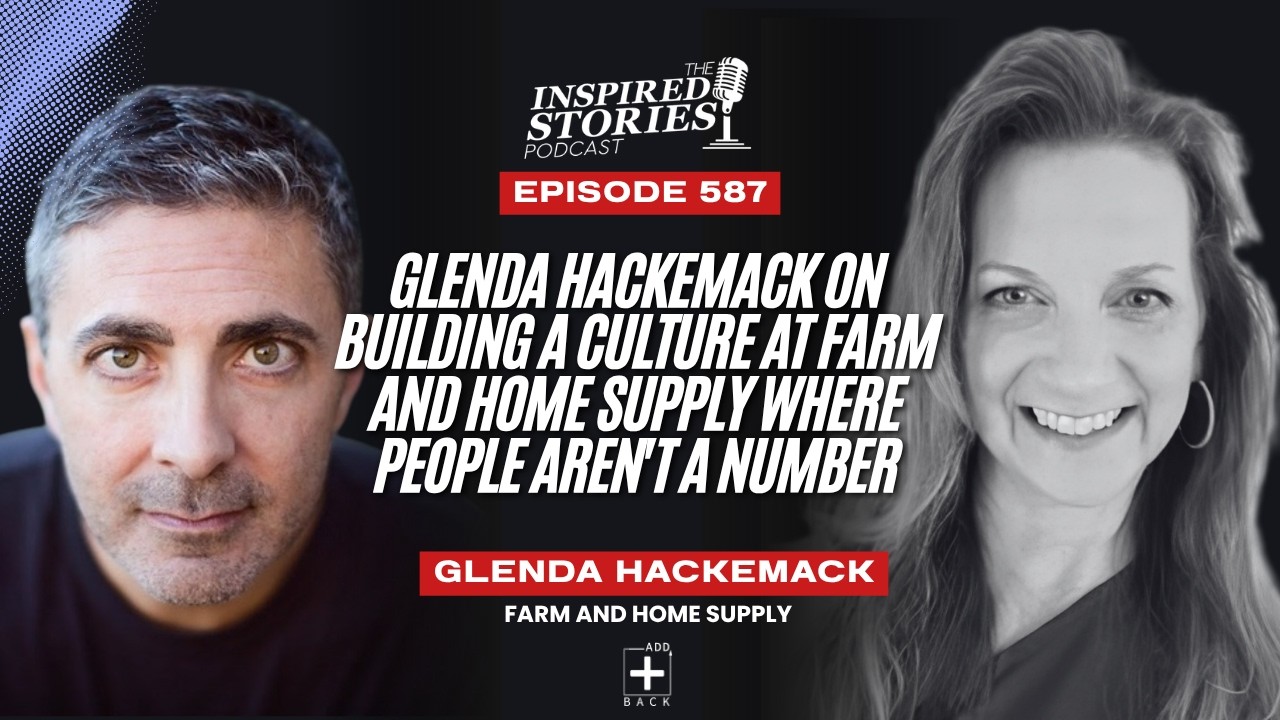
🎙️ A City Health Clinic That Cost Nothing to Build Saved Quincy a Million Dollars: Glenda Hackemack's Journey to Farm and Home Supply
In this episode, Glenda Hackemack, Chief People Officer at Farm and Home Supply, shares how she built a people-first career that zigzagged from running a YWCA to negotiating union contracts to placing rural physicians in hospitals that didn't even employ them. Glenda opens up about raising two daughters through divorce while working her way up, and how she's carried the same instinct for aligning incentives from city government to a multi-specialty medical clinic to a family-owned Midwest retailer.
✨ Key Insights You'll Learn:
Helped design a city employee health clinic in Quincy that saved the city $1 million in workers' comp claims
Overcame department-by-department skepticism by personally explaining the program's benefits to every team
Grew Quincy Medical Group's workforce from 850 to over 1,000 employees while it was still physician-owned
Convinced 114 physicians that hiring more staff would grow their income rather than shrink it
Moved into business development and placed 15 specialty physicians in two hospitals the clinic didn't own
Joined Farm and Home Supply in January 2023 and was promoted to Chief People Officer within a year
Digitized nearly 800 employee personnel files that had existed only on paper
Still personally reviews every job application the company receives, without using AI in hiring
Built an incentive program that saved the company $66,000 in a single quarter for a $3,000 cost
Raised two daughters as a single parent while modeling persistence through career setbacks
🌟 Glenda's Key Mentors:
The Medical Clinic CEO in Quincy: Co-led the department-by-department rollout that got city employees on board with the new health clinic
Farm and Home Supply's Owner: Recruited her personally and shaped the people-first culture she now leads
Her Two Daughters: Their growth and independence became living proof that persistence through hardship pays off
An Insurance Broker Colleague: Recommended her for the Farm and Home Supply role that redirected her career
👉 Hear how a people leader who once needed to convince city departments that a “too good to be true” health clinic was real built a career on aligning incentives everywhere she's gone.
Listen to the full episode here
Transcript
Anthony Codispoti (00:00)
Welcome to another edition of the Inspired Stories Podcast, where leaders share their experiences so we can learn from their successes and be inspired by how they've overcome adversity. As you listen today, let one idea shape what you do next. My name is Anthony Coduspodi, and today's guest once saved a city a million dollars, not by cutting jobs, but by building a health clinic for its employees. That move was just one chapter in a career that has zigzagged from running
a YWCA to negotiating union contracts to recruiting specialty physicians for rural communities. She went from nonprofit leadership to city government to healthcare administration, each time walking into complex people problems that most leaders would rather avoid. Her name is Glenda Hakomack and she's the Chief People Officer at Farm and Home Supply, a family-owned Midwestern retailer founded in 1960.
That now operates 15 stores across Illinois, Missouri, and Iowa. Before joining Farm and Home, she grew the workforce at Quincy Medical Group from 850 to over a thousand employees and restructured benefits for the city of Quincy to reduce workers' compensation claims by a million dollars. But before we get into all that good stuff, today's episode is brought to you by my company, Adback Benefits Agency. And you'll want to hear this because it's hurting almost every business you know.
See, health insurance costs go up every single year, and retailers are furious about it. They're paying more, claims are getting denied, employees are opting out because they can't afford it, and it hurts turnover and morale. It's one of the most maddening problems in running a business, and everyone just seems to accept it. But you don't have to anymore. Now there's a program from Bain Capital Insurance that gives employees unlimited access to doctors, therapists, and prescriptions with no co-pays or deductibles to meet.
It
works for your part-timers. And here's the part that really shocks most people. Our product actually increases your net profits. We recently helped a client add, add $900 per employee per year to their bottom line. Results vary, but imagine what could be done with the extra cash flow. Get your free consultation today at adbackbenefits.com. Now back to our guest today, the Chief People Officer of Farm and Home Supply, Glenda Hackamack. Thanks for making the time to share your story today.
Glenda Hackemack (02:27)
Thank you for having me.
Anthony Codispoti (02:28)
So, Glenda, take me back to your time at the city of Quincy. You had a growing budget problem. And rather than looking for expenses to cut or cutting jobs, you decide that the way to save the city money is to open up a brand new health clinic, which is something you didn't have any experience in. Walk me through how that idea came together.
Glenda Hackemack (02:53)
Well, one of the things that we discovered when looking at the budget was at the escalating healthcare costs. And it just seemed to be running rampant. In our community, there was basically two options for healthcare. There was a major hospital and there was a large health clinic. And so that was where we decided to tackle it. And one of the things we came up with was let's see about doing a health clinic that will give all the city employees access to reduced health care costs.
And it turned out to be free healthcare costs for initial and some visits, reduced pharmacy costs, and workers' compensation being also being able to run through there. And so we worked with both facilities. One of the facilities said, no way, we're not interested in partnering. And so we ended up working with the medical clinic. And what this allowed us to do was any city employee or their family.
could go there and have a physical. They could, if they got hurt, monitoring their blood pressure medicine, you know, taking care of their basic family needs, acute care. And it also became a pipeline to get them into a specialty care that they needed. So if someone fell and potentially broke their leg or something of that nature, that was the initial end. So they didn't have to wait for a referral. They didn't have to wait for an x-ray. They could get those taken care of right away.
It wasn't an easy sell because it almost sounds too good to be true. And that's how a lot of the people interpreted it as what's the catch? What's what's the underlying gonna happen with this? And so I took it upon myself along with the CEO from the medical facility. We ran went around to every city department. We explained the program to them. We explained what was gonna happen. We explained how this was not only going to help their pocket, it was going to help the city pocket.
Which for those of you that have ever followed government, whether it be federal, city, local, county, whatever, you feel like you don't have a whole lot of control over it. So we wanted to help control those expenses from internal. And throughout the time of it, we kept seeing healthcare expenses go down because people were able to utilize this and we had a contract rate. So we paid a lump sum every year.
And we still were able to save over a million dollars in healthcare because if you think about it, many people do an automatic run to the ER. They'll do an automatic run to, you know, the specialty doctor that they may not need. They might have x-rays at a higher cost facility. And this eliminated a big portion of that. And so it was we just kept seeing the dollars coming back. And it really wasn't that they were coming back, they just weren't going out.
Anthony Codispoti (05:41)
Mm. Where did the idea first come from though? Like once the idea's there and you start investigating, it's like, this could actually work, but did you know somebody who had done something like this before?
Glenda Hackemack (05:52)
So there was one a large manufacturing business in our town that was working on setting up their own private internal health clinic. So they were gonna be outsourcing the whole facility. And they had a company come in that was setting it up.
And it was like, well, if they can do that, why can't we partner? Since we are government, you want to partner with the businesses, organizations in your community, why don't we see if we can do that? We also looked at the outsourcing too and see if that was something that made sense, but cost-wise it didn't. And so partnering with a community.
you know, an organization made the most sense. And when it came down to when you start running the dollars and looking at what it was going to cost versus what potential you could save based upon previous claims, we saw a huge win. We saw immediate access. When you have a police officer or fireman that gets hurt right away, you don't want them setting in the ER if they don't need emergency care, but you want them to get seen as quick as possible. And this allowed that. I mean instant walk in. They walk in and the majority of the time they didn't have
time to even sit down in a chair. They were being taken back. And if there was another city employee or family member already there, they had to wait. But it was, it was a great process. And I think that's where the idea stemmed from, was from the other manufacturing company starting one.
Anthony Codispoti (07:14)
And so you didn't do this fully on your own, you did this in conjunction with this this other clinic that already existed.
Glenda Hackemack (07:17)
Yes. Yes.
Anthony Codispoti (07:20)
They just set up a a separate facility that was just for city employees, or how did that work?
Glenda Hackemack (07:25)
We actually took space that they already had existent. it was a multi-specialty clinic. and so we took space, they moved some physicians and specialties around, and that became what they called the city clinic. And so people knew that they could go in there. It also allowed us to do 24-hour a day work comp drug testing. if we needed it for our regular employees, we could do that as well.
It was seven days a week, you know, normal hours, but it really allowed it. And the other thing it helped, I think, with was providing education for the city employees of what this can do for them and also to help future wise use your healthcare wisely. You know, it provided them a lot of opportunity to learn, okay, this makes more sense for me to go here versus going here and the cost. And then when they start to see, you know, the increases the next year in the budget lines like.
Wasn't that much?
And they start seeing that coming down, then they start to understand: well, that can help us out with our union contracts and our increases or our benefits, or can we add this, or can we do this, or can we help out with the streets this way? So once they started that education process and seeing the benefit, it was it was huge. Plus, the other thing, like in most people, we're not the best, you know, people to go to the doctor just for a regular physical or your annual physical.
this allowed them that opportunity to do that at no cost to themselves, not even a copay. So they were a lot more enticed to go. And yes, it might have caught a few things earlier, but it also helped. It also helped them grow and have better future, better outcomes and learn what could potentially be coming down the pipeline for them health-wise.
Anthony Codispoti (09:19)
How many city employees are we talking about altogether?
Glenda Hackemack (09:22)
at that time there was approximately three hundred.
Anthony Codispoti (09:25)
I'm trying to get a sense of maybe the scale where this kind of a setup makes sense. Do you think
Glenda Hackemack (09:31)
Mm-hmm.
Anthony Codispoti (09:32)
it would work at a lower number of employees, or do you think this was kind of the base number because you need, I don't know, just those economies of scale?
Glenda Hackemack (09:42)
So it actually works well even at a lower number. I mean, I think you need you need probably 200, but there's opportunity for a couple businesses to commingle if they wanted to. You know, when you're in the for-profit world, it's a little different than government. So it would make sense for a couple big businesses or larger to merge together and work through something like that.
Because, you know, you nobody wants to have a doctor or a nurse practitioner or nurses just setting around with no patients to see. And so you need a little bit higher number to order to make that work. But the results are huge. And once you build that trust with your team, it's great.
Anthony Codispoti (10:26)
So once you had it in for a year and everybody's seeing the numbers come in, then you're the hero and people are more invested. But and you talked about you kind of did the roadshow, you went around to each of the different departments and did the presentation. What did you what flipped the switch for them? What ultimately got them on board before they could actually see the results in practice?
Glenda Hackemack (10:50)
So a lot of it was, number one, I was taking the time to come and meet with every single one of them. And when you bring in the CEO of a multi-special medical clinic with you to meet with them at 6 a.m., and then you're coming back at 6 p.m. to meet with the next shift, that says a lot. We had one person who I would say was more of a naysayer of the whole clinic. They thought that it was just gonna be a referral into one of the specialty clinics.
And they actually came in and they had the whole drooping on one side of their face. And I remember her calling me and it's like, I don't know what to do. And I'm like, run to the clinic, have them at least get you checked out. She ended up in being transferred to Iowa City, Iowa, which is a teaching hospital. It's a very large hospital, University of Iowa, and discovered that she had a tumor that had built and had grown. And that alone
Her word of mouth after she healed was so advantageous to the whole thing. Because number one, she realized she got in right away. They got her to care that she needed immediately. And it wasn't the money grab that I think she had created in her head that it was just a money grab for this clinic that we were working with. Because they immediately referred her out to a University of Iowa hospital that isn't connected to this clinic at all. And
She healed, she was out for several months. She still works for the city. It's it's tremendous to watch. You wouldn't know that she had had anything wrong with her, but just have that immediate care, that immediate referral, and understand that this was a partnership for their betterment and their health, I think was what really did a huge convincing of everybody because she allowed us to tell her story and you know she wanted it known.
Anthony Codispoti (12:45)
That's a great testimonial there. So you
were talking with two different organizations when you had this idea. One was like, nah, right away. The other one was more agreeable to it. Why did each of them go in the direction they did? Why did once what was the the value that the one partner saw in it? And why did the other one think that this was a bad
Glenda Hackemack (13:08)
The two partners really didn't want to work together, number one. And they both came at it from a different angle, which is why I thought it would have been tremendous if we could have worked together on it. But the one was the larger hospital facility.
Currently now they have created their own clinic like this for a lot of smaller businesses where they have direct access as well. So it's interesting how over the years that has all cycled around, but they actually saw the benefit. But I think in the end it was the partnering. They did not want to, the hospital did not want to partner with a separate, you know, multi-special medical clinic. And the medical clinic jumped on it. We took advantage of it. And, you know, through
quite a bit of meetings and processes and you know, what are we gonna include in this at no cost? What's gonna be, you know, a copay. But the majority was no cost for them if it was just an immediate or just the annual physical or just, you know, hey, I've got this going on. I want to go get it checked out right away before I actually invest my time and money in this. So it was just two different facilities with two different philosophies. And we just
Anthony Codispoti (14:21)
And it sounds like one of them came
around to your philosophy later on. Proofs in the pudding.
Glenda Hackemack (14:23)
Mm-hmm. Mm-hmm. Yeah, we just couldn't get to the same page, it seems, so
Anthony Codispoti (14:27)
Yeah. So I think this is the same time you're with the city, you negotiated five union contracts. Take
Glenda Hackemack (14:34)
Mm-hmm.
Anthony Codispoti (14:35)
us inside that process. Someone who's never been there, you're laughing. There's there's some stories to tell, I can see.
Glenda Hackemack (14:40)
Yes, it is a process. I mean, we can start out with generally in at least in our area. we're mid-states on the border of Illinois and Iowa and Missouri. You know, there's not there weren't a whole lot of females. I was the first female in my position. So I was the first female to have to negotiate on behalf of the city with the union contracts. So having a female walk into the room, first of all, kind of set a different tone than they were used to.
And
Anthony Codispoti (15:11)
Say
more about that. Is this just like brute guys like like old boys?
Glenda Hackemack (15:15)
Well it's firemen.
Yeah. Yeah, that's really what it is. I mean, it is firemen that are have been generational firemen. They're tremendous men. and the same thing with law enforcement, you know, tremendous men and women. But they've been used to, you know, male counterparts sitting across the table. And, you know, even central services that manage the streets and the water and the sewer and the garbage. You know, they were used to negotiating with men and
you know, they didn't know what to expect by me. And I certainly understand that. I hadn't been with the city very long. So for them, you know, there was an uncertainty and a and a fear. And I totally understand and appreciate that. And I don't think I fully understood what I was walking to into either. And so, you know, once we got the first one, which was the fire department, which was probably the most challenging
Because they have, you know, they've been doing this a long time. And then the state of Illinois, they have a lot of resources to them. And we were looking at a budget that was increasing. So I was not walking in there with good news, gonna be handing them all kinds of fun stuff. And so to really work with them and negotiate through that, it took a lot of time. I mean, it was months. And then of course, once that was done, I had to present it to the city council.
Get them to buy into it.
Anthony Codispoti (16:47)
So so take us back to the negotiation. You're negotiating specifically what kinds of things? There pay increases, there
Glenda Hackemack (16:55)
Pay increases, wages, education incentives, transferring of positions, how they increase in their rank. We also, through the city clinic at that time, had put in mandatory physicals. So they had to go get a physical. And generally, that has only been done when they first join the force. Then they have to, or if they get hurt. And so we put it in there for them to have annual physicals.
And so all that was in there, and like what little perks they got, you know, if they got a gym membership, or if they needed new equipment, or where they could take their fire trucks, those type of things were all in there. And this community is no different than any other community. You know, the resources are thin, but the expenses and the needs are high. And so how we could work that, you know, they partner with EMS here.
But they're still separate entities. And so negotiating where that partnership is going to lie, how we can work together a little bit more to be a little bit more efficient and effective, not only for the community, but also for the bottom line.
And so working through all that was definitely a challenge because generally they stuck to the financials in the past. And we were negotiating a lot of other things in it, you know, partnerships, because that's the only way a lot of these cities are gonna stay.
Anthony Codispoti (18:18)
Do
you think there was something special or different about your approach that helped you be successful? Is it something softer about being a woman that they were more receptive to? Do you think it was harder for you than it would have been for a man?
Glenda Hackemack (18:35)
You know, and I I can't really say. my approach is probably, I'm sure, definitely different. I had spoke to the a couple of the previous people that had had my position and you know, they were just like, You just gotta hold your ground, you can't move, you just gotta, you know, go in there strong. And I think a lot of what I did was I listened to the what's and the whys, why they had this in place, why they wanted this.
One of the things that I remember specifically was they received an incentive for when they were taking c courses, you know, college courses or whatever it may be, you know, they would get a little extra pay for that. Well, I wanted to put in they got extra pay if they received a certain grade, not just if you passed. And I remember saying to one of them, like, so you're okay with just average. Like that's okay? Like
I think the city and the people deserve better than average. And I think you want that for yourself. And one of them did not agree with me. And he said, I've only been able to ever do, you know, C's. And that that's good enough. That's passing. And it was interesting to see the dynamics in the room because a couple of the others were like, Well, that makes sense. How much are we talking here? And so they actually saw that value in that. And
We weren't doing away if they were just average. They're just their incentive was going to be a little bit less.
Anthony Codispoti (20:04)
Okay,
I want to move forward to because you go from city government to Quincy Medical Group. This is
Glenda Hackemack (20:09)
Yes.
Anthony Codispoti (20:10)
a multi-specialty medical clinic, and you're the senior director of HR there. You grow the employee base from 850 to over a thousand people and help the clinic earn rural health certification across three different states. Tell me about the people side of the problems that you had to solve to support that kind of growth.
Glenda Hackemack (20:34)
They used to be provider-owned. So the physicians owned the clinic. So at that time, there was approximately 114, 115 doctors that I reported to, along with a CEO. So you can imagine how much fun that is. Everyone has an opinion. And at that time, every doctor wanted as much staff as they could get until they realized that they were paying for it.
And so, you know, if they had a nurse, if they had two receptionists, they were paying for all of that. It came out of what they made and what they had to generate. But one of the things they saw was every doctor there cared for their patients. They cared for the community. So that was a big part to really remind them of why they were there and what they were there for. And then they got on board that.
You know, if someone calls and they can get at least a response, at least an answer for when they can get in, or to be calmed down, or yes, you really need to see this doctor, and it doesn't interfere with the care that you're already giving, and you're still gonna be able to provide that additional care, that really helped sell it a lot. Was just prioritizing it for the physicians and the value of adding.
Anthony Codispoti (21:49)
Sorry,
it it helped to sell what to them.
Glenda Hackemack (21:51)
To their patient care could increase. It could increase drastically if you had one or two more people in your office underneath you. So if you hired one more nurse or you hired one more front desk, and sometimes both, that you're not only going to be able to see those patients that are setting in your waiting room, you've got a recurring cycle of people that are going to continue to come back.
Because they're not being put on hold, they're not being put off. You've got somebody answering the phone saying, Well, can you come in at three today? Because we got a spot open. And you know, especially for a parent. A parent really appreciates that if they've got an ill kid. Like if you can get in that same day, that means a lot. You've you've now earned their loyalty, you've now earned their dedication to you. Your business is only gonna increase. And so
Anthony Codispoti (22:37)
You're improving customer service.
Glenda Hackemack (22:38)
yes, once you've framed it that way.
They understood it. They got on board. And you know, if you've got a nurse willing to talk to somebody, so if you've got an extra nurse that might not be in with a patient, if you've got that nurse that can calm that mom down or talk to whomever, you're getting the loyalty.
Anthony Codispoti (22:57)
So it seems to me, Glenda, one of your strengths is getting incentives aligned. I
Glenda Hackemack (23:03)
Mm-hmm.
Anthony Codispoti (23:03)
mean it's a pattern that I'm hearing repeat in each of these conversations here, right? Because these physicians initially think, the fewer staff I have, the better for me, right? Because I've got to pay for that staff. So I'm gonna cut a position or just not think about adding a position that's more money in my pocket. But when you're able to show them that they're creating a poor customer client,
patient experience and you're they're creating a bottleneck that prevents them from being able to see more people. okay. Now I I see how making a better patient experience is going to be better for me and my pocketbook too.
Glenda Hackemack (23:41)
And that's fair. I think a lot of what I do, it's the ideas and the process is already there. It's just a matter of bringing it together and putting it in a way that no matter who you're in the room with, that they understand. You know, I call it know your audience. Just how can you explain it so they can see the positive and they can see the negative side? And that was a good way to do it. And then they were on board and
They saw that the growth was gonna be an advantage, not a disadvantage for them.
Anthony Codispoti (24:11)
Hmm.
So after several years in HR Glenda, you moved into a very different role, director of business development,
Glenda Hackemack (24:16)
We did.
Anthony Codispoti (24:17)
and you end up placing 15 specialty physicians in two hospitals that the clinic didn't even own.
Glenda Hackemack (24:23)
Mm.
Anthony Codispoti (24:23)
what made you want to make this change? HR business development.
Glenda Hackemack (24:27)
I don't know that it was a wanting to make the change. The offer was put out there to me. because we were looking at growing our footprint and being able to provide quality health care in areas that were mostly underserved, some had it, but if you're in a rural area, it's hard to get a good quality physician, surgeon to go to those areas because they don't see the value in it. And
So nego helping to negotiate a contract that made sense not only for the hospital, but also for the physician and to get them on board to see the value of what they're doing because the other thing that I was able to point out was not everything that a patient might need is gonna be at this rural hospital.
But if you can do surgery at your primary place of employment, your primary clinic, but then you can do a follow-up or two follow-ups at one of these hospitals.
You've just now gained another client, another customer and another patient for life. And they're gonna continue to talk about how great it is that you come here now and you can just go down here for your one surgery and you can, but you can see all your follow-ups up here. So you don't have to do that drive. You don't have to do that 45-minute drive or that hour drive, whatever it is, and you can see that exact same person that operated on you or that helped treat you right here at home.
And the good thing was we kept expanding on that because these hospitals all had surgery areas. And so many of the smaller procedures began being performed there as well. And so it was not, it was just hugely advantaged to the patient, to the community, and then also to the hospital and that surgeon and physician. It just kept growing.
And before long, I mean I had physicians and surgeons coming to me and it was like, hey, can you get me in this hospital? Can you get me in this hospital? I think there's advantages I could do there. I think there's things I could do that could really be an advantage for that community and for that facility. Yes. Mm-hmm. Yes.
Anthony Codispoti (26:36)
You had physicians coming to you now asking you to place them in some of these remote locations that were previously undesirable.
Glenda Hackemack (26:43)
Yes. Yes. It was
Anthony Codispoti (26:46)
Specifically
like out of the good of their heart, or like, Hey, I think that I can help more folks this way.
Glenda Hackemack (26:51)
It's a combination of both. they wanted to help more people. They wanted to see a population that they normally don't have access to because when you're in a rural area, their transportation is always an issue. someone that's available to take you and then maybe care for you afterwards is always a challenge. But somebody, it's a lot easier for somebody to find transportation in a rural area.
If they only have to go 10 or 15 minutes versus if they have to drive an hour. And so the surgeons they saw it was a huge advantage for them. Even something as simple as a colonoscopy, we were able to place these physicians and these gastroenologists in all these different hospitals, and somebody could go there and have a colonoscopy, whereas otherwise they would have had to drive an hour, a little bit over an hour.
Get a ride, somebody has to sit there and wait and then take them back home. And instead they could drive 10 or 15 minutes and have it right there. And then if there is an issue, they could have their follow-up 10 or 15 minutes away. They didn't have to drive that extra hour. And so a lot of that was just word of mouth, was people then started talking about, this surgeon comes here or this physician comes here. And I'm like so beyond thrilled. I mean, I've been gone there like three and a half years now.
And those same surgeons and physicians are still there. They're still seeing care. And that says so much for them. And it says so much for the quality of care that they have and their true heartfelt want to be there for those patients. I do. I do.
Anthony Codispoti (28:30)
And you stay in touch with them? Is that how you know? Okay.
Glenda Hackemack (28:33)
Some of them call me every now and then and you know, they'll ask me a question. I'm like, I've been out of this for a while. I don't, you know, kind of out of loop a little bit.
But it means a lot that they, you know, will call and ask me some questions and what should they do with this? Or does this make sense to expand this? And someone will even say, well, here's the numbers I have for this, and this is what they're saying, they'll pay me. Does this make sense? And you know, so I help them out a little bit here and there. But it's just because I know it's such a valuable thing that they're doing. And I love that these rural communities have such quality care coming directly to them.
Anthony Codispoti (29:10)
So
in January twenty twenty three, you decide to join Farm and Home Supply, which is a family owned retailer with fifteen stores across Illinois, Missouri, and Iowa. You come in as director of HR. Why was this the right move at the right time for you?
Glenda Hackemack (29:26)
Is just, you know how you say you get an offer you can't refuse? And that's kind of how this was. The owner called me. I met with him. He's a tremendous man. And I just liked what he had and what he was saying because he wanted to build a culture that people were not a number. People were, people were people. People were valued. We want to continue to grow. And he wanted me to be a part of that.
And you know, I no, no,
Anthony Codispoti (29:58)
Did you know each other previously? How did you get connected?
Glenda Hackemack (30:01)
we did not. Actually, it was through an insurance broker that they have used here and I had worked with in a previous life. He actually recommended me. And so he just called me out of the blue. And it was just, I like those opportunities. If I can help people and help people build something, especially something that's gonna continue to be around for a long time and continue to grow.
Those are things I like to be a part of. I like to really be able to step in there and, you know, see how we can improve that culture. And I have to tell you, the culture was good. So it wasn't quite the building block here that I thought it was going to be. but it has been fun to see how we've continued to grow it and how it's continued to advance. And, you know, f 15 doesn't seem like a lot, but
You know, this was I joined after COVID. So everybody was in a different place in their life. Everybody was in a you know, personally, professionally. So there were still some obstacles that we had to work through.
Anthony Codispoti (31:01)
Tell me about some of those obstacles.
Glenda Hackemack (31:04)
Well, a lot of it was, you know, Farm and Home was considered an essential service. So most of the Quincy community outside of healthcare had been closed down. And so people were stressed. People didn't know there was an uncertainty. I mean, it was no different than what was going on in the world. There was an uncertainty here. You know, they didn't know what was going to happen. They were coming off of, I think, not fully understanding.
where it was going. And also there was that financial, you know, a lot of companies were getting the extra money. And so then you start taking away money from a retail team. That causes people to all of a sudden have a fear of, we're going to lose our jobs, something bad is going to happen. And to being able to explain that was huge for them. that no, we're only actually looking to grow. We're not actually looking to go backwards. It's just the change with COVID and what happened.
So that was that was an obstacle. also, you know, I'm a very hands-on person. I like to meet with people, I like to talk to people. I I prefer to explain it to them face to face if I possibly can, or if at least not that on a Teams call, so they can truly understand what's really happening.
And so it gave me an opportunity to once again delve into that healthcare and how you use it and where's the benefits and you know where's the facilities. And so that's been a big thing. You know, there was a lot of change in leadership when I first joined. The previous leadership was retiring. And so we had a new, he was COO prior, and he was becoming the CEO. And so there was uncertainty with that. People were, you know, unsure.
So it just gave a lot of opportunity for communication and helping build the team even further that was already a good team and just continue to enhance what they were doing.
Anthony Codispoti (32:53)
Talk to me about projects. When you first came in, what was the first project you wanted to tackle?
Glenda Hackemack (32:57)
So one of the first projects is, so there's approximately now we have 788 people, I believe. Every single personnel file, every file, everything was done on paper. Every single thing. I walked into an office that had two fireproof file cabinets that was all personnel files. So that means every audit you were going through every file. And so every time a new employee started, you created a paper file.
And that's just not sustainable, especially in the retail world. It's no different than healthcare. You know, there is considerable turnover. And it it's just not sustainable as you continue to grow. And so they already had the system in place, but they weren't using it. And so getting all of those files in there, getting them uploaded in the correct place, and then also training people on how to use that. That was that was a project. you know, they were used to the paper world. They were used to, you know, you just call and
You know, they'll answer the question. Well, we wanted to be get them to be more independent and learn how to use it for their benefit.
Anthony Codispoti (34:03)
So this is another example of you trying to figure out a way to get incentives aligned. How do get people to see that this newfangled computer system is actually better for them?
Glenda Hackemack (34:13)
Mm-hmm. and it was a challenge. Every now and then I still hear the, well, we don't like this anyway. It's so much easier if we just call you and ask and which I'm still okay with. That's still great. But it's so much easier for them when they have direct access to it. And, you know, they might have to wait for a phone call for me to get back to and they can immediately do it.
So and there's a lot of people out there. We're human. We want that face to face. We want that human nature of talking to someone. And so I'm always open to that. I get in trouble a lot for it because it's I never really shut down. I'm available all the time. I had somebody texting me last night at seven o'clock and wanted to talk to me. And I'm like, sure, happy to. And they're like, no, no, no, we'll wait till tomorrow morning when you're there. And I'm like, I'm fine to talk now, especially if it's important. And I just think being there for people.
Being there for people matters even while utilizing the electronic world. It's still important.
Anthony Codispoti (35:09)
So
after only a year there you were promoted to CPO, Chief People Officer, and I want to talk about the framework called Founded F O U N D E D. What is this?
Glenda Hackemack (35:24)
Mm-hmm.
So it's kind of what we live by. you know, we want to always remember where we came from. You know, we're a small family organization in a big community. And I think it's important for us to remember
Where we came from, what we're here for. We are here to serve the community. Even though people come in and purchase things from us, we want our team to remember what we're founded on, being here for the community. About, it's been two years ago now, I brought a program to Farm and Home. I had used it at the multi-specialty clinic. I'd started it there, and we call it volunteer PTO here.
And so our communities have been so good to us at Farm and Home Supply. We want to give back to them. And many people in their lives never volunteer. They never have that opportunity to volunteer. And they I think a lot of it's because they don't know where to start.
So we created this program. So all of our stores, all 15 of our stores, have an opportunity for a team member, team members, multiple, to go volunteer at a 501 organization, or sometimes even ones that aren't 501c3s, because we want to get back to those communities that have supported us, clear back to what we were founded on, because that's a big part of it is being here, being here for the teams, being here for the community. And it has been so fun to watch that grow.
And to watch what people want to do for their community. And then also builds relationships. And it also builds loyal customers. It also builds, you know, selfishly for me, future team members. You know, one of the things we say is our best employees and team members are customers. You know, provide value to that community. Show them what a great organization you are and show them you haven't forgot where you started, where that organization started and why it's there.
Anthony Codispoti (37:22)
Give me an example of some of the non profits that folks are volunteering at.
Glenda Hackemack (37:26)
Yeah, so a lot of it is animal shelters. We hit up Ronald McDonald House a lot. food banks are big.
We have some of our senior leadership guys that actually go and ring bells. The first year they did it, they picked the coldest day in the Midwest, I think, to go ring bells. And they stood out at our local mall entrance. And there was, I think, five gentlemen that were doing this. And they were all layered up, and but they were out there trying to raise money for Salvation Army and just getting their face out there. We have shirts, says Farm and Home Cares on them, but you didn't see those shirts that day on those guys. And we bring our
our management in a lot of times and we will have things that they'll have to do. You know, when we do leadership collaborations, you know, we'll go and we'll maybe paint rooms. We did yard work for people.
We've done yard work for childcare facilities. We've done painting, paint the inside of their building, you know, just various different things. We have people that walk dogs for humane shelters just to get back and, you know, that's less staff that they have to hire if they have people that are coming in helping volunteer their time. And we have competitions here in the corporate office bringing in canned foods for our local food pantry, and they might get an extra day of PTO if their name is drawn in the end.
But it becomes this competitive spirit of who brings in the most canned products and who gets the most tickets to be put into a drawing. And it just does so much because food is a challenge in all areas, you know, with the cost of everything going up. So it's figuring out those relationships and what we can do and what we can do as a company to give back.
Anthony Codispoti (39:07)
Well you were saying one of the benefits is the more that you have your folks, your employees out there volunteering at these nonprofits and in the community, the more it raises awareness about the stores.
Glenda Hackemack (39:19)
Mm-hmm.
Anthony Codispoti (39:20)
And so when people are thinking about, I need a job, I'm looking for something new, you guys are even more top of mind. Am I sort of connecting the dots in the right way? Okay.
Glenda Hackemack (39:26)
Yes. Yes.
Yes. That's exactly right. And and many people see the good that our team does when they're out there. And you know, it's one of those contagious things. People want to be a part of that. And so that helps in a lot of ways. Or we hear that, I've never been into your store before, you know, or I always get my dog food there. Or I like how we can bring our dog in and walk him around.
We hear all kinds of things and it's just it's so wonderful that we can actually give back to the communities that have supported us for so long.
Anthony Codispoti (39:58)
Talk
to me about what the employment opportunities are like there.
Glenda Hackemack (40:02)
So we're facing the same challenges as many are. You know, it is hard, you know. I think the dynamic and then the world has changed over the last several years. But we have a lot of long-term employees. So, I mean, we've got people that have been here 30 plus years. We've got a store manager that's been here 35. We've got buyers that have been here for 30 plus years.
So we have a lot of internal that have been promoted up through the ranks. A lot of them, and it's so cool. A lot of them start out as part-time, you know, just retail store members. You know, they were a sales clerk or they were a cashier and they've worked their way up in the company.
And then there's people like me that I call, you know, some of the outsiders. We've come in from the outside and both have huge advantages. We both bring strong things. You know, the ones that have been here and gone up through the ranks, they bring their knowledge, they bring their history, they bring the why. They do it this way. Then those of us that come in from the outside, you know, we bring the well why
Not try this. Have you ever thought about this? Ideas. And you merge those two, and they're just wonderful. They're beautiful to see what can grow out of both of them. And I think that's a big part of why we just continue to be one of those places that people want to work. You know, we help kids through high school, if they're 16 or above, you know, you need a part-time job. We're here for that. If you're coming back from college, we're here for that too.
We're also here for that person for their career. You know, if they want to grow up to be a store manager or maybe a buyer themselves or accounting. We have those opportunities as well.
Anthony Codispoti (41:39)
You know, I speak with a lot of people in restaurants in the hotel industry. And for some of those folks, they're huge proponents of those industries because it's a place where you can come and I I feel like this is what I hear you saying, Glenda. You can come in as somebody that maybe didn't have all the opportunities, education or so forth that would give them a leg up. You can come in as somebody who, if you're willing to work hard
There is a door there, there is a pathway for you to advance and to open up opportunities in terms of, you know, being able to advance your career, make more money, et cetera, et cetera. I I see you nodding your head. You you very much feel this way.
Glenda Hackemack (42:20)
That's exactly right. I can give you a perfect example. Our director of purchasing started out as a retail salesperson part-time. He went away to college, he came back, and he moved into being a buyer's assistant. Then he became a buyer, and now he's a director of purchasing for us. And I asked him once, I said, Well, why? Why did you come back? And he said, they gave me an opportunity, and I saw it, and so he took it.
Our director of store operations, very similar thing. He started out part-time in the store. He worked his way up to be an assistant manager. Then he was a store manager at, I believe, two of our stores. He did not go to college, but then he was promoted up to be a regional store director. And now he's the director over all of our stores. So he's the director of store operations. And I have story after story of that. So there's so many opportunities.
And then there's the people that, you know, this is their part-time job, this is their in-between college job, and we work with that. And I think that's huge for them because anybody that's ever worked with the public at any level knows that comes with challenges, comes with life skills that you're gonna learn that you might not learn somewhere else if you were just sitting behind a desk. And so that is not only building them personally, it's building them professionally for their future.
Anthony Codispoti (43:46)
so we talked before about how there's a lot of turnover in retail, right? And you guys are no different there at Farm and Home Supply. What are some things that you've tested, you've tried, that you found have helped to move the needle in terms of being able to retain good folks, being able to recruit good folks in?
Glenda Hackemack (44:06)
A lot of it is actually just what I was saying, telling these stories of how there's opportunities. Because as you mentioned earlier, I think people don't always realize what opportunity is there for them, or if there is an opportunity, because maybe their life has brought down a path that
They thought this is where they were gonna stop. This is what they were gonna be. And through a lot of communication and coaching with our managers, getting them to be that encouragement, getting them to be that cheerleader for their teams has been huge and has definitely helped move our needle to less turnover and increase our retention. You know, there's some people that they're like, no, this is where I want to be. I like the company, I'm good at this, I don't want to go any higher. And that's okay.
Landing giving them that safe spot to land and stay also helps. So both things really can help retain them. But I think letting them know that they have those opportunities and they have the opportunity to stay and be content just where they're it where they're at, both work. And it's finding that balance and knowing.
Knowing your people, knowing your audience, and communicating with what they really want, and also listening to them. Listening to them to what they want. Because someone that wants to grow is probably gonna hint at that somewhere along the line in a different part of the conversation. And if you're not listening to that, you could potentially, as a leader, miss out on some of that. So we always have to remember that listening. And you might have to reframe it.
for them to, well, did you ever think about this? Because this is a path that we think might be successful for you and you would be excellent at. And it's something they've probably never thought of. And so just making sure we can communicate those ideas to them.
Anthony Codispoti (45:59)
Is there anything that you've learned along the way? You've obviously you've interviewed, you've hired, you've overseen the hiring process that I'm sure a lot of people are more hands-on with now. But whether it's questions to ask, to flesh out is this a good person, is this a good fit, a personality test to give, I don't know, tricks of the trade to help you get a stronger or higher likelihood of landing somebody good the first time.
Glenda Hackemack (46:29)
One of the things I always tell people, remember it's a conversation. They're human as well. People will tell you more than what you even ask for if you give them that comfort and that open door to talk. And it also keeps you out of legal trouble from asking something you shouldn't ask, because they're volunteering that information.
I think that's one of the big things. Here, and it was the same in healthcare. One of the big questions I always ask is in the middle of an interview, I have a random question I throw out. And I have to start changing it because Rubik's Cube's kind of gone away from people. But I used to always ask, how many sides on the center of a Rubik's Cube? About midway through an interview.
The reason I ask that is not because I want to know how many sides or if they know it. I want to be able to see if they can be distracted and then come back to whatever was happening at hand. So can they get distracted and can they come back and join in with whatever it was they were doing, whether it was taking care of a patient in prior life, or whether here, whether it was, you know, stocking shelves or doing their task at hand. But if they're interrupted, can they refocus?
Because the world is moving so fast, people are moving so fast, people have quick demands, can they refocus? And so
Anthony Codispoti (47:44)
So you wanna
see that you wanna ask this question, how many sides to a Rubik's cube? And you wanna see them kind of look up and to the right and and then come back with an answer and then see how if they can sort of jump back into the flow of the conversation after that? that's an interesting tactic.
Glenda Hackemack (47:57)
Mm-hmm. Yes. And and I
always tell them at the end, they're like, well, was I right? And I'm like, it doesn't matter if you're right or wrong. And I always tell them why. And they always find that so interesting. Because then they start to think, well, that does make sense. I have to be able to refocus. It's no different from our personal lives. We are moving in so many different directions. If you have children, if you have a spouse or significant other.
you're getting asked a question and you have to be able to pull back to what you're doing. Maybe you're on a work call and you know you got a kid tugging on your leg or something. You know, you've got to be able to address that, but try not to drop a beat over here. Can you refocus yourself?
Anthony Codispoti (48:36)
Okay, so what does it look like when somebody can't refocus on that? Because I'm thinking, okay, I'm in I'm in an interview, somebody asks me that question, and I'm like, one, two, three, four, five, I think it's six, right? So I think it's six. And then and then I'm just sitting there and I'm waiting for you to ask the next question. If I'm somebody who can't refocus, what what happens? What do you see?
Glenda Hackemack (48:55)
I generally will move on unless they've just really wowed me somewhere because society isn't slowing down.
Anthony Codispoti (49:04)
I'm I'm sorry, let me re let me restate the question. What
Glenda Hackemack (49:05)
Okay. Okay.
Anthony Codispoti (49:07)
does it look like if I'm a person who didn't refocus? Am I like still trying to talk about the Rubik's Cube? Is that what you see? Is it okay?
Glenda Hackemack (49:15)
Yes. Am I right? Was that the right answer?
Anthony Codispoti (49:17)
huh.
Glenda Hackemack (49:17)
Like how many sides is it? Like what what or you get the now? I don't know what a Rubik's Cube is. So that's why I have to I have to come up with a different question at this point. But
Anthony Codispoti (49:29)
yeah.
Glenda Hackemack (49:30)
you know, know your audience. But yeah, they will they will sit there and focus stay focused on that.
Anthony Codispoti (49:35)
Okay.
Glenda Hackemack (49:36)
Even if I move the conversation alone, you can tell.
They are still focused on, well, why didn't she answer me? Or why didn't she tell me if
Anthony Codispoti (49:42)
They can't leave it.
Glenda Hackemack (49:44)
that was right? And I've already asked the next question, they're still stuck there.
Anthony Codispoti (49:49)
Yeah. I laugh because I have a ten year old who is that person. And so we're
Glenda Hackemack (49:53)
Mm.
Anthony Codispoti (49:53)
gonna we're gonna coach him up in the next several years. So when he comes to when he comes to
Glenda Hackemack (49:56)
Yes. It's important. It helps.
Anthony Codispoti (49:58)
interview with you, he'll be he'll be ready for it.
Glenda Hackemack (50:00)
I'm excited. You know, I hired I hired my own kids at one point. They worked under a different supervisor in previous career. I asked the same thing to them. And they found it funny later on once they understood why I asked it. But it's it's important.
Anthony Codispoti (50:18)
So
how are you using AI in your work, Glenda?
Glenda Hackemack (50:21)
So I do not use it for hiring. I go through every single application that comes in myself. And
Anthony Codispoti (50:28)
Wow. How many is that a month?
Glenda Hackemack (50:31)
it's a lot. I don't even have a number for you. Thousand. Mm-hmm. It's a lot. Mm-hmm. I mean they come in sporadically.
Anthony Codispoti (50:35)
A month or a year? There's no there's no way that you can go through a thousand yourself.
Glenda Hackemack (50:43)
yes, I do. I look through every single one because I think that's important. And also
Using AI and hiring, many companies are finding out is very dangerous. I mean, it's scary. So, you know, and some of them are just a quick scan. You know right away that this isn't this isn't one. I mean, to give you an example, we have one position that's a part time cashier position in one of our stores. At last count, they were at 246 applications. So it's not that unseen. So, you know, certain ones get a lot more.
But it's important to go in and I think people deserve that. Mm-hmm.
Anthony Codispoti (51:21)
And what are you looking for? What are you looking
for as as you review a resume? Even if it's a quick glance, what is it that you're
Glenda Hackemack (51:25)
Mm-hmm. Yep.
Anthony Codispoti (51:27)
looking for?
Glenda Hackemack (51:27)
Even if it's a quick glance, I will then send it because all of our store managers have access to the resumes and applications, but they're busy. They're on the floor helping customers. They're doing whatever. So if there's a couple that jump out at me, they're getting an email from me with it attached saying, please check this out and call them right away because this is important. And when I say
Anthony Codispoti (51:48)
But what does it take to jump
out at you? What is it that you're looking for in that resume?
Glenda Hackemack (51:53)
If it's a if it's a good match for the company, if they've followed, if they've had some retail world, if they've had some leadership and management world, you know, as we know, longevity at a company has changed. It used to be if you were there 10, 20 years, it's like, ooh, you know, that's some longevity. But now I think they say the average is, I think it's gone down recently to like two to three years, is considered longevity now. So if you see someone that every month has something different, we tend not to.
you know, I will pass on them. But if it's somebody that, you know, you can just tell they really have that drive. You can watch them increase throughout their career, especially if we're looking for a manager or an assistant manager position or a buyer, if they have actually progressed through their career, that's somebody that I want our team to meet with and just see if they would be a good fit culturally, if they really do have that experience. And you know, our store managers and regionals, they're the ones that interview for the stores for the majority of the part.
Sometimes I'll do the follow ups, but I just don't want them to miss someone that could be a good opportunity for us because they are so busy they don't have that time to go through it. And I'm doing it at home while we're watching Netflix or something. I'm not very focused. So not really. No.
Anthony Codispoti (53:06)
You don't turn off, do you? S
and you mentioned the danger of using AI and hiring. I've
got
Glenda Hackemack (53:12)
Yes.
Anthony Codispoti (53:13)
some in my mind, but I want to hear you verbalize what are those dangers?
Glenda Hackemack (53:17)
Well, AI can set up its own, we're selecting this person because of this and not selecting this person because of X. And we don't care, you know, who they are or, you know, or what their personal path is. We're looking at their professional skills. We we don't want any of that selected for us. You know, we're not gonna
And I don't fully understand AI. I am not the most fluent in it by any shape or form, even in our company. I am far from the most fluent and everybody knows that about me. But I don't want to miss an opportunity of somebody who could be a good fit and someone that this opportunity could be the next best thing for them and for the company.
Anthony Codispoti (54:06)
What's a future project in mind for the HR people side of things there?
Glenda Hackemack (54:13)
Well, a lot of it I'm always looking at benefits. I'm always looking at what we can do. I put a great program in place last year. We call it Focus Health. And educating a lot more on that. It is it's just like buying a car. There's a Kelly Blue book for a car and there's several other opportunities for it. One of the things I put in place last year was there's it's not called the Kelly Blue Book, but there's a blue book of healthcare.
So it shows where facilities are at that have better outcomes, what the cost is, so on and so forth. I've taken a lot of that with our
And our broker working together as a team, we've taken a lot of that guess away from them. And so we have lists in every one of our store regions that says this is a better place, they have better outcomes, and it's less expensive. And so we're incentivizing people if they make those better choices. And so far it's been a huge success. Like just last quarter, we saved $66,000 by people making those better choices, and we it was a total of incentivizing it cost.
us three thousand dollars for what these people received back for making those better choices. That's a pretty good
Anthony Codispoti (55:23)
And so what does that look like?
Somebody gets a a cash payment for going to the right place or
Glenda Hackemack (55:27)
Mm-hmm. Mm-hmm. Yes. And we even did it. We had somebody that got a colonoscopy, which was they did it under preventative care. So it didn't cost them anything out of pocket, but they chose a facility that was rated higher, had better outcomes, and it saved us, I think it was around six thousand dollars is what it saved our health insurance plan. So we incentivized them back with $500. Well worth it. And so I put that in place. So I have to educate more.
Anthony Codispoti (55:58)
There you are aligning incentives again.
Glenda Hackemack (56:00)
Yes, yes.
So I've got another one in mind for this upcoming year, but not gonna release it quite yet. I'll secure it. Yeah. Yeah. So
Anthony Codispoti (56:07)
No, not yet. You're gonna keep us on the edge of our seats? Okay.
Glenda Hackemack (56:13)
looking at that and also looking at, you know, our HRS system, you know, there's a lot more things it can do, I think, that can benefit a lot of us.
and you know helping with benefits and time and that kind of thing. So just looking at continuing to grow those opportunities.
Anthony Codispoti (56:30)
So we all go through good times, we go through bad times, the hard things sometimes really shape us and teach us powerful lessons. Glenda, what is one of the hardest things you've had to go through and what did that teach you?
Glenda Hackemack (56:46)
Gone through a lot. It isn't always, you know, this easy. I mean, I went through a divorce when I was running the YWCA and I had two young girls. And so they were watching every step I went to, every step I did. You know, any single parent, whether for whatever reason, has had to have those struggles. But I knew that I had more in me. I knew that there was more I could do for wherever it was I landed.
And I wanted to set that example for them. And I sacrificed a lot. I think my girls sacrificed a lot with me making those choices, with me continuing to work forward and not look backwards. And it's, as we all know, it's a lot easier to look backwards than it is forward because you always want to get into that. how did I do? You know, poor me, this is what happened to me, this is where I'm at. And
So I had to just make sure I stayed focused and I wanted to set that good example. I wanted to let them know that they could do what they wanted to do, that they could strive to continue to be better. And yes, there's gonna be sacrifice, there's gonna be pain. I mean, there's gonna be things that you miss out on. There's gonna be jobs that you think you should have, and I'm no different. You know, I had that happen. I thought it was a job that I really wanted and I didn't get it.
That ended up getting it, I was good friends with, and he was by far the better person for it. And had I got that, I would not have been where I'm at today. I would not have had the opportunities I've had. And so it was understanding that, you know, it was not meant to be. And when those obstacles happen, when those bumps happen, or what I call a major hill, remembering to keep moving forward because I was trying to set an example. And you know, my girls tell me all the time now, they're grown.
you know, they always tell me what a great example I set. They seem to have forgot all the bad stuff or things that I had to sacrifice and that they had to sacrifice because of me. And they were have been there to support me. And now that they're adults, they're almost as bad as I am as not shutting down. And so it's good and bad along with
Anthony Codispoti (59:04)
When you're talking about the sacrifice, you're just talking about you had to work extra hours 'cause now you're a single parent, you've got a you know, you're the the only income from the household and so the girls have to grow up maybe a little bit faster than you were hoping for.
Glenda Hackemack (59:17)
Mm-hmm. They did. And, you know, you're not there as much as as a parent you feel like you should be or could be. And the thing that they have explained to me, the example and the perseverance that I've shown them has helped them more than, you know, us sitting around every single night at the dinner table and you know having to hit the drive-thru a couple nights. Because they have taken that example.
And built it into their own lives and learned that they don't have to give up. I mean, my youngest daughter, who's now a chef, she moved to China for a year. Didn't know anyone, but she said she wouldn't have been able to do that without seeing what she had grown up with and seeing the drive. And so that was a huge opportunity that she took a leap of faith for. Knew no one, hopped on a plane, I took her to the airport.
And it was such a huge experience for her and she did so well and she just thrived and you know, then she she'd already had a degree, came back, decided she wanna go to culinary school, moves cross country again. And it's just so proud, you know, to watch them grow.
Anthony Codispoti (1:00:31)
Yeah, I could see that. And this is kind of what we were talking about a little bit before. There's opportunities for people if you're willing to put in the effort, right? You wanted to be that living example for your kids. Now you want to you want the people that work at farm and home supply to understand that too. That when you come
Glenda Hackemack (1:00:49)
Mm-hmm.
Anthony Codispoti (1:00:50)
here to work, if you're willing to put in that effort, there's opportunities for you to succeed and move forward.
Glenda Hackemack (1:00:55)
Mm-hmm. That's exactly right. There's opportunities for everyone if you are willing to, and it may not even be putting in the time, but a lot of it's just putting in the effort, doing that extra work to understand the process, you know, communicating with someone that, you know, this is where you want to go. I mean, I can assure you, 20 years ago, I farm and home's been around, but I never saw myself here. But I'm very grateful that I am.
Because it allows me to have another impact in a different field and to be able to do some really cool, fun things with some amazing people. And so wanting them to understand that there are other opportunities, even if a bump hits you and you're you don't know what happened, you know, when I didn't get that one job I wanted, you know, I kept going and I got an even better job that led me to this wonderful career. I've been very blessed to have.
You know, I just I'm just so grateful for now looking back at it of where I landed. And I mean, there was nights that you don't sleep. You're wondering when I was in the not-for-profit world, how you're gonna make payroll, how you're gonna do X, how can you help this client? You know, how can you help them understand the importance of and the value of what they're doing? So lot of it is just trial and error.
But I've been very fortunate and I've been in the end blessed, and not that it's been easy, but you know, working and getting where I am and also being able to set a positive example, which I didn't think was positive for my kids, but fortunately they're both very gracious and tend to remind me of that every now and then. So I am lucky.
Anthony Codispoti (1:02:33)
That's awesome. Glenda, as you think about the work that you're doing now, what is it that you most want to be remembered for?
Glenda Hackemack (1:02:42)
That's that's one of those questions. I don't really know that I want to be remembered as anything for my work other than she's that one that would always take the time to talk to us, to meet with us, or to help us work through or explain whatever it was that we were not understanding or that we needed assistance with. I think that's much the value, you know, of of just knowing that I am here to support them.
And because that's what I've always been. I've always been support. I've never been that key person. but being that support goes a long way because we don't know what we don't know. And if I can help a little bit, and if I have helped somebody a little bit, that's huge for me.
Anthony Codispoti (1:03:29)
Love that. Before I ask my last question, Glenda, I want to do three quick things for the audience. First of all, if you want to get in touch with Glenda, two ways, you can go to their website, farmandhomesupply.com. Or we've also got our email address. You're okay with me giving this out?
Glenda Hackemack (1:03:45)
Certainly.
Anthony Codispoti (1:03:46)
Okay, G Hackamac, her last name. H A-C-K-E-M-A-C-K. G Hackamac at farmandhomesupply.com. We'll have that in the show notes in case you missed the spelling.
Also, if you're enjoying the show today, please take a moment to subscribe wherever you're listening. It also sends a signal that helps others discover our podcasts. So thanks for taking a quick moment to do that. And as a reminder, you can finally get your retail employees access to therapists, doctors, and prescription meds that counterintuitively actually increases, it increases your company's net profit starting in the very first month.
No copays, no deductibles, a lot of part-timers qualify. So learn more about how to have happier employees and a stronger bottom line with this Bain Capital Insurance product at adbackbenefits.com. So last question for you, Glenda. A year from now, what is one very specific thing that you hope to be selling?
Glenda Hackemack (1:04:47)
Personally, I hope to be celebrating, growing, helping grow the company, helping bring in more team members to this amazing company and giving them the opportunity that so many have and everybody deserves. Personally, I just hope that my family's happy, healthy, continuing to be successful in their careers and their lives. And I just want to see everyone grow and get what they want.
Anthony Codispoti (1:05:15)
Cleta Hackamack from Farm and Home Supply. I wanna be the first to thank you for sharing both your time and your story with us today. Thanks for being here.
Glenda Hackemack (1:05:21)
Thank you very much.
Anthony Codispoti (1:05:23)
Hey folks, that's a wrap on another episode of the Inspired Stories Podcast. Thanks for learning with us. And if one thing stood out, put that into action today.
Connect with Glenda Hackemack:
Website: farmandhomesupply.com
Email: ghackemack@farmandhomesupply.com