🎙️ Can Your Business Run Without You for 3 Months? Mike Diercks' Test
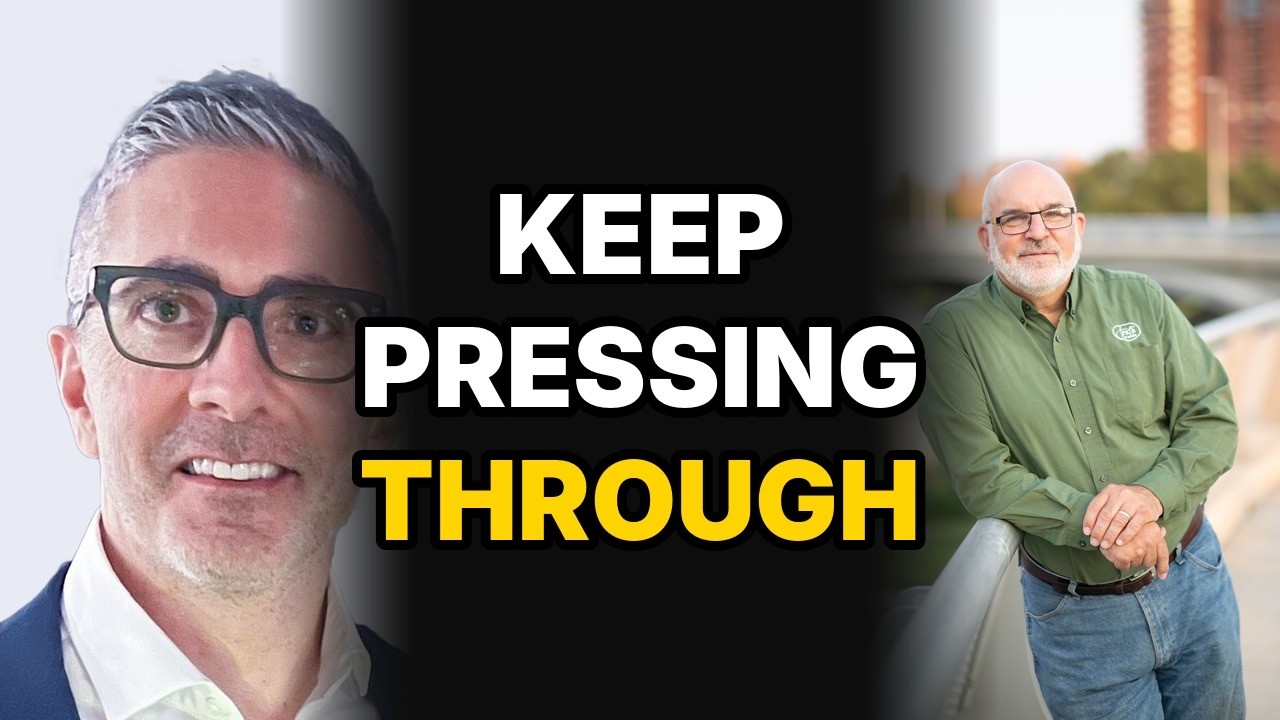
Mike Diercks, CEO of Performance Leadership Group and chapter president at Truth at Work Central Ohio, spent 15 years in corporate IT and strategy before buying a leadership development franchise in 2003. Today he leads four monthly peer advisory groups of Christian business owners and helped build the coaching program behind the Value Builder System from the book Built to Sell.
✨ Key Insights You'll Learn:
Telling an HVAC maker to sell its manufacturing
Becoming the "other thing guy" at a poultry company
Leaving corporate IT to buy a franchise
Why most leadership training doesn't change behavior
60 calls to land one client
Owner dependency and the three-month test
Obstacles that confirm you're on the right path
Serving people while stewarding the business
Peer groups that tell owners hard truths
Cleaning offices at night to keep his business alive
🌟 Mike's Key Mentors:
His Father: Woodworking and the hope chest tradition
John, His Franchise Counterpart: "You bought yourself a sales job"
His Sales Coach: 22 years of asking one more question
John Warrillow: Building the Value Builder coaching model
👉 Hear why Mike turned down a steady paycheck and kept pressing forward when everyone told him to quit.
Listen to the full episode here
Transcript
Telling an HVAC Maker to Sell Its Manufacturing
Anthony Codispoti (00:00)
Welcome to another edition of the Inspired Stories Podcast, where leaders share their experiences so we can learn from their successes and be inspired by how they've overcome adversity. As you listen today, let one idea shape what you do next. My name is Anthony Codispoti, and today's guest was once brought into a manufacturing company to run its IT. In a strategy meeting, he had the gumption to tell the leadership team to sell off their manufacturing division.
His career began in 1988 at EDS, the information technology services company, and moved through IT and strategy roles in manufacturing, poultry, and printing. A strategist job at WLR Foods ended when the company was sold to Pilgrim's Pride. And in 2003, a disagreement over how IT should serve his division at RR Donnelly led to his exit, after which he bought a leadership development franchise.
Today, Michael Diercks is the CEO of Performance Leadership Group, a Columbus, Ohio area based consulting firm focused on strategy, culture, and leadership development. He is a chapter president at Truth at Work, where he leads four monthly peer advisory groups of Christian business owners in Central Ohio. He is a certified value builder coach and helped to develop the coaching program behind the assessment from the book Built to Sell.
But before we get into all that good stuff, today's episode is brought to you by my company, AddBack Benefits Agency. And if you help business owners build a stronger, more valuable company, this is a lever most of your clients don't know they have. See, here's the problem: your business owner clients are overspending on health insurance every year. That's real money leaking out of the business every month. But now there's a program from Bain Capital Insurance you can put in front of them to change that.
It doesn't replace their group help plan. It fills in the first dollar gaps and can even cover part-timers. Employees get unlimited access to doctors, therapists, and prescriptions with no copays or deductibles. And here's why it matters for your practice. This program actually increases your client's net profits. We recently helped a client add, that's add $900 per employee per year to their bottom line.
Results vary, but that's exactly the kind of number you're already in business to find for them. Cash they can put back into the business and value they can see on the bottom line. You become the advisor who found the money and the one they tell their peers about. Learn more at AddBackBenefits.com. All right, back to our guest today, the chapter president of Truth at Work Central Ohio, Mike Diercks. Thanks for making the time to share your story today.
Michael Diercks (02:48)
thank you for the invitation. I'm looking forward to our conversation.
Anthony Codispoti (02:52)
All right. So, Mike, you grew up in Ashland, Ohio, studied business at Grove City College, and in 1988 joined EDS, the Information Technology Services Company. Through EDS, you worked as an outsourced IT leader inside a manufacturing company. And you end up in a meeting about that company's place in the market, and you make a recommendation to sell their manufacturing division and offer their engineering services to their three competitors.
I'm trying to connect the dots here. Help me understand how a third party IT person, first of all, ends up in that meeting. And then secondly, why you were making such a bold suggestion?
Michael Diercks (03:35)
Well, how I ended up there was again, it's the outsourced IT services. I was the outsource CIO for them. And we were actually I was brought in to go through a a major upgrade through their ERP system. So in the in the the course of doing that, I'm sitting in the the leadership meetings and strategy meetings and and they're talking about their business and there's four main players in the space and they were number four. And they had ten percent of the market share.
And then I looked at what that ten percent represented, and it was the engineering that the other competitors didn't have that they had the capability of solving that particular solution. So think y this is large HVAC systems. So an an example might be like a one of the domed stadiums for football.
That's not your traditional. You put a bunch of chellers in and put air handlers on the top, pull the air from the bottom to the top. This is a large open space. How do we condition it? So that's the that's what they were capable of doing. I also looked and said they did not have a service uh went division that could cover their products. So the competitors were willing to give them that 10% because they know they could make up the money on the back end.
Once it got installed in Topeka, Kansas, let's say, they had a service division that could service our HVAC system and we didn't. So that was kind of the genesis. It's like you guys are solving a problem nobody else can, but you're competing in a pricing strategy that everybody else uses. So what if you got rid of the manufacturing and or just even spin off your engineering department as a separate
business entity and then sell those services to everybody, make more profit, have less warranty work, because now you don't have any equipment. You don't have to worry about building out your service. So there's an expense you don't have to put in to your books, and that's a long term build-out. Um so that was kind of the thought behind it. My mind just works that way. I see a a uh a unique problem from a different perspective and and then my mouth opens up and says it. And it gets me into trouble, but it I still say it.
Anthony Codispoti (06:00)
Yeah, I would expect an idea like this not to come from the IT guy, but maybe from the CFO who's looking at the numbers, who sees that data.
Michael Diercks (06:08)
Yeah, but the again, one of the problems that most businesses have is they're so deep in the business that they don't see the the that they're a problem solver that happens to have a business associated with it. These guys said we are builders, manufacturers of HVAC. Instead of saying we solve air conditioning problems.
Anthony Codispoti (06:36)
And there's real strength was in these complicated engineering solutions. And so if they were to spin this out, the idea is spin it out as a separate entity so that um those those bigger three competitors no longer see them as competition, but as like a valuable resource as a as a vendor
Michael Diercks (06:55)
Yeah.
Anthony Codispoti (06:56)
for them.
Michael Diercks (06:56)
Yeah, because it would have increased their market share because they would have now been able to go and and and compete for these pieces of unique solutions. So yeah.
Anthony Codispoti (07:07)
So how did the leadership team respond to your ideas?
Michael Diercks (07:09)
Uh they kind of said the same thing you did is is why would an IP person be giving this to us and you don't understand our business. And again it was we are in the manufacturing of HVAC systems. And so it really was, what is the purpose of their business? And and that was where we had so um the good thing was that about that same time the EDS, which was the outsourced, had
um started to devolve and it was the right time for me to exit and so I went over to the poultry company.
Anthony Codispoti (07:47)
Now and which one is the poultry company? Is that McKay?
Michael Diercks (07:49)
That's that's WLR Foods. So McKay McQuay
Anthony Codispoti (07:52)
W L R Food, okay.
Michael Diercks (07:54)
International was the HVAC company. Um yeah, it was No,
Anthony Codispoti (07:57)
Okay. And so sorry, go ahead, Mike.
Michael Diercks (08:00)
I was just saying it was it would have gone through a transition already. Snyder had sold it to a uh Malaysian company, and so the Malaysian company owned the McQuay International footprint. Um so anyway, then I moved over to W.
Anthony Codispoti (08:12)
And and and did you
make a recommendation for them to get out of the chicken business?
Becoming the "Other Thing Guy" at a Poultry Company
Michael Diercks (08:17)
No, I did not. Um actually I had a that was a fun place. That was where they allowed me to be creative and and think outside the box. So this is again think turn of the century. We're going from nineteen ninety nine to to two thousand and what ended up happening, I was just like an IT project manager helping with some various things, and the president came up to me at a at a mixer and this is a billion dollar poultry company, mind you. Um, it came up and said, We need to be selling our turkeys over the internet.
Okay, now this is a novel idea, and so I said, Great, let me look into it. I came back to him a couple weeks later and said, good news, bad news. Good news is we're selling our turkeys over the internet. The bad news is we're selling it through a channel called Honey Baked Ham. And if we wanted to compete with Honey Baked Ham, we're going to have to change our entire distribution network because we know how to put a whole bunch of frozen turkeys in the back end of a big truck.
That's different than putting it into a single container and sending it to somebody's home. And he said, let's not do that, but I've got another thing. And I became the other thing guy. Um and we, you know, everything from what flavor of turkey burger should we put out to the market to how do we get more meat on the bones, how do we make sure our trucks get to the grocery stores, uh and and a whole variety of things.
Anthony Codispoti (09:41)
So I think we're doing uh a giant disservice by calling you an IT guy. Like you're a guy who understands the technology and can certainly do that, but you're a a uh big picture problem solver guy.
Michael Diercks (09:54)
That's yeah, yeah, that that ended up being the revelation I had by the time I got fired from the third job.
Anthony Codispoti (10:02)
Uh and is that R. R. Donnelly?
Michael Diercks (10:04)
Yes, that's R. R. Donnelly. Yeah. Yep.
Anthony Codispoti (10:06)
So large commercial printing company that managing
technology for uh short run printing division, and corporate was building one shared IT strategy for every division, but you recommended that your division hire its own advocate inside IT. Explain to me the differences why you were making that recommendation.
Michael Diercks (10:25)
Well well think all the arrest of Donley was long run. So when we say long run, that's books, magazines, um hard copy soft hard you know uh textbooks for for things, so lots of long run. Our division was short run. So think coupons, mailers. Every single job that came in may have had a hundred thousand impressions and then we bid the next job. So things like VPN and again we're
I got placeholders. This is just in 2003, 2002, so VPN and those kind of things are still relatively new. Those were critical for our business because you had credit card companies sending us information to put on those credit card solicitations you get in the mailing. Those had to show up at your mailbox on a certain day of the week. And if we missed, we would lose money.
Anthony Codispoti (11:21)
Mm-hmm.
Michael Diercks (11:22)
Okay, so there were penalties in the contracts.
Um so it was very different than the IT needs of somebody who's going to run Time magazine. And that comes to you three months before it's ready to be published. You know, so there's all sorts of different IT requirements. And my concern was the shared services model, which I was part of, was not going to service the short run business, the the
personalized direct mail division in a way that would allow them to be as nimble as they needed to be. So I went and I got the phone call that I wasn't being a good corporate citizen and was asked if it was time for me to find another job. So I did. I started my own.
Anthony Codispoti (12:13)
Okay. So y that like was it just sort of the frustration of coming up with these good ideas, people not being receptive to them that you were like, Okay, I've had enough, I'm out of my own.
Leaving IT and Why Most Leadership Training Fails
Michael Diercks (12:25)
Well, it was partly that and partly what you said. My resume said IT all over it. And I knew that that wasn't my strength. I I I ultimately, when I was finally launched and doing my own thing, I used to say I finally got to the point where I couldn't spell IT right anymore and it was time to leave.
Anthony Codispoti (12:47)
Okay, so you left R R Donnelly, this is 2003, and you bought
Michael Diercks (12:52)
Okay.
Anthony Codispoti (12:52)
a franchise of Leadership Management International. This is a global leadership development company. Why
Michael Diercks (13:00)
Yeah.
Anthony Codispoti (13:01)
did you specifically pick this?
Michael Diercks (13:04)
So again, I'm going to I am a plagiarizer and and not an inventor. So I found a template, I found a process, a system that worked that somebody already proved out. This particular one, having been in corporate America for twenty years, I'd seen a lot of really poor leadership development programs brought in and do nothing other than
give you a time off for a couple of days to go to a seminar or a conference and hear some good stuff and then come back and do what you've always done. I mean one place I got the great opportunity, got to go to Colorado, uh Pikes Peak, did an outdoor adventure thing, high ropes, low ropes, team building, etc. And then it came back. Nobody on my team was there. So it was it was a waste of of an expense. It was great vacation for me. I mean I loved it. That was I'd do that over and again. But
You know, think about it how much money was spent on that. And they come back, and everybody that I was that worked for me and I worked for, we had no shared experience. We had no reason for me to change my behavior because there wasn't an environment for that. So that was what LMI provided was a unique model that really drove a behavioral change um design behind it. And it was the only one, they're still the only one that uses.
the particular delivery system that they have. So that that attracted me to them. And I, you know, the the risk was relatively low. It was an inexpensive franchise because there's not a brick and mortar around it. And that. Um and yeah, so that I I signed up for that, bought that. Um, you know, and I had kind of looked into it before I went with Donley, so I kind of knew what it looked like and then gave me two years to kind of due diligence in.
Anthony Codispoti (14:57)
So help maybe an example would be helpful here. Like talk to us about a particular client that came to you, what their need was, what you did for them, what the outcome was.
Michael Diercks (15:07)
Sure, sure. A simple I'll give you a simple one. I had worked with a plumbing company. It was really just their their uh residential customer service manager and their uh commercial manager. And commercial manager was getting a hundred and twenty-five dollars per call. And his goal was to get to a hundred and fifty dollars per call. The customer service, the residential side, they had excuse me, a cancellation
Cancellation rate of 10%. And they wanted to get that down to 6%. So I worked with them through the LMI model. The commercial, we got it to $178 per call. The residential side we went from 10% down to 4%. That represented $100 or $12,000 per month in additional revenue.
Anthony Codispoti (16:00)
What are you actually doing to affect those changes?
Michael Diercks (16:03)
So uh the model of LMI is all around creating a goal and then holding them accountable to executing the goal over a period of time. So, you know, those had some data gathering at the front end, some re engineering of their their service model. One of the simple things they did, and it again it it didn't
Rarely does the inf the idea come from me, although I've got a lot of ideas and some of them are actually good. Um, you know, was when the the like the residential, when you went to a call and you get there and they say, Oh, we've already had somebody here that solved the fixed the problem. They said, Ask the service tech to simply ask this question. I'm here. Would it be okay if I looked at the work to make sure it was done right? That won't cost you anything. And
Nine times out of ten, what ended up happening was the resident would say, Well, since you're here, I also have this problem. And so these no money calls turned into money calls.
Anthony Codispoti (17:11)
And whose idea was that? That came internal or was that you?
Michael Diercks (17:13)
Um,
I this was quite a while ago. I'll give the credit to somebody else. But I don't really I don't really remember. But it was those kind of things. It's you know, executing a goal and then finding solutions to get that goal executed. Yeah.
Anthony Codispoti (17:28)
So I think there's going to be people listening who are saying, Well, Mike, if the ideas aren't coming from you, then what value are you serving? Like walk us through why they're able to get there with you as opposed to not being able to get there without you.
Michael Diercks (17:45)
Well, it's two things. One is they're being held accountable to take action. And most of the time when a goal is set, let's say it's for three months from now, they're not being asked every other week, so what have you done this week to move you closer to the goal? And what are you planning on doing next week to move you closer to the goal? So there's an accountability built into it around the baby steps that need to be taken. And then there's the person who's asking them the question.
Of thinking outside of the norm. So when the customer service manager says, All our vehicles get to these places and you know they've already had service, so our guys leave. I said, Well, what could they do differently to create an opportunity for money? So maybe the idea came from me and it through the form of question. So then they figured it out, and when they answer the question, now they own the answer.
Anthony Codispoti (18:44)
So you take a little bit of a Socratic approach. You're asking
Michael Diercks (18:47)
Exactly.
Anthony Codispoti (18:47)
lots of questions, and the additional piece that sounds really important here is the accountability. So you ask
Michael Diercks (18:53)
Yeah.
Anthony Codispoti (18:53)
the questions, they come up with the answer, and then you're holding their feet to the fire, like, okay, by the time we meet next week or next month, you guys are committed to having X, Y, and Z done.
Michael Diercks (19:04)
Yeah. And then and then so that's part of it. And then layer on top of that, the information that's delivered, which is usually with the instructor at the front of the class and a PowerPoint, is all delivered between the meeting in both a audio format and a written format that they are engaging in six to eight times between each meeting. So they could read or listen six to eight times and then they're going to have a tool to
Implement that which they've listened to. So as an example, if they're listening to a lesson on delegation, they're going to have a delegation tool that shows them how to set up a delegation and accountability feedback system within it.
Anthony Codispoti (19:51)
So when you were first starting this business, how did you get your first three clients? That's always the hardest thing when starting a new business.
60 Calls to Land One Client
Michael Diercks (19:57)
Yeah,
so um one was through the CPA that I built a relationship with because just to give you kind of landscape, I was full time in this IT space, so I had zero network. I was living far enough outside of Columbus that I really wasn't engaged in the professional community in Columbus. So
If you ask me who was in at that time the Rolodex, because LinkedIn was just starting to show up, I didn't have anybody other than the lawyer that I helped help me set up the business and a CPA who was my guy that I went to. So the CPA fed me my first business. Um and I had a list and I dialed for dollars.
Anthony Codispoti (20:47)
And what kind of companies were you calling?
Michael Diercks (20:49)
I was calling companies between five and twenty million dollars in revenue. That was kind of our sweet spot. Um and
Anthony Codispoti (20:56)
And how
many how many calls would you have to make to get a meeting? And then how many meetings to get a client?
Michael Diercks (21:03)
Yeah, 'cause we had those numbers. You called sixty people to get ten connections, to get four meetings, to get one client.
So yeah, every sixty
Anthony Codispoti (21:14)
One out of every sixty calls leads to a client. Okay.
Michael Diercks (21:17)
calls leads to a sale. So yeah, that was the metrics. I don't know the uh probably the similar metrics. The phone calls have probably changed to phone, email, text and and messaging.
Anthony Codispoti (21:29)
A lot fewer people actually answer their phone these days.
Michael Diercks (21:31)
Yeah. Yeah.
Anthony Codispoti (21:32)
I'm one of those that just goes right to voicemail if I don't recognize your number. So
Michael Diercks (21:34)
Yeah. Yeah. Yeah.
Anthony Codispoti (21:37)
part of your work at Leadership Management International is hiring assessments. Can you think of a client in the past who kept hiring the wrong people? And if so, what did that ultimately cost them?
Michael Diercks (21:52)
Yeah, so um there's one that was hiring the wrong people. you know, the the statistics say it cost them, you know, one and a half times the salary. Uh but bigger than that, the what I saw was the person that they brought in became they didn't fit the culture. So they became like the the sour um the yeast that gets into the
the culture and just infests it. Because you know, if you get somebody that's just dragging and not carrying their own or not playing according to the rule, the the ethos, as it were, of the company, it just can really destroy the company. Um probably the I can I give you a funny story about the assessments. So they I
Anthony Codispoti (22:39)
Absolutely.
Michael Diercks (22:40)
had a company and they're hiring all across the country using this assessment, doing a really good job. And then they hired this one guy out I don't remember, may have been Cal Colorado
And within three months, I mean they had to fire him and they talked to him and said, What's going on? You're not behaving at all like this assessment tool says that you would behave, you know, around the you know, various attributes. And he fesses up and he says, Actually I had my wife take the test.
Which led me to the question, did you hire the wife? Um but
Anthony Codispoti (23:12)
Right.
Michael Diercks (23:14)
uh yeah, so you know, it's almost like lying on your resume having somebody else take the the assessment test.
Anthony Codispoti (23:20)
I I love that he actually fessed up to it though. Uh but
Michael Diercks (23:23)
Yeah. It showed
me the value of that assessment was was giving them a good track record of the right hires and when it showed that they had the right guy and it didn't perform, it wasn't because the assessment was wrong, it was because the guy was wrong.
Anthony Codispoti (23:42)
So I want to talk about the book Built to Sell, uh written by
Michael Diercks (23:45)
Yeah, yeah.
Anthony Codispoti (23:46)
John uh help me with the pronunciation of his last name, Warlow.
Michael Diercks (23:50)
Roll up, yeah. Yeah.
Anthony Codispoti (23:52)
Um, and his company created the value builder system. This is an assessment that scores how valuable and syllable a business is. And you were one of about a dozen coaches who spent a week with him in Canada building the coaching program behind it. Why
Michael Diercks (24:05)
Right. Yeah.
Anthony Codispoti (24:07)
were you there? How did that end up happening? And tell me about this coaching.
Michael Diercks (24:11)
So I paid the money. But no. Um, but beyond that, uh, I actually was an early adopter of the book. A friend of mine here in Columbus, we were business, well, we still are business associates referring back and forth. He was a business broker. And he introduced me to the book and said, because he knew the the LMI model, he said, You guys, LMI should be integrated into the
to the coaching of this. At that time they didn't have the coaching model. They just had the report. And so I was on, I was invited in by John with a handful of other uh business consultants to talk through what would a coaching program look like and that and then ultimately through that he invited me and the other dozen or so up to Canada to spend a week and just kind of module by module say this is what needs to be looked at.
asked and then here are some deliverable tools that would support driving that that problem or that issue up one. Um so yeah I w I got the the opportunity to sit around with with these folks and just kind of brainstorm and ideize and and and just kind of uh develop a a a a a whole program that became a a coaching model.
Anthony Codispoti (25:31)
I I bet that was actually a really fun experience. And this assessment looks at eight drivers of company value. Is there
Michael Diercks (25:38)
Yeah.
Anthony Codispoti (25:38)
one that surprises owners the most when they see their score?
Owner Dependency and the Three-Month Test
Michael Diercks (25:41)
Yeah, the the one that probably hits them in the face the most is what's called um the hub spot or the hub spoke. And that is how dependent is the business on the owner?
So, in other words, if all the decision is at his or her location and everybody in the organization is running to the owner to get approval, they like that. The owner likes it because look, I'm in control. I'm important. I'm a I'm an essential element of this business. But the reality is, is uh I can't sell you because I can't take you out of that equation. Um and and another one is
You know, how how well the owner knows the customers. The better the owner knows the customer, the lower the value of the business. And everybody thinks that it should be the opposite. But again, if I take you out of the equation, will your personality and those relationships be hurt? And so that those are those are a couple of the ones where the owners are like, really? I'm I'm holding this company's value down?
Anthony Codispoti (26:55)
Yeah. Right, because a a buyer wants to come in and they want to know that with the existing management team in place, this company can keep running. You know,
Michael Diercks (27:04)
Yeah.
Anthony Codispoti (27:04)
as you the owner steps aside, if those relationships with the customers disappear, if you know you're too integral, if the company just can't function without you, then it's it's not an attractive acquisition for.
Michael Diercks (27:16)
So if
any if any business owners listening right now, here's this here's a test. Disappear for three months. Turn your phone off. Maybe once a week you go you allow your senior lit managers to call you. And if you can do that three months and your business either is equal or greater than what it was when you left, then you've got a good sellable business.
Anthony Codispoti (27:40)
That's quite a metric. How do people issues show up in the score from the system we're talking about?
Michael Diercks (27:48)
Well one of them is the the Hub Spoke. Um the customer s the customer retention number that that's out there would be a reflection on how well you're delivering to expectations and and and goals. Um even your your employee retention uh is is another area that they look at. Um yeah, so th the reality is it's people are going to impact all of that, but the big ones would be your customer
retention score, which they use the NPI, the net promoter index, and then kind of an internal NPI for employee retention, and then the Hub Spoke, because if you're if you've got good people systems in place, the empowerment is pressed out to the outer part of the wheel, which is where all the traction and activity is done.
Obstacles of Confirmation
Anthony Codispoti (28:38)
So, Mike, in September of 2016, you became a chapter president at Truth at Work to the National Organization of Peer Advisory Groups specifically for Christian business owners. Getting there involved three events that you called the obstacles of confirmation. What does that phrase mean?
Michael Diercks (28:57)
Yeah.
Well that means that there's times when we hit walls in something, especially when you're trying to launch something new. Something there's a obstacle that comes in front of you. And then you have to make the decision, do I press through this? Or is this a closed door? Is this door just needing me to push into it? Or is this one of these that uh this is the no? And it's really easy.
To come across those obstacles and just say, Well, this is obviously too hard, so therefore it's a no. And I have found when you work through that and you press through it and you get to the other side, you have more confidence and assurance that this is the right path. Okay. Um so
Anthony Codispoti (29:50)
So what
were your three obstacles of confirmation before getting involved with Truth at Work?
Michael Diercks (29:56)
Yeah, so the the the first one was um we're doing a what's called a private briefing, kind of an executive briefing, bring business owners together to kind of share what truth of work is about. And I was doing this first one, February of it was actually February of uh twenty sixteen and brought I had thirty five people registered. The guy the the
President of Truth at Work was going to, this is back before Zoom, he was going to Skype in and do the presentation remotely. That morning we had a huge ice storm. So half the people canceled because the roads were treacherous. So we get there. My group from the 30 or so is now down to 12 or 15. And the guy who
Dave, the the CEO at the time was going to zoom or Skype in. He is stuck in a snowstorm, and so he's sitting in a parking lot with his cell phone. And so I we have to do a presentation with him talking on a cell phone to my cell phone, saying, next slide, next slide, next slide. Okay.
not the way you want to make a good first impression. Okay. So that's one of the obstacles of confirmation. Uh the second one was like this one was really unique. And I would never wish it on anyone. I was helping a CPA firm with a uh a business transaction. They were they were selling the firm to another CPA firm and they had me on a retainer to kind of help with the integration and that.
So I was doing that. They had a business consultant, business development person on the other firm, and so she was going to take over and I was going to transition out and launch Truth at Work.
She passed away. And all of a sudden they're saying, Mike, we need you to take all this stuff on. And I'm like, Yeah, but I've got this plan over here. And how can I? And so I had to work through that and work on that. Well, not, like I said, an obstacle of confirmation, because it would have been very easy for me to say, opening position, just open up. I can continue to do this business development, business consulting through the work of the CPA.
Anthony Codispoti (32:32)
And I think the value of talking through this as I'm and hearing this, thinking about it myself, is, you know, so many times in my past, I'll I'll just raise my hand here, I'm working on something, a new idea, and I keep hitting a brick wall. And there's part of me that's like, well, maybe this is God or the universe's way of telling me that this is just the wrong path. Like this path should be easier. If it's not easy, then maybe I'm doing the wrong thing.
And you're saying something a little bit different. You're saying, no, like this is a test to see like, is this actually what you want to do?
Michael Diercks (33:11)
Yeah. Are you really committed to this? You know, are you going to push through this and press through this? So yeah, the the third one wasn't that big. I had probably four or five people come up to me at the end of the year and say, Yeah, I want to join and then by January they all cancel on me. So, you know, it was one of those oh, that was a punch in the gut, but you know, it it wasn't nearly as big as that second one was. Yeah. Yeah. Yeah.
Anthony Codispoti (33:34)
Yeah, right.
So Truth at Work was founded in in the year two thousand. It's based in Indianapolis, has about thirty chapter presidents across the country. You, Mike, now run four groups. One is in Lancaster, which is just about an hour and a half, two hours outside of Columbus, and then three in the Columbus area.
Michael Diercks (33:55)
Right.
Anthony Codispoti (33:55)
Tell me who is the right fit for your these groups.
Michael Diercks (33:59)
Yeah, wonderful. Um, you know, so our footprint is obviously they have to be a Christian. Uh the you know there's a statement of faith. We don't check to see whether you're a church member and whether you go three times or four times a week or whether you're tithing, you know. It's just are you wanting to express your Christianity in some fashion and and and be part of something that's going to encourage you to to be a Christian.
in the work that you're doing. Um they have to be either a business owner or what we call an influential leader. So I pretty much define that as a PL and people responsibility. So they're hiring firing. So they're either signing the front of the check or have a great influence over the front of the check. They understand that that check represents a livelihood, a family, uh possibly kids and maybe even grandchildren.
You know, so they're making those decisions. Uh that's kind of who sits in the room. I have companies that are hundred and fifty thousand dollars and companies that are forty th forty million dollars. And they're in the same room. Uh and they're fine with that. And they actually love that. So uh yeah, I'm not concerned about the the revenue side. They have to be willing to give and receive counsel and have to be willing to make an investment in themselves to do this.
Anthony Codispoti (35:25)
So the members meet for four hours once a month. Walk me through how that time is spent together.
Michael Diercks (35:31)
Well, th so I'm a control freak. I have an agenda and it rarely happens that way because the Lord runs the agenda. But we typically cover four major things. There's usually a content discussion. So um as a as an example, the content coming up is listening, being a leader that listens well. And not just hearing, but listening. And what does that look like? Uh then then once a year a different member is spotlighted.
And so think of this, you've probably been asked this question. So Anthony, how are you doing? And you say,
Anthony Codispoti (36:09)
Doing great.
Michael Diercks (36:09)
Just fine. We spend an hour with that question.
Anthony Codispoti (36:13)
You really want to know the answer then.
Michael Diercks (36:15)
Yeah, yeah. So we're going to look at their personal life, their business life, their spiritual life. We're going to ask so if I were to ask your wife or your husband that, what would they say? Um, you know, where where are you dropping the ball? Because you're going to be dropping the ball someplace. How can we help you? What can we do to pour into you? And uh so that we spend an hour around that. Then we spend another probably an hour close to an hour around just issues, challenges, opportunities.
And I've had some really funny ones. Uh like as
Anthony Codispoti (36:50)
Can you give us an example?
Michael Diercks (36:51)
well, this is an example you'll understand. It's a blended family. He had just gotten married. He's got a 12-year-old daughter, stepdaughter, and he comes in here and he says, Guys, what do how do I communicate to a 12-year-old stepdaughter? And those of us that have had 12-year-old daughters said, When she's 18, you
Anthony Codispoti (37:12)
Yeah.
Michael Diercks (37:12)
know.
But you know, it's just like I don't know how to navigate in this space and and help me out, and we all chuckle. It's like, well, you're dealing with a teenage girl, you know. so that was a funny one. Others is you know, we've had several who were in C-suite positions that made the decision to transition out of their sweet, sweet C-suite. I mean, we're talking about great salaries, great benefits.
stock options and they just felt the Lord was calling them to better. And they they negotiated. Some of them one guy took one year to negotiate a great package that he could leave corporate America and start his own company. So those are the things that come to the table.
Anthony Codispoti (38:03)
That's really cool. Yeah.
What people problems come up most often at your tables?
Serving People While Stewarding the Business
Michael Diercks (38:09)
Yeah. Um that's it's almost always people problems. Um, you know, because it's that tension between stewarding your business and serving people. so right now a lot of it is hiring the right person and having them actually show up. That they they will they they have a hard time finding people who are wanting to work. Um and sometimes it's the resistance within this the the organization to change that they're trying to implement. Um
And yeah, so
Anthony Codispoti (38:41)
What do you mean by the the tension between what did you say, serving and stewarding the business?
Michael Diercks (38:47)
Yeah, serving and steering the business. So you've got to make a profit. You've got to run a business. And and you also have people that are employed, that are trying to care for their families and and that. And you know, in today's world, w uh like for instance, one of my members is a a mortgage company. Well, you know what? Back a few years ago when mortgage rates were low.
You know, you could be a mortgage broker and make a lot of money and not have to work too hard. Well, now you gotta work hard. And I can't keep a full staff of ten or twelve mortgage brokers. So I it keep this business open, I'm going to have to let somebody go or maybe change their pay structure so they're not making as much and you know, so that's the tension of
of the steward, but I want to serve these people. I love these people. I want to care for these people. They got a family. But if I don't steward well, I'm not going to have anything to serve them.
Anthony Codispoti (39:52)
Yeah, I get that can be a tug of war at times. Uh I let's dive into another sort of like case study here, 'cause a business owner once came into one of your groups saying he needed to fire his key employee because she wasn't willing to make the changes he needed. And I want to hear how the group started to work through this problem with him.
Peer Groups That Tell Owners Hard Truths
Michael Diercks (40:11)
Yeah,
so so you know, we start out with asking a lot of inquiry questions. Well, tell me what you're what you're asking of her, or how long has this been going on, those kind of things. And he was he was trying to make a shift in the company from from one particular model to another. And she had been in the company for 20 some odd years. So she had a lot of tribal knowledge and she had institutional knowledge in that. And he was just getting really frustrated and he decided she is just not making it. And so I think one of the group
members just simply ask so tell me, did you actually have a conversation with her on why this change was needed to keep the company moving forward? And there was silence in the room.
Anthony Codispoti (40:56)
Mm.
Michael Diercks (40:58)
And finally somebody said, You realize you're the problem.
That's that w that where else is a business owner going to be told they're the problem?
Anthony Codispoti (41:09)
Not very many places. How how did the business owner reply to that? Was it a a man or a woman? How did he or she re respond to that?
Michael Diercks (41:15)
He he
he uh probably put his head down a little bit and and acknowledged that yeah, I needed to do a better job of communicating. So you needed to do a better job of serving her in order to steward the business the way you needed it to go.
Anthony Codispoti (41:31)
The why is so important. And that's what sh his employee was missing. She didn't know the why. Hmm.
Michael Diercks (41:36)
Yeah. Yeah. Yeah.
And and he knows he knew it wasn't like he didn't know that he was supposed to do that. He knew better. But again, the pressure of running a business, try especially in his case, trying to make this shift, you know, all of the we'll call it the nuts and bolts, he forgot to look at the the the people factor.
Anthony Codispoti (41:57)
How often in these group settings at your tables do the members give one of the other members feedback, direct feedback that's hard to hear? And ultimately they just can't hear it. They can't receive it. They they can't deal with it or process. They just got a wallet.
Michael Diercks (42:16)
Yeah, well well without disclosing too much, it it happens occasionally and I mean we're working with one right now that's kind of in that boat is it's like he we need to hear this message. Um and and it's it's hard because you know the next month they'll come and they haven't done anything beyond complaining about it the previous meeting. And you know, th there's they're more than willing to bust his chops.
In a nice way, but sometimes it's like, you know, is this really a problem? You you've you've been talking about this for three months. Is this a problem or do you just want to gripe about it? And if it's not a problem, then stop griping about it because you're wasting our time, you're consuming our our resources. But most of the time, you know, it it may take a couple of meetings, but they they finally will take action on it.
Anthony Codispoti (43:09)
So if an owner doesn't have a group like this, or you know, not necessarily an owner, but uh just to be keep it simple, an owner doesn't have a group like this, like you said, where else do they get this? Where where can they look for someone that's willing to tell them the truth?
Michael Diercks (43:23)
Yeah. Well, I mean, yeah, they may have a good mentor that somebody that maybe is of advanced in them. There's like there's some good peer groups with it, let's say industry focused. So they may be geographically dispersed but doing the same thing. That's great for solving industry problems. Um this is around different perspectives. So yeah, I know of people who have informally kind of created a board of advisors.
That's a that's a good outlet. Um the the the challenge is is you're only being fed, you're not sharing. You know, and and there's something about a business owner being able to take their experiences and their knowledge, their their wisdom, and helping somebody else out. And it gets them out of their own head, thinking that they're the greatest person in the world, to say, I've gone through that problem. Here's what we did.
Anthony Codispoti (44:21)
How are you seeing your members approach AI?
Michael Diercks (44:25)
It's all sorts of different things. They the s the the really small businesses are leveraging those things to the max. They've created AI agents, they're they're uh one guy has his whole call center built around the AI agents that sounds like him. I mean it's using his voice to to do all of this. And then the the the mature businesses are asking these guys to come into their businesses and say
Come and look at how I run my business and tell me where I can take advantage of AI because most of the big businesses are using AI for marketing. A little bit of customer knowledge, uh you know, farming to find out if I'm going to come and sell to you beyond what LinkedIn says, what can you tell me? Kind of put a portfolio together of this prospect. Um, but they're not leveraging it to really make their business efficient.
That's where the small business is and that's one of the things AI promotes is it flattens the business. You know, it takes the small business and gives them big business capabilities. Um
Anthony Codispoti (45:33)
Why do you think it is that the small businesses have been quicker to adopt this?
Michael Diercks (45:39)
Well, they're still in the agile mode. You know, they're still when they're ten or member, ten people are under, they're still trying to get their footing. And this is a way to not have to hire somebody. You can make a mistake and you don't have to fire somebody. Um, so I think that that is they they see they feel the pain of growth. typically one of the first things I'll see do with AI is that assistant.
some kind of an assistant role, whether it's on the scheduling side, whether it's on the appointment making side, or just organizing emails, that type of stuff. That's where they usually dip their toe into it. Then they move kind of over into the CRM and and we'll call it pre-sales side. And then all of a sudden they're using the AI to build productivity apps.
Anthony Codispoti (46:35)
Give me an example of a productivity app you've seen one of them.
Michael Diercks (46:38)
Um
well for instance one of my clients is a uh the software is a service. So you would hire you would you would engage them and they customize it. That would be if I can teach AI to make the necessary modifications for your specific application, that that's productionization.
Anthony Codispoti (47:01)
and you mentioned that that CRM is kind of one of those in between steps. And what are they doing with the CRM specifically in AI?
Michael Diercks (47:08)
Well, I see a lot of them using it to go deeper dive into the the the s the backstory of that customer. So when I'm meeting with you, I know a lot more about your company than just what a website would tell me or a uh you know, I I know one that will find out whether your what your credit score is and whether you're going to be a good paying customer or not. And if not, then I know I have to put more penalties in for late payments. You know, those kind of things. Just
Anthony Codispoti (47:37)
Are you using it at all to help you run these tables?
Michael Diercks (47:40)
Uh not to run the tables, uh simply because yeah.
Anthony Codispoti (47:45)
I mean you're a former IT guy, even though that's not the right label for you, right? You're f technology friendly.
Michael Diercks (47:51)
I mean I'll use it for some marketing and and that type of stuff, a little bit of um, you know, analysis of the of the marketplace. but like truth of work, th this is the value of the the organization. Truth of work provides all the content.
If I had to make the content up, I'd absolutely be leveraging AI, be feeding it. These are this is what my thinking, this is what I'm looking for. Can you put together that content piece? So we probably are using AI at the home office at least to do some level of design and d development of content pieces.
Anthony Codispoti (48:26)
Do you think AI could ever replace you as a facilitator?
Michael Diercks (48:32)
There's a whole lot of people that could f replace me, but I don't think AI could 'cause there's that this is such a a 'cause we've tried to do remote or virtual groups and there's just nothing like body language across the tape.
The AI cannot give you a hug, nor can it kick you physically in the pants.
Anthony Codispoti (48:56)
And those are two services that are included as part of the Truth at Work membership.
Michael Diercks (49:01)
Yeah.
As long as as well as donuts and fruit. So you know
Anthony Codispoti (49:04)
Okay.
So the shifting gears on you, Mike, what's
Michael Diercks (49:09)
Yeah.
Anthony Codispoti (49:10)
you know, 'cause this is a great way for others to learn is, you know, from our mistakes, our hardships and, you know, the way we've overcome them. What's one of the hardest things that you've had to overcome and what did you learn going through it?
Learning He Bought Himself a Sales Job
Michael Diercks (49:21)
So I'll give you maybe a couple. The the first one was okay, think 20 plus years, Corporate America, IT. You buy a franchise, right? And you think, hang the shingle out, the phones will ring. So I called my counterpart, who owned the franchise down in Cincinnati, and said, John, I just bought this franchise. And to this day, this is twenty two years later. He said, Mike, I mean this is verbatim.
Because I say, I want to come down and watch you deliver, I want to watch you do this thing, you know, get all excited about delivering. He says by two things. One is you bought yourself a sales job. And two is come down and watch me sell. I mean, you talk about I call it the wet fish across the face moment. Okay. Cause I had I had no sales background. I sold computers for one hiccup of a second.
When I first got out of college and absolutely despised it. So that was my anchor of what a salesperson was.
Anthony Codispoti (50:28)
So you
thought you were coming into a a a delivery role. The the the
Michael Diercks (50:31)
That's right.
Anthony Codispoti (50:32)
business was just going to show up at your doorstep and all you had to do was to deliver the service. And boy did
Michael Diercks (50:36)
Yeah. Yeah.
Anthony Codispoti (50:38)
he set you straight, huh?
Michael Diercks (50:39)
Yeah, yeah, he did. And and thus I ran out and found myself a sales coach and and I've been paying him or pestering him for the last twenty two years. Um
Anthony Codispoti (50:49)
The the sales
coach, you still engage with the same person. Okay.
Michael Diercks (50:52)
yeah, yeah. 'Cause I'm
I I always need to get better at that. That's my that's my continuous improvement. But probably during the the the
Anthony Codispoti (51:01)
Yeah, before
you before you move on, tell us something really big you learned from that sales coaching.
Michael Diercks (51:07)
Probably the biggest thing is ask a question. What's the one more question that you could have asked? Because I think every time I called him up when a sales didn't go through, he said, so what was the one more question that you ask? And I would say, I didn't ask it.
So learning the art of questions.
Anthony Codispoti (51:29)
Asking questions to better understand the root of their issues, their problem, what needs fixing. Mm-hmm. Okay. Okay.
Michael Diercks (51:34)
Yeah. Yeah. Yeah. Yeah. And going
beyond just the information stage, but to the to the the pro the what does this problem mean to you? 'Cause my cash flow may be really bad. I could find that out. But Anthony, why is cash flow so important to you? Well, if you told me I got two kids at home that I'm trying to feed and a mortgage to pay, that's probably important to you. If it's just well, I'm I've got a
A line of credit, I'm just going to have to extend it a little bit because I know I'm going to get paid on the other side. Then it's not that important. Okay. So I need to understand what the meaning of the issue is. So
Anthony Codispoti (52:15)
Right. And so how did you get over the the fear of selling?
Michael Diercks (52:25)
it's a work in progress, yeah. I
Anthony Codispoti (52:23)
Or is that a work in progress? Twenty some years later, still working on that.
Michael Diercks (52:28)
joke, I still refer to myself as the reluctant professional salesperson.
Anthony Codispoti (52:33)
huh.
Michael Diercks (52:33)
Um and and uh yeah, I mean it's it's it's one of those that's very unnatural for me. And so one of the things is is one of like the sales coach, lead with that. So when I go into a meeting, says, Listen, I'm horrible at sales. So let's just have a conversation, see where it goes.
I'm going to ask you some questions that you're going to feel a little uncomfortable. I'll probably feel uncomfortable asking 'em. Is it okay?
Anthony Codispoti (53:00)
I love that. It just sort of takes the tension right out of the room.
Michael Diercks (53:03)
Yeah, yeah. And when I do that, they're probably the best conversations that I have. When I try to be the good salesperson and follow the script, I am horrible. And and I feel like I just thrill up all over myself. Um so
Cleaning Offices at Night to Keep His Business Alive
Anthony Codispoti (53:19)
Okay, so you had but y I think you had another hardship that you wanted to share with us and how you overcame it.
Michael Diercks (53:22)
Yeah, so so I'm going to
I'm going to take you back probably fifteen years. This is before Truth at Work. Was doing LMI, probably it was in the two thousand, two thousand seven, two thousand eight time period where the market was going down, sales were hitting bottom, and I had a lot of people coming up and saying, So when are you going to quit? When are you going to go get a real job? What when are you going to cash it in? When are you going to just give up on this? Okay.
And I mean I went out and applied for a job because the money wasn't there. And I mean we borrowed money from my kid to make it one one month. Okay. I got the job offer. I could have gone to work eight to five. And I looked at that
Anthony Codispoti (54:08)
Steady paycheck.
Michael Diercks (54:10)
and I looked at that and looked at my wife and I said, I'm if I do this in a year from now, I'm going to be back on the street trying to start a business.
I said I think it I think we just have to press through this. And I mean I I know we took a cleaning we did some office cleaning in the evenings to make the ends meet. So I was cleaning toilets at seven, eight o'clock at night so that I could serve customers at eight o'clock the next morning. You know, but it it was just there was there was too much of I did not want to go back. It was it just did not want to go back. And so, you know, it
There were long nights and the the what you found, or at least I found, was the people that were eight to five people were the ones that were saying, you need to go back and just get a job.
Anthony Codispoti (55:05)
Interesting. They they they wanted you in their world.
Michael Diercks (55:09)
Yeah, because they saw me taking too great of a risk. They would never know.
Anthony Codispoti (55:14)
It made them uncomfortable.
Michael Diercks (55:16)
I I don't know whether it was that or they just didn't understand the mindset of an entrepreneur willing to take risks. And so they were trying to say, This is the only framework I know is eight to five health insurance, paycheck, go home at night, don't worry about tomorrow until it shows up. You know, all of the things that a business owner slash entrepreneur
Doesn't get to do.
Anthony Codispoti (55:41)
Hmm. Interesting. So Mike, I gotta tell you, I have a
Michael Diercks (55:45)
But yeah, yeah.
Anthony Codispoti (55:47)
lot of respect for the fact that you took a job cleaning offices, cleaning toilets to make ends meet. But I'm curious in the moment, was there any shame associated with that?
Michael Diercks (55:59)
Yeah, there was definitely it was self-imposed. I mean, there was nobody that knew this. It wasn't like I was going in with my janitor shirt on, but there was this little voice in the back of the head saying, You're a toilet cleaner. Why do you have the right to talk to this business owner? And so I have to overcome that. Um that was one of the things that was one of the little pieces that LMI did really well was talk about learning how to manage your self-talk.
And so as an example, my self talk was I'm a CEO talking to CEOs about CEO problems.
not a sales guy trying to sell a ware or a service to somebody who may or may not need it.
'Cause that would have been my old language.
Anthony Codispoti (56:49)
What is what is some other old language that you had to rewrite?
Michael Diercks (56:53)
But I mean the this typical one is, you know, the the the phone, you know, there's a don't talk to strangers. That's that's a great one. Most salespeople, you know, don't talk to strangers. You had to turn it into there's a friend at the other end. Um and I actually would occasionally call a friend just to remind myself that there is a friend at the other end, you know, to reinforce this thought. Um you know, the the I'm not worthy, which is really around I have I have value to bring to this person.
Yeah. So it's those kind of you have to kind of manage your language, manage your head noise. Yeah.
Anthony Codispoti (57:27)
Like that.
As you think about the work that you're doing now, Mike, what is it that you most want to be remembered for?
Michael Diercks (57:35)
I just you know just pray that I'm remembered for serving well. I I think actually no. Yes, that would be wonderful. Um this is and I'm going to give you my business philosophy in three words. Okay, and it was given to me when my wife and I first got married and hadn't had any kids, and it was child rearing wisdom that I've taken into the business. And that's I want to be known as being consistent.
Persistent and insistent.
And I have members who, because of those three things, it took five to six years before they became a member.
But I was consistent, insistent, and persistent. And though when the timing was right, when the Lord was ready for them to be in the room, I was there to serve them.
Anthony Codispoti (58:32)
So what does it look like to be those three things, consistent, insistent, and persistent without being a nag or a nuisance?
Michael Diercks (58:40)
Well, I've never been called that, so I guess I'm doing it okay. But sure I
Anthony Codispoti (58:44)
Teach me.
Michael Diercks (58:45)
I do feel that. I mean, uh I actually will send emails after several months. If I've been introduced to somebody or somebody's expressed an interest, they'll get an email from me, let's say six months after I've been pestering them. And I do the typical, you know, first month it's every week and then every month and then every six, eight weeks, you know, kind of but I'll send them an email say, Please say no.
That's the title of the email. Please say no. And it's going to be the body is, Anthony, you expressed an interest and wanted to continue the conversation. I am going to honor that until you say no to me. And no is okay.
Anthony Codispoti (59:29)
I'm curious if you've tracked it. What percentage of the time does that actually get somebody I I'm sure a certain percentage of them say no at that point, but what percentage of them like that actually gets them to move and say, Okay, I'm I'm
Michael Diercks (59:42)
I've had more people that way than to say no to me. I
Anthony Codispoti (59:46)
Is that right?
Michael Diercks (59:46)
rarely get a response to that, but then I'll get the response of please don't give up on me. I'm still interested. Contact me in three months.
Anthony Codispoti (59:57)
And that's really what you needed to know. The timing isn't right. eh
Michael Diercks (59:59)
That's all tell me when. Yeah. Yeah.
Anthony Codispoti (1:00:03)
What's your favorite thing to do outside of work? Any hobbies, Mike?
Michael Diercks (1:00:06)
Well, I am a woodworker. Uh it passed on from my dad. My dad was much better than me. But I love doing woodworking. Woodworking like I make toys for all my grandchildren. Um, think of uh just trying to think, I just built a firehouse for one of my son grandsons and I built a castle, I've built doll houses, I've built um a train set.
Um I've built a hope chest for my granddaughter. So that's th that's my hobby. It's my I have a workshop down in the basement. When we're done here I'll probably go down there and work on it.
Anthony Codispoti (1:00:42)
What are you working on next?
Michael Diercks (1:00:44)
I am working on uh gifts for all of the members of Truth at Work. They get a hand built something from me, so I can't tell you what it is.
Anthony Codispoti (1:00:54)
Wow, that's really cool. And how many grandkids are we talking about? I mean, are you just doing woodwork all the time?
Michael Diercks (1:01:00)
Yeah, I've got thirteen grandchildren. So yeah, I keep it keeps me busy. Yeah, yeah. They're all twelve and under. So yeah.
Anthony Codispoti (1:01:02)
My gosh. Good for you. Uh just say it again.
Michael Diercks (1:01:09)
They're twelve and under, so they keep you busy.
Anthony Codispoti (1:01:11)
Yeah. just one more question for you today, Mike. But before I ask it, I want to do three quick things for the audience. First of all, anybody who wants to get in touch with Mike Diercks, go to his website, which is truth at workcentraloh.org. The oh is for Ohio. Truth at work centraloh dot org. And if you're enjoying the show today, please take a moment to subscribe wherever you're listening. See, it also sends a signal.
That helps others discover our podcast. So thanks for taking a quick moment to help spread the word. And as a reminder, if you help business owners build a stronger, more valuable company, here's a lever most of them don't know they have. It's a program from Bain Capital Insurance that counterintuitively turns their healthcare plan into higher net profits. The exact kind of hidden money you are already in business to find. Bring your clients a win like that.
And they'll pass your name along to their peers at backbenefits.com. So my last question for you, a year from now, what is one very specific thing that you hope to be celebrating? Bless you.
Michael Diercks (1:02:21)
Thank you. In a year from now, um, what I want to celebrate is another truth of work chapter president in Columbus, Ohio. I'd love to have a counterpart. Um so
Anthony Codispoti (1:02:32)
say more about that. So this isn't
just you adding more and more chapters. You kinda want to have like a okay. oh
Michael Diercks (1:02:37)
No. A team. Yeah, a bunch
of us doing this. Yeah. Yeah. 'cause I I think right now I'm at the capacity, I've got forty some odd members. Um, you know, it it's uh it's fun work, but it is a uh does take time to remember and k stay engaged and and and that. I'd love to see somebody else come along in the Columbus Market and join the team. So yeah, if I were to celebrate something, that would be one.
And this is going to be a really weird one for my second one, is I want to celebrate the C twelve organization having a full group. So C twelve in a worldly sense is my competitor.
But I want C twelve. They're we're our footprint is a little different, but we're Christian Business Peer Advisory Organizations. And they are here in Columbus and I'd love to see them get to be a full capacity group.
Anthony Codispoti (1:03:37)
Wow, that's an interesting one. Where does that come from? I mean you're talking
Michael Diercks (1:03:41)
Function.
Anthony Codispoti (1:03:42)
about wanting to start up another group with a your own president and at the same time sort of a a competing group you're wishing to do well.
Michael Diercks (1:03:50)
Yeah. Um one is is you know, we understand treatment work isn't for everybody and I'd rather have somebody in a group that fits them than not in a group. Okay. And secondly is I firmly believe that with the C twelve in here, it makes me better.
Anthony Codispoti (1:04:07)
Competition keeps you sharp. Yeah.
Michael Diercks (1:04:08)
Yeah, yeah. I want to I want to be better.
Anthony Codispoti (1:04:11)
So the the first wish that you had, you know, the the thing that you want to be celebrating in a year, what is it that you're looking for in a person that would be running their own table?
Michael Diercks (1:04:22)
Good question. Normally it's somebody that wants to add to their current we'll say it consulting and has a broad sense consulting practice. So whether they're a coach, a consultant, a trainer, um, you know, somebody that that has capacity to add to their current work, the current portfolio of of services. Um that's usually the the the people that we attract.
The second person we might attract is the retired executive who maybe retired at fifty, fifty-five, has a lot of juice in their tank and wants to do something to give back for all that knowledge that they have, but likes the idea of being more of a facilitator than a guru. Um, you know, that that person fits in well to the to the portfolio because usually um it takes like it took me ten years to get to a groups four groups with with forty people.
with 40 people. It's not a fast growth business model. Um so those are typically the two that we look for. A little bit of gray hair is always good, um, or no hair. In my case, I have both. But you know, there's a little bit of business wisdom that they're bringing to the table. If they're a thirty something, that's it's hard for a guy or a gal that's, you know, 40 years into their business to want to sit at a table with somebody.
Anthony Codispoti (1:05:45)
I get that. Well, Mike Diercks from Truth at Work Central Ohio, I want to be the first to thank you for sharing both your time and your story with us today. I really appreciate you being here.
Michael Diercks (1:05:55)
Yeah, it's been fun. Thank you very much. I appreciate the opportunity to talk about what's happening in my life. Thank you.
Anthony Codispoti (1:06:02)
Hey folks, that's a wrap on another episode of the Inspired Stories Podcast. Thanks for learning with us. And if one thing stood out, put that into action today.
Connect with Mike Diercks:
Website: truthatworkcentraloh.org