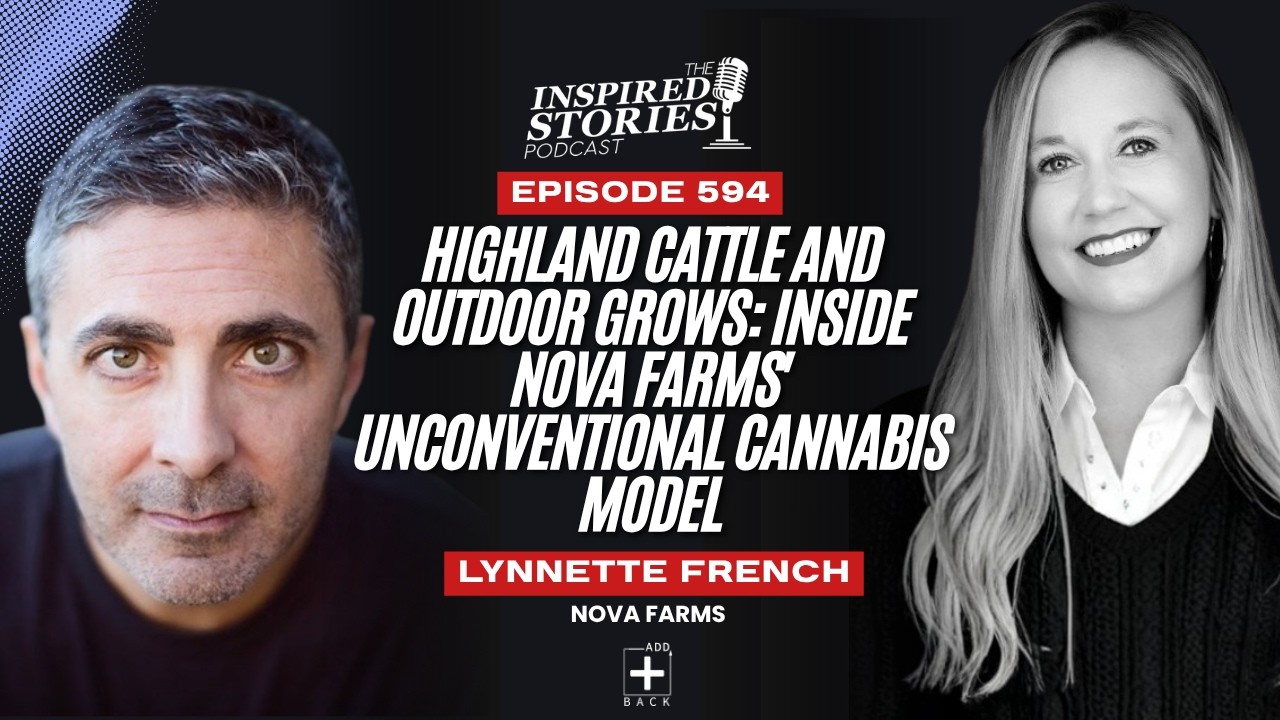
🎙️ From Store Merchandiser to COO: Lynnette French's Path to Nova Farms
In this episode, Lynnette French, Chief Operating Officer of Nova Farms, shares how 18 years climbing the ranks at Urban Outfitters led her into Massachusetts' earliest cannabis dispensaries, through a multi-state restructuring at Parallel, and eventually into the COO seat at a company built around large-scale outdoor cannabis farming. Lynnette opens up about the layoffs that wore her down over years, the leap of faith that took her back to business school in her forties, and why Nova Farms is betting on scale over overhead in an industry that keeps eating its competitors alive.
✨ Key Insights You'll Learn:
Spent 18 years rising from store merchandiser to senior district manager at Urban Outfitters
Left retail after a single visit to an early Massachusetts dispensary changed how she saw the industry
Joined Neta as director of retail operations after cold-emailing the founder a compliment
Spent a full week managing the fallout after a disassembled vape battery ignited on the sales floor
Learned hard lessons about product quality after a rushed edibles launch produced “sweaty gummies” in Florida
Led an executive team through roughly a decade at Parallel, including years of repeated layoffs during a 2022 restructuring
Left the unfinished restructure to protect her own wellbeing after years of delivering bad news
Enrolled in an MBA program at Boston University's Questrom School of Business to close a private equity knowledge gap
Became COO of Nova Farms, overseeing cultivation, manufacturing, and retail across four Northeast states
Champions Nova's outdoor-grow model, betting that scale without heavy overhead beats indoor cultivation's cost structure
🌟 Lynnette's Key Mentors:
Her Leader at Neta: First taught her about ego, a concept she initially dismissed before it reshaped her entire approach to leadership
Her Longtime Extraction Expert: A trusted technical partner of nearly eight years who helped her master cannabis chemistry she never learned in retail
Derek Ross (CEO, Nova Farms): A foster-care system survivor turned successful entrepreneur whose story shapes Nova's Puffers with Purpose giving program
Her MBA Peer Cohort: A group of fellow driven professionals who gave her the feedback and camaraderie she'd stopped receiving as a C-suite executive
👉 Hear how a retail veteran who once ran Urban Outfitters stores now runs cannabis farms across four states, betting that radical transparency and outdoor-scale growing can outlast an industry full of costly restructurings.
Listen to the full episode here
Transcript
Anthony Codispoti (00:00)
Welcome to another edition of the Inspired Stories podcast, where leaders share their experiences so we can learn from their successes and be inspired by how they've overcome adversity. As you listen today, let one idea shape what you do next.
My name is Anthony Codispodi, and today's guest spent 13 years climbing from store merchandiser to senior district manager at Urban Outfitters. Then she walked away from that career entirely to help build operations at one of the first licensed cannabis companies in Massachusetts, back when the industry was still writing its own rules. From there, she moved into senior operations roles at Parallel, a multi-state cannabis operator working across markets with different regulations at every turn.
In 2025, she stepped away to found her own strategy consulting firm, only to be pulled back into the operator seat months later as the COO at Nova Farms, a company built around outdoor grown cannabis farms across four Northeast states. Her name is Lynette French. She oversees cultivation, manufacturing, and retail operations for Nova Farms across Massachusetts, Connecticut, New Jersey, and Maine.
While also working through her NBA at Boston University's Questrum School of Business at the same time. But before we get into all that good stuff, today's episode is brought to you by my company, Ad Back Benefits Agency. And you'll want to hear this because it's hurting almost every business you know. See, health insurance costs go up every single year, and dispensaries are furious about it. They're paying more, claims are getting denied, employees are opting out because they can't afford it.
And it hurts turnover and morale. It's one of the most maddening problems in running a business, and everyone just seems to accept it. But you don't have to anymore. Now there's a program from Bain Capital Insurance that gives employees unlimited access to doctors, therapists, and prescriptions with no copays or deductibles to meet. It works for your part-timers, and here's the part that really shocks most people. Our product actually increases your net profits.
We recently helped client add, that's add $900 per employee per year to their bottom line. Results vary, but imagine what could be done with the extra cash flow. Get your free consultation today at adbackbenefits.com. All right, back to our guest today, the Chief Operating Officer of Nova Farms, Lynette French. Thanks for making the time to share your story today.
Lynnette French (02:32)
Thanks so much for having me, Anthony.
Anthony Codispoti (02:35)
So, Lynette, you spent about 18 years moving up through urban outfitters, store merchandiser, senior district manager, overseeing stores across the greater Boston area. What made you decide to leave that career behind to join Massachusetts cannabis industry when it was still just blooming? Brand new?
Lynnette French (02:58)
Yeah, I I I think it was the first big leap of faith I took in my adult professional career. it was terrifying. Urban Inc. is an incredible company and I'll always be grateful to them for all the leadership development they they provided to me and you know, the leaders before me who really put me into leadership roles very early. I was in a multi-store leadership role.
Man, w well before my 30s. definitely a a a bumpy road. I had a lot to learn. yeah, but after 18 years and becoming a mom, you know, I had made the pivot from the visual side. So I I definitely have a creative side to myself. ended up in operations because I really wanted more autonomy to
drive the business. I loved looking at like levers of moving product and getting more in and how you could actually impact the business. And you know, probably around right about that time, e-com was becoming huge. And I I also kind of just saw a a shift happening in brick and mortar and started kind of exploring options.
You know, I'm lucky to live in Massachusetts, where you know, access to cannabis came pretty early through the medical program following, you know, Colorado and California. And my first trip into a dispensary was Neta, I think in 2020. Wait, no, 2015. And I was so blown away the moment I walked in that building. If you've ever seen photos, it's the bank in Brookline Mass. That was one of the biggest ones at the time.
I got my medical card. I had always, you know, kind of used it for sleep and relaxation. And I was just blown away at the operation they were operating in just this beautiful space. And all of a sudden to have access was such a mind-blowing idea to me.
Anthony Codispoti (05:07)
And it's because like you had such a strong retail background, but at the same time you had been acquiring cannabis through
Lynnette French (05:14)
Yeah.
Anthony Codispoti (05:15)
places that were not so well
Lynnette French (05:18)
Yes.
Anthony Codispoti (05:18)
lit and well put together.
Lynnette French (05:20)
Yeah, yeah. Some some more inconsistent options. So yeah, to go into a beautiful retail space. And from all those years of running retail operations, the movement in that building, the people standing in line in that building, were just like you and I. They they were everybody you would walk by on the street. And, you know, I saw like all these stereotypes that I had always
seen my my whole life about use and then I saw people, professionals, you know, people in suits standing in line and just the busyness of the store. So I randomly talked to the girl and she said, you yeah, you should apply. and I went on the website. There was nothing that suited me. my my husband said, you should just reach out to the CEO. And so I found the founder and I just sent him a compliment. I I I didn't ask
you know, for anything, I just said, wow, how beautiful the branding, the experience. because at that time, Neto was giving you like a full-size menu. Like you just walked into the fanciest restaurant you've ever been in. and the hospitality and service was also something that just like blew me away. And you know, in true form, that founder at the time messaged me right back and said, Call me.
You know, I I had been in a public company with urban, right? Everything was like slow email. So to have a founder say call me. and I was lucky enough to have a job offer six days later. yeah, so parallel
Anthony Codispoti (06:54)
This is from parallel.
Lynnette French (06:57)
made the acquisition, eventually bought Neta, but yes,
Anthony Codispoti (07:00)
Okay.
Lynnette French (07:00)
started started there at Neta, which
Anthony Codispoti (07:03)
And what was your role right out of the gate?
Lynnette French (07:05)
I was the director of retail operations. So just went in in a
in a in a retail capacity and and you know li coming out of urban with a title like senior district manager. I walked in like I you know after 18 years I of course knew everything that you could possibly know. And I I I I quickly learned a lot about ego and letting that go.
Anthony Codispoti (07:37)
how so? You didn't know as much as you thought or this industry was just completely different?
Lynnette French (07:42)
It w it was so different. And I I had a leader at the time that actually talked a lot about ego. and to be honest, at that time it was like this this like mythical philosophy that I'm a very very tactical person. So I was like, well, how do I get a hold of my ego? How do I control it? and
Anthony Codispoti (08:03)
Is there a button
I can push somewhere?
Lynnette French (08:05)
I I mean, if there would have been a button, I would have loved to have pushed it. because that growing process was probably one of the hardest in my career to come out of something I was so proud of. Like eighteen years of growing through eight positions, to have the realization that it it didn't matter all that much in this new position was definitely mind-bending experience.
Anthony Codispoti (08:30)
Well, so first give me some of the transferable skills, and then we'll talk
Lynnette French (08:33)
Mm-hmm.
Anthony Codispoti (08:34)
about maybe where the gap was.
Lynnette French (08:36)
Yeah, so transferable people leadership, right? Like that that came in handy right away. you know, the operational controls, like scheduling, all of that stuff was pretty easy, like lift and shift from my experience partnering with human resources. but coming into the cannabis industry in 2016, you know, they they say in the industry a lot, we still do say it.
like we're building the plane as we're flying it. and with that comes a lot of uncomfortability. Like, you know, the simplest things, you know, coming from a public company where you have this robust HR system, and every time a thing happens, there is a policy for how you handle it. there were new things that happened every single day. that you were just like,
okay, well there's no policy for this. We gotta get together. We have to figure it out. And so, yeah, some of the core operational stuff lifted and shifted. but there was so much you know, and there's nothing controversial about selling t-shirts. there was a lot that was still controversial about medical marijuana.
There was a lot of opposition at that time still. People were kind of deciding how to feel about it. And I would say even the employees that were in the early days of the industry were still deciding how they felt about recreational access, which was surprising to me as well. Some of the the medical patients who, you know, really needed it every single day felt very different about there being access for everyone. So
those those are some of the first things.
Anthony Codispoti (10:26)
And so were these dynamics
that you had to navigate like between employees?
Lynnette French (10:31)
Yeah, yeah. in the in the very early days before we would open the retail doors each day, and these were huge teams, you know, like flagship size, where you're opening at a store with like 30 people working in a day. we would always open in a single shift. It
Anthony Codispoti (10:50)
In a single shift. Okay.
Lynnette French (10:53)
was big scheduling, big transactions. we would always start the day with like a morning meeting and
I can't tell you how many of those morning meetings. I mean, a very high probability. I walked away with to-dos or follow-ups of a concern or you know, these employees not agreeing on how things would go. It was very much a startup environment that everybody was kind of pooling in I ideas and everybody had their own opinions of how.
the day should go and the industry should go and the company should go. And I think navigating all of those inputs with a large employee base was something I really underestimated.
Anthony Codispoti (11:43)
Can you give me a specific example? Like one thing that came up where you're like, Okay, this is what I I gotta spend my day on.
Lynnette French (11:49)
Yeah, this this will be this will be a funny one. So the industry we we have a lot of reusable batteries, right? So, you know, we
get we Yeah, the
Anthony Codispoti (11:57)
For the the vate devices.
Lynnette French (11:59)
the the vape cartridges and and one day, this was very early on, someone's vape battery, they brought it back, they were having trouble with it, they had pulled it apart, and in the dispensary
Like on our sales floor, they had pulled a wire and it actually ignited. so I I mean, I I spent a week on that. that was my first experience, not only, you know, calming the fears of the employees, because we had these things everywhere. Like, are are we gonna start a fire? Are are we gonna get hurt? gosh, what would we do? Should we
Anthony Codispoti (12:38)
maybe
maybe just remind people not to disassemble electronic devices. Like I it blows
Lynnette French (12:43)
Yes.
Anthony Codispoti (12:45)
my mind that you spent a week on this. Like a week doing what?
Lynnette French (12:47)
Yeah.
SOPs, like, should we have extinguishing centers at every POS in case it happened again? We actually did a voluntary recall of the batteries. One of my work partners was on constantly working with the vendor. Was this a user error? Was this a vendor error? you know, at that time too, every time something happened in the industry, it
There was a high likelihood it was gonna hit a newspaper or get reported somewhere. So we had yes. Yes. Yes. So
Anthony Codispoti (13:19)
'Cause it's cannabis and there's everybody loves to talk about whatever's controversial. Got it. Okay.
Lynnette French (13:26)
the PR team was in the back. So, you know, something that I would have taken for granted, right? At Urban Outfitters, you get a return, this thing didn't work, we don't like it. You just take it back. but this turned into a a week. Not to mention, we also
in the cannabis industry, anytime something happens, we have reporting requirements to the state. And so in a situation like that where we were informing all of our customers who may have purchased this, you know, so those were all learning moments.
Anthony Codispoti (14:04)
And I I'm curious, what was the ultimate decision? Was this like a should it have been recalled? Was it just this person was treating the battery incorrectly and that's why it misfi it ignited?
Lynnette French (14:16)
Yeah, I I think we never got down to a hundred percent what it was. in the in the early days we had a lot of listen, this was new to users. They were using some of these devices for the first time. We our our customer service team was busy 24-7.
But we did a voluntary recall. We reached out to every single person. We replaced every single thing. We never had another incident. but we, you know, did everything out of an abundance of caution. So yeah, that's one instance. I always joke about writing a book someday. I I don't I don't know that I'll ever get there, but yeah, there's there's many
learning lessons like that. Yeah.
Anthony Codispoti (14:56)
If if there's more stories like that, I think I'd read it. So I think
during your time there, you started out as what did you say, director of retail operations,
Lynnette French (15:07)
Yeah.
Anthony Codispoti (15:08)
moved to VP of production and later COO. So you're doing something right. Tell tell me about that ascension.
Lynnette French (15:16)
Yeah, so you know, I moved into a general operations role right about the time the acquisition happened with Parallel. and they started moving a lot of the talent around and a lot of the group that had started in Massachusetts just because we had, you know, we had more experience than anybody else at the time, started getting dispersed around the broader organization. and we were picking up assets in Florida, Nevada,
working on stuff in Pennsylvania, applications in New Jersey. And so did some general operations stuff in in Massachusetts. And that's where I started, I I would say I would never consider myself an expert in c in cultivation. I I'm not. I just know enough to be dangerous now. And I started spending a lot of time on the entire supply chain and really cutting my teeth on all the different
business segments that occur in a vertically integrated company. I mean, most companies don't operate vertically integrated from end to end for good reason. It's a lot of complexity and it doesn't allow you to be a subject matter expert in one area. but I you know as people were moving around they needed someone to put into a production commercialization role. And I I did it. I I jumped and so for the second time
maybe the third time in my career, I jumped into something that was really uncomfortable. I felt very vulnerable. I had never worked in a manufacturing environment before that moment. And again, I had a sense of product development, but those those were all new things. And to be leading a company who had so much manufacturing, production, and commercialization to do, I I just I jumped.
Anthony Codispoti (17:12)
So you moved from traditional retail urban outfitters to cannabis retail. There's a crossover there, it's retail, but you've already pointed
Lynnette French (17:20)
Yeah.
Anthony Codispoti (17:21)
out lots of differences between selling a t-shirt versus selling this highly controversial product that the laws are still kind of unfolding in front of you. But you kind of get settled there, you learn your way, and now you're moving from retail into production, which is
growing so it's like a farming environment but then there's also processing of the plant into different forms, right? Are you were you guys making your own edibles and you're
Lynnette French (17:53)
Yes.
Anthony Codispoti (17:54)
turning it into the the the the flower, the bud
and
Lynnette French (17:57)
Yes.
Anthony Codispoti (17:58)
okay. And then are you making your own like you stocking your own like vaping. So you're making the vaping liquids. I'm probably using the wrong terms, but you help me out here. Okay.
Lynnette French (18:06)
Yeah. No, you're you're you're
you're you're doing great. yeah, processing, you know, I I was always fortunate to have strong cultivation partners. So I kind of always said like they grew it, they got it to completion, and from there, you know, I was working with the teams to process it, grind it. there's a really I I think it's fascinating, but extraction is the process where they actually turn the plant into oil.
and that is that's actually some like very sophisticated chemistry. I I again know enough to be dangerous, but I trust the experts in that area to really know all of that. But yeah, it was a new world, you know, like the Six Sigma and all all of that, you know. I was hearing all these terms, I was like, I don't, you know, we we didn't we didn't have that in retail.
Anthony Codispoti (19:02)
And you're being put in charge of it, even though you don't have experience with it. Do you feel I don't know, out over your skis a little bit? Like I'm supposed
to be guiding the team, but the team is the one that's having to train me on how all this stuff actually happens.
Lynnette French (19:17)
I yeah, absolutely. There were a lot of moments like that. And I I think my mode when those moments have hit is I actually just like I I believe in leading from the front and getting into the work. And so I I spent a lot of time, you know, traveling to Florida and walking the facilities and
you know, asking questions and just letting myself be vulnerable and saying, like, I I don't understand this. I don't I don't understand where it's going wrong. And you know, if there's anything I've learned in my career, it's like you should always try to have people smarter than you around you, and accept that and be vulnerable. And that's actually, you know, where a lot of success fr comes from. And so I I I've been lucky most of my career to be surrounded by some really great people.
Anthony Codispoti (20:08)
So you mentioned that you had great cultivation partners. So were you guys not doing your own growing then? You were buying from people who were doing the growing, or the cultivation partners were internal? Okay.
Lynnette French (20:18)
They were internal. Yeah.
but I at that time at at parallel, you know, it was primarily indoor. I in in the early days, you didn't you didn't hear a lot about full outdoor grows. it's you know, especially not in the northeast or in Florida. It's not not the ideal setting to be growing outdoors. So a lot of environmentals, H VAC, lighting,
So yeah, it's it's a much more complicated process than I think most people give it credit for. They're like it's a plant, it's gotta be easy. It's it's definitely not.
Anthony Codispoti (20:57)
And
it's just what is it, a temperamental plant? Like I mean it's called weed. And
Lynnette French (21:01)
Yes.
Anthony Codispoti (21:02)
but you know, the weeds in my backyard, they grow on their own in spite of my best
Lynnette French (21:06)
Yes.
Anthony Codispoti (21:07)
efforts to to curb them. But maybe weed wasn't the best term for it, because it sounds like it's a finicky finicky plant.
Lynnette French (21:14)
So I would say in ideal climates and controls, like dry, good lighting, you know, you don't have any moisture issues, it does grow like a weed, literally. but it it's also temperamental to humidity and light cycles and nutrients. And I think the whole industry is always trying to dial in, like, how do I get
the most per plant and the highest amount of milligrams. And, you know, we talk about the the tack, which is total active can cannabinoids. And if you're an efficient grow, you want all that to be maxed out. But I've found with the plant there's almost always like a trade off.
if you want the highest tech, you might get, you know, lower biomass totals. And yeah, it it it's a it's a it's a delicate process where a lot can go wrong. Not to mention, like you start getting pests in. you know, you get one bug in an indoor grow and you're gonna be battling it for a while with some, you know, sometimes really devastating results. So yeah.
Anthony Codispoti (22:20)
Mm.
Tell me more about the extraction. You said it's a complicated chemistry, so it's a chemical extraction, not like a heat or a
Lynnette French (22:28)
Yeah.
Anthony Codispoti (22:28)
pressing or
Lynnette French (22:30)
So there's a couple different ones. So there's solventless, which is essentially, you know, washing the material in a ice water. And so that will agitate the trichomes off, and then you compress that into oil. So that that's one method. the other one that I would say is most widely used in the industry, similar to you know, other plants that you're extracting, is an ethanol extraction process.
I would say that that's the the most widely used one. Yeah, yeah,
Anthony Codispoti (23:01)
Just because it's the most efficient or
Lynnette French (23:04)
it's it's it and it's been around for a long time. You can extract hemp, you know, a lot of the essential oils that are out on the market today go through some sort of extraction process like that. And then there's hydrocarbon extraction as well, which uses fresh frozen materials similar to solventless.
but uses some solvents in the process while still keeping the cannabinoids intact. And so it sounds like I I I've got it now, but once upon a time I I did not have that and was really lucky to work alongside someone super talented for almost eight years.
Anthony Codispoti (23:45)
So a solvent ca extraction process risks damaging some of the cannabinoids?
Lynnette French (23:51)
Yeah, so when you're doing ethanol generally, the output you get is distillate and it is, you know, pretty pure, but really all that's left after that process is the THC. so you know, depending on where you are on the science spectrum of cannabis, a lot of people really believe that the power of the plant is in having all the cannabinoids and all of the plant materials still intact. So most medical
patients that really benefit from it, benefit from the whole plant extract.
Anthony Codispoti (24:26)
Okay. So in the time that you were at parallel, what was the biggest regulatory change that you saw come through that impacted how you had to do things?
Lynnette French (24:40)
Yeah, there's so many regulatory changes. you know, I I would say the the state of Florida, there there was ongoing regulatory changes. When we started working in the Florida market, it was about 2019. And so they were still developing the framework of the rules. the early days of the market, they didn't even allow edibles. And so
You
know, I remember the weekend, I can almost still pinpoint it when they put out new regulations and just said, Hey, these are approved. you know, and it
Anthony Codispoti (25:14)
And you had no idea it was coming.
Lynnette French (25:17)
we had inclinations, but some of our competitors had far better intelligence than perhaps we did or something of the sort. But those moments were
were races. And at that point, we were still building on our facility. we were making edibles in like a manufacturing trailer in Florida. So you can imagine with humidity and trying to pour a liquid into a mold that needs to cure. so those regulations dropping fast and furious.
caused a lot of work and a lot of mistakes and trying to commercialize a new product, you know, in a week's time, I now know it is pretty impossible to do with quality. so those
Anthony Codispoti (26:07)
And you kind of
hinted at an issue like being the humidity. So like what were the problems? Like you're trying to
Lynnette French (26:11)
Yeah.
Anthony Codispoti (26:13)
pour into this mold and it's not setting in the right amount of time.
Lynnette French (26:16)
Yeah, it I I'm sort of giggling because they the the gummies were actually sweating. So the consumer, by the time they made it to the consumer when they were put in the bag, they they almost looked wet. So not a desirable way to eat a gummy at all, but like you needed a year to do shelf life testing in some of those cases. and here we were packaging these in Florida.
in September, which is a a very hot and humid month at the end of, you know, hurricane season. And yeah, a a a lot of lessons learned about what it takes to actually know a product's going out with good quality. So sweaty sweaty gummies was that fall. So nobody likes those.
No, I know.
Anthony Codispoti (27:05)
Nobody likes a sweaty gummy.
I don't think a people like sweaty food in general.
Lynnette French (27:10)
No no, not not appetizing at all. So
Anthony Codispoti (27:13)
So what
was behind the decision to leave Parallel?
Lynnette French (27:16)
You know, I had been there it was almost 10 years. the the back half of my time at parallel. you know, there was a lot of changes that happened. So like if if you look across a timeline, you know, twenty nineteen the cannabis industry was taking off, a lot of capital was coming into the industry, everyone was growing at just, you know, like catapulting straight to the moon.
And the industry didn't didn't see like price compression and market saturation coming. And it and it put a lot of companies into jeopardy, not just parallel. And so right around 2022, we ended up in a restructure. I once again had never run a restructure. essentially the entire executive team exited.
I loved that team so much. I I just wasn't gonna leave in that moment of uncertainty. And so I I stayed and you know worked with a really great restructuring board, the you know, the creditors were involved. I learned a lot, but I think ultimately I really wanted to get back to building.
you know, being in a restructure, you know, I I I did more layoffs than I, you know, ever want to recall. that was hard. I I I felt like I, you know, was delivering bad news for a very long period of time. and wasn't sure when the restructure was actually gonna end. And I finally got to a point where I was like, I I I need to go do something different.
it
was devastating to to leave that team. if nothing else, I'm a loyalist. And so leaving them with the unfinished restructure was probably one of the harder choices of my career, but
Anthony Codispoti (29:27)
I'm gonna guess you just had to do it for your own sanity. I mean, anybody who's ever been in a position to have to let go of an employee, especially without cause, it's one of the hardest things that y you you'll ever have to do. And what were you doing it? Tens, dozens of times? I
Lynnette French (29:43)
Yeah, I still get like a lump in my throat when I even think about it. Yeah, I mean it it felt like at least twice a year we were doing major reductions trying to right size the business. So that was really hard. And listen, when you let someone go, even though you say this has nothing to do with you, no nobody on the receiving end like accepts that. And so it was really hard. And and yeah, it was you know, I found myself
just feeling more emotional day by day. And I kind of kick myself now for not recognizing, you know, how worn down I was getting. And I I I wasn't I wasn't my best that that last year, but I I almost never, you know, the notion of giving up
and letting go and like walking away and not completing it, really was like a soul-crushing decision. I'm really happy I did it. I learned a lot and now now I actually recognize that you know, sometimes like taking care of yourself i is more important than like you can't take care of everybody else if you're not paying attention to what you need as well. And so so yeah, you know.
Anthony Codispoti (31:02)
I mean, hats off to you for taking that step to gain some personal sanity. I you know, again, for those folks who haven't been through it before, here's what I can liken it too. If you've ever had to break up with somebody, it's kinda like that, and then stealing their wallet at the same time. if that sort of gives any framing to what it feels like on the delivery end of that. So you make the decision, I need to step away from this, which was
Gut wrenching, because you wanted to see this all the way through to the end, but you had to do what you had to do for you. And then let me actually ask before we talk about the the role at Nova Farms that you're in now and how that opportunity came about, what is it that you did for you? Like how did you get through that? How did you sort of nurse your wounds?
Lynnette French (31:50)
So
when I when I told the team I was leaving, you know, and they were like, you're going here, and I was like, actually, I'm I'm not going anywhere. Everybody was shocked. Like, so out of character for me. I've been working since I was like twelve years old babysitting. And so it it was clear to me that I needed time. And so I I I took time. And that in itself was a very
vulnerable decision for me to kind of like jump out of the plane, not know what was next, but know that I had to change course. and so I went to Hawaii for two weeks. And that is a very glamorous, amazing thing to be able to do. I got to spend, you know, two full weeks with my family, the teenager probably begrudgingly you know. I took time and I I
I actually kind of forced myself to sit in the uncomfortability of not being busy for the first time in my life. and the great part of that was I had to really like think about what I wanted and what was actually important to me because after being so submerged in the job for nine years, I I wasn't people kept saying, Well, what do you want to do? I I was like, I I don't I I don't e I don't even know. I just know I can't do this anymore.
and so I had to like sit with it. and that was healing. You know, I I I worked out a lot, I I slept more than I ever thought I could have. Obviously, I I needed it. and I kind of took the time to, you know, reconnect with my kids and get them used to, hey, I'm gonna be home tonight. Like I'm not just jumping on a plane again. you know, and I I think that moment of vulnerability is also where I was like, should I should I go back to school?
never, never in my wildest dreams, you know, if you rewind 16 months and said, hey Lynette, do you think you'll go back to school? I would have said, you're totally insane. but in that moment and having some space about like what what do I want to do with my life and what are the things that I I haven't achieved that could kind of like fill this up, you know. So sometimes taking the space and just feeling really uncomfortable and, you know
Anthony Codispoti (34:13)
So so why go back to school though? Why was that part of what's next the what's next plan for Lynette?
Lynnette French (34:19)
Yeah, I I think you know, being in the restructure and not having some of the technical banking skills, you know, like I I didn't come from a private equity background. That that was all new to me, the way they saw the world. And I always felt like there was a little bit of a communication gap, in terms of what they were looking for and like what I knew how to deliver. And that
admittedly
made me feel vulnerable. and when I started thinking about like, okay, how do I I'm always tactical. I'm always like, okay, here's the problem. I always need something to be like, well, how do I fix it? And that's where where it came up. I said, well, what could I do to close this gap? Like I know I love leading teams. I love being on executive teams, you know, you know, I want to continue having
opportunity to move into different companies, like love successful business stories. And so that that led me to the OMBA program at Questrum and I don't know, maybe it was fate, but when I happened to Google it, it was, you know, I had three weeks to submit an application. And so, you know, I guess in the spirit of keeping myself busy while I I wasn't busy, that kept me very busy. And so
Yeah, it's kind of ended up being, you know, like the thing I didn't know that I needed. But as challenging as it's been, it it's brought so much joy and perspective to learning again.
Anthony Codispoti (35:58)
tell me about the joy part of it. Where does that come from?
Lynnette French (36:01)
Yeah, it being being in a group of peers, you know, I I think as a COO, you know, you stop getting feedback at some point. You know, when when you're at the top, like when you get hired to be a COO, like no one's gonna be like, hey, you should do this better or do this differently. You know, you know if your board meeting goes good or it goes terrible. And that's about as much as you get. And being in these peer groups around other really driven
professionals that are there by choice, you know, being students all together and finding out like, yeah, I really struggled with it. yep, I I I failed that quiz too.
Anthony Codispoti (36:41)
There's a camaraderie there.
Lynnette French (36:43)
Yeah. and I I think it's really helped me become a lot more confident with my vulnerability. You know, I I also find myself you know, cannabis is a is a male dominated industry.
And listen, there there's times where you just have to feel really vulnerable. And I I think it's just given me a different perspective about vulnerability. And maybe, you know, eight years ago I was like, you can you can never be the empath female in the in these situations. But I I don't I don't believe that anymore. I I think there's space to be like really tough and there's also space for, you know, empathy and understanding in and leadership too.
Anthony Codispoti (37:22)
Do you think that understanding came through your interactions with your MBA cohorts?
Lynnette French (37:28)
Yeah, some of that did. It you know, it was so interesting. My my first team. So this whole program is I would say pretty intensive on teaming. And we're teaming with, you know, people across the world. So you have to figure out a time zone to get on and work through projects and do a PowerPoint and do a video together. And by design, I assume, some of this is hard on purpose. And yeah.
Seeing
how my my teammates saw me, I I, you know, I've always been so hard on myself. And I was like, huh, this is really, really interesting. Like they see me showing up, like organizing things and pushing. And you know, I wasn't even necessarily seeing myself that way. So that's been really valuable. And I've made new friendships with people, you know, and that outside perspective.
I was definitely missing it.
Anthony Codispoti (38:28)
Interesting. So if I'm hearing you correctly, it's almost like, you know, the roles that you were in before in these different retail environments, you're probably getting feedback from your supervisors, your superiors, your bosses, but you're in a position of leadership. And so maybe you're not getting as much of that as you were getting now being on a peer level with a whole bunch of people in the MBA program. And they're giving you this honest feedback like, my gosh, you're really good at this, you're really good at that.
And stuff that you weren't hearing on a regular basis before.
Lynnette French (38:59)
Yeah.
Yeah. And I also think four years in a restructure, you know, deva Yeah,
Anthony Codispoti (39:05)
Beat you down.
Lynnette French (39:06)
and like the development of the team is is not the priority, right? You're you're really focused on restructuring a business. so yeah.
Anthony Codispoti (39:15)
So you decide to go back to school and this MBA program and then how does the opportunity with Nova Farms come about?
Lynnette French (39:22)
I well it admittedly when I I left parallel, you know, I was like, I'm not I'm I'm not going back into cannabis. And it's not because I didn't love the industry. I just think the entire industry still has a lot of right sizing to do. And so, you know, I I was pretty leery. I have worked with a really talented recruiting agency in the space.
And
you know, had just stayed in touch. I I wasn't pushing too hard. They weren't either. We just stayed in touch. And I happened to get a call from the recruiter. She said, it it's a cannabis gig. And I said, Okay, there's two places I would entertain a phone call from. And it she said, you know, one of the places was Nova. I had always admired Nova, admittedly.
I grew up in Wisconsin, so I'm really a farm girl at heart. And I had always been like admiring their farms and seeing the animals and just, you know, this very different business model. I also knew from Leaving Parallel that part of what landed us in a restructure was some of the capital projects. And building an indoor grow is extremely capital intensive. And so I was like,
That this is really interesting. The this group is operating at scale across multiple states, but they don't have any of the baggage of these intense capital projects of an indoor grow. And so that made me really interested. So I I took the call, admittedly, the CEO, Derek Ross, he did he he called it he was making sure I wasn't a resume runner.
He said, I'm just getting on this call, making sure you're not a resume runner. Like he was just screening me to see if I could just talk like a real person to him and not sell it.
Anthony Codispoti (41:20)
What's a resume runner?
Lynnette French (41:22)
I I think that you know, if somebody sounds so
Anthony Codispoti (41:23)
Somebody who puts out like a a fake resume or
Lynnette French (41:27)
well, yeah, like you sound so great on paper, but you're you're not authentic. At that point, and I think Derek would say this too, he was asking me questions, but I was also asking.
him questions. you know, the things that were important to me was to work for a group that was like really authentic, direct. I actually like love doing work. Part of what got, you know, exhausting at parallel is I felt like I was almost I was like doing PowerPoint every day instead of like being in the mix with the people building a business. And so man, it was a very short conversation, maybe 25 minutes.
I got off the call and I was like, I want to work at this place and you know, got put in for for some interviews. And as I met the other owners of the company, it only became more and more clear to me like that this is a great fit. I can bring a lot of value. The skill set I have is something they don't have at the organization. And so yeah, I like to believe it's a little serendipitous.
Anthony Codispoti (42:37)
Okay, so I want to better understand their business model that you're raving about. So they're more outdoor grown facilities, not these capital intensive indoor growth facilities. You mentioned animals on the farms, like paint us a picture. What are they doing? How are they pulling this off?
Lynnette French (42:54)
Yeah, so yeah, they've got, you know, I think a hundred and seventy acres in Maine, ninety acres in Massachusetts, another seventy acres in New Jersey, all outdoor grows. So no HVAC, no, you know, indoor anything.
Anthony Codispoti (43:09)
Lights or
Lynnette French (43:10)
Yeah. So the the way they do it is they their fields, you know, are are massive and just you know, they grow at scale.
one huge season, huge harvest. So it's really a seasonal cultivation business here. And you know, they pull it all down. And so yeah, the the farms are a magical place. And so these huge crops just, you know, full of life. We have a very extremely talented cultivator that is, you know, very close to the ownership group and is extremely loyal.
And what he's done from, you know, breeding plants. So that's like a whole nother concept we haven't talked about. But essentially he's been, you know, selectively choosing genetics that grow the best in the northeast and aren't susceptible to some of the things that take outdoor grows off the rails. You know,
Anthony Codispoti (44:12)
Like
Lynnette French (44:12)
powdery mildew, Septoria. I hope I didn't
say that wrong. But you know, some of the those pests that will take an entire New England crop off, he's selectively working on breeding plants that aren't susceptible to those things. you know, I think in the industry a lot of people argue about, you know, quality. I in the cannabis industry, everybody wants to say like they have the highest quality flour. But more and more as the industry, you know, continues to develop
It's still really important, just like craft beer, right? You want the the best heaviest IPA and you want to talk about all of it. But there's also this massive group of consumers that don't really actually know anything about the plant. They don't they don't care. They just want cannabis. And so, you know, our angle isn't about growing the fanciest cannabis. It it's about growing at scale.
at a very large magnitude seasonally without the overhead cost, which is, you know, in my opinion, what's causing a lot of the issues in the industry. You can't get out from underneath some of those cost structures.
Anthony Codispoti (45:26)
It's interesting.
So I want to better understand what this outdoor grow facility looks like. Ninety acres. Are they is it planted in the ground? Is it still some sort of a hydroponic like fertilization dripping? Nope. Just
Lynnette French (45:43)
so they do they do have like inline systems for you know feeding and watering and nutrients, but it really takes talented cultivators, you know, and I I've had the opportunity to watch these guys just walk around the field and and they just know they can look at the plant and know it needs water, it needs nutrients, it's ready for fertilizer, you know, it's having pressures. So
Yeah, I would never underestimate the power of a good cultivator in the industry. And and yeah, they're all directly in the ground. And with that comes a lot of trial and error too, like getting used to your soil, knowing what those levels look like. you know, they they watch the weather like a hawk. and so yeah, in the summer season, the these this cultivation team is all in, all on, you know, probably working more hours than
Most of us.
Anthony Codispoti (46:40)
And so when
it when it does come time to harvest, is this all a manual harvest? Or like I'm sort of picturing like a like a a a combine from like a a big corn farm that comes through and just like the the blades just sort of churn everything up.
Lynnette French (46:55)
Yeah, no combines. They they take it down a little bit more gently to keep the full flower intact. but you know, the cultivation team will pull it out of the fields and then there's a separate processing area. I actually love going to work out on the farm and so we will shuck and buck all day and sh shuck let if you
Anthony Codispoti (47:14)
Shuck and Buck.
Lynnette French (47:17)
we're always looking for help in Sheffield in October, if you want to come, let me know.
But yeah, it's it's it's amazing. I love being on the farms. They also, Derek has been raising Highland cattle for a really long time. So we've got Highland cattle up in Maine. there's
Anthony Codispoti (47:38)
Just for fun or why?
Lynnette French (47:39)
yeah, I yeah, I mean they they use them for beef, but yeah, but they're they're amazing. I I've admittedly got probably overly attached to some of the cows. bunch of babies this spring and so
Yeah, it's a great place to be.
Anthony Codispoti (47:55)
So has Nova completely avoided the restructuring that has been kind of endemic throughout the entire industry? And and yes, because largely they've used this outdoor growth philosophy that doesn't have the expensive capital requirements of building the indoor growth structures as well as the ongoing utility costs of of running those structures. Yes.
Lynnette French (48:21)
Yeah,
I think I I think I wouldn't call it a restructure. I think every cannabis company, including Nova, in the last two years has had to adjust. and Nova's definitely had to adjust. Like the industry and kind of some of the spending and the big marketing things and all of that stuff. Like everybody's had to adjust. But yeah, Nova's still
went through a v really big period of growth. you know, nothing is ever perfect. There, there's been some decisions and moves they've had to make, but has fared a a lot better. and and certainly hasn't ended up in a you know full restructure due to any default issues. So and I'm still betting on them based on you know everything I've seen in my past and where we're headed.
Anthony Codispoti (49:13)
And operating in four states, yes, Massachusetts, Connecticut, New Jersey, and Maine.
Lynnette French (49:18)
Yep, and small manufacturing in Rhode Island. So, you know, continuing to kind of look at the opportunities down there, but I would say that's a v a very small operation currently with a very small indoor. So that's the only one that's like not traditional outdoor grow. Rhode Island doesn't allow that right now, but you know, if they ever do, so we'll see. Kind of testing that market, it's still very new.
Anthony Codispoti (49:43)
And correct me if I'm wrong, but I believe the laws state that you have to grow and sell within the same state. You cannot transport across state lines. Is that accurate?
Lynnette French (49:52)
No transporting across state lines yet. So we'll see. We'll see.
Anthony Codispoti (49:57)
talk to me about the positive impact plan. What is this? Who does it help?
Lynnette French (50:03)
Yeah,
so I I think a lot of states have this. And so there there's kind of two prongs at Nova. one is is Derek Ross, who's our CEO, has a really inspiring story. Maybe he should be your your next your next person on, but we have a program called Puffer Purpose and it supports the Aged Out Foundation, which is
you know, people who have aged out of the foster care system. And we support with, you know, both mentoring, you know, some financial donations. And so we take donations at all of our retail locations and and donate it to that cause. And
You know, it it's one of the many reasons like I find Derek so inspiring, you know, as a kid who was in the foster program, like he had all the odds stacked against him. and he pretty much has defied all the odds and said, Yeah, great, you're right. I shouldn't I sh I probably shouldn't be a huge success story, but he is. And just like not to mention just what a caring, incredible human being.
he is. And so, you know, that i is a big part of our positive impact. Derek and and many of the other gentlemen who work here are are also veterans. And so we're kind of always looking to, you know, find places and positions and roles where they can really succeed within the organization. And so it's it's awesome to kind of be part of those things and watch those things happen. So and it's something our retail team
you know, takes very seriously. They track every week how much they're getting in donations and having those conversations. And so, I don't know. It's I I I love being part of something where you're actually working towards something that's bigger than you to leave the world in a better place.
Anthony Codispoti (52:08)
It fills your heart in a different way than money.
Lynnette French (52:10)
Yeah. Yeah. That
that in Highland cows is is, you know, a a great thing when you have a bad day operationally, to remember that. So
Anthony Codispoti (52:20)
That. We were talking a little bit about regulations, right? Can't transport across state lines still. It seems like there's some softening on the federal front. We're recording this in September of 2026, so things always change, but what's your read on where things are today and how that might impact what you guys are doing going forward?
Lynnette French (52:43)
my read is there is hopeful optimism out in the industry. but being in the industry 10 years, I never I never get too optimistic until it it's it's completed. I mean I I look back to like 2020 and everybody was so sure it was about to flip at that point and and didn't. And so
I'm just happy to see you know, all of us continue to evolve and understand like, hey, there really may be some like great medical benefits here and let's allow people to have access. So my read is like I I think there's a lot of options out there that are are natural plants that provide people with a lot of relief. And I I hope, you know.
the entire world can continue to recognize like maybe the things we thought about these things were were outdated and therefore we can bring some responsible regulation to the world, give people safe access, and also hope hopefully make people feel better too.
Anthony Codispoti (53:54)
Well, I think the thing that a lot of people miss in understanding that it's still illegal at the federal level is how difficult it makes running your business. There are so many service providers and just basic structural things, banking products, et cetera, that are so much harder to access. Regardless of what you think about the industry, think about it from the business perspective of, you know, what would happen if you didn't have access to a bank?
If you couldn't process credit cards, if you couldn't offer insurance, because these carriers don't want to sort of put themselves into this questionable mix. And you're nodding your head and I can see sort of the pain bubbling up through your eyes. Give me an example of one of those either I mentioned or didn't mention that it is been a real challenge for you guys.
Lynnette French (54:48)
The the good news is I think over the last ten years, some things have improved. But we still have like employees who get their bank accounts shut down, you know, when they notice that like, you work for a cannabis company, we're no longer gonna do business with you. You know, employees trying to apply for mortgages still comes as an issue. You know, when you talk about a a restructure.
you know, most companies, if your business doesn't work out, you can file for chapter 11 and be protected under some of that. Like when a cannabis company defaults, like there there is no bankruptcy to, you know, help resolve those things. And so yeah, there's a lot that's still really complicated. There's a lot of business owners that, you know, are putting putting their personal lives on the line to operate in this space.
And so I I hope that sooner than later, you know, we can be treated fairly, like the business operations. We are, you know, that hundreds of thousands of employees across the US and you know, people getting access to things that, you know, have got them off pharmaceuticals and a lot of other things. And so yeah, it it it's still there. It's not easy. I I always say like I could have picked any industry that would be easier.
Anthony Codispoti (56:12)
Yeah.
Lynnette French (56:13)
than this, but I I think if you ever found yourself inside of a cannabis company, like it's also some of the most like resilient people, like the people who stick around and keep going, acknowledge that it's hard and they they still keep doing it anyways. And so that part's great.
Anthony Codispoti (56:33)
People who listen to the show regularly know that one of my favorite questions to ask is about the hardest thing you overcome and what going through that taught you. I wonder if we've hit on it already or if maybe there's something new to discuss.
Lynnette French (56:47)
Yeah,
yeah, I d I I definitely think, you know, the the career change I made in the last year and a half w was hard. letting go was felt excruciating to me. accepting that I was leaving something that I was so focused on finishing.
you know, kind of felt to me for a moment like I I was failing if I chose to do that. And so getting to the place where I was accepting like you're not giving up. You're you're not you're not failing. Like you're you're just choosing to go somewhere else. you know, I I I don't regret a minute of working through that restructure. Like those those four years were probably the most formative of my pre professional career.
and there's definitely an element of most days I I wasn't sure if I was doing the right thing or I was missing something. and so there really was value in, you know, kind of faking it until you make it. and I just have a whole new perspective. And I I think it actually sets me up great for the rest of my professional career, right? Like there were days when I thought the sky was falling. and then to see like,
Nope, we got through that. It was stressful. I didn't have all the answers. I didn't know how to answer all the employees' qualms, but to see that there was actually a path through sometimes what felt like in impossible circumstances has forever changed me. So I'm grateful for it, even though it hurts.
Anthony Codispoti (58:33)
Yeah, sometimes our our biggest growth comes from the most uncomfortable times in our lives.
Lynnette French (58:38)
For sure.
Anthony Codispoti (58:39)
as you think about the work that you're doing now, Lynette, what is it that you most want to be remembered for?
Lynnette French (58:47)
I I I hope that I'll always always be remembered as, you know, like an empathic leader that really like heard the employees. Like I I pride myself on that. but I think, you know, especially in cannabis, you know, I talked to the team about finding like a stable framework, right? Cannabis feels crazy. A lot of the people, they're like, This this is crazy and this is crazy. And so
I really believe in finding a repetitive framework in chaos, so that you can always kind of like go back to the home base position. You're like, okay, today felt awful, everything went wrong. but I know I have this like basic framework where I can go back. I'm a I'm a creature of habit, for better or worse. I'm probably too routine. but bringing like calm to chaos, I've like talked about that a a few times and
in my life. I I think that's really important. And, you know, chaos is a ladder. I've I've definitely found that. but you gotta like choose to climb it, right? so for myself it absolutely has been, but it comes with like really working on being being okay with being really uncomfortable sometimes.
Anthony Codispoti (1:00:06)
Chaos is a ladder. You just have to choose to climb it, meaning
Lynnette French (1:00:09)
Yeah.
Anthony Codispoti (1:00:09)
that this can be the path to to growth. Yeah. that's really good. I like that.
Lynnette French (1:00:12)
Yeah. Yeah. Yeah.
Anthony Codispoti (1:00:16)
What's one rule that you would never break in business, no matter what it costs you?
Lynnette French (1:00:23)
this was a great question. I'm I'm in my ethics semester at school too. I I really believe in radical transparency with the employee base. And I I do not believe in sugarcoating things for the teams. I think being really direct and honest with them when things are great.
but also being honest with them when things are not great. So that radical transparency and honesty, I I don't I don't believe in in breaking that. I think a lot of the frontline employees in companies like don't get enough credit for how truly intelligent they are. And your workforce can either be your greatest asset or you know, th they they can work against you, and I think,
You know, don't don't try to sugarcoat things for for people when things aren't perfect. in fact, telling them things aren't perfect, but what you're doing as a leader to try to work through it sometimes actually brings out some of the most innovative ideas in your employee base to make changes. And so
Anthony Codispoti (1:01:39)
That transparency
lets them know what's going on, what's happening. I've got an idea that might fix that.
Lynnette French (1:01:44)
Totally. Yeah.
Anthony Codispoti (1:01:47)
Before I ask my last question, Lynette, I want to do three quick things for the audience. First of all, anybody who wants to learn more about what they're doing at NovaFarms, go to their website, novafarms.com. It will be in the show notes, but you can remember those two words, novafarms.com. And if you're enjoying the show, please take a moment to subscribe wherever you're listening. It also sends a signal that helps others discover our podcast. So thank you for taking a quick moment to do that.
And as a reminder, you can finally get your cannabis employees access to therapists, doctors, and prescription meds that counterintuitively actually increases. It increases your company's net profit starting in the very first month. There's no co-pays, there's no deductibles, a lot of part-timers qualify too. So learn more about how to have happier employees and a stronger bottom line with this Bain Capital Insurance product at adbackbenefits.com.
So last question for you, Lynette, a year from now, what is one very specific thing that you hope to be celebrating?
Lynnette French (1:02:52)
year from now. Well, I'll be very close to finishing this MBA, which means I'm gonna have time freeing up to focus on some other things. And I I I'd love for it to be still at Nova and helping them on, you know, business extension lines. I'm also I'm I'm not a cultivator of cannabis, but I do love gardening.
And so I I definitely will continue to be working on a firm of my my own and and more space. My my poor garden has no space left. So but no, I I I really do want to take my time at school and my experience and you know, continue branching out. Love to apply it at Nova, but I think for sure I'll be picking up something extra and new. hopefully something that teaches me more just like the rest of my career has.
Anthony Codispoti (1:03:46)
Like another degree? Nope. Okay.
Lynnette French (1:03:48)
No more degrees. No, no. We we we had that
conversation this week when my classmates was talking about how he wants to do his PhD. I'm I'm I will be officially done after this and maxed out and very proud of finishing, but no more degrees. More business, a lot more businesses, but no more degrees.
Anthony Codispoti (1:04:09)
Lynette French from Nova Farms, I want to be the first to thank you for sharing both your time and your story with us today. Thank you for being here.
Lynnette French (1:04:16)
Thank you so much, Anthony. This w this was great and a lot of fun. appreciate it.
Anthony Codispoti (1:04:21)
Folks, that's a wrap on another episode of the Inspired Stories Podcast. Thanks for learning with us. And if one thing stood out, put that into action today.
Connect with Lynnette French:
Website: novafarms.com