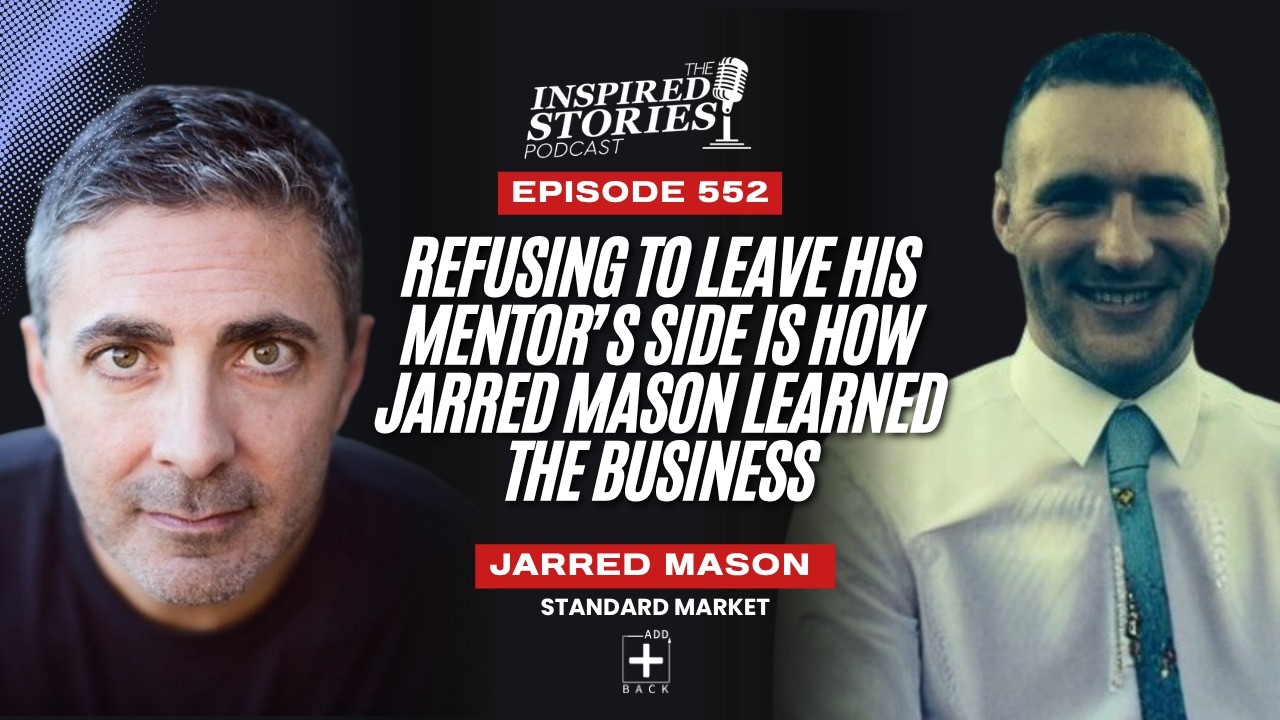
🎙️ From a Wrong Turn to COO: Jarred Mason's Journey Building Standard Market
In this episode, Jarred Mason, Chief Operating Officer of Standard Market, shares how a frustrating commute led him to a hiring sign that changed the next fourteen years of his career. Jarred opens up about learning to lead people who didn't report to him, cutting corporate expenses without slowing growth, and stepping into the COO seat as the company's founders began stepping back.
✨ Key Insights You'll Learn:
Started in grocery retail at an independent store in the Missouri Ozarks
Moved to Chicago at his brothers' urging and spent years at Dominick's
Found Standard Market by taking an unfamiliar detour home from work
Joined as customer service manager the year the store opened
Cut corporate expenses by thirty percent while growing sales and operating income
Earned an MBA from Northern Illinois University while running daily operations
Helped expand to a second location, then helped wind it down
Uses AI tools daily for category management and pricing across thousands of SKUs
Stepped into the COO role as the founding partners began stepping back
Now focused on delegating instead of controlling every operational detail
🌟 Jarred's Key Mentors:
Dean (Early Grocery Manager): Taught him to prioritize customers over tasks, a lesson that never left him
His Two Brothers: Encouraged him to leave Missouri for Chicago and shaped his no-excuses mindset
Standard Market's Founding Partners: Gave him the freedom to make decisions and learn from mistakes
An Outside Hire Boss: Instilled the confidence that helped him become store director
👉 Hear how a wrong turn off the highway led to fourteen years at one company — and a promotion path built on relentless curiosity rather than credentials.
Listen to the full episode here
Transcript
Anthony Codispoti (00:00)
Welcome to another edition of the Inspired Stories Podcast, where leaders share their experiences so we can learn from their successes and be inspired by how they've overcome adversity. As you listen today, let one idea shape what you do next. My name is Anthony Codus Bodi, and today's guest once found his next job by accident on the drive home from a commute that was wearing him down. He noticed a hiring sign on a street he'd never really looked at before.
And
one detour changed the next 14 years of his life. He started as a customer service manager the same year that place opened its doors. Over the next decade and a half, he moved through store leadership, operations, and eventually into the top operating seat, right as the company's founders began stepping back. His name is Jared Mason, and he's the chief operating officer at Standard Market.
A chef driven gourmet market and multi-concept food destination in Westmont, Illinois. Along the way, he earned an MBA from Northern Illinois University while running day-to-day operations for a business built around whole animal butchery.
On-site aging rooms and several dining concepts under one roof. But before we get into all that good stuff, today's episode is brought to you by my company, Adback Benefits Agency. And you'll want to hear this because it's hurting almost every business you know. See, health insurance costs go up every single year, and grocery store operators are furious about it. They're paying more, claims are getting denied, employees are opting out because they can't afford it.
And it hurts turnover and morale. It is one of the most maddening problems in running a business, and everyone just seems to accept it. But you don't have to anymore. Now there's a program from Bain Capital Insurance that gives employees unlimited access to doctors, therapists, and prescriptions with no co-pays or deductibles to meet. It works for your part-timers and you don't change a broker. But here's the part that really shocks most people. Our product
Actually increases your net profits. See, we recently helped a client add $900 per employee per year to their bottom line. Results vary, but imagine what could be done with the extra cash flow. Get your free consultation today at adbackbenefits.com. All right, back to our guest today, the COO of Standard Market, Jared Mason. Thanks for making the time to share your story today.
Jarred (02:32)
Thank you.
Anthony Codispoti (02:34)
So Jared, you spent time in the Ozarks in Missouri working at an independent grocery store before you ever set foot in Chicago. What do you remember about those early days? What did you learn at that first grocery store job that still sticks with you today?
Jarred (02:50)
Yeah, so that that place was called G2M and it's actually no longer there. Another company bought them out, but they are around, I think, for th 40, 50 years. But the location I worked at, and there were two, was kind of in a resort area. The Ozarks is like a, you know, it's a big damned lake, and a lot of people come down there over the summer. And so the busiest times of the of the year are the summertime, which is kind of an exciting time.
to work at a grocery store because you're seeing kind of all walks of life. But yeah, they were independent and so, you know, it was a very it was a non-rigid structure. And so for a teenager it was a pretty fun place to work.
Anthony Codispoti (03:37)
So you were goofing around maybe a little bit, having some fun with your friends on shifts, but getting your work done at the same time. Yeah.
Jarred (03:43)
that's right. Yeah.
Anthony Codispoti (03:46)
and so how long did you work there for?
Jarred (03:49)
I think I worked there almost two years, year and a half, something like that. You know, right up until I I left and moved to Chicago.
Anthony Codispoti (03:57)
Okay.
Jarred (03:58)
Yeah.
Anthony Codispoti (03:59)
Now I understand that both of your brothers are electrical engineers and
Jarred (04:03)
Mm-hmm.
Anthony Codispoti (04:04)
they were the ones encouraging you toward management early on. Was that while you were still in Missouri before you left for Chicago?
Jarred (04:14)
No, not not per se. Like th that came later. What they were encouraging of is kind of taking the lay of the land down there and realizing that there's not a lot of opportunity and then thinking that, you know, our that brother, he he should probably get out of there if he's gonna try to do something with himself. and so they were very encouraging. Like as I was graduating high school, you know, they were making phone calls saying you should consider
coming up and living with us and let's just let's just see what happens.
Anthony Codispoti (04:48)
They were the ones already in Chicago then. Okay.
Jarred (04:50)
Yep. Mm-hmm.
Anthony Codispoti (04:51)
So they say, hey, leave the Ozarks, come up here to Chicago, there's more opportunity.
Jarred (04:56)
That's right.
Anthony Codispoti (04:57)
Okay. And you go up to Chicago, what's your first job when you land there?
Jarred (05:03)
So I come up here, I work for Dominic's, and I end up working there for about six, seven years.
Anthony Codispoti (05:10)
Dominic's is a grocery store.
Jarred (05:11)
They were a grocery store. They're out of business now. I think they went out of business in 2013. But they were a a long standing grocery store in the Chicagoland area, and then they got bought out by Safeway, which they're still around. but yeah, that's where I first landed.
Anthony Codispoti (05:27)
Okay.
And what roles were you playing there? What do you remember? What are some skills and lessons from that time that you still carry with you
Jarred (05:36)
Hmm.
Anthony Codispoti (05:36)
today?
Jarred (05:37)
When I first started there, it was just a part-time job and kind of largely always was part-time, even though I'd work like full-time hours. But I worked in the deli, so a deli clerk, and then pushed for more and ended up making me what they call a second, which is just it's kind of an assistant manager, not quite an assistant manager where you get to do shrink and maybe run the shift if the management isn't there. but
What I learned was
Taking direction from like, say the, you know, store director and actually listening to it, like, you know, really helped me kind of define some of my work ethic. You know, when I first started working there, it's just like, it's just a part time job, whatever. But I had this guy that you know, kind of took me aside and he's like, Look, I don't care all about any of the tasks that you have to do. What matters the most is the customers that are coming in here. So
You could have a hundred things to do, but if there's 200 customers, help those 200 customers first. No matter if you're by yourself or you got three people with you. I always want you to just take care of those people first. And that really never, that never left me. Cause it's just like, okay, well, you know, the priority here is customers. It's not cleaning a slicer. It's not scooping the salads or doing whatever. And and a lot of my people I worked with, that's all their focus was. It wasn't customers, it was just task oriented.
only doing things to kinda help each other, but nothing really to help the customer. And this guy Dean, he really changed my mindset on that. And it stuck with me till to this day.
Anthony Codispoti (07:19)
Yeah, he impressed upon you that those are tasks that can wait. There's always another time to get those done. But that
Jarred (07:25)
Mm-hmm.
Anthony Codispoti (07:25)
customer right in front of you right now, if you don't help them, they're not gonna buy that thing. Maybe they leave the store angry. So they need your help. They need your attention right
Jarred (07:33)
That's right.
Anthony Codispoti (07:34)
away.
Jarred (07:35)
Right. So it's it's a little bit having a sense of urgency as the person is standing there and they, you know, you want to sell them something. They want to buy it from you, but they're not if you don't tend to them.
Anthony Codispoti (07:48)
Seems pretty basic, but like you said, a lot of the folks that you were working with, that wasn't their mindset. They hadn't been trained on that quite yet.
Jarred (07:55)
That's right. Yeah.
Anthony Codispoti (07:57)
So you used an industry term here that I wanna understand. Do shrink. What is that?
Jarred (08:02)
it's just well, it could be so you buy, you know, a thousand dollars worth of product and maybe that's the cost. And so maybe your margin is fifty percent. So just say you're gonna try to sell two grand or make two grand. The shrink would be if it's perishable, anything that you couldn't sell by the time it went out of code or by the time it spoiled. or it could be theft, or it could just be any loss of product. Maybe it just it got
dropped or maybe got accidentally thrown out, but that's shrink.
Anthony Codispoti (08:36)
It's just taking care of that stuff that's either missing or spoiled.
Jarred (08:41)
Yeah, that's right. So you would, you know, largely you're just trying to account for it so it's as most accurate as possible. So you're going out, you know, you're you're checking product codes, you're scanning it, so they got a a database record of it. It's pretty basic stuff really.
Anthony Codispoti (08:56)
Yeah.
Jarred (08:57)
But important.
Anthony Codispoti (08:58)
Yeah. Okay, so later on you end up in Skokie at another grocery store called Wild Greens. How long were you there? Tell me
Jarred (09:06)
Wild and Green. Mm-hmm.
Anthony Codispoti (09:08)
about that work.
Jarred (09:09)
I was not there that long. I started there. well, to back up a little bit, I worked for a company called Fox and Obel. And a guy that I worked with there ended up calling me because he was at Wild and Green. So I started there before they opened, and it was a grocery con kind of food court concept. And
Think the people behind it were a Canadian company called Planet Organic and maybe some private equity. But at any rate, I was on the grocery side and then there was a food court portion and I was responsible for managing the deli. So a lot of prepared foods, so salads were all made in house there, but made from the restaurant side, which there was a lot of coordination that you had to do to try to get that product and then just normal lunch meets and
That was kind of it. And it was all tucked into the orchard orchard mall. So it's kind of a unique setup.
Anthony Codispoti (10:10)
So we talked a little bit about a mentor who impressed upon you this idea of take care of the customer first, right? All those other
Jarred (10:18)
Mm-hmm.
Anthony Codispoti (10:18)
tasks can wait. Mentors are a great way to learn. have great leaders in front of you that kind of show you the ropes. In my experience, another great way to learn is just kind of like running into a brick wall at work. Like having something
Jarred (10:33)
Yeah.
Anthony Codispoti (10:33)
that just falls apart on you, doesn't go the right way, like painful, embarrassing, but
It teaches you how not to do something or just kind of pushes you in a different direction. Can you think about one looking back on your career that you still carry with you, still think about today?
Jarred (10:54)
in terms of running into a massive problem or having a mentor.
Anthony Codispoti (11:00)
not the mentor, but the massive problem that you run into at work.
Jarred (11:03)
Mm.
Anthony Codispoti (11:04)
Maybe there's an angry customer, there's a run in with a coworker, I don't
Jarred (11:11)
Yeah, I think that if I had to use from a customer standpoint, what I've learned about, let's say, a dissatisfied or an angry customer is l listening.
Like and it's to let's just say, you know, it's a we're completely wrong, or maybe the customer is just completely out of line. It's really just not doing anything to invalidate what they're saying and to just take it at face value and and to see if there's any truth in what in in their complaint. And if there is, really convey to them that you're going to take it serious. And what I realize is that the angriest of customers
like get pretty diffused pretty quickly when you just take a moment to hear what they gotta say and be like, Yeah, I understand where you're coming from. and let me see what I can do for you. And I always like to say things like, you know, I maybe I'm gonna give you a gift card or maybe I'm gonna give you a refund or maybe I'm gonna say I'm sorry. It doesn't mitigate your poor experience. Like it still happened. So, you know, I'm not making excuses for it. I'm just gonna let you know that I want to try to win you back.
And and the next time I hope I can give you the experience you deserve.
Anthony Codispoti (12:30)
And so in that process of diffusing the customer, do you think the biggest thing that if you're gonna do one thing, you gotta check one box, it's to really make sure that they felt
Jarred (12:42)
I think so. I think that comes before giving anything away or trying to take care of them from a monetary perspective or whatever it might be. Yeah, it's just hearing them out. Most of the time you hear them out, they're like, Thank you, and they go. Yeah.
Anthony Codispoti (12:58)
Okay.
All right. Okay, so let's go back to you're working at Wild Greens.
Jarred (13:05)
Mm-hmm.
Anthony Codispoti (13:05)
I understand you had a pretty rough commute, sometimes
Jarred (13:07)
Yeah.
Anthony Codispoti (13:08)
two or three hours round trip.
Jarred (13:11)
Mm-hmm.
Anthony Codispoti (13:11)
And there's this day where you decided to take a different route home and ended up driving past this hiring sign for Standard Market. Tell me about that. What was going on? What was going through your head?
Jarred (13:24)
Yeah, so like I said, I was at Fox and Obel then I worked with a guy from there at this Wild and Green. And it was a little bit turbulent at Fox and Obel and started to become that way at Wild and Green. It was pretty clear that there's like some big changes happening. and there were layoffs occurring, like the restaurant side wasn't like performing. and the grocery, you know, if you were there, it was like we might get one customer a day.
So was like, okay, this is a little, this is a little strange. Like we've been open for a few months. Like this is this is a little odd. And so on top of that, I was driving like an hour or two in, an hour or two home. And on this particular day, along with all the kind of context in the background, there took a long time to get home. And I got really tired of sitting on the road. I'm like, all right, well, I'm just gonna turn off because I'd rather just be make, you know, being able to like turn and move forward. I just want to get off the highway. I can't take it anymore.
And I just happened to take this, you know, side street. I'm like, all right, that'll take me home. A lot of stoplights, but it's fine. And I just drove by and I was like, what is that place? They had a jump they a jumbotron. We still have it. And I was like, yeah, I should I should apply there. That's a lot closer to home. I could probably do something there. And that's it. I mean, that's just full stop. And so then I just threw in my application and got an interview pretty quick.
Anthony Codispoti (14:53)
And what was the role you started?
Jarred (14:56)
Well, I entered I applied for an assistant store director position, but I didn't get that and I got the customer service role for our front end. So which was very cool because I got to come in. There were already a couple managers that there that they I was put over and we designed all the processes largely from scratch, because there there were none. So there's a lot of trials and tribulations there.
Anthony Codispoti (15:23)
So I've never been to Standard Market. I'm looking at your website, which is super easy. Anybody wants to check it out, it's standardmarket.com. And I'm trying to wrap my head around exactly what you guys are. I mean, this is a grocery store, but it looks like a grocery store on steroids. T Tell me about the customer experience. What do I find in here?
Jarred (15:46)
I think to try to articulate how it is, is it's the stores inset largely into a neighborhood. So when you pull in, you you pull in kind of behind the f the front of the building, per se off the you know, off the street, and there's a lot of manicured landscaping, a lot of green, a lot of flowers and trees, and you park, and then there's this just beautiful architectural style building and
largely look looks like a barn or like a production barn that you would see out in the country. and you walk in and you come into our produce department and it's shaped like a U. So it's designed to take you through each section of the store. and they're they're very high ceilings, high pitched ceilings with large barn beams on the east and west side of the of the building. And so that's the architecture. And then
You come in and it's supposed to be like a European style market and a like a food experience, like a voyage of discovery. So going in, finding products that you wouldn't find anywhere else, maybe finding products that you do see other places, but certainly products that you've never seen before, and then getting excited about it. So there's three restaurants inside. We have an American restaurant called Standard Grill, which is like salads, sandwiches, pizza.
and it's considered upscale casual. We have a wine bar, 12 beers on tap. We do all kinds of events in there, bourbon events, wine events, tequila events. and we have a taqueria as well, and that's also like a fast casual type restaurant. Three little mini restaurants inside, also like a sushi. We have a sandwich pizza shop where we make our own version of like a New York style pizza, and then we have a coffee bar, like a high-end coffee bar, and then all the groceries that you can.
think of and then we're making a ton of products from scratch in house. And that's really what makes us unique is not only that we have these restaurants you can go in and you can eat and then you can shop, but I'm also making we're making, you know, a couple hundred different products from scratch every single day out of our out of our kitchens.
Anthony Codispoti (18:01)
What's the square footage footprint? This place must be massive.
Jarred (18:05)
It's thirty three thousand square feet and
Anthony Codispoti (18:07)
How does
that compare to a traditional grocery store? Really? Okay.
Jarred (18:10)
smaller. Yeah.
Like a Whole Foods is bigger. Like a Mariano's, you know, a Publix. They're those are bigger stores. But it's it's certainly bigger than a Trader Joe's. That's for sure. Yeah.
Anthony Codispoti (18:25)
Yeah.
you made the comment that there's a lot of products that people have never seen before. Can you give us some
Jarred (18:32)
Mm-hmm.
Anthony Codispoti (18:32)
examples? Are these like I don't know, exotic fruits or what what are we talking about?
Jarred (18:38)
Certainly a lot of CPG type type goods. So think of like maybe there's a new meal replacement bar. I think there's one now we've got that's like I think it's called off the farm. And I just, you know, I'm constantly looking online for whatever types of products and myself and others, you know, are doing the same. And so we just see it and then we order it and get it.
And so what's what's unique about that is, you know, there's no red tape for us. So like you could say, Hey, I saw this product here. Do you want to could we could we bring that in? Yeah, sure. What is it? and then we just try it out. And so you'll find products like that's one example. you know, we have a pretty expansive chip aisle. Like we love chips there. So we have all kinds of different styles of chips. We have everything you would probably find at a a normal, you know, grocery store, but then we have a ton of high end
chip like products, especially products made with beef tallow, because that's very trendy right now.
Anthony Codispoti (19:42)
Interesting.
Jarred (19:43)
Mm-hmm.
Anthony Codispoti (19:44)
So with this store being a bit smaller than a traditional grocery store, but you guys have all these extra things, you guys just making very efficient use of your space.
Jarred (19:56)
I mean, yeah, efficient would be a generous word, you know. I some of it is just, you know, we're just we're just doing it. Sometimes there's not a lot of a planning behind it. But yeah, you know, we try to make y the best use of our space by filling it with product. And one of our missions this year, or my mission, was giving it more of like a a snack like feel, like you could go over to a salad bar.
But then you're like, there's some extra, there's like these snack items, some popcorn, some chips, maybe some pistachios. I gotta get those too. And just having those basket building type things, making it more of a an experience like in that in that regard.
Anthony Codispoti (20:40)
Like a discovery process for the customer. Yeah.
Jarred (20:42)
That's right.
Anthony Codispoti (20:44)
So as I understand it, Standard Market was founded by people who built and sold Bolt House Farms, which was one of the largest carrot producers in California.
Jarred (20:53)
Mm-hmm.
Anthony Codispoti (20:54)
Tell me a little bit about the history. How do they go from being in the carrot space to starting this European style market?
Jarred (21:04)
Yeah, they so as a multi-generational family, and I think it started in Michigan and they moved out to Bakersfield, California. and then sometime in the late eighties or nineties, they introduced a baby carrot, which really mm-hmm,
Anthony Codispoti (21:21)
that was them, huh?
Jarred (21:23)
which you know it was only a matter of time before someone did it, and they they did it. And it, you know, the business really took off. and then
W one of the founders was working for the family and later on he helped they helped pioneer the you know fresh made premium refrigerated juices and yogurt-based dressings. And you know, so we're like you were finding those products in the produce section as opposed to the center of the grocery aisle. And then at some point, they thought it was, I guess, good to sell. You know, I can't speak for them.
And they ended up starting this business. And I think what, you know, largely what was behind it was seeing a lot of grocery stores, seeing what they didn't like about them and wanting to do something that was new conceptually, where you were making a lot of products from scratch, in-house, where everything was made there, giving it very much a European style, you know, open-air market, where you could find great products for.
Great perishable products and meal solutions for for mom. So a meal for two, a meal for four, et cetera.
Anthony Codispoti (22:39)
So want to hear a little bit more about the 200 different products that you guys are making in-house. Obviously,
Jarred (22:44)
Mm-hmm.
Anthony Codispoti (22:45)
we're not going to go through the full list, but give me some highlights. What are some of the customer favorites? What's your favorite?
Jarred (22:51)
well I love our quiche that we make. We make several different varieties of quiche. house made, we make chicken pot pies. Deviled Eggs is one of our best sellers that we do, and they're just made in-house. We sell tens of thousands of them and it's it's pretty out pretty outrageous.
Anthony Codispoti (23:09)
What's so good about the
deviled eggs? What are you what's what are you putting in What's the secret ingredient there?
Jarred (23:13)
It's just a it's
it's a you know a traditional deviled egg recipe, you know, made mustard based, but they're just they're fresh made. They're made basically every day and we sell out. We rarely have any carryover into the into the following day. But we make meatballs, we make scratch made soups, meals for two, meals for one, meals for four, we make handmade pizzas that you can take home and bake yourself.
fresh made salads, dips. we make like a honey mustard dip that's very popular. guacamole that's very popular. So just just to name a few. and then there's tons of appetizers and we do sandwich kits and all of our salads that we sell in our delicatessen are made from scratch by hand nearly every day. So
Anthony Codispoti (24:09)
So this
is a place of convenience, delicious food that's been prepared for you.
Jarred (24:16)
That's very much part of the concept, yeah.
Anthony Codispoti (24:18)
Okay. and when you started there as we talked about, you started as the customer service manager.
Jarred (24:24)
That's right.
Anthony Codispoti (24:26)
and you've been there now fourteen years, yes?
Jarred (24:29)
Yep, almost fifteen.
Anthony Codispoti (24:31)
Almost fifteen. Distill it down for us. What is it that's kept you there for so long?
Jarred (24:37)
Well, if I try to do a condensed version, you know, got the job. And when I first got the job, I would say I was, you know, serious about working, but not like this is my career yet. And then I quickly got promoted four or five months in. I'm like, okay. And then I was realizing that these guys I was working for were, you know, willing to let you learn, make a mistake, learn from it.
Take chances, make your own decisions. and I realized that, you know, it wasn't about putting the hours in, just getting good outcomes, putting in the work. It was like, you could, you know, I might be able to rise to the occasion here if I just play my cards right. And so that is what's kept me there. And it's the it's the freedom, really the freedom of movement, but the freedom to make choices and then see them through.
All under advisement, you know, in those days, of course. And there's a lot more trust built in now over, you know, a decade long relationship. But yeah, it's the authority, the freedom to kinda to move around.
Anthony Codispoti (25:49)
And this was something
that maybe wasn't present in some of the earlier roles at grocery stores that you'd had. There wasn't that opportunity for advancement.
Jarred (25:58)
Yeah, yeah, if there was opportunity for advancement, it seemed far off, like in the distance and hard to obtain. And this seemed like, okay, yeah, if you, you know, if you make the right decisions and you can make enough friends here in terms of the support around you, you could probably get promoted. and that's what happened. Some of it through attrition, some of it through.
You know, my own hard work and ethic.
Anthony Codispoti (26:31)
So having gone through that process over the last almost fifteen years yourself and getting various promotions, what how has that informed your viewpoint of what it takes to get ahead?
Jarred (26:49)
Think that
The if you have direct access to the people who are behind, you know, if you're working for someone and you're not the actual owner, is establishing a relationship with those people and then understanding their intent so that you can then go execute it and nearly act as if you are them. And so when you understand what the company mission is, and then you can go and
start executing it without having to ask permission every single step of the way. I really think that's what opened up doors for me. and I went out of my way to, you know, to get information, probably at a nauseating way for them, you know.
Anthony Codispoti (27:38)
What did that actually look like?
Jarred (27:40)
I would just, you know, if they were there, I'd just approach them and then I wouldn't leave. Like I would like stay attached.
And I remember at one point they were just like, Hey, you know, like, didn't quite say it, but like, you follow me around. I'm like, yeah, I am. And because I you're the your only person I can learn from that's gonna tell me about the business. And so that's why. It's you know, kind of sorry, not sorry, it's annoying. I
Anthony Codispoti (28:07)
Ha ha.
Jarred (28:07)
know it's annoying. I know what I'm doing. I'm doing it on purpose, you know.
Anthony Codispoti (28:11)
So
what
kind of questions were you asking?
Jarred (28:13)
Just you know, like what it you know
How what is our philosophy on handling people? Like what should our tol you know? These aren't the exact questions I would ask, but the theme is there. It's just what should my tolerance level be for, you know, issues, whether it's a quality issue or a service issue or a human capital issue? Like what what are those? What are those things? What are our cleanliness standards? Like what what you know, how's this place supposed to look? How are we supposed to operate? How do you want us to operate?
You know, what's like what's a great outcome for a day, for a week, for a month? that's a very condensed version of what I would you know, these are hours and hours and hours and hours of conversations that I'd have with them.
Anthony Codispoti (29:00)
were where was this coming from? Like were you just naturally wired this way to be curious and driven? Were you getting coach or advice from your brothers or other mentors or managers there? What was driving all of this?
Jarred (29:17)
I what was driving it was I wanted to be successful.
Like that, that's just it. Just like I want to see, like how far can I take it?
You know, like so if I was the assistant store director, I was like, you know, can I be a store can I be his store director? Could I do that? You know, I have like have these doubts. And then I'm like, you know, doing it and I think they had their doubts too, but eventually I'm like, no, I can do this. I I I can, you know, give me more, give me as much as you can give me until I break.
Anthony Codispoti (29:57)
And how are you bridging that f going from the place of can I do this? I don't know, can I do this? to yeah, I can do this.
Jarred (30:06)
I th at bef I probably had the most doubts before I became a store director or store manager, just because there was so many people above me and there was a there was lots of changes and the company was moving pretty fast. but I had a good, very good boss that was brought in from the outside that really instilled some confidence in me and kind of changed my way of thinking about people and managing and
And and that's that's that's when it clicked. So I was in that position for you know assistance order, you know, a year or two, two years, and then moved on to store director. And what by the time I came along, I I wouldn't say I was ready, but I was I was ready to I guess take the position and see see what happens, roll the dice. And I was like, if I fail, I I fail. But I just kept working hard hard or I kept putting in the time and kept
pushing myself to learn and making a lot of mistakes along the way, of course. So
Anthony Codispoti (31:13)
So
I want to talk about a specific instance, something that happened. It was early on when you were there, you had authority over one part of the business, but you needed cooperation from your colleagues who didn't report to you at all. Tell us about that time, walk us through how you learned to get buy-in from people that didn't have an obligation to actually listen to.
Jarred (31:37)
Yes, very quickly we had to, you know, you're hired for one thing, and then now you're a key holder, you know, too. And so you're you're shutting down, you're opening or shutting down the facility. And once you get given that authority, well, then you got to start making decisions for departments that aren't your own. And in the beginning, that was very new to everyone. and so I very much had to learn some.
softer skills is I'm naturally very direct and kind of I don't know I don't want to say intolerant, but probably naturally intolerant. So I had to really develop my soft skills and figure out what it is that people what they were willing what they needed. and then trying to give that to them or just really instilling a confidence that, hey, if I'm here and you need something, I I'll take care of you. What no matter what it is, all you need to do is just
Tell me what it is and I'll take care of it. but I also need, I need this from you. so I think it was just those types of conversations, just letting people know that you're gonna support them. And then all of a sudden, like, if you're like, hey, can you go do this? And it's like, no problem. I'll do that for you. it wasn't always like that. I had got a lot of resistance from certain people in certain areas, but I overcame all of it.
They're not around anymore.
Anthony Codispoti (33:06)
So what's the moral of the story
here? That you bent and you became more flexible or the people who weren't getting on the train got out.
Jarred (33:16)
Well, I'm just being kind of facetious. But yeah, some of it's being more flexible. Some of it is getting into those situations, taking them back to the ownership and saying, Am I you know, am I missing something here? Like, what is it should how should I how do you want me to approach this situation? Because like I I'm trying to accomplish this, which I think is the goal, but the their resistance is i is large and it's it's not helpful. What do I do? And then
Instead of asking them to go solve it, they'd take their advice and then go and I'd just go do it. Like, all right, you want me to try that? Okay, I'm gonna go try that. And maybe it would work, maybe sometimes it wouldn't. But that's largely what I do. When I would hit a brick wall like that, I just take it to the, you know, committee and get some advice and run with it.
Anthony Codispoti (34:04)
Can you think of a specific example? Something you tried wasn't working, you went and asked for advice, you tried it and you got a different result. I know I'm asking you to dig into the memory banks there.
Jarred (34:18)
Yeah, I mean I could maybe think of something that without getting too many details, like that happened to me. I was asked to do something and I didn't didn't agree with with like a superior and I was extremely irritated about it and I wasn't getting anywhere with my boss at the time. So I I brought it up and I just said, hey, like like this isn't
You're asking me to do something that's not sitting well with me. And it was largely just how I was say spending my time like on a like call it a break or something like that. And he just this this person, he just laid it out to me in a way that made me just it completely diffused the situation. It just gave me perspective. It was just like, hey, there, you know, you're being asked to do one small thing. I in the grand scheme of things, it's
it's not that big a deal because of what lays ahead of you, you know, the the opportunity in front of you. If you can just sit in this lane for us. Like I want we want you to sit in that lane. You sit in that lane and here's what's going to come for you. And that conversation, I think, is largely what helped me get promoted.
Anthony Codispoti (35:37)
How so?
Jarred (35:37)
From
d it's just because I y yeah.
Anthony Codispoti (35:40)
Just the way that you navigated the situation. They like,
that this guy's got something.
Jarred (35:44)
Yeah, it's 'cause I I they asked they said it they want me to be like a cert this is how we want you to manage. And I and I didn't know that until I went and approached them for this issue that I was having. They didn't even know about. And yeah, and then all of a sudden it was everything kind of started clicking after that.
Anthony Codispoti (36:02)
Very cool. so standard market at some point expands to two locations, then eventually consolidated back to one all during the time that you're there. Tell us about that initial decision to expand and then what happened which led to winding down that second location.
Jarred (36:24)
Yeah, I can I can speak to some of it because some of those decisions were they were made beyond me, you know, and I was just executing for for them. But certainly the I think the reason to expand is they wanted to proliferate more of this concept because they believed in it. you know, just differentiated product, a restaurant, a groceryant type concept. And and you know, cause not only did we have a second location, we had some other satellite restaurants as well.
And so I think that that was the focus. And you know in terms of winding things down, it's just
They're entrepreneurs take some chances and some of it just like whether it was location or whether it was people or just the the time, they just it didn't didn't pan out. and so a lot of that decision making was made, you know, above me, certainly with you know, input, like I got to have input on it, but winding them down I was certainly a part of, which was a big
Process and undertaking.
Anthony Codispoti (37:38)
Painful.
Jarred (37:40)
yeah, painful because, you know, you everyone worked really hard to that was a part of it to to make those things. Yeah. So it's, you know, not a good feeling.
Anthony Codispoti (37:50)
Yeah.
Jarred (37:51)
And then and then, you know, and that's just like probably from an investment standpoint. And then there's the people side too. There's a lot of people's jobs that that were at stake and to the extent that we could keep people, we we kept as many as we could.
Anthony Codispoti (38:05)
Yeah, and like you said, these kind of things happen in business, right? You guys have got
Jarred (38:08)
Mm-hmm.
Anthony Codispoti (38:08)
a a single, very successful location, customers love it, business is going well. Natural thing is, okay, let's open up a second location, let's do this again. Like you said, it could have been any number of things that caused
Jarred (38:21)
Mm-hmm.
Anthony Codispoti (38:22)
it to not really click, you know, timing, location, who knows. and then you gotta unwind that. So here you guys are back to single location again.
Are there any thoughts of taking the lessons learned from that previous time and maybe trying again with another location?
Jarred (38:43)
think right now probably not but I think if the opportunity presented itself and the economics were there depending on what it is I I'm sure there'd be a business case to to to be made. I don't think it would be the same style, layout and size, probably be smaller. but yeah I don't think I don't think there's appetite for that right now. But you know there's always a business case to be made if something was you know seemed
Enticing.
Anthony Codispoti (39:14)
So
let's talk about some of the things you did on the business side. You cut corporate expenses by thirty percent, renegotiated vendor contracts to bring direct expenses down even further, and did this while growing sales and operating income. Tell us a bit about what was going on operationally to make all that possible, Jared.
Jarred (39:36)
So there's a there's a ton of decision making there, some of which is my own, some of which is not, you know, it's a you know coming from above. But as we were making these decisions for these other locations and consolidating into one, you know, we had a corporate office, we brought that corporate office on site. And as you start looking at trying to get your organization to fit from a PL perspective, you start realizing like
There are things we're gonna need to do to make this better. And some of that was you know position elimination. It's like we have too many people doing the same job and we don't need all this this labor. How far can we cut it? and so that that was a big that was a a a part of it. So kind of rolling jobs up, consolidating workflows into one person, etc. That was a part, and then taking a look.
a hard look at programs we were signed up for, you know, from a IT perspective or a marketing perspective that we were just spending money on, but it wasn't really driving any value. you know, call it just infrastructure type things in the back end, cutting all those things out. cutting out, you know, like we had as an example, an overnight cleaning crew, eliminated it.
eliminated any services relative to that. and then on this marketing thing that I mentioned, we had a quite the marketing program in terms of call it loyalty, which was just killing us. And so just recognizing that it just th wasn't worth it anymore and just eliminating it.
Anthony Codispoti (41:27)
Like the
cost to operate it or all the extras that you're having to give the customers because of
Jarred (41:32)
Both.
Anthony Codispoti (41:33)
the
Jarred (41:34)
Yeah. Certainly the latter. Yeah. And so that's like a series of decisions over like, you know, four or five years of cost reduction. Like okay, we reduce this. Okay, we take it a little further. Okay. You know, like our accounting office at one point was, you know, many, many people, and now it's just one. Because
Anthony Codispoti (41:58)
Okay.
Jarred (41:58)
that's all we need. So I certainly learned that from
from this company is that just getting your organization to fit and taking risks and to see how, you know, how lean you could actually do it. because that's just what's better for the organization in general, to not have a bloated organization.
Anthony Codispoti (42:19)
Well,
talking about the people side of things, you know, the labor market's still very tight. I'm gonna guess in your industry, I talked to a lot of folks in this space, similar spaces, turnover is an issue, right?
Jarred (42:31)
Yeah.
Anthony Codispoti (42:32)
What is it that you guys have tried and found success with, both from a recruiting standpoint as well as a retention standpoint?
Jarred (42:44)
Well, it's kind of like two separate things. On the management side, it's easier. Most of my managers have been there for quite a while. Three, you know, three plus, five plus years. and how I manage that is how I was managed, is that I give we give them a lot of freedom to make decisions, to make their own schedule largely, to take chances and risks and
make mistakes and learn from them and giving them a path forward in terms of career trajectory and as well as you know possible promotions. so you get a lot get a lot of seat time with them. so they have a little bit more perks, a little more reason to anchor. on the call it entry level positions, those are a little bit different and how we focus on that is when we're
vet just the hiring process. We usually do two or three interviews even for an entry level and usually on the last sign off. and so we just try to vet them and ask them pointed questions like, are you gonna work here for a year? You know? and try to get them to commit up front. so that's one way trying to be competitive with their pay. there are benefits available to them if they if they work after a certain period and they can pay into
retirement plan if they want and everyone has vacation time that's an entry level worker. But we probably, you know, we compete the most on pay because our benefits package is not as strong as, you know, other competitors have, 'cause we're just we're one company.
Anthony Codispoti (44:32)
On the smaller side. Yeah, I get it.
Jarred (44:33)
That's right.
Anthony Codispoti (44:34)
And then you ended up moving into the COO role around the same time the founding partners started to step back. Talk to me about that transition, how that role became available, what's changed for you in your day-to-day?
Jarred (44:50)
Yeah, just you know, a couple of years ago I was just told like, hey, we're you know, the person that I work with the most just said, you know, the intent is for him to step back, do some other things. and when that time occurs, you know, you can run this business. You know, so that that was, you know, call it one or two conversations. And then over the la over the last year, so
the six last six, seven months and then the six months previous, that really started to come to fruition where, you know, that managing partner was just, you know, less on the day to day, still around, but just less on the day to day, letting me just make decisions, making, you know, letting me do more of the things in the market. and then at the first of the year, you know, I just said, you know, are we doing this?
And then I just asked for, you know, like a title change, which they just said, yeah, no problem. And so that's really how it came about. And like, you know, the difference, I think, you know, I'm learning what it means to do this role as it goes along. And what I'm largely learning is to let people work and not being so reactionary on the day-to-day and the puts and takes.
focusing on the higher level issues and giving, you know, the chances that I was given, giving that responsibility to the people beneath me and letting them see how they do, all the while being a guide. and so, and that's hard for me to let go of control because I like being in control. But I've realized that the more I can if if I ha if I have someone to trust that I can give them those
certain tasks and they can see them through, it's rewarding for them and it's then it's rewarding for me. They're getting to learn. They're getting an opportunity to do something new. And I'm getting that off my plate and I can think about bigger picture things to try to drive the business forward.
Anthony Codispoti (47:00)
So while your natural instinct or tendency might be a little bit more towards the micromanaging side of things, because you like to be in control, you like to have your finger on the pulse, it's actually better if you step back. Give these people a little bit of space the same way that you were given space to make your own decisions, make some of your own mistakes and learn more.
Jarred (47:20)
I think so. I I do think it's because of the nature of this business. You do have to be very involved. It's just that I'm involving myself differently. I'm still getting the same level of information. I'm just responding to it in in a in a different way, in the sense that I'm delegating those things that come up to me off as opposed to taking them directly on before.
Anthony Codispoti (47:45)
So as I think about your ascension through the different roles at Standard Market recently into the COO role, do you think your path or something similar is accessible to many other folks? Or was there something special about Jared Mason where it's highly unusual for somebody to kind of come in at the ground floor and work their way up like you did?
Jarred (48:14)
I would certainly say that it's probably unusual to come up from the ground floor, especially being an outsider and not know anyone. Because I came into the company and I didn't I didn't know anyone at all. So I think it's hard in that sense, but I do think that you if you're a person that you know wants more for yourself and you're willing to sacrifice in in order to get and
And take the time to understand if you have direct access, like in if you're in a company with that have founders around or the owners and really understanding their intent, as I mentioned earlier, I think that's really what can take the trajectory trajectory upward, because then you're able you establish that relationship, then they have confidence in you and they believe that you can do it. And then if you can actually get those outcomes,
You should get rewarded for it. If you don't, well then I would say vote with your feet, you know. But if you can if you're in an environment that rewards you for the outcomes you're producing and gives you a chance, I I think that you can move yourself up through a company. I I really do believe that.
Anthony Codispoti (49:32)
You went back and earned your MBA from Northern Illinois University while
Jarred (49:36)
Mm-hmm.
Anthony Codispoti (49:37)
you were already running day-to-day operations at Standard Market. It's a lot on your plate at one time. And I'm curious because you've got both the like hands-on operational experience of being in the business, understanding all the nuances of it. Now you layer in this, I don't know if this is the right way to put it, sort of this theoretical.
learning, right? The MBA teaches you lots of different ideas and frameworks that you can come in and apply. Was there anything from that MBA training that you were able to bring in and very quickly make a difference at standard?
Jarred (50:18)
Yeah, I think what opened up my eyes the most was the accounting side of the MBA. And really taking those that knowledge or that information and then applying it directly to to what we're doing. I think when I was an assistant store director, I didn't do much with the P L as a as a store director. I started to, but I was learning from
you know, trial by error, the school of hard knocks. I was learning on the fly. And there was no one there telling me like how to do any of those things. And going back to school and then learning more about you know, just really a a ton of accounting in math. I was like, wow, there's a whole another economics at play here. I could probably make a bigger I could probably make a difference on this PL by understanding the puts and takes of it a lot more.
And so that was that's really my biggest my biggest takeaway from doing that program. There are many things I learned. The accounting stuff was the best, because it was the most applicable. And then I was given the opportunity to like, you know, put it into action.
Anthony Codispoti (51:32)
Actually go effect change, yeah.
Jarred (51:34)
Mm-hmm.
Anthony Codispoti (51:36)
how are you using AI in your work today?
Jarred (51:40)
So we use it a ton. and I use like all you know, all three of the big three, whether it's grok or chat GPT or Claude, but a lot of Grok and Claude. And and you know, we're a small company. I mentioned we're lean, and there's only a couple of us that handle some of the database stuff. And, you know, if we're doing price changes in the past, that would be something I had my hands directly on, and it would take me.
hours, days to you know, do put together something for like 15,000 SKUs or something like that. Whatever. I could do it in 10 minutes now. And
Anthony Codispoti (52:21)
Yeah, so.
Jarred (52:21)
it's amazing. And the other thing is it it's really elevated my management team. You know, if if 10 years ago I'd asked them a question like, hey, I need you to understand your your
your shrink and your sales number, your your revenue and your the quantity in which your items are selling because something doesn't make sense. They can literally take all that and they might come back stumped. They'll be like, yeah, I'll take care of that. No problem. You know, but it's like a week goes by, two weeks go by. And and the truth is is that they're just not equipped. They don't have, didn't have the skill set to do it. And if they did, it was just taking them a while. Now we can, I can we can pose those questions or they can pose them themselves and and they're getting the correct
answers back and then they can act on that information very fast. So they're a lot we're a lot more facile. and for a small company, I think it it's it's it's pretty critical considering the you know the behemoths that are around me and the you know the the power in which they have. So being able to use AI in that regard to streamline things, to make things more efficient, to help managers be more facile has been very rewarding for us.
Anthony Codispoti (53:33)
Can you think of a specific example where here was a task, might have stumped your team in the past, but because they had the AI tools available to them, they were able to accelerate.
Jarred (53:45)
Yeah, I'll just say like that as an example, like category management. So say whatever you just say you got three or four thousand SKUs, but those SKUs are because of just time, maybe they've been miscategorizing correctly. So you know, you know what categories you're supposed to have, and then you have your database against it, and just saying, All right, let's get everything put into the right category. You literally just feed that query into you know, Claude, for example, and then
It map it it maps all of your SKUs and then takes your set of categories and then it accurately maps them all to the correct UPC based on its description. And then you can just take that and upload it. And it's, you know, that's not even ten minutes. Of course, and
Anthony Codispoti (54:34)
That's incredible.
Jarred (54:35)
course you got to verify it, you know, it can make mistakes, but it for the data sets like that, it you know, it's largely pretty clean.
Anthony Codispoti (54:43)
Shifting gears on you now, Jared, what's one of the hardest things you've had to overcome personally and what did going through that teach you?
Jarred (54:53)
So without getting into lots of details, what what I'd rather just say is that, you know, I've had a lot of things happen in in my life and some are pretty h horrowing. But what I could say is no matter what challenges that you may encounter, they're not an excuse to not push yourself. They can't be used as an excuse to
Not push yourself forward, if that makes sense. You know, it and it could be it could be anything, loss of a loved one, a bad relationship, you know, maybe a you know, terrible tragedy as a kid. You know, those those things are things to learn from and and not things to hold you back. and while I've experienced many, many things that were, you know, maybe for some that could be could break you.
But I've I've never looked back. I've always just tried to push forward. And my you had mentioned mentors earlier. Both of my brothers are the same way. They've always we've always just looked forward, learn from those things, acknowledge them, but move forward and not make excuses for for you know why something is. Just do. Just do it. Stop talking about it. Just do. So.
Anthony Codispoti (56:19)
So your brothers were kind of helping to impress this upon you. They're a little bit older, but it almost
Jarred (56:24)
Mm-hmm.
Anthony Codispoti (56:25)
sounds like all three of you were maybe wired this way. And this is something I'm always curious to try to understand. Like, why, when like really hard things happen to some people, does it forge them stronger? And why, for some people, does it seem to take them the other direction? I don't know if you've got any sense of that.
Jarred (56:48)
I don't know, it's interesting, you know, both both both my brothers are half brothers and then they're not related. They're like step brothers, even though they went into the same industry. But
I don't know. I don't know where this mentality came from. We all have the same mentality. and I don't know, maybe it's from our parents, you know. maybe it's just from all the shared experiences that we had, and then that and then coming together over that. I I I truly don't know.
I
Anthony Codispoti (57:25)
Yeah.
Jarred (57:26)
I will say it's kind of a unique thing.
In some respects. Yeah.
Anthony Codispoti (57:30)
It's unique that all three of you have that or yeah.
Jarred (57:34)
You know, I mean how I mean, not a lot of not all siblings get along and they typically can be very different and have different views, but we know we're all, you know, we're different people, but we very much had a s we have a similar mindset when it comes to to people, you know, to family, music, business, and it's certainly being driven and
But probably more narrowly having just a low tolerance for excuses.
Anthony Codispoti (58:08)
I like that.
Jarred (58:08)
Yeah.
Anthony Codispoti (58:09)
Jared, as you think about the work that you're doing now, what is it that you most want to be remembering?
Jarred (58:17)
think that if if from the business side of things with the people who you know own the company just that they put their confidence in the right person and that you know and that I've helping the make the business grow and prosper, you know, doing the right things with the the amount of trust I've been given, you know, so and loyalty, just being loyal to that.
So that's that's probably that. On the on the people side, whether for any subordinates, managers or employees, just that if they want an opportunity, it's it's it's there. And you know, work sh can be is does needs to be serious when it needs to be, and other times it should just be fun. We should be able to joke around, you should be able to be yourself. we don't have to take ourselves that serious. It just needs to be serious when it counts.
And so I I'd like people just to I guess think of me as a person who's reasonable in that regard. Like he might be demanding, but he's reasonable. And when he I needed something, I it was taken care of. And you know, it and they that person had good ethics and treated me fair. I may not have liked it, but I was treated fair. I think that's that would be a good takeaway for me.
Anthony Codispoti (59:44)
Like that. Jared, just one more question for you today. But before I ask it, I would like to do three quick things for the audience. First of all, if you want to get in touch with Jared Mason from Standard Market, go to LinkedIn. Type in exactly Jared with two R's, Jared Mason Standard Market, and you'll find him. We are going to include a link to his LinkedIn page in the show notes, but if you can't wait, go to LinkedIn and look for Jared Mason Standard Market and you'll find him.
Also,
if you're enjoying the show, please take a moment to subscribe wherever you're listening. See, it also sends a signal that helps others discover our podcast. So thanks for taking a quick moment to do that right now. And as a reminder, you can finally get your grocery store employees access to therapists, doctors, and prescription meds that counterintuitively actually increases your company's net profit starting in the very first month.
There's no copays, there's no deductibles, a lot of part-timers qualified too, and you can keep your broker. Learn more about how to have happier employees and a stronger bottom line with this Bain Capital Insurance product at adbackbenefits.com. So, last question for you, Jared. A year from now, what is one very specific thing that you hope to be selling?
Jarred (1:01:00)
Is that for business or personal or anything?
Anthony Codispoti (1:01:04)
Anything, all of the above.
Jarred (1:01:06)
Well, I certainly hope in a year from now my family will be a little bit bigger. That's a big goal. So that would be the greatest thing worth celebrating.
Anthony Codispoti (1:01:19)
I love that.
Jarred (1:01:20)
Yeah.
Anthony Codispoti (1:01:21)
Jared Mason from Standard Market, I want to be the first to thank you for sharing both your time and your story with us today. I really appreciate you being here.
Jarred (1:01:29)
Thank you. Thank you for your time. Appreciate you.
Anthony Codispoti (1:01:32)
Folks, that's a wrap on another episode of the Inspired Stories podcast. Thanks for learning with us. And if one thing stood out, put that into action today.
Connect with Jarred Mason:
LinkedIn: Jarred Mason, Standard Market