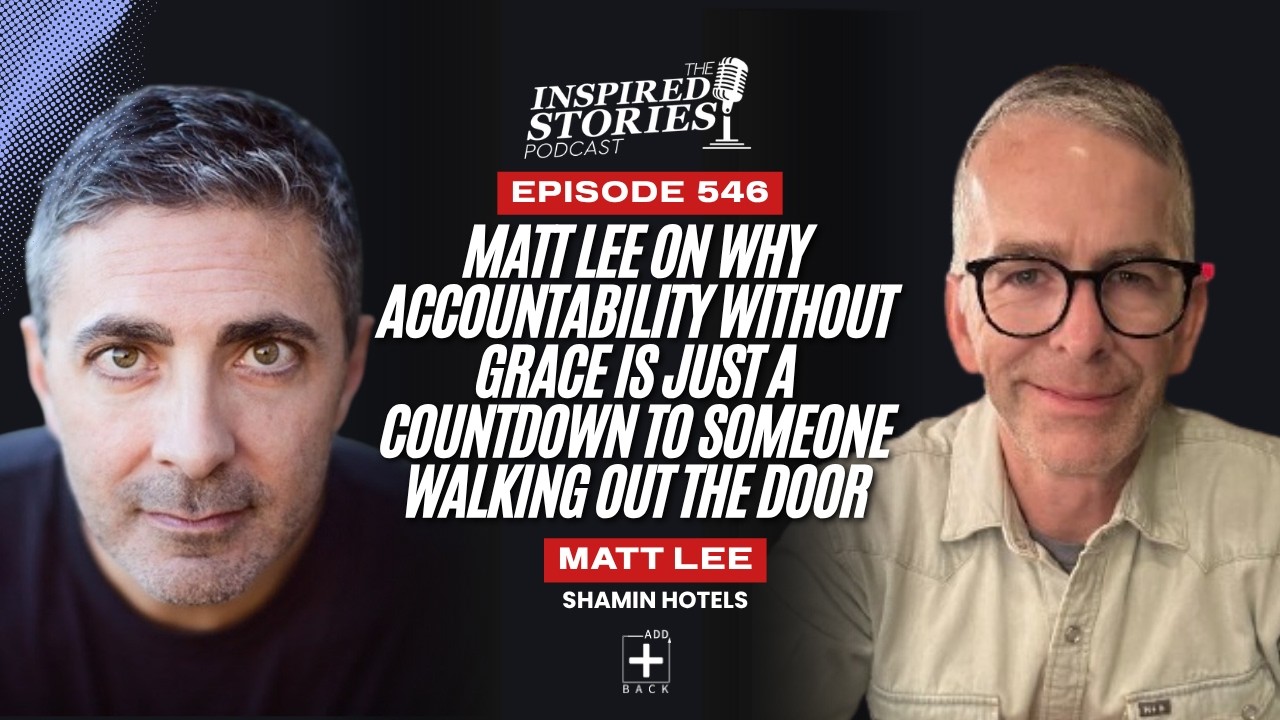
Matt Lee, HR Business Partner at Shamin Hotels, started washing dishes at $4.50 an hour in a Georgia steakhouse at 15, earned a culinary degree, spent 26 years opening restaurants from Atlanta to Columbus to New Hampshire before his wife’s corporate career gave him the opportunity to hang up the toque, take a free education through the University of Richmond’s tuition assistance program, and figure out that everything he had been doing in kitchens was HR work with a different name.
✨ Key Insights You’ll Learn:
Starting at $4.50 an hour in a steakhouse and what Brian Davis, a manager who believed in him, made possible
How Chris Brandt taught a young, hot-headed chef to channel his emotions instead of express them
Opening restaurants in Atlanta, Columbus, and New Hampshire while following his wife’s Anheuser-Busch career
The moment he realized he could get a free HR degree through the University of Richmond and what drew him to that field specifically
Why career changers struggle to get callbacks and how relationships, not resumes, got him his first HR role
The consulting versus compliance tension in HR and how Matt walks that line at 20-plus hotel properties
The front office manager who wouldn’t hold her team accountable — and why she was right to be worried
What accountability with grace actually looks like in practice and how it differs from accountability alone
Rolling out a new HRIS system across 60-plus properties and what the training should have looked like
Opus LMS: the AI-assisted learning management system that will let housekeepers map their own career pathway
🌟 Matt’s Key Mentors:
Brian Davis (First Manager, Georgia Steakhouse): Saw potential in a 15-year-old dishwasher, promoted him to grill cook, introduced him to hip hop, and modeled what it looks like to believe in someone
Chris Brandt (Executive Chef, Atlanta): Taught Matt to channel his emotions, pull people outside instead of confronting them on the line, and lead with curiosity instead of reaction
Shannon Flynn (HR Director, Shamin Hotels): Hired Matt into the role and has been his mentor as he continues building confidence in the HR space
👉 Don’t miss this conversation about what kitchens taught one HR professional that business school never could, why the hardest thing Matt has overcome is still a work in progress, and how accountability with grace is more than a philosophy — it’s a specific skill that looks very different from accountability alone.
Listen to the full episode here
Transcript
Anthony Codispoti: Welcome to another edition of the Inspired Stories podcast, where leaders share their experiences so we can learn from their successes and be inspired by how they've overcome adversity. As you listen today, let one idea shape what you do next. My name is Anthony Codispoti, and today's guests spent years running professional kitchens before making a sharp pivot into human resources. It's not the most obvious path, but the thread connecting both worlds is more intuitive than you might think. From culinary leadership to operations management to HR roles at companies like Wayforth and SBCox, each chapter built on the last. Eventually, the pull toward the people strategy became impossible to ignore. His name is Matt Lee. He's a human resources business partner at Chamin Hotels, the largest hotel owner in Virginia. with over 60 properties and 8,000 rooms across brands such as Hilton, Marriott, and Hyatt. Matt graduated magna cum laude from the University of Richmond with a degree in HR management and holds a Shurm CP certification. He now oversees HRIS integration, benefits, recruiting, and employee relations for a company that employs thousands across the state. This is a story about finding your way to the work you were always meant to do. even when the starting point looks nothing like the destination. But before we get into all that good stuff, today's episode is brought to you by my company, AddBack Benefits Agency. And you'll want to hear this because it's hurting almost every business you know. See, health insurance costs go up every single year and hotels are furious about it. They're paying more, claims are getting denied, employees are opting out because they can't afford it, and it hurts turnover and morale. It's one of the most maddening problems in running a business and everyone just seems to accept it. But you don't have to anymore. Now there's a program that gives employees unlimited access to doctors, therapists, and prescriptions with no co-pays or deductibles to meet. It works for your part-timers and you don't have to change your broker. But here's the part that really shocks most people. Our product actually increases your net profits. We recently helped a client add $900 per employee per year to their bottom line. Results vary, but imagine what could be done with the extra cash flow. Get your free consultation today at addbackbenefits.com. All right, back to our guest today, the HR business partner of Chameen Hotels, Matt Lee. Thanks for making the time to share your story today.
Matt Lee: Thank you.
Anthony Codispoti: So Matt, take me back to the beginning, to your first real job in a kitchen. What first drew you to culinary work in the first place?
Matt Lee: Yeah, great question. So I started out as a fifteen year old in a steakhouse washing dishes. and I remember we were talking about this last night, my starting rate was four fifty an hour. That was the at that time. but really for me All about the manager. I worked for this manager, Brian Davis. yeah.
Anthony Codispoti: Hey, sorry, Matt, to interrupt here. I'm having a little trouble with your audio. It seems like your mic is cutting in and out, and I don't want to get deep into the interview and have all that kind of glitching. I see this every now and then, sometimes with Bluetooth connected things. I don't know if maybe your computer's got a decent mic on it that we could try that instead.
Matt Lee: Okay. Yeah, sure. let me do that.
Anthony Codispoti: And then they've changed the interface recently. Again, I don't know if they allow you to change the audio or video inputs here, or if you need to leave the studio and then come back in to do it.
Matt Lee: I think that I can do it with the sp
Anthony Codispoti: Ahem.
Matt Lee: It's not letting me do the microphone, unfortunately.
Anthony Codispoti: Okay. What is it that you change to the speakers?
Matt Lee: I just changed the speakers, yes.
Anthony Codispoti: Okay, talk a little bit more because right now it's sounding okay.
Matt Lee: Okay. so my manager Brian Davis, he was an excellent manager. He understood where I was as a worker and gave me great inspiration to continue working and ended up promoting me to a a grill cook working on the line. How's that sound?
Anthony Codispoti: That's good. Yeah. So why don't we do that? We'll just edit out this kind of whole part. I'll ask the question again. We'll just start afresh. That work. All right, Matt. So take me back to the beginning of your first real job in a kitchen. What first drew you to culinary work in the first place?
Matt Lee: Okay. Okay. Sounds good. Yeah, great question. I started out washing dishes in a steakhouse in Snow Mountain, Georgia. and I remember s my starting rate there was four hundred four dollars and fifty cents an hour. So just taking you back to the beginning of my career. and I was still in high school and I really had a great work ethic that my dad taught me and ended up working for a manager named Brian Davis who not only taught me a lot about working in a kitchen, but taught me some great, you know, everyday life values and introduced me to hip hop as well. So it was a it was a great he was a great manager to work for.
Anthony Codispoti: That's quite a checklist. And which of those was most popular or most important to you? Where does the hip hop kind of rank in all of that?
Matt Lee: good question. I'm a huge music fan. so I still listen to hip hop, you know, in my daily mix. so, you know, it's definitely high on my list.
Anthony Codispoti: And so do credit Brian with sort of really showing you that culinary, that the kitchen work could be a career or did that come later?
Matt Lee: Yeah, I think that came later. you know, I worked for him for several years doing high volume steakhouses. He he ended up elevating me to a you know, a grill master, which was a really important job. and it wasn't until later that I realized really that I could make a career. But he was certainly somebody that, you know, gave me the right encouragement and and saw me for, you know, more than just the kids working in his kitchen, saw the potential in.
Anthony Codispoti: Yeah, you know, and I think that's so important as you're young and you're coming up through your career to have somebody that believes in you, that gives you a little bit of confidence when you don't have it already yourself. I'm curious how that's carried over for you now as you're in leadership roles.
Matt Lee: Yeah, it's huge for me. and it really plays, you know, a large part in how I I work with other managers and how I consult with them and and leading their teams. because I I truly believe you know, that e each person that you hire has potential. now whether the job that you hired f them for is the right job for them, you know, that begs the question. But I think that when people, you know, make mistakes and they make errors, I think it's really you know, first of all, a good idea to give them some grace. and secondly, just to understand, you know, why that happened and what the origin of the error is and s and see if if you can find a amic amicable you know, solution, you know, from both parties.
Anthony Codispoti: So your approach isn't to go in and assume that they were just being lazy or careless. It's quite different.
Matt Lee: No, there's there's certainly motivations that, you know, come from places that we may not understand, but it it takes that takes that moment of realization and and assuming, you know, positive intentions in in others that really can help you to be successful with your employer relations.
Anthony Codispoti: So you were kind of on this path in the kitchen doing culinary work, master grillman. And at some point you get the idea that maybe you want to start taking your career outside of the culinary arts. Where and when did this start?
Matt Lee: Yeah, so I had an idea that I was just gonna continue on in my career and and learn from, you know, whatever chefs I would go to work for. and my dad had a friend that was actually the culinary director at the the School of Culinary Arts in Atlanta, Georgia. And he had him over for dinner and and convinced me that it would be best if I, you know, s spent my money and got a culinary degree. and You know, I can't say enough about that opportunity. it was a two year associate's degree and you know, really created some great framework for me that I could base, you know, my, you know, learning opportunities off of as I continued my career. So and also met some great chefs and worked for some great instructors there who you know, saw potential in me and gave me the encouragement I needed as well.
Anthony Codispoti: Okay, so you got encouraged to go to this culinary secondary program, got an associate's degree, but you're still studying culinary, you're still in the kitchen. At what point did the idea or the opportunity come about to move into HR?
Matt Lee: Yeah. so this was about twenty six years later. So after I got my colony degree and yeah.
Anthony Codispoti: okay, hang on. We're skipping over a whole bit. I thought that happened closer to the time of the college degree. Okay, so let's spend a little bit more time talking about what you did in the culinary space. What were some of the key stops that you made along the way?
Matt Lee: Yeah, sure. Yeah, great. So I you know, I worked for some really great chefs in Atlanta. one guy in particular, Chris Brandt, and his chef Todd Mussman, both great guys. He, you know, Chris kind of took me under his wing a little bit. and he taught me a lot about working and managing people, and emotional intelligence, and about culinary work. and really provided me some great pathways there. He ended up elevating me to a sous chef position, which was one of my goals early on in my career. And I ended up achieving that, you know, earlier than expected, going from Saucier to Sous Chef. And then I met my now wife, then girlfriend, and she got a job working for Anheuser Busch. And working in the corporate world, she had to move in order to be successful. So I kind of followed her around her path and where she would go, I would meet somebody and and open up a restaurant essentially. So I opened up restaurants in Ohio, and then we moved to New Hampshire and opened up restaurants there, and then now down to Richmond and worked for I when I moved to Richmond we were had gotten married and we were starting to have kids, so I you know, wanted to find a a daytime job essentially that was more in line with my wife's career. so I essentially kinda hung up my toke, you know, stopped doing sort of the fine dining you know, sort of jobs and and th and found a job working at Al Tria in dining and then went to the University of Richmond and was opened up a cafe for them downtown, and was able to run that for them and while I was running realized I could get a free education through their tuition assistance program and I chose HR.
Anthony Codispoti: Okay, all right, so let's go back to Ohio because that's where I live. Where were you opening restaurants and what were they called?
Matt Lee: Okay. Okay. Right on. Yeah, so I opened up a restaurant. so I worked for a couple of chefs in Ohio and then I found these guys that were doing sort of bar restaurant type places. and now you would call it like a gastro pub. so they had the press grill was their original restaurant, and then they had there was one in town, and then yeah, in Columbus, yeah. So you know that?
Anthony Codispoti: So you were in Columbus. Yeah, that's where I live. yeah, yeah, yeah. The original press grill is just a stone's throw from my office here. Yeah.
Matt Lee: You know that restaurant? Yeah. Okay, cool. Very cool. And then I opened up the Rossi for them, which I don't know if that's still there.
Anthony Codispoti: It's undergone different ownership over the years, but I believe it is still there. Yeah, it was a great restaurant in its time.
Matt Lee: Okay. Yeah, I was the opening chef for there, for that restaurant. and I worked for Elena's. I don't know if you know Elena's. she was a great chef. She was Emerald Sioux chef for a while. so a lot New Orleans type influence. But the Rossi was great because as you know, the the produce there in Ohio is just amazing. the farming, so You know, they would go, you know, the farmer I got to know some great organic farmers and they would, you know, go do their farmers market and then they'd come to my back door with their leftovers and I'd buy it off of and create specials that evening and it was it was a lot of fun. I had a great time working there. So
Anthony Codispoti: That's fun. What and what was the time period that you were here?
Matt Lee: that's a good question. I I think it was two thousand I think it was like two thousand four to two thousand eight.
Anthony Codispoti: Okay. Fun times. Yeah. Yeah, it was a favorite date night spot for me. And I think Ron was the owner there at the time. Okay. All right. Stroll down memory lane. Thank you for that. But so you you take this job and you realize that you can get free college education get tuition paid for. And so you're like, Okay, I'm gonna go back to school. But what is it that pushed you into HR specific?
Matt Lee: Yeah. Yeah. cool. Yes, yes. Ron's great. Yeah, so you know, working as a manager and as a chef in kitchens, like you realize, you know, you need people, you know, to to to help you y you know, you can't operate without people and learning how people tick tick and learning what motivates them and learning how to, you know, work with them and hold them accountable and and develop them is is something that's always fascinated me. And it's something that, you know, you go I went through like parts of my career where I was like at one point in my career I thought I could just like, you know, be hard on people all the time. And then another part of my career I thought, you know, okay, I need to ease up on them. You know, so blending all those different emotions, you know, to figure out your management style. you know, but it it always fascinated me. And so while I was getting my education, going to school at night, Which took me about five years to get my education. I was able to apply everything I was learning, you know, at night, you know, to my day-to-day work. and one of the biggest things, one of the biggest things that I learned during that education was organizational psychology. so not just you know, hiring, you you know, you want to hire the right person for the role, but then there's things that you can do to help. not only the person fit the role, but the role to fit the person. and so like tweaking certain things, like in the kitchen I could use examples like, you know, instead of, you know, preparing the you know, the aeoli from scratch, maybe we would buy a good quality mayonnaise and blend it with the garlic and the herbs, you know, just to have a little bit less impact on the prep time. Or or things along those lines or things that, you know, I could do to take some things off of their plate to make their job, you know, easier and more palatable or things along those lines. So learning a lot about you know, organizational psychology was a big influence on me in my career.
Anthony Codispoti: I want to go back to one of the earlier mentors that you mentioned, and I forget the person's name, forgive me, but he taught you a lot about emotional intelligence. You tell us, Chris Brandt, what was he teaching you and how was he doing that? How was he delivering that message?
Matt Lee: Mm. Yeah. Chris Brandt. Yeah. Yeah, good question. So I mean, growing up as a young chef, you know, there's a lot of you know, when you watch T V and and and and you get different influences from different areas, you know, you you have different ideas of what it looks like to be a chef. So, you know, at times in my career I was less in charge of my emotions. so there were times in the kitchen where I would, you know, lash out or I would, you know say things and he would just kind of take me aside and you know, take me outside and say, Hey Matt, you know, when you reacted that way, I certainly understand why you reacted that way, but, you know, there's different ways that you can influence, you know, other people's behaviors without, you know, going to those emotions. And, you know, he sort of taught me to to channel those things in different ways. you know, like He was like, you know, if you need to take a breath and come outside, come outside and take a breath and then kind of firm formulate the way that you can talk to people in a way that they want to r be received or they want to receive it. so I learned a lot about that and made a lot of mistakes. but you know, I you know, here I am today.
Anthony Codispoti: Yeah, you know, and it sounds like not only was he teaching you through his words, but he was modeling the behavior that, you know, was good for you to see. Right. As you were lashing out at people, he didn't lash out at you to correct you. just, you know, kind of gently pulled you aside and showed you a different way to do things.
Matt Lee: Yeah. He recognized that, you know, I'm generally laid back in nature and he was like, you know, I I think you can really use that to your advantage. And and I have used that to my advantage throughout my career.
Anthony Codispoti: So after you graduate, it looks like you didn't head back into the restaurant world. You worked your way through some different companies at Waferth, which handles moving and downsizing services, SB Cox, a mechanical contractor. Did you feel, I don't know, a little forlorn? Were you missing the restaurant space, or was it just fun and interesting for you to be able to take these new skills and put them into play?
Matt Lee: Yeah, great question. So for sure, you know, when I got my career or when I got my degree in HR, I really wanted to end up back in hospitality. and so I think that in a lot of ways, Wayforth and SB Cox were were somewhat stepping stones, but also great learning opportunities. you know, when you when you career change, it's really difficult to find a job because you know, the whole time like during COVID I was you know, applying for positions in HR but not getting any callbacks, you know, and I was matching up my, you know, applicable skills that I I had, you know, when I was working with the chef, because I was doing a lot of things that are that I do now, but not getting any calls. So it really is about relationships and your connections, right? and so I connected with somebody that was able to land me my first job at Wayforth in And I was a a recruiter. I started out as a recruiter, which is a great entry point. and I learned a lot of great skills, you know, a lot of great time management, a lot of you know, skills with regards to, you know, office work that I hadn't been used to before. and and learned, and then from there, the CFO that was working at Wayforth, took the job at CFO at SB Cox and he invited me to come over there. and so much more stable financially there and really a different, you know, aspect and learning opportunity to work with, you know, contractors and blue collar workers and understanding their needs and how they can be supported.
Anthony Codispoti: And so what was the workforce like at WayForth as opposed to SB Cox? Were they both blue collar?
Matt Lee: So Wayforth was more we were hiring, you know, we had our office personnel that I worked with, so you know, our corporate office, but then the people that were hiring, the mer movers and the packers, they were more, you know, hourly workforce. and so very similar, not much different than what I was used to working with and and used to hiring. and a lot of similarities really with that workforce and with hospitality because we were creating a a service for seniors where we were packing them and helping them move into senior homes. And so there was a lot of you know care that went into it, a lot of relationship building. you know, so it was a different sort of aspect. So I that was another way I was able to show that, you know, working in hospitality kind of informed what I was doing at Wayforth.
Anthony Codispoti: You know, you make the point that so much of what happens in our career path is about relationships, right? And you just need to get your foot in the door with HR. You were having a hard time doing that because people look at your resume and they're like, this guy doesn't have an HR track to him, right? He's a hospitality guy. He doesn't fit the mold of what we're thinking. Somebody gave you a shot. And then once you were able to prove yourself, then that person invited you to
Matt Lee: Yeah.
Anthony Codispoti: take the next step with them as they moved into a new role. I hear people talk about hospitality in kind of a similar way, you whether it's restaurants, whether it's hotels, it's an environment where regardless of what your background is, if you're willing to put in the work, the door is open for you and the opportunities to advance are there. I see you nodding your head. Say more about your experience with that.
Matt Lee: Yeah, for sure. you know, I think fundamentally, I think for people, you know, coming into hospitality, it's it's definitely a huge opportunity and you can build a your a career there. but fundamentally you have to, you know, in your heart or in your soul, you know, it's kind of like I kinda liken it to, you know, when you start exercising, you know, at first it's really a a a challenge and And it's hard to get used to it and it's hard to motivate yourself to do it. But after a while you do it and it's in your soul, right? You can't you can't live like I can't go a a few weeks without, you know, getting exercise in because I just don't feel right mentally or physically. so like with hospitality, you have to have in your heart and your soul that you want to help people. and I think you you get a lot of satisfaction with and from you know, creating great experiences for them. whether that be within your interaction when they're checking in at the front desk, whether that be, you know, the care that you took to clean their room properly, or you know, just creating a a great, you know, you know, hospitable experience. You know, if we find people that have that and are enthusiastic about that and are motivated to help people. you know the rest, you know, the path is there. Like we we can help you succeed. There's great learning opportunities, there's great training opportunities. and you know, especially with Shamin, with the amount of hotels that we have in the area and and our growth potential and and how much we're building and growing, like there there's so much opportunity.
Anthony Codispoti: So tell us how the opportunity for you to join Sheme and Kim about that.
Matt Lee: Yeah, so I'll be honest, the the opportunity at S B Cox was not the entirely the best fit for me. I did leave on good note, you know, Todd, the gentleman that invited me to work there with him. he wrote a letter of recommendation for me, but it was just sort of decided that it just wasn't the right fit. I think I was a little too progressive for the for the company. you know, I wanted to move things sort of in a in more of a digital, you know, direction. And that wasn't right for that workforce at that time. so it wasn't
Anthony Codispoti: Digital meaning like getting rid of like old paper based systems. Okay.
Matt Lee: Yeah. Yeah. so I think you know, just their philosophies and how they operated was was not, you know, as progressive. They were interested in just keeping things, you know, going. and I was I I like I like sort of a I like problem solving, I like finding solutions, I like helping to make positive change. so the the The opportunity at Shamin just came through an application process. and I met Shannon Flynn during the interview and I was really excited to talk to her. She had a background in in restaurants as well. and she's been great to work for, a really good mentor as I as I've stepped and in furthering the growth in in my career in HR.
Anthony Codispoti: And so what role did you come in as and what's your role now?
Matt Lee: Yeah, so came in as an associate experience specialist. so when it was a it was a created role where I was responsible for you know helping to provide a a great associate experience. So I was doing a lot of employee relations work, working, you know, with the managers and with the associates divide, you know, great experiences.
Anthony Codispoti: And what is that? and describe your role to us now.
Matt Lee: So they so we, you know, have had some a little bit of turnover on the team and so opportunities to really sort of focus how we were deploying ourselves in the HR space was to create, you know, sort of three HR business partners and divide them up between, you know, a certain amount of hotels. So I was elevated into an HR business partner role. meaning I can I work to support about twenty different hotels in the area. and then also we have one hotel in New York and one in Florida and and some in Maryland that I supported as well. and my role you know, is sort of all encompassing in HR. So I help out with with benefits, I help out with recruiting, I help with employee relations. we we do you know sort of you know and then with training as well, there's a lot of initiatives around training, but it's sort of all encompassing, but I partner with each manager at each location and help provide them the tools and the resources they can they can use to be successful with you know managing their operations and their teams.
Anthony Codispoti: It's an interesting structure I'm not sure that I've come across before. I mean, it's sort of like regionally centralized, but not fully centralized. Had you seen this kind of model before?
Matt Lee: I have I've worked you know with you know as a manager worked with HR business partners and but I've never seen it structured quite in a way that we are structured here at Chamin now.
Anthony Codispoti: And what do you think the advantage is to the structure that you guys use?
Matt Lee: Well, I think the advantage is that we're able to provide direct support. you know, with the amount of hotels that I support, I can, you know, work with I can go to see everybody on a monthly basis and sort of just sort of work with them and give them, you know, face to face support on the on the needs that they, you know, on what they need to be successful. So every time I go to see a manager, there's, you know, certain you know, priorities that we work on together. I also, you know, there's some initiatives that we've you know established, like we've created initiatives around interviewing, like streamlining our interview process, you know, and some you know other you know training initiatives that we work on. So with when each of us go to visit our managers, we can, you know, help to reinforce initiatives that have have come across our plates. you know, whether it's you know, working with them and their teams on reinforcing our our our values as a company and you know recognition of their associates to just helping support with anything they might need to be successful. It's somewhat of a a consulting role as well. so it's really helped me to develop my you know, and I'm still continuing to develop my consulting skills and my coaching skills.
Anthony Codispoti: Do you think that the each of the general managers at the hotels as well as the frontline employees Do they typically view you as a consultant or sometimes? I know there's a little bit of this friction where people see HR as This is somebody who's you know out to get me for you know some little thing that I did wrong
Matt Lee: Yeah, that's a that's a tough balance that that I have to ride. and it's really, you know, I think that there is there's compliance involved you know, with my position. Like I have to make sure that, you know, they're doing their I nines properly. I have to make sure that they're following, you know, labor laws. so there's a certain, you know, sort of There's I mean, there's a certain, you know, directive that comes from my position. but and so I have to learn, you know, I have to approach it in a way that feels supportive to them. if that makes sense. So it's not me, you know, coming down on them for being out of compliance. It's educating them on how they can be compliant and supporting them with becoming compliant. so with regards to I nines, for instance, like, okay, I recognize that you're you know, you have several associates out of compliance and I notice that, you know, this these are the the reasons maybe you're not taking this step in your onboarding process, you know, and helping, you know, to vi to provide them the tools and resources so that they can, you know, get into the swing of things. So yeah, so I think that's you know how I try to approach you know my consulting with the teams so they feel supported.
Anthony Codispoti: So you like to take a consulting, a coaching approach in the work that you do, Matt. How else would you describe your management style or philosophy?
Matt Lee: good question. I'm sorry, you you got a little bit fuzzy there, so I I just made a switch up. but you can still hear me okay? Yeah, so I think, you know, it c it kind of depends on the the the manager and the and the level of management that they're at. so like I have some managers that are brand new, but some of them have come with a lot of experience. So with managers along those lines, I'm doing a lot of work to educate them on Shamin's processes and working, you know, specifically with our HRIS system, which you know, is is a really good system, but it it requires some some practice. but then with other managers, you know, that I know that are are strong or tenured in their position, you know, it may it may I may have the approach of just asking questions, you know, and just getting an understanding of where they are. and and when I have, you know, an understanding of of where they are and how they operate, you know, I can sort of add in sort of you know tips here and there but add it as an open-ended suggestion and even sometimes when I ask questions you know the really a really you know tenured managers will take those questions to sort of perk up why you know why aren't aren't I doing that? You know so sometimes you don't even have to you know say what it is that you want them to do. Sometimes just by asking the question it can lead them in that direction.
Anthony Codispoti: You mentioned one of the things that you've done is help to introduce some streamlined interview processes. Tell us more about that.
Matt Lee: Yeah, so PACOM, the HRIS system that we use is is a really good system and it provides a a lot of there's a lot of software in there that's available that you can use to help be successful with different processes. and so one of them is their app cat tracking sess system. And so what we've done is you know, for each position that we have across the board, we've created you know, a phone screen evaluation question template that we use to to get a baseline approach for each candidate. And and we really encourage everyone to use a phone screen to just to set up that initial conversation so they can gain an understanding of, you know, of the person and where they are and and their approach to hospitality. and then also help to, you know, at the in the same token you can help to to sort of sell the position or sell them on the opportunity so that they get excited about it and they want to show up for the next interview. And then from there we created interview templates for each position that that apply directly to the role and to the job description. So, you know, if it's a a breakfast attendant, we're asking specific questions about you know, how they keep themselves organized when they have a short amount of time to put out, you know, a large amount of food. or, you know, what they do to prepare themselves or, you know, how they handle, you know, sanitation and and things along those lines. Or if it's front desk, you know, how they manage their time when they're on the phone and somebody else is in front of them, things along those lines. So behavioral and functional questions that apply directly to each position. And then at the bottom of each evaluation template, we can we've provided the managers with an opportunity to rate them on their interview. So if it's job fit, culture fit, communication skills, problem solving, scale of one to five. And that way they can sort of you know the the hope there is that they can put aside any biases that they had going into or after leaving the interview and really evaluate them on how they answered the questions and and how they may fit with the the job description.
Anthony Codispoti: You said something interesting. Part of what you're trying to do in that interview process is get them excited about the role. So they'll come back for that next interview. So they'll want to take the job. And that's such a tough thing in your industry, right? There's a ton of turnover. You know, people schedule interviews, they don't show up. What is it that you're doing to build that excitement? How are you dangling the proverbial carrot in front of
Matt Lee: Yeah, so I think you know, one one thing again, just to come back to Shamin is the is the amount of growth that's possible with us. we do also provide you know, a good opportunity not only for a good you know hourly rate, but opportunities for advancement. So it is true that you know, we do promote from within, you know, constantly. and if you come in and do a great job, you will have opportunity for advancement. and so that's a that's a big thing for people. They wanna come somewhere, they wanna work somewhere where they can grow. you know, even if they're coming in as a housekeeper, you know, having those levels where they can move into housekeeping supervisor or ex or executive housekeeper housekeeper, you know, is really important for people. And then also the training, right? each brand that we work with, Marriott, Hyatt, Hilton, they all have brand training. And it all comes with pathways for advancement. and so having all that opportunity at their fingerprints or on their phones in order to, you know, move up in advance is is huge. So that's one way we sell it. and we also sell it you know, like for instance, you know, on our our our management style, you know, You know, we really provide, you know, inclusive environments. we provide, you know, opportunities to be recognized and and to be successful. so I think that means a lot to people too. And they want to work in a place that they can be successful.
Anthony Codispoti: That makes a lot of sense. Like over 60 properties, 8000 rooms, largest hotel owner in Virginia, all kinds of opportunities. And like you referenced, you're carrying multiple flags, right? There's multiple brands. Do you see folks advance within Chameen, but cross over from one flag to another, one hotel brand to another?
Matt Lee: See that. and it's it's really good to see. Sometimes it can be difficult. and to your point, we've had some difficulty where we've hired people that have come from a Hilton to a Marriott or vice versa. and the software systems can be a challenge. and so you want to be able to evaluate that their level of say software savviness you know moving because Sometimes we found that it hasn't been successful and then we have to make, you know, a change or maybe move them back into the same brand or or what have you. Because being specific to that brand does come, you know, with some knowledge and you know, some learning that that does make you successful.
Anthony Codispoti: I want to hear more about Chameen Cares, this emergency fund that you have for your associates. Can you tell us where the idea came from and what it does?
Matt Lee: Yeah, it's a good question. so the the owners, PC Amin, his wife Pune, Neil and his wife Amishi, they really do care about their associates. and the f you know throughout, you know, our our you know, our tenure and working with associates, there's certain, you know, problems that arise, like for instance, recently the earthquakes in Venezuela you know displaced you know we have Venezuelans working for us through throughout all of our brands. you know one gentleman who's our our food and beverage director in in Florida lost some family members. and so y we use that Shamin cares to to help support those individuals who you know have those particular needs for support. And there's been other opportunities such as that, but it's somewhat of a I I I'll put it mildly, there's a little bit of an application process that goes into it. but you know and then it's it's responded to, you know, with care essentially. and
Anthony Codispoti: And so what does that look like in a practical sense? Are you giving them cash? Are you giving them a plane ticket so they can go see their family?
Matt Lee: Yeah, it depends. And honestly, it's really it's really up to Neil and his family on how they, you know, apply you know, their their funding to each each situation, whatever it may be. it's so you know, the the really cool thing about working for Shamin is it is we're a family run business and and they do operate in that manner. we operate very lean. And we you know, there's definitely a a sense of of family here. And and you you could ask any s any associate in the company and they would they would tell you the same thing. So and you know, like they they all they'll also do things like when the gas prices went up, they would send out, you know, additional bonuses to hourly associates to cover the additional gas prices. So things along those lines. So they really do care about their associates and and will distribute help when needed.
Anthony Codispoti: I like that last example that you gave, how they're giving out these sort of gift card or the bonuses to help make up for that difference and, you know, the increased gas prices. Cause that was exactly going to be my next question is how do you go about building a culture that is very family oriented, that feels like a family when you are such a big company.
Matt Lee: Yeah. it's it's tough, but within I think when we look at each individual hotel and each individual operator, when you when you impart that culture and that sense of caring to them, they can then impart those same values to their team and and operate accordingly. So I think when you when you look at us across the board, we are large, but then when you break it down to each individual hotel, we're able to operate, you know, each individual business, you know, within our values. and I love that we are a values based company. you know, we value teamwork, ownership and passionate service. so I think carrying those values, you know, into each and every one of our organization. is how we do it. And I think also the fact that, you know, with our HR business partnership, we're able to get to each hotel so we're able to help you know, impart those values and and carry on you know that support through our interactions you know from you know the corporate to our individual teams.
Anthony Codispoti: So I want to go back to HRIS, Human Resource Information Systems that you guys use. You've talked about this a little bit, and I believe that one of the things you were tasked with when you joined Shamin was to spearhead the integration or the switch over to Paycom. Am I correct? Yeah. And why was that change necessary? Why did you guys feel like you needed to make a switch, and why specifically did you choose Paycom?
Matt Lee: Yeah, yeah, very correct. Yep. Yeah, great question. So we were working with Dominion Payroll, which is a local company, a great company, run by some great people with great customer service. but as we begin began to scale, there was some difficulties with how that software operates and how we operate as a company. Whereas we, you know, tend to interchange our associates, meaning, you know. If you work at the Renaissance, you know, you may be called over to work at the landing as well. So we're having difficult difficulty with that interchangeability. and also the way that we're you know, applying, you know, everything under one blanket. Like with Dominion Payroll, they have different software outlets, but they were definitely connected but separate, if that makes sense. so with Paycom,
Anthony Codispoti: Because each of your individual locations probably has its own tax ID number. And so you need to be able to take one employee from tax ID number one and be able to have them work under tax ID number two, but then still get that employee their correct paycheck.
Matt Lee: Yes. Yeah, bingo. That's right. So moving over to Paycom, we were able to get to a system that was number one at at a price that we were looking to you know, to to be charged. so they were they were very competitive with their pricing structure, which was great for us. and also they have everything under one roof, right? So we we can do everything from y for the emplo full employee life cycle right there. you know, from the applicant tracking system to performance management to benefits, et cetera, all all there under one roof. so that was really great for us. and yeah, it's it's been a a really good system. I think we're we're able to use it to be successful within our our you know the the first year was I I'd say pretty rough but the second year we're definitely more in stride now. and you know and I've become quite an expert at it so I'm able to to really help my managers be successful with the program as well.
Anthony Codispoti: Well, in that first year, growing pains that you described pretty typical when making a big platform change like that. As you look back, what's something now that you wish you knew going into that process that you understand today?
Matt Lee: Yeah, I think you know, we've approached the training from several different ways, you know, whether it's email communication, whether it's in house training, whether it's Zoom training or you know, online training. And really when it comes down to it, it's all about more individual based training. so I've had you know, we've you know, people have different levels of understanding of the program. but when I go to visit them, you know, I'm really able to assist and dig in with things that they're having difficulty with and help them become, you know, experts with the program. So I think I would say, you know, I think I wouldn't take anything away for how we introduced it, but I think our follow up training maybe should should have been a little bit more you know, smaller groups regionally based. and and then from there I think we probably could have created some you know regional experts to take some of the load off of the HR team you know in each region and and help you know support the rest of the teams accordingly.
Anthony Codispoti: So if you had it to do over again, if I'm hearing you correctly, maybe you wouldn't have rolled it out sort of across the entire organization all at once, but kind of done it in some pockets first.
Matt Lee: Yeah, I think it was necessary to roll it out all at once. but I think what I'm speaking about is how we did how we deployed the training and how people were able to process the training because different people learn in different ways. And I I think having more of a you know face to face, smaller group, you know, training, where they're following along with you and learning processes and that kind of thing w has been really effective. So I think if we had gotten to that quicker, I think maybe we would have had a little bit more success with the interaction in integration.
Anthony Codispoti: Understood. Got it. Just sort of chunk out the training part of it a little bit more. You've worked in kitchens. You've worked in HR for moving company, mechanical contractor. Now back in the hospitality space, a little bit of a different role in hotels. I'm curious if there's something that you've learned about managing people that other HR professionals might be surprised to hear.
Matt Lee: Yeah, yeah. Yeah. I think it all goes back to you know, accountability with grace. so I I think accountability is is hugely important. I think that when we lose accountability and I don't think this is different. This part is not different from HR people. All HR wants to hold people accountable. I think it's really important to hold people accountable. I think when you lose accountability in management, then not only do you know bad things start to happen, but people, you know, I think what a lot of managers don't understand is that when they do hold people accountable, and they approach it with care and with a sense of, hey, I see that this is happening, but I know that you're better than that, meaning, you know, I know that you're a good person, but some things are going sideways. But I I just want to help you get back on the right track. When it's approached with with grace and with care, you can do a lot to to develop people. and I think a lot of times we're quick to just hold people accountable and hold them accountable and you know, eventually they you know are accountable out the door. Whereas if we begin to show a little bit more grace and especially trying to find what the the origins are of the the problem, then I think that we can be a lot more successful with with retention and with and but still holding people accountable.
Anthony Codispoti: Let's do this, Matt. I'd be curious. Let's pick like a specific example, something that actually happened with an employee. Walk me through quickly what the wrong way to do this is. Maybe the way that Matt used to do this back when you were first starting out in the kitchens and you were a little bit more energized in your responses. And then walk me through what it looks like to hold somebody accountable with grace. Let me see the differences. Help us contrast.
Matt Lee: Yeah. I'm trying to think of an example. So I I thought of a a a recent example. let me think of back in my kitchen days. you know you know, there would be times, you know, when hm. Yeah, I think, you know, I just sort of giving a general idea, say if somebody, you know, was just not following through on their on their processes or I was finding things, you know, with the kitchen, it's really easy to micromanage people because everything has to be particular, especially when you're doing fine dining. Like if somebody doesn't cut something a certain way or somebody doesn't, you know, follow through on a task or, you know, something along those lines, you know, a whole dish could be you know, out the door or your your service could be affected. so when people, you know, start to, you know, like I remember I had one sous chef who was just starting to get, you know, an attitude about, you know, doing production. and I ended up, you know ended up just like I ended up the guy ended up f getting fired, essentially because he wasn't producing correctly. and But what I should have realized is that the reason that he started getting an attitude was because of the way I was coming at him. I wasn't coming at him with an approach that, hey Mark, I know that you're capable of doing better, but I've noticed recently, you know, when you cut your beef tender loin that I don't know, your your cuts are not quite in line with our scale. you know, and But instead of that, I would maybe come at him like, you know, what is what are you doing? You know, why are you why are you cutting stakes this way? And he was starting to get an attitude because he felt like he probably felt like I lost faith faith in him, you know. and so I eventually the relationship didn't work out. Because when it comes down to it, it's all about relationships, right? and so, you know, I take responsibility for that because I didn't approach him in a way that was productive. but I think now, you know, and you know, I was working with a manager the other day who it was a new manager coming into a hotel that's completely in disarray, their their scores are down and so on. And he's ready to come in and just kind of clean house, right? and his front office manager was a person that he really wants to go after and he had a whole sheet of things that she was not doing correctly. And what it came down to was that she wasn't holding her team accountable. and so we I we had a meeting. I was the new manager, the front office manager that had been there for 19 years, and and myself, and we started talking through that accountability, and and what it came down to was that she was concerned that she was gonna lose these people, right? And when she loses people, that's gonna affect her life, right? Because she has to fill those shifts. So we always have to have somebody there. So If somebody leaves, then she's working that shift. And I said and so we started approaching that, we started talking about that. Whereas, you know, when we approach people, and we we talked, you know, just exactly as I explained to you, like when you know, it's really important, first of all, to hold people accountable. If we don't hold them accountable, then things will never improve. they're cuss
Anthony Codispoti: But it sounds like maybe one of the keys here is showing them that you still have faith in them. Like I've heard you use the line multiple times that I know that you're capable of better, dot, dot,
Matt Lee: Yes. Right. Yeah. And so that's where that's where we got to with her. And, you know, w what I what I encouraged her to do was, you know, to continue to hold them accountable, but then when she was ready, you know, at some point we have to start, you know, documenting their performance, right? Because, you know, you can talk sometimes you can talk to people, you can talk to people, you can talk to people, but they don't actually fully understand that it's serious until you start putting things on paper. and so I talked to her about, you know, when you're ready to do that, you know, that can be difficult. but I can help you through that process and I'm happy to come sit with you and work with them so that they fully understand that that you want to help move the hotel forward. And without them, they can't you can't move forward. but in order for it to move forward, they have to get in line with what you know what the requirements are for the role. and I encouraged her, you know, by saying that, you know. Throughout my career I've had people that were difficult, and I had to hold them accountable. and they ended up s being some of the people that, you know, wrote me a note of appreciation or gave me a hug, you know, when they left or or whatever. 'cause they appreciated that, you know, I I gave them the support they needed to be successful.
Anthony Codispoti: I think that's a great story there because it talks through, you know, this manager who was, you know, about to get attacked for the job that she was doing or not doing very well. It really came down to the fact that she didn't, you know, she was about to be held accountable in a way that maybe wasn't really constructive. And she herself lacked that skill, that knowledge on how to hold her team accountable effectively. And so it sounds like you were sort of able to help sort of like a cascading chain here. Right? Able to help that person who is about ready to go after the general manager and then in turn being able to help the general manager develop themselves and their approach to account.
Matt Lee: Yeah, that's right.
Anthony Codispoti: Are there any upcoming or maybe in process projects that you're excited about in the HR realm of what you're doing?
Matt Lee: Yeah, so we're we're getting ready to roll out. we've just signed up for a a training, an LMS, a learning management system called Opus, which is an online, very AI generated, assisted, I shouldn't say generated, but assisted learning management program where we're able to tie in all the training that is exists across the different platforms. and create career pathways for people. and so essentially like if you are a a housekeeper and you want to move up to a executive housekeeper, these are some training systems that you need to accomplish to get there. And so we're able to we're able to focus in on this because what we really want to do, you know, in in the hotel world, it's all about guest satisfaction. and everything is based on scores, right? So, which is based on those surveys. When you go stay at a hotel, you fill out a survey, and if it's, you know, four out of five, that's great for us. If it's two out of five, that's not good for us. And that affects, you know, the the manager, the performance of the hotel, and how that all interacts. So what we really want to drive, and the reason I'm excited about this is because as a business partner, you know, I'm a business partner, right? And so when you're in HR, you can do a lot of things that help the business. and help people, but it's hard to really put you know, it's hard to really I don't know what word I'm looking for, but see, you know, the how that pays forward. But here, I think that we'll be able to, when we start beginning working with this training program and get people the tools they need to be successful in their roles, I think that we'll be able to really show how our team has impacted the business.
Anthony Codispoti: I love that you called out Opus in particular. Rachel, the CEO, was a guest on the show several months ago. Great interview for folks who are interested in LMS, the learning management systems. It's a great episode to go back and check out. Matt, I want to switch gears on you a little bit. And I'd like to hear from you, what are the hardest things that you've had to overcome and what going through that taught you?
Matt Lee: Cool. Yeah. So I think you know, when I when I moved from being a cook a chef to into HR, you know, you kinda when you change careers, it's it's it's a difficult thing and you don't have, you know, I had the education, I had the training, but I wasn't confident in my ability to be an HR manager. and so and I think throughout, you know, my life and throughout my career, you know, I've always struggled with my with my level of confidence. and so one, you know, and I've but I've always like been pretty resilient as far as my efforts and I never I don't I don't back down. I I don't give up. I just keep moving forward. So I think you know, going into the HR role, you know, my level of confidence wasn't where it needed to be and I've been able to build on that and I'm still building on it. but that you know sort of played into you know how I you know interacted with my teammates, CEO, and so on. And you know I've become a lot more confident in my abilities. And I'm realizing now that, you know, even though I wasn't confident about certain things. I should have been because I had the skills there. I just didn't realize it.
Anthony Codispoti: What do you think helps you to obtain that confidence? Was it just more repetitions?
Matt Lee: Yeah, repetitions, success with my interactions and with my positions that I've held, and just encouragement and people believing in me.
Anthony Codispoti: Which goes back to, you know, it's a common thread that we've been talking about here, you know, especially when you're talking about keeping somebody accountable. Like when you want to have that conversation with them, they need to know that you believe in them, right? That seems like a really key part of your strategy is letting them know that you've got faith in them. You know that they've got it inside of them. And it helps, I think, that you have gone through and struggled with this own thought process in the past yourself because you
Matt Lee: Yeah.
Anthony Codispoti: So you understand what it feels like to be in a role and feel like maybe I'm not up to this. You just need somebody to give you that confidence to believe in you. How are you guys using AI in your work today?
Matt Lee: Mm-hmm. That's right. Yeah, good question. I think for me biggest things for me in my day to day work is so I will you know create
Anthony Codispoti: Sorry, you cut out just for a second there, Matt. How is it that you're using it in your day-to-day work?
Matt Lee: email communication. with you know my supervisor with my colleagues. you know I think AI is really great with email communications because I can put my thought and ideas into AI and it can turn around something that is more palatable, more professional and and and more you know feasible for you know risk you know to be received. And so I used to spend probably way too much time writing emails, especially difficult ones, you know, that had to do with, you know, a serious nature or had to do with a policy or something along those lines. And now I'm able to use the resources you know, with the policies, with my own thoughts, and use AI to really you know centralize and put them into a good space that Where it can be delivered and received properly.
Anthony Codispoti: As you think about the work that you're doing today, Matt, what is it that you most want to be remembered for?
Matt Lee: Yeah. Remed for, you know, how I've supported managers and organizations to be successful and and also team members. and you know, I would love to, you know, really, you know, when I came on to this position, Shannon, my supervisor, you know, she talked about, you know, turning the ship. And she's like, you know, it's gonna be a very slow turn. but you know, we can see progress with how, you know, the the organization is moving. So I'd love to see some things like, you know, I reduced turnover by, you know, 30% this year and thirty percent the next year. So that would be huge. I'd I'd love to see retention. I'd love to see, you know, continued growth and you know, promotions. And I'd love to see I'd love for our organization to get to where, you know, we're we're hiring successfully, we're retaining successfully, and we're promoting the right people into the right roles.
Anthony Codispoti: Do you think 30 % year over year reduction in turnover is within the realm of possibility? Wow, that'd be impressive.
Matt Lee: I do, yeah. Yeah. I mean we're as you as you alluded to earlier in the hospitality industry, we're we're not in a in a great space. I can say that openly and honestly. but I think you know, maybe thirty percent is is high, but I think that we can make some great strides. and I think continuing to work with managers on you know, accountability and grace I think will get us there.
Anthony Codispoti: Love it. Just one more question for you today, Matt. But before I ask it, I want to do three quick things for the audience. First of all, if you want to get in touch with Matt, here's his email address. Matt.Lee, L E E at Shamin Hotels dot com. And that's spelled S H A I N S H A I N Hotels dot com. That's also where you can go to learn more about the company and the branch. Shamin Hotels dot com will also have a link to his LinkedIn page in the show notes for you. And if you're enjoying the show today, please take a moment to subscribe wherever you're listening. See, it also sends a signal that helps others discover our podcast. So thank you for taking a quick moment to do that right now. And as a reminder, you can finally get your hotel employees access to therapists, doctors, and prescription meds that counterintuitively actually increases your company's net profit starting in the very first month. There's no co-pays, no deductibles, a lot of part-timers qualify, and you can keep your broker. Learn more about how to have happier employees and a stronger bottom line at addbackbenefits.com. So last question for you today, Matt, a year from now, what is one very specific thing that you hope to be selling?
Matt Lee: I think I think probably the the lower turnover rate. I think that's what I want to celebrate. Absolutely.
Anthony Codispoti: How will you celebrate? What will that look like?
Matt Lee: definite recognition across the board. I think we would likely celebrate this, you know, at our our regional sales and operations conference that we do every year. or maybe it would be celebrated at one of our other celebrations, but across the team for sure.
Anthony Codispoti: Love it. Matt Lee from Chamin Hotels, I want to be the first to thank you for sharing both your time and your story with us today. Really appreciate you being here.
Matt Lee: Yeah, it was a lot of fun. I really appreciate you as well.
Anthony Codispoti: Folks, that's a wrap on another episode of the Inspired Stories podcast. Thanks for learning with us. And if one thing stood out, put that into action today.