Listen to the full episode here
Transcript
Anthony Codispoti (00:00)
Welcome to another edition of the Inspired Stories Podcast, where leaders share their experiences so we can learn from their successes and be inspired by how they've overcome adversity. As you listen today, let one idea shape what you do next.
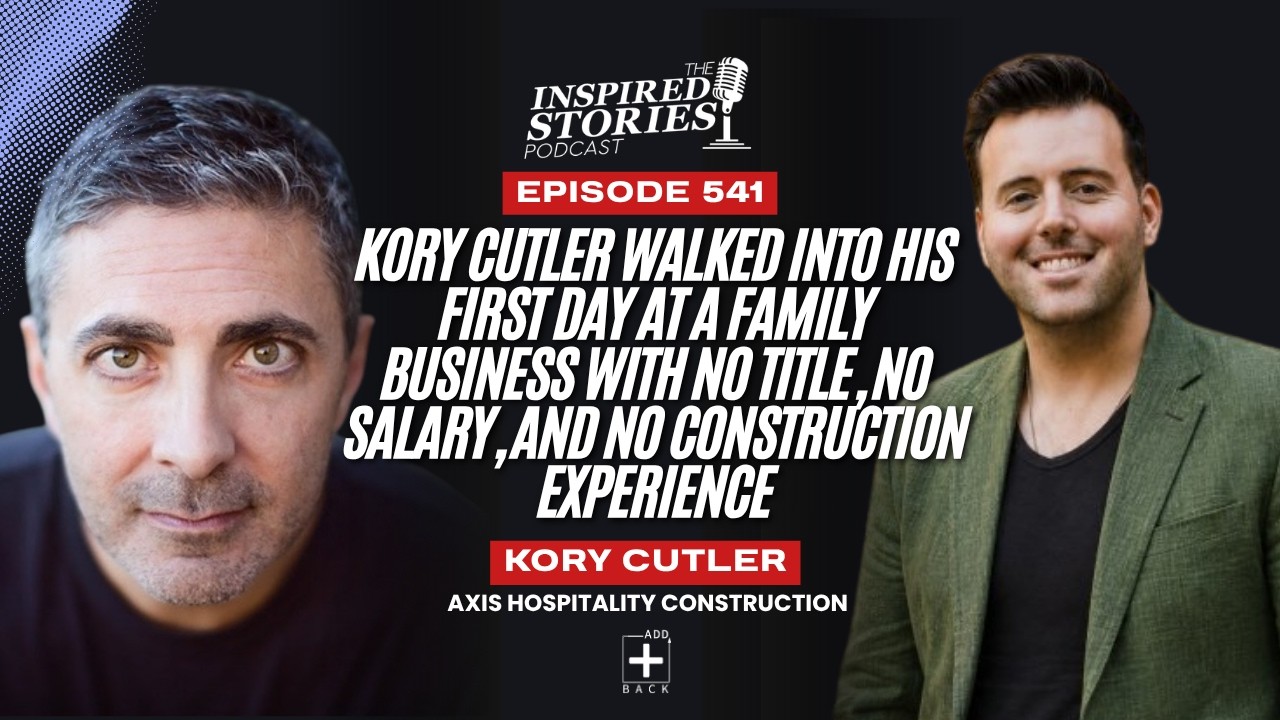
My name is Anthony Coduspodi, and today's guest walked into his first day on the job with no title, no negotiated salary, and construction experience that began and ended with changing a light bulb. When he asked his father-in-law what he was supposed to do, the answer was simply, I don't know. Today, he runs a national construction company operating in 36 states. He spent his 20s chasing sales incentive trips inside one of the largest healthcare companies in the country.
Then walked away from a healthy six-figure income to join a family business that had passed from son-in-law to son-in-law. The move meant learning a trade from the ground up, while the people who built the company watched to see if he'd fit. His name is Corey Cutler, CEO of Access Hospitality Construction, a Columbus, Ohio-based firm that renovates hotels for brands like Marriott and Hilton across 36 states.
All while guests are still sleeping in the rooms. He and his wife Blair represent the third generation of a family business that began when her grandfather moved from Brooklyn to build a post office in Columbus. Under Corey's leadership, the company has tripled in size in three years, and he now hosts the Pip podcast, Partners in Progress, which we'll hear more about. But before we get into all that good stuff, today's episode is brought to you by my company, Ad Back Benefits Agency.
And you'll want to hear this because it's hurting almost every business you know. Health insurance costs go up every single year, and hotels are furious about it. They're paying more, claims are getting denied, employees are opting out because they can't afford it, and it hurts turnover and morale. It's one of the most maddening problems in running a business, and everyone just seems to accept it. But you don't have to anymore.
Now there's a program that gives employees unlimited access to doctors, therapists, and prescriptions with no co-pays or deductibles to meet. You don't change your broker, and here's the part that really shocks most people. Our product actually increases your net profits. We recently helped a client add $900 per employee per year to their bottom line. Results vary, but imagine what could be done with the extra cash flow.
Get your free consultation today at Adbackbenefits.com. All right, back to our guest today, the CEO and owner of Oct Access Hospitality Construction, Corey Cutler. Thanks for making the time to share your story today.
Kory Cutler (02:50)
Anthony, great to be here.
Anthony Codispoti (02:52)
So, Corey, let's go back early days. Take me back to Chicago before Axis, before any of this started for you. What did you
Kory Cutler (02:59)
Yeah.
Anthony Codispoti (02:59)
think your career was gonna look like back then?
Kory Cutler (03:02)
nothing like this. So I I grew up in the suburbs of Chicago. you know, and for some backgrounds, my parents got divorced when I was five. And that was, you know, keep in mind 30 years ago, but unfortunately, you know, far before it's the divorce rate is as common as is it is today. And the reason I bring that up is
You know, I now have a three-year-old and some and some time and perspective to look back on how that really shaped me. And I really think it made a big impact, you know, both for the good and the bad of who I would become. but you know, when when your parents get divorced when you're five, you know, it it forces you to grow up fast. you know, you crave stability, your life feels unstable.
you know, you don't see your dad as often as you wished. Just sort of you know, something people take for granted. And I think that really ended up shaping who I would become in a lot of ways.
Anthony Codispoti (04:10)
Can you say more about that? I'm curious about the dynamic there. You were five when they split up, old enough to understand what's happening barely, but for sure. Did you have siblings older or younger? We're going through this with you?
Kory Cutler (04:24)
Yeah, I I have
a I have a sister that's a year younger than me. and you know, my dad was in the process of building his business. so he was busy and you know, always supported the best he could financially. But we live with my mom. they both lived in Chicago, but you know, for the better part of my life, I saw my dad, you know, once a week on Wednesdays for dinner, which is tough. You know, a a boy has, you know, a longing to connect with his father and
you know, fast forward when I got into my teenage years, we really bonded over travel baseball, and we can get into that if you want. but I really it was a delayed start, but we went from, you know, my dad being a relative stranger, you know, maybe is a a strong word, but to, you know, a best friend. and so that was was really cool. But in terms of saying more about that, you know.
simple things that people take for granted, family dinners, mom, dad, brother, sister sitting around a table, family walks, you know, all things that are now so core to my wife, Blair and I in our family, sort of, you know, filling the hole that I had growing up.
Anthony Codispoti (05:39)
So do you feel like the way that it's impacted you is as a parent today? Like these were things I recognize I missed out on and I want to make sure that my kids don't.
Kory Cutler (05:50)
Absolutely. Absolutely. you know, and I I'm I'm an internal optimist, Anthony, and I always try to see the the bright, you know, because something like that can crush a kid. I used it as fuel and motivation. you know, I it was with my mom, I would say a a middle class upbringing. She was a teacher, she worked really hard, but she never she always made sure that, you know.
If I was on a sports team, she never missed a baseball game, just a great supportive mom. and then getting to my know my dad a little bit on a delayed clock, he had a lot of guilt and remorse, and regret that, you know, I quickly forgave him for. but I think parents, you know, kids whose parents get divorced at a young age,
It really shakes their world, but it also forces you to grow up fast. And so I think I matured a lot faster than some of my peers. and it it's just something that, you know, when you have times like this to pause and reflect now, being a father myself, it it's something that I, you know, spend more time thinking about.
Anthony Codispoti (07:06)
Matured a lot faster than your peers. so do you think there's a point where they caught up to you, or do you think that that has helped you be successful in sales, which we'll get into, and then later in business?
Kory Cutler (07:23)
I I think it was the foundation of my leadership sort of aptitude and desire to lead other people and take care of others. but as the oldest, you know, my sister was younger. I felt like I sort of had to be the the rock or the stability between, you know, living out of suitcases and back and forth and just sort of your, you know, non-traditional upbringing in a way at the time. You know, I'd go to my friends' houses and
You know, they came from what you would classify, you know, the normal family. and so I always had a little bit of imposter syndrome that, you know, in some way I'm I'm different or worse because of that.
Anthony Codispoti (08:06)
Hmm, interesting. You mentioned that, you know, you and your dad were able to connect on a deeper level when you started participating in travel baseball. And through that process, you understood that he had a lot of guilt for not being more involved in your life up to that point. And you also said that there was an opportunity then for you to forgive him, which I'm sure meant a lot to him.
I'm gonna guess it meant even more to you. Was there a sense of being able to let go of a heavy feeling that you'd been carrying?
Kory Cutler (08:42)
Yeah, you know, we're getting deep here right out of gate. And you know, I I actually I don't know if this is because of it, but I dread small talk, Anthony. and so this would certainly qualify as, you know, medium or or big talk, the real conversations, which is I'm sure why you love doing podcasts. but yeah, it's you know, once I got to let's say 12 years old or so, I started becoming a really good baseball player and
participating in national travel baseball. and so we'd have tournaments in Florida, Vegas, Michigan, all over the country. And so that was really an opportunity, you know, and in I'd say for those those first 12 years or so, I saw my dad here and there. But you know, you go to you go to dinner with your dad and you're a six year old, how much how much connection and time, you know, can you actually build in that two hour window? but
You get in a car together for five hours driving to Michigan, you know, and it's just father-son, there's a lot of time to talk. and that is sort of when I really got to know him, when our re relationship really made up for lost time. And my dad and I quickly went from, you know, a little bit of a quiet awkwardness to I could ask him anything. he would talk to me about.
serious topics at a young age, whether that be money, love, career, all sorts of stuff. he's a hilarious guy. I mean, one of a kind character that I really came to appreciate. And we just connected as father-son, which was a really special thing that, you know, it was never about the baseball, whether we won or lost the game. It was the travel, the time in the car together, you know, the activity that brought us together.
Anthony Codispoti (10:37)
So let's move forward. We'll still skip over the small talk, but maybe go from big talk to more medium talk here. you end up in medical sales at Cardinal Health, one of the largest healthcare companies in the country. and you end up becoming one of the top reps there. Did you have prior sales experience before joining Cardinal?
Was there something about your upbringing that kind of fueled your success? Or I'm trying to understand why at such a young age you were able to be so successful in this large company?
Kory Cutler (11:18)
So in terms of the upbringing, you know, the only thing I might draw from there is the maturity. I sort of always felt that I had this drive and ambition that I was gonna make it and set out to create a different life for my family than I grew up with. so I think that was the inner drive. In terms of the sales, I always love this question because when you're interviewing for your first sales job, they say, Tell me about your sales experience. And of course you have none.
You know, and so the way I got that opportunity was I was actually in college at Indiana and I LinkedIn was a new program at the time, but it existed, nowhere near what it was today. I randomly searched medical sales, Chicago, Ohio, you know, Chicago, Illinois. this guy Kevin Humphrey was a sales rep in Chicago at the time, and I DM'd him coldly in in college, told him
This is who I am. This is what I'm looking to do. And he responded. You know, I probably send a hundred of those messages. He was the only one who responds. We had a call. you know, we talked. He was all I just my kind of guy. I mean, just like we connected instantly. And he ultimately is the one that helped open the door to get me in Cardinal in the first place. and so some of that is just the ambition to go for it. A lot of people would be timid or you know.
I'm just in college. I have no experience, you know, or be sort of deflated from all the rejection. You know, I he wasn't the first message. He might have been message literally number 104 and zero responses. so just that ability to keep going, I think helped it. In terms of once I got into Cardinal and how I had success at a young age, I would be remiss if I didn't mention a couple people, guys like Kevin. but I had two.
Two managers, bosses, mentors, you know, who I directly reported to. Jack Simmons and Cameron Brady. I mean, those guys really shaped me into the professional that I became. Jack was my first boss. he gave me an opportunity to take over a territory in Indiana. I never thought I would leave Chicago, but I sort of took a leap of faith, moved to Indiana, took over that territory with him. and I just learned so much.
from from Jack. And I would be remiss to say I came in and was, you know, a polished salesman and and knew what I was doing. sometimes a good mentor and, you know, watching someone as a leader, you know, you absorb what you can.
Anthony Codispoti (14:03)
Yeah, I love that. the first part of that story is what I want to just spend a second diving into because right, so many people, especially that young, they would think, I sent out 10 messages, nobody replied, this just isn't working, you know, woe was me. Why do you think there was such a fire in your belly to say, no, I'm just gonna keep going. I'm just gonna keep going.
Kory Cutler (14:27)
You know, what's the worst that's gonna happen? They say no. I and then what? You know, y you still wake up the next day. I I mean, so I just always had this innate ability to go for what I want. naturally I'm introverted. You know, if you knew me in public, most people describe me as quiet, shy, introverted.
But when it comes to business, there's just a certain mode that I get into and I can go after what I want. And again, I I'm I'm confident. I have a very growth mindset that I may be walking in as the dumbest guy in the room, but at least I'm in the room. And you know, that's that's something the dumbest guy in the room thing is actually something I come back to often. I find myself and continue to put myself
In situations where I I am the quote unquote dumbest guy in the room, the least experienced, the the new guy. I love being in that situation. I mean, to me, that's all upside. That's where you grow. and similar to the the the perfect joke you made about my construction experience coming into this business, it it's the same thing. you know, you walk in, you know nothing. That's great. Let's let's learn. Let's it's all upside from here.
Anthony Codispoti (15:47)
So before we get into the construction business, tell me first how you met your wife.
Kory Cutler (15:53)
So I met my life in Italy. again, back to what I just mentioned about Jack giving me the opportunity to move to Indiana. I was in college at IU in Bloomington. my friends and I were all talking about studying abroad, which is an amazing, amazing opportunity to immerse yourself in a new culture. And all my friends were going to Florence, Italy. And I immediately decided I'm not going to Florence, Italy. I want to go to Rome.
And you know, I grew up in Chicago. To me, Rome and Chicago are both major, major cities with millions of people. It's really a place to get immersed in the culture, sort of lose yourself to find yourself, was sort of where my headspace was at at that, you know, developmental time in my life. and I really wanted to go to Rome and I had to ask around and convince a couple guys. I got one friend, one of my lifelong friends to go with me.
And we went to Rome second or third day there, I meet a girl named Blair. and I was just I you know, love at first sight might be a strong word, but sh we just became best friends. There was just like an attraction that she felt like everything that we started this podcast talking about, it was her, you know, the the family, the lovingness, the culture.
you know, obviously beautiful. and so we started a friendship throughout our semester at Rome. you know, I'm a big believer that the best the best marriages and relationships start as friends. and so we built on from that. And when we got back from Rome, we started visiting each other and sort of the rest is history.
Anthony Codispoti (17:43)
And so you were in Indiana and she was in Columbus?
Kory Cutler (17:46)
Yeah, so we went our separate ways after that semester. I went back to IU. she went back, she's from Columbus, she went, she's a wildcat. she went to Tucson, Arizona. and honestly, I didn't know if we'd ever see each other again. you know, and it was sort of romantic and heartbreaking, and I just didn't know if our paths would cross. and a couple of months later, you know, they did.
Anthony Codispoti (18:11)
Okay. now before we get jump ahead to the point where you actually become a part of this her family business, right? Tell me a little bit about the history of access construction.
Kory Cutler (18:25)
Yeah. so you know, Anthony, you're a local Columbus guy, so you'll know this post office I'm referring to. But her Blair's grandfather, Paul Sharfin, and his wife Myra Sharfin are from Brooklyn, New York. And back man, this must have been the sixties. I mean a long time ago, Paul was a superintendent in New York and his company had an opportunity to build the the main post office on Olin Tanji in
Like Grandview in Columbus, that massive distribution center. And he was going to be one of the superintendents on it. So they sent him out to Columbus, Ohio. He's from a New Yorker his whole life. He's like, where is Columbus, Ohio? Pulls out a map, you know. They decide, whoa, what are we gonna do here? So Myra and Paul come to Columbus, they do that post office project. there may have been a project afterwards, but then ultimately they set up a mom and pom project.
Mom and pop construction shop called MP construction. And they were your local general contractor doing, you know, prevailing wage, schools, retail, just your local mom and pop contractor. that was generation one. my in-laws, so Blair's parents, Phyllis and Joel Kingsley, similar story to Blair and I, had no interest in the business. They were in Macy's in a retail program in New York and they were home for the holidays and
Paul says to Joel, you know, his son-in-law, like, you know, why don't you guys come into the business? Joel says, I know nothing about construction. Paul says, it's okay, you'll learn. And you know, Joel's like, well, we got a life in New Jersey. We have a condo, we got jobs. And Phyllis is like, quit her job the next day. and you know, they quickly made the move and jumped in as generation two. fast forwarding a lot of steps, you know, generation two continued to be your local general contractor.
We built restaurants that you would know in town here like Northstar, Brew Dog, Brassica, retail places like Homage, a bunch of work for Ohio State. You're a local contractor. Generation two took it to a bigger level, but still Columbus, Ohio. how we got into hospitality is about 20 years ago, Joel built a hotel on Broad Street. And then that was the foray into the hotel hospitality world.
He built one hotel in Columbus. That owner had connections with, you know, other properties throughout and said, Hey, you know, we have a project in Rochester, New York. Would you come to Rochester to do that? Joel's like, I live in Columbus. How would I do that? But figured it out and one thing led to another and that's quick version.
Anthony Codispoti (21:09)
It really started
spreading your wings across different parts of the country.
Kory Cutler (21:12)
And then
he started doing a lot of hospitality work.
Anthony Codispoti (21:16)
Yeah. And so how did you and Blair come into the mix? You've got no construction background. You're kicking tail at, you know, Cardinal Health in a sales position. What unfolded here?
Kory Cutler (21:28)
Yeah, that's a great that's a great question. I there were there were parts of Cardinal Health I really loved. I mean, starting in corporate America, like the training ground and the developmental opportunities, learn like working alongside high performers, like the couple of guys I mentioned earlier. I mean, amazing opportunities. I just saw quick I just learned early on that the more I was in corporate America, the more I realized I felt restricted.
there's bureaucracy, there's layers, red tape, so to speak. and at the time I was doing night school getting my MBA at Butler University in Indianapolis. And I met a guy that totally changed my life. His name is Randy Brown. He was the chief human resource officer at Anthem, Blue Cross Blue Shield. he'd worked for Jack Welsh in the GE area, GE era, just a super
wealth of knowledge and he was my career mentor at Butler. And so while I was working at Cardinal Health in the sales territory in Indiana and having, like you said, a lot of success, especially at a young age, I started talking to Randy about, you know, life, career development, what are my goals? and he said, you know, what are your goals? And I told him, I'm gonna be the CEO of Cardinal Health. Like, why wouldn't I be? You know?
I'm just just blind ambition, you know. and as someone in the C-suite, he had retired, but recently he came off a C-suite of a company that size, you know, an Anthem. he sort of laid out what it looked like. And the more he laid it out, the more I'm like, this is not for me. you know,
Anthony Codispoti (23:16)
What were you hearing that you didn't like?
Kory Cutler (23:18)
the the impact.
you can't get your arms around a company that big. You know, things that mattered to me were culture, development, leadership, the people. And as great as a CEO might be at a publicly traded level, it's your stock, you know, the earnings report, quarterly earnings, projections, Wall Street. you can only make so much change and influence at a company that size.
Even if you were lucky enough, skilled enough, hardworking enough to get there, which is a long shot. if you did get there, I felt the impact. Here was a guy that, you know, there's a saying, if you want to know the road ahead, ask those coming back. This was a guy who was in that C-suite telling me about his experience, which was invaluable. And the more I heard it, the more I'm like, I don't, I don't see it for myself. and that's a long way of telling you.
He helped frame my mindset of what else is out there. and the amazing thing about Randy, I call him Yoda in a Cleveland Brown jersey. I mean, just the wisest guy in the world, but he's also this diehard Cleveland Browns fan. He's fun. I mean, just there's people that come in your life, Anthony, that they they just change the the course. Blair was one of them, you know, Randy was one of them. forever grateful for our relationship and you know.
Eleven, twelve years later, I can still call him like I consider him a friend.
Anthony Codispoti (24:52)
That's great. So he kind of opened your mind that the corporate path was not for you. And then how did the door open to join the family business?
Kory Cutler (25:01)
Yeah. so he would ask questions. He would never tell you, I think you should do this, which was which is the that's how you know somebody is wise. You know, it's one thing to say, do this. It's another thing to ask the right questions to get the person to come to the realization on their own, which is Randy's superpower. so through those exercises, I realized I need a small business that I can come into, make an impact, you know, earn.
Earn my stripes, so to speak, and become the leader and really shape and change the culture in the organization. Access was not even, if I made a list of 20, they weren't even on the top 20 in terms of what I was considering at the time. I was looking at startups. There was a big growing tech community here in Columbus. my my wife Blair went to go work for, you know, one of the hot tech startups at the time. I thought I would go a similar path.
there were a couple other businesses like that that I was in conversations with. It's sometimes it's sitting right under your nose and you can't see it, you know. how it ultimately happened is my wife and I were walking on the beach in Marco Islands, where her family has had a condo that we go every year. And we knew we wanted to make a change, and it just hit me that maybe we should talk to your parents, maybe Axis, you know.
maybe that should be something we consider. I mean, it was never the plan, it was just sort of serendipity.
Anthony Codispoti (26:33)
And so how did that conversation go when you first approached them?
Kory Cutler (26:36)
So at literally after that vacation which they were on with us, we flew back to Columbus. We went to a dinner, the four of us, and we brought it up. and to say they were shocked would be an understatement. Joel was just like saw a ghost. and Phyllis was basically like shocked. she thought
I was on the corporate track at Cardinal. And like it never even occurred to them that Blair and I would be interested in this business. you know, they just thought I was continuing on that route. And so shock tur quickly turned to yes. but what what will we do?
Anthony Codispoti (27:25)
And so how was that determined, right? 'Cause you you say yes, you show up, you've got no construction experience. We made the joke in the intro about, you know, you the most you'd ever done was change a light bulb. And so you guys are sort of sitting there looking at each other like, What should I do? I don't know. What do you think I should do?
Kory Cutler (27:45)
Yes. So the way it started is we decided I would go first. Blair would keep her other job to make sure that it was gonna be a fit because we decided if it wasn't gonna be a fit to me, then Blair wasn't gonna come. she only wanted to do it if I wanted to do it. we never really talked about running a business together, but because of the family dynamic that, you know, three generations.
that we decided if I was gonna do it, she would ultimately come help me do it. so I went first, probably about I don't know if it was a year, but at least six months ahead of her to make sure that I it was gonna be a fit for me.
Anthony Codispoti (28:27)
And so w went because you guys weren't living in Columbus at the time.
Kory Cutler (28:32)
we had she had just moved to Columbus for that. she went to go work for a tech company downtown.
Anthony Codispoti (28:39)
Okay.
Kory Cutler (28:39)
so we got an apartment in Grandview. I was, to your point, back and forth between Indianapolis for Cardinal Health, which is only a couple hour drive. So I was sort of doing, you know, weekdays in Indy and I'm coming coming to Columbus on the weekends. back back to weave back to the beginning of this podcast for a second.
The family roots thing, I always believed the second I met Blair and fell in love, I in my like in my heart knew I was gonna live and plant roots in Columbus, Ohio. you know, they say when you marry the wife, you marry the family. It's it's an incredible family from you know, not just the parents, but the grandparents, the cousins. She just has like the roots and sort of everything I always wanted, the family dinners, the you know, the tight-knit family.
I just saw myself, this is where we're gonna be and we're gonna be part of this upbringing. so it was always we're gonna get to Columbus. It was sort of let's get to Columbus and then we'll find, you know, the right business.
Anthony Codispoti (29:44)
Okay, so you step in your first few months there, not really sure what you're gonna do, and how does your role unfold?
Kory Cutler (29:53)
Man, it's it's so funny to think back on. You know, you come from corporate America, I got my MBA, I think I'm fancy, I think I'm smart, you know, back to the dumbest guy in the room. I walk into a construction company that, you know, in a lot of ways it was a startup. my father in law just broke up with an old partner. so like the new business had just formed a couple of years ago, which was the hotel business aspect of the, you know.
the generations. it was a really small team. They were couple projects at a time, very relationship oriented, no training program whatsoever. And there was no plan of me coming in. and so now I'm sort of looking to my father in law Joel, like, what do I do here? You know, and he's like, I don't know. and so he's just started giving me some busy work and I just started to just learn whatever I could. I mean literally
looking at plans and counting shower heads and trying to source materials on quotes and you know just just doing something to to stay busy.
Anthony Codispoti (31:03)
So you guys, we've got into more of the hotel side of things, right? As your father-in-law had split up with his partner, that was your focus. And one of your specialties now really is not only constructing new hotels, but going in and renovating existing ones. And why you guys are so great at this is because you've developed such a process that allows
Part of the hotel to stay open while you are renovating other floors, which is critical to the hotel, right? Because they don't want to completely shut down, lose all their revenue, had to drop the entire staff. And so this allows them to kind of go floor by floor at at a time. How did you guys develop this process that's you know allowed you to really set yourself apart from the competition?
Kory Cutler (31:53)
Yeah, it's it's a great question. And and the business today is actually all renovations not ground up anymore and I'll explain why. so so my father in law
my father-in-law had the foundation and was doing, like I said, a couple projects at a time. but with limited resources. He only had a couple superintendents, he only had a couple subcontractors, and we were really limited on what we can do. and back what I was saying, I have a very growth mindset. So I would just come in and ask a million questions. Why this? Why that? Have we thought about doing it this way? Why couldn't we do it that way? And eventually.
You know, after annoying the hell out of my father-in-law, he and I would get to a point where if it was, I don't know, or that's just how it's always been done, that's really where I saw the opportunity. And so one of the the models you're alluding to, you know, my father-in-law is like, well, in order to do a project, we need a superintendent. And those guys are really hard to find because they have to travel. And we had like four at the time. And
I was like, well, can I help you find some? You know, and technology like LinkedIn, zip recruiter, networking. Those are things that are so commonplace now that just didn't occur to him. and so bringing in new resources, we also changed the fundamental business model, which was we're Columbus, Ohio, GC, we're gonna go do a project in Dallas, Texas, let's say. The model was we would send the superintendent to Dallas, but my father-in-law Joel.
He had a couple subs, like maybe at a painter who can go to Dallas. But for the most part, he's going to Dallas and soliciting bids from the local subcontracting market, which was which was an issue. The issue is the Dallas drywall guy doesn't know who you are. And if he does decide to take your job, his loyalty lies with the Dallas GC, who keeps him busy.
you know, year round versus a random guy from Ohio that he doesn't know. On the flip side of that, how do we know that that Dallas drywall guy is any good, that he'll show up, that he'll be a team player, that'll fit with the Axis culture? We don't know any of that. It's a total gamble. secondly, the speed at which these projects move, you know, these projects are three to six months. And they're so they're fast.
And you really gotta get a team cohesively rolling in the right direction. If you pluck twelve subcontractors from Dallas, throw them all together on a job site, give them access shirts, and say, Here you go, it's just a recipe for disaster that that didn't work.
Anthony Codispoti (34:51)
So what's the alternative then? You take your entire team from Columbus and travel? I mean, that's expensive.
Kory Cutler (34:58)
So the alternative is we've the root of our business is relationships, you know, and I formed a lot of relationships in the industry over the last five or seven years. And a lot of time spent doing busy work for Joel. on the side, I was networking. I was getting our name out there, I was talking to people, trying to figure out how this business works and how it can scale.
And so what I came across is this model, to your point, of traveling crews. so they're not necessarily all in Columbus. We have about a dozen of them. They're scattered throughout the US, but they travel with us job to job. And the beauty of that is they're there to do nothing but your job. So there's no conflict with, you know, being pulled in directions of five different jobs and
The electrician telling you, yeah, I'll be there on Monday, and then Monday comes and I'll be there on Thursday, and just your schedule is shot. versus we realized if we could bring the team with us, you know, it's focused, it's cohesive. we could also scale our culture job to job. it would also prevent us from price fluctuation depending on local geographies, you know.
Pricing in California versus pricing in Florida, for instance. We can sort of level set that because you're hiring Axis and Axis is coming job to job regardless of of the location.
Anthony Codispoti (36:30)
So do you keep your subs that are, you know, spread around the country fully committed to you? Like you've always got a new job to move them to, or in between jobs they may flux and do something else?
Kory Cutler (36:44)
You know, in in theory, they're free to work for whoever they want. I mean, not in theory, literally, they can go work for whoever they want, but back to relationships. We take care of these guys. I would say the majority of them, eighty to ninety percent of their book of business is Axis. And so they're job to job, state to state, city to city with us, they become part of the family, they get to know the superintendents. you know, those guys are as much
almost as like some of those guys are as much Axis as as any of us. and it's really been sort of the the unlock for us to allow us to to scale nationally.
Anthony Codispoti (37:28)
So, you know, my brain is sort of torn here because in one respect, I can appreciate all the benefits of this, right? Because anybody who's ever tried to, you know, sub out jobs, contract any sort of, you know, even small level construction, like the hardest thing in the world is getting folks just to show up and do the work. And so as you're explaining this, you're like, hey, there are teams, you know, we take them from Dallas to Topeka, wherever the job is.
And they're lasered in, they're focused there, there's no distractions. Everybody's showing up for work, getting it done. I'm like, yeah, that makes a lot of sense. But at the same time, you've got to pay for that travel, not just to get there, but now you've got to house them, right? You've got to, I don't know, probably feed them too. And so clearly you've done the math and this is all working out well, because we mentioned in the intro that you guys have tripled in size in the last three years. But was it clear to you from the beginning that, yeah, this is really gonna?
Pretty sure of this.
Kory Cutler (38:26)
No, not clear from the beginning. We made a lot of mistakes. you know, the the best and worst thing about Joel is he'll give you a lot of autonomy and latitude, way more than I deserved at the beginning. And so I would come up with these ideas about these traveling crews and he'd let me try it. and you know, it comes down to people and relationships. We hired some bad ones, we got burned, to your point. it's taken us a long time.
To where I'm really, you know, proud and of of sort of the bullpen of these crews that we have, where I would trust any single one of them with an Axis job. And it's it's taken years and trial and mistake to get to that point. but to your point, it's a great question. I mean, we get asked this all the time like, I'm in Santa Barbara, California. Why in the world would I bring a G C from Columbus, Ohio? Like, why aren't you hiring a G C in Santa Barbara, California?
And the answer comes back to hospitality and hotel renovation specifically. I would tell you, Anthony, if you're going to go build a hotel in Santa Barbara, hire the GC there. I I agree with that approach. If you're going to renovate an operational hotel in Santa Barbara, the last thing you want to do is hire a local GC to do that. there's a couple things. The the work and the nature of the work, you need a hospitality specialist.
Because the hotel stays open. And you know, the last thing somebody wants to do is stay at a hotel under renovation, right? But the last thing a hotel owner can afford to do is shut down the whole building for the renovation because six months later, with no revenue, there may not be a hotel to open back up, right? So you need someone who can come in and knows how to work floor by floor in an operational hotel.
The Access team assimilates to part of that hotel management staff. So the GM, the general manager, our superintendent will attend morning stand-up meetings. We'll talk about deliveries. We'll talk about protocol. We'll talk about we got to shut the water off for these three hours to do plumbing. it's all of those things that make the renovation difficult and why a local GC who's just used to having a bunch of guys on a job site.
Is not what this business is suited for. Also, the subcontractors, the guys that travel with us, they now do all hotel work. So they understand you're gonna be working in this building and there's gonna be guests literally sleeping beneath you. You know, like the interaction with the guests, you have to be professional. Nobody, like, let's face it, nobody wants to stay at a hotel that's under construction, right? I mean
That's the last thing you'd want to do, but it's it's the nature of the business.
Anthony Codispoti (41:19)
So you said you made some mistakes, some big ones, as you were getting started and testing out what worked. Walk us through one of those.
Kory Cutler (41:26)
man, there's how much time you got.
Anthony Codispoti (41:29)
Let's just do one. Let's just do one.
Kory Cutler (41:32)
yeah, so I I think hiring the wrong people is probably the biggest mistake that I made. And you know, hindsight is always 2020. you know, in retrospect, it's hard to know if someone's the right person until you've gone through hiring the wrong person to learn. And it 'cause comes down to trust and relationships more than anything.
You know, somebody tells you that they can do this job, they have the experience, but can you trust them with the money? You know, do you know that the crews are gonna get paid, for instance, is a major one. And do you know that they can do the quality of work that they say they can? so I I would say trusting the wrong people, which you know, you learn from your mistakes.
it it's something that now is is so top of mind for me. that
Anthony Codispoti (42:28)
Have you developed
a better way to identify up front if those people are going to be a good fit?
Kory Cutler (42:35)
Yeah, well, you know, we get a lot of those crews from referrals. So one of the guys that'll work with us will say, Hey, my, you know, my cousin, my brother, or so and so. So I mean, the best sort of business is referrals and not just from clients, but from subcontractors too. You know, there's subs that work for other GCs in hospitality that are are not treated right or have a bad experience.
Someone working for Axis tells them about our family, our culture, how we treat people. And those guys bring in, you know, an additional crew. And then, you know, I I put a lot of stake in the word of people that I know and trust that they think they would be a good fit for Axis. And then what we'll do is we'll start them on a smaller, ro low risk kind of a project, just to like get our feet wet of the process and working together. And so whether that's
Taking some of those guys and pairing them up with one of our larger crews and making sort of a sub crew within the larger crew, if that makes sense. You know, if I'm gonna have twenty guys on this job, I'll take five from the new crew, sort of pair up with the fifteen of the regular crew. and now you're just sort of getting they understand how we work, we understand how they work, before we dive in, you know, together.
Anthony Codispoti (43:55)
So we've touched on this now a couple of times. You've tripled in size in three years. You've expanded into 36 states. And Corey, you just mentioned that the big unlock for you was figuring out how to use these mobile work crews. So that's the operational unlock, but you still have to fill that sales funnel. How are you doing that?
Kory Cutler (44:20)
so but something I'm I think I'm most proud of of our business is as soon as I got here with Joel, and I and I love him, he's my father in law, so I say this with the most respect, but and I say this to him all the time. Joel's form of business development is you get an opportunity, you do one job for Anthony, and you do a hell of a job, and then you wait two years for Anthony to call you saying he's got another hotel for you to come do.
And you know, and how many Anthonies does he have? Like five. and so I was always losing sleep at night thinking about to your point, the funnel, the pipeline, the opportunity. Like these jobs, you know, the sales cycle could be 12 to 18 months. So you always have to have something cooking while you're currently renovating. and you have to have a a forward thinking mindset. And so I did a lot of cold calling.
I did a lot of old school networking. back during COVID, you know, the hospitality world was going through a world of hurt. It was during those times I was playing offense when most people were playing defense. And so what I mean by that is I would be reaching out to random hotel owners. Hey, my name is Corey. We're Access Hospitality. I know you may have never heard of us. This is what we do. just putting my name in front of them. And
I I've always felt like the more you give, the more you get. And I was just trying to find value for those customers or clients. And so not, hey, I'm Corey with Access. Let me tell you how great we are. Hey, I'm Corey with Axis. I have a a vendor partner of ours that is able to look at utility bills and find energy savings. It may save you money, you may get some LED upgrades. it would cost you nothing. Is that something, you know?
I can make an introduction for you. That literally has nothing to do with Axis's funnel or bottom line.
Anthony Codispoti (46:20)
So you were cold calling people you didn't know, didn't have a relationship with, to suggest somebody else's service to them. Okay. And how was that received?
Kory Cutler (46:28)
Exactly. Exactly.
well, you know, I it's it helped the people, and that was just one example. I was doing that with whatever I can think of. for instance, you know, hey, I I know this really good designer. Anthony, I know you might have some projects coming up next year. This design firm's really great. our mutual friend David Hoffman from Furniture Industries, you know, he's a great
Great guy to work with. I do that for his business too. and and sort of it's ironic, but almost by selling other people's businesses, I built trust and credibility and value. And my mindset was this might take two years to come to fruition. But two years from now, when COVID's over and these projects are rolling again and they need hospitality GCs.
I was willing to bet they're gonna remember the guy that went out of his way to sell me something that had nothing to do with his own personal gain, but was just looking out for me and trying to add value to my organization. I remember Corey from Axis, he introduced me to XYZ. I ended up doing a lot of business with XYZ and that actually helped my company a lot. That's a guy, you know, I'm gonna start a relationship with and ask to ask to bid. Seems like that's a guy that really cares.
Anthony Codispoti (47:51)
This is fascinating to me. because at first I thought you were gonna say that you were just introducing yourself. Hey, when things come back around, we're here. Here's what we specialize in. You know, when you guys want to do a renovation, keep us in mind. And even that would have been a little bit unusual because you're calling these businesses at a time when they're really struggling, right? Especially early on in COVID. Some areas came back strong, but a lot of areas were still closed down.
But you took a very different approach and you're like, okay, how can I just add value? How can I put something in front of them that could be really useful, helpful to them? Cause I know that my services are not going to be something they're considering right now, right? Everybody's just sort of white knuckling trying to get through this. Was this an idea that you cooked up in your own head? Had you seen somebody else do this? Where did it come from?
Kory Cutler (48:43)
Man, I don't I don't know to be honest with you. My nature has always been, I would describe myself as a connector. I get a lot of joy out of connecting two people that I love or care about that I think they should know each other. it just brings me like it just makes me happy when that happens. And
A lot of times I have found over the years that when you give without expectation of receiving, it ends up coming back tenfold. and so whether that's introducing, you know, vendor A to vendor B, you guys should do business together. I think there's mutual benefit. and then you say, well, what's in that for access? Or why am I spending time doing that?
Maybe that's a great question, but it sometimes comes back around in in more ways than than you can expect. And to your point, Anthony, it was COVID. by the way, crazy timing to join the hospitality business and the end of 2019 and the the industry shuts down and I'm thinking, you know, I don't know what I'm doing with my father-in-law, and like the industry I just joined is what did I just make a colossal mistake and do I have to go, you know, run back to Cardinal and with my tail between my legs?
You know, those thoughts cross my mind too. But to your point, how distasteful is it to be a hotel owner who is furloughing their staff, can't sell rooms, and then the nerve of a general contractor to be, you know, reaching out to me saying, Hey, if you want to come spend two million dollars on your renovation, we'd love to help. And the guy's thinking, I don't know if I'm gonna be able to keep the lights on for another month. The last thing I want is someone to, you know, be cold calling me sales. And so
I just sort of came up with a creative approach that like they're hurting what do they need right now? I'll give you another quick example that did benefit Axis, you know, in some way. people were taking people were so cooped up during COVID that they were just craving something. And the concept of staycation really came about. You know, a family of four would go to their local, you know, roadside hotel that they would normally never go to, but they had a swimming pool.
You know, and and they had hotels and the kids can run around the pool, right? And so these hotels were running. and on the flip side of that, there was some some use and damage, like just done from wear and tear to the the properties that were deferring all their renovation. And some of these hotels needed renovation two years ago, and then they're gonna wait another couple of years because of COVID. So you can imagine the shape of the property. and something that would happen is like.
a sprinkler head would bust and it would just start flooding a dozen rooms, right? And so normally that is not a project that Axis would come do, like come fix 12 broken, you know, damaged water flooded rooms. But during COVID, I was like, you know what? This is something we should do because we were here for them during the hard times. And when we come out of the other side of this, which I always believed we would, they're gonna remember who cared, like who was there for them. And so we would go do that.
You know, we would start these relationships and they would be minuscule projects that you would say, is that even worth your time? But it was an investment in the relationship. Yeah, I can send our crew. Like we'll we'll be there on Monday. You know, you had 12 rooms out of service and you need to fix drywall and painting and put the rooms back together. Acts will come take care of that. And that led to the start of a relationship. And when that hotel owner came out the other side of COVID and now had to do a real renovation.
You know, we were we were certainly on their short list of people to call.
Anthony Codispoti (52:28)
So you were sowing the seeds of all of this during the early times of COVID. So when things did come back around, you guys have got the business model, you've got the operational aspect figured out, or you know, in the early stages of it. And now people remember you and and you're off to the races. Tripled in in size, tripled in three years. And a lot of times that kind of rapid growth can be actually
Crippling to a company, right? You get a little bit out over your skis, either financially or operationally. Like, you know, things start to break down. Talk to me about some of the growing pains that you guys have experienced during this rapid growth.
Kory Cutler (53:12)
a lot of them to say that it's been all, you know, rainbows and sunshine would would be lying to you. it's it's always a struggle. And one of the debates my father-in-law, I have it's it's the chicken and the egg debate, which one comes first? Do you get the work and then get the people, or do you get the people and then get the work? It's the same thing. a lot of times the contractor becomes a bank, cash flow becomes stretched.
You know, there's resources. How do we travel and cover these jobs? Do we have capacity? there's there's certainly been growing pains. We've made mistakes. we've overcommitted, we've taken on too much. so we've learned from from those mistakes. we try to be more honest with clients about capacity, giving them a heads up that now that we're growing and we have these relationships,
We try to give clients a heads up that, hey, you know, Q3 is really filling up for us. We would love to save a spot for you if you think this project is really gonna go. you know, I would prioritize, you know, this relationship versus, you know, a new client, let's say, but you know, I don't want to get there and then not have the the capacity to handle the job. So I mean, it comes down to trust, communication. but honestly, we've also had to make some big hires internally.
That I would be remiss, you know, if we didn't talk about some of them. I this can't just be this business has outgrown me and my father-in-law and the way sort of we always did it. you know, Joel used to bid his own job, run his own job, manage the people, deal with the pay apps, I mean, everything himself. and that's how I was trained. And in a lot of ways, it's been great because I've learned every aspect of the business.
But I've also learned that I have to let go and I have to trust and hire people that can manage things better than me.
Anthony Codispoti (55:14)
What are some of the key roles that you've brought in?
Kory Cutler (55:17)
So the first hire was a guy that I wanted to hire before I even got in the business. I met him in Indianapolis in a dog park. I was I was in sales at Cardinal Health, and our big customer was IU Health, the healthcare network there. He was with a massive construction company called Messer, and he was working for IU Health also, helping build some of their hospital and healthcare facilities.
And our wives were friends. We lived in the same apartment complex in downtown Indy. And I would see this guy, Doug. And he and I just struck up a friendship in the dog park. and I was just like, Man, like, you know, you should go work for my future father in law. And this is before I was even in the business. And he's like, I would never do that. and then him and his wife are from Columbus. They ended up moving back there. And at the same time, Blair and I moved back there. Now I'm in the business, now I'm going.
I'm going real hard after after Doug. what I saw in Doug though is like, I mean, he has more construction knowledge in his pinky than I'll ever have. And like, I just need back to the dumbest guy in the room. I mean, I viewed my future role as if I'm gonna be in a leader position, like I'm not afraid to hire people that are smarter than me or know more than me, you know, or that are gonna question or challenge me. and so it took a couple years, but I finally
Finally recruited him over. he's our director of construction. and then the second, the second hire, if you got a sec, I'd love to mention, because you'll resonate with this being a Columbus guy. You know the restaurant North Star. So one of my favorite
Anthony Codispoti (56:57)
Great restaurant chain. Yep.
Kory Cutler (56:58)
Yeah. So my father-in-law built it, but unrelated. Well, I mean, my favorite restaurant when I moved to Columbus. And when we were applying for what I would cons what I would call like an assistant project manager role.
I get a random application from a girl named Misha. And one of her latest jobs was like she was the general manager at North Star. And so I tell the office, you know, I'm gonna interview North Star, is what I referred to her as. And you know, like everyone told me I was crazy. She's got no experience, no construction experience. I'm like, you're talking to the guy who had no construction experience, you know, like if nothing else, maybe she'll tell me some recipes or give me some discounts. Like, I just that restaurant is.
the quality, the standards, you know, had a lot of things. Honestly, 30 seconds on the phone with Misha, and you know, some people just have that charisma and it just clicks. 30 seconds in, I'm like, this is our girl. and so I hang up the phone and everyone's joking with me about, like, do you learn anything about Northstore? I'm like, we're gonna hire her. and fast forward, we did. she came in.
And she is a I call her Misha Magic. I mean, she is she is a rock. I mean, she's just a superstar. been promoted, she's a full project manager now. just embodies our culture, just couldn't say enough good things about her.
Anthony Codispoti (58:24)
That's fantastic. So speaking about that work environment, obviously you and your wife are working together alongside of her folks, your in-laws. Tell me about that dynamic. Like, do you guys have to set some hard boundaries? You know, when we talk about work, how we bring family stuff into the office?
Kory Cutler (58:46)
no. I don't know. I don't know what the right answer to that is, but no. I have a hard time turning it off. I really do. Like I'm thinking about work 24/7. it's a big downfall of mine. You know, sometimes it causes me to not be present in the moment, especially with our girls now. I just have a hard time, even if I'm not at work, I'm thinking about it. And there are times I wish I could tell you that, hey, this is, you know.
me and Blair date night, we're just gonna go the two of us to dinner, gonna be no, no work talk. and it just it just happens. and I I've just come to accept it. I'm trying to be more present, especially when I'm at home of having a a delineation. But at the end of the day, and you know this being an entrepreneur, if you want work-life balance and you want a hard cutoff where you leave the office at five PM and you know.
Like that's corporate America. You know, that's that's a different that's a different life than, you know, being the leader. and it's just it's a responsibility, it's a privilege, it's a burden. you think about how many people are relying on you to produce. you know, it's it's it's some heavy stuff, but I wish I said
Anthony Codispoti (1:00:08)
Yeah, for sure.
Kory Cutler (1:00:09)
I had to figure it all out. I don't. something we we continue to work on.
Anthony Codispoti (1:00:15)
Well, and I don't know you sort you sort of said this. I don't know if there's a right answer, you know, that people talk about the work life balance and you know, separating the two. And that's just not the reality of how we function, right? You're standing in a shower and you've got a great idea for the business. You know, you're driving to work and you've got a great idea for a family vacation. Like, you know, the the mind doesn't operate in silos as well as maybe some of us think it should.
But here's a a thing I'm curious about how you guys are using AI in your business.
Kory Cutler (1:00:53)
so we are interesting topic of AI. so we're using AI, but before I give you some details of how we're using it, I have this this thing, Anthony, about AI. I'm a big believer in it. I think if you put your head in the sand and say doesn't affect our business, we're not gonna use it, you don't embrace it, that you're just gonna get, I mean, run over by a a freight train. You know, that train is coming and it's left the station and
everyone needs to figure out how to best use it to make them more productive. But I think there's gonna be a correction that people are gonna overindex into AI, use it for too much, and you're gonna lose the human aspect of the business. And so what I mean by that is like you start getting AI emails. We can all start to recognize that this is an AI email, and nothing is worse than that. You know, you call customer service and you get the AI bot. I mean, it makes you wanna throw your phone out the window.
and so I think I think as much as AI is here and coming and only getting bigger, I also think there's gonna be a little bit of a correction where people are gonna want human. at the end of the day, business is a human, a human endeavor. People wanna do business with people. and so what I have the sh the the long way of saying is I have this philosophy at Axis that I tell our team.
For every AI thing that we incorporate into our business, let's pair it with one anti-AI thing, which is very human. And I'll give you an example. scheduling. Like AI to help build construction schedules is like low hanging fruit, very easy that you know, the days of someone inputting line line them after line item into a in a system like a Microsoft project or a scheduling system.
Like AI can help you with that. You can ask questions. if if the drywall got delayed, what would be the impact on the lower preceding floors? I mean, that's an analysis that AI can run in in five seconds that would take somebody, you know, hours to do. so like let's just say scheduling. On the flip side of that might be handwritten thank you notes to clients. You know, it's one thing to get an email that says, Anthony, thanks for the opportunity. This was great.
If you got a handwritten thank you note that said, whether we let's let's say it's a client, you invited us to bid on a hotel, then whether we won or lost, if you get a handwritten thank you note from us letting you know how much that opportunity meant to us and our family business, you may throw it in the trash, but it it's gonna mean something. You're gonna read it, you're gonna see it, and you're gonna say, Well, that's a that's a human, you know, on the other side here. and those are just two quick examples.
But it's something that we're continually thinking about that as much as we're gonna use AI to support our business, I don't wanna lose what I think has made us great for three generations, you know, which is the heart and the hospitality.
Anthony Codispoti (1:03:54)
It's the first time I've ever heard somebody put it quite like that. And I gotta say, I love it on the surface because, you know, you're using AI to help save some human hours, right? Here's something that the AI tool can do just as well, if not better, and it can do it faster. Okay, so we don't want to cut our staff. So let's find a way to be able to repurpose them with some of the those newfound hours that they have and repurpose them.
Specifically in a way that allows them to connect better with other humans. In this case, in the example that you gave, you know, clients and prospective clients. I like it. I think that's really cool. Just one more question for you today, Corey. But before I ask it, I want do three quick things for the audience. First of all, anybody who wants to get in touch with Corey, first I'm going to give you their website, then I'm going to give you his personal email address. So their website is accesshc.net.
So access is AXISHC.net. Accesshc.net. And then Corey's email address is Corey at accesshc.net. That'll all be in the show notes, but Corey with a K at axisHC.net. And if you're enjoying the show today, please take a moment to subscribe wherever you're listening. It also sends a signal that helps others discover our podcast. So thanks for taking a quick moment to do that right now.
And as a reminder, you can finally get your hotel employees access to therapists, doctors, and prescription medications that counterintuitively actually increases your company's net profits, starting in the very first month. So there's no co-pays, no deductibles, a lot of part-timers qualify, and you can keep your existing broker. Learn more about how to have happier employees and a stronger bottom line at adbackbenefits.com. So last question for you, Corey.
As you think about the work that you're doing now, what is it that you most want to be remembered for?
Kory Cutler (1:06:00)
Wow.
I I really want to have an impact on the people and continuing the legacy that Paul and Myra started, Joel and Phyllis continued, and now Blair and I had the the privilege and responsibility of of carrying on. and and Paul actually passed away a couple of years ago. our our three-year-old's girl, Polly, is named after him for the P, Paul and Polly. And honoring his legacy, I wish he was here.
he passed sort of right before we sort of hit our stride. I wish he was here to see it. I think he'd be super proud of the team and the family and the legacy that we're, you know, carrying on from him. But the thing I'd most want to be remembered for is what I think he's most remembered for, which is the love and how he treated his people. we went to his funeral. There would be a random cement contractor that
Did two jobs with Paul, right? But came to this guy's funeral and and like I just the impact that he had, he never met a stranger. He made everyone feel welcome. and even though we're we do construction and hospitality, we're in the people business. our jobs are all people. we impact thousands of people between, you know, clients, subs, vendors, employees. and if I could just, you know.
If I could be remembered when it's all said and done, just have you know, even a sliver of the impact that he had on the people that he he dealt with, I'd I'd call that call that successful.
Anthony Codispoti (1:07:46)
I love it. Corey Cutler from Access Hospitality Construction. I want to be the first to thank you for sharing both your time and your story with us today. Really appreciate you being here.
Kory Cutler (1:07:57)
Thanks, Anthony. It's Anthony. It's an honor to to share a story. I'm a big fan of the show and appreciate you having us on.
Anthony Codispoti (1:08:04)
Folks, that's a wrap on another episode of the Inspired Stories Podcast. Thanks for learning with us. And if one thing stood out, put that into action today.