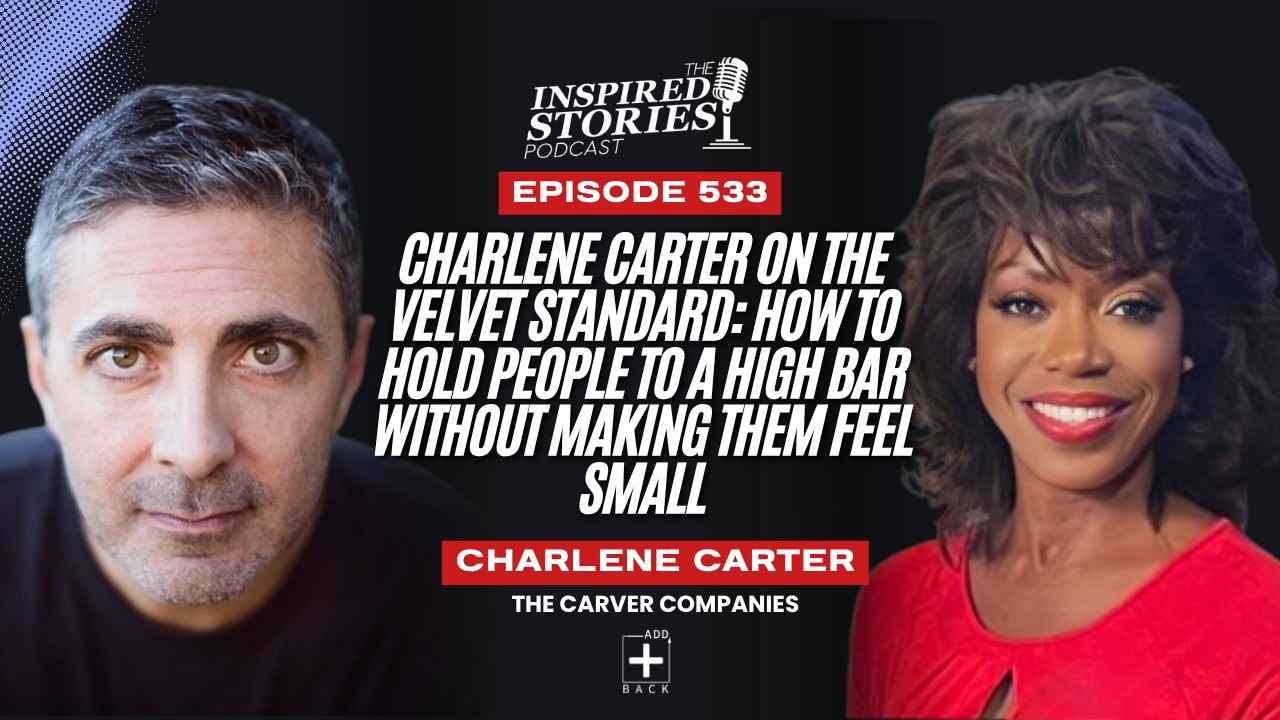
Charlene Carter, Chief Development Officer and partner at the Carver Companies, grew up as the daughter of a domestic worker in Savannah’s public housing, learned to taste caviar at nine, and had her career trajectory changed by a movie director who told her he couldn’t see her completing a mouth. She spent eleven years mastering every level of hotel operations across IHG, Marriott, Hilton, Wyndham, and Hyatt before launching two consulting firms of her own, going through a bowel obstruction and COVID in consecutive months, and emerging as the revenue engine behind one of the fastest-growing hospitality staffing firms in the country.
✨ Key Insights You’ll Learn:
A six-year-old on a Savannah city bus and the driver’s words she still tells her children
How a movie director filming Swamp Thing in Savannah accidentally redirected her career from dentistry to hotels
The VIP check-in she failed to prep and the front office manager who turned it into her most important leadership lesson
How Atlanta Hospitality Group landed 33 Country Inns and Suites properties on word of mouth alone
What task force consulting actually is and why hotels call it in when they’re already drowning
Writing a business blueprint for her own competitors and why 90% of them come back asking for back-office help
The bowel obstruction in December 2019, COVID in March 2020, and why Carver had one of its best years during the shutdown
Why Carver won’t put a consultant on a flight before 8 AM and pays expenses every week
The Carver Healthcare expansion into locums and traveling nurses
What it means to dull your lights so that someone else’s can brighten
🌟 Charlene’s Key Mentors:
Her Mother: A domestic worker who brought Charlene to cater private dinners at age seven and made her taste everything, teaching her that service was education
The Bus Driver in Savannah: Told a six-year-old Charlene that her honesty earned her a ride and that no one should ever tell her who she is
The Front Office Manager at IHG: Responded to a VIP prep failure not with a reprimand but with belief — and introduced Charlene to the Velvet Standard without naming it
Joel Carver: Her business partner who she had to convince to put his own name on the company, and whose touch she said turns everything to gold
👉 Don’t miss this conversation about what it takes to hold a high standard without making people feel small, why the consultants who leave Carver to start their own firms almost always come back, and how a woman from the projects in Savannah built one of the most trusted names in hospitality staffing.
Listen to the full episode here
Transcript
Anthony Codispoti: Welcome to another edition of the Inspired Stories Podcast, where leaders share their experiences so we can learn from their successes and be inspired by how they've overcome adversity. As you listen today, let one idea shape what you do next. My name is Anthony Codispoti, and today's guest walked into a hotel as a hostess and never really left. She just kept going deeper until she understood every layer of how hospitality actually works from the inside out. She spent more than a decade mastering every position from entry level to executive, then built two consulting firms of her own before joining the company that would become one of the fastest-growing staffing firms in the country. Along the way, she developed a leadership philosophy she calls the Velvet Standard, a framework built around emotional fluency, accountability, and what she describes as legacy-minded service. Her name is Charlene. Charlie Carter, and she is the chief development officer and partner at the Carber Companies, an Atlanta-based hospitality staffing and recruitment firm that has twice earned a spot on the Inc. 5000. Carver serves hotels, resorts, restaurants, and senior living communities across the country. And Charlie oversees a network of more than 3,800 consultants while also mentoring the next generation of women in hospitality leadership.
Charlene Carter: Yeah.
Anthony Codispoti: She recently helped launch an on-demand. we're going to cut that part out, aren't we? Okay. We're going to edit that.
Charlene Carter: Okay, yeah. Yeah.
Anthony Codispoti: I thought my assistant got that. That's all right. It's not live. And we'll also be hearing about her new book called Task Force Ready: 30 plus Years in One Industry, and she's still finding new problems worth solving. But before we get into all that good stuff, today's episode is brought to you by my company, AddBack Benefits Agency. And you'll want to hear this because it's hurting almost every business owner you know. Health insurance costs go up every single year.
Charlene Carter: Yeah.
Anthony Codispoti: And businesses are furious about it. They're paying more, claims are getting denied, employees are opting out because they can't afford it, and it hurts turnover and morale. It's one of the most maddening problems in running a business, and everyone just accepts it. But you don't have to anymore. Now there's a program that gives your employees unlimited access to doctors, therapists, and prescriptions with no co-pays or deductibles to meet. And here's the part that really shocks most people. Unlike every other employee benefit out there, our program actually increases your net profits. We recently helped a client add $900 per employee per year to their bottom line. Results vary, but gains like that change how a business is valued. You can be the hero advisor that introduces this to your clients today. They'll be so happy they refer friends to you. addbackbenefits.com. All right, back to our guest today, Chief Development Officer of the Carver Companies.
Charlene Carter: Okay.
Anthony Codispoti: Charlie Carter, thanks for making the time to share your story today.
Charlene Carter: Well thank you. Thank you for having me, Anthony. It's a pleasure being here.
Anthony Codispoti: So Charlie, how did you first get drawn into the hospitality?
Charlene Carter: Hospitality. Well, it actually came looking for me. hospitality, I like to say that I actually grew up in it. I I I joke a lot with people because I said that I grew up in a household that was basically a hotel. My mom was the general manager and me and my siblings were the employees.
Anthony Codispoti: Ha ha ha.
Charlene Carter: My sister and I were the housekeeper and and food and beverage and my brothers were maintenance, you know. And so I I tease with that. But it's hospitality is something that, you know, is I I think it's a part of everyone. Everyone has it in them. Hospitality is just service and it's something I enjoy doing.
Anthony Codispoti: And so did you have a job in a restaurant or a hotel when you were growing up? I mean, outside of the home. Obviously, I understand that, you know, the household was run as a as a mini hotel, but outside of the home, were you working in hotels, other kinds of hospitality arrangements?
Charlene Carter: I don't know Yeah. I did not. I did not start restaurants until I was in college. It helped propel me and you know to where I am today. During during my high school years, I was the athletic into everything, you know, from cheerleader into, you know, all of the clubs that are in school. So my my extra curriculum activity with dance and everything else behind that keeping me busy.
Anthony Codispoti: Okay.
Charlene Carter: you know, I I did not work in the industry until I was going through college when I was attending college. And that's what propelled me into the industry. However, my mom was a domestic. So I would go with her as a little girl. I think I was like maybe seven or eight or nine years old. and I would help her to cater some of her meal, you know, some of the dinners that she had to oversee you know, for her employers. So
Anthony Codispoti: Okay, so you were getting early access and visibility into this from multiple angles.
Charlene Carter: Yeah. Yeah. I was and I tell everyone, you know, a young girl from from inner city housing, you know, which is a a nice way of putting it, but the projects, I ate, you know, I knew what caviar was by the time I was nine years old. And that's only because of, you know, because of my mom. And she, you know, she made us actually we had a acquire palate for different type foods. And then my stepdad, who is my heart, who raised me from, well, I think I was three years old. He's also worked as a server in one of the historic restaurants there in Savannah where where I'm from. And was there for God 40 some odd years until he went on, you know, in passing. So
Anthony Codispoti: So the interesting part of all of this for me that my mind got stuck on was a nine year old eating caviar. I mean, I can't get my youngest to eat chicken.
Charlene Carter: Yeah. Yeah. Yeah. Yeah, yes. I was made to the food would come back when my mom would go out. We would go and bring the food back to the kitchen area. And everything that we prepared that evening, you know, for the guest, I actually had to taste. and then my mom when I was not helping, her caterer or my sister was not helping her cater, she would bring the food home to us in containers and there was no, you know, I don't like that, that doesn't look right. Well, it was no you need to you don't have to like it, but you need to taste it. So
Anthony Codispoti: That was a way she could put food in the food on the table. It sounds like you know, times were lean back then. So you guys were being real efficient. So
Charlene Carter: Yeah. Yeah. Yeah. Yeah. So yeah. She just wanted us to, you know, just know it was more more than just the food that, you know, that she had to prepare. So yeah, it was that. It was educational. Yes. Yes, that's that's it. Correct. That's exactly what it was.
Anthony Codispoti: okay. So for her it was an educational experience for you too. She wanted to broaden your horizons. I get it. Okay. Okay, so as you're getting older, you end up spending eleven years working through multiple levels of hotel operations. you were at I think it was Marriott, right? actually there was a a handful of brands that you moved between.
Charlene Carter: Yeah, actually I started with IHG, the Intercontinental Hotel. actually they recruited me here to Atlanta. Funny story, and I'll take a few a a quick second. early on while going to school, I actually was going, I my major was biology and I wanted to actually be a dentist. So I thought, you know, at that time it just sounded good. It just sounds good. You know, your parents like, what are you going to school for? It's like, I guess I'll choose dentistry. You know what I'm saying? So I was I I didn't know anything about I did know I I was good in school with math and science. So I knew I would do well. So I was while working, going through college at the restaurant in Savannah, because I'm a Savannah native. Savannah's known for movies.
Anthony Codispoti: You didn't really know anything about it.
Charlene Carter: So this director would come in at this time. I maybe tell my age, they were recording Swamp the Swamp Thing Three in Savannah, right? So one of the directors was sitting at the bar and he asked, he said, Charlie, what are you going to school for? And he said, What are you going for? Like the dental, right? And I was like, Yeah. And I said, Why'd you ask? He said, I just, I just don't see it, Charlie. I'm like, What are you what are you trying to say? I can't be, you what are you trying? He said, I just can't see you completing a mouth. You talk so much. So he said, I just see you like in hospitality, like hotels or rest, you know, doing what you do now or whatever. And long story short, I pulled out of college, out of where I was attending for dental hygiene at the time because I in my mind was like, I I always knew I was gonna be an entrepreneur, right? And I was like, well. You know, if I'm this dentist, I need to have all of these offices. So I need to know what each one of my workers are doing. So I went through, I was, you know, going through hygiene and then I was about to go off to to school, to to dental school. And so long story short, I pulled out of that and I went to another college for hotel restaurant management because the director actually had a friend who was the president of this particular college. Yeah.
Anthony Codispoti: But hang on, I I wanna understand why you made the switch. Was it the friend's recommendation that hey, I just I don't see this in you, I see hospitality in you, or was there something that you've discovered about yourself on your own?
Charlene Carter: It that that it was something that I've always known I had this this this thing about just service. Although, you know, the indust the the dental industry, the hospital industry, that's service as well, right? But it's just like he struck a chord when he said that, you know, he struck a chord. And I was like, hmm, you know, and of course my mom thought I lost my mind. Like, what are you what? You know. but I did. I and I started going to this college, to this university for hotel restaurant management. And I came to Atlanta to visit a girlfriend at the time. She said, Aren't you going for hotel restaurant management? I was like, Yeah. And she mentioned the hotel that they were building or opening at at the here in Atlanta. and anyone who's from Atlanta over by the Lenox Mall area. And she said, They're hiring. And was like, And so I just had gone to just to sort of, you know, sharpen my interviewing skills or whatever, not realizing at the time they hired me on the spot. I was young, I was energetic, I was, you know, going going, you know, I was in the hotel restaurant management, going to school for that. And they said, why don't you relocate to the university here, which had a really good hospitality program. Georgia State and actually we work with their students now. But and I was like, okay, so relocate to Atlanta. And I tell you, Anthony, it was a whirlwind after that. I they picked me up and I just they just kept taking me through. You know, it was like I went into a management trainee program and from there I kept growing and growing. So they call me grandfather. I'm I'm grandfathered into the industry. I never even had a chance to complete what I need to do at the university level. Because they kept, you know, taking me through and I kept excelling. And, you know, I was the type of individual where if I saw something that I wanted, I'm going after it. So if I'm on property and I'm a hostess, I'm not around my other peers. I'm hanging with the food and beverage director or the general manager. Because I need to know how I can get to where you are, you know, to where you guys are. So everything to top to bottom. Mm-hmm. Mm-hmm.
Anthony Codispoti: Okay. You're getting your hands into everything because you want to understand from top to bottom and right to left what's going. Okay. So as you think about the time that you were spending in these different hotels, you got IHG, Marriott, Hilton, Windham, Hyatt, you know, moving up, moving around, learning all these different roles. Think back to a really powerful event.
Charlene Carter: Yeah.
Anthony Codispoti: Something that taught you a lesson that you carry with you today. And oftentimes those lessons will come either from a really good mentor or from a really challenging work experience that imprinted on you. Can you think about one particular story you can share with us?
Charlene Carter: wow, so many of those. So many of those stories. And okay, and you know, I'm digging through 30 some eye years here. But the one that that really sets out that that really stands out, working as a front desk agent, I've got early twenties, I guess. it was like I think I was like maybe I don't know, two weeks in or whatever. And I this particular guest that was coming in, they were VIP. And I did not prep the room for this VIP, and I should have. So there was first of all, they were the the room was not blocked. There was not a VIP basket there. There was You know, they were not flagged as being a VI you know, a VIP. The keys were not made. Yes, there were actually keys during that time. The keys were not pre-made and so my front office man and she comes up and the guest, you know, checks in and she looks on the screen and she realized that nothing, you know, has been done. I mean the reservation is there, but the guest is, you know, just a reservation, is like you're just a regular guest.
Anthony Codispoti: Not not the all the extras weren't prepared like they should have been.
Charlene Carter: No, not none of the extras was there. And so, you know, she proceeded to check the guests in, you know, we did all of the you know, welcoming and and making them feel, you know, right at home. and then afterwards, and you know, she just took me to the side. It was she did not reprimand me, she did not make me feel small, you know, and she said, Charlie, you're really good at you know, at what you do and you're really gonna do well in this industry. She said, you know what? Because I was feeling so awful, right? I'm like, because one, I'm really hard on myself, even to this, to this day. I wouldn't say it's hard. I just feel that, you know, every day you should always, you know, get better. And that's just a continuation of life. And you know, she didn't make me feel bad and she just she shared with me. And it's something I share with my consultants today and my staff. And she said, today just wasn't your day. And that it Anthony, it changed my world. Cause I was like, wow. You know, where, you know, cause she really could have, I mean, it she really could have let into me. So that's something that I really carry with me. And I use that example a lot, even with my team. Mm-hmm.
Anthony Codispoti: So what really landed with you was just how she approached that situation. She didn't, you know, verbally smack you around. She didn't, you know, make you feel small. She didn't try to belittle you. She just said, you know what, you're actually really good. You're gonna be great in this industry. Today was an off day.
Charlene Carter: Yes, yes. Yeah. Yeah. Small. Yes. Yeah. Today. Okay. Yeah. Yeah. Today was just an off day. But
Anthony Codispoti: And so you carry that forward with you, I'm assuming now, and how you work with folks.
Charlene Carter: Do but she also made it very clear of my responsibilities too. Like this is what needs to be done, like that does not change, right? But and that's where and I'm you're probably asking about the Velvet Standard a little later, but that's where the Velvet standard comes in, you know. Someone who, you know, you have a high standard for, you know, but You're holding them up here while you're building them where they are, you know, and to get to that level. And I just I just took that, you know, with me. And I it it's so funny because it was only one other time where something happened that really changed my world. And I was six years old. And I'll share this really quick. And it my mom again, it was me and my siblings and You know, we we we lived in the public housing and my mom did not know how to drive, right? She she she didn't she never knew how to drive, she never learned to drive. So we had to take the city the public transportation. And so we're getting on the bus and my mom that day, she did not have enough enough dimes. to afford all of us to to ride the bus. So it's four of us plus my mom. And so she tells me, she looks at me and she says, Charlie, I've been known I've been called Charlie since a little girl. never really respected until I became an adult. But anyway, I named after my granddad. So she goes, Charlie, we get on the bus and he's the bus driver will ask you your age, you know, you tell him you're five. Because when you're six, you still have to start paying for the kids, right? On the bus. We get on the bus and it gets to me. And the bus driver looks at my mom and he's, he says, How old is she? And my mom says, She's five. And I said, No, I'm not. I'm six. My birthday is. And I told her my birthday. I just had a birthday. And the look on my mom's face, she was like, and the bus driver, so he looks at me, he goes, How old are you? And I said, I'm six. And I says, My said, my birthday again. And he looks at me and he says, You know what? That response in itself gets you a ride on this bus. He said, Don't you ever forget who you are and don't you ever allow anyone to tell you who you are. So I tell I share that story a lot too.
Anthony Codispoti: Wow. And that you carry that with you. That's had an impact on you in a big way. Just from that little interaction with the bus driver when you were not five but six years old. Yeah.
Charlene Carter: carry that with me. I tell my children that. Yeah, tell my children that. Yeah. Six years old. Yeah, I'm sex. Don't you dare I try to identify who I am. I know who I am.
Anthony Codispoti: So you referenced the Velvet St let's go ahead and talk about the Velvet Standard. So it sounds like the foundation of that was being built from that VIP experience, but t tell us how you continue to build on this and what it means today, how it shows up.
Charlene Carter: Yeah. You get it. Yes. Well, it was just something, to be honest, Anthony. It just is something that I just held on to, actually from a six-year-old, not knowing what it actually was at that time. And I would create these, you know, these stories and I would, you know, and I it it it that's how I would train and and how I would interview you know, my team that I that I want to be a part of my team. I had these hidden standards and I never shared it with anyone. So you're the first one to actually mention the Velvet standard. I I've never even shared in you know with anyone what that meant because it was something that was very It just identified me and it's just something that I carried within. It's not something that I speak out and share, you know, the velvet standard. I just call it that because it's it's is it's ver velvet is very soft, but it carries a lot of weight, you know? It carries a lot of weight. And and so and I just happened to be in my mirror one day and I was looking at some clothing in my closets in this this particular dress. And I just felt and I was like, hmm. And it was a velvet, you know. And it's so that's just a standard, like I said, that I've implemented for myself within me. And whenever I I'm teaching or I'm talking to my team or whatever, I t that's something I just try to exude, you know.
Anthony Codispoti: And so this is kind of weaving together elements of both emotional fluency and accountability though, right? Yeah.
Charlene Carter: Yes, exactly. Yes. Yes, it is. Without allowing anyone to feel small. That knowing that you're there with them, you know, in that corner. You know, it's more than just, you know, titles and it's all about that trust, you know, people, you know, leaders on the in the hotel. I think you the leaders in the hotel. one thing that I share with a lot of them. You know, their accolades, you know, they they have the title, you know, and they have the they have the title, they they have the the word that I'm thinking of escapes me right now, the power. I'll just use the word power or whatever. But the one that that they lack is the trust. And what I say the trust is from their team, you know, can they t you know, the team piece of it is You know, that do they have their team back? And so many times, you know, I think we forget that, you know, as leaders. and I try to remind myself of that all the time.
Anthony Codispoti: Yeah. So I want to start moving into the phase of life where you're going out on your own. In two thousand three, you launched your first consulting firm that was focused on hotel operations and sales. And I I want to clarify for people, because there are some very similar names here. Charlie Carter, right? And so your first company that you started was called the Carter Consulting Group. And we're gonna move into later the Carver.
Charlene Carter: Sure. Mm-hmm.
Anthony Codispoti: Which you and Joel are a part of now. But let's talk two thousand three, you're starting this consulting group for the first time. What prompted you to go out on your own rather than, I don't know, stay within the security of like a good corporate job with one of these big hotel brands?
Charlene Carter: Well, I tell you what, and actually it was before Carver, I mean Carter Consultant Group. It was Atlanta Hospitality Group, actually, when I first launched in 2000. And and so I actually that was the first. It was sales and it was doing sales and marketing for limited service hotels. Right? During that time, limited service hotels did not have a sales force. So there was always a need. I always looked for a need and capitalized on that need.
Anthony Codispoti: Okay.
Charlene Carter: Right. of what that industry, what the industry was not really promoting at that time, where they were doing it. And I I didn't do it different. I just put a twist on it to do it a little better. That that's all it is. and during that time there was no representation for limited services hotels back in the late 1990s and 2000s. So me and two other young ladies started Atlanta Hospitality Group and we would do sales and marketing for the limited service hotels. We were lending our services two to three days a week. We call it consulting at the time, now they call it task force.
Anthony Codispoti: So what exactly were you doing when you say you're doing sales? You're like trying to sell blocks of rooms to businesses or yeah.
Charlene Carter: We we would go in and we would be their representation as sales as their sales managers. So we would go in and help them acquire contracts and be the basically theirs, you know, and generate sales and promote the hotel, do their general their grand openings and yeah. And we would do it for a limited
Anthony Codispoti: And so you were ha when in terms of like what sales look like then from a consulting perspective, you're trying to help them lock up bigger groups, right? Like blocks of rooms. Yeah.
Charlene Carter: Yeah, generate corporate sales. Yeah, corporate sales, what we call base accounts, like airline accounts, you know, your base business. bring about awareness. A lot of times some brands were coming on board that a lot of outside of Marriott Hilton, Omni, Hyatt, a lot of people didn't know a lot of the other brands. And awareness is important.
Anthony Codispoti: Got it.
Charlene Carter: So we would do that. We would bring about awareness and we will lock them, you know, lock in certain contracts for them with certain accounts, corporate accounts. you know, so yeah.
Anthony Codispoti: So what did you find worked well here in your first business, which was Atlanta Hospitality Group? and what did you find were maybe some challenges?
Charlene Carter: Mm-hmm. well that was the biggest is you know when you would call on some of the some of the accounts, they would ask, you know, about the you know sales, you know, now who are you and what do you represent and you know just overcoming you know that challenge. it was really I can't really pinpoint anything that was that my it was just different. It was different and it was
Anthony Codispoti: I mean, did the business just take off or like you know, d did you guys do well? Was it
Charlene Carter: We did, and let me tell you why, because so many of the limited service hotels without the the larger brands like your Marriott's and your highest and hills, you have these other brands that were that was you know that are out there, you know, that were out there at the time and they did not have the sales representation. So we would be that sales representation and then that particular hotel owner because we would deal with the the hotel owners and at that time it was the Asian community who who just incredible and they're awesome to this day, who own majority of the industry. They're they're awesome, very smart people. but they didn't have the representation. And then when they would see theirs their sales escalate, of course someone would ask them, you know, well who how did how did this happen? And so I've always been one that would not chase volume. I always chase reputation. Because if I have the reputation, it's going to speak for himself. The volume's going to come because the representation is what sells. You you hire Charlie, the Atlanta Hospitality Group, you know, this is what happens. The sales excel. And so it was, it basically became word of mouth.
Anthony Codispoti: Mm.
Charlene Carter: And at that time, Country Ends and Suisse was just coming on board, just coming on board. And several individuals, they several owners owned the Country Ends and Suisse, and they saw the revenue escalate. And a month later, we were given 33 of their properties.
Anthony Codispoti: Nice. That's a big win. So how did this, what you were doing with Atlanta Hospitality Group, how did this kind of morph into the Carter Consulting Group? What shifted?
Charlene Carter: Yeah, so a huge win. Well the three, yeah, the three ladies, the three of us sort of, you know, we sort of went our own way, still friends to this day. Carter, it Carter Consulting Group came in where when the limited service hotels really couldn't afford to have a management company take over their hotel. Cause it's, you know, I mean management companies come with the a nice percentage behind it. so we were already doing the sales and so we just rolled into the operations as to how we could help them and be hands-on with it, right? Hands-on with it, educate them along the way, coach them along the way. And so it just morphed into, I call it a mom and pop, our own little mom and pop. management company. it really wasn't a management company, but operations. I mean, and we grew up to about maybe fifty hotels that came under our belt. So
Anthony Codispoti: And so how many folks were working with you at the time?
Charlene Carter: wow. say maybe it wasn't many, maybe like ten, fifteen. It's a small group of people.
Anthony Codispoti: Okay. but at this point they're all consultants, excuse me, you're not placing people at these hotels to work there for, you know, six, twelve, eighteen months.
Charlene Carter: Well, I was doing both. I was placing some to just come in and help us you know, get us to they were working in the task force capacity. And then we were also hiring permanent for the properties as we, you know, as we would go along. We yeah, we would staff their property. Yeah. Yes, yes, yes, yes. I've been consulting for gosh.
Anthony Codispoti: So you were already into the you were already into the element of staffing here, along with the consulting part of it. Okay.
Charlene Carter: tw I've been consultant for twelve years before I even met before I started with Carver.
Anthony Codispoti: Let's talk about Carver. How did you and Joel meet and how did you put your heads together to form the Carver Companies?
Charlene Carter: Yeah, yeah. wow. First of all, he is incredible. He really is incre he's an e he's an he's an amazing guy.
Anthony Codispoti: By the way, sorry to interrupt. He's been a guest on the show as well. And you know, if you haven't watched his episode, go and see it afterwards. But sorry, yeah, go go ahead and tell me about how awesome Joel is.
Charlene Carter: Yeah, he yeah, he's awesome. Joel actually was my boss. Joel hired me. it was right after that or during that 2008. Remember everything was going when it, you know, the real estate, everyone was losing, you know, whatever. Well, during that time we lost our contracts. The Carter Carter Consulting Group lost our hotel contracts because the owners lost their hotels, right? So I actually had to go back to work, you know, for on property level. I knew I did not want to go back, you know, back to work property level. I want to, if I needed to go back, it had to be, you know, corporate. So I reached out and Joel received my resume. I think they had like tons of resumes, tons. And long story short, it was down to two of us. This is so funny, Anthony. My name is Charlie and the other young lady's name was Mike. Two males. And we were the finalists for this corporate director of sales for for the companies that Joel was working for Joel was the senior VP of sales and marketing. And it was so funny because Minneapolis is it was a a a blizzard, all right? And my my plane was the only one, my plane made it in. Mike's plane, her plane didn't make it in. So yeah. So funny story, the president at that time, who's a really good friend of ours, I love him dearly too. Rob Dan was the president at the time. And I'll never forget he says, for someone to walk off the plane in these four-inch stiletto heels, she definitely has a statement.
Anthony Codispoti: He liked the boldness. Yeah.
Charlene Carter: statement to make, right? So it was yeah. So it was fun. But that's
Anthony Codispoti: So Joel was Joel was hiring you not to come work for the Carver Companies, which doesn't exist yet. He somewhere else he was working. Okay.
Charlene Carter: Yes. No. Yes. Yeah. I was his corporate director of sales at the CSM Corporation. I was one of two of them. At that time, they called them the director, the corporate director of sales. They really were task force. We just didn't use the word, but you know, the word just was not formed at that time. But it's funny, Anthony, because I and I know it was fate. It was all fate. It was just something that had to happen because. 10 months, not even a year later, I was laid off. I was the last one in, first one out, right? I didn't it didn't re it it really didn't bother me because before coming to Carver, I mean before coming to taking that position with Joel, I was doing sales and marketing. So I was a consultant, so I knew how to go back out and get, you know, contracts. And I really had, you know, really good repu good. reputation in the industry. So it was funny when I was leaving and Joel and the HR person had to give me the news and it was just not me, it was several people. But he really took it personal when it came, you know, with me. And I could tell in the room it was the hardest thing that he had to tell me. And I told him, I said, Don't worry. Don't I'm be fine. And I had my luggage with me because it had flown me in. And I was walking down the hall and I and I said, now I know how the people from American Idol feel. That was American Idol first came, but they would take make people go home. And he was like, you have always have such the you know a great spirit and things like that. And he told me that day he said this is not goodbye for us. And we kept in touch. And then several years later I got a call. I was in Los Angeles. I was in Los Angeles consulting at a property there. And I got the call from Joel Carver. And he said, What are you doing? And I said, trying to stay out of trouble. And he just he told me of an idea that he had, and he said, Charlie, you know, I've always thought very highly of you. And so what do you think of this idea? I said, Well, it sounds okay. I guess I I wouldn't know how to do it, but let me put something in your ear as to what I think. you know, we can do and we can be damn good at it.
Anthony Codispoti: So what was Joel's idea? What was he pitching at the time?
Charlene Carter: He was pitching to put himself out as a like going into a lot of the different hotels and lending his expertise, you know, from a corporate whatever I don't even know. Anthony, believe me, even during the time he was telling me, I was like, huh? I I I I don't know. Because my mind was so already on, no, dude, we're not doing that. This is what let me tell you what we're about to do. And I'm damn good at it. I'm sorry, can I Say damn. Anyway I'm good at this.
Anthony Codispoti: So wait you wanted to do something with Joel, but you had different ideas from what he was offering up.
Charlene Carter: Yeah, actually I didn't even I was out consulting and doing very well. So he called me and he was like, hey, Charlie, what are you doing? And I was like, and I knew that whatever he does would do will would do well. This man, whatever he touches, his hand touches, turns to gold. Right. So I knew that whatever it was Joel Carver was doing, I wanted to be a part of it. And so when he came to me and he asked, you know, Told me of his idea. And I was like, well, I don't know about that, but let me share something else with you. And I shared with him task force. And he was like, hmm, you know, he's the type person you give him idea. And he put it on steroids.
Anthony Codispoti: And and explain what explain what task force means for those folks outside the industry. What does that word mean?
Charlene Carter: Task force is just seasoned hoteliers. They're seasoned and they go in and they sit there, they just go into for for support and they lend their services. you know, when there's a vacancy that's there at that property. And it's really a they're they're there on an interim basis, and it's really to serve in that capacity long enough, giving that property enough time to to interview. And hire the right person because hotels, the turnover, you know, the revolving door, so many times they're rushed to hire people in those, you know, in the position just so they can have a body. That's where Task Force comes in. Task Force comes in, they're experienced. They come in, they already know the systems. They know how to lead a team. They're there. They're your biggest cheerleader. They already know what you're going through. They know about the inspections, the audits, all of these, you know, all these types of things. They know that you're a little staffed. They know all of this. They know if they're in sales, they know that you have to keep that revenue up. So a sales manager goes in to make sure that those, you know, contracts are still going forward and all of that. They are, you know, they're your relief. They are a huge support system. They come and they're experienced. They come with, you know, 10 plus years. They could be have as many years as I have in the industry, right? And then someone who loved the industry, they just prefer not to be property le on property level anymore because now they want to travel. They can travel. Most of them are empty nesters. So they can travel. They they want to travel and they want to lend their expertise us, you know, without all the politics and all of that that goes on, you know, during the property level.
Anthony Codispoti: So package it up for us, Charlie. Present day, what does Carver do and who do you do it for?
Charlene Carter: Mm-hmm. Carver do a multiple thing. We started Task Force. That's still our the big the big box, right? But under the Carver Companies, Carver started with Carver Hotel Group, and that's what we would do, the Task Force. Now we've morphed into the Carver companies. So we have Task Force, which is your seasoned consultants that go on, you know, into all the hotels to lend their services and their expertise to support that property. And then we have what we call task to perm. Try before you buy. So a lot of times the task force individuals go in, and you know what, Anthony, life happens. So a lot of times when these task force individuals think that that's something they want to do, continue doing, well, something happens where they actually need to go back on property because they need the benefits and things like that. Because most of the task force are 1099, although we do have W-2s as well. So we we have them both. And so we have the taster perm and then we have our staffing by Carver. Staffing by Carver are now the hourly employees, your housekeepers, your food and beverage, anything that's entry-level hourly staffing. you know, just recently the H2Bs, you know, their their their visas was like on a standstill. So we've had several of our resorts to reach out and was like, I need 30 people. You know, thirty, you know, thirty, you know, housekeepers. I need, you know, twenty people to get, you know, to be in food and beverage. And so a lot of things just morphed into these other, you know, models that we offer. And then we have our permanent our executive search, which is our permanent placement, which is it that part is ran and over se overseen by Another one of our partners, Peggy, you know, Peggy Olson. that's called Carver Olson. And so yeah, we just do we're everything to everyone in the industry. We really are. We really are. And at one time we were doing gigs and we just pivoted over into the staffing by Carver. So yeah.
Anthony Codispoti: Tell me about that pivot, because I think when I talked to Joel, you guys were about to launch the gigs. And so you tried that out and you decided that there was a better path. Walk me through what happened there.
Charlene Carter: Yeah. Yeah. Yes. Yeah. The the the gigs, carver gigs was because we we notice a lot of our properties. And it's so funny, Anthony, because we don't sought out to say, okay, what are we gonna do next? What are we gonna do? Our client leads us to the next, you know, to the next V. They'll say, you know. they were having issues with people calling off on shifts, right? Yeah, calling off on shifts. So carburetes come into play when we were, you know, we had an app that we created, which was incredible. And so that app, it act just like DoorDash or Uber. They go on the app and they see whatever position or whatever shift is available at that time, and they will plug themselves in for that shift. And then what started happening is, you know, the like I stated, the the resort started reaching out and we started feeling that our the hourly people now is more than just a shift. It turned into longer shifts and longer, you know, a longer time period. And so we just felt that it was a bet we it was a better fit for us. you know, over in this arena. And at this and at the same time, which we are also in the process of doing is carver healthcare. So that's it that so that is also something that is
Anthony Codispoti: What is carbour health care? Is this also placing hourly workers in
Charlene Carter: Yeah, it's like your locums and your traveling nurses. Yes.
Anthony Codispoti: And how recent is this?
Charlene Carter: this is something we've been working on for over a year now. We just really hadn't landed the plane because task force picked up and then we had the staff about Carver picked up and you know and everything. So right now is something that we're really in the next year, that that is really what we're concentrating on is the Carver Carver healthcare piece. We've got a lot of interest already, you know, even from hospitals and things like that. So
Anthony Codispoti: And and so explain this, not pivot. I mean it's staffing, right? And it's staffing in surface in in in service, but it's it is a different industry, it's a different vertical, right? And there's licensure, like you know, is this person have this certification? Like, you know, there's there's new things that you have to put in place. So what were you guys seeing in healthcare that
Charlene Carter: It's staffing. It's all staffing. Yeah. Uh-huh. Mm-hmm. Yes. And that's why it's taken so long. It's not as easy. Yes.
Anthony Codispoti: Told you this is an area that we want to grow into. Because for the most part, you had kind of stayed in the hospitality, the hotel world up until that.
Charlene Carter: Mm-hmm. Well, because Joel's spouse is a doctor and just said, you know, you can lend her, you know, I mean, in the office there was like, you know, you can lend your this is you guys ever thought about, you know, going into into this field. Now, task force is also we do well in the seniors the senior citizen, the the not the retirement homes, but you know, the the senior citiz citizens home. where we have chefs and things like that and that's another area that falls under healthcare as well. It's like a fine line there, but we just started and that's how it it came about. And we was like, huh. Because really it's the same. It it's it's really the same. You know, traveling, you you're sending them out on these different assignments. the only difference is of course the licensing and all of that. So that piece takes a minute, right? It it takes a minute. So
Anthony Codispoti: So I want to go back to the earliest days of Carver. Tell me if you can remember how you got your first client.
Charlene Carter: Sure. wow, I can tell you how I got how we got our first client. It's so funny. I this is Anthony, that's a great you asked really good questions. let okay, so when we first started, it was just the it was Joel, myself, and Susan Hart, who's our chief financial officer, right? And we it was Joel, me and Joel, we we Actually, we sat in the seat of our today's staff. So we did it ourselves. We were the employees. I was the face of the company. And I would be, I was the consultant that we sent out to all these different properties because a lot of hotels at the time still was not familiar with you know with task force. And a a lot of how we got our first client. Anthony, is when we were sitting around coming up with a name for our company. Joel had all these really cute names, right? They're really nice names. And I and I just looked at him and I was like, Really? You know so many people in this industry. Your name has got to be in this company. And he is such an unselfish person. He was like, But this is all of our company. I said, dude, listen, it does listen, okay? Listen to me. I don't
Anthony Codispoti: So you had to talk him into putting his name on the company.
Charlene Carter: Yes, I did. He was because he's so humble. He's such a humble person. He was like, Charlie, are you? But this isn't a mic. It is, it's our company, but I do I need your name. Your name is going to get us through several because he knew everyone, right? Everyone knew him. So they need to know what he was doing. And actually, our first property was a BF Saw property because he and he knew the president then. And they called us in. And it just snowballed from there. I I tell you, the first year we did well, but the second year we were voted in as one of the fastest growing small businesses in Atlanta. We started with five consultants. After I think I was out on the road for maybe a year just promoting and and and working as a consultant, sharing with all of these different you know, property management groups we call them PMGs at their hotels, kind of bringing them in on, you know, what task force looks like. Now it was other task force companies out there at the time now, you know, really good task force companies. but it wasn't as many as there are now, right? And so I would go in and, you know, I would be that person. And so when they would call again, the Charlie can char you know, Charlie, I need you at this property. I'm like, well, want me to do that, but g I I tell you what. I we have another, you know, body that we can put there that I've cloned. Right. So so you go with and you should, you know, they're thinking, okay, I'm getting Charlie. I'm doing, you know, she's just she's gangbust. She gets in there, she she's a part of the team. She helps hurrah our team and all of that. And wow, you know, well, that's what you want because they should be a representation, you know, of what Carver offers. So we started and so we built a team and then we hired five consultants. of which we all knew that we've worked with before that we knew were really good. and then they came in and then it just actually actually after that it just exploded. And like I said, the second year we were the one of the fastest growing you know task small businesses here in Atlanta. Now we have 3800 of them, probably four four thousand. I don't know. I haven't counted left.
Anthony Codispoti: So it sounds like the reputation of both you and Joel, and maybe your other partner as well, or perhaps they're a little bit more behind the scenes, but your reputations in the industry is what really helped to open those initial doors. Then beyond that, though, you know, that that that gets your foot in the door, that gets you started. But to, you know, end up being one of the largest or the fastest growing staffing companies in Atlanta.
Charlene Carter: Yes! Yes, yes. Yeah.
Anthony Codispoti: You're doing something else differently or better than the competition. How would you package up what that difference was?
Charlene Carter: Yes. All it's it's just it was it was service as a part of the the the velvet standard there. Again, like I said, we didn't chase volume, we chased reputation. So when we would get in there, our reputation was everything. We only had one time to get it right, right? So we had to go in with a win, right? So it was all about listening to the client and doing And sharing with that client and doing more than what the client because a lot of times when they call task force, they're already a month or two months late, right? Because they wait until the very last minute when they're drowning. And it's like, can you say it? Can you say you know, that that piece of it? but we would go in with the biggest thing about task force is you've got to have empathy. You you you really do. It's it's it's a lot of that. and you you go in and you've got to understand, you know, about what's going on at that property, right? And giving them exactly that individual that they have described, you know, that they need and even the more. And then going in and actually being you know, more apart. Of the team and always leaving a property better than you found it. And that's what all of our clients like. If we get a carbon consultant, we get a consultant on this property, right? You know, it's is getting in there. Do we get it right all the time? Absolutely not. But that's that's that's the world. That's that's that's life. Do we get it right all the time? Absolutely not. But we do a really, really good job to where we get it right. 90% of the time, right? And so, and that's what they look for. They know that Carver's gonna put their stamp of approval on this consultant. And this consultant's gonna come in and give them exactly what it is that they need for that time period.
Anthony Codispoti: How do you get the consultants into your pool, into your database? And we're talking 3,800, 4,000 of them. That's a lot.
Charlene Carter: A lot of word a lot of word of mouth and we treat our consultants well. Like I said, you have other task force companies out here, but they know if they come to Carver, you know, we we treat them very well. Keep in mind, I was a consultant and I've also was I've consulted for some other companies as well. So I when we say we do it not different, just better. I knew as a consultant some of the things that that was good and some of the things that I would have tweaked to make better, you know? And that goes across the board with everything. And so I brought it to them. Mm-hmm.
Anthony Codispoti: Give me give me an example of one of those tweaks that you wanted to introduce based on being on the other side of that.
Charlene Carter: One of the tweaks yeah, one of the tweaks is we don't send our consultants out on a flight before 8 a.m. I've been known to go on flights at 6 a.m., 4 a.m., you know, I mean, you know, it's like, no, I mean you have to get up at three in the morning. And our consultants, you have travel work days. I don't want a consultant at your property and they've arrived there and they've traveled and then they're they're tired. They go to their room, they put their bags down. They tour the property, you know, and all of that. that was one of the perks. The other is our our task force consultants are paid every week. When I was task force and it wasn't that, it was every two weeks, you know. Our task force consultants expenses are paid every week. We don't wait to get the, you know, being reimbursed from the the client in order to so it was very convenient, you know, for our our consultants and they they like that, you know. We interview them and everyone, the other thing, Anthony, I think was really big. because talk goes around, you know, consultants talk to each other. And we've had some consultants say, I've been trying to get on with Carver forever. How did you get on with them? Because everyone does not make the cut. Just because you want to be a consultant does not necessarily mean that carver's gonna accept you. We look for entrepreneurs and entrepreneurs, not employees. And some consultants that were property level come in and then they can they can be a task force person, but you have an an employee mentality that that doesn't work here, you know? So yeah.
Anthony Codispoti: How do you filter for that? Is there a question that you can ask?
Charlene Carter: yeah, we we have a recruiting team and we filter we yeah.
Anthony Codispoti: But but what are you looking for? Like what tells you that that person is an entrepreneur or entrepreneur?
Charlene Carter: Someone who comes to who gets to work on time, someone who who asks a lot of questions, some some an individual that goes with, you know, they listen to what the property need you know, the the property is asking for at that time and they go beyond that. They don't they're not a part of the problem. So you have some consultants that go on and they become a part of the problem. It's like, okay, you're supposed to like divert, you know, whatever. So that's an employee mentality. It's like, no, you actually you obviously you need direction from the property. A task force person doesn't need direction. They come with that. They come with experience. They get in and they do what needs to be done and they know that they will. you know, make themselves small to make the property look really good. They know that they want that GM to to look very well, you know, f for their corporate office. We go in wanting the team to shine, you know, you know, we dull our lights so that theirs can brighten. So
Anthony Codispoti: Like that. Charlie, tell me about the book, Task Force Ready. What inspired you to write it? Who is it for? And what will they find inside?
Charlene Carter: Force Ready is a book that I've been asked about. well, it wasn't a book, but I all of our consultants, I have what we call the an an open door. If you go on my LinkedIn, it'll say book an appointment with Charlie, right? I want them to be able to talk to me. So we have so many consultants. Monday through Thursday, they can, you know, they can book an appointment with me between 11 and 2 because I tell them all I'm done after two o'clock. I'm only administrative after two. I don't want to converse after two. But so, and a lot of the consultants when I'm having the conversation, they always want to know my story. You know, they always want to know my story. And and I just and a lot of them, we have consultants that actually They'll go out on their own. And and and I've had the question before when they say, Well, you know, Charlie, all of these task force companies or mom and pop companies are popping up everywhere. You know, how do you guys feel about that? And I said, Well, most of them, from what I can gather, was one of our consultants before. So our consultants have now become our competition. So, you know, but what happens because They lead the right way and we have such a good relationship with them. A lot of them will go out on their own and they will try to start up their own little task force company or get an account here or get an account there or whatever. But then that door, that revolving door comes back, and I'm like, Patricia. Thought you out doing your own thing. What happened? She's like, Yeah, Charlie, I did, but I just couldn't stay afloat. Yeah, you know, that type of thing. So I did a blueprint and I put everything in there from start to finish of how I started, how they can get started. Everything. Yeah. Yeah, consultants. Yeah. And then after, but at the end of each book, because they could do it all day, but you know.
Anthony Codispoti: Wait, you're providing a blueprint for your competitors? Okay.
Charlene Carter: Charlie is Charlie, right? And but you could do it all day. And then at the end of it, I mean at the end of each chapter, it also tells them if they need help from a we call it our back office. You know, if they need back office help, that's when Carver would step in and be their back office help. So we've had tremendous, I've had a tremendous of really good response from that. And all of them, I would say 90% of them have reached back to CARB and say, okay, I need your help. I need your back office help. What does the back office do? We do everything for them. We do their travel we they use our travel department. We do their contracts. We help them with consultants. If they have a a a client and they don't have a consultant, they can you they can dig into our pool of consultants, right? We I will we will help them on a call if they can't really close a a deal with we help we hold their hand. Yeah, it costs them a percentage, but it's a very small percentage. But they would and we pay not only them, we pay their consultants, their staff. And they get paid every week as normal. So what's not to love about it?
Anthony Codispoti: Where did you cook up this idea?
Charlene Carter: No, Joel tells me. He said, what is it that my I it's it's again, you see a need. Why? Okay, I knew a lot of consultants was going out there. A lot of them, our consultants became our competitors, right? It's like okay, so how can I bring them back into with us? And let's join as a team, as a force. You want your own thing? Have your own thing. Carbon be right there, the back of you. We're your support system. That thing that you don't have, because a lot of them, they would do, and they're good consultants. We have a really, we have a, and I'm just not saying that we really have a pool of really good consultants. And I know so many of them are going to be very successful at having their own task force, you know, company. However, you know, they will come and they would go, they'll be good at a at a you know on their assignment, but then they don't, they will have to wait to get paid. Right? Because that probably can't pay you till corporate pay. It could be sixty to ninety days. Well, if you're with Carver, you don't have to worry about that. Carver is that. You deal with all you get to have a part, you know, with with Carver attorneys. You got everything that carbon we're your back office. So
Anthony Codispoti: I mean, if it's working, it's kind of brilliant, but it's not a typical approach, right? Most people see competition as competition. That's a threat. Somebody's trying to take my lunch. And so you want the the the normal human knee-jerk reaction is I'm gonna go into defense mode. I'm gonna get protective of what's mine. But
Charlene Carter: Right. Right. Yeah. Yeah. Yeah. Because Anthony is so much out here. Every day there's a new property management group opening. Every day there's a new hotel opening. Every day consultants are rotating off of properties. A lot of the VPs and regionals and areas are now our consultants. So that's why I would tell, don't ever close a door. You know, don't don't don't do that. So if I can't I would I would if I can't be w I hey, if I can't have I'm gonna find a way for us to connect. If we're not gonna connect, we're still large, right? Because all of them fall under Carver umbrella now and they have to and they sign contracts with us. So
Anthony Codispoti: Shifting gears on you, Charlie, what's the hardest thing you've had to overcome and what did going through that teach you?
Charlene Carter: Hardest thing, I'm gonna try to get through this. it was with Carver, and it was doing I actually had a bowel obstruction, right? And it took me out for a month. I was in the hospital for a month. I ended up having one operation, that operation turned into two operations, right? a bowel obstruction. And during this time, this was December. 2019, Anthony. What happened in 2020? COVID. So I'd gotten out of the hospital early February. COVID, the shutdown was in March, I believe, March or April. Everything just shut down. We never went down to zero though. We never went down to having like no accounts. I think we had one, right? Because everything was shut down. So here it is, you know, my partners have the chief development officer, which is, you know, I'm the revenue generator for the company. I'm out of source. I have entire we have an entire team that's wondering, you know, where their next how they're gonna feed themselves. And that's the thing that that that carries me is, you know, most people can go to a job, go home, eat with their family, go to sleep, wake up the next day, go to work. Not us. You know, I go to s I go home and I'm wondering about, okay, what else can we do for our team? You know, because we We are the ones that's providing food on their table, you know, and for their families. And so COVID was, wow. I just I and we got together as partners and we were like, how are we gonna pull through on this thing? But I never, I never gave up hope. I was I've always been a fighter. And I'm like, I this is not going to beat us, you know. We have to, we have, we have to regroup. Right. And let's let's see how we can rebound, you know, from this. And you know, we we we had to do a few layoffs, you know, just a few. but we came together as as as a team, as a nucleus, and we were able to get through. It was so hard though, Anthony. It was so hard. Yeah, it was so much.
Anthony Codispoti: There's so much uncertainty during that time. Nobody knew when things were going to open back up. You know, there were some theories that it couldn't happen until after we got a vaccine, which could have been years away. And so
Charlene Carter: But let me tell you. Yeah. But let me tell you, I've always been a faith person, right? And I and I told my business partners, I say we will, you know, rebound. I'm very resilient. That's what it taught me during that time. When you said what it taught resilience. Resilience is is real. And and and it's alive and well. It really is. And what happened was we will call. I would call a lot of our clients. I emailed them. I was like, I know, you know, your pro you guys have furloughed a lot of your staff, or you had to lay a lot of your staff off. But guess what, Anthony? The hotel was still open. The hotels were still open. And during that time, we and I said, Well, we still have teams.
Anthony Codispoti: Mm.
Charlene Carter: that have been vaccinated that is willing to come in and help and play the part. We did that was one of our best years. Can you believe that? During COVID, because everyone realized
Anthony Codispoti: That's wild.
Charlene Carter: Carver has the people. Carver has the people. So remember all the ones that we had to lay off? And for a lot, we brought them all back like in two weeks because we everyone started calling. They started calling. They started calling. That's why I would tell people, don't you ever give up. Resilience is everything. Believe in whatever that thing it is that you have. You believe in it. And it's it's, you know, you you just don't give up. You know, you have to be resilient. You gotta know that you know, that you know, that you know without a shadow of doubt, is it's just gonna happen.
Anthony Codispoti: Well it sounds like you were able to lean on your faith during this time and that helped you
Charlene Carter: I I do. I d I lean on it a lot. A lot.
Anthony Codispoti: That helps you understand that there was a light at the end of the tunnel, even if you couldn't see it. Yeah. So just one more question for you today, Charlie. But before I ask it, I want to do three quick things for the audience. first of all, if you want to get in touch with Charlie and Joel, find out more about what they're doing, go to their website, which is thecarvercompanies.com. Thecarvercompanies.com. We'll have it in the show notes, but it's really easy, simple to spell, thecarvercompanies.com.
Charlene Carter: Yes, yes, yes. Sure. Yes. Yes.
Anthony Codispoti: And if you're enjoying the show today, please take a moment to subscribe wherever you're listening. It also sends a signal that helps others discover our podcast. So thank you for taking a quick moment to do that right now. And as a reminder, you can get your employees access to free telehealth. That includes therapists, prescriptions, telemedicine, all kinds of really good things that. actually, it comes with a cost savings for the company. Let me kind of break this down a little bit. So you can do a favor for your employees so big that they're gonna tell their friends about it. They're gonna wanna come work with you too. And it's done in a way that's gonna get them free therapists, free doctors, free prescriptions that counterintuitively here's the really cool part: it actually increases the company's net profits. So, real gains that can change how a business is valued. You don't change your broker, and it works really well for part-timers and those high turnover roles too. So, last question for you, Charlie. In this role, what you're doing today, what is it that you most want to be remembered for?
Charlene Carter: I've I I want to be remembered for how I helped individuals to continue on their journey and to, you know, to stop stop asking permission for your insecurities. Just do it. Just do it. Yeah, I just want to I just wanna, you know, especially with females, especially with females, just just stop asking for, you know, permission from your insecurities. You know, you can it can happen. Is it is it is it hard? Yes. You know, you have to continue to push. You have to know who you are. Stand in your truth. Stand in your truth and know who you are.
Anthony Codispoti: I love it.
Charlene Carter: And everything else will follow suit.
Anthony Codispoti: Charlie Carter from the Carver Companies. I want to be the first to thank you for sharing both your time and your story with us today. I really appreciate you being here.
Charlene Carter: Thank you, Anthony. Thank you, Anthony. My pleasure.
Anthony Codispoti: Folks, that's a wrap on another episode of the Inspired Stories Podcast. Thanks for learning with us. And if one thing stood out, put that into action today.