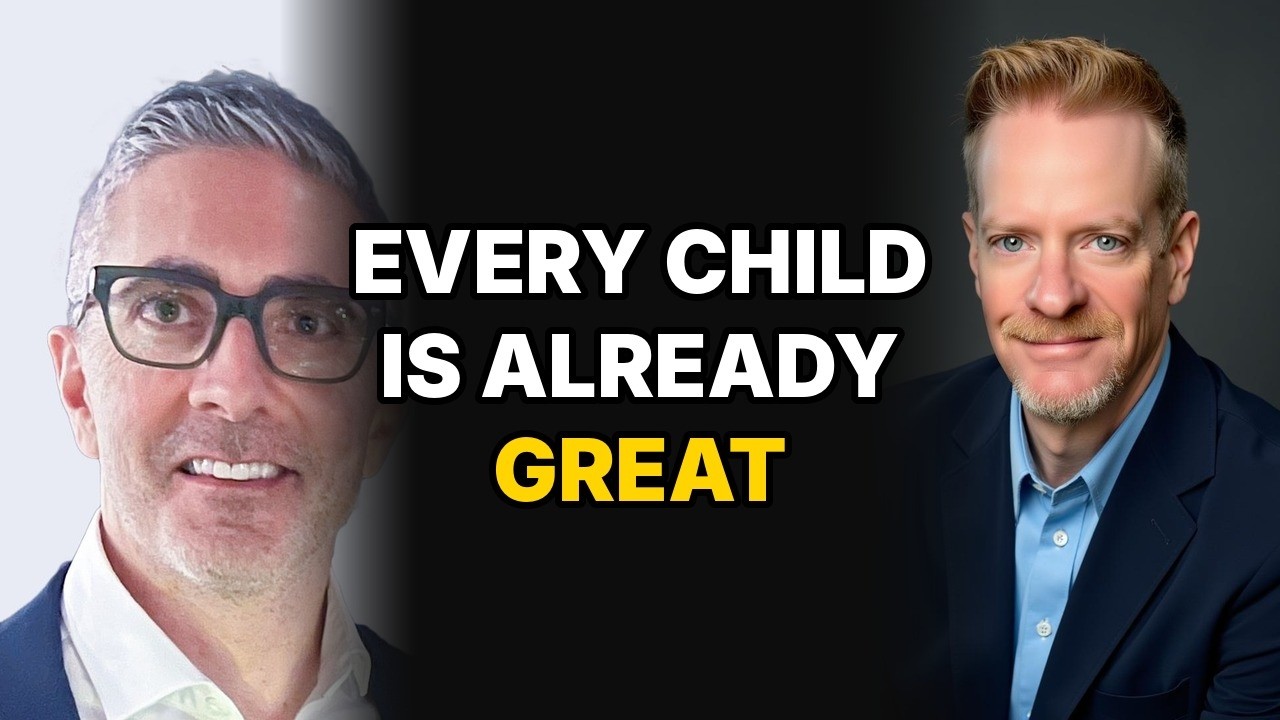
🎙️ From Foster Parent to Founder: Derek Bullard of Already Autism Health
Derek Bullard, founder and CEO of Already Autism Health, became a therapeutic foster parent at 23 and never looked back. He built and sold Access Family Services, struggled through a retirement that left him without purpose, and returned to launch an autism care company now serving children in seven states. He shares why vulnerability made him a better leader and how to choose the right private equity partner.
✨ Key Insights You'll Learn:
Fostering a teenager at 23 and finding a calling
Ignorance as fuel for a first business
Leaning on the team when 2008 erased profits overnight
Honest conversations with staff, landlords and vendors
Selling to private equity to take chips off the table
The identity crisis after early retirement
Building systems and leadership ahead of growth
Sharing equity with the team that took a chance
Choosing a PE partner that gives you a seat at the table
Being happy with the cash at closing
🌟 Derek's Key Influences:
His mother: foster parent who opened the door to his calling
James: the teenager who changed the course of his life
Case managers and social workers: coaches through his early fostering
A peer group of exited founders: support after his first sale
His wife: business partner in their Smoothie King franchises
👉 Hear why one "few days" placement turned into a 30-year mission serving children and families.
Listen to the full episode here
Transcript
Foster Parenting and the Start of a Helping Career
Anthony Codispoti (00:00)
Welcome to another edition of the Inspired Stories Podcast, where leaders share their experiences so we can learn from their successes and be inspired by how they've overcome adversity. As you listen today, let one idea shape what you do next. My name is Anthony Codispoti, and today's guest grew up in a home where his mother took in foster children. Years later, he became a therapeutic foster parent himself.
And opened his home to a teenager. In 1999, he founded Access Family Services, grew it to 11 offices across the Carolinas, and sold it to private equity in 2012. He went on to launch Already Home Care, lead Siskin Children's Institute, and start again in autism care in 2019. Along the way, he and his wife were named Smoothie King's national franchisee of the year.
Derek Bullard is the founder and CEO of Already Autism Health, which provides autism therapy and diagnostic testing for children in seven states with roughly 450 employees. The company ranked at number 132 on the 2024 Inc. 5000 after growing 2,600% in three years. In 2025, it closed an investment led by Triton Pacific Healthcare Partners and acquired two autism providers within days of each other.
But before we get into all that good stuff, today's episode is brought to you by my company, AddBack Benefits Agency. And you'll want to hear this because it's hurting almost every business you know. See, health insurance costs go up every single year, and behavioral health providers are furious about it. They're paying more, claims are getting denied, employees are opting out because they can't afford it, and it hurts turnover and morale. It's one of the most maddening problems in running a business, and everyone just seems to accept it.
But you don't have to anymore. Now there's a program from Bain Capital Insurance that gives employees unlimited access to doctors, therapists, and prescriptions with no co-pays or deductibles to meet. It works for your part-timers, and here's the part that really shocks most people. Our program actually increases your net profits. We recently helped a client add, that's add $900 per employee per year to their bottom line.
Results vary, but imagine what could be done with the extra cash flow. Get your free consultation today at AddBackBenefits.com. All right, back to our guest today, the founder and CEO of Already Autism Health, Derek Bullard. Thanks for making the time to share your story today.
Derek Bullard (02:35)
Thank you for having me, Anthony. Really excited to be here.
Anthony Codispoti (02:38)
So Derek, your mom became a foster parent when you were growing up, and years later you kind of followed in her footsteps. She became a therapeutic foster parent and took in a teenager. What does a therapeutic foster home do that a regular foster home doesn't?
Derek Bullard (02:54)
Yeah, just it real quick, two things. So I I'd really my mom became a foster parent a little later in life. I was actually in college when she became a foster parent and she lost her job at a large bank um in the Carolinas that she'd been with for about twenty years and had always wanted to work with kids. And like a lot of us, she you know, just career wise was roped into her career and they closed her department. And I thought at the time I it was just
Getting out of college, I thought I've got a little brother. You know, I'd I I can go out and shoot ball and take him to the movies. And he had some pretty complex medical needs. And so um I got licensed really just originally to do respite for my parents. I got licensed as a therapeutic foster parent where I could give them a break and kind of do things with their foster son. And um through that, um, I ended up after a few days of having my license, got a call from a social worker, said we've got a child.
He's got some pretty specific medical needs. Um, would you consider taking him for just a few days? because I had no aspirations of of really being a foster parent, frankly, to be honest with you. And um decided I would would take him into my home for a few days while they look for a permanent placement for him. And long story short, he lived with me for about four years. It just it changed the course of my life. Um, and to back to your question of what's a therapeutic foster uh parent, it's a it's a foster parent that serves children that have some
pre specialized needs. Usually they're older kids that have been in many homes. sometimes they have a history of abuse neglect or they could have some pretty complex medical needs. So it it requires some specialized training, specialized oversight and licensing. Um and again, I I never had aspirations of doing it twenty two, twenty three years old, I was very young. I it just I kind of backed into it, frankly. So
Anthony Codispoti (04:45)
And you said it changed the course of your life. So is this where your journey into helping people began?
Derek Bullard (04:51)
It is. It is. Yeah. I I thought that I was going to go into finance and banking and and that would be my career. I was actually working for Nations Bank at the time. And um the young man that I took in, he he doesn't mind me sharing this. He's in his forties now, by the way. And and um but um when I took James in, I was in banking and was in banking for most of the time in which he lived with me. And um I really became passionate about advocating for him, learning about um
services that he needed, whether it was educational or medical, and just the system. And it just I kind of became obsessed with it. And um my foray into the helping profession while I was at the bank, you know, Nations Bank used to really, and they still do, Bank of America really promotes volunteerism. I took a class through the bank on grant writing and volunteered with an organization uh while James was still with me on to write a grant. And
That was kind of my segue into and out of banking and into, you know, healthcare and and really the helping profession.
Founding Access Family Services
Anthony Codispoti (05:55)
So help me further connect the dots here because in nineteen ninety nine you started Access Family Services. This was a community based behavioral health company for children and families in the Carolinas. It
Derek Bullard (06:06)
That's right.
Anthony Codispoti (06:07)
the grant that you wrote was it specifically to open up this business?
Derek Bullard (06:11)
It was not. So um again, I was at the bank. I probably had been at the bank two or three more years and James was with me and that same social worker, oddly enough, that called me to place that place James in my home, left um the organization she was with and was the executive director of a nonprofit in Charlotte called the Family Center. And um I ended up they got the grant and I ended up going to work with her. I left the bank and did that for about two years from nineteen ninety six, ninety seven.
Until nineteen ninety-nine. And my foray into founding access family services, the uh Mecklenburg County, which is in Charlotte, put out an RFP, a request for proposals to develop an innovative program for children and families. There was nothing like it at the time, but for therapeutic foster parents, where you could um serve, provide medical services all under one roof, case management, foster care. Um, and I approached the executive director of that organization that I was with.
That nonprofit and said, this really fits well within our mission. I think we should pursue this. And um, they didn't want to pursue it. And I went home and kind of obsessed over it, which is is what I do, like a lot of entrepreneurs and and you know, just people in general, obsessed over it and figured out how can I make this happen? And I went back to her about a week or two later and said, Listen, I I'd like to do this myself. And she
I I wouldn't say laugh, but she sat down with me and said, Do you you know, this is a really complex undertaking. Do you know what you're getting into? And I did I didn't. I thought I did, but I didn't. And um I wrote a an RFP and probably about two two months later was standing before City Council and several others in the city. We got the RFP and that was um we got the contract. And so that was kind of my foray into launching Access Family Services in nineteen ninety nine.
Anthony Codispoti (07:56)
You know, I hear this story so many times and I've been in the position myself where ignorance can be bliss when starting a business. If you had any
Derek Bullard (08:03)
Yes.
Anthony Codispoti (08:04)
idea what was in front of you, so many times we wouldn't have, you know, taken that road.
Derek Bullard (08:10)
That's right. Yeah. Yeah. I ignorance is in many ways. Um, you know, I think had I known what I would have was getting into at the time or knew what I had to probably overcome to get not just the contract, but to get the launch, I may not have done it. and I think that ignorance, um, you know, in some ways gave me confidence, but it also you know, drove me to to really, you know, knock down walls and to work twenty hours a day for several years to get this going. So
Vulnerability, Asking for Help, and Learning to Lead
Anthony Codispoti (08:39)
So I want to back up a little bit because you talk about, you know, how you took James in and this really changed the course of your life. And this was a a kid that had, you know, some special needs. He needed some extra attention. It takes a special kind of person sitting in your seat, Derek, to be able to do that. Did you know that you had that inside of you, or were you surprised as you were sort of watching your life unfold in front
Derek Bullard (09:04)
Yeah.
Anthony Codispoti (09:05)
of you?
Derek Bullard (09:05)
So I I knew I had it inside of me. And I think that's even what kind of opened me up to going through the licensure process to even kind of do rest for my my parents. But I also wanted to have connection at that age. I yeah, again, going through college and, you know, young, I I knew that um and and had started my career kind of at the bank. I knew that I wasn't the my career at the bank was young, but I I kind of felt early on, this is not for me. What do I want to do with my life? And
I had a sense that I always wanted to work with people, whether it was senior citizens or kids. I've I've loved children. Um, but I didn't know specifically what that would be. And so when I took James into my home, it wasn't this is a great career path, or this is it was, you know, I'll do this for a few days. And after a few days, frankly, um a few days, it didn't automatically say, Hey, I'm committing to this long term. A few days turned into two weeks, and then two weeks turned into a month, and then after a month or two went by, I thought,
I can do this. Like I I can I can actually do this. And there's a term for this now. And you probably hear well, I'm sure you hear this, Anthony. You hear it in business. And I had a little bit of imposter syndrome because I would go into training classes or meetings and and you know, I'd be in in groups with folks that had raised kids or they, you know, here I am at a very young age, 23 at this point, probably, and um I have this teenager that I'm not much older than, you know, and and not only am I not much older than he is,
You know, he's got some pretty significant needs. And so, i in many ways, again, that ignorance, even going back to that, um, it helped me in some ways because I think uh you know, that that four year journey of having James with me, I learned so much. And one of the things I learned is is not be afraid to to admit what you don't know and to ask for help and to lean into that in security. Like that I I mentioned imposter syndrome. I I had some really good case managers and social workers we work with and and
was really comfortable and saying, you know what, I'm I'm I'm struggling with this. I'm I'm I'm learning and um it it helped by being vulnerable, I would say.
Anthony Codispoti (11:11)
And how were they able to help you in return in response to your vulnerability?
Derek Bullard (11:16)
Just coaching me and guiding me and giving me the confidence, role playing, you know, conversations. You know, here I am, I'm six, seven years older than him, and I'm having quote unquote really adult conversations that, you know, many folks are in their thirties and forties having with teenage kids, and I'm twenty three years old and you know, trying to guide him and direct him and and um help him and advocate for him and let him know that I'm here for the long haul. I'm not going to abandon him like it happened so many times before.
Um, you know, they gave me the confidence and, you know, the the ability to kind of navigate some of those really complex conversations. And it it that also helped me in business and and, you know, my my subsequent business ventures, a lot of that. I used some of those same skills in working with James with employees and with my own kids, frankly. So
Anthony Codispoti (12:05)
And so you think there's some s kind of uh almost a secret hidden power to being vulnerable with folks?
Derek Bullard (12:11)
absolutely. Absolutely. There there is. And I I would say this, Anthony, even in, you know, I've been in an entrepreneur now for about thirty years. And early in my career, I would say, you know, I felt like you have to carry every burden. You've got to act like you have all the answers, even when you don't. You know, you want to put forth a a really strong face, a strong front facing face. And you can still do that. But you you also, I think, especially in this day and age, uh, you know, our employees and our staff, they want to know.
that I'm in it with them. They like the vulnerability. I'm I'm and actually it's freeing. It's freeing for me to admit and say, you know what, I don't have all the answers. Let's let's talk about this. What ideas do you guys have? And, you know, let's work through this together. And there was a time I'd say early on that I struggled with that. Um as you go through bumps in the road and you learn, I think I've learned that um the more open and transparent I am with staff, I think um it it makes it easier to knock down those walls and to overcome obstacles that you you invariably will face, that y you will face.
The longer that you're in business. So
Anthony Codispoti (13:14)
And so maybe early on there was this sense of vulnerability could have been seen as a point of weakness. And so
Navigating the 2008 Financial Crisis
Derek Bullard (13:19)
Yeah.
And I'll g let me give you in a specific example as I think think through this. So in in we we opened Access Family Services in nineteen ninety-nine and we had four or five years of really strong growth. We were able to to go from you know one employee to fifty to a hundred and each each kind of step along the way, each milestone as we grew and each you know as we serve more kids and expanded, um, you always think that next milestone is going to make it easier. It's it's you know, it's going to be
You know, so we had four or five years of really strong growth and and pretty pretty I don't want to say smooth selling, but everything went right. And then in 2008, I woke up, came into the office, and overnight um you know the e economy collapsed. Um, insurance rates and reimbursements were slashed almost overnight. And we went from making money, and we weren't making a ton of money, but we were making money to losing almost two million dollars a year overnight with no notice. And
I'll never forget. I I pulled all of our senior leadership team into an office in Charlotte. We sat down and I realized I had to be really vulnerable. Like this is not something I can figure out without their help. This is not something I can do because if we don't survive this, it's going to affect where children lay their heads at night. It's going to, it's going to disrupt care, it's going to disrupt our employees. Um we sat in that room, that that office for from about 11 o'clock in the morning to probably two o'clock in the morning. And
brainstormed around what we need to do next. And one of the first steps that we came to is we need to sit down with our staff in groups and let them know what we're faced with. And Anthony, I will tell you, um we didn't have to lay off anyone. We we did salary reductions, but in many cases folks volunteered. They said, what can we do? Can we, you know, whether it's reducing our salary, whether it's working reduced hours, we
folks came together because and this wasn't a situation that was just facing us or other organizations and there were organizations that went out of business, but they believed in the mission and I think that vulnerability of me of sharing with them, I didn't pretend that I had it together and that I could figure this out. And through that I really reinforced and I learned and I've used it this lesson ever since that, you know, honesty with your staff, your employees, and it it doesn't mean you share every little detail. They've got jobs to do, you don't you know the ins and outs. But I think the big things, the challenges we face, the the
you know, the good bad. We we we're really good at celebrating the wins, but you know, in in the struggles and the insecurities that we have, uh not always so great at it at sharing that. And I've gotten much better at being transparent around I I don't have all the answers. And I have insecurities as well, you know. So
Anthony Codispoti (15:57)
I love that
story. I appreciate you sharing that specific example. And it maybe I've done a little bit of a disservice to the listeners because we we called this a behavioral health company, but uh say more specifically what it is that you guys were doing.
Derek Bullard (16:10)
Yeah, so we we started out as a primarily as a therapeutic foster care provider. And we licensed foster homes, we serve children, and over the course of of ten, twelve years, we expanded, we provided partial hospitalization services, day treatment, a lot of what you would consider kind of cognitive behavioral brick and mortar therapy. Um we provided, we partnered with school systems, we we provided an array of behavioral help services, but we really primarily started as a foster care, therapeutic foster care organization, and specifically
our specialty and kind of our niche is we serve older kids that um often in foster care and adoption people start out they want to serve young kids and those older kids that have have really not had a fair lot in life and oftentimes have have bounced from home to home to home. That was really the niche that we carved out. We love working with those kids. We love the challenge of, you know, placing those kids and helping them with um, you know, their mental health challenges and their educational needs and their medical needs. And so that really became
Our specialty was serving those kids that a lot of other organizations did not want to serve because they were they were in in fairness and honesty hard to place, frankly.
Anthony Codispoti (17:20)
So were you guys organized as a non profit? Were you able to like go and ask for donations and raise funds when you were going through this rough spot in two thousand eight?
Derek Bullard (17:25)
That's great. So we were
not it we were not organized as a nonprofit. And when I went into starting this organization, I originally was going to go into it as a nonprofit, but I had to bootstrap it like everyone else. It's friends, family members. I I pulled out money out of a 401k at the the advice of everyone else not to do that to get the organization going. And um wasn't sure at the time how to get that back, how to recover that, how to pay my parents back because they became business partners. I was really young when I started the business. And so
Started it um as a as a an S cor we were a corporation and an S Corp. Um and um and it's and really we were we were a behavioral health organization. I mean we were a healthcare organization that was we were providing healthcare services. Um we also had psychiatrists on staff that were diagnosing and um say foster care, but we weren't a traditional uh foster care. We were a foster care organization that served children with mental illness. Um and and that's why again our niche kind of became serving older kids. So
Anthony Codispoti (18:24)
Gotcha. So I want to go back to the period of rapid growth before you hit the stall there in two thousand eight. What is it that you guys were doing that was leading to this growth? Was there something special on the sales and marketing side, or was it there was just such a need that the I don't know the the business and I'm using air quotes here, the clientele, the the the clients, the patients just kind of fell into your lap.
Derek Bullard (18:47)
I think it was it was probably a combination of both, frankly. Um, we were in the early two thousands probably one of the first most of the behavioral health organizations in North and South Carolina were s really small mom and pop organizations, as were we. Um I think one of the things that happened pretty quickly, New Hanover County, which is Wilmington, North Carolina, heard about the work that we were doing with our our therapeutic foster care program and um called us out of the blue and said, Hey, we
We have a similar problem. We have kids that are teenagers. We're having a really difficult time placing. These are kids that have some pretty significant issues. Would you consider you know working with us and replicating that? And so we expanded into Wilmington. And then shortly thereafter, we expanded into Asheville. And and it just it kind of happened that way. And then really just uh y you know, organically, we we started building systems in the business because to manage the business, we were no longer we we had offices and locations that were five, six hours away.
you know, out of necessity, I understood pretty quickly we needed to have oversight of those homes and and the billing and and we need to have, you know, quality measures in place where we're inspecting the homes and and that required centralized systems. And so um part of that probably was some of my banking background, a little bit of that was fear as well, quite frankly, the diversification that we had, um some adding some additional services, just knowing that as we grew and we went from organization that had a million in revenue, then five million, then ten million and fifteen million revenue that
didn't want to be beholden to um any one payer, any one location, any one um, you know, service modality. So it's just we started diversifying, and some of that was out of necessity, some of it was just out of out of fear, quite frankly, and some of it was out of just learned experience over the course of those years. Uh I I would say the other thing we did really well and healthcare in general is is not just the clinical care, it's healthcare's logistics. It's how how you onboard your patients, how quickly you respond to them. And
We became really, really good um at uh our intake process. So if someone called us, we we always picked up the phone. And if a placement was needed, we always were licensing homes ahead of the need. So I always had an excess of need. So it allowed us to move really quickly, which was one of the other things that set us apart.
Anthony Codispoti (21:02)
So talk to me a little bit more about how you got through that two million dollar shortfall. I mean, y you know, staff are raising their hands and you know, you guys are implementing salary reductions, but I'm going to guess that doesn't make up for that whole difference there.
Derek Bullard (21:14)
It was a combination of sitting down with our landlords. We had several that worked with us throughout that process. Um we had one or two leases we were able to shed. And I could go into I won't I won't share all the details. We had one lease, a pretty significant lease of a large facility that we were we were had just signed the lease and we were getting ready to open that we were able to get out of that helped significantly. We we were transparent with all of our vendors, whether it was our internet providers, our maintenance folks, every single expense in the organization, we had a very honest.
phone call. And I would say also that honesty, we were we were it was a challenge we faced, but it was a challenge that many businesses across many industries faced. So I think that made it a little easier. I mean there wasn't a sense when we would approach folks of of distrust. Some of those vendors that we approached were having the same issues um with their own banks. Um some of those landlords were having issues with concern that their property was going to be called. But we we had a
Probably I would tell you, Anthony, in hindsight, I think we probably had a sit down not with just with our staff, but forty or fifty face to face meeting with our vendors and almost to a T, from my recollection, every one of them worked with us. But I will tell you almost to a T, every one of them within, you know, a year to two years, we recovered and we continued working with them. And some of those same vendors, I many of them I still work with to this day, because we we went through that together. Um
Anthony Codispoti (22:36)
Yeah, I love that. Um, you know, 'cause they didn't have to do that, right? Like they could have
Derek Bullard (22:41)
That's right.
Anthony Codispoti (22:42)
hey, we've got a contract, these are the rates, they s stick to Um, but you know, it's it seems like the the relationship was more important there. It was the
Derek Bullard (22:50)
Yeah.
In and you know, going back to two thousand eight, it was such a challenging time for so many folks. I think, you know, i I was empathetic to many of those same, you know, vendors and and many of them, I'd say the vast majority we continue paying them, but we paid them a reduced fee, you know, or a reduced rate or reduced rent. And we were able to make up the vast majority of that shortfall. And and within I'd say two to three years, we had actually created we had it we'd grew.
believe it or not, we continued to grow and we created more value. So um it was one of those things again, just you know, having to be vulnerable. But we were we were also a little bit fortunate that this was a this was a shared experience thousands of Americans were going through. This was something that, as you know, was highly publicized. So it wasn't like I was approaching our vendors saying, Hey, we're we're struggling. They they knew, you know, they knew this this was stuff that was well publicized. So
Selling Access to Private Equity
Anthony Codispoti (23:42)
So obviously, as you're talking about here, you were able to turn the ship around, you guys grew and in two thousand twelve you sold Access Family Services to HIG Growth Partners as a private equity firm. How
Derek Bullard (23:54)
Yes.
Anthony Codispoti (23:54)
did how did this deal come together?
Derek Bullard (23:57)
Like a lot of things, that kind of combination of luck, divine intervention, and a and variety of things. I'll go back a little bit to around two thousand seven um and just touch on real briefly. Um, I was a meeting with my attorney, uh we were redoing, we had we had changed some of our benefits, we were redoing our employee manual, we were just sitting down with him and through that conversation he said, D do you realize what your do you know what your business is worth? And I said
No, and I had never thought about Anthony, quite frankly, ever exiting. I d you know, I I didn't know what EBITDA was and what an exit I had no idea like what an exit strategy was. And he said, I think your business he he threw out a number and I said, What? Like there's no way. Like there's no way it was is worth that. And so I learned kind of for the first time around two thousand seven that as you know, we'd reached a point where I could probably, if I wanted to, pull in some institutional capital of some sort. Um and um
It wasn't long after that, it was less than a year after it the economy kind of collapsed and and that that value that I thought I had was erased, frankly. But I learned through that conversation some of the things and through what we went through in 2008, some things I could improve to make our business more valuable. So on the other side of that, I could pull some chips off the table because at that point it wasn't just the initial capital we had invested in the business. We I did not I I was driving uh the same car that I'd had in nineteen ninety-eight.
by two thousand and eight. Like I was pouring everything. And in healthcare, you you're constantly, you know, you're floating accounts, you know, receivable, you're floating payroll ahead of the knee. And you're you're, you know, chasing down money two and three months. So that's part of what I was going back to in the early conversation, saying that y you know, it's that every milestone you think of, we're just a little bigger, it'll make it easier. But but that nut keeps getting bigger. So long story short, um
In 2011, I was actually wanting to raise some non-dilutive capital to expand and to take some chips off the table. And we ran a process and through that process we had several LOIs. The only um LOI that we got that was a total, for the most part, kind of acquisition was the one through HIG Capital. And it's the one that I thought I wouldn't take, frankly. So um I'll stop there and pause, but um
Anthony Codispoti (26:13)
You didn't think you would take it because you still wanted to be involved. Like you still had plans to grow the business. This was just a a way
Derek Bullard (26:18)
That's right.
Anthony Codispoti (26:19)
to take a little bit of money off the table to kind of recoup some of the investment dollars.
Derek Bullard (26:21)
That's right. And that's
exactly right. And and I went home and you know, one of the things I've I've learned over time is to kind of sleep on things and to to sit on them. My initial reaction is like not interested and kind of pushed it off to the side. Valuation was fair. I thought it was very fair. Um and over the course of about a week just in talking to my wife, and keep in mind too, uh we had twins that were born in two thousand five. And you know, when you're growing a business, and and again you and many of your listeners know this, y you
I was on the road a lot. I was gone three, four, five days a week. And even when I wasn't on the road, I was immersed in the business. I'd missed a lot. I I was present. I was a good good father. But also there was a lot I missed. I felt like I missed. And this exit um would allow me, you know, the flexibility to to have flexibility. It would allow you know, opportunities that I never knew would have existed, never dreamed of. And so just that conversation with my just evolved. And
Also, it was fresh in my mind what had happened in 2008 where we were really precariously close to losing everything, including our home, which was mortgaged to help grow the business, by the way. And so um going through that experience, I just I came to the resolution that I think this is probably the right time to exit. And I still stayed involved after the business, but that's kind of how that the thought process behind that was how that evolved.
Life After the Sale and Finding Purpose Again
Anthony Codispoti (27:41)
R you stayed on actually as CEO for two more years. I'm curious how your role changed once private equity was in the picture.
Derek Bullard (27:49)
Yeah, so a a great question and it it it kind of will lead into I guess what we'll talk about here shortly, but we were a roll-up. we weren't the platform company that was acquired. Uh they had acquired a really large behavioral health provider in Massachusetts that had a multi-state presence and they were looking for kind of a southeastern United States presence. So I remained on a CEO of president as Access Family Services. We retained our name.
And stuck around for about 19 months afterwards. We did a few acquisitions and and integrations of those companies throughout the southeast. And I had was physically, quite frankly, to be honest with you, and I was physically tired by the time 2014 kind of ran around, you know, came around. I was tired just you know, fifteen years, almost fifteen years of of high growth and and everything that brought to that. And so decided um in late 2013, I sat down with um HIG and the organization that said, you know, I'm really
physically think it's time to step away. And we came up with a transition plan and about seven months later, in want to say around March, April of 2014, um, exited the company and thought I wanted to retire, quote unquote, at 42. So it was terrible. I
Anthony Codispoti (28:56)
How did that go? Did you enjoy the retirement?
Derek Bullard (28:58)
was terrible, it was terrible. Within probably 90 days I was miserable. I was depressed. I was depressed. Um and and it sounds crazy, Anthony, when I say terrible for someone who is
blessed beyond measure, you know, just you know, something I never would have imagined, just to have opportunity to grow a business and to have a legacy that would continue far past me. But um, you know, I realized really quickly, um, you know, staying at home twirling my thumbs and not really having a mission and a focus and something to wake up to every day that's, you know, career wise, it was a struggle for me, uh, after fifteen years. I'd I'd say the first few weeks was great. I was we traveled a little bit the first few months, but after all the dust settled and
You know, I'm sitting at home during the day, I I was I was bored and I was miserable. And probably driving my wife crazy too, by the way. So
Anthony Codispoti (29:47)
This is such a common story. Uh I've talked with lots of founders. I've been through this myself and previous exits too, where right, this feels like the finish line that you've been working so hard to get to. It's like, oh, I'm finally here. Like I can just unplug, I can relax. You know, life is just going to be easy. And then for me, and I'd be curious if this was part of the case for you, Derek. Part of it was I didn't realize how much of my identity was attached to the thing I was doing before.
Derek Bullard (30:12)
That's right. Yeah.
Anthony Codispoti (30:14)
So now I've got this existential crisis of like who am I? How do I fit into this world? What's my purpose?
Derek Bullard (30:19)
What's my purpose? What's my worth? And again, I I my wife and family and mom, everyone is totally supportive. It wasn't that this was my own insecurity and my own kind of, you know, stubb baggage that we bring to that. But um it absolutely was I I struggled with and I struggled with it mightily. and I I kind of stumbled around for about a year, year and a half, and then I I found that another organization, um, already home care, which
when I exited Access Family Services, I had a five year non-compete and that kind of barred me from working with children and families in in several states. But long story short, I find founded a non-medical home care company. Um and then, you know, eventually ended up going to work for a nonprofit in Tennessee as well, uh, Cisco and Children's Institute. That's what led me there um over time. But um I I through that I learned that I've got to have a purpose in life and and
You know, it's it for me, it's I really love the helping profession. I love healthcare. Um, I've invested in other businesses, real estate and franchises, and they've all been it I've learned something from each of those businesses. But for me I just I love figuring out the logistics of healthcare and and the mission behind it. And for me, I I I don't know if I'll ever fully retire um as a result. So
Anthony Codispoti (31:34)
You know, and this is also a common refrain as I talk to people like, How did you get out of that? How did you get out of that depression, that that slump that you were in? And the answer over and over again is I got busy. I found that purpose again. Was there anything else that kind of helped? I don't know whether it was therapy or uh peer groups or anything like that.
Derek Bullard (31:53)
I'd I've done I've done both. I've done it all. I've done the therapy, I've done peer groups. Uh and I actually I I would recommend it. I again I I was uh part of um my first ex that I exited with the I had a investment banker I C G Capital. Um they connected me. I connect with several other entrepreneurs that we had kind of a little informal group that where we would meet, we would have breakfast or lunch a few times a month and they were all we were all going through it's it's interesting you mentioned that
Kind of going through that and meeting others. It's very common. We were all going through something very similar, like what's our purpose? What are we? We were bouncing ideas back and forth about business opportunities, but it wasn't even really about the business opportunities. It was about that shared experience of what we were kind of going through and having someone to share that with. I also um had a coach, um, a psychologist that I was working with that was just coaching me and kind of trying to get to the bottom of what is it that's driving me to.
to to want to to not be settled, you know, because it it's embarrassing to say, you know, I'm I'm quote unquote retired. I can stay home. I can travel, but I'm also not happy. Like that's there's something with that. That's like sharing that feels there's a little bit of shame in sharing that when I have friends and family that are getting up working hard jobs and they're they're doing things that um sometimes they don't they don't they don't want to do to put the food on the table. And here I am at home and I'm complaining. You know, it's it's
There's something to that that you just you don't want to share. And so sharing that with others that are going through the same thing helped. It certainly helped.
Anthony Codispoti (33:21)
Yeah, you you almost feel like there's something wrong with you. Like how could I not be happy in this situation? Like what's broken inside of me? So
Derek Bullard (33:24)
That's right. That's exactly right. Yeah.
Anthony Codispoti (33:29)
talk to us about already home care. Was this also a successful business? Did you grow and exit this one as well?
Derek Bullard (33:34)
It was. Yeah.
No, I I sold that to a strategic. That was a little bit of a different uh that was a little more it's a little more transactional. I went into that business which I I don't um, you know, I learned I've learned something through every iteration of what I've done. Um I it was a business that I went into business with some other capital partners, um, one of which was an institutional investor, and they knew that I was miserable and they knew that I had really had a experience in licensing and growing a healthcare company. And they said, Hey, this is a
segment of healthcare we'd love to go into. Are you interested? Would you be interested in investing? Would you be interested in launching it and running it? And at that time I was not interested in actually running a a business like that on a day to day basis, you know, five, six years over over time. So I agreed to launch it, get the contracts in place, um, to to run it for the first year or so and then kind of hand it off, which is what I did, handed it off to an operator. And then we exited out of it several years later to a a um
strategic. It w it wasn't a PE investor, it was a competitor, larger, much larger competitor of what we do. Um and but again, um I learned through that as well. I've I've learned that that again for me it's it's something I really have to be passionate in. I have to be willing to really devote twenty four hours a day, you know, seven days a week as as much as I can with balancing my family life. And that was a business I love, but I I I've always gravitated back since I left Access Family Services towards children.
It it's just my passion is working with children. So
Anthony Codispoti (35:03)
So already home care and we're going to get to already autism health, which is uh part of your main focus today. Where does the word already come from? Why is that important?
Derek Bullard (35:12)
So yeah,
so so two things. So already home care. When we were bouncing around starting this home care company, um I was I was in the car with my wife and we were just, you know, brainstorming. I had prayed over names and thought about what would be an appropriate name that is is, you know, conveys with folks when they're searching for us, that they know right away what we're doing. Um, you know, a a lot of what you have in the home care space, especially the non-medical home care space, you have franchises, you have comfort keepers and
a lot of these, you know, and and uh short names that resonate that people know right away what they do. And one of the things I was talking to my wife and she we were talking about her grandfather. He won he wanted to he was going through a very similar situation. He wanted to stay home and he couldn't take care of himself. She's like he's already home. He wants to age in place. And I thought say that again like already home. And it it it just resonated. And so that's how already home care came about. For the my current business, um
You know, working with children with autism, they are special. And one of the things I've always said is is we're not here to change these children. These children, they bring many unique abilities, they're smart, they're capable. Um, they're already special, they're already great in many ways. And so that kind of resonated as well. We're we're we're here to really enhance and to help them become the best version of themselves that they can be. Uh and they're already there. How can we help support that? And so we did a survey with um
several, you know, folks in the field and we had several names and that was one of the names that resonated, kinda for the same rate, the the same reason. That that, you know, uh that that word already was memorable, it was easy to search. And it also kinda tied into our mission of uh we're here to enhance and and the children and families we serve. They're already they're already special. They're already unique and great and they have just so many great things about them. So
Starting Already Autism Health
Anthony Codispoti (37:02)
So
what was the idea behind already autism health? What is it that you wanted to do and who did you want to serve?
Derek Bullard (37:08)
So again, I'll make I'll try to make this quick. So this sprung about through a reunion partially with several of my staff that I was with at Access Family Services in late 2019. Um, you know, when I left Access Family Services, many of those folks that I with, especially on my senior leadership team, we had gone through that two thousand eight incident and we had knocked down walls and we had done things. They were still with the company that HIG owned several years later.
And they were in various roles. And at that point in time, they were it different iterations of the company. And we had a a reunion over the Christmas holiday. And um we were all kind of reminiscent about just stories and and things that we had shared and and history and how we missed each other and how they missed working with me, and I missed working with them. And um through my experience working for this nonprofit, leading this nonprofit, Siskin Children Is Institute, it really exposed me to
How in-demand services for autism were, and how there's wait lists all over the country, and learning that it's Cisco and knowing that I was also transitioning out of Ciscon soon and kind of you know thinking about that next step. Um, over the Christmas holiday, we we just decided we were going to work together. And so I ended up hiring Anthony. This was crazy in hindsight. I hired um six senior leaders. I hired them away from really great jobs that they had from the company that acquired us in 2012. And
Um, they all started around March, February, March and then COVID hit. So I pre revenue and then I had six folks that I had committed to that um you know, that were really high salaried employees that frankly that that it it delayed our launch significantly. Um but uh you know, again, I it it it it it just it sprouted out of that. So
Anthony Codispoti (38:51)
So they must have believed in you and the idea a tremendous amount to have left a well paying job at a stable company to come into a new startup.
Derek Bullard (39:03)
That's right. They did. They they certainly did. And and I mean I believed in them as well. And that um kind of similar to the to the 2008 um economic collapse, you know, hiring those folks and then COVID hitting and you know, we were planning to launch in April. Um we weren't really launched, we were pre-revenue till probably September as a result. Um our first year we lost, you know, almost a well over a million dollars. Um but I will tell you in hindsight, we had that
Downtime allowed us to create systems and processes and put software in place related to our HR, our recruiting mechanisms, our electronic medical record, our CRM, a lot of those things that we were going to do kind of as we grew, we put all those things in place pre-revenue. And so when we did eventually launch, having an experienced senior leadership team in place that knew how to scale a business, that knew how to grow and knew how to hire and knew how to do all those things really quickly, having that downtime, um
allowed us to really accelerate growth once things opened up and and, you know, we were able to start serving children and families. It it it allowed us to really have that explosive growth that we had later. So
Anthony Codispoti (40:13)
So what was the service delivery model? Was it going into people's homes? Was it having the children come
Derek Bullard (40:18)
It was yeah.
Anthony Codispoti (40:20)
to you and you're helping them with physical therapy, occupational therapy, speech therapy? What
Derek Bullard (40:24)
Combination of all that. So yes, you're exactly right about all those services. Um it was a combination of all that. We started out as an in-home provider. Um had we right prior to launch, right prior to let's say March, April, we were looking for large clinic space. We were going to be a clinic based provider. Uh and and we are a clinic based provider. Um and had um COVID not hit, we would have been a clinic based provider. But what it did for us, um it it
We paused the clinic based services for reasons that everyone knows, the clinic based services and everything else, restaurants and everything else just kind of shut down. And there was a delay uh in kind of a lot of those services for months, even after we launched. So we launched as an in home provider. Even, you know, when we launched in September, we provided services in in the home. So we would send licensed therapists into the home to provide services to develop the treatment plan and to work with children and families, you know, in the home. And then I'd say probably early twenty twenty one it
first quarter of twenty twenty one, started looking for some clinic space. We when we first launched, um, you know, pre revenue, we were going to be a clinic based provider. We ended up now we're probably about fifty fifty. We provide about half the services we provide in the home based or school setting. We do have some school contracts and then we provide the other half of our service in in traditional clinic based setting. So
Anthony Codispoti (41:41)
And run through those services.
Derek Bullard (41:44)
So we provide um we we have a clinical psychologist on staff that does diagnosing and does autism testing, educational testing. We also do ABA therapy for children. We are not providing any speech or occupational therapy currently, but we are actually going to be launching and providing those services in the next few months. Um but we're primarily a autism provider, we provide those diagnosing testing services, both for parents and families, for insurance companies as well, and for school systems. We
Have some contracts where we go in and work with school systems and provide those services for schools. And then in a clinic-based setting, we provide what's you know traditional ABA therapy where we have most of the kids we serve are two to five years old and they have an array, it could be social skills, it could be communication, it could be you know sharing, pottying skills, a combination of things that we provide in clinic. most of the kids that we serve get about 15 hours a week of services. And and again, some of them receive services in home.
where we're working in a natural environment, transferring some of those skills and services with the p to the parent so they can provide those services. And then if the child's got more significant needs, then we provide those services in the the clinic based setting.
Anthony Codispoti (42:53)
So COVID really delayed things for you guys. You're carrying these heavy salaries, which you now look back and you know, with a a sense of gratitude because you guys were able to get your systems, your software, everything in place. Where was the investment coming from? Is this just you funding it or were there outside investors?
Derek Bullard (43:09)
100% it
was a hundred percent me funding it. Yeah. I funded the organization. And then again, it goes back to kind of the first exit or two I had. I was very fortunate. I I had the resources to to to fund it. So I funded it. And the one thing I would say as well, Anthony, when I recruited those folks, I did recruit them at really high salaries at the time, for high for where we were at, but I also gave them an equity stake in the company because I wanted them to have skin in the game. And frankly, um, they had a really small equity stake in Access Family Services.
But I felt like they earned it. They earned that. Um, you know, even, you know, pre revenue, they were taking a chance on me and they were taking a step back in salary and benefits and all those things. And so I felt like if we could really do this together, um, you know, at some point w if we ever have an exit, they they they deserve that. So
Building Systems for Rapid Growth
Anthony Codispoti (43:58)
So in twenty twenty four, already autism health landed at number one thirty two on the Inc. five thousand. This is after growing twenty six hundred percent in three years. What decision do you think most contributed to that rapid growth? What were you guys doing right?
Derek Bullard (44:14)
Uh number one, we had you know, we were we were operating this organization, you know, we were building it to scale because the demand for services, you know, really all across the country there's wait lists. So the demand was there. And like some businesses where you're you're having to find clients, there are there are clients on wait list in many parts of the country. So I think we were fortunate there. But so, you know, we expanded into areas where we we had relationships with insurance payers or we knew within a specific county. Um
A lot of the cities and states we operated in, some of the services are managed and the funding's managed by the city-county government. So we had relationships. We were able to call and say, hey, what's your need for these services? What does this look like? How can we help fill that gap? That's where some of that previous experience came into play and building services around that. So we we were very intentional about how we expanded. We did not want to be too far flung. In other words, didn't want to open an office or a clinic four states over.
But we were able to scale really quickly because we had a lot of those systems in place that frankly, you know, it it once we hit that million dollar in revenue mark, we had systems in place that would take us to twenty-five, thirty million in revenue. And and we did not have to change any software systems mechanisms getting to that twenty five, thirty million dollar mark, which was the range we were in when we exited from a revenue standpoint. We really built way ahead of the curve and we we really built our senior leadership out way ahead of the curve. And and so I I think just
being intentional about that was really what allowed us to grow and to grow not just grow but grow successfully. So
Anthony Codispoti (45:44)
You know, that's that part of what you just said there is really interesting, Derek. The part that you didn't have to change your systems, you didn't have to change your software as you went through that rapid growth. That's virtually unheard of, right? You put the infrastructure in for what you need right now to kind of get you from point A to point B. But then once you get to point B, those things that got you there, they're not necessarily the things that are going to get you to where you're going. But you guys had the infrastructure in place for rapid growth right from the beginning.
Derek Bullard (46:11)
We did. And and the difference I'd say between Access Family Services when I shared, you know, I didn't know what an exit was in two thousand eight or two thousand seven when I learned about this is and and I did not start this company again the same way with Access Family Service with an exit in mind. I started the company thinking, how can we best serve these children and families families and who do I want to work with too? What what do I want to have as a a company and a a mission and what we do? But I also knew to be successful and for me to have freedom, flexibility, sanity, peace of mind.
And not make some of the same mistakes that I've made previously, I needed to have those systems in place so we could grow. And and growth is really important for many businesses and healthcare, it's really diversification's important because you invariably have rate cuts or you have, you know, economic downturns and things that happen. And having gone through that multiple iterations, um, that also drew uh drove our growth. But I I was fortunate for my first two exits. I had some financial resources. I risked more.
than I thought I was going to risk going into this. frankly, I risked probably double what I thought I was going to risk. Um but you know, those systems and things we put in place I I knew that we needed to have early on. They'd be easier to start than to implement them after the fact. And so, you know, a lot of that was way overkill. Um, but eventually we caught up to the infrastructure we had in place by about year three. So
Partnering With Triton Pacific
Anthony Codispoti (47:31)
And Derek, in twenty twenty five you closed an investment led by Triton Pacific Healthcare Partners. This is a healthcare specific uh private equity group. Second time now working with private equity. What was the idea here? Is it again take some chips off the table or was there something else in?
Derek Bullard (47:48)
Yes.
Yeah. So sa same very similar situation. I had ran a process with um company called Lantern Advisors, Chris Rizzy, um about a year prior. And this was in early twenty twenty four where we we went out and we were trying to raise capital, just some debt, because again I had gotten at this point I was a few million dollars into this. I was very fortunate could absorb that. I said, Listen, we we want to keep growing. I did not want to exit. This is just being truthful. I did not because
I'm enjoying what I'm doing. you know, I've got a good balance. I've got a really strong senior leadership team in place that's exited before, and they've also done acquisitions. And so um we raised some non-dilutive capital. And um shortly after we raised that capital, we I was speaking at the autism conference in California. And shortly thereafter, when I came off of stage, I ended up meeting several folks in private equity that and just
traded information and um I always tell folks, I say, you know, take a meeting, meet with folks, engage, whether it's something you are interested in or not, because you never know where things could lead. And um I had been telling our staff, my k my key leadership several months prior that we won't exit. We're not going to exit anytime soon. And but I also had told them when we do and if we ever exit, it's going to be with the right partner and it's going to be a partner where um
We are literally in business with, we have a seat at the table, and we're the platform company. We want to be the driver of this. And um again, I did kind of the exact opposite. We didn't run a process. We did not run a you know exhaustive process with an investment bank like we had previously. This happened organically. I I became really close with Joe Davis, who's one of the principals at Triton.
Triton, unlike HIG, HIG had a four hundred million dollar healthcare fund to go out and and do acquisitions. Triton at the time did not have a fund. Um, I really connected with Joe and Asia Bromwell with Triton just and over time we just kind of organically happened. Because they didn't have a fund, we had an open dialogue about what we needed to do to go out and raise funds to to get our deal done. And that excited me. It was is a a learning opportunity for me. Again, a lot of investment bankers would have said, Don't do this deal because it's, you know, if you're
But for me, it was exciting because I was able to be in the room and and not just um you know, pitch your company, but to learn you know the sausage making behind the capital raise and what goes on behind that and what are the factors that drive value and what are the factors that you know institutional investors, family offices and other PE groups and secondary lenders are looking for when you're raising the kind of money we were raising. Um I really enjoyed that process. And so
I you know, we decided to do our transaction in August of twenty twenty four with them and then we closed in January twenty third of twenty twenty five. So
Anthony Codispoti (50:38)
So for you part of this was just a sense of curiosity, like, I've never been involved in the capital raise part of it. I wonder what that process is like. What a great opportunity for me to get my fingernails dirty and learn that.
Derek Bullard (50:50)
Yeah. Yeah, it was it was it was really eye opening. It was really for me another one of those, you know, kind of doorways that opened. I learned a lot. Um, I I really wouldn't replace the experience. Was very happy with the value. I I sold seventy-five percent of the company, I rolled twenty-five percent in, which um, you know, still gives me a significant stake in the upside. It it incentivized me to to stay involved and to serve on the board and run the organization. But um, so it allowed me to kind of
You know, pull some chips off the table, significant chips off the table. The other thing I will share with you, Anthony, and and again, they've shared this, so it's not a those same members of my senior leadership team, they many of them, I'd say I think five out of the six, and the other one is still, you know, heavily involved and has significant rollover stay, it allowed them to become millionaires, this transaction did, not just paper millionaires, cash millionaires. And these are people that really earned it. It made a significant difference in their life. And then I was able to a lot of our staff that have been with us the last few years that weren't part of that that
first exit now they have a s you know skin in the game. And so if we're able to provide good work and to expand and and good clinical services and run a good solid business, then it'll provide opportunities for them. And that was was also really I'm I'm really proud of that. Um, you know, several of the folks I was with at Access were able to to really be rewarded through this and their hard work and taking a chance on me uh as well was part of the driver. So
Anthony Codispoti (52:12)
Well, I understand if I got my notes correct here, within days of closing that deal with Triton, you also acquired a couple of autism providers. Do I have that right?
Derek Bullard (52:21)
The very
very next day, uh actually. Uh we went from about uh five hundred, six hundred employees roughly. We d about a hundred of those were part time staff, but to almost twelve hundred overnight. Um it was part of partially through the fundraising and and raising a capital process. Um, you know, we were looking for acquisition targets kind of early on, right after we signed our LOI, knowing that we would you know, we closed this deal, we would go out and and you know
grow organically but are also grow through acquisitions. And we had multiple companies we look at. We had had two that we thought were really attractive. Um and we began their due diligence sh probably November, I want to say, of of twenty twenty four. also learned through the process, sometimes the it is counterintuitive, at it it was counterintuitive for me. When we were fundraising with some of these larger institutional investors, the bigger check that they're writing at closing, the almost easier it is to r to raise funds, frankly. So it made it easier
To have those first two acquisition, you know, candidates lined up. Now we did not originally anticipate closing those transactions the day very next day after we closed. We envisioned having probably sixty, ninety days between the transactions. But the way that it worked, um, you know, we had gotten far enough along in diligence with them. We also didn't want to have multiple closings and you know, multiple financing rounds and everything else. So we just we closed our transaction on a Thursday and we closed those two on a Friday and um
again we went from about six hundred staff and then the very next day to I I think it was one thousand one eighty nine, right at twelve hundred employees that we had the very next day. So
Anthony Codispoti (53:56)
Do you see more growth by acquisition coming?
Derek Bullard (53:59)
Yeah, we certainly will we we're acquisitive and we're always looking for opportunities. Um but we we again just kind of this is where the partnership with the right PE group and I I tell folks, other entrepreneurs this who haven't gone through the process, I think the valuation is really important. And in my first transaction that I did, valuation was really, really important. The second go round for me, it was the r having the right partner. And one of the things that we aligned on early on is let's
Let's saturate the states that we're in. Let's really perfect integration. Um, and the re the three companies were in many ways very, very different. We had spent a lot of money on infrastructure and building our leadership team. One of the companies we acquired called CABS was based right outside of Chicago in Atasca. It'd been around since 2008. They were really sophisticated in the clinical services they provided, their clinical models. So they brought something unique to the table. And then Commonwealth, which was based in Kentucky and Virginia, and some of the
the regional, they had been open just a few years. And so, you know, we all complimented each other, but we were aligned in our partnership with Triton is let's not go out right away and start acquiring up, you know, gobbling up companies. Let's grow into what we've we've got. Let's grow organically and let's let's really be smart about integration, which we've been. And we've looked for opportunities along the way and we've we've passed on a lot. But we're we're always, you know, anytime you you partner with Key, as you know, and many of your listeners know, acquisitions are
are going to be part of that. But we haven't done anything since the day after our closing when we've acquired those two companies. We've uh it's been or g organic growth so far.
Anthony Codispoti (55:31)
How many locations are we talking about now?
Derek Bullard (55:34)
We've got thirty one clinics across seven states and then we provide and about fifteen of our markets home based services as well. So
Anthony Codispoti (55:42)
Yeah, I'm looking at your website already to autismhealth dot com here. And uh yeah, kind of the eastern and southeast kind of it was a lot of uh dots on the map here.
Derek Bullard (55:53)
Yeah, yeah, there there certainly are. And um we're very proud of the work that we've done and again I think that um we we have a lot of tailwinds still, a lot of growth opportunities with what we're doing. And if the right acquisition opportunity comes along, then we'll look at it. But I go back to again, it's having the right partner where you have a seat at the table and you can talk these things through. I really felt like I hit a home run with Triton and just being able to, you know, discuss these things. Oftentimes you you you feel a lot of pressure to grow, grow, grow, grow, grow and
That pressure always exists, but but they've been great. Uh unlike y you know, what you hear about a lot of traditional private equity. We have a lot of conversations around quality, not quantity. We have a lot of non uh you know, growth conversations, which is what I wanted. I wanted a lot of you've gotta run a good business to grow, but you've also really primarily gotta provide great mission based services as well. And they both have to happen hand in hand to be successful. And and they've been great. So
Choosing the Right Private Equity Partner
Anthony Codispoti (56:48)
I wonder now if looking back on your other experiences with private equity, if what knowing what you know now, that it's clear that the earlier private equity partner was just wired differently. Or like I I want to understand more about how you've learned through the process and how you knew that Triton was going to be a better fit for.
Derek Bullard (57:09)
It's it's uh some of it's experience, some of it's talking to probably and I'm exaggerating, but but probably hundreds of entrepreneurs over the you know, the my first exit and my second exit with private equity. it's you know, shared experience from connecting with folks that have gone through private equity and my own shared experience. My experience with HIG wasn't a terrible experience. I I certainly wouldn't say that, but we weren't the portfolio company and we didn't have a seat at the table when it came to decisions and when we you know it came to sometimes who we were going to acquire, who we weren't going to acquire.
There was a heavy, heavy pressure to grow, grow, grow, grow, grow, which again, I I'd certainly understand. And I think you you want to provide a return to your investors, but you also want to make sure that you're growing at a pace that's sustainable and and is, you know, you're you're providing opportunities for your staff and doing the right thing clinically. And we just didn't have a seat at the table in that process. And the few conversations we did have, um, you know, I I I don't felt like it didn't feel like because we weren't the portfolio company that
you know, it was given much credence. And so with this go round, um, I think uh was very deliberate about I want to make sure that, you know, whatever I do, it it's we have a seat at the table and we can have more control over our destiny and the outcome and and it certainly it has been that way. It's been more of a partnership. Whereas HIG is a huge, uh a huge PE group. Triton is certainly much much smaller. But it it again, I knew what we were getting into and it's it's panned out kind of exactly like I thought it would and hoped it
Anthony Codispoti (58:37)
If
Derek Bullard (58:37)
would.
Anthony Codispoti (58:37)
if an entrepreneur were to come to you and ask for advice as they're heading into conversations with private equity, are there two or three questions that you would coach them to ask and listen for the answers?
Derek Bullard (58:47)
Yeah, I I
I think number one, they need to really kind of prepare themselves and and really know and be able to answer what it is they want, not just financially out of the transaction. How do they want their company handled if they're no longer involved? Like what's if they're good with stepping away and the name changing or if growing into different service lines. Um, I think that's one thing. But those that's a question they need to ask up front. I think the other thing that I always tell folks is you need to be happy with the cash that you get at closing.
regardless of what happens in in in the deal. And that's outside of the culture and the finding the right fit. Um, you know, one of the things I was told early on that my first transaction is if you're happy with the cash at closing and it all goes south and you step away or you're not involved, will you be okay? And you know, in all of these deals, you either in many of these deals you either have rollover equity, you have a note, you have an earnout. Um in both of our situations, in both of my situations, I had rollover equity. I had a lot less rollover equity the first
first go round. Um, but you you really need to be happy with cash at closing and you need to be really uh confident either that who you're partnering with is going to handle what you've built with care and they're going to really treat it the way that you want to, you know, to be treated if you're not involved, or B, you're okay with that. And if if the answer is you're not okay with that, um, you know, you need to really question is this, is it the right timing and do you really want to exit? Because that's a hard I talk to a lot of entrepreneurs, entrepreneurs that
similar to myself, got a good financial exit, but for various reasons, they're not happy with what happened to their company or they want to go back or they wish they had done it differently. So
Anthony Codispoti (1:00:25)
Yeah, I've been in that seat myself where I've seen the individual or the group that had acquired the business that I had built or helped to build and just drove it into the ground and made, you know, decisions with it that, you know, I mean, you got your deal, you got your money, but you know, there's a part of your heart that's tied up into, you know, what that company became and the people that it employs. And it and it hurts to see it taken in the wrong direction.
Derek Bullard (1:00:50)
That's exactly right. It it's a common theme. And I think I think, you know, PE you know gets private equity gets a bad rap in some instances. I think uh like anything in life, there's there's good and bad, there's great players, there's there's marginal, and there's probably bad players. But that it's that way in any business, right? I think you really need to be to go into it with your eyes wide open, knowing what you know, putting yourselves in their shoes, what is their ultimate goal to do, and can you do it and also achieve um in a way that respects your mission, your legacy
what you've built. you know, those are all things that you need to be very thoughtful and and take your time and and and really, you know, walk through. Um, but I I I do think there's there's good and bad. There certainly there are. You hear a lot about the bad, but there's a lot of good, you know, I've had also conversations with a lot of entrepreneurs that have had a wonderful experience, not just the financial piece of it. It's just a a wonderful experience similar to what what I'm experiencing. So yeah.
Anthony Codispoti (1:01:45)
That's great. As you
think about the work that you're doing now, Derek, what is it that you most want to be remembered for?
Derek Bullard (1:01:51)
I think for providing access to care for children and families that y you know otherwise would be on a wait list. Um, you know, in in serving children with special needs, not just children with autism, the earlier you can intervene, the chances for successful outcomes really increase exponentially. So I think just someone who provides really compassionate care that's empathetic, that has built services around the needs of those that we serve, that's provided opportunities for our staff. one of the things I'm most proud of is not just the I shared with you the exit, but it's
The employees that I work with that work for me in entry level jobs or as case managers twenty, thirty years ago that now either have their own business doing what I did twenty years ago or are leading organizations or in in, you know, positions that are fulfilling to them, that are making an impact. So I want to I love be you know, running into people or people shooting me a DM on LinkedIn or reaching out saying, Can do you mind having lunch? I've had that happen probably ten or fifteen times over the last several years and people have said, you know, we had this conversation and you really
made an impact on me in my career. And I'm embarrassed to say in some instances, I don't remember having those conversations or I don't remember that. But I'm really proud of that. I'm proud that they make enough of me to reach back out and to say that um, you know, it it it made an impact on them. And then they're able to make a difference in those that they serve. And so I'd say, you know, from that vantage point, um, I want to be remembered as someone who
shared the information and knowledge that I've learned through trial and error and success and failure with others and shared it, you know, openly and freely. So
Anthony Codispoti (1:03:23)
What's your favorite thing to do outside of work? You have any hobbies?
Derek Bullard (1:03:27)
So love my love spending time with our grandkids, our family. Um, me and my wife love love movies. We love my daughter is a college softball player. We love going to her softball games. Um I I love to read. I'm an avid, you know, reader. I'd say probably read I'd I say read. Let me back up, let me be honest. I used to read frequently. Now it's more about audible. Uh but I love listening to books. Most recent book, uh it was uh Shoe Dog, The Story of Phil Knights, which is a a great book. But so I'd I'd I'd
probably twelve to fifteen, you know, books a year I I read. I just I love learning and and it gives me it feeds my soul. It helps me sometimes do tough times. And there's it's always great to hear, you know, you y we talk a lot about the journey. You see folks at the end of their journey or do part of the journey. It looks easy and nothing's ever easy, right? It's it's it's there's challenges along the way. So it's it's helpful for me sometimes to read the challenges that other folks had. So I love love reading business books.
Anthony Codispoti (1:04:22)
Yeah, we get to hear the success stories, we get to see the stock price of some of these guys, but we don't hear the things that went on behind the scenes to get there.
Derek Bullard (1:04:31)
Yeah. I I I say this jokingly. It's some some of some od jokingly. I'd I'd say there's many times as an entrepreneur, no matter what business you're in, and it you know, if you haven't come home at night and either wanted to crawl in a fetal position or like go on a in a corner and like, what am I doing? Like I'm total failure. You know, the the the the thing I've learned though is you've got to put one foot in front of the other and be transparent. You can get through a you can get through anything with the right team. You can get through just about anything with the right team in place and the right sport. Um
But there I'd be lying if I said there weren't days over the last thirty years that you call home like, What am I doing? Like I've totally messed this up or I'm you know and and
Anthony Codispoti (1:05:07)
I I'm s
Derek Bullard (1:05:07)
I've talked to so many folks that have that same experience, the stress that goes with that. So
Anthony Codispoti (1:05:12)
And I'm so grateful that you actually put words to that, you know, wanting to come home and crawl in the fetal position. What am I doing? I'm a failure. yeah, I've been in that seat so many times. I've heard so many founder stories that are are similar. I I remember a woman who, you know, locked herself in the bathroom every day for the first year and cried at different points in the day. Like, you know, it's great for other people to hear these stories so that, you know, they don't think that something's wrong with them, that they're not broken as they're going through it themselves. So thank you for giving voice to that.
Derek Bullard (1:05:39)
Yeah, absolutely. I would
say it is the most one of the most common themes. And and this not to be, you know, sad or negative. I think you really have to as an entrepreneur, regardless of what industry you're in, look out for your own mental health. It's it's one of the reasons why. And I always encourage folks to follow follow entrepreneurship, but going to it with eyes wide open as well, whether it's just building a small business or or scaling a business, I think it's it's nothing's easy. It's very stressful and it's really important that you take care of yourself and you have a good support system and you
Check those feelings when you get and have held people that kinda hold you accountable. And I've been very fortunate to have a great support system and supportive family um over the years. And I I'll I'll shut up and tell you one more quick story. When I was after I had sold, my wife had been in the hotel industry for years. This was the what got us into the franchise business. She had stayed at home with our twins for years while I grew Access Family Services. And she for many years would would
Quote unquote, kinda give me a hard time because I would work, I'd get home, I'd be on the phone twenty four seven, I would constantly not be able to not connect. And so, quote unquote, during my retirement, while I was home, she decided she wanted just to and we w invested in Smoothie King, which is how we got into franchises. And she kinda led that that. I did the real estate, she operated the stores that we had and
The shoes kind of flipped around 2016-17 where she is operating all these stores and she's running things, and I'm at home with the kids, and now she's on the phone at nine and ten at night, and she's on the phone with suppliers. And so she certainly developed a different um, you know, understanding of where I was at uh and and it put her in a much different place because our roles totally flipped. She finally got
Anthony Codispoti (1:07:17)
And how
Derek Bullard (1:07:17)
it.
Anthony Codispoti (1:07:18)
and how did you do being uh Mr. Mom there at home?
Derek Bullard (1:07:22)
I did great. But again, just y you know, when the kids were off at school and she was, you know, working her tail off, um, you know, I I struggled. I struggled with the the the loneliness, like the what am I going to do during the day. So, uh but you know, she did a super job you know, managing and growing and running those stores and you know, we we I partnered, I wasn't involved in operations but helped with the real estate piece and some of the vendors and everything else. But she ran the day to day, but I share that just to say that that um
you know, her shared it's her experience of going through that was what she'd observed with me for years. And so now that we've we've sold those stores since, uh, and I'm back into running the company, she certainly has a much deeper and better understanding because she went through it as well. Even when things were going good, she it required, you know, involvement and and a heavy workload. So
Anthony Codispoti (1:08:11)
Derek, before I ask my last question for you, I want to do three quick things for the audience. First of all, anybody who wants to get in touch with Derek Bullard, go to his website, which is really easy to remember because it's his first and last name, DerekBullard.com. We'll have it in the show notes, but D-E-R-E-K B-U-L-L-A-R-D, derekbullard.com. And if you're enjoying the show, please take a moment to subscribe wherever you're listening. See, it also sends a signal that helps others discover our podcast.
So thank you for taking a quick moment to help spread the word. And as a reminder, you can finally get your behavioral health employees access to therapists, doctors, and prescription meds that counterintuitively actually increases. It increases your company's net profit starting in the very first month. No co-pays, no deductibles. A lot of part-timers qualify too. So learn more about how to have happier employees and a stronger bottom line with this Bain Capital Insurance product.
At AddBackBenefits.com. So last question for you, Derek. A year from now, what is one very specific thing that you hope to be celebrating?
Derek Bullard (1:09:19)
Yeah. Um, you know, I I hope that we are celebrating just, you know, good stable growth and hope that we actually well my my twins will have graduated college. I hope that they're able to find really s good jobs and that they're happy in in in their career. But for me, I think just you know, I love what I'm doing um and you know, want to continue what I'm doing. And so it'd be celebrating our staff and really, you know, I'd say we're also, Anthony, kind of still in the integration process. I think we're we're on the the back
probably the ten yard line uh of it we're close to having things fully integrated, but really celebrating the full integration of it and um another successful year of of what we're doing doing and serving children and families. So it's a great question.
Anthony Codispoti (1:10:02)
Love it. Derek Bullard from Already Autism Health. I want to be the first to thank you for sharing both your time and your story with us today. I really appreciate you being here.
Derek Bullard (1:10:11)
Thank you for having me, Anthony. I really appreciate it.
Anthony Codispoti (1:10:14)
Hey folks, that's a wrap on another episode of the Inspired Stories Podcast. Thanks for learning with us. And if one thing stood out, put that into action today.
Connect with Derek Bullard:
Website: derekbullard.com