Lloyd Lewis: Building a Social Enterprise Around the People Most Workplaces Overlook
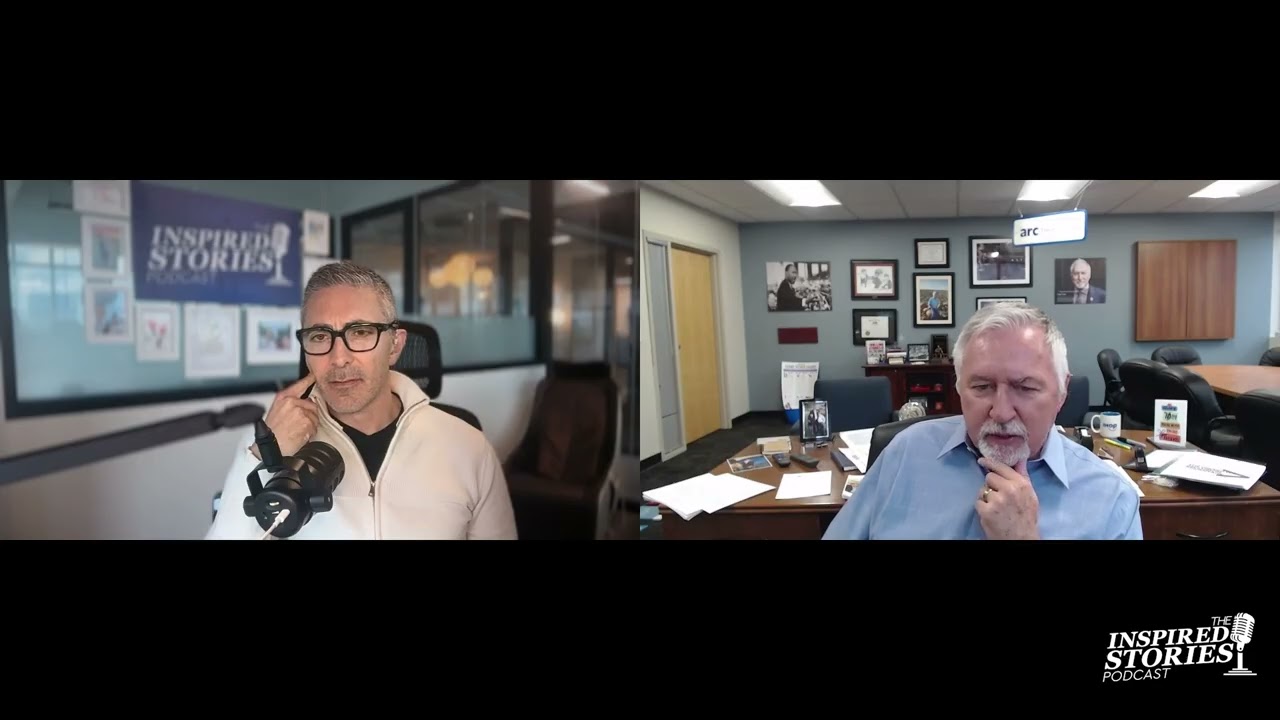
Lloyd Lewis, President and CEO of Arc Thrift Stores, shares how his son Kennedy’s birth with Down syndrome launched a mission that transformed a struggling thrift chain into one of Colorado’s largest social enterprises — with 34 retail locations, nearly 1,900 employees, $120 million in annual revenue, and 600 employees with intellectual and developmental disabilities at its heart.
Key Insights You’ll Learn:
Leaving finance at Smith Barney and IBM after his son Kennedy was born with Down syndrome
Inheriting a turnaround situation with same-store sales falling double digits and cash burning fast
The back to basics plan: walking out of the meeting so experienced managers could lead it
Rebuilding Arc with weekly reporting, store visits, accountability, and mission emphasis
Growing from 10 IDD employees to 600 — and why it’s half the reason for 14 record years
Why hiring people with IDD improves morale, productivity, and ultimately revenue
The Arc University: post-secondary classes, certificates, and PhD designations for IDD employees
Processing 200 to 300 million donated items annually with no barcodes and no SKUs
Expanding from Colorado into New Mexico and Texas with IDD employment at the core
What Satya Nadella, Jamie Foxx, and Winston Churchill all have in common: life-changing relationships with people who have disabilities
Lloyd’s Key Mentors:
Kennedy Lewis (Son): Changed his values, his mission, and his understanding of what matters in life
IBM Management Training Program: Laid the operational and financial foundation he brought to Arc
Dr. Linda Crnic (Neuroscientist): Sparked the Down Syndrome research advocacy that preceded Arc
Experienced Store Managers at Arc: The people he trusted with the turnaround by leaving the room
Randy Lewis (Walgreens): Demonstrated at scale that IDD hiring works across distribution centers nationally
Don’t miss this conversation about what happens when you hire the people most companies overlook, why mission is as powerful as any business strategy, and how one man’s son changed the lives of hundreds.
Listen to the full episode here
Transcript
Anthony Codispoti (00:01)
Welcome to another edition of the inspired stories podcast where leaders share their experiences so we can learn from their successes and be inspired by how they've overcome adversity. As you listen today, let one idea shape what you do next. My name is Anthony Cotaspodi and today's guest walked away from a career in finance at firms like Smith Barney and IBM to run a thrift store chain.
Not because it made sense on paper, but because he has a son named Kennedy and the world wasn't built for Kennedy just yet. He inherited an organization in need of a turnaround and spent the next two decades proving that the people most workplaces overlook are often the ones who hold everything together.
The road wasn't straight and the skeptics weren't quiet. Meet Lloyd Lewis, President and CEO of Arc Thrift Stores, one of Colorado's largest social enterprises. Under his leadership, Arc has grown to 34 retail locations, nearly 1,900 employees, and over $120 million in annual revenue, with more than 350 of those employees being individuals with intellectual and developmental disabilities.
Lloyd co-authored the book, Why Not Them, has been entered into the US Congressional Record and received the 2022 World Citizenship Award. But before we get into all that good stuff, today's episode is brought to you by my company, Adback Benefits Agency. Listen, if you run a business, you're likely stuck in the cycle of rising insurance premiums. You're paying more, but your team is getting less, and many people can't afford coverage at all.
So we do things differently. We provide your retail employees with unlimited access to doctors, therapists, and prescriptions that's always free for them to use. But here's the part that surprises most people. Unlike every other employee benefit out there, our program puts more money into your company's bank account. As an example, we recently helped a client increase net profits by $900 per employee per year.
Results vary, but gains like that can change how a business is valued. And the consultation is free. See if you qualify today at addbackbenefits.com. All right, back to our guest today, President and CEO of Arc Thrift Stores, Lloyd Lewis. Thanks for making the time to share your story today.
Lloyd Lewis (02:29)
It's great to be with you, Anthony. Thanks for doing this.
Anthony Codispoti (02:32)
Yeah. So you spent years in finance working at places like we mentioned in the intro, Smith Barney, IBM. So lay the foundation for us. What were the skills that you were developing and honing in these early days that would later become very useful for you in what you're doing today with
Lloyd Lewis (02:49)
In the early days, really learning the basics of running the business, of managing the business, particularly on the financial side. I was a long time CFO and, ⁓ you know, IBM historically has been regarded as one of the better ⁓ management training companies. So I gained a lot from that experience and I'm very grateful for that.
and just sort of the basics of running the business and managing P &Ls and balance sheets and coming up with growth strategies. I think that's been very beneficial in my work in my current role.
Anthony Codispoti (03:30)
Tell us about one of those growth strategies that you put into place earlier in your corporate days.
Lloyd Lewis (03:37)
⁓ Earlier in my corporate days, was part of programs to manage costs more closely in a company that was going through a growth period and trying to maximize capital needed to not just manage the business but grow the business and ⁓ also getting various ⁓
fundraising efforts concluded to support the growth. ⁓ So there was a lot of experience in really bolstering a company's ⁓ capital side to enable growth.
Anthony Codispoti (04:23)
How about a really challenging experience that you went through during your corporate days? Because a lot of good lessons come from going through hard stuff.
Lloyd Lewis (04:31)
Well, in the corporate days, I was with a high tech and prior to the internet bubble bursting, raising money was unusually easy and probably a hundred million poured in to invest in this startup that I was involved with. Then the bubble burst and trying to raise money was like a root canal.
And going from raising over 100 million to struggling to raise just a mere few million was a very challenging experience and a really ⁓ learning lesson for me. Things can switch on a dime and the economy can.
be going great guns and then, you know, something happens and the economy struggles and the ability to raise capital is very challenging and just trying to manage through economic cycles, business cycles, as you would know, and as most business people know, ⁓ things can change on a dime. And you've got to be nimble and you've got to...
be determined to ⁓ manage through any head wounds that hit you.
Anthony Codispoti (05:46)
Do you think that what you learned going through that roller coaster was more operationally what to do as things turn on a dime or was it more managing the emotional side of being on that roller coaster?
Lloyd Lewis (06:02)
It was really both trying to ⁓ manage investors, trying to manage corporate employees, going from a time in which it was easy to raise money, to manage your board, to compensate employees in a way that...
made them feel real valued to tightening the purse strings and just trying to be much leaner and just navigate a crisis. ⁓ That's happened in my own company now, but businesses go through cycles of the economy, such as we experienced in the Great Recession, ⁓ such as we experienced during COVID.
And I think that I similar experiences prior to joining this company that were really helpful.
Anthony Codispoti (07:00)
So let's talk about Arc Thrift now, because I want to understand how this all came about. This was an existing company, yes, they had stores. And you walked in one day and tell us about that experience.
Lloyd Lewis (07:08)
Yes. Yes.
⁓ Well, I joined Mayo Five as CFO and ⁓ I worked for a gentleman that I'd worked with at a prior company and unbeknownst to me, he had some mental health issues and ⁓ started to make some decisions that really, really put us in a very challenging financial position.
And the three months before I became CEO, our same store sales were minus three, minus five, minus 10%. We were burning cash. We had very little in reserves. And he was let go from the company. And I became the CEO and what really was a very tight turnaround. And ⁓ it was very challenging, very challenging.
Anthony Codispoti (08:10)
And so where does the story go from there?
Lloyd Lewis (08:14)
Well, I put a team together of experienced store managers who had been bypassed for higher level positions, but I knew they knew the basics of running the thrift store.
And I identified for them seven high level elements of success in running a thrift store company, because I'd learned that much in the first six months of being with my company. But, you know, collecting donations, producing donations, pricing donations, management, marketing, et cetera. And we agreed on those those high level elements of success. And then I told this team I wanted them to meet weekly.
develop ⁓ a plan to restore the success of the company that I called Back to Basics before Walmart developed their Back to Basics. So I got a kick out of that. But ⁓ then I started to walk out of the room and they looked at me like, where was I going? But I knew if I stayed in the room, they might play to me. And I just happened to be the guy who knew the least about the details. So they met weekly, came up with a plan, and I thought my plan would work.
But in July of 06, we still had not had a liftoff. And it looked to me like it could be a very big crash. And in August 06, we took off and we had 14 record years of success prior to COVID. We went from 2 million earnings on 30 revenue during that period to 15 on 100. And just...
record year after record year, and then COVID hits.
Anthony Codispoti (10:00)
So let's, before we go through COVID, I wanna go back to the plan, back to basics. You told him to get back to basics, you kind of give this speech and then you walk out of the room, but what were the elements of this plan that actually needed to be executed?
Lloyd Lewis (10:16)
Well, in terms of the detailed store operations, ⁓ again, how we price, how we manage the backrooms of our store where we produce product, how we do our merchandising, ⁓ how we bolster donations, ⁓ a lot of how we store off season.
merchandise and warehousing. But the two specific things I did at a higher level were I put in better business practices and I put in a real emphasis on the mission of the company. Surprisingly, the mission of the company wasn't really emphasized at the time I came in. And which surprised me because our whole mission is to fund advocacy for people with developmental disabilities. And in terms of better business practices, I put in
⁓ weekly management team meetings, weekly meetings with my district managers, monthly meetings with all my company managers. I started to visit all of our stores and talk to all employees on a quarterly basis. But prior to me taking the reins, there weren't consistent ⁓ meetings that I just described.
And I started to look at weekly reports and really identify which stores needed additional attention and started to put in ⁓ targets for store sales and started to hold people accountable in ways they hadn't been held accountable before. A lot of basic business practices that just weren't being implemented. And then the emphasis on the mission. And I attribute half of the success of my company to our mission and to emphasizing our mission.
Anthony Codispoti (11:59)
more about
Lloyd Lewis (11:59)
people
Anthony Codispoti (11:59)
the mission.
Lloyd Lewis (12:00)
who embody our mission. I wouldn't do it anywhere, anywhere.
Anthony Codispoti (12:02)
Yeah,
let's talk about that mission, Lloyd. What's the mission that was overlooked and how have you been able to bring that to the forefront in the last 20 years that you've been there?
Lloyd Lewis (12:13)
Well, we support AHRQ Advocacy Chapters affiliated with the AHRQ of the United States, the nation's first parent-led organization 75 years ago when kids like my son in the 1940s, I have a son with Down syndrome.
were basically warehoused in large institutions and abused and mistreated. And these parent advocates advocated for humane treatment initially, followed by deinstitutionalization, followed by mainstreaming inclusion, public education, et cetera. And people now live with their families. Now had my son been born, you know, 50 to 70 years ago, we would have been told to send him to an institution. But that world has changed
of the work of the ARC. And in our state, Colorado, the chapters we support advocate for families who have kids with disabilities. They help these kids find jobs, housing, medical services, services in schools, get appropriate Medicaid and social security income support. You know, in the world of disabilities,
80 % of women will be abused, believe it or not, 40 % multiple times, 40 % of men. They the highest rate of employment in the history of the world, it's 80%. There's a shortage of housing. There's a higher need of medical care. There's a need for inclusion in schools. So the advocates we support work extremely diligently to improve the lives of people with developmental disabilities. And that really is our mission.
So when you think about what any company does, all companies have missions, your company has a mission. We're all trying to make the lives of other people better. But when you don't focus on your why as a business, you do yourselves a great disservice. And that's what I implemented. You know, I talk.
constantly in the company at monthly managers meetings and emails I send to the whole company and just when I visit all my stores I always talk about the mission of the company and I think that makes a real difference for us.
Anthony Codispoti (14:26)
You mentioned your son, Kennedy, has Down syndrome. Did he play a role in you taking this job in the first place?
Lloyd Lewis (14:35)
Yeah, my life changed when he was born, by the way. So I didn't know anything about disabilities when he was born. And when he was born in 2003, ⁓
The only thing I noticed was he didn't cry. He was taken from the room. An hour later, doctor came back into the room to say he had no good news to tell us about our son. I thought maybe he died and I said, well, what do you mean? He said, well, we suspect he has Down syndrome. So I asked him what Down syndrome was and he said it was like mongoloism. So I threw him out of the room, banned him from the room, got some nurses who had good information. Kids live with their families. They go to public schools and they live in the community. And that began my
I
trek in this particular arena. And when I was told he had Down syndrome for some reason,
which I fully understand now. just thought he was great. I thought he would always be great. And that's, that's what's happened. He's a great kid. Some families get angry or they get depressed or for whatever reason, none of that occurred to me. He was in the hospital on oxygen for a couple of weeks, came home on oxygen for a couple of months, had a lot of early on therapies. Um, as it went after he was born, um,
and I immediately got involved in scientific research advocacy. I'm a pretty type A guy, so I... ⁓
I went to a personal development seminar, Landmark Education, and announced my life's goal was to raise $25 million for Down Syndrome research. And everyone applauded, 150 people. When I got down from the podium, I thought, Jesus, what did I just say? Not only do I not have money, I don't know anybody with money. I met a neuroscientist at the University of Colorado, Dr. Linda Cernan, had a dinner doing Down Syndrome research. We formed a bond.
started the lobby in Colorado and across the country for Down Syndrome Research Funding. I met a philanthropist daughter who has a little girl my son's age at an event. Her father founded STARS Encore and she has a little girl my son's age with Down Syndrome.
And intriguingly, a couple years later, her family founded the world's largest Down Syndrome Research Institute, named for the neuroscientist I brought into the project, gifted with 32 million from the family. I'm a big believer that if you set big goals, circumstances arise to support the achievement of big goals. I always set big goals. So, you when I first started as CEO, I would go to meetings and say,
Yippee, we were only down 9 % last month. were down 7%. We were down 12 % the month before. We were only down 4 % versus 6%. And I would say we're going to quadruple earnings. And I guess even I thought I was on drugs, but it's all happened. And we've done more than we said we would. And I'm a big believer in that, not in setting small goals, but big goals. He is now 22. And he is.
Anthony Codispoti (17:40)
How old is Kennedy?
So this was 22 years ago.
Lloyd Lewis (17:47)
But that's how this all started. And then my neuroscientist friend, best friend at the time, passed away from an aneurysm. So I took a hiatus from scientific research and was recruited to this company by someone I had worked with at a prior company. So that's how I transitioned from scientific research to ⁓ right.
Anthony Codispoti (18:08)
to Arc Thrift stores.
Yeah.
Lloyd Lewis (18:10)
And I thought
how hard can a thrift store be? But now, now I know how hard it can be because we literally process hundreds of millions of items a year, literally, manually by hand. And it's a very complicated endeavor.
where you've got pricers in stores who are dealing with thousands of items every day to price. What's sellable? When is it sellable? What price? And, ⁓ you know, when I first started, I did sort of the undercover boss thing. Turned out I wasn't good at the individual jobs. And I learned it was a little more complicated than I thought.
But it's gone really well. had a board member who was a regional manager for Denny's and we used to kid each other that we were pretty good at running a bunch of stores, but we weren't sure we could run a single store. That was our job.
Anthony Codispoti (18:48)
I will look.
So I want to come back to some of these operational things that we're talking about processing, you know, millions of items per year, because I think there's an interesting story there. But I want to better understand ⁓ the research work that is taking place that you were involved with took a hiatus. And, you know, now there's still a lot of it going on. Tell us what kind of specific research is taking place.
Lloyd Lewis (19:26)
They are looking at all aspects of ⁓ impacts that people with Down syndrome deal with. There's a higher incidence of leukemia.
There's early onset mild Alzheimer's. There's cognitive impairment. There are just a whole host of issues that are dealt with in the world of Down Syndrome research. And my friend has put together a top notch team. They get substantial funding from the NIH. And they have a whole team of scientists working to determine how can they truly make the lives of people with Down Syndrome better. And they made a lot of
progress and a lot of wonderful research. ⁓ But again, I took a hiatus because I lost my best friend and now I'm doing thrusters.
Anthony Codispoti (20:21)
you're doing thrift stores, a lot of them by the way. ⁓ So the research, can you give us an example of something that it's produced? Is there additional, I don't know, medications or therapies or treatments that are understood and available now?
Lloyd Lewis (20:39)
They've come
up with a series of medications and treatments and therapies. They've established a very interesting project to look at the linkage between Down syndrome and Alzheimer's that they believe will have impacts on helping the general public deal with Alzheimer's. ⁓ They've established an adult clinic.
Anthony Codispoti (20:46)
of the above.
Lloyd Lewis (21:04)
where they're ⁓ looking at providing medical support for people with Down syndrome. And just a whole, they do wonderful work. They do wonderful work.
Anthony Codispoti (21:19)
That's terrific. And so as I understand it, when you arrived, there were about 2 % of Arc's employees that had some kind of developmental disability. And very intentionally, you've grown that to 15%. How did you make that happen?
Lloyd Lewis (21:37)
Well...
⁓ When I started, we had 10 employees with IDD, Intellectual Developmental Disabilities. That's inclusive of Down syndrome, autism, cerebral palsy, all forms of cognitive impairment. ⁓ A developmental disability is a congenital disorder that occurs before age 18 ⁓ with a result of an IQ less than 70. That's the official definition. There are 350,000 people with Down syndrome in America.
a half a million with cerebral palsy and a million and growing with autism. And then there's an equal total number with non-specific ⁓ diagnosed intellectual ⁓ disabilities. But when I started, because I'm a father of someone with Down syndrome, ⁓
I started to encourage people to hire people with IDD, so I thought it was the right thing to do. ⁓ But it took off in a faster pace than I ever envisioned and helped the company more than I ever envisioned. ⁓ I think you got some wrong data from my team, but we now have 600 employees with IDD. And they work in all aspects of our company.
Anthony Codispoti (22:48)
Okay.
Lloyd Lewis (22:52)
and they work on average 20 hours a week, some full time, some very part time, but they have wonderful personalities, they love to contribute, they're very positive, they inspire their fellow employees, and I think that they have helped greatly with the overall morale of the company.
And when you improve morale, you improve productivity. And when you improve productivity, improve revenue and consequently earnings. So it turned out to be not just a really good thing to do, but a very smart business thing to do. I would do it in any company. I attribute half our success to their employment and the other half to better business practices. But it's almost impossible to work with someone with IDD and complain or...
think your job is not what you really want or they'll look at you like you're crazy because hanging clothing is the greatest job in the history of the world. And look at how much money they make. we have a gentleman with Down syndrome who brings in his bowling score every week to his store and announce it over the PA system and all the customers and employees applaud.
We have a young lady with cerebral palsy in a wheelchair who told my CEO group she was gunning for my job. Could she throw better parties?
And we have another gentleman with Down syndrome who if you go into his store, he will ask you how you're doing. And unless you say the word great, he will hug you and repeat his question. And he won't stop until he hears the word great. And I got a call from him one morning. This young man with Down syndrome calls the president of this large company, says he had a great idea. I said, well, what's that Ryan? And he said, well, I'm going to create a worldwide wrestling federation display in the store. So he creates this display.
It was a beautiful display. It sold out first day, first day. So they're just very inspiring employees.
Anthony Codispoti (24:57)
The display was wrestling figures or like. OK. OK. ⁓
Lloyd Lewis (25:01)
wrestling memorabilia belts and hats and they love wrestling. They love wrestling. They love,
you know, my own son, he's a Harry Potter expert and he knows everything about Harry Potter and tonight is Harry Potter movie night at my house. He is the president of the Harry Potter movie club and my wife is the vice president and I'm the treasurer.
and his stepbrother and wife are coming over to be part of our Harry Potter movie night. He also tells knock-knock jokes. So we have an annual gala and he will come up and tell knock-knock jokes. And you haven't lived through a year, a thousand people say pie-hoo or ash-hoo. does the punch line, pumps his fist, leaps off the stage. In our fashion show, we come up at the end. And last year when we got on stage, he dropped to the floor and started break dancing. And I looked down on him thought,
Anthony Codispoti (25:32)
That's awesome.
Lloyd Lewis (25:56)
But if I do that, I've sent 20 people up to scrape me off the floor. He's just a beautiful personality. He's a wonderful young man.
Anthony Codispoti (26:06)
But how did you know that when he was first born?
Lloyd Lewis (26:11)
I didn't, I thought that.
Anthony Codispoti (26:12)
I mean, you
looked at him and you thought this is the greatest thing ever.
Lloyd Lewis (26:18)
that. Turns out it's more true than I knew. I tried to be more like him. You know, he's in fact this philanthropist whose daughter created that research center describes the 350,000 people with Down syndrome in America as 350,000 Dalai Lama's.
because they don't really think negatively about people. They don't really regret things. They enjoy the moment. They live in the moment. If you take them to lunch, they think that's like the greatest thing ever. We had a popular DJ from Denver come into our corporate office many years ago. And one of our...
employees with IDD brought in her autograph book. And we had a group in this conference room. And with this, the most popular DJ in Denver, who did she ask for first for an autograph? Me. And I said, me? What about the DJ? And she got everyone's autograph. She went out and got the receptionist's autograph. They just have a beautiful spirit and love of people. It's amazing to me. It's just amazing.
Anthony Codispoti (27:35)
And so this is what
you mean when you say this is half the reason for the success that you have is that they're just bringing in this joy, this different energy, this perspective that you just have no choice, but the general population who's in there, they're uplifting.
Lloyd Lewis (27:42)
Yeah, absolutely. Absolutely.
It's very infectious. It's very infectious.
In a joyful workplace, there is more success. There just is. ⁓ In any company, in any sector.
Anthony Codispoti (28:06)
Okay, so make the case here is you made that comment a couple times now, like you recommend to any business to do this. But say I'm a business owner and I'm listening to this, I'm a little bit skeptical. I'm like, okay, you want me to hire some folks with IDD? I get that. Like I get the morale boost part of it, but what will I have them do? What kind of jobs can I give them?
Lloyd Lewis (28:31)
Well, in any company there are jobs people can do. We have people in our company who have our lead cashiers or do cashier training. We have some people in our accounting department, in our human resources department, ⁓ in our loss prevention area, ⁓ in all of our stores.
And what I've found is if you get to know someone with IDD, their likes and dislikes and what skills they may have, it's almost impossible that there isn't a role in a company that would benefit from their participation. And I would invite people to come visit me personally. I will show you how this works.
Anthony Codispoti (29:15)
Have you? OK.
Have you done this with other companies and convinced them? Yeah, talk us through an example.
Lloyd Lewis (29:25)
I have, I have, I have. was at the
UN many years ago as part of a panel on employment ⁓ for a World Down Syndrome Congress Convention. And on the panel with me was someone named Randy Lewis, no relation, who was on the senior team at Walmart. And he told the story of putting in
distribution center in Anderson, South Carolina, with simplifying the work tasks, more technology, and half of his workforce were people with disabilities. What happened? It was the most successful distribution center and he rolled it out across all 22 distribution centers for Walgreens. ⁓ And then I spoke and what occurred to me was
You have people traveling from all over the world to attend this convention at the UN in New York. These must be people who have means. Probably a lot are managers. And when I made my opening remarks, ⁓ I asked the group how many were managers and half or more the hands went up.
And when I asked how many had hired someone with Down syndrome, very few went up. But these were all people who had hiring authority. So sometimes people want other people to hire people, but one out of 10 families have someone with a disability. And I think our own community could do better work in hiring more people. And so I preach that a lot.
Anthony Codispoti (31:09)
What do you think is the biggest barrier
to people doing that?
Lloyd Lewis (31:12)
I think lack of awareness of who people with IDD really are, who are they really. ⁓ Lack of ⁓ awareness of the skills that they have and can contribute. Lack of awareness of the impact on fellow employees from their employment. You know, how they inspire people. ⁓ Fear maybe of...
of safety or legal or other things. To me, all it takes is just hiring a person with IDD, finding something that they like to do and they can do, and it sort of takes care of itself.
Anthony Codispoti (32:01)
So let's help get folks over that barrier of being ready to hire that first person. What's the most important thing that you need to help convince them of? Is it kind of as I was suggesting, like, OK, what's the task I'm going to give them to do?
Lloyd Lewis (32:19)
people can think about all the tasks that occur in their company.
Do they have specific tasks that someone with a more limited cognitive ability could really perform? Could that be, or maybe they could be in the county department, just like I have people in the county department, or in the HR department, or in marketing.
All it takes is creativity. All it takes is the willingness to try to help somebody because of the high rate of unemployment. ⁓ I'm happy to advise any company. I'll look at any positions that they hire for in their company. And I can help them find a position for somebody that where they could be helpful.
Anthony Codispoti (33:21)
People can reach out to you and you'll provide this advice free of charge. And I'm gonna give it again at the end of the show, but since you mentioned it now, I'm gonna give out your email address, LLewis at arcthrift.com, LLewis at arcthrift.com. Lloyd's willing to help you out with.
Lloyd Lewis (33:26)
Re-archive.
Cy and Adele, the CEO of Microsoft, started hiring people with autism to do coding for his company because they have that specific skill set. There's always, ⁓ and he himself had lost his son with severe cerebral palsy a few years ago. And I saw him speak at a management conference at the University of Chicago where I went to business school. And the first half of his ⁓ keynote,
He talked about the lessons he learned from his son who he lost. He talked about empathy. And he said his son taught him the value of empathy ⁓ that he applied to his customers and his employees. It really helped him grow his company. But he learned these great skills from his son with severe cerebral palsy. Like lessons I've learned from my son.
The second half was about the cloud and AI, but the first half was about empathy. And in his book that he did on his biography, he talks about that. talks about Jamie Foxx, the famous actor, when he run his well-deserved ⁓ Oscar for Ray, he was amazing.
When he was giving his speech, he thanked a bunch of people, including his sister, who he said was four feet 10 and full of love. And I thought, does she have Down syndrome? Turns out she did. That was Deondra. ⁓
His sister inspired him, lived with him. And we would go to these annual galas and Jamie Foxx would be on stage with his sister Deandra, who was as wide as she was tall. And they would do these dance-offs and sing-offs and tease each other. But the warmth his sister brought to his life and the inspiration he got from his sister, ⁓ you can see in his performances and character. He grew up with a grandmother.
taught him the value of life and his sister continued that tradition by showing Jamie Foxx what was really important in life. It's a very inspiring story. Unfortunately, he lost her a few years ago. ⁓ But it was fun to see them on stage teasing each other.
Anthony Codispoti (36:02)
So Arc has how many stores now? More than 30.
Lloyd Lewis (36:06)
Yeah, now, our 40th store will go in Texas in July.
Anthony Codispoti (36:11)
Okay, so you're moving outside of the Colorado area.
Lloyd Lewis (36:14)
We're now expanding into New Mexico and Texas. Because we've got 38 stores in Colorado, it becomes ⁓ less easy to find new stores here, because we have so many.
So we now have two stores in Albuquerque. Ultimately, we'll build out probably 10 in New Mexico and probably 20 or 30 over time in Texas, starting in San Antonio. And we'll be employing people with IDD in both of those states and working with the arcs in those states. ⁓ And that will be a real...
key part of our strategy to grow our funding and our mission over the next decades.
Anthony Codispoti (37:00)
does the
funding for this growth come from?
Lloyd Lewis (37:03)
It comes from the earnings generated by our stores.
Anthony Codispoti (37:07)
Okay, this is all self-funded, essentially.
Lloyd Lewis (37:09)
We
don't do government grants. We get a few foundation grants. But 90 % of our earnings come from the stores. So we're loved by both sides of the aisle. We perform this very important mission, but we're really a self-funding business.
Anthony Codispoti (37:31)
Yeah. And congratulations on being loved by both sides of the aisle because there's not many things that that applies to anymore. ⁓
Lloyd Lewis (37:37)
Hahaha.
Yeah, people
with disabilities occur to parents on both sides of the aisle, by the way. There are conservative members of Congress who have kids with Down syndrome and liberal members. it occurs to everyone in society, people who are very poor to people who are very wealthy.
Anthony Codispoti (38:05)
So I want to talk a little bit about the operational aspects, We're just about to open the 40th store. You guys, as you were saying earlier, you process millions of items per year. These are donations that come in from people. I've got a sweatshirt I don't use anymore, but it's in good shape. want it to go to somebody else. I mean, running a store with sort of traditional SKUs and barcodes and everything that's kind of coming organized from the factories
That's one set of logistical challenges, but you're not getting that, right? You're getting just a whole bunch of one-offs.
Lloyd Lewis (38:41)
Yeah, try
opening hundreds of bags and boxes to discover what's been donated. And from there to see what is truly in good enough condition to put on the sales floor. And then making the determination on, you know, what the price will be and where you place it in the store. ⁓ We get two or 300 million items donated every year.
And they go into the backs of our stores where people literally open bags and boxes, tens of thousands of pounds daily. Again, to determine is it sellable and when is it sellable? Americans will not buy that which is soiled or torn, which is half of which is donated to us.
That goes on a third party brokerage market generating a couple hundred thousand dollars a month in revenue and will land in ⁓ countries across the world. South America, Pakistan, et cetera, Africa. If you see a LeBron jersey in Africa, might have been donated at our store. ⁓
Anthony Codispoti (39:52)
Actually, so part of
the filtering process for your team is, it torn? Is it soiled? If it is, we know that Americans aren't going to buy that. That goes somewhere else. But if it's not soiled, it's not torn.
Lloyd Lewis (40:05)
The other half will end
up on the sales floor. half of that will be sold over a four to five week cycle due to customer preference. And again, that which doesn't sell will go around the world in this brokerage market. And it doesn't matter if you're a savers in Seattle or Goodwill in New York or ARK in Colorado. This is sort of the basic metrics of our industry.
Anthony Codispoti (40:20)
So something that's been on your.
Got it. Half of what comes in will go out to another country. The rest goes on the floor. Half of that will sell in four to five weeks. And then the other that doesn't sell within that first four to five weeks, that gets pulled off the floor as well and sent elsewhere. Okay. Sent overseas.
Lloyd Lewis (40:53)
Almost everything donated generates revenue for the mission and helps somebody, whether it's Americans on budgets or Americans who just like to treasures in stores.
Anthony Codispoti (40:58)
Got it.
Lloyd Lewis (41:06)
or Americans who like the idea of supporting the mission or who like the idea of the environmental benefits of extending the use of donated items or will land in other countries where people can use these items at really bargain, bargain pricing, ⁓ you know, in different economies where, you know,
It's more challenging to get clothing for your family.
Anthony Codispoti (41:37)
So if I'm questioning whether I should donate a particular item, somebody really going to donate it? Because it's going to help somebody somewhere down the road.
Lloyd Lewis (41:43)
Yeah, donate.
Yeah, will help. Americans are very generous and they help a lot of people, a lot of people through this mechanism.
Anthony Codispoti (41:55)
⁓ And how is the pricing determined?
Lloyd Lewis (42:00)
We have pricing machines. We use something called value pricing. ⁓ And so if a pricer gets a shirt like I'm wearing, long sleeve dress shirt, they'll pull up a screen. It's a men's dress shirt. And then it's a range of pricing. And they will, through their own experience and what their customers will purchase and what they will pay.
they will pick what they believe the appropriate price is for the item. average item of, average price of an item purchased in a thrift store is about $5. And the average number of items purchased is about five. So the average ticket is about $25 in our world. But there aren't a lot of places where you can buy stuff for $5. people, we have a very devoted following.
Anthony Codispoti (42:56)
And does each of these items get logged into some sort of an inventory tracking system?
Lloyd Lewis (43:02)
Well, we have these pricing machines that will generate pricing tickets. They're barcoded. And as it goes through the registers, recording what is sold.
Anthony Codispoti (43:09)
Okay.
Got it. Okay. ⁓ Any fun new tech that's either recently been implemented or coming that you guys are making use of?
Lloyd Lewis (43:23)
Well, you know, in my own world, in the world of my execs and managers, we are all using AI.
to help simplify our task. What I've told my guys is we're not going to use it to reduce the workforce. But if AI can help you, feel free to use it. And I'm actually a relatively good writer. But if I put a few prompts into chat GBT and say, this kind of letter for me, and pops it out like two seconds later, I've saved 30 minutes. And I use it constantly. I find it very valuable.
⁓ They've not yet developed AI where you could just scan an article across a machine and it would automatically do the price ⁓ and recognize the item. I suppose down the road that could happen. ⁓ Right now that's not a part of our process that is subject to that kind of technology.
Anthony Codispoti (44:23)
But anybody listening, you've got a use case here, something that ⁓ like you've got a customer if it gets developed. ⁓ Tell us about.
Lloyd Lewis (44:27)
Thanks
Yeah, imagine
developing something that could look at 300 million items and determine what is really sellable and determine when it's really sellable and what price. mean, AI is pretty amazing, but that's a pretty complicated task. These are mostly one offs. They're unique items. We don't have racks with all dress shirts like mine hanging there. They come from the same manufacturer.
We're opening up bags and boxes with one-offs.
Anthony Codispoti (45:05)
Well, that's the treasure hunt that you described before that some people really enjoy. All right. And then you find a real gem and, know, you're proud to wear it out and talk to people about, I found this at a thrift store for $4.
Lloyd Lewis (45:10)
Yeah, absolutely.
I remarried 14 years ago. My wife was formerly a Neiman's Nordstrom shopper and she still does, but she goes weekly into my stores to see what she can find. And that's, you know, she likes finding this, you know, very cool top end brand at this bargain price. And that's an experience she didn't have till we got together.
Anthony Codispoti (45:49)
How often when she goes in does she find something? What percentage of the time? Okay.
Lloyd Lewis (45:53)
I think almost every time.
She comes in with these bags and I'm always wondering what she has. And by the way, our average ticket is 25, her ticket's about 100. So I tell my stores, just tell her that it's closing time and we're not taking credit cards, the machine's not working. And just tell her to come back later and then repeat that. They love it when she goes in.
Anthony Codispoti (46:18)
They've got her picture up by the door.
⁓ they're looking for. So tell me about the book that you co-authored. Why not them? What's this book about?
Lloyd Lewis (46:28)
Well, it's about ⁓ my life. It's about my son's life. It's about him coming into my life. It's about who he is. It's about how my values and life changed. ⁓ It's about my stores and my employees with IDD. It's actually in the hands of someone ⁓ in Hollywood. I've seen a first draft script.
And the hope is that a film could get done ⁓ in my mind to create awareness of this world of IDD. And ⁓ I won't name the producer or the work he's done, but he's had an Emmy nominated movie. He had a movie recently ⁓ produced that got an Oscar nomination for the lead actor. And... ⁓
But as I understand the film world, can take a decade to get a movie made and not everything gets made anyway. And the book itself talks about, you know, ⁓ my own journey, my own life, and, ⁓ you know, with some rough spots and rough edges. So in act one, I think I have some explaining to do to some people I know. Then in act two, I'm...
busy trying to create a better world for my son. And act three talks about some of the successes that result from that. But, ⁓ you know, I was not always this philanthropic humanitarian trying to help people. So that's my son. My son. He's made me a much better person. I'm still not the person he is. So that's still a goal.
Anthony Codispoti (48:13)
What flipped that switch for you?
Lloyd Lewis (48:26)
I'm not so sure I'll get there, but I'm close.
Anthony Codispoti (48:30)
Yeah. Tell me about one of the rough spots, one of the rough edges, hard time you had to go through.
Lloyd Lewis (48:38)
Well, ⁓
I had a tough growing up.
A lot of
discipline.
I had my own self doubts and lack of confidence for a relatively long period of time. That's gone away. ⁓ I had my own ⁓ love of alcohol. And, ⁓ you know, my own view is that everyone has spots in their life that
are not perfect, that's how, that's everybody I think. I always get a kick out of when people criticize each other because I'm thinking, well, you what is it that you're not acknowledging in your own life? Because in my mind, you know, there's alcohol, drugs, know, infidelity, there's all kinds of issues that people deal with.
And I'm not sure I've met anyone because I've not met the Dalai Lama personally. I'm not sure there are many people who don't have some kind of flaws in their own life. I'm a very big student of the period of the Great Depression, World War II. I'm an admirer of Winston Churchill and FDR.
And both of those great leaders had their own issues they dealt with. In some cases didn't deal with that great, but they.
Winston famously said that when he was younger, he never drank before lunch, and when he was older, he never drank before breakfast. He was pretty famously a drinker. FDR had an affair with his wife's social secretary, contracted polio at age 39, never walked again.
these are the two leaders who led us through World War II. And they're just examples. mean, John Kennedy, Martin Luther King, any other people that we look up to have dealt with their own flaws or been challenged by their own flaws. ⁓ And I like to think that we can be partly redeemed if we start to think less of ourselves and think more of others and try to help others. So.
I kid people I say my upside is purgatory. But hopefully my son will say some good words and get me beyond that.
Anthony Codispoti (51:37)
You must be a good Catholic. Not everybody knows what purgatory is. ⁓ okay. Yeah. So I wonder if you're comfortable talking more about, you know, part of the path you described there, lots of discipline growing up, maybe, you know, a bit too close with alcohol a little bit later. Did one contribute to the other?
Lloyd Lewis (51:39)
Well, I'm not a Catholic, but I was a long time at this feeling.
I don't know. mean, I think my biological father, who I met in my 40s, had a problem with alcohol. I tend to think that it's a genetic precondition. I don't know if that's right or not. ⁓ And he was much married. I've had a few marriages. But...
You know, I like to think that my son helped me grow as a human being, make me a better human being. And I like to think that when you're successful, you have an obligation to help others. You know, I've been successful. I could retire if I wanted, but I think that given my ability to drive business growth, that I have an obligation to help others.
Anthony Codispoti (52:57)
What's left for you to do?
Lloyd Lewis (53:00)
Well, know, intriguingly, I already sort of have this legacy, but I want to make sure before I retire that I have ⁓ a succession strategy that will keep the growth of the company continuing. People tend to think succession is easy. ⁓ But I think lots of companies experience the difficulty of it when the time comes.
And I want to make sure I leave the company on the same growth trajectory that I've created in my tenure. And it's easier said than done, I think. ⁓ I've been blessed I've been able to do it. But I'd like to think that we have that continue when I'm no
and add to the legacy.
Anthony Codispoti (53:52)
So
for you, it's about putting this on a path to where it can continue to not just survive, but thrive when you step away. And how do you hand off that baton? Yeah.
Lloyd Lewis (54:02)
Yes.
Yeah, I mean, we've had 18 or 19 or 20 record years. We've been very fortunate, You know that's that could be very difficult to continue. And. You know, Bill Gates did a great job with Microsoft. Then it's sort of lagged a little bit. Now saw you in the Dallas taking it to New Heights. Uhm? But.
making sure one finds that right forward path, I think is really critical.
Anthony Codispoti (54:43)
Do you have a plan in place for that yet?
Lloyd Lewis (54:46)
Well, my plan is, know, ⁓ the year or two before I think I would retire, I would ⁓ help my board determine who the successor could be and maybe start a COO and then I would be helping them transition and grooming their ability to continue the success.
Anthony Codispoti (54:47)
roadmap.
Lloyd Lewis (55:16)
I currently I'm thinking I want to work till I'm at least 75 and celebrate my 25th anniversary with the company. And it's odd because when I grew up, I don't remember many people my age and certainly not continuing to work. Back then you were 62 or 65, you retired and you had a year or two left. Seems like things have changed.
Warren Buffett's a prime example. ⁓ But my thought is as long as I like this and I'm good at it, I think I'll continue.
Anthony Codispoti (55:58)
Want to talk about a couple of the recognitions that we mentioned in the intro. We referenced that you've been entered into the U.S. Congressional record. What does that mean exactly?
Lloyd Lewis (56:09)
Well, I was just really ⁓ blown away by that. And we have a congressman, Jason Crow, who you'll see on the on the, you know, new shows from time to time who was in a rock bed.
and has been in Congress a number of terms, made a decision to recognize me when I received the World Citizenship Award from the International Civil Dance. And in recognizing me and reading that into the Congressional Record, talked about what I've been able to accomplish here. you know, that just, it surprised me, but it was...
rewarding but ⁓
It's just, it was just a real honor, a real honor.
Anthony Codispoti (57:08)
How about the World Citizenship Award? What is that and how did it come about?
Lloyd Lewis (57:13)
We work with the International Civetans here in Colorado. The past president of the International Civetans works with us here and the incoming president work with us here. We've created a Civetans program here where employees with IDD do community service projects. They may collect socks for the homeless or food for the food insecure.
They might write letters to seniors living in assisted living centers. They're very civic minded and they get great rewards from participants participation. But I was surprised when I got a call from the president and the organization one time saying they were going to recognize me with this award. ⁓ I mean, it's just something I never thought that would come to to my. ⁓ Come to me personally.
⁓ past recipients historically have included Dwight Eisenhower, Eunice Shriver, and Winston Churchill. So when people say, Churchill, Lloyd, how do you, did they make a mistake? How do they, how did you get that? I, I recite that quote about when he was younger and when he was older in terms of when he would, you know, start with his alcohol. I would say he was an inspiring leader to me. That's my joke that I do.
Anthony Codispoti (58:39)
That's pretty good company there. What do you most want to be remembered for in your work with Arc Thrift Stores?
Lloyd Lewis (58:47)
⁓ I want to be remembered for our IDD employment program. We've created supplemental programs. We've created something we call ARC University.
a series of monthly post-secondary style classes in money computers, pet care, transportation, hot over lunch by volunteers. And if they participate, they get a certificate. If they participate, it's not grade based, participate in 6 of 12, a bachelor's degree, 9 of 12, a master's, 12 of 12, a PhD.
And when you go to our graduation, you would think you're at Harvard. They're all fired up, proud in front of family and friends. And some of them have six or seven PhDs. And I always tell them it pisses me off they have more degrees than me. That's very rewarding. We have a social program. We accompany them monthly to the museums or zoos or movies. One of their favorites is karaoke.
And the first time we did karaoke, when I walked in, they were going to march me to the mic to sing Ring of Fire by Johnny Cash. But you know, I'm this educated CEO with an MBA from prestigious university. So I hid in the men's room for 20 minutes. And when I came out, they were still there. They marched me to the mic. And I can semi pull it off because I have this deep voice and I'm not in tune like Cash.
And then another supplemental program is the Civitans program, where they do these community service projects. I believe we've created the best IDD employment program in the world. And it has made a tremendous difference in their lives, in their family lives. They love their jobs. They're proud of their jobs. They love being able to contribute. Their families are delighted to see them accepted and honored.
⁓ by an employer like us. And ⁓ it just means the world to them. And we're changing lives. And I don't need to be remembered for anything. What I want people to remember is these people who participate in our programs. Earlier in my life, things were about me. Now this is more about the people I support.
and I want them to be honored and I want them to be recognized.
Anthony Codispoti (1:01:13)
Lloyd, I've just got one more question for you today, but before I ask it, I want to do three quick things for the audience. First of all, anybody who wants to learn more about what they're doing, learn about the stores arcthrift.com, A-R-C thrift.com. We gave it out before, but you can reach out directly to Lewis, L Lewis at arcthrift.com, L L E W I S at arcthrift.com, L Lewis at arcthrift.com.
And if you're enjoying the show, please take a moment to subscribe wherever you're listening. It also sends a signal that helps others discover our podcast. So thank you for taking a quick moment to do that right now. And as a reminder, you can get your retail employees access to therapists, doctors, and prescription meds that counter intuitively actually increases your company's net profits. Real gains that can change how a business is valued. Contact us today at addbackbenefits.com.
So last question for you, Louis, Lloyd, Lloyd Lewis. How often does that happen? How often does people call you by your last name?
Lloyd Lewis (1:02:18)
There
is a famous former NBA player named Louis Lloyd. So it happened.
Anthony Codispoti (1:02:23)
Is right?
Okay, all right, Lloyd, one last question for you. What's one very specific thing that you hope to be celebrating a year from today?
Lloyd Lewis (1:02:36)
⁓ Wow, that's a great question. That is a great question. ⁓ My youngest son will be graduating college next May and I'm proud of him. ⁓ He has a sister with a PhD in molecular and cellular biology, the classic straight A student, now a researcher. But my youngest son, ⁓ academics weren't as easy for him.
and it wasn't always clear that he would be able to do a four-year public university. But he's hung in there and he will get his degree and he will. ⁓
When he was first very young, he had sensory processing disorder. Then he was in a learning disability program through eighth grade. And I had worried how he would do in high school, but he did well. And then I was worried about a public university, a major public university. And he's doing just fine. So that will be a great event to celebrate. ⁓
Anthony Codispoti (1:03:47)
Well, Lloyd Lewis from Arc Thrift Stores, want to be the first to thank you for sharing both your time and your story with us today. I really appreciate you being here.
Lloyd Lewis (1:03:57)
Well, I really enjoyed the conversation. You ask really good questions. And sometimes interviews can be somewhat superficial. But to be asked about my experiences and beliefs and philosophy, I think is something I enjoy more. ⁓ I'm not great with small talk. I'm not great with, you know.
I don't golf, I don't ski. I do like to talk about the big questions in life and what people believe. So I appreciate it.
Anthony Codispoti (1:04:36)
Thank you for those kind words. Folks, that's a wrap on another episode of the Inspired Stories podcast. Thanks for learning with us. And if one thing stood out, put that into action today.
Connect with Lloyd Lewis:
Website: arcthrift.com
Email: llewis@arcthrift.com