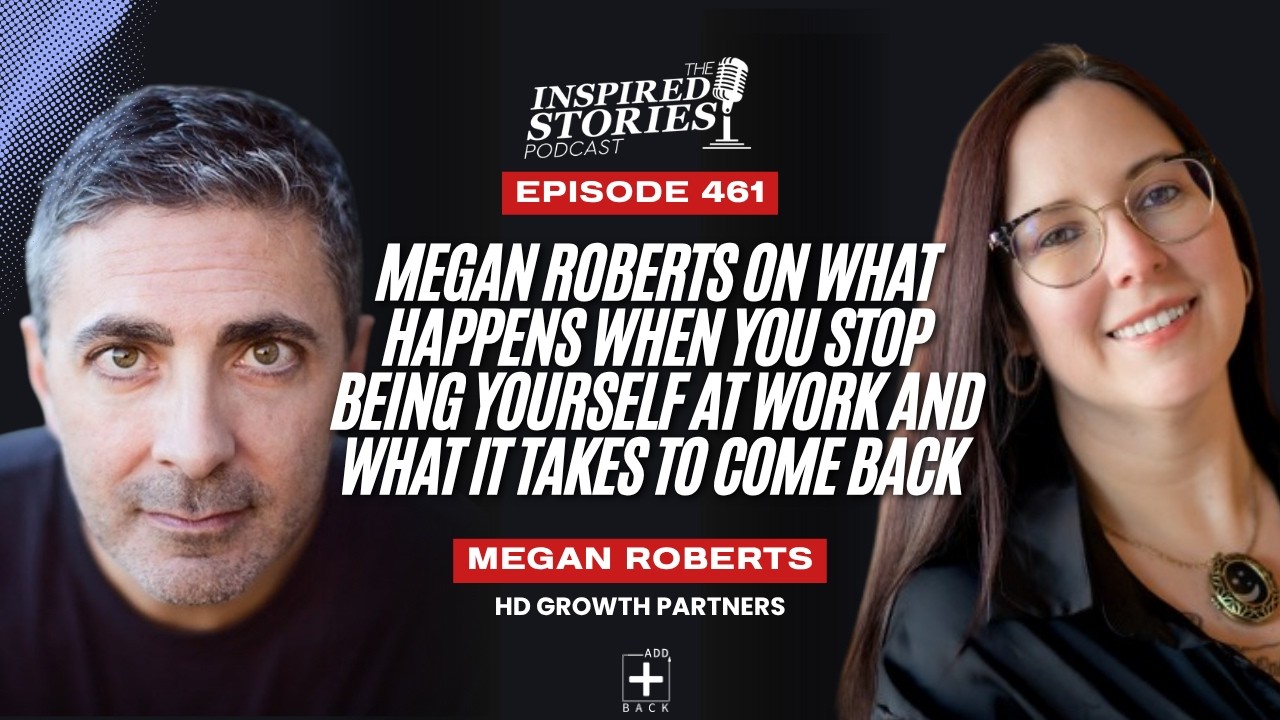
🎙️ From Playwriting to COO: Megan Roberts’ Unlikely Path to HD Growth Partners
Megan Roberts, COO of HD Growth Partners, graduated with a degree in playwriting, sorted defective spice caps on a factory floor for 12-hour shifts, spent nine years working her way from receptionist to director of operations at a wealth management firm, and earned a master’s in organizational leadership as the only civilian and only woman in a military cohort. None of it was planned. All of it was used. She joined HD Growth Partners in 2023 and helped scale the firm from $6 million to nearly $15 million in revenue in three years — not by working harder but by building systems that survive without any one person in them.
✨ Key Insights You’ll Learn:
What a factory floor sorting spice caps taught her about operational systems and scalability
Why playwriting’s feedback culture was the best leadership training she ever got
The master’s degree from a military academy where she was the only civilian and only woman — and ended up leading the first group project
How arriving at a wealth management firm with a post-it note of financial terms she’d Googled became a nine-year career
The difference between a great process and a great employee — and why only one of them scales
How the Level Up Program made career advancement transparent, application-based, and emotionally safe
Monthly scorecards that used to take a week to produce and now auto-update daily
Why HD Growth Partners wins clients almost entirely on responsiveness
The solo glamping trip that helped her stop performing and start leading as herself again
A change management book in progress built around roundabout theory and automotive metaphors
🌟 Megan’s Key Mentors:
Tim Petrey (CEO, HD Growth Partners): The visionary who sees where they need to go — Megan’s job is building the 500 steps to get there
Her Military Cohort at Norwich University: Taught her discipline, a second language, and that leadership shows up in unexpected people
Her Father (WeatherChem): Got her onto the factory floor where she first saw what a real operating system looks like
Her Staples Colleague: Handed her a post-it note with financial terms before her wealth management interview — she still has it framed
Her Husband: First test subject for every process she builds — if it works for him, it works
👉 Don’t miss this conversation about building career ladders that actually exist, why the people who can’t hear back from their accountant keep switching firms, and how a playwright ended up being the operational backbone of one of Ohio’s fastest-growing accounting firms.
Listen to the full episode here
Transcript
Anthony Codispoti: Welcome to another edition of the inspired stories podcast where leaders share their experiences so we can learn from their successes and be inspired by how they've overcome adversity. As you listen today, let one idea shape what you do next. My name is Anthony Codispoti and today's guest earned a degree in playwriting, spent time on a factory floor sorting defective parts, and somehow ended up being one of the most respected operational leaders in the accounting profession. It is not the path anyone would have drawn on a whiteboard. She stepped into a firm still finding its footing and helped scale it from six million in revenue to nearly 15 million in revenue in just three years. The growth was real. The harder part was building the kind of culture that actually retains team members. Meet Megan Roberts, COO at HD Growth Partners, a Youngstown-based accounting and advisory firm that has earned recognition as one of Accounting Today's best firms for young accountants and a best employer in Ohio. She is a power of change honoree from the Ohio Society of CPAs and a carbon certified expert. People often talk about finding their voice. Megan built a career out of helping entire organizations find theirs. But before we get into all that good stuff, and Megan, I'm actually just gonna pause for a second, because I'm hearing some echo. But before we get into all that good stuff, today's episode is brought to you by my company, AddBack Benefits Agency. Listen, if you run a business, you're likely stuck in the cycle of rising insurance premiums. You're paying more, but your team is getting less, and many people can't afford coverage at all. We do things differently. We provide your employees with unlimited access to doctors, therapists, and prescriptions that's always free for them to use. Here's this part that surprises most people. Unlike every other employee benefit out there, our program puts more money into your company's bank account. As an example, we recently helped a client increase net profits by $900 per employee per year. Results vary, but gains like that can change how a business is valued. Imagine being the hero that delivers over-the-top value to your clients by introducing this to them. Consultation's free. See if you qualify today at AddBackbenefits.com. All right, back to our guest today, the COO at HD Growth Partners, Megan Roberts. Thanks for making the time to share your story today.
Megan Roberts: Thanks for having me.
Anthony Codispoti: So most COOs, Megan, at accounting firms in particular, they come up through finance, maybe operations. You came up through playwriting. Walk me back to the Ohio University version of you. What were you thinking? What were you, you know, what did you have in mind? What were you trying to build back?
Megan Roberts: Yeah, so I actually started at Ohio University for journalism and this was 2007 heading into 2008 print media actively dying and I love Ohio University incredible academics, incredible environment, but I felt like that program was so intense and I'm competitive, but I'm not intense. So as I was there and studying, I thought what What do I like most about writing? I've always been a writer. I've always enjoyed really describing things in a way that will resonate with somebody, you know, differently than how someone else might explain it. So I had the very great conversation with my parents about, you know, halfway toward end of sophomore year. Hey, I think instead of this highly coveted journalism program that is like top in the nation, I want to go write. Yeah, like.
Anthony Codispoti: Highly respected.
Megan Roberts: Can I just go write plays, even though nobody's really hired a playwright since like 1400s. My parents are amazing and they support everything I ever have dreamed of doing. So we went full steam down that path. And what was, I think, most valuable to me out of that playwriting program is taking criticism and giving criticism. And when you're in that artistic space, you're really putting your heart and soul into everything you do and the feelings are so big and the canvases are so big and what you can do with that art. But to go back into the really the academic side of it and you're sitting with a group of peers and they're eviscerating you on a weekly basis and you're like, this is the best thing I've ever made. And they're like, no, here's all of the places where it could be so much better. So that is really what I took the most from that playwriting program. was to give constructive criticism appropriately to people, mindful of their feelings and then also receive it. And I don't know that everyone else takes their fine arts degree that way, but that's what I did with it.
Anthony Codispoti: That's really interesting. So give us some tips on each side of that. First, from the side of what you learned and how to deliver constructive criticism so that it's easier for the other person to receive.
Megan Roberts: Yeah, I think it has to start with how much trust you have in a relationship with that person. It's, you know, I've been most successful academically in a cohort environment. So we were in a cohort, you know, 10, 15 of us the whole way through college and built, you build that trust with each other to know, Hey, I'm not telling you this because I think I'm better than you. I'm telling you this because I think you are the best. And here's how I think you can be even better. I mean, the psychological safety and trust, I think, is a really big factor in the relationship side of giving constructive criticism to anybody. If you don't have that trust, no matter how you deliver it, no matter what your framework looks like or your outputs, people are gonna take it personally unless you build up that relationship first.
Anthony Codispoti: So you need to have that relationship foundation in place before you start saying, hey, I think you're awesome. And here are some ways to be awesomer. And then on the other side of that table, what have you learned? What could you teach us about how to receive that constructive feedback? Because it's natural to get defensive, right?
Megan Roberts: Right, yes, exactly. Yeah, you have to be willing to sit with your feelings more than even on a regular basis. don't care to always like really acknowledge the feelings that I have, but I think it's a process. And if you're receiving constructive criticism, shouldn't try to take that all in in that moment. know, like hear everything, absorb everything, but set the time aside to reflect on it so that you can... separate your emotions and your feelings. In playwriting, we would always say like, you have to be willing to throw the baby out with the bathwater. just, it could be your favorite line, your favorite character, your favorite scene. And if everybody else in the room is like, it's just not landing, you you have to be willing to set that aside and say, okay, maybe I use that somewhere else. Maybe I come back to it at another time. But it's really kind of learning how to put your ego in check. and just say, do want to be better. This information is coming from people that I trust and that I respect. They also want me to be better. So that is how you kind of emotionally navigate just being a little more objective when you're looking at your own work.
Anthony Codispoti: So I've got a theory here, just in the few minutes we're talking together, Megan. I think that, and this is gonna flesh out as we kind of ask the next couple of questions, I'm guessing that in the same way that you looked at your fine arts degree and what are the bigger life lessons that I can pull from this, you've probably done that at some of these other stops along the way that as we get into some of your early career moves are gonna. feel a little disjointed for where you are now, but we're gonna start to put the pieces of the puzzle together and realize that you're always kind of looking for a way to take learnings from one step and push it forward into what you do next. You're kind of nodding your head, yes? Okay.
Megan Roberts: Yeah, yeah, I will never waste my own time. And I think as soon as I accepted that about myself, it's like, you know, I had to pay my bills, I had to pay my rent, but I will never waste my own time. So what can I learn from this experience and apply forward to building a successful career? That's really been my mentality about everything.
Anthony Codispoti: Okay, so let's see how that applied in the role that you had. were a rework operator at Weather Chem Corporation. So you're sorting good parts from bad ones on a line. Talk to us about the work you were doing there and how you didn't waste your time there.
Megan Roberts: Yes. Yeah, so that was riveting. That was a riveting job. My father worked there. I was kind of after college, moved home, trying to figure out what to do. And so they made the spice caps like that go on your garlic, your garlic powder, your onion powders, just little plastic spice caps. And I would get boxes and boxes and boxes dumped out on a table. Find the bad ones. Find the ones that have just like something wrong with them. put them aside is all part of quality control, you know, production and just making sure standards were there. So for one thing, it was 12 hour shifts and I had a lot of time to just think and think about what I want to do long-term, what I really would be attracted to in a career because at this point, you know, I'm done with college. I'm always going to write, but I don't know how to translate that to a job in Northeast Ohio and a you know, very less than desirable economy at the time. So I spent a lot of time, you know, observing like this is literally a manufacturing environment. Everybody has to be doing what they're supposed to be doing at the right time, you know, quality checks, technical checks, and just seeing the way that I think that was the first inside peek to a real true operating system for me. You know, you have to have all of these checks and balances and it cannot be dependent on the person. Your system really has to be strong enough that regardless of the shift or who's on or who's off or who's in or who's out, these things still have to happen so that people are safe, so that the product is of good quality, so that the consumer is happy. And I think operationally I apply that to if I have a great process, and someone else steps into that process and it starts failing, I didn't have a great process. I had a great employee. And so that kind of manufacturing insight has always led me to think, okay, how do we really scale this? How do we make sure it is sustainable? And I was able to do that mostly just observationally, because I'm just there sorting spice caps for 12 hours a night, having a great time.
Anthony Codispoti: So this was your early introduction to the value of a great process. Okay. So you moved from a manufacturing floor, then you wrote staples, social media content, wealth management. Let's talk about actually the nine years that you spent at W3 Wealth Management, the last four specifically as director of operations. It's a long time in one place. What were you building there? Tell us about that work.
Megan Roberts: Yeah, I think so. Yeah. Yeah, so I started there really I applied as a receptionist. And if anyone has caught caught your episode with Tim Petrie, the CEO at HD Growth Partners, he started at HD also as the receptionist. So I always felt like that parallel brought us together in a strange way. But at W3, you know, applied as a receptionist. And I just wanted to have a job where I didn't have to wear an apron. I didn't have to have you know, non slip shoes anymore for a while, maybe have weekends off. So I was really terrified. Like I don't know anything about money or finance or investments. One of the guys I worked with at Staples actually, he kind of wrote down on a post-it note, if you're interviewing at Wealth Management, here's a bunch of words you should look up before you go to your interview. And I still have that post-it note. I framed it actually at home. So. I wanted to, just like FINRA, IRA, Roth IRA, like very basic financial terms, but I had to, I did exactly what he said. I home, I Googled every single one. I'm like, they're not gonna hire me. This is so far out of my league. But I think what they appreciated in my resume and my eclectic background was my willingness to learn.
Anthony Codispoti: What were some of those words, do you remember?
Megan Roberts: and not even willingness, but like my requirement. just, have to keep pushing my understanding of what's going on around me and how things affect each other. So I started with account services, opening investment accounts, doing, you know, check deposits for people if they needed to withdraw out of their retirement account. And I learned a lot really quickly there. and was started doing account reviews, which just seemed so out of place for me at the time. Like I'm not a math person. I'm a writer, I'm a creative, and now I'm doing these super analytical investment account statements, you know, 50 hours a week, seeing what people have going on in their accounts and preparing the advisors. And my thirst for knowledge really fueled me to get FINRAC certified, so have my Series 7 certification. And that I never wanted to be client facing. I never wanted to be the person in the room advising, know, wealth management clients. But I wanted to understand everything about what was going on in those accounts so that I could be better at my job operationally. And they supported me a lot to just figure out, you know, like, how can we make things? How can we open accounts faster? How can we be sharing resources better? So that was really the foundation that got me started there and I never saw it coming for wealth management.
Anthony Codispoti: Well, and I think, you know, this is a great part about your story. It highlights that as much as we often want to put people, oftentimes ourselves, into a certain box, right? Like we can be many things, especially at different phases of our lives. Right? Like you went through this thought process out loud where I'm not a numbers person. I'm a creative. got a fine arts degree. I'm a playwright. You know, like I'm not a... But you pushed yourself, right? There's like a curiosity in you.
Megan Roberts: Yeah, I did recently one of the personality tests, the leading personality indicators, and my number one is learning. And I was like, well, that makes sense. if someone would pay me to go to school for the rest of my life, of course I would. And the person was like, yeah, that's exactly what your reports show. I love learning.
Anthony Codispoti: So let's talk about another interesting element of your learning. You got a master's in, what was it?
Megan Roberts: organizational leadership with a concentration in change management.
Anthony Codispoti: And you got this degree from a military academy.
Megan Roberts: Yeah, so Norwich University out of Vermont and I did not realize the the pomp and circumstance to that university when I picked that program. I was looking, I knew I wanted to get a master's. I knew that there's MBAs out the wazoo and a lot of people that know how to manage the PNL and it seemed like not a lot of people knew how to manage the organization and the people inside of it. So I was very attracted to that program specifically because it is so people focused and you know, a bit psychology, a bit neuroscience, a bit really change theory and how we make a difference in an organization off of the balance sheet. So I, you know, went full force like I do with everything and it was a very prominent military academy. Everybody And my cohort was either active military or retired. And I show up with my nose ring and my shaved head and I'm like, Hey, I work in finance and I studied art. And I was so terrified because like, I don't have anything in common with them. you know, they're, they're in the military. They must have all of this great confidence and experience. And I'll never forget, we got to like our first group project and somebody had to volunteer to like be in charge of it. And we're all figuring out how to balance full-time careers, full-time families, full-time school. And now this huge project and like none of the guys were raising their hand. I was like, okay, I guess I'll do it, you know? And set up a really good structure for us to work together. And we did great on that paper. We did great on that project. And we really found our rhythm as a team. So we kind of went to the school for the next class. They were kind of trying to split us up and we were like, no, we're staying together, move other people around. You know, we want to stay this core group of us together. So I just always thought it was funny that this weird little kind of punk girl from Ohio took charge of these military guys and they're the best friends in the world to me now. We still talk all the time and support each other.
Anthony Codispoti: You know, the part of the story that I really latch onto there is this idea of, know, you see people as a certain way, right? So you saw these military, you know, they must have a lot of confidence, right? They've, you know, they've been through stuff that you haven't been through. You know, they're probably in good shape and, you know, they, know, they, yeah, these guys, they should be the leaders. And I, you know, I'm just here to follow along and boy, that was not the case, right? So looks can be deceiving.
Megan Roberts: Yeah, it was really fun. I learned a lot of discipline from that group, though. I think it was a good balance that we brought to each other that they had this super strict regimen about everything they had to do in the day. And I could be more fluid. But it was also learning a whole second language. They all had this integrated, deep military understanding of things. I didn't, I remember the first time I was like, I don't even speak the same language as these guys. They were talking about something that happened when they were at Liberty. And I'm like just Googling my life away. I'm like, what does this mean? I reached out to one of my friends from high school that was in the army and he's like, oh, that means like they were on leave basically. And I was like, oh, why didn't we say it that way? like that was, that happened so early on. And I, after that I said, will you be my translator if they, keep saying stuff and he's like, I think you can just ask them and they're not gonna care. So we had like a really open conversation about like, hey, sometimes you guys speak about things in a way that I can't even grasp on to. we, you I think having that conversation to find our common language together was also a learning point for me in my career of I think I'm communicating one way, somebody else thinks they're communicating another way and just. talking about how we can bridge that gap together was a really meaningful lesson.
Anthony Codispoti: Can you think of a time where that lesson then came to play further down in your career, where you remembered that in your head and you thought, they're probably not speaking the same language I am. Let me retool this.
Megan Roberts: Yeah, I think it happens constantly, honestly, and even, you know, we're in a high growth period at HD. It was the same thing when I was at W3 of just acquiring other businesses where we do the same thing, but we rarely describe it in the same way. We're rarely speaking the same language. So I would say with our most recent merger over here, it's like we're asking questions about the work that you do for your client. And we're both saying the same thing, but describing it in completely different terms. So it feels like we're worlds apart. And just sitting down with the partner and having the conversation say, okay, when you say this deliverable, and I interpret that internally as this whole other process, are we talking about the same thing? And the answer is always yes. But just having those conversations upfront. takes a lot of the guesswork out of it, but you kind of don't know you need to have it until you're sitting there, like you're staring at each other, like, we're not understanding one another. I don't know why it's language barrier between, we're in the same field. Why are we not saying the same words? But I think it's more common than people would realize.
Anthony Codispoti: Is there kind of a go to question that you like to ask in those situations?
Megan Roberts: I try to restate like so what I'm hearing you say is XYZ and if I can put it in my own terms and you know they're in agreement with that then we can you know move forward together but I would say just I don't know why people don't want to seem like they don't understand so they're like well I'll just kind of nod along and then go back and Google it later or something. And yeah, we can just have those clarifying conversations in real time.
Anthony Codispoti: That's a great lesson. So what was behind the decision to leave the wealth management firm?
Megan Roberts: Yeah, so I mean, nine years, especially, think in this day and age is a long time to spend out of a career. But there's a lot of compliance aspects to that business that just, you know, thank goodness there's a lot of compliance to that business, but it can be very rigid and it's hard to innovate. Or at least for me at the time, it felt like it was really hard to innovate. So I had just finished this program. where I've got a million and one ideas about what it really means to lead an organization and be changing things and affecting things. And where I was at at the time, they were really happy with how things were. And I just wanted to get to a place that I could be more disruptive and be more kind of out of the box with how we solve things, what we can do together. and I was ready to learn from a different leader. I really value the relationships I have from W3 and still great friends with some of those people today, but I was ready to kind of go see what it was like somewhere else and just get to a place that was rapidly going to want to evolve. the feeling of, I always say like complacency feels the same as dying to me. Like I just, want to keep moving. And I think if you've always been in a high change environment, you might not understand how crippling complacency can feel. So it was important to me to just kind of spread my wings and try something new and learn from new people.
Anthony Codispoti: I wonder, there an element of, you know, this term gets thrown around, I think too much, but ADHD there?
Megan Roberts: Yeah, 100%. Yeah. And I did get like very late life ADHD diagnosis. But it was just, yeah, like I checked off all the boxes. I did everything I could do there. And I just want to go, you know, shake it up somewhere else. And every day has been an adventure since then.
Anthony Codispoti: Yeah, I totally get that. Yep. Rolling Stone gathers no moss and you you've got to be a Rolling Stone. Okay, so you touched on this. We interviewed the CEO of HD Grow with Partners, Tim Petri, a short while ago, great interview. If you haven't seen it, go check it out. After you listen, finish listening to this one. Megan, tell us about the working relationship that you've got with Tim.
Megan Roberts: Yep. Yeah. Yeah, so I had worked alongside Tim before I got to HD. So when I was at W3, you know, I was doing client services, he was coming up on the accounting side. So we collaborated on clients and would help, you know, service their accounts. And he was obviously their tax advisor. So I knew him. We connected on LinkedIn. And I liked the content he was posting. He's everywhere in our community. The other driving force for me leaving where I was was that I was an hour commute from every single day, pretty much. had offices all over the place at my old job. And I didn't feel like I was connected to my community anymore. And my community is really important to me. was born and raised in Warren, Ohio. I'm very proud of that. And it got to a point where was like, I don't know anything going on in this town. And Tim is like, ultimate connection to this community. I think he's like, you know, Mr. Youngstown, in my opinion. So I thought as I'm approaching this change in my career, I want to be somewhere that has strong community roots and feels like home to me again. So I reached out to Tim and I was like, hey, I didn't know if he had anything, but he knows everybody. So like, if he's not hiring, he knows somebody who is. and we just hit it off immediately and I came into HD as a director of operations, but never for one second did I feel like I couldn't speak out about anything going on in the business. And we actually shared an office like my first four months. just, there's like a tiny desk in his office and he's like, well, You have a lot to learn about accounting, so just sit in here with me and you'll learn it a lot faster. I'm like, OK, great. We share ideas. We push on each other. He's going really, really fast, and I'm going really, fast, and we have to make sure that we're going in the same direction and also not scaring everyone else who's on the bus with us as we're going really fast. So yeah, I would say one of the most equitable relationships I've ever had in my life. And it's funny because we're We're both millennials, we grew up, you know, similar fashions of just kind of having to, you know, provide your own way. There's nobody at home saying, here's what you do to get to the C-suite. It's like, hope you have enough, you know, common sense to get yourself home at the end of the day and provide for yourself. So we're so similar in so many ways and we're vastly different from each other. So we really compliment one another.
Anthony Codispoti: In what ways are you different?
Megan Roberts: I think that Tim is a ultimate visionary. Like he sees stuff that just does not exist in the world and I see how to get there. So I don't, I would never say I'm like the greatest idea person, but I have some good ideas. I should say that. but I, I like thinking about A to Z, but also a one, a two, a three, B1, B2, B3, you know, and he is much more, yeah, like he'll just, he's like, this is where we gotta get to. And I'm like, all right, well, here's the 500 steps it's gonna take for us to get there. So I think that we found each other at this point in our careers is really, you know, just magnificent timing because you can have great ideas all day long and he does, but if you don't have somebody next to you to help you actually bring them to fruition, you're gonna stall out.
Anthony Codispoti: You're the implementer.
Megan Roberts: And then same thing for me where I love variety, I love change, I love challenge. Having somebody who is a constant source of ideas and things that we can do really helps me push myself forward and think faster so that we get to those end goals a lot sooner than we would have otherwise.
Anthony Codispoti: So you joined as director of operations in 2023, and then you were named COO in November of 2025, just about five or six months ago. Pretty meaningful title change. What shifted in your role and what the company needed from you?
Megan Roberts: So I think a lot of it has to do with our growth right now. mean, we acquiring businesses, we're attracting amazing talent, and we needed to be very intentional about somebody looking at the business in whole, not just departmentally. we do tax, we do audit, we do bookkeeping, payroll, and... When I was director of operations, I was very much focused on just the accounting side of our business. And as we started to grow and seeing the opportunity that if I can really zoom up a level further and strategize our growth as an organization, I think that is what really switched for us to where, you know, I needed to move up a seat, my team needed to grow, and we needed to be able to really work on building our AI tools, making sure that our tech stack is tight. And all of that lives, I think, at the COO level a lot more comfortably, whereas director level, I'm checking reports to making sure work is getting done. COO level, I'm like, are we building the right things so that our team can run as fast as they want to into the future of accounting, which is happening rapidly at this point? more so than in that nitty gritty day-to-day work.
Anthony Codispoti: What kind of businesses are you acquiring?
Megan Roberts: We are always acquiring, know, accounting is such an interesting point right now where most of the CPAs are at retirement age or beyond retirement age. we're, you know, people need a place for their book of business to land. And we're, we're a great spot for that because we are, we're operationalized. We are a system. We have things in place to really capture the knowledge that client owners have about their clients and work that they've just done out of their head for 30 years, sometimes more, getting that into our system and making it so that our team members can service their clients. Like you can start actually retiring. You can actually go on and like live the life and have the quality that you're supposed to have because of our infrastructure. And we're also acquiring, you know, younger people who want to be part of building their business on our platform and having an innovative place to know, hey, you know, I want to do this advisory work. I want to do this tax planning and just be this ultimate accountant advisor for my clients. But you don't have the infrastructure for that. We're a great spot for that too.
Anthony Codispoti: Say more about that because you're talking about acquiring businesses from CPAs that are retiring, but then you're also talking about younger people coming in and building what you said was their business on your platform. So that's a little bit of a different arrangement.
Megan Roberts: Yeah, so it's like, you know, we need to have people to take on those clients from the advisors that are retiring. But at the same time, how we get the work done is so much different than it's ever been in the past. So we're leveraging AI, we're leveraging automation, we're using smarter tools for entering the information into the boxes, as it were. And we're freeing up people earlier in their career to really learn how to be advisors, how to have those conversations with their clients about why one location of their business is failing and another is succeeding or what analytical observations we can make because we have all of their data to make sure that they're really making the best decisions for their own business moving forward. it's kind of like, we need both sides of it. We need these partners who are ready to exit the business and they've built up these great relationships. We need these younger advisors who want to have the opportunity to grow those relationships. And we have to supercharge everything in the middle so that we're getting great quality work done for our clients at the same time as building that platform for these younger advisors to be able to kind of step into their own book of business.
Anthony Codispoti: So structurally behind the scenes, what does that look like? The client is the client of HD Growth Partner, but there's a, I don't know, a revenue share or some sort of a partnership on those clients with some of these younger advisors coming in.
Megan Roberts: No, I mean, we don't, not specifically to a book of business. It's just coming in as like a salaried employee and knowing that you don't have to go out. You don't have to be spending 40 hours a week at work and then another 20 away from your family doing business development. Like we've got the clients. We want to help you build those relationships so that, you know, they work with HD, but they work with you at HD.
Anthony Codispoti: Okay. Got it. So this is just a way for these young advisors to be able to apply their trade in a great way without having to do all the business development, have all the HR, and all the kind of back office stuff going on. They can just focus on delivering the service to the clients. And so from a client perspective, why do folks choose HD Growth Partners? What sets you guys apart?
Megan Roberts: Yeah. Yeah, we respond to people and it seems so incredibly basic and it kind of is, but in those first like four or five months when I was sharing an office with Tim, you know, I would hear him on calls with a lot of existing clients, new clients, and whenever we would be talking to a prospective client, it's like, okay, well, why are you looking for a new accountant? What's going on with your current relationship? Literally 10 out of 10 times people would say, just never hear back from them. And it's like, it blew my mind. I'm like, oh, okay, one person, two person, all of them. At HD, we respond to our clients and we hold ourselves accountable to that, you know, 24 to 48 hour response time so that our team can, you know, make their schedule, get their work done, but also really prioritize. You have to call people back, you have to email them back, you have to, you know, that's what makes people feel important and feel valued and how do you feel, you know, when you reach out to your doctor's office, you know, try to get in the dermatologist, you gotta wait six months, like, you can't wait six months if you have a payroll question. You can't wait six months if you've got, you know, a tax issue going on. So we respond to people and people care about that.
Anthony Codispoti: It's crazy how many businesses where that's all you need to do to set yourself apart from everybody else is just be responsive. You talked about, Megan, how the delivery of the services that you provide have really been changing in a lot of ways. And you mentioned some of the AI tools and the tech stacks that you guys are building. Can you say more about here we are at the end of March of 2026, what that stack looks like, how you guys are using AI. This is something people are really interested in.
Megan Roberts: Yeah, so we use a closed AI environment to provide advanced analytics for our clients. And it's really been a process over the last year and a half to get our staff comfortable with what AI really means. I mean, it's not coming. It's here. It's firmly here. And I think one of the great things we did here was we have a staff council that is you know, different levels, kind of almost like student council was back in school. But kind of somebody from every every levels represented and they worked together on a project. So our staff council did a great job educating the rest of our firm about how we're already using AI and don't even realize it. And they did a great presentation on, you know, predictive text is AI when you're on your iPhone and your Netflix suggestions are AI because of your algorithm and helping people understand in their day-to-day life where they're already using AI so that they're more comfortable to do that in their work environment. So we use it for research a lot, but then we also make sure that we're looking at our analytics outputs to say, can my client that owns a business use AI? How can I make sure that this ATV dealer is matching up against other ATV dealers in the area, in the nation, and just providing those deeper analytics as far as how businesses are performing, getting a little more graphic in the outputs that we can give to people. Because if you're not an accountant and you're just really passionate about the business that you run, you're probably not in love with your P &L every month. And you're going to look at it, but does it mean something to you? Or can we visualize that data in a different way and really have it stand out and help you see month over month or year over year how you're performing against yourself. So those are the kinds of deliverables that we've been playing with and just making sure that we're getting our information to our clients a lot faster. We try to do a video delivery with most things. So instead of having to kind of go back and forth over email several times to schedule a meeting or you leave your business or I leave my business and we get together, we still love doing that. But if I can also just record you, know, five, 10 minute video walking through your entire financial life and then send it to you, you can watch it five times, you can watch it three times, you know, then we can have a really, really productive conversation. I think that's set us apart quite a bit from some of the other firms as far as how we interact with our clients.
Anthony Codispoti: That video delivery idea is beautiful. And the visualization of the data has got to be a huge help to, know, as someone whose own businesses for, you know, coming up on 30 years. You know, one thing that I've always struggled with was, okay, we've got the data. Now, how do we make sense of it? Like, what can we do with this information to drive decision making? And it sounds like those are the gaps that you're trying to help folks fill by having this video delivery and the visualization of the data and some other things. Am I right on that?
Megan Roberts: Yeah, and I would say, you know, my husband owns a mechanic shop and so I help on his business side there too, of course. And one thing that I value, like personally, is really meeting people where they are. And so same thing with his financials, with his operation, you know, when we really formalize the business, he's like, you run these huge companies, you're going to make this so hard that I can't even function in it. And I was like, sir, first of all, I'm very good at my job, so I'm going to meet you where you are. I'm not going to make a process so difficult that you, the person who needs to be in it and be successful with it, can't function in it. I would say same things with our deliverables. If we know our clients, we know who wants the most nitty gritty, in-depth delivery of something, we're going to give it to them. And we know the people who... want to know that the nitty gritty is there and then also know high level, here's what you really need to zero in on and look at. So I feel like that's really been our sweet spot as a company is like meeting the needs that people have based on their individual preferences. But then also for myself operationally, know, I'm not going to I'm not going to over complicate it for the end user at the end of the day. It has to work for the person who's actually going to receive it.
Anthony Codispoti: Makes a lot of sense. Megan, you built something called the Level Up Program for career development inside the firm. Tell me what that is.
Megan Roberts: Yeah, so level up, I think is one of the things we're most proud of here at HD in not just accounting, but I would say professional services, maybe all services. You don't really know how to advance. You just hope that your manager notices you're working really hard and you get tapped on the shoulder to get promoted one day. And that's a terrible feeling. I feel like a lot of professionals, you know, If I knew what my manager or my supervisor wanted me to be focusing on so that I could advance my career, that's where I'm going to put my energy instead of just hoping, you know, you're spending all of this time on something and like they don't even care about it. So Tim and I talked a lot about just how that transparency doesn't exist anywhere in the world. Definitely doesn't exist in accounting. And we wanted to make a program that people could know. Here is exactly how you get from A to B and B to C. And if you want to stay at C for five years or 10 years or your whole career, that's great. If you want to get to Z as fast as possible, that's great. Here's how you do that. So the Level Up program is a truly step-by-step. Here is what we expect when you're an intern, a junior, a senior, a staff. supervisor, manager, all the way up to partner. And we talk about at each of those levels, your attitude requirements, your technical abilities, your responsibilities, where you start managing people, where you need to be in charge of, you know, your own time management, your own workload management, where you start owning client relationships, where you start being in charge of a book of business. So it's very clear as to what the expectation is for every level. And then we had to pair that with how do people know that they are measuring against that? So we have a monthly scorecard process for each employee that shows them, here's how you're tracking on your profitability as a billable staff member. Here's your responsiveness. Here is your, you know, how often you are meeting your deadlines, how often you are contributing to our community. And that scorecard helps them kind of gauge throughout the year, okay, I'm doing what I'm supposed to be doing. I'm hitting my metrics. And then we have an actual application process with Level Up. And I think this is really important because you can know what the levels are and you can see how you're tracking against them. But if it's still the company coming to you and saying, you're ready for more responsibility. that doesn't mean necessarily in your own life that you're ready for more responsibility. You could be studying for the CPA, you could be planning a wedding, you could be planning your family, taking care of your parents. There's all sorts of things, all of the most important things happen outside of work. So we felt like it was important that people apply for that next level because it's the combination of saying, I know that from a work standpoint, I'm ready. And I know personally, I'm ready to take on this new responsibility. So twice a year, people apply. They get a letter of recommendation from their team lead. They get a letter of recommendation from a colleague. And then there's a literal application. It feels a little bit like college, but kind of short essay questions about how do you apply these of our core values? How do you show that you're embracing balance, how do you show that you're making an impact, and then providing some work examples that they're proud of. And then all of that goes to like the committee, which is, you know, the HR, the department director, any, you know, anyone else that would be applicable sort of in that department to say, yes, they are ready for the next level, they're going to, you know, level up at our ceremony, or if they're not ready, what do we do to get them ready the next time so they can apply twice a year? And it's really just this, I think, very supportive environment. It's no longer, the manager doesn't like me, I didn't get the promotion. It's like, everyone likes you, but that's got basically nothing to do with it. So here are the steps that if you're not ready right now, we want you to work on to get ready next time.
Anthony Codispoti: This is an incredibly well thought out and detailed process. have taken an inordinate amount of time to put it into place. And I'm going to guess a fair bit of time to maintain. Like those monthly scorecards, are those filled out manually by somebody or do you have, you know, part of your tech stack that's automatically grading them on these things?
Megan Roberts: Yes, so it used to be manual up until about a month ago. My operations team we would kind of divide and conquer on populating these scorecards. All of the data exists within our practice management system, which we use carbon, but we had to manually extrapolate it, put it in Excel. It was very painstaking. It take a week every month to make these scorecards for people. So thankfully we have a very brilliant data person on our team, Trent Kozars, our CGO, and he was able to automate the scorecards through some kind of wizardry that he taught himself from ChatGPT. so the data pulls out automatically. They actually update every single day now, which is incredible. You can go on every morning and look at your scorecard. I don't recommend it. I think once a month is plenty. And so now my operations team has a whole week back every month in their lives that they can do very, very meaningful work. And we have these, you know, sometimes it's an uncomfortable scorecard conversation of like, why is my responsiveness so low? Or what do you mean? You know, my, my net promoter score isn't what I thought it would be internally. And, but just because it's uncomfortable as a conversation doesn't mean that we shouldn't have it. And again, it brings us closer together at the end of the day. It kind of goes back to what we saying with playwriting. Like, I trust you. We have this level of trust and respect with each other. I want you to do better. So let's just coach each other along.
Anthony Codispoti: Megan, what's one of the hardest things that you've had to overcome personally in your life and what did it teach you?
Megan Roberts: Yeah, that's a great question. I think what I overcame was not being my authentic self. I got to a point in my career where I was putting on a mask every day and just, this is how I'm supposed to show up. This is what I'm supposed to look like. These are the things that I'm supposed to care about. and was getting like further and further away from who I actually am. And I had to, I took myself on like a, a solo camping trip. It was like, I just have to, I need a notebook. need no internet. I did have, you know, an actual proper, I was just more glamping than camping because I needed, you know, plumbing and stuff, but, I needed to just. be with myself and really figure out how did I get to that place emotionally and how do I get past it? And that trip was, it was important to me to figure out, okay, it's time to move on from this lengthy career in wealth management and really get to a place where I could be myself, my whole self at work again. So I think. You know, it sounds a little bit vague, but I think that's something that probably resonates with people, especially when they're like too far gone on that burnout cycle of just like, my gosh, well, you know, I've already put this much time in. So what am I supposed to do now? Just keep spiraling down. that was difficult for me. And I did, I think work myself through it and say, okay, here's my priorities. Here's how I want to show up. at work every day and in my life every day. And to be able to work through that, come out the other side and know, you know, I set my sights on HD. I was like, I'm going to work at HD or I'm going to do something completely different and off the rails and just sort of manifested that really big change in my career for myself. And it worked out. But I would say that that period of just in you know, not being authentic was horrible.
Anthony Codispoti: Are you comfortable saying more about what that meant in the moment for you to not be authentic? Were you compromising principles? there parts of your personality that you felt you had to hide? Was it something different?
Megan Roberts: think it was, yeah, was more my personality. was just, you know, there's a side of wealth management that is very wealthy and I wasn't. So it's like, okay, am I chasing the cars for the wrong reason? I, you know, we were gonna move, we were gonna do all of this, just very keeping up with the Joneses type things because it seemed like, well, that's what I'm supposed to do if I want to get to this next point in my career. like, I like where I live. I like the car that I have, you know, I were not lavish people were very, you know, my husband's my best friend and we just would want to, we just want to hang out together. We don't want to be, you know, showing off to show off all the time. So I think when, once I started to realize that those, those people around me were not reflective of the things that I actually wanted to reflect. was like, ooh, maybe I'm not being myself anymore. And I was just like mad all the time. Like I would just go home and just be mad at everything all the time. Like I'm not a mad person. I'm pretty chill, I think. So I had to kind of step back a little bit and say like, you know, what's driving at this?
Anthony Codispoti: So you went on this solo glamping trip with plumbing, and you were able to disconnect from the things you needed to disconnect from and find some clarity.
Megan Roberts: Yeah. Yeah, I had to write about it. I had to write a bunch of, you know, poems and not quite plays, but just really like kind of creatively attack all of my feelings that I had been suppressing. And I was like, I don't care what my job title is. I want to be proud of the work I do. I want to be really happy with the people that I work with every single day and know that at the end of the day, I'm making a difference. in my community and I am able to sleep at night and I sleep like a baby now. So it's the right thing for sure.
Anthony Codispoti: was a pretty good move. Speaking of being proud of the work that you do, HD Growth Partners joined the Ascend platform as a founding partner. Talk to me about what that partnership means for you.
Megan Roberts: Yeah, mean, Ascend is a great platform. think there's, if you're really tuned into the accounting space, PE is all of the chatter right now. And I'm grateful that we're part of Ascend because they don't treat us like we're part of PE or at least the horror stories I've heard from other places. It's an infrastructure of support. So I'm growing really quickly at, know, HD is growing. And I need people who are going to battle for me every single day on cybersecurity and on, you know, the changes happening in data governance and all of that. like, I'm one person and I can't do that all for our organization. And so I'm very grateful to have that like infrastructure support. They've got a great people team that helps support our HR department. And we've really We're so fortunate to be part of this network across the nation where the best firms are part of this end. So I know operations leaders, tech leaders, HR leaders as the lower end, not lower, but we also have great tax leaders and accounting leaders and CAS leaders everywhere. to have this built-in network where we are all supporting each other and we can just idea share and brainstorm and how are you handling this for your firm or how are you handling this for your clients? I mean, the floodgates have opened on the collaboration across the whole network and we are independent. We get to make our own choices for how we service our clients and what we do there, but it's just an awesome support system to really know that we are. you know, we're growing and we're becoming the best of the best alongside these other incredible firms that otherwise, you know, maybe we would say hi at a conference or something, but definitely not have them on speed dial like we do now. So it's really fun.
Anthony Codispoti: I was going to be my follow-up is how do you access this great network? Is there a Slack channel or you just, you've got everybody's contact info.
Megan Roberts: So we're in a common Microsoft environment so we can, know, teams across the board, but Ascend is also working on just different kind of cross pollinating communities. There's a great women of Ascend group. There's different, you know, kind of pod situations and then the partners get together, you know, multiple times throughout the years. The CEOs meet every month. So we're always, I would say like internally kind of keeping an ear out for What does somebody at HD need? And then I know or Tim knows, everyone else on our leadership team can kind of connect them and say, you need to talk to this person at this other firm and we'll just sort of match make one off and send an email or a quick Teams message and get connected.
Anthony Codispoti: Megan, as you think about your role at HD Growth Partners, what do you most want to be remembered for?
Megan Roberts: making it better, guess. I always say I was a big fan of HD before I got here. So it's kind of scary. Do you meet your heroes or not? And I would just hope that at the end of the day, I made it better than it was when I came here. I think we're doing okay. We've organized a lot. When I first got here, we were kind of tripping over ourselves in some ways to communicate with each other and communicate with our clients. So I hope that our communication has improved and that at the end of the Roberts dynasty, may that day never come, people would just say like, wow, we really have our stuff together. Thanks, Megan.
Anthony Codispoti: Megan, I've just got one more question for you today. But before I ask it, I want to do three quick things for the audience. If you want to get in touch with Megan, Megan Roberts, HD Growth Partners, you can search for her on LinkedIn. We'll have a link to that in the show notes. But Megan Roberts HD Growth Partners, if you search it, and their website, very easy to remember HDGrowthPartners.com. Again, it'll be in the show notes HDGrowthPartners.com. And if you're enjoying the show today, a quick comment or review on your favorite podcast app goes a long way towards helping others discover our podcast. So thank you for taking a quick moment to do that right now. And as a reminder, you can be the hero advisor that helps clients give their employees access to therapists, doctors, and prescription meds that counter intuitively increases their net profits. Real gains that can change how a business is valued. Contact us today at AddBackbenefits.com. So last question for you, Megan, a year from now, what is one very specific thing that you hope to be selling?
Megan Roberts: I hope to be celebrating launching my book. So I have been writing a book on change management for quite a while now, like writing it in my head and then now actually writing it. So that's coming along well and I'm excited to share that with people. Hopefully in the next few months get some, some pre-orders or something, you know, at least a newsletter list going. So. But a year from now, that definitely is going to be out in the world and making an impact.
Anthony Codispoti: Do you have a working title for that?
Megan Roberts: I do. I'm not going to share it. I don't want to jinx it. But yeah.
Anthony Codispoti: fair enough. Can you give us a little insight into the things that you might be sharing in this book?
Megan Roberts: Yeah, so I mean, I care a lot about how people experience change and some of the lessons I've learned through change management. What has what has worked for one group of people will not always work for the very next group of people. But I'm I'm pretty big on what I would call a roundabout theory, which is when you're changing something, you know. Where can you put a stop sign and know that people are going to roll through the stop sign and it's not the end of the world? But where do you really need a roundabout in your change to say, you can't skip this, you can't force it, you can't go through it 100 miles an hour, you have to really go through it the way that it is designed to be used. So talk a lot about that. Talk a lot about different leadership styles of what it feels like to go fast enough, what it When are you going too fast? When are you barely moving at all? I like cars. So I think there is a bit of a automotive driving theme in there so far anyways. But yeah, I'm really passionate about making sure people feel safe when they're experiencing change. And I've learned a lot the hard way and I don't want everyone else to have to learn it the hard way too.
Anthony Codispoti: Can't wait to check that book out in a year or less from now.
Megan Roberts: Yeah. Less.
Anthony Codispoti: Negan Roberts from HD Growth Partners. I want to be the first to thank you for sharing both your time and your story with us today. I really appreciate you being here.
Megan Roberts: Thank you so much. It great time.
Anthony Codispoti: Folks, that's a wrap on another episode of the Inspired Stories podcast. Thanks for learning with us. And if one thing stood out, put that into action today.