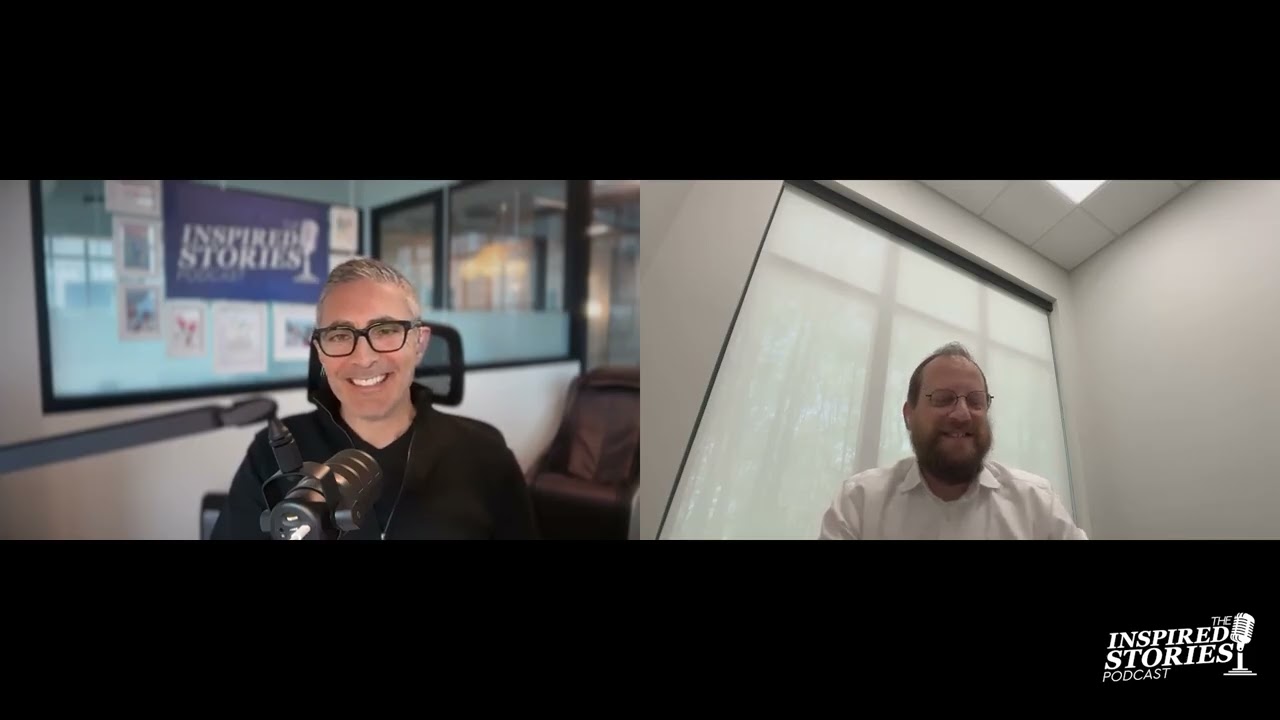
Meir Spiegel is a CPA and partner at B2B CFO, the nation's largest CFO consulting firm, working with privately held businesses in New Jersey and beyond. He spent over a decade as CFO and controller at VIP Wireless, where he built financial systems from the ground up, implemented NetSuite, and developed automated processes that enabled the company to scale through multiple acquisitions before the industry fundamentally shifted. That experience now drives his fractional CFO work helping business owners see what their own numbers can't tell them.
✨ Key Insights You'll Learn:
Joining VIP Wireless two days before a merger went live with no accounting infrastructure in place
Building billing, payment, and residual systems from scratch using pseudocode handed to developers
NetSuite implementation: nine months, full ERP buildout, itemized inventory tracking for cell phone ESNs
Automated a two-person, two-day residual payment process down to a 90-minute script
Recognizing a credit system house of cards before COVID hit and rebuilding it to survive the shock
Moving from single-company CFO to fractional partner at B2B CFO after the wireless industry restructured
Ideal client: five million to one hundred million in revenue, outgrown their infrastructure
B2B Exit: preparing companies for sale by boosting EBITDA and choosing the right exit structure
The management buyout option: benefits, risks, and why pulling back the offer can destroy morale
Staying focused: a short daily priority list as the simplest and most overlooked productivity fix
🌟 Meir's Key Mentors:
Jerry Mills (Founder, B2B CFO): Author of the B2B CFO and B2B Exit books; built the fractional CFO model Meir now operates within
Partner at Early Accounting Firm: Trusted introduction to VIP Wireless that launched Meir's in-house CFO career
VIP Wireless CEO: Made fast, decisive calls on NetSuite and gave Meir the runway to build for scale
Programming and Tech Community: Meir's pseudocode-to-developer workflow and current AI coding tools have been shaped by years of working alongside developers
Clients Over the Career: Business owners facing exits, growth ceilings, and distress have each sharpened his diagnostic instincts
👉 Don't miss Meir's account of walking into a merger with no systems and no team two days before go-live, and what that experience taught him about building for scale, staying focused, and knowing when a company has outgrown itself.
Listen to the full episode here
Transcript
Anthony Codispoti (00:00)
Welcome to another edition of the Inspired Stories podcast, where leaders share their experiences so we can learn from their successes and be inspired by how they've overcome adversity. As you listen today, let one idea shape what you do next. My name is Anthony Cotaspodi and today's guests spent over two decades inside the financial guts of growing companies, managing mergers, building systems from scratch, and leading business unit exits.
before deciding to take everything he learned and offer it to dozens of business owners at once. That shift from full-time CFO to fractional partner meant walking away from the security of a single seat at a single table and betting that his experience was worth more spread across many companies. Mayor Spiegel is a CPA and partner at B2B CFO, the nation's largest CFO consulting firm.
where he provides strategic financial leadership to privately held businesses out of Lakewood, New Jersey. His career includes a long tenure as CFO and controller at VIP Wireless, where he led NetSuite implementations and managed complex mergers. B2B CFO and its sister firm, B2B Exit, have facilitated over $104 million in business sales. So this is a conversation about what business owners
can't see in their own numbers and what happens when someone finally shows them. But before we get into all that good stuff, today's episode is brought to you by my company, Ad Back Benefits Agency. And you'll want to hear this because it's hurting almost every business owner you know. Health insurance costs go up every single year and businesses are furious about it. They're paying more, claims are getting denied, employees are opting out because they can't afford it, and it hurts turnover and morale.
It's one of the most maddening problems in running a business and everyone just accepts it. But you don't have to anymore. Now there's a program that gives your employees unlimited access to doctors, therapists, and prescriptions with no co-pays or deductibles to meet. But here's the part that really shocks most people. Unlike with every other benefit on the planet, your net profits will actually increase.
We recently helped a client add $900 per employee per year to their bottom line. Results vary, but gains like that change how a business is valued. Be the hero advisor that introduces this to your clients today. Addbackbenefits.com. All right, back to our guest today, partner at B2B CFO, Mayor Spiegel. Thanks for making the time to share your story today.
Meir edited (02:45)
Hello, thank you for having me on.
Anthony Codispoti (02:47)
So Mayor, let's start kind of at the beginning. What pulled you into the accounting and finance world in the first place? Take me back to the moment where you're like, ⁓ this is the path for me.
Meir edited (03:00)
So I began college, probably like most freshmen, unsure of what I was going to do next. And I took, I kind of knew I wanted business. I'm not really sure why. I took a programming course. I took an accounting course. I took a business management course and accounting just seemed to make the most sense of where I would be. ⁓ So, I mean, I guess programming is not business, but interestingly, I always thought that
programming would become pretty much where it is today in vibe coding. Back in the nineties, I thought that would happen. And I was always drawn towards it, but, I kind of made a career out of it, but we can get to that later.
Anthony Codispoti (03:41)
Okay, I'm gonna ask you to speak up a little bit so that Mike gets you a little bit more.
Meir edited (03:46)
Okay.
Anthony Codispoti (03:47)
Okay. So drawn to accounting, you're drawn to the programming side of things a little bit in concept and theory. saw, you know, some of the levers that that could help you pull operationally. You go on, you get your degree from Turo, you get your CPA. You had a couple of other jobs first, but then in 2010, you land at VIP Wireless. What was the state of the financial operation when you walked in the door there?
Meir edited (04:12)
Okay, VIP Wireless, it was a very successful company and absolute chaos. When I think about it, I am surprised how it worked out and how great it went and how the first few months I would probably walk away today, which would have been a idea, but that's probably what I would do today. So I was working at a small accounting firm and the partner told me about one of their larger clients and the way he pitched it to me was they're looking for a controller for like a side gig.
And I really wasn't interested in a side gig, but the partner was a good partner, good friend, and I trusted him. So I went down and took the interview and the side gig was a multimillion dollar company that they, it wasn't really a side thing. It was just that they would, the client would no longer deal with Boost Mobile after this merger went through. So they were spinning off their Boost Mobile part to VIP Wireless and VIP Wireless had no accounting proper.
proper accounting set up at all. And I don't remember the exact date, but it was like October 30th and the merger was going live November 1st. And it was like that first week was just straight up chaos. So, ⁓ the software was terrible and they kind of knew it, but they didn't know how to fix it. it was just like, like trying to figure out what is the most important thing to do next.
About mid January things got under control. But when I think about how little staff I had, and I had no team, I had to hire the team as transactions were happening. So when I think about how much chaos it was and how little I had to work with and how it worked out well at the end, sometimes I don't believe it myself, but that's what happened.
Anthony Codispoti (05:55)
And so as part of this transition and sort of cleaning everything up and getting it more stable, you implemented NetSuite at VIP Wireless. Well, that came later. Okay. So what was that initial cleanup that you did in those first two and a half months?
Meir edited (06:04)
That came a bit later, about a year and a half later, but...
It
wasn't even cleanup. It was just getting things off the ground. There was no mechanism to get bills paid. It was brand new. The two companies merged, the old VIP and this other company stopped doing Boost Mobile and it became, we'll call it the new VIP. It's not what they named it, but that's basically what it was. There was nothing set up there. There was a residual team, but they weren't employed to do anything.
Um, the other company had a team, but they were employed to do their own thing. So I had some people I could ask, like, how did you do this in the past? But there was nobody designed to make sure a customer paid. No one designed to make sure that a customer gets paid. Like it, so it wasn't cleanup. It was like built from the ground, which is easier in a lot of ways. Yeah. So the system they use, which will get us into NetSuite was fairly terrible. I mean, it worked. It was adequate.
Anthony Codispoti (06:53)
It was building systems from the ground up.
Meir edited (07:05)
It was fairly terrible. Like one of the things the programmer asked me was how can we get the Socks compliant? And are you familiar with Socks? It's like, so this was, ⁓ well, the year was 2011. So it wasn't that far off of, ⁓ the Enron scandal, which I believe was 2003 around there, two, three. So after that, they made a bunch of Socks, which is called Socks that you have to have like a trail and you can't just delete your things or you can't have a system that you.
Anthony Codispoti (07:13)
I am, but explain for the audience, please.
Meir edited (07:34)
You basically have to be able to retro figure out how we got here. And he asked me, how do I get this SOX compliant? Now I'm not a SOX expert and very few people are. you, you would, the software would be certified. And I was like, you don't even, you're not even following rules of gap. Like I can't even do a journal entry. Like what, like what are we talking about right now? So.
It was, it was, it was a system that like was usable. Like I could tell you, you could go to the grocery store, fill up your backpack with groceries and bike home. Like it's possible, but that's not the way to do things. Like it just didn't make any sense. two of our competitors were using NetSuite and that's why the CEO, I set up a couple of companies. I don't remember who they were for interviews. And he's like, I know NetSuite works. I'm not wasting time in interviews. We're in a rush and NetSuite was the decision.
And it probably was the right decision. That's he's so powerful.
Anthony Codispoti (08:27)
So for people who aren't familiar, explain what this platform is, why it's such a big deal, and what it took to pull off the actual implementation.
Meir edited (08:38)
Well, it took months. I have a funny story about that if you want to hear it, but it took about nine months to pull off the operation. But, and a lot of that was just getting the old data in. One of the things you want to, you want as much history as you possibly can is a point where it's just not worth it anymore. If someone does get audited for seven years ago, they're going to have to call you. But you definitely want the opening AR numbers to be all correct. you know, just imagine any company anyone does business with. Like if your credit card company one day got a new software.
And now it said, it doesn't know how much you owe. That would be like the absolute worst. If you couldn't access last month's statement, would, you'd be pretty frustrated about that. If three years ago statements would be just like a message, if you need this, we'll email you. You could live with that. So that's, that's like the old data that you have to deal with. But the power of NetSuite is that it's, it's, it's a full ERP, which now I'm blanking on what they stand for, but it's, it will run the full accounting and, ⁓
just business management and then we'll talk to your website and it'll be the full enterprise, that's the E part of the company. It's also highly customizable. So you can, and we were selling cell phones and what's odd about cell phones is we track the product after it's sold. So when you buy a cell phone, most, I I believe it's still like that today. You don't make, the company doesn't make money off selling you the phone. They make money how long you stay on the network.
So we're tracking that phone through its ESN. How many times are you buying minutes and how long are you staying on the network? So, so first of all, it's itemized inventory, which is not normal in business. Typically when you like buy products, you buy pens. You don't care which pen you sold to which customer. That'll be like tracking the serial number on the dollar. Like you don't look at, that dollar I spent on this soda came from yesterday's paycheck. Like that's just not the way you follow things.
Anthony Codispoti (10:22)
Mmm.
Meir edited (10:34)
High-tech items, you would.
Anthony Codispoti (10:34)
There's an additional layer
of complexity in the inventory tracking that you're doing, yeah.
Meir edited (10:37)
Yeah,
high ticket items you would like the VIN numbers on a car jewelry you would, but at a normal inventory when it's especially then when you were dealing with some cheaper phones, not even smartphones yet. I mean, there were some, but not the level they are today. They were 100, $150 phones, but we did have to track them because you had to know who's staying on the network, how long they're staying on the network, how much they're paying every month. So that was a, a, lot of customization that we had to do and all this.
NetSuite allows for. So the power of NetSuite, the out of the box, it's very powerful and it allows for automation, customization, probably bore your audience. go through different types of customization, but it, it, yeah.
Anthony Codispoti (11:18)
Probably would, good call.
So talk to me about how long it took to actually pull off the implementation.
Meir edited (11:25)
It took, from when we started, it took approximately nine months. I don't remember the exact dates. mean, going back about a decade, there'll be more at this point, but it was definitely not a full year, but it was pretty close to it.
Anthony Codispoti (11:41)
And while you were there, you moved from controller to CFO. And do I have this right? You were also overseeing other mergers that took place?
Meir edited (11:51)
Yeah. So, so when we went into NetSuite, one of the things I did was build for scale because we were growing quickly. So just the way we collected money from our customers, I automated. So it made much, much less staff restraints. The way you, paid our customers. That's another oddity because you pay residual payments to the customers. That's one of the way the customers make money. So if you're a store and you're selling.
Anthony Codispoti (12:16)
What do you mean, you're paying your customers?
Meir edited (12:20)
30 phones a month. If whoever bought that phone from you, even if they go to your competitor to continue to buy minutes every month, because they're prepaid phones, you would get a residual because you were the original person who stole the phone. So we would get that money from the carrier. I, I, when I say wrote a script, I never coded. I, I wrote what's called pseudo code on a word document. I would say, this is how I want it to be traced. And this is where the data is found. And this is how we can know what's going on. And.
The coders would do the coding. So I, I, I followed a script that would automatically do an ACH. So a test that took two staff, two full days and literally two full days, they would put on their out of office and not respond to anybody for two full days. Cause one of the ways we distinguish ourselves as a better, you know, you want to do business with us is cause we paid our residuals right away. Right. So, and the competitors probably did too, but it was part of being competitive. Like you want to.
Anthony Codispoti (13:13)
Mm-hmm.
Meir edited (13:18)
So to get the, and a live was not by checking the mail. So to get that check in the mail and get it to the customer was a high priority. So I got that down from a two day process of two employees to a, a ⁓ script running for about an hour and a half, which doesn't matter to anyone how long it takes. And the money would be ACH in your account by the next morning. So you got paid much faster. Everyone got paid. So the reason I went into this was.
Anthony Codispoti (13:40)
mindless.
Meir edited (13:43)
That was all built for scalability. when we, when you can call it a merger, which it's true, but you can also call it an acquisition. bought customers. So besides the fact that we're organically growing very quickly at that rate, at that time, we bought a bunch of new customers. We were able to integrate them into our system fairly easily because it was built for this level of scale. So with minimal.
Anthony Codispoti (14:07)
And when, sorry,
Mary to interrupt, but when you talk about a customer, are you talking about the end user of the phone? Are you talking about the store that sold the phone to somebody? Okay.
Meir edited (14:12)
No, store, store.
Our customers were brick and mortar stores. The industry term for that was actually, is called a door, which is this, this, have a physical door. ⁓ our customers were not the end users. Now the end users, which they would call subs for subscribers is something we would track basically just to talk with the carrier, how we're making money, but that will be more on a higher level CFO, like, profitability conversation, which is highly important. And we can get into.
understanding profitability, but that's not this. ⁓ When I say a customer, when I say a customer, really meant a location, but a customer, which they would call a dealer in the industry, you can own five, six locations, or even up to a hundred locations.
Anthony Codispoti (14:59)
And so when you're talking about acquiring customers, are you actually acquiring that dealer, that store, or you're just converting them to be using you and your platform?
Meir edited (15:11)
No, so they had, um, competitor, we had competitors at pretty early on. don't remember the years quite, but it was probably around 2013 to 2012. They stopped being true competitors because at that point, Boost was owned by Sprint and they didn't allow us to go after another Sprint customer. So if you were a customer by competitor, you can never buy from me. So they weren't true competitors. So these, these acquisitions and mergers were when one of.
the competitors went out of business and they sold their entire portfolio. So you had, a thousand customers. have 3000 customers. I'd buy your customers. I just jumped up by a third overnight. I mean, it'll be a ramp up period about two months, but so this was intentionally built for scale that we can do things like that with very minimal extra work because the scripts would just keep running in the background. Like we would need.
more sales rep coverage, we needed to make sure that customer service can handle it. But as far as the regular day to day, making sure that the phones are available, you're getting paid and we're paying you, that was all built for scale that worked very well.
Anthony Codispoti (16:24)
these scripts that you outlined in a Word document, how you wanted to have operate, and then a coder would build them to your specs and you guys would tie into the whole NetSuite infrastructure.
Is that right? Okay. So at some point you're, you know, you're with the IP wireless, but you make the decision to, to leave the full-time CFO world and you join B2B CFO as a fractional partner. Walk me into the moment that you decided to make that leap. What was going on in your career, your life that led to that decision?
Meir edited (16:39)
Yeah, yeah.
Yeah, so, so, um, VIP wireless, it was, uh, it there for 12 years. It was, it was great when it was. Um, what happened in the row in the cell phone route was Boost Mobile was owned by Sprint. Sprint is no longer. Now I'm going to try to remember the years precisely, but it was around 2020 when they finally disappeared. So they were acquired, again, they call it a merger. They were acquired by T-Mobile.
So T-Mobile made the new T-Mobile and they bought Sprint and Sprint disappeared. T-Mobile's prepaid service was called MetroPCS, or still is called MetroPCS, and Sprints was called Boost. The DOJ, I remember listening to the hearings because we weren't sure how this would go and we thought that T-Mobile would purchase and if T-Mobile would have purchased, they probably would have shut down the vast majority of the Boost mobile stores, most likely. At least that was the conventional wisdom.
So the DOJ had hearings on it and they allowed the merger to go through and consider it an exception to the Viya. They approved the merger to go through. However, they required Boost Mobile to be spun off and they wanted that to stay as a competitor. ⁓ mean, things were percolating behind the scenes that nobody knew about until it was announced, but kind of out of nowhere dis-announced.
that they are buying Boost Mobile and creating America's, I guess we would call it the fourth wireless carrier. And they had a bunch of requirements of they're going to build the 5G network in multiple different cities and they're going to become the wireless carrier. That plan didn't end up happening. If you read the news now, they're not, they're staying in what's called an MVNO. means they're just going to continue to rent lines off of Sprint and not Sprint, they're off T-Mobile and AT &T. They're not.
ever going to complete their own network. But that was after I left. But after that happened, the entire industry changed and where I was doing. So we discussed about things that are very on early on in VIP towards the end of my career at VIP. The credit system was in bad shape. So it made sense in 2018, 2019 to be giving very liberal credits. We were on a very heavy growth mode, lots of red dealers.
Anthony Codispoti (19:24)
And when you talk about
credits, you're about credits to the end customer, to...
Meir edited (19:27)
Yeah, like credit line, like
how much I allow you and how long I allow you to pay me. And everything was growing. So it would make sense to the stores. Always to the stores. There was no credit given to the subscribers. The subscribers were all prepaid. That's the boost mobile model. in order to, the carrier doesn't actually make money off you for about 10, 12 months, even if you're prepaid. So they subsidize the phone. So there's a lot of, the stores need a lot of credit.
Anthony Codispoti (19:34)
Still to the dealers, still to the stores we're talking about. Yep. Got it. Yep. I've got it.
Meir edited (19:56)
In 2017, 2018, even 2019, it made sense to give the dealers a lot of credit because they were opening new locations and they were using the money for growing their business. That all changed. The industry changed and Sprint's ideas changed because they were emerging, they were being sold. So I looked at this and I said, we're in a house of cards. If we have one Black Swan event, we're going to lose probably 20 % of our dealers.
And this is really where SCFO differs from a controller. Like that's like the top level look and saying we can't continue to do what we were doing until now. It made sense up till now, but these are the reasons why we just do, we need to do a serious relook and a change or we're going to be in a lot of trouble. Now I wasn't a prophet. I didn't know that COVID was about to hit, but we would not have made it through COVID. Like we would just would have had, and it wouldn't have been good for us. It wouldn't have been good for the dealers. They would have been overextended. They would have been in panic mode.
So I built a system, which I don't want to go through because it's pretty involved and very industry specific, but I built a system that you basically only have as much credit, exactly how much you need. So you, you, and, sometimes you'd pay for the phone within a week. Sometimes you'd pay them for within 60 days, depending on how quickly they would get activated on the network, depending on what type of phone, the more expensive phones will sit in your store for longer. And we could watch all that because of the uniqueness of the industry that I could literally watch every year.
So this was a whole new set of coding and how to make this work, which could be interesting to a few of our listeners, but most of them will probably gloss over it. but, but that was, this, this, this is all to get to the answer to question. This was all happening 2018, 2019, 2020. Once Sprint, once Dish settled in and they got it into motion, there wasn't really much place for this anymore. And it didn't really make sense to stay where it was.
Anthony Codispoti (21:50)
and
Meir edited (21:53)
And that's why the, my VIP tenure just didn't make sense anymore.
I took a job with a small company. didn't really, it wasn't, it wasn't a good idea, that small company. And that's when I really had to look inside and say, what works so well and what was so enjoyable and what are we doing in the future? And, you know, even though this is an antiquated fix because everyone has a proper ERP now, building a company that had no system into a viable system, into NetSuite, into a pretty robust, sophisticated system that will take the rest of episode to understand.
was where I wanted to go. So B2BC is, I spoke to a fractional CFO who worked for B2B and it made sense to partner with them. And I became a partner here where I can take these, walk into your company, assess, first of all, what do you need? Like, what are you missing? Where's the hole and where's the gap? And fill that in. And that's really where, like, I wanted to move from there. So companies that have outgrown their bones.
if you follow what saying, like they're now too big to be running the way they were.
Anthony Codispoti (23:05)
They can't do spreadsheets or even maybe QuickBooks anymore. They need a more sophisticated system.
Meir edited (23:08)
Right.
They need a better system and they're not quite ready to buy a full time, hire a full time CFO. And even if they were, they wouldn't even know where to start. Who do I need? So that's, that's how it evolved into a full time CFO to a fractional CFO.
Anthony Codispoti (23:27)
Got it. So distill it down for us. What does B2B CFO do and who do do it for?
Meir edited (23:34)
So B2B CFO helps with leading the accounting team, but not merely or usually not even at all with the closing journal entries and the tax work, which is a room for this, lots of room for that. Lots of companies need that. That's not what B2B focuses on. There's plenty of CPA firms that do. I work with my favorite CPAs. All the partners have their way of doing it. It's really more of the...
future, financial planning and analysis, what exactly does the company need to grow? So it's not a full-time job. And the classic client is between 5 million and 100 million gross revenue. A team of less than 10, I find very hard to work with. I'm not saying it's impossible, but that's like pretty difficult to work with.
Anthony Codispoti (24:20)
And why is that? Why is that 10 employee threshold kind of difficult?
Meir edited (24:24)
Because when you're dealing with a smaller team, so the evolution of companies typically is I have a passion. I love soda, I love, but there's too much sugar, I'm going to create seltzer. Obviously that's silly, but there's a seltzer on my desk. So that's my passion. That person loves that. They love their product and they do it with their full heart and they create it. That's usually a three, four people team.
Then you get an order from, from ShopRite, Walmart, Wegmans, and now you're became an executive. So that's when you need a CFO to say, how are we going to systemize this? How are we going to take, how are we going to get the entrepreneur, the founder who wants to do what they love, whatever that is, if they're an author, if they're a, no, I just said a beverage, a perfumer or whatever they are. They want to take that and, and continue to do that and stop running a business.
When you're dealing with less than 10 people, and again, this is not a hard and fast rule, it's just like an idea. They typically don't have the bandwidth to do that. So there's no one to delegate to, there's no team to set up, there's no... You are everybody because there's just, there's no body.
Anthony Codispoti (25:35)
Yeah.
There's nothing to, you don't have enough infrastructure in place to build from. You need at least a little bit of scaffolding before it makes sense to bring somebody like you in as a fractional CFO there. Yeah.
Meir edited (25:43)
Right.
Right, right.
So it's not a possible, but that's typically what it goes. And now it is possible, the person would say is like, I'm ready to hire five more people. I just don't even know who to hire. So that could happen. I dealt with companies in distress. They're not my favorite clients, but they work well. That the reason they need someone is because they were making money and now they're not. And they need to climb out of that. that's, but if you like my favorite client and that's just me, that's not the whole B2B CFO. That's just me.
And a lot has to do with what I went through with VIP is when they outgrow their infrastructure and they don't know where to go next.
Anthony Codispoti (26:24)
You've got a playbook for that. You've been through that.
Meir edited (26:26)
Yes. And the founder of B2B, Jerry Mills wrote a book about it, which when he wrote the book, was written better than I can, but it was put in a way it was like, is, and it's meant for business owners. It's not meant, it's written in very simple language, like a business owner could read this. And when most people read it, they say, this is like somebody gets me. This is, this is what I'm going through.
Anthony Codispoti (26:49)
So ⁓ tell us the geography and the types of industries that maybe you have worked with the most.
Meir edited (26:58)
Yeah. So the geography is New Jersey, Pennsylvania, but geography is becoming antiquated. I'm still old. I think that offices make a lot of sense. think, I don't think you have to go to the office every day. I'm not that old. don't, I don't, there's almost never one day that you must be in the office at, know, unless you're having like a client compass of it, but, but if you don't have an office with the team meeting together, something very fundamental gets lost, especially in small companies.
So I still believe in that, but some companies don't and they don't have a team. Like the person at VIP I worked with the most lives across the country. So it's not like a hardened, hardened state. So the industry I worked with the most in my career has been wholesale retail. A little bit of real estate, but that was very early on. And recently I've been dabbling a lot with ⁓ construction.
And that has been very interesting. That has been new. And I didn't pick it, but I'm very happy there.
Anthony Codispoti (28:06)
Why? What do you like about that space?
Meir edited (28:09)
⁓ that's a really good question because I haven't thought about it. It's I guess because it's different because, ⁓ there is something nice about, even though I'm sitting behind the computer all day, the same computer, there's something happening. Like there's a building being constructed. There's a neighborhood that's now there. There's something nice about that.
Anthony Codispoti (28:28)
you can see the
physical fruits of the labor.
Meir edited (28:31)
Yeah, even though it's still on a screen because I don't go to the sites like this, like this somehow it's the difference between playing Sim City and like knowing that there is a city there.
Anthony Codispoti (28:45)
want to go back to the Word documents that we were talking about before, right? You weren't a coder, but you had an idea of what you wanted these scripts to do. So you laid it all out in a Word document, handed it to a developer, got the result back. But I understand that you're on the cusp of a very different approach using some more modern tools now. Want to tell us about that?
Meir edited (29:08)
Yeah. So, ⁓ I've been playing a lot with, OpenAI's codecs and, much more with Entropiq's Claw. So having the background that I have of knowing how to talk to programmers, I've never written a line of code, but I know what SQL is and Python is. So it's like, I don't speak Russian either, but I know what it is and who would speak it and why they would speak that language. And I know that Latin is a dead language, but it's still a very important language. Like, like that's.
That's basically what I know about Visual Basic and Python and SQL. But because I know that, I've been using Cloud to do automation and to do tracking data in ways that used to be reserved very specifically for higher end companies that were ready to pay thousands of dollars in developing fees.
Anthony Codispoti (30:03)
So Mayor, ⁓ B2B CFO also has a sister organization, B2B Exit. And together they've facilitated over $104 million in business sales. Tell us about the specific services that you offer here and how they're a little bit different from what you do with B2B CFO.
Meir edited (30:24)
Yeah, so the main difference is the focus, the focus on B2B exit, which is very similar work, but that means that you're looking to get rid of a vertical or more usually an entire, your entire company. So for whatever reason, you're ready to move on to your new venture and something else is happening. You're ready to retire. You're ready to get, get somewhere new. So now you have a company which.
You would like to obviously get the highest return for your company. So we can get EBITDA, like your bottom line profit up, then you could sell your money for the same multiple, that's exponentially more. Well, maybe not exponentially, but depending on what multiple you're using, let's just use 8X. So if you make an extra $100,000 this year, that's $800,000.
Also may not be ready to be sold because you may have systems that worked really well for you, but you're, everything's going through you or you had the same team for the last 20 years and two of the people are going to retire. now you like, there's multiple reasons why selling a company is a different ⁓ strategy than growing. You're managing a company. So this is that that's the idea of B2B exit. would,
If you want to purchase a company, that's just the opposite side of the coin, but that's less common. Typically the seller would bring someone in and get it ready for the sale, you know, get it all dressed up and ready to go to market.
Anthony Codispoti (31:53)
What are some of the biggest operational levers that you can help a business owner pull to boost that EBITDA so that they're getting that stronger exit?
Meir edited (32:04)
Well, the low hanging fruit is very often wasted expenses. So sometimes that's a good time to take a look at this is how we've been doing it, but do we still need to do it this way? Some just like very obvious overlooked things is how do you want to sell it? That's something business owners don't always think about. You know, what type of sale do you want? The most enjoyable one is selling it to your management team.
And again, B2B CFO has a book on this called B2B Exit. It's a good book to read, to go through it. And this is chapter two of all the different types of sales and why you would want to do that type of sale. And what it has, which I personally haven't seen in many other books, is the negative of each sale. It doesn't mean you don't want to do it, but everything has, everything's a trade off. The negative of selling it to your management team is once you put that offer on the table, it's very difficult or impossible to retract.
Anthony Codispoti (32:49)
Man.
You want to know both sides of it.
Meir edited (33:01)
So if you're gonna do it, you gotta make sure that that's exactly what you wanna do and you're ready to do that.
Anthony Codispoti (33:06)
Because if you pull it back and you end up selling to somebody else, the management team isn't happy, you risk them leaving.
Meir edited (33:11)
Yeah.
Yeah. And if they don't, most people don't do straight sabotage, but they, what's called today, quiet quitting and is basically, you know, it's not my job to tell you you're doing it wrong. You know, those types of things. And then, and just in general called company culture, which is another thing that is extremely important when you're dealing with growth or transitions or layoffs is making sure that the team is happy together and wants to work together.
It's that, that'll be a tremendous damper on company morale. If not only do we not deal with the owner that we became friends with, we lost a good opportunity.
Anthony Codispoti (33:52)
Yeah. And so let's say that this is working out. How does that management team usually finance the acquisition?
Meir edited (34:00)
They usually do it with a payout over time. So depending on why you're writing the company or what you're trying to do. So let's just say you started, you started your company when you were 25 and you ran it. Now you're 40. So you're still in the prime of life, but now you're raising kids and you're, you're, you have something else that you're doing that you would rather just sell the company, focus on that and not be involved in day to day anymore. So that would be a scenario that could very often work well with the management team taking it over because.
They would do, they can either give their own money or get money and give you a payout in the beginning. And then over the next couple of years pay. And these are people you've been working with for many years. You trust them. They're going to pay. They know how to run the company. So it's, and a lot of business owners feel very good about it. Like their baby is in good hands. Because people give their life to these companies. These are privately held companies. People built them from very passionately.
And that is a big part of it. You decide to venture capital, you can often make the most money, but you very quickly realize you're a number. They figure out how to make sure you're irrelevant very fast. And if you don't mind, I mean, that's one of negatives. If you don't mind, then you just want the most money and that's how you want to exit your company. Then that could be a good ⁓ exit as well. But even if you own a percentage, they know how to write it, that they're in control.
Anthony Codispoti (35:27)
Yeah.
Meir edited (35:28)
They will take, they will strong arm their way in and then they'll full control of your company very quickly.
Anthony Codispoti (35:33)
Tell me your experience in managing the emotional part of the business exit, where sometimes business owners have a hard time letting go or have a hard time post transition. What have you seen there and what advice would you have for people?
Meir edited (35:48)
Well, post transition, I haven't really dealt with. People haven't actually articulated to me because they're usually just around less. So I don't know if they're crying to their wife or excited or whatever. Noob, that's that's that typical place where I would see it. Where I see the emotional part the most, and I don't really have a good answer for you, is they talk about doing it and they're serious and they want to, and they just can't seem to get there. So they're constantly.
saying, we're going to start the process next year.
I don't have a good answer. Yeah, because.
Anthony Codispoti (36:25)
They just keep kicking the can down the road then. They're not ready to let
go. This is their baby. This is their purpose. And it's hard for them.
Meir edited (36:32)
Yeah,
it's hard. mean, one person was actually pretty honest with me and he said, I get, it was kind of a Freudian slip, but he meant to say, I think, what would I do all day? But he said something like, who am I without the company? Like his entire identity. And I didn't call it out, but I just like, okay, that was pretty honest. Like his entire identity was wrapped up in being in the ownership chair.
Anthony Codispoti (36:59)
Yeah, I get it. I've been there. I can relate to that. ⁓ It's not the healthy thing, but it's a natural thing that happens with a lot of business owners, right? You don't know who you are when you're not ⁓ in that role anymore.
Meir edited (37:00)
Yeah.
in that role.
I ask every business owner, no matter what the engagement is, how they like to end their engagement. And I don't think anyone lies to me because that would be dumb, but they sometimes don't understand themselves fully. that's not, going through an exit. Obviously we have to know like, what's your, what's your biggest priorities in this exit. But every business owner is something I say to them.
And some of them say, and again, that changes as life goes on, they have grandchildren, but they'll say, I want to like die in my office. And some of them will say, I'm looking to, I'm looking to get $50 million and then I'm going to sell it. Like the day someone offered like, so it's good to know that any engagement you do on a CFO level, it's good to know what the business owners ideals are.
Anthony Codispoti (38:02)
What are some of the crazier answers you've received to that question?
Meir edited (38:08)
I don't think I received any answers that I could tell you that would shock you. There were answers, like I said, that don't seem to be true. Like they'll say things like, ⁓
Anthony Codispoti (38:19)
Like I wanna die in this chair.
Meir edited (38:21)
No, those people I actually believe. The ones that say something like, I'm only doing it for my employees and if my key employees were all set up, I'd walk away. I don't think they're lying to me. I think they're lying to themselves.
Anthony Codispoti (38:23)
Okay.
Interesting. Now, so you've been inside the books of a lot of privately-held companies. What's the single most common financial blind spot that you see owners walking around with? The one that either costs them the most money or the most opportunity?
Meir edited (38:54)
Yeah, so it's the saddest one. The people that they grew up with, meaning the people that when the company was starting and was rocky and those were like the core team, and then they outgrew them, they don't know how to move on. And that is very tough because they're good people. They try hard sometimes. And now you really need someone else to be in that chair and you don't know what to do with the owner.
I had a business owner. was when I was a controller. And there was someone there who, impossible to figure out what the guy was doing. And he's a good guy, this business owner CEO. And I asked him, I don't even remember the guy's name, doesn't really matter. He was an older man. I was like, what is this guy doing? He says, he's retired at my company. I financed his retirement. It gives him a place to go every day. And he was so honest about it, it worked well.
He wasn't bothering anybody. He would like eat lunch with coworkers, allegedly. And that was, that's fine. Like if that's, if you're clear like that, that's fine. The problem is when, you know, Sally was there since the beginning and she knows where all the keys are, but she's not quite pulling her weight and everyone around her is trying to make it work. And she's a nice enough person. Like no one's like doesn't like her. Well, sometimes they get bitter and that's even worse. Like they're just like straight up.
mess up like the company morale. Those people are toxic. But it's a big problem because I agree with them. Like you can't get rid of that person. You shouldn't want to get rid of that person. And if they're rich enough to pay them to do nothing, then that's great. But when it's stopping, opportunity is like probably the big, like there's no opportunity.
And yeah, I don't, that's one of those that I don't have. Yeah. I don't have a packaged answer. It's like what to do. I could just tell you like this. It's, it's, it's fine to be nice to people, obviously. Like, like that's part of, I hope successful people want to be charitable. That's fine. You have to keep, not just yourself, your company, like if it's, if it's causing stress amongst your other employees, then you really have to assess, am I being nice to one at the cost of everyone else?
Anthony Codispoti (40:42)
That's when it becomes really problematic.
Meir edited (41:10)
And that's really what you have to answer on your own, and that's not always an easy answer.
Anthony Codispoti (41:17)
Talking about some things that maybe might not be an easy answer, Meir, what's the hardest thing you've ever had to overcome personally and what did it teach you?
Meir edited (41:27)
⁓ okay. So, so what I, what I, the biggest failing in my career has always been getting excited about too many things at one time and not knowing where to go next. And I would have, I mean, I still do that today. So it's like, it's like having like 10 open tabs on, on your, and my daughter sent me, I guess it was like a meme, but then a picture and it's just like, it just.
resonated so well. She said, my mind is like my browser. I have 15 tabs open, three of are frozen, and I have no idea where the music is coming from.
So it was like, that's it. What I've done is so simple that it's embarrassing that it took me until like high in the career until I actually just did it. I just had a list of three, not more than that, maybe five, but not more than that, priorities that you want to get done. And really what you should do is not move on to the second one until you've done the first one, but I don't always do that because sometimes you just need a break. And some of these breaks are good actually. You come back and you realize that, you you were...
spinning your own wheels. But what that does is two things. First of all, it keeps you focused, but much more important than that. Afterwards, when you assess, and that could be with the client, that could be with your boss, it could be with your own team, it doesn't really matter. When you come back and you say, it's kind of like housework when you get to a certain level, it'll be like, the meals cooked? Yes. Did you clean the floor? I swept it, but I didn't get to have some mop it. Well, why wasn't it mopped? It's like sticky and gross.
So it's like this way, when you do a list like this, you know for yourself and you know for others, I've got my top two priorities done. I didn't get everything on my list, but that's because I wrote down tons of things on my list and they were impossible. But, but, but, but the two top things on my list were crossed off. So I know that I spent my time at least most of the, that has been a very, very simple yet strong solution to stay focused.
and not to beat yourself up over not getting everything on your list done.
Anthony Codispoti (43:42)
So you don't make a super long list. What do you do with those other ideas that come up that don't make the list? You just sort of try to push them out of the back of the mind.
Meir edited (43:49)
I put
No, I put them in, I write them down at different places, just not on that list. I'll put them in, I'll create a project in ⁓ Codex that I'm not Codex, cowork, which I'm not going to get to just yet, but it's there. I'll, I, I put them down. I just don't, they're just not on today's to-do list. thing is you're not going to get to, and you don't have to write on the list. There's different lists.
Anthony Codispoti (44:12)
Yeah.
Meir edited (44:20)
You could put on to your list of things that you might forget. Those are the most mundane, relatively unimportant things. That's not the point there. Those are very important things because they get forgotten. That's something else. Every day you have to check your emails and get back to the client. I'm talking about the major projects that you really want to cross off your to-do. Those are the ones that can grow and there's just...
only a certain amount of hours of a day and
Anthony Codispoti (44:51)
Yeah.
Yeah. I use a kind of a similar system, ⁓ where, cause you know, like you, have all these ideas that come up, you know, the 15 browser tabs, like your daughter was saying. And so it's like, what do you do with those? And so, ⁓ and I've got folks that work for me and I used to drive them crazy because every time I had a new idea, I sent it to the team and like, Hey, we got to do this. ⁓ and so I have them going in 12 different directions all at the same time. And you know, then three days later, I'm like, that was a terrible idea. I quit doing this.
Meir edited (45:21)
Right?
Anthony Codispoti (45:21)
So,
so now I write down the idea and I have to fully script it out, you know, before I tell anybody about it. And then I've got to, the next rule is I got to sit on it for a week. So after I script it out so that I can see, cause just the process of scripting it out allows for me to throw out some of the ideas. Cause then I'm like really thinking it through and I'm like, this doesn't work. But if I write it through and, and like, okay, this still makes sense. Then I got to sit on it for a week.
And if I come back to it a week later and it still makes sense, it still seems like a good idea. That's the time where either I'll focus more energy on it or give it to my team. So I like combining that with, you know, what you're talking about, you know, you've got to have like the super short priority list every day. Cause if there's 15 things, you know, on your priority list, then it's not really a priority list. That's just a super long to do list that, you know, maybe you get to eventually.
Meir edited (46:15)
But and then you're not going to get to all 15. And then even if you get rid of 10, that's a 66 % average. And we're not happy people at 66%. So it doesn't work.
Anthony Codispoti (46:29)
⁓ Mayor, I've just got one more question for you today, but before I ask it, I want to do three quick things for the audience. First of all, anybody who wants to learn more about what they're doing at B2B CFO, their website is super easy, b2bcfo.com. ⁓ You can find Mayor on the expertise hub or you can search his name. His name is spelled and this will be helpful for his email address too, which is at b2bcfo.com.
His first name mayor is ⁓ E I R and Spiegel is S P I E G E L. So ⁓ E I R S P I E G E L at btbcfo.com. If you missed that, if you misspelled it, don't worry. It's in the show notes at inspiredstoriespodcast.com. Speaking of the show, if you're enjoying it today, please take a moment to subscribe wherever you're listening. It also sends a signal that helps others discover our podcast. So.
Thank you for taking a quick moment to do that right now. And as a reminder to all business advisors out there, your clients are bleeding money on health insurance. Do them a favor so big they'll tell their friends about it. Show them how to give their employees access to therapists, doctors, and prescription meds that counter-intuitively increases the company's net profits. Real gains that can change how businesses value. Contact us today at addbackbenefits.com.
So last question for you, Mayor. A year from now, what is one very specific thing that you hope to be celebrating?
Meir edited (48:03)
So I hope to be celebrating a client success. I hope there's either a significant sale with more money than the client expected or to set up a client for a, what I wanted to say is we were running around trying to figure out what to do next. And since mayor came, things are running smoothly and no business is smooth. It was smooth to be easy and able to deal with you and make any money, but smoothly means that you're.
have tasks, tasks got accomplished, and you move on to the next thing.
Anthony Codispoti (48:34)
Love it. Mayor Spiegel from B2B CFO. I want to be the first to thank you for sharing both your time and your story with us today. I really appreciate you being here.
Meir edited (48:44)
Thank you, Anthony, thank you.
Anthony Codispoti (48:47)
Folks, that's a wrap on another episode of the Inspired Stories podcast. Thanks for learning with us. And if one thing stood out, put that into action today.
Connect with Meir Spiegel:
Website: b2bcfo.com
Email: meir.spiegel@b2bcfo.com