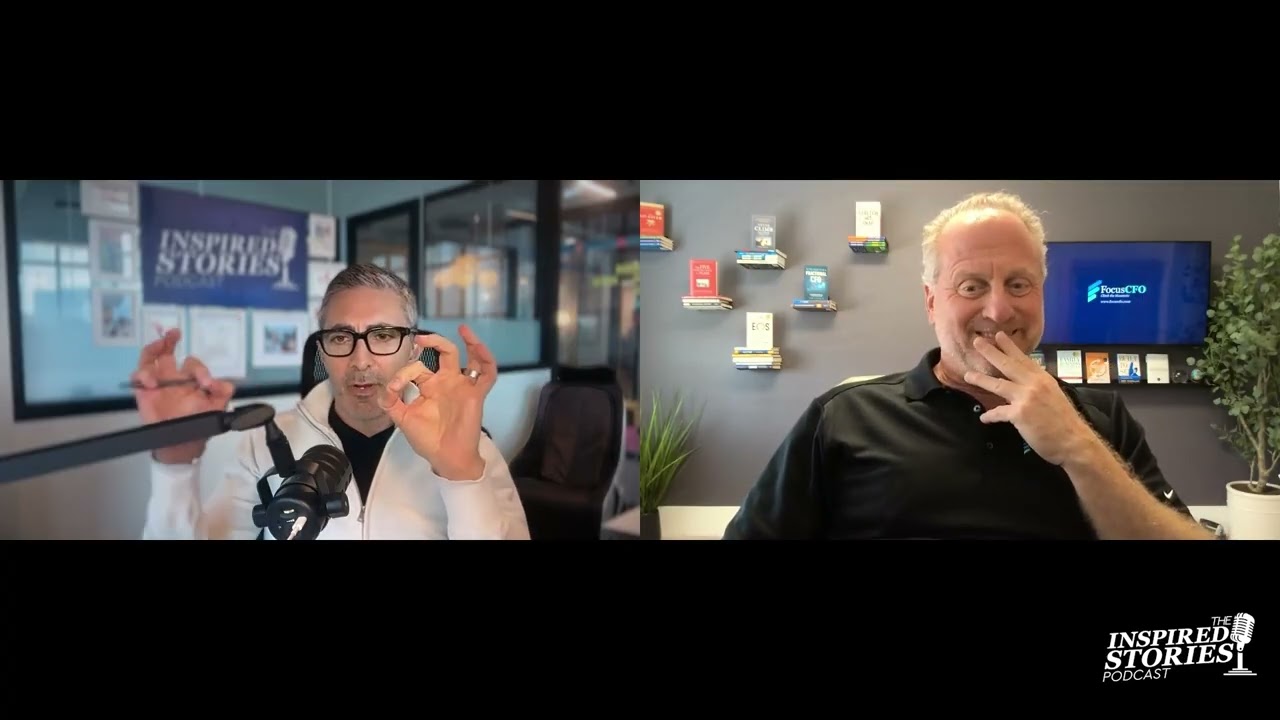
🎧 From $13 Billion Fintech Exit to Fractional CFO: Michael Stier’s Journey to Focus CFO
Michael Stier, area president for the Carolinas at Focus CFO, spent 18 years building Adhesion Wealth from a dot-com pivot to a $13 billion managed assets platform before completing a strategic sale in 2018. What came next taught him something most business owners learn too late: the financial discipline he wished he’d had inside his own company was exactly what he could now bring to others. Today he helps founders across the Carolinas build businesses worth buying — and prepares them for the identity shift that follows.
✨ Key Insights You’ll Learn:
Walking away from an aerospace cubicle farm at 22 and choosing Accenture instead — the moment that defined his career
Why he left Goldman Sachs for Bank of America: being home before 9 p.m. was the selling point
Building Adhesion Wealth through a giant pivot after 9-11 decimated the entire pipeline
What the savviest VC investors bet on — and why it’s never the business model
How growing revenue can torpedo your cash flow if you’re not managing it with a CFO
The six-week vacation test: the simplest benchmark for whether a business is exit-ready
Why exit planning isn’t something you do when you’re ready to sell — it’s what you do every day
The emotional reality of packing up your office after an 18-year run
Why the $10M to $20M revenue jump is the hardest wall most private businesses never clear
What it means to embed a CFO — versus just calling one when the monthly close is done
🌟 Michael’s Key Mentors:
Original Founder at Adhesion Wealth: serial entrepreneur who had the foresight to recognize when it was time to step aside and hand the reins to Michael
Savvy VC Partners: the one firm that stayed through the 9-11 downturn and bet on the management team over the business model
His Adhesion Co-Founders and Leadership Team: constantly challenged him and helped break the tunnel vision that comes with solo entrepreneurship
Focus CFO Partners: showed him a model he wished he’d had access to during his own 18-year run
Business Owners He Serves Now: every client engagement deepens his conviction about what fractional CFO services actually change
👉 Don’t miss this candid conversation about what it actually takes to build a business worth buying — and why the hardest part is never the financial work.
Listen to the full episode here
Transcript
Anthony Codispoti (00:00)
Welcome to another edition of the inspired stories podcast where leaders share their experiences so we can learn from their successes and be inspired by how they've overcome adversity. As you listen today, let one idea shape what you do next. My name is Anthony Cotaspodi and today's guest spent 18 years building a fintech company from scratch, raising three rounds of private equity and eventually selling it for a successful exit. Rather than step back,
He stepped in closer to the work he loves most, sitting across the table from business owners who are stuck, overwhelmed, or even terrified about what their company is actually worth. The exit taught him what most owners find out too late. His name is Michael Steer, area president for the Carolinas at Focus CFO, a national firm that embeds fractional CFOs inside small and mid-sized businesses.
Before this chapter, Michael founded Adhesion Wealth, a B2B fintech platform. grew to $13 billion with a B in managed assets before completing a strategic sale in 2018. He started his career at Accenture, then led technology strategy at Goldman Sachs and Bank of America. He holds a SIPA designation and has spent five years helping business owners in Charlotte,
and across the Carolinas build companies worth buying. But before we get into all that good stuff, today's episode is brought to you by my company, Ad Back Benefits Agency. Listen, if you run a business, you're likely stuck in the cycle of rising insurance premiums. You're paying more, but your team is getting less. And many people can't afford coverage at all. We do things differently. We offer a solution that provides your employees with unlimited access to doctors, therapists, and prescriptions.
that's always free for them to use. Here's the part that really surprises most people. Unlike every other employee benefit out there, our program puts more money into your company's bank account. As an example, we recently helped a client increase net profits by $900 per employee per year. Gains like that can change how a business is valued. Results vary, but the consultation is free. Imagine being the advisor that becomes a hero by introducing this to your clients.
See if they qualify today at addbackbenefits.com. All right, back to our guest today, Area President of Focus CFO, Michael Stier. Thanks for making the time to share your story today.
Michael Stier (02:35)
I appreciate the invitation to join you guys today. Thank you.
Anthony Codispoti (02:38)
So, Michael, you started your career at Accenture. You were in management consulting. Then you moved to Goldman Sachs, where you were running technology for the Worldwide Capital Markets Group. What pulled you toward that world right out of engineering school?
Michael Stier (02:56)
It was the last semester of my senior year and we were starting to do, you know, what you normally do as a senior, start taking interviews. And I remember I was an electrical engineer and I remember going to an on-site visit at a large aerospace contractor who was hiring a lot from my school. And I walked in and I literally walked into a football sized office space of nothing but cubicles.
And I looked around and I'm like, there is no way I can do that. That's just not a personality. That's not, doesn't fit my personality. Well, I certainly realized it when I looked at the cubicle form. ⁓ and then I went back to school and I looked at the companies that were coming on, you know, coming on campus to interview. And I saw, you know, what's now Accenture back then it was called Anderson Consulting and a different description. ⁓ well, that sounds very different than what I just did. Let me go check that out.
Anthony Codispoti (03:33)
You already knew that about yourself coming around to college.
Michael Stier (03:55)
And short version of, you know, it was a perfect fit and I went there. and I was doing that kind of technology based management consulting for a good part of seven years. Really, really enjoyed the work. it was kind of very entrepreneurial. There was always something different. but the thing that kind of pushed me out of consulting and to going into inside one of those clients was, ⁓
when my wife and I first had our kid. Because I was starting to travel literally all over the world for these projects. And my last project while my wife was pregnant, I was actually in the Philippines during, well then became the coup after Corazon Aquino came in. And there was bombs going off in the airport, things I didn't even know about while I was there. I'm like, oh, this may be a time for me to pull back from traveling as much as I was.
Anthony Codispoti (04:50)
What was the
time period? When did that happen?
Michael Stier (04:54)
Early 90s,
Anthony Codispoti (04:55)
Okay, all right, and so
you said, okay, maybe I'm done sort of doing this consulting, traveling the world kind of a thing, and then who was the client that you stepped inside of? Okay.
Michael Stier (05:04)
It was Goldman Sachs.
And so the funny part of that story is, know, typical Wall Street firm, know, running and gunning, you know, that, you know, that persona of being, you know, hard charging folks. I, yeah, we'll see. And I must've interviewed with 14 different people over a couple of days. And the question I was asked is, they always ask me was why do you want to come to Goldman? And the first answer I would give them is I'm looking for an improvement in lifestyle.
Anthony Codispoti (05:18)
Wolf of Raw Street kind of a thing, yeah.
Michael Stier (05:34)
which of course they would fall on the floor laughing. But it was actually kind of true because I said, at least I don't mind working hard, but at least I know I'm going to be home most nights. Right? So that was kind of the start of the conversation.
Anthony Codispoti (05:44)
There you go. Right, because you're not traveling the world.
And then from Goldman, you went to Bank of America, where you led the technology group through a period where assets under management went from 60 billion to 200 billion. And you manage the integration of four acquired banks. What did you talk to me? Talk to me about the work that you were doing there? Some of the skill sets you picked up?
Michael Stier (06:11)
So that was back in the go-go days when banks were acquiring like crazy. The regulations had changed and they were able to go interstate and acquire like crazy. And so I walked into, the situation was actually kind of entrepreneurial. The bank at that point had acquired, had already done a number of acquisitions and they had all these independent investment, investing related businesses.
They were just calling, hey, and somebody had the bright idea of, we should probably pull these all together and create a real business out of this. And so I was part of a initial team that kind of entrepreneurial was saying, all right, let's pull all these assets together and create an integrated business. And so that aspect was really appealing to me. Plus quite frankly, getting out of, you know, commuting into downtown Manhattan every day was also kind of appealing, right? And coming to Charlotte. so.
Anthony Codispoti (07:05)
Okay, so
this required a relocation. And now you've got a growing family and so maybe it felt like being outside the city was a better place.
Michael Stier (07:08)
is required a relocation.
Yeah, I was at that point, I had two little boys at that point. like I said, I was always home most nights, but that being home would probably be like eight o'clock, nine o'clock in the earliest. So I really only saw my kids on weekends. And so it was a little challenging. So this opportunity came up and it smelled like the right entrepreneurial thing in an environment where I knew I could be home much earlier nights and be part of their lives.
Anthony Codispoti (07:40)
And so was it just the acquisitions that allowed the assets under management to grow as quickly as they did or were there some other levers being pulled?
Michael Stier (07:50)
So it was a combination of both. So it was integrating all those assets that are required inorganically, right? But then building a true functioning bank wealth management practice that by itself was then started growing organically, right? And building it. So it was a combination of those two.
Anthony Codispoti (08:11)
What specifically were you doing there, Michael?
Michael Stier (08:14)
So I was essentially the chief technology officer for that business unit. And so, and when the acquisitions came, God, systems integration was a big, big part of it.
Anthony Codispoti (08:20)
Okay.
All right. So, you know, you're doing really well in corporate America, ⁓ probably making a good salary, nice benefits, good retirement. A lot of folks, they get into that world and they're comfortable there. But you weren't. You decide that you want to leave. You want to start something from scratch. What's going through your head? Tell me about this.
Michael Stier (08:51)
Great question. ⁓ And it's going to tie back to your first question about how did I get into Accenture? Remember that story about I walked into the cubicle farm and said, this is not for me. This opportunity at the bank, which started out very entrepreneurial and kind of roguish, as we got more and more successful, this whole business unit went from being below the radar screen of the bank to being above the radar or on the radar screen of the bank. And it...
then came with the whole bureaucratic overhead of being in a large institution. So in some ways it's very analogous to that that visceral reaction when I saw the cubicle farm. Like this just doesn't feel right for me anymore. And so it got to a point where so large I kind of ran out the door.
Anthony Codispoti (09:40)
Okay, and you ran out the door and you ran towards what? Did you know what you were leaving to do?
Michael Stier (09:46)
I did. So the bones of that business had just started. I was introduced to the original entrepreneur who started adhesion. ⁓ And I came in originally as the CEO for the business. And I wanted to do that. as it's a long story, because as most startups and early stage companies, it goes through lots of different evolutionary cycles until you kind of figure out where your lane is, where you can be really good at. And ⁓ after a while,
The original business plan, we all kind of figured out that that was actually fairly stupid. And I kind of helped drive the pivot, if you want to call it that, to the point where the original founders said, listen, this is your lane. This is no longer my lane. And he was a serial entrepreneur. So he kind of knew, had the foresight to kind of see the landscape change. He's like, I think this is a much better business for you to run than for me to run.
Anthony Codispoti (10:46)
And so he sold it to you, stepped away, he just stepped out of management.
Michael Stier (10:49)
Basically,
we were already VC funded at that point, and they all got together and decided that this transition was the right thing to do. So he stepped out and I stepped up.
Anthony Codispoti (10:53)
Okay.
So tell me about what the original idea for the company was and what you picked it into.
Michael Stier (11:07)
⁓ Since I claimed ownership to the original business model, don't have worry about it. It was basically trying to be Amazon inside of a bank, right? An online shopping type environment. This is the early dot com days when everybody had all sorts of crazy ideas. ⁓
Anthony Codispoti (11:27)
So what was this
like late 90s, early 2000?
Michael Stier (11:30)
It was, yes, exactly.
Anthony Codispoti (11:33)
And so they wanted ⁓ like an e-commerce platform for bank employees to buy stuff from.
Michael Stier (11:38)
No,
sponsored by the bank, out basically a B2C platform. So very analogous to what an Amazon was just starting to become at that point. Except a bank does not have the nimbleness and the flexibility to kind of do these things at its management by committee. so that whole thing just didn't make a lot of sense.
Anthony Codispoti (11:41)
⁓ Okay.
So was it a bank or it wanted to take this idea to a bank and execute it?
Michael Stier (12:07)
So it was sponsored, we were a spinoff in the banks. The bank had figured out one thing correctly. That if you wanna try to do an entrepreneurial venture, you gotta remove it from the bank. So they were basically just a financial sponsor.
Anthony Codispoti (12:18)
Got it.
And so if this was such a ludicrous idea in your mind, what first attracted you to the place?
Michael Stier (12:27)
Well, at that point, I didn't really realize how ludicrous the idea was when I first joined the firm. so, hey, listen, I'm an entrepreneur. I'm like, this would be a great challenge. Let's try to build something. But as we started getting through that, ⁓ it kind of changed. so I started, we had a lot of great enabling technology. It was just, in my view, being applied to the wrong problem set. So we shifted it and it wound up shifting somewhat, first somewhat unintentionally, then intentionally.
Anthony Codispoti (12:30)
Okay.
Michael Stier (12:57)
into the space that I knew well, which was wealth management, investment management area. And that's ultimately where we pivoted to. It's a giant pivot.
Anthony Codispoti (13:05)
That's a giant pivot. I
don't even know if pivot is a big enough word. That's like a 720. I don't know. It's like anyways, so you, you, move in a different direction.
Michael Stier (13:10)
You
Yeah, exactly.
But the only thing was, so our target, original target market was primarily for large institutions like banks and other broker dealers. was, it was an enabling investment management platform to do that. And so, you know, we were able to, you we understood how to plug into bank systems and to us because that's, was our roots from all that stuff and all that was working, you know, so we pivoted that was starting to gain some traction.
And then, I don't know, maybe this leads into one of your questions or not. The first real air pocket we hit was 9-11. And at that point, both our top customers and a lot of our top pipeline were all headquartered in lower Manhattan. And that decimated the business.
Anthony Codispoti (14:04)
Yeah. So tell us more specifically what the company was actually doing. It's a technology platform for wealth management.
Michael Stier (14:12)
We were one of the early account aggregators, right, behind all that, and then creating kind of a consolidated reporting platform for banks' wealth clients and their assets and their activity, et cetera. And so that was pretty, you know, now it sounds very commonplace, but back then it was very innovative.
Anthony Codispoti (14:32)
Were you kind of first to market or you're just doing a little bit better, a little differently?
Michael Stier (14:37)
I don't remember if we were exactly first, but we were certainly early.
Anthony Codispoti (14:43)
Okay. And during your time there, you raised three rounds of private equity over the span of 18 years. What was the capital being used for specifically?
Michael Stier (14:53)
It was all growth capital. So there was, was capital that was raised when I first got in there for the initial business plan. Right. And then, you know, what happened to that. Right. And then that whole pivot occurred after nine 11. So we had, we had to redo our entire capital base. And you learn very quickly about VC firms, VC funds and their appetites for things. You know, in the early days.
In the first round, was the, you know, the Heyday, the dot com. Everybody was willing to throw money at any, anything that stuck against the wall. Right. When you get into a challenged situation, right. Then you really see who, who your friends are and who has the, the staying power behind it. So all the investors we had, ⁓ from that first iteration, the second time around, only one stuck, stuck with us. And they were very savvy. And what I've learned is that.
The most savvy investors don't bet on business models, they bet on people, right? And the management teams. And these folks, very smart, one, they crammed down everybody else who was unable or unwilling to participate any further in the business. And two, they bet on us figuring out what the right pivot was gonna be. And it ultimately played out.
Anthony Codispoti (16:15)
So what
was the right pivot to get you through that 9-11 downturn?
Michael Stier (16:21)
So we took, as I said, we were investment management focused at the time, but what was not working was our original target market, which was large institutions, because they were all cratered from 9-11 and the subsequent output from that, and then the Dow Countroom. So we pivoted toward, at that point, which was a somewhat early burgeoning market, was the independent investment advisor market, right? Independent RIA firms, which now are, you know, that is the majority of what you see out there.
Anthony Codispoti (16:51)
But it wasn't as big back then.
Michael Stier (16:52)
It wasn't as big back then. And we saw that opportunity growing and like, oh, that is, that is a fertile market, right? That is very unsupported. Um, and we thought it was a great opportunity to sell against or sell into, should say, but we had a lot of work to do. And so that's what required additional capital. And that's, now I go back to the point, the one firm that stuck with us bet on us.
being able to figure out exactly what that market needed and execute on that.
Anthony Codispoti (17:24)
Why do you think the independent advisor market grew so rapidly during that time?
Michael Stier (17:30)
same entrepreneurial spirit that's that the reason why I left the bank, right? Most of these wealth advisors belong, you know, were part of the very large institutions that were down at the time. But the really good ones, the ones who really serve their clients, and kind of had a little bit of that entrepreneurial spirit, wouldn't have their own firms, right control their own destiny, get out of underneath the thumb of whatever the compliance of a large bank brokerage, whatever out of that.
And so that was driving a lot of it. And there was some regulatory changes that was enabling more of those businesses to break away, inform it. so, but they didn't have a platform. They were all, you they're all coming out of these large institutions, basically running on the platform of the mothership. And now they're going independent and there wasn't a lot out there, right? It's just some ad hoc, pretty cheapy ton of tools. And we created what was then essentially kind of, you know,
know, kind of close to what they were getting from the mothership.
Anthony Codispoti (18:30)
So why did you have to actually change the product you were offering to suit the independence?
Michael Stier (18:37)
We had to expand it essentially because what we built was more of a component. Originally for large institutions, we built components that would plug into their existing systems. In this new marketplace, they needed a complete standalone environment, complete solution that was standing on its own. So we had to shore it up, the underlying foundation and then everything around it.
Anthony Codispoti (18:59)
And then how did you take it to market when it was ready?
Michael Stier (19:03)
lot of guerrilla marketing. So it was the early stages. ⁓ there were certain, ⁓ Roker dealers that supported strongly the independent RA marketplace. And we worked through them, you know, their trade shows, their sales folks, we sold it to them. The concept to them who then helped sell it to, ⁓ and make it, you know, make us make their clients aware that we were there as a platform. So.
Cause at that time, when I started, think there was like 34,000 independent registered investment advisors. There was no way that we, as a small business, we able to gain access to them. I don't, you know, just call, calling one-on-one. So we needed, we basically needed a force multiplier and that false that that force multiplier was these broker dealers because all the RAs had to be working with one of them. And there was three or four that really kind of the tops. So we just focused on them, getting them on,
corralling them and getting them believers what we did and then they made us aware, made their clients aware of us.
Anthony Codispoti (20:07)
Okay. So what's the part about raising capital since you went through it multiple times that are pretty big level that typically doesn't get talked about?
Michael Stier (20:19)
Well, you know, the old cliche, it's easy to raise money when you don't need it. Right. And so yes, it was very yellow in our original business model when everybody was just throwing money at.com. It was really easy to raise it. When the market took a big step back and we needed that growth capital, then things, then you really get to know who your friends are and who are the really savvy investors behind that all. And so you, and you really need to.
keep building the relationships and nurturing those relationships. Because ultimately it was about us as a management team that sold, that got us the capital that we needed.
Anthony Codispoti (20:59)
So how did the transition from adhesion wealth to focus CFO come up?
Michael Stier (21:09)
So when we eventually sold the business, right. It's a strategic buyer. Yeah. Oh, that's a whole nother story. So when we got to a point where the he's in the business was growing, it was, you know, well established. Had nice growth, but at all markets and all industries, things change, right. It just evolves over the years. And I guess we had enough foresight to see, you know,
Anthony Codispoti (21:13)
And did you get to take part in that exit or you weren't on the cap? You were on the cap too. Okay.
Michael Stier (21:36)
that things were changing and that we needed to, that growth that we were having was not going to be sustainable just being what we were at that point. And so I went to my board and said, listen, we need to do something strategic. And that was pretty open-ended. We need to go acquire somebody, we need to raise more capital to invest in additional capabilities, ⁓ or maybe we should look to being part of a larger organization. We need to do something. And they agreed.
We hired an outside advisory firm and basically it started a two year process for me where basically I had two full-time jobs for two years. One is running the business and one was figuring out strategically what we're going to do with the business. Right. And then ultimately after a lot of different gyrations and kissing a lot of frogs and trying to figure out where we wanted to go, you know, a sale to a strategic buyer was, was turned out to be the right move at that time.
Anthony Codispoti (22:32)
Who was that?
Michael Stier (22:34)
It was a technology firm out of Boston. ⁓ They no longer own it. In fact, they kind of, they bought it thinking they were going to prepare themselves for an IPO because they had a traditional software license model. And we were a recurring services model, revenue model, because we were basically a SaaS product at the time. And ⁓ so they thought that diversification revenue would be great to help them with the IPO, which would make total sense.
except they screwed the pooch. They didn't manage it well. They never IPO'd. ⁓ And so my leadership team that stayed on with the business, because I exited once we did the original sale, ⁓ wound up getting another buyer to take it off their hands, where it made a lot more sense. the stories are interesting.
Anthony Codispoti (23:09)
Mm-hmm.
I bet. Okay, so head at the door to focus CFO open up.
Michael Stier (23:33)
Quite frankly, was sheer providence. I didn't know anything about them. They found me. I was at a stage where, and a lot of ⁓ business owners who sell, and I see this now, I have these conversations all the time. This is probably one of the more interesting conversations I have with business owners, is what do you do? You can get your business ready and attractive for a sale, but are you personally, mentally ready for that sale? And that was, and.
I had the benefit of a two year process where I knew we were selling the business and I pretty much knew that I was not going to continue with it because it had been an 18 year run. I was burned out. And so I was mentally prepared for when that sale finally closed that I was going to be exiting the business. Even then it was one of the most emotional days I had and I was completely prepared for it. But you kind of you pack you say goodbye to everybody. You pack up your stuff. You go out the door and my entire identity.
for the last 18 years went up in a puff of smoke. And at first, it wasn't that bad first, somebody had given me very sage advice about when you exit your business, do not make any decisions on what you're to do next for at least six months. So I took that to heart. And I did all the stuff I wanted to do. did travel with my wife. I had all sorts of products I wanted to do, whatever. ⁓
I got to the end of that six months and like crap now what and, um, and I was starting to get bored. So I got involved in a couple of mentorship things for early stage tech companies and that, and it was all fun, but it was hobbyish. And then focus CFO found me through some mutual connection. And we started talking to think about it because I was basically the CEO of a tech company tech and a fractional CFO firm was calling my door. I'm like, what?
Anthony Codispoti (25:31)
You got the wrong guy here.
Michael Stier (25:34)
Yeah, like, like you want me to be a CF? mean, I was on paper, the CFO for my business, which is it be an interesting story tie into this, but I'm not a CFO. mean, I figured out what I needed to know from my business. ⁓ but I'm not a CFO, but as it turned out, they have this, this business model where this area president role that I'm talking about, which is much more of a relationship, strategic relationship building, business development.
really connecting with business owners. I'm like, well, that actually fits me much better because of my partner business. Remember, I was dealing with independent advisory firms. So by definition, they're small to mid-sized privately held businesses. So I was meeting with the owners, principals of these firms for years. Well, same target size anyway, right? ⁓ And talking about, ⁓ talk to me about, what's your niche? What's your growth strategy?
Anthony Codispoti (26:20)
Same target market.
Yeah, okay.
Michael Stier (26:31)
How are you trying to get operational scalability in your business? If all that made sense and we got to know each other and our platform made sense, they became clients of our business. If not, I would coach them in different directions. And as I started digging into focused CFO, ⁓ that's basically the same thing I'm going to be doing now. But instead of a technology platform for trading investment accounts, it's CFO services. But I, I spend all my time talking with business owners and referral networks about what do we do?
You know, what, what are the, tell me about your business. What are your pain posts? How are you trying to grow? What's your exit plan? know, what's your long-term plan for this business? And I talk about how we help businesses get ready for all those challenges and get through them. And if it becomes, if it becomes a fit, it's self-evident and they want to become clients. And if not, I give them suggestions about where else they should actually look for help. And so I keep doing the same thing, but now it's, it's multi-industry, just about any industry versus one.
somewhat narrow vertical market that I was in the past.
Anthony Codispoti (27:34)
So I want to come back to something you said, it sounded like there was a story there. You were technically the CFO on paper for your previous business.
Michael Stier (27:43)
I tell people this all the time. If I knew about fractional CFOs, that it was a thing that existed.
I would have fired myself in an instant and hired one because it was quite frankly, I mean, we didn't need a full-time CFO or help, but if I knew there was somebody I could bring in on a day a week basis or whatever to help do all that stuff, was not what me doing. It was not the highest and best use of my time. My highest and best use of the time is being outwardly focused, the evangelist for the firm, you know, et cetera. So that was, that was a, you know,
I'll look back, listen, I've learned lots of lessons, most of them the hard way. ⁓ And that was one of them. And so I share that with owners all the time. you you focus on where your best use and highest value is in business and get other people to do the rest. That's the only way you're to build a scalable business that you can eventually exit from.
Anthony Codispoti (28:42)
So if I understand correctly, Michael, your sweet spot with Focus CFO is working with businesses that are somewhere between five and 50 million a year in revenue, right? Which is, from my experience, in the range where a lot of companies stall in terms of their growth, what are the common financial mistakes that you see companies make at this stage?
Michael Stier (29:09)
It's the biggest, the hardest transition is listen, when you're, when you're, when you first found a business, right? Started up, you do everything. Right. And then eventually you start bringing on some people and you start building it up. But the actual leadership, the hands-on management of data set is always stuff that you did. And as you continue to grow, it gets harder and harder to do. ⁓
And that is the biggest mental hurdle for most founders, more entrepreneurs to get over is letting, getting out of working in the business day to day, where you're focused on working on the business every day and improving it. And that's where, that's where a lot of them get stuck. It's funny. I, I pulled some stats down, ⁓ for just private businesses in the Charlotte market where I live right now.
The stats, the numbers of businesses between let's say two and 10 million in revenue is large. It's like 34,000 or something like that. That next tier from 10 to 20 is like 8 % of that number. So that you, that's a huge hurdle, right? There's, you know, talk about stalling or hitting the brick wall. There's a perfect example of it right there. And that's quite frankly, that's, that's where we help.
Right? Whether it's the $10 million wall or the 5 million or 8 million, depends. Every business is different, but growth is never kind of just a smooth linear thing. It's more of a stair step function. You get to a certain point and you run into a wall and you got to take a step back, dust yourself off, wipe off the blood and then figure out what you need to change to get over that wall. So you can then run into the next wall. Right. And then, and there's that process.
Anthony Codispoti (31:04)
And so what are some of the big financial or operational levers that you're able to help your clients pull to make that next stair step?
Michael Stier (31:13)
So let's half a step back more fundamentally. When I first get introduced to business owners and someone said, hey, we think you should talk to Michael, talk about fractional CFO services to really help your business. Nine times out of 10, a business owner hears CFO and they think accounting. That has been their sole experience to date, which is they need somebody to keep the books.
And they need somebody to file their taxes. So those two things kind of keep them out of jail, right? ⁓ are in trouble with people, but that's it. The rest of their financial management is really, you know, see of the pants. That's, can't tell you how many business owners I've talked to who had measured their business by the, the, ⁓ the balance in their checking account at the end of the week. Right. Scary stuff. ⁓ and so getting them to just educating them.
on, listen, accounting really important, but that's a backward looking function, right? It's important, but it's backward looking. What happened last week, last month, last quarter, last year? And hopefully that's very accurate. The job of a CFO is essentially to tell you what you should do next, right? Is that forward looking analysis? Is that forward looking guidance? Again, next could be next quarter, next year. What's your five year? What's your tenure? ⁓
⁓ goals for the business because ultimately the real, know, this is not going to be my term. I'm, it was a very smart summary that I heard over from somebody. The role of a CFO is to take your business strategy, your long-term business strategy, tie it to your numbers and build a financial roadmap that's going to get you there. And that financial roadmap, again, depending on the business, it's everything. It's about, you know, capital structure. It's, it's understanding where, where the costs of the business are going to go as you
grow from most businesses, growing revenue is a torpedo to your cashflow. Cause you wind up tapping a lot of capital upfront, and then you hopefully you can pay in the backend. And if you don't manage that properly, and I've had lots of clients who were in that situation grew rapidly and they almost went under from a liquidity constraint.
Anthony Codispoti (33:32)
So is a is a business owner, is a founder, is a CEO, right? I want to add a couple of new product lines. I want to go into three new markets. These are the things that I want to do because I've got ideas and I think that there's needs. And then the CFO comes in and says, OK, from a financial perspective, here's how we can make that happen without sinking the ship. Either we need to get a line of credit, maybe we need some investment dollars or we just need to pace this out, know, spread it out over
Michael Stier (33:52)
Exactly.
Anthony Codispoti (34:01)
24 months instead of the six months that you want to do it because that's what our cash flow will support.
Michael Stier (34:06)
Right? Or sometimes go, you know, that's actually kind of a dumb idea. Let me show you the numbers behind that. Right. And then let's think about maybe doing this because listen, most entrepreneurs, most founders are visionaries by definition. They have lots of great ideas. Right. Some of them are actually really good ones. A lot of them are not so much, but that's all right. They're ideating all the time. I remember going into a prospective client.
had grown rapidly within a couple of years and gone from bootstraps startup, literally started the business with a jar of coins and a check and they're checking out to 27 million in revenue, something along that line. And I was sitting there with the owner and in this case, it was his wife who was helping out in the business. And she looked at me at some point, she was like, please take us as a client. My husband's got great ideas for this business and he wanted to bounce them off of me. I got nothing.
I have no perspective to help him with here. He needs somebody to talk to. Right. And that now they also needed a lot of financial management because they were one of those businesses that almost crashed from liquidity crunch because they grew so rapidly and was a capital intensive business. So there's a lot more to within the just that, but that was that aspect of just having somebody outside of your business that has a lot of other external experience, you know, far CFOs it's decades typically of experience.
just to bounce stuff off of because being, I knew this for myself in my experience, being an entrepreneur is fricking lonely. And sometimes you just caught up in your own head because, and I've had another client come back and say, your CFO is my disruptor. I have heads of different business areas, but they all have their own agenda. They're on their own vested interest. I'm not sure I'm ever getting the full
unvarnished truth about what's going on. Your CFO, because he's got no vested interest in this, is my truth teller. Right? He's digging into that. so, you know, create some compendium of all that stuff. That's, that's the value that we see in these highest businesses from embedding and experience CFO into.
Anthony Codispoti (36:11)
Interesting.
You use the word embedding. Talk more about that.
Michael Stier (36:29)
Given what we just talked about, this will seem kind of almost common sense, right? There are lots of people doing CFO consulting or outsource CFO. Basically they're looking at, once your financials close every month, they'll take a look at it. They'll do a two hour calls. Hey, hey, you're proving here. These numbers are going in the wrong direction. Maybe you should look at this and talk to you next month. To us, not being, that's a consultant, that's not being a CFO in the business.
For us to add value, we figured out long ago that our CFO really needs to be embedded onto the leadership team, management team of that business as their CFO, even though they're a day or so a week. But because we're part of that leadership team, they develop themselves and they build those relationships and they bring that experience to bear, they evolve into being a very trusted advisor. So not only do they really understand the business and they're part of
the strategic planning process. They're part of the ones who running the numbers and going, hey, this is how the business is performing. This is how it's not performing. They become that trusted guide. And quite frankly, they have execution responsibilities. I mean, they're a CFO, they run accounting. have some of those priorities or ones that they own themselves. And so that's why with us in that embedded model, we find that our average engagement length with clients is certainly multi-year.
It's somewhere around five or six years. And that's on average. And some of them are much longer because we're really, we become that trusted advisor and we're embedded on them. And most of the time, you know, like we don't need a full-time CFO. You're doing great.
Anthony Codispoti (38:11)
Now, Michael, you're also a certified exit planning advisor. That's the SIPA designation we were talking about in the intro. And chapter president of exit planning exchange in Charlotte. What are some of the key things you like to do for a client during that exit planning stage? What's some of the big levers that you can.
Michael Stier (38:23)
Mm-hmm.
So one is a mind shift set, mindset shift, excuse me. Most business owners, just like I said, when I first said, you they don't understand what a CFO does, they think accounting. When owners hear exit planning, it's almost, the industry needs a better term than exit planning because the initial mindset when an owner hears that is exit planning is something I do once I decide it's time to sell my business.
Right. In the next six, nine, 12 months, whatever it is, that's out of it. And what we try and that's part of our mission of our XPS chapter is educating business owners on the importance of early exit planning. Really, you know, the old cliche, which is very, very true is that when's the best time to start planning for the exit of the business? It's the day you start it. Right. And if you haven't done that, when's the next best time to do it? Today.
Right? So the point is exit planning is really just it's business strategy. It's building. It's getting the mindset that you are. There's two things. Either you're building a lifestyle business, which is essentially a job, right? ⁓ that you happen to own or you're building a business that has real value potentially to a, to an external buyer. Right. And you have to make that mindset. And once you, once you kind of make that mindset, then you're starting to make a lot of decisions.
to position that business to be attractive, ready and attractive for an external buyer at some point. It doesn't matter what the timeframe is. But if you have that mindset, you're building it up. for example, the biggest thing I tell these founders all the time is, and this is one of the key metrics for are you starting to get ready and attractive is, can you take a six week vacation from the business? not, right, which it's just saying those words, the eyes go like this and they start shaking your head like you did.
⁓ then I go, not only does the business need to be able to run without you being there and checking in every day, but the ideal scenario is most of your employees don't even know you're gone. All right. And that part that is it takes a while for them to actually be able to swallow and digest that concept, but that ultimately is what makes it attractive. Now, what's, what's that involved? There's a lot of things you have to have, you know, you have to have good employees. have to have the systems and processes.
You have to have good diversification in your business. have to have a leadership team and managers or whatever who are not just doers, but are actually empowered to make decisions and part of the business and actually execute on it. And for a founder who started running everything and have everything in their tight little fingers, be able to let go, that's a mind shift. So that doesn't occur in one conversation.
Anthony Codispoti (41:24)
Do you find that the hardest part is the shift in mindset or is it the actual work that follows once that mindset shift has taken place?
Michael Stier (41:35)
It's
a great question. the way you answer, you ask the question, you know the answer, right? The big hurdle is getting the mindset shift, getting the recognition to, once you do that, then it's a matter of just execution. Not that execution is a cakewalk, but it's straightforward. You recognize that, hey, you know, if you look at what you should have as far as a leadership underneath it, a lot of times it's just people who are elevated because they happen to be there, but they may not be the right people and they may not be in the right seat.
All right, so that takes a lot of hard work to get people around behind that. Everything that this business runs on needs to come out of your head and be written down, right? All the procedures have to be there. It has to be executable by people who were there without you being there, right? So that's the systems and processes part of it as well. Those take time.
Anthony Codispoti (42:29)
You know, I hear a lot of folks talk about, and I've used the language before myself, you you got to get to the point where you're working on your business instead of in your business. And you mentioned it earlier. Give me a practical example of what it looks like to work in your business. And then a counter example of here's what it looks like to be working on your business.
Michael Stier (42:54)
I'm laughing because I literally had an update call with one of my CFOs right before I jumped on here and One of his clients is those classic ones that does not let go All right, he's involved in everything. He's grown a very nice-sized business, but it's grown to the point where things are just falling through his fingers and He doesn't have a lot everything's in his head. He doesn't have a lot of discipline
He doesn't have a management team that he really trusts and leverages. So he has to make all the decisions. So it's basically my way or the highway. And he has a ton of blind spots behind it. And so that business, even though it's grown very nicely and it's this lower sized business, it's being highly challenged at the moment, right? And behind that all versus.
And I have to give kudos to younger generations. I'm the tail end of a boomer. And a large number of these private businesses are owned by boomers. Boomers never prepared for an exit. This was their job. basically, even as big as a business got, they basically built themselves a job where they were indispensable every day. And most of them don't think about exit planning other than
Yeah, one day the lights will turn off and I'll go out and feed first. Their kids, the generations down below, learn those lessons. So they start businesses now thinking about the exit in mind when they start. So they are much more amenable for the discipline, the processes, what the total value of what we bring to them to help them get to that point. Because there's not the, the mindset's already been there. Now they just need help and execute it.
Anthony Codispoti (44:42)
So, kind of. So I wanted to dig just a little bit deeper in a different direction. So in making that change from working in the business to working on it, you know, in your example, like, you know, this one particular owner, they didn't, they just don't have the management management structure in place, right? So everything has to go through them in this current setup. So it sounds like to make the shift, you need to bring in management team that you can start to delegate these things to.
Michael Stier (44:43)
Did I answer your question?
Mm-hmm.
Anthony Codispoti (45:10)
So what do you say to the person that's like, yeah, but now that like skyrockets my payroll, right? I've got these extra expenses from bringing these new people.
Michael Stier (45:20)
again, it's the ultimate, what's your ultimate goal for this business? Right? If you want to ride this to the day that the lights turn off internally versus externally, and you have no plans to have a life after that, whatever, you can just keep running it. But eventually, if you're trying to sell this business at some point and monetize it, because most of these business owners, their ability to retire in comfort, the bulk of their net worth is tied up in their business.
Right? And they have almost every owner has inflated perspective of what their business is worth. Right? And part of that mindset shift is getting them to understand you need running a business. You need to think in terms of an external buyer, you know, continuously. Right? How would, how would my business look to somebody from the outside who was thinking about coming in and buy it? Would it be attractive?
Would it look like it's ready to them? Or would they view it to be just a risky mess? Right? And does it, it doesn't matter what the current financials are because buyers and here's, and here's the other big mindset chip. Buyers don't reward you. They don't pay you for past performance. Right? Yeah. Yeah. It's, an interesting footnote what your current revenue and EBITDA numbers are. What they're really buying is the potential for it to continue to generate cash and for them to grow that, be able to grow that.
And they all think about, I got EBITDA of this, so therefore I'm going to get 7x multiple. I'm like, no, because all the customers know you, right? And you make all the decisions. And once you're gone, if I was buying this, I'd be like, no way, right? This is too risky a business. So it's going to get highly discounted, or it's going to be worth almost nothing.
Anthony Codispoti (47:09)
So you've touched on a couple of them already, but when you look at a business that's genuinely ready for an exit versus one that is not, maybe thinks it is, what are the tells? What's typically missing? The management team.
Michael Stier (47:18)
Mm-hmm.
It goes back
to that benchmark. Can you take a six week vacation? Right? That is a great high level, high level lift miss test right there. Cause that means that you have the infrastructure in place, the people and the systems in place. And that drives a lot of the risk. You know, there's other details underneath the covers there. Meaning you're looking at customer concentration and supplier risk and all that stuff. But that's next level stuff from a buyer's perspective.
Anthony Codispoti (47:50)
So you guys work primarily with companies that are in the five to $50 million year revenue. ⁓ Yes, do I have the range correct, Mike? Okay.
Michael Stier (47:58)
Yeah, I mean, that is a sweet spot.
mean, I have clients who are small, or we have as a firm, clients that are two, three million revenue. I have some pre-revenue star clients. And I have some clients that are a couple hundred million in revenue. But the bulk of the majority them are in that five to 50 million range. Because those are businesses where they've got to a substantial size that they need a financial guidance. But they're not large enough where it makes sense to hire a full-time CFO.
Anthony Codispoti (48:22)
Got it. Are there industries that work better for your types of services?
Michael Stier (48:31)
Short answer, no. I mean, we have clients in just about every industry, including a lot of nonprofits, probably, I don't know, 10%, plus or minus a few percent are nonprofits, right? So, and quite frankly, a nonprofit is just a tax status. It's just an operating business like anything else. ⁓ But no, it's wide range. Now, it's also regionally dependent. So for me down here in the Carolinas, just by the nature of where we are,
We have a, I have a concentration in both manufacturing and construction, you know, industrial related businesses, but you know, there's also healthcare and tech and all these things. So.
Anthony Codispoti (49:11)
What's the future look like? What do you want to do going forward? How do you continue to grow this? More services? Talk to
Michael Stier (49:19)
⁓
Quite frankly, we're the largest in the country right now. So as a point of reference, when I joined Focus CFO five years ago, I think there were 65 people in the firm, right? And it was basically just, you know, being Columbus, right? It was basically an Ohio-centric firm. And we're just starting, they were just thinking about a Southeast expansion, which is where I came into the play. But five years later, we're now 275-ish people.
And it changes literally changes every day, you know, upward. And for me, just an upper centric to basically having a footprint across the United States. But even so, it just, we'll use my local market of Charlotte as an example. You know, I quoted the number of private businesses of that sort of range. If you take us and we're the by far the largest player down here, but even take, you know, the, the, you know, the sole practitioner, fractional CFOs or the little ensemble firms.
that exists, whatever, and other roles, they add us all up together. We're, we don't even make up 1%. I'm not serving even 1 % of all those businesses out there. growth for focus CFO is just we do what we do, which is that CFO level services for, for these small midsize businesses. It's critically important for them to be successful, to, you know, create wealth for their next generations, to be able to do whatever their employees. There's so much.
more that we can value that we can add to that business community in the markets that we serve. We just want to expand it. Quite frankly, if we didn't go to any new metro market, which has stayed in the markets that we are, there's so much growth that I can do here in the Carolinas that we can do in Nevada or Kentucky, wherever we are right now, without even expanding to other geographic areas. But we're also expanding to other geographic areas. So there's so much need within that.
private business founded led business market.
Anthony Codispoti (51:23)
When you have a conversation with a prospective client, what's the biggest hurdle for you to overcome?
Michael Stier (51:29)
Education. It's just understanding, you know, as I said earlier, why they need financial guidance. It's not accounting. You need to be more strategic about your business. Be thinking about selling at some point, educating what's involved and get your business ready and attractive. What does it mean for you personally to be able to be ready, right? To transition that. One of my favorite people in our XPX chapter is a woman who doesn't
has nothing to do with either growing value in a business or the actual transaction of an exit. sole job, her sole profession in her business is helping these owners prepare for and then navigate a post exit life. Because the stats around owners, you know, certainly of my vintage, right after they lose that purpose in life, their health declines, divorce rates shoot up, all the, you know, suicide rates.
Her whole job is to help them with that. That's what I love about what we do, because there's all these different aspects that are involved with business owners and entrepreneurs and helping them navigate all these things.
Anthony Codispoti (52:38)
Michael, what's the hardest thing you have ever had to overcome personally and what did it teach you?
Michael Stier (52:48)
Yeah, there's a lot to choose from there. I'm covered in battle scars. One, I'll tell you one of the things that comes to mind right on that, and I learned this as an early entrepreneur and I'm as guilty as a lot of the business owners I talk to and work with right now is that when I first started out, I thought I can do everything myself and opening yourself up to say, you don't know everything that you need help.
and that it's perfectly okay to ask for that help and bring in advisors is liberating, it's cathartic, and it'll open the door to help you actually move forward. And it took me a while to learn that. So I'd say that was certainly one aspect that I...
Anthony Codispoti (53:32)
Yeah, and say more about how you got through that.
Michael Stier (53:36)
I guess I got tired of pounding my head against the wall. Right. was, again, I was that lonely, you know, entrepreneur. Now I had two folks who were, you know, my partners, essentially my leadership team and they were kind of, and what I love, one of the things I loved about was they constantly challenged me as well. and so eventually we kind of figured out that we just need more and more help. Now our outside investors provided some of that as well. ⁓ and that's one advantage that I, we had versus a lot of these founder led businesses.
They don't have outside investors. They don't have somebody, you know, whispering or sometimes yelling in their ear that you need to do better, right? Along the way. Um, but there's plenty of times when people reached out and, know, ask me to join a CEO peer group, for example, and I'm like, ah, I don't have time for that stuff. I got to run my business in hindsight, the stupidest decision I ever made. Right. Because you would, I would have been along with a lot of other entrepreneurs. We're helping each other. Yeah. I figured these things out. So.
You kind of get into that tunnel vision mindset and it's a hard thing to get out. You really need somebody to pull you out of it sometimes.
Anthony Codispoti (54:40)
I'm
a big fan of mastermind peer groups, you know, because like you said, you know, life as a CEO, it, you know, a founder, it's very lonely, right? And like, you know, your employees, they come to you when something's broken, they need help, they need assistance, they need somebody to lean on. But as the leader of the company, you don't really feel like you've got somebody internal that you can do that.
Michael Stier (55:04)
Right, and you kind of feel like, am I a bit of a failure because I need to get asked for help? And it's absolutely wrong, but I understand why that's kind of the first reaction.
Anthony Codispoti (55:15)
Michael, in this work, what is it that you most want to be remembered for?
Michael Stier (55:23)
Great question. I'll tell you what I love. It's happened. It's been happening already, which is why I love this chapter of my professional career. It's actually my favorite because when I hear from these owners, the spouses, whatever they're involved in, or even my CFOs, we're making a true difference in their lives, right? Not just in the business.
but in their personal lives, the lives of their employees. I'll take that example I gave you earlier on in our conversation with that really rapidly growing construction firm, the wife we said, please take us on. mean, they were on the verge of collapsing. They had four kids, one was about to go off to college. What happens if you, Mr. Owner, get hit by a bus next week? What happens to your family? Is this business gonna be something that's gonna support them? Send them through college and support your retirement.
Our, my, our CFO literally became part of their family was invited to family events, whatever. They made a huge difference in that lot in their lives. And that's just one story, but it's repeated multiple times. So getting that having folks who've had successful exits that maybe bad term at successions and able to move on to their next chapter. You know, maybe they want to be philanthropic, whether they want to spend more time with their family, whatever it is.
Helping them get to that point where they can then achieve that next level of goals in their lives, that's something to be remembered by. I love that.
Anthony Codispoti (56:57)
I love that too. Michael, I've just got one more question for you today. But before I ask it, I want to do three things for the audience. First of all, to get in touch with Michael Steer, how should they do that? We get the focuscfo.com website. But if they want to reach out to you specifically, what should they do?
Michael Stier (57:14)
⁓ If you go on our website, I mean, our entire team is on there, is on our team page. know, if you, and there's a big map of the country, you click on North Carolina, click on Charlotte, you find me or any of my teammates. mean, this is a great organization. So I'm just, I'm one representative of it, but you know, the stories I tell, mean, this is what we do as an organization and all of our associates are of the same mindset. So if you're in Cleveland or
Reno or wherever, there's somebody like me in those places as well. But I'm happy to talk to anybody about these kind of stories.
Anthony Codispoti (57:51)
terrific. And we'll have that link in the show notes, but it's just focus CFO calm folks, you can go to it right now. Focus. CFO calm Michael Steer focus CFO. And we'll have a link to that in the show notes too. And absolutely. Yeah. And folks, you know, that are listening today, if you're enjoying the show, please take a moment to subscribe wherever you're listening. It will also send a signal that helps others discover our podcast. So thank you for taking a quick moment to do that right now.
Michael Stier (57:55)
That's it. FocusCFO.com or look me up on LinkedIn.
I appreciate that. Thank you.
Anthony Codispoti (58:17)
And as a reminder, you can be the hero advisor that helps clients give their employees access to therapists, doctors, and prescription meds while paradoxically increasing their net profits. Real gains that can change how a business is valued. Contact us today at addbackbenefits.com. So last question for you, Michael. A year from now, what is one very specific thing that you hope to be celebrating?
Michael Stier (58:42)
⁓
I'm not sure it's a year from now. Literally last week, my daughter got married. So whether it's a year from now or two years from now, I'd love to be celebrating being a grandparent. So I'm looking forward to that stage of my life.
Anthony Codispoti (59:00)
I love that. Michael Steer from Focus CFO in the Carolinas. I want to be the first to thank you for sharing both your time and your story with us today. I really appreciate you being here.
Michael Stier (59:09)
this has been a fun conversation. Thank you, Anthony, for inviting me on.
Anthony Codispoti (59:13)
Folks, that's a wrap on another episode of the Inspired Stories podcast. Thanks for learning with us. And if one thing stood out, put that into action today.
Michael Stier (59:22)
Excellent. Thank you all.
🔗 Connect with Michael Stier:
Website: focuscfo.com
LinkedIn: Michael Stier, Focus CFO