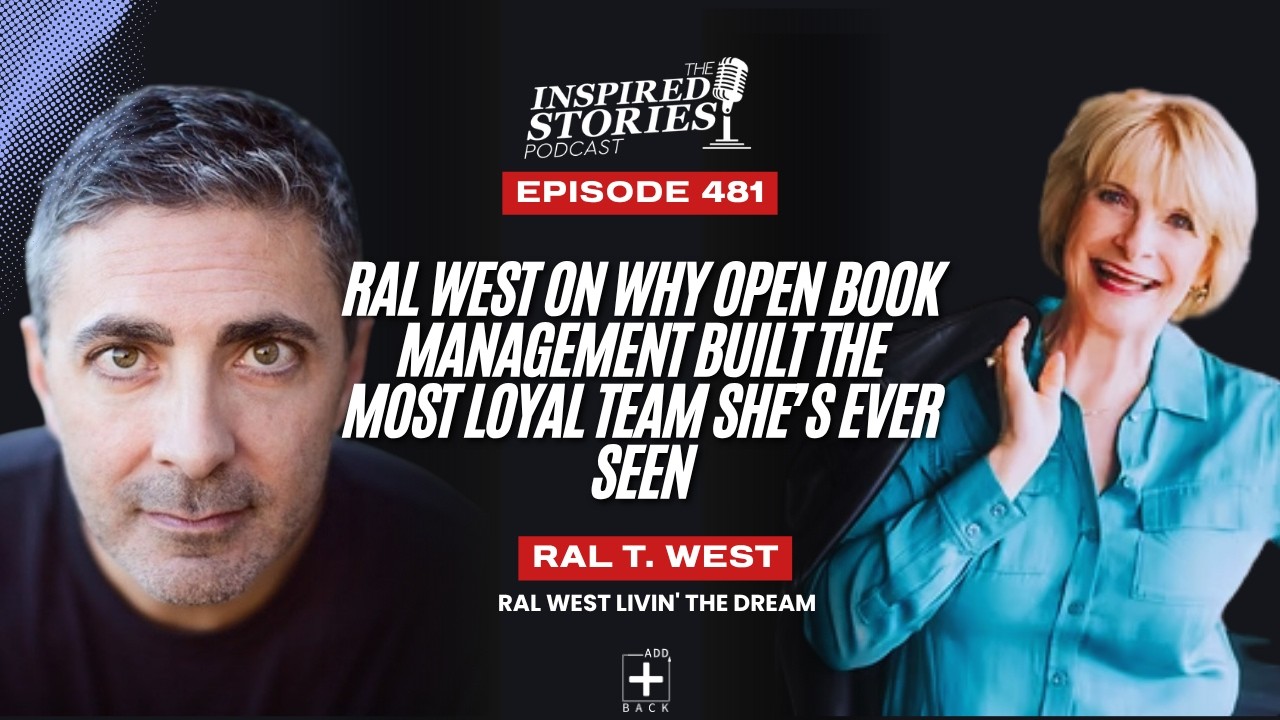
🎧 From Charter Jets to Coaching Entrepreneurs: Ral West’s Journey Building Hawaiian Vacations and Livin' the Dream
Ral West grew up watching her father Chuck West build Alaska’s tourism industry from scratch. She eventually launched her own company, Hawaiian Vacations, by leasing a Boeing jet and selling direct charter flights between Alaska and Hawaii. What followed was 40 years of building, scaling, stepping back, and selling — culminating in an acquisition by Alaska Airlines. Now she coaches entrepreneurs through the same six principles that let her step away from an eight-figure business and live life on her own terms.
✨ Key Insights You’ll Learn:
Growing up in an entrepreneurial family and learning that ideas are worth chasing
Breaking away from the family business (Cruise West) to build something entirely her own
Launching Hawaiian Vacations by leasing a DC-8 and guaranteeing the full cost of every flight
Why open book management aligned the team so deeply they still call themselves Ohana 18 years after the sale
Teaching entry-level reservations agents to read a P&L and connect their work to the company’s bottom line
How reading The E-Myth and The Great Game of Business transformed the company’s culture and systems
Hiring a COO and CFO and stepping fully out of day-to-day operations in 1999
Watching Alaska Airlines from afar, predicting the threat, and positioning Hawaiian Vacations to be acquired
The six principles: systems, measure and track, leverage, culture, team, and customer delight
The lifelong weight struggle that taught her the difference between the gap and the gain
🌟 Ral’s Key Mentors:
Chuck West (Father): modeled entrepreneurship as a way of life and encouraged her to go after every idea without fear
Robert Kiyosaki (Mentor Before Rich Dad Poor Dad): recommended The E-Myth and The Great Game of Business over lunch in Hawaii — the books that changed everything
Michael Gerber (E-Myth Author): provided the systems and culture framework she implemented across Hawaiian Vacations
Jack Stack (Great Game of Business Author): gave her the open book management philosophy that built the Ohana culture
Outside Board of Directors: three top Alaska executives who gave her the eagle-eye view that allowed her to spot the Alaska Airlines threat early
👉 Don’t miss this conversation about what it actually takes to build a business that runs without you — and why that’s not just a business goal, it’s a life goal.
Listen to the full episode here
Transcript
Anthony Codispoti (00:00)
Welcome to another edition of the inspired stories podcast where leaders share their experiences so we can learn from their successes and be inspired by how they've overcome adversity. As you listen today, let one idea shape what you do next. My name is Anthony Codraspodi and today's guest grew up watching her father, the legendary Chuck West build Alaska's tourism industry from the ground up.
She spent about five years working in the family business before choosing to do her own thing. She and her husband leased a Boeing jet, started selling charter flights from Anchorage to Hawaii, and built something entirely their own. What came after was not a straight line. There were years of overwhelm, juggling businesses, boards, family, and a life that was full but not free.
The breakthrough came not from working harder, but from building systems that made her less necessary to her own company. She is Raoul West, founder of Raoul West Live in the Dream, a coaching and consulting firm based in Sitka, Alaska. Raoul spent 40 plus years as a serial entrepreneur, scaling Hawaiian Vacations, a travel company she co-founded, to serve more than 30,000 passengers a year before selling it to Alaska Airlines.
She is the international bestselling author of Unshakeable and the creator of the Boss Mastermind Program for business owners who want more success without sacrificing their lives. But before we get into all that good stuff, today's episode is brought to you by my company, Adback Benefits Agency. Listen, if you run a business, you're likely stuck in the cycle of rising insurance premiums. You're paying more, but your team is getting less, and many people can't afford coverage at all.
We do things differently. We offer a solution that provides your employees with unlimited access to doctors, therapists, and prescriptions that's always free for them to use. But here's the part that really surprises most people. Unlike every other employee benefit out there, our program puts more money into your company's bank account. As an example, we recently helped a client increase net profits by $900 per employee per year.
Gains like that can change how a business is valued. Results vary, but the consultation is free. Imagine being the advisor that becomes a hero by introducing this to your clients. See if they qualify today at addbackbenefits.com. All right, back to our guest today, owner of RAL West, live in the dream, RAL West. Thanks for making the time to share your story today.
Ral T West (02:39)
Hi Anthony. We're gonna have some fun.
Anthony Codispoti (02:42)
All right, let's do it. So your father, Chuck West, he built West Tours into Alaska's leading tour operator, and then later founded Cruise West, the largest small ship cruise line in the state. So you're growing up around all of this. What did entrepreneurship look like to you as a kid?
Ral T West (03:02)
⁓ Well, entrepreneurship was really all I knew. And it was all about, you know, having a dream, getting an idea and going for it and seeing where it took you and taking risks and working hard and, you know, building something pretty magnificent. Yeah.
Anthony Codispoti (03:22)
Was there ever a pressure for you to follow a specific path, maybe do what your father was doing?
Ral T West (03:28)
Well, I think that all of us in the family, I'm the fifth of five kids. And so all of us ⁓ felt some, you know, desire, maybe not pressure, but certainly desire to work with the family business. ⁓ And I was pretty young when we sold West tours to Holland America Line. But when we built the new company, I was in my 20s. And so I did work with the family company there for, you know, like about five years. And that was a
fun and very interesting until it wasn't.
Anthony Codispoti (04:02)
This was Cruise
West, that's the one that you worked with for five years. And tell us about why it was interesting until it wasn't.
Ral T West (04:05)
Yeah, yeah, yeah, yeah.
Yeah, well, family businesses are not always the easiest. you know, you're working for your father and he's got his own ideas. so sometimes we butted heads and ⁓ sometimes it was just not healthy for me to be in that position. So I decided I needed to break away and stand on my own.
Anthony Codispoti (04:34)
Before you decided to break away, there must have been some positive life lessons, some positive business lessons that you picked up along the way. Pull one out for us. What's something really powerful that you learned, maybe from a specific interaction that you still remember today?
Ral T West (04:42)
Absolutely.
Well, I think that really having a goal and getting an idea and then just going for it is something that I've definitely picked up. And just don't be afraid. Just get out there and hustle and do it.
Anthony Codispoti (05:08)
You got an idea, chase it down. Like, why not you? Right? Why couldn't you do this kind of a thing?
Ral T West (05:10)
Yeah, yeah, yeah. And so
when I decided to open my own business, the first person I consulted with was my father, even though I left the company a few years before, but he was still a great advisor to me. And his response was just like I said, do it, go for it, see where you can take it, why not?
Anthony Codispoti (05:34)
And what was the idea?
Ral T West (05:36)
to be a consultant for tourism industry companies, help them market their product. I saw many, many small businesses. So I moved to Ketchikan, Alaska, which is the furthest south city in Alaska. And I was director of marketing for a tour company that actually competed with my family's company. And ⁓ I could see that there were so many small companies in Alaska, great products, great people.
They really didn't understand marketing, but I had gotten a pretty good view of what it took to market to the people outside who wanted to come to Alaska. And so I realized that I could help them. So I moved to Anchorage, which was the big city in Alaska, and opened this tiny business in 1981.
Anthony Codispoti (06:26)
And so was it were the services that you're offering? Was it mostly about the text, like the message, the content itself? Or was it, you know, these companies didn't even know where to put their message or how to get it out there.
Ral T West (06:41)
Yeah, I think it was more like they didn't know how to reach their market and they didn't know what ⁓ marketing mix it would take. And I would help with brochures and placing ads and cooperating and participating in the state's tourism marketing campaign, which is great leverage for these small businesses. And then shortly after I got started in that business, I recognized that they needed help placing the ads too.
So actually became an advertising agency. I didn't know the first thing about being an advertising agency, but given what I've already said about, well, just figure it out and jump in and do it. So I did.
Anthony Codispoti (07:21)
And so what did that entail? How did you learn how to become an ad agency?
Ral T West (07:26)
by making lots of mistakes for one thing. But you have to figure out ⁓ how to buy media. Newspapers were easy, but television and radio and magazines and so forth, all of that required a little bit of knowledge. And I would ask a lot of questions and I would hunt and talk to people, get mentored by as many people as I could, and I figured it out.
Anthony Codispoti (07:53)
And so you're buying ads not only in newspapers and what the target markets that you think, you know, maybe like Seattle, right? Because they're they're close markets. So it's easy to get people to come up.
Ral T West (08:05)
Yeah, yeah. Well, and it would depend on what the actual company was, because sometimes we have to figure out the geography of where are your customers when they make the decision to buy. So for some products, people are at home in Peoria when they're making the decision to buy. And other times a product, might be already in Alaska and trying to decide where to eat or which flight scene tour to take. And therefore you need
the more local approach to the advertising.
Anthony Codispoti (08:39)
Gotcha. And so how long did you run this business and what was it called?
Ral T West (08:43)
⁓ it was Alaska West Associates first, and then I actually merged it into a larger advertising agency because I felt like I needed more, more, more oomph for the advertising, but that didn't last long. I realized that I didn't really like again, working kind of for somebody else. was a, I was a partner, but I was a minority partner. So I pulled my business out of that company, ⁓ after about a year and then opened, ⁓
the RALWEST company, which was the same thing, consulting, marketing, and that's where I got into the Prince William Sound Tourism Coalition and guided that organization through the Exxon Valdez oil spill years.
Anthony Codispoti (09:28)
boy,
what was that like? What was your role in navigating all of that?
Ral T West (09:33)
Well, I had just started working with them when the oil spill happened and it was like, my God, this is crisis time. So we just, you know, we got on a plane and went to Valdez and started talking with Exxon and got grants for marketing dollars because the news was portraying Prince William Sound as being ruined. Nobody would want to come to Prince William Sound because everything was covered in oil and that was not the case. mean, certain beaches and so forth were definitely bad.
but there was still, it's a huge area. People have a hard time grasping just the size of Alaska and its various parts. So there were like 2,500 square miles, that not all of it was impacted. So we had to launch a very strategic marketing campaign to get the word out that Prince William's talent is still alive and took video and we had television crews and it was big stuff.
Anthony Codispoti (10:32)
It sounds like you must've been, I don't know, uphill battle kind of a thing because all of the news stations, you know, if it bleeds, it leads. Like they don't want to show the healthy beaches. They want to show the birds that are caked in the oil.
Ral T West (10:46)
Right, right, yeah. So yeah, it was a huge, huge undertaking. And I brought all of the various vendors who were operating in Prince William Sound. There's a lot of small businesses that operate in Prince William Sound, little ⁓ tour boats, charter operators, and hotels, and restaurants, and so forth. And they needed help. So they got them to join the Tourism Coalition. And we joined forces and got the word out collectively.
that hey, we're still here, we're alive and you should come visit.
Anthony Codispoti (11:19)
How successful
would you say your campaign was?
Ral T West (11:22)
And it was pretty successful.
Anthony Codispoti (11:24)
Yeah, you were still able
to get visitors to come even in spite of all the big media coverage against the area.
Ral T West (11:30)
Yeah, we did. We did. And, you know, I can't say that it was easy and that we weren't like swamped with visitors, but we did we did make a difference. And I continued working with that tourism coalition for several years.
Anthony Codispoti (11:45)
Now, let's talk about Hawaiian vacations. Where did the idea come from to start leasing jets and chartering your own flights?
Ral T West (11:55)
That was an idea that came from necessity. ⁓ The beginning of Hawaiian Vacations was actually that ⁓ I had a little office in Anchorage and this man across the hall from me had a small business and he saw that I was flying off to Hawaii because I was a sales representative for some Hawaii travel companies, a hotel chain, an inner island air carrier and a rental car company.
and I had to fly to Hawaii to check out the products so that I would know what to or how to represent them to the travel agents throughout Alaska. And he just said, I like going to Hawaii. I'd like to go there for free on a business trip. So he would start picking my brain as he, know, we'd bump into each other in the hall and so forth. And ⁓ he started a little company called Hawaii Condo Connection.
and he decided that he was in real estate. So he used the classified advertising ads and represented Alaskans who owned vacation condos in Hawaii and said, I'll be your agent and I'll book the condos and you give me a commission. And I said, well, yeah, that's one way to do it, but why don't you package it with the Inner Island Air and the rental cars and create an entire Hawaii vacation?
and then figure out a way to package it with the Trans-Pacific Air from Anchorage to Hawaii. So he took my advice and it's somewhere along the way I said, you know, this is what I do for a living. So you can't just keep getting all of this advice for free. And he said, okay, I'll take you to dinner. And that was in November of 82 and we were married in July of 83.
Anthony Codispoti (13:50)
⁓ That's great. ⁓ Was that dinner the first spark of this relationship or had there been, you know, some dynamics before?
Ral T West (14:01)
⁓ yeah, not a lot of spark before that. and it took 40 years for him to admit that that really was our first date. Cause he kept saying, well, it was just a business dinner. But, so that little business continued to grow and he was, he was doing well and we were still operating, you know, side by side. after we got married, ⁓ kind of moved our offices into a bigger space, but we were basically.
Anthony Codispoti (14:04)
No. Okay.
⁓
Ral T West (14:30)
We had a connecting door between our offices and I was still his advisor. And a few years later, the scheduled carriers that he was buying the seats from pulled out of the market. And then there was no way to get the customers to Hawaii. So you couldn't sell Hawaii vacation if you couldn't get them there. Because if they didn't fly nonstop from Anchorage to Hawaii,
You'd have to go through Seattle or San Francisco or Los Angeles. And so that was a longer, more expensive, complicated trip. So the business just dropped like a rock, know, revenue went down to practically zero. And I was representing ⁓ Dawson city in the Yukon. was saying, okay, well, let's, package tours to Dawson and we'll, you know, be the tour company that sells people on trips to Dawson, which we did. And, you know, we sold a few, but.
that didn't replace the revenue of the Hawaii vacation packages. So we sat down and had a very frank conversation and said, should we just close the doors? Are we done? And then we said, no. And this is kind of going back to my parents' roots of having a vision and having a dream and going for it. Because we said, know, the people of Alaska and Hawaii, they need this service. They need this.
connection between the 49th and 50th states. We've got to figure out a way to make it work. So we resolved that we were not going to give up. And it was shortly after that that my husband identified a DC-8 that was doing charters from Anchorage to Tokyo in the summer. And in between those charters, it had time on the aircraft and he negotiated a charter for.
Anthony Codispoti (16:20)
Okay,
so let me see if I understood the business model up until this point. ⁓ You're later to be husband, you're now husband, and what is his name? John. So John had this business where folks who lived in Alaska and owned rental properties in Hawaii, he was managing those rental properties for them. So he was helping them to fill them up and taking a commission on those rentals.
Ral T West (16:30)
John.
⁓
Anthony Codispoti (16:48)
And you, as the advisor, was giving him this idea, hey, why not package the whole vacation? Like people, they need a way to get there. They need a car once they're there. Put the whole thing together and there's more money to be made. Well, this is all working really well until the direct flights from Alaska to Hawaii, for whatever reason, they just stop. And now you guys don't have a way to get customers from point A to point B.
until you find this DC jet that can be leased in the Tokyo off season. And that's what you guys start doing. And you start filling this plane up like how frequently.
Ral T West (17:31)
It was not exactly once a week, but it was several times during the summer. This was the summer of 1991. And ⁓ we had to guarantee the cost of the entire flight, whether we sold all the seats or one of the seats, didn't matter, same cost. So the risk was huge. But given my background in taking risks and just going out there on a limb.
And yet I didn't do that without a net because what I did was I evaluated the numbers that we had generated in prior summers. know, everybody, our CPA, my brother, everybody told us we were crazy. Why are you trying to do, why are you trying to sell ⁓ trips to Hawaii in the summertime? Alaskans want to stay in Alaska in the summertime. But they didn't understand that there were also Hawaiians who love to come to Alaska to go fishing. So.
I looked at the numbers specifically from our previous summer months and saw that the numbers added up to the number of seats on that series of flights through that summer. said, we can do it. We've got the market. The DC-8 carried 180 to 200, something like that. Yeah, it wasn't a widebody. It was just a single aisle plane. But yeah, it's a big jet, similar to the
Anthony Codispoti (18:42)
How many seats are we talking about?
That's a lot.
Ral T West (18:58)
know, 737s or something.
Anthony Codispoti (19:00)
And so obviously, you're not just trying to fill it up going from Alaska to Hawaii. But like you said, you want to fill it up coming back to
Ral T West (19:07)
Yeah,
you have to have both legs full or else the numbers don't crunch. Yeah.
Anthony Codispoti (19:11)
Yeah. And so how are
you promoting in each market? What's the marketing look like back in 1991?
Ral T West (19:17)
Yeah, our primary ⁓ distribution outlet were travel agents. So we promoted to the travel agents and we did advertising in the newspapers and radio and television in both the Hawaii and the Alaska markets. And yeah, it was a concerted effort. And my husband hit the pavement and called on the travel agents. He went to Hawaii, called on the travel agents there. He was going all over Alaska calling on the travel agents and saying,
you know, help us fill these flights. And we did.
Anthony Codispoti (19:50)
And they've got a lot of options to choose from. Why do you think the travel agents latched onto what you were doing?
Ral T West (19:55)
Well, we were the only way to get directly between Alaska and Hawaii because the scheduled carriers were gone. So if anybody wanted to fly nonstop, anchor Tanalulu, it was us. And our fares were very reasonable.
Anthony Codispoti (20:11)
So you eventually scaled this operation, Hawaiian Vacations, to serve over 30,000 passengers a year. You were doing eight figures in revenues annually. What were some of the systems or decisions that made that kind of scale possible?
Ral T West (20:29)
⁓ gosh, yes. Well, to begin with, we were drowning and we had to hire lots of reservations agents because in those days, because we didn't have the internet to make bookings. In fact, back in those days, people even called the airlines. There were a few travel agencies that had Sabre or something, you the online reservation system, but that hadn't really took hold outside of the major air carriers.
So to make a booking with us, we had have somebody answer the phone and take a booking from a travel agent or from a direct customer. So we had to be hiring more and more reservations agents and we needed to train them. And I remember one time, ⁓ maybe in about the year following our first charter season, I hired a person. I said, the phone's ringing. There's the phone. Go answer it. Take a booking. And that was how I trained her.
And she ended up staying with us for like over 20 years. But I was like, I keep going, I can't believe I did that because that was just the worst training possible. Yeah. And so consequently, our service was not very good in those early years. And the travel agents and the public were complaining about long hold times. They'd be sitting on hold for half hour, an hour or longer. And then maybe our agents weren't well trained.
Anthony Codispoti (21:36)
Pick up the phone and figure it out.
Ral T West (21:55)
And so, you know, the surface was just poor and it, you know, it kept getting our attention because we kept getting the complaints. So within a couple of years, we realized that we had to start running the business in a different way. We couldn't just be mom and pop trying to do everything ourselves. I mean, my husband was signing every check, sweeping the sidewalk in front of the office, replacing burned out light bulbs. I mean, was, you know, doing everything. And I was hiring and training and doing the marketing and everything.
And by that time, of course, I closed my marketing business because I realized that, hey, we've got everything on the line for this company. So I'm all in. And I went back to college at night so that I could learn more about business and how to help this company grow. And at the same time, we were being mentored by Robert Kiyosaki of Rich Dad, Poor Dad fame. But this was before he wrote that book.
We had been taking classes from him in Anchorage for quite a few years from the late eighties. And we were on the big Island in Hawaii one time he was there. So the three of us had lunch at his hotel by the pool. And we, you we told him what was going on with our business and how it was doing really well. It was growing. And he says, Oh, you guys, you need to get these two books. It's the E-Myth by Michael Gerber and get the great game of business by Jack Stack.
Anthony Codispoti (23:22)
that one I don't know.
Ral T West (23:23)
Ah, okay. So we were flying to Honolulu that afternoon. We went to the bookstore at the Alamoana, picked up those books, started reading them that very day. And a couple of days later, we were back in Anchorage and we told our team, okay, here's how we're going to be running the business from now on. So e-Myth of course teaches entrepreneurs how to make sure that all the hats are being deployed. You've got the marketing hat, the finance hat, the operations hat and...
and make sure that you've got systems and then everybody knows what they're supposed to be doing. Create manuals, create ⁓ job descriptions. You have to figure out a way to duplicate yourself. So that was the primary message of that. All of them.
Anthony Codispoti (24:03)
You have to codify what the different roles are. You've got to have
standard operating procedures for each of these individual roles and have this all laid out. So it's not like, well, sometimes I do part of the marketing and sometimes you do it. Maybe you do it a little bit differently. It's coming up with a formula, repeatable formula every time.
Ral T West (24:09)
Yes.
Right, yeah, and he used ⁓ McDonald's as an example of repeatable systems, like frying a hamburger and McDonald's, they've got a manual on how long to cook that hamburger patty, know, so many seconds on each side, and that's when you flip them, and this is the temperature of the grill and so forth. So whether you're eating a McDonald's Big Mac in Budapest or Buffalo is gonna taste the same. So everything has to be standardized, and you have to have systems and all of this, you know, codification, as you're saying.
than the SOPs or else it's not gonna be standard. And that's when we started, you know, paying more attention to the customer experience. Like we have to have standardized training for all of our reservations agents. Otherwise not everybody's gonna have the same experience. Somebody might get an agent who's really good. Somebody else might get the one that I just said, here, answer or foul. So all of this ⁓ combined. Then Jack Stack's advice was,
Use open book management. Share your financials with your team. Yeah, and yeah, and all of our business friends were going, no, don't do that. That's crazy. That's, don't, don't share your financials. mean, you know, open up the, you know, the checkbook and open, you know, open wide the kimono and let everybody see. It's like, but we read the book and we said, you know, I think this, this has some merit. So we're going to do it.
Anthony Codispoti (25:27)
Really?
Hahaha.
Ral T West (25:52)
And we did, but understand that we had a lot of reservations agents who were, you know, entry level people. Some of them maybe were just out of high school, no education really. They didn't know what a P &L was. They didn't know what a balance sheet was. So we could, you know, show them the financials. They'd go, it's like break, right? So I said, all right, I need to teach them. So I conducted little classes and would bring groups of people together.
Anthony Codispoti (26:13)
Okay.
Ral T West (26:22)
and we'd have a class and I'd go through line by line how to read a P &L, how to read a balance sheet, and I taught them how their work impacted the bottom line. And that was huge. Yeah.
Anthony Codispoti (26:34)
Okay, so I want to go back here, Ralph, because
you had me up until the point of sharing the financials, right? Like I get everything in the E-Meth. I've read it before. It's a great book, right? Systems, processes, standard operating procedures, identify who's wearing which hat. I get all of that. And that on its own would have been an enormous set of changes to bring in and probably took months and months to roll out and implement, right?
Ral T West (26:41)
Hahaha!
It did.
Anthony Codispoti (27:06)
Yeah. But but then why on top of that at the same time, do you feel the need to pull back that kimono and share the financials with your team, team members who, like you said, didn't even really know how to read this stuff? What what was the advantage that you were trying to get from taking that big step?
Ral T West (27:25)
Yeah, here's the huge advantage that it gave us. We got alignment. Our team was so aligned. We were all on the same page going after the same goal because they could see what that goal was. And we adopted a win-win philosophy. This was part of our part of what I was learning in college was building organizational culture. I studied total quality management. I say all kinds of things and
Said, all right, we have to intentionally create the culture that we want. And so part of that culture was adopting ⁓ a four part philosophical foundation for our business, which was W-E-R-Q. The W was win-win. The E was efficiency. The R was responsibility. And the Q was quality. And we taught our team the importance of each of those four elements. The win-win could only work if we could show our team
that when we won, they would win too. So we would share profits with them. And by showing them the financials, they knew exactly what to expect in terms of the profits. And then we would say, okay, when we hit this profit target, we will share X percent of our profit with all of you. And we would do this in a very systematic way. We would have a meeting with the two of us and each team member.
you know, just so three people in a room and we'd say, here's your bonus because we made our profit goal. And the bonus checks were often four digits, sometimes five digits. And in some cases, the bonus check was so significant that they would say, that's a down payment on a house. And they would burst into tears and then we would be crying with them and it was just so joyous. So that's what open book management did for us.
And we had a team that was an ohana, which means family in Hawaiian. And we were so joined together. We were so aligned and so committed. And we were all moving. I like to use the analogy of dog sled teams, you know, in Alaska, there's dog sled team. We don't have any here in Sitka, but you know, picture a bunch of dogs harnessed in front of a sled, but starting to pull in opposite directions.
that slant doesn't go anywhere. In fact, it'll topple over. So really, need to make sure.
Anthony Codispoti (29:59)
Were there any
instances of sharing your financials where it backfired in any way? Maybe people are like, well, I got a thousand dollar bonus, but I can see Raoul and her husband, you know, got 50,000 or whatever the number was. And now I'm angry and jealous.
Ral T West (30:17)
⁓ you know, from time to time, there might've been a little bit of that, but we were pretty good at squelching that because we know, because our culture was that that's not what it's about, you know, and we were very, very transparent about the formulas that we would use for determining the bonuses. And, and we had to, we had to morph. We had to, to massage it. You know, there were some times where our, our plan didn't work as well. So we would tweak it.
and we would make it different and better. so, but for the most part, know, 90 % of the time it worked beautifully. And in fact, you know, we're talking about, we sold that business 18 years ago and our team still calls themselves the Ohana and we still have reunions.
Anthony Codispoti (31:05)
And do some of them still work for the company?
Ral T West (31:08)
Well, no, because we sold the company, so it doesn't.
Anthony Codispoti (31:10)
But they didn't
go with the acquisition partner? No. Okay.
Ral T West (31:15)
No, Alaska
Airlines bought us and they closed our doors. They wanted our market.
Anthony Codispoti (31:20)
Okay.
Got it. ⁓ But at some point, and I'm curious how long this took, after you read the E-Meth and you came back and started implementing these ideas, at some point you realized, this business can run without us. How far into that process were you?
Ral T West (31:40)
⁓ Well, it took about five years from the point we read the E-Myth until we were able to hire a chief operating officer and a chief financial officer and say, here's our baby. Here's the foundation that we've laid. These are our systems. This is our culture. Don't veer away from the culture that we've created. this is our Ohana. We need to take care of our Ohana.
handed the business over to these two men and they grew the business even more. Which was a little bit humiliating at times. It was like, wait a minute, how could you just, you know, do that when, I mean, we were doing pretty well, I thought. And they said, which was very gracious of them, and it helped my ego. I said, well, you know, you guys created the foundation. So we were able to just grow it from there.
Anthony Codispoti (32:35)
And then you just mentioned that Alaska Airlines came in and they wanted to buy it and they closed your doors. But I'm going to guess it was a decent exit for you guys. But what was it like that transition from an emotional standpoint? You built this from a least jet and a vision. what do you do with yourself after something like
Ral T West (33:01)
Well, there were quite a few years in between the stepping out of the day to day and the sale. So we stepped out of the day to day in 1999. The sale was early 2008. So we had transitioned into kind of a different lifestyle. In fact, in 99, right when we hired the CFO and the COO, we bought a second home on Maui, we bought a yacht and we kind of said, see ya, you know.
because of all the systems that we had created and we had, you I told you, I studied total quality management. So we had the statistics, we tracked everything. So we could get these reports wherever we were in the world, whether we were, you know, cruising somewhere on another continent or wherever. So we knew what was happening. We would have regular meetings. We brought in an outside board of directors ⁓ about, ⁓ early 1997, we...
We handpicked three top executives in Alaska. One was the ⁓ CEO of the largest grocery chain in Alaska. Another one had been a bank president. Another one was very high up in the tourism industry. And they advised us. And through their help, we were able to constantly be looking at the big picture of what was going on. We weren't enmeshed in the day to day, because that's what our CFO were doing.
So we could stand back and be owners of the business. And that's of course what I try to teach people now to do. Because when you're in the thick of it, it's hard to see outside that. So we were able to watch what was going on around us. And we could see as the 2000s were rolling along, mid 2000s, we were watching Alaska Airlines. And my husband was saying, they're starting to get ETOPS certification for their jets.
which means extended over water travel. They didn't need that to fly between Los Angeles and Seattle or even Seattle to Denver or whatever. They're going to go to Hawaii. So we could see it coming because we were able to step back and have that, you know, eagle eye view. And so we, with the help of our advisors that were on our outside board, we said we need to position ourselves.
to be purchased by Alaska Airlines. And so we hired an investment banking firm, put together a package and made the proposal to Alaska that it would be cheaper to buy us and buy the market than to compete with us and win the market. We had already had to compete because from time to time another airline would come in and say, look how well they're doing in this Anchorage-Honolulu corridor. Let's get a piece of that.
So Hawaiian Airlines tried to compete against us and so did Northwest. We beat both of them.
Anthony Codispoti (36:01)
How?
Ral T West (36:03)
We were better. And by that time, we had learned how to just absolutely delight our customers. We weren't just good at customer satisfaction. We were good at delighting our customers. And we were very community-oriented. We were very generous. And our customers, our market loved us. And our prices, we made sure that our prices were competitive.
Anthony Codispoti (36:31)
So you beat out Northwest, you beat out Hawaiian Airlines in the same corridor, but there was something about Alaska Airlines where you said this could be different. So this is our time to step away. What was different about this time?
Ral T West (36:45)
Alaska Airlines was smarter and bigger. So we knew that, you know, we would duke it out and we would last for a while. But eventually, you know, know how fair wars are, everybody's losing money because they're dropping the fares down to, you know, below what it actually costs them. So eventually we would all lose a lot of money. So if they bought the market from us, they would save a lot of money.
Anthony Codispoti (36:47)
Ha
Hmm. Well, that makes a lot of sense. So let's talk about what you're building now. Tell us about Raoul West, Live in the Dream, and the Boss Mastermind Program and who this is designed for.
Ral T West (37:15)
in it.
Yeah, this is my mission at this phase of my life right now is to take entrepreneurs who are in the same kind of struggle that we were in back in the beginning days when our company was growing. But you you asked like, how do you scale? You don't scale if you're still trying to do it all. So we had to develop those systems and start using leverage and get the measurement tracking and all the things.
That's what I see that many entrepreneurs need for them to be able to grow their business. actually scaling is different than growing. You can grow a business and make more revenue, but you're just busier and you're not really scaling. Scaling means is that your revenue is growing faster than your overhead and that you're able to step out of as many of the responsibilities and share that load with a team. So,
entrepreneurs who are saying, can't take a vacation, I'm tied to my work, I'm doing it all, I'm working 60, 80 hours a week. Those are the people that need me to teach them, you don't have to do it that way. Here's how you can get out of that and find your life again. And I honed the six principles that we used to work ourselves out of that day-to-day burden and I teach it.
Anthony Codispoti (38:49)
What are those six principles?
Ral T West (38:52)
really quickly. The first one is systems, obviously. Second one is measure and track your performance. The third is leverage. The fourth is build your culture. And I maintain that if you don't consciously build your culture, you'll get one and it might not be the one that you wanted. And then number five is your team. You must nurture your team and get alignment.
with your team members. And lastly, but certainly not least, is the customer service and making sure that you're delighting your customers. And now all of these don't have to come in that exact order, nor is anyone more important than the other. It's like a six-legged stool. You have to have all six working in concert with each other to make a really successful, sustainable business that can scale.
Anthony Codispoti (39:49)
What do you mean by leverage in this context?
Ral T West (39:52)
Leverage can be any number of things. Leverage is creating a system to do something that maybe you were doing manually and you can create a system, you can teach somebody else how to do it once you've documented and codified it. ⁓ You can use technology, you can get automation, you can use AI these days, ⁓ and you can outsource and you can delegate. All of that is leverage. Getting a mentor is leverage.
Getting education is leverage. Many, many, many different ways that you can get leverage. But if you're not focused on it, and if you don't intentionally choose to use leverage, you're probably doing too much, and it's taking you too long to do it.
Anthony Codispoti (40:39)
Which one of these six principles do you find that owners most consistently resist?
Ral T West (40:49)
leverage because often time and they don't want to delegate. They don't trust. So we have to talk a lot about mindset in the mastermind and when I do one-on-one mentoring as well because you have to have the ability to see that you can run your business without being in the middle of it all the time. You can still have control.
Anthony Codispoti (40:52)
because they want to be the center of it.
Ral T West (41:19)
because you set up all of the foundation and all the systems. You intentionally create your culture so you can control it. You don't have to be in the middle of it doing it. And to convince some business owners that that's actually possible is sometimes the biggest challenge.
Anthony Codispoti (41:37)
How do you do it? How do you prove to them? do you have like a, cause I'm thinking when you can give somebody a little bit of a taste, like, you know, a little proof of concept of here, just take this one thing away and then see, you know, how much better that feels and the head space that it cleared up for you. Do you have kind of like a, little bite size nugget that you can start them with?
Ral T West (42:00)
Well, it depends. Each person in each business is different. So I look for the low hanging fruit in terms of, know, okay, where's the easiest thing for them to do? One person that I'm working with just needed to automate ⁓ one process. There was a fulfillment process. People were ordering a product and the fulfillment would be manual. With my advice, she automated that one thing and has saved hours of time.
and bought back so much of her time. said, yes, now take that time that you just got back and use it to go get more clients. Now you've just made yourself some more money. ⁓
Anthony Codispoti (42:41)
leverage.
So tell us more about the programs that are available when somebody signs up to work with you. What does it look like? Is it one on one? We mentioned the Boss Mastermind program, which sounds like more of a collective where everybody's kind of learning from each other. Walk us through the different options here.
Ral T West (43:00)
Yes, yeah, one-on-one mentoring I do with a select number of businesses and the Boss Mastermind is meant to be a collective, as you said, and you'll have the advantage of the other entrepreneurs that are working alongside you. everyone gets access to, I created an eight module online course that outlines all of the principles in detail. So everybody has access to that. And we talk about the principles and we...
go into detail about, how's this business using those principles and how's that business? And we talk about leverage, we talk about customer service, we talk about reporting and how to use AI and things like that. So that's done through twice a month online Zoom calls for just an hour. And then there's a community where they can get in there and share and exchange with other entrepreneurs and
There are worksheets that go along with the course. They can fill the worksheets out and then get feedback on those. it's a much more, know, because it's one to many, ⁓ it's much cheaper to join the Boss Mastermind than to hire me one-on-one.
Anthony Codispoti (44:13)
So who's a good fit? ⁓ Talk about company size, industry, geography.
Ral T West (44:21)
Yeah, well,
geography is the easy part. If you can speak English and you can meet us during the times that we have these hour long calls. One of my boss members is in Switzerland, for example, and others in Hawaii. So that's easy. But size of the company can be anywhere from one person doing six digits to a business with 20 or even 50 people.
doing up to low eight digits. That's kind of the sweet spot for boss. And I don't work as well with large corporations because I'm a little bit too independent and I don't get... ⁓ The culture in a large organization is sometimes really hard to move. So I find it easier to work with entrepreneurs who are in the...
Anthony Codispoti (44:58)
Okay.
That makes a lot of sense.
Ral T West (45:21)
The right person is the one who is saying, I'm too stretched. I can't grow the business anymore because I don't have any more time. I've got too much on my shoulders. I can't get away from the business. I can't take longer than maybe a week or two vacation and that's it. Because the business won't survive without me. Those are the people that need boss.
Anthony Codispoti (45:45)
Yeah, it seems like kind of we were just referring to a minute ago that you need to find that low hanging fruit just to give them a little bit of headspace to see that the effort is worth it. They'll start doing more of it and kind of get that flywheel turning right.
Ral T West (46:00)
Yes,
yes. And it's one step at a time. I don't have some magic wand, ⁓ say, this is the system and you use this system and it's going to work for it. It's not a one size fits all in terms of a system. It's got to be custom engineered for each individual and each company.
Anthony Codispoti (46:23)
Where are you spending most of your time now, Raoul?
Ral T West (46:26)
⁓ Geographically or internally? I am very peripatetic, which means I hop around from place to place. So I was peripatetic. Yeah, a friend of mine called me that and I went, just a second, I have to look that up. So it fit though. ⁓ So we just got back from spending six weeks in Arizona, because our youngest daughter just had a baby.
Anthony Codispoti (46:28)
Geographically.
Say the word again, peripatetic. Okay.
Yeah.
Ral T West (46:55)
So now we're in the Sitka in a couple of weeks and off to on like a three and a half week trip, Mexico, Columbia, Mexico again, Colorado, come back for a couple of weeks. Then I'm going to Australia where we have another daughter with grandchildren. We're visiting over there. So I'm all over the place, but that's the lifestyle that we've created intentionally. That's living the dream for us.
Anthony Codispoti (46:56)
Congratulations.
That is living the dream. ⁓ Any thought about doing live events with your groups?
Ral T West (47:26)
Yes, I would like to do that. ⁓ I'm kind of working in the background on maybe creating a retreat model or just creating an event where everybody convenes in a city. And I would probably work with other presenters and get a really great mix of experts to form a really wonderful curriculum.
Anthony Codispoti (47:53)
Now you're what two or three years into this venture. What else is coming? Where else would you like to grow this business to become?
Ral T West (47:57)
Mm-hmm.
Well, my next step is to write a book. I've been a co-author in a few anthologies and I've gotten good feedback on my writing. So it's like, okay, now it's time for me to tackle writing my own book and then take that out to audiences through podcasts such as yours and stages, virtual and in-person stages. Get the word out.
Anthony Codispoti (48:30)
You want to speak?
Ral T West (48:33)
Yeah, it terrifies me, but yes.
Anthony Codispoti (48:34)
What
You're fine like this, but in a room of a whole bunch of strangers, a little bit different.
Ral T West (48:44)
Well, you know, I'm somewhat comfortable, I ⁓ could, you know, then I start comparing myself to myself to like Tony Robbins or something and go, God, you know, I've got a long ways to go in terms of perfect. Yeah. Thank you. ⁓ Yeah. I could do that pretty well. Yeah.
Anthony Codispoti (48:56)
Nobody's asking you to be Tony Robbins. Everybody wants you to be Rao West. Yeah.
Tell us about the book. Any idea what it's going to be about?
Ral T West (49:08)
Well, I think it's going to have six principles as part of it. But I think it also needs to include the story because the six principles and the way we discovered them and how we deployed them and the six principles came not from just some academic exercise. It came from my really looking back at what it was that made our business work the way that it did. I mean, this little tiny
mom and pop company that we started from nothing. How did it grow to this mid eight digits in annual revenue and be something that a big corporation like Alaska Airlines would want to buy? What was it? So, unpeeling all of that ⁓ took me a while to figure that out. And then the more I've looked at those principles and worked with them, the more convinced I am that that's it.
Those are the ones and I can look at any business anywhere and see where they're lacking in a particular principle. I can look at large corporations. Yeah. Then I can, I can spot a lack of a system just instantly. And it's kind of drives my family crazy. Cause when we travel, I'm always saying, yeah, that system sucks. They need to do this. So.
Anthony Codispoti (50:12)
you think you've got a gift for spotting that pretty quickly.
Ral T West (50:33)
I'm not saying that large corporations don't need my help. I'm just not sure that they'd be willing to listen.
Anthony Codispoti (50:40)
Yeah, maybe not as receptive. Ron, what's the hardest thing you've ever had to overcome and what did it teach you?
Ral T West (50:43)
Yeah.
Okay, well you know that the battle that I've had all my life has been my weight.
I was a chubby kid and an overweight adult. Those early years at Hawaiian vacations, we were eating junk food and we did not have time to exercise. And we looked it. Our health was not good and you know, out of shape, not healthy, overweight. I hate looking at some of the pictures from back then. And so it's been a struggle all my life, but it has taught me.
so much about myself, getting to know myself better, actually learning to love myself. That is a tough one. And Tony Robbins has helped me actually with that. And ⁓ reading books that are like Jamie Kern Lima's books and Brene Brown and so on and so forth. Learning to appreciate yourself for who you are and
Be yourself, that's a gigantic lesson. And I would love to impart that to the people that I talk to as well. Because it's not just about being successful in business, it's about being successful in your life. And now as I'm approaching the winter years of my life, I'm looking at, geez, I've got four grandchildren now. I wanna be around for a long, long time to watch them grow up and get married and have children.
and I need to stay healthy. So I embark on exercise programs and I hire functional medicine doctors and I join this and that group or mastermind to help me make sure that I stay healthy and fit. And I have finally conquered my weight issue. In fact, right now I weigh less than I have ever since I was like ⁓ 12.
Anthony Codispoti (52:57)
my gosh,
wow. So how do you balance those two things, right? Loving yourself, accepting yourself as you are, while at the same time wanting to improve yourself and make steps forward.
Ral T West (52:58)
No.
Well, it is a little balancing act, isn't it? I mean, and also I was just talking to some people this morning about it's wonderful to be ambitious and to have goals. But if you use those goals to beat yourself up because, you know, look, look what I'm not achieving. Well, that's self-defeating. Don't do that. ⁓ Not too long ago, I read a book by Dr. Benjamin Hardy. ⁓ He co-authored it with Dan Sullivan called The Gap and the Gain.
And the gap is where most of us are, where we're looking at where we are compared to where we want to be. And we measure ourselves and evaluate ourselves compared to, I've got so far to go. ⁓ and I, know, speaking of that, when I was trying to lose weight, I would always look at, ⁓ I need to lose 20 pounds, 30 pounds, 40 pounds, whatever it was. was like, ⁓ God, how am I ever going to do that? Well, the other way to look at it is,
How far have I come? You know, where am I right now compared to where I was a year ago, five years ago, 10 years ago? And it's just, it's a different perspective. It's a different mindset. So we can be our best friend or we can be our worst enemy. It's all in how we choose to look at it. So yeah, I think being ambitious and going after personal growth, I love learning from Tony Robbins and Robert Kisaki and...
Ed Mylette and all kinds of people who are out there teaching us how to be the best me that you can be. That's wonderful. But just don't do it in a way that you find yourself defeated and, you know, feeling like a loser because, ⁓ they say that I can be all of this, but I'm not. Ugh.
Anthony Codispoti (55:02)
spend a little bit more time celebrating the successes that you've accomplished and recognize that, you know, as human beings, we're always gonna move that goalpost, right? And there's always gonna be something bigger, better, faster, or smaller, whatever it is, something more that you want to attain. And it's okay to continue to wanna strive for those things, but don't beat yourself up as you're looking at that gap.
spend a lot of time, a lot more time celebrating that gain that you've.
Ral T West (55:33)
Absolutely. You said it beautifully. Yes.
Anthony Codispoti (55:37)
So
you've tried a lot of different things to attack the weight issue that you've struggled with for years. What would you say was the most effective lever that you pulled?
Can you point to one thing in particular where maybe somebody is listening, they've got a similar challenge. It's like, ⁓ this thing made the biggest difference for me.
Ral T West (56:01)
Yeah, I think that the primary issue again goes back to mindset. And if you look at everything we see in the media as being that benchmark, that goalpost, ⁓ you know, the movie stars or the models or, you know, all these people that that we're inundated with. You can set your sights on the wrong goal.
And one of the distinctions that I teach people is be very clear about what you really want. So sometimes you have to redefine your goal. And when I redefined my goal to be healthy, as opposed to being thin or looking like, you know, one of Charlie's Angels or whoever, Wonder Woman or whichever, you know, icon you want to pick, kind of dated myself with that Charlie's Angels thing. But anyway.
you
Anthony Codispoti (57:00)
And me as well. remember all of those icons. Go ahead.
Ral T West (57:02)
Yeah.
So, you know, stop looking at that, trying to be someone else. Just focus on being healthy. And what does that mean for you? You know, so maybe it doesn't matter what the scale says or what size you are or anything like that. Just are you feeling healthy? Are you feeling fit? Can you lift your grandchild?
Can you walk through an airport without getting winded? Can you carry your own luggage? These things are some of the more fundamental aspects of goal setting.
Anthony Codispoti (57:42)
Rau, what do you most want to be remembered for in the work that you're doing now?
Ral T West (57:50)
⁓ you're going to make me cry. I just I want to make a difference.
And I want to help people have the kind of life that they deserve.
Anthony Codispoti (58:06)
I think that's beautiful. know, Raoul, I've just got one more question for you today. But before I ask it, I want to do three quick things for the audience. First of all, if you want to get in touch with Raoul, learn more about what she's doing. Raoulwest.com. Very easy. R-A-L-West.com. Raoulwest.com. can also find her on LinkedIn. Only Raoul West there. And she's got a YouTube channel. Same name. Raoul West.
We'll have links to all that in the show notes. But if you can't wait, if you want to go now, it's just ralwest.com. Go check it out. Also, if you're enjoying the show today, please take a moment to subscribe wherever you're listening. It sends a signal that helps others discover our podcast too. So thank you for taking a quick moment to do that right now. And as a reminder, you can be the hero advisor that helps clients give their employees access to therapists, doctors, and prescription meds while
paradoxically increasing their net profits, real gains that can change how a business is valued. Contact us today at addbackbenefits.com. So last question for you Raoul, a year from now, what is one very specific thing that you hope to be celebrating?
Ral T West (59:20)
Ooh, the publication of my book.
Anthony Codispoti (59:23)
All right. Do we have a working title? Okay.
Ral T West (59:26)
No.
I have a lot of work to do.
Anthony Codispoti (59:31)
All right, well that gives us a reason to check back in in about 12 months. See how that's come along. Raul West from Raul West, Living the Dream. I wanna be the first to thank you for sharing both your time and your story with us today. I really appreciate you being here.
Ral T West (59:36)
I love it.
Thank you, Anthony.
Anthony Codispoti (59:47)
Folks, that's a wrap on another episode of the Inspired Stories podcast. Thanks for learning with us. And if one thing stood out, put that into action today.
Connect with Ral West:
Website: ralwest.com
LinkedIn: Ral West
YouTube: Ral West