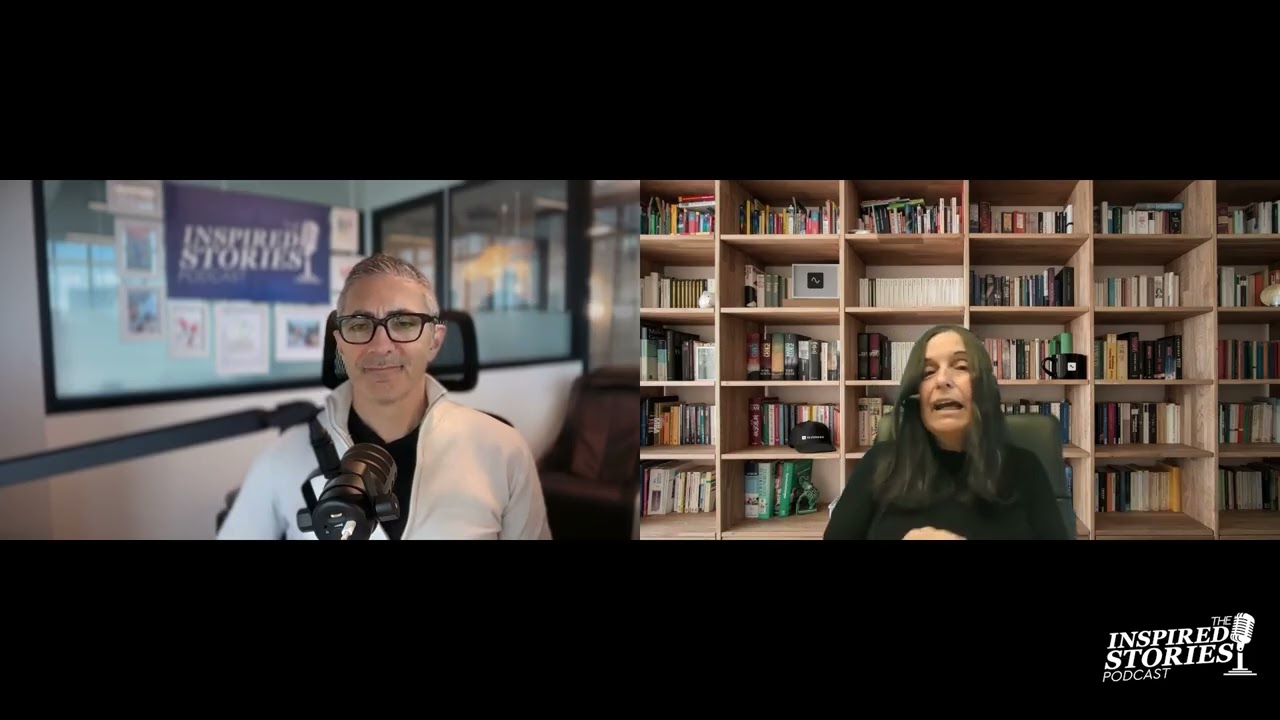
🎧 Lean, Strategy, and the Upward Spiral: Patricia Malone’s Journey Building Strategic Capacity
Patricia Malone, managing director of Enhance C-suite, has spent 35 years turning financial chaos into clarity — from manufacturing plant floors to defense contractors to PE-backed growth companies. She developed the theory of strategic capacity in her doctoral dissertation, helped triple the size of a body armor company through a complex acquisition, and now leads a fractional CFO and controller practice that has added over $150 million in enterprise value and unlocked $23 million in profit for clients. Her secret weapon: she shows up on site and never leaves until the team can run without her.
✨ Key Insights You’ll Learn:
How a failing lean project at a Michigan job shop sparked a lifelong passion for process transformation
Cutting order processing time from 20 days to 3 through Kaizen, cross-training, and one-piece flow
Leading the acquisition of KTH Defense Systems and navigating the integration of two very different military and commercial cultures
The annual ritual at Armor Express where soldiers saved by the vests came back to celebrate with the plant floor
Why both Patricia and her husband lost their jobs the same week — and how that forced the career pivot that changed everything
The high-and-easy grid: mapping initiatives by impact vs. effort to find where momentum lives
What zombie projects are and how to identify them before they drain the organization
The first 90 days of an Enhance C-suite engagement: cleaning balance sheets, building cash forecasts, and closing the books faster
Strategic capacity: the theory of organizational becoming and why it works like a flower, not a forcing function
How Patricia uses AI as a research partner to do faster, deeper, more strategic work
🌟 Patricia’s Key Mentors:
Wayne Wirecloth Leadership: threw her into a failing lean project and inadvertently launched her transformation career
CFO at BAE Systems: far-sighted executive who created the director of business excellence role and bet on Patricia when few others did
Brian Brennan (Enhance Partner): invited her into a new chapter after her daughter’s situation created an inflection point
Her Dissertation Committee: pushed her through grounded theory research that produced a one-of-a-kind organizational theory
Her Clients: every engagement since has deepened her theory and sharpened her practice
👉 Don’t miss this rich conversation about what it actually takes to transform a business from the inside — and why the work is never just about the numbers.
Listen to the full episode here
Transcript
Anthony Codispoti (00:00)
Welcome to another edition of the Inspired Stories podcast, where leaders share their experiences so we can learn from their successes and be inspired by how they've overcome adversity. As you listen today, let one idea shape what you do next. My name is Anthony Codaspote and today's guests spent four years as CFO and COO ⁓
of a company making protective body armor for soldiers and law enforcement. The financial decisions she made had a direct line to whether that company could survive long enough to keep saving lives. That kind of pressure reframes what numbers are actually for. She navigated a 300 % growth acquisition, helped land a $70 million DHS contract, and finished her doctorate while holding demanding full-time executive jobs.
That combination of discipline and range follow her into every chapter thereafter. Her name is Patricia Malone. She is managing director at Enhance C-suite, a Traverse City firm providing fractional CFO and controller leadership to growth stage and PE backed companies. Her team has added over $150 million in enterprise value and unlocked $23 million in profit for clients.
She holds a CPA, CMA, SEPA, and CPF, and brings more than 35 years of financial leadership across defense, manufacturing, renewable energy, and consumer goods. Get ready for some wisdom on numbers, people, and growth. But before we get into all that good stuff, today's episode is brought to you by my company, Ad Back Benefits Agency. And you'll want to hear this because it's hurting almost every business owner you know.
Health insurance costs go up every single year and businesses are furious about it. They're paying more, claims are getting denied, employees are opting out because they can't afford it, and it hurts turnover and morale. It's one of the most maddening problems in running a business and everyone just accepts it. But you don't have to anymore. Now there's a program that gives your employees unlimited access to doctors, therapists, and prescriptions
with no co-pays or deductibles to meet. But here's the part that really shocks most people. Unlike every other employee benefit out there, our program increases your net profits. We recently helped a client add $900 per employee per year to their bottom line. Results vary, but gains like that can change how a business is valued. Be the hero advisor that introduces this to your clients today. AddBackBenefits.com.
All right, back to our guest today, Patricia Malone of Enhanced C-suite. Thanks for making the time to share your story today.
Patricia Malone (02:53)
Thank you for having me. I'm thrilled to be here.
Anthony Codispoti (02:56)
So Patricia, you spent the early part of your career moving through finance roles in manufacturing, robotics, refrigeration, industrial equipment. At what point did lean methodology shift from something you understood to something you were convinced could actually change how a business runs?
Patricia Malone (03:16)
you
So it's kind of a little bit of a funny story, but I was CFO of Wayne Wirecloth Products, a ⁓ manufacturing company in Northern Michigan. And we had a lean project going on. We were a gigantic job shop and our project wasn't going well. People were fighting. The team was not making progress. It was a lot of drama. And they said, you know, we need to turn this team around. Who should we bring? And they're like, well, Patricia's okay with people. Let's bring her. So I'm in finance.
they bring me to help run this manufacturing lean project. And I totally fell in love with lean. And I took the bull by the horns and I started leaning out everything, everything in my organization. I started working with lean method, methodologies. And I've just been passionate about it every cent, ever since.
Anthony Codispoti (04:06)
So was that your first introduction to lean methodology? Yeah.
Patricia Malone (04:09)
It was
the first I ever even heard of it before. I had just gotten my MBA and I had arrived there as a new CFO. I'd been there about nine months when they asked me to take over this project.
Anthony Codispoti (04:21)
And so explain for our listeners what is Lean Methodology.
Patricia Malone (04:25)
Lean is a way of looking at your business so that you minimize waste in the business, increase the value to customers, make the value flow, streamline processes. So at the end of the day, you become way more valuable to your customers at way less cost, and then you can use those savings to reinvest in the company and grow the company.
Anthony Codispoti (04:48)
And so this was on the job training kind of a thing. You came in and somebody said, Patricia, sit next to me. I'm going to teach you lean methodology.
Patricia Malone (04:55)
Pretty much we had some consultants that were trying to do it. And doing it in a job shop is a little bit different than traditional lean. It's a little bit trickier. And so they trained me on the methodology and I just got so enthused about it. And ultimately the team was successful to implement it in our job shop. And then I started implementing it in finance.
Anthony Codispoti (05:16)
So talk to us about the difference ⁓ implementing lean in a job shop versus a more traditional setting.
Patricia Malone (05:25)
So it's just really a mind shift. It's the same methods, principles, tools. You're just applying, you're not making chocolates in a chocolate factory or widgets. You're closing the books. Your deliverables are different. So you just have to change your mind around to applying those same approaches to ⁓ deliverables out of finance instead of product out of the factory.
Anthony Codispoti (05:50)
Okay, so maybe you can take us through a specific example, because a lot of times that helps folks wrap their hedge around it. You at the Wayne Wirecloth Products, the company you were just mentioning where you first learned about Lean, you were able to help cut order processing time from 20 days to three days. Tell us how you did it. What were some of the specific action items that led to that reduction?
Patricia Malone (06:15)
Okay.
So the very first thing that you do is it's called Kaizen. It means little and good. And you bring a group of people together that are in the process. And ideally someone upstream, someone downstream from the process as well, a customer of the process and a supplier to the process. And then you train them on lean because that's what we had to do in this case. And as part of the Kaizen is we're going to do some training. Now we're going to map the process. Now we're going to do some training on waste. Now let's identify
waste. And so you map the process that you're trying to fix, you identify waste as lean defines eight ways. And then you understand what kind of value you're trying to deliver to the customer. And you make value grow. So when we did that, or you make value flow, actually, and grow. But we did that. And some of the things we did is we sat everybody together. So they were in all different that we had three buildings. So we had people in three different buildings.
There was a lot of transportation. There was no line of sight between everybody in the process for order entry. I didn't know how the guy in engineering was doing or not. So we sat them together. You can only have five orders on your desk. We cross-trained all of them. If I saw that I have an order package, we had packages, paper that we moved around. If I had a package for an order and the next guy had five orders on their desk to process, I couldn't process mine. I couldn't move it to the next person.
Anthony Codispoti (07:45)
This was just a rule you put in place so that you weren't creating bottlenecks at the next station or.
Patricia Malone (07:45)
I had to.
Yes, that's it exactly and it's a one-piece flow So lean likes in a perfect world one batch processes are very inefficient, but we know we have to do some batches We can't not do a batch in some instances So it's sort of like one piece flow and it's pull so you don't put the next order
to the person unless they can process it. Otherwise, they're just going to sit there. They can't process it. So instead of what we said, we cross-trained everybody. And so you jumped in and helped that person that was stuck to break the lock jam so they could process another order. The key is keep it flowing. Keep the orders flowing. The other thing we did is we had a safe and we had all these drawings, engineering drawings in the safe.
And so every time we got an order, we had to go in that safe and get the drawing package out all the years of history. And it was clear across the parking lot. So we'd walk across the parking lot with all these big order piles. So that's transportation, which is a waste. So we digitalized all the drawings and the customer data, which did take some time, but then you didn't have to go across the parking lot. And the other thing we did is,
We standardized the process. So what you find in processes is duplication. So the order entry person would put the order in the first step, and then they'd look in inventory and see if we had it in stock, the parts, then they'd move it to the next guy. The next guy would look at it. He'd walk out in the shop and go, see what parts do we need? So there was lots of, that was duplication. So there's lots of duplication. And then we found out that
Anthony Codispoti (09:27)
duplication of efforts.
Patricia Malone (09:31)
This isn't really necessary. There was lots of steps there. Why are you doing that? How is that adding value? Well, Sally liked to have that done before I sent it to her. Well, Sally's been retired for 10 years, right? So what you do is you step back and you look at the process and you learn about it. You've been in that process. didn't...
go fly the helicopter up and see what's going on. So you're used to the frog, like the frog that gets boiled in the water. You're used to all this waste and confusion going on. And so when you get the group together and they step back and they look at every step in the process and evaluate is what adds value, what doesn't, where's the waste, suddenly it's streamlined.
Anthony Codispoti (10:15)
That's pretty slick. ⁓ When you were going through this process, what kind of pushback did you get? Because change is hard for people, right?
Patricia Malone (10:24)
It is and I think purposeful change management is very important. So yes, you do get pushback because organizations are organized to keep the past going and keep that stable and steady and not make any big changes. So Lean has automatic change management baked into it. So for example, when you do a Kaizen, you're bringing everybody involved in that process, ideally someone upstream and downstream too. So they're part of it. You're collaborating with them.
They understand the thought process, how you arrive there, why you made that decision to stop, drop that step out or change the layout or whatever. So by the time you arrive at the end of your Kaizen, you're already making changes, but you got everybody's buy-in to how did you arrive at that? Awareness and desire. Like if you think about change management frameworks, ADCAR is a framework that ProSci came up with. Awareness, desire, knowledge, ability, recognition.
So you're creating awareness and desire, you're training them, they know why we did that. Then they're all bought in by the time you arrive at the end. And then you're measuring results that are coming out. You immediately start implementing changes and then you immediately see, my gosh, we just shaved three days off this process and it builds its own momentum. So it's kind of got change management baked into it. However,
If you're going to do a program-wide lean initiative, like you want to bring in some additional change management on top of that, but Kaizen's and so forth have automatic change management that really helps the change process. And you report out to management at the end of your Kaizen, so they're bought into, they understand what you're doing, what you did.
Anthony Codispoti (12:06)
All of this sounds
great on paper and the fact that you are being so communicative and you're helping to demonstrate the results and the improvements as you go, I'm sure smooths things out. But are you still typically running into some level of resistance who, you know, people are like, listen, I've done this for 10 years. This is my process. I'm comfortable with it. I don't care if Sally's retired or not. Like I've got the 12 boxes that I check every day.
It's a process that I've got memorized.
Patricia Malone (12:39)
Yes, you still can run into resistance. And if you involve them in the Kaizen, then you can leverage some of that. ⁓ But at the end of the day, they have to try it. And usually they become believers because they see the value of it. But we do try to work with the... If somebody is resisting a change, we do try to work with that person to a certain extent and understand the concerns, et cetera. But they're still going to try it. And if it's...
If we don't get the results, okay, we pivot. I mean, that's part of it. Like part of lean too is having daily huddles to understand what's my handoffs, what were my key results today, what I have to worry about tomorrow, whatever. And so you're continually checking in and pivoting if need be and addressing concerns, et cetera. So I'm not gonna say it's perfect. Like you can still have people that are.
passively resisting or whatever, but there's so much momentum in the whole process and you know everybody's like, yay, management team's like, yay, so much success that it kind of has a life of its own and it does, it can carry people along. But typically, you don't have a ton of people that are continuing to have really active, strong resistance if you set the Kaizen up.
Anthony Codispoti (13:58)
Okay, very impressive. So at some point, ⁓ Patricia, you moved into the defense sector, we referenced this in the intro, you stepped into the CFO and COO role at Armor Express. Now, this is a company that makes protective body armor for military and law enforcement. You know, most CFO roles, you don't have to think about what happens to
the life of somebody if your product fails. Like this is a whole nother layer of responsibility. Did that reality change how you approached your work, how you made decisions there?
Patricia Malone (14:38)
It did to the extent that we had a really robust quality management system.
and you live and die, no pun intended, by that quality management system. it dictates that you're going to do things differently because you do have a product where some could get killed if it failed. And so, yes, there's more extensive supplier certification and quality checks. There's a lot more quality management going on in the production process that you're following up at. You're doing a lot more follow ups on any flaws that you're detecting during the
process, doing root cause analysis, really robust processes to ensure that you're getting at any issues before there's any problem that would lead to a failure. So it's ensuring that your following management system is being upheld, has accountability, and you're following it. And then, you know, beyond that, this was a really kind of a cool thing.
we would bring the saves in every year to the plant and we would have a celebration. These are people that were saved because of our vests. And there were babies that never would have been born had the person been killed, their families come, the plant, people would be crying. ⁓ It would be so moving to see these people that lived because our products saved their lives. ⁓ It was very powerful.
Anthony Codispoti (16:01)
my gosh. What a powerful thing to do.
Patricia Malone (16:06)
So we always kept in mind, you know, the end result. We were very serious about quality.
Anthony Codispoti (16:07)
So.
I mean, that's such a great way to rally people around. know, it's one thing to be like, hey, we got to hit our revenue targets. you know, that's important. Like profitability is important to keep the company going and to achieve its goals. But man, like talk about like a greater mission and greater purpose. And what a way to get the entire team motivated around what it is that you're doing.
Patricia Malone (16:34)
We had heart on our plant floor. People really in production really cared about what they were doing and end result. And they saw these people that were saved every year and it was a very fulfilling experience.
Anthony Codispoti (16:48)
So while you were at Armor Express, you led the acquisition of KTH Defense Systems, which essentially tripled the size of the company and pushed revenue to $150 million. That all sounds great, and I'm sure that parts of it were. But tell me about one of the hardest moments in the process and how you navigated it.
Patricia Malone (17:08)
you
There were many hard moments. let's, ⁓ which one shall I pick? So of course, getting through due diligence was huge because this company had been run on a shoestring for years. So systems hadn't been maintained. There was little visibility or transparency. Procedures weren't as buttoned up. But then once we got through due diligence, the big thing was integration.
Anthony Codispoti (17:13)
Which one to choose, huh?
Patricia Malone (17:34)
You have two different cultures. This, the culture of KTH was defense, ⁓ soldiers, military. Armor Express was more commercial like police, fire, EMS. there's, and so being able to put together a budget, they never had done budgets before. So, and the deal closed on December 31st. So suddenly it's an emergency to get a budget going, going in there, connecting with the teams, trying to figure out
how to, what are their systems and how can we get, what financial data can we get, which we did pull a lot out of during the due diligence, but then putting together the models and then getting alignment with the team on what we intended to achieve because we were trying to, of course, achieve the synergies that we had planned for, that we had baked into our purchase price for KTH.
That was extremely challenging. They were very primitive compared to us in terms of the systems they had, the processes they implemented. Not about quality, no, but their financial back office systems were very primitive.
Anthony Codispoti (18:37)
There was a lot of work to be done.
Any big lesson that you carried forward from that experience?
Patricia Malone (18:44)
Wow, that's a really good question. you know, the key is build relationships. Go in, build relationships, trust, get to understand them first before we start recommending changes, et cetera, immediate process changes and things. Understand their systems and processes and be thoughtful about what kind of integration steps you want to make, because integration is major.
You have to prioritize what are really the important things to integrate. You can't do it all. And you're going to have to accept some weaknesses, if you will, or differences on your integration roadmap. can't happen all on day one. You have to be selective about what are the most important things to integrate first.
Anthony Codispoti (19:29)
So after the chapter at KTH closed, Patricia, you could have taken another lucrative executive role. What made you want to go out on your own, hang up your own shingles, start your own firm?
Patricia Malone (19:43)
My daughter got pregnant. Life interfered. She was in the military in Texas. She was going to be a single mom. So I decided I'm at an inflection point in my career right now. I have the luxury that I can go there and be there and help her because I didn't want her to be all alone, a single mother. She's in the military. She has no family in San Angelo, Texas. So I got a job teaching at San Angelo College.
and started doing transformation so that I could be there. And then I was there during the whole pregnancy and then I watched my grandbaby for like six months and I was working, you know, I can be entrepreneurial so I could be flexible on the projects that I had and that enabled me to do that.
Anthony Codispoti (20:31)
And so you were starting Enhance C-suite while you were there helping your daughter and your granddaughter?
Patricia Malone (20:37)
Not exactly. So I was doing my own, ⁓ my, had a different company name and I was a sole proprietor, but I know somewhat Brian Brennan, he owns Brennan advisor and he, and I go back 25 years or whatever. He first enticed me into away from Wayne wire. And so he had a, just sold his investment banking. So he had sold a company, helped sell a company and they needed integration. So I said, Hey, will you be a contractor for me and do the
this integration with them, which I could do long distance. And then ⁓ I did that with them for while I watched my grandchild and I taught college and stuff. And then when my daughter got married, she married. And so then I came back home and I joined his firm because he and I have been very close and enjoyed working together. But he just said, Patricia, go start a consulting business here. Here's a building. Here's some people. Here's some cash.
Anthony Codispoti (21:37)
And that consult is that consulting business we're talking about is that Enhanc-C Suite then?
Patricia Malone (21:40)
That's Enhance.
So I really am the founder and principal of Enhance. And I've been doing it for four years. Four years? I've been with Brian full time for five years. No, I started contracting with Brian five years ago. So I've been doing Enhance for four years, three and a half, four years now.
Anthony Codispoti (21:44)
Okay.
So tell us, what does Enhance C-suite do and who do you do it for?
Patricia Malone (22:06)
So we provide ⁓ fractional control worship and CFO services to PE led and founder led businesses in the middle market from 5 million to 50 million. But we're more than that. And we work, we specialize in manufacturing, but we've done all kinds of businesses. But what we do is,
The thing that differentiates us is that we come on site and we mentor the team, just the executive team. And so we work to establish the financial foundation. Once we get that going, then we bring other things to the table. We do strategic management, facilitation, we do leadership, succession planning, culture change, whatever. It's as we build capability within the client, they get that financial foundation humming.
then we start growing them, growing their strategic capacity, their ability to reach their potential through mentoring and other things.
Anthony Codispoti (23:08)
What does that mean exactly, building strategic capacity?
Patricia Malone (23:12)
So strategic capacity was a theory that I developed as part of my dissertation work. And it's enabling an organization to reach their potential. And strategic capacity is the theory for how organizations can reach their potential. And I use, if you're familiar with Brene Brown, she used grounded theory with her shame work. I use grounded theory with exemplars in the strategy world.
to develop a theory for how organizations can build strategic capacity, which is how they reach their potential. And I think of it.
Anthony Codispoti (23:43)
What is that correct? What is the,
you were talking about Brene Brown grounded work. What is that? Yeah.
Patricia Malone (23:48)
Grounded theory,
Brene, she does, grounded theory is the methodology, the research methodology that she used when she came up with all her shame work, which then launched her whole leadership empire and stuff. ⁓ Grounded theory is when you interview people and you have case studies and articles.
and you take every sentence in that interview and you grind it up using software to develop themes that are coming out of all of your interviews. And those themes then connect, they emerge into a theory by the time that you go through all of the precise work that you do when you're implementing grounded theory. It's very cool. I love the methodology. my husband,
was ⁓ helping me transcribe my interviews for my dissertation. And so my dissertation committee said, why did you stop at 39 interviews? I'm like, well, my husband refused to transcribe any more interviews. Then I'm like, no, no, reached saturation.
Anthony Codispoti (24:49)
Too bad it wasn't present day. We've got
all these great AI tools that would have just done that for you in an instant. Who knows how many you would have gotten through. So what is it?
Patricia Malone (24:53)
⁓ that's true.
So it's very
fascinating work. You're just getting into the guts of every word somebody said and identifying and coding the entire interview and then coding themes across interviews and other artifacts that you've collected and then out of that comes a theory. It was very cool.
Anthony Codispoti (25:16)
Have you tried revisiting this methodology now with the AI tools and some of the old, you know, transcripts that you have?
Patricia Malone (25:24)
I am so glad you brought that up because I have a very exciting practice right now. I had turnarounds, I have value advising, I've got fractional CFO. So I just recently decided my doctorate degree is a DBA, which is a practitioner scholar. I'm supposed to be doing research in the field. So I just got my grounded theory software back out and I've started actively using all of my practice.
for ⁓ research to further extend my theory of how to build strategic capacity and what I'm learning in the field. It's super exciting. It is. I've just started recently purposely ⁓ revitalizing my research. I've written a few articles and stuff, some case studies, but I really want to take my strategic capacity to the next level.
Anthony Codispoti (26:16)
What do you think that could look like? What are some examples of things that maybe you're theorizing that you'll discover from this additional research?
Patricia Malone (26:25)
Well, okay, strategic capacity, if you think about it, if you think about a flower, for example, just the overall theory of it. So typically, traditionally in the strategy world, we're pushing and efforting, we're forcing, we're making people change, we're...
Strategic capacity uses some of that, but also flowers, you don't have somebody telling the flower what to do. They don't have KPIs. They don't have somebody, a project plan they're trying to implement. That flower is a perfect holograph. Every cell in that flower is a holograph of what that flower looks like. So you give that flower the...
nourishment it needs and the direction it needs. And then the flower starts enacting what's in itself. And eventually it turns into this amazing thing that is just without the typical forcing and efforting. so strategic capacity uses, it's an upward spiral of organization becoming. And ⁓ there's components to the theory, but basically there's a potentiality mode and an enactment mode.
for organizations and they are in the potentiality mode. They're doing brainstorming and opportunities and strategies and initiatives. And eventually they decide on some initiatives. Then it goes over to the enactment mode where they're doing project plans and KPIs and cadence and strategic governance. Then the trick is to take what they learned in that enactment mode and turn it into capabilities that they learned from.
and got stronger at, then turn those capabilities back to the potentiality mode where they enable new possibilities. And in that respect, the organization can become an upward spiral because everybody's bringing their strengths and capabilities to the table. You're envisioning new possibilities. You've got the strength in implementation and execution. You're turning that into new capabilities and you're growing the organization at a very high level.
Anthony Codispoti (28:33)
Yeah. I like that term upward spiral. I don't think I've heard that before. We always think of spiral as sort of the, you know, the negative, the downward part of it. But from this additional research that you're doing, how do you think you're going to enhance the approach? What do you think you might be able to add to it?
Patricia Malone (28:55)
Okay, very. So what I'm really focused on is the embodiment execution phase of the of the initiatives and possibilities that are coming up in capability building and execution. So in the field, my, my companies that I'm working with are exhibiting strategic capacity. They're growing, they're thriving, employees are engaged, they're achieving their ⁓ initiatives, their dreams and goals, etc. And
It's how you implement it. I want to strengthen how you can implement strategic capacity and what that looks like.
Anthony Codispoti (29:32)
You know, what's interesting to me, a couple of things. I don't think most people who haven't been kind of inside a company or inside like a CFO role or near it. I think they hear CFO and they think, it's finance, it's numbers. It's so ingrained in operations though. But it feels like what you are doing is an even greater level of integration into operations and.
I don't know, would you even say it's sort of integrated with HR functions? When we're talking about elevating and building strategic capacity, that sounds very much like an HR typical kind of a role.
Patricia Malone (30:17)
Organization development, which isn't necessarily the infrastructure of HR in terms of the tactical things that HR is doing. It's about cultivating leaders. We help do leadership development plans, succession planning in terms of risks on the team and where people need to grow and how we get them the skills we're looking for. So it's more of the higher level, which is CEO type stuff can be in that realm.
which is about developing the culture and the people within it to achieve the objectives.
Anthony Codispoti (30:51)
That's probably a better categorization is this is the sort of thing that I would think would come more from the CEO level role. So, you know, when we talk about you being a fractional CFO and controller leadership firm, it almost feels a little too limiting to me in terms of what you're actually delivering.
Patricia Malone (31:07)
It is
much broader than what we're delivering. We actually mentor the CEOs. And what we find is we have a lot more capabilities and bandwidth that we bring to the table than the client has. So we have to start out and over, we slowly build the client capability until they have more and more bandwidth and understanding and maturity that you can bring some of these other things to the table. In the meantime, you're building trust, you're coaching the team.
And then you get to that point where everything's clicking financially on the financial infrastructure and things are aligned more. Then we start working on, let's do strategic planning, facilitation and strategic governance and implementation of your initiatives. And let's do individual development plans and things like that. It's bringing, okay, so here's an application of lean. It's bringing the right tool to the table at the right time.
You bring something too soon. The person's like, man, man, what are you talking about? I don't even get what you're saying. You know, they can't absorb it. They can't do it. They don't know. So you. That's it. That's it exactly. So you build over time working. in some respects, clients are snowflakes. Every client is a snowflake in terms of you meet them with their level of maturity of their processes, their leadership, etc. And you try to bring the right tool to the table at the right time.
Anthony Codispoti (32:07)
It's like trying to teach them algebra before they know addition.
Patricia Malone (32:28)
There's an infrastructure that we, basic infrastructure that we always try to establish a budget, a forecast, a management package, know, like cash flows, you know, like that. But then beyond that, and you're working with their systems and processes, sometimes you have to mature their systems and get help and get new ERP systems or whatever. But then beyond that, then you can start bringing other tools that are of interest to them at the time that they're at.
So to build value in organizations, what buyers care about is they want to have ⁓ stable cash flows, they want to have growth opportunities, and they want to have a management team that's capable of carrying on the secret sauce of the organization. And so if we...
Like as we get to know our clients and what their needs and interests are, we may bring different things to the table at different times beyond the basic financial infrastructure that they're seeking.
Anthony Codispoti (33:30)
So at your firm, you've been able to add over $150 million in enterprise value and unlock $23 million in profit for clients. What are some of the biggest growth levers that you have at your disposal?
Patricia Malone (33:47)
So one of the things we do is work on cash flow velocity, cash conversion cycles, how much cash is tied up in working capital. How can we, because cash means growth, you free up cash, you can finance your growth in the future. So ⁓ we work on improving that.
We also work on visibility. So having KPIs for what's happening in the business, things I need that support me pivoting and making good decisions, that's another area, decision quality. ⁓ The other area is margin architecture, which can be quite involved. And let's example, looking at pricing, the mix of clients, the product mix.
operational ⁓ efficiency, labor utilization, the contribution margin for each product line. That can bring a lot of good transparency and better decision support to organizations and what they decide to focus on going forward. Also helping with resource allocation. it's more like strategic subtraction, like killing zombie projects.
Getting, making sure the organization has resources to implement the initiatives that they want to undertake. And then also operational and financial alignment. That can be really huge because operations goes one way, finance reports another way, and forecast is based on the third reality. And so there's all kinds of leakiness. It's like a big leaky bucket that's very inefficient and aligning those things can really help create profit.
And then finally creating a governance structure, having that discipline of financial statements every month, quarterly reviews, board, if you have a board, board meetings, ⁓ ensuring that we're making our numbers and people understand how they could make their numbers and what they can do differently and overseeing all the projects, strategic projects that the organization is trying to accomplish. ⁓ And those things are key levers to create unlock profits.
Anthony Codispoti (36:00)
One of the things you mentioned, Patricia, was killing zombie projects. ⁓ Obviously, the word zombie caught my ear. What is the definition of a zombie project and how do you identify if a project is in that category?
Patricia Malone (36:15)
Hmm. So ⁓ a zombie project is something where you're pouring money in and it's dead. It's not going anywhere. But you've just you know, you've you've got so much sunk cost in the thing, you know, it's hard for you to walk away from it. You think ultimately, it's really going to work eventually, if I just try harder, I'll get this thing out of the dumper. And then the project's like, it's a zombie, nothing's happening. And
The way that you can surface those things are ⁓ doing a Gumbawalk for number one, which is a Gumbaw, means go to where the work is being done. So when we're on site, we are working with the team, we're walking through the plant, we're like, ⁓ what's this thing over here with cobwebs, it's got some sheets on it, and ⁓ that's that project, we're having trouble.
But also when you start implementing KPIs and looking at financial results, you can start seeing where things are taking up organization time and not returning what they need to return. And sometimes you just have to decide to cut your losses or regroup, but don't keep pouring effort and money into it in hopes that one day it will revive itself.
Anthony Codispoti (37:35)
So this next question, Patricia, you've kind of already touched on a little bit, but maybe we can get a bit more specific. For a founder or PE-backed company listening now, kind of sizing up whether Enhanced C-suite is a good fit for them, what does the first 90 days of an engagement typically look
Patricia Malone (37:56)
So, and this is kind of lean as well. So in lean, we understand the current state. We deeply understand the current state as part of a lean engagement or Kaizen or whatever you're doing. And so we map the order to cash. We understand what the accounting team is doing. We understand the current procedures, look at the current reporting tools, methods, approach. There's usually a lot of cleanup. I could tell you a lot of funny stories.
about balance sheets, but we usually find a lot of gap issues and stuff because usually a controller that's doing the best they can, you know, they, an in-between company, a tweener we call them, they're five million to 50 million, they can't afford a full-time CFO. They definitely don't, aren't big enough yet. And so they're just doing the best they can with some bookkeeper, somebody's aunt was doing the books.
⁓ And so there's a lot of cleanup usually in the balance sheet and making sure that we know really what is in inventory and really what's in receivables and so forth. And looking at cash conversion cycle and can we help there? We also do sometimes do a TAC time. We call it, that's a lean TAC tool where we just look at what is the accounting team doing, the finance team, if there is one, and where is the waste and where is they're spending most of their effort? And we look at
opportunities to streamline and leverage people. ⁓ And then we also put in the financial foundation. So the first thing is the management reporting package. If there isn't one, if they're not closing the books regularly and they don't have that closing cadence, day plus 15 no later than day plus five, ideally, they've got the books closed, we got a financial package, we've got a review meeting, we make sure managers know what they're doing, we put a basic KPI dashboard in place, then we work on budgeting cash.
A lot of times cash forecast is really critical, if cash is tight. Maybe that's the first thing we do is put the cash forecast together because we need to know what the next 13 weeks look like and the next 90 days look like and is their banking arrangements appropriate for what their cash needs are? What capital structure do they have? What's the ideal? So that 90 days and sometimes longer depending on the cleanup.
is taken to just put that basic financial infrastructure in place, good financial statements, accurate results, a financial package, a forecast and or budget.
Anthony Codispoti (40:30)
you threw out ⁓ what sounds to me like an oxymoron there, you have some funny stories about accounting issues. ⁓ Give me an example of one of those because I don't hear people laughing about accounting things very often.
Patricia Malone (40:45)
Okay, so at one of my clients, the CFO and the controller quit the same week. And so I came on site right as the CFO had just quit, was leaving, walking out the door. so we talked the controller into staying, ⁓ but then they had just gotten a whole bunch of new debt and... ⁓
The bank had lent them money and they refinanced everything, but they missed their EBITDA production by $2 million 90 days later. And so they broke their bank covenant. And so what we did was go to the bank and say, ⁓ not sure how this CFO came up with this. The model was flawed. We will, we need to do a new model, which they agreed. We had to show a cost structure reduction of
million dollars just to get it back to where the bank was willing to go forward with us and they made some changes to the covenants. And so that was quite an interesting time. They weren't, it wasn't funny at the time. It wasn't funny at the time.
Anthony Codispoti (41:56)
Not funny though.
And
so how did you find $2 million in savings?
Patricia Malone (42:04)
There were dollar bills lying on the floor basically because the CFO had never reported financial results. So there was no visibility at the executive level for the financial results of the company or the CFO was very erratic about financial results and never had meetings and never explained. If he did happen to have a financial package, he didn't have a package, he just threw some income statements over the wall occasionally and didn't help them interpret anything. So there was all kinds of value in the income statement.
that we were able to break loose. ⁓ So for example, insurance was way expensive. We changed providers and reduced insurance by like $300,000 a year. ⁓ Just stuff like that way overstaffed for what they were trying to do. So there was, we didn't replace people that left. We had some headcount reduction, not a ton, not a devastating amount, but some, every financial category.
was able to be shaved significantly because nobody knew what was going on. They just figured, well, I'll take this trip and I'll go get this bottle of Dom Perignon. And because, know, we're doing that here. That's what we do. Nobody ever asked me about it, you know, et cetera. ⁓ And so because they had never had that visibility or financial discipline and guidance, there were dollar bills everywhere. So we were
We were able to get there. We met with the bank within 90 days after we discovered we broke the bank covenant. We were no way going to make that projection that was given to the bank without massive changes in cost structure. We were able to come up with working with the CEO who was very talented. ⁓ We were able to come up with a list of things to get us there. And then the bank agreed to redo the covenants.
continued that and we did, we made the changes and then we cut another 2 million out the next year. So we've had some success there. But I laugh because I think it's funny because I'm walking, there's this joke that enhanced like, Patricia goes there and the CFO quits or whatever, the controller quits, what the point? So I'm walking in the guys. Well.
Anthony Codispoti (43:58)
Gosh.
They're afraid of what you're gonna find? Is that what's going on? They wanna be
gone by the time you get your hands dirty?
Patricia Malone (44:21)
Well, I think that one, the CFO that left in that case knew something. I don't know how he could have not known that he had overestimated EBITDA by $2 million. I'm not sure how that could have been a casual mistake. mean, I'm not sure, maybe. But yeah, so.
Anthony Codispoti (44:37)
Yeah.
Let's go back in time, much earlier role that you held at Energizer, right? One of the world's largest battery personal care manufacturers. You cut the accounting close cycle from seven days to three without losing accuracy. Tell us about some of the specific steps that you took to make that happen.
Patricia Malone (44:58)
Mm-hmm.
So I went offsite for a two day kaizen with the finance team and we didn't really need two days. I wanted to do a lot of other things with the team, like come up with our values and mission and all that. And part of it was like a four hour kaizen on the clothes process. And so we mapped the process and we found all kinds of low hanging fruit. Usually that happens when you first map a process. And so one of the things was stop thinking about clothes as a gigantic batch process.
every month, the beginning of the month, we do everything. Why not close the books every day? Why, you know, let's think of it that way. So we started reconciling the banks every day. We had a cutoff in the 25th of the month. We found a lot of duplication and there was a lot of ⁓ lack of role clarity on the team.
So we reorganized the team, redefined the roles. We literally mapped the process and made a checklist. We found that I was new there, so I hadn't been there very long. But we found out that nobody really, was more, they didn't have a sense of urgency necessarily. And they didn't understand how their step affected that step and who has to coordinate when to get this done in this symphony of clothes. So we mapped it all out, created the ⁓ checklist for every day of clothes.
reorganized the team, started doing things every day during the month as best we could, rather than making it be a gigantic batch process. And then we provided training. We found the team had very little knowledge. Well, not little, but they, they had basic root of entry Excel knowledge. They couldn't do pivot tables or V lookups. Now we have AI, but at the time we just had those things in Excel and we learned, we trained the team on that as well as there was functionality in Oracle. We had Oracle.
And there was functionality in that system that had never been implemented because, know, typically you, go live, you breathe a sigh of relief and you forget about all those other bills and whistles that you could have implemented was you're just trying to make it through every day in the new system. So we found there was functionality that we could use that would help us in the close process and just everybody understanding what that other person had to do, what their reality was. offered, everybody offered tips to people that were like, did you think about doing it that way?
did you know there's a report that you could get that could have given you that you didn't have to go through all that and like just doing that we walked out of that kaizen and then next month we closed the books in three days because there was so much low-hanging fruit there.
Anthony Codispoti (47:34)
Wow.
This didn't it wasn't like you were turning dials like month by month by month. This was like you guys found the efficiencies right away and they worked the very next month, the very next cycle. Wow.
Patricia Malone (47:49)
That absolutely.
Now that doesn't always happen. Usually there's a mix of efficiencies that happen. I mean, some immediate ones you go walk out of there and you implement it right away. And then there's I like to call. OK, so I'm going to give you my tool. I like to remember this. I call it. What were people in the 60s in college doing? They were high and easy. Right. So so if you think about a grid where you have impact versus effort.
So you map all your initiatives that you're trying to do on this grid for how much impact is it going to have versus how much effort. The high impact, high effort projects, those are world peace. You're going to reserve those. You may have to do them to stay competitive, but you're going to hold a placeholder for that. But you're going to have relatively high impact, easy to implement projects. Go for those first if you can, right? It builds momentum.
You've got to carve out bandwidth on your team to go do those world peace projects that you identified. But high effort, low impact, skip it. Don't do ⁓ them. It's not even worth it. So when you come out of a Kaizen, you've got this grid, this high and easy grid. Everybody remembers it by that, right?
Anthony Codispoti (49:08)
the the 60s
college framework you call it
Patricia Malone (49:11)
Yeah, the 60s college, remember, which I was not in college in the 60s, let me say. I'm younger than that. But so you've got your immediate things you're doing, and then you have your world peace things, and you have your things in between. And that's how you potentially prioritize them. This particular thing, our high and easy's got us to a three day close right away. We still had a couple of world peace things that were like,
we need to redesign the way that marketing is doing the pricing scenarios for our new products. You know, that's a world peace. So you had to get more people in the organization. So we were doing those, they were at follow on things, but we were able to improve that closed process immediately.
Anthony Codispoti (49:59)
Patricia, tell me about your Saturday morning ritual.
Patricia Malone (50:03)
My,
my, my Saturday, yeah, so this is my own personal building strategic capacity. So, and I do this in a lot of facilitations. I ⁓ think about what were my high points this week. And I feel that feeling, that joy, that fulfillment, that, and then I asked myself, what did I learn from that? What new capabilities does this make possible?
And then what am I going to do? What does that inform me to do going forward? Is there anything I want to do differently or explore? Usually there's possibilities that I want to explore. Like, wow, like we just are working on a turnaround. I did all my case stories for all the companies we've worked with and I realized I'm doing turnarounds. So I said to myself, I'm going after a turn. I'm going to start bringing this in to our capabilities.
And so we just recently have an official turnaround that we're working with. So it builds new possibilities and learning and improvements because lean is continuously improving. So you're always trying to continuously improve. And I'm always left with a very fulfilled and joyous feeling after I go through those high points, because I love reliving them.
Anthony Codispoti (51:22)
I love that. Patricia, what's the hardest thing you've ever had to overcome personally and what did it teach you?
Patricia Malone (51:26)
Mm.
Yeah, so I've got several candidates, but I'm going to pick on one. ⁓ I was in my late 40s. was raising ⁓ my children. My children were young and I was still relatively new. I just gotten my MBA in my early 40s and I came home. Both my husband and I came home from work in the same week and I'm like honey.
I've got news for you. He's like, I do too. And I'm like, I lost my job. He's like, I did too. I lost my job too. So we both lost our job in the same week. And for him, he's a pilot. So Airborne Express went with DHL and they were, you know, gonna go together. And then my company decided to centralize finance. And so they pulled finance out of Northern Michigan and brought it down to Michigan, Jacksonville, Florida.
And so I, but I could take a new role if I was willing to move my family to Jacksonville and take this role called director of business excellence. I would have a job. So I would have never gotten my husband out of Michigan. Otherwise there was no way he was leaving, but we had to. So I'm, packed up the family. I was in the middle of my dissertation. I completed my coursework, but I was still, it took me seven years to do my dissertation. So I was still doing my dissertation.
And suddenly I got this job. I don't even know what it means. What is a director of business at work? You know, and so, but I knew I had this passion and interest in transformation and I've always been in finance. So I had to go to Jacksonville, Florida and the company had just been acquired by BAE Systems. And so it was very, you know, rigid, had to be because of all the quality and requirements for government and all that. And they were implementing new systems.
They had lots of waste, their systems weren't working, they wanted lean projects and stuff. So I got thrown into this transformation world where I was, I did the IT strategy for them. I was running IT because the guy quit. I was rolling out a new ERP system. We did Salesforce. I was rolling out ⁓ business ⁓ excellence programs like Lean across the world. I was going all over the world.
working with these teams to improve processes for Lean across every function, as well as I had the PMO reporting to me. And everybody else was like, what's business excellent? Why is she here? What's business? She must have slept with somebody, right? I swear, you know how people can be. And it was very, very difficult. It was a very difficult wilderness.
stumbling around in the wilderness. had no idea what I was doing. I was just trying to be about excellence. I knew that I had my guideline. Okay, so I wanted my 12-point plan, right? I wasn't going to get it. I did not get the 12-point plan. I only got the next step. And so my compass in this wilderness was my integrity, my desire to look myself in the mirror, my desire to be of service no matter what, my willingness to forgive.
my desire to ⁓ become the person that would be worthy of being a director of business excellence. And so there was no clear path. Every day I had failures. I felt like a failure much of the time. ⁓ And over time, I just kept persevering because I had this passion, this passion to be excellent, this passion to help people and organizations transform, the passion to do things in an excellent way and really learn how to truly do transformation.
And my passion and my integrity led me through this wilderness. And over time, eventually, mean, there's lots of drama and difficulty. But over time and eventually I had made some progress and, you know, I rolled out new systems and we did some lean and improved processes and got Salesforce installed and all that. And over time, it did add up to some achievements for the organization.
⁓ But much of the time I felt really lost and like a failure. But I could look myself in the mirror and I was learning a lot and I trusted my spirituality grew and I trusted that I was being put through that for a reason. It had to be a reason why that was happening. And looking back and having the perspective on it now, that taught me a ton about transformation. I was in the...
in the trenches doing transformation in very inhospitable environments in India, in Mexico, in parking lots. ⁓ And I grew and I was conscious because I wanted to deepen, not harden. I could have become bitter. I could have been like they screwed me over. That's it. I'm checking out. But I didn't. wanted I decided I wanted I didn't want to be that person.
I wanted to be the person that could learn and grow and develop through that. you know, through our crucibles are when we learn the most. It was so hard and it was a crucible, but I learned a lot and I'm grateful for it now. But at the time it was very, very difficult. But I and I can look myself in the mirror for that time, which that's priceless to me.
Anthony Codispoti (56:57)
Do you feel like you were intentionally thrown into a pack of wolves hoping that you would not succeed for some reason? Or do you think like it was just an oversight and maybe they could have done a much better job, sort of the powers it be of, I don't know, support you, define your role, legitimize your purpose there?
Patricia Malone (57:20)
Yeah, so I feel like it was just such a toxic environment and transformation was the CFO that put me in that role was very far-sighted, but the rest of the organization wasn't with them. They're like, why did he create that role and put her in? What's she supposed to be doing? Like not everybody was bought into it and it was purely the politics and messiness.
of what they were going through. There's nothing intentional. That's where forgiveness comes in. know, transformation's messy. Managers are human. People make mistakes. And the culture was so toxic and difficult that I think he was just hoping, first of all, I was going to lose my job. So he liked me. And I think he wanted to salvage me. I was the only one that was doing transformation in the entire company at the time. And so my CFO knew that was necessary. And he's like,
we need help. Well, let's just give this a try. And so he put me in that role. the and he there was two headquarters. So he was at the headquarter in California. I was at the one in Jacksonville because it was two companies that have been joined together that didn't fully integrate, which was part of my mission was to help integrate. So it just happened that way.
it wasn't anything nefarious or it's just stuff like that happens and that's where you have learning to forgive and accept people where they are and try to see the best in them ⁓ was very powerful for me because I was able to work with these teams and they saw I was bringing some value to the table and they saw I accepted them and
You work with the person where they're at and they're not going to change or improve if you're criticizing them. You're there, they can feel you're criticizing them internally. But if you accept them where they are and generally want their happiness and generally want them to be successful, then it's a very powerful approach.
Anthony Codispoti (59:17)
So Patricia, you came out the other side of this experience much wiser, much better able to handle future situations of change management. Knowing what you know now, if you could travel back in time and redo that whole experience, are there any things that you would do differently?
Patricia Malone (59:37)
⁓
wow. Wow. ⁓ Yes, certainly there are, because I learned the hard way. I learned a lot of things the hard way. So there's a lot of things I would do differently. I was like, you know, a lamb to the slaughter, right? mean, I had so I didn't know what I was doing. I was a finance person. But one of the main things I would do is I would
get the executive team more involved. So the CFO, I was like his person that he was hoping would try to make some changes and the rest of the executive team wasn't bought in to his decision to even do that, but he was new and they didn't want to make him mad. So they're like, okay, I would have tried to build relationships with the rest of the executives. I did over time individually, but I probably would have ⁓
try to get the executives together and get more commitment and cohesion and agreement to what I was trying to do ⁓ and make them give me more guidance and bring out if they're gonna like not be in it, bring it out sooner so that we could try to address it and I could be more effective sooner. I think that would be the main change I would make. I didn't have any relationships because all these, I'm in Northern Michigan, they're all in
California and Jacksonville, I never see them. I didn't know them from Adam. So I didn't have any connection or relationship with them. So I couldn't manage, I would try better to manage the executive team that I was reporting up.
Anthony Codispoti (1:01:17)
What do you most want to be remembered for in the work that you're doing, Patricia?
Patricia Malone (1:01:22)
for implementing strategic capacity across the world and helping organizations and individuals reach their ultimate potential.
Anthony Codispoti (1:01:31)
Succinct and powerful. We touched a little bit on how you're excited to be using AI, but tell us more about how this is transforming the work that you do.
Patricia Malone (1:01:43)
⁓ that's a great question. So AI is like my bestest friend.
So honestly, I have been able to create, and I'm like very rudimentary on AI. Like I know AI is an agent in a spreadsheet and now you can use it to totally streamline financial processes, which we are bringing on a resource to help us do that with our clients. But what I personally use is I've created some ⁓ AI experts, if you will, that are steeped in the methodologies that I'm interested in, change management, leadership development, wealth advisory, ⁓
SOAR and AI, appreciative inquiry is a big thing of mine, and others. And so I don't have to read all those books again. I don't have to go to my bookshelf and get out the 12 books on lean product development and try to remember again what this is about. So I have like this research expert. And honestly, it's enabled me to do truly genius work.
because I don't have to spend all this time bringing back in all the research and all the methodologies and tools. But I work with AI to say, okay, tell me what you would do, how you would facilitate this event. We need to implement a new product development process at our client ABC. It brings me here's the blah, blah, blah research. Here's what I do. I'm like, no, I don't want to do that because this is a weakness. I want to, so switch this, do that, dial that up. Let's do this.
Give me another agenda. Bloop, it gives me the agenda. when a facilitation is still a black art to a certain extent, so I show up with a rough agenda, but I bring out the tool that's needed at the time, depending on where the team is going and stuff. But it can keep me, it's done the legwork that I remembered all this stuff and all my tools that I've used over time. And so it frees me up.
to do the things that I'm really genius at. I don't have to plod through all my stuff and make sure, because I'm, I always like to be prepared, right? So I over prepare and I have a tool now that gives me all the groundwork and stuff that reminds me of all that. And then I can take it to the next level. And it truly has freed me up to do the more strategic stuff, which has really been some genius work in my opinion lately, especially. ⁓ But I'm eager.
I believe AI could ⁓ work in finance processes to completely streamline them with these agents that are embedded in Excel and other tools. for example, I saw a quote the other day, Claude now replaces FP &A. Wow. To improve FP financial planning and analysis, all that grunt work for all that reporting and stuff, and be able to get insights like that from
my gosh, so somebody like me, that's an expert. I mean, I can look at a balance sheet. I know what's going on. have a sixth sense. mean, somebody with, anybody with my years of experience can look at a balance sheet and know what's going on. But all this stuff gets queued up, but then I can take my experience, deep experience and abilities and I can go, cash conversion cycles this, we're gonna need to do that. Let's look at aging. It's all queued up for me really quickly. I don't have to wait for somebody.
Like Sally's on vacation, she's the only one that knows how to run that. It's gonna be a week, you know, like that. It's all at my fingertips. Then I can apply my experience and knowledge to take it to the next level.
Anthony Codispoti (1:05:17)
Do you have a platform of choice?
Patricia Malone (1:05:19)
I like to use, I'm using Claude and ChatGPT both. ChatGPT is really good on the OD, organization development, software, strategic, all that theoretical, whereas Claude's nuts and bolts, hardcore financial planning and analysis and spreadsheets and modeling. And I don't think Claude is as good or elegant on the organization development side as ChatGPT is personally, but it changes every day. I hear every day.
There's new things, just mind blowing stuff happening. So maybe that'll converge at some point into one or two, but.
Anthony Codispoti (1:05:57)
Patricia, I just have one more question for you today, but before I ask it, I want to do three quick things for the audience. First of all, I want to let them know the best way to get in touch with you. What would that be?
Patricia Malone (1:06:07)
⁓ email me pmalone at enhancecsuite.com or go to our website and do a, you know, like contact ⁓ at enhancecsuite.com and they can see what we're about more on our website too.
Anthony Codispoti (1:06:21)
Terrific. We'll have that in the show notes for folks in case you missed it. And if you're enjoying the show today, please take a moment to subscribe wherever you're listening. It also sends a signal that helps others discover our podcast. So thank you for taking a quick moment to do that right now. And as a reminder to all business advisors out there, your clients are bleeding money on health insurance. Do them a favor so big they'll tell their friends about it.
Show them how to give their employees access to therapists, doctors, and prescription medications that counter-intuitively actually increases the company's net profits. Real gains that can change how a business is valued. Contact us today at addbackbenefits.com. So Patricia, last question for you. A year from now, what is one very specific thing that you hope to be celebrating?
Patricia Malone (1:07:11)
I hope to be celebrating that Enhance has scaled to the next level of sales, met our sales target for this year, next year, because we're scaling essentially. So it's really hard. The first year of scaling is the hardest because you got to get that momentum. We're kind of in our second year, so I want to have achieved my sales goals.
Anthony Codispoti (1:07:36)
fun stuff. Patricia Malone from Enhanced C-suite. I want to be the first to thank you for sharing both your time and your story with us today. I really appreciate you being here.
Patricia Malone (1:07:45)
Thank you for having me. It was fun. I enjoyed it.
Anthony Codispoti (1:07:49)
Folks, that's a wrap on another episode of the Inspired Stories podcast. Thanks for learning with us. And if one thing stood out, put that into action today.
Connect with Patricia Malone:
Website: enhancecsuite.com
Email: pmalone@enhancecsuite.com