Peter Holton: From Blue Collar Roots to M&A Advisor in the Facility Services Industry
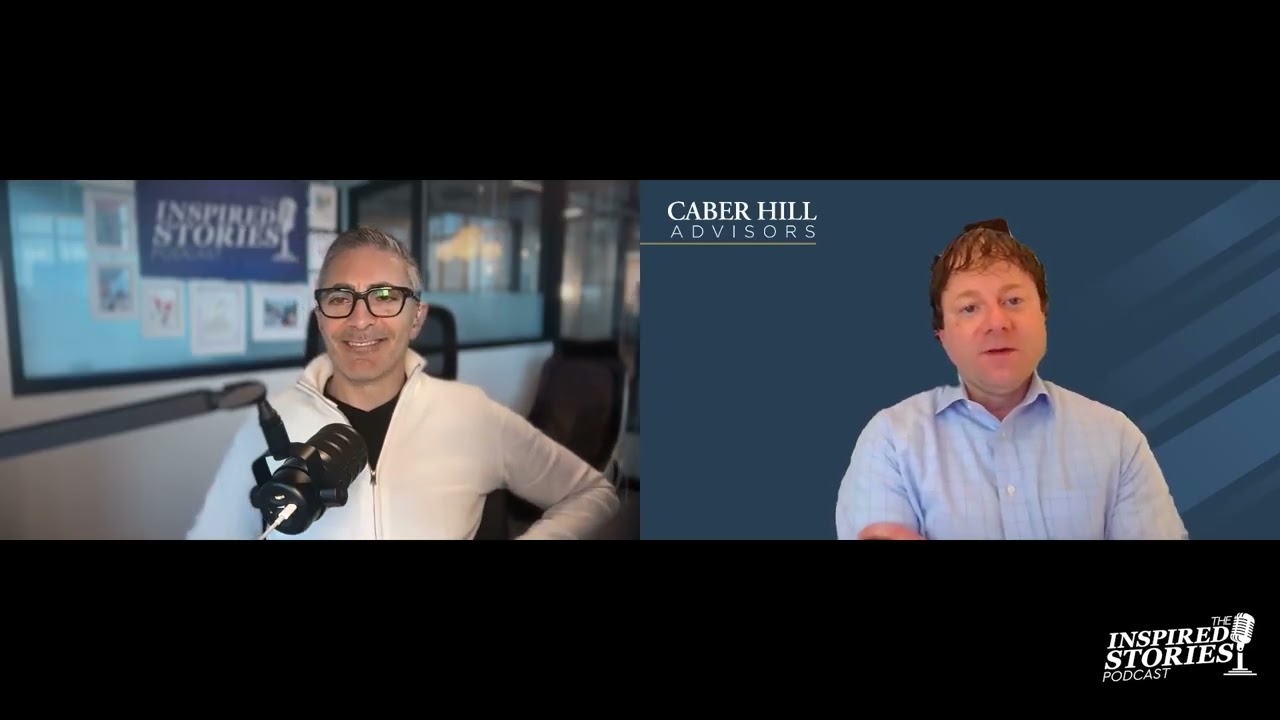
Peter Holton, Managing Director at Caber Hill Advisors, shares how a childhood in a family construction business, a decade at one of the world’s largest paving companies, and a near-fatal aneurysm at 42 shaped a different kind of investment banker — one who speaks the language of the owners he serves and tells them what they need to hear, not what they want to.
Key Insights You’ll Learn:
Growing up in a family construction company in Milwaukee and working through middle school, high school, and college
Building regional and national operations experience at Rose Paving as it grew from $10M to $200M+
Moonlighting in M&A while still at Rose Paving and eventually co-founding Caber Hill Advisors
Why Caber Hill recruits advisors who came from the industries they serve
The difference between platform companies and bolt-on acquisitions in private equity
The 5Ks exit planning framework: knowing what your business is worth, what buyers want, and when to sell
Three reasons deals fall apart: declining revenue, buyer discovery, and owner’s unclear post-sale path
Why rolling equity is becoming the preferred structure for owners who want one foot in, one foot out
Surviving a brain aneurysm at 42 and what it clarified about what actually matters
Why talking to your spouse before talking to a banker is step one of any exit
Peter’s Key Mentors:
His Parents: Founded a family contracting business in Milwaukee and modeled blue collar work ethic from day one
Rose Paving Leadership: Gave him autonomy, accountability, and a front-row seat to a national M&A growth strategy
Craig Castelli (Partner, Caber Hill): Taught him the sell-side M&A process from the ground up and built the firm with him
CB Kuzulik (Rose Paving): Pioneer of the national paving model who showed what bold growth strategy looks like in practice
His Faith and Family: Anchored him through brain surgery and recovery when the psychology was harder than the physical
Don’t miss this conversation about what separates operators-turned-advisors from traditional investment bankers, why the right time to start exit planning is usually years earlier than you think, and what an aneurysm teaches you about building something that lasts.
Listen to the full episode here
Transcript
Anthony Codispoti (00:01)
Welcome to another edition of the Inspired Stories podcast, where leaders share their experiences so we can learn from their successes and be inspired by how they've overcome adversity. As you listen today, let one idea shape what you do next. My name is Anthony Cotas-Foti, and today's guest spent nearly a decade inside the construction and facility services industry. He paved roads, ran regional operations, and negotiated contracts from the inside out.
That experience gave him something many &A advisors never have, a real understanding of what it costs to build one of these businesses from the inside. When he eventually moved to the advisory side, he brought that with him. Peter Holton is the managing director at Caber Hill Advisors, a Chicago-based investment banking firm specializing in the sale, acquisition, and valuation of small and mid-sized businesses. He leads the firm's facility services practice
and has over 20 years of experience in sales, operations, and &A across the industry. He has guided notable transactions, including the sale of LMS to Davy Tree, a nationwide tree care and landscaping services company, and the sale of Let's Pay. And he authored the framework known as Exit Planning, the 5Ks. But before we get into that good stuff, today's episode is brought to you by my company, Adback Benefits Agency.
Listen, if you run a business, you're likely stuck in the cycle of rising insurance premiums. You're paying more, but your team is getting less, and many people can't afford coverage at all. We do things differently. We offer a solution that provides your employees with unlimited access to doctors, therapists, and prescriptions that's always free for them to use. But here's the part that surprises most people. Unlike every other employee benefit out there, our program puts more money into your company's bank account.
As an example, we recently helped the client increase net profits by $900 per employee per year. Results vary, but gains like that can change how a business is valued. And the consultation is free. Imagine being the advisor that delivers incredible value by introducing this to your clients. See if they qualify today at addbackbenefits.com. All right, back to our guest today, Managing Director of Cabor Hill Advisors, Peter Holton. Thanks for making the time to share your story today.
Peter Holton (02:27)
⁓ thank you for having me. Really appreciate it.
Anthony Codispoti (02:31)
So Peter, you started your career at Rose Paving Company, a commercial pavement maintenance and construction firm and state for nearly a decade. You held regional and national roles in business development, operations, and then eventually ⁓ &A while still at Rose Paving. Take me back through the work you were doing and how it would help to pave the way for what you're doing now at Cabor Hill.
Peter Holton (02:35)
it.
Yeah, happy to and love to take a step back from that actually. Growing up in a family construction company in Milwaukee, Wisconsin, where I'm from, doubling contractors, my family started that company. My parents didn't go to college, right? So they started that firm, that company, and I have three other brothers and we all had to work through middle school, high school and college. So that's where I got my blue collar, got my hands dirty and
I was in the field. wasn't in an office and really getting an understanding of what it takes to do work. And then from there, ⁓ working at Rose Paving after my undergrad from University of Dayton, I continued that trend. I just loved the trades and really got involved at Rose Paving. that time, ⁓ we were a very small company. And over my 10 years there, I grew up in that...
business at Rose Paving located in South Side of Chicago and then where they are now, the largest paving company in the world. ⁓ But I loved it there because I grew up as a business person working at regional operations, regional sales, was a national project manager reporting directly to the ownership. And then from there, as a typical entrepreneur in my family, ⁓ I got to the point where
I wanted more and I got to, I actually forced myself on the &A team and that was fun. ⁓ And I got to do integration. So anytime we acquired a company, I had to do the post integration. So our systems processes that we used. And then on top of that, I got to work with ownership on recasting financials. And so that was how I got my beak web and really got an appetite for
for the &A space. And I really wanted to do it full time. It didn't pan out that way. ⁓ had, Rose Paving wanted to keep me where I was in my position. So ⁓ I moonlighted, to be honest with you. And that's where Craig Castelli and I ⁓ got involved. And then from there, I've known Craig Castelli since our college days. We have mutual friends that I studied with, I studied abroad with in England my junior year.
So that's how we met and went over there to Bridge Ventures. ⁓ Was there for about a year and Craig's like, hey, we are gonna start our own firm, love for you to join. And that's how it all started.
Anthony Codispoti (05:43)
So I want to go back and I appreciate you taking us back a little bit earlier. So you attended the University of Dayton, ⁓ looking at your LinkedIn page here, a bachelor's of arts in communications. So how did you end up at Rose Paving with that kind of degree? What was your initial role?
Peter Holton (06:00)
Yeah, so my initial role at Rose Paving was my first entrance was national operations. I came in to help project manage the Lowe's stores in the Midwest. And so I was in charge of ⁓ think of a Lowe's parking lot. We were seal coating those parking lots of liquid substance you put on parking lots. had to coordinate getting the materials, coordinating with the store manager and the staff, roping everything off.
cones, everything, and a lot of logistics going behind it. And making sure the contractors run site on time, doing the work correctly. ⁓ That all happened in four days. I was at Rose Paving, got the debriefing in four days, and they shipped me off to Missouri, and I'm saying, holy cow, what am I doing right now? ⁓ But that's how my personality is. I love just jumping right in and getting after it.
I love every minute of working at Rose Paving. It was an incredible journey, great people, and a great process to learn from and to really grow up in the business world.
Anthony Codispoti (07:14)
And you say now they're the largest paving firm in the world?
Peter Holton (07:18)
Yes.
Anthony Codispoti (07:20)
So you said when you got there, they were pretty small. Give us an idea of their size then compared to now.
Peter Holton (07:26)
Yeah, roughly about 10 million when I was there. When I left, they were about, I don't know, 200 million roughly in 10 years. That's a lot of growth. And so the leadership that they had in that direction was incredible. And then now I don't know how big they are, but they had the largest footprints in North America.
Anthony Codispoti (07:51)
What does that mean, largest footprint? ⁓ Like most satellite offices or how do you define?
Peter Holton (07:56)
Most offices,
⁓ the acquisitions that they've done over the years, ⁓ I'm probably double digit acquisitions they've done on the growth and strategy. It's been 12 years since I've worked here, right? But ⁓ the growth you can see from sitting where I am is incredible.
Anthony Codispoti (08:15)
What do you think it is that or was that they were doing so well that allowed for that? Was it specifically that they just had this really good &A process down, identifying the right firms to acquire and then executing on that well? Or was there kind of more that goes into that secret sauce?
Peter Holton (08:33)
First was the leadership. They had a direction of where they wanted to go and CB Kuzulik ⁓ basically is the pioneer of the paving industry. Alan Rose founded Rose Paving. ⁓ So I gotta give kudos to him, but CB is the one who pushed for the national model. What does that mean? They'll go into, at the time, Home Depot, who 2,500 stores, and go, we'll take care of all your parking lots. And ⁓ they started, they test.
in the Midwest and we did about eight to 10 stores at the time, proving out that we can provide the scope of work and we can execute the work with a vendor partner relationship, subcontractor model, and we were able to execute. And that was never been done before. And so they proved it out and then started building out their national model. And that's how they grew so fast with the direction of their leadership team.
Anthony Codispoti (09:30)
So you said something else that kind of made me chuckle under my breath. ⁓ You wanted to do more ⁓ &A when you were with Rose Paving, but they wanted to keep you in the role. They felt you were a great fit for that. And so you started to moonlight. How were you moonlighting in the &A space?
Peter Holton (09:48)
Yeah, so that's when I went over to Bridge Ventures and ⁓ Craig Castelli taught me everything I know ⁓ as far as the &A side of things from the seller side because at the time we were the buyer of Rose Baby. Right. So from the seller side, Craig Castelli taught me everything I knew, took me under his wing and showed me the ropes. And we did that for about a year ⁓ through a Bridge Ventures, which was an independent model.
And it's not the direction that we wanted to go, Craig and I, as far as building a team, building the infrastructure. And so that's why we left and Craig started Capre Hill Advisors here in Chicago is to be that lower middle market mergers and acquisitions firm that's actually working with the clients. the reason our team is so successful is because we all came
from certain industries and those are the industries we work in. ⁓ For example, we're not gonna take on every single company under the sun, right? It's gotta make sense. We're gonna bet the company just as much as they're gonna bet us. And for example, Craig came from Siemens and going in the healthcare world, he can walk into any healthcare practice with his experience and what he's done. I can go into any contractor office. I can talk white collar, I can talk blue collar.
because of my background and what I've done. So don't let the nice shirt fool you, right? And that's why we're so successful. I'm not your typical investment banker because the background that I have is not the mainstream of most investment bankers. And I'm proud of that. And the path that I took is a little unorthodox, but that's what makes us successful. And that's why our clients love what we do.
Anthony Codispoti (11:43)
So draw some comparisons here. How did your path differ from what the traditional investment banker would follow?
Peter Holton (11:50)
Yeah,
so a traditional investment banking path is you go to undergrad, you get a major in accounting or finance, and then you go and work for a private equity firm or a merger or yeah, an M &A firm. And then from there, you go and get your MBA and you work that angle and then come back to the private equity space or an investment banking model. And I came from scrubbing paint buckets at 12 years old. I came from
hanging off a scaffolding that's two stories high. I came from working in a crane with an operator, move left, move right, because I'm 250 feet in the air, working on a church steeple. That's where I came from. and working and trying to motivate a team in college when we're trying to get a job done, and getting our hands dirty and working 75 hours a week.
in high school and in middle school, just because it's the family business. It's a little bit different.
Anthony Codispoti (12:54)
Mm hmm. Yeah. Let's go back to I want to talk a little bit more about rose paving because I want to get a little bit more sense of sort of some of the what do you want to call it? The the scars that you built, the the tough skin, the lessons that you learned, you know, prior to what you're doing now at Caper Hill. So just pick because, know, you were there.
several years, you have a lot of different roles, a lot of different experiences. Take us through one particularly challenging experience at Rose Paving, how you navigated that and how you carry a lesson from that experience with you today.
Peter Holton (13:41)
The biggest thing that I learned early on at Rose Paving was to jump right in. what I mean by that is Rose Paving allowed you to make a mistake, but learn from it. And I think in today's world, right, people are walking on eggshells and they don't want to make a mistake. because, and that's why I struggled to get my words out because
the environment that they created was an autonomy and entrepreneur mindset of take ownership of your inner circle of what you can control. And so I convinced at the time I was there for two years and I was in national operations and I was traveling literally five days a week from May all the way through August. And so ⁓
I asked to be back on the regional team. just got married. I actually wanted to be with my wife. And from there, I did regional project management. And I was the first, I convinced my boss at that time to put me into sales. And so he said, if you do that, you have to be the project manager as well. And I said, bring it on. And that was my biggest challenge is
because of my national operations experience, my regional project management experience, I could ⁓ sell the projects and manage them. And that's where the ⁓ really the secret sauce came in is because if you come in on the operations side, know when things are done. And once you figure out how to sell it, it's a perfect blend. So my margins, my job execution was through the roof and I proved it right. And that was a really cool moment. ⁓
in my personal view and my boss is very proud and because I made him look good too in front of ownership. Right? So that was the biggest challenge and that was probably the moment I realized I'm like, okay, there's something here. ⁓ And that opened up my eyes to go get my master's in management and leadership, which I pursued. And then ⁓ it opened my eyes saying, okay, I can keep pushing myself.
Anthony Codispoti (15:44)
Mm-hmm.
Peter Holton (16:06)
to get better and I know that Rose will be there behind me.
Anthony Codispoti (16:10)
So was the biggest challenge for you that you were, cause you'd done the project management side before, correct? This was now layering the sales on top of it. So the question was, okay, can I do both? Can I be good at the sales side? And you answered that question pretty emphatically. Not only were you good at it, but the combination of the project management experience that you had allowed you to be even better on the sales side. Cause you knew what the margins were. You knew how, you know, the ops were going to work.
Peter Holton (16:20)
That's correct.
Anthony Codispoti (16:40)
Am I reading that correctly?
Peter Holton (16:41)
That's correct.
Anthony Codispoti (16:43)
Okay, so let's come back to closer to present day, but Caperhill, tell us what it is that you guys do specifically and who you do it
Peter Holton (16:53)
Yeah, so Caperhill Advisors is a mergers and acquisitions firm. headquartered in Chicago. We have people in Boston, Salt Lake City, and Phoenix. And what we do is a variety of things. Business valuation, exit planning, getting companies ready for the potential transaction. We have a buy side to our practice. So private equity firms, independent companies will hire us to run a process. What that means is...
we go out and find them a platform company. A platform company is the mothership. That's the company that will do add-on acquisitions for. Or if they have a platform already, we'll come in, we'll do a whiteboard session. We'll figure out geographically where they want to go, what size, is the management team ready for acquisitions? Where's the capital coming from? We will source those transactions. We will find those companies. We will talk with them.
We will review their KPIs and their financials and we will ⁓ come in and create the letter of intent with the company and the attorney. And once we're under letter of intent, we'll handle due diligence with our virtual data. And so that's part of what we do. The other side is sell side transactions. Companies will hire us and we will sell their company to a strategic buyer and or private equity.
And the process that we run is very, ⁓ very detailed from that angle. And we work with clients all over the US. I've done deals in Alaska, I've done deals in Hawaii. Our firm works coast to coast. And our sweet spot for business owners is 10 million to 200 million of revenue. We've done deals less than 10 million. We've done deals on the upper range, up to the 200 side.
we can work with ⁓ business owners in all different facets.
Anthony Codispoti (18:55)
What industries? I know you mentioned that you work specifically on construction, trades, your partner, there's a lot of experience in healthcare. Are there any other verticals that you guys are serving?
Peter Holton (19:09)
Yeah, so my partner Maria, she focuses on med spa, veterinary, dental. My partner Jordan is more of an industry agnostic person, but his primary focus is manufacturing. The reason I say industry agnostic for him is his background, being a former CPA and having experience in a lot of different verticals. And he's very talented. That's why we brought him into the firm.
And then Brian Stephens, my other partner, right? Working on our buy side practice of the firm. Craig Costelli obviously is our CEO and oversees everything from the firm, but his background is healthcare. And what I oversee is all facility service companies. So anything that's blue collar related. So think HVAC, roofing, janitorial, paving, electrical, those types of businesses from coast to coast.
Anthony Codispoti (20:02)
Got it. And is it unusual for a group of your size to do both buy side and sell side?
Peter Holton (20:10)
No, a lot of our competition does buy side and sell side.
Anthony Codispoti (20:14)
Okay. And the buy side, is there a lot of repeat business? You you've got a group that comes to you and says, hey, we want to build out a portfolio in this space. And so you've helped them find the platform company and then you're helping them find the bolt-on companies or is it more of a one and done traditionally?
Peter Holton (20:33)
No, it's both, right? We have private landscaping company that we're working with on the East Coast. It's private equity backed and we're helping them bolt on acquisitions, right? So that PE firm may have a need for a healthcare buy side that we can work with them on and they know that, right? Or there's other ⁓ non-private equity backed companies that want to grow and as far as revenue, so we can help them.
For example, take them from 50 million to 100 million. And then once they get to that point, hey, Peter, I think we're ready to bring on private equity. Can you help us? So there is additional work that we can work with these companies on.
Anthony Codispoti (21:19)
So thinking about whether it's a platform company or whether this is a bolt-on, what is it that the buyers are looking for? Let's assume this is a PE firm and they're looking for that first acquisition. What tells them that this is a platform company versus a bolt-on?
Peter Holton (21:43)
For a private equity firm looking at a platform, they don't have a company within their portfolio. It'll be their first acquisition within the industry. For example, if ABC private equity firm is very interested in getting into the janitorial contracting industry, they're going to do a ton of research and they're going to talk to a variety of different business owners and investment bankers and figure out
what company that they want to acquire. And that can be a variety of different ways. It could be a company that's doing 20 million, 30 million, 40 million, 50 million, depending on the size of the private equity firm. And they will acquire that company. And once they acquire that company, that's their platform. And that platform company, they will help build out the executive team. They'll bring in capital, Fortune 100 experience, and
day-to-day consulting, monthly management meetings, those types of services. But as you acquire a business, you are acquiring for future revenue. So they have to grow. They can grow organically, they can grow through acquisition, and the fastest way to grow is through acquisition. So once they have that platform company, that's when they do bolt-on acquisitions after that. So ABC Private Equity Company buys
XYZ platform company. XYZ platform company then starts to add do ad-on acquisitions. One, two, three, four, five, six acquisitions after that to help improve the platform company.
Anthony Codispoti (23:27)
I guess my question is, you know, here's the PE firm. They're looking at maybe 10 different businesses as their first acquisition in the space, the platform business. What specifically are they looking for to say, this is the one that we're going to build everything else around, whether it's size or structure or anything else. What is it that they're looking for?
Peter Holton (23:51)
First thing they're gonna look for is the revenue. And they're gonna look at what's called EBITDA, earnings before interest, taxes, depreciation, and amortization. And when they do all the research prior to interviewing this company, they wanna make sure that the company's profitable. They wanna make sure that the executive team, that they can build upon it, not just scrap it, but build upon it. And what is the growth strategy of the company?
Where is the revenue coming from and where are they going to go? Those are the four main verticals that are forming silos that they look in the company. Revenue, profitability, executive team, and where is the growth? And once they understand and take the private equity, we'll look at all of these companies, compare them to that one platform that they're very interested in and say, okay, we can buy this company. We can improve on it on X, Y, and Z metrics.
and take that company to that next level. What that next level looks like is part of what the management team, the executive team of the platform company and the private equity firm are trying to develop and grow the business.
Anthony Codispoti (25:04)
Do you typically see those platform companies are stronger in their tech stack, in their leadership team, ⁓ in their overall employee headcount?
Peter Holton (25:17)
It depends. I know it's not the answer you want to hear, but it really depends. There is, ⁓ if we're talking about the janitorial industry as this example, if they have a lot of technology that is above grade, meaning it's above the industry, right? That is a great company to buy for said private equity firm, right? The structure is there, the technology is there, and they can build upon that. If they have ⁓ a secret sauce,
in that industry? Do they have a subcontractor model? Is it self-perform model? Right? So there's all these different layers that go into it. So I can't just give you one answer to say, yeah, that's what it is. It is a variety of things that come together to make the platform work for the private equity firm. And every transaction, every seller, every buyer is completely different than what they are looking for.
And there's thousands of deal points in any transaction. And that's why I love what I do is because there's no cookie cutter way like making widgets and the mergers and acquisitions work. It doesn't exist. And that's what makes it exciting.
Anthony Codispoti (26:28)
So maybe to help deal with all these complexities and nuances, you wrote a framework called exit planning, the 5Ks. Walk us through this. What are the 5Ks? Why does the sequence?
Peter Holton (26:41)
Yeah, so the 5Ks, ⁓ man, that's going in the way back machine. The 5Ks that I wrote. ⁓
One second.
Anthony Codispoti (26:54)
not
a present day framework that you continue to use in reference.
Peter Holton (26:59)
Yeah, really was ⁓ going back to my days of writing these articles. ⁓ I was trying to reach out and understand what business owners were going through and if I could educate them ahead of time. Right. So the 5K article that I came up with with the exit planning was, you know, know what your business is worth in the marketplace.
know what buyers are looking for and know when to sell. And then also how to manage the deal process that you're looking at and know the difference between price and terms. And so when you look at those 5Ks is kind of like you're running in a 5K is there's all these different milestones you got to hit and running a business is a lot of complexity to it. And so if I can add my two cents,
from the seat that I sit in trying to help these owners educate and what that means. And so know what buyers are looking for is, okay, do you have a system? Do you have a process? Is it documented? Do you have the right software, the right accounting system? Do you have a system? Now I've seen a lot of different things in companies where it's all pen and paper, file cabinets ⁓ to the most sophisticated software.
that can be run within those marketplaces. ⁓ And when I talk to business owners, this is what I like to say to people. If the business owner calls me and goes, hey, Peter, I'm ready to sell. If they're not in my phone, I'm like, well, who is this? ⁓ They're like, whoa, I'm ready to sell. like, well, hold on a second. Let's talk this through, right? Of course I'm gonna have the conversation. Of course I'm gonna talk to the owner.
But bear with me for a second. I want to know what's going on in here first before we talk math, before we talk the X's and O's. That's the easy stuff is what are you trying to accomplish? Have you spoken to your spouse? That's always a fun question to ask. And ⁓ thirdly, the other part is have you sat down with your financial planner? Do you have a trust, will, and estate set up?
And notice I didn't ask about revenue. I didn't ask about EBITDA and ask about software. I'm trying to get into the mindset of the business owner so I can understand how to help them because there's a lot of tax strategies. There's a lot of getting the company ready and prepped and the owner itself mentally so they can go through that experience of selling a company, which is a roller coaster and have a successful transaction.
So knowing when to sell, that's probably the biggest, one of the biggest milestones that owners go through is there's three types of timing. There's company timing, there's market timing, and there's personal timing. Buyers don't care about your personal timing. You just don't care. It's a company to a point where the owner can't take it to the next level. And you see that a lot in the business world. You see that in coaching.
in the NFL and the NBA, college ranks, right? You can take this team so far, but you need new fresh ideas, new people coming in to take that next leap. It's the same thing in business, right? Business owner says, I can only take it to 10 million. I don't know how to get it to 20, 25 million. That's the company timing. Market timing.
During the COVID experience that we had, business was booming for Capri Hill advisors because of the facility services that we sector. People were sitting at their houses looking at, gosh, I gotta get this painting done, looking at their yard and going, I gotta get this landscaping done. I gotta get this HVAC pest control, you name it, roofing. Business took off. The market was perfect. And so a lot of the strategic buyers and private equity firms started flooding into the space. That's market time.
the market's hot, right? So understanding that from a business owner's perspective is so valuable and that's why I the article.
Anthony Codispoti (31:24)
Would it be accurate to say that the more sophisticated buyers or sellers, which I'll put into the bucket of private equity, tend to look more at company timing and market timing, whereas the founder of the business bootstrapped it, built it up to X million dollars a year? Are those the folks that traditionally are their North Star is more of the personal type?
Peter Holton (31:50)
I think that would be spot on and trying to get a business owner to understand, look, the market is ripe right now. You got to do something. Eight, seven, six years ago, traditional buyers would buy the company, a strategic buyer. There would be cash at closing. would be an earn out and a seller note. And it could be a two to three year period, variety of different ways.
I'm just giving you general parameters. Now, buyers are getting more creative. They're saying, hey, look, we'll buy your company, but we want you to roll equity because the owner doesn't, they want one foot in, one foot out, right? And so they don't want to necessarily leave. So what they do is I'll roll equity and grow it as an example from 50 million to 200 million with private equity.
And so it's best of both worlds for those owners because they get to take some chips off the table. Everything that they've built is all been on their shoulders. So now they can take chips off the table, take some money, invest it, and then take the private equity money, experience capital consulting and take that company to that next level and build it. And that's where there's a big push for that in the last five, six, seven years to do that. And in a variety of industries, not just facility services. So it's.
knowing for that client when to do it. And it's hard because the client, I deal with a lot of owners who are growing like crazy. And Peter, why would I sell right now? Or why would I roll equity? Or why would I do that when I'm having fun and I'm making money? I go, look, you're having fun, you're making money. I get it. Continue to do that. Right? I tell people, depending on the industry,
The mergers and acquisitions within that industry is like a baseball game.
Some industries could be in the fourth inning. Some industries could be in the eighth inning. And I remember talking to a business owner in the janitorial space about four years ago. And he asked me the question, where are we as far as the baseball? And I'm like, that's where it dawned on me. Like, that's a great analogy. Why didn't I think of that? And at the time I told him, we're in the bottom of the eighth. That's four years ago. And it's still booming. So I was wrong.
Anthony Codispoti (34:20)
We're in extra innings now.
Peter Holton (34:21)
Exactly, right? So there's different ways to look at it. But that article that I wrote is trying to get the brain working for that owner from the acquisition side. Because what you don't want is a business owner that doesn't have a trust in oil and state setup, doesn't have a financial planner, doesn't have a succession plan, a management team, doesn't have a buy sell agreement setup, and they pass away.
Now your family has to deal with that. All these people within the business, maybe out of a job, they can't pick up the pieces. And that's where I really come in and go, let's understand up here first, and then we can move over to the math, which is the easy.
Anthony Codispoti (35:08)
So let's say that this is a seller who does not want one foot in, one foot out, and this is just ⁓ their path to retirement. How often do you see that type of seller profile get close to the finish line and get some really cold feet?
Peter Holton (35:29)
It happens. And those business owners that do that, it could be a variety of different reasons. One, they just can't let go. And it's hard because the name on their chest, right, has been there forever. And take that off. It's their identity. And so does it happen? Yes. And I tell clients, go, look, right now I'm in a transaction.
I'm in two different transactions actually. And the landscaping business owner point blank asked me on Friday, what makes deals not go through?
Great question. Not the first time I've heard the question. And my response to that was this.
There is no, the answers I'm going to give is not ranked one, two. I'm just going to give you those answers. And the answer is the company starts failing. So revenue starts sliding, EBITDA starts sliding. That's one, because the owner takes his eye off of running the company. Two, ⁓ the buyer sees something within that business that they don't like once they're under letter of intent. Variety of things they don't like.
⁓ Or they can't get their lending secured away, right? So that's that's one of the two top reasons and three is There is no clear path for that owner to understand what that next phase looks like What does it look like post transaction and that's where I spend a lot of my time? Right here of the owner prior to them signing my contract
because we want to make sure that we're aligned on what the business owner wants to do. And sometimes they don't know, Anthony, they don't know exactly where they want to go. And that's okay. Right. But as long as you know, here are the options that could happen post transaction or what it could look like. and that they're ready. And so that's where the three main things are is,
The revenue starts sliding, company starts dipping, the buyer can't get their lending power secured. And what is the clear path for the owner?
Anthony Codispoti (38:00)
You know, if somebody who's been on the sell side multiple times before, know what that transition feels like. And when there is that next thing planned, yeah, it's much easier to be mentally prepared and to move on. When that is a little more ambiguous and unclear, it's really difficult. Now, granted, I was at different points in my life, you not at the end where like I'm stepping into retirement. ⁓ So it's interesting to hear.
And I'm curious how many of your sellers sort of fit that model where they're a little bit younger, they're not sort of at the end of their working life. And that becomes a bigger question for them versus how many are kind of part of this silver tsunami that we're hearing about where this is kind of their, you know, their last game, if you will.
Peter Holton (38:53)
I've had owners that are 40 years old and sold because they wanted to go out and do something different. I've had owners that are in their 40s that wanted to roll equity and be a part of the platform for a private equity firm. I've dealt with business owners that are there in their 70s. I said, you know what, I want to do a transaction and we've done all the steps and we get down to last, I don't know, 60, 90 days and they're like, you know what, can't let go.
Right? So I've done a variety of owners, all shapes and different sizes and personalities. And the number one thing that comes down to is what are you going to do post transaction? What does it look like? And that's where you can't play golf every single day. Okay. and though it sounds like a lot of fun, right? you can't. And so you gotta have something that you can.
you can lean on. And that's where I keep telling these owners that I develop a relationship with for a year and they hire us or it'll take five, six years, A, because I've developed a relationship. It is a relationship and I take a lot of pride in that. ⁓ And owners trust me from that experience, right? So this is their baby. They're enlisting this with me and this is their baby. And that's why
The team at Cabor Hill, I get a little choked up talking about it because they go above and beyond, we go above and beyond for our clients because we understand that. And we want to go above and beyond, not just for the transaction. I still talk to owners that have sold to this day, right? And that's because it's all about the relationship and helping them through that. And I tell clients, Anthony, go, look,
There's going to be times where you're calling me up and you're venting to me. There's going to be times where it'll get emotional. You know, I don't get emotional, Peter. Okay. It's part of the process.
Anthony Codispoti (41:04)
So it's interesting to hear that you'll still stay in touch with some of the folks that you've worked with in years past. Why would they reach out to you after transaction's completed, eyes are dotted, teaser crossed, money's moved? What's the reason that somebody may reach back out to you?
Peter Holton (41:21)
Um, just to see how I'm doing, how the industry is doing. Um, you know, just pick up the phone. It's just like calling a friend, right? Um, and I'm grabbing dinner with one of my former clients next month and I'm excited about it. Um, and we, we sold his company, I don't know, six, six years ago now. Um, we meet up once a year, so I'm excited about it. Um, or they just want to talk. Right. It's just, I'll call them up because like, Hey, I was thinking of you or Hey, I was in Connecticut and, I thought it'd just
shoot them in tacks, see how things are going. ⁓ That's the fun part.
Anthony Codispoti (41:55)
Yeah. How far in advance do you typically like to engage with a client and how much time are you actually typically given?
Peter Holton (42:07)
So I'm gonna put it back on you here, Anthony. Let's have some fun with this, all right? If a client calls you and says, hey, I'm ready to go, you're not gonna turn it down. But I will talk to that client, walk through my process, and I will take a look under the hood and look at the business KPIs, talk about valuation rates, expectations. What do you wanna do?
Do you want to sell straight out? Do you want to roll equity? All of these different options. And if that all sounds fine and dandy and the numbers are where they are, we will take them on as a client. However, we prefer to go in about a year to 18 months ahead of time because we want to get a good look at the business. Maybe there's a couple of levers we can pull.
Maybe some other KPIs in the financials that we can move around or improve on. Maybe there's a strategy for getting into a new market that they're trying to get into. It allows the owner time to find a financial planner, wealth manager, if they don't have one, to help with the backend. It allows the time with the CPA firm that they're working with for the business in personal to get things lined up. ⁓
We prefer 18 months, two years, right? But if everything's aligned, that's what we look at.
Anthony Codispoti (43:39)
That makes a lot of sense. Yeah, in my experience, you know, I've been through multiple exits and it's been anywhere from a few months if the buyer is somebody that's known to 12 to 18 months. And so kind of, you know, describes what you're you're lining up there. But I think your transaction sizes are typically bit bigger. You're talking, you know, 10 to 200 million. Right. That's kind of the sweet spot that you typically play.
Peter Holton (44:06)
Yeah, I I'll have clients that I'll set up calls with or I'll meet with that are smaller than that, but giving them tidbits, I'm never going to leave them hanging. That's just my personality, I guess. ⁓ I'll give them tidbits on what they should look at, what they should do, maybe there's some other people they can talk to that are in that space, that range that they're working with. ⁓ But you always want to leave that meeting
the business owner goes, wow, I learned something ⁓ from that firm because it's the right thing to do.
Anthony Codispoti (44:42)
We were talking before, Peter, about how you are a different type of investment banker. What's something that you believe in the exit planning, the &A space that most advisors or maybe even owners would push back on?
Peter Holton (44:59)
Well, a couple of things we've touched on is in no particular order. I go after industries that I came from, some blue collar type businesses, and I can talk about my upbringing. I can talk about how I was raised in a blue collar family, and I can talk about my experience at Rose Paving. I can talk about those experiences because it lets the guard down.
when I walk into an owner's office that's in that arena of blue collar space. That's one. Two, I can go over a lot of these companies, our family businesses, not all of them, and I come from a family business. That's two. I can talk about and relate in my experiences. And then three is what makes us different is we came from those industries, right? So the third point kind of wraps
both one and two together. And that's what makes us so unique compared to our competition. Whereas my competition, right, may not necessarily came from the same background that I have, but I can open up the door and relate. And I want to get involved with the owner, the psychology of the business owner is understanding what makes them tick and what the question of why.
is brought up a lot in my vocabulary. I feel like a little kid, you know, little kids always ask why, why, why? Well, that's me. I'm asking why. We got to keep digging. Got to keep digging. And so, and then how, right? ⁓ Those are the two main questions that we look at is why and how. And we are the experts in the MNAS space. So that how is great. But how meaning, okay, you are at 10 million in revenue.
and you're telling me that you want to exit when you get to 15, how are you going to do that? What are the steps that you're going to take place? What is the accountability that you're going to have metrics set in place? So when we come in two years ahead of time, for example, and we stay in touch with them, have you gotten to that space? Well, no. Like, okay, you keep telling me you're going to get to that space, right? Or that the next level and it doesn't happen.
Maybe it's company time.
Anthony Codispoti (47:27)
Maybe you've taken this as far as you can take it, Mr. Owner. And maybe it's, you know, this is an indication that it's time to go to market.
Peter Holton (47:35)
And those are tough conversations to have, but the reason I have them is I like to the owners right between the eyes. I don't tell them what they want to hear. I tell them what they need to hear.
Anthony Codispoti (47:49)
does that work against you ever? Right? Cause I would think like a lot of M &A folks, they're trying to say whatever they can to get the deal. And if you're coming in and you're being a little bit more direct and not telling them what they want to hear, I don't know. Some folks maybe respect that, so maybe push back.
Peter Holton (47:53)
Thank
Yeah, but it's a good banter though, right? The people that push back, you better believe that they're going to push back on me because they're going to take what I've said to them or realize or engrow that company, right? ⁓ It's something that has to be done in our space. And I wish more people in my industry were more direct because it builds better respect ⁓ factor from that angle. And what you're trying to
to really develop with that owner is respect. ⁓ sometimes the owner's not always right.
Anthony Codispoti (48:48)
I think maybe you're being a little soft there. Many times, maybe the owner's not right, but we'll leave that where it is. Let me shift gears on you, Peter. I'd be curious to explore one of the hardest things that you've had to overcome personally and what going through that taught you.
Peter Holton (48:52)
Yeah.
Yeah, I've actually never told this to the public. So this is a little hard for me, but I had an aneurysm. So I had brain surgery. I'm 45 and this happened three years ago. So ⁓ that was a huge obstacle for me to overcome. Where I had it was a very
the death rate was really high. So to go through that psychology of it and going through the aneurysm, was, that was pretty, it was very eye-opening for me, right? And, you know, look, I got four little kids. I got a beautiful wife, my best friend. So that was hard. ⁓ But I got through it with support. I'm a God-fearing man. So that was nice. And family, right? And,
made me realize that people know this, but I don't know if they necessarily live it. You're not bulletproof. And so to really step back and go, okay, how do I get through this? And so that was the psychology, the physical part of it was actually easier than I thought going into it, but that was a very eye opening for me ⁓ to go through that process.
Anthony Codispoti (50:32)
So Peter, how did you discover that you had an aneurysm? You had some symptoms that came on suddenly or gradually?
Peter Holton (50:39)
Yeah, had a, they found that I had vertigo. There's different levels of vertigo and I had a pretty severe level of vertigo and during a brain scan they found it. ⁓ And aneurysms don't cause symptoms. So you could be living with an aneurysm right now and you would never know. ⁓ So good thing I had the vertigo, I guess. ⁓ So they could find it and operate on it and I'm here to talk about it.
Anthony Codispoti (51:06)
So the vertigo wasn't being caused by the aneurysm. That was something completely separate. They said, well, let's just do a brain scan and happen to find this. And then from there, what was the process like? Did they go in for surgery right away or was there some period of time before you got scheduled for that?
Peter Holton (51:25)
I mean, just like anything else in healthcare, right? I didn't go under the knife that day. I had to schedule it a couple weeks later and ⁓ yeah, and went through the surgery. And in today's world, they don't go through your brain. They go through your main artery and your leg. ⁓ So I told the doctor, I'm like, it's like playing Atari. And he looks at me goes, what's Atari? And I'm like, my God. So that was fun. ⁓ Yeah, and great, great doc.
Anthony Codispoti (51:52)
Even the younger doctor, though.
And so what was the emotional part for you? Was it the time leading up to the surgery? Was there like a lot of recovery from the surgery? Kind of help us understand.
Peter Holton (52:05)
It
was mostly leading up to it. ⁓ That was probably the biggest fear that I had going into it. And then, you know, after the surgery, ⁓ as I like to ask questions and I'm struggling with words, I apologize for the ums, but it's hard to talk about, Is why? Why me? Why is this happening? You know, all that kind of good stuff.
I'm glad they found it and you kind of move on. that was, yes, I had to go and now I go in every other year for, for tests. But at the time I had to go every six months for about two years just to make sure that I was going, uh, that the aneurysm was going down. Uh, cause it's basically your blood vessel that starts to bubble. then if it pops, that's where you can die.
Anthony Codispoti (52:57)
Wow. Well, I can appreciate that this is hard for you to talk about. Certainly, you know, much harder to have gone through there a few years ago. I appreciate you opening up to talk about it. You know, to your point, most people who have an aneurysm, they don't know about it. You know, maybe they die with it. Maybe they eventually die from it. And what, you know, amazing circumstances that they were able to find it for you. And, you know, there was time to do something about it proactively. So, yeah.
Peter Holton (53:25)
I'm a lucky guy, that's all can say.
Anthony Codispoti (53:27)
Yeah. As you think about the work that you're doing now at Caber Hill, Peter, what do you most want to be remembered for?
Peter Holton (53:39)
That is a really good question, Anthony. What I want to be remembered for is I did it the right way. And that way is what the owner was looking for. And I did it with respect. I did it with dignity. And I let him down the path that ⁓ provided multiple options for them. ⁓ That's what I want to be remembered for and that I cared.
Anthony Codispoti (54:06)
Yeah. So for someone listening who is in the facility services industry, ⁓ they've never thought about what a sale process would look like. Now, maybe you've piqued their curiosity a bit. What's the right first step for them?
Peter Holton (54:24)
First step, talk to your spouse.
Okay, what are we gonna do with this business going forward? What's gonna happen if I die or you die? And those are hard conversations to have. And that's the first thing, is talk to your spouse. Second thing is, okay.
can I sell right now? And the owner might not know. And they might do some Google or chat GPT and go, my business is worth X. I'm like, okay, well, you can believe everything you want to read on the internet or on chat GPT or AI, but like you got to talk to somebody in that space. So first talk to your spouse. Second is talk to an investment banker. What does it look like as far as a transaction?
I've had clients come up to me, Anthony, I'm being long-winded here. get it. this is, want to hit home is Peter, I don't want to sell right now. I don't know when I want to sell, but can you look at my business and as if I was going to no problem, because then they go, they start to see that process of what buyers are looking for, what the valuations are, what expectations are. And every business owner thinks your business is worth more. Well,
When you see it on paper and you're like, man, well, how do I get it to that level? And that's where the wheels start going. And that's what I mean. Come talk to us.
Anthony Codispoti (55:52)
come talk to you early. Talk to your spouse first, then come talk to Peter, even if you're not fully ready today, because it'll give you an idea of what it is you need to be thinking about and planning for and putting in place so that when you are ready, you've got a shorter timeline for being able to go to market.
Peter Holton (56:11)
That's correct.
Anthony Codispoti (56:13)
Peter, I've just got one more question for you today, but before I ask it, I want to do three quick things for the audience. First of all, anybody who wants to get in touch with Peter Holton from Caber Hill Advisors, their website address is really easy to remember. It's caberhill.com. That's Caber with a C, so C-A-B-E-R hill.com, caberhill.com. It'll be in the show notes, but you can go there right now, caberhill.com. And if you're enjoying the show today, please take a moment to subscribe wherever you're listening.
It also sends a signal that helps others discover our podcasts. So thank you for taking a quick moment to do that right now. And as a reminder, you can be the advisor that delivers a huge value add by showing your clients how to give their employees access to therapists, doctors, and prescription meds that counterintuitively increases their net profits. Real gains that can change how a business is valued. So contact us today at addbackbenefits.com.
So last question for you, Peter, a year from now, what is one very specific thing that you hope to be selling?
Peter Holton (57:17)
My son graduating from eighth grade, going into high school, right? ⁓ Life's not always about work, right? So what I wanna be known for is that I'm raising my kids the right way and we're moving in the right direction and my relationship with my wife is strong.
Anthony Codispoti (57:35)
that. Peter Holton from Cable Hill Advisors. want to be the first. Thank you for sharing both your time and your story with us today. I really appreciate you being here.
Peter Holton (57:45)
Thank you, Anthony. Really appreciate the opportunity.
Anthony Codispoti (57:49)
Folks, that's a wrap on another episode of the Inspire Stories podcast. Thanks for learning with us. And if one thing stood out, put that into action today.
Connect with Peter Holton:
Website: caberhill.com