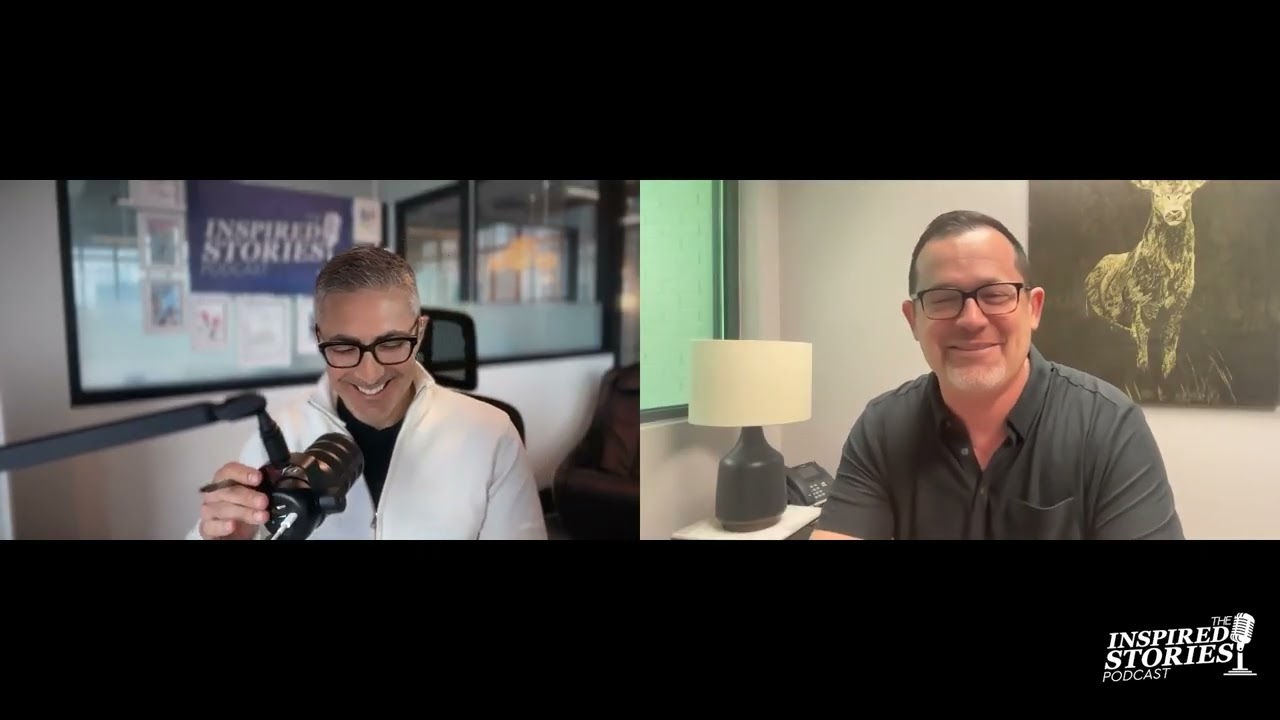
🎤 From Beijing Dealmaker to Foot Health CEO: John Prothro’s Rebuild of Foot Solutions
John Prothro, President and CEO of Foot Solutions, spent years closing cross-border deals in Beijing, running a 250-person scaffolding company on four continents, and building a private equity fund before acquiring a neglected foot health franchise one week before COVID shut the world down. What followed was a brand overhaul, a failed acquisition that became a recurring speech topic, and the rollout of 3D printed custom orthotics delivering a 97% success rate at four times the speed of traditional methods.
✨ Key Insights You’ll Learn:
Acquiring Foot Solutions one week before COVID and surviving with no e-commerce
Brand overhaul starting with a three-word exercise that revealed complete messaging chaos
3D printed custom orthotics outperforming traditional lab methods in speed and accuracy
Semi-weight-bearing scanning technique that separates effective from ineffective orthotics
Happy Feet Plus acquisition post-mortem — what went wrong and why
Service business versus retail business distinction that drove the acquisition failure
Medicare diabetic shoe bill as an underutilized patient benefit and growth opportunity
5% royalty structure and no brand fund fee as a franchisee-first differentiator
26 years of training infrastructure as a near-impossible barrier to entry
Path to 350–400 US locations from current base of 52
🌟 John’s Key Mentors:
Scaffolding company CEO: challenged John to move from advising to doing, exposing the gap between knowing and leading
Inner Mongolia business partner: gave John his Chinese name meaning “watering the people around you” — a philosophy he carried forward
Peter Drucker, Jack Welch, and the Harvard Business Review case study library: built his early nonfiction foundation before he realized people skills mattered more
Foot Solutions franchisees: brought the European scanning technology to corporate, modeling the organizational learning John now builds the system around
👉 Don’t miss this conversation about why most custom orthotics fail before they’re even made, what a bombed acquisition taught a seasoned dealmaker, and how a 26-year-old brand is building a category from scratch.
Listen to the full episode here
Transcript
Anthony Codispoti (00:01)
Welcome to another edition of the inspired stories podcast where leaders share their experiences so we can learn from their successes and be inspired by how they've overcome adversity. As you listen today, let one idea shape what you do next. My name is Anthony Codaspoti and today's guests spent years living in Beijing doing cross border deals across Asia, running a 250 person scaffolding company on four continents and building a private equity fund.
None of that is what he's known for now. Today, he runs a Foote Health Company. He acquired Foote Solutions in 2020, a 20-year-old franchise brand with real potential and some ground to make up. What followed was a brand overhaul, a strategic acquisition, and the rollout of in-house 3D printed custom orthotics across the entire network. A technology that is now delivering a 97 % success rate,
and producing results four times faster than the traditional method. His name is John Prothrow, and he is the president and CEO of Foot Solutions, a global foot wellness retailer and franchiser with locations across the US, UK, Ireland, Canada, and Australia. The company sits at the intersection of clinical foot care and personalized retail, offering custom orthotics and supportive footwear to people living with chronic pain.
John is also the founder of Lyonsdale Capital, a private equity fund focused on lower middle market investments. But before we get into all that good stuff, today's episode is brought to you by my company, Adback Benefits Agency. And you'll want to hear this because it's hurting almost every business you know. Health insurance costs go up every single year and businesses are furious about it. They're paying more, claims are getting denied, employees are opting out because they can't afford it.
and it hurts turnover and morale. It's one of the most maddening problems in running a business and everyone just accepts it. But you don't have to anymore. Now there's a program that gives employees unlimited access to doctors, therapists and prescriptions with no co-pays or deductibles to meet. And here's the part that really shocks most people. Our product actually increases your net profits. We recently helped a client add
$900 per employee per year to their bottom line. Results vary, but gains like that change how a business is valued. Get your free consultation today at addbackbenefits.com. All right, back to our guest today, the CEO of Foot Solutions franchise group, John Prothrow. Thanks for making the time to share your story today.
John Prothro (02:45)
Appreciate you having me, Anthony.
Anthony Codispoti (02:47)
So John, you played baseball at Vanderbilt and went on to get a graduate degree at Texas A Take me back to those college years. What did you think you were working towards at that time?
John Prothro (02:57)
Well you're assuming I was thinking at that time. I I I don't know. I think the people who I admire the most are the ones who make long, long term plans and start in high school and they they know what they want to do and they get to college and they work towards it and they graduate and they go and do it. maybe not admire the most, but I do think that's something that has always been lacking in me. I've always loved to learn. So as a matter of fact I believe it or not, I wanted to I thought
was gonna go on and get a PhD, which I could have done, but there was so much nonsense we were studying even at the master's degree level, I I just couldn't bear it anymore. But I I loved the idea of just learning constantly and studying and writing.
Anthony Codispoti (03:43)
What was the master's program centered around and what's the nonsense that you're talking about?
John Prothro (03:49)
I'll get in trouble if I say the nonsense, but organizational communication, most of the folks who do it either get their PhD or they go into consulting for healthcare organizations or what I was doing afterwards, which is post-merger integration plans.
Anthony Codispoti (04:06)
Okay, and so you decided I'm not going for the PhD and decided to jump into the workforce and went right into &A consulting? Is that the path?
John Prothro (04:16)
Yeah, I did. I was actually a high school A P English teacher while I was in graduate school. So I don't want to skip over that 'cause I really enjoyed that too. and worked for a large company doing the MA consulting stuff and I didn't like large company wait your turn culture. So then I then I started working for some smaller MA advisory firms.
Anthony Codispoti (04:37)
Now I understand that you spent several years running industry pro China out of Beijing. You're advising multinational firms on market due diligence and cross border deals. Tell us about the work that you were doing there and what specifically pulled you towards China.
John Prothro (04:53)
well at the time, shortly after I got into MA advisory work, the housing crisis happened. and so the financial crisis put a lot of leverage buyout deals on ice or or or killed them altogether. and people were doing I had gone to China and studied Chinese and some of our private equity clients were doing deals in China all cash without leverage.
And so the boss said, does anybody want to go over to China and and see if we can do some deals over there? So I raised my hand and and and went over.
Anthony Codispoti (05:32)
Give us one anecdote, one story from the work that you were doing there, whether it was good or bad and a powerful lesson that it taught you.
John Prothro (05:43)
I could talk about a few things, but I think what what really struck me and I think what would surprise a lot of people who haven't been to China, before I had traveled over there and studied the language, I was sort of my idea of China was the autocracy and the government and the heavy handedness of the you know, the Communist Party and that sort of thing. And I was really struck while being over there with just the kindness and hospitality.
of the people and their general curiosity and and welcoming attitude towards me. I used to wander around all all the time. I had my driver's license over there and it early Sunday morning I would go out and, you know, go to some village and walk around like a like a idiot. But there was always so many people that were smiling at me and wanting me to come talk to them. They'd come right up to you and welcome you in to, you know, do something with their family. I I really had a wonderful time there and
contrast that with the the deal makers and the government and some of the deal makers, some of the business leaders that I knew and and did deals with, they were they were also very kind, but it that was much more of a cutthroat kind of world. And and so juxtaposing those two things, it it it gave me a real heart for the people of China in general. And I remember I used to have a friend or still have a friend, he's from it was Inner Mongolia and he was basically a tycoon in Inner Mongolia.
And he's the one who gave me my Chinese name. and it's it kind of fits my time there because he named me Jung Zhang Jiang Po Tsa, which is Zhang Zimin, which means like you know, Jiang Zimin, the guy, Tiananmen Square Massacre Premier at the time. and Pooh like Poutine, like Putin. and then Mao Zedong the Z, which is Z the Zhu and Mao Zedong. So he named me after three tyrants.
but I said, Why are you naming Yeah I said, Why are you naming me after three tyrants? And he said, Well, he said, It means generally watering. And I said, What do you mean by that? He Well, it means you're you're taking care of the people around you and they're growing around you because you're watering the people around you and I always I always thought that was really special and really hung with me.
Anthony Codispoti (07:42)
You've got quite a reputation, huh?
It's interesting. First trip I took to Beijing, the surrounding areas was in the early 2000s. And especially when we would get outside of the main city. It seemed like we were as Westerners, we were kind of a novelty, people would line up just to have their photographs. And we didn't know how to speak any, you know, Mandarin. So there wasn't much communication going on, unless they were practicing their English. But people would just, you know, they were just excited to see
Again, like we were sort of a novelty and I see you smiling, nodding your head similar experience for you.
John Prothro (08:34)
Yeah, I got a funny story and you may want to cut it 'cause it's nothing to do with business, but my my wife wouldn't I was traveling over there quite a bit for a couple of years before we actually moved over there. And we had a young daughter at the time and then my wife was eight months pregnant and we said, Well, you know, I'm gone so much, why don't we just go and move there? So my wife, who's a real trooper, charming lady, she she said, Okay, we'll do it. And so we moved over there when my wife was eight was eight months pregnant.
And and we had a baby in Beijing, or I should say my wife had a baby in Beijing. and that was all well and good, it was fine. but I remember one day she she loves to tell this story. I was working in down sort of the downtown area, CB central business district area, and we were living kind of the outskirts of the Fourth Ring Road at the time. And she wanted we were talking on the phone, I said, Why you come down
And let's have dinner in the city. You know, bring the girls, you know, so so she's or bring the girls. She had she was still pregnant at the time, before this is before she had a baby. So she I said, just go down to the subway. It's right outside, right outside where we're living, go down the subway, go down the stairs, get on the get on the train. It's a one one way, you know, if you get on the right, go the right direction, just stop at this stop and I'll be waiting for you at the train station. And
She got confused and there was no elevators or anything. And so she's she's eight months pregnant. She's pushing a baby in a stroller up and down stairs, trying to figure out which platform to get on, you know. And she finally breaks down and just sits down and just starts crying like I don't even know what to do. And she wouldn't mind me telling the story because she tells it to everybody. but she saw this this Chinese lady with a a little boy and the
Chinese lady started walking towards her and she thought, Okay, here's somebody that's gonna help. You know, I'm so thankful somebody's gonna come and help me. And she the Chinese lady walked over to her and then picked up her little boy and set her beside my my daughter, setting beside my daughter, and then snapped a photo. It's a little comic relief, a little comic relief for our time there. I don't even know why why that came up, but that was that was such a funny time there. Such a funny
Anthony Codispoti (10:41)
Hahaha
Yeah,
well, she eventually got to where she was going or she went back home, I assume, but you guys are still together today. Okay.
John Prothro (10:57)
She did. She got to where she was going. She's like I say,
she's trooper. She'll she'll figure it out. She'll take a deep breath and make it happen.
Anthony Codispoti (11:05)
Thanks for the chuckle there. So after Beijing, you moved back to Atlanta and you shifted towards private equity through Lionsdale Capital, where you were sourcing and executing deals in the lower middle market. Walk me through the work that you started doing there and how that chapter was really shaping the way that you evaluated businesses.
John Prothro (11:25)
Yeah, so the company I was working for in Beijing, the the owner wanted to open an office in the southeast of the US. so I'm I actually opened an office in Atlanta for him when we came back from China. and then and then I started Lionstone Capital where we could do some co investment on deals as as well as do some s some of the smaller deals that our company wouldn't be interested in or private equity wouldn't be interested in, we were able to do.
So we were doing kind of lower middle market ten to ten to thirty, ten to fifty kind of million dollar transactions. You know, not not large from a private equity perspective, but you know, kind of those main street a little bit a little bit bigger than main street deals, mostly leverage buyouts. And we were working for some strategic buyers as well. So a lot of buy side, buy side and sell side.
Anthony Codispoti (12:16)
Any anecdotes there you can pull out maybe something that taught you a powerful lesson you carry with you today.
John Prothro (12:24)
You know,
I have one but I don't I don't I'm not sure I wanna share it. The first one that comes to mind I don't wanna share. I I'll think about it. I think
Anthony Codispoti (12:31)
Okay. All right. We'll stick, we'll stick a pin in that and come back to it. How about the second one? All right.
All right. Well, so let's move on because before we talk about foot solutions, we'll get there in just a moment. You, you were president at at pack complete scaffolding solutions. This was the industrial scaffolding company that we mentioned in the intro, 16 locations, four continents, 250 employees.
what was it like running something, you know, sort of in addition to what you had kind of been doing on the &A side?
John Prothro (13:10)
that's a great question and and it's something that everybody should know. There's a big difference between telling p folks what they ought to do and then going in and having to do it yourself. So my my experience has always been I I love to learn and so I've I've I've always jumped into things that I wasn't necessarily ready for. and you know, sometimes it's I've said this before, it's not a humble brag, I've been put in charge too quickly in some cases.
In that case, I was I was advising that company on on strategic acquisitions. They wanted to position their business to sell. and I was in their I was in a lot of their board meetings suggesting things that they ought to do. and probably said too many things that they ought to do, and in which case they said, Why don't you come do it? You know, why don't you just why don't you run it for us and do it? And I was happy to do it because it was a there was a strong board there and the CEO at the time
I said, look, you keep that role. I'm I'll be the president, you be the CEO, and I can come to you with anything I don't understand. But as a matter of fact, I don't know anything about y'all's business, you know, in in in the detail that would need to be done as as the president of the business. but I did understand basic finance, basic common sense, decisions that could be made that would that would improve shareholder value. So we set about doing that when I became involved. in terms of lessons,
learned in that. I you know, I used to think and this is probably probably a a problem with most finance people, I used to think that you know, numbers in black and white and in the literature world, sort of the nonfiction, that's what you've got to do. Right. So I used to read when I got out of college, I didn't think I knew anything and I probably didn't know anything.
so I used to I got a list of the hundred most influential nonfiction books of the twentieth century and I just started reading reading through. and I got a good book knowledge of quite a bit of stuff. I would I would read the Harvest B Harvard Business Review. You know, they come they come out with those or they had those several just smaller books with case studies and I would read all those and I would read Peter Drucker books and I'd you know read Jack Welch and I thought, okay, I got this big now I know everything, right?
Yeah, that's right. That's all you need. And I had run I had been in charge of the businesses that I was running. they were small. so I kinda had an inner an idea of leadership. But a company of that size, you really have to c have a combination of just cold hearted, utilitarianism sort of attitude in some cases, but in a lot of cases, man, you're really dealing with people. and and
Anthony Codispoti (15:30)
Because you read it. That's all you need to do.
John Prothro (15:59)
And so I think probab I I switched around about that time, I switched, I said, you know what, I c I c I gotta start reading fiction. Cause I actually more what I'm really lacking is that in some cases that human nature connection and that understanding of of what makes people work and what makes people tick. I think you can have that sort of naturally. but I I had become too much like a robot at that point. and so that's
Anthony Codispoti (16:27)
Just
focused on numbers, just focused on results, kind of not so much on the people side.
John Prothro (16:29)
Yeah, yeah, here's what you gotta do and and
you know, damn the torpedoes, full speed ahead kind of thing. so that was that was something that really I think I I was successful in the the dollars and cents piece of it. but in the in the human relations piece of it I wasn't very successful. Especially managing up, I wasn't very successful.
Anthony Codispoti (16:53)
And you noticed that about yourself. So you thought that reading fiction books would be helpful in sort of opening you up to the humanity side of things.
John Prothro (17:04)
Well that would be a part of it, but I think it was more just working on yourself. Like I I you know, a lot of folks will read and I've said this before, it's you probably find it on another podcast, but a lot of folks will read how to win friends and influence people, for instance, right? And it's sort of a shake look in them look at them you know, personality mirroring, name repetition, all those things, you know, that the Dwight Schroute said. but you know, in
Unless you wanna be if you really wanna win friends and influence people, be somebody that is friendly and is worth following. You know, so I used to think you know, study the study the X's and O's and now I think more along the the softer skills is just as valuable, if not more valuable.
Anthony Codispoti (17:55)
What's been helpful to you, specifically John, in getting stronger on the people side of things? Was there a book, a course, a mentor, just a different train of thought?
John Prothro (18:08)
it's gonna sound sort of pat, but prayer is a big part of it. building building yourself spiritually, connecting with with God is something that's been very helpful to me because that that's how you grow to love his children. but also I've read I've really dug into a lot of very deep deep fiction that will also sound pretty cliche, but there's some there's some really good books out there that'll make you think,
You know what? as a matter of fact, and this is really cliche, but one of my favorite books is War and Peace. and there is a very very well known chapter or scene in that book where one of the characters who has been his whole life very angry and out for vengeance against another character, he he he sees him
they're in war and and they're both bloody and he sees he sees him getting his leg I think is his leg taken off on a table next to him and he forgives him in that moment and starts to see the world in a different way. So the you know the there's some things that drive you when you're a younger man. A lot of it's about competition and you know, I'll I'll stick it to them and I'll show them. You know, that sort of thing. but that that can only take you so far with until you burn
till you burn yourself out. finding finding a a greater purpose, if you will, is a is a much better way to to run a business and live your life.
Anthony Codispoti (19:43)
I'm so glad that you mentioned that, because this is a recurring theme and something I've certainly noticed in myself. Yeah. At a younger age, right? It's competition. I can do anything. I'm strong enough. I'm smart enough. I'm driven enough. I'll just do this on my own. And yeah, you go that path enough times you start to just wear yourself out and realize the huge limitations of it. And I think
going through that process starts to soften the edges. And that's what I'm hearing in your story. like, okay, don't be so rough here. Don't be so harsh. And there's got to be a better path, which is to be a better leader, get people to follow you. Get them to buy into what you're doing.
John Prothro (20:22)
Yeah. Yeah. Yeah.
Especially in small business too, 'cause I I would say everybody that works with me in this in this company could be working someplace else making more money.
Anthony Codispoti (20:34)
Okay, so let's make that transition now. In 2020, year of COVID, you acquired Foot Solutions. It's this franchise retail brand focused on foot health and custom orthotics. So what was it about this opportunity that first attracted you to it?
John Prothro (20:53)
first thing is I love a challenge. and it was a it was a real it was a b a business that had been cash cowed, a very good idea. when I first looked at it, it was sort a little bit like looking at a at a house that hadn't been taken care of in a while and you just sort of go, Ugh, I don't think I want that and then you start daydreaming about, well I could, you know, I could put new flooring in, I could do, you know, that sort of thing. And so
I love the idea of taking a a good foundation, a good structure that hasn't been that hasn't been working well because it's hasn't had any focus or any capital or or really a whole lot of professionalism behind it. and turning it into something of of real value. the second thing I'd say, you know, a and that's part of the challenge is that Foot Solutions is sort of a category
by itself. There's one other company that's does foot health at retail, but they don't do custom orthotics. It's not about expertise. It's more about selling over-the-counter insoles. and we do footwear and we do custom ortho real customer orthotics. So we're you know we're not just building a brand. It it's one thing to build a brand within a category. You know, if I if I
If I open a restoration company, everybody knows what, you know, restoration is. And John's restoration. well, I'll call John's restoration instead of instead of Anthony's or or vice versa. But if you drive by a foot solutions, you don't really know what that is, because it's foot health at retail. And it looks like a shoe store a bit, but there's technology in there where there's
a scan and there's experts in there where they can do a gait analysis and interview you about what you're trying to accomplish and put you in something that's gonna support you better and make you feel better, you know, from the ground up. That that people don't really know that exists. and so what made us buy it in the first place, and we bought it before COVID, by the way. It COVID happened a week after Yeah. Yeah. Yeah. but what what really got me was
Anthony Codispoti (22:50)
Of course.
John Prothro (22:56)
I started telling people that, you know, I'd go to my kids' ball games or something and and I started they say, What's new with you? I Well, I'm looking at this company called Foot Solutions, this is what it does. And just about every time someone would say, You know, I have a thing going on with you know, they this this thing they haven't addressed, you know, heel pain or I planner fasciitis or my mom could really use some shoes that would help her balance better, you know, that sort of thing. and so what we began then we started doing some actual research on it and the
The industry itself is four and a half billion dollars globally, just orthotic insoles. yeah.
Anthony Codispoti (23:29)
And when you say it worth thotak, this isn't the kind of
Dr. Scholl's thing that I'm going to get at CVS. This is something that's been custom fitted for me. Okay.
John Prothro (23:37)
Correct.
I've got a sample of it actually right here. I didn't mean to do this, but so this is one this is one of them. It's it looks like this before it's top coated, and this is what it looks like top coated. But we can build a spaceship. As a matter of fact, because it's 3D printed, which I think we're the only people in the country to do 3D printed custom orthotics the right way. I'll I'll put that challenge out there if somebody tell I'm wrong.
but you know, you've got people who come in who are missing digits, you know. People come in missing a big toe. We'll put a big, you know, we'll we'll fill we'll put a toe filler in there. You know, the kind of things that we can do, you know, we even have custom orthotics for pickleball players that we designed with the number one pickleball player in the world that we put different postings in different areas and different padding in different areas because he said this is what's best for, you know, pickleball players. We can do anything with it, because it's 3D printed. And the the
Best part about it is we know what we're doing. That's probably the biggest differentiator. That's why we do 3D printed custom orthotics properly, because our people have so much training in the store.
Anthony Codispoti (24:44)
So how are you driving people into the store?
John Prothro (24:48)
It's a mixture of all the common things. we we have an in house marketing team that does the SEO and S E and and you know, Google AdWords and but we and we do we buy local magazines and local advertisements. The biggest piece of it for our firm from a franchising perspective though is to engage franchisees who are who want to do community engagement.
who who will get out to the health fairs, will go to the you know the senior expos, 'cause we we lean into folks forty plus. we're not we're not cool at all. which we don't I don't think we need to be. as a matter of fact, retail boomers are the most underserved group in retail, boomers plus and and they have the most money.
Anthony Codispoti (25:39)
So it's interesting when I was 10, 11, 12, 13, maybe, I got fitted for custom orthotics. When I was active running around, there was spots in my heels that would get really sore. I forget why maybe some growth spurt that I was in, but I went to podiatrist and I got fitted for these hard things. They took weeks to come in and then get to get changed every so often as I'm growing more.
And I get that your target audience is 40 plus because that's where you see more issues. But, you know, would I have been a candidate at age 10 or 11 for what it is that you guys do?
John Prothro (26:12)
Yeah. Yeah, very
much. We have junior customs, so they're cheaper because they have to get changed so much. You know, you have to print more because their feet grow. but yeah, we as a matter of fact, I was twenty two when I got my first pair of custom orthotics or twenty one. I finally went to the trainer. I had terrible shin splints and I finally went to my trainer in my junior year in college and I said, Hey, I'm taking six Advil a day. You know, this is something I have to live with.
And he he took one look at my feet and he said, You flat feet, why don't you just get customer orthotics? And so he ordered me some. and I swear to you, I I didn't have shin splints afterwards. It was amazing. But it did. It took like four four to six weeks to get I can't remember exactly how long, but a long time. Because most the the industry itself, and it's still pretty antiquated, you know, you stomp in a box. A lot of times they'll send you a stomp box and that goes out and a mold is poured and there's a heat mold that's
Done around it and a lot of hand shaping and and carving, you know, basic carving kind of things. or they take a cast of your foot and send that off to a to a lab somewhere. But they get more and more people are getting into digital scanning, but the way you dig it's too much detail, but the way you digitals digitally scan a foot makes a big difference as to whether you can produce a real, an effective customer product.
Anthony Codispoti (27:37)
Well, let's talk about that technology there, the digital scanning. And the 3D printing is done in-house at the individual locations or at a central location, and then it's express mail.
John Prothro (27:50)
There are a couple of franchisees who do their own printing. We allow that. but yeah, there's top coding involved. It's kind of a messy process even with three D printing. And so most of our we do about a thousand or so customs in our Alpharetta production facility and in our Phoenix custom facility.
Anthony Codispoti (28:08)
So talk to me about the digital scanning technology, what it is that you guys are doing differently that allows it to be so effective and how you develop the tech.
John Prothro (28:19)
So I'm a believer in organizational learning, which means you got a lot of brains in the room. You might as well listen to them and and learn from them, right? The first time we heard about the this technology was from a franchisee who had tried it. and he brought it to us. It's a European company, Spanish, Dutch, German company. they the difference in their machinery, a lot of people can make a a foot scanner, that's not a big deal. a laser scanner.
that can produce a CADCAM file. But this CADCAM software was built just for custom orthotic design. Most most CADCAM systems are repurposed for custom orthotic. That's that's the first thing. There are some more technical things I can talk about, but you know in general what you'll see is if you go into your running store, they'll say stand on this foot scanner. Okay, and we're gonna scan your foot. Well there's a big problem with
Because your feet look like this when you when you're you know, when it's not weight there's no weight on it. Well if you got a collapsed arch, let's say, and there's other, you know, examples of this, when you stand it's just gonna do this. It's gonna flatten out. So what's that scan gonna produce? It's gonna produce a flat orthotic that's not gonna do any good. In fact, it's probably gonna exacerbate the problem, okay, that you have, if that happens to be your problem. And then you have people say, Hey, well, I'm gonna give I'm gonna give you an app and you can you can just use an iPad and
phone and scan your foot. So lift your foot up and have someone sort of walk around it and scan your foot that way. Well what happens when you lift your foot up and there's no weight on it? Well your toes can curl. Your arch can be exaggerated your arches can be exaggerated. And so what are you going to get? You're going get a a a scan that's not exactly what you need. The most anatomically way to scan a foot, this is so you're probably you're going to cut all of this. You're going to cut all of this, but the most anatomically way to
Anthony Codispoti (30:09)
This is what I want. I'm on the edge of my seat.
John Prothro (30:16)
to scan a foot is semi-weight bearing. and to have a professional position your foot in the most let's say biomechanical my biomechanically proper way that your foot can interact with the ground. So we sit people in a chair and their feet are touching their there's some weight on the scan, and then we adjust their their knees and everything to be perfectly aligned and we get their foot exactly right. We have a laser that goes up the back of the heel to make sure
that ligament you're right along that ligament so it's it's just right. and that's the difference between, you know, a an okay solutions or a solutions that makes it worse or something that's just right. And that's why we ha less that usually it's less than two percent, but we say less than three percent just to be safe. But it's less than three percent of people ask for a remake or want their money back.
Anthony Codispoti (31:08)
And you think that has all to do with what you just explained there, the digital tech that you use and knowing specifically how to use that scanning tech to correctly position somebody's foot to get the right read on.
John Prothro (31:20)
Yeah, of course. and it's the expertise. There are some companies that say, Hey, I'm gonna mail you mail you a phone box that you step in. They call it a stomp box. And then I'm gonna take that and I'm gonna scan it. I'm gonna create a custom orthodox. Well, what the hell are you you know, you don't know what you're doing. You first of all, that's inconvenient to wait on a a stomp box and read the directions and stuff, you know, you might as well drive to foot solutions. But if you step in a box, you might
If somebody's not placing your foot in the box properly and making sure that you don't collapse inward on it or something like that, you you could be stepping in and making the problem worse with your custom. so the anyway, that is so much detail. I'm sure you didn't necessarily want to talk about
Anthony Codispoti (32:01)
That's
exactly what I was looking for. mean, we want you know what differentiates you guys. So let's go back to when you first took over, right? You closed the deal the week before COVID. What did you see coming in? What was the biggest thing that needed fixed right away?
John Prothro (32:05)
Yeah, yeah.
the brand, the how we how we talked about the business was all over the place. There was no consistent messaging and no brand book, no brand guidelines. So when we actually had our annual meeting a couple of days after we bought the business, and then a couple of days later the world got shut down. so we had our annual meeting with all the franchisees, and what I asked them to do is put three words
Just say, give me three words that describe foot solutions. And we did one of those word maps, you know, to see what pops out. And it was a mishmash of it was a a whole lot of everything, you know, it and my point to the franchisees and and we we were all just getting to know each other, but my point to them was, we have a brand we don't even know how to talk about. So how is the customer gonna know, you know, who we are?
If we can't even describe ourselves, how or how's the customer even going to describe us describe us? So we set to work a lot on the brand messaging. the the the value proposition in particular that foot sol that your feet are the foundation of your health, and foot solutions will take care of them for you. that's that's that's it in a nutshell. It's a service business.
and it's something that's gonna optimize your it's a health and wellness business that's related to service. and so that was the biggest thing. And then of course when COVID happened, it was how many stores are gonna close. We don't even have e com we didn't have e com at that point. you know, it was a it was a trial by fire and a lot of folks getting to know us real fast because they wanted to know what we had to say. where whereas before that they didn't they didn't care at all what corporate had to say.
Anthony Codispoti (34:09)
Okay, so after having gone through that branding and messaging exercise, give us the distilled version today. What is foot solutions do and who do you do it for?
John Prothro (34:21)
It's a foot health retailer, custom custom orthotics and supportive footwear curated by experts. and and custom orthotics are designed by experts. So there's the carrying expertise, there's the product we use as tools, and all for for your foot health and your your body, your biomechanical, you know, the way your body moves. so if you go into a foot solutions, f if you've never been there before, you're usually there for a reason.
First question is, do you have any foot, knee, hip, lower back pain or balance issues? and then from there we get them get their shoes off, we watch them walk, we talk to them about their lifestyle, they fill out some some paperwork for us, we scan their feet, and then we start looking at what's going on. We can we can toggle through all that, through where the pressure is in their feet, we can see where their arches are different, and and from there we make recommendations. And it's usually gonna be shoes. If you come in with sketchers or Nikes.
Those gotta go. If you've got foot problems, I mean they're just not good for you. I'm sorry, Nike might come after me for that. but I doubt they care about little little foot solutions right now. But it's usually gonna be shoes and it's gonna be an over-the-counter insole if that would help you, because we do have cheaper over-the-counter insoles. They're German made, they're as close to medical grade as you can get, so it's not a Dr. Schultz, you know, piece of junk. Now Dr. Schultz is coming after me. But we'll do that or we'll recommend a custom orthotic.
And a lot of times it's customer orthotic. If you come into a foot solutions and you're in Ohio, so you could go, well, there's not one real close to you, but there's one in Cleveland. you when you get your feet scanned and you actually look at your your feet side by side, you can see that they're different and some ta in some cases very different. As a matter of fact, my right arch is much higher than my left left arch, my main the main arch. And so why would I buy an over the counter insole? Because I've got two different things I'm trying to solve for.
Right. I would need two pairs. Yeah. any case, that's that's what that's what happens when you come in. and then you walk out. We say you're gonna limp in, but you'll probably skip out.
Anthony Codispoti (36:31)
So you said people come in, you asked them the question, do you have any foot, ankle, knee, or back pain? And so obviously this isn't a cure all for everything, but you see that the right shoes, the right inserts can help to address a lot of those issues.
John Prothro (36:38)
Mm-hmm.
A
hundred percent. A hundred percent. I mean it doesn't address but a lot of times your lower back pain has to do with your posture and your posture has to do with your foundation. Your body is and I'm not one of the experts, I just pick up on a lot of this stuff from from the guys who do all go through all the training, but your body compensates quite a bit for what's going on down below. So if you've got i if you're wearing shoes that are let's say they're they're too cushiony and and your body is
is compensating for your feet, kind of adjusting to what's going on with those with those cushion-y soles, right? there's a it's a big fad right now for the big fat cushiony so you know cushiony walking on clouds and all that stuff. Well you're walking on clouds, especially if you're like me and you're you're overweight, a lot of times you're you're you're collapsing that back part when you hit that had hit that heel and what happens? Well your knee hypers my knee hyperextends if I wear shoes like that.
So I've got knee pain then because of a shoe that I'm wearing. you can you can take people who are having back pain who are leaning forward and adjusting for what's going on down below and they're they're causing strain on their lower back just because they're not supported down below. So many of these things are related to a custom orthotic or related to what you're wearing under and around your feet. And when you fix it, people are so surprised and they become very loyal.
to foot solutions because we solved a problem that they've been dealing with for a long time.
Anthony Codispoti (38:20)
Interesting. And you specifically called out Nike and Skechers. Is that because that they tend to have the the squishier cushion on them?
John Prothro (38:31)
A lot of it has to do with whether or not a shoe is shanked or not. so if you yeah. So if your shoe is is very easily collapsible, you know, you can twist it like this. that it's not gonna be a very supportive shoe. And so when your foot is interacting with the ground with that shoe underneath it, it's just gonna be wobbling. Okay. if you've got a if you've got a very so this is this is a shoe
that I wear. This is a Zebrooks adrenaline. I I can't wear a Brooks ghost 'cause it's not shanked enough for me because I'm so there'd be there's a shank that runs down the middle of here and goes out like this and holds my feet into place. and then I throw the the foot solutions custom in there and there you go.
Anthony Codispoti (39:21)
And so what did you notice as a difference when you got the custom inserts for your shoes?
John Prothro (39:29)
Well, I stopped having shinz plants.
Anthony Codispoti (39:34)
So that was a while ago. Would Shin Splint still be an issue for you today if you didn't have those inserts? They'd come right back.
John Prothro (39:39)
Yeah, of course they would. Yeah. Yeah,
they would come right back. I also do I mentioned the knee issue. I hyper extend my knee when I walk, so I have a little bit of posting. The you know, the the stuff that we do is pretty spectacular. so I this is the left foot, but on my right right knee they'll put a little bit of posting here. They put a little posting on my custom orthotics so that my foot just s a little bit comes up just like this on my right.
on my right side so that my knee instead of when I stand it's like this, it's a little bit it's a little bit more straighter.
Anthony Codispoti (40:14)
Do you
ever get people come in and push back and say, we should just all be barefoot, go back to the way God made us?
John Prothro (40:21)
You can if you are in great shape and you have really strong feet and strong arches and you can get away with that, go right ahead. There's nothing wrong with that. we're trying to correct problems and usually those problems are caused by you know not you know, overuse. A lot of people are using them too much. over you're overweight or you've got diabetes, which causes a lot of foot problems. there's people who are in great shape that don't don't need custom orthotics. I don't I don't
I don't I won't say it's for everybody. I have seen people advertising custom orthotics with barefoot shoes. And I go, what are you talking about?
Anthony Codispoti (40:52)
But if you're.
John Prothro (41:00)
Anyway, that's not a company. Yeah.
Anthony Codispoti (41:00)
That doesn't match up very well, huh? So
speaking of problems, let's talk about one that you faced right when you came in. said, you know, COVID hit the next week, the country shuts down. You guys didn't have EECOM at the time. What was the strategy in that first year? How did you guys survive?
John Prothro (41:19)
Well, we cut every expense we could possibly cut at the corporate level. we gave as many you know, handouts basically as we could to the franchisees, you know, cut a lot of costs for them, forgave a lot of royalties and that sort of thing. we were working in the back of a of a store for a long time. We we shut down our office, which was a pretty large office. We
Got out of lease there, thank God. and then we just worked. We literally sat in chairs and had these pads, you know, some of our customer orthodox are milled, they're not 3D printed. and so we literally had these mill blocks as our desk and just worked off off of that. We worked on the brand during that time. We did the things that we could do. you know, everything that we could get away with, we did. We we tried we helped folks get PPP money.
But a lot of them had been in the business for twenty years at that point. and they had gotten in in their forties because they were, you know, they were executives at some level and wanted to run something for themselves. And so they kind of ran out their PPP money and just shut shut the doors. a lot of them did. So we you know, we started in t twenty twenty one, twenty twenty two trying to kind of figure out, okay, how do we rebuild this thing? and then when we got the systems and processes right, we
we opened franchising up again in twenty twenty three.
Anthony Codispoti (42:50)
And
what's the current state? How many locations are there?
John Prothro (42:53)
There's about seventy five locations globally and in the US fifty two, I think is the number.
Anthony Codispoti (43:00)
And tell us about the franchise opportunity and what an owner can expect.
John Prothro (43:06)
it's a very well put together support system, I'll say. my goal in Foot Solutions has not to been has not been to run a lifestyle business. It's been to be a very small part of a very large thing. and so we've built the infrastructure and support, you know, the software, the technology people processes and technology and now everybody's adding data, I think, to that those three stool legs. But
we built the people and processes and technology so that when people can come in here and run their business and as long as they're willing to engage the community, we've got so much of it covered. You know, it's a it's a very strong support system because we consider ourselves a support office and we consider our franchisees our business partners. so we we spent a lot of time building that system and those processes. That's why we didn't open it up until twenty twenty three, because we didn't think we had it ready.
and now we do and we charge a five percent royalty, which is low. We don't have a brand fund fee, which because we're not a national brand. yeah, okay, we got fifty some odd locations around the country. It's not like I'm gonna run a Super Bowl ad because 90% of the people who see it won't even be able to get to a foot solutions, if not more than 90%. so we have we put as little burden as we can on the franchisees, we add as much support as we can on to the franchisees.
And I think, you know, you'll have some that have problems. There's plenty that that do and plenty that are successful. But the ones who have problems, even they will say, the corporate team is on our side. We're we're all on the same team.
Anthony Codispoti (44:46)
What's the typical footprint of a store and roughly how many employees do you need to run it?
John Prothro (44:52)
it's about the average size probably about thirteen hundred, fourteen hundred square feet. So it's pretty low cost to own and operate. Couple couple of employees. If you're gonna work the store yourself or it's a mom and pop, you don't need employees to begin, to begin with. you'll have about sixty-five, seventy grand of inventory. that's that's probably your biggest cost. Franchise fee is forty-five. If you buy more, it's cheaper, reserve more territories. but getting it up
open you can look at the FDD generally speaking. I I see them get open for a little less than a couple hundred thousand. and then and then you have to build that community. So it's it most of the people who are successful with us would probably be successful in just about any business. But what the nice part about it is when you've built a foot solutions you have a really nice annuity, a very, very loyal customer base. You know you're not you're not having to hustle after their
so many new customers so often. I've got franchisees who've been around for a long time. They hardly advertise and I don't like it. But they don't have to. They they you know, they've got their loyal customers to just come see every single year. You know, because they
Anthony Codispoti (46:01)
And they come see them because
the orthotics need to be tweaked or because they need a new pair of shoes or both.
John Prothro (46:09)
both. They want another pair of customs, they started to smell, you know, or they've you know gotten old and dirty, maybe the top coat's kinda wearing off. they they always come to us for shoes. You know, if you solve a problem for somebody, they become very loyal and and you know, they buy shoes anyway, why not buy from you?
Anthony Codispoti (46:28)
What is it that you're looking for in a franchisee?
John Prothro (46:32)
I'd say someone who's got got hustle, and that's the biggest thing, someone who's willing to go out and hustle. and then you have to have enough smarts to be able to take complex medical topics and understand them and then kinda and then put them to a consumer who's not necessarily wanting to talk to a doctor. if you're gonna work in the store, you have to hire that. but it's about the hustle and the personality. And like say they're our business partners, so
If we don't get along with each other, I'm not interested.
Anthony Codispoti (47:04)
Are there certain personality traits that you, or questions that you ask that maybe are a good flag one way or the other? A litmus test, if you will.
John Prothro (47:13)
Well, if I told you that then you know somebody might cheat. But no, there's not nothing like that. I you know, you can kind of sense with people and I probably could have been accused of this early on, so I'm not being critical, but you can probably sense with people when they think they they have it all figured out. and that's not what I'm not interested in somebody coming on board and we've spent all this time building a system that works and you think you
Anthony Codispoti (47:16)
Can't give away your secrets.
John Prothro (47:42)
You're gonna recreate the wheel and do something better than what we've been doing for twenty six years.
Anthony Codispoti (47:48)
When was it you guys introduced e-commerce? Was that in 2020 when you guys were going through COVID?
John Prothro (47:54)
I can't remember exactly. it would have been shortly after COVID probably and and we still don't do a whole lot of e commerce 'cause it is a personalized, you know, custom experience, but at least it's there, you know, if the world far falls apart again.
Anthony Codispoti (48:09)
Yeah. In 2022, you acquired Happy Feet Plus, competing foot health retailer. What drew you to that acquisition and how did it end up playing out?
John Prothro (48:23)
Thank you for asking Anthony and bringing that up. we it was a shoe retailer that sold to 40 plus folks primarily. They did a lot of Birkenstock business too. but a little bit of an older shoe store that we believed that it was a chain of stores. We believed we could make them all corporate locations down the west coast of Florida and we could turn them into foot solutions by adding the medical piece into it, putting the equipment in there, doing a lot of training.
you know, teaching them how to really be, you know, foot health experts like we are at Foot Solutions. and it bombed, it did not work. I have I have been giving I've given it a few times now a speech in which I give it a post mortem. we sold it last year in January. Sold that business, thank God, to another pure play retailer, in the footwear industry and they've been doing well with it because they're a retailer. We're not exactly a retailer.
So we I made a lot of assumptions about what we could do and turn that business into and met with a lot of resistance amongst the staff. a lot of them had been taught for years how to do over-the-counter insoles really well. They didn't really want to sell our products, they they they wanted to sell Bergen stocks and over-the-counter insoles and call it a day. and we
just were unsuccessful in making that happen and in the meantime wasted a whole lot of money putting the equipment we needed to do in there, sending people there to train, doing all the integration work that didn't work. But sometimes they don't work and you just try to, you know, live and learn.
Anthony Codispoti (50:05)
So if you're okay with it, I'd like to explore this a bit more because there's lessons for others to take from this. I mean, on the surface, yeah, this seems like this was a home run. They're already in the foot health space. You're going to bring in some additional technology that's going to allow them to offer a premium product. You made the comment that it didn't work because this is a retail store and we're not retailers. Can you explain that a bit more? What you mean there?
John Prothro (50:11)
Yeah.
We're a service business, not a product business. and they they were and are still a product business. you know, stocking as many colors in the size nine as you can of a certain certain brand. our footwear sales are more or less prescriptive. So we once you've gone through the analysis, we say, Hey, you know, what are you trying to do? Okay, well you want a nice pair of sandals. I'm gonna get you this pair of thin comfort sandals and I'm gonna I'm gonna make a cork
custom orthotic to put in it because that's what you've asked me to do and your your feet are bothering you, but this is gonna help you. that's different than not having the expertise to be able to do that. and just having someone come in and say, Hey, I really like this this you know this Birkenstock style. Will you go get me the these three sizes so that I can try them on. You know, that it's just a different it's just a different model. and retail we are
in retail. but it's it's like I say, we're trying to create a category here. We are a different category. It's quasi-medical, quasi-retail.
Anthony Codispoti (51:43)
Do you think these could have been successful in the conversion if, rather than converting them to corporate locations, they had been converted into franchise locations where you've got somebody who cares and is invested and is willing to take on that additional education to be able to introduce your product the way that it should be?
John Prothro (52:06)
Yeah, had we had time to refranchise them? Probably. the the it wasn't just the staff though that revolted against the new method. It was the the customers who had been around for twenty years, you know. I don't want your I don't I don't need you to tell me what I need, you know. Give you know, that that sort of thing. So Yeah, yeah. So they weren't a foot health store. They were a shoe store that sold healthier shoes, let's say that. And
Anthony Codispoti (52:25)
That's a harder thing to combat against.
Okay.
John Prothro (52:36)
That is what they are. And they do a good job of.
Anthony Codispoti (52:39)
So as you think about this looking forward, is there a type of acquisition that could make sense for you guys in the future? Or do you think your best path is startup new franchise locations?
John Prothro (52:55)
There are some regional you know, look alike s stores like Foot Solutions that that you might go in and pick up. I don't think you need to though. I think the best way to grow it is to
is to sell and open new franchises. Yeah, people bought in, they're you can get started right from the very beginning. You're not trying to, you know, teach an old dog new tricks necessarily. You just get they've they've bought into the system, you install the system and you go from there.
Anthony Codispoti (53:30)
I want to talk a little bit more about the technology that you've introduced because it did a couple of things, right? You get this 97, 98 % success rate where hardly anybody ever asks for a rework. But you're also able to deliver them four times faster than traditional methods. So what is the standard and how quickly are you typically able to deliver?
John Prothro (53:54)
The standard's probably four to six weeks, and we we deliver a week or less typically.
and it's because it's because it's 3D printed for one. It's also because we don't we don't outsource to a an enormous lab that has, you know, backlogs and that sort of thing. and we don't we don't have the human error equation in there where there's people in the back grinding and you know, shaping and that sort of thing. There's very, very little sort of processing that has to has to go on.
Anthony Codispoti (54:28)
So
this industry that you're in, orthotic in-sole space, it's a four and a half billion dollar market that's operated the same way for a long time. You guys have come in with this technology that has allowed you to do it better and faster. And I'm wondering if you are seeing other companies yet trying to replicate the technology advancements that you've introduced and
Whether the answer is yes or no, how do you think about staying ahead of the competition looking forward?
John Prothro (55:02)
There as far as I know, there are no companies like Foot Solutions that do custom orthotics. there are companies that are trying to do it online, which read the reviews. They're awful. because it's a custom product. You're trying to do it online, it's hard to do. there are
Companies that'll mail you a stomp box, I mentioned that. You know, you mail it back and they make it custom. There are some, there is a big, big player in our industry that does over the counter three quarter length insoles. it's a product that looks like this.
And they'll sell you three pairs of those for sixteen, seventeen hundred dollars. It's a thirty five dollar product.
Anthony Codispoti (55:50)
$35 to make. Is that what you mean?
John Prothro (55:52)
It's $35
at wholesale. So they're marking it up a lot. and they're they've got it, they've got a really good marketing program, but it's we've got a very high barrier to entry. It's one of the reasons I wanted to invest in this business. It's not it it would be very, very difficult to start another foot solutions because there is 26 years of foot health expertise. There's hours and
hours and hours of training that's already been developed. there are you know 40 some odd certified Pedortists with within our system, which is a independent certification for custom orthotic design and and footwear selection. We work a lot of our stores work with Medicare because we have such a good reputation. We're accredited with Medicare.
we work with the VA. Some of our stores do s hundreds of thousands of dollars with the VA because we have a and doctors, even podiatrists who people we consider in some cases a competitor to us. we have very good relationships with podiatrists who send us pa their patients all the time. Yeah. Yeah.
Anthony Codispoti (57:02)
Really?
Why is that? Because that's exactly where my head goes. this is competition.
John Prothro (57:10)
I would say most podiatrists like to do procedures, so they they're making money on the surgeries. or they like to do consultations. So they don't some podiatrists do custom orthotics, but when they do custom orthotics, we don't we they send us a patient, we're not pitching them custom orthotics. We'll we'll select the right footwear for them. So a podiatrist will write on a prescription pad, go to foot solutions and and let them figure out what shoes you need.
Anthony Codispoti (57:38)
So you said something was almost a throwaway. I to come back to Medicare so people can use insurance.
John Prothro (57:48)
So the primary way that that folks can use Medicare insurance is if they're diabetic and they have foot issues. and if you were a a Medicare patient and you're diabetic and you have foot issues, people don't even know that this is our biggest opportunity challenge and opportunity is people don't even know foot solutions exist for the one for one thing. And for another, they don't know what we do. And this this piece in particular, if you go to an accredited foot solutions location,
And your own Medicare and your diabetic, you can get free shoes, well, 80% of Medicare allowable. And and three pairs of diabetic customs. and we we have some stores that do really good business in that and it's helpful. It's called the therapeutic shoe bill or the diabetic shoe bill. Congress passed it a long time ago. I think it was in the seventies or eighties. And the reason was a lot of diabetics lose lose digits because of their
because of their diabetes, circulation issues and neuropathy issues and that sort of thing. a sore develops into something much more much worse and they have to cut off a you know, cut off a big toe or something. So, when they come to us, we get fit with the right shoes that won't rub sores on and we also get custom orthotics in their in their shoes so that they're, you know, properly balanced and their their feet are maintained. And it's helped I I think it's the one Medicare program, but there's probably more but
The one that I know of that actually saves the government money.
Anthony Codispoti (59:19)
Fantastic. I want to go back to the franchise opportunity. Maybe there's somebody listening right now and they're like, this sounds really interesting. I like to be at the leading edge. I like to do interesting things. big, like I'm hugely involved in my community, but I don't know the space at all. Talk to me about the training that goes into this.
John Prothro (59:42)
So we have both in-person training and online training. So if you want to if you want to work in a foot solutions, you're probably gonna have at least a hundred hours of training before you ever see a customer.
And there's about 65 hours of online classes, complete with quizzes and tests that you have to go through and you have to pass. and then there's in-person training where you've got to you've got to go and work in a store underneath one of the experts and watch and observe and and learn from them in a hands-on environment. So
We we were told it was interesting when we bought it, we were told by some of the franchisees one of their biggest problems when they bought the franchise was they opened their store and they were afraid somebody would come in because they didn't want to know what they were doing.
and and I can confidently say we've solved that. If if the franchisee goes through the system properly, they will feel very comfortable or their staff will feel very comfortable seeing customers and and making recommendations for them.
Anthony Codispoti (1:00:47)
It feels to me like, even with the legacy of this brand that you guys are just getting started. Like you said, the hardest problem is so many people don't know that this exists. So as you think about the future, obviously, you've got to be very excited about teaching more people, educating, you know, the general public that this is an option, opening up more franchises. But beyond that, are there other future ideas or plans, places that you want to take this?
John Prothro (1:00:53)
Hundred percent yeah.
Anthony Codispoti (1:01:16)
whether that's geography or services or anything else.
John Prothro (1:01:22)
I'm focused on the US right now. because it's the lowest hanging fruit. We're here. We know we've already got some customers who know who we are. And there's there can probably be three fifty, four hundred stores in the US and we're at fifty two. so that you know, and every time we open a store, another twenty thousand people know who we are. and that word of mouth starts to spread. So that's that's the goal right now. It's very simple.
Talk to potential franchisees, open new locations, work with them to develop the brand within their their neighborhood and their regions. And that is the kind of thing that just snowballs on itself. We have some regions right now where the brand is starting to become known. People know what it is. And the
There's no end to the customers. I mean, there's just a lot of a lot of people who need the service. I mean, we're less than one half of one percent of the total orthotic insul market. I've got a lot, a lot of ground to make up, but I think we have the best product, the best service at the best price. I mean, honestly. and with those three things, you would think it's only a matter of time before we become something that's that dominates an industry we created.
Anthony Codispoti (1:02:37)
And when I go back to what you were saying about the localities, you you open up in a new city and instantly, know, 20,000 people know who you are and you've talked and. OK, thank you for the correction, not instantly, but over time, people, you know, there's 20,000 people in that geography, they're going to understand who you guys are. And you've written and you've talked a lot about the value of shopping local and the importance of community rooted businesses. How does that show up?
John Prothro (1:02:46)
Not instantly. Not instantly, but that's where you get to. Yeah. Yeah. Yeah. Yeah. Yeah.
Anthony Codispoti (1:03:05)
in the training to your franchisees so that they're fully bought into that.
John Prothro (1:03:11)
It's a great question and I did not plan for you to ask this, but it it shows up in our brand values. and in a few of them in particular, sincerity and trustworthiness, and then empowering. So I I I have a I I have a whole speech in mind and or a whole book in mind about the difference between local retail, the attitude of local retail and
the sort of private equity mindset. a lot of it has to do with I I'll just say it. A lot of it has to do with sucking as much money as the consumer as as possible. You know. I am a businessman. I want to make as much money out of the consumer as possible within the value that I I'm providing.
and so our goal is to provide as much value and solve as many problems as we can for the customer so that when they pay us, they feel very good about it. and then they come back and see us. There's a there's a mindset around things like price optimization. You've probably heard of price optimization, right? It's
And it's basically where where is the top dollar, what's the top dollar we can get out of this product, you know, from the consumer. So we're gonna make do testing. And there's nothing wrong with price optimization, except if you miss the point about actually adding that amount of value. You know, because eventually, eventually, if you're not adding the value that you're charging, consumer figures that out. Consumers have gotten a lot smarter and they're either not gonna come back to you.
Or somebody's gonna open up a competitive in a competitive area. So I I've I'm probably talking too much about this, but it's something I'm very passionate about. When the customer comes into us, we are not using science to manipulate the customer into buying more. we're using an educated educating approach, an empowering approach.
carrying expertise. That's what we say is a carrying expertise to let them know what we think is going on, help them with something, solve a problem for them, and then and then charge them what we think is fair. And that is that is a different mindset and it's a much longer term mindset towards the customer than it is a short-term quick hit. you know, larger transaction.
Anthony Codispoti (1:05:39)
a great feed into my next question. What do you most want to be remembered for in the work that you're doing, John?
John Prothro (1:05:48)
Depends on what category you're talking about. I mean, I I want people to consider me as someone who cared about his employees. I want them to feel like, you know, I had their best interests at heart. when it comes to the business itself, I wanna dominate an industry that we created. I wanna I wanna be the I wanna be the Kleenex of Foot Health. And I think people will try to copy it eventually, but
By that point we're a Kleenex.
Anthony Codispoti (1:06:20)
You'll be too far ahead like you actually are already. John, I've just got one more question for you today. But before I ask, I want to do three quick things for the audience. First of all, if you want to get in touch with John Pro Thro, a couple of ways you can go to their website, FootSolutions.com. Specifically, if you're interested in franchising, you can email him at franchising at FootSolutions.com. We'll have both of those links and the show notes for folks.
And if you're enjoying the show today, please take a moment to subscribe wherever you're listening. It also sends a signal that helps others discover our podcast. So thank you for taking a quick moment to do that right now. And as a reminder, you can finally get your employees access to therapists, doctors, and prescription medications that counterintuitively actually increases your company's net profits. No co-pays, no deductibles to meet, and net profit increases that change how the business is valued.
Contact us today at addbackbenefits.com. So last question for you, John. A year from now, what is one very specific thing that you hope to be selling?
John Prothro (1:07:29)
I want a year from today, I think we need to have at least twenty new franchises a year from today. We have we really we opened up franchising in twenty twenty three, but we we gro very gradually did it, you know, walk before you run, because none of us can come from franchising actually, which I think is an advantage, frankly. But
Now we have we have engaged broker groups, the consulting groups in franchising. only the ones that know their clients, not the ones that are, you know, churning and burning kind of thing. but we now have a number of consultants that are starting to send us leads now that we have not ever had before. and so the pipeline for potential franchisees is really starting to grow. and I think it's reasonable to think we could get another twenty or so.
Over the next twelve months.
Anthony Codispoti (1:08:27)
Interesting. What do you think is the advantage for you guys not having come from the franchising space?
John Prothro (1:08:37)
I shouldn't have said that. it franchising a little bit slippery. I mean most probably most franchise consultants will tell you there's some there's some some slicksters in in the business and you know it goes back to
You know, lot of folks are trying to suck as much out of the consumers they can. A lot of a lot of franchise ours are trying to suck as much out of their franchisees as they can. So if you read RFDD, for instance, and compare it to something else, you s the royal first of all, the royalty is lower in every in in every case. And they almost always have a brand fund. and then they have like all these ridiculous fees. You know, it's like reading your cell phone bill. And
I'm trying, you know, I I'm not gonna be successful unless our franchisees are successful. and some of them are not gonna be, some of them are gonna be. And the ones that are, I want them to feel like we're we're getting paid fairly at the franchise oral level. and we're providing more value than what what they're putting in. and if they get more money in their pocket, they're gonna tell potential franchisees, these guys are these guys are awesome. and that's that's what I want. I the franchise world
look into it. A lot of franchisees and franchise ours don't get along. There's a lot of angst amongst consultants versus, you know, candidates who got placed in things that didn't work for them. And and sure we have some of that, but it's never because we were just after a quick buck.
Anthony Codispoti (1:10:05)
John Prothrow from Foot Solutions. I wanna be the first to thank you for sharing both your time and your story with us today. I really appreciate you being here. Folks, that's a wrap on another episode of the Inspired Stories podcast. Thanks for learning with us. And if one thing stood out, put that into action today.
John Prothro (1:10:12)
Thank you, Anthony. It's been a pleasure.
Connect with John Prothro:
Website: footsolutions.com
Email: franchising@footsolutions.com