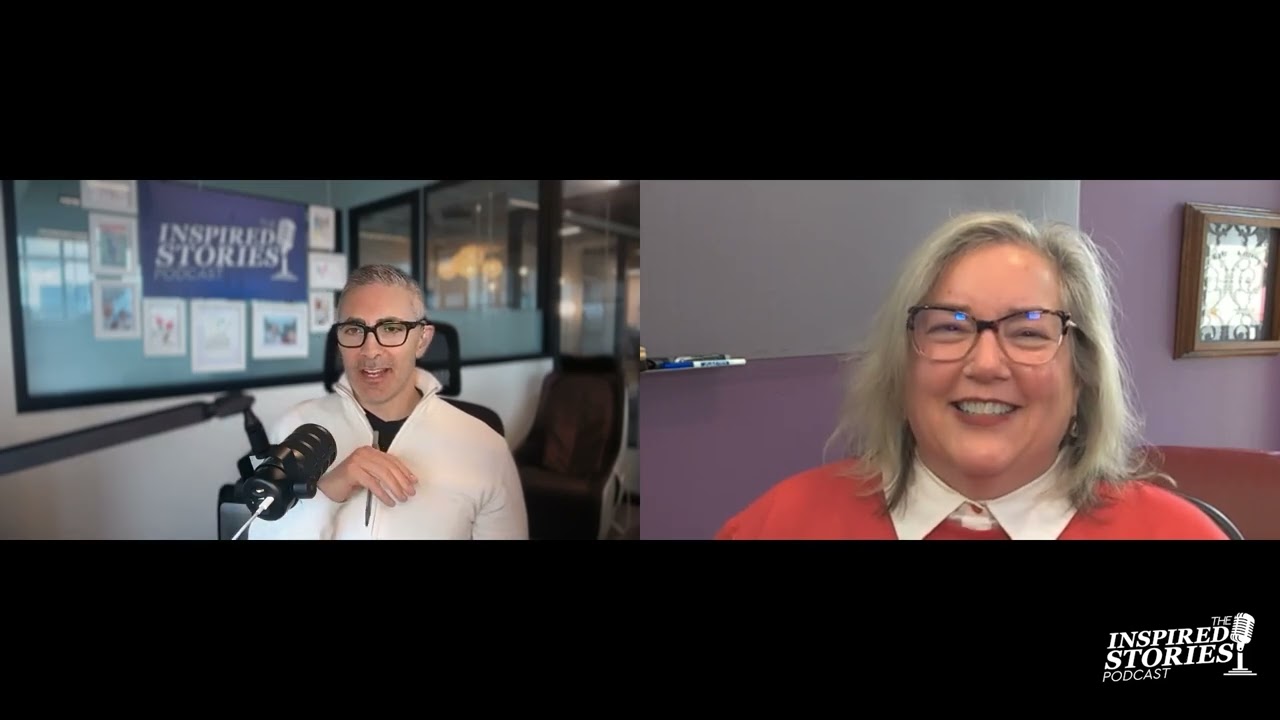
From the Navy to Walmart to Boutique COO: Tina Dao's Mission for Privately Owned Business
Tina Dao, founder and CEO of Liberated Leaders, spent her career scaling organizations from startup to global enterprise, including Fitbit, GetAround, and a 2,800-person platform at Walmart, before building a fractional COO firm dedicated to the privately owned businesses she cares about most. Rooted in her father's entrepreneurial story and a career that began outnumbered 10 to 1 in the US Navy, Tina brings hard-won lessons in culture, trust, and operations to founders who need them.
Key Insights You'll Learn:
Navy career as an electronic technician at 18, one of the first women in the rating
Applying MBA frameworks in real time while working full time in manufacturing operations
Rapid scaling at Amazon Lab 126 and Fitbit: how culture breaks under hockey stick growth
Amazon's leadership principles model: embedding values into every stage of the employee life cycle
GetAround lessons: why trust, once broken at the executive level, often cannot be repaired
Walmart multi-cloud strategy using Azure, GCP, and proprietary data centers
Moving to North Carolina to care for aging parents and the seven-year transition that followed
Three types of COOs and why even a 1,000-person company can have a gap
Gold miner vs. weekend prospector: how owner-operators can build companies that run without them
Exit readiness as daily strategy, not a last-minute event before a sale
Tina's Key Mentors:
Her Father (Serial Entrepreneur): Modeled storytelling, vulnerability, and the cost of building a business too dependent on its owner
US Navy Leadership: Taught objective performance standards, technical excellence, and resilience under skepticism
Amazon Leadership Principles Culture: Showed how values become lived when embedded in hiring, performance, and daily conversation
Kobi Avital (Walmart EVP): Recruited her to drive multi-cloud innovation; modeled visionary leadership at enterprise scale
Her Mother: Demonstrated quiet sacrifice and inspired Tina's commitment to helping business owners build lasting value
Don't miss this conversation about what privately owned businesses need, why most owners are panning for gold instead of mining it, and how one operator is helping change that.
Connect with Tina Dao:
Website: liberatedleaders.com
Transcript Available: Tina Dao on Scaling from Fitbit to Walmart and Then Choosing ‘Small’ on Purpose
Watch on YouTube: Inspired Stories Podcast
Our Website: The Inspired Stories Podcast
Special Thanks to Anthony Codispoti & AddBack Benefits Agency: Providing innovative employee benefits solutions that improve employee well-being while optimizing your bottom line. Website: addbackbenefits.com
Listen to the full episode here
Transcript
Anthony Codispoti (00:01)
Welcome to another edition of the inspired stories podcast where leaders share their experiences so we can learn from their successes and be inspired by how they've overcome adversity. As you listen today, let one idea shape what you do next. My name is Anthony Cotaspodi and today's guest started her career in the U.S. Navy where women were outnumbered 10 to 1. From there, she spent a decade in commercial construction.
What she built from those early years in hard hats and high stakes environments eventually carried her to the executive floors of Fitbit, Get Around, and Walmart's global technology platform, where she led a 2,800 person organization. But the most important move she would ever make was the one she made for her family, not for her career. Her name is Tina Dow. She is the founder and CEO of Liberated Leaders.
a boutique fractional COO firm based in Hickory, North Carolina that helps entrepreneurs scale performance, sharpen their competitive edge, and prepare for smart exits. She holds an MBA from Baker University and has a graduate certificate from MIT Sloan for artificial intelligence, implications for business strategy, and has been recognized as a force of nature and operational leadership across three continents.
Her clients include startup founders, mid-market operators, and executives navigating some of the hardest inflection points of their careers. But before we get into all that good stuff, today's episode is brought to you by my company, Ad Back Benefits Agency. Listen, if you run a business, you're likely stuck in the cycle of rising insurance premiums. You're paying more, but your team is getting less, and many people can't afford coverage at all. So we do things differently.
We offer a solution that provides your employees with unlimited access to doctors, therapists, and prescriptions that's always free for them to use. But here's the part that surprises most people. Unlike every other employee benefit out there, our program puts more money into your company's bank account. As an example, we recently helped a client increase net profits by $900 per employee per year. Results vary, but gains like that can change how a business is valued.
and the consultation is free. Imagine being the advisor that delivers incredible value by introducing this to your clients. See if they qualify today at addbackbenefits.com. All right, back to our guest today, the founder and CEO of Liberated Leaders, Tina Dow. Thanks for making the time to share your story today.
Tina Dao (02:46)
⁓ thank you for having me. And I love what your company does. I see how that makes a big difference for a lot of employees and companies.
Anthony Codispoti (02:56)
I appreciate you saying that, Tina. So let's dive into your story. You started your career as an electronic technician in the US Navy at a time where, as we pointed out in the intro, women were vastly outnumbered. Did you find this to be a challenging environment to work in?
Tina Dao (03:15)
Well, sure. And I just will say, given the environment, I don't think there's been that much difference in the almost 30 years since I've been in, simply because when we look at the numbers, ⁓ women in technology are largely the same, if anything, ⁓ some of it has declined. It's challenging ⁓ because there were assumptions that were made that ⁓ we got special
Anthony Codispoti (03:23)
Okay.
Tina Dao (03:45)
Alright.
consideration for promotions, kind of extra points for being women. We didn't. We had to pass all the same objective criteria that all of our counterparts did. And being very young women, or I was a very young woman at the time, I was 18 right out of high school. You're also navigating being even...
when you go off base or you're out of uniform that the social environment where there are a lot of young men who are swarming around you and how do you navigate ⁓ those environments as well.
Anthony Codispoti (04:34)
Okay. Let's pick one of those. Let's pick the misconception that there were special advantages to being a woman in your position. Thought that, you know, there's some sort of a quota to meet and so you don't have to perform at the same level. How did you break through? How did you deal with those types of perceptions?
Tina Dao (04:58)
Well, first of all, if I heard it, I would jump in and I would say, let's correct the record. You don't have your facts straight. And I would point people to the place where the regulations were if that's part of what they needed.
I also was a little bit on the extreme side. I was really little at the time. was very thin. And when we would go out in the field, I was usually the only woman in my crew, like going out to hangers to do preventative maintenance or troubleshooting on equipment. And the guys with me, whether they were enlisted or civilians who were attached,
they would carry the little tool bag because I would grab the big oscilloscope that weighed more than 50 pounds because I was bound and determined to show that I was meeting the same, that I was exceeding. I was probably a little extreme in that, but I was like, no.
and I can pass all the same physical tests that all the men do at the higher levels. I'm not just hitting the women's requirements for physical standards, I'm hitting the men's. And it proved out taking tests, not only getting through my initial school, but ⁓ to advance you have to pass. ⁓
assessments and you have to and I usually would score at some of those very highest levels. So I would study very hard because I wanted there to be no question about my qualifications.
Anthony Codispoti (06:52)
Okay, so this is, we're uncovering an interesting part of your personality here. So take me back to before the Navy, what drew you into that kind of role? Because even though you're young, know, still kind of learning how the world works, you probably had some sense, maybe a little bit of what it is that you might be going into, and that didn't scare you, right?
Tina Dao (07:16)
Well, that's a great question and thank you. And it ties back to even how I ended up in North Carolina. Ultimately, my dad had been in the Navy. actually, I had always worked a lot, as soon as I could,
do anything in the neighborhood. When I, by the time I was 12 years old, I was buying my own clothes because I was baking for people. It was not W2 work, but I was like a little entrepreneur cleaning people's houses, babysitting, baking, whatever it was that I could ⁓ raise money and earn money. ⁓ And
So by the time I got into high school, I actually had like a 2.0 because I would go take the test, but I wouldn't turn in the homework because I was working, et cetera. So then I really got to be a senior and I'm like, well, there's no scholarship. I'm not going to have any scholarships. My parents...
have a business but they can't really afford to send me to college. What am I going to do? And so that's when I started looking at the military. I chose the Navy because my dad was in the Navy. My grandfather in World War II was in the Navy. And the Navy was the most technically advanced at that point in time.
And so that is why I chose the Navy. When I went over at the time, I keep saying at the time, because I don't exactly know if everything still works this way, but you would take an entrance exam ⁓ for the military. And then ⁓ I grew up in Western Colorado, so we had to go to Denver.
which was the MEPs station. was like the military, the military location where you had a physical, et cetera. And if you passed, then you could do delayed entry because I hadn't graduated high school, but you could ⁓ decide what rating you were gonna have and when you would join. And so you would be part of that delayed entry program. When I called,
So I had been looking at what were the ratings that I thought I was interested in. Like I wanted to do the journalist rating. ⁓ But of course, didn't have that available.
Anthony Codispoti (09:56)
So a rating is basically like
what kind of a role would you step into? And eventually you decided on being an electronic technician.
Tina Dao (10:00)
Yeah, what kind of a job?
Yeah, yeah. So the way that it works is that you, ⁓ that basically the recruiters say, what are the roles we need to fill? What are the open positions we need to fill? What kinds of training people do we need to feed through that training pipeline because of what we need in the field? And then what are people's ⁓ that fit with that? And they give you three options.
So what I had in my mind before I went over, of course, the Navy didn't need those. And so there were none of those things, those positions opened. But ⁓ of the three, electronics technician was one of the things that was offered. And so I was able to go and call my dad. Now the thing with it, it wasn't just a slam dunk because it was a four year enlistment plus a two year extension.
because you have about two years of training. And I was like, that's not, that's not what I was thinking. I wasn't thinking that much. Yeah, that's that's a pretty big commitment. So, but I called my dad and when my dad said, ⁓ that is the most technically advanced. That's the highest enlisted job that exists. I couldn't get that when I went in.
Anthony Codispoti (11:06)
It's not a short commitment.
⁓
Tina Dao (11:30)
And when I was in, women weren't even allowed to do that job. So as soon as he said that, it was it. I'm hooked. I'm hooked.
Anthony Codispoti (11:38)
That that's all you needed to hear. I'm hooked. Yep. Because you
got to do the unlikely. got to do the thing that women weren't allowed to do, supposed to do. I'm going to step into that challenge. Yeah. So you were in the military. You get out of the Navy. You spent 10 years in commercial construction doing similar kind of work, I'm assuming.
Tina Dao (11:51)
Exactly.
No, actually, this is where I started doing, ⁓ well, similar, eventually, I started working in operations, but more in sales operations with a manufacturing company.
I eventually ended up kind of going back to those technology roots because I managed to get myself into a management information system role and automating a lot of the work that I had done in various roles. I worked in sales operations. Then I went into the engineering department and taught myself CAD.
And then I went with an assistant plant manager. So the actual running of the floor then back into sales, sales and operations for like order fulfillment. And so I had this perspective of all these things that we were doing manually ⁓ that we could be more efficient.
and be more effective and more responsive if we use technology to do it. And so I got myself into a management information system role within that company while I was finishing my bachelor's degree and then finishing my master's degree. I worked full time. I went to school at night and I applied those things that I was learning around strategy and ⁓ et cetera.
to the company that I worked for.
Anthony Codispoti (13:51)
Can you pull out a specific example of something that you were learning in higher education that you were able to apply? So a lot of folks, go to college or high school even, and they're like, how am I ever going to actually use this? But you, you're working, you're going to school at the same time, and you're pulling things out that you can apply in real time. What's an example?
Tina Dao (14:13)
Yeah. ⁓ so one example was even my strategic plan. I built a plan for a non-technical company, ⁓ to invest in our infrastructure. That was a three to five year plan and which I was learning in strategic.
like strategic planning class, I was learning ⁓ different components of how do you put together a budget in everything from accounting, right, to ⁓ economics, you don't apply as much, but still I would use evidence from that. ⁓ Sometimes how do you research these things so that I built a business case.
for us to invest. I even had a couple of the plant managers go like, you've gotten more money invested than we ever did. How is this possible? And I'm like, I build a plan. I showed them the return on investment and I keep doing that so that they are seeing it's not just a plan. I'm learning and I know how to execute it and bring everybody along.
in that journey, because I couldn't do it myself. The employees, people had to change the way they would work. They would have to adopt the new technologies. They would have to adapt. And so I've also learned how do you have key performance indicators? And I don't remember exactly which class I was in, but it was like,
in an operations class somewhere.
Anthony Codispoti (16:03)
So you were taking the frameworks
that you were learning from your undergraduate and your master's program and applying them to the roles that you had at the time. And you hit on something key there. ⁓ You have this plan. It's sort of approved by the higher ups. You've got funding for it. But then how do you get the buy-in? How do you get the front line people to actually put the new concept into work?
You mentioned KPIs as one lever that you can pull, right? So, hey, you're going to be judged, you're going to be graded on hitting certain metrics. And that's, you know, if they're promotions or they're raises or, you know, bonuses, whatever are tied to that, that makes a lot of sense. But did you get some pushback from folks anyways, even though you're still
tying the compensation to that, are they like, nah, I'm still not into it.
Tina Dao (17:03)
Change management is actually one thing that I find interesting Anthony is because I talked to a lot of people and I work with us, know, like fractional CFOs and types. A lot of times people think, ⁓ well, we just need to tie it to compensation. And that is the major incentive. Actually,
Anthony Codispoti (17:04)
What do do then?
Tina Dao (17:29)
Even for the most, there are very few people that that is a major incentive for them. That's not the thing. It is what is important to the individual and to the group of people who need to make some kind of a change. There are a lot of people that their incentive, their big incentives are not.
that strongly linked to their compensation or to a promotion. It's their time. Some is their impact with customers. Some people just, it really lights them up to know that they are delighting a customer. And there tends to be people who go into certain kind of functions who...
People are all individuals and certain kind of personality types go into different types of organizations. So the more that you start to understand that, the more you say, what is the actual incentive or what's in it for them for why they want to get on board? Why do they want to put their fingerprints on this and be involved?
Anthony Codispoti (18:45)
And so let's say you got a team of 10 people. Are you having to tailor your messaging differently for each of those 10 folks based on what it is that drives them?
Tina Dao (18:58)
Yes, yes. So you've got the overall basic and then part of what you're doing and as you get into larger and larger change management efforts, obviously one person can't talk to every single one of those people. You build out kind of a team of people who their job, most of the time they work in a particular department.
Right. And they, they can help inform the broader message to make sure that it's, it's a big enough umbrella. It's clear enough, but then they can tailor it to, to the, let's see a group of engineers need to hear a message generally pretty differently than a group of ⁓ marketing folks. Right. So, so you want the message, the messages and everything to be
Anthony Codispoti (19:48)
Mm-hmm.
Tina Dao (19:54)
tailored enough so that they can see themselves in it. And they can be like, ⁓ I can get behind that.
Anthony Codispoti (20:03)
So you think more broadly about what is their role in the company and tailoring the message more to that rather than sort of drilling down into the individual. You may have some differences within like all the sales managers or within all the engineers, but by and large, depending on the role that they're in, that message is going to be received roughly the same. Is that the idea?
Tina Dao (20:29)
Yeah, usually, usually. if you part of developing your human capital, right, developing people who are in roles of management or in roles of authority is developing and helping them to understand how do you have those individual relationships and individual conversations that are meaningful for each person. So, you know,
If I'm doing a change effort and it's gonna impact 300 people, ⁓ right, because a company is 300 people, obviously I'm not gonna be able to have a one-on-one conversation with 300 people. But if you've got a structure and you're helping develop to where the front line managers even are learning how do you have those...
those conversations with people all along the way so that ⁓ they understand what drives that person and how are they motivated across all of their work, not just change efforts. You can help harness those people so that it feels custom to the individual. It can feel custom to them.
Anthony Codispoti (21:51)
Gotcha, that makes a lot of sense. So equip your frontline managers to be able to have those individualized conversations with folks. You, know, sort of driving the bigger project, can't have individual conversations with 300 people, but you can, you know, set those managers up to have those individual conversations. And speaking of 300 person company, let's talk about some of the bigger groups that you worked with. you joined Fitbit, which everybody knows, household name, when it was just a three...
Tina Dao (22:00)
Yes.
Exactly.
Anthony Codispoti (22:19)
100 person pre IPO company, and you were still there when it had grown to nearly 1900 employees and it had gone public. Inside of that environment, what's something that you learned about navigating and being part of really rapid growth like that?
Tina Dao (22:39)
gosh.
I'll say really quickly, before I went to Fitbit, I had been at Amazon and I'd been part of one of their Lab 126, which I joined there when there were 300 people too. And Amazon runs things, ⁓ their new groups or new innovations. They run a lot like a startup, just a very well-funded startup.
Right. ⁓ and we also had rapid growth. was there four years and there were 4,000 people when I left. So, so, ⁓ one of the major things that I took from there and then I saw and, and applied and worked within Fitbit. A lot of times when people go and they start to have rapid growth, that scaling in tech, we always call it hockey stick growth is cause of the graph.
Anthony Codispoti (23:34)
because of the graph, up and to the right.
Tina Dao (23:37)
So you, if you step back and you realize you're bringing in more people from the outside, from their previous backgrounds, their cultural contexts of whatever companies they've been at before, you're bringing in more of them in a year than the people who have been there and who have had the history and hold what was thought to be the culture.
And sometimes you start bringing in, because you are getting referrals, right? You're hunting for talent. So you're getting referrals. A lot of times you start getting people from a particular place that may not share the values and have the kind of culture that the founders.
that the starting crew that like toiled for years before the overnight success imagined and wanted their company to have and all of a sudden they're being overwhelmed by more people coming from these other places. And trying to wrestle with what do we do about this culture?
And culture is not, ⁓ one thing that drives me crazy is a lot of times, and I'm going to say in tech, just because I saw it in tech a lot, tended to kind of be like, yeah, we have free lunches and we have bean bags and we have nap pods. That's our culture. That is not a culture. Those are the benefits. That's part of it. It is one tiny ingredient in the culture.
The culture is how do people interact? How do they communicate? What are the expectations they have for each other? What does it feel like to be in that company? That is what the culture is.
Anthony Codispoti (25:41)
How do you put that into
words or training or communicating that to the new folks that are coming?
Tina Dao (25:48)
Well, that's a great question. So that is one of the things I did learn from Amazon. And I think they do it, at least when I was there, they do it better and more strongly than any place I've, any better place I've ever witnessed. And I've taken some of those principles and put them and, and, ⁓
been able to do it in other companies. Number one is they have clearly defined, they call them leadership principles. A lot of companies call them values. They're very clearly defined and they hire, the entire employee life cycle is measured against those leadership principles.
So when people are being interviewed and they have a very rigorous interview process and methodology, but part of what you're looking for are the technical or the functional skills, but at least half of what you're looking for are the behaviors as measured by those leadership principles.
you know, or values that a company has. And then all the way through the life of being an employee, people's performance evaluations, about 50 % of it is their behaviors.
again, as it's measured against and defined by those leadership principles. And so that is, that is a lot of times people kind of resist like, well, we don't want to put that in writing or, that's just become something on the wall. If all you do is write it down and stick it on a poster and never talk about it again, you're right.
If you incorporate it into daily conversations, into your employee life cycle process, it doesn't, it becomes lived. It becomes something that you have discussions about.
Anthony Codispoti (27:54)
That's helpful. Thank you. So you spend time at Fitbit. You leave to go to get around a car sharing platform. You're VP of employee experience and chief of staff to the CEO. Different kind of company at a different stage. What are you learning there that you're able to apply going forward?
Tina Dao (28:00)
Mm-hmm.
gosh, that was a incredible learning experience and I was there at the beginning of COVID as well. So all of us had a tremendous ⁓ learning curve during that time. So this was a pre-IPO, they had gotten their series D funding.
when I went and then ⁓ before I left, I stayed till they'd gotten their series e-funding round. One of the major things I learned is that the executive team, there were things that had not been dealt with and
we ended up having to exit several of the executive team members. And so that you can't, you can't always save relationships because sometimes they're too far gone. Which is a thing that I didn't, I don't like that idea. I always want to think we can, yeah, no, gosh, no, we can, we can do this.
Anthony Codispoti (29:35)
You resisted that, yeah.
Tina Dao (29:43)
And I learned that when trust breaks down to a certain point, you just can't save those relationships because the cost of lack of trust in those relationships is so high for lots of other people around. So that like, don't let...
Trust.
Get in the ditch.
Anthony Codispoti (30:18)
You think if you had become a part of the organization earlier that there might have been some things you could have done to right the ship or not so sure about.
Tina Dao (30:31)
Potentially, potentially. Because people believed in the idea. They saw there were things that were brilliant. They wanted it to be a good thing. So I think that if there would have been an earlier...
focus on those relationships ⁓ and the trust building, there would have been a chance.
Anthony Codispoti (31:07)
Yeah, and the values, right? If, if trust and doing things transparently had been a bigger part of the values from an early stage, not just words on a wall, but something that were actually talked about and communicated could have also helped at that stage. So then let's talk about you spent some time at Walmart, a little company that we know a little bit about, ⁓ COO and VP of global business operations.
Tina Dao (31:09)
Exactly, exactly.
Yeah.
Absolutely.
Mm-hmm. ⁓
Anthony Codispoti (31:35)
2,800 person global technology platform. This is a different scale than anything most founders will ever see. What did operating at that size and one of the world's biggest companies teach you about how organizations move and what breaks when you get too big?
Tina Dao (31:54)
Well, I think part of it takes a long time to...
make changes a lot of times.
It's more the, ⁓ it's not just the like mechanics of making, making those changes. It is the mindset, right? That the mindset is a really big deal. And part of what I learned there was having, being more patient, right? I had to become much more patient in.
⁓ a lot of the people on my team, they had worked there way longer than I had. So, and I was, I was hired by someone who was a recent recruit. I had worked with him at Fitbit, right? The reason I went there was because he recruited me because I wanted to work with him again. And he's, you know, innovative and, and a visionary, because I never would have thought that I would have.
I would have been at Walmart, but Walmart was making some major changes and doing some hiring to really break into a space that you actually see them doing a lot now in terms of using technology as a competitive advantage. And so part of what I really had to learn was the patience. then one thing I did love about Walmart is that there is this rich history of a founder.
Sam Walton, who he was very innovative and ahead of his time even using technology. So there's these archives of videos and different things that we could tap into to remind people who've been there a really long time that this is part of their DNA. That changing...
adapting is actually part of the DNA of the company.
Anthony Codispoti (34:14)
And so what was it specifically that you guys were working on at the time? You're talking about technology, but in what capacity?
Tina Dao (34:21)
So, I think.
Well, so we were the, ⁓ as the global technology platform, we call it the bottom of the stack, right? The base of the stack. So we had networking, we had the data centers, which Walmart is big enough. It has its own data centers. ⁓ But the major thing that we had in the major kind of big innovation that Kobi Avital, who was the EVP, he was the one who I went to Walmart.
Anthony Codispoti (34:33)
Okay.
Tina Dao (34:54)
to work with again was a multi-cloud solution, which was to have our own data centers use Azure, which is Microsoft's cloud, and GCP, which is Google's cloud, and have all three of those, have ⁓ where we could leverage the strengths for each one that was appropriate for
All those things that were building technology on top of us, what was the most appropriate thing? And then how did they interact with each other for complete solutions? And during the time that he and I were there, that was the major thing that Walmart was able to do. And one of the first, and certainly that scale able to do that.
Anthony Codispoti (35:52)
interesting that you're looking at using three different platforms, right? Walmart had their own data centers, Microsoft's Azure, Google's cloud platform. Obvious understandings why not use Amazon, right? The direct competitor in so many facets. But why the three platforms? Why, if Walmart's building their own tech stack, their own data centers, why not just rely upon that?
Tina Dao (36:05)
Yeah. Yeah.
Well, there's a few reasons. One is all of the technology that's being built for those cloud platforms, right? There's some of the most innovative minds in the world working at Microsoft and at Google. And they have their own ⁓ things that they specialize, pieces that they specialize in. ⁓ Using, having two rather than just one.
outside, it's very expensive to try and house all of that yourself, right? And get all of that kind of innovation and learning because they're getting learning from all of these different customers and clients they have, not just themselves. So they can innovate faster. But having two of them rather than just one, it also gives you from a business perspective, negotiation leverage.
Right, to be able to be like, we're not just picking one other. We've got someone else. if you want to be as in this, as part of this, ⁓ part of Walmart, lots of people want to say that they work with Walmart, that they do business with Walmart.
Anthony Codispoti (37:38)
You got to sharpen
your pencil and you got to show up and do the best work. You got to be reliable.
Tina Dao (37:42)
Exactly. And because of the scale that Walmart has, there are not very many companies that the technologists who are trained to innovate things, there are not very many places that have that kind of scale of things that they need to figure out. And technologists, engineers, they are largely driven by wanting to solve hard problems.
So that whole thing of what is their incentive? Sure, they want to support their family and make good money, but that's not the thing that super lights them up. They want to solve hard problems and build stuff.
Anthony Codispoti (38:27)
So you're going to have to help me with the timeline here, Tina, but I think it was 2019 that you made the decision to move to North Carolina, help take care of your parents. I believe you were still at get around and then at some point later on, you would start liberated leaders, which we'll get to here in a moment. But walk me through that period. What was going on at that time?
Tina Dao (38:50)
Yeah, so in 2019, was at Get Around and my father, who I was very close to, he had COPD, which is a lung disease, and some of it, he'd also had been diagnosed with Parkinson's.
And when I changed over to get around, my husband and I took ⁓ a vacation in between Fitbit and get around. And I was like, let's go, let's go to North Carolina. We need to check in. We lived in San Francisco at the time. Let's go to San Francisco on the way, or I mean to North Carolina on the way.
check in on my dad because he'd been in the hospital earlier that year. ⁓ And when we visited, was just like, I mean, they had a condo, they had a roof over their head, but it just wasn't the kind of environment that my mom was basically becoming a caregiver.
And it was upstairs and he had just been diagnosed with Parkinson's. So we're like, this isn't gonna be a long-term solution. And they didn't have the money to go and buy a new house. So...
So, you know, we just basically said, we can't afford to just buy, own our house in San Francisco and buy something for them. But what would it look like if we moved and I just got like a studio apartment and I was kind of bi-coastal, but we moved and we bought a house where we could move them in, we could take care of them and whatnot. So that's what we did. ⁓
I was planning on just coming to North Carolina a couple times a month on the weekends. My husband would come to San Francisco once or twice a month and we would do that. Then the pandemic hit. was actually in tidbit. I was on a plane to North Carolina when the Bay Area announced the stay at home order. I was on one of the last planes out. ⁓ So because and
I said I would rather be stuck with my husband than away from my husband because we didn't know what things were going to happen. That changed how we were working in general, And during that, in June of 2020 is when I went to Walmart. And a lot of the reason that I did that was also there was so much uncertainty with everything that was happening for the economy now.
I not only was financially responsible for myself and my husband and our dogs, it was my parents and Walmart was certainly much more stable. I didn't like leave get around because I didn't like get around. I got recruited and took that option because it was, it was a more, one, I wanted to work with Kobe and two, ⁓ it was definitely much more stable for my family. ⁓
at that point in time. So now fast forward, in 2022, my father passed away and on that same day was the day that we announced that Kobe, who I went to Walmart to work with, announced his retirement in three months. So.
Thus, lots of things came together and in 2023 is when I started Liberated Leaders.
Anthony Codispoti (42:50)
And what was the idea there? mean, so I get like things had changed, right? Your father, you come back to help take care of had passed. That's a painful transition to take place. The gentleman that you, you know, went to work with at Walmart, he retires, but still a very large, very stable company. Like you could have had a very predictable career or safe or safe paycheck, I should say.
So what was the driving force, the inspiration behind going off and starting your own thing?
Tina Dao (43:25)
Well, there's a little bit of a gap and I'm not gonna say the company's name, but with that, so first of all, there's just a real reality of people at very, very high levels have a number two. ⁓ I could have waited around, but somebody who came in, they were most likely gonna have their own number two, because Coby had his own number two, right? ⁓
Well, I liked Walmart. It wasn't, I like more of the startup-y or smaller. You can make a big impact. can, you can, you can really get things done without having so many people having to sign off on things and that sort of thing. So my inclination is to be more towards smaller. I did go to a really small startup.
⁓ as a COO I within a not too long a period of time the CEO asked me to do something illegal and I was like nope not gonna do it ⁓ and so of course that meant we were we were partying ways and then I was kind of like you know I've been
Anthony Codispoti (44:38)
point.
Tina Dao (44:52)
I've been doing stuff for lots of other people and making a lot of other people a lot of money and all those things for a long time. And I've always had this itch. My dad was a serial entrepreneur. So I didn't come in with some fallacy like, it's going to be easy. And that's why I didn't do that when I was young. ⁓ But I've always had this itch to, I was always an intrapreneur.
Anthony Codispoti (45:10)
You had seen how hard it is.
Tina Dao (45:19)
inside companies and I've always had this itch. So I was like, you know what, I'm going to go and build something. ⁓ And I did, I intent very, I was very intentional. Like I want to be an entrepreneur. I don't want to be a solopreneur. I don't want this to be some kind of like, I'm quasi retired. Like I want to build a company that people want to work with. People want to work for people can.
be proud of being a part of. ⁓ so that thus Liberated Leaders was born.
Anthony Codispoti (45:57)
And so what does Liberator Leaders do and who do you do it for?
Tina Dao (46:02)
So we are a fractional COO firm. So meaning we come in and are essentially embedded with a leadership team if the company is large enough. But we have the kind of experience across the three types of COOs that exist, which I can talk about in a minute. But smaller companies, they can't afford and they don't need.
that kind of horsepower that we can bring, they don't need that full time. And they couldn't afford it full time. So we get the right dose with a lot of experience, a lot of background and everything to help give them that competitive advantage and get through those inflection points. So we work with privately-owned businesses that have between three and a thousand employees.
And we use number of employees rather than revenue because humans are where the complexity lies. And within that range, which is a pretty broad range for a firm like ours, there are really two segments. There's the owner operator. So the business is still dependent on them. Pretty much everyone reports to them. All major decisions come to them. ⁓ But we use this analogy that we
we call ⁓ the hidden gold mine. So there are weekend prospectors and there are gold miners. ⁓ And we've modeled that off of actually the first gold rush. Do you know where the first gold rush started in America, Anthony?
Anthony Codispoti (47:45)
I was guess San Francisco, but that's the obvious answer. So it must not be correct.
Tina Dao (47:50)
No, it's in North Carolina and it was in 1799. So we use this analogy of owner-operators are like weekend prospectors. A lot of times they actually can make a very good living, but as soon as they stop panning for gold, the revenue stops. Where gold miners build an operation, they not only can be gone,
Anthony Codispoti (47:54)
Okay.
Tina Dao (48:19)
and still be ⁓ having revenue coming in, but they are building an operation that someone would pay for and they would buy. So in that range, we have owner operators and then ⁓ small to mid-market CEOs.
Anthony Codispoti (48:35)
So it's interesting that you work with groups all the way up to a thousand employees. I would have assumed that size definitely a requirement for their own internal COO. But tell me what I'm missing there, Tina.
Tina Dao (48:49)
That's it. Anthony does a very good, a lot of times they will, but remember I mentioned that there are three types of COOs and a lot of people don't realize this. think that they're like, what really? So, so there's the type that's operational excellence, which is a lot of times what people think, especially if a company is a manufacturing or logistics rate. These are people who.
No, they know those metrics, those KPIs less times they have lean Six Sigma, they know manufacturing supply chain, etc.
There's also strategic. So this is kind of the classical, someone who's the number two to the CEO. They're taking, how do you take the big, how do you get everyone around the table to be very clear about what is the strategy for the next three to five years? And then it flow through the entire organization to execution for the products and the strategies that have been defined. And you're still checking back.
of are you hitting those things? And then there's a growth type of COO, right? Sometimes they'll have even sales and marketing reporting into them. That's not as much anymore. There's more of this kind of CRO movement, Chief Revenue Officer movement, but that you've got to grow. Not only you're growing your sales, remember that if you've got some kind of hockey stick growth happening,
Everything is have all of your operation, your internal operations are having to be reinvented and adjusted all of the time. So even a thousand person company could have someone who has a title of a COO and could be excellent, but maybe their whole expertise is in being more of like an operational excellence. Maybe they even do a little bit on the strategy piece.
But part of the strategy is to grow and they've never had explosive growth and had to do this across the board ⁓ reinvention. And maybe they wouldn't call us a COO, maybe they would just be like, hey, we're hiring this firm to do this, but they have a gap. They have a gap.
Anthony Codispoti (51:15)
consultant or Yeah. Yeah.
So Tina, in your marketing your communications, you use the phrase success architecture to describe the work. What does that look like in practice when you walk into a business for the first time?
Tina Dao (51:34)
So the reason that we call ourselves success architects is that we believe that you need the creativity of an artist and the precision of an engineer to make a great organization. So creativity of an artist is understanding this uniquely human aspect and the pieces that are really important in creating like a culture and a brand. What does it feel like?
And what is going to move someone, whether it's an internal employee or an external customer, what moves them. And then the precision of an engineer are things like, what is the rhythm of your business? Right? What are the cadences and the things so that people can be marching together and they can have some level of expectation? What's coming next? When do I have to be prepared?
Where are we going to hold ourselves accountable for the things we said we were going to do? Right. So we blend those two things. ⁓ And in an engagement, like when we go in and we start working with an organization, a lot of times one of the first things we want to understand is how do people, how do people, ⁓ what does it feel like for people to work there?
and at all different levels. We have kind of like cultural indexes and stuff that we can use. We do assessments. We have different kinds of tools and assessments that we can use. We also wanna look and see what is, we use some kind of readiness tools and metrics to also try to see what is the value of the business, right? So then we're tying the financials.
and all of these readiness aspects, not only of the owner, but of the people in the company and the four intellectual capitals, which are human, structural, customer, and social. What is the maturity of those things? So what is the value of the business so we can have a baseline to say, all right, collectively, we want to increase the value of this company.
and where are the places we have to go and start working in order to do that.
Anthony Codispoti (54:09)
And when you talk about the value of the company, are you talking about that in terms of preparing it for exit? Because I know that's another thing that you talk about on your website, being able to help clients with.
Tina Dao (54:21)
So it is preparing for exit. And if you have a mindset the entire time you own your company of what is the value, what would someone else pay for my company? You're looking through an outsider's lens. You are going to have better strategy. you are going to, it puts you in the mindset of working on your company rather than in your company.
Right. And so even though we talk about that, you know, we're certified exit planning advisors. ⁓ And part of what I really love that the exit planning Institute talks about is good exit strategy is really just good business strategy. And it takes a team. So even if people are like, no, I have no plan on exiting. That's fine. You still, if you start to see your company
through the lens of what is the value of my company? What would someone else pay for it? You will make better decisions all along the way, which means you're gonna probably start getting higher revenue. You're gonna have higher profits and you're probably gonna have a better life because you're going to be doing things, leadership development and delegation and those things. So you can take a two week or a month vacation.
and the company's still great.
Anthony Codispoti (55:55)
Well, you know, and the other thing that I hear talking to a lot of exit planners, a lot of business owners is that business owners don't think about selling their company until they're actually ready to sell their company. And then then it's, I want to say too late, but you want that that ramp up time to be able to do all that work that you're talking about, right? Because it makes the company more valuable to a buyer.
if the owner is not locked in as the bottleneck for everything.
Tina Dao (56:27)
100%. And part of what we do, you know, when we have like workshops on this and everything, but part of what we do is we say we have people rate themselves in all of those intellectual capitals. But part of what we do is we're like at one fairly low on the scoring scale, you have to prove it. What does proving it look like?
from a financial aspect, think of as a buyer, if you're saying that you do X, Y, Z, if you're saying that you have all these great results and you want a premium, right, or you want to hire multiple, I wanna see that you didn't just write a document three months ago or six months ago. I wanna see that you've actually gone and executed against it. What kind of results did you get?
I want to see three years of history.
Anthony Codispoti (57:27)
Show me it's working. Show me the trajectory of your plan. Yeah.
Tina Dao (57:28)
Show me it's working.
Exactly. Show me that the people that you've had in their seats for five years, you have some evidence to say why you say that they're awesome and that you already have a great leadership team in place who can do this work. What's your evidence of it? You can't do that in six months or 12 months.
I mean, when I talk to business owners, if one of the first things I'm talking to them around their dreams, and if they're saying, I want to sell my business, the next question I ask is, what is your timeline? If they say in the next 12 to 18 months, I have the conversation so that they get some insight.
But then I say, need to introduce you to some brokers because we're not, if you, that your timeline is that short, we're not going to be able to have a meaningful impact for your exit.
Anthony Codispoti (58:30)
nice to have that kind of honest, transparent conversation with them rather than taking their money. you know, know that that's not the right fit for you. And you can't really help them get to where it is that you're capable of getting them to.
Tina Dao (58:34)
Yeah.
Right, right.
We don't do that. That's part of why I'm like, we are really passionate about helping privately owned businesses. And I do have this personal connection to my dad, to my parents, what I saw them go through. if I don't, when I'm talking to a business owner, if I don't see that their dream is big enough,
to when they work with us, they can get a five to 10 X return on their investment. I just say that right up front. And I see who I can connect them with that will help them do what it is that they're trying to achieve. I want them to really be like, my gosh, I have this really big thing that I want to do and I need help getting there.
because we know how to get them there.
Anthony Codispoti (59:43)
Yeah, that's the fit for you. So Tina, I want to shift gears on you. And I wonder if we've hit on this already, but what's one of the hardest things that you've ever had to overcome personally? And what did that teach you?
Tina Dao (59:46)
Yeah.
⁓
I can think of a few, let me share something that's more recent and in the context of all the stuff that we've already talked about so that there's some context there. You probably picked up like my career is really important to me. Being a top, really delivering results has always been really important to me. I had never.
ever been fired in my life.
Over 50, I got fired for the first time in my life. Now, it was because I was standing on principle, but that was still, that was, that was hard.
Anthony Codispoti (1:00:55)
This is when you were asked to do something illegal.
Tina Dao (1:00:58)
Yeah, yeah, that was still like, ⁓ okay, yeah. And so, okay, what am I gonna do? I have this kind of general concept, but I have an insight article that I wrote about my third, about the intermission between acts, right? And that transitions.
take longer than people think. And for me, it ultimately it took about, it's taken about seven years and it started before I realized that I was actually in a transition. It was making the decision to come to North Carolina. But a bunch of stuff happened ⁓ along the way. And it, that messy middle of like, well,
Like I came up with the name of liberated leaders, but I didn't know for sure that we were going to, I didn't just go like liberated leaders and we're to be a fractional COO firm and we're going to right. took ⁓ months to figure out no, it's fractional COO and no, it's it's privately owned businesses. And yeah, this is people. People don't know me in North Carolina, let alone I don't have a professional reputation, which is what most people who start a business like this.
rely on are their previous relationships and their professional reputation. People didn't know me from Adam. So like at first I thought, I had to like tell them like, no, I really know what I'm doing. Look at these cool places I work. Look at my resume. Well, then I realized like, ⁓ that, wasn't actually that, that was intimidating in some ways. then I'm like, well, I have to be like, why do I like
No, no, I really want to work with smaller businesses and I'm capable of that. Like, look, I also have these companies you've never heard of on this resume, right? Haven't always been these huge companies. And then I realized like, there was also some suspicion, like you're from San Francisco and what are you trying to do here? What's, and so then I also realized like, well, I had to tell my story also of
Why are privately owned businesses and those owners important to me? It's because of my dad, because of my mom and the struggle I saw them go through. And the fact that sure, my dad sold his business, but he didn't like in less than 10 years, that business was out of business because it was too dependent on him. And he did not get a big harvest. He ended up being financially dependent on his daughter.
He didn't want that. That was not his dream. Right? And so, like, it's taken, it's been a journey to also be like, I'm going to open up. And, you know, I'm very grateful. I feel like my dad is with me in this business in some ways, because, you know, he passed. He was a storyteller. And he...
And he would use his own stories and his own failings and the things that he did, especially with his grandkids, because he didn't want them. He wanted the people to be able to learn from him, even when that was showing all kinds of flaws and everything. And
My mom and my siblings, my brother and sister, we all know that that was important him. And so they, they have heard me tell the stories. They support it. They, they're like, dad would, dad would want that too. He, he, it's okay for us to say, where have we been weak? Where did we not know what we were doing?
if it's going to help someone else.
Like now I feel much more like this is what we're doing. And I'm still within the first three years of starting a company. There's no guarantee that we're going to survive. There's no guarantees. And I'm putting everything into it because I believe in this.
I believe how important it is for our country actually, that we have a really strong private economy and that those business owners who are the pillars of our community can be competitive.
Anthony Codispoti (1:06:06)
There's so many powerful messages and lessons in that story that you just shared, Tina, you know, the man, those those sticky in between times, those transitions where things are uncertain. You know, you had a foot in something that you were really good in. it's like, well, where am I putting my foot into next? What's that next thing? And, you know, it's one thing to look back when you're settled in the new thing and you can kind of connect those dots and feel good about.
that hard road, but when you're in the hard road or the swamp, as I like to call it, it's an uncomfortable place. It's just filled with uncertainty. And I love that you highlighted, you know, the ability and the importance of talking about the flaws, talking about our imperfections, right? Admitting that I don't know everything and I've made some mistakes. And let's talk about that. So maybe I don't make the same
Tina Dao (1:06:40)
Mm-hmm.
it is.
Anthony Codispoti (1:07:03)
same mistake again. Maybe my kids don't make that same mistake because they have heard the stories and being able to have that level of vulnerability with people I think is incredibly powerful. So I appreciate you sharing that here today.
Tina Dao (1:07:15)
Yeah.
Yeah. You know, it was when I was at Fitbit that I had the real light bulb moment that if there was some kind of behavior or something that I was seeing in another person and it was driving me crazy, there was a really good chance the reason it was driving me crazy is because it was something I didn't like about myself.
And so now I'm quicker to be able to identify. Now I intentionally stop and ask the question. And through those messy times, especially, ⁓ those things, you can, run into those things. Yeah.
Anthony Codispoti (1:08:01)
Yeah. Tina, I've just
got one more question for you today. But before I ask it, I want to do three quick things for the audience. First of all, if you want to get in touch with Tina Dow, go to her website, liberatedleaders.com. You'll find her email, their phone number, how to schedule everything is there on the website to make it easy to get in touch with them liberatedleaders.com. And if you're enjoying our show today, please take a moment to subscribe wherever you're listening.
It also sends a signal that helps others discover our podcast. So thank you for taking a quick moment to do that right now. And as a reminder, you can be the advisor that delivers a huge value add by showing your clients how to give their employees access to therapists, doctors, and prescription meds that counterintuitively actually increases their net profits. Real gains that can change how a business is valued. So contact us today at addbackbenefits.com.
So last question for you, Tina, a year from now, what is one very specific thing that you hope to be celebrating?
Tina Dao (1:09:07)
I hope that we are...
at Liberated Leaders, we are going to be scrambling to ⁓ bring in our success artisans. Those are the people who go and do that fractional COO work. ⁓ We're scrambling to find those right fit people. It'll feel dangerous and scary and it'll be amazing.
Anthony Codispoti (1:09:38)
that
rapid growth that you've been through before. Good stuff. Well, Tina Dow from Liberated Leaders, I want to be the first to thank you for sharing both your time and your story with us today. I really appreciate you being here.
Tina Dao (1:09:40)
Yes. Yes.
Thank you so much for having me. really enjoyed it.
Anthony Codispoti (1:09:53)
Folks, that's a wrap on another episode of the Inspired Stories podcast. Thanks for learning with us. And if one thing stood out, put that into action today.
Connect with Tina Dao:
Website: liberatedleaders.com