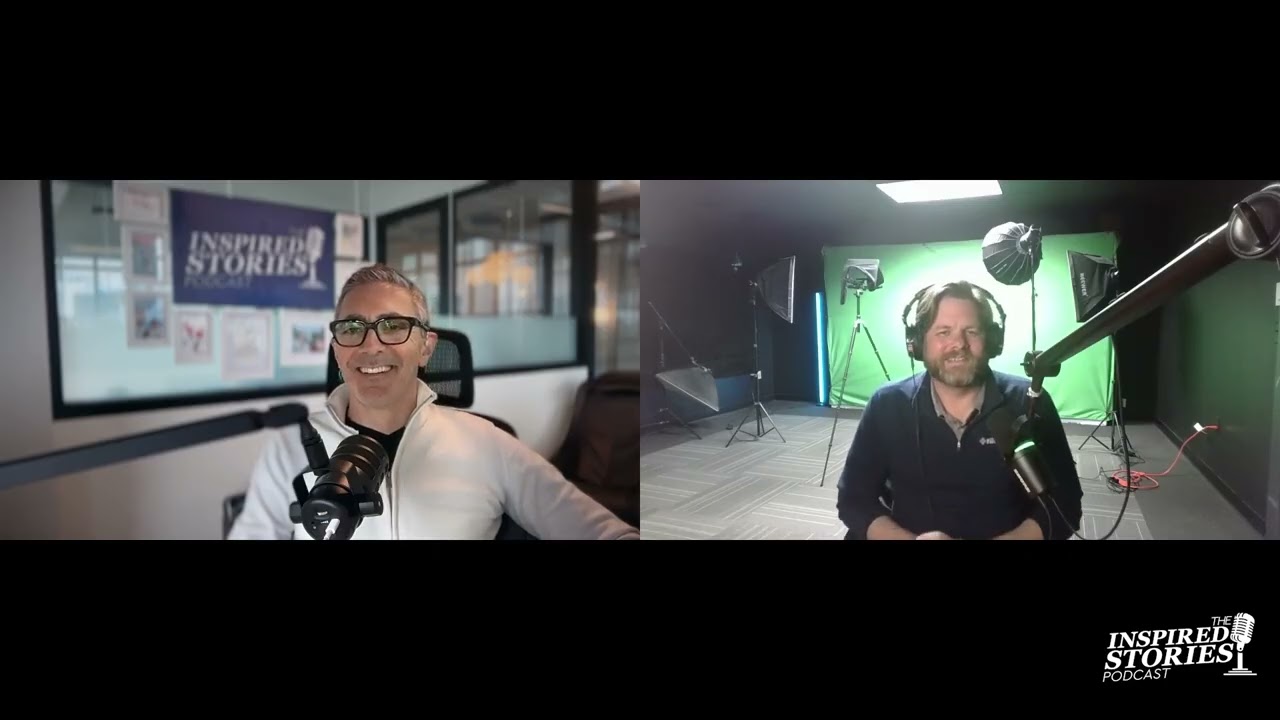
Todd Lucas is the Director of Family Culture at Family Farm and Home, a family-owned rural retail chain that has grown from 19 locations to more than 80 stores across Michigan, Indiana, Ohio, Maryland, and Pennsylvania since he joined in 2012. A former radio DJ turned Menards store manager, Todd came to Family Farm and Home as a district manager, moved through senior buying roles, and was tapped in 2022 to build the company's first-ever training department from scratch — bringing his broadcast background, operations knowledge, and product expertise together in a role that didn't exist before he created it.
✨ Key Insights You'll Learn:
Radio DJ career in the Fox Valley area of Wisconsin before Menards pulled him into full-time retail
Eleven-plus years at Menards across eight locations in Wisconsin, North Dakota, and Michigan, reaching interim store manager by 26
Joining Family Farm and Home in 2012 as store manager first, then district manager four months later, by choice
The average employee age dropped from 53 in March 2020 to 36 in July 2022, creating the product knowledge gap the training department was built to close
Creating Todd Talks: a two-minute video series launched with a deer urine product demo that got 1,800 views from a 1,100-person workforce
80-plus percent of employees watch each Todd Talks episode all the way through without scrubbing
Triple-digit sales increase on a specific insect control product within three weeks of its Todd Talks feature
Service centers as a key competitive differentiator: Family Farm and Home services gas-powered equipment that competitors only sell
4-H involvement: store managers know kids' names and their animals' names, attend county fairs, and watch those projects grow over the year
The Frontline Enablement Playbook by JD Dillon: Todd contributed a chapter covering Todd Talks and the training model
🌟 Todd's Key Mentors:
Menards Store Managers (Early Career): Long-tenured operators who modeled consistency, high standards, and the idea that hard work in a demanding environment would open future doors
Family Farm and Home Owners: Three-owner family who gave Todd the runway to move from operations to buying to training, always finding a meaningful next role
His Trusted Friend at the Company: A sounding board during a bruising career transition who helped Todd process the ego hit and come out of it performing at his best
JD Dillon (Author, Frontline Enablement Playbook): Invited Todd to contribute a chapter and helped him frame the Todd Talks model in the context of frontline workforce development nationally
👉 Don't miss Todd's account of getting sprayed in the face with deer urine to launch a training series that now reaches more employees than the company has people, and how a career pivot he didn't choose became the role he was most qualified to do.
Listen to the full episode here
Transcript
Anthony Codispoti (00:00)
Welcome to another edition of the inspired stories podcast where leaders share their experiences so we can learn from their successes and be inspired by how they've overcome adversity. As you listen today, let one idea shape what you do next. My name is Anthony Cotaspodi and today's guests spent more than 11 years running stores for Menards, a large Midwest home improvement and building materials chain.
before walking into a very different kind of retail world. One where baby chicks show up in the aisles every spring and the person behind the counter knows your farm by name. In his 14 years with the company, he moved from store manager to district manager to senior buyer, earning a ground level education in operations, merchandising and supply chain. Then a role opened up that most retail organizations don't even have.
Director of Family Culture. And he is Todd Lucas, that Director of Family Culture at Family Farm and Home, a family-owned retail chain founded in 2002 that now operates more than 80 stores across Michigan, Indiana, Ohio, Maryland, and Pennsylvania. The company sells everything from livestock feed and fencing to work boots, lawn mowers, and has built a loyal following in rural communities by staying true to its motto.
live, work, and grow. But before we get into all that good stuff...
Today's episode is brought to you by my company, Ad Back Benefits Agency. And you'll want to hear this because it's hurting almost every business you know. Health insurance costs go up every single year and retailers are furious about it. They're paying more, claims are getting denied, employees are opting out because they can't afford it, and it hurts turnover and morale. It's one of the most maddening problems in running a business and everyone just accepts it. But you don't have to anymore.
Now there's a program that gives employees unlimited access to doctors, therapists, and prescriptions with no co-pays or deductibles to meet. And the part that really shocks most people, unlike every other employee benefit out there, our program increases your net profits. We recently helped a client add $900 per employee per year to their bottom line. Results vary, but gains like that can change how a business is valued.
Get your free consultation today at addbackbenefits.com. All right, back to our guest today, the Director of Family Culture at Family Farm and Home, Todd Lucas. Thanks for making the time to share your story today.
Todd Lucas (02:43)
Anthony, thank you so much for having me. I'm very excited to talk to you.
Anthony Codispoti (02:46)
So let's get into it. You spent over 11 years at Menards, which is, for those folks who are not aware, a large Midwest home improvement and building materials chain, including time as a store manager. What did that experience early on teach you about running a retail operation at scale?
Todd Lucas (03:05)
So my time at Menard's was very interesting where, how I got into that.
I went to college for radio, television and film production broadcast. And I was a radio DJ coming out of college thinking that, okay, I'm going to be doing this for a long time. But I needed a little extra money. And so I worked at Menards in the afternoons after my morning show aired and push carts inside. And as I moved up in the, in the company there, they moved me to different departments and they said, you know, we'd really like you to come on full time. I said, I don't want to
that but at the time I did want to make more money so that's how I got into retail and 20 plus years later I'm still in it. ⁓ But working at Menards and running stores specifically you know you'd have up to 300 people that would work there and learning how to manage different personalities, learning how to ⁓ work with customers that was a big thing to learn how to deal with the public on a daily basis and
maintain a standard that the Menards company held which was a very very high standard.
Anthony Codispoti (04:17)
So tell me about the day job that you started with. What were you doing in the broadcast world?
Todd Lucas (04:24)
Well, I was on a morning show in ⁓ Wisconsin in ⁓ the Fox Valley area, so Appleton Green Bay, and it was a rock station. And I was ⁓ one of the morning guys in the morning talking about.
you know, music, beer, sports, whatever, and, uh, you know, coming right out of college, it was a pretty good gig and really fun. I had a good time with it. You do your morning show. You'd get up really early, do the morning show, be out of there usually by about 10, 10 30. And then at night, sometimes you would have, uh, remotes to do at local bars, at, uh, the Packer games, that kind of stuff.
Anthony Codispoti (05:02)
that sounds like a fun time, but not paying the bills as well as the full-time position that you would eventually step into at Menards. So ⁓ we're going to talk about, know, for those folks seeing the video version, you'll see it looks like a little recording studio behind Todd's shoulders there. So we're going to come full circle about how he's able to use some of these broadcast skills and what he's doing today at Family Farm and Home. But before we get there, ⁓
Todd Lucas (05:11)
Yes.
Anthony Codispoti (05:31)
Let's talk a little bit more about what it was you were doing at Menards. You made a point of saying you learned what it was like to work with customers, what it was like to work with employees. Can you think about whether it was a really positive experience, maybe something led by a mentor, or maybe a really challenging experience that you learned a powerful lesson from that you still carry with you today?
Todd Lucas (05:55)
I have a lot of lessons that I've learned from an arts. I mean, I was in my 20s when I started too. So you're pretty impressionable in your 20s, especially in your career.
And, you know, most of my time was spent as a store manager for them and, you know, leading a group of people doing, you know, running different apartments, ⁓ running different jobs, working in the outside yard. And I remember as I was coming up, I had a few really strong mentors. And that was one thing that Menards really had was a lot of their store managers had been with the company a long time and they just did a really good job. ⁓
getting people on board with their culture. And like I said, it was a tough place to work. There was a lot of fear involved as a leader there. You you were pretty worried about somebody coming in from the office or getting a bad report or getting, you know, doing bad at your job or getting a customer angry, that kind of stuff. And so you were kind of living in fear because they ruled with an iron fist, but it worked for them. And I remember
speaking to a store manager when I was a assistant department manager. And he just gave me some really good life advice at the time and said, hey, you know, put your time in here, do your work, help your customers and the world of zero oyster essentially. And, you know, for a young person coming out of college, that was very appealing. And there was a lot of hours involved with Menards. There was a lot of work involved.
But again, when you're younger and you don't have a family yet, that's very easy to put in and very easy to get success from.
Anthony Codispoti (07:42)
And so the comment that the world will be your oyster if you put in your time and your work here was the idea that you could progress inside of Menards or that Menards was a proven training ground that other employees, or employers would look at and say, oh, you've worked there for X number of years in those roles. That tells me that you know your stuff.
Todd Lucas (08:05)
It was definitely internal. They definitely wanted to keep their people internal. And they, they said, Hey, if you know, you're willing to, to work hard in your position and willing to move. was the other thing that at the time, and this is, you know, 12 or 14 years ago was the last time I was with them now. But if you were willing to move, if you could get promoted pretty quick. And, ⁓ at the time of my promotion, I believe I was the second youngest store manager that they, they had ever promoted. And a ⁓
year
later, I was probably the 20th youngest promotion or youngest store manager at the time. They were really having a youth movement at that time, but you know, they took a chance on me at 26 years old to run one of their stores, which was a big deal for them. Well, I started in Oshkosh, Wisconsin, and then I was in Fond du Lac, Wisconsin, ⁓ Appleton, Wisconsin, Green Bay, Wisconsin, Racine, Wisconsin, Lansing, Michigan.
Anthony Codispoti (08:50)
Where did they move you to?
Todd Lucas (09:05)
Eau Claire, Wisconsin, Minot, North Dakota, back to Eau Claire, and then finally Muskegon, Michigan is where I ended up, which is where I am now.
Anthony Codispoti (09:14)
So were you a store manager at each of these different stops? Why not let you stay in one place for very long?
Todd Lucas (09:19)
I was a storm. Sure.
That was a company culture thing. They would bounce you around and they would they would ask you to move and they would ask you to move ⁓ with force sometimes, you know, to really put pressure on you like, hey, we want you. We want you here. And and that, you know, the the pay was good. They really do pay very well. I assume they still do.
as far as retailers go. But I was a store manager starting at the Minot. I was an assistant store manager at a few places, but Minot is where I first started as an interim store manager covering for another gentleman that had health issues and then back and finally ended up in Muskegon.
Anthony Codispoti (10:05)
Okay, so how did the door, how did the opportunity open up at Family Farm and Home in 2012?
Todd Lucas (10:11)
⁓ Great question. as I said, the Menards was a great job for a single guy or even maybe a ⁓
a gentleman with a wife and no kids. So at the time, my wife and I had ⁓ two children and we had our third one on the way. And it was about 65 hours a week you'd put in every other weekend. You would be there starting at 10 a.m. on Friday as a store manager. And you really weren't home until Monday evening. And you would do that every other weekend. And that takes a toll on a young family.
My wife had conversations with me that it's getting to be a lot and she had a job as well. And so we were in a good place financially where in 2012, I was able to leave Menards without any job. didn't have any, you know, thought like, okay, I'm, I'm going to go work for this company now. was like, okay, I'm going to stop. And it was in July and I was, I was planning to take the rest of the year off and a friend of mine had talked to me.
hey you know I met these guys that own this business in town and they've got retail stores in the farm store chain and that you know because you want to talk to them maybe and you know see what's up so I met them I kind of reached out myself and they they gave me they called and they said well I guess we better interview you and then I came in here and and talked to them and that's that's where this started.
Anthony Codispoti (11:48)
Was it a store chain that you were familiar with prior?
Todd Lucas (11:52)
So they had just opened up their ⁓ 19th store here in Muskegon. That was their first one that they had here in town. And so I had been there because we, a Menard store manager, we would go shop all the local competition. so I was like, well, let's go check this store out. And so I had been in there. I knew what they were. And that, but that was it. I didn't know anything else about them.
Anthony Codispoti (12:14)
And so at
the time they were 19 locations and today you are.
Todd Lucas (12:18)
We, as people are listening to this, we will probably have just opened our 81st store in Canton, ⁓ Ohio, pretty close to you.
Anthony Codispoti (12:24)
Wow, that is some significant growth. ⁓
that's actually where I grew up, where in Canton.
Todd Lucas (12:30)
There you go. So we actually
have two stores in Canton, one on the west side, one on the east side. Now this will be the east side store. Definitely.
Anthony Codispoti (12:37)
Okay, fun stuff. I'll have to check it out next time I go visit the family.
So tell us about family farm and home today. What do you provide? Who is the target customer? And what makes it different from other rural retailers?
Todd Lucas (12:52)
Sure, so for people that aren't familiar with us, maybe you're outside the Midwest, I'll relate us closely to a tractor supply store, they're nationwide. So if you are familiar with tractor supply, we carry a lot of the same items that they do, maybe some different brands, and kind of the same model as far as serving the community in ⁓ rural lifestyle communities. ⁓ agricultural feed,
lawn and garden care, pet supplies, those are our three biggest categories.
Anthony Codispoti (13:29)
Okay. And so your typical customer is who? Kind of paint us a picture of the avatar.
Todd Lucas (13:35)
Absolutely. So our typical customer is usually someone with over an acre of land and ⁓
They usually have multiple species of animals. whether that's dog, cat, chickens is our most popular one. So chicken feed is one of our highest categories of sales. We sell baby chicks in the store, as you said, and horses, cows, ducks, know, snakes, everything else. We have a lot of, but they own animals and they are typical homeowners. ages have
you know come down over the years as more people in the generation in their 20s now have grown up and started to buy houses they have started to really get into more animals especially post 2020 we've seen some big booms with animals.
Anthony Codispoti (14:34)
So you came in not as a store manager, a district manager, right? You did.
Todd Lucas (14:39)
I actually came in as a store manager when I
interviewed they were looking for a district manager and I interviewed with the owners and I said.
I had never been a district manager. I'd only been a single unit store manager. And I said, I wouldn't feel very comfortable managing multiple stores if I'd never worked in one. And so they had an opportunity for me to work in the local store here in Muskegon. And I did that for four months. And then I became a district manager right after that.
Anthony Codispoti (15:09)
And looking back, do you think that was a helpful step for you to work in a specific location first before taking over multiple stores?
Todd Lucas (15:18)
I would not have done it any other way. I wanted to know how the store worked, how the company worked, because I would have felt kind of like a fraud, think, talking to those other managers and trying to relate to what they're going through if I'd never done it.
Anthony Codispoti (15:20)
Okay.
And then how big of a step was it for you after those four months to step into the district manager role?
Todd Lucas (15:44)
I felt very confident about it at the time. And one of my stores was going to be a new store. So I was given, you know, a set of stores and they also said, Hey, we're going to open up the store in Cadillac, Michigan. You know, we'd like you to open that up. and so, ⁓ that was a big project. A lot of my time was spent making sure Cadillac opened up the way that we wanted it to. And our stores are a little unique where we don't have the same, ⁓
layout in every store. It kind of depends on the building that we get and so some of our stores are
75,000 square feet. And some of our stores are, I think our smallest store is about 13,000 square feet. So it, uh, back in, back then in 2012, 2013, we didn't even have planet grams at the time. It was just, you would get products in. And I remember talking to my assistant manager at the time, looking at him and saying, well, a big load of product had come in when I first started and said, Hey, what do we do with this? He was like, Oh, I'm just going to put it out here. And said, where do you want to put it? Or how do you know where to put it? He was like, Oh, I'll just figure it
out and he was great he was really wonderful at putting it out and laying it out in the right way but I was like, this is very inefficient.
Anthony Codispoti (16:56)
And did you later on help introduce the idea of planet grams and kind of more structure?
Todd Lucas (17:01)
I did, I had a lot of experience. Again, Menards is very rigid and very structured. And so I was able to, you know, I was working directly for one of the owners. There's, there's three owners in the family and three wonderful guys that I was working directly for one of them who had had an accounting background. And so he was leaning on me quite a bit asking me, you know, how did Menards do this or how would you do this? And so I was able to really,
imply a lot of things that I don't know that they would have seen. Eventually they would have gotten there, but I think I was just able to speed a lot of that up.
Anthony Codispoti (17:41)
So you moved from district manager into product merchandising and then eventually you became a senior buyer. I'm going to assume, or maybe I'm not going to assume, like when was it that you started to have kind of more influence on the plan of grams and the structure and all of that? Was it still as a district manager or was it as you'd moved into some of those product roles?
Todd Lucas (18:01)
I would consult, I would say, quite a bit on...
the planogram process and as we started drawing more, but that was really done more with our merchants. They were the ones building the planograms and again, know, small company, lean company. And so we didn't have a lot of store planning at the time. do now. And, you know, I remember even as a buyer, when I started as a merchant, that I would spend a lot of time in our basement here at the office, laying out planograms to see, know, I'd get product samples and I'd want to see how they fit and how they
go and we would take pictures and send to the store and say, you go, it like this.
Anthony Codispoti (18:40)
Was
it like a very intentional thing that you wanted to go from more of the people management side to the product management side of things?
Todd Lucas (18:50)
So I really enjoyed moving on to that, ⁓ but it wasn't necessarily, ⁓ they wanted me to do that. They had some restructuring that we had done in operations and we had someone had come in from the outside of the company and he was ⁓ kind of doing some things with operations that.
For me, we were kind of like oil and water a little bit. And again, this is kind of the benefit of working for a family owned company is, you know, they called me in and said, hey, you know, how do you feel about coming in to the office and being a buyer? As opposed to, hey, you and this other gentleman are not getting along, so we're just going to get rid of the problem. You know, and I wouldn't say that I was necessarily a problem, but I think that
my lifespan as a district manager probably come close to an end and they found another position for me, which was really nice.
Anthony Codispoti (19:51)
Okay.
Okay. So we talked before when you came in, there was 19 locations. By the time this airs, you'll be at 81. When you grow like that, and that quickly, inevitably things break along the way, and you have to come up with new ways of doing things. Can you think of an example of something that broke and some of the changes that you helped to introduce to allow for more growth?
Todd Lucas (20:24)
So yeah, I would say one of the things that I am really good at is communication. And that probably harkens back to...
being a radio, television, broadcast, production major. And I've just always been good at putting out communication, whether it's video content, written, whatever, that people can understand. we did not have, you our communication was kind of all over the place and it was either not there. It was, we were using email. We were, you know, we were doing all these different things and it was really confusing for the stores. And I knew that coming in.
because I had spent six years out in the stores at the time. And so I worked with a lot of people up at the office to centralize the way that we communicate. And eventually that turned into a different system that I didn't have a part of building, but they saw the need for streamlining that communication. Because communication in a company like this, as you grow, just became so important. we've seen, there's been plenty
of strains over the years. And one thing that I've never wanted to give up is the fact that I don't want people to forget that we're a family owned company. I don't want people to forget that, you know, we're a small company, even though we're probably at the size of what I would consider a medium sized company. And a lot of the work that I do now is designed for that. But even back then as a merchant, I wanted people to remember, hey, you work for a family owned company and you
You're important, your store is important to that community and it's important to the company as well.
Anthony Codispoti (22:10)
more about why it was so important for you to communicate over and over again the family-owned aspect.
Todd Lucas (22:17)
Well, think it's one, you our major competitor is tractor supply and for us to exist.
you know, even back then and in a world in the future with them, we need to differentiate ourselves from them and from other competition. And being a family-owned company, that means something to our customers, our world customers, people that grew up working on their dad's and mom's land, working for their uncle's farm, bale and hay. When they hear, ⁓ this is a family-owned company versus this is a publicly traded company,
company that does shareholder meetings and is billions and billions and billions of dollars, nothing against that. Track Supply runs a really, really great business. But for us to differentiate, we need to play to what our customers want. And that's a family-owned, homegrown business, which is what we are.
Anthony Codispoti (23:17)
So Todd, tell me about the transition that took place from being then on the product side to your current role and what the title even means, Director of Family Culture.
Todd Lucas (23:28)
So I was a buyer from 2018 to 2022.
And in 2020, during COVID, we had fantastic years. Those were crazy years as a merchant, as a store manager, whatever you were at the company, trying to get product on the shelf, trying to get things in the hands of our customers, and having record sales like almost all retailers did. And coming into mid-2022, our owners, to their credit, looked and said,
We had two and a half years of just incredible sales. It didn't matter what we put on the shelf, it was gonna sell. People had a lot of money, people were able to get whatever they wanted. And they know that's when sales started to level off. And we looked at our...
our team, and this is a stat that I do love to share when I ever go out and speak and do other things, is we, in March of 2020, the average age of our employees was 53 years old. In July of 2022, it was 36 years old.
Anthony Codispoti (24:47)
my gosh, we're not talking a difference of a couple of years, a couple of decades.
Todd Lucas (24:49)
No, you're talking generations
difference that we're putting, you know, and these are the people that are on the sales floor. And so think about that. You walk into a farm store and you will have a question about fencing or fertilizer, you know, or a lawnmower part. And you see someone who has some gray in their beard, who looks like they've done that work. You're going to feel very comfortable and you're going to go up to that person and approach them. And most likely they know what they're talking about.
And now you're getting to the point now where you see younger people wearing the, have a blue shirt on, but we wear green shirts in the store, wearing a green shirt. And if you ask them a question and they give you a slight, oh, I don't know. You know, and I think that's where we were at because hiring was tough. You you saw a lot of
⁓ people that were in their fifties, sixties, seventies, kind of leave the workforce during that time. I'm sure you've had plenty of guests that have talked about this and we were no different. saw the same thing and we needed to bring that experience back or at least the idea of that experience back. And so they came to me and said, we need a training department. didn't have one and we'd like you to run it. And I said, okay, let me think about this for a couple of days. And I did.
and kind of came back and said, boy, I would like to build this. And so I kind of developed a plan for what I wanted to do. And they said, yep, let's do it. And we hit the ground running in, I think it was October of 22.
Anthony Codispoti (26:26)
wasn't an area that you had prior experience in. mean, aside from obviously you had managed people for a long time and that in any kind of environment involves employee training, but this was a more organized and more structured and more ⁓ one to many kind of ⁓ distribution channel. Am I right in thinking that this was a bit of a stretch for the skills that you had?
Todd Lucas (26:54)
Absolutely, yeah, they should have not hired me to do this job. Yeah, I mean, I have always been a trainer. I have always been someone that wants to wants to train the people that are working for me. spending that time was very important to me to get them, you know, going in their job.
Anthony Codispoti (26:56)
⁓ I wasn't trying to go that far with it.
Todd Lucas (27:20)
So I thought, okay, I can duplicate this or replicate this and send it out. Like you said, the one too many. And, know, one of the things that I had said to the owners and we still have this rule today is the training that we put out, ⁓ with very few exceptions. want to be video content. I want it to be something that they can see and hear and not have to rely on. Okay. Here's a four page PDF, read this and move on. think that, think that's
waste of time. I think that ⁓ we're in an era that people are not going to do that. ⁓ You know, now we're getting in an era with AI where maybe they would click on it and say, summarize this for me. And maybe we can go, we can go down that rabbit hole, which we are now. But I wanted to produce content that fit in our culture, that fit with our company, that made sense for us and for our people and would give them tools. So when.
customer came in, they would be confident in that. And so we developed our internal content, we launched a learning management system, which we had not had in the past. And we hit the ground running in, it was actually in 24, in January of 24, we launched the learning management system.
Anthony Codispoti (28:40)
And did you feel like like how did you get yourself started? Like was there a structure that you borrowed from somebody else? Did you have a mentor or somebody or were you just kind of making it up as you went along, made a bunch of mistakes and just figured out what was working and what didn't?
Todd Lucas (28:56)
Yeah, so when they told me go, and very thankful they were able to, they did that.
But I felt a lot of pressure thinking, am I going to do here? So I grabbed ⁓ the sporting goods merchant who, when I was a senior buyer, he reported to me and I said, it was in the fall. It was in October of that year when we started. And I said, Hey, let's go make a video on deer urine. And so that's something that for those people that don't know, if you are a deer hunter, you need deer urine to draw deer into your area. And it's called doe.
Anthony Codispoti (29:35)
it helps
Todd Lucas (29:35)
estrus.
Anthony Codispoti (29:35)
to mask your like the human sense or it goes even beyond that.
Todd Lucas (29:40)
There is something you can put on yourself but there's things you can put out in the woods, know, where your tree stands, where your trails are. And so we sell a lot of that and it's just one of those things that a lot of people don't know a lot about. And I said let's go do a video on this.
So I had my cell phone, he's like, what are we gonna shoot? I said, we're gonna shoot on this cell phone. And so I grabbed someone from the store, we shot it on our way out.
I said to him, said, Hey, go, what if we talk about the features, benefits of this product quick? And then what if I got, what if you like accidentally sprayed me in the face with deer urine? And he said, you do not want to be spraying the face with deer urine. was like, yeah, I go, but people will remember that and they will tell other people in the store, Hey, you've to go watch this.
And so he goes, okay, so we went out and one take he got me in the face with the deer urine and it was gross. And I overact a little bit, but we finished this video. It's like two minutes long and put it out. I just put it out through our communication channel. There was, didn't have a learning management system at the time. And I said, let's just put it out see what happens. So then the gentleman that works here that is our admin for that, I remember asking him, Hey, how many people?
watch that and he he looks it up and he said, well, it's got 1800 views. Like, you know, he might go, do mean views? And he said, well, it's 18. This is, you know, the four or five days later. And he said, 1800 times it's been watched. And I'm like, we only, we only have 1100 people that work for us. So we were getting more views than we had people. And we, we called this Todd talks is what we called the show. think our director of marketing and I were talking and she said, you should just call it Todd talks.
Anthony Codispoti (31:20)
Ha ha ha ha.
Todd Lucas (31:31)
And so we did a little intro outro for it. And, so still today we produce these Todd talk videos that are full of really good information. And then also me getting in trouble and, know, doing foolish things and having other team members come alongside me and say, well, you know, maybe you should look, do this this way. correct, correct.
Anthony Codispoti (31:51)
You're the bumbling host that needs the the
smart employees to come and correct you and get you to do an entry. ⁓ So I got to ask the spraying of the deer urine. Was it the actual deer urine? Or did you like, hey, let's use some apple juice. Nobody will know the difference.
Todd Lucas (31:58)
it comes very natural.
Well, I'll send you a link to the video and you tell me if you think it's real or not. See how good of an actor I was.
Anthony Codispoti (32:18)
I mean, you
give new meaning to taking one for the team.
Todd Lucas (32:24)
So
I get in trouble, I get hurt, I eat, which that, I eat dog food, eat horse feed, ⁓ yeah, and yeah, it's... ⁓
Anthony Codispoti (32:38)
And are these videos just all internal or do these go external like other folks can go on YouTube and see you doing these ridiculous things?
Todd Lucas (32:46)
We have only put them internally. I do have them in a private, or I do have them on YouTube, but it's not public right now. I may turn them on one day, we'll see. I think we've got close to 100 episodes.
Anthony Codispoti (33:02)
So the bigger purpose of all of this, and thank you for sharing the funny story, is you want an entertaining way to get your employees to watch these videos so that they can learn more about the products and then be better equipped to explain things to the customers when they come in and ask questions.
Todd Lucas (33:19)
Exactly. I want them to want to watch the next episode. We treat it. And this is not the only training content we do. This is just one of many different methods we do. But we, you know, I want them to look forward to the next episode. want them to think about like kind of the old when I was a kid, you know, I watched Seinfeld and I remember, you know, and I'm not equating Todd talks to Seinfeld, but I remember by Tuesday, I was thinking, I wonder what Seinfeld is going to be like on Thursday.
I want them to start anticipating that stuff because that is where you're really getting good information to them, but they are also wanting to get there too. They're not just turning it on. And we still see that. Now that we have a learning management system and it's all through that, I can tell you the average amount of time that everybody watches every episode. I can see that by the user and 80 some percent of the people watch it all the way through. They don't scrub through.
Anthony Codispoti (34:17)
Wow.
Todd Lucas (34:19)
they don't fast forward, they watch all the entire edit and they're usually five minutes so we're not taking up a lot of time.
Anthony Codispoti (34:27)
that's amazing. Yeah, I was going to ask if you had any data. That data is great. But I wonder, I think this is hard. Is there any way to measure the impact of that training?
Todd Lucas (34:41)
Mm-hmm.
So we, have tracked a few things just for curiosity sake and we, there's a product called Bifenthrin, which is an insect control concentrate. And it's a, it's an amazing product. It works great. It's very safe, but it's a really effective product. And so we did a Todd Talks on that. And I said, okay, I'm going to watch in it. We released it at the time when you would want to use this product as well in the summertime. And I said, I'm just going to watch.
sales on this. So we put that out and over immediately over the next three weeks that product had a triple digit increase in sales and and it's something that a customer is not going to know what this is on their own.
you you need to be asking a team member, hey, I've got tons of mosquitoes in my backyard. And then they need to grab that product and show it to the customer. It's just not something that is marketed. You know, they think they're going to go and just get a fogger or something along those lines, but this product is so much better. So, you know, we, you know,
We train on some of those things periodically because as you know, we have turnover and we just need new, you know, new eyes on it. But we do, we have seen some really big increases in instances like that.
Anthony Codispoti (36:00)
Do you ever have vendors come to you and specifically ask, hey Todd, can you make one of those silly videos for our product? This is our busy season. Yeah, okay.
Todd Lucas (36:08)
All the time. All the time. Yep.
And we've done it for a lot and it works really well. And I usually tell them upfront, I show them a few episodes because we have some really big vendors and I don't want them...
to be upset or feel like, oh, I didn't want it to be that goofy. So I always talk to them in advance because the smaller vendors are fine, but it's the real big vendors I'm always cautious of. But most every vendor has really been on board.
Anthony Codispoti (36:42)
You mentioned that you have other ways of delivering training. Can you tell us about those?
Todd Lucas (36:46)
So behind us, this is the studio that we built here. We do a lot of training that on bigger categories that we call evergreen training where.
we want to talk about our biggest categories. know, ag feed, hard ag products, pet, lawn and garden. And what we'll do is we'll usually have, we'll write a script. They'll record that here behind me and against the green screen. And then I will go out in the stores and film B-roll for over the top. So that as they're talking about, you know, and not necessarily even in the stores too, like if we're talking about a lawn fertilizer or a pond dye, then we're showing.
what that product does to try to explain to the team member, hey, this is what this is going to do for your customers so you can explain that to them.
Anthony Codispoti (37:36)
How are you using AI in all of this?
Todd Lucas (37:39)
We are just starting to use it a little more. One of the things that I hate to do is write scripts. I hate writing scripts and it is such a chore for me. But I will throw it into AI once in a while to see what it'll spit out because sometimes you get writer's block and you just don't know where to go with it. So you throw that in there just to get a different perspective and then I can clean it up and make it a little more family farm and home.
So that's how I use it, but throughout the company we've got several different departments that are using AI for different things between accounting, IT, even our merchants are using it for some things.
Anthony Codispoti (38:22)
The company's motto, Todd, is live, work and grow. wonder if you can describe a moment where you saw that show up in a store in a way that maybe you weren't expecting.
Todd Lucas (38:39)
that's a good question. So you see it all the time with, I've been with the company a long time now and a lot of the people that are running stores for us now, I saw as part-time people at one time. when I...
visiting stores, which I try to do as much as I can. And when we bring our store managers together to see those people that...
grew up, you know, started, you know, just stacking feet at night in high school or running a cashier in high school. And now they're running one of our stores. That's what makes those three words pop off the wall to me. Like I always say that, you know, we've got our mission statement and our values on the wall. But, you know, those every company has that right. And I want those words to pop off the wall through the people that are on the sales floor working with our customers. I want, you know, that
that mission statement and that live work grow to just be alive with them. And I see that with those people that are running those stores now that started with us not knowing that this is where they were going to end up.
Anthony Codispoti (39:52)
That's really cool. So kind of like Menard, you guys have a big emphasis on wanting to promote from within, really develop the employees that you have, be able to help them on to new career opportunities with Family Farms.
Todd Lucas (40:09)
Absolutely, as many homegrown people as we can get, we want. And that was, ⁓ coming out of COVID, that was something where you were just...
Anybody from anywhere. Okay, great. If you worked here, great. You worked in retail, great. And we've, you we saw a lot of attrition through that. ever since I'd say 22, 23, we've really shifted our focus to how do we develop our people more. Our operations leadership team is really on board with this. They've developed a lot of different programs to grow. Those people that are in, you know, leadership roles underneath the store manager and assistant store manager and get those
people feeling confident so that they can run their own stores someday, hopefully.
Anthony Codispoti (40:56)
So
that development of your personnel is obviously a huge part of what I'm going to ask about here. But I wonder what else that you guys have tried and found success with when it comes to recruiting and then retaining good folks.
Todd Lucas (41:14)
I think my role in that, I'll speak to my role, there's a lot of things that the HR department does, but my role in that, Todd Talks I think helps with that, honestly. I think people like working for a company that is willing to have fun with something that maybe is not always fun when it comes to product training and operational training. I think that...
again, promoting and marketing to our people inside as well, that we're a family-owned company. And as we get bigger, every company, mean, Menards was a family, is a family-owned company. Now it was, they are a family-owned company. And you didn't forget that. You you remembered that you were working for John Menard, whether you enjoyed that or not, I don't know, but people knew that they were working for him. And I want our people to remember that they're working for a family that's working hard for
them and that we care about them and building that connection from our corporate office to our stores, which are frontline people. And that's the people that I work for. I mean, that's what I always say that I'm working for them. And when I'm doing building content, when I am writing questions for training, when we're doing some promotional video stuff, I'm thinking about, ⁓ will they get something out of this? Will they appreciate
this?
Will they want to watch something like this again? And how does that help them, you know, in their career?
Anthony Codispoti (42:49)
Todd, Family Farm and Home has built a lot of really strong ties to groups like 4-H and other youth agricultural programs. Can you tell me what this connection or what this investment actually looks like on the ground? How is it good for them? How is it good for you guys?
Todd Lucas (43:09)
We see 4H Kids as our future customers.
And we take that very seriously. And I do think that that is something that separates us a little bit from competition is we spend time with those kids on their fair projects and then at the actual fair. me personally, I love going to county fairs. And when I was a district manager, I went to every single one that was in my district. I still go to three or four a year doing this last year, we were able to film a
video ⁓ in the ⁓ up in Big Rapids, Michigan, at the fair talking to some of the kids that showed animals talking to our store manager and just something that I felt really captured ⁓ our culture within the communities within the fair. you know, I want and I know our company does we want our store managers to be seen in the community outside of the store walls. We want people to know, ⁓ okay, family from in home is here at this event. Like this is important to us.
and we're glad that it's important to family farm and home as well. And our 4-H program is something that I love. I love that kids come in in December or January when their animals are born and they start getting their supplies for that and they continue to come in and our store managers know those kids' names, they know the names of their animal and then they go to the fair to get to see what that kid worked on for half a year or full year. And it's beautiful.
I mean, I grew up out in farm country in Wisconsin and I've been to county fairs my whole life and it's something very ⁓ nostalgic, romantic about county fairs to me.
Anthony Codispoti (44:55)
That's cool. You know, as I'm thinking about your path, Todd, it strikes me that what you're doing now is sort of this perfect storm of all your different skills and backgrounds coming together. had the broadcast background, you had the background in store operations, managing people, knowing what it's like to train folks in sort of a little bit smaller settings.
And then you have the experience on the product side. And it's just like, without all of those things coming together, feels like this would be a bit more of a stretch for you. But it does feel like this is really sort of the perfect confluence of all these different roles coming together.
Todd Lucas (45:43)
Isn't it strange how ⁓ God does that with us and puts us in positions to be successful maybe 15 years later, in this case, 25 years later? Yeah, I'm very thankful for the opportunities that I've had in my career and outside my career. And I've really not had a lot of frustration in my career, I don't think. I've never been one that is
Anthony Codispoti (45:46)
Ha ha.
Todd Lucas (46:12)
had a lot of aspirations where I want to be a CEO of a company this size, or I want to be a president, or I want to do this. I'm very much more, okay, how do I do this really well? And then we'll see what's next. And to do this job, did feel...
I've never really thought about it until you asked that I think is when I felt very qualified to do this job when I knew I was probably not qualified to do this job.
Anthony Codispoti (46:46)
That's funny. ⁓ Where do you want to take this role? Like, I hear what you're saying, like, I want to focus on doing this just as well as I possibly can. And, you know, we'll see what comes after this. What other visions do you have for the kind of work that you're doing?
Todd Lucas (47:03)
You know, we just recently, we're bringing in an intern. It's funny you mentioned that and we've never, we haven't done an intern before and I could use some help. So you are looking at our entire training department on the screen right now. And ⁓ yeah, that's, that's right. And so this summer we're going to bring in an intern and we just hired this, this young guy and very excited about him and cause he's going to be able to take some work off my plate. But
Anthony Codispoti (47:18)
But I just see you, Todd. Where's everybody else? They hiding in the background.
Todd Lucas (47:31)
He was very impressive and I interviewed him with a couple of gals from marketing. We're going to share him this summer. I said, you this is someone that, you know, you're supposed to hire your replacement, right?
and you should be doing that. You should constantly be looking and when if you're in a position to hire, you should be constantly hiring people that are smarter than you. You know, look to hire someone that could do your job someday. And that's something that when I was hiring, you know, store managers, I was like, OK, can this person be a district manager, you know, and take my job someday? And I think that's important as a leader that you need to do that. not saying that
I'm
not going to be doing this in a year. probably will be doing this job in a year, but looking forward, this job is still so new for us. really, you know, how do I influence, how do I take some, maybe some work off my plate that I'm doing right now and be able to use that bandwidth to influence more divisions of the company, being able to do more for more divisions of the company and just support the company. I I want this company to succeed and I
them to continue to be successful. Next year is our 25th anniversary and we're planning for that now. We're very excited about that milestone. We want to make sure that we don't gloss over it, that we really press into it, that we celebrate it, that we use that to market to our customers, that they're able to help us celebrate. But that's a big deal. mean a company to go 25 years in retail in 2026 is not always heard of.
Anthony Codispoti (49:16)
Well, and especially with the growth curve that you guys have been on. And to your point, retail has changed a lot in the last decade. It's changed a lot in the last six or seven years. there anything, is there a pressure, is there something that keeps you up at night thinking about your role in all of this?
Todd Lucas (49:37)
Yeah, Amazon, Chewy.com. My wife and I take a lot of walks and she's from Alabama, so only in the summertime, but she doesn't like the cold Midwest, but we take a lot of walks around town and it's hard to not see a Amazon box or a Chewy.com or some other delivery sitting on every other door's porch.
And when I see that, really...
emphasizes the need for community involvement, for great service, for we offer something we haven't talked about yet. We offer ⁓ service centers that are at our company. And so if you have gas powered equipment, lawn mowers, chainsaws, ⁓ UTVs, we sell a lot of those. We service all those products and our service centers are second to none. the guys that run our service centers are fantastic.
are passionate about the business. They will fix just about anything and they will do it quickly and their customer service is out of this world. And that is something that none of our competition has. do not have, they are our chain competition, know, TrackSupply, Menards, Lowe's, all those companies that sell a bunch of lawnmowers. They have to send their lawnmowers to us if something breaks. And, you know, we lean into that as much as we can. And our customers
Anthony Codispoti (51:07)
Yeah.
Todd Lucas (51:12)
appreciate that when you you're in our store and you're looking at a lawnmower I want to be able to give you the peace of mind say hey if something does go wrong with this you come and bring it to me and we'll take care of you.
Anthony Codispoti (51:25)
Do you guys do any kind of e-commerce, any sort of buy online, pick up in store, any of that available through you guys?
Todd Lucas (51:32)
We do buy online, pick up in store and that is doubled, I believe. Don't quote me on that, but I think we've doubled the last few years, but it's a pretty low amount. ⁓ I think we're happy with the production we get out of it, but we're looking forward into the future. What does that look like? We know that this is going to be more important and that eventually being able to do ship direct to customer, endless aisle, that kind of stuff.
Anthony Codispoti (52:00)
What's Endless Isle?
Todd Lucas (52:02)
where you are looking for a product and you can't find it in the store but you look it up on familyfarminhome.com and you can see it on there and get it shipped to you. So you work with your vendors to be able to ship that product direct. you know we've got 22,000 SKUs in the store but really we have you know half a million SKUs available because we have this set up on our website.
Anthony Codispoti (52:27)
through your vendor partners. Got
it. I'm gonna shift gears now, Todd. What's the hardest thing you've ever had to overcome personally and what did that teach you?
Todd Lucas (52:39)
That's a girl, you're springing that one on me. All right, all right, let's see. I would say, so I had mentioned earlier that when I moved into the office to be a merchant, that was not necessarily my choice. ⁓ And I'd always been in operations. I had never been asked in my career to, you know, I wouldn't say it as take a step back.
you know, I have a demotion or anything like that, but I was being asked to not do what I was doing. And and I felt candidly, I felt like I was right and and that what I you know, my position was correct. And it that bruised my ego quite a bit, which happens to us. Right. And.
I was excited about the opportunity to be a merchant, but I was still upset. think it was just hard on me as a professional and as a man and as honestly it probably bled into as a husband, as a father. And it was tough to overcome.
You know, you're a Midwest guy. I'm a Midwest guy. We tend to swallow our feelings quite a bit. And I would if anyone's listening to this and hears that and says, well, yeah, you know, I've had that and I've done that. ⁓ Find someone to talk to. That's one thing that I found a friend of mine here at the at the company. And, know, we became sounding boards for each other and still are to this day. And and that was something that he really helped me through that.
And I was willing to talk to him about this stuff and you know what I was feeling ⁓
And that helped a lot and it helped me continue to succeed. Cause one thing you don't want to do is have those bad feelings carry over into another position or another spot and you can't do your job to the best of your ability. And that, that really helped me be able to get over that and be like, okay, I do this now. And, I, and I did it really well. I felt, I really felt like I was a, I was a good merchant.
Anthony Codispoti (55:02)
I'm so glad that you shared this ⁓ because you're right. This is so common amongst people, men, women, any part of the country where, right, we get our ego bruised and we don't want to talk about it because that makes us feel even worse, right, when our ego has already taken a ding. And then it just festers, right? Just it creates this little infection inside of you and it's not going away.
You feel like you got to hold this in and like, you know, pretend to be strong on the outside. But it's not doing you any favors. And when you finally let it out, you've got this sounding board, this front of the company that, you've got the safe human connection with, which is so important. You know, now it just maybe you're not fixing the problem, right? You're not undoing the the ego bruise that happened, but you're not holding it inside anymore. So it's not carrying that same weight.
Right, you're releasing it. It's like this little release valve. get to let the pressure of it out. I see you nodding your head.
Todd Lucas (56:02)
Absolutely.
It is amazing how quickly that weight comes off your shoulders by just being able to speak about it instead of think about it and say I can deal with this on my own. I can get rid of this and some things maybe but a lot of things, you know, like you said, we need that human connection. We need to have a trusted outlet for that.
Anthony Codispoti (56:31)
And then, you know, going through that allowed you to become happier and more settled with your new role, to become great at doing that. And I'm going to guess it spilled over into areas that you, you know, it sounded like you were struggling with it, you know, becoming a better husband, a better father again, kind of going back to who you were before.
Todd Lucas (56:52)
100%. I'm a father of four daughters and you need to be on your game to do that. And I wouldn't say I'm always on my game, but I think a really quality work-life balance, which this company has offered me, has really done a lot of wonders for my ability as a father and a husband as well.
Anthony Codispoti (57:16)
As you think about the work that you're doing now, Todd, what do you most want to be remembered for?
Todd Lucas (57:24)
I am not a legacy guy. I will tell you this though, you want to be remembered. And I'll explain that.
A while back, I was at the gym and I hate the gym, the way. My wife likes the gym and so she gets me to go with her and so I was with her and a guy that used to work for me at Menards came up, a really nice guy and I'm talking to him and I don't have a long memory either for this stuff. And so he was talking to me for a while, hey, how you doing? Good to see you, blah, blah.
said, hey, by the way, thanks for what you did for me back in Menards. And I did not remember what he was talking about. And I said, absolutely. You know what? No problem. You know, trying to pretend like I knew what he was talking about. And he said, you remembered you fired me, right? And I said, ⁓ OK. And then I did remember. And I said, I do remember. it really wasn't.
He had gotten into some trouble with the law and he had to spend some time in jail. Menard just had a policy where after three days, if you didn't show up, the system would just kicked you out and you were fired. He got back and I said, Nate, I had to let you go. I remember taking him in the commerce room and saying, hey, man, this is not going to
fine you, you you're going to be fine. And, you know, we got to work through this current situation and then you'll come out better on the other side. And I do remember having this conversation because I had it with a lot of people, unfortunately, over the years. And ⁓ he told me, he said that conversation was allowed me to get through that. I, for whatever reason, I felt confident I could do it. And now the job that I'm working is like my dream job.
And I was like, wow, that's amazing. That's so great. So when you ask that, you know, I don't want my name on things. Like I don't want, you know, like a picture on the wall that says, you know, Todd Lucas worked here from this time to this time. I would much rather have stories like that that people have where they remember something I did for them or just something that they saw in me that they saw as a positive.
Anthony Codispoti (1:00:02)
I love that. I've just got one more question for you today, Todd. Before I ask it, I want to do three quick things for the audience. First of all, anybody who wants to learn more about the store, see what they do, do the buy online pick up in store family farm and home dot com. It's the name of the company. Family Farm and Home Dotcom couldn't be any easier. And I will also include Todd Lucas's LinkedIn profile in the show notes.
⁓ And I lied actually I've got two questions I want to ask before I get through the other things for the audience I wanted to hear a little bit more about the book chapter that you worked on tell us about the book and the chapter that you did
Todd Lucas (1:00:43)
yeah, so I was ⁓ invited to write a chapter for JD Dillon's book, the Frontline Enablement Playbook. And this is a book that is directed towards frontline workers across all industries. So obviously retail workers, nurses, ⁓ police construction workers, the people that are getting things done for companies.
is what this book is about. And this book is about how to engage these people, how to ⁓ maximize them, how to build them up so that they can do what they want to do in their careers and with your company. I would add to anybody that's listening that is a leader that has frontline people, I would really recommend, you know, checking out the frontline enablement playbook. And I have one chapter in there. It's a great book. I just have one small chapter. But we do talk about ⁓ Todd talks and
we built that and we've got a few more stories in there about that. ⁓ boy, I couldn't tell you. Yeah, think it's, yeah, buy the book and find out. My story's in there, but there's a lot of great stories in there. I've just recently read...
Anthony Codispoti (1:01:47)
What's the name of your chapter?
Not sure. Okay. Buy the book and find out.
Okay, great. Glad we hit that. So the other two things I had for the audience that, hey, if you're enjoying the show today, please take a moment to subscribe wherever you're listening. It will also send a signal that helps others discover our podcast. So thank you for taking a quick moment to do that right now. And as a reminder, you can finally get your retail employees access to therapists, doctors and prescription meds that counter intuitively actually increases your company's net profits. No copays.
no deductibles, and net profit increases that change how a business is valued. Would you like happier employees and a stronger bottom line? Reach out to us, addbackbenefits.com. So last question for you, Todd, a year from now, what is one very specific thing that you hope to be celebrated?
Todd Lucas (1:02:49)
Well, easy answer. We are gonna be celebrating our 20th anniversary and so I'm excited for that. With Family Farms and Homes 25th anniversary, we've got a lot of plans for that. But I would say for me personally, I would like to... ⁓
I would just like to celebrate some changes maybe in my life. I've got a daughter that's going to college this fall. That's our first daughter. I've got kids that are growing up. And I would like to be able to look back a year from now and see that I am progressed, that I am in a better place ⁓ than I am today. And I'm in a great place today, but we can always do better, right?
So I would love to see just progression with my family first and obviously then with my company.
Anthony Codispoti (1:03:44)
Love that. Todd Lucas from Family Farm and Home. want to be the first to thank you for sharing both your time and your story with us today. I appreciate you being here.
Todd Lucas (1:03:54)
Thank you so much, I really enjoyed it.
Anthony Codispoti (1:03:56)
Folks, that's a wrap on another episode of the Inspired Stories podcast. Thanks for learning with us. And if one thing stood out, put that into action today.
Connect with Todd Lucas:
Website: familyfarmandhome.com
LinkedIn: Todd Lucas