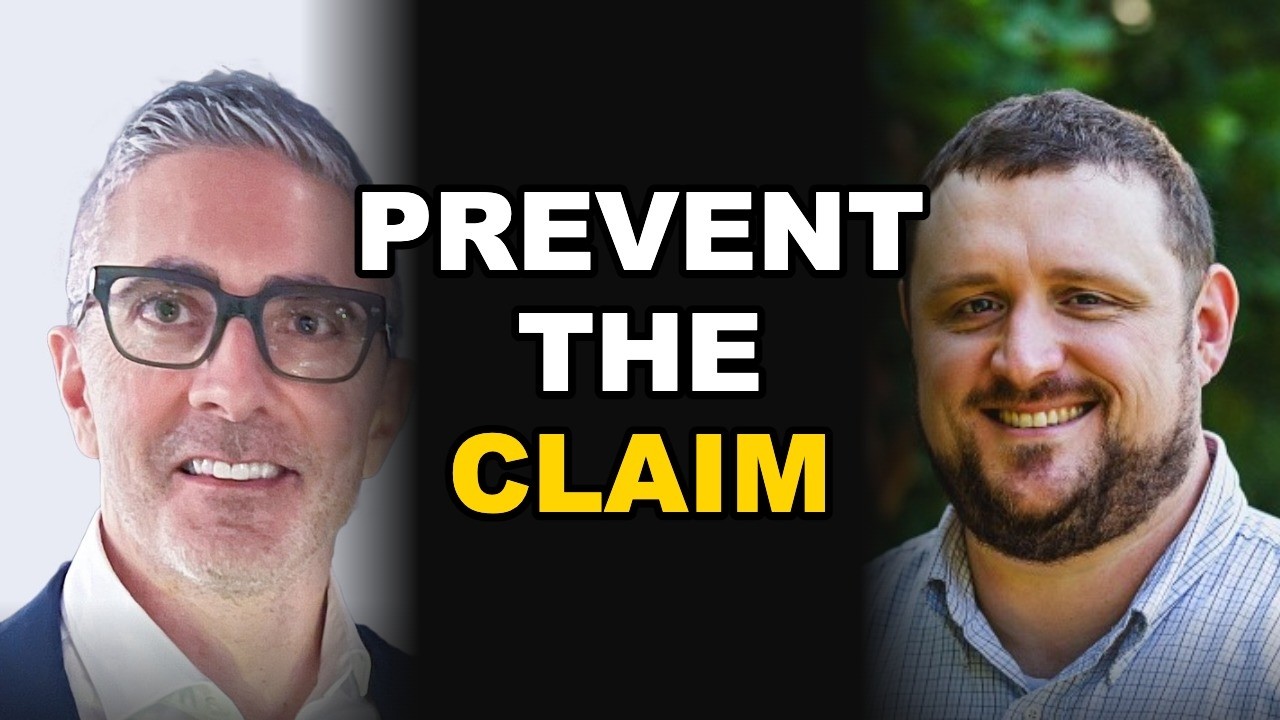
🎙️ Twenty-Four Workers' Comp Claims in Five Years Led a Manufacturer to Stillwell Risk Partners
In this episode, Ryan Stillwell, founder of Stillwell Risk Partners, shares how he left his family's insurance agency in the middle of the pandemic to build a firm around preventing claims, not just selling policies. Ryan opens up about a brutal first year when his marketing failed completely, the emergency spinal surgery that reshaped how he takes care of himself, and why he refuses to quote an insurance policy before spending months earning a client's trust.
✨ Key Insights You'll Learn:
Spent 15 years in commercial lines, personal lines, and workers' compensation at his family's insurance agency
Left to launch Stillwell Risk Partners in August 2020, in the middle of the pandemic, as his wife was laid off
Watched his first six months of social media and direct mail marketing fail to bring in meaningful business
Pivoted entirely to referral-based networking through chambers of commerce and value-based relationships
Built a prevention-first model focused on lowering a client's total cost of risk, not just their premium
Developed Risk Assessment 360, auditing HR practices, safety programs, and machine guarding beyond standard insurance reviews
Runs Stillwell Risk Partners as a one-person firm, bringing in outside specialists for areas like mock OSHA audits
Helped a 120-person manufacturer identify the root causes behind 24 workers' comp claims in five years
Helped a client recover funds after a business email compromise led to a $60,000 wire fraud
Underwent emergency spinal surgery seven years ago after a herniated disc caused sudden numbness and nerve damage
🌟 Ryan's Key Mentors:
His Wife: Supported his decision to leave a stable agency and start his own firm during the pandemic, even after being laid off herself
Early Referral Mentors: Walked him through their own networking processes after his initial marketing approach failed
His Chamber of Commerce Network: Built over two to three years into value-based relationships that became the foundation of his client base
Family and Friends: Showed up with support during his spinal surgery recovery without ever being asked
👉 Hear how an insurance broker who nearly lost his footing in year one built a firm around earning trust before ever quoting a policy, and how emergency spinal surgery reshaped how he lives.
Listen to the full episode here
Transcript
Leaving the Family Agency in 2020
Anthony Codispoti (00:04)
Welcome to another edition of the Inspired Stories Podcast, where leaders share their experiences so we can learn from their successes and be inspired by how they've overcome adversity. As you listen today, let one idea shape what you do next. My name is Anthony Codispoti, and today's guest spent 15 years inside his family's insurance agency, then walked away from it in August of 2020 to start his own firm in the middle of the global pandemic.
He built that new firm around a simple philosophy. An insurance broker's job should be about more than selling and renewing policies. Helping clients prevent a loss matters just as much as making sure they're covered when one happens. Ryan Stillwell started as a commercial lines agent in 2005, moved into managing personal lines, then built and ran a payroll-based workers' compensation program before deciding to build his own company.
That decision became Stillwell Risk Partners, a firm built around reducing a client's total cost of risk instead of just their premium. And Stillwell is an independent insurance and risk management agency based in Horsham, Pennsylvania. Ryan is a certified risk manager with more than 20 years in the industry working with contractors, manufacturers, and professional services firms across Pennsylvania and New Jersey.
But before we get into all that good stuff, today's episode is brought to you by my company, AddBack Benefits Agency. And if you're in the insurance business, here's one you'll want to bring to your clients. There's a program backed by Bain Capital Insurance that gives a company's employees unlimited access to doctors, therapists, and prescriptions. No copays, no deductibles. It works alongside whatever health coverage they already have, and it even covers part-timers who don't qualify for major medical information.
Here's the part that matters most. This isn't a cost to your clients, it's a profit gain. See, we recently helped a client add $900 per employee per year to their bottom line. That's real budget freed up. Budget they can put toward that umbrella policy, the key person coverage, or the higher limits you've already been trying to get them to add. Results vary, but that's real money on the table, and you're the one who can hand it to them. See if your clients qualify at addbackbenefits.com.
All right, back to our guest today, the owner and founder of Stillwell Risk Partners, Ryan Stillwell. Thanks for making the time to share your story today.
Ryan Stillwell (02:38)
I appreciate your time as well. Thank you, Anthony.
Anthony Codispoti (02:41)
So, Ryan, you spent fifteen years walk working across commercial lines, personal lines. We mentioned that payroll based workers' compensation program at your family's insurance agency. And then right in the middle of the pandemic, August twenty twenty, things are shutting down. What makes this the time to leave, to start r still well risk partners on your own? What were you thinking?
Ryan Stillwell (03:04)
So I had by the end of twenty nineteen, I had kind of decided it was time to move on. and, you know, I talked to my wife about it and she knew that, you know, I was I was kinda stagnating where I was, right? So started building a business plan to to go out on my own and and the the pandemic happened and obviously put on the brakes and said, like, let's wait and see what's going on here and make sure that it's the right time. as it kind of dragged on.
It it just came to the point where it's like, if I don't do this now, what am I ever going to do it? Right. I wanted to do things differently from how we were doing at the agency I was at. and doing that inside of that agency just wasn't it wasn't their business model. It just wasn't the right fit. so you know, I I was approaching 40 years old and I thought, you know, if I don't do it now, what am I ever gonna do it?
so it just came to that. We had a it was a difficult time to do it. My wife got laid off. We had a three year old and a one year old and and all that stuff. But, you know, it it just came to a point it's like I've always wanted to go out on my own and do something, build something of my own. And if I didn't do it now, I felt like I might never do it. So
Anthony Codispoti (04:11)
And so what was the timing? when did you start? When did your wife get laid off?
Ryan Stillwell (04:15)
So my wife got laid off at the beginning of the the pandemic. She was working part time and going back to school. So you know, we the kids weren't in daycare at the time, right? So we were we were at home and she was watching them. and you know, it was she got laid off at the beginning and and kind of the decision was made in the middle of June of that year. So I gave it gave some extra time.
before I went out, just to make the transition a little bit easier. But yeah, it was immediate.
Anthony Codispoti (04:43)
This was an idea that had been percolating for a while. It's just something that you really wanted to do. And yeah, it just got to the point where there's this momentum inside of you that if I don't do it now, I might not ever do it. And
Ryan Stillwell (04:53)
Yeah.
Going Beyond the Transactional Model
Anthony Codispoti (04:54)
and you mentioned, Ryan, that, one of the reasons that you wanted to go out on your own is because you wanted to do things differently. And doing it inside of the agency that you were in just kind of didn't fit their business model. What was it that you wanted to do differently?
Ryan Stillwell (05:07)
so I wanted to take things beyond just the transactional model and the way that a lot of smaller insurance agencies are run. the insurance part is important and it shouldn't be overlooked. And we didn't we did a good job with the insurance part there, but I wanted to work with larger clients. I wanted to have a little bit more of an impact on their business in general. and the way that we can do that is is through prevention.
Right. How can we help prevent claims? How can we do better at educating and helping our clients make good decisions? the the real difference was like we were working with a lot of very small businesses uh and the model there worked for that, but it wasn't very fulfilling for me.
Anthony Codispoti (05:50)
Why what was missing? Why wasn't it fulfilling for you? Just
Ryan Stillwell (05:52)
Uh
Anthony Codispoti (05:53)
because you wanted to work with those bigger companies?
Ryan Stillwell (05:55)
Well,
it's not just the fact that they were bigger companies, it was that the impact that we were having was was very minor, right? It was very transactional. It was, hey, I need this. Okay, great, we'll do it for you. Here you go. when you're working with with the smaller businesses, there's a a limited return on the investment you can make when you're investing into prevention, right? So scaling up to the type of company that would actually get a return.
By investing in safety or investing in certain processes or programs and things like that. once we get to that level, then then we can have a bigger impact and you build better relationships over time. Whereas, you know, get somebody that's paying a couple thousand dollars a year for their insurance, they might move for a couple hundred dollars in savings, right? Because that's more impactful for them. Whereas we can have a bigger impact on the bottom line.
Through more than just saving a couple of bucks on their insurance program, but by preventing things from going wrong in the first place, that eliminates both direct and indirect costs.
Prevention-First Risk Management
Anthony Codispoti (06:50)
So are you actually getting involved in helping them set up safety programs?
Ryan Stillwell (06:53)
Yes.
Anthony Codispoti (06:54)
say more about that.
Ryan Stillwell (06:55)
Okay.
So you know, where where I really fit is in the lower end of the middle market, right? Companies that have maybe a few hundred employees. they typically don't have somebody in house that's a full time employee health and safety or or safety manager or something somebody along those lines. A lot of times it falls into the CFO or the HR category, but they don't have the time or necessarily the background to be able to
enforce and and build a a a real consistent safety program, right? They don't necessarily have the training to do that, right? So so where I come in is I help identify where the major issues are. You know, do we need to conduct job hazard analysis? Do we need to understand where root cause of of accidents and injuries and the systems that we can put in place to help identify those areas before they become actual injuries and accidents. And then from there we kind of
identify what the culture of the business looks like, built within what they want to do and what they want to accomplish. it's ongoing support for for multiple years. It's it's constantly evolving.
Anthony Codispoti (08:01)
So is this practice typical from property and casualty insurance brokers?
Ryan Stillwell (08:06)
there there are other brokers that do this. it's I would not say that's typical though. you know, if get into one of your national brokers, your your large publicly traded companies, you know, they they have this type of program, but you're typically looking at million dollar premium plus, right? So it's it's not available to a lot of companies. you know, the the the lower end of the middle market, a lot of times they get put into a service center or a call center and they don't get access to these higher level programs.
And then your your smaller local generalist agents, which is where I came from, they don't have the resources to do that. So there are some companies that sit kind of in the middle ground, and that's where I position myself, but they're fewer and further between and a lot of times they get they get bought up once they get to that level.
Understanding Total Cost of Risk
Anthony Codispoti (08:47)
So I think that you call your approach prevention first, right?
Ryan Stillwell (08:50)
Yes.
Anthony Codispoti (08:51)
And you talk about lowering a client's total cost of risk. So that total cost of risk beyond just the premium includes exactly what?
Ryan Stillwell (08:59)
So there's there's direct cost and indirect cost to it, right? So let's let's walk through an example of where total cost of risk might might come into play. somebody gets injured on a manufacturing floor and they're out for three, six, twelve months or longer, right? the the costs that get associated with that are not only the increased premiums from having the type of lost time claim that that can come from that, but it also affects the cost of hiring to replace that.
It costs the the time it takes to get that person up to a productivity level that the original person was. you know, and if that doesn't that person doesn't work out, then you have to hire somebody else, right? So there's there's a lot of costs along those lines. there can be costs in the form of fines and regulatory penalties, like if OSHA comes in and if and assesses and and puts a gives a penalty or a fine, Department of Labor issues. so so there's there really can be a lot of
direct costs that that come with it, but also the indirect costs of time, right? Is how much time are you taking to find the right person to to fill in that spot. dealing with regulatory agencies takes up a lot of time. It might not be in the area of expertise. You might need to hire an attorney and there's obviously costs that come with that.
Anthony Codispoti (10:12)
Which of these costs are you actually able to calculate?
Ryan Stillwell (10:16)
So we can calculate the fines and penalties. We can count we can put a of an hourly dollar amount to to the additional time that you have to spend. you know, the cost of hiring is a little bit harder to to put into place, but you can you can get good estimates there.
Winning Clients Through Trust & Value
Anthony Codispoti (10:38)
And so walk me through what an initial conversation looks like with a client. And I think it would probably be particularly interesting if this is a client who hasn't had this level of what I'm gonna call white glove service on, you know, the the focus on prevention first before. your premium might be a few dollars higher, I'm guessing, maybe not, but this being able to lower their total cost of risk is probably a new concept for a lot of those folks.
So how do you walk them through that and and help them see the value?
Ryan Stillwell (11:08)
Sure. So it it's it is a different conversation than they're used to, right? Because a lot of times you know, their conversations with insurance people are about, you know, how we have all the markets, we can take kick out the market and save me money. a lot of times it is a cost savings process for a lot of companies. they want to make sure that they're they're properly covered, but they're we also have to establish trust, right? So when I come in, my questions are not about, you know.
What kind of coverage do you have for this or or or that, right? it's not about how much are you paying or what types of policies you have. it's about understanding where they're at right now from a risk management perspective, right? So questions I ask are along the lines of who's running their safety program, how are they tracking near misses, good catches, and identifying areas of where
There's potential for claims that there hasn't been. It's, you know, it's really about asking the right questions about their business to kind of get them talking about what they're doing outside of their insurance program. And once we get kind of into that, then it's a little bit easier of a transition to understanding where insurance comes in in the risk management process, which is at the very end, right? We want to identify and assess, we want to analyze what's going on, we want to see what we can do from a prevention and mitigation standpoint.
What types systems do we have in place for recovery when things go wrong? And from there, the the conversations open up in a very different way where it's not insurance-centric. Insurance is important, and you know, all these companies have to have insurance and it it you have to have the right coverage in place. But the it's really hard for companies to identify differences beyond surface level coverage limits and price, right? I mean, insurance policies are hundreds of pages long.
The reality of situation is that most of these companies are not reading the policies, right? They they rely on their agent and trust to to determine are we protected or are we not. so where can we have an effect that we will actually provide value and establish trust beyond quoting an insurance policy and tell and making an argument for why our program is better? and it's in these tangible things that we can do, whether it's helping to form a safety committee or
Conducting job hazard analysis, we're doing a a mock ocean inspection, right? There's there's a lot that we can do on the front end, and part of that process is proving our worth through work product before we bring on the client. So, you know, a lot of times there are promises of, hey, we're gonna do all these things for you after you become a client. But in order for you to become a client, we have to quote your insurance and take over your insurance program.
What what I want to do is I want to establish trust. And it's really hard to do that when you're just in a quoting or RFP process, right? So a lot of times we'll we'll run several assessments. we can come on property and do confidential QA's with staff to determine where the difference between where management thinks safety is and where it actually is, right? A lot of times there's a big discrepancy there. And over the course of a month or two, we'll get to work with each other. I'll provide
an outline of a pro of a program that I would recommend from a risk management standpoint. And if it makes sense to work together, then we work to take over the insurance program. because that's ultimately how we get paid. I mean, there's there's some situations where we do a fee structure structure, but it's it's a little bit more rare for the type of clients we work with.
Risk Assessment 360
Anthony Codispoti (14:26)
And Brian, I understand that you built a tool called Risk Assessment 360. Walk me through what that assessment finds that a standard insurance review might miss.
Ryan Stillwell (14:35)
Sure. So we part of that is is the insurance part, right? And we have checklists and and things like that to determine, where your exposures are, what types of coverage makes sense. But we're also looking at a series of assessments or audits. oftentimes they are around management of employees, whether that's from like a more traditional human resources standpoint, what are your practices around Fair Labor Standards Act, FMLA, you know, a whole host of different things from an HR.
client standpoint. And then the other major part is usually around safety, right? Which is why we work with a lot of contractors and manufacturers. if it's a manufacturer, one of the things we're always going to look at is the lockout tag out program, right? And we do an assessment you know what are your practices and dig deep into specific areas so that we can identify blind spots or things that may not be going well, right? Machine guarding, same thing. We can do a kind of a higher level
OSHA safety program as a whole, and we do those audits. depending on the client, sometimes we will come in, like I mentioned, we do the QA's with the confidential QA's with staff to take 10-15 minutes for for a number of of different levels of employee to get that basis. And then we also offer programs that people can put in place regardless of whether or not become a client, right? We a a record keeping program for for OSHA for OSHA logs.
we've got a a nice a couple of nice safety automated programs, safety training programs that we can give to to people. And you know, a lot of that is is how are you using things now and what can we supplement to help improve what you're doing, or do we need to to build a program kind of from the ground up?
Case Study: Cutting Manufacturing Claims
Anthony Codispoti (16:06)
I think what would probably help myself and the audience wrap our heads better around what it is you do, Ryan, is if we could maybe pull out a particular case study. Think about a client, leave out their name. Here was the situation when they came to you, here was what you put in place, here was the result.
Ryan Stillwell (16:23)
Okay, so let's we'll talk about manufacturing. That's a that's a good example. So last year or two I brought on a client that had they had a hundred, a hundred and twenty people. they had I wanna say twenty-four claims on their workers' comp program in five years, which is a lot for that size of the company. so it was first an internal change on their part. They
understood that they had an issue and they wanted to tackle it and they wanted to go it the right way. and we got introduced to them through through some people in our network and in that process we walked through first we looked at the claims that were there. um We identified a couple a trends. there were a couple slip and falls, right? which leads to, you know, our people is housekeeping.
in in the actual manufacturing plan an an issue. there were some strains, like a lot of back issues, right? And which leads us to believe is there's something that's going on with how people are moving within their own stations, right?
There are a number of lacerations as well, which which speaks to potential machine guarding issues. but there can be a number of different ways that that can come up. So we identify these three trends and said, okay, let's figure out where things are going wrong so that we can improve them. and then from there we'll do like we'll do the assessment on the machine guarding. And we say, okay, well, there's a number of older machines here that don't have guarding at all or don't have appropriate guarding. so how do we come around and
put the right programs in place, put the right systems in place for the for the right guarding. and then walking through that process, taking an inventory of all the machines, which ones have guarding in place already, what are the pinch points, what are the cut points, going into depth on each machine, and determining this is additional guarding needing in place or is it a training issue? and and so we through that assessment,
We built that training in place, we put the we put the inventory in place, we understand, and then we systematize getting things up up and running to speed because there's obviously more that goes into it because there's costs associated with getting these things corrected. but that's that's one example.
Anthony Codispoti (18:29)
That's a really helpful example to hear about. And you keep saying we is this more than you? Do you have a team that's helping you with these assessments?
Ryan Stillwell (18:36)
Um
so I I use we because I don't have a team, it's it's me that runs the agency. And sometimes I'll bring in some outside support, whether, you know, because I'm not set up to do mock notion audit myself, so I'd bring somebody in. I'm not set up to write a customized employee health and safety manual, right? So I might bring somebody else to to to do that itself. But I I guess I use the term we because it's it's really a partnership between myself and my clients, right? I can come in and say,
I really think you should do X, Y, and Z. But if the client isn't invested in it themselves, that's well, it is a recommendation. I can't go in and and have them do certain things. I can do things for them if they would like me to. But there has to be a a mutual you know supporting arrangement to to make things get in place.
Anthony Codispoti (19:22)
So I want to back up a bit, Ryan. I got excited, going down the rabbit hole of understanding what it is that you do and getting into that case study. But I want to go back to the beginning when you started this in August 2020, in the pandemic, it it it we had to do business differently during that time, right? And you'd had this idea to start your own agency before the pandemic began. So I wonder if you can walk us through.
What it is that you had in mind that you were going to do to build that business prior to the pandemic, when you first had the idea to start Stillwell Risk Partners. And then how you had to pivot, what changes you made in how you were getting those first clients and building the business once you saw yourself starting this in the midst of the pandemic.
Ryan Stillwell (20:07)
Yeah, so interesting interesting because when I started out, I had a little bit of a different plan for how things were gonna go, right? I didn't have direct experience working with the types of clients that I wanted to. And I didn't have direct experience doing the type of work that I do now, right? So how do how do I build a business while learning how to do that stuff, right? So when I started, the the original plan was to write more personal lines than commercial. it was
I felt like it was going to be easier to to get in front of those types of people and and be able to to to do that type of work. and then as my business grew, I would, you know, potentially bring somebody on to manage that book of business so that I could spend more time developing the relationships I needed to to be able to bring on the types of larger clients on the commercial end that I would like to. And what I found was that it did not work out the way I planned, right? You start a business and you kind of like, okay, this is the plan.
it'd be great if it works, but we know that it might not go according to plan. You have to be able to be flexible. so like six months in, it was it was brutal. I wasn't bringing on hardly any clients. and what I was doing from a marketing standpoint just wasn't working. And so so I Son was
Anthony Codispoti (21:15)
Which was what? What what were you trying that wasn't working?
Ryan Stillwell (21:17)
doing like social media marketing, I was doing c combination direct mail stuff. and it just it was good money after bad, right? I didn't it it
There's so much noise in the insurance space that it's just hard to get through. And one of the big the biggest things that I realized was that I didn't have the right relationships to be able to get the type of business that I wanted, right? So like if you go from a cult perspective and you market to people, it's it's less likely that they're going to be the right fit for for what you do. but I didn't have a network.
was referring me business. So I had to build that. I had to understand that I needed that first and then build it and then learn how to work it the right way and and be able to provide value back to the people that were referring business and to me. So you know I s after that six months and I just wasn't getting really any results. I I decided okay I'm going to stop spending this this money on this marketing program that is not working. I'm going to take a step back and say, okay, I'm going to really double down on learning
How to get in front of the right people and how to help them when I'm actually able to. Right. So I was lucky enough that I found a couple of good mentors that kind of walk me through what their process looked like, how they did things, how they brought in outside help to help supplement where they're not the strongest. and then and then through practice, right? Through actual experience. you you learn more through experience than anything else.
Building a Referral Network
Anthony Codispoti (22:38)
tell us some of the practical steps that you took. It wasn't working before the social
Ryan Stillwell (22:41)
Yes.
Anthony Codispoti (22:42)
media, the direct mail. You needed to get more into getting in front of the right people, getting to know the right people, referral based kind of an approach. How how did you get there?
Ryan Stillwell (22:50)
Sure. So
multi step. So where I started was somebody introduced me to one of the the weekly networking groups, like a B and I type thing, and I joined there and and it wasn't the right fit for what I was doing. but I did learn you know, a lot about the basics of networking, right? from there I kind of moved on to local chambers of commerce and built better relationships that way with people that were more in the community and not just there to to pass referrals back and forth, you know.
so it was more value based. and over the course of two or three years, I was introduced to a lot of good people that were looking at the same type of businesses that I was, right? And through that I was able to get in front of the right types of clients. but really it was the the learning process around transitioning from a marketing based to a network referral based was a little bit of a foreign concept to me.
But I then the reason the reason why is I'm more introverted than extroverted and I've had to I was a little bit resistant to getting into that uncomfortable space of going out and meeting people and and building relationships. But as I did it more, it became more comfortable. and you know, a lot of the the relationships that I built then are relationships that I have now.
Anthony Codispoti (24:01)
I think this is great because there's so many people who are listening right now, they're like, that's me, Ryan.
Ryan Stillwell (24:05)
Mm-hmm.
Anthony Codispoti (24:05)
I I'm introverted. I don't consider myself a natural salesperson. I I want to learn from you having gone through the same thing that I'm going through right now. So you said, you it was uncomfortable for you, but you found ways to get in front of the people who are talking to the same folks that you wanted to talk to. How how are you doing that?
Ryan Stillwell (24:24)
So I look at what types of services the clients that I'm looking for would also need, right? So higher level accounting services. you know, I I had worked on a workers comp payroll based program by my previous agency, so I knew a lot about that and I connected with some really good payroll people. but it's just it's just identifying the types of people that also talk to.
types of clients that you want, but more so than that, right? Like I know a ton of people that talk to the same types of clients that I go after. The ones that really make the biggest difference are the ones that you like, you like working with, right? Because you're invested in their success and they're investing yours because you like each other, you know each other, you want each other to succeed. shared values, right? Like it is are we aligned in certain like the way we do business, even like
to a pr on a personal level as well. do you share the same values? Do you do you want to build your business in a certain way? How do you deal with people? How do you deal with friends and family? Right. So that was actually that was probably the biggest revelation to me is it's not it's not it is who you know, but it's who you know that shares the same values with you. And that's where my business starts really.
Anthony Codispoti (25:37)
Okay. Any other advice, tips? you had some great mentors that helped you get this thought process, this framework in place that's really helped you build your business. Anything you can share with the audience?
Ryan Stillwell (25:53)
Yeah, just be willing to get uncomfortable. I I remember a specific time when I was walking into a room with seventy people and I didn't know anybody. And I'm literally walking in the door. I'm like, what am I doing? Like I don't know what I'm doing here. And it was very uncomfortable. but you do it and the more you do it, the more comfortable you get with it. And then from that you grow. So I would just say don't be afraid to put yourself in uncomfortable positions if you know that's what you need to do to be successful.
Anthony Codispoti (26:18)
So give us the big picture, Ryan. What does Stillwell risk partners do now and who do you do it best for?
Ryan Stillwell (26:24)
Sure. So the core what we do is still insurance, right? We provide insurance and that's that's how we make money. but more so than that, we want to talk to people that want to be able to make the right decisions to protect their business, whether that's insurance related or risk management or not. So the basis of what we do is education. to a degree we're a translation service, right? Because what do these policies actually mean?
And we put it into plain language so that that business owners and people can make the right decisions for their business to protect it, whether that's from insurance or whether that's from proactive risk management or combination of both. so that's that's the essence of what we do. primarily our clients are in the blue-collar space, a lot of contractors, manufacturers, distributionware housing operations where there's a higher risk of injury, right? Because the
Core of what we can do from a risk management standpoint is safety related, and that's where we have more control. And then we I work with a lot of professional service firms, whether that's attorneys, accountants, architects, engineers, IT companies, MSPs, software companies, technology companies. the reason I work with them is there's there's less safety concerns there, but there's a lot more exposure than what
There's a lot more exposure to protect from than a lot of your generalist agents are really prepared or capable of doing, right? There's I don't want to get into like a whole conversation about insurance coverages itself, but errors in emissions, professional liability, malpractice insurance, management liability, employment practices, cyber insurance, these are all fairly complicated topics. And if you're not familiar with how to read insurance policies and what to look for in them to understand.
What the real financial implications of some of these policies are beyond just the cost of the policy itself, right? Because you could have a low premium, but you could find that you might be self-insuring a lot of this risk because the right types of language or the language that would better suit you in the policy itself is not there. so the education basis on communicating that type of thing in a way that people can can digest easily and make a decision on is a big part of what we do as well.
Cyber Risk & Funds Transfer Fraud
Anthony Codispoti (28:31)
So, a lot of what we've been talking about are p physical safety risks, right? talking about manufacturers, you're talking about OSHA violations, people straining their backs, slipping on the floor. but I want to hear about this cyber incident that you worked through. It hit a small manufacturer or contractor. Can you tell me more about this?
Ryan Stillwell (28:50)
Sure. a lot of people think of cyber risk as as data and privacy liability, right? It's it's risk around like, we we maintain dates of birth and social security numbers of our clients and and if that information gets stolen we're in a lot of trouble. The reality of the situation is that most claims don't occur for small businesses in that in that realm of of data breach. It's still a concern, but most most claims come from
stem from business email compromise, right? So somebody gets access to your email account and then it it usually results in something like ransomware or funds transfer fraud. Now the one specific one that I'll mention here is the funds transfer fraud issue, right? So email was compromised and because the email was compromised,
We're able to use that email to send a fake link to a payment portal, So because they have access to the email, they can see when payments need to go out and who they're going to. And they can then provide a high sophistication level of fake fake email where it looks like it's coming from the right person. It's got
A link that goes to almost the same exact place, right? They they might change a letter or a number in there. and it's going to look like what their invoice platform looks like and says, Hey, we need you to transfer this amount of money and do it through this portal or send it via it to us through to this bank account. and if you're not prepared for that, you're not aware that this is an issue, you can send money to the wrong place, and then you might never get it back, right? So in this particular instance, there was, I think the amount was somewhere around 60,000. So
It it's still a lot of money, but relatively light comparative to some of the other claims we see. and you know, a lot of times it's it's can't get that money back. But some of our insurance carriers are good at that. They can call the money back. it ended up being a split where where some of the money was was due from from our client. and then the insurance company paid out on that. But there's also a lot of costs that go into that, right? There's forensics that that is expensive.
There's if there's clients that need to be notified due to legal regulations and requirements, there's a lot of cost associated with that. So, you know, even if there's a company that does not have personally identifiable information or private data, there's still a big risk for this, right? So
Anthony Codispoti (30:57)
And so are you able to help protect them against that aside from an insurance policy?
Ryan Stillwell (31:03)
So the in order to get the insurance policy in the first place anymore, you have to have some type of cybersecurity in place. the problem the problem in this area is that we live in a zero trust environment, right? There's even if you have the best security in place, there's still the issue of human error, right? And people can click on the wrong link or do the wrong thing. so it's it's really education based more than anything else. It's it's do we need to provide training to
employees and what that look like? How do we keep it top of mind? yeah, it's really education and training that is prevention in that space.
Anthony Codispoti (31:36)
and as you're talking through this, I'm reminded that I had something very similar happen to me probably ten or fifteen years ago, previous business. give you an idea how long ago this was, the tool that was being manipulated was it wasn't wasn't email, it was Skype. And my suppliers sent me an instant message saying, hey, for the upcoming invoice, and they referenced the invoice number and the amount, like, we'd like to change the bank account that you send the the money to to to this bank account.
Didn't think twice about it. We communicated all the time that way. So I sent them the payment. and then a couple weeks later I get a message, either through Skype or through email, hey, where's the payment? You're usually on time with these things. I'm like, yeah, send it to that new bank account. And like, what new bank account? Now I'm one of the very few who got very lucky because the criminals had not yet moved that money that I sent them out of their account. and so I was able through the banks to
claw that payment back, but that was just sheer luck. Like most people are not so fortunate.
Ryan Stillwell (32:38)
Yeah, there's you know, there's an example that's on the other side of the spectrum. It happened a year or two ago. but it shows the sophistication of of what they can do from a deep fake perspective using AI or not. somebody transferred $25 million to after getting on a Zoom call with people that they recognized and knew who they were, but it was just it was it was all deep faked and and yeah, so that money was gone. That wasn't our client, thankfully, but it is a popular story.
Anthony Codispoti (33:00)
Wow. The the deep fake
of a call was convincing enough. Wow. Okay. Well, hey, that's a great lead in. Let's talk about AI. How are you using it in your business, right?
Ryan Stillwell (33:14)
so where I use AI is a couple different ways. So organizational, it it helps me a lot. keep track of of when renewals are coming up and when things need to be be proactive about getting things out. probably the biggest time saver for me is is checking policies. you know, one of the things that that happens every renewal is certain policy forms can change and it might be
a few words in a sentence here or there, right? so it's really hard to kind of go through hundreds of pages of that to determine where where things might have changed. So AI is very helpful in that, you know, we load up the policy forms and the schedules and say what's changed, what remains the same and help us identify where things have changed and what changed within those forms. And then that saves hours potentially and then we can look at the the actual
form itself in the language and see if it makes if it makes a material impact to their coverage or not and and advise accordingly. that's probably the biggest thing that's that's been helpful.
Anthony Codispoti (34:14)
Any future plans for AI, something that you'd really love to be able to do with it down the road?
Ryan Stillwell (34:21)
Yeah, I would love to
have it do a lot of my data entry. I don't I don't think it's connected to the the management system we use for tracking policies and information there. it's not something that I've dug into. It might it it might be very possible right now. It's just I haven't had the time to to investigate into it. But we can better serve our clients by having better data and the output of data is dependent upon the input of data, right? So taking all that time to put that to put that information in and make sure that it's accurate and and we're able to to make
help clients make better decisions based on that or just run the business more efficiently, that is something that would be very helpful.
Anthony Codispoti (34:59)
Mm. Is there any concern that at some point down the road AI could threaten your position, the work that you do, Brian?
Ryan Stillwell (35:08)
sure. the application of this stuff is we we can't understand it, right? It's it's we can understand it now, but where they project AI to go with you know general intelligence or super intelligence, right? There's you know of course there's a risk of that. they're already using it in things like cameras, right? So you can identify you know movements or like
an ergonomic assessment, right? You can identify movements and where things could create stress points and and help prevent injuries that way. so sure, like from from to a certain degree, yes. but I also think that there's a lot of value in relationships and knowing people and and I well it's possible AI could take that path at some point in in certain ways. I I I don't know how likely that is anytime soon if at all.
and you know, people prefer to deal with people a lot of the times. so I I don't think that relationship aspect can be replaced.
Anthony Codispoti (36:09)
So you're running Stillwell Risk Partners as a one person firm,
Ryan Stillwell (36:12)
Mm-hmm.
Anthony Codispoti (36:12)
right? And your competition, many of them, much larger brokerages, bigger teams. When folks work with you, Ryan Stillwell, what are they getting that they can't get at the bigger firms?
Ryan Stillwell (36:29)
So I mean it's a little bit cliche to say it, but like our clients are not numbers, right? They're I I'm pretty selective about the clients I bring on, right? Like we talked about, you know, if I'm just gonna spend a month or two working with somebody before they become a client, I'm gonna be pretty selective about who I do that for. so you know, it goes back to the relationship. It's it's you know, you get hands-on personalized service.
You're not calling into a service center where you're gonna get somebody different every time or get somebody that is overloaded with the number of clients they have and they just don't have the the capacity to be able to do anything other than transactional service. and and we're you know we're pretty flexible. it's you know, your large national recorders, they have people on staff that can do the inspections, they can do loss control reports, they can they can
go in and do your inspections and and help you from that level. But we can bring in people from the outside that are specific to an industry, right? So if you have somebody that's manufacturing furniture, you don't want the same person coming in doing a loss control inspection for that business as the one as the same person who just came from a laundromat. So they're very different types of exposures. So we can bring somebody with that direct experience to come in and offer those insights as well.
Anthony Codispoti (37:43)
as I'm hearing you talk through that, Ryan, it it occurs to me that I can draw a parallel in my own life. It's like if I've got to call a credit card company to get something resolved, I am going into that call just dreading it, right? Because I in just assuming I'm gonna get somebody that is reading from a script that doesn't really understand how things work, and this is just gonna be a painful experience of me getting transferred from one place to another to another, nobody really taking ownership of the problem versus
When I can just call my private banker and be like, hey, here's what's going on. Can you do whatever you need to do behind the scenes to help me? And it's like, boom, it's taken care of. Like that's the difference I think in working with one of the big firms versus working with you, right or wrong.
Ryan Stillwell (38:28)
Yeah,
I think that's I think that's fair. Yeah.
Anthony Codispoti (38:31)
Yeah. Okay. let's shift gears a bit. Cause we talked about some mentors that were really helpful to you along the way. This is a great way to learn. Another really powerful way that we take lessons forward with us is through the hard experiences that we go through in life. Ryan, what's one of the hardest things that you've had to go through and what did that teach you?
Hardest Challenge: Emergency Back Surgery
Ryan Stillwell (38:52)
Yeah, so the the first thing that that c that jumped to mind was
This a little more than seven years ago I had a a bac my back's always giving me problems a little bit overweight, right? So like naturally that that's that's the thing that happens with your back soreness and things like that. But I had a herniated dentist and it you know, if you ever had one, you know the pain that's associated with it, but it it wasn't resolving on its own, right? We like I went to the doctor and they gave medicine and you know, got some like therapy around it, but it wasn't resolving.
And it actually ended up getting getting worse. there's a point where I started feeling some numbness below my waist. and it it freaked me out quite a bit. So I ended up going into the ER. So I we had gone through like the whole process of x rays and MRIs and things like that. And it happened on a Sunday morning and we called the doctor that that
was taking care the MRIs. They're like, well, let me let me take a look at it. It just came in. And they they called me back half an hour later. He said, so I was just on the the phone with the head nurse at the ER and told them you're on your way. so that kind of gets you moving, right? So they took me right back, no triage, no nothing. They took me right back. I was in the the ER room for half an hour. Surgeon came in. He described what was what the exact nature of what my injury was and what I was feeling.
And I Yeah, that's the you nailed it. That's exactly it. He's Okay, well, we're gonna go take you up, we're gonna cut you open and and take out part of your spine. And so I said, Yeah, let's do it. I was in so much pain and I was worried about things. Turns out like if it wasn't addressed, it was a situation that could cause long term incontinence or even the paralyzation. so it was emergency and they took out part of my spine and there's you know, obviously it
It's it's something I still struggle with today. I don't I I have some back pain on occasion, but it's just a matter of it really opened my eyes to making sure that I'm taking care of myself physically and and keeping my health top of mind. So it it's it's certainly changed me. It it it was adversity that I had to go through and it's still something that I'm trying to keep on top of.
Anthony Codispoti (40:55)
So help us understand a little bit more about what the actual issue was and why taking out part of your spine was going to fix it.
Ryan Stillwell (41:02)
Sure.
So I I don't remember the specific there's a there's a there's a term for what I had, but my understanding is that the disc like pinched on on some type of nerve which caused the numbness down my leg and kept me f kept it it was doing like nerve damage. so what they had to do was they had to cut off part of the L four and L five for the bird and ray.
And that relieved this the the pitching or the stress that was being put onto it. so that's why they ended up having to take it out.
Anthony Codispoti (41:33)
And do you have more limited mobility today because of that?
Ryan Stillwell (41:36)
No, I it's actually I have no restrictions on mobility. there's the surgeon did say that there's good potential for me to require spinal fusion at some point in the future. but you know, the what I found is the the key to to keeping that back pain is minimum is good core strength. So sometimes I'm good about keeping up with it and sometimes I'm not so good about keeping up with it. And when I'm not, then I then I get the pain. Yeah.
Anthony Codispoti (41:59)
You start to feel it.
And so what was the recovery process like, both physically and mentally for you?
Ryan Stillwell (42:04)
So it was interesting
they did I was home the same day, which was crazy, but I was in a lot of pain, as you might expect. it's funny how the mind works and it kind of distances you from that pain and and what you go through. but so the recovery process was physical therapy for a couple months. you know, I was able to walk, I was able to drive within a month.
for the first couple of weeks I wasn't allowed to lift anything heavier than a juggy milk, right? And the timing of this was this timing's never good, but my daughter was born two weeks after I went into surgery. So I like I couldn't carry my daughter around. I could sit and hold her. but it was it was tough on the family as well 'cause like giving birth is is a strenuous thing to the body. So my wife was in in in a tough position as well. But
luck we were we were very lucky. We have very good support structure with my with our families and and and friends and things like that. So it made it a lot easier.
Anthony Codispoti (42:57)
Actually, if you wouldn't mind saying a little bit more about that, because I think a lot of times when people are going through the hardest times of their lives, the thing that ends up being the most helpful, the best medicine is that connection with family, with friends that support, being around them. And for some folks, in some situations, that can be the hardest thing to reach out and ask for, is to ask for that help and ask for that connection when you need it.
Ryan Stillwell (43:23)
Yeah, so so first of all, we're very lucky that we have family local and that were that are so involved in our lives and our kids' lives and able to help. like we didn't even have to ask for help. It was just offered. so we're very lucky in that regard. when it happened, there was a lot more going on and we had a lot of support then. But it didn't
It didn't fall off months after the fact, right? We're like it's still ongoing. We still have a lot of that support. So we're very lucky that we didn't really have to ask for a lot of help. It was just freely given. Um to the point where
Anthony Codispoti (43:55)
It was just there.
Ryan Stillwell (43:56)
we like almost at some point feel guilty to a degree about taking up so much so much help. But yeah, I mean it's just very, very lucky.
Anthony Codispoti (44:05)
Well, and I'm gonna connect some dots here and you tell me if I'm connecting the wrong dots. I I'm gonna guess that the reason that that help was so freely there is because in the months and the years prior, you've invested a lot in these relationships, whether it be family, whether it be friends. And so sort of the best time to, you know, to to be doing that.
Is is obviously well in advance of the time where you might need help. And and that's not the only reason that we do that, right? We don't form relationships for the purpose of at some point I'm gonna need to take something from that person. But I think it just shows the importance and the value of being a good person, being connected, reaching out to people, offering them help in their times of need, because it's the kind of thing where you've got those strong relationships and in
in your time of need that could come at some point down the road, that that's in place already for
Ryan Stillwell (44:59)
Yeah, I I completely agree. I think, you know, part of the philosophy of life that I have is do the right thing for the right reason and everything else will fall into place. And to a degree that's that's kind of what's happened. so
Anthony Codispoti (45:12)
Like that. As you think about the work that you're doing now, Ryan, what is it that you most want to be remembered for?
Ryan Stillwell (45:23)
Hm.
if if I'm personally going to be remembered for something, I want to be remembered for being a good father. but professionally, I would say helping other people achieve their goals, right? So it's still just me, but I do plan on hiring at some point in the future. And to get to the position I'm in now, I had to go through a lot of different stages of learning. And I would like to be able to to help somebody else do that without
having to take so much time to do it.
Anthony Codispoti (45:56)
What's one rule in business that you would never break no matter what it cost you?
Ryan Stillwell (46:01)
Don't buy. Be honest.
Anthony Codispoti (46:06)
Pretty simple. Not much more you need to say there. Yeah. Uh
Ryan Stillwell (46:08)
Yeah, I didn't. Yeah.
Anthony Codispoti (46:11)
Ryan, before I ask my last question for you, I want to do three quick things for the audience. First of all, anybody who wants to get in touch with Ryan Stillwell, go to his website, stillwellriskpartners.com. Spelled just like it sounds stillwellriskpartners.com. It'll be in the show notes, but stillwellriskpartners.com. Also, if you're enjoying the show, please take a moment to subscribe wherever you're listening.
It also sends a signal that helps others discover our podcast. So thank you for taking a quick moment to do that. And as a reminder to insurance brokers of all kinds, there's a program backed by Bain Capital Insurance that gives your clients, employees unlimited access to doctors, therapists, and prescriptions. No co-pays, no deductibles, and part-timers qualify. That's why they'll love it. And you'll both love it because it adds real dollars to a company's bottom line every month.
Dollars they can put toward the coverage, you've already presented to them. So last question for you, Ryan. A year from now, what is one very specific thing that you hope to be celebrating?
Ryan Stillwell (47:13)
hiring full time employee.
Yeah, on a high.
Anthony Codispoti (47:19)
You feel like you're getting close to being ready for that?
Ryan Stillwell (47:21)
Yeah, things keep going the way there are. I should be able to afford it. that's the biggest issue, right? Being able to pay somebody. but yeah, like I wanna hire s a really good person to help me build my business with. So
Anthony Codispoti (47:33)
And do you see that being another agent? Do you see that being somebody in in an administrative or a marketing role?
Ryan Stillwell (47:39)
So
I see it in a like account management role, right? So a good account manager that's able to do the day to day service tasks and be able to be a partner with my clients to help them p move forward with all the things that we're we're putting in place for.
Anthony Codispoti (47:56)
Well, Ryan Stillwell from Stillwell Risk Partners, I want to be the first to thank you for sharing both your time and your story with us today. I really appreciate you being here.
Ryan Stillwell (48:04)
Thank
you, Anthony. I appreciate it.
Anthony Codispoti (48:06)
Hey folks, that's a wrap on another episode of the Inspired Stories Podcast. Thanks for learning with us. And if one thing stood out, put that into action today.
Connect with Ryan Stillwell:
Website: stillwellriskpartners.com