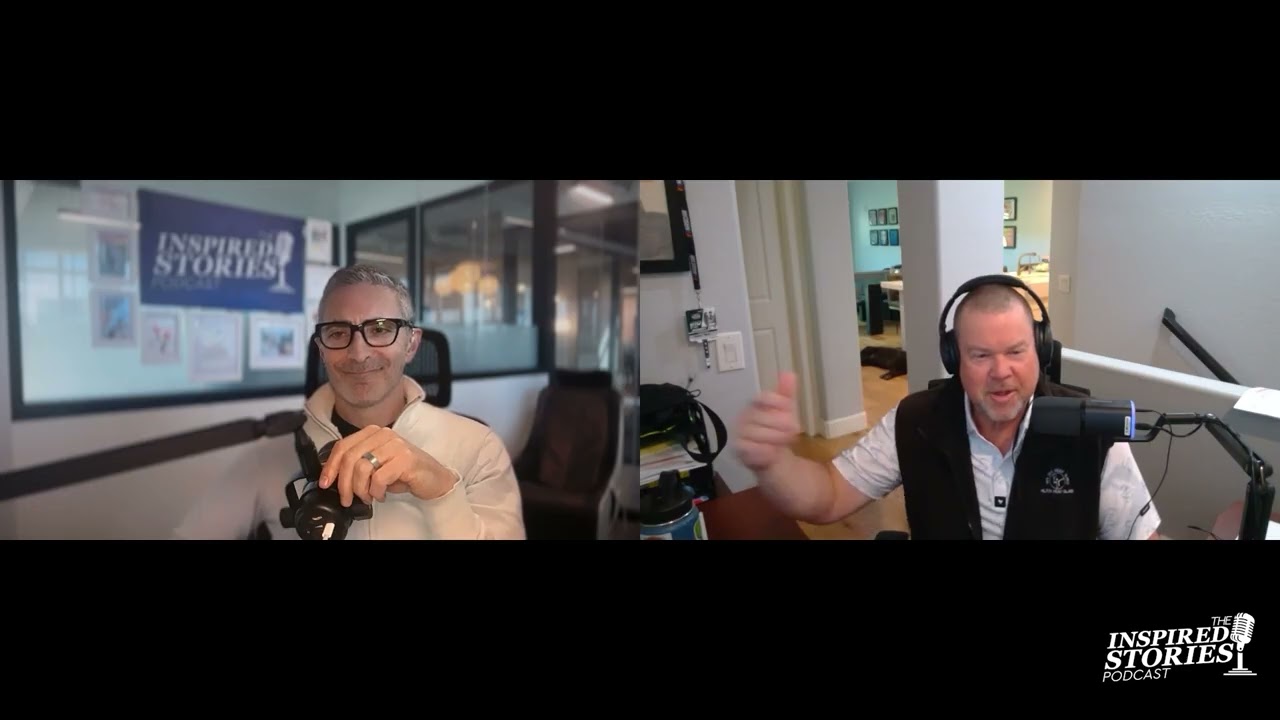
Jim Bates: From Division I Tennis to Boutique M&A Firm Builder
Jim Bates, partner at Jackim Woods & Company and co-founder of Sports Club Advisors, shares how a Division I tennis career, a gutsy career pivot at 28, and a series of recession-forced reinventions led to co-founding the Exit Planning Institute, writing the book on exit planning, and building a boutique M&A firm that serves both lower middle market companies and the sports and fitness industry.
Key Insights You’ll Learn:
Tennis as a training ground for mental resilience, focus, and life skills
Quitting a thriving tennis career at 28 to pursue an MBA on a coaching stipend
Landing in M&A through a friend’s referral — and learning valuations from scratch
Inventing the exit planning coach process during the 2001 recession
Co-founding the Exit Planning Institute and developing the CEPA designation
Slamming the brakes on national expansion when the 2008 financial crisis hit
Teaching tennis on the side as business development — two clients from a Tuesday night league
Launching Jackim Woods and Sports Club Advisors as one firm with two divisions
Managing wife’s leukemia diagnosis while launching the firm — and grinding through it
Why most business owners aren’t ready to sell and how discovery changes the equation
Jim’s Key Mentors:
His Father: PE teacher and coach who put sports at the center of Jim’s world from childhood
Original College Tennis Coach: Recruited him back for an MBA and opened the M&A door
Pete Christman and Rich Jackim: Co-founders of the Christman Group who shaped his exit planning philosophy and became his partner
Alan Schwartz (Midtown Athletic Club): Gave pivotal advice that convinced Jim to launch Sports Club Advisors
Tennis Mentor in the Juniors: Modeled how to deliver hard feedback so people still thank you for it
Don’t miss this conversation about building two careers at once, what exit planning really means, and why the best business outcomes — like the best tennis points — are won before you ever step on the court.
Listen to the full episode here
Transcript
Anthony Codispoti (00:00)
Welcome to another edition of the inspired stories podcast where leaders share their experiences so we can learn from their successes and be inspired by how they've overcome adversity. As you listen today, that one idea shape what you do next. My name is Anthony Cotaspodi and today's guest rode the team bus to football games before he could read. His father was a high school phys ed teacher and coach. So sports weren't just a childhood hobby.
They were the whole world. Now that world took him to a Division I tennis scholarship, then to a career as a teaching pro with 300 juniors in his program. But burnout has a way of forcing the questions you've been avoiding. And at 28, he walked away from everything he had built, sold his condo, and started over. His name is Jim Bates, partner at Jackham Woods & Company.
Jim Bates (00:47)
you
Anthony Codispoti (00:54)
a boutique investment bank in Libertyville, Illinois, that helps lower middle market founders sell companies, find acquisitions, raise capital, and understand what their business is worth. He also co-founded Sports Club Advisors, the go-to M &A firm for sports, fitness, and leisure industry. And he co-authored the bestseller Business Valuation for Dummies. With over 25 years, he has guided more than $500 million in transactions.
His story is proof that two careers you never thought could connect sometimes become something better than either one of them alone. But before we get into all that good stuff, today's episode is brought to you by my company, Ad Back Benefits Agency. Listen, if you run a business, you're likely stuck in the cycle of rising insurance premiums. You're paying more, but your team is getting less, and many people can't afford coverage at all. We do things differently.
we offer a solution that provides your employees with unlimited access to doctors, therapists, and prescriptions that's always free for them to use. But here's the part that surprises most people. Unlike every other employee benefit out there, our program puts more money into your company's bank account. As an example, we recently helped a client increase net profits by $900 per employee per year. Results vary, but gains like that can change how a business is valued.
Jim Bates (01:54)
you
Anthony Codispoti (02:22)
and the consultation is free. Imagine being the advisor that delivers incredible value by introducing this to your clients. See if they qualify today at addbackbenefits.com. All right, back to our guest today, partner at Jackham Woods & Company and sports club advisor, Jim Bates. Thanks for making the time to share your story today.
Jim Bates (02:41)
Hi
there, yes thanks for having me.
Anthony Codispoti (02:44)
So Jim, your dad was a PE teacher, coached football and track. So you were riding the bus with the teams as a toddler. How did growing up inside of that kind of world shape the way you approached competition?
Jim Bates (02:57)
Yeah. Well, I mean, it's wild because when you ride the bus and you're jumping around in the, in the jumping pit as a kid and everything else, you know, these, these high school guys are, like gods to you, you know, two or four and five year olds. So you see these star athletes and they become your idols and you know, you just want to be, you want to be just like them. And so you want to, you want to,
You see their work ethic, you see what they do in practice and you start emulating that from at a very young age.
Anthony Codispoti (03:33)
And so as you got older, you put the diapers away, you started, you know, wearing the big boy pants, you started to play football, basketball, baseball, tennis, all these sports growing up. But at some point, I understand baseball and tennis kind of collided because they're in the same season. So there was a decision point you had to make back in eighth or ninth grade. What was that?
Jim Bates (03:50)
Yeah, you know, it's...
It's
kind of like, you know, whatever's in season is what you're doing. then baseball and tennis being in the same season, especially as you get into high school, you know, you can't play both. So you have to make a decision. The enrollment at my high school was rather large, probably about 2000 ⁓ total students in my, my high school. And so, you know, when you look at, get into seventh and eighth grade and you start, it was actually the tennis coach who said, Hey, were you going to play baseball or are you going to play tennis?
And I said, well, you know, I don't know yet. And he said, well, are you going to play varsity as a freshman on the baseball team? Oh gosh, no. You know, that's really competitive and the juniors and the seniors and they, know, there's no way I'm playing varsity as a freshman. Um, because why are you going to play? think you'd play varsity as a freshman on the tennis team? I mean, I started playing tournaments when I was nine and 10 and right. it's like, wait a second.
Oh yeah. No, I'm playing varsity as a freshman on the tennis team. And he just kind of was quiet and let it sink in. And I went, Oh, okay. I see where you're going with this. And so then that was when, you know, um, we started to move to a little bit more of a, you know, put all your eggs in one basket type of sport. Although I still took a break in the fall for football. I mean, I needed, I needed that break. I needed that break. Yeah.
Anthony Codispoti (05:21)
You still play football.
needed that break from a mental perspective or just giving your body something different to use and like how you were using your muscles and your joints.
Jim Bates (05:32)
No, it
was mental. It was all mental. just needed to, so you have to, know, tennis is, is, is very tough mentally. go through an entire roller coaster of every emotion. I always say when I step on the tennis court, say it's time to fight the demons, you know, because you're fighting yourself just as much as you're fighting the other guy. And so you, you know, you have to take some time and put the rackets away from time to time for a few weeks or a few months.
Anthony Codispoti (06:01)
Do you think that mental fight that you just described there is more prominent in tennis than it is in other sports? Is it the fact that it's one-on-one? Like, it be less intense for you in a team sport?
Jim Bates (06:16)
Yeah. Yeah. So right. You know, look, if I'm, if I'm on a basketball team and I'm having a tough day, I can still, I can still play good defense. can still focus on rebounding. can, I've got somebody I can focus on passing the ball and doing assists and setting picks and doing other things. Maybe if my shot is off that day or something like that. Right. And, and you've got teammates that can pick you up. And when you're on the tennis court, you're out there. It's you.
And there's nobody to pass the ball to if you're having a bad day. You can't focus on defense and rebounding and rely on somebody else to pick up the slack on the scoring or whatever the case may be. So yeah, it is, you know, some of these individual sports have much, much more taxing mentally. Not that there's not mental aspects to all these other team sports as well, right? But it's just a different level. It's a different mindset.
Anthony Codispoti (07:11)
What were you learning at that early age about how to deal with that mental intensity?
Jim Bates (07:20)
Yeah. Well, I mean, you start to learn techniques. it actually has a, ⁓ very similar to like meditation and it's almost like you're doing little, ⁓ many meditations in between points in some instances and a lot of focus on, on breathing and visualization and other things like that. So you're, you're, I think then what you're getting is, you know, all of those things that you have to go into in, in, in the
practice and preparation and training, but also then in the performance aspect are all things that are helping you then in general as life skills, right? Regardless of whether it's personal relationships, work, whatever, like you're, you're, you're taking a lot. can take a lot of, of stuff, at least I have from tennis on, you know, these are the same skills that I'm applying in other areas of my life.
Anthony Codispoti (08:15)
Did you realize that those were skills you could use in other parts of your life when you were picking them up during high school or did it not come to you until later?
Jim Bates (08:21)
No, I was too young and dumb to know that at the time.
But you know, it's an evolution, right? And you learn over time and you start as you mature, you know, through the teenage years and into college and as a young adult, you know, it starts to come together. But no, I mean, I didn't know it at the time. You know, I had some young coaches or coaches when I was younger who would say, you know, these are life skills and things like that. But, you know, it doesn't quite
Click get for you until you get into some real world situations with adversity.
Anthony Codispoti (08:57)
Yeah. So choosing tennis as your priority turned out to be a good path. You ended up earning a Division I tennis scholarship and you built a pretty serious junior program. Explain what junior program is for those outside the tennis world.
Jim Bates (09:16)
Yeah. So I mean, juniors is pretty much anything and is, is the kids, right? So it's, it's anyone 18 and under, um, typically in the, in the junior, um, tournament type formats, you have 10 and under 12 and under 14 and under 16 and under 18 and under, um, you have high school tennis. I mean, a typical pathway at, um, you know, at a tennis facility or commercial athletic club would have 10 and under program.
And then once you get to, once you graduate from the tenant under program, you're either going to what we call performance track or to more of a, you know, 11 through 17. Maybe the difference between is somebody where a performance track is once you get over 10, 11, 12, you're, you're trying to be a ranked junior player. You're trying to play high level high school tennis and possibly go on to play college tennis. That's the performance track.
Whereas the 11 through 17 is, I still like tennis. still want to develop as a player, but it's not the end all be all, you know, maybe I want to be an orchestra and I want to be the cheerleader or I want to run cross country and I want to do other things. want to be, I don't want to put all my eggs in one basket. ⁓ and, and you're more of a well rounded, but you still want to play on the high school tennis team. You still want to have success, right? But you're not, that's the difference between kind of the.
11 through 17 track in the performance track. Yeah.
Anthony Codispoti (10:47)
Performance track.
So at one point the height of the program you had about 300 kids in there and You coached about 30 who went on to play college tennis I'm curious what it was about your approach your style that made you so good at developing some of these young players
Jim Bates (11:08)
⁓ I think a little bit is kind of like naturally comes in my DNA being the son of a coach. but also on my dad's side of the family, the, you know, the family tree is all educators. My grandmother was a teacher. My, my great uncle was a teacher. It was a family of teachers. ⁓ so, you know, I think there's a little bit of that is in the DNA. ⁓
I think the other piece is ⁓ when you've been there, done that, then you know how to transfer that knowledge. Right? So there's, you know, a certain amount of ⁓ tennis teaching professionals who are very knowledgeable and maybe, you know, decent players, but didn't play division one or something like that. And it's not that they can't coach those things, right? But two, there's something about the rapport.
⁓ credibility, so to speak, but also when you've been there, done that, you can take your real world experiences and use them in your storytelling and your coaching.
Anthony Codispoti (12:20)
just gives you a little bit more credibility with the kids that you're coaching as well. So at some point, I think you were about 28, you had this thriving tennis career, and you quit your job, you sell your condo, and you went back to grad school. What was going on for you then?
Jim Bates (12:21)
That's right. Yeah, yeah.
Yeah. So, you know, I guess, look, you're in the recreation business, right? You're in the customer service business. And so when are you working? You're working when the kids aren't at school and when the adults aren't at work. So you're working evenings and weekends. But then if you're going in in the mornings, maybe you're working with some of the ladies that are, stay at home moms.
some of the older retirees, different things like that. You can start your day at seven or eight in the morning. And then as the kids come, come to the club after school and the adults come in after work, you're getting off at nine or 10 at night. So when you're not working evenings and weekends, you're working evenings and weekends. And, you know, that takes its toll on you at a long time. After a long time, you have some friends that are doing things, they're going out on the weekends, they're taking road trip on the weekends to go.
see a band or a concert or different things like that. And I think the other thing was, you know, trying to have some vision on what I wanted my life to look like. And one of the thoughts that I had too was, know, well, if I ever do have a family and children and whatnot, I mean, are they going to leave me because they're never going to see me if I keep this up? Right. And so I think it was,
you know, partially a little bit of burnout, but partially it was, is, is looking at, okay, what do I want the next five years, 10 years and beyond? What do I want my life to look like going forward? And I just think that the seven day a week evenings and weekends grind didn't seem like it was sustainable.
Anthony Codispoti (14:21)
Makes a lot of sense. But how did you choose what it was you were going to do next? Why the MBA? How did you get into, you know, becoming a valuation analyst as your first role right out of that grad school?
Jim Bates (14:36)
I mean, it's going to sound a little bit silly, you know, I, so while I was playing tennis in college, I got a business degree in economics. And then I, and then I'm teaching tennis and coaching juniors and whatnot for, you know, seven or eight years. So I'm like, I forgot, I forgot everything. I what do I know? I'm like, gosh, you know what I mean? ⁓ and,
Anthony Codispoti (15:02)
you
felt like you lost everything that you had learned during your undergrad degree.
Jim Bates (15:03)
Yeah.
economics degree and never used it. And now here it's eight years later, I've been a tennis pro and like, do I even remember any of this stuff? so it just so happened that I was at, ⁓ I was at the high school state tournament. One of my kids that I was coaching was second ranked second in the state. And I ran into my original college coach at the tournament.
And we started talking and I said, you know, I'm thinking about getting out of tennis and looking at joining this financial planning firm and doing this and that and the other. I'm like, I'm scared. I don't remember anything from undergraduate school. And he says, why don't you come back and get your MBA? We'll pay for it. And I looked at it as a, a way to take a refresher course, so to speak. I thought it was going to be.
Anthony Codispoti (15:50)
Okay.
You thought the NBA was going to be a refresher.
Jim Bates (16:00)
You know, not ever, but you know what I'm saying. It was like, okay, this is going to, this is going to get me back into this business mode and I'm going to revisit these things because, you know, I have this undergraduate degree in economics, but I'm not sure I remember anything. ⁓ and, and so it looked like a good way to transition was to go back and, you know, take advantage of getting this MBA. I could, I had a source that was, this is how I'm going to pay for it. And.
Anthony Codispoti (16:03)
Yeah, a chance to revisit everything that you had been.
Jim Bates (16:30)
Now I can, it was just to seem like a good way to do that transition and make that segue. And it almost came about by accident really, which I think is the story of most of my life.
Anthony Codispoti (16:40)
That's great.
And they said they paid for it. So you're ⁓ you're coaching the men's and women's team in exchange for the tuition. You go through, you graduate, you land your first role as a valuation analyst at a national consulting firm doing 70 hour weeks in an office for somebody who spent, you know, their youth outdoors on a tennis court. What was that transition like? Tell me about that learning curve.
Jim Bates (16:58)
Mm-hmm
It
was a little rough. In some ways, I'm like, what did I do? I just traded one seven day a week job for a different one. But
You know, it was, it was really, really good. I'll tell you, I went to an interview with a large aerospace company in Southern California and they said, you just got done with your MBA. was, this is great. What firm were you with before? ⁓ you were a tennis pro. Well, you know, we've got a job at our plant in San Diego doing inside sales. We'll start you at $45,000 a year. like, I was making more money than that as a tennis pro.
Oh, and by the way, how am going to live in San Diego? I'm 45 grand a year. What am I going to live in my car? You know, uh, this was in the late nineties. This was in 98, 99. So it wasn't like, you know, I'm sure it's even worse now. Right. But, um, it just so happened that one of my good friends from grad school who graduated a semester ahead of me was with this firm in Chicago and they were growing so fast. Um, and they needed bodies.
And so they said, well, you don't have any experience, but we need bodies who will teach you everything you need to know. And that's how I got started in mergers and acquisitions and valuations. So again, like I told you, my entire life has been by accident. kind of, there's another one. I mean, or maybe it's not an accident. Maybe it's one of those things where they say, you know, luck is where opportunity meets preparation or something like that.
Anthony Codispoti (18:38)
And then.
Jim Bates (18:46)
Um, but, but I've been very blessed and it's kind of been, I think, you know, in a way you could kind of look at my story and go, okay, this guy keeps falling into these things. I'm like, oh yeah, but no, but anyway, the learning curve was insane because what they don't teach you in business school, a lot of your case studies and graduate school, especially as a lot of group work and things like that.
You're taking a company and you're analyzing it, things like that. Well, where do you get that data? That data comes from public publicly traded companies because because they're publicly traded companies, you can get access to their financials and all of these things, right? With the sec filings and everything else. ⁓ privately held companies are different animal. They're called privately held companies because they don't share their information. So now I'm at a firm and I'm going through an entire.
you know, baptism by fire, if you will, because, you know, they sat down there and go, well, you know, you're going to do this valuation on this privately held company. And I'm like, what's a valuation?
You know, like they didn't teach me that at MBA school. You know what I mean? Like for a privately held company, that's a different animal. It's a different beast. And so I was there supporting, I was a grunt. I was doing the valuation work and all the grunt work for the senior and A guys who had 10, 20, 30 years of experience. So, I mean, the learning curve was like this. And so in some ways it was just, it was overwhelming trying to keep up.
Anthony Codispoti (19:54)
You were starting from scratch. Okay. Yeah.
Jim Bates (20:21)
But in other ways, it was really cool because like I learned a lifetime of M &A in three years. So it was really, you know, kind of a fast track type experience.
Anthony Codispoti (20:33)
You know, and I want to go back to something, I forget the exact words, but you you just keep falling into these things, right? It happened by accident. What I'm seeing as sort of the recurring theme here is you were out talking to people that you already knew. Basically, you had developed a network of folks that knew you, that liked you, that trusted you, and you were keeping in touch with them. So at the times in your life when you needed other doors to open, they did.
Jim Bates (21:02)
I think that's fair. Yeah, yeah, that's fair.
Anthony Codispoti (21:03)
Does that sound accurate?
So at some point you leave that first firm to join the the Christman Group, a small boutique firm in Chicago. And while you were building that career, you were still teaching tennis on the side. Was this just a way to make extra dollars? Was this a passion you just couldn't get away from? What was going on?
Jim Bates (21:27)
you know, a little bit of both, would say. So one of the guys in, in, in, ⁓ out in the Northwest suburbs, there was a pretty prestigious athletic club and it just so happened that, the guy who was the head pro there was a guy I used to play against in college. You know, so I move up there and take this job with this firm after grad school. Hey, you know, give them a ring. How you doing? You know, I just moved into the area. what are you doing? You want to teach some?
Well, it's a really high end athletic club. If I go and I teach and I help out a little bit, I get a free membership to the club. isn't that kind of cool. And then it also then gives me a way to, you know, because still I do and didn't enjoy it. And I liked being out on the court a little bit. Right. And so it was able to do like one or two, one or two weeknights after work and maybe go in and fill in and do and be a sub sub a little bit on the weekends and things like that. So.
It's fun. It's a little bit of pocket money. I'm getting a free membership to the club. It's all, it's all good. interesting that I used to teach. ⁓ so they said, you know, I couldn't even, I couldn't get there cause I'm working 10 or 12 hour days. I was like, you know, Jim, none of the pros want to stay and run the men's, instructional league on Tuesday nights from eight to 10. All the regular full-time pros, they want to be out of there by then. Right.
Anthony Codispoti (22:28)
Mm.
Jim Bates (22:49)
So you've got the eight to 10 class on Tuesday night. Okay. Well guess who else can't get there until eight o'clock at night? All the business guys. So now I've got these 12 business guys that I'm teaching every, you know, and two of them ended up becoming clients.
Anthony Codispoti (23:08)
Building your network, staying in touch, talking to people. Yeah.
Jim Bates (23:09)
So who knew that business
development was going to happen from teaching ⁓ the men's instructional league on Tuesday night at 8 p.m.
Anthony Codispoti (23:19)
Yeah. How about that? I mean, everybody, you know, from the time I was a little kid told me you got to learn how to play golf if you're going to be in business. So a lot of business gets done there, but here you were doing it on the tennis court as well. And so you're at the Christman Group and this turns into much more than just ⁓ your traditional &A firm because you and your colleagues, as I understand it, you developed the exit planning coach process. You co-founded the Exit Planning Institute.
and help create the certified exit planning advisor designation. This is like, you know, I don't know, worlds coming together kind of a thing. What was going on? What was the problem you guys were fixing at the time?
Jim Bates (23:58)
Ugh.
Another accident was another accident. ⁓ actually, you know, so what it was, was the guy's thinking around and, and, and, being creative, being creative and reinventing themselves, which I've done over and over again. ⁓ it came out of the recession in 2001, right? Cause if you look at business brokerage or mergers and acquisitions and whatnot, it tends to follow with the business cycle.
And so if there's a recession, there's not much going on. can have, you know, the lenders, the credit markets are tight. Valuations are down. No one wants to sell your company. So if you're predominantly a sell side, if you're prominent, you're doing sell side representation. We're sitting around in the fall of 2001, looking at each other going, how are we going to make any money?
And conversation starts leading to, you know, we've had these great exits for our clients, but, you know, kind of in that post-sale wrap-up, they say, you know, I wish I would have known more about valuation. I wish I had known more about deal structure. I wish I would have known more about sophisticated estate planning techniques to minimize the taxes on the proceeds. And we started thinking like, talking about these guys and one like,
And they don't know what to do first. They don't know who to call first. Do I call my attorney? Well, I don't want to call my attorney because, anytime he picks up the phone, I get a bill in the mail. Right. Um, and they don't talk to their spouses about these things, right? They certainly don't talk to their buddies at the country club or whatever, you know, cause like George sold his plumbing company for 10 times earnings or something. It's like, yeah, George full of crap, right? Like he did that didn't happen. Um,
So we started thinking and it basically became us developing the exit planning coach, which is, Hey, if you're thinking about selling, here's the things that you should be doing to get your ducks in a row, to make the business more saleable, to possibly increase the value, maximize the value, minimize the taxes. Here's what you do first. Here's what you do second. Here's, we just, we, talked through it. We build a process and that process became the exit planning coach. And as you can imagine, it's, it's just.
doing it the right way and being very thoughtful and very proactive. so we started just going, Hey, we're going to make every client go through. Well, a, it became how we made money during a recession. And B, it was like, this is the right way to do it. We should just have all of our clients do this.
Anthony Codispoti (26:46)
you wanted to put your clients through the process, not like, ⁓ cause I'm trying to think like who are the people who wanted to sign up to get this certification? And I'm thinking they're probably CPAs or wealth advisors or folks who are, or, you know, business brokers, people who are already kind of involved in the process, but maybe I'm not reading the greens right here.
Jim Bates (27:05)
That's right. No,
no, you're reading the greens, right? But, you know, so ultimately whether it's, whether it's an &A person or it's an accountant or it's an attorney or whomever it is, that trusted advisor, this holistic view, any one of those advisors can be the project manager that leads that, right? And so you're a hundred percent right, but it is ultimately,
the founder or privately held business owner that were running through the process, whether that person is an accountant or an attorney or whatever the case may be. And so the exit planning coach was so successful. And because of that, right, because we also then build, help them supplement or build their existing team of trusted advisors. You know, who is your wealth manager? well, I've got some mutual funds with this guy. It was like, okay, well, we're about to sell your company for $10 million.
We'd like to introduce you to just a little bit more sophisticated wealth managers or some private bankers or something like that, right? Would you like us to make those introductions? yeah, if you could, that would be great. Can you set up those meetings for me? Right. And so as a result of that, you know, always the attorneys, the accountants, ⁓ the wealth managers, they wanted to be our best friends, right? Because we're helping make those introductions to them before the liquidity event happens.
And so part of the Genesis or part of the evolution then became us going around. Half of my job was calling on all of the wealth managers, all the bankers, all the attorneys, everything in downtown Chicago. I would spend two or three days a week going back and forth across the loop all day long. And they loved us. Well, turns out when a particular firm, I'm not going to say who it is or what functional they were in.
but we went and, and, and talked to them about the exit planning coach and developing a partnership. And within a month later, it's like, ⁓ they have an exit planning division. They just started.
And that didn't sit very well with us, right?
Anthony Codispoti (29:19)
you'd
spend some time educating what would become your competitor.
Jim Bates (29:22)
Yeah.
So what can we do? I mean, cause really all we did was corner the market on common sense, right? With our process and everything. Was it a little bit proprietary? Yeah. ⁓ but it was in the end of the day is it mostly common sense? Yeah. So what we did was we wrote the book and it to brand ourselves. So the $10 trillion opportunity kind of goes to, this is a long winded way to get back to your point. So the $10 trillion opportunity was a book that we wrote
to try and teach other advisors how to incorporate this holistic exit planning idea into their practice. And it was a way for us to brand ourselves so that when somebody came in.
And said, ⁓ yeah, those guys are the ones that wrote the book on that. Right. Just like Kleenex is called Kleenex is really a tissue, right? Or a soda, you call soda a Coke because right. that was kind of that type of a thing. this book was really written as a part of a protecting us from the fact that we invented this and, a branding exercise. then the book was so successful that we said, Hmm.
Anthony Codispoti (30:21)
So this book, this book helped to brand you as the guys.
Jim Bates (30:37)
led to forming the Exit Planning Institute. And then the natural evolution there was then developing the SEPA designation and professional certification there.
Anthony Codispoti (30:48)
Yeah. So are you still involved with this group today?
Jim Bates (30:52)
We
sold the exit planning Institute in 2012. We sold it to the guy who was like in our very first SEPA class and he's taken it to the next level. He's done a fantastic job.
Anthony Codispoti (30:55)
Okay.
Yeah, that's terrific. So let's let's go backwards from 2012. Let's go to 2008. Right. The financial crisis hits. So you talk about 2001 and the pivot that you guys made there. 2008. You're in the middle of taking the firm national when the poop hits the fan. Take me back to that fall. What did the next year, year and a half look like for you?
Jim Bates (31:21)
Yeah.
Yeah, it was interesting because we spent,
you know, well into the six figures doing the FDD and everything else for the first, you know, six, seven, eight months of 2008. think we were thinking about kind of officially launching the campaign to go national. You know, I think we were ready to go in July or August and, you know, the discussions were, hey,
You know, everybody's kind of wrapping up the last family vacation or the kids are at camp and this and that and the other thing, and they're, they're going to be coming home and then getting the kids back to school and that, you know, third and fourth week of August. Um, just makes sense. Why don't we wait until Labor Day and we'll launch this after Labor Day. And of course then September of Oh eight happens, know, Bear Stearns goes down and this and that and the other, we go, maybe this is not the best time to be doing this.
And so we kind of really barely got out of the starting blocks before we really, I wouldn't say pump the brakes, but slam on the brakes. Right. ⁓ and, so then, I mean, yeah, I mean, I think we're all in survival mode at that point because, know, the credit markets are completely frozen. ⁓ there was a bunch of knee jerk legislation that happened. I'll just leave it at that. And, ⁓
You know, basically put us out of business, put our industry out of business. Well, I mean, because look, to be, to be a certain.
Anthony Codispoti (32:51)
you out of business.
Jim Bates (32:58)
Here's the thing. ⁓ They put business brokers and mergers and acquisitions folks into the same bucket as evil Wall Street folks. Right. And so then all of a sudden now, you know, if I'm selling a family owned trucking business for $8 million, do I have to be a licensed broker dealer with the SEC? I don't have series 63, series seven. I'm not selling stocks and bonds. I'm not selling mutual funds. I'm selling a
second generation family owned trucking business. There was a lot of stuff like that going on, right? So, you know, eventually I think in 2012, the SEC issued a no action letter, right? Saying, hey, look, as long as a business is privately held and it's under, I think maybe at the time, don't quote me on this, maybe if it's as long as it's under a hundred million and different things like that, if it checks all these boxes, you don't have to be, you know, licensed.
Anthony Codispoti (33:31)
Was there a law that came out at the time that?
Jim Bates (33:57)
you know, have a securities license with the SEC. So, you know, there was a lot of stuff going on that didn't make sense. And again, it was hard. It made it hard on us, made it hard on everybody in our business. Again, again, probably the biggest thing is, you know, we're in a, we're in the great recession. So nobody's selling their business. Valuations are down. Credit markets are frozen. What are we going to do?
Anthony Codispoti (34:22)
So what did you do?
Jim Bates (34:24)
⁓ well, that was kind of the beauty of having the kind of exit planning coach, right? Because that's what you do in a down. It's what we did in 2001 as a result of the recession is we say, now, now's the time to plan. Now's the time to plan and, get your ducks in a row so that when the market does come back and valuations are coming back, you're ready. You're ready. You've bulletproofed your business. You've done some.
If you've going to do some estate planning things and whatnot to minimize or eliminate the taxes, you've got all of those things in place. We're ready to go. ready to hit the ground running. Right. So doing that, ⁓ doing other consulting with, ⁓ you know, valuation or expert witness stuff, you know, if you could find it. And then again, look, it just so happened, right. That, you know, I had moved and I was living downtown Chicago, spending so much time.
downtown that I had moved downtown Chicago and in 2005, and there was a summer, um, like the only outdoor clay court facility in the entire city of Chicago, right on the big short drive. And they needed tennis pros. And so I started helping out there a little bit on evenings and weekends. And then all of sudden they say the tennis pros move with the head pros moving to Houston. Jim, do you want the job? No, I don't want the job, but you know what?
2009, things are a little lean. But here's the other thing is like, it's the only place with beautiful clay courts on Lake Shore drive. If I don't take that job and someone else gets it, who knows next time it's ever going to be open again. Right. So I didn't really want the job, but I didn't want anyone else to have it either.
So.
Anthony Codispoti (36:10)
So let's kind of move through. want to make sure that we spend time on, how did how did Jack and Woods come about? How did sports club advisors come about? How did all of this mess of the financial crisis of 08, 09 turn into, blossom into these opportunities?
Jim Bates (36:33)
Yeah. So, I mean, I guess you just keep grinding, right? And, and so from, say, 09 through the period of 2014, 2015, it's, you know, consulting and tennis and, and, you know, just making ends meet, so to speak. Right. ⁓
But you know, once you're not doing tennis, you know, you get a little time, what, know, I told you that even I had took the break during football season, cause you got to put the rackets away for a while. Right. And I went back to school. I wasn't doing tennis for a living anymore. So getting into it and doing it a little bit part-time was fun, but also once you turn 35, you're eligible for the senior events. And so I started competing again.
Anthony Codispoti (37:20)
35 is senior, huh?
Jim Bates (37:21)
Yeah. So you go 35 and over 45 and over 55 and over like that. So I started competing again and that was fun. And so I start going to, you know, on my vacations and stuff, you know, some people maybe go to go to Cabo, you know, for a week on vacation or do whatever they do. I would go to tennis pro conventions and hang out with my buddies. We'll go down to Hilton head Island to the international tennis symposium. Cause they had a prize money tournament there for everyone who came to the conference that week.
And so now I'm, I'm, I'm in, I'm back with all my buddies that are still stayed in the industry. And as they started to figure out what I did for a living, you know, first thing you tell a bunch of people in the tennis industry, you do exit planning. They're like, what is that? But you know, after being around for a little while and then kind of finally figuring out then, you know, I have tennis industry association, have the professional tennis registry. have all these folks and there's like, Jim, can you come and speak on this? We have pros who are thinking like.
They might want to own their own club one day. How do you buy a tennis club? How do you value it? We have people who are, you you do all this work for privately held business owners and, ⁓ people who own tennis clubs are privately held business owners too, you know. ⁓ and so I started speaking on that stuff and just happened to call Rich just to check in and say, hi, how are the kids doing? Things like that. So Rich Jackham is my current partner.
Anthony Codispoti (38:45)
and who's rich.
Jim Bates (38:48)
Um, Jackham Woods, um, but Rich was the co-founder of the Christman group. Um, the Christman group was founded by a guy named Pete Christman and Rich Jackham. And they were, they were my bosses in essence at the Christman group and, and they were the leaders. I was on the team with them that created the exit planning Institute and wrote the book and all of those things. So, um, you know, Rich was very much like a boss, mentor, friend. And, know, when the Christman group kind of.
Kind of started to dissolve, you know, after the great recession and whatnot, but we all stayed in touch with each other. And so that was all it was. It was just a call to say, hi, how you doing type of a thing. And we got to talking and he said, you know, I'm getting calls from, ⁓ there's healthcare groups and hospital groups that are starting to buy up these commercial athletic clubs and things. I was thinking about calling you. said, well, that's interesting because I'm starting to get invited to speak at these conferences.
I think we have something here.
I think we have something here. It was interesting too, if you're in Chicago and Midtown Athletic Club is, Alan Schwartz was like the Yoda of the tennis industry. And I've developed a relationship with Alan and part of it too was talking to Alan and I said, I don't know if this is a good idea or not. These tennis clubs are money pits and I don't want to tell someone I can sell their business if I'm like, who's going to buy these things?
And I had a couple of conversations with Alan and he gave me some ideas that were really good. And I said, okay, let's do it. Let's do it. And so it ended up being that, know, ⁓ Rich, who had left during the great recession and whatnot, was working for a different advisory firm out of New York city. And he said, you know, I'm ready to move on. And so we formed our little firm.
Anthony Codispoti (40:49)
And actually it's one firm with kind of two divisions then you've got Jackham Woods that does everything sort of non sports club oriented and then sports club advisors. I, do I understand that correctly?
Jim Bates (40:59)
Yeah.
Yeah,
another accident, sports club advisors and we're up and we're rolling and everything. But what happened was, you know, as, as the markets are coming back around again, coming back to like the original exit planning coach and the fact that I used to crisscross the loop three days a week, calling on every banker and lawyer and everything else in town, our phone would ring. So, Hey guys, you know, I got a client manufacturing client.
And they need someone, ⁓ well, that's going to look weird if we do that under sports club advisors brand with a manufacturing firm, right? ⁓ and so we realized that we really needed two divisions of the firm. needed a division, ⁓ to capitalize on all of our, our, our network and our Rolodex from the old Christman group and exit planning, you know, for, you know, trucking, logistics, software, you name, you name an industry, we've done a deal in it.
⁓ and then, ⁓ a second brand for the sports and fitness. So basically it's one firm with two divisions or one firm with two brands. And so the anything that's sports and fitness related goes under the sports club advisors brand and anything that's non-sports and fitness goes under the Jackham woods brand.
Anthony Codispoti (42:17)
And you're doing, I understand it correctly, Jim, everything from like getting them ready for sale, cleaning up their books, helping them pull some operational levers to increase valuation to taking them to market and walking them through the entire and a process.
Jim Bates (42:33)
That's correct. We're full service. do buy and sell side representation. We do exit planning. We do business valuations. We do expert witness services. We're, I think full service, know, corporate finance, mergers and acquisitions, whatever you want to call it.
Anthony Codispoti (42:54)
What's on the horizon? What's the future of the company? What are you guys doing next? Where's the growth coming from?
Jim Bates (43:03)
Yeah, I mean, it's been a bit of a wild ride. I was the busiest I had ever been when COVID hit. And then it's been a struggle coming back. And just in the last 12 to 18 months, we're kind of really getting the deal flow back to where I've been. I'm as busy right now as I've ever been. And so I think that the future looks like for us is to maintain the momentum, maybe grow a little bit.
You know, at one point Rich and I talked about, know, do we want to start to have multiple offices around the country? Do we want to bring in other partners or bring in some managing directors and have more of a national presence? Maybe some mini version of what we were thinking about doing back in 08. ⁓ But, you know, I'm turning 58 this year and Rich is in his sixties. I think maybe if we were younger men, we might, I said, I'm not sure that I've got that in me.
⁓ so I think it's to, to continue to grow, ⁓ the business. And one of the things that I'm looking at adding on with sports club advisors is, ⁓ service for professional athletes. So we'll see that could be another mini division underneath the sports club advisors banner. So basically modifying the old exit planning coach to fit for professional athletes and or collegiate athletes. Now that with all the.
Anthony Codispoti (44:16)
What would that look like?
Jim Bates (44:30)
name, image, and likeness money coming into that area.
That's all I want to say about that right now, Anthony. Otherwise, we'll have somebody copying my thing again.
Anthony Codispoti (44:37)
And so what kind of training or coaching? Okay, we can't get into details.
⁓ okay. Fair enough. We'll have you back at some point in the future and we'll get into more details on that. But let me, let me shift gears on you now. You've, you know, talk about sort of the ups and downs of some of your life here and you know, things happening by accident as you call it. You know, I say doors opening because you were just prepared and you built that network, but I'd be curious to explore one of the hardest things that you've ever had to overcome personally and what that taught you, Jim.
Jim Bates (45:15)
I mean, I think that the decision to quit my job and sell my little condo and go back to grad school was a monumental turning point in my life. ⁓ wasn't easy. We working full time and going to grad school full time. I didn't sleep a lot. ⁓ There were a couple of times during that two year period where it's like, I'm out of food.
And I don't get paid till Friday. I don't get my stipend and my other things and you know, student loans and you know, so I'm like, I've got the coin jar. I've got my, you know, I saved my pocket. Every time I walk in the door, it's like keys, this, you know, and you empty your pockets and I throw the little coins in the coin jar by the front door. Right. And it's like, okay, well, let's go, let's go convert the coin jar to cash so I can buy enough food to get until Friday. You know, so, you know,
That was a tough time. It was a lot of hard work. It was a, you I don't want to say a gamble because I think it was like, okay, you're going back and getting your MBA. the future's bright here, right? But it was just a grind and it was challenging to get through it. The other thing that was happening in 2016 when we launched sports club advisors and Jackham Woods, basically within a month of doing that.
My wife was diagnosed with probably the worst kind of leukemia that you could possibly be diagnosed with. And so I was working full time and spending, you know, and, being at a hospital every night till 10 or 10 30 at night. And that was, ⁓ that was challenging. Here, let me see. So.
Anthony Codispoti (47:06)
Who were you able to lean on during that time? Is your spouse is leaning on you? You're the breadwinner. You're trying to support her emotionally.
Jim Bates (47:11)
Yeah.
Hmm, don't get too
crazy with that either though, my wife's a partner in a law firm.
So yeah, you know, not well, no, I mean, she was in the hospital for seven months to at least at the start. Right. So, uh, no, you know, you're it's it's friends and family. I was blessed. And my in-laws were able to come and stay and, know, um, who a fantastic network of friends and, and, uh, you know,
Anthony Codispoti (47:23)
So she was still earning while she was going through her treatments. Yeah.
Jim Bates (47:54)
You just grind. Again, maybe that's a part of the old tennis, tennis player in me. That's what, that's what you do when you step on the court, you grind. ⁓ so you just, you just, you know, you just do what you have to do.
Anthony Codispoti (48:13)
And tell us about how the treatments played out.
Jim Bates (48:18)
⁓ yeah, no, right. It's tough because you know, they're training, they're, they're doing different combinations of chemo and different things like that to see that what works and, and, ⁓ you know, there's complications and then you get it down to where you have to find the stem cell donor and you know, it's, it's a lot, it's a lot. And then, you know, and then there's going to be some fights with the healthcare companies along the way. and, ⁓ yeah, so.
been about 10 years now and took about, you know, like a solid three to five to get through it all. We got through it all and very blessed and very lucky. ⁓ but yeah, was, it was, it was an interesting time.
Anthony Codispoti (49:09)
So that's her voice that I hear just ever so slightly in the background. Okay.
Jim Bates (49:12)
Oh yes. Yes. Yes. Yeah.
When we're in Arizona for the winter, our offices are in a sense right across the way from each other. Uh, when we're back home for most of the year in Chicago, um, she may be downtown, downtown at her office or, or on days when she is at home. So we've got a, different setup. We're in like a, a three, three level row home in Chicago. So we're not on the same floor when we're back home. Hopefully it wasn't too bad in the.
in the background. We've had competing Zoom calls all day long.
Anthony Codispoti (49:42)
No, I was hoping that was her voice.
It's all good. So what did going through that really difficult time either teach you about yourself that you didn't already know, Jim, or teach you about what was important?
Jim Bates (50:02)
Well...
You know, I'm not sure if it taught me, like I said, you know, it's just a grind. It's tough, know, you need sports and, know, the, the, the work you do on the practice field and all those things is, is how you perform. Right. And so it's a grind and it's hard work. And then you say, okay, well, I guess this is what we're doing. This is what we're doing. So you go and do it. Um, you know, I think to a certain extent, once that happens to you, as you start to get older and older and it's like,
man, I gotta go, I gotta do this again. Like when do I get a break? Or is life just, that's what it is, you know? ⁓ But I think the really big thing was it changes your perspective on life. think that's a lot of the reason why we have the place now, a little winter place in Arizona to escape Chicago winters. You know, most people maybe don't think of people in their fifties as being snowbirds.
are full time working still, right? But you know, when you go through some things like that, you say, you know, what are you waiting for?
You know, why not do this now? ⁓ who says you have to be retired? Who says you have to do this? Who says you have to do that? You know, when you see the, puts things in, in quite a different perspective.
Anthony Codispoti (51:37)
Yeah, I can definitely see that.
What is the thing that you most want to be remembered for in the work that you're doing now, Jim?
Jim Bates (51:49)
boy. mean, look, I just want to be remembered as somebody like, was like a good guy, you know, and, you know, honest integrity, worked hard, did a great job for his clients, you know, and that kind of a thing. One of the things that we see in the, you know, kind of business brokerage arena sometimes is it doesn't always have the best reputation. You know, look,
having successful exits for people isn't easy. I don't know. There's different statistics out there that say only one out of every three businesses that go on the market sell or only, you know, two out of every four or whatever it is. I don't know what it is really. Right. Because my, my questions would be to you, okay, so what are we talking about? Are we talking about stuff that is like main street USA, you know, and something just gets thrown up on a website somewhere.
Or are we talking about more like a lower end of the middle market that has, you know, two or 3 million in EBITDA and might be able to be interesting from private equity group standpoint, or, you know, is this something where it was lower end of the middle market, but it had serious customer concentration issues or there's always some kind of story behind the numbers, right? So I'm not sure if I always, you know, believe all those things or I take them with a grain of salt, but at any rate.
where I was going with the reputation is sometimes people look at, these people will do so they can tell you they can sell your company and then nothing ever happens or they're collecting big monthly retainers and they don't do anything except throw it up on a website or something like that. So I think that's one of the things in my industry that one of the things that were that separates us is because of our holistic view on the exit planning. I may have tell somebody, you know,
you're not ready to go to market and, and, I'm not going to take you on as a client to go straight to market. Whereas other people will say, yeah, no, we can sell your business, get them signed up, train, slam it, slam together an investment memo and get it on the market and see if they can get the best deal they can. If they do, they do. If they don't, they don't. Or, you know, so, so, ⁓ I think the integrity and, you know, being, being looked at as one of the thought leaders and
And one of the guys who really got results and things like that is very important to us. And that's our track record. So it's kind of protecting that. So I'd say that's how we want it to look to be remembered and thought of.
Anthony Codispoti (54:24)
So describe your ideal client to us,
Jim Bates (54:28)
Hmm. wow. Well, it's a 70 year old guy that doesn't need the money and the business is worth a hundred million dollars and he wants to sell tomorrow.
⁓
Anthony Codispoti (54:43)
But to
be fair, you actually don't want somebody who wants to sell tomorrow, right? You need a little prep time to get them ready.
Jim Bates (54:47)
Well, so, so I guess here's the
thing, right? ⁓ because the exit planning is in, our DNA, ⁓ we, do spend a lot of time upfront in discovery process, getting to know the client, ⁓ personally, professionally, getting to know the business from soup to nuts and doing a free opinion of value for them. And throughout that discovery, because I need to learn that.
that stuff in order to even be able to develop intelligent strategies and to determine whether or not they're ready to go to market. Right. And so even that discovery process, I'm kind of doing that mental checklist in my head. And so I can see by the time I'm done with that discovery process and I've done the free opinion of value where they're at and whether they can. So some, some do go straight to market. Right. And some don't. And that's what the discovery process is for.
So it's about really determining what the client needs. What is their personal timeline? What is their retirement needs? What is what's going on with the family? What's going on with the business? Where is it at in its life cycle? Is it a mature industry and business? All those types of things. And so then you have to custom design the timeline and custom design a personal action plan and a business action plan. And so if they check all the boxes and they're ready to go to market, now we can go straight to market.
Don't, don't, don't, I don't get it confused. We have plenty of clients who go straight to market, but it's because they're ready to already, right? If it's mostly the biggest thing I see is that the retirement needs. I recently, within the last couple of years, had two or three clients that were in their seventies and their personal net worth was such that they actually didn't need any money from the sale of the business to fund their retirement. Right? So that's, that's the, that's one, if not the biggest hurdle.
And so if they kind of check that box, they can go straight to market if they want to. Right. Of course we can take some time and do some value enhancement, do some other things to minimize the taxes and, and do that. It might delay it six to 18 months before we put her on the market. If they want to do some of those types of things. And we talked to them about that, but ultimately it's what they want to do. And they make those decisions. ⁓ my job is to advise them, educate them, give them options, help them develop that strategy.
Anthony Codispoti (57:11)
Jim, I've just got one more question for you today. But before I ask it, I want to do three quick things for the audience. First of all, anybody wants to get in touch with Jim Bates, we're going to include two URLs here, jacquamwoods.com and sportsclubadvisors.net. They'll both be in the show notes if you miss them, but jacquamwoods.com and sportsclubadvisors.net. Learn about all their services, get in touch with them, have a deeper conversation with them about what they do and can they do it for you.
Also, if you're enjoying the show today, please take a moment to subscribe wherever you're listening. It also sends a signal that helps others discover our podcast. So thank you for taking a quick moment to do that right now. And as a reminder, you can be the advisor that delivers huge value by showing your clients how to give their employees access to therapists, doctors, and prescription meds that counter intuitively actually increases their net profits. Real gains that can change how a business is valued.
Contact us today at addbackbenefits.com. So last question for you, Jim, a year from today, what is one very specific thing that you hope to be celebrated?
Jim Bates (58:18)
10 handicap
Anthony Codispoti (58:25)
Had to be sports related, right?
Jim Bates (58:28)
Yeah. What is very one, one very specific thing. ⁓ look again, I mean, sounds a little bit cliche-ish or whatever you say, you like every day is a gift or that type of a thing. Right. So I think that, one year for today, you know, granted that, we're all still here in the economy doesn't collapse. is, ⁓
It's just a daily thing, right? It's a daily thing of ⁓
But being there and continuing to just, you know, look, I feel like a happiness has coming two main components, right? The quality of your relationships and service to others. You can have these other things that are short term, right? Which is, you know, like the hit you get off of winning a jackpot at the casino or whatever, you know, your local sports team having some triumph, but those are short term things that they don't, they're not lasting.
⁓ and so it's just kind of like, know, when you've been through some things and changes your perspective on life, there's not so much for me looking about what happens one year from now. It's just every day, you know, just, being grateful and, and then just trying to focus on, you know, the quality of your relationships and, and, and doing some service service to others and just continuing to live that. That's what I'll celebrate. If I keep getting the chance to do that on a daily basis.
Anthony Codispoti (1:00:07)
I love that. Jim Bates from Jackham Woods and Sports Club Advisors. I want to be the first to thank you for sharing both your time and your story with us today. I really appreciate you being here.
Jim Bates (1:00:19)
Yeah, no, thank you for having me. This has been been a lot of fun.
Anthony Codispoti (1:00:27)
Folks, that's a wrap on another episode of the Inspired Stories podcast. Thanks for learning with us. And if one thing stood out, put that into action today.
Connect with Jim Bates:
Website: jackhamwoods.com
Website: sportsclubadvisors.net