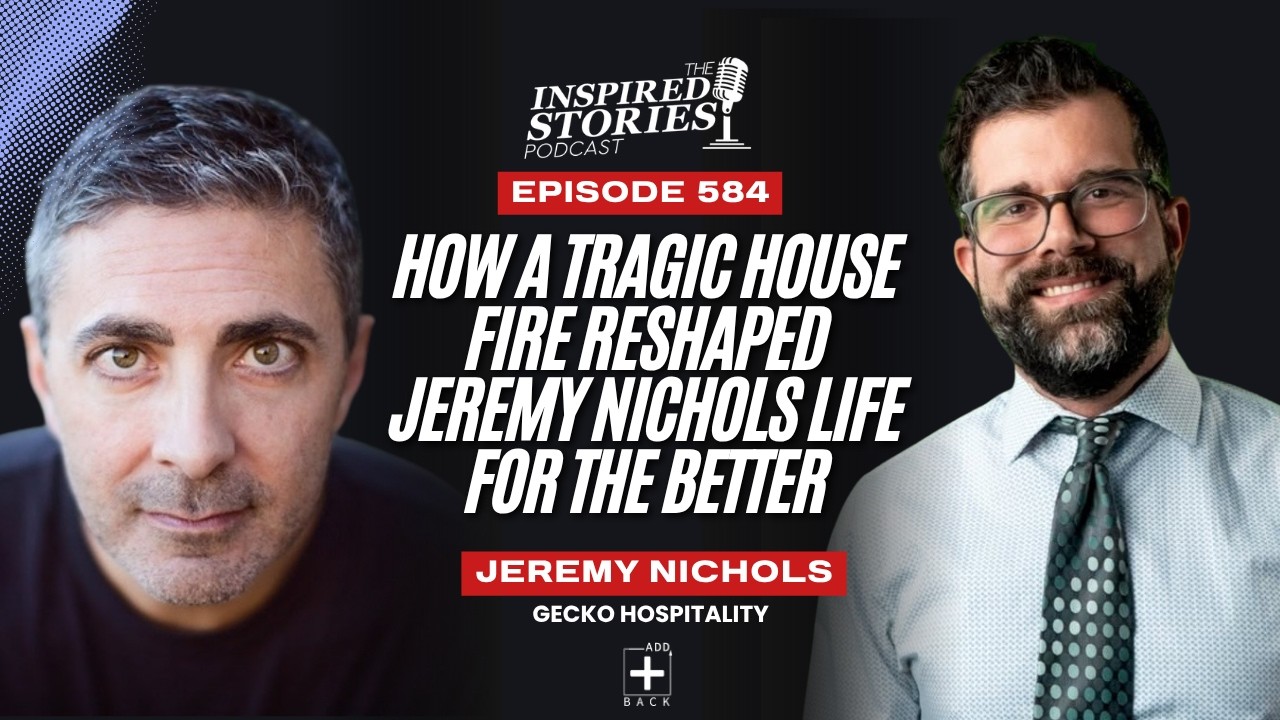
🎙️ From a Bizarre Lego Interview to Hospitality Recruiting: Jeremy Nichols's Journey Building Gecko Hospitality
In this episode, Jeremy Nichols, franchise owner of Gecko Hospitality in South Florida, shares how a strange group interview at H&M launched a career in retail leadership that eventually led him into hospitality recruiting. Jeremy opens up about the mentor who taught him to interview like a real conversation instead of a script, the impulsive call that pushed him to buy a franchise in an empty territory, and the house fire that nearly took his family before reshaping how he lives.
✨ Key Insights You'll Learn:
Landed his first retail job at H&M through an unconventional group interview built around building with Lego blocks
Trained in Germany early in his H&M career and saw firsthand how workplace culture shifts across countries
Learned to interview candidates as real conversations rather than scripted questions under mentor Martha
Spent years building a stable career in corporate recruiting before feeling pulled toward ownership
Left a director-level role after a single phone call from a former coworker changed his mind
Became Gecko Hospitality's first recruiter in Florida, building the territory from nothing
Lost his home to a fire that reduced it to the slab, with firefighters delayed nearly an hour
Quit drinking the same night as the fire after realizing how differently things could have gone
Found unexpected unity in his community's response to the fire, across political and ideological lines
Now advises job seekers to submit a short video introduction instead of relying on a resume alone
🌟 Jeremy's Key Mentors:
Martha (H&M District Manager): Taught him to interview candidates through real conversation instead of reading from a script
A Former Coworker Turned Headhunter: His phone call from the driveway became the final push toward Jeremy's own franchise ownership
His Daughter: Described as the emotional anchor that carried the family through the night of the house fire
His Local Community: Neighbors across political lines who came together to support his family after the fire
👉 Hear how an unconventional H&M interview launched a career that led to franchise ownership, and how a devastating house fire reshaped how Jeremy Nichols lives and leads.
Listen to the full episode here
Transcript
Anthony Codispoti (00:00)
Welcome to another edition of the Inspired Stories Podcast, where leaders share their experiences so we can learn from their successes and be inspired by how they've overcome adversity. As you listen today, let one idea shape what you do next. My name is Anthony Cotus Bodhi, and today's guest spent over 25 years in the hospitality industry before making a bet on himself that would change the trajectory of his career entirely.
He went from recruiting talent inside large organizations to owning his own franchise territory in one of the most competitive hospitality markets in the country. He spent nearly a decade as an expansion recruiter for HM during the retailers' rapid growth across the US, then spent almost nine years as director of recruiting at Cavelli Enterprises, one of the country's largest Panera bred franchise operators.
In 2017, he became a franchise owner with Gecko Hospitality. His name is Jeremy Nichols. He is the Florida franchise owner at Gecko Hospitality, where he oversees both the Florida Hospitality Division and the South Florida Restaurant Division. They are a national recruiting firm that places management talent, GMs, executives, and chefs, into restaurants, hotels, and other hospitality businesses across the U.S. and Canada.
Gecko has been named one of Forbes' best recruiting firms for seven consecutive years, and Jeremy has been recognized among the top 25 global hospitality recruiters by the International Hospitality Institute. But before we get into all that good stuff, today's episode is brought to you by my company, Adback Benefits Agency. And you'll want to hear this because it's hurting almost every business you know. See, health insurance costs go up every single year, and restaurants are furious about it.
They're paying more, claims are getting denied, employees are opting out because they can't afford it, and it hurts turnover and morale. It's one of the most maddening problems in running a business, and everyone just seems to accept it. But you don't have to anymore. Now there's a program from Bain Capital Insurance that gives employees unlimited access to doctors, therapists, and prescriptions with no copays or deductibles to meet. It works for your part timers, and here's the part that really shocks most people.
Our product actually increases your net profits. See, we recently helped a client add, that's add $900 per employee per year to their bottom line. Results vary, but imagine what could be done with the extra cash flow. Get your free consultation today at adbackbenefits.com. All right, back to our guest today. The hospitality and restaurant executive recruiter of Gecko Hospitality, Jeremy Nichols. Thanks for making the time to share your story today.
Jeremy Nichols (02:51)
Thank you for having me.
Anthony Codispoti (02:53)
So, Jeremy, you started as an expansion recruiter for HM, global fashion retailer, I think most people are familiar with. And this is was at a time when they were expanding rapidly across the US. What pulled you in the direction of recruiting? Let's start there.
Jeremy Nichols (03:11)
Okay. well I technically I started as an associate with HM before anybody knew who they were. I remember Clear's Day what happened. I was going to work. I worked in the mall at the time and I walked at Cohen's Fashion Optical was what it was called at the time. I don't know they're still around. And the the gates were shut.
And I remember being like, okay, what's hap what's happening here? So I didn't have a job. so I went to the unemployment office, and this is in the 90s, so people still did that all the time. And I walked there and there was a stand for HM standing there, and I had no idea what that was, who they were, but you know, looking for a job. So I it was,
Anthony Codispoti (03:59)
And this was in the unemployment office, right outside of it.
Jeremy Nichols (04:02)
yeah. Crazy, right?
Anthony Codispoti (04:05)
Yeah, it's it's smart, right? What a great place to set up a booth. But go yeah, go ahead.
Jeremy Nichols (04:06)
Yeah. Yeah. They're in
there. There was a German lady. I can't remember her name at the time, but thick German accent with like an H and sign. And she you know, I applied and I got a phone call and I know I'm gett supposed to get to the recruiting thing, but I find it fascinating like what they did as a company, if you're interested.
It's it's pretty wild.
Anthony Codispoti (04:28)
Sure. Yeah, because you you
came across them at a time where nobody knew who they were. So yeah, tell us a little bit about that. Great. Let's hear it.
Jeremy Nichols (04:33)
Yeah, it comes full circle. It comes full circle.
the whole into recruiting thing. So yeah, they called me for this thing at at they were gonna open them in the mall in Syracuse because they already had Fifth Avenue and Fifth Street open. It was like their only flagship store that was open at the time. They were opening Syracuse. And I got a phone call and they're like, Can you come in for an out of job evaluation? I'm like, What was the
No, no, it was an assessment. It was an assessment. That's what it's called. O J E was later on in life. Okay. So it was an assessment. So I sho so I'm like, okay, sure. And they're like, just just come in. They didn't tell me anything about this thing. So I walked in. There's this huge conference room with chairs around the room. There's like these tables, but I think probably around eight tables. And each table had about four to five chairs around them. And there were jerseys on the chairs. Each jersey was a different color.
The lady in the room, you walk in, she said she introduced herself and she's like, I'm the facilitator. My name is can't remember her name at the time. This was a long time ago. And she's like, and you know, Janine back there in the corner, she's a camera. Don't look at her, don't talk to her, she doesn't exist. Just just don't don't don't correspond with her. Like, okay. She's gonna pick a chair, any chair, and put a jersey on. Are you with me so far? Pretty pretty
Anthony Codispoti (05:58)
I'm with you so far. Yep.
Jeremy Nichols (05:59)
wild, right?
Anthony Codispoti (05:59)
Yep. This is this is a bizarre interview process, but yeah. I want to hear where this is going.
Jeremy Nichols (06:00)
All right, so everybody starts coming in the room. It's bizarre. Very, very bizarre. So yeah.
So she's yeah, she's so she says they pick a chair in each other, people start walking in, they're grabbing jerseys, everybody's sitting around the room. Everybody's confused, nobody knows what the heck is going on. All different types of people I noticed when they all walked in, every single person was different. Like there was like, you know, kids that are more hip-hop, there was rock kids, long hair, piercings, tattoos.
Creppy. It was just a wide range of people in this room. It was very wild. So you sit down and they say something like, Okay, everybody at the table. They kinda intro introduce themselves. Everybody, I want you to you there's a bot there's a bunch of Legos on the in front of you. All right, I need you guys at the table to build a house. All right, go.
Start building a house. And then she just wait. And
Anthony Codispoti (06:53)
So they want to see how you work together as a team. Okay.
Jeremy Nichols (06:58)
she's like stops the timer above her. All right. I forgot to tell you, every single house needs to have a door and two windows. Only two windows. Okay. So we started going. All right. I want to give you a a tennis ball. I want you guys to keep on building the house. But now, next to it, I want you to build a shed and pass the ball to the partner.
clockwise around while you're doing that. Okay, do that. And she's like, okay, next to you, you're standing next to you. There's your chair. We put blocks on them. I need you to build the tallest tower. And I want you to take take the house apart and then bounce the ball to your partner around the table clockwise. Balls are flying everywhere. Blocks are falling. People are starting to freak out. People are grumbling. The one guy leaves. Left.
Anthony Codispoti (07:48)
just left. Just walked out.
Jeremy Nichols (07:50)
It and then I'll spare you the detail, but it keeps on going and going. There's plenty of exercises like this thing. not just that. There's one on the wall. There's all these exercises. And I'm just going with it. I'm barking orders at people. I thought I failed the thing. 'Cause I was getting really trying to hold it to together 'cause people are arguing and I'm trying to like no no, we have to do this. The lady, the camera lady is walking around writing on a piece of paper.
Well, I got hired. I don't know how.
Anthony Codispoti (08:22)
How many other people
in the room got hired, do you know? Any idea?
Jeremy Nichols (08:25)
I
remember like maybe one that was hired that I remember from the room that was hired 'cause they did this multiple times.
Anthony Codispoti (08:35)
Cause now I understand what it is that they're trying to do, right? Like when
Jeremy Nichols (08:37)
Totally.
Anthony Codispoti (08:38)
you work in a busy environment, you're gonna be given one set of instructions and then things shift and they're gonna ask you to move to something else. They may ask you to undo all the work that just happened before, and they wanna see how you respond, you know, with these shifting goals, conflicting directions,
Jeremy Nichols (08:55)
Absolutely.
Anthony Codispoti (08:55)
lots of tension in the room. Yeah.
Jeremy Nichols (08:57)
But the beauty of it is even if you know that and it's a hundred percent accurate what you said, you're still gonna show your true colors. Cause this is forty-five minutes of this. you can't hold it together. Like the real Anthony will come out and
Anthony Codispoti (09:11)
Yeah.
Jeremy Nichols (09:11)
make people knew we w eventually fast forward eight years later, I'm the one that's the camera. I'm the one
Anthony Codispoti (09:19)
okay.
Jeremy Nichols (09:19)
facilitating. I did that.
I and that so yes, you're accurate and I it was fun being on the other side. But even though this has been going on for years with the company, everybody not everybody, but most people knew what it was gonna go on when they went in. They can get they can look it up on the internet, they can f it they still
Anthony Codispoti (09:33)
Yeah.
Jeremy Nichols (09:34)
freaked out, they still got mad, they still cussed, they c still swore, they still argued. It happened.
Anthony Codispoti (09:45)
So
so this is interesting because it I don't know if they still use this same methodology today, because
Jeremy Nichols (09:52)
I hope so.
Anthony Codispoti (09:52)
I've been into HM stores and I mean like their products. the associates are not always very helpful.
Jeremy Nichols (10:01)
Okay, so we can talk I can be pretty candid on that. without in this sorry if it offends people. Well the Americans took over. So like when we were doing it, it was Germans and Swedes, hands down, like flew over and they ran it. It was so it was such an amazing experience. Like the first few years when the Germans were running it and the Swedes were still over here.
We had I think we started with five weeks, six days five weeks of vacation. We had fully paid benefits. They had a room with a couch that you could nap on. They had like it was really progressive and very, very like empathetic and pro worker. It was really it was great. and then obviously, you know, you know
They started going back to Germany and back to Sweden and I trained over there. I I worked with the Germans when they flew me over. They flew me over there for a month to work with them. Different animal. Just a t totally different vibe. And the Americans? Yeah.
Anthony Codispoti (11:09)
Mm. So the Americans got their hands on it and changed a lot.
Jeremy Nichols (11:14)
Yeah. I mean, I I I mean it that's just my assumption. You know, things changed. The nar the Americans took over. The I mean the Swedish the Swedes still owned the company and run it. But like when I was over in Germany training,
I remember specifically trying to joke around with one of the associates. And I was an associate on the floor. And I remember just making a joke, as we're folding shirts, just trying to joke. And they were not playing. When the associates and the full time and part-time employers are there, they are not playing. Is this a real job for them? Over here, you know how it is. Looks like,
Anthony Codispoti (11:51)
Yeah.
Jeremy Nichols (11:52)
hey, I wanna pay my cell phone bill. And it's just
Anthony Codispoti (11:55)
Hey, I want
to be on my cell phone while the customers are trying to ask me questions. Yeah. Yeah.
Jeremy Nichols (11:57)
Yeah. Yeah, right, right. We didn't have cell phones at the time, right. You were
correct. But yeah, it's just different. They they the respect for the job and the way they handled it was completely different animal. And I trained in a few stores over there. I trained in three different stores and it was all of them were like that. And then you leave and the associates you bump into at a bar or out on the street and they're complete the super friendly and nice, but not in that in that store is not it's not time to play.
Anthony Codispoti (12:26)
They're really buttoned up, huh?
Okay.
Jeremy Nichols (12:27)
It was not time to play. Mm mm.
Anthony Codispoti (12:29)
And so you start out as an associate, you're working your way up. At some point you become the camera, right? You're the one running some of these evaluations.
Jeremy Nichols (12:35)
yeah, yeah, yeah.
Anthony Codispoti (12:39)
and then you move into specifically recruiting. And so this is
more of like
Jeremy Nichols (12:43)
Yeah.
Anthony Codispoti (12:44)
executive director level kind of roles.
Jeremy Nichols (12:48)
Yeah, so I was a I was an associate. I went into indoor display. And then I went into windows. I was dressing mannequins and doing windows, which was super fun. and then I went into management. So it was like really quick trajectory the first few years, like the first two years. and then I saw an open an opportunity to do recruiting. I thought it looked pretty cool. It got me
off the floor for a few hours because the floor we I was again I was in Fifth Avenue fifty second street I was I also worked at 34th Street and I worked in Soho crazy areas. Fifth Avenue did like a hundred K a day. It was nuts. So to get off the floor for a little bit and do interviews was a was a treat. So and then I then I actually started to love what I did. I joined the expansion team and I started flying around and opening stores with them. And
Then from there, my wife at the time, we got married. I was with HM doing this for a while. She was we were living in Brooklyn at the time and she we New York just kills you after a while. It was just ti it was just exhausting. She moved to Tampa and I was still working in New York City and we were still obviously married, but I would fly to Tampa and the Cavelli had a office in Tampa and they were looking for a director of recruiting. And
I applied because I just wanted to be with my wife and I was, sick of seeing her every other weekend and then I started working with Cavelli.
Anthony Codispoti (14:22)
And Cavelli, as we mentioned in the intro, one of the largest Panera bread franchise operators in the country. based in Youngstown, Ohio, where
Jeremy Nichols (14:31)
Right.
Anthony Codispoti (14:31)
my my wife grew up. and so you made the switch because you got to get out of New York. You wanna be,
Jeremy Nichols (14:37)
Yeah.
Anthony Codispoti (14:38)
you know, with your wife again. talk to me about the differences in recruiting between retail and quick service restaurants.
Jeremy Nichols (14:49)
Pretty much the same. there's obviously retail's different than food and beverage. Food and beverage is a lot crazier, busier. Now retail in Florida, depending on like the the store, probably not the same. Cause the pace, in fact, when I was interviewed, that was the question they were nervous I'd if I'd be able to handle it. I remember specifically in the interview with Michael, the director of ops at the time.
Asked me, you're coming from retail. You think you can handle this? And I laughed in the interview. I'm like,
Anthony Codispoti (15:24)
Okay.
Jeremy Nichols (15:27)
really? Do I and I said that in the interview, I laughed. I go, Do you know what store I come from? Do you know Fifth Avenue, 52nd Street? And I told him the numbers and he was like, I'm like, Yeah, no, not a problem. Can I handle it? Yeah, absolutely. I can handle it. So like the pace is like different. Restaurant is super fast paced. Obviously, like slower retails, slower.
but not you're looking for the same thing, customer service and stress resistance and being a team player and
Anthony Codispoti (15:56)
And so were you recruiting
frontlines then or executives or okay.
Jeremy Nichols (15:59)
I was doing managers. Uh-huh.
When I w when I was hired, I was the hire managers. And I oversaw a recruiter that handled the bakers, but I did strictly management.
Anthony Codispoti (16:12)
So were you bringing any of the ideas that you learned from H and into Cabelli or did Cabelli have very much its own set process and this is the rule book you gotta follow?
Jeremy Nichols (16:20)
No, I was the first.
I was the first. Like I was the first for Cavelli. they just needed it because it was like so much turnover and they had so many Paneras like in the Central Florida market. So they brought me on and it was an empty slate, so I was able to implement a lot than I wanted to do. But you know, I tried to I wanted to drink something like the assessment.
that H and did that just it just wasn't possible at the time. I was able to bring a lot in. Just to make it make
Anthony Codispoti (16:52)
You didn't have the resources or w why why wasn't it possible?
Jeremy Nichols (16:55)
sense and to in like the amount of managers that are interviewing at the time versus how many were interviewing for an opening is completely different. The quantity of people, right? So it wasn't really something that made sense with just a couple managers. So we did we actually did something called an OJE on the job evaluation.
where you could bring someone on the shadow and see how they acted. So that was the closest you can get to seeing how they would react. But not to the fun games and all that. But yeah, I mean, a lot of a lot of similarities in what you look for. very busy
Anthony Codispoti (17:30)
So what did your process
look like then? You mentioned the shadow experience on the job. What else? What else did you do?
Jeremy Nichols (17:35)
Mm-hmm for for interviewing, just
basically your standard recruiting sourcing. At the time, I went through all the transitions and recruiting. I was right after the fax machine, right? We were still we were still faxing when I was recruiting. it was still there, but internet, we it was much better. So emails were were flying around. I was there when the job awards came out. That was like when I was at H and
The job boards came out, the career builder, the monsters that was like, whoa, these job boards. so that was new. So then t then ATSs became big, applicant tracking systems,
Anthony Codispoti (18:14)
Applicant tracking systems.
Jeremy Nichols (18:16)
mm-hmm. And then texting mobile, mobile apps, mobile applying, QR code. So I'm I've I've seen it all even now AI.
Anthony Codispoti (18:24)
whole evolution.
Jeremy Nichols (18:25)
The AI now, right? So you know, so the answer to your question, what did I do? Sourcing.
running the applicants, trying to transfer over to an ATS, you know, doing job
Anthony Codispoti (18:38)
How successful were
you? is there some sort of a benchmark, a metric that we could understand? 'Cause you said they brought you in 'cause there was a ton of turnover, lots of trouble. What did it look like?
Jeremy Nichols (18:46)
Well, I lasted there
for nine years. So I should I've hoped I was doing well. I did I did well. turnover is a turnover's turnover, but we I was able to pretty much place most of the management in our in our stores. There was always a need here and there. We had a a sheet at directors' meetings. We every Tuesday we had director meetings and we would go over the manpower sheet and go over and look at the stores and who was there and the coverage and then where I need to focus and I'd drive to those stores and
Anthony Codispoti (19:16)
Recruit from within, like f fro
Jeremy Nichols (19:20)
no, no, no,
not from within. From out external. Bringing external management in.
Anthony Codispoti (19:25)
So going to competing QSRs.
Jeremy Nichols (19:28)
Sometimes we would do the old job fair. We'd do one inside. We'd promote open houses. People would come in, they interview do open interviews. Sometimes we would go out and have a tent somewhere. Sometimes we would go to the chamber of commerce. Sometimes I'd go pass out flyers. Sometimes it was just getting inbound applications from online. It was all sorts of things. Going to schools, we would go to schools and set up shop. I would help.
managers that needed associates. So I w even though I wasn't hiring associates, sometimes I helped with openings, store openings. So I would go do that. You know, l a lot of little like old school tricks like that.
Anthony Codispoti (20:09)
Ever go like walk into a McDonald's and just sort of observe and like, that person's good, I wanna pluck them? No.
Jeremy Nichols (20:12)
No.
No, we had cards though, you impress me cards that we've had. So if I was in like a drive through or at a restaurant, you could pass a U you impress me card out and that card had your info and they can they can contact you.
Anthony Codispoti (20:28)
And did it have the Panera name on there or was it just your person? Okay, so it was clear.
Jeremy Nichols (20:31)
Mm. Yeah. One side I was like,
my title, my name, my phone number,
Anthony Codispoti (20:36)
Yeah.
Jeremy Nichols (20:36)
the logo. And then on the other side it just said, You impress me.
Anthony Codispoti (20:39)
Nice. I like that. Nice touch. pull out a mentor, either from your time at Cavelli or your time at HM, somebody that was really instructive for you and how you carried yourself in recruiting.
Jeremy Nichols (20:54)
I have a lot of them. I think the sh the most important one that actually gave me the opportunity is Martha McLean McLean. she was the like director at the time, oversaw all talent acquisition. And she being that I live I worked in the city and lived in the city, I was fortunate enough to have the corporate office right next to us, both on thirty fourth street and fifth avenue. I mean sorry
34th Street Soho. I worked in both those those tours, stores at different times. So when I would go to 34th Street, Mar the corporate corporate office, like the Swedes and the Germans were all there. And then at Soho, the Americans were there. So I always was in front of corporates. That so I was I was fortunate to to to progress really quickly in my career because they saw me all the time. I was right in front of them. You can't they couldn't miss me. So Martha was always in the stores, and I would see Martha.
And eventually when I started wanting to recruit, she already knew who I was and was like, yeah, okay, all right, we can I can train you. And I was horrible at the first, I think. I talked to her recently too, maybe maybe a year or two ago and reminded her and she had no idea that she was such a mentor to me. And I told her the story and she just laughed. She's like, you're always great. I'm like, No, I was not, I was terrible. I
Anthony Codispoti (22:14)
Ha ha ha.
Jeremy Nichols (22:15)
remember specifically you sitting behind me, she would sit behind me and take notes while I was interviewing, and she was taking notes of me.
Not of the associate I was interviewing. And then every single time she was like, All right, Jeremy, you're just reading the questions. I'm like, That's what I'm supposed to do. It's like, No, you're supposed to have a conversation. I go, But you want me to fill in the questions? So she was like, While you're having a conversation. I don't get it. And this was like probably
Anthony Codispoti (22:43)
you were being
really like a rigid QA. She wants you to work the questions into a more natural dialogue.
Jeremy Nichols (22:46)
Exactly. A B C.
Yes. Just boom, boom, boom, boom. And I didn't understand because I'm very what's the word?
Anthony Codispoti (22:55)
Structured, organized.
Jeremy Nichols (22:56)
Structured, yeah, literal. My daughter's
Anthony Codispoti (22:58)
Yeah.
Jeremy Nichols (22:59)
really literal, super literal. You tell her you're gonna do something in five minutes, it better be five minutes, right? And I have to I have to describe to her, Well, mom doesn't really operate that way. There's literal I'm very literal. I'll be there in five minutes. She's kinda telling you like around about later.
Right. So I was very literal with the the interviewing. she I remember sp specifically she was just really she's so patient with me. God bless her. I remember it's like two months. I don't even I don't even know how I made it that long. I I really I would have gave up on myself if it was that bad. Yes. Yes. No,
Anthony Codispoti (23:35)
Was there a moment where the switch flipped for you or was it more like a dimmer that went
Jeremy Nichols (23:40)
no, I already knew what you were gonna go with. Yeah, no, it was one it was one moment.
I had I remember I don't remember her name, but I remember the candidate. She walked in. She was coming out from the Bronx. She was a West Indian girl, young teenager. She had like dreadlocks. and I remember at the time I was really into like Jamaican food and Caribbean food, right? And I don't know why. I just like she's I heard her accent and she was talking and I and I told her we were talking about food in the beginning. And I remember just kind of chatting with her.
And then talking about the Bronx and then asking questions and then going back to this and in and weaving in and out of questions and talking to her. And I remember not really knowing if that was good or not. And she left and Martha stood up in her chair and goes, You got it. I'm like, wait, what? She's like, that's exactly what you gotta do. I'm like, my God, that that's what I have to do. She's like, Yeah, that. And it was like like fire hose. After that, I knew it.
I can talk to them. She's like, that's what I've been telling you to do. I'm like, but I can like talk to them like like like I'm talking to you. She's like, Yeah. Like, my God, okay, I could do that. And then it was done. Then it was
Anthony Codispoti (24:47)
Just be a human being, not a robot, Jeremy, huh?
Jeremy Nichols (24:49)
done. Yeah, it was easy after that. Yeah. It was that quick.
Anthony Codispoti (24:51)
Now
now that's interesting. so my wife, she works as a speech therapist in a low income school district, preschool young kids. And so they've got kids who have special needs, and they've got kids that are peer models. And so, these are kids that are, more adept, more functioning, and by ha the idea is by having them around kids with more needs, the kids with more needs can sort of learn that, you know, this is how.
Johnny does it and and see from somebody at their level. and so I wonder like, would you have benefited from like seeing somebody else do it the way it was supposed to be done? Or maybe you had, you had, okay. You just hadn't done it yourself. You hadn't found that gear within your own body yet. Okay.
Jeremy Nichols (25:31)
I did though. I just didn't get it. No. I
saw Martha interview. She did that. I just don't know what was wrong with my like my brain doesn't operate that way. It's very literal. And like it I I don't know. God bless her. You know, she she stuck in there and then
She's so proud of me and she was like she would just give me so many so many flowers when I was talking to her and I was like, me, I would I'm the one that's like looking up to you. She's like, my god, but what have you done with yourself? I'm like, I wouldn't even be here if it wasn't for you, Martha. So if
Anthony Codispoti (26:11)
Wow.
Jeremy Nichols (26:11)
you're listening, Martha, I'm gonna tell her tell her to listen to this pod.
Anthony Codispoti (26:13)
Martha McLean. I love that.
So I love I love talking about mentors because I think that's one of two really big buckets of places that we learn from. In my experience, the other big bucket is really challenging work experiences. Like something went wrong and you had to fix it. you learned to do something different going forward. And it's because it was wrong, because it went badly, it sort of
Burns, it etches this memory into your cells that you just can't forget. Can you think of a time like that?
Jeremy Nichols (26:51)
Where something happened that made me make a decision.
Anthony Codispoti (26:54)
Something something went against the plan, something went poorly, an uncomfortable situation, something went south, and you had to fix it. And it taught you a different way to do things or just gave you a new perspective on how to approach what you were doing.
Jeremy Nichols (27:14)
I I have a few. One of them I I can't share because Yeah. Don't wanna talk poorly about somebody. I got I can think of how to loosely tell the story without s no, I can't. Can't do it.
Anthony Codispoti (27:27)
Can't do it.
Jeremy Nichols (27:27)
It'll be obvious.
Besides that besides that one. let me think. Difficult. I mean, like, honestly, everything was difficult. Like when I look when I lived in New York City, the whole thing was difficult. The whole thing was resilience. Everything about it. Just just working, you know, late nights, to closing the store at nine, getting home at two in the morning, walking through Brooklyn and in Bushwick when Bushwick wasn't Bushwick, when Bushwick was bad. I'm talking Broadway.
On the J line, not the L line, people that are knowing, I'm talking like early two thousands, Bushwick, terrifying area at like two in the morning. That was rough. Trying to like to hustle, get into management, get into recruiting. Like everything was a grind. Like my whole trajectory to get to where I am now was a grind. Like even prior to
Anthony Codispoti (28:19)
How about a maybe a hire
that went south? Somebody you recruited, you brought in, and boy, that didn't work out.
Jeremy Nichols (28:25)
Let me think here. Hmm. Not specifically.
Anthony Codispoti (28:30)
All right, maybe we're pulling at the wrong thread here.
Jeremy Nichols (28:32)
Yeah, you know specifically. I mean like I don't have one huge big bang of something bes besides like what motivated me to go on my own. But other than that, everything was
Anthony Codispoti (28:48)
So
Jeremy Nichols (28:48)
pretty calculated.
Anthony Codispoti (28:49)
yeah, so what did motivate you to go on your own? You were with HM for several years, you're with Cavelli for several years, and then you decide to go out on your own, become a franchise owner at Gecko Hospitality. What was driving that decision?
Jeremy Nichols (29:04)
At the end of being a director there, I don't like complacency. I don't. And I don't operate well under complacency. It's like a demon of my career. I don't like it. And at the end it was just so monotonous and so repetitive. Every season, every every the quarter is all predictable. I knew everything was gonna happen.
And I I I am really terrible at poker face. I have zero poker face. Anybody that knows me will know when I'm mad. When I'm ready to go, I'm ready to go. I can't cover it. I can't fake it. I cannot do it at all. And they knew. They could tell. Even though I didn't think I was showing it, they knew. Like they knew something was wrong. I kept on getting is everything okay? You know, that kind of thing. And I'm like, I think I was for a few months I wasn't being honest with myself.
And then I had a few things that happened that I didn't like it wasn't really something I aligned with. And I just had this epiphany. and then the final straw was there was a director that left that was very successful. And he left and he went into recruiting and he wasn't a recruiter, and he became a headhunter, and he called me and I was in my driveway. He's like, Jeremy.
You won't believe what I'm making right now. I'm like, he's like, what? He's like, I'm a headhunter right now and tell me like what he's making. I'm like, what? He's like, You gotta get out of there. I'm like, Well, I I have I'm I'm doing good at my career, you have my company car, I got this, that, and the third. He's like, No, no, no, no, no, you're so good, you gotta get you get you gotta go, you gotta be a headhunter. And that tied in with a complacency and tied in with everything that was going on at the time. It was just
I started started thinking about it. And then I did my research and I started interviewing at firms. I was gonna go on my own. That didn't make sense to me. It's just that's too much of a risk. I met with Robert Kurzak, the president of Gecko at the time. and he was awesome. He was super like being someone who was super successful like him and s and as self-made, but so humble and so blue collar was just the
the coolest thing meeting him and I went with Gecko. I just I just put him my notice. I gave him a two month two month notice too to train my my replacement and then I went on my own.
Anthony Codispoti (31:40)
So you went on your own, but you you went with a franchise. Why go with a franchise opportunity rather than going on your own?
Jeremy Nichols (31:48)
Yeah.
Anthony Codispoti (31:49)
Because
Jeremy Nichols (31:49)
Well, because you don't have to worry about, you know, working with legal if like things go bad or south with contracts or an agreement, you know, someone doesn't want to pay an invoice, you know, you're by yourself, you have to handle all that. You have to you have to you have to take care of legal.
Anthony Codispoti (32:06)
So they take care of a lot of the back office stuff.
Jeremy Nichols (32:08)
Yeah. All all that. but I have full autonomy, so that's what I like about Gecko. I do what I want.
I'm very vocal. I have my own podcast. I have my own YouTube channel. I d I'm out there doing my own thing. I'm not told you have to follow the guidelines. I do what I want. but I still have the backing of the brand. And the company's great. They're super supportive. and I just it made sense. When I did start though, I walked into an an empty I had nothing. I was the first hospitality recruiter in the company. Like at the time, they divided
Restaurants and hospitality were together. Now they're two divisions. So think about that. Yeah.
Anthony Codispoti (32:50)
So restaurants that by hospitality is that hotels or is that a bigger umbrella than that?
Jeremy Nichols (32:55)
Restaurant culinary is one, and then you have like hotels, resorts, country clubs. That's a different animal. I was the first hospitality recruiter. And it was hard because this is coming from owners that used to own that. And once their contract renewed, they lost it.
So here's this guy walking in, who's the first of the new rollout, and I'm taking, you know, Florida, which was fine at the time, but I'm also taking hospitality jobs 'cause there was none of the I was the only one at the time. So I was taking stuff from all over. That was definitely a transition.
Anthony Codispoti (33:31)
So there were some other franchise owners who had contracts through they they were under the gecko umbrella.
Jeremy Nichols (33:37)
Yeah, because you sign
Yeah, you sign a you know, five year agreement, right? And you have the rights and then you have to re-sign like any franchisee would. And if you choose to resign, you have to resign under the new agreement and there's two divisions. So you can either purchase and run both divisions, or you can let go of the hospitality and take restaurant. I had to do the same thing too.
So I have restaurant. I have hospitality's mine, but then I took Salford restaurant on top of it.
Anthony Codispoti (34:11)
Gotcha. And so some people chose not to when their five year renewal came up, they chose not to buy into the hospitality part of it. And so those
Jeremy Nichols (34:14)
Mm-hmm. Yeah. Exactly. Exactly.
Anthony Codispoti (34:19)
contracts are now up for grabs and
Jeremy Nichols (34:22)
Mm-hmm.
Anthony Codispoti (34:22)
you're you're sort of in line for those. Okay.
Jeremy Nichols (34:26)
Yeah, but now this this this was nine years ago, eight, nine years ago. So you know, there's there's everybody everybody all the territories are are pretty much called for. There's hospitality recruiters everywhere, everything's fine, but at at that specific time when I s when I started I was the first one.
Anthony Codispoti (34:43)
Yeah. So there was a bumpy transition. Maybe not everybody was real happy with Jeremy coming in and taking their deals.
Jeremy Nichols (34:48)
what's I
yeah, it's funny is I didn't really see it. But in retrospect, now I'm like, yeah, I think I I can see a little of a few people. Most everybody was really cool, awesome, welcoming. But you could feel people weren't happy about the not me, but the situation, right?
Anthony Codispoti (35:07)
Yeah.
Jeremy Nichols (35:08)
But I was kind of oblivious to it at the time 'cause it was I had too much on my plate. So
Anthony Codispoti (35:12)
So put it into
plain English for us. What does Gecko hospitality do and who do you do it for specifically?
Jeremy Nichols (35:19)
So third party headhunting recruiting firm. I do executive search. So anything salary from a country club that needs a CFO to a restaurant that needs a sous chef to director of operations for a hotel. I do salaried upper management. I I have recruiters that work for me and they do most of the management level director searches. And if there's any C suite, I take that. I I do executive search.
Anthony Codispoti (35:47)
And if it's something lower than that, it goes to who?
Jeremy Nichols (35:51)
I have recruiters. I have a few of Yeah. They're mine.
Anthony Codispoti (35:54)
That are your employees or they work for corporate? Okay.
Jeremy Nichols (35:57)
No, they're mine. Yep. They work under my my umbrella.
Anthony Codispoti (36:00)
Do you do any frontline stuff like the really high turnover positions?
Jeremy Nichols (36:05)
No. No, no. No hourly.
Anthony Codispoti (36:08)
That
that's more of a a temp staffing a
Jeremy Nichols (36:13)
Yeah, that's the store should do that internally. I don't I don't handle that.
Anthony Codispoti (36:17)
Okay. so Gecko's been named one of Forbes best recruiting firms, seven years running, we mentioned in the intro. you've been named personally among the top 25 global hospitality recruiters. how did you get that recognition? What is that measured of?
Jeremy Nichols (36:37)
I'm very active in my market. Very active.
Anthony Codispoti (36:44)
What does that look like?
Jeremy Nichols (36:45)
Very connected. I definitely very vocal in my industry and especially Florida specifically. You know, I again I I I host a hospitality podcast, so I'm in front of all the decision makers in my state. We have some pretty well known guests on there from the industry. I have a YouTube channel that's been around for a long time that's Canada focused.
for Canada tips. So I'm in front of those. That's that side. I write a newsletter, the Florida hospitality brief that has I don't know, four thousand, almost five thousand subscribers. So I'm I'm pretty out there.
Anthony Codispoti (37:29)
Why Canada focused on the one channel? It's not your market.
Jeremy Nichols (37:33)
Canada?
Anthony Codispoti (37:34)
Yeah.
Jeremy Nichols (37:35)
That's not mine though, that's Gecko, right? Yeah, yeah, yeah.
Anthony Codispoti (37:38)
okay. I thought you were talking about your credentials. Yeah.
Jeremy Nichols (37:41)
No. I love Canada though. Used to go there all the time, but no, I don't I don't run any operations in Canada.
Anthony Codispoti (37:48)
Did I mishear you then? I thought there was a was it a YouTube channel that was Canada oriented?
Jeremy Nichols (37:53)
candidates. Can candidates, yeah. Yeah, candidates. Not candid.
Anthony Codispoti (37:55)
so I did mishear you. Canadates, not Canada. All right. I'm
gonna get the wax cleaned out of my ears.
Jeremy Nichols (38:02)
No, I should I should I should just not mumble. That's my problem.
Anthony Codispoti (38:06)
you got a good mic, you you speak pretty clearly.
Jeremy Nichols (38:09)
All right.
Anthony Codispoti (38:10)
so so tell us about the podcast. What's it called? You say you had some really notable guests on there. Maybe give us a couple examples. And what what do people get
when they tune in?
Jeremy Nichols (38:19)
yeah, checking in with Dr. Peter Ritchie, who's works at FAU down in South Florida, which which is a big hospitality program. And Peter and I met on a on a different podcast during COVID. Peter is amazing, super well connected in the industry. We've been friends for a while and then we decided since we always have these conversations by ourselves on the side
let's let's just do a pod because it's fun. You know, we wanna we wanna make it more conversational, kinda like how we're doing it right now. A lot of the ones that are out there. They're they're great. there's so much there's a lot of great podcasts in hospitality, but we just wanna do it like our way. and we we cover everything. We had representative from Forbes on l last month. This month I had two keynote speakers. I had Ryan Mitten and Christine Trippy on who are
very well known in the industry, travel around the country, do a keynote I have a lot of I've had, you know, top C suite VPs of HR on. I mean if you go to my YouTube channel you can see there's we're going on a year next next month. So there's plenty of episode on there.
Anthony Codispoti (39:35)
How many episodes? What do you talk about?
Jeremy Nichols (39:37)
Right now?
Well we're we're a monthly, so we have eleven on there right now.
Yeah. Yeah, I can't commit to I can't commit anymore.
Anthony Codispoti (39:40)
Okay. And what do you talk about? What what if I if I tune in, what what am I gonna learn?
Jeremy Nichols (39:45)
Depends on the it depends on the month. you're gonna learn about the topic. yes yesterday it was actually our episode with Christine and Ryan, so it was all about customer service, guest experience. So it really depends on on the topic. I think our next one might be with Ohoa, which is the Asian
the Asian American Association hotel own ownership. They they have like about sixty percent ownership of hotels in our country. So I have a representative from OA. It just depends. I might have one from the boutique lodging association on coming up.
Wide topics.
Anthony Codispoti (40:27)
Yeah. I wanna pick your brain a little bit, see if myself and listeners can learn from your expertise. Think about good questions to ask in an interview that helps to unearth things, expose things, help you understand that person better in a way that a traditional interview question might miss.
Jeremy Nichols (40:50)
For the for the interviewer or for the candidate?
Anthony Codispoti (40:53)
For for the interviewer. So I'm somebody who's hiring, I wanna bring somebody in. What are what are some good questions
Jeremy Nichols (40:56)
Or inning rewer? man, it's
Anthony Codispoti (41:00)
I should ask and what should I be listening for in the answers?
Jeremy Nichols (41:07)
the main thing would be what Martha taught me is to just have that conversation and really loosen them up. If you go in from the gate with those structured questions, those repetitive questions, you're gonna get a guarded interview. if you talk about yourself too much in the interview, you're you're gonna give them too much to work on to answer the way they they think that you want them to answer.
I i as a headhunter, we were able to have way more transparent conversations than internal recruiters are because they don't know what role we're calling about. Whereas as an internal recruiter, you know, they know the company, they know what, you know, the company represents and they can answer the questions the way they think that you want to hear. Whereas a headhunter I can call and I can have a more transparent conversation with them. They don't know the requisition. Typically it's a networking call and I can just chat with them.
see what see talk to them about their career, their trajectory, what they're looking for, their salary requirements, what motivates them. Talk about you can do a little bit of the you know quite the situational questions, you know, they call it star. You probably heard that term before. A star question? Situational
Anthony Codispoti (42:21)
Give us an example. Mm-hmm.
Jeremy Nichols (42:24)
task action result. Tell me about a time.
Anthony Codispoti (42:27)
Yeah, I'm trying to give the
the listeners something concrete that maybe they're in a position where they're a recruiter, they wanna be a recruiter, maybe they just have their own company and they're looking to hire
Jeremy Nichols (42:36)
Yeah.
Anthony Codispoti (42:36)
folks and maybe they struggle in the interview process.
Jeremy Nichols (42:39)
Yeah, I try to avoid the hypothetical questions. The star questions is a really standard way to ask questions. Situational task action result. So tell me about a time that you were like you asked me that same question. Like you had a difficult time on the on the on the sales floor. You were working as an associate at XYZ. Tell me about a specific time that you had a challenge and they'll tell you. You ask them what the action was, you ask them.
what the result was, what what happened after that, right? So star s situation task action result.
Anthony Codispoti (43:15)
So let's now turn the table and I think how you were originally understanding the question. now I'm somebody who is interviewing for a position.
Jeremy Nichols (43:23)
Uh-huh.
Anthony Codispoti (43:25)
what are some things that I should do in that interview process to give me a good chance?
Jeremy Nichols (43:31)
I'm gonna tell you cliche things. this is like stuff that I tell everybody. Just be just be honest. Just be yourself. Because if you go in there and you're being someone that you're not, they're not hiring the real you. Now, I get it. Some people really want the job. If you have something on your resume that you know is a
red flag, I would address it right away. Cause they because the interviewer knows. Like for instance, if you're if you have a lot of short stints at your last few jobs, they're already thinking you're a job hopper or wondering why you did. So you would make sure you have those answers already ready. You're not stumped. If you left the industry and you want to come back to the industry that you're applying for, you know they are thinking, why does Anthony want to come back and work in hospitality? He left for four years and he was working in a dental office. Why does he want to come back?
Be prepared and bring that up. Be prepared for those kind of questions. So if you have writing thing on your resume that looks like red flags, definitely do your homework on the company. That's super important. Do your homework on the interviewer, that helps too. You don't have to drop a bunch of facts, but just be prepared. Always have questions at the end. Always have like one or two questions at the end of the interview.
Anthony Codispoti (44:53)
What's a good
question for the interviewee to ask?
Jeremy Nichols (44:58)
For the interviewer?
Anthony Codispoti (44:59)
I interview the the applicant.
Jeremy Nichols (45:03)
nothing too fancy. Maybe something like what would my first ninety days look like? What what would make my first ninety days a success in your eyes?
Anthony Codispoti (45:12)
I like that second one. Yeah. You can show that they care. I I want to be in a position where I can be successful. and you say do some research on the person doing the interview, research on the company. What does that look like? What should they be doing and looking for in that research process?
Jeremy Nichols (45:30)
Quick Google
search, LinkedIn, just seeing a little bit who they are, their title, maybe where they went to school or where they worked, you know, maybe their their career trajectory, just to kinda know. You don't really have to say anything. It's just good to know foundationally when you're speaking to them who they are.
Anthony Codispoti (45:49)
Good. You said before, you've been in the space for so long, you've seen the evolution of the practices in the field. and today AI is hot in just about everything everybody's doing, particularly in your field. How are you guys using it?
Jeremy Nichols (46:10)
a lot. I mean it helps tremendously with sourcing. Now it's always just a buffer or a starter because if you're sourcing for candidates and you rely strictly on AI, you're gonna miss out on intricate details that AI is not gonna pick up on. Like for instance, if you're looking for a director of operations for a resort.
Okay, I'm just making this up on the fly, but and you you can look up on AI directors of operation with this amount of experience working in resorts, right? Great. You find them, that's a good buffer to start with. But then there's like titles out there that don't exist that are only specific to that company that are not gonna pop up with AI. I've seen one time director of fund.
Which was like a director of events, right? But person great candidate. The company gives them that title. They have that title. But it's not gonna pop up. So I'm gonna miss out on that candidate. Right. So I tell my recruiters, like, yeah, use it. Start off, get your first pipeline of people that you're gonna hit, but make sure you manually thumb through and look and and make your make your your the job
The jump specs that you're looking for, make sure you don't close your umbrella too much. So it's AI for sourcing helps, helps with everything, helps with even replying in email. you know, if you want to reply, it gives you good foundation. Typically I I write my own emails and I use it to clean up stuff because if I'm typing really, really fast, I don't I I'm just like fixed grammar and spelling in this. You know, I don't really I want to get the email out quick. So just fix this. But I don't I try not to use any like
Cut copy and paste AI because i it's pretty obvious when you do that.
Anthony Codispoti (48:06)
So it's more of
a brainstorming tool for you, it cat catch my misspellings
Jeremy Nichols (48:09)
Yeah, yeah.
Anthony Codispoti (48:10)
and my my grammar mistakes.
Jeremy Nichols (48:12)
Research.
Research is huge on it. doing really good research if you're doing business development, if you're looking up companies. it's it's good for a lot of things. It's a good tool. It's just basically having your own virtual executive assistant.
Anthony Codispoti (48:28)
So I've talked to a number of people who are searching for jobs and they're applying and they're applying and they're applying. And they're not like in many cases, not only are they not getting called for an interview, but they're getting an immediate rejection email. And it's clear at that point that they're using some sort of AI tool that did probably exactly what you're describing, which is they're looking for a title, they're looking for a length of time that they were at a particular role.
a certain company size, et cetera, they're not making it through that filter. But in one case in particular, a friend that I'm thinking about, it's a former business owner in that industry, very successful, and it's just decided, they don't want the headaches and the risks of being a business owner. But because they don't have any of those titles that it's looking for, they get filtered out. They don't even, get a glance. Any advice for folks that are in that position where it feels like, man, they're not
not even getting a chance to show who they are.
Jeremy Nichols (49:31)
Plenty of advice. So your friend is I mean, my first question would be if I spoke to this person, I would say, well, okay, looking at the job title, are you qualified? Like I know you want the job, but are you qualified? If they said yes, I'd say, Okay, why? Why are you with the role that you have, if you don't have apples to apples title, why do you think you're you're a match with that? They'll tell me. I say, Okay. So get on Loom.
Go on Loom, record your 20 second elevator pitch. Why you what you just told me makes you the fit. Look at the camera and do a quick Loom video to the hiring manager specifically. Get the URL from Loom, go in the email, email them, make a hyperlink, write email, hey Anthony, I saw that you're looking for.
To fill this job, XYZ. I made a quick video for you to tell you why I'm the perfect fit for the role. please just give it a it's it's 20 seconds long, please give it a watch, you know, and you put the hyperlink and you can rename it video for you or whatever, and then just address it to them. I've not like like think about this. Even if they're not a fit, I've done this before in B D, looking for a client.
that I wanted to work with that it's a long shot. And I got a call back. Even though I didn't get the the the role or the search. I've had a few people, like I'm talking, I can count them on one hand who have done that to me. And only like one time was a fit. I call every single one back because I'm like, my God, I can't believe they did that. They actually took the time to to do that. They cut through the noise. So
Anthony Codispoti (51:29)
Great tip. How do they get the email
Jeremy Nichols (51:29)
Yeah. a video or
Anthony Codispoti (51:32)
address?
Jeremy Nichols (51:34)
easy. I mean guess I guess it's easier for me, you know. But they can all right, here you go. Here
Anthony Codispoti (51:38)
You've you've got access to databases and tools.
Jeremy Nichols (51:41)
you go. So it's super easy for a headhunter. We can get anything. Call a headhunter. See if see if they can try to get you in. If they can't, you can get the contact info from them, right? Or you can go on there's like free like Apollo has a free
You can trial. I think Norbert has a free trial. I don't think Zoom Info does. There's a few of those out there that do good lead generation or lead gen that can get the that contact info for you. You can go on LinkedIn. You can usually you look you look up their contact. If you can't get it on LinkedIn, I would try like one of the lead gen tools. Or if you're nervous about the video, go on LinkedIn only on your mobile phone. You can't do it on the desktop.
There's an option after you connect with them and they're when they're first, connect with them first. You can go into your messages and you can leave a voice memo or a video memo. You can do a video memo too. But if you don't feel comfortable doing video, do a voice memo and do your elevator pitch in there.
Anthony Codispoti (52:42)
Love
it. Love it. Okay. Some great things for people to try who may be feeling a little bit stuck in their job search. Let's shift gears now, Jeremy. I would like to hear about one of the hardest things that you've had to overcome and what that taught you going through it.
Jeremy Nichols (52:58)
well, I think it's definitely one thing. It was three years ago, I think. Yeah, three years three years ago and September September third will be the the the third year. our whole home burned down to the ground, down to the slab. my daughter, my my wife and I were in the home. We the the the garage caught on fire, the car blew up, the whole home went down, we lost er everything.
really difficult, difficult time. so much positive came out of it. It's probably what there's a lot of great things that came out of it. Right. So at the time I would say if suicidal was like a 10, I was probably hovering around an 8.5. It was pretty bad. It was pretty bad. I remember just staring into like the abyss and just being
I can't even talk. I remember being my daughter was five at the time. She was like a rock. She does Brazilian Jiu Jitsu. She's been doing it since she's four. s do you know what Brazilian jiu-jitsu is?
Anthony Codispoti (54:10)
Yeah, but explain for the audience. Some folks might.
Jeremy Nichols (54:13)
Okay, so p for those that know, most people hear jujitsu and they're like, it's a karate. It's nothing like karate. This is super combat grappling
Anthony Codispoti (54:20)
Scrappling. Yeah.
Jeremy Nichols (54:22)
submissions. So you think of the MMA when they're on the ground and they're doing like triangles or choking or or doing an arm bar and tap when they tap out, tap out. Okay. That's a submission. so Brazilian jiu-jitsu is like ground game grapple grappling. There's a little judo when they do a a toss on the ground.
But my daughter started when she was four. It was just for self defense. She did it a little bit when she was four. After the fire, she really gravitated towards it. And I think that was something that helped her get through it because she was a rock. And now to this day, she still does it. She competes like once or twice a a month. She's super competitive and like trains at a competitive gym now and does like five days a week. She and she's eight and she's a
She's a monster. But ever since then, I think that was that what happened to her. For me, I quit drinking because at the time, crazy, I I didn't drink a lot, but I would drink on the weekends and there was a it was a Labor Day party we went to. And I came back home and I remember knowing that the next day I didn't have to work. So my my wife and my daughter went in the bedroom and they were saying their prayers. And I remember I poured myself a stiff
bourbon. Okay. And I didn't drink it. So this is the this is the part. I did not drink it yet. I had it. I sat down. I remember specifically Clears Day. I was gonna watch Bat the Batman movie with the new one, right? You know, talking about the new one that more the the d the detective one. Can't remember the the the guy's name. That's that mean
Anthony Codispoti (55:59)
Yeah. Yeah, I I don't remember. I know which one you're talking about.
Jeremy Nichols (56:02)
yeah but anyway, the newer one. I was gonna watch that. And it was I was watching the beginning I didn't
sip it yet and then I heard all the alarms going off. Long story short, got second degree burns in the face. I had like bandages all over my head. My fingers were all like gross. I don't know how I healed so nicely. Not this that's not arrogance. I mean it's that you can't really see it. I had a little
Anthony Codispoti (56:23)
No, I have no idea.
Jeremy Nichols (56:25)
little bit on my nose, you can see, but nothing like too crazy unless I point it out. But really gr it was really bad. I looked like a mummy. with like yellow like oozing crap out of it. It was gross. But anyway.
but the drinking part, I knew right after that, I was like, What if I drink that bourbon? What if it was like a half an hour later?
What was what if it was forty-five minutes later? Would I have left as fast as I did? 'Cause I was fighting the I I went out twice. I took a fire ext extinguisher, went to the garage, and started spraying everywhere. And then I th I threw it when it ran out, and I went to go get the second one. And I came over and my daughter and my wife didn't even know where I was, but I was screaming to them to get out of the house. I'm screaming, screaming, screaming, screaming. And they were like,
trying look for me I made them get out of house and they were like I don't even know where they were. I was trying to fight that thing like an idiot. The second fire extinguisher halfway through and I just started feeling the burn and I just threw it and I left and I had like my shorts on and a t shirt, no shoes, watched across the street and watched the whole thing go down. And to make it even worse, I watched it happen. We have a fire house like a mile away. But at that time
Twenty minutes before we find this, we find this out later. There was a fire they all went to 20 minutes before us. So we watched it.
Anthony Codispoti (57:55)
So there's nobody there.
Jeremy Nichols (57:57)
Nobody for an for an hour. I watched my car blow up. I watched the whole house just start crumbling. And I remember being like, Where are they? Just falling down.
Anthony Codispoti (58:07)
So take me to the part of your okay.
Jeremy Nichols (58:09)
wait, wait, wait, wait, wait. I didn't finish that. Sorry,
wait. The bourbon part. So I the reason I stopped is because I never want to be not in control. Cause anything can happen at any time. And I hang out with people that drink all the time. It's completely fine. I'm not condon I'm not saying it's bad. I'm just saying for me personally, like after experiencing that, I never want to be not aware. That's my
Anthony Codispoti (58:32)
No. So take me to the point
Jeremy Nichols (58:34)
Yeah.
Anthony Codispoti (58:35)
where you're like eight and a half on the ten point suicidal scale. What got you through that? And other than the fact that you quit drinking, what were some of the other good things that come from?
Jeremy Nichols (58:48)
Well, I'm a cr I'm Christian. I go to non denominational church. Pretty progressive. my daughter goes to a Southern Baptist private school. so I th I felt a lot closer to God. I think I felt closest to God in the darkest moment, which is very weird. Like I think, you know, you hear you hear that from people all the time. You hear it's either
one way or the other. So I was on the extreme, like felt really connected to God, felt really blessed to be alive, felt really like connected. The community was great. Everybody came around and supported us. We got like a GoFundMe, I it was like sixty thousand dollars in GoFundMe. And it was from like the church, her school, her school was great.
again, I'm non-denominational, but she goes to a Southern Baptist school. So just seeing different types of people come together. I'm pretty into politics. I can tend I I used to be, I'm not anymore. I used to be pretty not judg judgmental is a hard word, but pretty close to like certain things, very opinionated. however, now I'm not because I remember when it happened, no matter like what you
Who you voted for, I had all types of people helping me helping us out. I had guys wearing like MAGA shirts, and I had super progressive, liberal people that I know, all helping. No one was talking about none of that stuff. It didn't matter. So, like that was one thing that came out of it that was good. So I yeah, say like my faith, you know, just be more accepting to people.
The whole, just quitting drinking. that a lot a lot of good came out of it.
Anthony Codispoti (1:00:49)
When did you feel like you were on the other side of the tunnel? The dark
Jeremy Nichols (1:00:53)
when I was feeling better. That was that was just really slow. I I went to we we went to therapy. All three of us. My my daughter went to therapist 'cause she was she was doing she was acting a little bit like not herself, like strange. Like she was very tough and like didn't cry or nothing like that. But she would just do weird things like we went to dinner one time which we were friends and she went under the table. Like what are you doing? Just bizarre like
stuff like that. So she went to a therapist and that helped her. And my wife and I went and then we had medication for the first few months. I stopped, but like at the time you needed it, it was pretty bad. So that that helped. Just having someone to talk to.
Anthony Codispoti (1:01:39)
As you think about the work that you're doing now, Jeremy, what is it that you most want to be remembered for?
Jeremy Nichols (1:01:48)
For work? I mean, I don't really you know, as much as I love my job and appreciate everything, I I really don't really care to be thought of for my work. I really don't.
Anthony Codispoti (1:02:01)
What do you want to be thought of for?
Jeremy Nichols (1:02:03)
And for being a good father and being a good human. Like if you pass, you know, when you go to like celebrations of life and all that, like no one talks about I mean, maybe I've never seen anybody talk about.
I see them talk about how the person was as a good human. and I don't want them to be lying about it. Like, you know, you go to one and you're like, I don't know about that. Maybe you're pushing it, but no. I want it to be genuine, right? Genuine good guy.
Anthony Codispoti (1:02:33)
Okay, I've got one more
Jeremy Nichols (1:02:34)
Good new men.
Anthony Codispoti (1:02:34)
question for you, Jeremy, but before I ask it I wanna do a few quick things for the audience. First of all, folks that wanna get in touch with you, should I give your email address? What's the best way for them to reach out to you?
Jeremy Nichols (1:02:45)
Email's great. LinkedIn, I'm on there all the time. So LinkedIn's good.
Anthony Codispoti (1:02:51)
So your email address,
Jeremy at GeckoHospitality.com. We'll put the LinkedIn link
Jeremy Nichols (1:02:55)
Yeah, Jeremy at Ecko Hospitality.
Anthony Codispoti (1:02:57)
into the show notes for folks. But if you search for Jeremy Nichols, N-I-C-H-O-L-S, and Gecko Hospitality, you'll find him. also, if you're enjoying the show today, please take a moment to subscribe wherever you're listening. See, that also sends a signal that helps others discover our podcast. So thanks for taking a quick moment to do that right now. And as a reminder, you can finally get your restaurant employees access to therapist.
Doctors and prescription meds that counterintuitively actually increases it increases your company's net profit starting in the very first month. There's no copays, no deductibles, a lot of part-timers qualify, and we specialize in high turnover environments. Learn more about how to have happier employees and a stronger bottom line with this Bain Capital Insurance product at adbackbenefits.com. Okay, so last question for you, Jeremy. A year from now.
What's one very specific thing that you hope to be celebrating?
Jeremy Nichols (1:03:55)
Man, there it's the first thing so is so bad. You're just gonna laugh. Like I told you before we got on the call, I'm very involved with my daughter. like that's like the main thing that I I'm into. Honestly, I just wanna s I love watching her fight. And like I and out of all things, I there's like so much that she's done in her game, which is funny 'cause I never really watched it before. I'm I'm a huge hockey fan.
So people are listening might think some of them some huge fight fan. I never was, but I've grown to learn and love Brazilian jujitsu just 'cause I'm around it all the time. So one thing in a year, I really just want to see her trajectory and like she's doing so well and and she's like if you look her up, her stats are online and like you could watch all that's crazy. But she's been doing like some huge tournaments and I want to see her take gold at Pan America. That'd be freaking awesome.
I'd love for her to take gold at A D C C and just watch her 'cause it's so insane what she does and I just w love watching it. I know.
Anthony Codispoti (1:05:03)
Do you get involved in training, coaching, or do you just sort of stand back and let letter instructors
Jeremy Nichols (1:05:06)
No, I stand back.
Anthony Codispoti (1:05:09)
do everything? Yeah.
Jeremy Nichols (1:05:10)
I stand back. I have that she has goes to a really super competitive school. Not for not for recreational kids. It's it's a comp school, tournament school. It's very hard. I don't know how the hell she does it. And I just love watching her like tough through stuff that I there's no way I would do what she could do. There's no way. Like the stuff that she does is nuts. And I'm like, how the heck does this eight-year-old girl? And if you see her.
Maybe I'll show you after the call. she's like the prettiest, girliest, loves wearing dresses, loves K pop. you see on the street, you'd be like, Yeah, nah, that girl does not do that. She gets in the mat and it's like, Dr. Jekyll, Mr. Hyde phoom changes. Stone cold face. She knows what she's gonna do. That's it's fantastic. And I love it 'cause I I I'm trying to raise her to be a very independent, strong woman, right?
And I get the g glimpses of it as an eight year old and I'm just watching her. I know, right? So not anything about career, not anything about me, just my kid. Yeah.
Anthony Codispoti (1:06:15)
Love that. Jeremy
Nichols from Gecko Hospitality. I want to be the first to thank you for sharing both your time and your story with us today. I appreciate you being here. Hey
Jeremy Nichols (1:06:23)
Thanks for having me.
Anthony Codispoti (1:06:24)
folks, that's a wrap on another episode of the Inspired Stories Podcast. Thanks for learning with us. And if one thing stood out, put that into action today.
Connect with Jeremy Nichols:
Website: geckohospitality.com