🎙️ Twenty Years After a Shady Start in Insurance Sales: Brandon Hayes's Journey Building Kalos Consulting
In this episode, Brandon Hayes, founder and CEO of Kalos Consulting, shares how a shaky start booking commission-only insurance interviews led to a twenty-year career spanning executive search and leadership coaching. Brandon opens up about launching his own firm forty-eight hours after deciding to quit, the con artist he unknowingly hired, and the pregnancy loss that reshaped how he leads his team today.
✨ Key Insights You'll Learn:
Started his career booking commission-only insurance sales interviews he didn't believe in
Discovered his purpose in recruiting after helping relocate a candidate's family across the country
Chose to put clients' interests over commissions, which grew his book of business instead of shrinking it
Left his prior firm just forty-eight hours after telling his wife he wanted to start his own company
Was blindsided by a non-compete agreement on his way out the door
Built Kalos Consulting in 2015 around a culture-first, behavioral vetting framework
Discovered a remote hire had used a fake social security number to work multiple jobs at once
Combines executive search with leadership coaching, an unusual pairing in the industry
Weathered a devastating 2018 that combined business turmoil with the loss of a pregnancy at 21 weeks
Now focuses on helping small and mid-sized founders build and retain leadership teams
🌟 Brandon's Key Mentors:
His Grandmother: Questioned his early career choices but remained a steady voice from his family
His First Executive Search Boss: Introduced him to true search and recruitment work beyond commission sales
His Wife: Processed her own grief in a healthy way and later built a platform helping other women through similar loss
His Current Executive Coaches: Continue to guide his leadership development after 20 years in the industry
👉 Hear how a recruiter who once resented his own industry's tactics built a firm around honesty, behavioral science, and helping leaders grow through their hardest seasons.
Listen to the full episode here
Quick answers
- How did Brandon Hayes shift his approach to recruiting?
- He moved from focusing on commissions and filling roles to prioritizing what was right for people—even advising candidates to stay in their jobs when a new role didn’t fit their goals.
- Why did Brandon start Kalos Consulting?
- He wanted to change how recruiters train and build relationships, and to take a more people-centered approach.
- How did Brandon find Kalos’s early recruiting niche?
- A contact gave him a ticket to a conference for Apple FileMaker businesses. He saw that those companies lacked recruiting infrastructure and built a specialized recruiting practice for them.
- What does Kalos Consulting do today?
- It combines recruiting with leadership and growth support, helping companies hire, retain, and develop their people.
- How does Brandon recommend companies improve hiring decisions?
- He advises using a consistent vetting process, taking time to understand candidates, and assessing behavior as well as experience and personality.
- What advice does Brandon give job seekers trying to stand out?
- Research the company, contact the person the role reports to with a brief, relevant message, and then apply.
- How does Brandon think AI should be used in recruiting?
- He sees it as useful for research and repetitive tasks, but says people still need to bring judgment and assess human qualities like passion and fit.
- What did Brandon learn from experiencing grief?
- He learned that pushing emotions aside wasn’t healthy, and that professional support helped him develop tools to process grief and show up better for his family and team.
- What does Brandon hope people remember about his work?
- He hopes he helped people grow holistically and left them better off—not just focused on business results.
Transcript
Intro and Brandon’s Background
Anthony Codispoti (00:06)
Welcome to another edition of the Inspired Stories Podcast, where leaders share their experiences so we can learn from their successes and be inspired by how they've overcome adversity. Let one idea from today shape what you do next. My name is Anthony Codispoti, and today's guest was one of just 10 original recruiters chosen when Forbes launched Forbes.jobs, selected from a pool of 800 applicants. His career started far from recruiting.
In a human resources role handling people problems inside an insurance company. From there, he moved into actuarial recruiting, spent nearly a decade building out a national search practice, then left to build something of his own. Brandon Hayes is the founder and CEO of Kalos Consulting, a leadership and recruiting firm based in Greenville, South Carolina, that he started in 2015. Kalos works with growth-focused companies and nonprofits across FinTech.
Custom software and faith-based organizations using a culture-first vetting process built around the Kalos Essentials Behavioral Framework. Brandon also works as an executive coach through Nextdoor Photos, where he coaches small business owners across the country on leadership and growth. But before we get into all that good stuff, today's episode is brought to you by my company, AddBack Benefits Agency. And you'll want to hear this because it's hurting almost every business
See, health insurance costs go up every single year, and business owners are furious about it. They're paying more, claims are getting denied, employees are opting out because they can't afford it, and it hurts turnover and morale. It's one of the most maddening problems in running a business, and everyone just seems to accept it. But you don't have to anymore. Now there's a program from Bain Capital Insurance that gives employees unlimited access to doctors, therapists, and prescriptions.
With no co-pays or deductibles to meet. It works for your part-timers. And here's the part that really shocks most people. Our product actually increases your net profits. We recently helped a client add, that's add $900 per employee per year to their bottom line. Results vary, but imagine what could be done with the extra cash flow. Get your free consultation today at AddBackBenefits.com.
All right, back to our guest today, the CEO, owner, founder of Kalos Consulting, Brandon Hayes. Thanks for making the time to share your story today.
From HR at an Insurance Company to Recruiting
Brandon Hayes (02:34)
Yeah, it's great to be with you.
Anthony Codispoti (02:36)
So Brandon, you spent five years as a human resources manager at American Life, American Income Life. It's an insurance company before you moved into recruiting. But I have to ask, what pulled you into recruiting from HR into a little bit of a different spot?
Brandon Hayes (02:53)
Yeah, it's a really good question. I had no idea that there was a whole career path in recruiting. I had started at this insurance company. being honest, it was a little sketchy. I started as an appointment setter and I was booking people to come to give free accidental death and dismemberment benefits. and so what I was really doing was booking a commission life insurance salesman to come to give that benefit and then try to sell them life insurance.
So that didn't make me very excited to go to work every day. I felt like I was baiting and switching. Exactly.
Anthony Codispoti (03:24)
Not like a little bait and switch? Yeah. Okay.
Brandon Hayes (03:27)
So so I put in a request to move over into their more their HR side. it actually got worse. Then I was booking appointments for people to come in on a Saturday to an interview to be the life insurance salesman. So it was a group commission only interview.
that you'd show up and there'd be fifty people in a room as they pitched you becoming a life insurance salesman. so that that was my upgrade once I got into HR.
Anthony Codispoti (03:57)
And you didn't like that because
Brandon Hayes (04:00)
well, because the script was written in such a way to not directly answer questions. So if you said, Hey, is this a group interview? You'd said, we'll cover that when you get here you know, on Saturday. And so there was a lot of kind of dodginess to just try to book appointments. And so my first taste into the people side of both HR and recruiting was really this this kind of smoke and mirrors kind of feel.
Anthony Codispoti (04:27)
Why did you decide to stay with it as you switched companies?
Brandon Hayes (04:31)
Yeah, well, I was young and fresh out of school, so obviously needed to pay the rent at the apartment I had. But ultimately, I didn't probably have a true North moral compass until a few years into business. So at that point it was just make a paycheck and clock in and clock out until I really started to to transition how I viewed people and business and and dollar signs.
Anthony Codispoti (04:55)
And what caused that reflection to take place?
Brandon Hayes (04:59)
Yeah, so in the transition from American income life, I was working a side job and ended up working on a a
job for my next boss who was the owner of lighthouse search group was a which was a true executive search and recruitment firm and so this was much different this was going very deep into talent pools and trying to uncover candidates and and working directly with hiring managers and and large benefit consulting firms to find staff particularly actuaries on their team and I was making really good
money. I'm in my early 20s making between 80 and 100,000 and my grandmother would be like don't you want to go back to college? And I'm like, Graham, I'm killing it right now in my 20s. What more do you want? And but suddenly I had this situation where we moved somebody from California
His heart's desire was to get back home to Philadelphia. They just found out they were pregnant and gonna have a family. They wanted to be home by the grandparents. And I was able to from California to Philly get this person a $20,000 raise, a full relocation package. And the day he called me, he's like, This is changing the trajectory of my family and our well-being. And this is like a dream fulfilled. Like I went home that night, like, man, there's so much more.
to this than just putting butts in seats or matching resumes to job descriptions.
Anthony Codispoti (06:23)
So up to that point, like you said, it was a paycheck. It was like, I gotta pay the bills. I'm young in my twenties. I'm making some good money now. I'm checking boxes, putting butts in seats. And then it sounds like you got this personal connection, like you really got to hear the human side of what you were doing. And that kind of opened your mind to the bigger purpose.
Brandon Hayes (06:45)
Yeah, I think the bigger purpose of why do business and why people should change careers or jobs or sometimes potentially stay where they're at. So prior to that, I was always, hey, you I'm just trying to make commissions. So I gotta get this person to change jobs. And then it came to the point where I was I was honest with myself and with a prospect. And sometimes I would say, Hey,
After this whole journey, I actually think you should stay where you're at. And they're like, What? What do you mean? My boss didn't like this at the time. But the reality was, I'm like, well, this is what you said your desires and career goals were. we haven't met that in this role. And so why don't we go back to the market and look for something else? I'd have to delay commission and sales and and rub some people the wrong way on my team. But at the end of the day, that's how I started to build trust and relational equity with people in the market.
Anthony Codispoti (07:38)
But this is a big, big shift. you go from real early on working at this somewhat shady insurance company, right? With not the most transparent policies and approaches, to now just a handful of years later, you're in a very different mindset where you're delaying your own commissions, doing things that maybe aren't in the best interest of the company, but really putting the priorities of
That employee that you're trying to place ahead of everything else. It's a big shift.
Brandon Hayes (08:11)
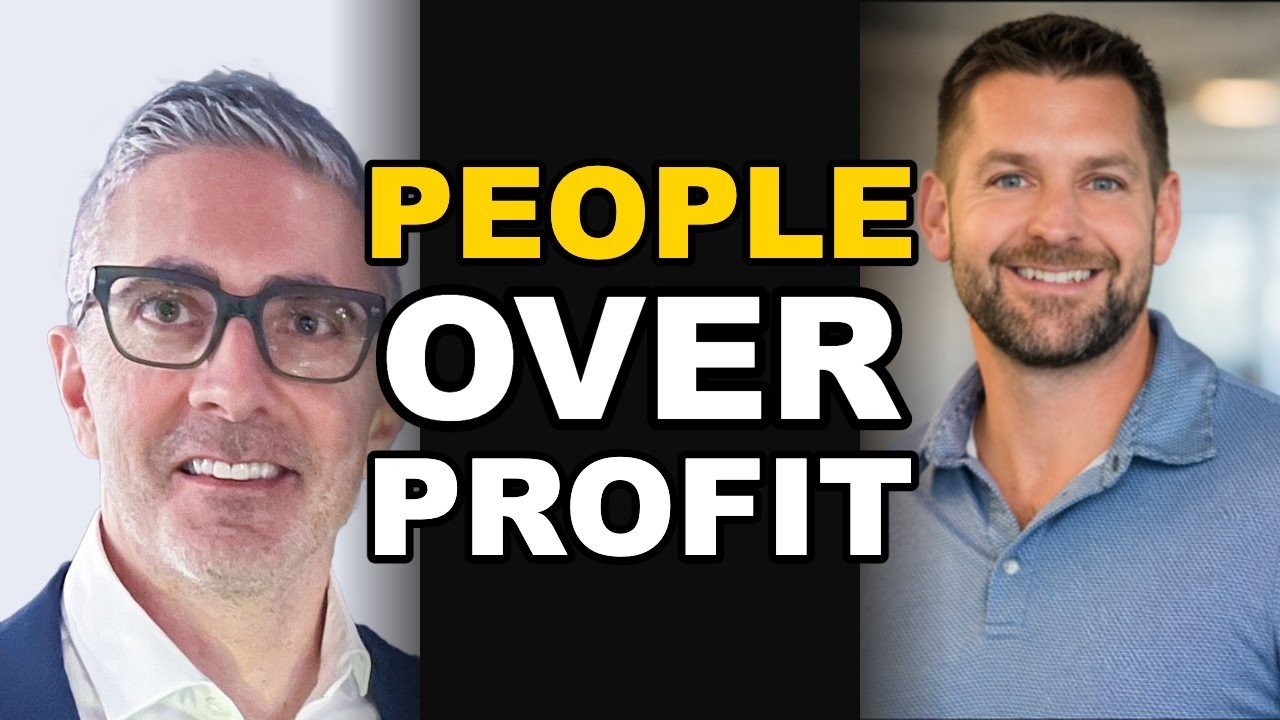
Yeah, it was not easy to do internally. but I came to this conclusion that making money can't be my primary objective. Because if that's the objective, then when I get into a potentially compromising situation, I'm gonna embellish, withhold, twist things a little bit into my favor. Cause the goal is make money. And so when I realize that the goal is actually to do right by people and to put people over profit,
that's when I actually started to get a windfall of other business and referrals and repeat customers. And so it actually frustrated everyone else around me because they're being cutthroat and trying to just close and and I'm over here being transparent and honest and genuinely caring about people. And you start to see my numbers go up and to the right while everybody else plateaus.
Anthony Codispoti (09:03)
Very interesting. Okay. So doing the right thing pays off, huh?
Brandon Hayes (09:08)
Yeah, it's it's funny how that works, huh?
Leaving to Start Kalos With No Plan
Anthony Codispoti (09:10)
Okay, so you were with Lighthouse Search Group for a number of years and then in 2015 you decided to go out on your own. What was driving that?
Brandon Hayes (09:21)
Well, I wish it was a really good business plan, but that's not what was driving it. And my wife was like, I just got married in September of twenty fourteen. I came off of a tremendous year. I paid cash for our wedding, our honeymoon. I'm doing great. And two months into being married, I'm laying in in bed at night.
And I just can't shake this feeling of like, man, I would build this differently if I had the opportunity to. I would just blow up the training process, the way that we teach salespeople, what does relationship building look like? And so from the ground up, I wanted to totally start over. and so I had gone to my then boss and pitched this idea, and it was essentially like, hey, we've we've done this for 30 years, it's our way or the highway.
And so I go home one night and I tell my I think I want to quit my job and start my own company. She's like, excuse me, we've met you've never mentioned that ever. most people have a plan, a strategy. I'm like, no, I think I'm just gonna do it. I'm I'm a third generation entrepreneur. My dad and grandpa did it. I think I could do it. And so, hindsight, a plan would have been nice, but it was really driven by this desire to want to change the
process of how you grow people and the perception in recruiting, which is sometimes not the greatest.
Anthony Codispoti (10:40)
So you had what sounds like a a Jerry Maguire mode.
Brandon Hayes (10:43)
I it honestly that's I would describe it. I didn't have a great memo but that went out, but ultimately, yeah, that was this this was what I embarked and set out to do eleven years ago.
Anthony Codispoti (10:54)
So you were laying in bed, this like you can't shake this feeling. So you put together this memo, you talked to your wife, the memo or or or just the conversation, however it took place,
Brandon Hayes (11:03)
Yep.
Anthony Codispoti (11:03)
didn't go very well. And so how much time transpired between that and when you actually departed?
Brandon Hayes (11:10)
Forty eight hours. So it was it was like that.
Anthony Codispoti (11:13)
This was fast.
Brandon Hayes (11:14)
Yeah, really fast. which is why I didn't have really a safety net or a plan or a long runway. This was take a leap and then we're immediately taking off.
Anthony Codispoti (11:25)
Do you have a history of impulsive decisions, or was this very unusual for you?
The Non-Compete and Starting From Zero
Brandon Hayes (11:30)
That's a that's a really good question. Depends who you ask. but no, typically I'm a little more calculated. it was more of the fact of maybe I was young and had a little bit of a chip on my shoulder. there was also, to be honest, this, hey, I've got a 10 years of connections and contacts and clients. Like, I'll be okay. And as I'm walking out the door,
Was told, hey, don't don't forget, 10 years ago you signed this non-compete. We're coming at you with full legal backing if you touch or talk to anyone within anything you've done here. and so I went home, probably a little bit more skittish than I was bullish when I first went in and resigned. Because now I'm like, okay, what am I gonna do if I'm starting literally from zero now, ground zero.
Anthony Codispoti (12:16)
So how long was the non compete for?
Brandon Hayes (12:19)
Two years.
Anthony Codispoti (12:21)
And before they said that, as you're walking out the door, had that ever occurred to you, or were you thinking, I'm gonna be able to tap into the pool of context that I have right?
Brandon Hayes (12:30)
Yeah, being if I was totally honest, I signed that when I was nineteen and so now I'm about to be thirty and I'm thinking, could he even find that document? I really did remember what I signed. I didn't do the due diligence, but this is right at the point where people are talking about, non-competes won't really hold up and there was a lot of scrutiny around this. And so I left thinking, yeah, I could probably leverage some of my network.
But then when I really sat down and I said, Is this what I want to do? I'm gonna start a company based on honesty and integrity and doing the noble thing. And the first thing I'm gonna do is compromise on the fact that, yeah, I did sign that document. I did say I wouldn't compete. It's the first thing I'm gonna do, go compete and submarine my my old boss. And so I just kind of put a stake in the ground and said, if I can't do this,
with a total clean slate in a different industry, then I'm really not that good at this anyway. So then I was out to prove something to myself actually that I
Anthony Codispoti (13:25)
Yeah.
Brandon Hayes (13:26)
could do it without being in that industry.
Anthony Codispoti (13:29)
So talk to me what the first few weeks, couple of months looked like. How were you prospecting for clients? How did you find your first three?
Brandon Hayes (13:37)
Yeah, there was a lot of well, besides the rice and beans, because we're living on again, there was not really a financial runway here. Luckily, my wife had already done the for better or worse or richer or poorer. So she already had taken the plunge with me. So she was willing to bet on me, which
Anthony Codispoti (13:51)
No backing out now.
Brandon Hayes (13:53)
no, so that's good. so to be honest, I have no website.
The first questions everybody's asking, because I'm going into a new industry. So I had a background in construction through my family. So I'm like, maybe I'll start in civil engineering and construction and in the trades. And the first question everybody asks is, okay, well, how many civil engineers have you recruited or placed? And I'm like, none. And so they're like, well, and so then it became like hesitancy. so what I had to do was find the overlap of what I had done.
versus what my new passions and desires were and find that intersection of where there was some overlap. And that was the story that I was telling. and to be honest, if you can't earn trust and rapport pretty quickly, if you come across either over aggressive or just super salesy, nobody likes being sold to.
People like doing business with people they trust or people that they like. And so my approach was very relational based and was also let me make a deposit before I ask for a withdrawal. So I was giving market intel and research I was doing to my prospective clients I wanted before I ever asked them to sign a contract with me. And so that was a good way to earn some rapport first out of the gate.
Anthony Codispoti (15:10)
And so what were the industry or industries that you were targeting?
Brandon Hayes (15:14)
Yeah, so I had picked the construction and civil engineering space and healthcare. I quickly dropped healthcare because I was being a relational by nature and how I do recruiting. spent a lot of time on the phone, having conversations, and it's hard to reach people, that are on the floor, whether they be a doctor or a nurse or something like that. So it didn't really work with my model. So that quickly fizzled out, and I pushed my chips in on this on this construction. But I probably in the first year.
I th I probably made $20,000 in the first year. We did a a deal and a half, and it was lean. And I came to this point of like I have to be known for something. So I kind of going after this. I want to be a specialist. If I'm a generalist at everything, then I'm not your go-to resource when you have this particular need. So this is what I was going after, just really spending some time and
Quiet prayer and meditation and talking with other industry experts of like where should that specialist niche be? And so I spent six months trying to solve that problem.
Finding a Niche: The Conference Ticket and Apple Claris FileMaker
Anthony Codispoti (16:14)
How did you figure out that that's where you wanted to target?
Brandon Hayes (16:17)
I wish I could take credit for this, but I can't. What actually happened is I had been I had brought in an intern and he and I would spend the morning strategizing and then we would take some time to just quiet and and I'm a person of faith, so I would spend some time praying. I'm like, I need this this this kind of lightning bolt moment that this is where I should push all my chips in.
so after a few months of this, nothing crickets. And then all of a sudden I get a call from somebody, an acquaintance, who says, Hey, I won this raffle ticket on a Facebook group to this business conference, and I can't attend. And I felt led to give this to you if you would want to go. And would you want to go? And I literally had one or two clients. I'm like, yeah, I have a lot of extra time. I'll go. And so this happens to be right in Chicago where I was living at the time.
And the entire conference was a particular niche type of software that was owned by Apple. And the main problem all of these business owners were talking with is that they had no hiring and recruitment infrastructure. They would all just steal each other's software developers from each other every few years. They had no way to bring new fresh talent in. So I'm literally sitting at this conference, and everybody's problem is the solution I can bring to the table. And I only got here.
Because somebody paid it forward to me and felt led to give me this conference ticket. And so I put together a proposal to these owners and said, I th I believe I have the solution to your problem. and we became now known as the only nationally recognized Apple Clares Filemaker Software recruitment firm in the nation.
Anthony Codispoti (17:52)
Okay. But I thought you were going after construction and civil engineering, or that was that sort
Brandon Hayes (17:56)
Yeah.
Anthony Codispoti (17:57)
an initial idea, but then you pivoted.
Brandon Hayes (18:00)
Yeah, so we we pressed these two throttles and then we t we're pressure testing which one was actually scalable. And with both the favor and the open doors and the amount of momentum, we carved out and found this specialist niche. and so we kind of started to sunset civil engineering and went all in and kind of
Anthony Codispoti (18:18)
Got it.
Brandon Hayes (18:19)
the tech and software side.
Anthony Codispoti (18:20)
And so you said one of the problems that you were hearing these owners talk about is that they didn't have a process for developing folks. They were just stealing each other's software engineers and, the bidding war goes on and salaries go up. And so did you have something different in mind? Like you wanted to help them find younger folks that that could then be trained into these roles, or what was different about how you were going to approach it?
Brandon Hayes (18:43)
Yeah, so we designed a more junior kind of program. We found two of their best trainers on this particular tech stack and put together a program that would put people through a a cohort incubator to get some more younger talent in the mix. and then just because of my my history and expertise with LinkedIn and searching, most of these people were just going by word of mouth. Turns out there was a whole other
Set of software developers that had transferable skills that were very close or had had experience and exposure to that. And when we put that together, we widen the talent pool quite a bit. And so I mean, we've placed over 200 full-time developers within this, within this community. And I was told that
there weren't even that many out there that could actually be full time employees and worthwhile. So it took some training and effort to build a system that actually started funneling people into into the need.
Anthony Codispoti (19:41)
So it's interesting, I talked to so many business owners, and for some folks it is just like a a steady long grind of like just incremental, incremental, incremental. And for a lot of folks, there is this like light switch moment where like something big happens that just sets their world on fire. And it sounds like you were grinding for a little bit until you found this niche and now you're off to the races.
Is that accurate?
Brandon Hayes (20:10)
Yeah.
I would say that's accurate. And the reason we hit that niche is because we said we wanted to niche and specialize down. It would have been very easy to be a generalist you know, recruiter or search for a monarch working in all these different industries. But I just had this feeling that like if we were known for something, like if somebody called and said, Who do you who do I talk to if I need this? And they go, call Brandon at Kalos. That's that's the response I wanted to hear. And once we found that, that's when we kind of pushed all in.
on on that particular space.
What Kalos Does Today: Recruiting Plus Leadership Coaching
Anthony Codispoti (20:43)
So tell us present day, what does Kalos do and who do you do it for? Who's your ideal client?
Brandon Hayes (20:48)
Yeah, so after the two year noncompete, I did get a little bullish and go back into that market. And so we did carve out some spots within the actuarial data analytics, data science space. but to be honest, I just hit 20 years, which is pretty exciting to to be two decades in. and so really my my heart has has always been for recruiting because I love helping and working with people. but I realized, you know, that.
That people side of the growth, starting an executive search and helping companies figure out who they need around their leadership table, that was really only half the equation. The other half was working with founders and executives and leaders to actually help them not only build the team, but retain that team and make sure that they're growing the same way the team is. So the questions I'm always asking is: who do we need on your team?
And who do you need to become to lead that team well? And so that's led more into this people advisory and leadership growth and executive kind of coaching component that sometimes I'll work with teams before they hire, or while we're finding the hire, we're working with their infrastructure to actually build a great retention and a healthy leadership culture. I always laugh and say, What good is it if you sign Steph Curry in the offseason and then he leaves after a year because it's a toxic.
Team in a toxic environment. that's no good. Getting them there is one thing, keeping them around is the other key component.
Anthony Codispoti (22:19)
So this is interesting because I've interviewed a lot of folks in the recruiting space, I've interviewed some folks in the coaching space. but I don't see typically those two worlds overlap. Is this just my own naivety, like lack of experience, or are you a little bit of an outlier in combining these two skill sets?
Brandon Hayes (22:39)
Yeah, I I would be considered probably an outlier, mostly because I realized that recruiting component, once I got them to their first start day, I was kind of out of the loop and out of the mix. And so if a few months later somebody came back to me and said, Hey, this wasn't what I thought it was, or the match wasn't there, most of the time people just say, well, I'll just go find your replacement. We'll bring somebody else in. And I'm like, Man.
This there's gotta be something else here. We could have gotten it wrong, but it also could be that there's an internal situation or problem here. And so the more I started working with leaders and hiring managers, a lot of them get thrusted into this management role or they're told to fill a quota and put butts in seats.
And they do that, and then there's a revolving door because of either the work-life balance, the leadership, the vision of the company. And so starting to work with executives became my passion. and then hey, we have a product and service to help you hire if you need if you need support there. But it was really about working with executives and leaders to retain the people they have and make it compelling to bring on somebody new.
A Bad Hire and the Fake-Identity Lesson
Anthony Codispoti (23:51)
Hmm. Let's think about a time, a challenging time in work, like a hire for a client that maybe looked good on paper that ultimately turned out to be the wrong fit. Tell me what happened, how you handled it, and one specific thing that it taught you to do differently going back.
Brandon Hayes (24:13)
Yeah, that's a that's a good question. I think this is probably even more prevalent now than it was a few years ago.
The total honest truth is as people are building their resumes and their their profiles with AI, and then you have AI generating job descriptions, and then you basically have dueling lightsabers in the interview process. We're not necessarily always seeing the real person and what's behind that document or piece of paper. A lot of times you don't find out who somebody really is until they're you know three to six.
Six months into a role, and it's a lot harder to get somebody off the bus than to never let them on in the first place. And so what we started putting together, because I was constantly finding somebody brings their best A game, their poker face to an interview, and then they're having conversations with me afterwards, and they're a lot more open with us as kind of a broker than they are with their prospective employer.
And so I'm finding they are more truthful and let their hair down after the interview. And I'm like, that's not at all how you've presented yourself on paper
Anthony Codispoti (25:23)
Mm-hmm.
Brandon Hayes (25:24)
or even in the interview. So we started to bake in some behavioral type of analysis and metrics to start to recognize what are some of the behavioral patterns that a company likes in their most successful people? And can we find that and replicate that potentially in another individual as we bring them on?
and the great thing about that is behaviors can be coached up or down. a personality, that's gonna not really change. If you're an introvert, you're never gonna put that person, you know, and start having them public speak all the time for your company. But a behavior can be coached. So on the back end of a hire, we built in a coaching mechanism that coaches that leader on how to get the most and best out of their employee that they just brought on board. And so we had one situation where
I'll even bring it really close to home. My own company, I made my first remote hire. the first time I hadn't sat with someone and looked them face to face. And it took about a month and a half into this role to realize the person I had hired was actually not the real person. They had used a fake social security number. And
Anthony Codispoti (26:34)
I thought you meant they were just
being untrue to their personality. This is like an a oh okay.
Brandon Hayes (26:37)
no. No. It was
it I think I hired a con artist. And and so this came out and I had what I I didn't follow my own recipe. I always tell hiring managers, don't go with a gut check. You need a process. I don't even care if it was your best friend who referred them, another trusted colleague. Don't ever fast track your process.
simply because you have a good feeling. And so that's what I did. We were busy and I I circumvented my own process and I didn't really dig into this person to the depth that I needed to. obviously he was really good at what he did, because he he had me for a month, had all these clients he was gonna bring on, etc. And really he was collecting this paycheck and was doing this to four or five other companies at the same time before he brought in the business.
Anthony Codispoti (27:27)
Okay. And so you get burned by this. Uh this was just a
Brandon Hayes (27:29)
Yes. Yeah.
Anthony Codispoti (27:32)
reaffirmation for you, like, I gotta stick to my process or did it teach you anything else?
Brandon Hayes (27:37)
It started to put in the type of vetting mechanisms, especially as we went into remote hiring and learning. So this is 2021. so a lot of what I started to implement and put in was these behavioral vetting pieces, making sure my team was spending ample time both on video and if at all possible in person with somebody, both hiring for my team, but then making that a part of our clients process.
and so a lot of times you have executives that are busy, they're they're juggling a lot, they're wearing multiple hats, and so they want to pop in and pop out and do like a 40-minute, yeah, that sounds good. Well, you know, we'll green light them. And I'm like, if this is a mission critical position and they're gonna have influence, you have to really look under the hood and really dig into somebody. And so that
was a wake up call for me. And then I started implementing this in our go to market strategy for others, when we were doing strategic executive hiring for them.
Behavioral Analysis vs. Personality Profiles
Anthony Codispoti (28:35)
Tell me more about the behavioral analysis that you do. Is these personality assessments? What does it look like?
Brandon Hayes (28:41)
Yeah, so obviously people are familiar with, disc and Myers Briggs and and some of those that are out there. And again, those are more personality profiles. So a disk will let me know, hey, if I'm working with a high D versus a high C, that's gonna give me a very quick broad strokes blanket idea of where are they gonna fit in. What's are they hardwired correctly for this function? And again, you're never gonna make a high D somebody that is is super docile and meek and mild tempered. It's just
Not within their hardwiring. So that's important to know. But a behavioral analysis is going to look at things like their leadership, how they show up behaviorally when you squeeze them in conflict, when they're having personal or professional crisis. How do they deal with constructive feedback and criticism? Is somebody super self-critical? That's going to show up on kind of more a behavior makeup than it is on a personality profile.
So, if I know somebody's behavior tendencies is to be self-critical, the way that I deliver feedback or negative news is gonna look much different to that individual. And so the way that you would then ask questions and coach a leader to get the most out of somebody like that looks very different. And so it's very individualized around that direct report and the employee or staff member.
versus this one size fits all management style that we're all gonna just think that we have clones. I have four salespeople. They're not all the same. They're not motivated by the same things. They don't respond the same way when they're squeezed. And so I'm digging layers deeper into what are they really like from a behavioral standpoint.
Anthony Codispoti (30:20)
So getting back to the executive coaching part of what you do specifically, are these skills that you just developed and picked up along the way? Or when you saw the opportunity to offer more to your clients, was there some kind of training that you went through to be able to deliver the kind of results that you wanted?
Brandon Hayes (30:39)
Yeah, so I have another executive coach and mentor that I'm gleaning from and looking at some of our other team that are getting certified in more behavioral coaching and working with teams. So I'm really on the people side. So developing an individual leader in and of themselves, and then how do you actually get the most out of and develop other leaders on your team? and so yeah, there has been some different leadership you know, that
that I have gone through myself, obviously 20 years in the trenches, but then I'm always a proponent of being a lifelong learner and gleaning from others who've gone before me. So I have two executive coaches that coach me within both my business and my leadership development journey as well.
Anthony Codispoti (31:23)
Okay. How big is the team now?
Brandon Hayes (31:25)
my team, we run pretty lean. So we're a staff of seven and then we have a a group of subs and contractors that we use.
Anthony Codispoti (31:33)
So we talked about at least one big inflection point in terms of the company's growth. When, you know, you went to this event and you saw there's this opportunity and this niche in the tech space. then again, when your two-year non-compete expired, okay, you know, there was a pool of contacts that you could reach back out to. What is another inflection point in the growth that's happened for you?
Brandon Hayes (31:58)
Yeah, as I worked a lot of Fortune 500, even a Fortune 250 client, doing a lot in the fintech and insured tech space, I found myself really passionate for small and mid-sized business. founders or entrepreneurs that still had to roll their sleeves up in their business. and nothing wrong with corporate.
but I didn't wake up every morning and be like, I'm so excited to put this A V P at this insurance company in Stamford, Connecticut. It didn't it didn't like it didn't wake me up excited. But
Saying, wow, I'm working with this founder who's right at 2 million, trying to scale to 5 million. And each hire is so critical that the right person has the right responsibility, the right ownership of their KPIs that they're going after. And how do I develop that leader to go from being a bottleneck to the fact that they can do healthy delegation and build a healthy team so this whole thing can grow? That gets me up in the morning and gets me fired.
And so this next inflection point has been really defining. We love working with either startups or small businesses or mid-sized firms that are, you know, 100 or 200 employees or less, down to those that are like me, that are that five, seven employees that are wondering how do I break through this next glass ceiling and what's it gonna take from an operational and infrastructure, but ultimately a leadership makeup within myself.
to build this and take this and level up one more. And so that's been this inflection point, working with those types of companies with more of a consultative and working with leaders. And then eventually they're ready to hire. Hey, you can, we've built you a system that you could do it internally if you want, or we've obviously got an ability for you to outsource that and we can help you, you know, recruit and find talent.
How Hiring Has Changed: Job Boards, Easy Apply and AI Screening
Anthony Codispoti (33:51)
So twenty years in, what's the biggest shift you've seen in how companies are approaching hiring today versus when you started?
Brandon Hayes (34:01)
Yeah, I think there was this first big wave of obviously Indeed and LinkedIn and job boards were the place to be. you know, when you when I first came in, that's where you would find talent. you know, the thinking back to people laughing now, people are like, I found my talent on Monster or Craigslist. Like that's it went from there to then kind of being more like, indeed and and LinkedIn for white collar. And then what you found over the last few years is the job boards.
System is completely broken. From a candidate perspective, they're literally applying to hundreds of positions. you know, now you have an easy apply button on LinkedIn, so now I can just go through and hit apply, apply, apply, apply. And so the reason candidates and prospects are doing that is because we're not hearing back from anybody. And
Then I look and I'm like, wait, 150 applications in 12 hours? That's how many people applied for this job? Am I really going to take the time to fill out all this information and send in a demo or a video interview? No, I'm going to hit easy apply and move on. And so you have many candidates that never hear back on any of these roles. You have clients that want to automate a system and a process, which at some point is necessary to weed out.
Some of this. If this is an IT director and you know, a Starbucks barista has applied, yeah, I'm probably not gonna interview them. So I need to be gentle and let them down. But the system of an AI vetting mechanism, vetting an AI built resume, and a lot of this never making it to human eyes is becoming a real problem.
And some of our best hires in the last two years, there wasn't even a job that was on paper.
We knew of a great individual. We approached an executive and said, listen, I don't know if the timing's right, but here's the kind of profile we have. I recognize this is what your company does. This is where you're heading. Would you ever be open to talking to somebody like this? And the innovative, forward-thinking type of visionary leaders say, I can't just go shake the candidate tree four months from now when we have this opening. Yeah, I would look at somebody four to six months.
months earlier, even though that's pushed out. And so I think we've created a handful of roles that didn't exist simply because the right people at the right place at the right time were putting a room together.
Anthony Codispoti (36:28)
And so is this always is your engagement always driven by the employer side, saying, Go find us somebody? Or are you also pulling in from the candidate side and then saying, let me go into my contacts and see if there's somebody that fits you?
Brandon Hayes (36:43)
Yeah, and if if a lot of people there's some misconception, talent acquisition versus an agency third party recruiter such as my firm. So an internal talent acquisition person, they might have 20, 30 recs that they're working on, and their hiring managers are saying, Find me someone. So they're looking at the applications that have come in from a job posting. I call them the gatherers. They're gathering up who has shown interest, looking through and
Picking a few and sending them to the hiring manager. We're more of the hunters where we're saying, here's the type of profile of someone you're looking for. I'm gonna go find qualified people and start having conversations and ask for referrals and network with people who are qualified, whether or not they may be looking. And that's usually where the best talent turns up. Now, what happens is say I put two people in front of one of my clients and they end up going with candidate one, and I'm like, man, I
I loved Candidate 2. Sally's a rock star. I think Sally would have been a great hire. You couldn't have gone wrong either way.
We have a form of what we call I call it the talent agent. It's funny you mentioned Jerry McGuire. I think when I saw that movie, I would have loved to have been a sports agent. but instead I became a talent agent. And so now I'll take Sally and I'll say, Sally, let's find 10 companies that hit the mission, vision, and passions you have, and let's go see if we could do an introductory and let you have a few conversations. And so we'll reach out to leadership teams and executives and say, hey, I don't know if there's a posting or not. It's kind of irrelevant.
worth a conversation. Would you be open to having a having a coffee or or having a meeting with her? And so that's a little bit more fun to take someone to market as their agent.
Anthony Codispoti (38:28)
You're just a different kind of talent agent. Instead of an athlete, this is a white collar. Yeah.
Brandon Hayes (38:30)
Yes.
Anthony Codispoti (38:32)
so I want to go back to the AI stuff because I've heard this from a lot of folks. Exactly what you're describing. and I just read an article the other day that yeah, there's some companies that just have these like ghost postings. Like they're they're posting for a position. I don't even know what the purpose is, but there isn't actually a position to be filled. And and then a lot of folks tell me they'll submit a hundred
resumes for jobs that they're qualified for. And they either don't hear anything back, or maybe even more frustrating is they get an immediate denial. Right. And so that is an AI, that is some kind of a bot that's looking through did they have these keywords or, you know, had they been an assistant marketing manager before they were mark they don't have that and and and they're out. So from your perspective, guy who's been around the block, been doing this for a couple of decades,
Putting yourself in the shoes of a a worthwhile candidate who's looking for a job, what is something that they can do to set themselves apart?
Brandon Hayes (39:32)
I love this question. I think there's a lot that you can do. I think back to what was it like? Think of like as soon as you got out of high school, you're trying to get your first job. What did you do? Typically, you would print out your resume, you would go into whatever office or restaurant you wanted to be, and you're trying to shake hands with somebody, right? I wanted to look in the eye of a manager and at least put a face to the name. That way, when they look at my resume, they remember, yeah, Anthony, he came in. He had a good firm handshake. He looked
me in the eye. They're they're not just seeing a piece of paper. They're they're in their mind, they've got a visual of you. And so now in the digital age we're living in and on LinkedIn, the closest you can get to that,
And I tell people before you apply to a position, the first thing you should do is read the position and sometimes it'll say reports directly to our whatever it might be, chief financial officer. And so then I'll go on the company's LinkedIn and I'll look for the CFO. And then I'll send a connection intro request and say, hey, George, just want to let you know I'm about to apply for your controller position, and I'd love the opportunity to discuss if you feel my background's relevant.
Boom. Then I go on and apply. If I'm George.
And I get a message like that, and then I go look at George's profile, and I'm like, yeah, George is qualified. What do you think the first thing George is going to do? He's going to reach out to his HR person and say, hey, did Anthony apply to this position? Can you send me his resume? So now you have the leader going down and requesting somebody specifically because there's a face to the name, you've triggered some intrigue, and now all of a sudden you're almost getting fast-tracked. That's as close as I can find as the go in and shake the man.
manager's hand because HR's job is to not waste George's time, right? Only send him relevant people. And so the bot scrapers and even HR, a human right now is looking at your resume for 30 to 45 seconds, if that the bots obviously automated and even faster. And so that's a hard place to get value and transfer rapport quickly.
and your resume is just probably not gonna do that, which is why you have to find an alternative route.
Anthony Codispoti (41:52)
So let me let's dig into this a little bit. Kind of want to
Brandon Hayes (41:54)
Mm-hmm.
Anthony Codispoti (41:55)
workshop this. So I'm applying for a position. It says it reports directly to the CFO. So I'm finding that CFO on LinkedIn. I'm sending them a connection request. And there's two ways to send a connection request. You can send it with a message or without a message. And how do you prefer?
Brandon Hayes (42:12)
a thousand percent with with a message. short, brief. Again, I'm trying to pique interest. Hey, I I love George, I love what you're doing with XYZ, find something relevant that the company's doing. Or I saw your post about this. I'm about to apply for your controller role. I'd love the opportunity to discuss further. Boom.
Anything that makes you look like you didn't just go through and hit connect, connect, connect, or apply, apply, apply. If I'm if I'm a leader and I'm hiring someone, I'm like, wow, this person took the time, they read some of my posts. And that's very similarly right now what folks are saying is start engaging with the content that the company you want to go work for is putting out there, even if there's
Anthony Codispoti (43:00)
Now and
Brandon Hayes (43:01)
no job.
Anthony Codispoti (43:03)
in this same situation, would you also reach out to someone or multiple people in HR since they are the ones who are the gatekeepers to the process?
Brandon Hayes (43:14)
Well, I love HR because I work with them all the time, but the I am looking for the pain point person who is feeling the pain.
That this position is open. And it is probably whoever it reports to or whoever has to do the work of that open vacancy and is probably doing more than their fair share because there's an opening. And so to be honest, HRs, the only pain they're feeling is somebody from above saying, I'm not seeing candidates, get me candidates. They're not feeling the burn of that job being open. And they're also not feeling the fact that, hey, we're backlogged on work.
We're overworking this other person because of that. And we're losing revenue because no one's in that seat. And so that's who I'm looking for because they're gonna have the greatest sense of urgency and be able to push you through. HR, in my opinion, is not gonna have the authority to push you to the top of the list. They're gonna be able to just send you.
in a pile of other resumes. So I would say HR second, leadership first. If you're in a leadership or executive type of role, if you're middle management or lower, then yeah, HR is gonna be probably your first stop.
Anthony Codispoti (44:26)
So talking more about AI, it's a great tool. It's getting better. We're in the early innings of this. Could you foresee a future where it threatens the type of work that you do?
Brandon Hayes (44:39)
there's there's LinkedIn posts being written every day that's already saying I'm obsolete and that there's no need for anything that I do because it can all be done and automated by AI. I laugh because I'm like, at the end of the day, we're still hiring humans and there's still going to be this relational component of me interacting with this person once they're on my team.
And again, AI can do a great job of preliminary research. I would suggest using it. If I'm going to interview someone, I would say, hey, find everything you can on this individual and and let me know. So I have the backstory on them. Or if I'm applying to a company, hey, research this company. Let me know what the culture's like. Help me review the Glassdoor and Reddit reviews. That's all great information to prepare.
But I still need to present myself in a way that's really me. I laugh when someone's like, Did you have artificial intelligence write your about me or your bio? Who's gonna know better about you than you? you should be the one writing this. And so there's parts where like I wanna leverage it, but I don't wanna use it as a crutch. And I can't transfer passion, emotion, belief, excitement, all of the things that I think I'm looking for.
in someone who's bought into my team, I'm not gonna find that on an AI written resume that was screened by an AI bot and that will put put this in front of me. And we're finding a lot of qualified people don't make it through the screening. And you have leaders that are upset about it saying I I would have liked to have seen that person. but they got screened out before they even made it to my inbox.
Anthony Codispoti (46:18)
Hmm. I want to shift gears totally on you now, Brandon.
Brandon Hayes (46:21)
Let's do it.
The Hardest Thing He’s Overcome: Loss, Grief and Healing
Anthony Codispoti (46:22)
What's the hardest thing you've ever had to overcome and what did going through that teach you?
Brandon Hayes (46:28)
Yeah, that is a shift, Anthony. I'm gonna shift in my chair for that one. I yeah, I think the first thing that comes to mind. so I launched in 2015. I had a lot of opposition going into that first year. I shared some of that.
There was also some back and forth with my my old company over some things. And so my business and my entrepreneurship journey was birthed in opposition. And so I thought like, I'm I've got some scars. I'm pretty thick. I I can endure.
and then 2018 absolutely clobbered me. I mean that would go down as probably one of the toughest years for my my my personal and professional life. So for a variety of reasons, our revenue and company took a nosedive. Some of our industries were in a bunch of restructuring. I had I had to let go of some staff for some performance issues.
And so my company's trending this way. and personally my family were pregnant with our second kid. And my first and oldest is Ariel. She just turned ten. Went off without a hitch. second pregnancy, twenty one weeks, go in to find out if we're having a boy or a girl, and we have no heartbeat. And I was not
anticipating I didn't have a grid for this. And so I'm in shock and bewilderment and disbelief leaving that place. And nothing I don't think can prepare you for something like that when everything is pointing in one trajectory and immediately you just slam into a concrete wall. and I think what this taught me in working through that
My initial reaction was be strong for your wife, put up a good front, just buckle down and bear it. pull yourself up by your bootstraps. You can come up with all those phrases. I didn't really know how to process grief in a healthy way. and so because of that, you just kind of stuff and you grit your teeth and you keep plowing. if you're a typical male, that's what we tend to do, at least that's what I did. so my wife had made a very healthy journey and transition through all this.
actually works with and helps a lot of other women who are going through something similarly and has had a a great platform, you know, to do that. But for me, it was not a matter of if but when a lot of that was gonna start to come back up eventually. And what I found was because I didn't have a healthy framework to process grief,
I had such a short fuse. I'm getting frustrated and irritated at everything and everyone. And I really started to lose a lot of my passion and zeal of what I was going for.
And learning how to work through that has given me a lot of empathy for people right now. I mean, we're living in a time where there's a lot of grief and tragedy and a lot of things going on in people's lives. And a lot of folks don't know what their employees are going through and they can put on a good face when they show up to work.
But I would say my team feels like I actually know them and that if they're going through something, they can approach me. And if they need some extra time or they need somebody to help cover something for them because they're just not a hundred percent, they know without question we're gonna take care of them and have their back. so yeah, that was what comes to mind.
Anthony Codispoti (49:45)
Wow, that's a big one. I appreciate you sharing
Brandon Hayes (49:47)
Yeah.
Anthony Codispoti (49:47)
that. How did you get through that? You know, how were you, you know, the guy stuffing the emotions down in like just soldier on through this? But at some point, like you said, it percolates up. How how did you process and work through that?
Brandon Hayes (50:02)
Yeah, some of was an actual study on healthy grief. And actually grieving, it can be a remarkably both freeing and liberating and healthy process. it's the kind of things that you don't get taught in school. And it's the kind of thing that if you don't have anybody in your life or sphere of influence that knows how to do that or can journey with you on that, you're kind of left with I don't have tools to deal with tragedy or grief or loss. and so
So some of it was going and actually find somebody who could professionally help give me the tools necessary to process. But what really helped is my own self-awareness of recognizing that.
generationally my family had been stuffers and so nobody dealt with things in a healthy way or manner. And so some of it was looking at my own life and what I was handed down. And I said, well, it didn't work well for him or for his father or his father's father. It's probably not gonna work well for me to continue on. And I think when you have kids too, like you want to hand off the best version of yourself. And I always feel like I want them standing on my shoulders when when they're adults. Like they're they should be elevated from where I'm at.
so I made a choice to do the hard necessary heartwork to go in and deal and wrestle with tough questions and process some of that so that I could be the best version of myself, both showing up at work, but also showing up for my family.
Anthony Codispoti (51:25)
So a lot of that personal development work took place, it sounds like with a professional, a counselor or a therapist of some kind.
Brandon Hayes (51:31)
a hundred percent. I think if you don't have the tools, that would it would be silly if you've never built or poured concrete to say, I'm gonna build a room edition on my house. no, you would hire in and bring in a professional because that's what they do. And so I don't feel like it's it actually to me is more masculine and mature and shows true strength to say, I'm gonna go find someone who that's their superpower and I'm gonna I'm gonna glean from them rather than this.
false sense of masculinity that's like, I don't need to ask for directions on how to get through grief. I'll figure it out myself. no, you won't. And you're gonna end up paying the price later on down the road.
Anthony Codispoti (52:13)
Brandon, as you think about the work that you're doing now, what is it that you most want to be remembered?
Brandon Hayes (52:20)
Man, I would want to be remembered for somebody who added and gave value that wasn't just a taker, somebody that didn't just suck the value, but actually left value. And I think every meeting, every relationship, every client I'm with, if I'm not setting you up for better off in holistic growth than you were before, then I don't think that's a win.
my heart is always to grow personally and professionally a holistic growth so that you don't hit what success looks like for you and the other half of you is miserable. And so scale a business and sell it for twenty million, but you have no friends and your marriage is on the rocks and everybody thinks you're you're a jerk, that's not success. That's not winning. So how do you grow holistically?
At life. And if I could give people the tools and my experiences to do that, I would love to be known that I helped people holistically grow and win at life.
Anthony Codispoti (53:20)
I love that. Brandon, before I ask my last question, I want to do three quick things for the audience. First of all, if you want to get in touch with Brandon Hayes, go to his website, kalosconsulting.com. That's spelled K-A-L-O-S. kalosconsulting.com. It'll be in the show notes, but you can remember it, kalosconsulting.com. And if you're enjoying the show, please take a quick moment to leave a comment or a review on your favorite podcast app. It goes a long way towards helping others discover our show.
So thanks for taking a quick moment to do that. And as a reminder, you can finally get your employees access to therapists, doctors, and prescription meds that counterintuitively actually increases. It increases your company's net profit starting in the very first month. There's no copays, there's no deductibles. A lot of your part-timers will qualify. So learn more about how to have happier employees and a stronger bottom line with this Bain Capital Insurance product.
At AddBackBenefits.com. So, Brandon, last question for you. A year from now, what is one very specific thing that you hope to be selling?
Brandon Hayes (54:29)
I would say I would hope to be celebrating as we've launched into more of this growth advisory and people growth structure. I'd wanna be known as somebody and think that we've accomplished something that goes beyond just bottom line and just profit. I'd wanna know that we're developing people.
and that both the people we're putting into a role or the the leadership we're working with feels like I can retain this person and I actually enjoy showing up to work and I enjoy the people that I'm working alongside. That's what we're hoping to accomplish with with what we've put out here.
Anthony Codispoti (55:10)
Brandon Hayes from Kalos Consulting. I wanna be the first to thank you for sharing both your time and your story with us today. I appreciate you being here.
Brandon Hayes (55:17)
It's a pleasure to be with you, Anthony. Thanks again.
Anthony Codispoti (55:20)
Hey folks, that's a wrap on another episode of the Inspired Stories Podcast. Thanks for learning with this. And if one thing stood out, put that into action today.
Connect with Brandon Hayes:
Website: kalosconsulting.com