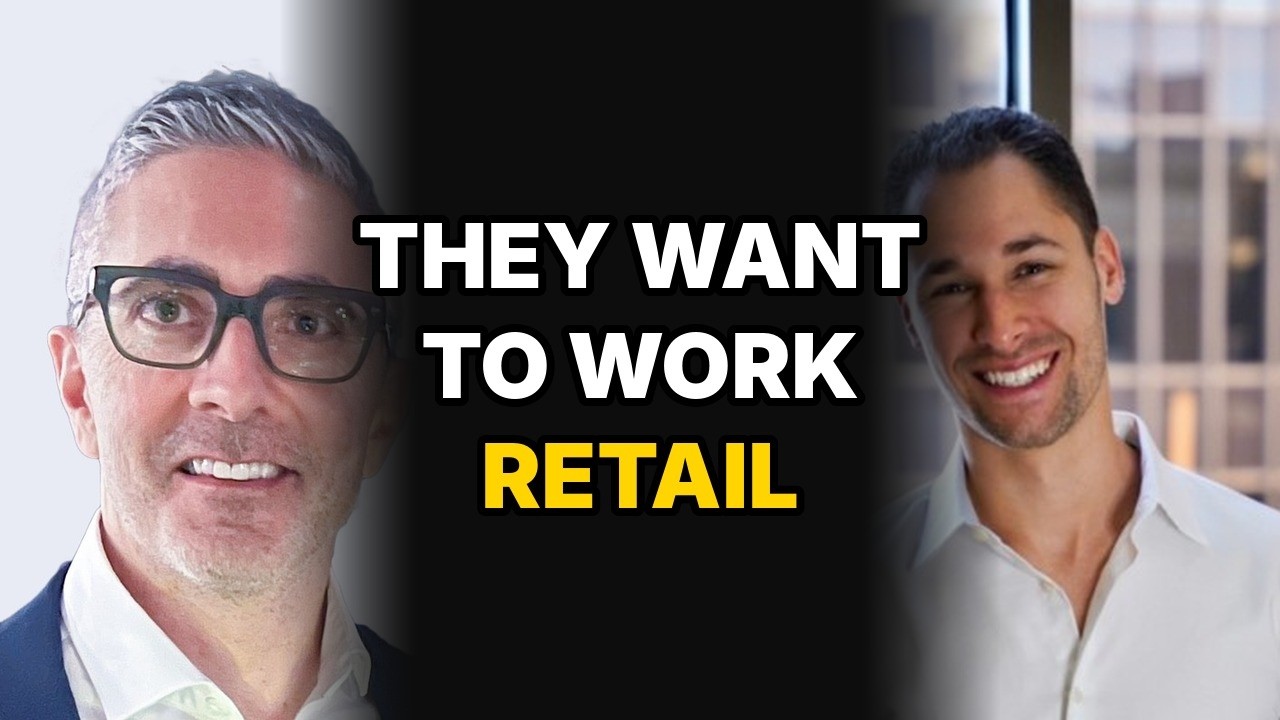
Mike Meyers is the founder and CEO of Reflex, an on-demand retail labor platform based in Austin, Texas. Reflex vets, trains and pays retail associates as their employer of record, so stores can fill shifts in as little as two hours with people who already know retail. Mike started his first company as a student at the University of South Carolina, learned hard lessons when it failed, and then spent time investing at ATX Venture Partners before a February 2020 Uber ride sparked the idea for Reflex. In this episode, he shares how the company pivoted from a 1099 model to W-2 after its first customer backed out, why star ratings fail in retail, and why the idea that people don't want to work in retail is simply not true.
✨ Key Insights You'll Learn:
Why an unfilled shift on a busy Saturday can cost a store tens of thousands of dollars, while a slow Tuesday shift may cost almost nothing.
How Reflex had just under 9,000 active workers last year while over 245,000 people joined its wait list to work flexible retail shifts.
Why retailers don't want gig workers in their stores, and how Reflex vets associates through past retail experience and an onboarding call.
Why Reflex replaced its five-star rating system with one question for store managers: do you want this person back?
How an invite back rate above 95% shows the right worker matters more than just filling the shift.
What flexible workers want most: choosing their own shifts, getting paid within one business day at no cost, and the brand's employee discount.
How the team rebuilt its whole model as W-2 in about three months after its first national customer backed out over 1099 risk.
How seeding a campus marketplace with Amazon Prime items solved the cold start problem.
Why most businesses should never raise venture capital, and how to find investors who fit your stage.
Why shifting, one-sided schedules drive retail turnover, and how letting workers opt in to shifts changes that.
🌟 Mike's Key Influences:
Dave Ritter: Led the consumer retail group at McKinsey for over 15 years and was Mike's first call when the Reflex idea took shape.
Chris Shaw: The founding GP of ATX Venture Partners, a friend and mentor Mike first met while building his first company.
His circle of founder mentors: Taught him to handle every hard moment with honesty, integrity and grace.
An Austin Uber driver: A retail worker saving for his daughter's college tuition whose wish for flexible store work sparked Reflex.
👉 Hear how a founder turned a failed first startup and a chance Uber conversation into a platform that lets retail workers design their work around their life.
Listen to the full episode here
Transcript
Mike's First Startup: A Campus Marketplace
Anthony Codispoti (00:00)
Welcome to another edition of the Inspired Stories Podcast, where leaders share their experiences so we can learn from their successes and be inspired by how they've overcome adversity. As you listen today, let one idea shape what you do next. My name is Anthony Codispoti, and today's guest spent two years sitting across the table from founders deciding which companies deserved capital while he kept noticing the same broken systems showing up again and again.
Retail stores that could not find enough people to work a single shift. He had already founded one company by the time he took those operating and investing roles, serving as COO at ReSimplify and director of portfolio success at ATX Venture Partners. In 2021, he left the investor side of the table to start Reflex, built to solve the exact staffing problem he had been watching from assistance.
Today, Mike Meyers is the founder and CEO of Reflex, an on-demand retail labor platform based in Austin, Texas. Reflex vets, trains, and pays retail associates as their employer of record, filling shifts in as little as two hours for brands including Ralph Loren, Faharity, Ariott, and many others. The company has built a portable reputation system that lets associates carry verified ratings from brand to brand.
Reflex now reports a shift fulfillment rate above 95%. In the last year, Reflex paid out millions to workers who were able to find on-demand, flexible work on their own terms in the retail industry. But before we get into all that good stuff, today's episode is brought to you by my company, AddBack Benefits Agency. And if you run a staffing company, this one's for you. See, margins are thin.
Turnover is constant, and most flexible and part-time workers get no real health benefit at all. So when a better offer shows up, they're gone. And it doesn't have to be that way. Now there's a program from Bain Capital Insurance that gives your W-2 workers unlimited access to doctors, therapists, and prescriptions with no co-pays and no deductibles to me. It works great for part-time and high turnover roles too. And here's the part that really shocks most people.
It actually increases your net profits. See, we recently helped a client add that's add $900 per employee per year to their bottom line. Results vary, but imagine what could be done with the extra cash flow. Get your free consultation today at AddBackBenefits.com. All right, back to our guest today, the CEO and founder of Reflex, Mike Meyers. Thanks for making the time to share your story today.
Mike Meyers (02:43)
Thanks for having me, Anthony. Really excited to be here and spend some time together.
Anthony Codispoti (02:46)
All right. So Mike, let's start early days. You built something called Tradersity in your junior year at the University of South Carolina. This was a marketplace for students to buy and sell goods and services inside of their own campus community. What was the idea here? Was this kind of like a Craigslist spin-off idea?
Mike Meyers (03:07)
Yeah, we uh going all the way back to those days. Um, you know, we uh at the time I was paying my way through cool through school and I was selling items I didn't need anymore to help cover the cost of college. And you know, this was prior to Facebook Marketplace, but you know, in that point, um you you typically would use either Craigslist as a student or different Facebook groups. And what I quickly experienced firsthand was that there was no safe, local, simple way to connect with other students on campus.
when it came to buying and selling anything like textbooks, furniture, electronics. And so that was really the catalyst moment. And, you know, what started as kind of this idea, uh, turned into an idea that, you know, helped us win a few pitch competitions as students that gave us some seed funding. And when I was graduating, you know, made the decision to turn down some full time roles and start building Tradersity full time.
Anthony Codispoti (04:00)
So when you first had the idea, how did you get the first real transaction? Maybe you put a couple of through on your own just to test or to proof of concept, but somebody you didn't know.
Mike Meyers (04:12)
Th thematically, the the tough thing with marketplaces is, you know, you're constantly trying to balance supply and demand. And the reality is is if that if that's ever in perfect balance, you're probably not growing fast enough. And so, you know, in the early days we had to figure out the cold star problem. And a lot of that was, you know, how do we essentially see one side of the marketplace, which was how do you make sure that there's items available for people to sell? Because if there's not items available, then people are going to show up and they're going to leave.
And what we ended up doing was we ended up listing items at the time Amazon Prime, you know, you could identify items you could next day ship. And no one knew this when we were going live. But what we did is we found items on Amazon Prime that we thought students would want to buy and sell. And we started listing those items at either at price or at a discount. And that was a way of seeding the marketplace where when students opened the app, it looked like there was at least 20 to 30 different items in there.
And that gave the confidence for other students that had things to sell to then start listing their items. And so what ended up happening was over time the marketplace became more organic because other students were like, there's already people using this. And we used that to jumpstart the market. And you know, we did that at the University of South Carolina, and that kind of became our playbook. We called it the Amazon Project. That became our playbook as we went to Virginia Tech, Penn State, Clemson, and over a dozen other schools.
Anthony Codispoti (05:36)
I love that because like you said, w in there's so many business not just marketplaces, but so many businesses when you first start, it's like okay, I I gotta do something to kind of get this flywheel turning. So you you do the the the Amazon hack, the Amazon project. And so when somebody says, I want that, are you then shipping that item directly to them, like d from Amazon? Like it comes in an Amazon box.
Mike Meyers (06:02)
We would uh overnight the item or ship it as fast as possible to ourselves, unpack it to make it look like it was actually used, and then say, you know, hey, we can't meet up today, but we'll meet up tomorrow or the next day 'cause of class and meet them in person. And, you know, that was our way of jumpstarting the marketplace. And also, you know, everyone on our team had whether it was old furniture, electronics, textbooks. I mean, we we went through our apartments as students and found everything possible that we could sell.
And, you know, use that to really figure out what categories would move. And
Anthony Codispoti (06:36)
And so what were the Amazon items that you were picking?
Mike Meyers (06:40)
Um and we had uh so to think everything from like a floor lamp, desk light, um we had uh
At the time, I want to say so we we we listed a lot of textbooks, like typically at the the start of the year textbooks would really move. Same thing with furniture, game day gear, stud like schools school supplies for students. So think, you know, anything you would have at your desk. Over time, what we saw were electronics would typically move. So we would try to find friends that had an old TV that they were selling. Trying to Amazon Prime a TV got a little bit hard. uh
But you know, typically TVs would move really well and that would draw folks in. And so uh I was in a business fraternity as well when I was at USC, um, Delta Sigma Pie and it was, you know, a co ed business fraternity. And I also leaned on our fraternity uh and brand ambassadors that we signed up to really help with that too.
Anthony Codispoti (07:38)
And I think we're going to talk a little bit more about this marketplace challenge uh as we talk about what you're doing present day. But before we get there, uh so you ended up running Tradersity for five years before selling it in 2018. Talk to me about that arc and how you eventually landed on the decision to sell the
Mike Meyers (07:58)
Yeah, and you know, I I think when we hear about exits uh with startups, everyone assumes, well, if there is an exit, it was a successful outcome. You know, ours really was more of a a fire sale to wind the business down. I mean, you know, we learned a lot, but I think at the end of the day, we built a great product, but it wasn't a great business. And, you know, both things can be true. And there were a lot of learning lessons there. Uh we had raised capital. So after winning, you know, the pitch competition, we had raised um, you know, an angel round.
about 350K and then raised another couple hundred grand on top of that from a local institution in in South Carolina. And that experience of raising capital and trying to really scale the business, you know, I think we saw that there was product market fit where we had folks that were using the platform, but the consistent challenge we had was monetization. And if you can't make money, you're not building a business, right? We all want to make impact, but impact without a revenue model is a nonprofit.
And so, you know, we had to really figure out how we would monetize. And that was something we struggled with. Since typically when you buy secondhand goods, folks want to see those products in person before they buy them. Cash transactions, you know, no one's going to pay a service fee to pay through the platform. Um, you know, if they want to see it in person, they're going to pay cash. And so we had some challenges around really how do we build a model that had true product market fit.
Anthony Codispoti (09:20)
As you've got a little bit more experience under your belt now and as you've seen things like Facebook Marketplace become really popular, you look back, any decisions that you may have done differently, things that you think, if we had done this, if we had had that idea, maybe this actually would have worked out.
Mike Meyers (09:37)
You know, one of the themes that I think played into founding Reflex was uh and and I can't take credit for this, I heard it from someone else, but uh it's important to be everything to someone versus something to everyone. And, you know, when we think about things we would have done differently, we might have started with just one category and really tried to figure out, okay, can we build a category, say, around used electronics for students? And really own that category before we start expanding. And that went
you know, into like essentially engineering product market fit. And that was something that we've really struggled with. I think on the the revenue model size and the market size, our market was really small. Um, you know, when you look at sure there's a lot of students, but if we're exclusive to students, that means we're acquiring users every year because we have people graduating. The longest you can have someone is probably about four years, but realistically you have them for two. So there's this constant churn of buyers and sellers.
Where you have a leaky bucket of users. And is it possible to scale there? Sure, but you need a lot of capital to be able to offset some of those risks. And a lot of these things, you know, I I I learned later on after when I got into venture, where most businesses should never raise venture capital. Like most businesses are not venture-backable companies. And that can tie into market opportunity, growth rate, unit economics.
And some of those lessons weren't as obvious when I was in it with Tradiversity and then became very, very clear after.
Failure, Identity, and Starting Over
Anthony Codispoti (11:10)
How hard was that for you? To, I mean, you're a young guy, you had this great idea. Um, you're winning some pitch competitions, you're getting some outside investment. Like, you know, you're probably getting pretty excited about this, you know, like, hey, we're going to go and take over the world, and you're starting to move into other markets. It feels like you're getting traction. Like, probably thought this was going to be the thing that like set you up for life. And that's not the way it worked out. Like, what was that like for you going through that?
Mike Meyers (11:39)
Humbling. Um, and you know, I I think I was very fortunate. The best thing that happened with TradeVersi I learned some really hard entrepreneurship lessons early. And I've never met a founder that hasn't failed in some way building a company. Like the most successful founders, they probably have more failures than successes. We just hear about the successes. And, you know, we had talked a little about that in in in the beginning of our conversation too, where, you know, I think people are rewarded in public for what happens in private over years or decades, not days.
And so that, you know, that that for for me from a learning lesson standpoint, I think one of the most important kind of learning lessons as a founder I had to go through was decoupling my identity and self-worth from the company. And that was hard. Uh that was probably the the hardest period I've gone through so far in my career was the decision to wind down the business, try to find a seller to, you know, or excuse me, try to find a buyer to be able to
buy the assets so we could pay the legal cost to shut the company down. And moving back in with my parents after feeling like, you know, eighteen months prior, I was on top of the world as a quote unquote founder CEO uh that had raised some capital.
Anthony Codispoti (12:48)
It's quite a roller coaster ride, you know, and I've I've gone through multiple exits myself. And I have discovered about myself, and I find this to be true in a lot of the folks I talk to, that when I've got the next thing already lined up to step into, like that transition of identity is a lot easier. But you know, what you're describing here, and I and I've been through something similar in terms of I sell a company and then I don't know what's next.
And especially when you're shutting down a company, and I've done that before too, and you don't know what's next. There's this like, I don't know who I am, I don't know where I fit into the world. Like, what helped you? What was the bridge from there and that really uncomfortable, sticky place of who am I into the next thing? Like, how did you get through that?
Mike Meyers (13:36)
What some of the the most important advice I got during that time was from you know a group of mentors I had surrounded myself with. And these were founders that had been through exits before, even taking companies public, um, had been through failures before. And what they had coached me and given me feedback on is like, don't lose sight of your values and who you are going through this. And make sure no matter how hard it gets, you handle everything with honesty, integrity, and grace. And if you're transparent and very direct with investors and honest about where the business is.
Folks will remember that because you're going to start other companies, right? And you want them to be a reference. And true character is defined when things aren't going as planned, not when everything's going really well. And so during that process, I I tried to be as you know transparent and direct with my team, our investors, users, and and leave things on as good of a note as we could, no matter how messy it might have felt. And what
wasn't clear at the time that became clear later on, as cliche as it sounds, the dots always connect when you look back. And, you know, what ended up happening were some of my first angel investors were LPs in this venture fund in Austin. And when it came time to figure out what I wanted to do next and when I was thinking about getting into venture capital, it just so happens that I had a warm introduction to a firm that was building out a team. And
that all came from if I hadn't been through some of the failures with Trade Versity and that journey, I probably would have never ended up in VC. And I don't think reflex would be where it is right now if I hadn't gone through the experience in venture.
What Mike Learned From Venture Capital
Anthony Codispoti (15:12)
So let's start connecting some of those dots. So from Trade Versity, you end up spending time on the operating and investor side. You were COO at Re-simplify, which was a commercial real estate data company. And then, excuse me, you were director of portfolio success at ATX Venture Partners, which is an early stage cap venture capital firm in Austin. uh What did sitting on that investor side of the table at ATX teach you about building companies that
You wouldn't have understood as well as a founder.
Mike Meyers (15:45)
The that's a great question. Um the the desire to get in venture was kind of foundationally built on, okay, I know I want to start another company at some point. How do I go learn from thirty other founders at once, many of which are successful in what they do? How do I go see some of the patterns across a portfolio of like what works and what doesn't work? And at the same time, how do I go meet future investors and even potential co founders? And what became
Really clear after jumping to the other side of the table is understanding how venture funds work and how they underwrite investments and how much time I wasted when I was building Tradiversity talking to the wrong investors. And so, you know,
Anthony Codispoti (16:29)
What do you mean by that?
Mike Meyers (16:31)
I spent time talking to folks that would have never invested in Tradiversity, and the Tradiversity wouldn't have been a good fit for as a founder.
We were at ATX investing. I joined for fund three. And when I joined the team, I was one of five folks on the team. Um, so very small firm. We were investing out of a hundred million dollar early stage funds. So think pre seed through series A, that could mean a company that is an ID on a napkin with a check as small as two hundred fifty K to five hundred, or as large as, you know, a five million dollar check in a business doing three to five million a year.
And so the the life cycle we got to see were ideation to really product market fit and scale. And as a hundred million dollar venture firm or fund that we were investing out of, and that check size, we were with our strategy running a concentrated portfolio where any investment we made, we would only invest in 15 to 20 companies, which means we needed any investment to be able to turn into a fund returner.
So if we invested $2 million into a business, we needed that $2 million over the five to seven year life cycle to turn into $100 million. Now, the kind of business like in 50X,
Anthony Codispoti (17:46)
It's a big step. Yeah.
Mike Meyers (17:48)
that's a very specific kind of business. And I think I didn't understand, you know, if that's a hundred million dollar fund, what happens when you talk to a billion dollar fund? I didn't understand how investors were benchmarking different companies and spent a lot of time chasing logos I had heard about, you know, of
investors deploying capital, but not the right investors for the stage we were at.
Anthony Codispoti (18:10)
that's really interesting. So as you get to rub elbows with investors, you get to rub elbows with other founders. Was there founder or investor or some other kind of mentor from that time at ATX that really shaped how you approached what you would do next?
Mike Meyers (18:27)
Yeah, there there were several folks that that played, you know, a role in helping connect those dots. Um, you know, the founding GP, uh, his name's Chris Shaw. Chris has been, you know, a great friend and mentor and you know, having work with him. I actually got to know him when I was building TradeVersity through some of the mutual investors that were invested in the firm. Um you know, we had talked to ATX when we were raising capital for Trade Versity, but we weren't a Texas-based company. And at the time they were only investing in Austin companies.
And so, you know, the I think the relationship there, venture venture capital is a a mentorship business. And so learning from folks that have been in an industry and investing help kind of create perspectives on the investment side. One of the most impactful mentors that I built a relationship with was a gentleman by the name of Dave Ritter. And Dave previously led the consumer retail group at McKenzie for over 15 years.
And we had venture partners working within the firm where they weren't full-time on the team, but these were industry leaders, thought leaders, experts that had unique perspectives on different verticals. And so when we would invest in or be looking at a company to invest in, we would call on, you know, these experts to help us do diligence. And Dave and I were spending a lot of time looking at deals in the retail space together, which is also what helped create the foundation for reflex.
And so um, you know, he was one of the first unofficial calls I made when, you know, I had the idea for reflex of like, hey, this seems so obvious. Like, how come this doesn't exist? Right. You've known, you know, you've been watching retail at Mackenzie and, you know, leading one of the top consulting firms in the world. Like, you have to have a perspective on why is this so obvious, but it hasn't worked in the past. And he did. And, you know, he was really instrumental in, you know, helping me understand the industry faster.
The Uber Conversation That Sparked Reflex
Anthony Codispoti (20:19)
Okay, so take me through a little bit of this. I'm always interested in the moment where the idea first sparks. So I want to hear that. And then take me through how your idea evolved as you were having some conversations with Dave.
Mike Meyers (20:33)
So the catalyst moment um was February 2020. And that date is very unique because little did we know a month later COVID would hit and the world would change and would go into hibernation and uh industries would change for ways that, you know, were permanent. Um February 2020, I was in an Uber in Austin. And for context, prior to starting Tradeverse, I mean growing up, you know, in Northern Virginia where I'm from originally.
You know, I worked in restaurants, I worked in different types of retail coffee shops. And so I've worked, you know, in frontline hourly work before. And that experience always stuck with me and shaped me. February 2020, in an Uber in Austin, and I start talking to my Uber driver. And this gentleman happened to work in retail. Now, I I I know we're recording this, so I'll I'll be mindful in how I frame this, but let's just say he wasn't a huge fan of Uber. Um
And the only reason why he was driving for Uber, he was very vocal about this with me. The only reason why he was driving for Uber was he needed extra uh income because he was saving for his daughter's college tuition. And he happened to work full time in retail and loved working in stores. And we got in this whole conversation because we were doing a lot of investment work around the future of work and like how the gig economy was evolving. And this is at a time that we saw the gig economy expanding into hospitality, warehousing, construction, energy, all these other verticals.
Besides retail.
Anthony Codispoti (21:59)
This is uh stuff you guys were looking into at ATX. Got it. Okay.
Mike Meyers (22:02)
That's right.
And uh long story short, we got in this conversation and he made a comment to me. He goes, You I I wish there was a more flexible way to work in stores. He was like, I wouldn't be driving if I could find on-demand work. And I kind of naively asked, I was like, Well, there has to be a way. Why don't you just get another part-time job? And he goes, if I do that, I have to guarantee availability that I might not get or that might not work with my existing retail job. It's too hard. And it's easier just to take my phone and
Turn it on and choose when I work on Uber and I'll deal with the r the driving and you know, I'll do it 'cause I need the flexibility.
Anthony Codispoti (22:39)
So it's this conversation with this Uber driver on this fateful day in February of twenty twenty that you're like, my gosh, that makes so much sense and it makes so little sense that it doesn't exist.
Mike Meyers (22:53)
that's exactly right. And I got out of that car and I called Dave and I was like, Man, what am I missing? This seems so obvious. The gig economy has expanded into every other vertical outside of driving and delivery, nursing, construction, energy. If the gig economy can expand into the semi-skilled or skilled workforce, why not frontline retail, which is the largest private employment sector in the US and globally? And Dave said, Look, I've been looking at this opportunity for a while.
I think there's a huge, you know, g gap and need in the market. No one's really figured it out. I'll introduce you to some retailers that you can go chat with. And that kicked off, you know, about nine months of, you know, working nights and weekends to during COVID to try to do customer interviews and chat with folks in the space to understand why haven't retailers tried this before. And there were a lot of learnings that came out of that, which gave us the foundation.
Anthony Codispoti (23:46)
So what were some of those learnings? Why hadn't retailers tried something like this in the past?
Mike Meyers (23:52)
Simply put, retailers don't want a gig worker in their stores. They want someone that works in retail. They don't want the person that works in a warehouse. They want someone that has customer experience and uh the soft skills to be able to support customers in stores. Now, the what that really means is they just want to trust that someone can represent the brand well. And
There's a lot of folks that work in warehousing and hospitality that have soft skills. And there's also some that, you know, it wouldn't be a fit for certain brands. And so it was the perception of the retail worker. And that's why, you know, when we think about what we're building at Reflex, we're exclusive and vertical to retail where we're not trying to take the warehouse worker that's never worked in stores before and put them in, you know, Ralph Lauren. We're taking someone that has similar retail experience, maybe at Michael Kors or Vineyard Vines or uh
Farity and connecting them with a shift at Ralph Lauren.
Anthony Codispoti (24:53)
Okay, so it's going to be one of my questions is why focus specifically on retail? Because this would be so helpful to so many different industries. But what you're saying makes a lot of sense. You know, especially when you're talking about a Michael Coors, a Ralph Loren, like you want to have somebody with those people skills that can be frontline interacting with the customers and, you know, put on a good face. So as they're explaining this to you, as you're recognizing this is an issue that needs to be addressed.
What's your plan for tackling that?
Mike Meyers (25:26)
We um great question. We we started to really dig into apparel specialty and mid to high end brands as a starting point. Because what we started learning was that was the threshold where when you go into a big box store, they really just need someone to be there. Right. Like the the bar for talent is different than when you go into Fardy. I ha there were our
one of our first customers, I happen to be wearing one of the shirts they gave me. Um Farity doesn't want, you know, the the warehouse worker. They want someone that can represent the brand, that can talk and engage with customers, that knows how to, you know, uh clientele and do omni fulfillment. And what we started shaping was how do we identify retailers and customers where the perception of talent, the bar is high enough where they value soft skills, not just oh someone showing up.
And that's the the beachhead market we went after to prove to the market that the level of talent we're attracting and cultivating on Reflex is not just a transactional gig worker. This is someone that can be relational with customers and has the soft skills to be able to work at some of the best brands and stores.
Anthony Codispoti (26:40)
So how do you vet that? How do you know that somebody is going to be that frontline person that you want as opposed to the, you know, somebody who shouldn't be frontline, somebody who would be better kind of behind the scenes in the warehouse?
Building Flexible Work and Vetting Associates
Mike Meyers (26:53)
There's there's several ways we do that today, but I think taking a step back, there's actually a a bigger theme behind the scenes that has enabled Reflex to really build the technology around vetting and onboarding and doing this at scale, which is coming out of COVID, the way that people want to work has fundamentally changed. And in 2021, you know, there's over seven million people that quit retail, or that at least what reports say, where it was the great resignation. And
What we did early on was we set out and said, okay, well, why are people leaving retail? And a lot of it came back to people want flexibility. Mackenzie released a report in 2022 that the number one reason why uh folks were leaving the retail workforce was a lack of flexibility. And that's at the intersection of what people want and how they want to work. They want to be able to design their, you know, work around their life, not their life around their work. And the way that retailers are operating their stores and that operating model is becoming more dynamic, which we can unpack.
And so what we did at the foundation was we said, okay, how do we build a worker experience that is the most desirable way to work in retail that a worker can't find anywhere else? Well, let's create a way that they can choose their own schedule. They're never put on a shift. They get to opt in and see upfront the brand, the role, how much they're going to get paid. All of that's transparent. So full flexibility. We're going to make sure they get paid within one day or one business day instead of two weeks.
And not earned wage access where they have to pay a fee, but true direct deposit within one business day. And can we unlock the brand discounts that a lot of our retailers pass to their employees? And we found by building that experience, we were able to attract a level of talent that is not your traditional gig worker, but the it may fit into either the 16 million people that work in retail stores today or the one in five Americans that worked in retail at some point in their life that have the soft skills.
So that's kind of at the foundation of how we do that. To answer your crest your question more specifically, we've also looked at through our onboarding process and our technology, we have wait lists in every market. And when someone signs up on our wait list, we look at their past retail experience as a proxy for you know, where would they be a good fit? Once they get invited off the wait list, uh, you know, with completing their profile, their past experience, et cetera, they get invited to do an onboarding call where, you know, our
Our team essentially vets that worker. And then if you pass your onboarding call, you're able to complete your background check, your I9 verification, and at that point become a reflexer.
Anthony Codispoti (29:28)
A reflexor. There's a there's a name for it. I like that. So I could fill out, you know, one of the online applications, get on the wait list, and I could misrepresent my work background. But it sounds like the um the interview process, you know, the fact that you guys are actually getting on a call with them helps to provide some level of filter there, right? You've got an idea for how that person is actually going to present themselves. Am I right?
Mike Meyers (29:58)
That's right. And you know, a a a reflex or excuse me, a a retail associate could also misrepresent their work process and or uh work history in an interview, right? They could say, Hey, I worked at these brands, and then you show up and you say, So tell me about a time that you worked with a customer on a difficult situation at this store. And you know, if their face turns white and they don't have an answer, it's like, well, you know, that if it's not specific, that tells you something just like in any interview.
And so that onboarding call is really the primary vetting process. We're not just letting people sign up and start working. And for context, you know, we we keep our numbers pretty pretty tight. But last year we had just under 9,000 active reflexers working in the US across over 1,100 retail stores. And those stores range from a mom and pop shop to a $50 million outlet. Right. So
drastic scale. During that same time period, we had 9,000 active reflexers working. We had over 245,000 people sign up on our wait list.
Anthony Codispoti (31:11)
These are real people, not Russian bots. That's incredible.
Mike Meyers (31:13)
Real people. Not not bots.
Now, when you when you think about what that means, like the whole notion that people don't want to work in retail is not true. There's a lot of people that want to work in retail. They just want flexibility and to be able to design their work around their life versus the other way around.
Anthony Codispoti (31:29)
Yeah. So as you start working on this idea during COVID, was there a part of you that questioned whether you wanted to continue down this path? Because there was so much uncertainty of when do we go back to normal? Do we ever go back to normal? You know, will we just all buy everything online going forward? Or were you like, no, at some point, like life comes back the way it was, and so I'm just going to push forward and be ready for that.
Mike Meyers (31:58)
You know, I think part of being an entrepreneur, and you could probably relate to this with your own entrepreneurial journey, is it's it's a healthy balance between uh being delirious and optimistic.
Anthony Codispoti (32:07)
Mm.
Mike Meyers (32:10)
I the best companies and the most impactful companies that have ever been created were built on a belief where you have to believe something to be true before the rest of the market does. Otherwise, the business would already exist. And our belief was not only
Are we going to be back in person? Um, and if we're not, then there's bigger problems in the world. But through going through COVID, not only are we going to be back in person, but retail's not going away. And a lot of the data from you know, coming out of COVID and around that time, an apparel specialty, over 30% of e-comm orders were being shipped from stores.
The role that the store was playing has is now evolving into micro fulfillment centers as well as customer experience hubs. And so when you hear about retail shutting down or stores closing, retail's actually going through a transformation. And so our belief during that process was twofold. The way that retailers need to evolve their operating model in order to deliver on sales a great store experience and to be able to operate with scale, that has to fundamentally change. And labor is the foundation of that. And
the way that people want to work coming out of COVID has fundamentally changed and we're not going back to that. And in order for retail to survive, they need to shift their model to where the talent is.
Anthony Codispoti (33:28)
So I want to explore how you thought about setting up the two sides of the marketplace here. uh
Mike Meyers (33:47)
We certainly have some funny stories from the the very early days because our our company trajectory was a little atypical. And I say that where coming out of venture, one of the things that I was very fortunate to to build were relationships with investors and industry leaders and folks that were able to be capital partners. And so after getting verbal commitments for our first customer and starting to test the thesis and gather the right market framing, we ended up raising one point four five, just under a million and a half.
right out of the gate. So we were pretty well capitalized. Um now that
Anthony Codispoti (34:22)
And and sorry,
d where did the funds come from? Were they within like folks you knew at ATX or did they
Mike Meyers (34:28)
We we had three VC firms. Um, so precursor ventures, active capital, and then ATX venture partners all invested. So
Anthony Codispoti (34:36)
Okay.
Mike Meyers (34:37)
they between the three of them they put up about a million dollars and then we got um the other four hundred and fifty K from Angels and folks that, you know, were in industry um that understood the problem we were building. And that came from, you know, warm introductions, networks, people that were excited about what we were doing, or I built relationships with over the past years.
Anthony Codispoti (34:57)
Okay. All right. So go ahead. I interrupted your your flow of the story there.
Mike Meyers (35:01)
No
no it's it and and you know, that that was if I hadn't spent time in venture, I don't know if I would have been able to raise that amount of capital that quickly out of the gate.
Anthony Codispoti (35:08)
I was going to say that had to have given you a ton of credibility. You had these connections, people knew who you were, and they and then they liked the idea and so they connect the two and they're like, Okay, we like the guy who's behind this, we like the idea, let's do it.
Mike Meyers (35:20)
I I think one of the things too that really helped us was we had a well thought out framework of here's how we're going to test, right? Like the first versions are we had workers on a wait list before we raise capital. So it was like there's workers that are interested in working this way. And we had a national brand that said, if you launch this, we will be your first customer and we want to do a pilot.
Anthony Codispoti (35:40)
that's tremendous. Before you raise the capital.
Mike Meyers (35:44)
And so that that was a catalyst for us be having enough confidence to say, you know, and at this point I had left the firm and gone full time, you know, before we had raised money, about five months prior to raising capital. I'd put in the work during that five month period and used some of my own funds I'd saved up to basically pressure test the the thesis. And when we went to raise, it was okay, we we think we have our first customer. We have a couple hundred workers on the wait list here in Austin, which came from me walking into stores and signing people up. Um
That's that that's a funny story about the amount of retail stores I think I've been thrown out of by a manager for trying to recruit their people. There's
Anthony Codispoti (36:20)
And so what,
you're going in with like a clipboard or an iPad, or how did you do it?
Mike Meyers (36:24)
Pretty much, yeah. Like s set set up, you know, a a a way to collect em emails and type form and you know, would walk in and say, Hey, like, you know, we know you work here, but like what if you could pick up flexible shifts, get paid within a day and get the employee discount? Would you do that on the side? absolutely, great. There's a new app coming. Are you interested in signing up and getting early access when we launch? Yeah, put me on the list.
Anthony Codispoti (36:44)
And so that conversation could happen in the course of maybe two minutes. And you c what was your hit rate? So if you if
Mike Meyers (36:52)
Well
Anthony Codispoti (36:53)
you if you talked to thirty people in a day, how many would give you their email address?
Mike Meyers (36:59)
I to be honest, I I I don't remember the specific hit rate. It was really, it depended on the store and the brand. So what we started doing was we would go into, and at this point we knew the first retailer we wanted to go after and that it was apparel specialty. So we would go into brands that the that those folks like to recruit from. And you can imagine, you know, as a store manager in there, all of a sudden you see some random customer who you think is shopping, and all they're doing is talking to your team and they're on their phone. At some point you go, Well, what's this person asking about?
It's like, they're they're telling us about a new app on how we can work in a flexible way. It's like get them out of my store right now.
Anthony Codispoti (37:33)
Did you ever have security? Police called on ya? Anything like that?
Mike Meyers (37:38)
No, just politely told to to leave. Like
Anthony Codispoti (37:41)
Yeah.
Mike Meyers (37:41)
otherwise they would they would be called. Um but the the thing about Austin is, you know, I mean, we have Barton Creek Mall, which is an indoor mall here. We have South Congress where you have a bunch of boutiques that are door to door, and we have the domain, which is where a lot of newer brands and as well as some of the anchors like Nordstrom and and Meme and have stores. So between those three locations, I could go spend a weekend walking door to door and getting a couple of hundred people signed up wasn't
The hard part. I think the hard part was finding the retailers that were willing to try reflex because imagine
Worker-Classification Risk With the First Retailers
Anthony Codispoti (38:11)
Okay, so how did you find
that first one?
Mike Meyers (38:15)
Uh the first one that we thought we were going to get when we raised capital was different than the first one we got.
Anthony Codispoti (38:22)
Okay.
Mike Meyers (38:23)
So one of the the most testing moments for Reflex was we had looked at the gig economy and said, okay, well, we'll build, you know, Reflex has a 1099 model, meaning independent contractors. And, you know, it's worked in, you know, warehousing and hospitality, aside with, you know, along with driving delivery. There's some questions on labor laws, but like we should be able to try it.
We had a national brand say, Yes, we'll go live with you. So, you know, going back to where we were before, like we went, we raised capital, we're getting ready to close this brand. Um, I won't name the brand on here because they're they're still a customer today, by the way. They just were the ninth customer we signed, not the first. And as we went to go live and you know, we had built kind of the first versions of the app and uh the web app technology, and we're trying to close the contract after the capital was wired, and we get on a call.
with our stakeholder and their legal team and they say, Hey, we have some bad news. Uh, we're not going to work with you guys. And even though we are going to go live, we can't get over the 1099 model. There's just too much risk because when you look at the kind of work we we need these associates to do, we need them to be in a uniform. We need to be able to give them direction. We need them to blend in as if they are part of our team versus stand out as someone that looks independent. And we don't want to take on the risk for misclassification.
Anthony Codispoti (39:44)
And the risk for them would have been what?
Mike Meyers (39:48)
Uh, they're sued by the worker for essentially being an independent contractor or or try to sue us, where the the government would say that they should have been a W two employee based on labor standards. The reason why the government cares, and you know, this is your world uh obviously with you know what you all do at um at back benefits, uh the government cares because they collect payroll taxes on the W two model.
They don't collect the same tax framework on 1099. And, you know, with protecting workers' rights and, you know, the employee well-being, the WT model has more worker protections in there. So fast forward when we got that news, you can imagine, I mean, we just raised a million and a half, told investors this brand was going to be our first customer, and now we're back at the drawing board starting from zero. And I started going door to door on South Congress here, walking into brands that were single store operators.
and trying to get these boutique owners to say, yes, we'll try Reflex. And our first customer was Enlightened Baby, a baby store here in Austin on South Congress. And the very first shift happened there. that was September 22nd, 2021.
Launching Reflex and Pivoting to W-2
Anthony Codispoti (41:04)
And did you use the ten ninety nine model?
Mike Meyers (41:07)
We did. So we went live with the ten ninety-nine model and said, you know what? Uh let's see if we can sell this with boutiques. Candidly, boutiques didn't understand both the risk as well as didn't care. They just wanted help. And so they said, sure, we'll do this. And we started parallel pathing. How do we redesign the W-2 model? And we quickly, with the right legal resources and you know, capital we had raised, we really brought in some some smart experts on this.
We figured out how to design the flexibility of a gig experience, right, or on-demand work on top of a W-2 compliant model and built the corporate infrastructure with opening different entities and structure to be able to do that. And so we came back, um, we were told, I believe it was June of 2021 when that customer backed out. We spent July and August hustling to figure out what we're going to do, got our first boutique to go live September.
And then our first national brand, uh, which was not the customer that backed out to be clear, but that was Ashley Faraday. We went live in their Austin location the beginning of October with the W2 model. And it was a full spread.
Anthony Codispoti (42:17)
Okay, this all happened very quickly
then. You guys were able to pivot very fast.
Mike Meyers (42:22)
Full sprint nights and weekends we were working around the clock. Um, and at the time my co founder was sleeping on my couch.
Anthony Codispoti (42:30)
Was there ever a sense when that first customer backs out and you realize that you've got this bigger than you thought problem of 1099 versus W-2 that maybe we just need to pack this in. Maybe this isn't going to work.
Mike Meyers (42:45)
Those thoughts certainly came up, right? I mean, you there was definitely some fear of like, wait a sec, we just raised all this money and we thought we had this figured out. At the same time, what we came back to was, well, what was the conviction in the thesis to begin with? Like if the way that people want to work has fundamentally changed. Uh sorry. Can you hear me okay, Anthony? Sorry,
Anthony Codispoti (43:06)
I can. Yep.
Mike Meyers (43:07)
I it my network just said it was unstable. Um sorry, I can we cut back
Anthony Codispoti (43:14)
Yep. Okay.
Mike Meyers (43:15)
to that.
Do you want to
Anthony Codispoti (43:17)
What was the what
was the question I asked?
Mike Meyers (43:20)
Wh w was there any kind of hesitation around
Anthony Codispoti (43:23)
Oh.
So you guys end up doing this pivot very quickly from ten ninety nine to W two, but there's a you know, there's a period of uncertainty there in the middle. Was there ever a time where you thought, you know, this business model isn't going to work, we're done, gotta throw in the towel, pack it in, tail between the legs?
Mike Meyers (43:44)
The uh great question. That question certainly crossed crossed our mind. I mean, we had raised this capital, we were looking at, you know, starting over. And, you know, I think what we went back to in that moment while, you know, fear was kind of the primary emotion there, it was coupled with this conviction of like, okay, well, if we believe and have conviction that the way that people want to work is fundamentally changing, we need to be focused on like, well, what needs to be true for the W2 model to work?
And the fact that we were starting in Texas, it gave us some bandwidth because you don't have to navigate the same labor laws that, you know, we later figured out for New York and California. Um, and that was the conversation we started having internally of like, you know, not can this work, but what needs to be true for it to work. And that that gave us the foundation to to iterate really quickly and figure it out. And that was a seven day a week problem we were working through.
Anthony Codispoti (44:34)
Yeah. Wow, that's an impressive uh turnaround time just to crack that nut in a in a few months. So Reflex reports a shift fulfillment rate above ninety-five percent, which just like sounds ridiculous, right? Like that's incredible. What's going on behind the scenes that you're getting that level of a shift fulfillment rate?
Mike Meyers (44:57)
Our our fulfillment rate wouldn't be possible without the technology we've built. Like even though our our experience we offer retailers and our workers is very human, the technology enables that to really happen as a technology company. And to our brands, they're able to, instead of booking schedules two weeks in advance, flex their labor in real time even the same day in as little as two hours. And we're able to maintain that fulfillment rate because of the way that our technology matches both the right worker.
And the infrastructure we've put in place around our notification system, the supply pool that we have, how we send out alerts, and the engagement of our existing worker base. The metric that we're most proud of ah is actually not fulfillment rate though, because you can fill shifts all day, but if it's not the right worker, it doesn't matter. We measure something called invite back rate, which is what percent of workers are asked to come back for.
to work again at that store by the manager. And right now we're averaging over 95% invite back rate and have held that as we've scaled the business.
Anthony Codispoti (46:07)
That one that number sounds even more impossible, Mike, because there's just there's personality conflicts, there's, you know, they showed up late, there's the you know, nobody likes ninety-five percent of anything that they interact with.
Why Star Ratings Fail in Retail
Mike Meyers (46:23)
The uh the the most interesting learning lesson, and this was another like early pivot we did, when we launched reflex, we had a star rating system. Uh one how how's this person doing? We have two sided reviews on either side, and the store manager can rate the the reflex from one to five stars. The problem with that is retail is relational, it's not transactional. And you could have a brand, say a high-end luxury brand, that says, this person is three stars. Well, what does that mean?
You could have a low touch big box brand that says, this person's five stars. It's like, well, why? Well, they just showed up.
Anthony Codispoti (47:00)
They've got a pulse.
Mike Meyers (47:02)
It
it really varies. And when you think about the gig economy and the evolution from gig to flex, when you think about like DoorDash as an example, it's very transactional. You don't care what your DoorDash driver is wearing or what car they're driving or how they smell or how they're dressed, anything like that when they show up. You just want whatever you order to show up with the right, you know, uh item and ideally hot or cold and on time. And
Retail is very different because it's not just is this person going to show up, but it's how are they going to make my team feel? How are they going to make the customer feel? Are they going to be able to operate within the soft skills of a store? And how does that work experience look like on a high volume, busy outlet on a Saturday in a customer-facing environment versus an omni-fulfillment order where you're packing and shipping orders in the back room on a Tuesday night? Different workers.
And so we rebuilt our entire review system to measure and establish what kind of relationship do you want with that worker and vice versa for the worker and the and the brand as well. And and why and what skills would you endorse them for? And that has become the most valuable asset of reflex is we have a real-time talent graph of actual verified performance on a shift-by-shift basis for frontline workforce. And that talent graph can follow the worker from brand to brand.
You can see how someone performed in a customer-facing role at a brand like Ralph Lauren or Michael Kors, as well as a back-of-house role at an outlet, you know, at say like Vineyard Vines. And that data set that we have is what's driving both fulfillment and invite back rate, because we're using that to then enrich and more intelligently match talent.
Anthony Codispoti (48:46)
What was the key insight that led you to switching from the five star rating to the more binary invite back or not?
Mike Meyers (48:56)
We started interviewing retailers about and this was very early on about like how they thought about the review process and like the star rating system and what does that mean for if they want to work with this person again? And we saw a lot of c inconsistencies with both what the star ratings meant to certain brands, as well as uh we would hear things, you know, if someone's a one star, it's like, okay, well, does that mean you don't want to see them again? And
If the answer is yes, it's well, why? Do I not want them in my store? Or do I not I not want them as a sales associate because they're better at back of house? And we started through customer feedback really questioning, okay, well, if the star system worked for the gig economy, what matters in the flex economy where it's really relationship based? Well, let's start with the foundational question of do you want this person back in your store? If the answer is yes, great.
If answer is no, okay, we'll block them and they can no longer go back to that brand, right? And if they get too many blocks, then you know we'll look at removing them off the platform. And if the answer is yes, I want this person back and favorite them, then you give that worker priority access to future work, which is how you get the same faces returning back. So we build a whole incentive structure that is mirrored to retailer expectations and reflexer behavior that creates a win-win for both parties.
Anthony Codispoti (50:18)
So what keeps the top rated associates coming back for more shifts?
Mike Meyers (50:24)
The the flexibility at the end of the day is one of the most important parts of our value prop to talent. Uh being able to choose when and where you work plus getting paid within a day and getting the employee discounts, it activates a pool of talent that also isn't working a traditional retail job. And that gives us the supply pool going back to like all these hundreds of thousands of people that are on our wait list and signing up that
You know, it could be a young professional that raises their hand and says, Hey, I'd love to work on a Saturday because I want 50% off that brand, even though I have an office job during the week. Or it's a single or stay at home parent where their hours need to be much more flexible around childcare or a student that is paying their way through school. So that really has been the primary driver is flexibility. Now we do have talent that will join brands full time.
And we've had reflexers get hired as store managers. We've had reflexers go on and join corporate t teams. And we've actually built a way to help facilitate that for brands. Where if a reflexor says, Hey, I want to take the next step in my career, we don't want to get in the way of that. We actually want to help facilitate that. And so we
Anthony Codispoti (51:33)
And so there's
some sort of a uh financial compensation for you guys for helping to make that that transition and that intro happen.
Mike Meyers (51:40)
It there's a small fee that we charge brands, but we actually waive that fee if they've been using Reflex a certain amount consistently in their store. So essentially brands can hire for free if Reflex is part of their labor model.
Anthony Codispoti (51:51)
Wow, that one I've not heard of before. That's pretty generous. So when a store can't fill a shift, what does that actually cost them?
The Cost of Unfilled Retail Shifts
Mike Meyers (52:05)
just so I understand, when you say can't fill, meaning we can't fill the shift that they they requested or
Anthony Codispoti (52:09)
no. I
in general. uh the store's trying to fill a retail ship, they're having trouble with that, they can't th th the shift goes unfilled. Like how would they actually quantify what that's costing them?
Mike Meyers (52:23)
Great question. Um, there's a few metrics that really drive workforce management strategy for brands. One of the things that makes retail unique compared to other verticals is your labor budgets are typically a percent of gross sales. So you're staffing based on what traffic and sales volume is. And what that means is it depends on how much it costs them based on when is that shift unfilled.
If it's an unfilled shift during slow hours on a Tuesday, it might not cost you much. You might not even need to have, you know, your team there to the same, you know, full extent that you might have on a weekend. Now, most retailers run minimum coverage at that time anyway. So you get into territory where like it might not cost them anything, or it might mean that the store doesn't open because they only had two people scheduled and one person didn't show up. Different costs there.
Anthony Codispoti (53:15)
Mm.
Yeah.
Mike Meyers (53:17)
On a
Saturday, you can look at it, you know, where most of retail sales happen, obviously, you know, Thursday, Friday, Saturday, Sunday in most verticals. And there's certain times of the year where there's a seasonal component. You know, in some brands, you know, uh your sales per hour could be in the thousands, if not more. And so if you don't have the associates to be there to drive conversion, you know, it can cost you tens of thousands of dollars to have an unfilled shift, if not more.
Anthony Codispoti (53:46)
Wow, that's impactful. I want to talk about one of your stated values. Flex in their shoes. What does this mean?
Mike Meyers (53:55)
It's been our our most consistent core value since we've started the company. to us, flex in in their shoes is how do we make sure we put our workers and our retail partners at the core of every decision we make? Our business impacts real people. And, you know, we're, you know, last year we paid out millions to to people that were able to find on demand work and we also helped, you know,
over eleven hundred locations, get the support they need to be able to drive business results for their brands and make sure they don't burn out their team in the process. Flex in their shoes comes back to when we have to make a decision on something, how do we really put our customers first? When I say customers, I mean both workers and retailers. Uh I think values for a business are the core operating system when a decision's not clear or a decision's hard to make, values are what helps make that decision easier.
So an example of when we've decided to, you know, make a decision in the early days with Flex in their shoes in mind was our next next day pay for our workers where they get paid within one business day. We could charge workers for that. Or we could structure it as earned wage access where they get paid every two weeks, but they can pay a fee to get early access to their wage. We don't. We actually eat the cost of that instant pay. And right now it's the default for every single reflex around the platform.
That's a decision of, well, yes, it costs the business a little bit more, but that's also what's best for the worker in designing an experience where reflex can become the most desirable retail brand to work at in the world without owning a store.
Benefits and the Future of Flexible Work
Anthony Codispoti (55:31)
Mm. So in your model, is it possible for folks to get any kind of employee benefits?
Mike Meyers (55:39)
Yes, we've started to introduce employee benefits. So we we need to have a long conversation after the interview around what you guys are doing. Um, you know, our our vision and long-term goal is people can find both flexible as well as on-demand work, excuse me, flexible and full-time work on reflex. Um, you know, that means getting into benefits, 401k, uh truly building out an employment experience that flexibility is at the core. And
we can attract and retain the best talent, which creates a better experience for our brands. So I think health benefits are a must in the future of the gig economy.
Anthony Codispoti (56:14)
So when an associate is choosing between one of your shifts with Reflex or a part-time job at a store, why are they choosing Reflex? What decides it for them?
Mike Meyers (56:25)
What we hear from our workers consistently is really that flexibility piece. You know, when you look at the retail workforce, it's continued to become more part-time, and that's with retailers trying to really solve for being open seven days a week, 18, 20 hours a day, and a staffing model that's not built on a headcount, it's built on hours down to the 15-minute increment mark. The for a
a retail associate that's part time, what that means is their hours can shift. So imagine the experience, right? And we take a step back. And I experienced this when I was in retail. I don't know if you you worked in retail at any point or hourly, you know, service jobs. Okay.
Anthony Codispoti (57:05)
I I worked at a um at a Wendy's restaurant.
That was that was my first job. Yeah.
Mike Meyers (57:11)
It's
uh i I I think ev even in that scenario, you know, you could be told, you take the job, you say, Hey, these are the days I'm available to work. And I can't work on these days because of school or, you know, family, whatever the reason is. And the manager is just happy that you're there and says, Sure, I'll give you those hours. Three weeks later, someone on your team quits. Because turnover rates are, you know, eighty to a hundred percent of frontline work, if not more. And you get a call from that manager and they say, Hey, I'm
I know you said you can't work on on uh on Saturday, but I really need you to come in on Saturday because so and so quit and we'll only do this for a few weeks until we can hire, but we need you to come in. Immediately your scheduling commitment has now shifted. Now imagine if you're a college student, you're being told you need to come in on Tuesday when you have class. Well, I can't come in on Tuesday. I I have school.
This is what drives that turnover rate is that shifting variable hours where it's a one-sided contract. Retailers in a traditional model expect workers to be available whenever they need to, but aren't willing to commit to hours that actually work for the worker. And so that's what is driving people to choose reflex, is you're never assigned to a shift and you have full autonomy on when you want to work. And that flexibility, it's not for for everyone. Some people want, you know, can consistent full-time work. But
For those that need flexibility, we're the the way to get that while not driving strangers or delivering food or working in a cold warehouse.
Anthony Codispoti (58:44)
So what does the future of reflex look like? Is this more retailers, more markets, other services, other industries?
Mike Meyers (58:54)
We're continuing to double down and go really deep on retail. And so, you know, the way that we think about the world is there's three pillars that drive Reflex's strategy. It's talent, infrastructure, and insights. Our core product, our marketplace is really the talent side, which is that's the most valuable asset. How do we attract and retain the best talent and create a world-class experience for them where they want to work on reflex compared to any other brand? We're launching a hiring platform, actually, it will be formally announced early next year. It's in private beta right now.
But we're actually making all that review data available to brands to hire against. So imagine if you could see verified by your peers how someone performed in their last hundred shifts. So that's that's the next big product step we're taking. On the infrastructure and insights piece, we're building deeper integrations and more software around how do we become part of the core operating system where Reflex can run in the background for a brand and sit within workforce management. And then on the insight side,
Investing more in AI around how do we help retailers, both at the corporate level and store level, make better decisions faster around how they think about the store experience for their customers.
Anthony Codispoti (1:00:01)
lots of fun stuff on the horizon. Uh just got one more question for you today, Mike. But before I ask it, I want to do three quick things for the audience. First of all, anybody who wants to get in touch with Mike Meyers from Reflex, you've got two options here. I'm going to send you to his website, which is workreflex.com. workreflex.com, it'll be in the show notes, but also you can find him on LinkedIn. He's active there. Mike Meyers Reflex. We'll have the link in the show notes.
But his last name is spelled M-E-Y-E-R-S. So Mike Meyers Reflex. And if you're enjoying our show, go ahead, take a moment right now, subscribe wherever you're listening on whichever platform. It also sends a signal that helps others discover our podcast. So I appreciate you taking a quick moment to do that. And as a reminder, you can finally get your hourly and flexible workers access to therapists, doctors, and prescription meds that counterintuitively actually
Increase as it increases your company's net profit starting in the very first month. There's no copays, there's no deductibles. A lot of part-timers qualify, including those with high turnover roles. Learn more about how to have happier employees and a stronger bottom line with this Bain Capital Insurance product at AddBackBenefits.com. So last question for you, Mike. As you think about the work that you're doing now, what is it that you most want to be remembered for?
Mike Meyers (1:01:24)
It's a really powerful question and uh appreciate you asking Anthony. I mean, this has been a lot of fun today. You know, I I think at the end of the day, one of the things that really uh inspires me and drives me as an entrepreneur is what we're doing impacts real people. And I was we were fortunate enough that we actually staffed the entire US Open for Ralph Lauren. Um this was uh back in I guess last month. And uh
We were staffing all the retail stores. So if you were at the US Open and you walked into their, you know, main store or the Amex Lounge or their club store, you were interacting with a reflexor and you didn't even know it. And I was in the store and one of the reflex leads, meaning this was a reflexer that had worked prior to the open at Ralph Lauren and was one of our top ranked workers and had been promoted to a shift lead where she was helping manage other reflexers as a reflexer. And she
Didn't know who I was at first and just knew I was on the on the reflex team and said, listen, I just want to tell you all the work you're doing helped change my life. I was able to put my daughter through school. I was able to get back up on my feet after going through some personal things and like what you guys are doing with creating flexible work has enabled me to basically restart and it's made a real impact. And thank you. And I teared up and uh I asked her if I could give her a hug. And I was like, you know, I I founded this company, you know.
Because of that very reason where like we want to empower people to truly design their work around their life versus versus having to live their life around their work. And we're fortunate as folks that work in front of our computers that like there's more flexibility there, but for a frontline workforce, that's not always the case. And so when I think about the legacy and impact that we want to make, it's how do we take that experience for that reflexer and make that millions and hundreds of millions of people's experience versus just
you know, where we're at today. And it's truly like, can we unlock a better quality of life for those that want flexible work? And that means more time with family, paying their way through school. You know, it can be a student or even a retiree that, you know, they don't, you know, they they want to go uh work in a store versus drive strangers around or, you know, stand on their feet greeting people. Um, it's about unlocking that quality of life. And I think, you know, when we get the worker and the retailer experience right, that that will be our legacy that we leave.
Anthony Codispoti (1:03:46)
I love that. That's a great story. Thank you for sharing that. Mike Meyers from Reflex. I want to be the first to thank you for sharing both your time and your story with us today. I appreciate you being here.
Mike Meyers (1:03:56)
Anthony, thank you so much. It's an honor to be here and congrats on the show and the growth and uh excited to see what's next with adback benefits as well.
Anthony Codispoti (1:04:03)
Thank you. Folks, that's a wrap on another episode of the Inspired Stories podcast. Thanks for learning with us. And if one thing stood out, put that into action today.
Connect with Mike Meyers:
Website: workreflex.com
LinkedIn: Mike Meyers, Reflex